Subaxial Subluxation | Degenerative Instability | Myelopathy Risk
- Translation over 3.5mm or angulation over 11 degrees indicates instability on flexion-extension radiographs.
- Degenerative spondylolisthesis most common at C4-C5 and C5-C6 (maximum motion segments).
- Myelopathy develops when canal diameter under 13mm or cord compression on MRI.
- ACDF (anterior cervical discectomy and fusion) is gold standard for single-level degenerative subluxation.
- Bilateral facet dislocation = complete disruption of ALL ligaments = surgical emergency.
- “White-Panjabi criteria: 3.5mm translation or 11 degrees angulation = instability
- “Degenerative subluxation: anterior (anterolisthesis) from facet incompetence
- “Traumatic dislocation: high-energy hyperflexion injury - bilateral facet fracture-dislocation
- “Post-laminectomy kyphosis: iatrogenic from facet disruption during decompression
Overview and Epidemiology
Cervical spondylolisthesis is forward (anterolisthesis) or backward (retrolisthesis) displacement of one cervical vertebra on another. Lumbar spondylolisthesis is often isthmic; the cervical slip is predominantly degenerative, from facet and disc degeneration, or traumatic, from bilateral facet dislocation in a hyperflexion injury.
Causes. Degenerative, traumatic and iatrogenic slips arise differently:
- Degenerative - most common at C4-C5 and C5-C6, the maximum-motion segments, at age 50-70, with gradual onset and a female predominance (2:1)
- Traumatic - bilateral facet dislocation from motor vehicle accidents and diving injuries, with complete ligamentous disruption
- Iatrogenic - post-laminectomy kyphosis after excessive facet resection
Why it matters. Radiculopathy, from nerve root compression in foraminal stenosis, affects 40%, and 15-20% develop myelopathy from cord compression if the canal is under 13mm. Once the ligaments have failed, the subluxation is progressive.
Anatomy
The canal. The cervical cord occupies 40-50% of the canal diameter, and the normal sagittal canal diameter is 17-18mm. A degenerative slip narrows the canal from both sides: anteriorly by the disc-osteophyte complex, posteriorly by buckling of the ligamentum flavum.
A sagittal canal diameter under 13mm causes cord compression; under 10mm causes severe myelopathy.
What holds the segment. From front to back, each restraint resists a particular motion. The facet capsules are the critical ones for stability.
- Anterior longitudinal ligament (ALL) - limits extension and resists anterior translation
- Intervertebral disc - distributes axial load and limits rotation
- Posterior longitudinal ligament (PLL) - limits flexion and reinforces the back of the disc
- Facet capsules - resist flexion, rotation and translation
- Ligamentum flavum - elastic; prevents buckling into the canal
- Interspinous and supraspinous ligaments - limit flexion
Pathophysiology
The degenerative cascade. The degenerative slip follows a predictable sequence, beginning in the disc:
- Disc degeneration - age-related proteoglycan loss reduces disc height and load-sharing capacity
- Facet overload - reduced disc height transfers axial load posteriorly onto the facet joints
- Facet arthropathy - cartilage erosion, synovitis and capsular laxity
- Osteophyte formation - marginal osteophytes at the disc margins and uncovertebral joints
- Ligamentous failure - chronic facet capsule incompetence allows segmental translation
- Progressive subluxation - anterior translation progresses as the facets fail to resist shear
How the cord suffers. The narrowing is dynamic as well as static: flexion narrows the canal anteriorly and extension narrows it posteriorly, while a narrow canal compresses the cord chronically. Chronic compression causes myelomalacia, an irreversible T2 signal change on MRI.
The traumatic mechanism. A forward deceleration, in a motor vehicle accident or a dive, drives the neck into hyperflexion. The structures fail from back to front: posterior ligaments, then facet capsules, then disc, then the ALL. The inferior facet of the vertebra above jumps anterior to the superior facet of the vertebra below.
- Perched facets - partial dislocation, with the facet tips aligned
- Locked facets - complete dislocation, with the facets interlocked
Bilateral facet dislocation. Every ligament is torn: ALL, PLL, facet capsules and interspinous ligaments. The vertebra translates forward by over 50% of the vertebral body width, and on the lateral radiograph the inferior facet sits anterior to the superior facet, the naked facet sign.
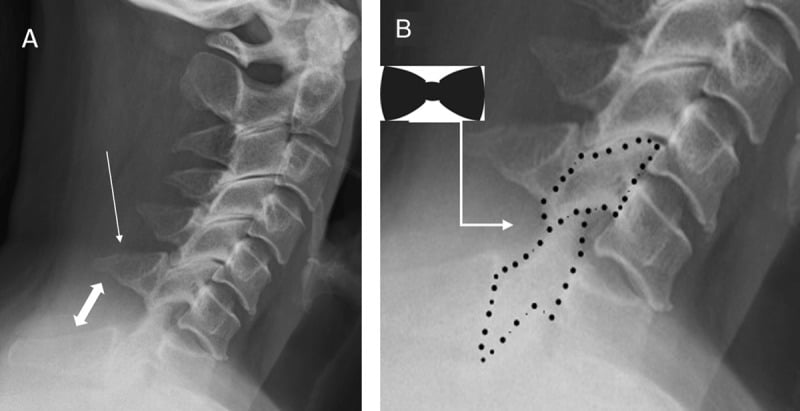
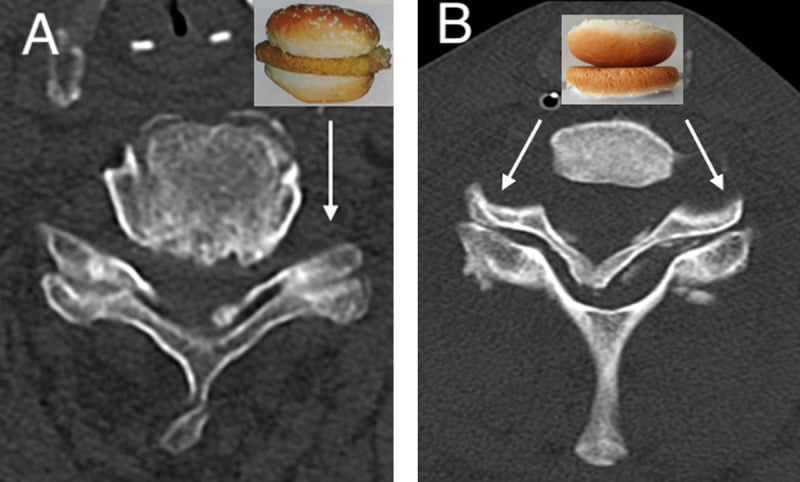
Cord injury. Bilateral facet dislocation carries a neurological deficit in 60-80%, and a complete (ASIA A) injury has under 5% chance of recovery. The cord is injured by:
- Direct compression by the posterior edge of the vertebral body
- Vascular injury - compression of the anterior spinal artery causes ischaemia
- Contusion from the rapid displacement
Classification and Measurements
Instability: the White-Panjabi criteria. Instability is judged on lateral flexion-extension radiographs. A change of more than 3.5mm of translation or 11 degrees of angulation between flexion and extension indicates ligamentous failure, with incompetence of the facet capsules, PLL and ALL.
- Normal
- Under 3.5mm
- Unstable Threshold
- Over 3.5mm on flexion-extension
- Clinical Implication
- Ligamentous failure (facet capsule, PLL)
- Normal
- Under 11 degrees
- Unstable Threshold
- Over 11 degrees between adjacent levels
- Clinical Implication
- Facet and disc incompetence
Draw lines along the posterior vertebral body cortex of the vertebrae above and below, and measure the horizontal distance between them. Over 3.5mm is pathological translation; a difference of over 3.5mm between the flexion and extension views is dynamic instability.
Severity: the Meyerding grade. The slip is graded by translation as a proportion of vertebral body width. Degenerative slips are rarely grade III-IV; grades III-IV are typical of bilateral facet dislocation.
- Translation
- 0-25% vertebral body width
- Stability
- Mild instability
- Management
- Conservative or ACDF
- Translation
- 25-50%
- Stability
- Moderate instability
- Management
- ACDF recommended
- Translation
- 50-75%
- Stability
- Severe instability
- Management
- ACDF or combined fusion
- Translation
- 75-100%
- Stability
- Complete dislocation (spondyloptosis)
- Management
- Posterior reduction + fusion
Clinical Presentation
Symptoms. The degenerative slip presents with axial neck pain, worse with movement. Foraminal stenosis adds arm pain and dermatomal paraesthesiae; cord compression adds hand clumsiness, gait imbalance and a Lhermitte sign. The traumatic dislocation follows a motor vehicle accident, a dive or a fall.
Examination. Flexion and extension are reduced and painful at the extremes. The neurological deficit corresponds to the compressed nerve root or cord.
- Spurling test - positive in radiculopathy from foraminal stenosis
- Myelopathy signs - hyperreflexia, Hoffmann, Babinski, gait ataxia, inverted radial reflex
Progressive cervical myelopathy is insidious: difficulty with buttons and writing, a wide-based gait, bowel and bladder urgency. Once established, myelopathy may not fully reverse. Urgent surgical decompression if cord signal change on MRI.
Differential diagnosis. Other causes of translation, and conditions that mimic a slip, are distinguished by the features below.
- Key Distinguishing Feature
- Axial neck pain plus radiculo-/myelopathy, age over 50
- Imaging Clue
- Anterolisthesis at C4-C5/C5-C6 with facet arthropathy on flexion-extension XR
- Pitfall
- Static films may look normal — dynamic instability needs flexion-extension views
- Key Distinguishing Feature
- High-energy trauma, acute deficit
- Imaging Clue
- Over 50% translation, naked/perched facet sign, locked facets on CT
- Pitfall
- Do not mistake unilateral (25-50%) for bilateral (over 50%) — different stability
- Key Distinguishing Feature
- Child under 8, physiological C2-C3 (or C3-C4) anterior shift
- Imaging Clue
- Swischuk line intact, reduces on extension, no soft-tissue swelling
- Pitfall
- Normal variant — do NOT fuse; reverts with growth
- Key Distinguishing Feature
- Polyarthritis, morning stiffness, often upper cervical
- Imaging Clue
- Atlantoaxial subluxation (ADI over 3mm), erosions, basilar invagination
- Pitfall
- Subaxial 'staircase' subluxation can coexist — image the whole cervical spine
- Key Distinguishing Feature
- Night pain, constitutional symptoms, fevers
- Imaging Clue
- Vertebral body or facet destruction, marrow signal change, abscess on MRI
- Pitfall
- Translation here reflects bone loss, not ligament failure — biopsy/cultures first
- Key Distinguishing Feature
- Dermatomal arm pain without translation
- Imaging Clue
- Foraminal disc-osteophyte but stable alignment on dynamic films
- Pitfall
- Decompression alone may suffice — do not over-fuse a stable segment
Investigations
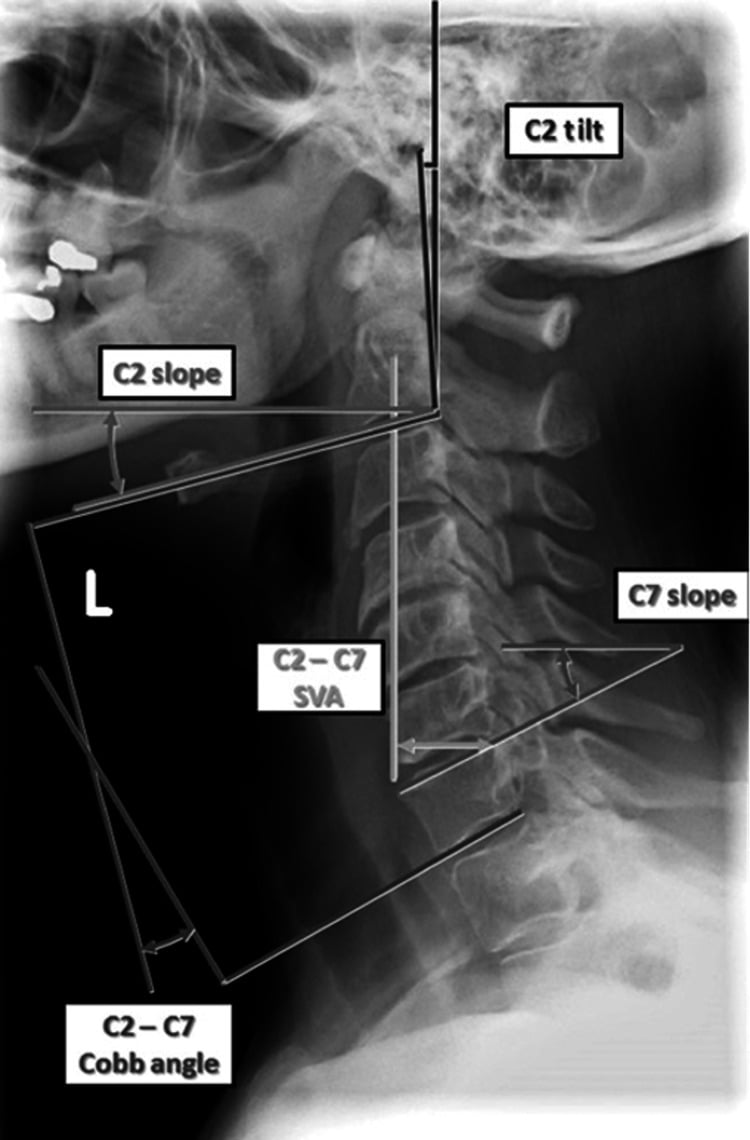
Flexion-extension radiographs first. Lateral views in neutral, flexion and extension measure anterior translation and the change in sagittal angle against the White-Panjabi thresholds. The AP view shows alignment and any deviation of the spinous processes.
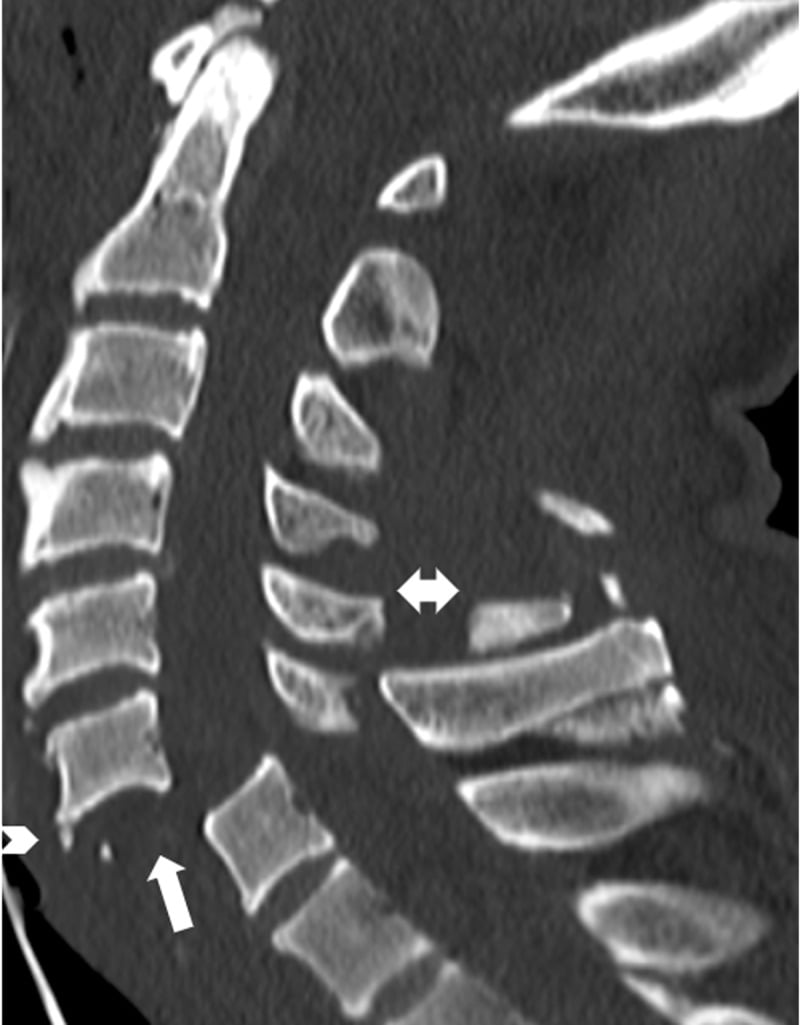
CT for the bone. CT shows the facet joints (fracture, arthritis, subluxation) and gives the sagittal canal diameter. In trauma it detects the occult fractures that plain films miss.
MRI for the cord. MRI shows the degree and level of cord compression, the nerve roots compressed in the foramina, and how much a disc herniation contributes to the stenosis. Intramedullary T2 hyperintensity means myelomalacia and a poor prognosis.
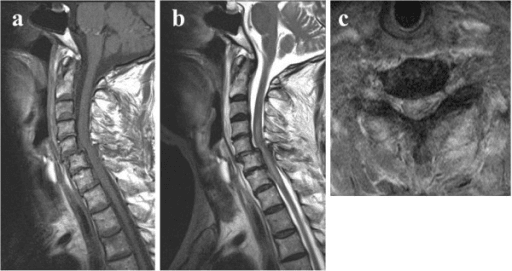
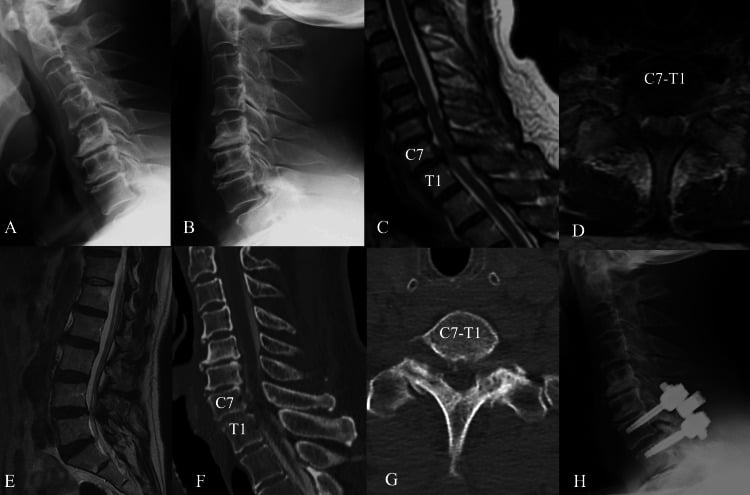
Management Algorithm
Conservative care. Its indications are translation under 3.5mm, no myelopathy, minimal radiculopathy and patient preference. The protocol runs in three phases:
Conservative Protocol
Naproxen 500mg BD. A soft collar for comfort, for under 2 weeks; avoid prolonged use. Avoid extreme flexion and extension.
Physiotherapy with gentle range of motion, avoiding forceful manipulation. Strengthen the deep neck flexors and scapular stabilisers, and keep a neutral cervical posture.
Repeat flexion-extension radiographs if symptoms worsen. Progressive translation, new neurological signs or refractory pain cross the surgical threshold.
Indications for surgery. The aim is to restore alignment and achieve solid fusion. The absolute indications are:
- Myelopathy with cord compression
- Translation over 3.5mm or angulation over 11 degrees with symptoms
- Progressive neurological deficit
- Bilateral facet dislocation (trauma)
Choosing the operation. ACDF is the gold standard for single-level degenerative subluxation; the table sets out the alternatives, and complication rates are given under Complications.
- Indications
- Single-level degenerative subluxation
- Fusion Rate
- 95% single level
- Main Complications
- Dysphagia, RLN injury
- Indications
- Post-laminectomy kyphosis, multilevel
- Fusion Rate
- 90-95%
- Main Complications
- C5 palsy, hardware prominence
- Indications
- Severe deformity, multilevel instability
- Fusion Rate
- 95-98%
- Main Complications
- Higher morbidity, longer surgery
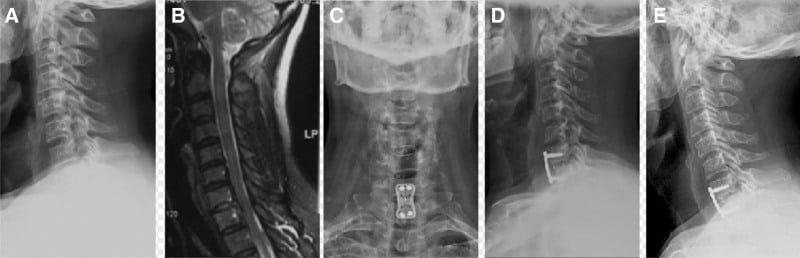
The traumatic dislocation. Bilateral facet dislocation is a surgical emergency. It is managed by urgent closed reduction, within 8 hours if there is a cord injury, followed by definitive posterior fusion. Whether MRI must come first is discussed under Controversies.
- Imaging
- C4-C5 anterolisthesis 2mm, no canal stenosis
- Treatment
- Conservative: PT, collar for flares, NSAIDs
- Key Pearl
- Under 3.5mm without cord compression - trial conservative
- Imaging
- C5-C6 subluxation 4mm, foraminal stenosis
- Treatment
- C5-C6 ACDF
- Key Pearl
- Translation over 3.5mm = instability, ACDF restores alignment
- Imaging
- C4-C5 subluxation, canal 11mm, cord signal
- Treatment
- Urgent ACDF or corpectomy with fusion
- Key Pearl
- Canal under 13mm + myelopathy = urgent decompression
- Imaging
- C6-C7 locked facets, cord compression
- Treatment
- Closed reduction, then posterior fusion
- Key Pearl
- Surgical emergency - reduce within 8 hours if cord injury
Surgical Technique
Anterior Cervical Discectomy and Fusion
The steps of the Smith-Robinson approach:
- Positioning - supine, with a shoulder roll and the neck extended
- Exposure - transverse skin incision at the disc level; blunt dissection between sternocleidomastoid laterally and the strap muscles medially; retract the carotid sheath laterally and the oesophagus and trachea medially; identify the disc by needle localisation and fluoroscopy
- Discectomy - remove the whole disc with rongeurs and curettes; decompress the anterior canal by removing posterior osteophytes, and the PLL if the cord is compressed; decompress the uncovertebral joints bilaterally for foraminal stenosis
- Interbody fusion - prepare the endplates by removing cartilage down to bleeding bone; insert a PEEK or titanium cage packed with bone graft; fix an anterior cervical plate with screws into the vertebral bodies, which prevents subsidence and enhances fusion
The recurrent laryngeal nerve is at higher risk on the left, where it loops around the aortic arch and courses in the tracheo-oesophageal groove; use a right-sided approach when possible. Avoid excessive medial retraction of the trachea and oesophagus. Neuromonitoring can detect an RLN at risk.
Posterior Lateral Mass Screw Fixation
Lateral mass fixation is indicated for post-laminectomy kyphosis and multilevel instability, and in combination with laminoplasty.
- Positioning - prone in a Mayfield clamp with neutral alignment; fluoroscopy confirms the levels
- Exposure - midline incision and subperiosteal dissection exposing the lateral masses C3-C7, preserving the facets above and below the fusion levels
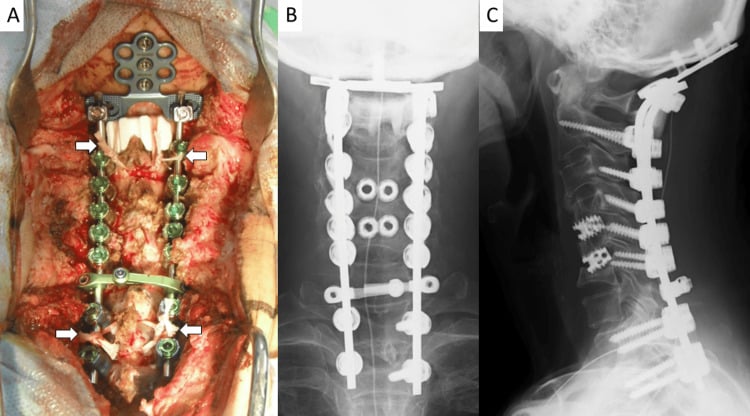
- Lateral mass screws - by the Magerl technique: entry 1mm medial to the lateral mass centre, aimed 25 degrees lateral and 40 degrees cephalad, with a 14-16mm screw; avoid the vertebral artery (lateral) and the nerve root (medial)
- Rod and fusion - contour the rods and connect the screws bilaterally, decorticate the lateral masses and pack bone graft; close in layers over a drain
Complications
- Incidence
- 10-15% transient
- Management
- Usually resolves 6-12 weeks, speech therapy if persistent
- Incidence
- 1-2%
- Management
- Hoarse voice, vocal cord medialisation if permanent
- Incidence
- 5% single level, 15% multilevel
- Management
- Revision ACDF with bone graft
- Incidence
- 5-10%
- Management
- Deltoid/biceps weakness, usually recovers over 6 months
- Incidence
- 10-15%
- Management
- Cage sinks into endplate - plate prevents progression
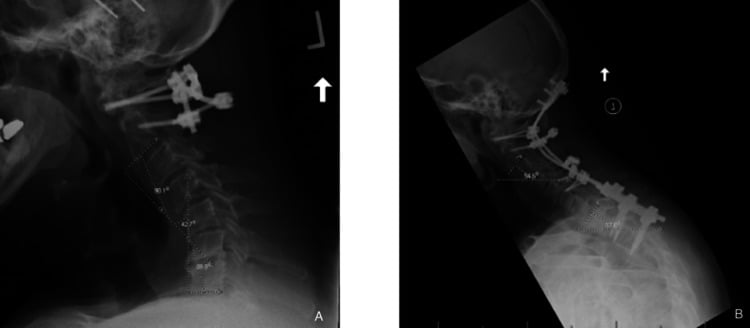
Post-Laminectomy Cervical Kyphosis: the Iatrogenic Slip
Iatrogenic post-laminectomy instability is a distinct cause of cervical spondylolisthesis, and it deserves its own mechanism because it is both predictable and largely preventable.
Why it happens. A laminectomy removes the posterior tension band: the spinous processes, the interspinous and supraspinous ligaments, the ligamentum flavum and the extensor muscle attachments (semispinalis and multifidus). The centre of gravity of the head sits anterior to the cervical vertebral bodies, so once the posterior restraint is lost the head drifts into flexion. Load shifts onto the anterior column, the discs and vertebrae wedge, and a progressive kyphotic anterolisthesis (swan-neck deformity) develops.
The facets. They are the principal restraint to shear and translation. If more than roughly half of a facet joint is resected during decompression, or a bilateral facetectomy is performed, the segment becomes acutely unstable.
Who is at risk.
- Pre-existing loss of lordosis - a straight or already-kyphotic spine has no reserve to absorb the deformity
- Multilevel laminectomy, and laminectomy crossing the cervicothoracic (C7-T1) or C2 junction
- The immature spine - post-laminectomy kyphosis is far commoner in children (ligamentous laxity, incomplete ossification, horizontally oriented facets), classically after intradural tumour resection
Presentation. A chin-on-chest deformity with difficulty maintaining horizontal gaze, mechanical neck pain, and myelopathy as the cord is draped over the kyphotic apex and stretched. Progression is often insidious, over months to years.
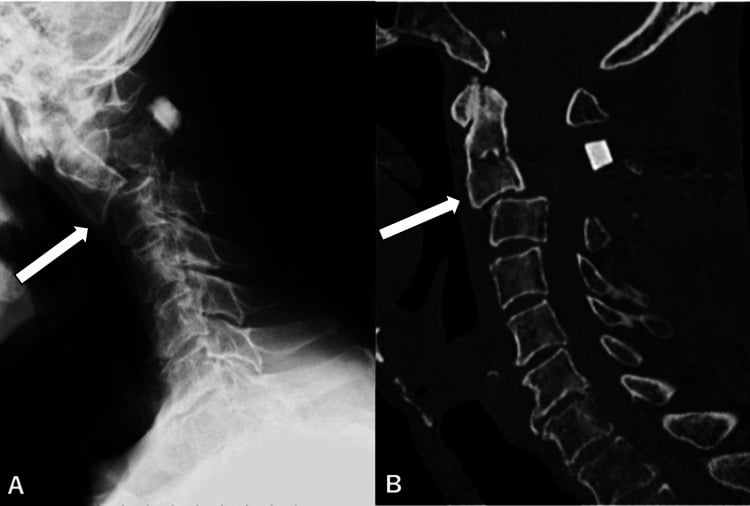
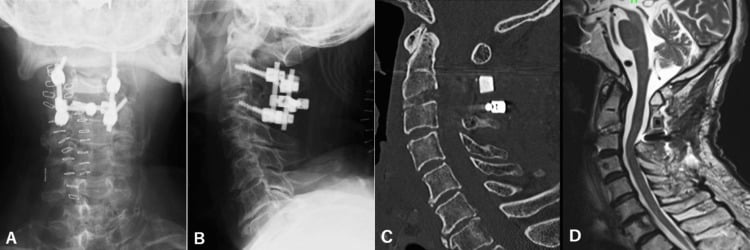
Prevention is the exam point. In multilevel degenerative disease with preserved lordosis, favour laminoplasty (open-door or French-door) over laminectomy to keep the posterior elements. When a laminectomy is genuinely required, add instrumented posterior fusion (laminectomy-and-fusion with lateral mass screws) rather than laminectomy alone, preserve at least half of each facet, and protect the C2 and C7 muscle attachments.
Resecting more than half of a cervical facet joint bilaterally, at any level, mandates fusion. In a spine that is not lordotic, plan laminectomy-with-fusion from the outset; when a child needs a laminectomy, plan laminoplasty or laminectomy-with-fusion from the outset, rather than waiting for a swan-neck deformity to declare itself.
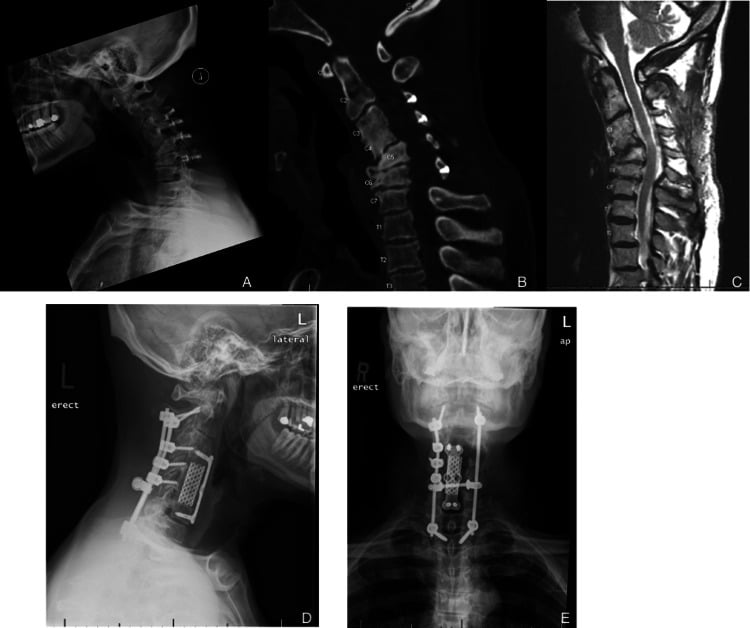
Managing established deformity. Decide first whether the kyphosis is flexible or fixed, on a supine or traction lateral or on dynamic films. Flexible deformity often corrects with posterior instrumented fusion. A rigid deformity needs anterior release or corpectomy and reconstruction, frequently as a combined anterior-posterior procedure and occasionally with osteotomy. The aim is a decompressed cord, restored horizontal gaze, and a fused neutral-to-lordotic spine.
Cervical Retrolisthesis: the Posterior Slip
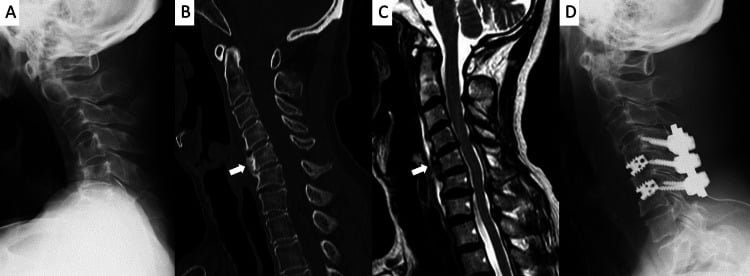
What it is. Posterior translation of the vertebra above on the one below, the mirror image of anterolisthesis. It is graded on the neutral lateral using the posterior vertebral body line and quantified in millimetres, or as partial versus complete relative to the disc space. The White-Panjabi thresholds still define instability on dynamic films.
A different mechanism. Degenerative anterolisthesis is driven mainly by facet incompetence allowing a forward slip. Retrolisthesis is tied to disc-height collapse and dehydration: as the disc loses its spacer function the segment shortens and, with facet and uncovertebral arthrosis, the vertebra slides backward under an extension-directed shear. It clusters at C3-C4, C4-C5 and C5-C6.
Why it matters. Retrolisthesis narrows the canal and foramina dynamically, worst in extension: the posterior vertebral margin and osteophyte, together with a buckling ligamentum flavum, pincer the cord and nerve roots. It is a recognised contributor to degenerative cervical myelopathy and radiculopathy, and rarely reaches high Meyerding grades.
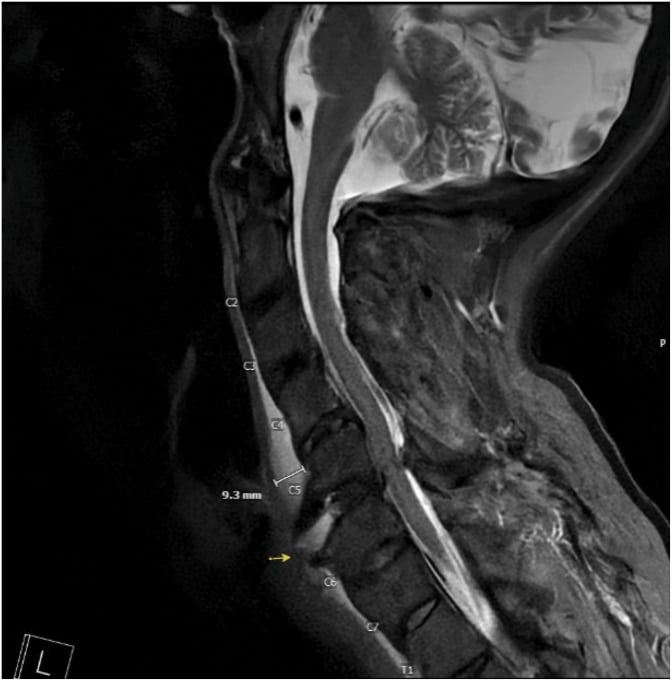
Management. It mirrors the anterolisthesis pathway: conservative care when the segment is stable and non-myelopathic; decompression with or without fusion for demonstrated instability, refractory radiculopathy or myelopathy. Because the compression is often extension-dependent and multilevel, dynamic behaviour and sagittal alignment, not the direction of the slip alone, guide the choice between anterior and posterior surgery.
Anterolisthesis and most cervical instability worsen in flexion; degenerative retrolisthesis worsens in extension, so extension views and extension-triggered symptoms must be sought or it is missed. If dynamic films and symptoms only worsen on looking up, think posterior slip with disc-height loss, and do not dismiss it because the flexion view looked benign.
Guidelines, Registries & Global Practice
Global epidemiology
- Degenerative cervical myelopathy (DCM), the main morbidity of degenerative subluxation, is the commonest cause of non-traumatic spinal cord dysfunction in adults worldwide, with rising prevalence in ageing populations.
- Degenerative slips cluster at the maximum-motion segments C4-C5 and C5-C6; traumatic dislocations cluster lower, at C5-C6 and C6-C7.
- OPLL (ossification of the posterior longitudinal ligament) is a more frequent contributor to canal stenosis in East Asian populations, shifting practice toward posterior decompression/laminoplasty there.
Side-by-side guideline positions
- Emphasis
- Degenerative cervical myelopathy
- Practical Recommendation
- Surgical decompression for moderate-severe DCM; offer surgery or supervised rehab for mild disease — avoid passive observation of progression
- Emphasis
- Evidence-based diagnosis and surgical selection
- Practical Recommendation
- Decompression effective for myelopathy; approach individualised to alignment and compression pattern
- Emphasis
- Timely referral pathways
- Practical Recommendation
- Early specialist referral for suspected myelopathy; dynamic radiographs to confirm instability before fusion
- Emphasis
- Subaxial injury classification and reduction
- Practical Recommendation
- SLIC/AO subaxial system to guide operative vs non-operative; urgent reduction of dislocations with deficit
Registry and outcome evidence
- Large spine registries and the prospective STASCIS cohort support decompression within 24 hours for traumatic cervical SCI.
- Anterior cervical fusion registry data corroborate Hilibrand's ~25% adjacent-segment disease at 10 years, informing consent and the case for motion-preserving options (arthroplasty, laminoplasty) in selected patients.
High- vs limited-resource practice variation
- High-resource: rapid MRI, intra-operative neuromonitoring, navigation/robotics for lateral mass and pedicle screws, and arthroplasty as a motion-sparing alternative for single-level disease.
- Limited-resource: reliance on plain dynamic radiographs and CT; Gardner-Wells closed traction reduction remains a vital, low-cost, evidence-supported first step for dislocations; structural autograft and posterior wiring substitute where modern implants are scarce.
Controversies and Areas of Uncertainty
MRI before closed reduction. The classic teaching is to obtain MRI before reducing a facet dislocation, to exclude a disc herniation that could be driven into the cord. Yet Grant (1999) and Vaccaro (1999) found awake closed reduction neurologically safe even when herniations were present. Most centres now reduce awake, cooperative patients promptly without waiting for MRI, and reserve pre-reduction MRI for the obtunded or unexaminable patient.
Fusing a low-grade degenerative slip. For a stable grade I anterolisthesis (under 3.5mm, no myelopathy) causing only radiculopathy, whether to decompress alone or add fusion is debated. Fusion treats potential instability but raises the risk of adjacent-segment disease (Hilibrand: about 25% at 10 years), and many surgeons reserve it for documented dynamic instability.
Anterior, posterior or combined. For multilevel disease the Lawrence/Brodke review found no clear winner. The choice hinges on the number of levels, sagittal alignment (anterior or laminoplasty preferred in lordosis; anterior or combined for kyphosis) and where compression predominates, rather than on a single best operation.
High-dose steroids in spinal cord injury. Methylprednisolone after acute spinal cord injury (the NASCIS protocols) is no longer routinely recommended in most guidelines, because of marginal benefit and complication risk. Its use is now optional and protocol-dependent, not standard of care.
MCQ Practice Points
Q: What sagittal translation threshold indicates cervical instability? A: Over 3.5mm on lateral flexion-extension radiographs. Measured between adjacent vertebral bodies. Indicates ligamentous failure (facet capsule, PLL).
Q: What angular change between adjacent cervical vertebrae indicates instability? A: Over 11 degrees on flexion-extension radiographs. Measured as sagittal plane angle change between superior and inferior endplates.
Q: What is the most common level for degenerative cervical spondylolisthesis? A: C4-C5 and C5-C6 - these are maximum motion segments in the cervical spine, subject to highest biomechanical stress.
Q: What imaging finding confirms bilateral facet dislocation? A: Naked facet sign on lateral XR - inferior facet of superior vertebra is anterior to superior facet of inferior vertebra. Translation typically over 50% vertebral body width.
Q: What degree of translation is associated with complete spinal cord injury? A: Over 50% vertebral body width (bilateral facet dislocation). Unilateral facet dislocation (25-50% translation) has incomplete injury risk. Translation under 25% rarely causes cord injury.
Q: When is MRI indicated before closed reduction of cervical dislocation? A: Controversial - traditionally if patient is obtunded/unexaminable. However, newer evidence (Vaccaro study) supports early closed reduction in awake patients regardless of MRI, as traction injury from delay may exceed disc herniation risk.
Exam Viva Scenarios
Practise clinical reasoning and management decisions out loud
“A 60-year-old presents with 6 months of progressive right arm pain radiating to thumb and index finger. Examination shows 4/5 biceps weakness, reduced biceps reflex, and positive Spurling sign. Flexion-extension radiographs show C5-C6 anterolisthesis of 4mm. MRI shows C5-C6 disc herniation and foraminal stenosis compressing C6 nerve root. How do you manage?”
“A 25-year-old presents after diving accident. He has complete C6 motor and sensory level with absent lower limb reflexes (spinal shock). Lateral C-spine shows C6-C7 bilateral facet dislocation with 60% anterior translation. How do you manage acutely?”
“A 68-year-old reports 12 months of clumsy hands, dropping objects, and an unsteady wide-based gait. Examination shows hyperreflexia, positive Hoffmann and Babinski signs, and an inverted radial reflex. Flexion-extension radiographs show C4-C5 anterolisthesis of 3mm with degenerative changes. MRI shows multilevel canal stenosis maximal at C4-C5 with T2 cord signal change. How do you assess and manage this patient?”
Instability Criteria
- White-Panjabi: Translation over 3.5mm or angle over 11 degrees
- Measured on lateral flexion-extension radiographs
- Canal diameter under 13mm = high myelopathy risk
- Bilateral facet dislocation = complete ligament disruption
Common Levels
- Degenerative: C4-C5 and C5-C6 (maximum motion)
- Traumatic BFD: C5-C6 and C6-C7
- Post-laminectomy: any level with over 50% facet resection
- Meyerding grade: I (0-25%), II (25-50%), III (50-75%), IV (75-100%)
Surgical Indications
- Myelopathy with cord compression (MRI T2 signal change)
- Translation over 3.5mm or angle over 11 degrees with symptoms
- Progressive neurologic deficit despite conservative management
- Bilateral facet dislocation (trauma) = surgical emergency
ACDF Technique
- Right-sided Smith-Robinson approach (avoid RLN on left)
- Complete discectomy, posterior osteophyte removal
- Decompress uncovertebral joints for foraminal stenosis
- PEEK cage + autograft + anterior plate (prevents subsidence)
Complications
- Dysphagia 10-15% (transient, resolves 6-12 weeks)
- RLN injury 1-2% (hoarse voice, higher left-sided approach)
- Pseudarthrosis 5% single level, 15% multilevel
- C5 palsy 5-10% (posterior approach, deltoid/biceps weakness)
Evidence Base and Key Trials
Early Closed Reduction of Cervical Subluxation Is Safe
- 82 patients with subaxial subluxation (locked facets, burst, extension injuries) reviewed
- Early rapid closed reduction with Gardner-Wells traction successful in 97.6%, mean 2.1 hours
- Disc herniation (22%) or disruption (24%) on post-reduction MRI did NOT affect neurologic recovery
- Only 1 of 80 patients (1.3%) deteriorated, and that occurred over 6 hours after reduction
MRI Before and After Awake Closed Traction Reduction
- Prospective consecutive series of 11 patients with cervical dislocation, pre- and post-reduction MRI
- Disc herniation present in 2 of 11 before reduction; rose to 5 of 9 after successful reduction
- Awake closed traction reduction succeeded in 9 of 11 patients
- NO patient experienced neurologic worsening after awake reduction
STASCIS: Early vs Delayed Decompression in Cervical SCI
- Multicentre international prospective cohort, 313 acute cervical SCI patients
- Early (under 24h) vs late (24h or more) decompression compared
- Two-grade-or-more AIS improvement at 6 months: 19.8% early vs 8.8% late
- Adjusted odds of major AIS improvement 2.8x higher with early surgery; complication rates similar