Immobilisation | ATLS | Upper vs Subaxial
- ATLS immobilisation until cleared clinically and radiologically
- Upper cervical (C1-C2) injuries have specific patterns
- Subaxial cervical (C3-C7): Use SLIC score to guide treatment
- MRI if neurological deficit or to assess ligaments
- NEXUS or Canadian C-spine rules for clearance
- “Jefferson fracture: lateral mass overhang beyond about 7mm raises suspicion of TAL rupture, but does not prove or exclude it - MRI decides
- “Odontoid Type II (base of dens) has high nonunion rate
- “Hangman's is usually stable (paradoxically) unless severe
- “SLIC greater than or equal to 5 = surgery, 4 = surgeon discretion, 3 or less = conservative
Overview
Cervical spine fractures are potentially devastating injuries, and the priority throughout is to protect the spinal cord while the bony and ligamentous injury is evaluated and treated.
Two regions. The upper cervical spine (C1-C2) fails in specific patterns: the Jefferson, odontoid and hangman's fractures. The subaxial spine (C3-C7) is graded with the SLIC score, which guides treatment.
Clearance. Every trauma patient is assumed to have a cervical spine injury until it is cleared, and the collar stays on until then. NEXUS or the Canadian C-Spine Rule decide who can be cleared clinically.
Maintain immobilisation until the patient is fully assessed. Any neurological deterioration requires urgent MRI and surgical consultation.
Anatomy
Upper Cervical Spine (C0-C2)
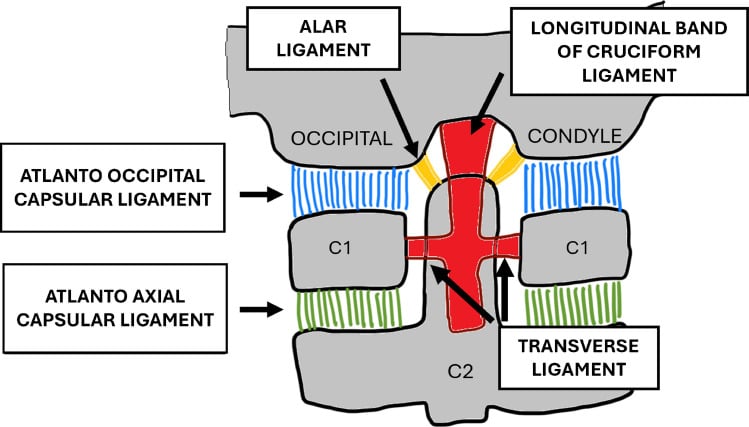
The atlanto-occipital joint. C0-C1 allows 50% of cervical flexion-extension, and is stabilised by the tectorial membrane, the alar ligaments and the cruciate ligament.
The atlas. C1 is a ring with no vertebral body: anterior and posterior arches joined by the lateral masses, which articulate with the occipital condyles above and with C2 below.
The axis. The odontoid process (dens) projects up from C2 to articulate with the anterior arch of C1, where the transverse atlantal ligament (TAL) holds it. C2 also carries a large spinous process and the pars interarticularis.
The ligaments. The transverse atlantal ligament is the primary stabiliser of C1-C2 and prevents anterior translation of C1. The others:
- Alar ligaments - limit rotation
- Tectorial membrane - the continuation of the PLL to the occiput
- Cruciate ligament - the TAL plus its vertical bands
Subaxial Cervical Spine (C3-C7)
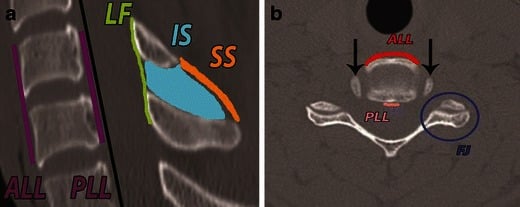
The columns. The anterior column is the vertebral body and intervertebral disc. The posterior column is the pedicles, lateral masses, facet joints, laminae and spinous processes. The uncovertebral joints (joints of Luschka) are unique to the cervical spine.
The disco-ligamentous complex (DLC). One of the three SLIC domains, made up of:
- Anterior longitudinal ligament (ALL)
- Posterior longitudinal ligament (PLL)
- Intervertebral disc
- Facet joint capsules
- Ligamentum flavum
- Interspinous ligament
Neural and vascular structures. The spinal cord terminates as the conus at L1-L2. Cervical roots exit above the vertebra of the same number, so the C6 root exits at C5-C6. The vertebral arteries run through the foramen transversarium from C6 to C1.
Pathophysiology
Cervical spine injury results from the interaction of the applied force vector with the quality of the host bone and ligament. The mechanism predicts the pattern and the risk to the neural structures.
Mechanism to pattern.
- Axial load - burst patterns: the Jefferson fracture of C1 and subaxial burst fractures with retropulsion into the canal
- Hyperextension - hangman's fracture (C2 pars), anterior tension-band (Type B3) injuries, and central cord syndrome in the spondylotic spine
- Flexion or flexion-distraction - wedge compression, facet subluxation or dislocation, posterior ligamentous (tension-band) failure
- Flexion-rotation - unilateral facet dislocation
- Distraction - atlanto-occipital dissociation and highly unstable distraction injuries
Primary and secondary cord injury. Primary injury is the immediate mechanical disruption at the moment of impact (contusion, laceration, compression), and it is irreversible. Secondary injury is an evolving cascade of oedema, ischaemia, excitotoxicity, free-radical damage and inflammation over hours to days. It is the therapeutic target of immobilisation, MAP augmentation and early decompression.
Host factors. Osteoporosis and pre-existing canal stenosis lower the force threshold for both fracture and cord injury, which explains the fall-related odontoid fractures and central cord patterns of the elderly. The ankylosed spine is the extreme case and has its own section below.
Classification and Injury Patterns
Occipital Condyle Fractures (Anderson & Montesano)
- Description
- Impaction from axial load
- Stability
- Stable
- Description
- Basilar skull fracture extension
- Stability
- Stable
- Description
- Avulsion by alar ligament
- Stability
- Potentially unstable
Atlanto-occipital Dissociation (Traynelis)
- Direction
- Anterior
- Treatment
- Fusion
- Direction
- Longitudinal (distraction)
- Treatment
- Fusion
- Direction
- Posterior
- Treatment
- Fusion
C1 Ring Fractures (Jefferson)
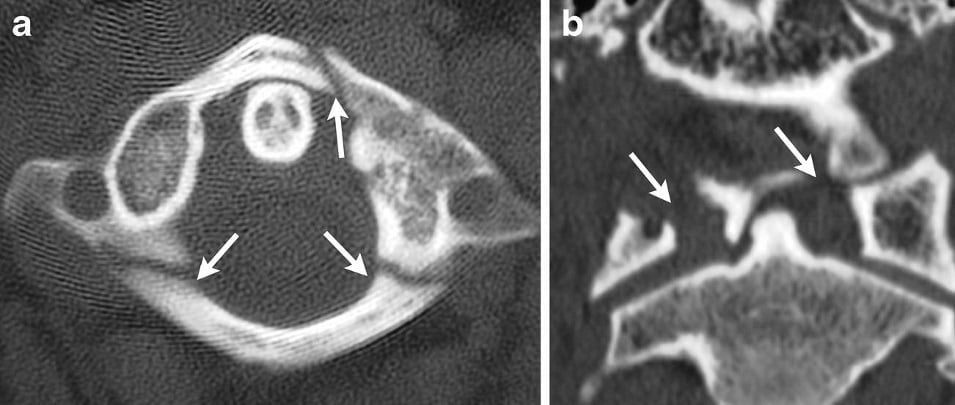
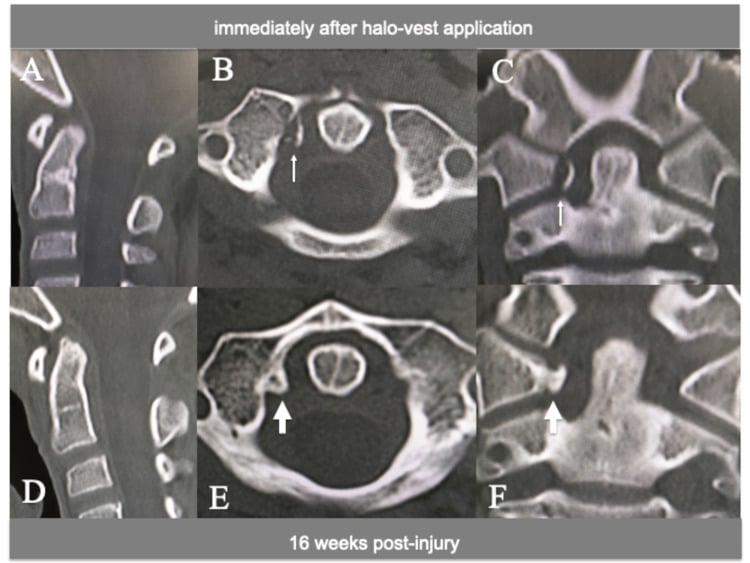
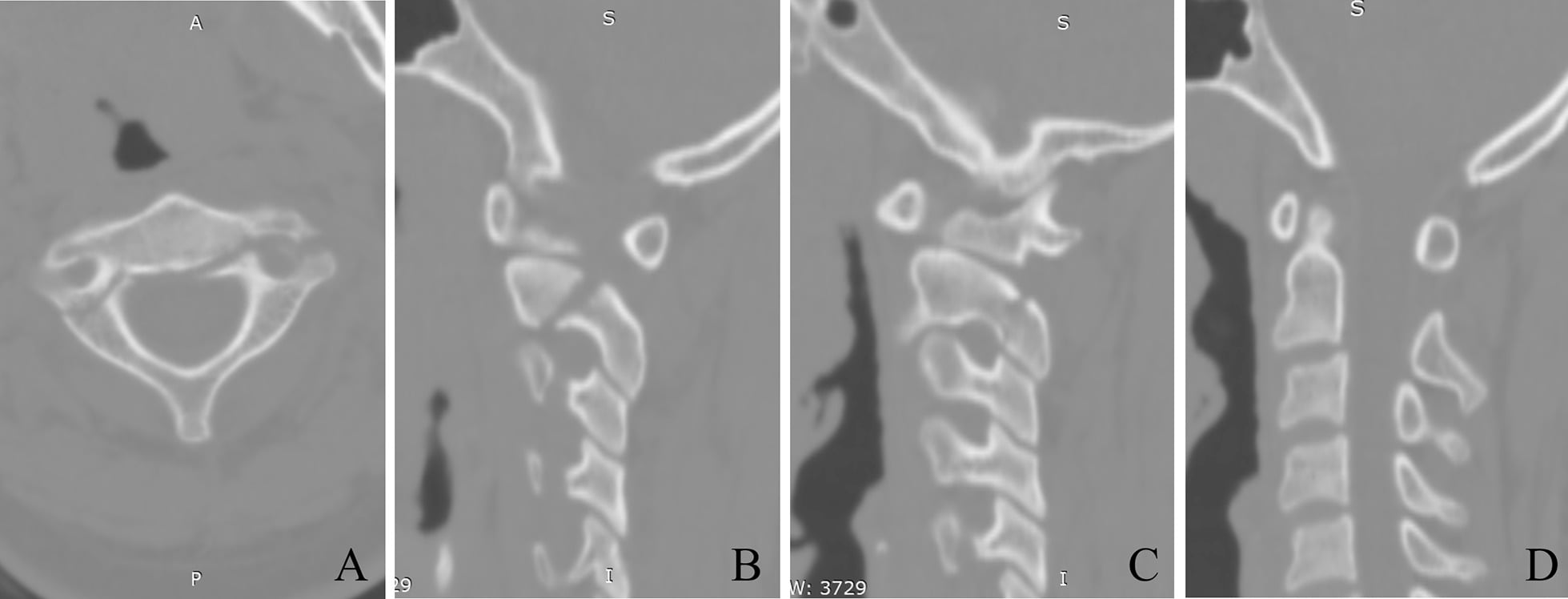
A Jefferson fracture is a burst fracture of the atlas from axial load, diving for example, and is typically a four-part fracture through both arches. The question that decides treatment is whether the transverse atlantal ligament is intact.
The rule of Spence. A combined lateral mass overhang beyond about 7mm raises suspicion of TAL rupture, but predicts it unreliably. Cadaveric loading puts ligament failure nearer 3.2mm, so a normal overhang does not exclude injury: the rule is a prompt for MRI, not proof of instability, and MRI decides ligament integrity.
Treatment. With the TAL intact, a rigid collar or a halo. With the TAL ruptured, surgical stabilisation by C1-C2 fusion.
Odontoid Fractures (Anderson & D'Alonzo)
- Location
- Tip (avulsion)
- Nonunion Risk
- Low
- Treatment
- Collar
- Location
- Base (waist)
- Nonunion Risk
- High (40%)
- Treatment
- Surgery often
- Location
- Into C2 body
- Nonunion Risk
- Low
- Treatment
- Halo
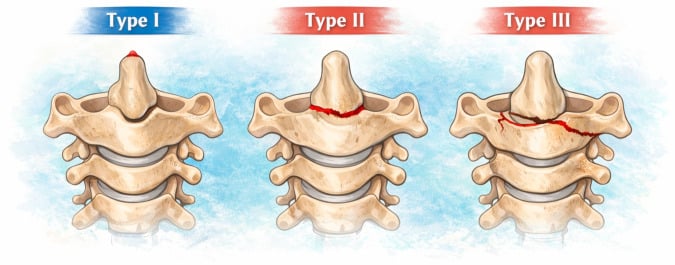
The three types. Type I, an avulsion of the tip, is rare and stable. Type II crosses the base of the dens, is the most common, and is unstable, with a high nonunion risk; it often needs an anterior odontoid screw or a posterior C1-C2 fusion. Type III extends into the C2 body, where the blood supply is better, and usually heals in a halo.
Type II nonunion. The risk factors are age over 50, displacement over 5mm and posterior displacement. Reported rates vary: the table gives 40%, and in Koivikko's halo-treated series fewer than half united. That series did not find age a risk factor, but with 69 patients it was underpowered to detect it (see the evidence below).
Hangman's Fracture (Levine-Edwards)
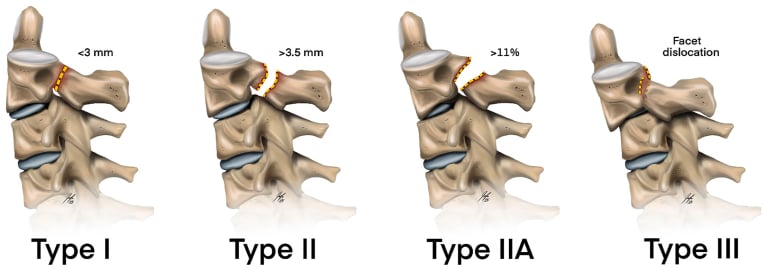
A bilateral fracture through the C2 pars interarticularis, from hyperextension with axial load. Paradoxically, it is stable unless severely displaced, and the patient is often neurologically intact, because the fracture decompresses the canal by enlarging it. Type IIA has a flexion mechanism, and traction is contraindicated.
- Displacement
- Less than 3mm
- Angulation
- Minimal
- Treatment
- Collar
- Displacement
- Greater than 3mm
- Angulation
- Present
- Treatment
- Halo or surgery
- Displacement
- Minimal
- Angulation
- Severe
- Treatment
- Surgery (traction contraindicated)
- Displacement
- Facet dislocation
- Angulation
- Severe
- Treatment
- Surgery
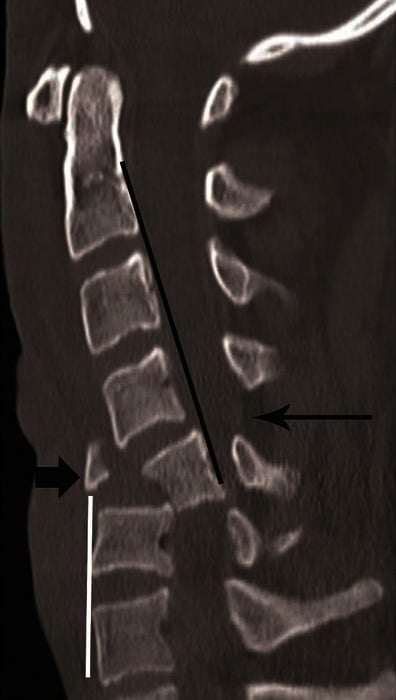
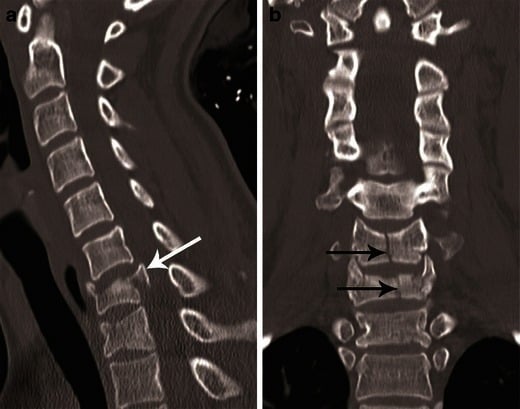
Clinical Assessment
Primary Survey (ATLS)
Airway. Secure the airway with the cervical spine protected: in-line stabilisation for intubation, no neck extension, and awake fibreoptic intubation if time permits.
Breathing and circulation. Neurogenic shock is hypotension with bradycardia from loss of sympathetic tone. Distinguish it from hypovolaemic shock.
Disability. GCS, pupillary responses and the level of any spinal cord injury.
Neurological Examination
The examination follows ASIA/ISNCSCI: key muscles, key dermatomes, then an impairment grade.
Motor Assessment
- Key Muscle
- Biceps
- Action
- Elbow flexion
- Key Muscle
- Wrist extensors
- Action
- Wrist extension
- Key Muscle
- Triceps
- Action
- Elbow extension
- Key Muscle
- FDP (middle finger)
- Action
- Finger flexion
- Key Muscle
- Interossei
- Action
- Finger abduction
Sensory Assessment
- Key Dermatome
- Top of shoulders
- Key Dermatome
- Lateral arm
- Key Dermatome
- Thumb
- Key Dermatome
- Middle finger
- Key Dermatome
- Little finger
- Key Dermatome
- Medial arm
ASIA Impairment Scale
- A: Complete - no motor or sensory function in S4-S5
- B: Sensory incomplete - sensory but no motor function below the level, including S4-S5
- C: Motor incomplete - motor function preserved, majority of key muscles less than 3/5
- D: Motor incomplete - motor function preserved, majority ≥3/5
- E: Normal
Clinical Clearance
The Canadian C-Spine Rule asks three questions in order:
- Any high-risk factor (age ≥65, dangerous mechanism, paraesthesias)? Image.
- Any low-risk factor that allows range of motion to be assessed (simple rear-end MVC, ambulatory, delayed onset of pain)? Assess range of motion.
- Can the patient actively rotate the neck 45° each way? No imaging is needed.
NEXUS clears the spine clinically only when all five criteria are present.
NSAIDNEXUS - Who Can Be Cleared Clinically
Hook:All five NSAID criteria satisfied = no imaging needed
Investigations
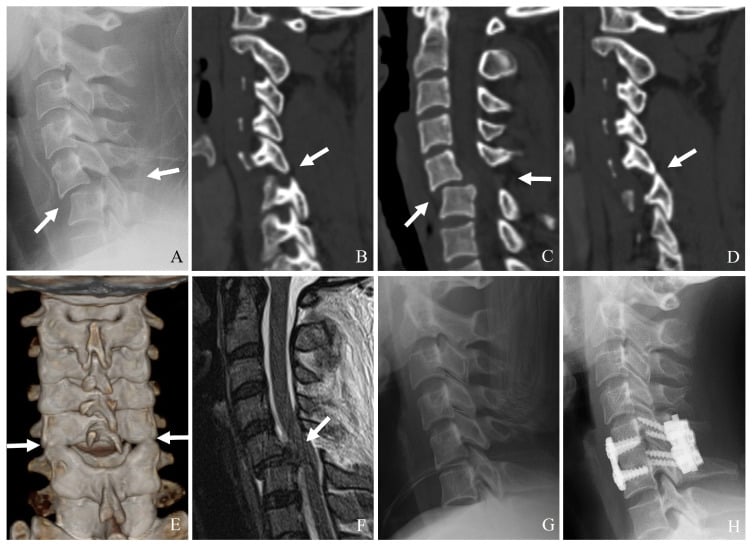
CT. The first-line study for bony injury, indicated in all significant trauma; plain radiographs are now less commonly used. Scan from the skull base to T1, including the C7-T1 junction, and assess alignment, fracture pattern and canal compromise.
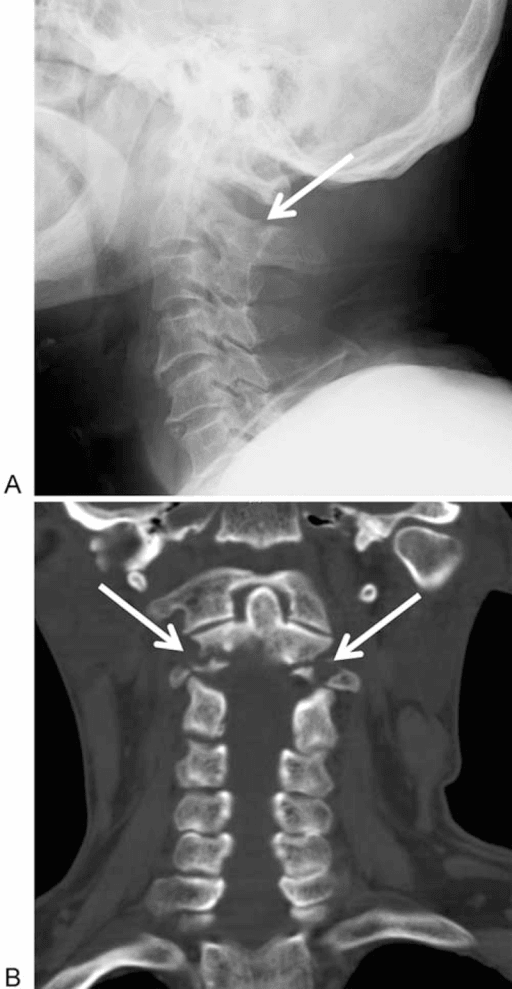
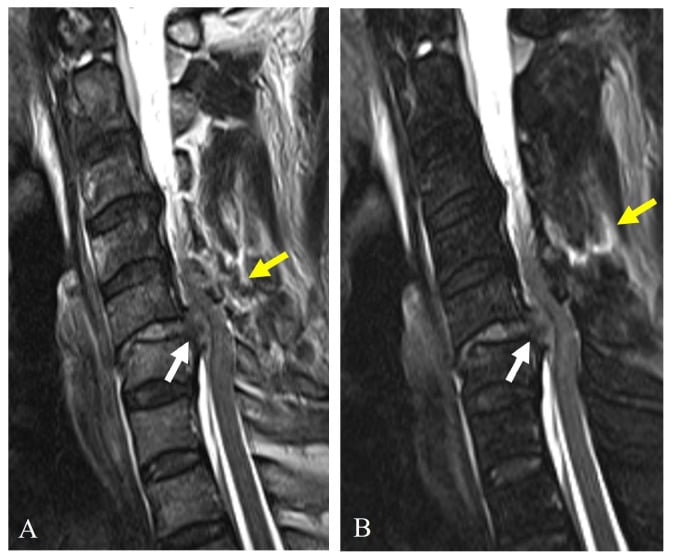
MRI. Shows cord oedema or contusion, disc herniation and disruption of the ligaments and disc as bright T2 signal. For an acute injury it is obtained within 24-72 hours, and the indications are:
- Neurological deficit
- Obtunded patient who cannot be cleared clinically; whether MRI adds anything after a normal CT is debated (see the obtunded patient, below)
- Suspected ligamentous (DLC) injury
- Suspected disc herniation
CT angiography. Screens for vertebral artery injury (dissection, occlusion). Indications:
- Fracture through the foramen transversarium
- Facet subluxation or dislocation
- High-energy mechanism
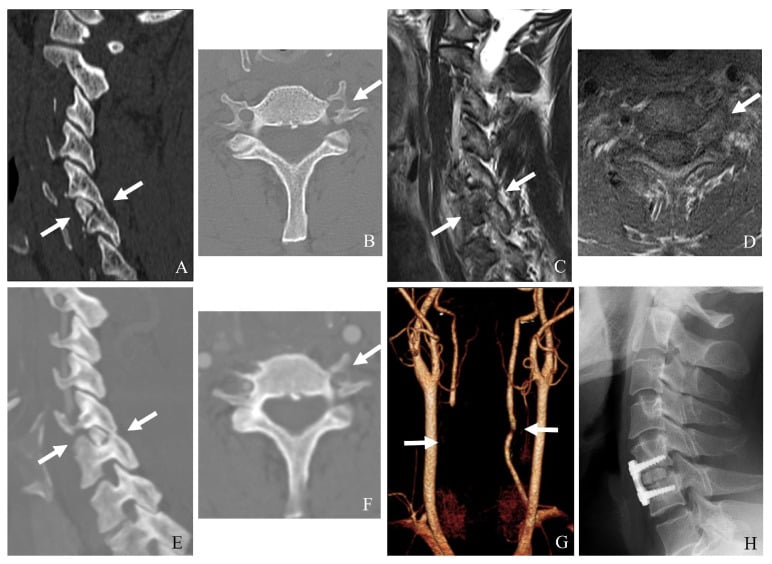
What to look for.
- Jefferson - lateral mass overhang on the open-mouth (odontoid) view
- Odontoid - where the fracture line lies, on sagittal CT
- Hangman's - bilateral C2 pars fractures
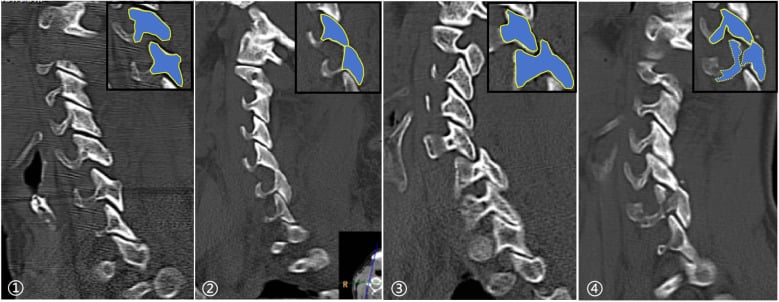
- Facet dislocation - perched or locked facets on sagittal CT
- Canal compromise - measured for surgical planning
Blood tests. FBC and a coagulation profile before surgery, group and screen; consider an arterial blood gas if breathing is compromised.
Differential Diagnosis
The key task is distinguishing an unstable bony or ligamentous injury (needing immobilisation and often surgery) from mimics that change management. Neck pain after trauma is never assumed benign until the spine is cleared.
- Distinguishing features
- Bony fracture line on CT, malalignment, neurological deficit
- Key discriminator
- CT shows fracture; MRI confirms cord/ligament injury
- Distinguishing features
- Normal or near-normal CT but persistent pain, facet widening, kyphosis on flexion
- Key discriminator
- MRI shows high T2 signal in ligaments; CT can be deceptively normal
- Distinguishing features
- Trivial mechanism, rigid fused spine, often transverse 'carrot-stick' fracture, frequently occult
- Key discriminator
- Low threshold for whole-spine CT; highly unstable despite minor force
- Distinguishing features
- Hyperextension in spondylotic spine, hands worse than legs, often no bony injury
- Key discriminator
- MRI cord signal change with preserved alignment
- Distinguishing features
- Soft-tissue pain, full painless ROM achievable, meets NEXUS/Canadian low-risk criteria
- Key discriminator
- Diagnosis of exclusion after clinical clearance
- Distinguishing features
- Smooth corticated ossicle separate from dens, no acute fracture line
- Key discriminator
- Rounded corticated margins vs sharp acute fracture edges
- Distinguishing features
- Fracture through foramen transversarium, facet subluxation, posterior-circulation symptoms
- Key discriminator
- CT angiography
The Fracture in the Ankylosed Spine (Ankylosing Spondylitis / DISH): a Different Injury
Why it behaves like a long-bone fracture. A spine ankylosed by ankylosing spondylitis or DISH is a long, rigid, brittle, often osteoporotic lever with no segmental motion to absorb energy. A trivial mechanism, often hyperextension (a simple fall, even in a collar), produces a transverse, three-column, unstable "carrot-stick" fracture, frequently through a fused disc space or the fusion mass. These are the most unstable cervical injuries, and they are notoriously occult on plain films against the abnormal background.
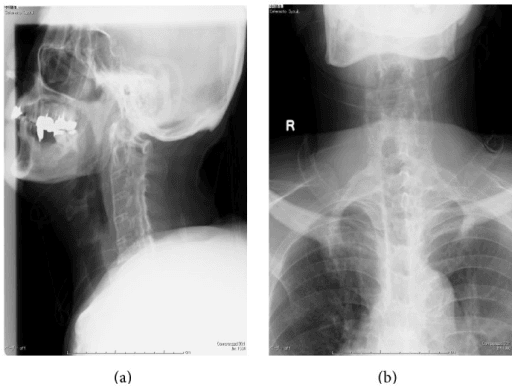
Image the whole spine. Non-contiguous fractures and occult injuries are common, so the standard is a low threshold for CT of the entire spine, with MRI for the high epidural haematoma risk and for neurology.
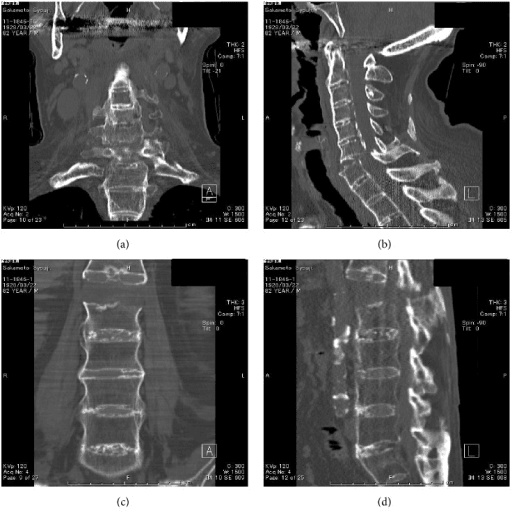
Do not correct the deformity. Immobilise and transport the patient in the pre-injury position of deformity, the "position of comfort", using pillows or blocks to support the habitual posture. Forcing a fixed kyphotic ankylosed neck into a standard flat collar or neutral alignment can distract the fracture and cause catastrophic cord injury.
Treatment. These fractures usually need surgery, and long fixation. Conservative management (halo or collar) has high failure, malunion and mortality, and most are treated with long-segment posterior instrumented fixation, several levels above and below, to control the long lever arm, sometimes combined anterior-posterior. Epidural haematoma is common and can cause delayed deterioration, so a high index of suspicion and early MRI are essential.
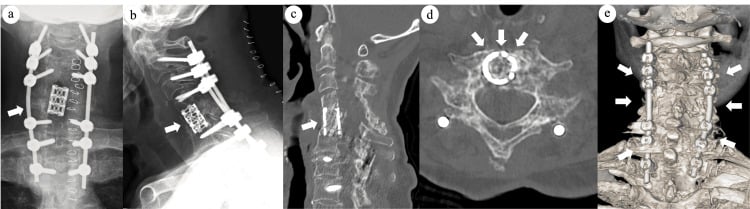
Expect high morbidity and mortality. Delayed or missed diagnosis is frequent, because the injury hides on plain films and the mechanism seems trivial. Neurological deficit and epidural haematoma are common, and mortality is high: the ankylosed-spine fracture is one of the most dangerous injuries in spinal trauma.
Clearing the Cervical Spine in the Obtunded or Unevaluable Patient
Why the clinical rules do not apply. NEXUS requires normal alertness, no intoxication and no distracting injury, and the Canadian rule requires an alert (GCS 15), stable patient who can be asked about pain and can rotate the neck. The obtunded, intubated, head-injured, intoxicated or distracted patient meets none of these, so clinical clearance is impossible and the whole question is how to clear, or not clear, the spine radiologically.
A high-quality negative CT is the pivotal test. Modern multidetector CT from occiput to T1 has very high sensitivity and negative predictive value for unstable bony injury, and its negative predictive value for the injuries that actually need intervention approaches ~99%. The core debate is whether a technically adequate, expertly read negative CT is sufficient to clear the collar in the obtunded but neurologically normal patient, or whether MRI is still required.
The role, and limits, of MRI. MRI is more sensitive for purely ligamentous and disco-ligamentous injury, and is mandatory with any neurological deficit or a suspicious CT. In the obtunded patient with a normal CT, though, it frequently shows clinically insignificant findings that prolong immobilisation without changing management, and it carries the risks and logistics of transferring a critically ill patient. Contemporary evidence and many guidelines therefore support collar removal on a normal high-quality CT alone in this group, with MRI reserved for an abnormal CT, a focal deficit or persistent concern, though practice still varies.
The cost of leaving the collar on. "Just keep the collar" is not benign. Prolonged rigid-collar use causes pressure ulcers, raised intracranial pressure, impaired airway and central-line access, aspiration and delirium in the ICU patient, so an indefinite collar is itself a harm, to be weighed against the small residual risk of an occult unstable ligamentous injury after a normal CT.
Management
Immobilisation. A properly sized rigid collar, log-roll precautions and in-line stabilisation for every procedure, and the collar does not come off until the spine is cleared.
Haemodynamic support. In spinal cord injury the target MAP is 85-90 mmHg, with vasopressors (noradrenaline) if needed.
Steroids. Methylprednisolone is no longer recommended. AANS/CNS guidance judges that the risks outweigh the benefits, and it may increase the risk of infection and GI bleeding. NASCIS suggested a marginal subgroup benefit, and some clinicians still consider it case by case despite the complication signal.
Thromboprophylaxis. The VTE risk is high. Start mechanical prophylaxis immediately, and chemical prophylaxis within 72 hours if there is no active bleeding.
Surgical Technique
Posterior C1-C2 fusion (Harms). C1 lateral mass screws and C2 pedicle screws joined by rods, with bone graft between C1 and C2. It gives direct visualisation and a high fusion rate; the risk is vertebral artery injury at the C2 pedicle.
Wiring techniques. Gallie fusion passes a sublaminar wire around C1 and C2 over a structural bone graft; it is an older technique and less rigid than screw fixation. Brooks fusion uses bilateral sublaminar wires around C1-C2 with two bone blocks.
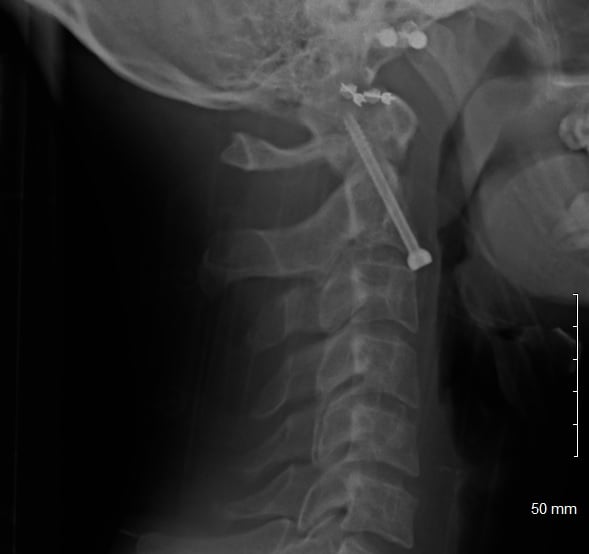
Anterior odontoid screw. Through a Smith-Robinson approach to C2-C3, a cannulated screw is passed from the C2 body into the dens, which preserves C1-C2 rotation. It suits a Type II fracture with a favourable pattern:
- Non-comminuted and not too oblique
- Transverse ligament preserved
It is contraindicated by:
- A transverse fracture line (screw parallel to fracture)
- An oblique fracture running from anterosuperior to posteroinferior
- Pathological bone
Complications
Neurological. Progression of the cord injury is secondary injury, and the measures that limit it are described under Pathophysiology. Iatrogenic injury comes from screw malposition (into the cord, a nerve root or the vertebral artery), excessive retraction and decompression injury.
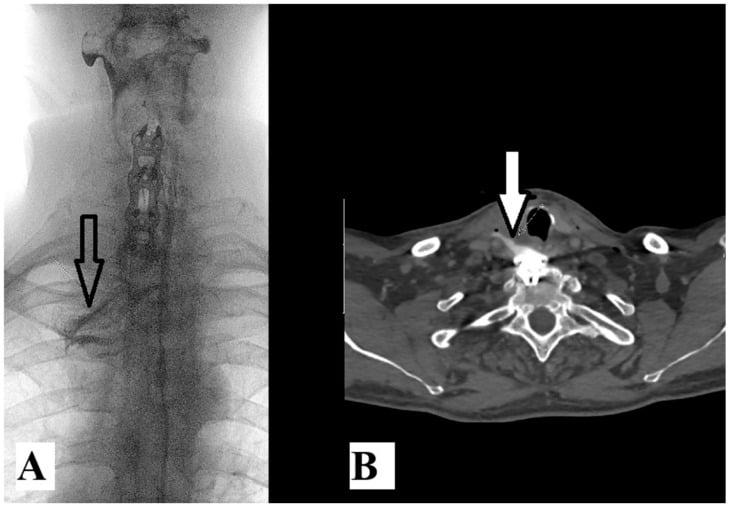
Anterior approach.
- Dysphagia - 2-60% (usually transient)
- Recurrent laryngeal nerve palsy - 2-11% (hoarseness)
- Oesophageal injury - rare but serious
- Vascular injury - carotid, vertebral artery
Posterior approach.
- Vertebral artery injury - 0.1-4% (C2 pedicle screws highest risk)
- C5 palsy - 2-16% (deltoid weakness)
- Wound infection - 1-3%
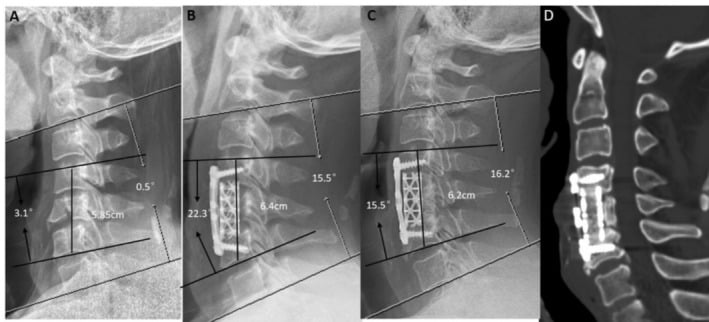
Hardware. Screw pull-out, rod fracture, cage subsidence and plate migration.
Nonunion (pseudarthrosis). Smoking, multilevel fusion and osteoporosis are the risk factors, and nonunion is higher in upper cervical injuries.
Adjacent segment disease. Stress on the adjacent levels increases; the disease accrues over years and may require extension of the fusion.
Medical.
- DVT/PE (high risk in SCI)
- Pneumonia (especially high cervical SCI)
- Pressure ulcers
- Autonomic dysreflexia (injuries above T6)
Postoperative Care
- Neuromonitoring: hourly motor/sensory checks for 24-48h; low threshold for urgent MRI if any deterioration (exclude haematoma)
- Airway: anterior surgery risks airway swelling - consider delayed extubation, swallow assessment for dysphagia
- Haemodynamics: maintain the MAP target in SCI; watch for neurogenic shock
- Rigid collar typically 6-12 weeks after fusion (construct-dependent); halo pin care with daily cleaning and torque checks where used
- Early mobilisation when fixation is stable, with physiotherapy and occupational therapy
- SCI patients transfer to a specialist unit for multidisciplinary rehabilitation, bladder/bowel and skin programmes
- 2 weeks: wound check
- 6 weeks: clinical review with flexion-extension films
- 3 months: fusion assessment
- 12 months: final outcome and CT for fusion
Outcomes
Neurological recovery. A complete injury (ASIA A) carries a poor prognosis for significant motor recovery, and rehabilitation focuses on adaptation and activities of daily living. Incomplete injury (ASIA B-D) has a better prognosis, improved further by early decompression (STASCIS), and central cord syndrome characteristically recovers the legs before the hands. Root injuries have a good prognosis, with meaningful improvement in the majority.
By fracture. Type II odontoid fractures have a high nonunion rate in a halo vest (see the evidence) against high fusion rates with surgery. Jefferson fractures do well in a collar if the TAL is intact, and otherwise after fusion; Types I-II hangman's fractures generally do excellently. SLIC-guided treatment of subaxial injuries with posterior instrumentation achieves high fusion rates.
Long term. Chronic neck pain and reduced range of motion, especially after fusion, are common.
Mortality. Highest in complete SCI, in elderly odontoid fractures (high regardless of treatment), and when upper cervical injury is associated with head injury.
Guidelines, Registries & Global Practice
Global Epidemiology
- Bimodal age distribution: a young-male peak (high-energy road traffic and sports/diving trauma) and an older peak (low-energy falls, often on osteoporotic or ankylosed spines)
- Cervical spine is the most common level of traumatic spinal cord injury, and the proportion of geriatric, fall-related injury is rising worldwide as populations age
- Odontoid fractures are the single most common cervical fracture in patients over 70, frequently from a simple ground-level fall
- Mechanism shift by setting: high-income/ageing populations are dominated by elderly falls; younger road-traffic and diving injuries predominate in many low- and middle-income settings
Side-by-Side Guidelines
- Focus
- Acute SCI management
- Key position
- Recommend against routine high-dose methylprednisolone; support MAP augmentation (target ~85-90 mmHg)
- Focus
- Timing & classification
- Key position
- Early decompression (within 24h) for traumatic cervical SCI; AOSpine subaxial and upper-cervical classifications for communication
- Focus
- Spinal trauma pathways
- Key position
- Selective CT clearance, MRI for neurology/obtunded; consultant-led pathways and specialist transfer
- Focus
- Clearance imaging
- Key position
- CT first-line in significant trauma; clinical clearance via NEXUS / Canadian C-Spine Rule in alert, low-risk patients
Decision Rules for Imaging
- NEXUS and the Canadian C-Spine Rule are the two validated tools for clinical clearance in alert, stable patients; the Canadian rule is more specific (fewer images) while both have very high sensitivity
- CT is first-line whenever imaging is indicated; MRI is reserved for neurological deficit, obtunded patients, or suspected disco-ligamentous injury
High- vs Limited-Resource Practice Variation
- Well-resourced systems: rapid CT and MRI access, dedicated spinal-injury units, early (within 24h) decompression, and structured multidisciplinary rehabilitation
- Limited-resource settings: greater reliance on plain radiographs and clinical decision rules, prolonged collar/halo immobilisation where surgical capacity is constrained, and longer pre-hospital times that increase the importance of meticulous immobilisation and transfer
- Ankylosing spinal disorders (ankylosing spondylitis, DISH) demand a low threshold for CT (often the whole spine) everywhere, as fractures are frequently occult, highly unstable, and easily missed on plain films
Controversies & Areas of Uncertainty
MRI before closed reduction of a facet dislocation. Up to 40-50% of facet dislocations harbour a traumatic disc herniation. Whether to obtain MRI first, to avoid pushing disc into the canal, or to reduce immediately in an awake patient, to decompress the cord sooner, remains debated. Many centres reduce awake when MRI would cause significant delay and the patient is deteriorating.
The elderly Type II odontoid fracture. Surgery improves union rates but carries operative risk, while non-operative care accepts a high rate of stable fibrous nonunion. Given the mortality noted under Outcomes, management is individualised by physiological reserve and patient goals rather than by age alone.
Collar or halo for stable upper cervical injuries. Halo immobilisation is poorly tolerated in the elderly (pneumonia, pressure sores), and many now favour a rigid collar or early surgery over prolonged halo use.
MCQ Practice Points
Q: What are the Canadian C-Spine Rules for determining need for radiography?
A: High-risk factors (mandates imaging): Age 65+; Dangerous mechanism (fall greater than 1m, axial load to head, MVC greater than 100km/h, rollover, ejection, bicycle struck by vehicle); Paresthesias in extremities. Low-risk factors (allows ROM assessment): Simple rear-end MVC, sitting in ED, ambulatory, delayed pain onset, no midline tenderness. If low-risk present AND can actively rotate neck 45° L and R = no imaging needed. High sensitivity for clinically significant injury.
Q: What is the classification of upper cervical (C0-C2) injuries?
A: Occipital condyle fractures (Anderson & Montesano): Types I-III based on mechanism. Atlantooccipital dissociation (Traynelis): Type I-III based on direction. C1 ring fractures (Jefferson): Burst pattern from axial load. Odontoid fractures (Anderson & D'Alonzo): Type I (tip), II (waist - most common, highest nonunion), III (body). Hangman's fracture (Levine & Edwards): Bilateral C2 pars fractures, Types I-III.
Q: What is the SLIC classification for subaxial cervical spine injuries?
A: Subaxial Injury Classification (SLIC) guides treatment. Morphology: Compression (1), Burst (2), Distraction (3), Translation/Rotation (4). Disco-ligamentous complex (DLC): Intact (0), Indeterminate (1), Disrupted (2). Neurological status: Intact (0), Root injury (1), Complete cord (2), Incomplete cord (3), Ongoing compression with deficit (+1). Total score: Less than 4 = non-operative; 4 = surgeon discretion; greater than 4 = operative.
Q: What imaging is recommended for cervical spine trauma evaluation?
A: CT cervical spine: First-line imaging for all significant trauma; Includes skull base to T1; Superior to plain films for bony injury. MRI: Indicated for neurological deficit; Assesses spinal cord, disc herniation, ligamentous injury (DLC); Timing controversial but generally within 24-72 hours. CT angiography: If vertebral artery injury suspected (fracture through foramen transversarium, facet subluxation). Flexion-extension X-rays: Rarely used acutely; May assess stability after collar period.
Q: What are the principles of initial management of cervical spine injuries?
A: Immobilization: Rigid collar (properly sized), log-roll precautions, in-line stabilization. Airway: Early intubation if needed using in-line stabilization (avoid neck extension). Methylprednisolone: Previously standard, now not recommended (AANS/CNS guidelines - risks outweigh benefits). Maintain MAP: Greater than 85-90 mmHg for spinal cord injury to optimize perfusion. Early surgery: Consider for incomplete SCI with ongoing compression, deteriorating neurology, unstable injuries. DVT prophylaxis: High risk population.
Exam Viva Scenarios
Practise clinical reasoning and management decisions out loud
“An 80-year-old man falls and has neck pain. CT shows a fracture at the base of the odontoid (Type II). How do you manage?”
“A 45-year-old presents following a motor vehicle accident with severe neck pain and neurological deficit. He has reduced power in his hands bilaterally (4/5) but normal lower limb power and sensation. CT cervical spine shows bilateral facet dislocation at C5-C6 with significant anterior translation. You classify this as ASIA C incomplete spinal cord injury. The neurosurgical team asks whether you want to proceed with closed reduction in the emergency department or obtain an MRI first. What are the key considerations and how would you proceed?”
“A 52-year-old underwent posterior cervical fusion C4-C7 with lateral mass screw fixation yesterday for a burst fracture of C5 with SLIC score of 6. Pre-operatively he had intact neurology (ASIA E). Post-operative day 1, he reports new onset weakness in both shoulders. On examination, you find bilateral deltoid weakness (3/5) and biceps weakness (3/5), but normal triceps, wrist extensors, and hand function. Sensation is intact. He is otherwise well with stable vital signs and no wound issues. What is your differential diagnosis and how would you manage this?”
Immediate Management
- ATLS immobilization
- Rigid collar until cleared
- CT then MRI if indicated
Upper Cervical
- Jefferson (C1 burst): TAL integrity key
- Odontoid Type II: High nonunion, often surgery
- Hangman: Often neurologically intact
SLIC (Subaxial)
- Score morphology, DLC, neurology
- Score greater than or equal to 5 = surgery
- Less than 4 = conservative
Surgical Options
- Anterior: Corpectomy, ACDF
- Posterior: Lateral mass screws, fusion
Evidence Base
STASCIS - Timing of Decompression in Cervical SCI
- Prospective multicentre cohort, 313 adults with acute cervical SCI; 182 early (mean 14.2h) vs 131 late (mean 48.3h) decompression
- 19.8% of early-surgery patients achieved 2 or more grade ASIA improvement at 6 months vs 8.8% with late surgery (adjusted OR 2.83, 95% CI 1.10-7.28)
- Complication rates similar (24.2% early vs 30.5% late, p=0.21)
- Decompression before 24h is safe and associated with improved neurological recovery
NASCIS III - Methylprednisolone in Acute SCI
- Double-blind RCT, 499 patients within 8h of acute SCI; 24h vs 48h methylprednisolone vs 48h tirilazad
- 48h regimen improved motor recovery only in the subgroup treated 3-8h after injury
- 48h steroid associated with more severe sepsis and severe pneumonia
- Marginal benefit and complication signal led AANS/CNS to recommend AGAINST routine use