Melanoma of Soft Parts | EWSR1-ATF1 Fusion | Young Adults | Distal Extremities
- Clear cell sarcoma is the melanoma of soft parts - it shows melanocytic differentiation but is NOT cutaneous melanoma
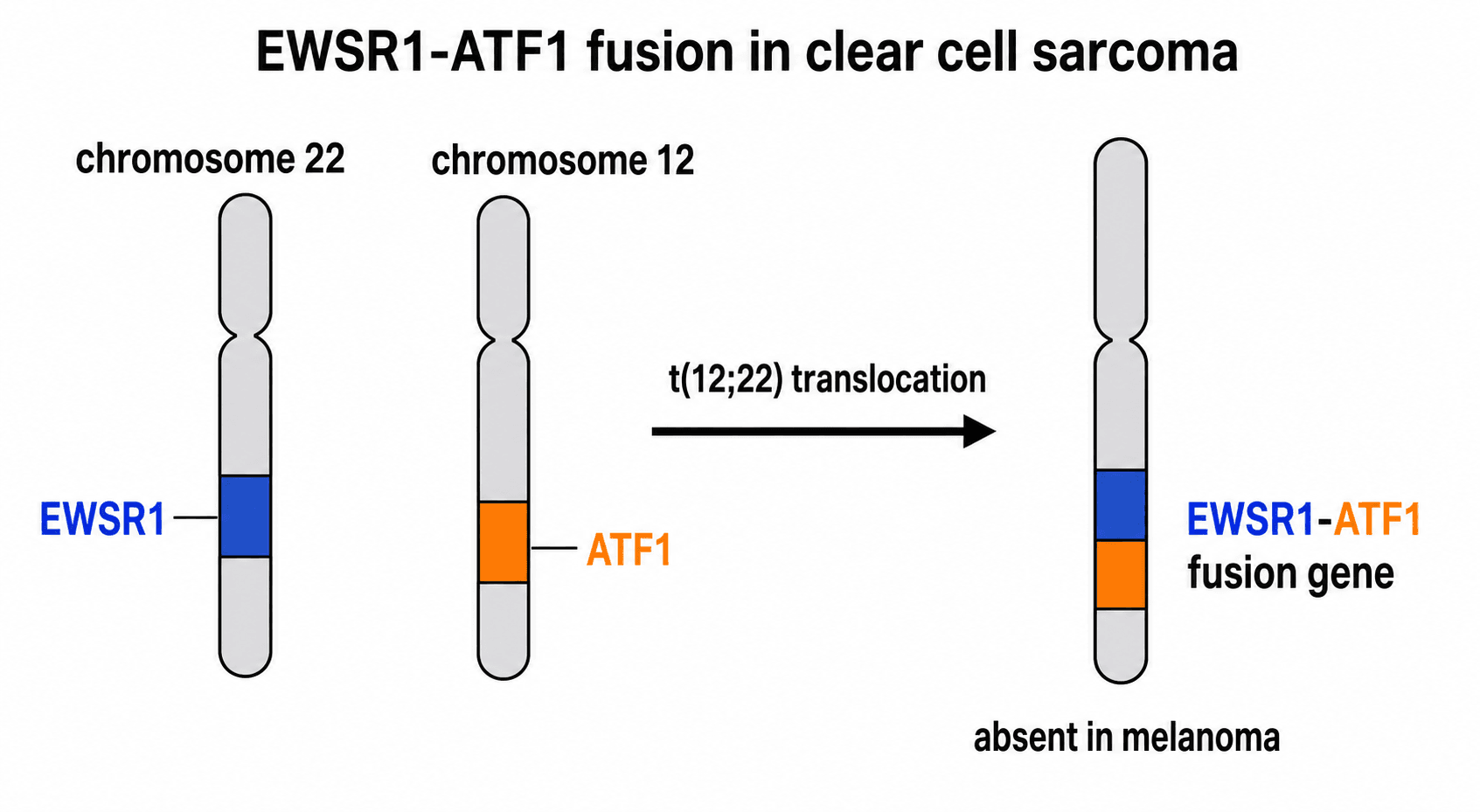
- EWSR1-ATF1 fusion from t(12;22) is the molecular hallmark and is ABSENT in true melanoma - this is the key discriminator
- Most common around the foot and ankle, attached to tendons and aponeuroses, in young adults
- High rate of lymph node spread (around 15-20%) - unusual for a soft tissue sarcoma
- Chemotherapy and radiotherapy are largely ineffective - complete wide surgical excision is the mainstay
- “A melanocytic-looking deep tumour near a tendon with NO skin lesion is clear cell sarcoma until molecular testing proves otherwise
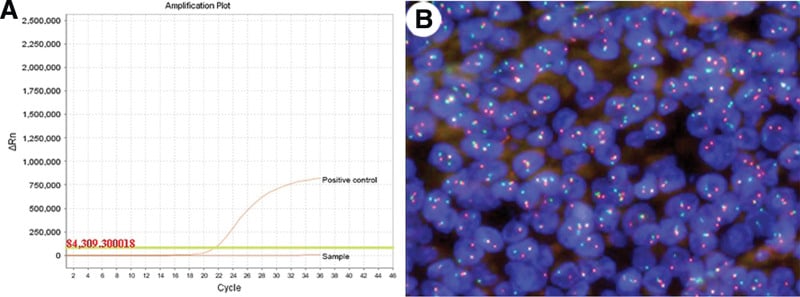
- “EWSR1 break-apart FISH or RT-PCR separates clear cell sarcoma (positive) from melanoma (negative)
- “Late metastases beyond 10 years occur, so lifelong surveillance is needed
- “Even small tumours can metastasise, so size never makes the lesion safe
Overview and Epidemiology
Clear cell sarcoma is a rare, highly malignant soft tissue sarcoma that arises from tendons and aponeuroses, classically in the distal extremities of young adults. It was historically called malignant melanoma of soft parts because its cells share melanocytic differentiation with cutaneous melanoma. Modern molecular pathology shows it is a distinct entity, defined by the EWSR1-ATF1 gene fusion from the t(12;22)(q13;q12) translocation, which is absent in true melanoma.
Who. It makes up about 1% of all soft tissue sarcomas. The peak is in young adults, roughly 20 to 40 years; the sexes are affected about equally, with a slight female predominance in some series. It occurs in children but is uncommon there.
Where. The tumour sits in deep soft tissue, attached to tendon:
- Foot and ankle - the most common site
- Knee and lower leg - frequent
- Hand, wrist and forearm - less common but reported
- Trunk and head and neck - rare
How it spreads. Lymph node metastasis is relatively common, at around 15-20%, which is unusual for a soft tissue sarcoma. Distant spread goes to the lung first and then to bone, and relapse can arrive late, which is why surveillance never really ends.
Pathophysiology and Molecular Biology
Cell of origin. Clear cell sarcoma is thought to arise from neural crest-derived cells with the capacity for melanocytic differentiation, which explains the melanocytic markers and the occasional melanin. The oncogenic driver is a fusion gene that acts as an aberrant transcription factor and switches on MITF, the melanocyte master regulator.
The fusion. The t(12;22)(q13;q12) translocation fuses EWSR1 on chromosome 22 with ATF1 on chromosome 12, and the EWSR1-ATF1 product is present in the large majority of cases. A minority carry the alternative EWSR1-CREB1 fusion instead. The fusion is detected by EWSR1 break-apart FISH or RT-PCR.
Relatives and adjuncts. The gastrointestinal counterpart is the malignant gastrointestinal neuroectodermal tumour (GNET), which shares the EWSR1 rearrangement but lacks melanocytic marker expression. PRAME immunostaining can support the diagnosis but does not separate clear cell sarcoma from melanoma on its own.
Because clear cell sarcoma and melanoma share their melanocytic immunohistochemistry, a melanocytic-appearing deep soft tissue tumour must be tested for the EWSR1-ATF1 (or EWSR1-CREB1) fusion. A positive fusion confirms clear cell sarcoma; melanoma is fusion-negative. Exclude a cutaneous or mucosal primary melanoma on clinical grounds as well.
FUSEDistinguishing Clear Cell Sarcoma from Melanoma
Hook:The fusion gene FUSEs the diagnosis together - melanoma cannot FUSE!
Classification and Histology
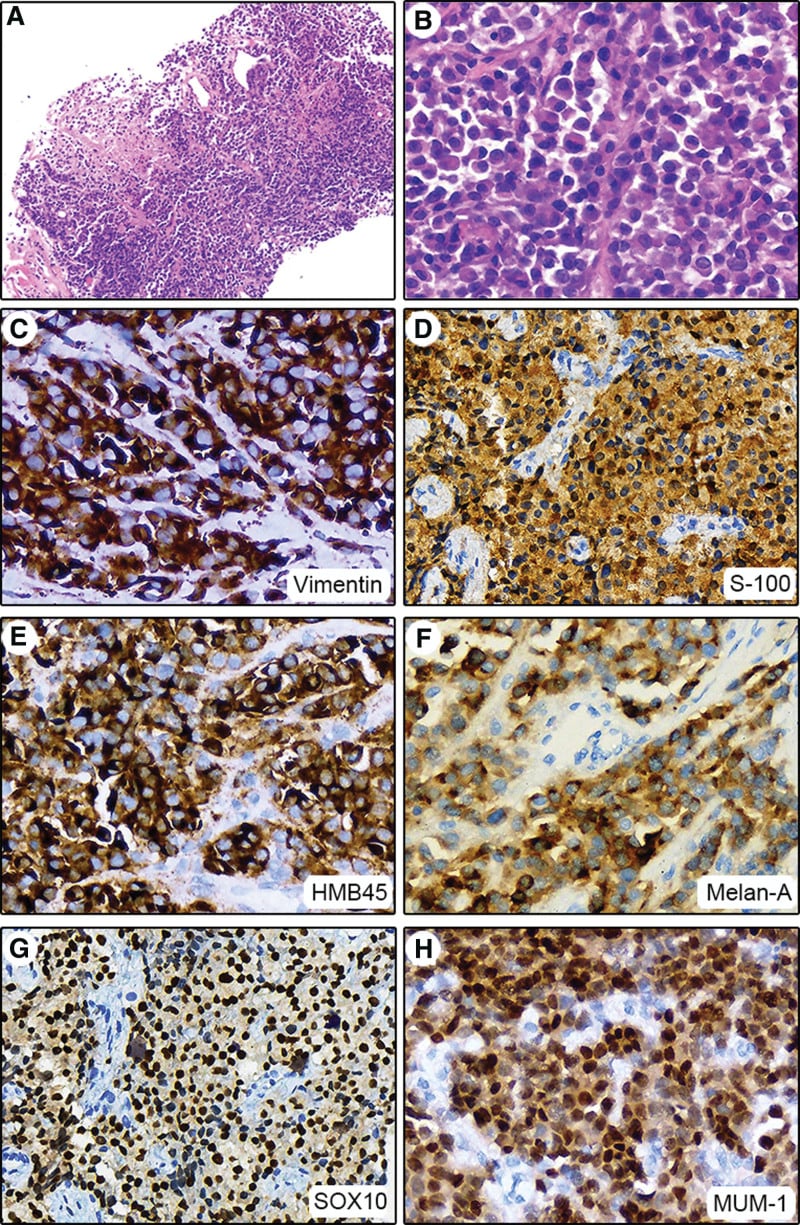
Architecture. Nests and fascicles of cells separated by fibrous septa. The cells are epithelioid to spindled with pale or clear, glycogen-rich cytoplasm and prominent nucleoli, with scattered wreath-like multinucleated giant cells. Together with the markers and the molecular test, this architecture secures the diagnosis.
Other features. Melanin pigment is present in a minority of cases and mitotic activity is low to moderate. The resection specimen shows attachment to tendon or aponeurosis, and necrosis indicates more aggressive disease.
The name collides across three unrelated malignancies, and the corpus carries two of them as separate topics. Confusing them changes the operation, the site you examine and the prognosis you quote.
- Clear cell SARCOMA (this page)
- Soft tissue - tendons and aponeuroses
- Clear cell CHONDROSARCOMA
- Bone - epiphysis (proximal femur or humerus)
- Clear cell sarcoma of the KIDNEY
- Renal, paediatric
- Clear cell SARCOMA (this page)
- Young adults, 20-40
- Clear cell CHONDROSARCOMA
- Adults 25-50, skeletally mature
- Clear cell sarcoma of the KIDNEY
- Young children
- Clear cell SARCOMA (this page)
- Positive (S100, HMB-45, Melan-A, SOX10)
- Clear cell CHONDROSARCOMA
- S100 positive but HMB-45 negative
- Clear cell sarcoma of the KIDNEY
- Negative
- Clear cell SARCOMA (this page)
- EWSR1::ATF1 t(12;22)
- Clear cell CHONDROSARCOMA
- No EWSR1 fusion
- Clear cell sarcoma of the KIDNEY
- BCOR internal tandem duplication
- Clear cell SARCOMA (this page)
- Malignant melanoma
- Clear cell CHONDROSARCOMA
- Chondroblastoma
- Clear cell sarcoma of the KIDNEY
- Wilms tumour
- Clear cell SARCOMA (this page)
- Aggressive; nodal spread; 5-year survival around 42%
- Clear cell CHONDROSARCOMA
- Low grade; over 85% survival after wide resection
- Clear cell sarcoma of the KIDNEY
- Distinct paediatric oncology pathway
What they share is the surgical lesson: both musculoskeletal entities are commonly mistaken for something benign and removed piecemeal, and in both the unplanned intralesional excision is the event that ruins the outcome.
Clinical Presentation
History. The usual story is a slow-growing deep mass around the foot, ankle or knee, present for months to years. It is frequently painless at first, with pain arriving as the tumour grows or involves a nerve, and attachment to tendon may cause mechanical symptoms.
Examination. A firm deep mass, often fixed to deep structures, with no overlying skin lesion, which helps exclude cutaneous melanoma. Examine the regional lymph nodes, and document the neurovascular status distal to the mass.
The slow growth frequently leads to delay, or to the tumour being mistaken for a benign lesion. Many are removed by an unplanned excisional biopsy because a benign cause is assumed, and that excision compromises the margins. Any persistent deep soft tissue mass in a young adult, especially near a tendon, is imaged and biopsied at a sarcoma centre before excision.
Investigations and Imaging
MRI of the whole compartment is the key local staging investigation. It defines the relationship of the tumour to tendons, the neurovascular bundle and the joint, which is what the limb-salvage plan is built on.
- T1 - often slightly high signal because of melanin, a useful but inconstant clue
- T2 - variable, usually intermediate to high signal
- Post-contrast - enhancement, often heterogeneous
Melanin within clear cell sarcoma can produce high T1 signal, as in melanoma. In a deep tendinous mass this is a helpful pointer, but it is not always present and never replaces biopsy and molecular testing.
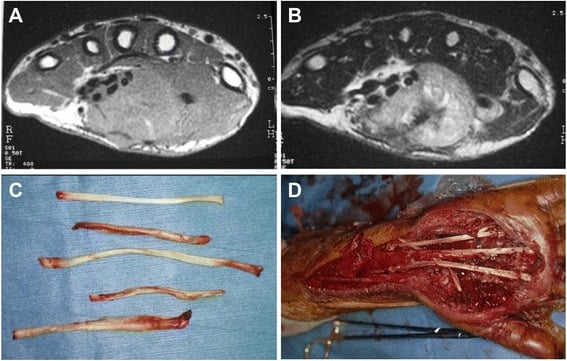
Plain radiographs are often unremarkable, showing a soft tissue shadow at most, with occasional marginal calcification. Bone erosion is uncommon. A normal radiograph does not exclude a sarcoma, so MRI is required.
Staging for metastatic disease. Stage the chest, the nodes and, if there is pain, the bones:
- CT chest for the lungs
- Regional nodal assessment by ultrasound or cross-sectional imaging; sentinel lymph node biopsy is often considered given the melanoma-like nodal behaviour
- PET-CT for occult nodal or distant disease
- Bone imaging if there is bone pain
Biopsy. Plan it with the definitive surgeon at a sarcoma centre. Core needle biopsy is preferred, with the tract placed so it can be excised at surgery, and the request must name EWSR1 fusion testing (break-apart FISH or RT-PCR) alongside melanocytic immunohistochemistry, so send enough tissue for both. An unplanned excisional biopsy is the biopsy to avoid: it is common in this tumour because a benign lesion is assumed, and it compromises the margins.
Staging system. In the AJCC 8th edition soft tissue sarcoma system regional node-positive disease is stage IV, which weighs heavily in a tumour with this nodal rate.
- Grade
- Low
- Size/Node/Metastasis
- Small or larger but low grade, N0 M0
- Implication
- Better outlook, surgery centred
- Grade
- High
- Size/Node/Metastasis
- Up to 10cm, N0 M0
- Implication
- High-grade local disease, plan wide excision
- Grade
- High
- Size/Node/Metastasis
- Greater than 10cm, N0 M0
- Implication
- Larger high-grade tumour, worse prognosis
- Grade
- Any
- Size/Node/Metastasis
- Node positive (N1) or distant metastasis (M1)
- Implication
- Nodal disease upstages to IV in this system
Management
The principle. Complete wide surgical excision with negative margins is the only reliably effective treatment. Chemotherapy is largely ineffective and radiotherapy has only a limited adjuvant role, so in localised disease the single most important predictor of survival is an R0 (microscopically clear) resection.
Surgery. Wide excision with a cuff of normal tissue. Amputation is reserved for the limb in which salvage cannot achieve clear margins.
Nodes. Proven nodal disease is treated by therapeutic lymphadenectomy alongside the wide excision.
Radiotherapy and chemotherapy. Radiotherapy is considered for close or positive margins and for large high-grade tumours. Chemotherapy has limited efficacy and is reserved for selected advanced cases within trials.
- Surgery
- Wide excision with clear margins
- Adjuncts
- Radiotherapy if margins close
- Notes
- Surgery may be the only treatment needed
- Surgery
- Wide excision, consider reconstruction
- Adjuncts
- Adjuvant radiotherapy; chemotherapy of limited value
- Notes
- MDT planning, sentinel node consideration
- Surgery
- Wide excision plus therapeutic lymphadenectomy
- Adjuncts
- Radiotherapy to nodal basin in selected cases
- Notes
- Stage IV, worse prognosis
- Surgery
- Resect oligometastatic lung disease if feasible
- Adjuncts
- Targeted therapy (e.g. MET inhibitors) in trials; conventional chemo poorly effective
- Notes
- Largely incurable, individualise at MDT
Why chemotherapy disappoints. Conventional cytotoxic chemotherapy produces few responses. Interest has shifted to the MET signalling pathway, because the EWSR1-ATF1 fusion drives MITF and MITF upregulates MET. Tyrosine kinase inhibitors such as sunitinib have shown occasional responses, and the EORTC CREATE phase II trial evaluated crizotinib, a MET/ALK inhibitor, in advanced disease, with modest activity concentrated in MET-positive tumours. That is the rationale for a tyrosine kinase inhibitor in advanced disease, ideally within a trial; responses are uncommon and not curative, and no systemic therapy reliably cures the disease.
Clear cell sarcoma shares melanoma's phenotype but not its therapeutic biology. It is a translocation-driven tumour with a low tumour mutational burden, immunologically cold, whereas cutaneous melanoma carries a high, UV-driven mutational burden. So immune checkpoint inhibitors (anti-PD-1/CTLA-4), so effective in melanoma, are largely ineffective here, and because the tumour lacks the BRAF/NRAS mutations of melanoma, BRAF/MEK-targeted therapy does not apply. The emphasis is the opposite of metastatic melanoma: complete surgical excision, not systemic therapy.
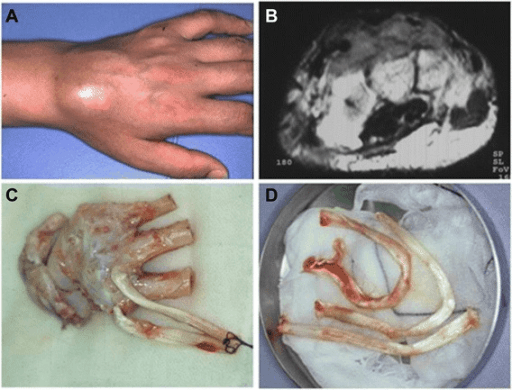
Reconstruction after wide excision. Margin clearance comes first; the reconstruction is planned around the structures sacrificed with the tumour, and durable tumour clearance does not remove the need to watch for structural failure of a complex hand reconstruction. The figures below follow the wrist and palm cases shown earlier.
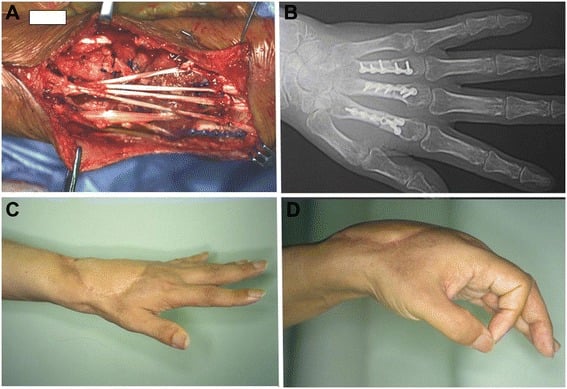
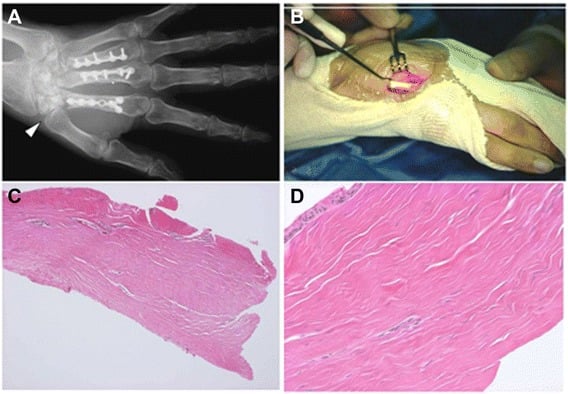
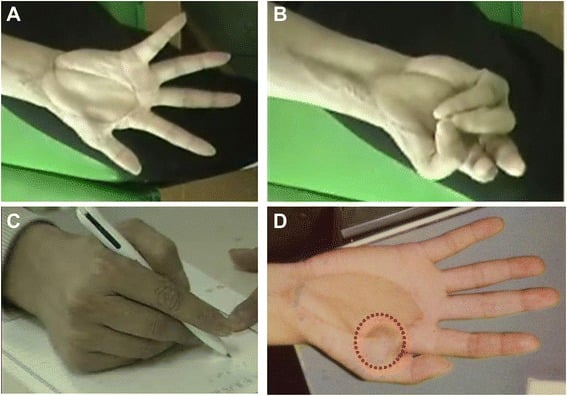
Prognosis and Outcomes
- Favourable
- Small
- Unfavourable
- Large
- Favourable
- R0 (clear)
- Unfavourable
- R+ (positive)
- Favourable
- None at diagnosis
- Unfavourable
- Nodal or distant at diagnosis
- Favourable
- Absent
- Unfavourable
- Present
- Favourable
- More superficial
- Unfavourable
- Deep
The margin is the prognosis. Do not answer a survival question here with a single band. In the largest modern series (43 patients, PMID 39535601), 5-year overall survival in localised disease was 64% after a complete R0 resection and 0% where the margin was positive (p = 0.017). A paediatric cooperative-group series reported 66.4% 5-year overall survival (PMID 12115360). Neither figure sits inside the "40-60%" usually quoted.
Why the first operation decides it. The tumour is small (median 3.6 cm), slow-growing and often assumed benign, so it is frequently removed by an unplanned excision that leaves positive margins, and the survival split above is what that costs. Chemotherapy will not rescue it: of 7 chemotherapy-evaluable paediatric patients there was 1 partial and 1 minor response, with 5 showing no response (PMID 12115360). The answer to "what if the margin is positive" is re-excision, not systemic therapy.
Nodes are the other unusual feature. Lymphatic spread was 18.6% in the adult series. In a SEER analysis of 15,525 sarcoma patients, where the overall nodal rate was only 5.3%, clear cell sarcoma was among the highest (PMID 29529647); node positivity independently predicted worse survival (HR 1.34), and among node-positive patients lymphadenectomy with limb salvage carried the best 5-year survival (HR 0.46).
Where this sits. The diagnosis exists to be separated from melanoma (subungual melanoma is the acral lesion it most often mimics) and from the other translocation sarcomas of young adults, synovial sarcoma, epithelioid sarcoma and alveolar soft part sarcoma. Because the first excision decides the outcome, biopsy principles matter more here than almost anywhere.
- 5-Year Survival
- Around 50-65%
- Comment
- Best outcome group
- 5-Year Survival
- Around 40-60% is the figure usually quoted; both series cited on this page report higher
- Comment
- A conservative all-comers estimate, not a measured value; falls with longer follow-up as late metastases arrive
- 5-Year Survival
- 0% at 5 years, versus 64% after R0
- Comment
- The single most consequential number on the page (p=0.017; PMID 39535601)
- 5-Year Survival
- Very poor (around 1-2 years median)
- Comment
- Largely incurable
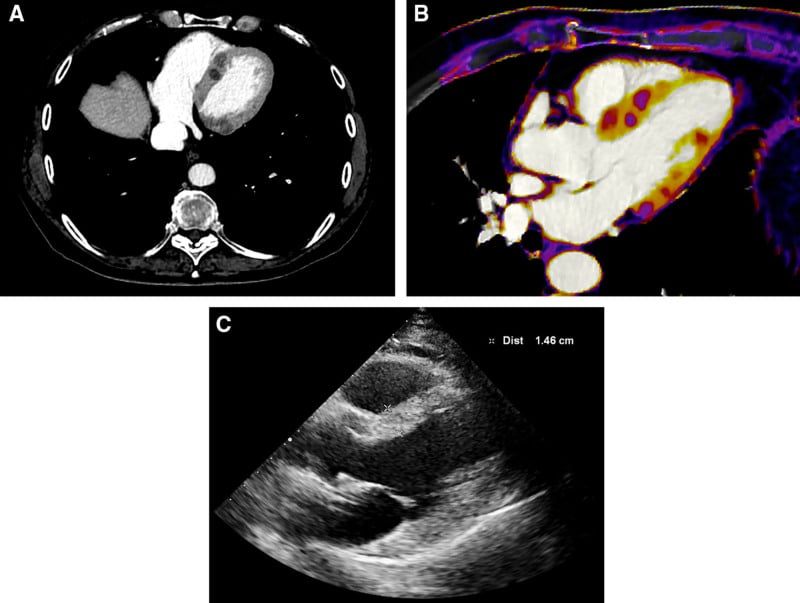
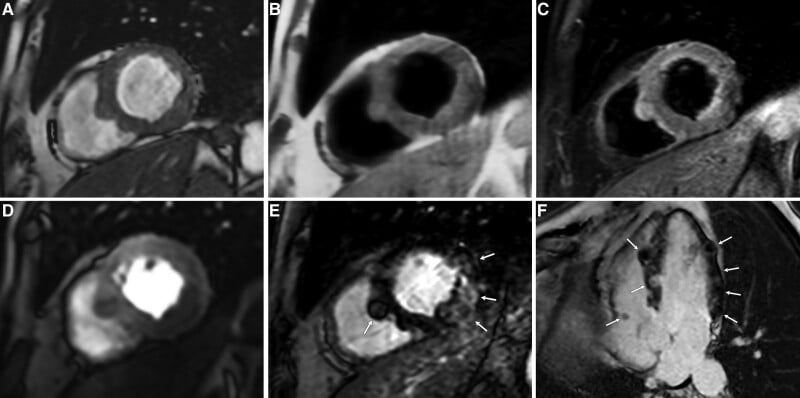
Late and unusual relapse. Recurrence or metastasis can appear many years after treatment, sometimes beyond 10 years, and apparent early cure does not guarantee long-term cure. The two cardiac figures below are a rare example of how disseminated late disease can declare itself.
Clinical Relevance and Surveillance
Surveillance. Because relapse can be late and can be nodal, follow-up is long and includes the nodes:
- Clinical examination including the regional nodes
- Chest imaging for lung metastases
- Local MRI if recurrence is suspected
- Continued long term, given the late relapse
Counselling and safe practice. Whatever the health system, the same points hold. Refer any persistent deep soft tissue mass to a sarcoma centre before biopsy, confirm that EWSR1 fusion testing was requested, and assess and document the regional nodes. Counsel on the need for complete surgery, the limited role of chemotherapy and radiotherapy, and the risk of late relapse, and provide a written long-term surveillance plan.
Guidelines, Registries & Global Practice
Global Epidemiology
- Rarity: About 1% of all soft tissue sarcomas worldwide
- Age: Predominantly young adults (peak roughly 20 to 40 years)
- Site: Strong predilection for the distal lower limb, especially foot and ankle
- Variant: The gastrointestinal counterpart (GINET) shares the EWSR1 rearrangement
- Nodal spread: Among the highest of soft tissue sarcomas (SEER data)
- Metastatic pattern: Lung dominant, then bone and lymph nodes
- Survival: Roughly 40 to 65% at 5 years, driven heavily by completeness of resection
- Late relapse: Recurrence beyond 10 years is well recognised
Side-by-Side Guidance from Major Bodies
- Diagnosis
- Refer to sarcoma centre before biopsy; molecular confirmation of EWSR1 fusion
- Local Treatment
- Wide excision with radiotherapy for high-risk tumours
- Systemic Therapy
- Conventional chemotherapy of limited value; targeted/trial options for advanced disease
- Diagnosis
- Core biopsy at a sarcoma centre; multidisciplinary review and node assessment
- Local Treatment
- Limb-sparing wide excision; re-excision for positive margins
- Systemic Therapy
- Individualised systemic therapy; tyrosine kinase inhibitors considered in relapse
- Diagnosis
- Mandatory specialist sarcoma MDT before definitive treatment
- Local Treatment
- Centralised surgery and radiotherapy at designated centres
- Systemic Therapy
- Chemotherapy reserved for selected advanced cases
Across regions the agreed principles are the same: refer any suspicious deep or enlarging soft tissue mass to a specialist sarcoma centre before biopsy, confirm the diagnosis molecularly (EWSR1 fusion), and plan definitive treatment through a multidisciplinary sarcoma team centred on complete surgical excision.
High- vs Limited-Resource Practice Variation
- Routine EWSR1 break-apart FISH, RT-PCR or NGS for fusion confirmation
- Centralised sarcoma MDTs with limb-salvage surgery and reconstruction
- Sentinel lymph node biopsy and PET-CT staging
- Access to targeted agents and clinical trials for advanced disease
- Diagnosis may rely on morphology plus melanocytic immunohistochemistry where molecular testing is unavailable
- Later presentation with larger tumours and higher amputation rates
- Restricted radiotherapy and targeted-therapy access
- Telepathology and regional referral networks help bridge gaps
MCQ Practice Points
Q: What gene fusion defines clear cell sarcoma and distinguishes it from melanoma? A: The EWSR1-ATF1 fusion from t(12;22)(q13;q12) (with EWSR1-CREB1 as a less common variant). It is present in clear cell sarcoma and absent in melanoma, making EWSR1 break-apart FISH or RT-PCR the key discriminator.
Q: Why can immunohistochemistry not separate clear cell sarcoma from melanoma? A: Both express the same melanocytic markers (S100, HMB-45, Melan-A, SOX10). Only molecular testing for the EWSR1 fusion reliably distinguishes them.
Q: Where does clear cell sarcoma most commonly arise? A: In the deep soft tissue of the distal extremities, especially the foot and ankle, attached to tendons and aponeuroses, in young adults aged roughly 20 to 40 years.
Q: What is the mainstay of treatment for localised clear cell sarcoma? A: Complete wide surgical excision with negative (R0) margins. Chemotherapy is largely ineffective and radiotherapy has a limited adjuvant role. R0 resection is the strongest predictor of survival.
Q: What pattern of spread is unusually common in clear cell sarcoma for a soft tissue sarcoma? A: Lymph node metastasis (around 15-20%), in addition to lung and bone, which is why regional nodes should be assessed and sentinel node biopsy considered.
Exam Viva Scenarios
Practise clinical reasoning and management decisions out loud
“A 27-year-old man presents with a 3cm firm, slow-growing mass on the dorsum of the foot, present for about 2 years and attached to the deep tissues near the extensor tendons. There is no overlying skin lesion. How would you investigate, and what diagnosis must you not miss?”
“A pathologist reports a deep soft tissue tumour that is S100, HMB-45 and Melan-A positive and asks whether this is metastatic melanoma or clear cell sarcoma. There is no known skin primary. How do you resolve this?”
“A 30-year-old woman had a 2.5cm mass marginally excised from the ankle as a presumed ganglion. Histology returns as clear cell sarcoma with positive margins. CT chest is clear. How do you manage her now?”
Key Identity
- Rare soft tissue sarcoma (about 1% of all soft tissue sarcomas)
- Historic name: malignant melanoma of soft parts
- Young adults, deep distal extremities, especially foot and ankle, on tendons and aponeuroses
- Shows melanocytic differentiation but is NOT cutaneous melanoma
Molecular Biology (Defining)
- EWSR1-ATF1 fusion from t(12;22)(q13;q12) is the hallmark
- EWSR1-CREB1 is a less common variant fusion
- Fusion is ABSENT in melanoma - the key discriminator
- Detect with EWSR1 break-apart FISH or RT-PCR; fusion drives MITF and MET
Pathology and Markers
- Nests of epithelioid to spindled cells with clear cytoplasm and wreath-like giant cells
- Positive for S100, HMB-45, Melan-A, SOX10 (shared with melanoma)
- PRAME often positive but does not separate CCS from melanoma
- Differentials: melanoma, MPNST, synovial sarcoma, PEComa, GNET
Clinical and Imaging
- Slow-growing deep mass, often painless, long history, diagnostic delay common
- MRI may show high T1 signal from melanin; define compartment and tendons
- CT chest for lung metastases; assess regional nodes, consider sentinel node biopsy
- Node-positive disease is stage IV in the AJCC system
Management
- Complete wide surgical excision with R0 margins is the mainstay
- Refer before biopsy; avoid unplanned excisional biopsy
- Radiotherapy for close/positive margins or large high-grade tumours
- Conventional chemotherapy largely ineffective; tyrosine kinase inhibitors (e.g. sunitinib) in advanced disease/trials
Prognosis and Surveillance
- R0 resection is the strongest survival predictor (R+ markedly worse)
- Even small tumours metastasise; lung then bone and nodes
- 5-year survival roughly 40-65%, falling with longer follow-up
- Late relapse beyond 10 years - long-term surveillance is essential
Evidence Base and Key Studies
Largest Modern Cohort: Prognostic Factors in Clear Cell Sarcoma
- Single-centre retrospective series of 43 patients with clear cell sarcoma and the GINET variant, one of the largest clinical cohorts reported
- EWSR1::ATF1 translocation positive in 24 of 26 tissues tested (94%); median tumour size only 3.6 cm
- Complete R0 resection correlated significantly with survival in localised disease (5-year overall survival 64% with R0 versus 0% with R+, p=0.017)
- Lymphatic spread in 18.6% and distant metastases in 20.9%; initial metastatic disease gave a dismal median survival of 1.4 years versus 7.1 years for M0 (p less than 0.001)
- THE MECHANISM BEHIND THE MARGIN FIGURE: 79.5% of these patients underwent an EXCISIONAL BIOPSY, with a benign lesion suspected in 30.2% - which is precisely how the R+ resections happened. The lump is small, slow-growing and looks innocent, so it is shelled out, and that single decision is what separates 64% survival from 0%
Aggressive Behaviour and Chemoresistance in Paediatric Clear Cell Sarcoma
- Cooperative-group series of 28 paediatric patients treated 1980-2000 by the Italian and German soft tissue sarcoma groups
- 5-year overall and event-free survival of 66.4% and 63.3% after a median follow-up of 102 months
- Only 1 partial and 1 minor response among 7 chemotherapy-evaluable patients, with 5 showing no response
- Outcome differed significantly by IRS group, tumour size and site; complete resection was the mainstay and the only treatment needed for small tumours
EWSR1 Break-Apart FISH Distinguishes Clear Cell Sarcoma from Melanoma
- Eighteen non-cutaneous melanocytic tumours examined with EWSR1 (22q12) break-apart FISH and RT-PCR
- Two cases were reclassified as clear cell sarcoma based on EWSR1 rearrangement (mean 67.5% positive cells)
- Type 1 EWSR1 exon 8-ATF1 exon 4 fusion transcripts confirmed in the FISH-positive cases by RT-PCR
- The remaining 16 melanomas lacked EWSR1 break-apart signals
EWSR1-ATF1 Fusion and the Role of PRAME (Narrative Review)
- Synthesises that clear cell sarcoma arises from connective tissue and is defined by the EWSR1-ATF1 fusion from t(12;22), absent in melanoma
- Highlights PRAME as an immunohistochemical marker that supports the diagnosis but does not by itself separate clear cell sarcoma from melanoma
- Wide surgical excision is the cornerstone for localised disease, with sentinel lymph node biopsy aiding staging and adjuvant radiotherapy in selected cases
- Chemotherapy has limited efficacy; targeted therapy against EWSR1-ATF1-driven pathways and immune checkpoint inhibitors are emerging strategies
Synovial sarcoma is not associated with a higher risk of lymph node metastasis compared with other soft tissue sarcomas
- SEER analysis of 15,525 adults with soft tissue sarcoma diagnosed 2004-2013
- Overall lymph node metastasis at diagnosis was 5.3%, but clear cell sarcoma was among the subtypes with the highest nodal rates (alongside rhabdomyosarcoma, epithelioid and myxoid/round cell liposarcoma)
- Lymph node metastasis independently predicted worse overall survival (HR 1.34, p less than 0.001)
- Among node-positive patients, lymphadenectomy combined with limb salvage was associated with the highest 5-year survival (HR 0.46)
Sunitinib Activity in Clear Cell Sarcoma
- Report of objective tumour response to the multitargeted tyrosine kinase inhibitor sunitinib in clear cell sarcoma
- Provides clinical proof of principle that targeting kinase pathways (including MET signalling downstream of the fusion-driven MITF program) can produce responses
- Relevant to a tumour type that is largely resistant to conventional cytotoxic chemotherapy
- Supports investigating molecularly targeted agents in advanced clear cell sarcoma