Co-Cr-Mo and Wear Resistance
- Co-Cr-Mo alloys are used mainly for bearing surfaces in joint replacement, for their exceptional wear resistance and high strength, and not for fracture fixation
- Cobalt is the base, chromium gives passivation, molybdenum gives grain refinement and strength
- Surface finish is critical: bearing surfaces are highly polished
- CoCr does not osseointegrate: uncemented components need a porous or coated surface
- “Young's modulus ~220-240 GPa, stiffer than stainless steel
- “Very hard (Vickers ~300-400), with excellent wear resistance
- “The major concerns are metal ion toxicity (cobaltism) and hypersensitivity (ALVAL) where metal-on-metal wear occurs
Cobalt Chrome Alloys
Overview
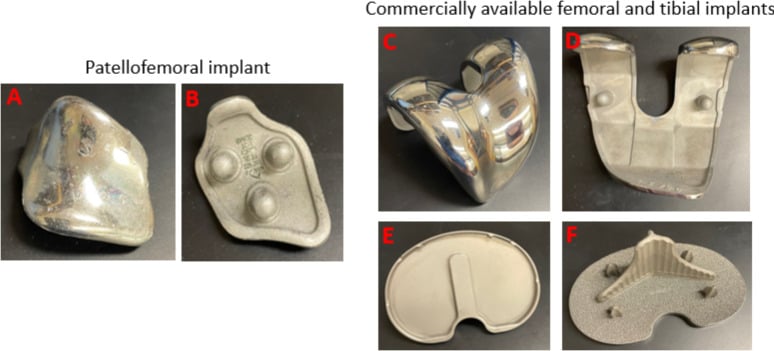
Cobalt-chromium alloys (Co-Cr-Mo), historically marketed as "Vitallium" since the 1930s, are the hardest and most wear-resistant orthopaedic metals. Their main use is the bearing surface: the TKA femoral component, articulating with the polyethylene tibial insert, and the THA femoral head of 28-36 mm, articulating with polyethylene or ceramic.
The finish. Exceptional hardness and a polish to Ra less than 0.05 µm keep polyethylene wear debris to a minimum. The same alloy can serve very different functions depending on its geometry, finish and articulation.
The limitation. CoCr does not osseointegrate. Bone will not bond to a polished surface, so uncemented components need porous CoCr beads, plasma-sprayed titanium or hydroxyapatite.
The concerns. Metal ion toxicity (cobaltism) and adverse reaction to metal debris (ARMD), including ALVAL, which causes pseudotumours. Both arise especially from metal-on-metal articulations and from modular taper junctions (trunnionosis).
Composition and Key Properties
Composition. Each element is there for a reason:
- Cobalt, 60-65%: the base metal, contributing hardness
- Chromium, 27-30%: forms the chromium oxide (Cr₂O₃) passive layer that gives corrosion resistance
- Molybdenum, 5-7%: solid-solution strengthening and grain refinement
- Carbon, 0.05-0.35%: forms the hard carbides described below
- Nickel: under 1% (trace) in F75, higher in F562 (MP35N), which matters in severe nickel allergy
Stiffness. Young's modulus is about 220-240 GPa, much stiffer than titanium (~110 GPa) and cortical bone (~15-20 GPa). A fully CoCr stem therefore risks proximal stress shielding, which favours titanium or cemented stems.
Hardness and wear. At Vickers ~300-400 it is the hardest orthopaedic metal, ideal for a polished bearing surface. Its fatigue and wear resistance are the highest of the common implant metals, which makes it the standard hard counterface against polyethylene.
Microstructure and Metallurgy
Two crystal phases. CoCr exists mainly as face-centred cubic (FCC), the phase stable at high temperature and the more ductile, or hexagonal close-packed (HCP), stable at low temperature, harder but more brittle. The transformation between them during cooling affects mechanical properties, and controlled processing maintains the optimal balance. At body temperature the as-processed alloy is largely a metastable FCC (γ) matrix: HCP (ε) is thermodynamically favoured but kinetically sluggish, so the bulk stays FCC.
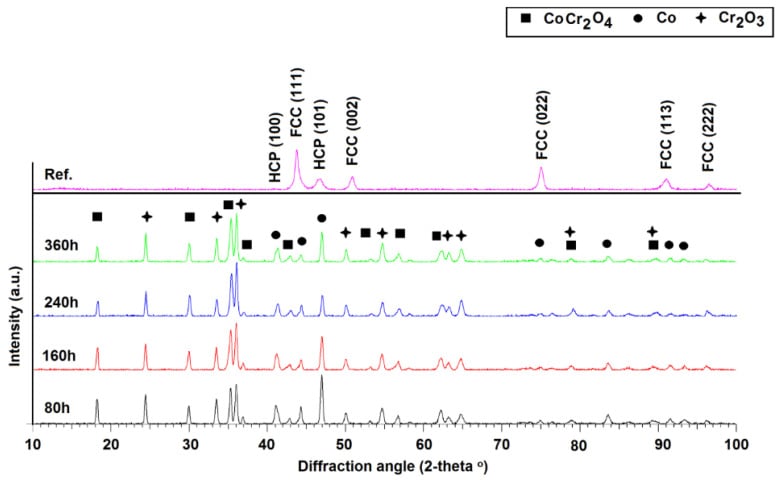
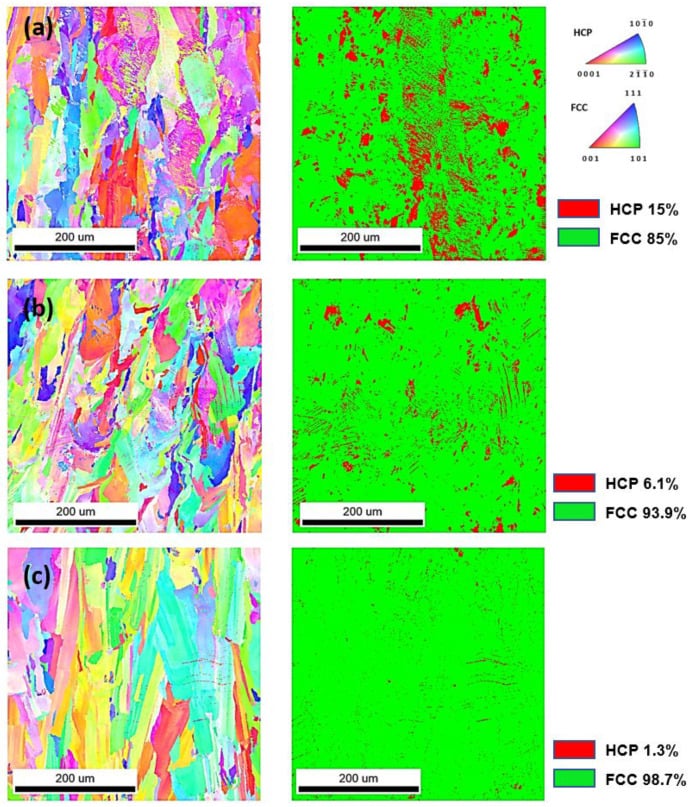
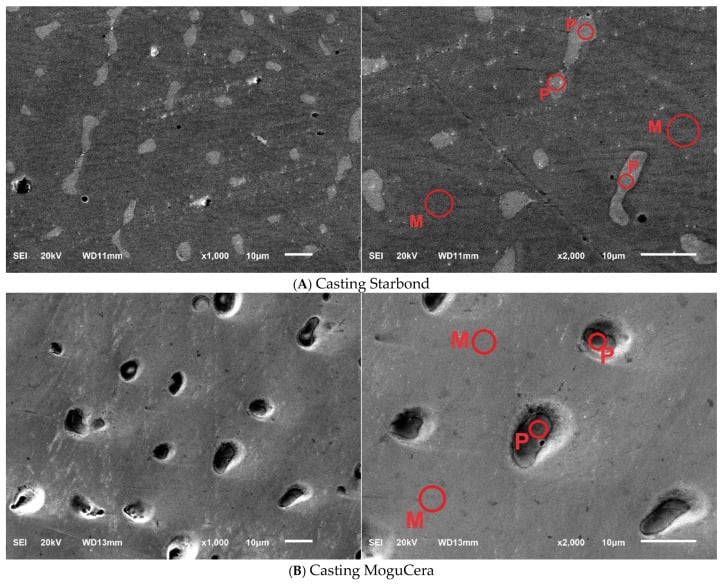
Grain structure. Cast alloys have large, dendritic grains with interdendritic carbides; wrought alloys have fine, equiaxed grains from thermomechanical processing. Smaller grains mean higher strength, the Hall-Petch relationship.
The passive layer. A 2-5 nm chromium oxide layer forms spontaneously in air and physiological fluids and provides corrosion resistance in chloride-rich body fluids. It repairs itself if scratched, repassivating within milliseconds. Fretting, at modular junctions in particular, can disrupt it and release cobalt and chromium ions.
Why CoCr Resists Wear
The self-hardening surface. During articulation the surface deforms plastically and undergoes a strain-induced (martensitic) FCC-to-HCP transformation. The result is a thin, very hard, low-friction HCP layer on the tougher FCC substrate: the alloy work-hardens a hard skin over a ductile core. It is a major reason CoCr outperforms other metals as a bearing counterface, and it refreshes this tribological surface with use.
CoCr is "the hardest, most wear-resistant" implant metal for more than its bulk Vickers value: the effective surface hardness is a dynamically generated HCP layer, formed by strain-induced transformation of the metastable FCC matrix at the articulating surface.
Carbides. Carbon combines with chromium and molybdenum to precipitate hard M₂₃C₆ (and M₆C) carbides. M₂₃C₆ is the primary strengthening phase, distributed at the grain boundaries. The carbides stand proud as load-bearing, abrasion-resistant particles that shield the softer matrix, the direct reason high-carbon CoCr is more wear-resistant.
Carbide pull-out. Carbides are hard but brittle and imperfectly bonded. Under load they can fracture or pull out of the matrix and become third-body abrasive particles, which scratch the counterface and accelerate wear.
The carbon trade-off. Carbon content is specified alongside the cobalt, chromium and molybdenum because it sets the balance between wear and fatigue:
- Carbon Content
- 0.2-0.35%
- Carbides
- Abundant M₂₃C₆
- Properties
- Superior wear resistance, lower ductility
- Carbon Content
- less than 0.15%
- Carbides
- Minimal
- Properties
- Better fatigue strength, higher ductility
High carbon is chosen where wear resistance is paramount, on bearing surfaces. In cast alloy the precipitates may form discontinuous or elongated networks, and continuous coarse networks reduce ductility and promote brittle fracture. Low carbon is favoured where cyclic stress rather than wear dominates, as in high-stress applications.
Classification and Manufacturing
ASTM grades. The standard names the processing route and, with it, the use:
- Type
- Cast
- Manufacturing
- Investment casting
- Primary Use
- TKA femoral, complex shapes
- Type
- Wrought (thermomechanically processed)
- Manufacturing
- Forged/hot worked
- Primary Use
- High-stress applications
- Type
- Wrought (low carbon)
- Manufacturing
- Forged
- Primary Use
- Femoral heads, stems
- Type
- Wrought (Haynes 25)
- Manufacturing
- Cold worked
- Primary Use
- Wire, cables
Investment casting (F75). The lost-wax sequence runs wax pattern, ceramic shell, dewax, pour the molten CoCr, then finish and polish. It gives complex geometry such as the TKA condyles at near-net shape, but risks porosity, large grains and grain-boundary carbide segregation, and cast alloy is weaker than wrought.
Wrought processing (F1537). A cast ingot is hot-forged at 1000-1200°C with recrystallisation to refine the grains, then optionally cold-worked. The refined grain gives stronger, tougher components, the choice for load-bearing femoral heads.
Heat treatment. Solution annealing dissolves the carbides into the matrix and homogenises the composition; controlled cooling then re-precipitates a fine, favourable carbide distribution. Casting tends to segregate coarse carbides at the grain boundaries, whereas wrought processing gives a finer, more uniform structure.
Hot isostatic pressing (HIP). Simultaneous heat (~1200°C) and pressure (~100 MPa) close internal porosity, including casting porosity, and improve fatigue properties by 20-30%. It is standard for high-demand parts.
Surface treatments. Bearing surfaces demand polish; fixation surfaces use controlled roughness or porosity.
- Ion implantation: nitrogen ions create a hard surface layer
- PVD coatings: TiN or CrN for enhanced wear resistance
- Plasma spraying: titanium or HA coating for biological fixation
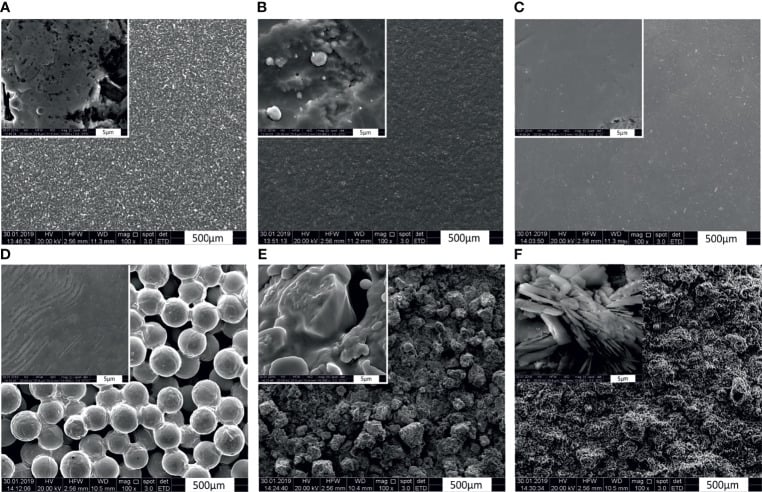
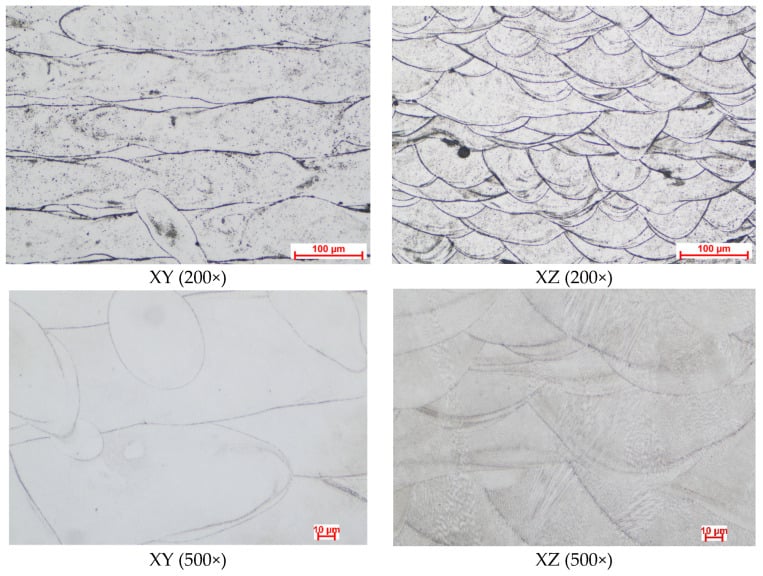
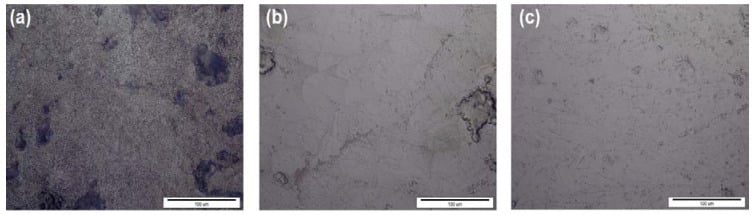
Additive manufacturing (SLM/EBM). Building layer by layer from CoCr powder allows lattice and patient-specific designs. The parts require HIP and surface finishing, and there are no long-term registry data. Overlapping melt pools and a direction-dependent cellular structure record the laser scan path and rapid solidification. Build orientation and thermal history influence anisotropy, residual stress and the later response to heat treatment, and different machines and process windows produce different pore distributions, melt-pool boundaries and grain structures from the same nominal composition. Process qualification must therefore control microstructure, not merely chemistry.
Clinical Assessment
When to suspect it. Assessment is aimed at adverse reaction to metal debris, which is particularly relevant for:
- Metal-on-metal hip articulations
- Large-diameter metal heads, greater than 36 mm
- Modular neck-stem junctions (mechanically assisted crevice corrosion)
History. Groin pain, even with a well-fixed implant, or thigh pain. Fatigue, cognitive change and cardiac symptoms suggest systemic cobaltism, and symptoms may develop years after implantation.
Examination. Look for limited movement, positive impingement signs and a palpable mass (pseudotumour). A rash or dermatitis suggests metal hypersensitivity, and peripheral neuropathy should be checked for.
Red flags for metal toxicity.
- Unexplained pain in a well-functioning arthroplasty
- Serum cobalt or chromium greater than 7 μg/L
- Fluid collections on imaging
- Systemic symptoms: visual change, hearing loss, cardiomyopathy, thyroid dysfunction
- Clues
- Groin pain, fluid/pseudotumour on MARS-MRI, raised Co/Cr
- Discriminator
- Co or Cr elevated, lymphocytic infiltrate on histology
- Clues
- Pain, effusion, warmth; can mimic ARMD
- Discriminator
- Raised CRP/ESR, positive aspirate culture, neutrophilic histology
- Clues
- Start-up pain, radiolucent lines, lytic lesions
- Discriminator
- Normal metal ions, macrophage/granuloma reaction to PE debris
- Clues
- Acute pain after load, instability, deformity
- Discriminator
- Radiographs; normal ions and inflammatory markers
Investigations
Metal ions. The ion level flags risk, but it cannot on its own define how badly the tissues are damaged; imaging determines soft-tissue damage and bone loss.
- Normal Range
- less than 1 μg/L
- Concern Threshold
- greater than 7 μg/L (MHRA)
- Interpretation
- Systemic toxicity risk
- Normal Range
- less than 1 μg/L
- Concern Threshold
- greater than 7 μg/L (MHRA)
- Interpretation
- ALVAL/pseudotumour risk
- Normal Range
- Preferred over serum
- Concern Threshold
- Hip-specific thresholds
- Interpretation
- More accurate for MoM
Imaging. Each modality answers a different question:
- Radiographs: implant position, loosening, osteolysis
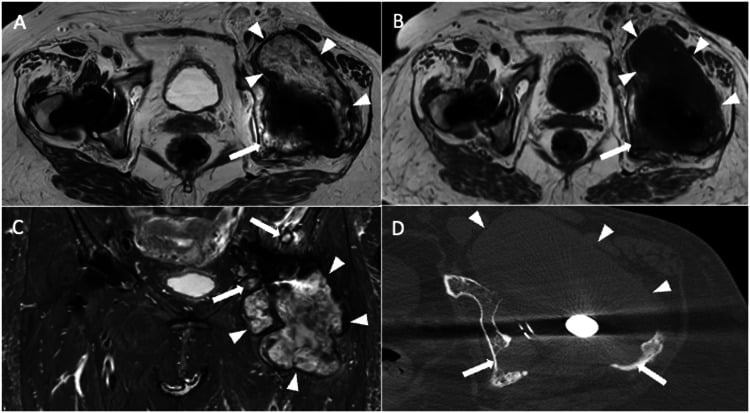
- MARS-MRI (metal artefact reduction sequence): the gold standard for the soft tissues, detecting pseudotumours, fluid collections and muscle atrophy; it needs specialised sequences to reduce metal artefact
- Ultrasound: the alternative if MRI is unavailable; operator-dependent
- CT with metal subtraction: bone stock and osteolysis
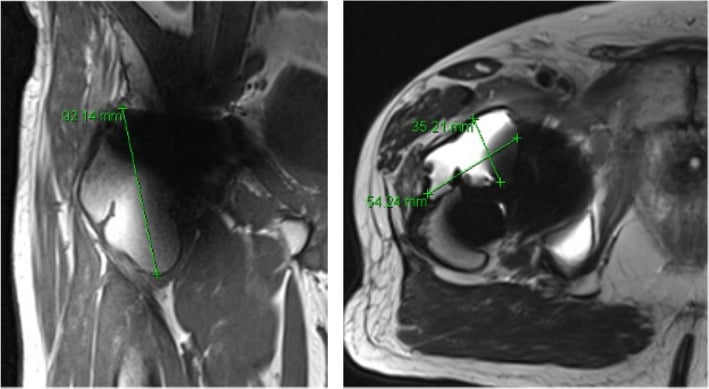
Advanced reaction. Low-signal, metal-laden tissue, a lobular mass and acetabular and femoral bone resorption indicate advanced adverse local tissue reaction. Aspiration and cross-sectional imaging separate it from infection and from polyethylene particle disease.
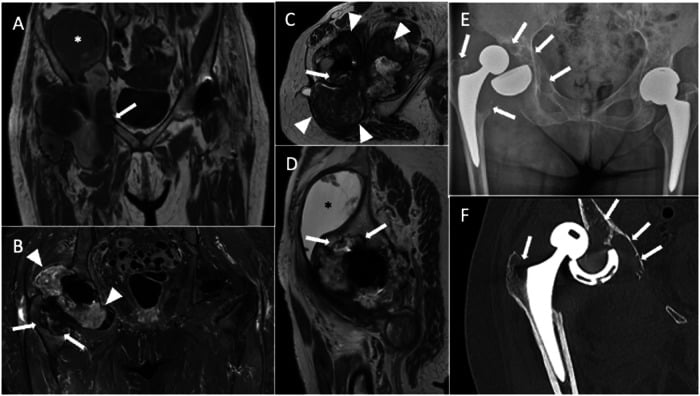
Grading the lesion (Anderson). The MARS-MRI appearance is tied to management:
- Description
- Fluid only
- Management Implication
- Monitor, may resolve
- Description
- Cystic mass
- Management Implication
- Consider revision
- Description
- Solid mass with necrosis
- Management Implication
- Revision recommended
Testing the material. In the laboratory and in research, the alloy itself is assessed by:
- Wear simulation (hip simulator)
- Surface roughness measurement (Ra values)
- Electrochemical corrosion testing
- Metallographic analysis of grain structure and carbides
Management
Surveillance. Asymptomatic patients with metal-on-metal hips, and those with large-head or at-risk taper combinations, have an annual clinical review with blood cobalt and chromium, under MHRA-type guidance. MARS-MRI is added if they become symptomatic or if Co/Cr exceeds ~7 µg/L. Follow-up is lifelong, with a lower threshold for imaging groin pain, which may be trunnionosis. Surveillance integrates symptoms, serial Co/Cr trends, radiographs and MARS MRI rather than relying on a single threshold.
The symptomatic patient. Ion level and imaging are read together:
- Imaging
- Normal
- Recommendation
- Monitor, repeat in 6-12 months
- Imaging
- Normal
- Recommendation
- Close monitoring, consider MRI
- Imaging
- Pseudotumour
- Recommendation
- Consider revision surgery
- Imaging
- Any
- Recommendation
- Urgent revision recommended
Neither number is absolute. The 7 µg/L level is a pragmatic alert, and the trend over time is more useful than a single value. The 20 µg/L row matches the cobaltism level above; in Langton's asymptomatic cohort, cobalt above 20 µg/L was frequently associated with metal staining and osteolysis, a descriptive finding rather than a threshold with a reported sensitivity or specificity.
Revision principles.
- Convert to a ceramic-on-polyethylene or metal-on-polyethylene articulation; for the bearing, a ceramic head on HXLPE, avoiding metal-on-metal
- Excise the black or grey metallotic tissue completely
- Address the bone defects, often extensive osteolysis
- Stem: assess the taper and stem for damage; a well-fixed stem may be retained, a loose one revised to a titanium stem
- Cup: revise if loose or malpositioned
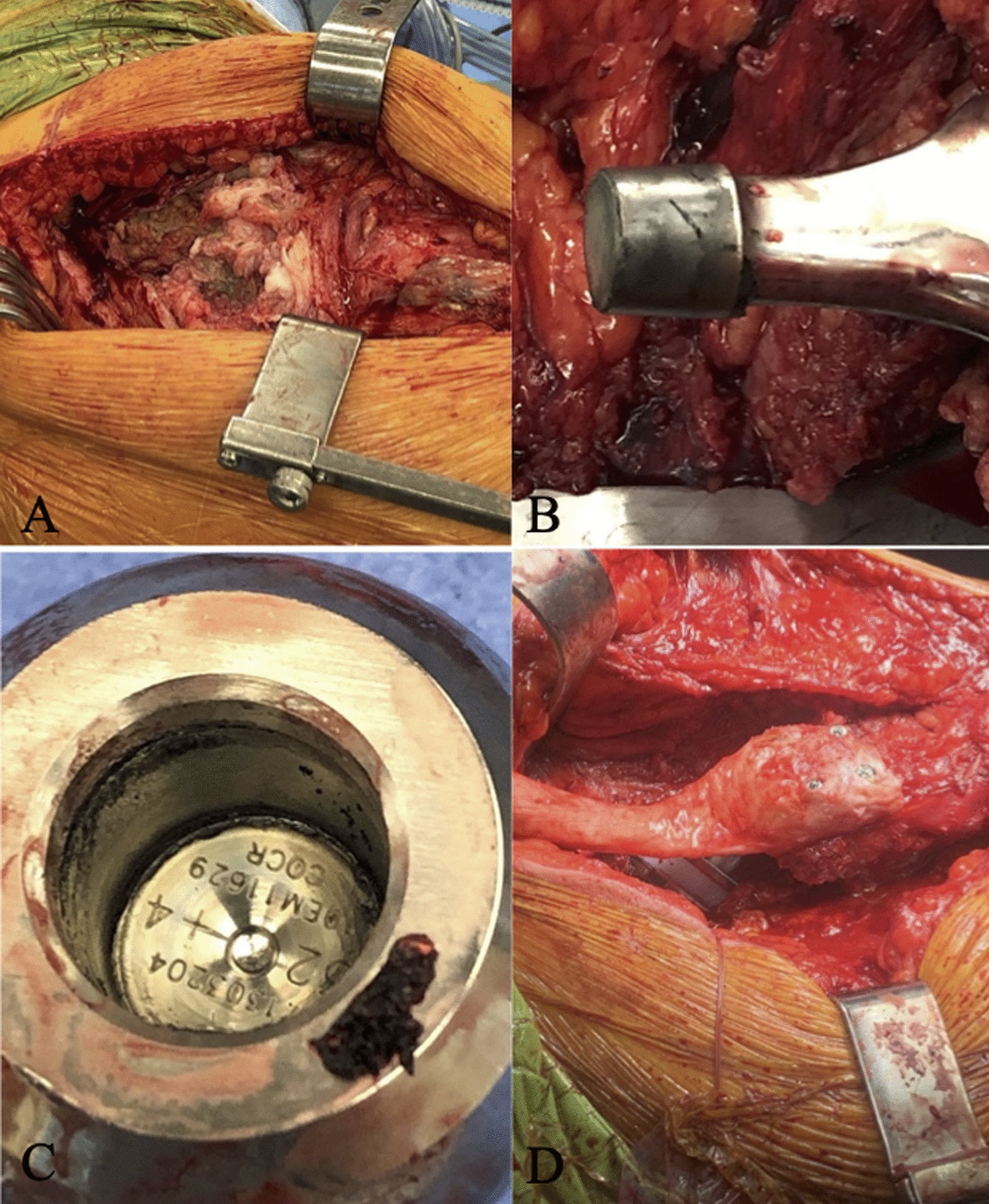
At operation. Findings include metallotic tissue, bone erosion and cyst formation, and abductor muscle necrosis, which affects the outcome. Revision requires extensive debridement and reconstruction of bone and soft tissue.
After revision. Removing the cobalt-chrome articulation, when the fixed components can be safely retained or revised, eliminates ongoing bearing wear, and serial ion levels should fall, by 50% at 3 months. Ions that stay elevated suggest retained debris or ongoing corrosion. Systemic symptoms may take months to resolve, so metal-ion and systemic follow-up continue until levels fall appropriately.
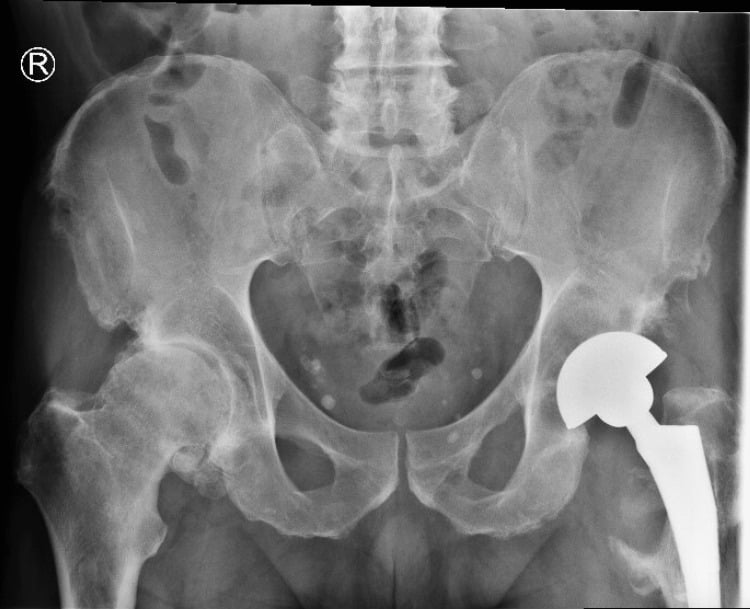
Complications
Cobaltism. Systemic cobalt toxicity can occur with elevated serum levels, typically greater than 20 μg/L:
- Cardiac: cardiomyopathy, heart failure
- Neurological: peripheral neuropathy, cognitive impairment, sensorineural hearing loss, visual change and optic neuropathy
- Thyroid: hypothyroidism
- Haematological: polycythaemia
ALVAL. The aseptic lymphocyte-dominated vasculitis-associated lesion is taught as a type IV hypersensitivity reaction to metal debris, and it may occur with normal or elevated ion levels. Whether ARMD is primarily a hypersensitivity (immune) or a wear-driven (dose) phenomenon remains debated, and both mechanisms operate. In Langton's failed ASR hips, lymphocyte transformation tests showed no reactivity to chromium or cobalt, which points to a wear-volume, dose-dependent process in that series (see the evidence below).
- Perivascular lymphocytic infiltration
- Pseudotumour formation, as cystic or solid masses
- Soft-tissue necrosis and bone destruction
Corrosion. Mixed-metal modular junctions add crevice chemistry and micromotion to the problem of bearing-surface wear. Even asymptomatic retrieved adapters show variable fretting and corrosion, concentrated at the taper margins.
- Taper corrosion: mechanically assisted crevice corrosion at modular junctions
- Fretting: micromotion between components damages the passive layer
- Galvanic corrosion: where CoCr contacts a dissimilar metal, such as a titanium stem
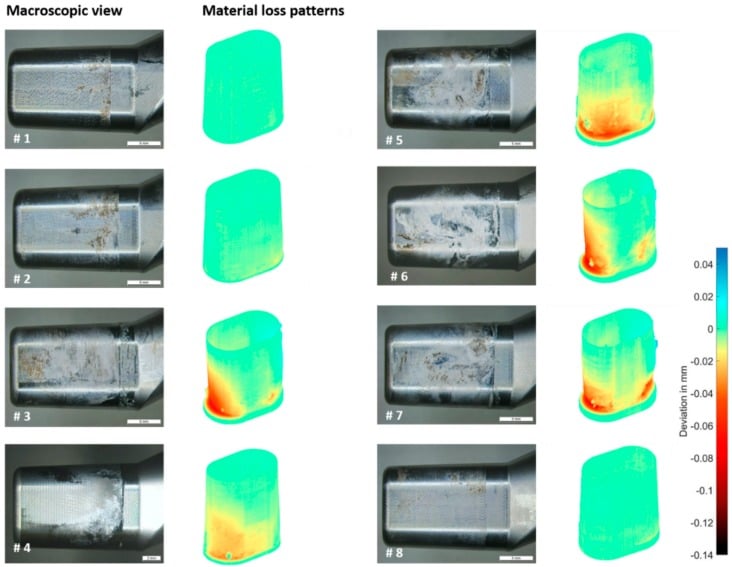
Wear. The debris comes from polyethylene wear, with third-body particles if the CoCr surface is damaged, and from metal-on-metal articulations, and particle-induced inflammation leads to osteolysis. Particle size, shape, number and corrosion chemistry influence the macrophage response, necrosis and metal-ion release.
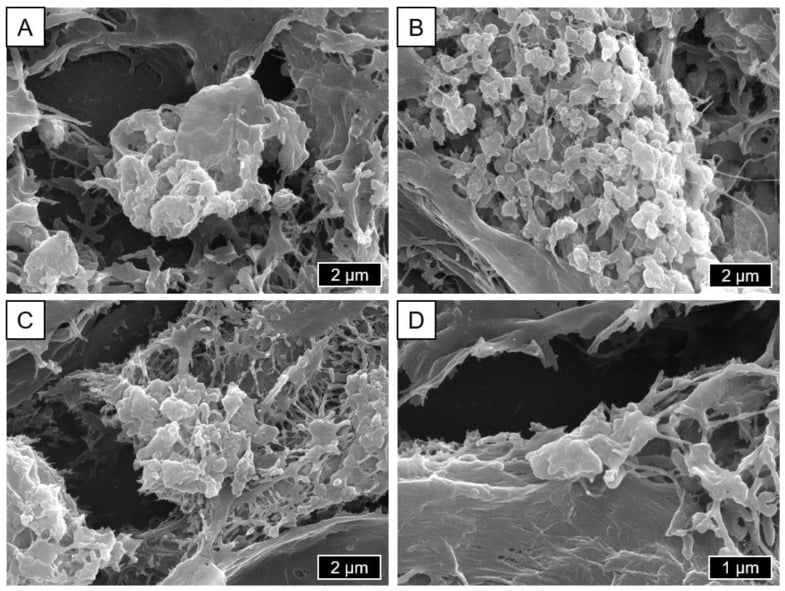
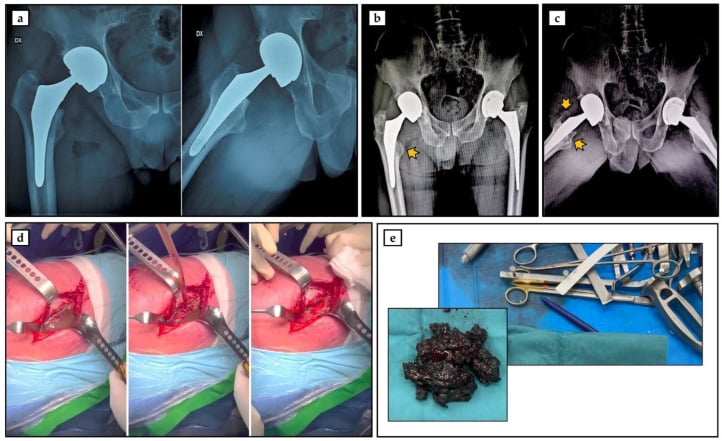
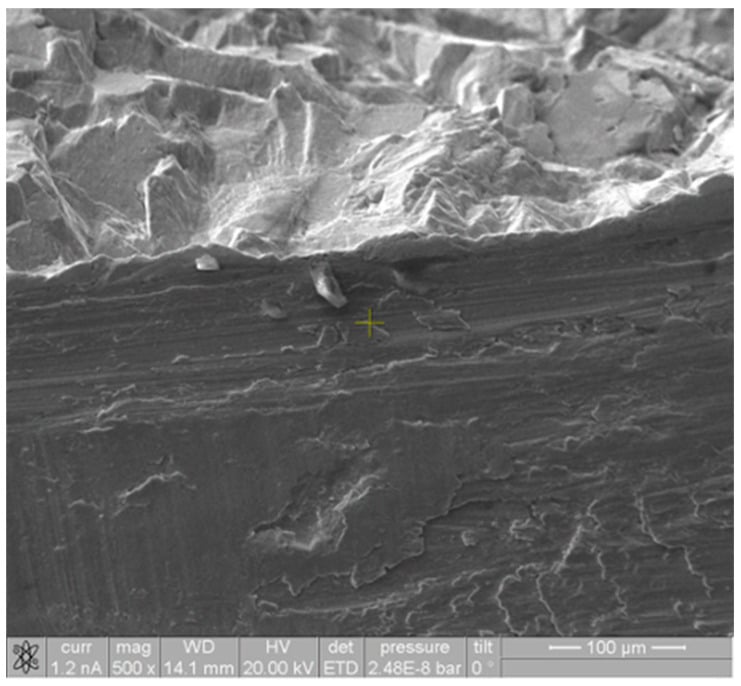
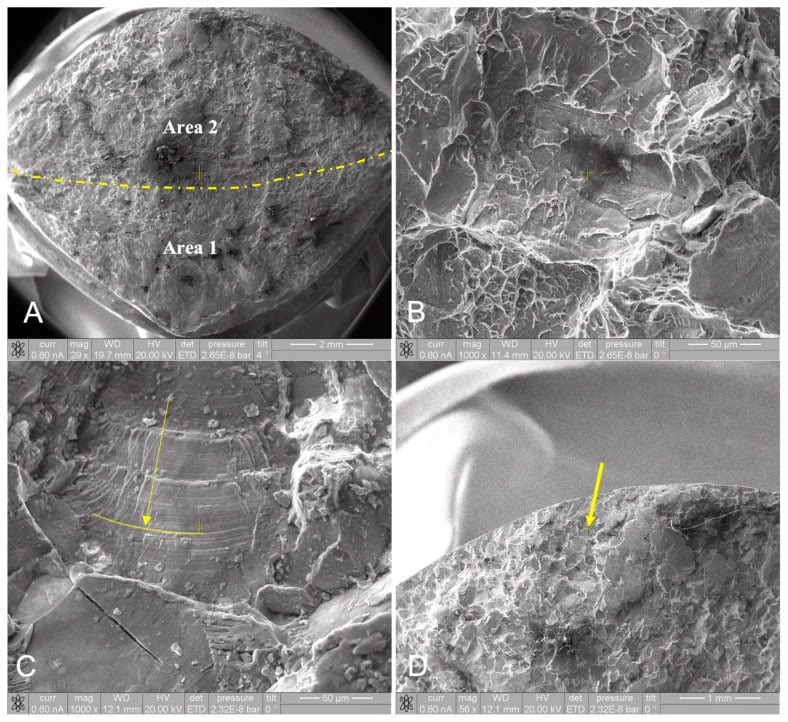
Material failure. Fatigue fracture is rare with modern alloys. Casting porosity acts as a stress concentrator, and implants can fracture at stress risers. Retrieval analysis distinguishes fretting and corrosion damage from the final overload zone and identifies where the failure began: on the fracture surface a fatigue-propagation area is separated from final overload, and microscopic striations and transition zones reconstruct its history, which plain radiographs cannot show.
Outcomes
CoCr on cross-linked polyethylene. The standard bearing, with excellent long-term survivorship: over 95% at 15 years across the major registries. Linear wear on highly cross-linked polyethylene is about 0.03 mm/year in RCT data, well below the osteolysis threshold of ~0.1 mm/year. These patients need standard arthroplasty follow-up only, with no routine metal-ion monitoring.
Metal-on-metal. Largely historical. The initial appeal of large heads, for range of motion and stability, was outweighed by ARMD, with cumulative revision rates of 15-20% at 10 years for the worst designs, such as the ASR, voluntarily recalled in 2010. It is now confined to selected hip-resurfacing indications, typically young, active men with large femoral heads.
Ceramic or CoCr heads. The two head materials compare as follows:
- CoCr Head
- Very low
- Ceramic Head
- Lowest
- CoCr Head
- Excellent
- Ceramic Head
- Excellent
- CoCr Head
- None
- Ceramic Head
- 0.01-0.1%
- CoCr Head
- Possible at taper
- Ceramic Head
- Minimal
- CoCr Head
- Lower
- Ceramic Head
- Higher
Revision for ARMD. Outcomes depend on how much tissue was damaged by the time of revision. Mild ARMD can be expected to do well; severe muscle and bone destruction brings higher dislocation rates and functional limitation. Early revision, before extensive damage, is associated with better outcomes.
Landmark Trials & Key Studies
NJR: metal-on-metal resurfacing survival by sex and head size
- National Joint Registry analysis of 434,560 primary THRs (31,932 resurfacings), 2003-2011
- In women, MoM resurfacing had worse survival than conventional THR at every head size - predicted 5-year revision in a 55-year-old woman was 8.3% (95% CI 7.2 to 9.7) with a 42 mm resurfacing head and 6.1% with a 46 mm head, against 1.5% (0.8 to 2.6) for a 28 mm cemented metal-on-polyethylene stemmed THR
- In men the gap narrowed but did not close: 4.1% at 46 mm and 2.6% at 54 mm against 1.9% for the stemmed THR - so resurfacing APPROACHED conventional replacement at large head sizes rather than matching it
- Conclusion: avoid resurfacing in women; assess head-size suitability preoperatively in men
Excess wear drives early ARMD in large-bearing MoM hips
- Series of 660 MoM resurfacings/large-head THRs; 17 (3.4%, all ASR) revised for adverse reaction to metal debris
- Failing hips had smaller components, higher cup anteversion and significantly higher blood/joint Cr and Co (all p less than 0.001)
- Explants showed greater bearing wear; lymphocyte transformation tests were negative for Cr/Co reactivity
- ARMD in well-positioned implants implies high component wear
Blood cobalt predicts ARMD failure in asymptomatic MoM hips
- Cohort of 278 asymptomatic resurfacing patients on a blood metal-ion screening programme
- Blood cobalt was a significant independent risk factor for later ARMD failure (z=8.44, p≈2×10⁻¹⁶)
- Cobalt greater than 20 µg/L was frequently associated with tissue metal staining and osteolysis
- Women and ASR devices were more vulnerable to soft-tissue damage at equivalent metal-debris dose
Metal-ion trends and the 7 µg/L threshold
- Review of 59 patients (69 ASR THAs) with serial pre-revision Co/Cr levels
- Chromium above 7 ppb conferred markedly higher revision risk (HR 22.4, p=0.001)
- Cobalt above 7 ppb significantly increased pseudotumour risk (HR 6.88, p=0.027)
- The 5 and 2.5 ppb figures are the PSEUDOTUMOUR trend thresholds; the trend for REVISION began higher, at cobalt 12 ppb and chromium 4 ppb - the authors propose the lower pair as a cut-off for discussion with patients, not for revision
CoCr vs oxidised-zirconium heads on XLPE: wear RCT
- Three-arm multicentre RCT, 368 patients at 5 years
- CoCr head on XLPE: 0.028 mm/year linear wear; oxidised zirconium on XLPE: 0.023 mm/year (no significant difference, p=0.15)
- UHMWPE liner wear was far higher (0.09 mm/year) than either XLPE group (p less than 0.001)
- No difference in function, pain or complications between head materials
Trunnionosis: taper corrosion in modular THA
- Narrative review of head-neck taper wear/corrosion in modular total hip replacement
- Mechanically-assisted crevice corrosion releases Co/Cr ions and particulate debris even with metal-on-polyethylene bearings
- Causes adverse local tissue reactions, loosening and occasionally systemic toxicity
- Diagnosis integrates ion levels, MARS-MRI and aspiration; management is femoral head exchange with ALTR debridement
Prosthetic hip-associated cobalt toxicity (PHACT)
- Systematic review of over 30 cases of systemic cobalt toxicity, mostly after ceramic-fracture revision to metal-on-polyethylene
- Dominant features: cardiomyopathy/cardiogenic shock, neurological (visual, hearing, cognitive) and thyroid dysfunction
- Onset can be insidious and is easily missed without specific suspicion
- Advocates registry-driven identification, cobalt monitoring, and ceramic-on-polyethylene (not metal) after ceramic fracture
Guidelines, Registries & Global Practice
Material standards (global): ASTM F75 (cast) and F1537 (wrought low-carbon) define CoCrMo for surgical implants; ISO 5832-4/-12 are the equivalent international standards. These specify composition, microstructure and mechanical minima.
Registry evidence — side by side:
- Region
- England/Wales
- Relevance to CoCr
- Identified high MoM resurfacing/large-head failure, driving regulatory action
- Region
- Australia
- Relevance to CoCr
- One of the largest registries; CoCr-on-XLPE among lowest-revision bearings
- Region
- UK/US/Sweden/Norway/NZ
- Relevance to CoCr
- Concordant: MoM revised more than metal- or ceramic-on-XLPE
Regulatory and society guidance — side by side:
- Region
- UK
- Position on MoM / CoCr ions
- Alert level Co/Cr ~7 µg/L; annual review + MARS-MRI for at-risk MoM
- Region
- US
- Position on MoM / CoCr ions
- Safety communications restricting MoM total hip use; individualised follow-up
- Region
- US / Europe
- Position on MoM / CoCr ions
- MoM use largely abandoned; ceramic- or metal-on-XLPE preferred
- Region
- Global
- Position on MoM / CoCr ions
- Define CoCrMo implant grades and testing
High- vs limited-resource practice variation:
- High-resource settings: MoM use has collapsed since 2010; ceramic-on-XLPE favoured for younger patients, CoCr-on-XLPE common (especially TKA where CoCr femoral components remain standard); whole-blood ion assays and MARS-MRI available for surveillance.
- Limited-resource settings: CoCr-on-conventional or cross-linked polyethylene predominates on cost grounds; metal-ion testing and MARS-MRI may be unavailable, so clinical and radiographic surveillance carry more weight, and legacy MoM implants may persist longer.
MCQ Practice Points
Q: What are the key mechanical advantages of cobalt-chrome alloys for bearing surfaces in joint replacement?
A: (1) High hardness and wear resistance - excellent for articulation against polyethylene. (2) High elastic modulus (~220-240 GPa) - resists deformation under load. (3) Fatigue strength - resists cyclic loading. (4) Can be highly polished (Ra under 0.05 μm) for low friction. CoCr is the standard material for femoral heads and femoral components of TKA.
Q: What is ALVAL (Aseptic Lymphocyte-dominated Vasculitis-Associated Lesion) and when does it occur?
A: Adverse reaction to metal debris from metal-on-metal (MoM) bearings or modular taper junctions. Characterized by: perivascular lymphocyte infiltration, pseudotumor formation, soft tissue destruction. Associated with elevated serum cobalt and chromium levels. Caused by metal debris from CoCr-CoCr articulation or taper corrosion. Led to withdrawal of most MoM hip designs.
Q: What is the composition of wrought vs cast cobalt-chrome alloys used in orthopaedics?
A: Cast CoCr (Vitallium/ASTM F75): 27-30% Cr, 5-7% Mo, remainder Co. Used for femoral heads, stems. Wrought CoCr (ASTM F90/F562): Similar composition but processed by forging - higher fatigue strength. Both contain chromium for corrosion resistance (forms Cr2O3 passive layer). Carbon content affects carbide formation and hardness.
Q: Why are femoral stems sometimes made of CoCr and sometimes titanium?
A: CoCr stems: Higher stiffness (modulus ~220-240 GPa), suited to cemented fixation. Titanium stems: Lower modulus (~110 GPa) reduces stress shielding, better for cementless fixation (osseointegrates well). CoCr may cause more proximal bone loss due to stress shielding. Choice depends on fixation method and design philosophy.
Q: What are the concerns regarding metal ion release from CoCr implants?
A: Cobalt and chromium ions are released from articulating surfaces and modular junctions. Elevated serum levels may cause: ALVAL/pseudotumor, cardiomyopathy (cobalt), neurological symptoms, metallosis. Threshold for concern: Co or Cr greater than 7 μg/L (UK MHRA). MoM hips required regular monitoring. Ceramic-on-ceramic or ceramic-on-poly avoids metal ion concerns.
Clinical Decision Scenarios
Practise clinical reasoning and management decisions out loud
Clinical Decision Scenarios
Practise clinical reasoning and management decisions out loud
Clinical Decision Scenarios
Practise clinical reasoning and management decisions out loud
Composition
- Cobalt (Base)
- Chromium (Passivation)
- Molybdenum (Hardness)
Manufacturing
- Cast: Complex shapes (TKA)
- Wrought: High strength (Heads)
Risks
- Ion toxicity (Cobalt)
- ALVAL
- Stress Shielding (Stiff)
Evidence Base: Controversies & Areas of Uncertainty
- The 7 µg/L threshold is pragmatic, not absolute. Carlson et al. found risk rising from Co ~5 and Cr ~2.5 ppb, and ALVAL/pseudotumour can occur with normal ions (an idiosyncratic Type IV hypersensitivity). Trend over time is more useful than a single value, and whole-blood is preferred over serum.
- Hypersensitivity vs dose-response. Whether ARMD is primarily a wear-driven (dose) phenomenon or an immune (hypersensitivity) one remains debated; both mechanisms operate, with the balance varying between patients (women and ASR devices appear more susceptible at equivalent wear).
- Trunnionosis in metal-on-polyethylene. CoCr ion problems are no longer exclusive to MoM — head-neck taper corrosion can release Co/Cr even with a polyethylene bearing, but the optimal taper geometry, head material and the value of titanium sleeves are unsettled.
- CoCr vs alternative heads. Oxidised zirconium and ceramic heads on cross-linked polyethylene show similar or marginally lower wear than CoCr but at higher cost; the polyethylene type matters more than the head for wear. Ceramic eliminates head ion release but carries a small fracture risk.
- Additive-manufactured (3D-printed) CoCr lattice and patient-specific implants lack long-term registry survivorship data.
Bibliography
- Smith AJ, Dieppe P, Howard PW, Blom AW. Failure rates of metal-on-metal hip resurfacings: analysis of data from the National Joint Registry for England and Wales. Lancet. 2012;380(9855):1759-66. PMID 23036895. doi:10.1016/S0140-6736(12)60989-1
- Langton DJ, Jameson SS, Joyce TJ, Hallab NJ, Natu S, Nargol AVF. Early failure of metal-on-metal bearings in hip resurfacing and large-diameter total hip replacement: a consequence of excess wear. J Bone Joint Surg Br. 2010;92(1):38-46. PMID 20044676. doi:10.1302/0301-620X.92B1.22770
- Langton DJ, Sidaginamale RP, Joyce TJ, et al. The clinical implications of elevated blood metal ion concentrations in asymptomatic patients with MoM hip resurfacings: a cohort study. BMJ Open. 2013;3(3):e001541. PMID 23482990. doi:10.1136/bmjopen-2012-001541
- Carlson BC, Bryan AJ, Carrillo-Villamizar NT, Sierra RJ. The utility of metal ion trends in predicting revision in metal-on-metal total hip arthroplasty. J Arthroplasty. 2017;32(9S):S214-S219. PMID 28320566. doi:10.1016/j.arth.2017.02.031
- Jassim SS, Patel S, Wardle N, et al. Five-year comparison of wear using oxidised zirconium and cobalt-chrome femoral heads in total hip arthroplasty: a multicentre randomised controlled trial. Bone Joint J. 2015;97-B(7):883-9. PMID 26130341. doi:10.1302/0301-620X.97B7.35285
- Hamid MBA, Younis Z, Islam MS, et al. Trunnionosis after total hip arthroplasty: a review of the etiology, diagnosis, and management. Cureus. 2025;17(1):e78037. PMID 40013216. doi:10.7759/cureus.78037
- Sweeney P, Broderick J. A systematic review and meta-analysis of cases of prosthetic hip-associated cobalt toxicity in patients with prosthetic hip ceramic bearing fractures subsequently revised to metal-on-polyethylene implants. J Orthop. 2025;74:113-123. PMID 41550849. doi:10.1016/j.jor.2025.12.064