Surgical Emergency | Kanavel Signs | Urgent Drainage
- Kanavel four cardinal signs for flexor tenosynovitis diagnosis
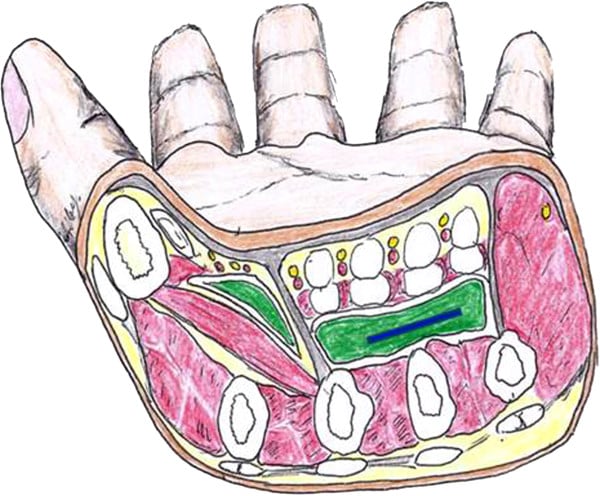
- Anatomical boundaries of thenar, midpalmar, and hypothenar spaces
- Indications for emergent surgical drainage vs observation with IV antibiotics
- Horseshoe abscess connects radial and ulnar bursae through Parona space
- MRSA prevalence requires empiric vancomycin until cultures available
- “Describe incisions for each deep space to demonstrate anatomical knowledge
- “Know boundaries: midpalmar septum separates thenar from midpalmar space
- “Explain why tendons necrose quickly: tenosynovium is only blood supply
- “Recognize necrotizing fasciitis - pain out of proportion, crepitus, systemic toxicity
Overview and Epidemiology
Deep space infections of the hand are surgical emergencies that need urgent diagnosis and urgent drainage. Unlike superficial infections, they form inside anatomically defined fascial compartments, where pus accumulates under pressure, compromises the vascular supply and destroys tissue. The hand has several such potential spaces for infection to track along, and draining them properly depends on knowing their anatomy.
Why delay matters. The clinical challenge is recognising the infection before the damage is irreversible. Delayed diagnosis or inadequate drainage leads to tendon necrosis, joint destruction, compartment syndrome and potentially digital amputation. Antibiotic resistance, MRSA above all, complicates the choice of empiric therapy.
Who. The annual incidence is 2-3 per 10,000 population, peaking at 30-50 years with a 3:1 male predominance. The risk factors are diabetes (40%) and immunosuppression. Delayed presentation is common, on average at 4-5 days.
How infection arrives. Penetrating trauma accounts for 70% of inoculations; the others come by direct spread from an adjacent infection or, rarely, by haematogenous seeding. The fascial compartments trap the purulent fluid, the pressure compromises the blood supply, and progressive tissue necrosis develops.
Microbiology. The isolates:
- Staphylococcus aureus 60-70%, with MRSA at 30-50% in community-acquired infection
- Streptococcus species 15-20%
- Polymicrobial 15-20%, in diabetics and contaminated wounds
- Mycobacteria in chronic tenosynovitis
- Bite organisms, covered under Bite Wounds
Anatomy of the Deep Spaces
Complete drainage depends on knowing the fascial boundaries of each space. Four matter: the thenar, midpalmar and hypothenar spaces in the palm, and Parona's space in the distal forearm.
- Thenar
- Thenar muscles and adductor pollicis
- Midpalmar
- Midpalmar septum (from third metacarpal)
- Hypothenar
- Midpalmar space (no distinct septum)
- Parona
- Flexor pollicis longus (FPL) tendon
- Thenar
- Midpalmar septum (third metacarpal to palmar fascia)
- Midpalmar
- Hypothenar muscles
- Hypothenar
- Ulnar border of hand
- Parona
- Flexor digitorum profundus (FDP) tendons
- Thenar
- Adductor pollicis fascia
- Midpalmar
- Metacarpals and interosseous fascia
- Hypothenar
- Fifth metacarpal
- Parona
- Pronator quadratus and distal radius
- Thenar
- Flexor tendon sheaths to index and long fingers
- Midpalmar
- Flexor tendons and palmar fascia
- Hypothenar
- Hypothenar muscle fascia
- Parona
- Flexor digitorum superficialis (FDS) tendons
- Thenar
- Carpal tunnel
- Midpalmar
- Carpal tunnel
- Hypothenar
- Carpal tunnel
- Parona
- -
- Thenar
- First web space
- Midpalmar
- Distal palmar crease
- Hypothenar
- Distal palmar crease
- Parona
- -
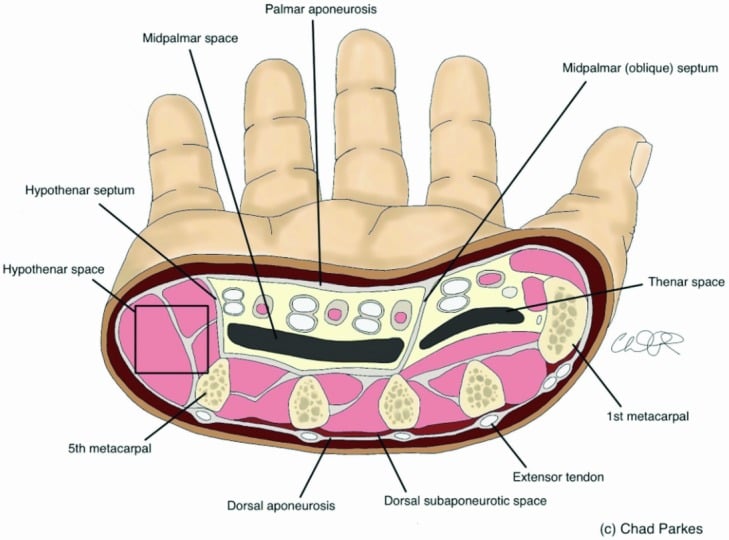
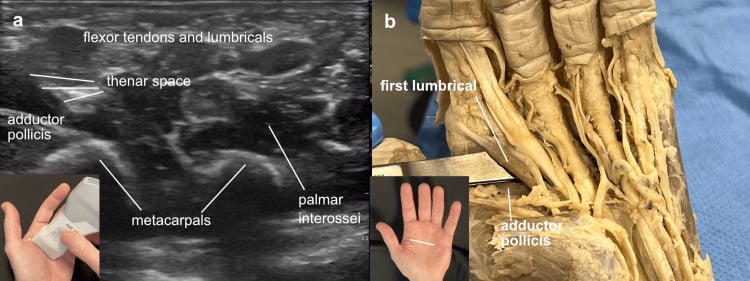
Thenar space. It lies on the radial side of the hand, separated from the midpalmar space by the midpalmar septum, which runs from the third metacarpal to the palmar fascia. It contains the index and long finger lumbricals, the index and long flexor tendon sheaths, and the digital neurovascular bundles. Infection fills out the first web space and makes the thenar eminence prominent; the thumb is held in abduction, and adduction hurts.
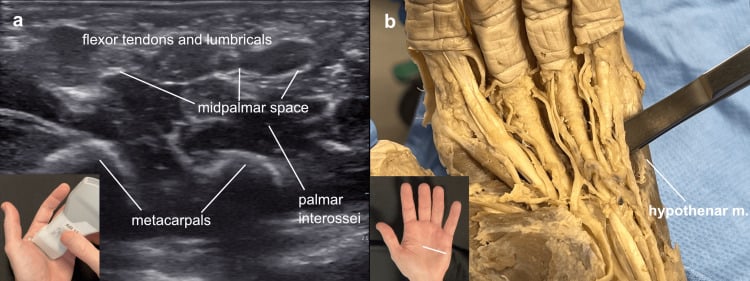
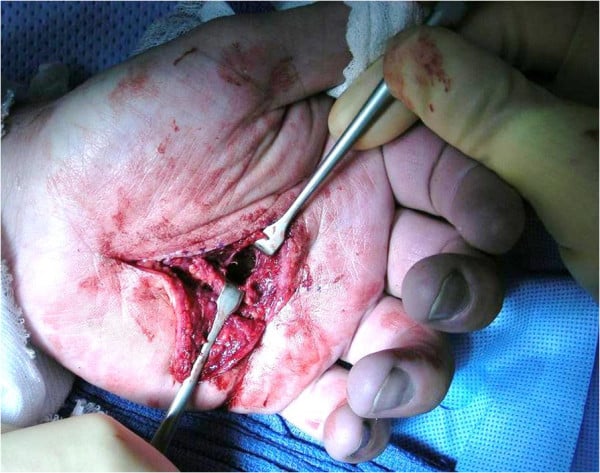
Midpalmar space. The largest space and the most commonly infected, it occupies the central and ulnar palm and holds important neurovascular structures: the superficial palmar arch and the digital nerves, with the ring and small finger lumbricals and flexor tendon sheaths. Infection costs the palm its concavity, so that it balloons out, and the ring and small fingers are held flexed, with pain on finger extension. The dorsum of the hand swells as well, because the dorsal subcutaneous tissue is looser.
Hypothenar space. A smaller space overlying the hypothenar muscles, and the least commonly infected. The hypothenar eminence swells and the small finger is held flexed, with limited ulnar hand tenderness; it is often confused with a midpalmar infection.
Parona's space. The quadrilateral space of the distal forearm is where the radial and ulnar bursae communicate, which is what allows a horseshoe abscess to form (next section). Drainage then has to reach the distal forearm as well as the digits, and a missed Parona's space carries high morbidity.
The Radial and Ulnar Bursae and Proximal Spread
The ulnar bursa. The common flexor sheath is a large synovial sheath enveloping the flexor digitorum superficialis and profundus tendons as they pass through the carpal tunnel. It extends roughly 2 to 3 cm proximal to the proximal wrist crease, into the region of Parona's space. In most people it is directly continuous with the flexor sheath of the small finger, so small-finger pyogenic flexor tenosynovitis can decompress proximally into the palm and, through the carpal tunnel, into the distal forearm.
The radial bursa. The synovial sheath of flexor pollicis longus is continuous distally with the thumb flexor sheath and extends proximally through the carpal tunnel into the distal forearm. That continuity is why thumb flexor tenosynovitis, like small-finger disease, can track proximally instead of staying in the digit.
The other three fingers. The digital sheaths of the index, middle and ring fingers usually terminate at the metacarpal-neck or distal palm level and do not communicate directly with the ulnar bursa. Isolated tenosynovitis of those digits therefore tends to remain confined to the digit.
The horseshoe. The radial and ulnar bursae communicate in a substantial but variable proportion of people, an anatomical variant, typically within or adjacent to Parona's space. Where they do, infection of one bursa can traverse to the other and produce a horseshoe abscess, involving the radial bursa of the thumb, the ulnar bursa of the small finger and the connecting Parona's space. All three sites must be drained.
The thumb and small finger are the dangerous digits. When either is the infected digit, always examine the whole hand and the distal forearm.
Web Space (Collar-Button / Collar-Stud) Abscess
Anatomy. There are three volar (interdigital) web spaces, each transmitting a lumbrical muscle and a digital neurovascular bundle from the palm to the finger. Infection typically starts in the volar subcutaneous tissue of the web, often from a fissure, a macerated callus or a penetrating injury.
The collar stud. Pus then tracks dorsally through the interval around the natatory and deep transverse metacarpal ligaments. The result is a small volar collection joined through a narrow intermetacarpal channel to a larger dorsal one, the dumbbell or collar-stud (collar-button) shape that names the lesion.
Signs. The adjacent fingers are held abducted, splayed apart by the swelling, a classic and near-pathognomonic sign of web-space infection. Dorsal swelling is often more obvious than the volar component because the dorsal subcutaneous tissue is looser, which can mislead the examiner toward the dorsum when the origin is volar. Tenderness and fullness centre on the web rather than along a flexor sheath, and that distinguishes it from flexor tenosynovitis.
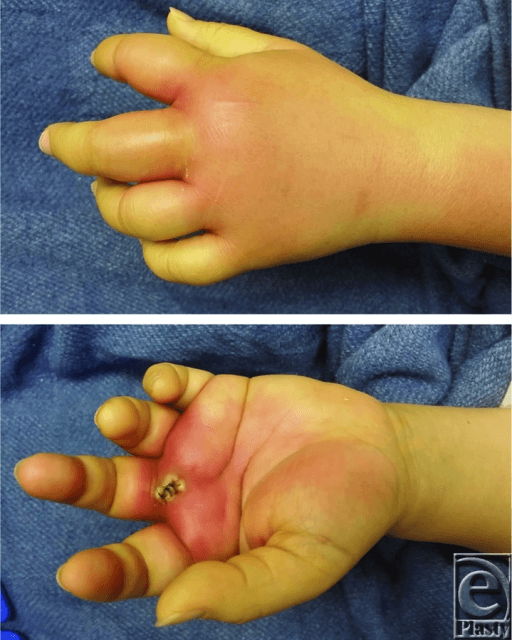
Drainage. The abscess has two compartments and both must be drained, through a volar incision and a separate dorsal counter-incision. The volar incision is curved or zigzag and does not cross the web: a single straight incision across the web leaves a longitudinal scar that contracts into a disabling, syndactyly-like web contracture. Break down the loculations, irrigate, culture, and leave the wounds open or loosely approximated over a drain.
The collar-stud trap. Drain only the more obvious dorsal component and the volar reservoir is left behind, so the infection recurs. Abducted adjacent fingers should prompt you to look for this pattern.
Flexor Tenosynovitis
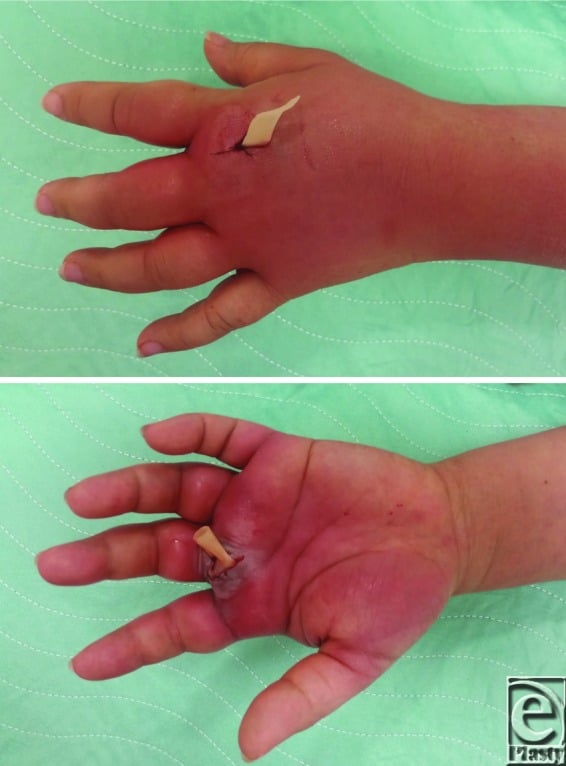
Infection within the synovial sheath around the flexor tendons is a surgical emergency. The tendon's blood supply derives entirely from the vinculae and synovium, and infection disrupts it, which is why the tendon necroses so quickly.
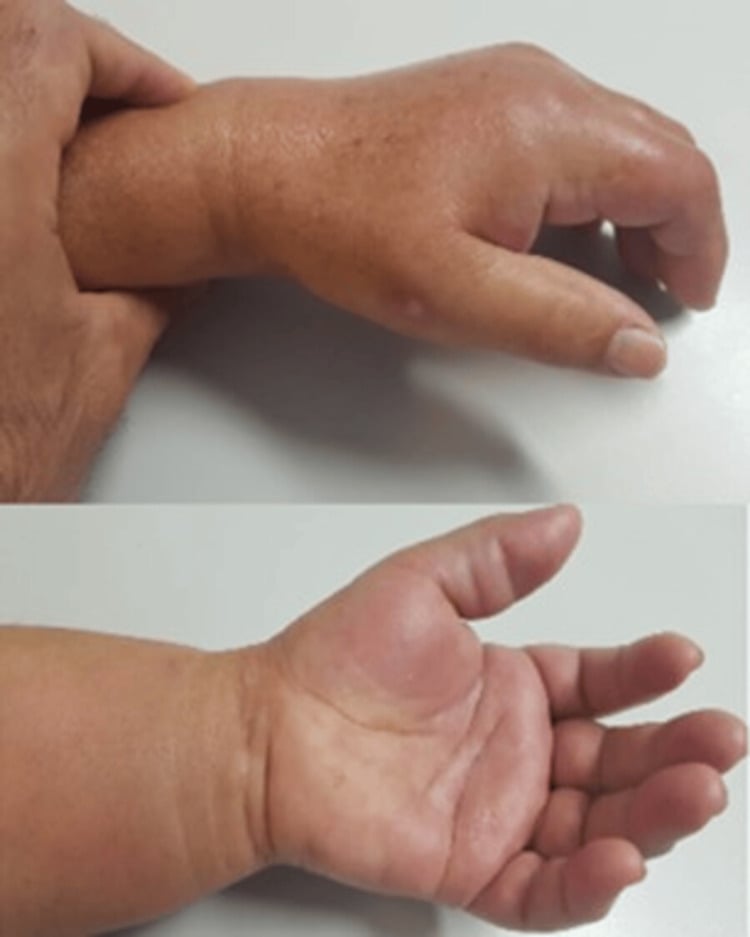
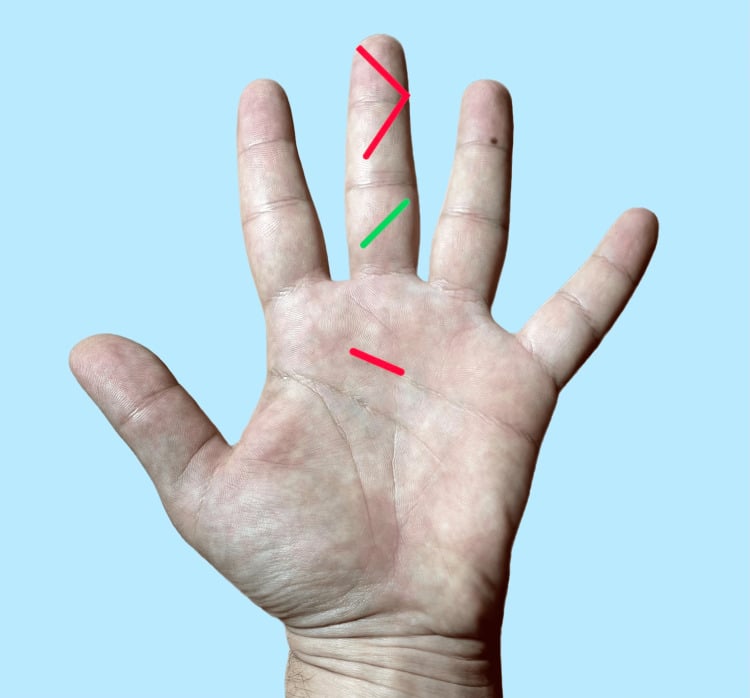
Kanavel's signs. The four cardinal signs Kanavel described in 1912 remain the basis of diagnosis, because pyogenic flexor tenosynovitis (PFT) is a clinical diagnosis with no laboratory or imaging reference standard. They are not, however, a gold standard in the strict sense.
- Flexed posture. The digit rests in semiflexion (20-30 degrees) to minimise pressure in the sheath, and any attempt to extend it produces severe pain.
- Fusiform swelling. Uniform swelling along the entire length of the digit gives the sausage appearance, classically taken to distinguish PFT from a localised abscess or paronychia (but see Yi, below).
- Tenderness along the flexor sheath. Exquisite tenderness over the entire tendon course from fingertip to palm; palpate the A1 pulley, the flexor sheath and its proximal extent.
- Pain on passive extension. Gentle passive extension causes severe pain, because stretching the infected sheath raises the pressure within it.
How they perform. Kennedy and colleagues compared adults referred with suspected PFT against those with other finger infections (DOI). The signs had sensitivity of 91.4% to 97.1% but specificity of only 51.3% to 69.2%: individually good at picking up PFT and poor at excluding the mimics, since cellulitis, felon and simple abscess all reproduce them.
Which ones count. On multivariate analysis only tenderness along the flexor sheath, pain on passive extension and symptom duration under 5 days stayed independent predictors, and that three-factor combination reached an area under the ROC curve of 0.91. Passive-extension pain is therefore one of the two signs that independently predict PFT, but it is sensitive, not specific.
Two consequences, in opposite directions. The absence of the full set does not exclude PFT: all four signs are reported present in only about 22% to 56% of cases, so a digit with two convincing signs still warrants urgent senior review. Their presence does not confirm it either, because for some of the signs specificity is barely better than a coin toss; the diagnosis is confirmed at operation by purulence in the sheath, not at the bedside.
Fusiform swelling is the weakest of the four. Yi and colleagues compared 31 operatively confirmed PFT digits with 31 non-PFT finger infections (DOI) and found that neither the presence nor the shape of diffuse swelling distinguished the two. Every infected finger swells diffusely, and the authors concluded that the term "fusiform" is a misnomer because the acute PFT finger is not actually spindle-shaped.
A radiographic adjunct. What did discriminate was the difference between volar and dorsal soft-tissue thickness at the proximal phalanx on a plain radiograph, 9 +/- 1 mm in PFT against 5 +/- 1 mm in non-PFT. A difference of 7 mm or more carried a positive predictive value of 82% with 84% sensitivity and 74% specificity. This is a small single-centre retrospective comparison graded level IV evidence, so treat it as a useful adjunct rather than a decision rule.
STEPKanavel Four Signs - STEP
Hook:Take a STEP toward urgent surgery when these signs present
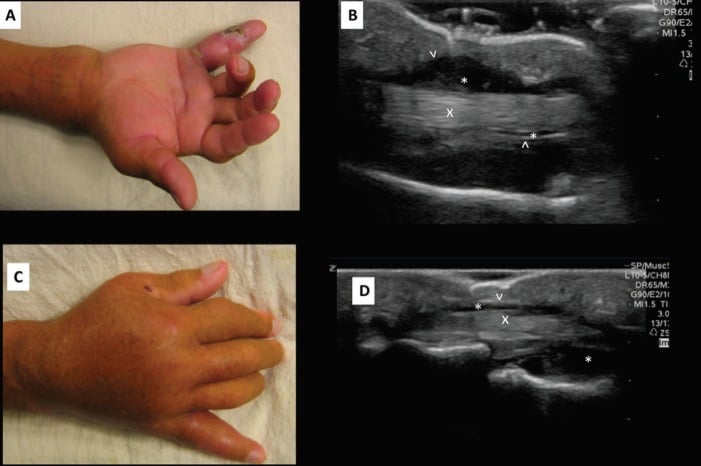
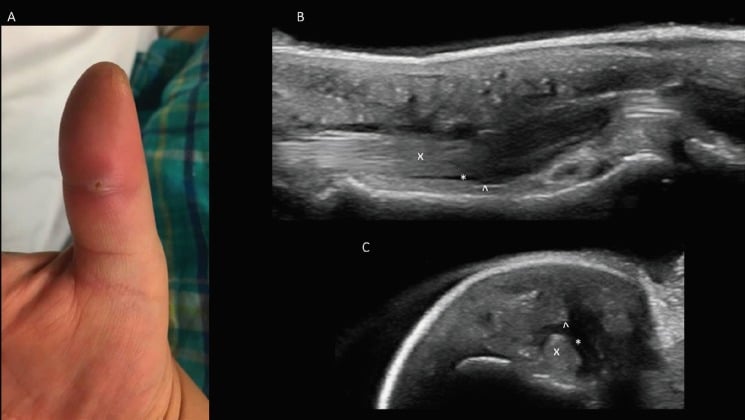
How the tendon dies. Pressure-induced ischaemia is the primary mechanism, with bacterial toxins and proteases, inflammatory mediator release, adhesion formation and synovial destruction adding to the damage. The progression:
- 0-24 hours: purulent fluid accumulates in the sheath
- 24-48 hours: pressure exceeds capillary perfusion pressure
- 48-72 hours: ischaemia develops, with early tendon changes
- Over 72 hours: irreversible tendon necrosis begins
- Over 7 days: complete tendon destruction and adhesions
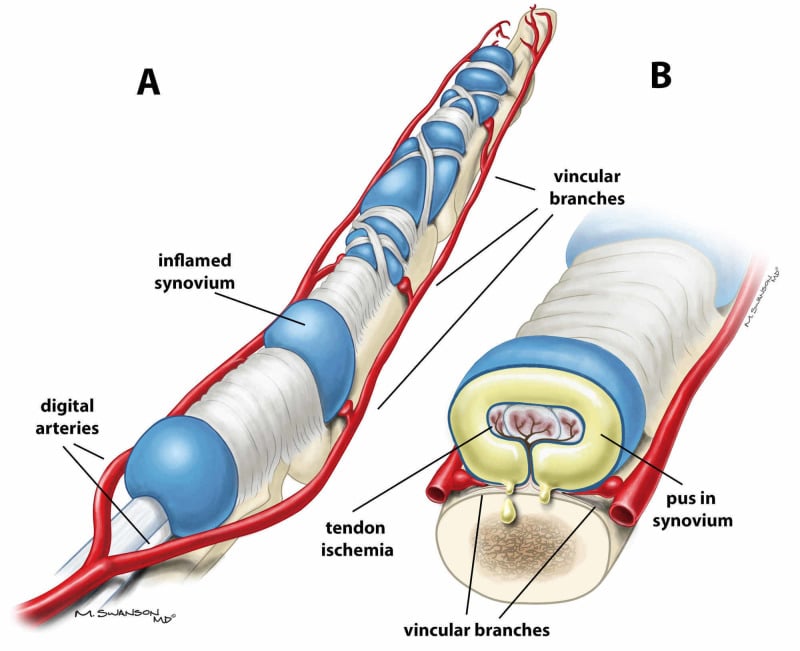
The golden period for drainage. Flexor tenosynovitis diagnosed within 48 hours has an excellent prognosis with irrigation and drainage. Beyond 72 hours the risk of tendon necrosis increases dramatically, and beyond 7 days salvage procedures (tendon grafting, arthrodesis, amputation) are often required. Early aggressive surgical intervention is paramount.
Clinical Assessment and Diagnosis
History. Establish the mechanism (penetrating trauma, bite or crush) and the timing, hours or days since onset; rapid worsening suggests an aggressive infection. Ask about systemic symptoms (fever, chills, malaise), comorbidities (diabetes, immunosuppression, vascular disease) and tetanus status, and about prior antibiotics, which may mask the presentation.
Red flags. Watch for these:
- Pain out of proportion to examination: necrotising infection
- Rapid progression, over hours not days
- Crepitus: gas-forming organisms
- Systemic toxicity: sepsis
- Sensory changes: compartment syndrome
Examination. Look at the posture of the digit and hand, the pattern and distribution of swelling, the skin (erythema, blistering, necrosis), the wound or entry site, and any lymphangitic streaking. Feel for fluctuance indicating an abscess, localise the tenderness and check for crepitus from gas, then examine the pulses and the lymph nodes.
Function and special tests. Active range of motion is limited by pain, and passive extension is painful in tenosynovitis. Documenting neurovascular status is critical: two-point discrimination records baseline nerve function and the Allen test vascular adequacy. Assess all four Kanavel signs systematically, feel the compartments for firmness and tension, and test grip strength if the patient is able.
Blood tests. Send a full blood count, where the white cell count is typically elevated, CRP and ESR, and blood glucose to screen for diabetes. Take blood cultures if there are systemic signs, and send a wound culture and Gram stain.
Radiographs are essential. They rule out a foreign body, with 90% sensitivity for metal and glass, and assess for osteomyelitis, gas in the soft tissues and fracture.
Ultrasound identifies fluid collections, guides aspiration and assesses tendon integrity, and it is available at the point of care. It localises a radiolucent foreign body such as a wooden splinter, which makes it essential when radiographs are negative after a penetrating injury.
MRI, in selected cases, delineates the extent of an abscess and any deep space involvement, evaluates osteomyelitis and helps plan complex surgery. CT localises a foreign body and identifies gas and bony involvement, and is an alternative to MRI.
Imaging does not replace clinical diagnosis. Deep space infections and flexor tenosynovitis are clinical diagnoses, made from the history and examination; imaging is adjunctive. Never delay surgical drainage to obtain advanced imaging when the clinical diagnosis is clear.
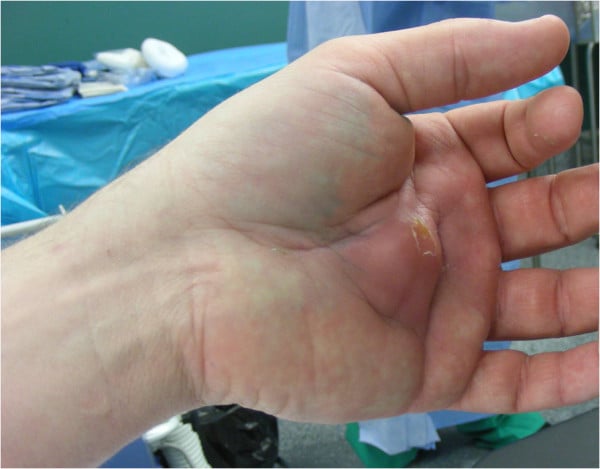
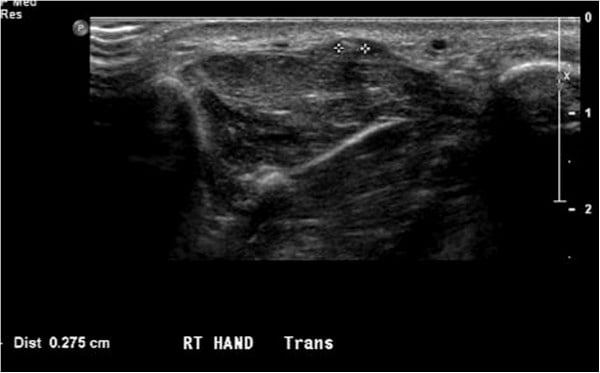
Management Principles
Antibiotics alone. Their role is limited, reserved for very early presentation or specific scenarios. More than 80% of patients initially trialled on antibiotics eventually require surgical drainage, and early surgery is preferred in most cases. The indications for a trial of IV antibiotics are:
- Presentation within 24 hours of symptom onset
- Partial Kanavel signs, not all four present
- Minimal systemic symptoms
- No abscess on imaging
- A reliable patient for close monitoring
Running the trial. Admit for IV antibiotics and observation, splint in the position of function and elevate. Reassess every 4-6 hours, with serial examinations by the hand surgeon, and proceed to surgery if there is no improvement at 12-24 hours or any worsening.
When to operate. The absolute indications for urgent drainage are:
- All four Kanavel signs present
- A clinically evident fluctuant abscess
- Symptoms for more than 48 hours at presentation
- A failed antibiotic trial, with no improvement at 12-24 hours
- Systemic toxicity
- Compartment syndrome
- Suspected necrotising infection
How fast. The timing follows the diagnosis:
- Emergent, within 6 hours: necrotising fasciitis, compartment syndrome, systemic sepsis
- Urgent, within 24 hours: established tenosynovitis, deep space abscess
- Semi-urgent, 24-48 hours: early tenosynovitis on an antibiotic trial
Empiric cover. The regimen must cover the most likely organisms while culture results are awaited.
- likely
- MSSA, Streptococcus
- firstLine
- Cefazolin 2g IV q8h
- alternative
- Clindamycin 600mg IV q8h (PCN allergy)
- coverage
- Excellent Gram-positive, no MRSA coverage
- likely
- MRSA, Streptococcus
- firstLine
- Vancomycin 15-20mg/kg IV q8-12h
- alternative
- Linezolid 600mg IV q12h
- coverage
- Broad Gram-positive including MRSA
- likely
- Eikenella, Strep, anaerobes
- firstLine
- Ampicillin-sulbactam 3g IV q6h
- alternative
- Ceftriaxone 1g IV daily PLUS metronidazole 500mg IV q8h
- coverage
- Oral flora, anaerobes, Eikenella
- likely
- Pasteurella, Staph, Strep
- firstLine
- Ampicillin-sulbactam 3g IV q6h
- alternative
- Ceftriaxone 2g IV daily
- coverage
- Pasteurella multocida highly sensitive to PCN
- likely
- Polymicrobial, MRSA, anaerobes
- firstLine
- Vancomycin PLUS piperacillin-tazobactam 4.5g IV q6h
- alternative
- Vancomycin PLUS cefepime 2g IV q8h PLUS metronidazole
- coverage
- Broad spectrum, MRSA, Gram-negatives, anaerobes
- likely
- Vibrio vulnificus, Aeromonas
- firstLine
- Ceftriaxone 2g IV daily PLUS doxycycline 100mg IV q12h
- alternative
- Ciprofloxacin 400mg IV q12h PLUS doxycycline
- coverage
- Vibrio coverage critical (can be fatal)
Reconciling the MRSA advice. The cefazolin line for community-acquired infection without risk factors gives no MRSA cover, which sits uneasily with a community MRSA prevalence of 30-50% and with the page's statement that empiric vancomycin is needed until cultures are available. In the Chung series in the evidence section, a paediatric cohort, traditional risk factors did not predict community-acquired MRSA, which is an argument for empirical MRSA cover even without them, although that series does not directly inform adult practice. The local antibiogram, not a single series, should set empirical cover.
Once cultures return. Narrow the antibiotics to the culture and sensitivity results, and switch to oral when the patient is clinically improving (48-72 hours). Total therapy is typically 7-14 days, longer (4-6 weeks) if there is osteomyelitis. Duration is guided by the wound, not the calendar.
Management Algorithm
Surgical Techniques
Closed or open. There are two main approaches to irrigation and drainage. Closed catheter irrigation is preferred for early disease, and open drainage for established infection or failed closed drainage.
Closed catheter irrigation suits early tenosynovitis (under 48 hours) where no gross purulence is expected and no tendon necrosis is suspected. Working through limited incisions, it preserves the pulleys and avoids a full-length open exposure.
- Distal incision: 3-4mm transverse at the A5 pulley level (flexion crease)
- Proximal incision: 1cm at the A1 pulley in the palm
- Identify the flexor sheath carefully at both sites
- Insert an 8Fr paediatric feeding tube distally and advance it to the proximal incision
- Flush 500-1000mL of saline through the sheath
- Monitor the clarity of the efflux from the proximal wound
- Send purulent fluid for culture
- Either remove the catheter and close the wounds (preferred), or leave the catheter for postoperative irrigation (controversial)
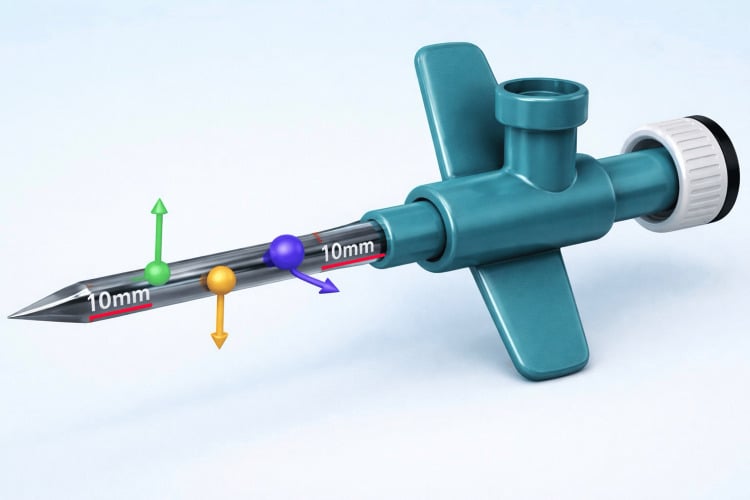
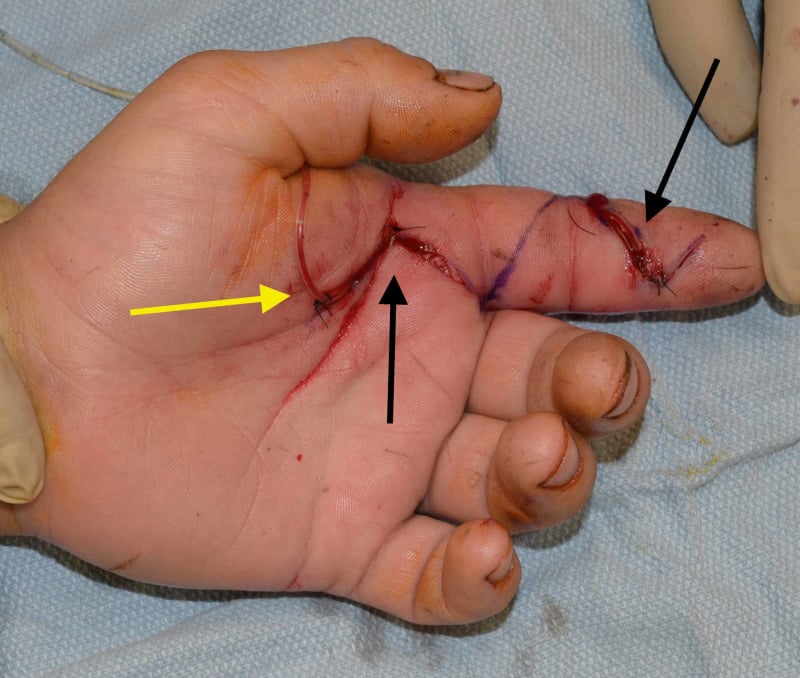
Open drainage is for presentation after 72 hours, failed closed irrigation, suspected tendon necrosis or the need for debridement, through a Bruner approach.
- Zigzag (Bruner) incision along the entire length of the digit
- Elevate the skin flaps, preserving the neurovascular bundles
- Open the A2 and A4 pulleys in windows
- Assess tendon viability and the condition of the synovium
- Lavage the entire sheath copiously
- Debride necrotic tissue and inflamed synovium
- Test tendon integrity with gentle tension
- Leave the wounds open, or close loosely with drains
The pulleys. The A2 and A4 pulleys are critical for digit function. Open windows in them and preserve as much as possible, and do not sacrifice A2 or A4 unless absolutely necessary; if a pulley is completely destroyed, consider reconstructing it later.
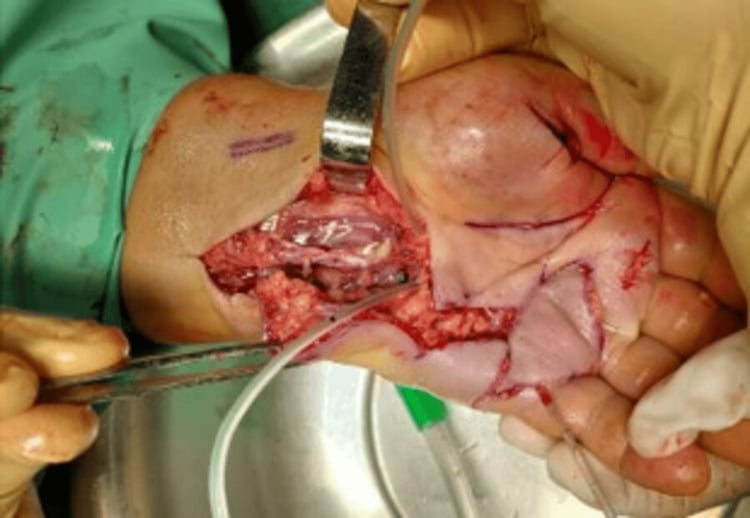
After surgery. Splint in the intrinsic-plus position; elevation is critical. IV antibiotics continue for a minimum of 48-72 hours, early protected active motion begins when pain is improving (3-5 days), and hand therapy addresses scar management and range of motion.
Outcomes. By timing of drainage:
- Early drainage (under 48 hours): 90-95% salvage, with full function
- Delayed drainage (over 72 hours): 70-80% salvage, stiffness common
- Tendon necrosis: staged reconstruction (graft, arthrodesis)
Guidelines, Registries & Global Practice
Global Epidemiology
- Hand infections account for roughly 15-20% of emergency hand presentations worldwide; pyogenic flexor tenosynovitis (PFT) comprises 2.5-9.4% of all hand infections in published series.
- Community-acquired MRSA accounts for 30-73% of hand infection cultures across US, UK and Asian series (Chung et al. found 30% in a paediatric cohort), with higher rates in deeper, more severe abscesses.
- Risk is concentrated in manual, agricultural, fishing and food-handling occupations; penetrating trauma is the dominant mechanism.
- Regional exposures change the microbiology: warm coastal/marine injury raises Vibrio vulnificus and Aeromonas risk; soil-contaminated agricultural wounds favour polymicrobial and clostridial contamination; aquarium/fish-tank exposure suggests Mycobacterium marinum in chronic cases.
- Outcomes correlate strongly with time to surgical decompression and with the Pang tissue-based group (purulence and digital ischaemia drive amputation risk).
Side-by-Side Society Guidance
- empiric
- Cover S. aureus incl. MRSA in purulent/severe infection; add gram-negative/anaerobe cover for bites and contaminated wounds
- mrsa
- Vancomycin (or linezolid/daptomycin) when MRSA suspected or local prevalence high
- note
- Emphasises incision and drainage as primary for abscesses; antibiotics adjunctive
- empiric
- Flucloxacillin-based cover for MSSA/Strep; co-amoxiclav for bites; add vancomycin/teicoplanin if MRSA risk
- mrsa
- Glycopeptide where MRSA prevalent or prior colonisation
- note
- Early hand-unit referral and washout within 24h widely advocated
- empiric
- Locally available beta-lactam (e.g. cloxacillin) +/- aminoglycoside; metronidazole for anaerobes
- mrsa
- Guided by local resistance data; vancomycin often restricted
- note
- Earlier surgical drainage emphasised where IV antibiotic supply and monitoring are limited
- Universal principle across all guidelines: deep space infections and established PFT are surgical problems - antibiotics are adjunctive and must not delay drainage.
- De-escalate to culture-directed therapy at 48-72 hours; transition to oral when clinically improving; extend to 4-6 weeks only if osteomyelitis is confirmed.
High- vs Limited-Resource Variation
- High-resource: point-of-care ultrasound, MRI for complex extent, 24/7 hand-surgery cover, closed catheter irrigation systems, formal hand therapy and splinting pathways.
- Limited-resource: clinical diagnosis predominates, plain radiographs to exclude foreign body/gas, lower threshold for early open drainage given constrained IV antibiotic supply and monitoring, and reliance on oral step-down (flucloxacillin/dicloxacillin, co-amoxiclav, clindamycin, trimethoprim-sulfamethoxazole for MRSA).
- Delayed presentation - common in remote and low-access settings - is the dominant modifiable driver of tendon necrosis and amputation everywhere.
Rehabilitation and Expected Recovery
- PFT with early surgery: typically 6-8 weeks to functional recovery.
- Deep space abscess: 4-8 weeks.
- Horseshoe abscess: 3-6 months, often with residual stiffness.
- Hand therapy (edema control, custom splinting, graded motion) materially improves final range of motion; telerehabilitation extends access where in-person services are scarce.
Special Considerations
Necrotising Fasciitis
A life-threatening soft tissue infection that needs emergent surgical debridement, with a high mortality (20-30%) if the diagnosis is delayed.
Recognition. Pain is out of proportion to the examination and progression is rapid, over hours, with systemic toxicity (fever, tachycardia, hypotension). The skin shows bullae, ecchymosis and crepitus, and sensation over the affected area is decreased.
The LRINEC score. Wong and colleagues (2004) built the Laboratory Risk Indicator for Necrotizing Fasciitis from six routine laboratory tests:
- CRP greater than 150 mg/L: 4 points
- WBC: 1 point if 15-25, 2 points if over 25 (per mm³)
- Haemoglobin: 1 point if 11-13.5, 2 points if under 11 (g/dL)
- Sodium under 135 mmol/L: 2 points
- Creatinine over 1.6 mg/dL (greater than 141 micromol/L): 2 points
- Glucose over 180 mg/dL (greater than 10 mmol/L): 1 point
Reading the score. The original cut-offs:
- 5 or less: low risk (under 50% probability)
- 6-7: intermediate risk
- 8 or more: high risk (over 75% probability)
A score of 6 or more had a positive predictive value of 92% and a negative predictive value of 96%, but a low score does not exclude necrotising fasciitis when clinical suspicion is high.
Management. The elements are:
- Emergent surgery, with extensive debridement of all necrotic tissue
- Broad-spectrum antibiotics: vancomycin, piperacillin-tazobactam and clindamycin
- ICU admission for resuscitation and vasopressor support
- Serial debridements, returning to theatre every 24-48 hours
- Amputation, which may be necessary for source control
Necrotising fasciitis cannot wait. It needs operative debridement within 6 hours of diagnosis; antibiotics and resuscitation alone are inadequate, and delay increases mortality exponentially. A positive finger test (easy blunt dissection along the fascia), dishwater pus and tissue necrosis confirm the diagnosis. Call senior help and proceed to theatre immediately.
Diabetic Hand Infections
Patients with diabetes develop more severe infections with worse outcomes, including a higher amputation rate. Impaired immune function, peripheral neuropathy (which delays presentation) and vascular insufficiency contribute, polymicrobial infection is common, and MRSA is more prevalent.
Adjusting management. Lower the threshold for surgical drainage and broaden the empiric antibiotics. Debride more extensively, treat for longer, and tighten glucose control perioperatively.
Bite Wounds
Bites are a special category, requiring specific antibiotic cover and aggressive management; ampicillin-sulbactam covers human, cat and dog bites.
Human bites are the most dangerous, with the worst outcomes and a high infection rate (15-30%). Eikenella corrodens is characteristic, and in the "fight bite", a closed fist injury, the MCP joint is often involved.
Animal bites. Cat bites are deep and penetrating, with Pasteurella multocida; dog bites are crush injuries and polymicrobial.
Management. Irrigate copiously, debride surgically and assess for joint involvement, the MCP joint after a fight bite. Leave the wounds open, with delayed primary closure at 3-5 days, and give antibiotics for a minimum of 7 days.
MCQ Practice Points
Q: Why does pyogenic flexor tenosynovitis cause tendon necrosis so rapidly?
A: The intrasynovial flexor tendon is largely avascular and depends on the vinculae and synovial fluid diffusion for nutrition. Pus within the closed sheath raises intrathecal pressure above capillary perfusion pressure, producing ischaemia within 24-48 hours. Beyond 72 hours irreversible necrosis begins. This is why decompression and irrigation are time-critical - the sheath is a closed compartment, not merely an abscess cavity.
Q: What is the horseshoe (and collar-stud) abscess, and which structures must be drained?
A: A horseshoe abscess is the communication of infection between the radial bursa (flexor pollicis longus sheath of the thumb) and the ulnar bursa (small-finger flexor sheath extending into the palm) via Parona's space in the distal forearm. Adequate treatment requires drainage of all three sites - thumb sheath, small-finger sheath, AND Parona's space - or the infection persists. A collar-stud (collar-button) abscess is distinct: a web-space infection that tracks between the palmar and dorsal subcutaneous compartments through the intermetacarpal space, requiring drainage on both volar and dorsal sides.
Q: How does the Pang classification guide prognosis in PFT?
A: The three-tier Pang system (JBJS Am 2007) stratifies by tissue findings, not time alone. Group I (no subcutaneous purulence or digital ischaemia): best prognosis, 0% amputation, ~80% total active motion. Group II (purulence, no ischaemia): 8% amputation, ~72% TAM. Group III (purulence plus digital ischaemia): 59% amputation, ~49% TAM. Digital ischaemia is the single most ominous finding.
Q: A patient steps on a fish bone / sustains an oyster-shell laceration and develops rapidly progressive hand infection - what organism and cover must you not miss?
A: Marine exposure raises the risk of Vibrio vulnificus (and Aeromonas), which can cause fulminant, potentially fatal necrotising soft-tissue infection. Empirical cover must add a tetracycline (doxycycline) plus a third-generation cephalosporin (ceftriaxone) - standard staphylococcal regimens miss it. Combine with urgent surgical assessment.
Summary
Deep space infections of the hand represent surgical emergencies requiring urgent recognition and aggressive treatment. Understanding the anatomical boundaries of the thenar, midpalmar, hypothenar, and Parona spaces enables appropriate surgical drainage planning. Flexor tenosynovitis, diagnosed by Kanavel four cardinal signs, requires urgent surgical drainage within 24-48 hours to prevent tendon necrosis and digital amputation.
Early aggressive surgical intervention is the cornerstone of management, with antibiotics playing an adjunctive role. Empiric antibiotic coverage must include MRSA given 30-50% community prevalence, with adjustment based on clinical scenario (bite wounds, marine exposure, immunocompromised). Surgical technique must achieve complete drainage while preserving critical structures including A2/A4 pulleys and neurovascular bundles.
Delayed diagnosis or inadequate surgical drainage results in devastating complications including stiffness, tendon necrosis, amputation, and rarely necrotizing fasciitis with significant mortality. The hand surgeon must maintain a high index of suspicion, perform systematic examination for Kanavel signs and deep space involvement, and proceed expeditiously to operative drainage when indicated rather than prolonging ineffective antibiotic trials.
Clinical Decision Scenarios
Practise clinical reasoning and management decisions out loud
“A 35-year-old construction worker presents to emergency 3 days after puncture wound to palm. He has throbbing pain, swelling of the palm with loss of the normal concavity, and difficulty moving his ring and small fingers which are held flexed. He has marked dorsal hand swelling. Temperature is 38.5°C. What is your diagnosis and management?”
“A 28-year-old woman presents with 12 hours of increasing small finger pain and swelling. She recalls a small cut 2 days ago while gardening. Examination shows the small finger held in 30 degrees of flexion, fusiform swelling of the entire digit, exquisite tenderness along the flexor sheath, and severe pain with any attempt at passive extension. What is your diagnosis and immediate management?”
Kanavel Four Signs - STEP
- Swelling fusiform (sausage-shaped entire digit)
- Tenderness along flexor tendon sheath
- Extension passive causes severe pain
- Posture flexed (semiflexion 20-30°)
- All four signs = surgical emergency drainage within 24h
- Beyond 72h: tendon necrosis risk dramatically increased
Anatomical Space Boundaries
- Thenar: Radial to midpalmar septum (from 3rd MC)
- Midpalmar: Ulnar to septum, most common infection
- Hypothenar: Over hypothenar muscles, least common
- Parona: Distal forearm quadrilateral space
- Midpalmar septum: From 3rd metacarpal to palmar fascia
- Loss of palmar concavity = midpalmar infection
Surgical Drainage Indications
- All four Kanavel signs present (urgent)
- Presentation greater than 48 hours (urgent)
- Failed 12-24h antibiotic trial (urgent)
- Fluctuant abscess on examination
- Systemic toxicity or sepsis (emergent)
- Necrotizing fasciitis suspected (emergent within 6h)
Empiric Antibiotics
- Community-acquired: Cefazolin 2g IV q8h
- MRSA risk: Vancomycin 15-20mg/kg IV q8-12h
- Human bite: Ampicillin-sulbactam 3g IV q6h
- Cat/dog bite: Ampicillin-sulbactam (Pasteurella)
- Diabetic/polymicrobial: Vancomycin + pip-tazo
- Narrow based on cultures at 48-72h
Flexor Tenosynovitis Surgery
- Closed irrigation: Early (less than 48h), 8Fr catheter A5 to A1
- Open drainage: Delayed, Bruner incision, window A2/A4
- Preserve A2 and A4 pulleys (critical for function)
- Early AROM at 3-5 days prevents adhesions
- Tendon blood supply from vinculae - pressure causes necrosis
- Expected: 90-95% salvage if early, 70-80% if delayed
Deep Space Drainage Approaches
- Thenar: Dorsal first web (avoid palmar structures)
- Midpalmar: Volar incision ulnar ring ray OR dorsal
- Hypothenar: Volar over hypothenar eminence
- Parona/horseshoe: Requires THREE incisions (thumb, small, forearm)
- All spaces: Penrose drain, leave open/loose closure
- Elevation and early motion critical postoperatively
Horseshoe Abscess
- Radial bursa (thumb FPL) + ulnar bursa (small finger) + Parona space
- Requires drainage all THREE sites or fails
- Parona space: Forearm incision between FPL and FDS/FDP
- High morbidity: stiffness 50-70%, prolonged recovery
- Multiple debridements often required
- Amputation risk 5-10% despite treatment
Necrotizing Fasciitis
- Pain out of proportion, rapid progression, systemic toxicity
- Bullae, ecchymosis, crepitus, decreased sensation
- LRINEC score greater than 6: high risk
- Emergent debridement within 6 hours (mortality 20-30%)
- Antibiotics: Vancomycin + pip-tazo + clindamycin
- Serial debridements q24-48h, ICU admission, may need amputation
Evidence Base
Pang HN, Teoh LC, Yam AK, Lee JY, Puhaindran ME, Tan AB. Factors affecting the prognosis of pyogenic flexor tenosynovitis. J Bone Joint Surg Am. 2007;89(8):1742-1748.
- Retrospective study of 75 patients over 6 years identified five risk factors for poor outcome: age over 43, comorbidity (diabetes, peripheral vascular disease, renal failure), subcutaneous purulence, digital ischaemia, and polymicrobial infection.
- A three-tier classification was proposed: Group I (no purulence/ischaemia) 0% amputation and 80% mean total active motion recovery; Group II (purulence, no ischaemia) 8% amputation, 72% TAM; Group III (purulence plus ischaemia) 59% amputation, 49% TAM.
Chapman T, Ilyas AM. Pyogenic Flexor Tenosynovitis: Evaluation and Treatment Strategies. J Hand Surg Am. 2019;44(11):981-985.
- Contemporary review confirming that management of PFT centres on prompt empirical intravenous antibiotics plus, in most cases, surgical decompression and sheath irrigation.
- The authors highlight that no single standardised surgical algorithm exists regarding need for, timing of, or type of surgery, and that complication rates (stiffness, amputation) remain high despite prompt treatment.
Hyatt BT, Bagg MR. Flexor Tenosynovitis. Orthop Clin North Am. 2017;48(2):217-227.
- Review establishing that diagnosis rests on history and examination guided by Kanavel's four cardinal signs, with empirical antibiotics covering skin flora and gram-negative organisms started immediately.
- Diabetes mellitus and peripheral vascular disease confer higher risk of stiffness and amputation, and early administration of antibiotics is the intervention most closely correlated with good outcomes.
Chung MT, Wilson P, Rinker B. Community-acquired methicillin-resistant Staphylococcus aureus hand infections in the pediatric population. J Hand Surg Am. 2012;37(2):326-331.
- Retrospective review of 146 paediatric hand infections found an overall MRSA-positive culture rate of 30% (29% in healthy children).
- MRSA prevalence rose with infection severity, with a trend toward higher MRSA in deep-space abscesses, and was higher in children with prior MRSA infection or a history of trauma.
- Traditional risk factors (hospitalisation, immunocompromise) did not predict community-acquired MRSA.
Wong CH, Khin LW, Heng KS, Tan KC, Low CO. The LRINEC (Laboratory Risk Indicator for Necrotizing Fasciitis) score: a tool for distinguishing necrotizing fasciitis from other soft tissue infections. Crit Care Med. 2004;32(7):1535-1541.
- Derivation (n=314) and validation (n=140) study using six routine labs - CRP, total white cell count, haemoglobin, sodium, creatinine and glucose.
- A cut-off score of 6 or more gave a positive predictive value of 92.0% and negative predictive value of 96.0%; area under the ROC curve was 0.98.
Pillukat T, Schadel-Hopfner M, Prommersberger KJ, van Schoonhoven J. Closed irrigation system for pyogenic flexor tenosynovitis of the hand. Oper Orthop Traumatol. 2011;23(3):184-191.
- Series of 35 patients treated with a closed catheter irrigation system (irrigation catheter plus suction drain, 500-1500 mL/24h isotonic solution over several days).
- Of 33 reviewed, mean grip strength was 84% of the unaffected side and the mean DASH score was 16.8; by flexor tendon function rating there were 26 excellent, 5 good, 1 fair and 1 poor result.
- Extensive open exploration of the sheath was not mandatory.