Degenerative | Mucous Cyst | Heberden's Node | Joint Destruction
- Heberden's nodes are osteophytes at DIP joint - pathognomonic for OA
- Mucous cyst communicates with DIP joint in nearly all cases
- Arthrodesis is gold standard for painful end-stage DIP OA
- Nail deformity from mucous cyst pressure requires cyst excision + osteophytectomy
- Pin fixation for 6 weeks post-fusion is standard
- “Terminal tendon is formed by the convergence of the lateral bands and inserts on the dorsal lip of the distal phalanx
- “Mucous cyst excision must include osteophyte debridement
- “Silicone arthroplasty is a niche motion-preserving option for low-demand patients; fusion is default
- “Fusion position: 0-10 degrees for index, 20 for middle, 30-40 for ring/small
Overview and Epidemiology
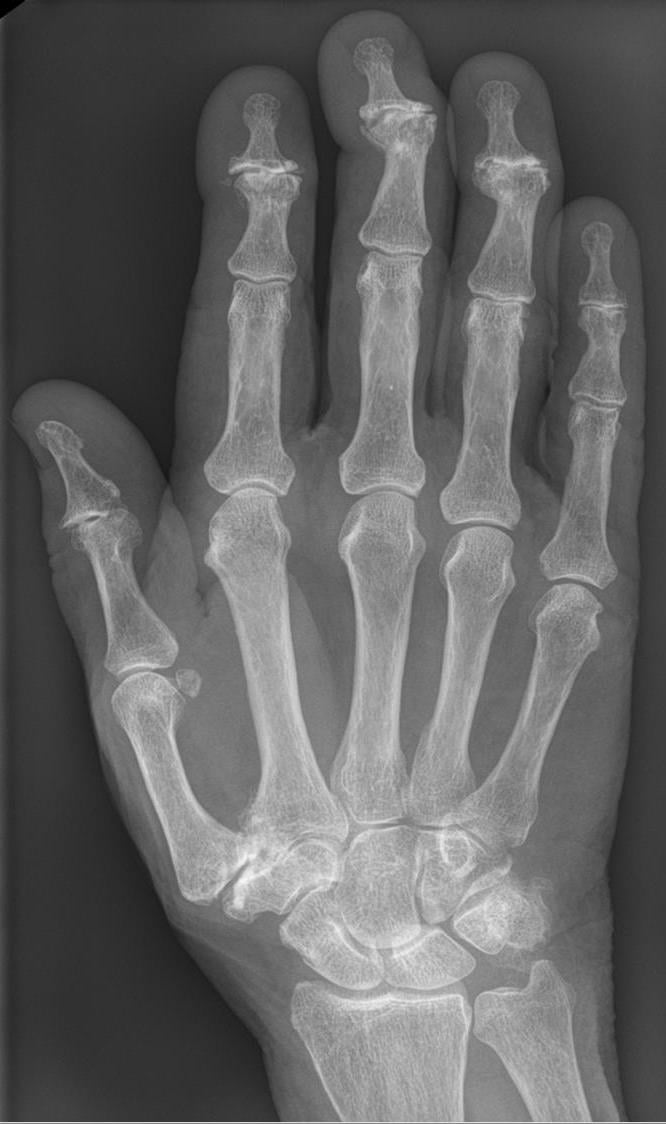
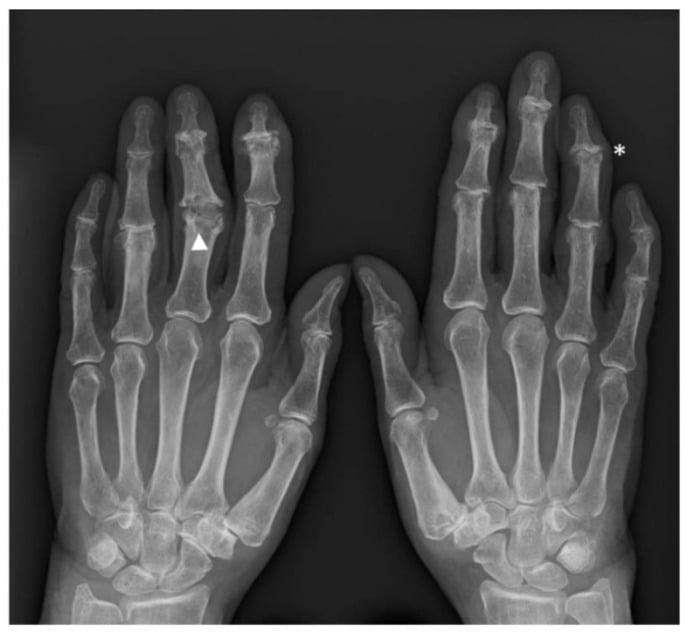
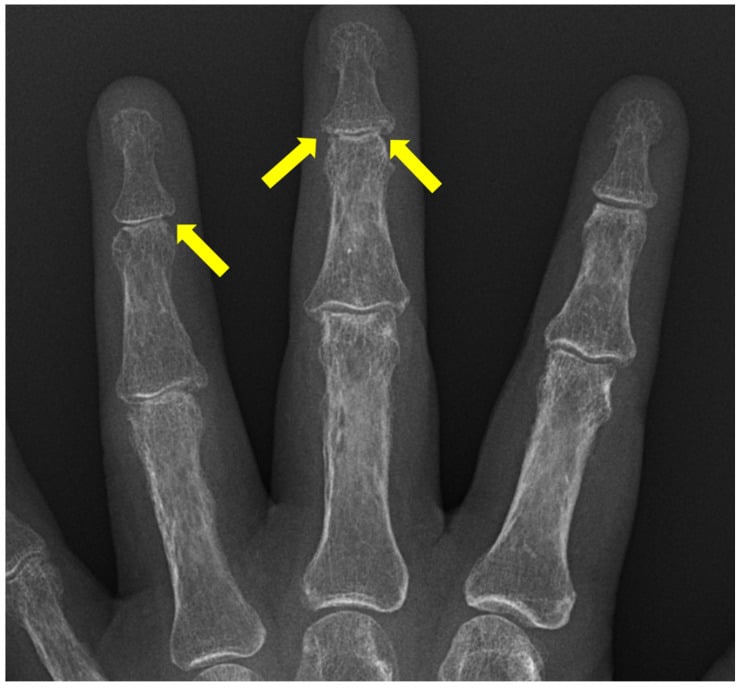
DIP joint arthritis is the most common form of hand arthritis, and the DIP is the commonest site of primary osteoarthritis in the hand. It is about 10 times more common than rheumatoid arthritis affecting the DIP joint. Its hallmark is the Heberden's node, a dorsal osteophyte at the DIP joint that is pathognomonic for osteoarthritis.
Who. DIP OA affects 70% of women over 60. Patients are predominantly over 60, with a 70% female predominance. Repetitive manual labour increases the risk, and familial clustering is seen in 40-50% (hereditary hand OA).
Why it matters. It typically presents with pain, stiffness and deformity, and it significantly impairs fine motor function. An associated mucous cyst can deform the nail, and recognising that the cyst communicates with the joint is critical to planning its surgery. Many patients manage conservatively, and those who need surgery do well with arthrodesis, which gives excellent pain relief and 90% fusion rates.
Nodal Generalised Hand Osteoarthritis
DIP arthritis is rarely an isolated joint problem. The Heberden's nodes, the older female patient and the familial clustering all point to one entity, nodal generalised osteoarthritis.
The phenotype. Nodal generalised OA is a distinct, strongly heritable, female-predominant polyarticular form of OA. Its target joints are the DIPs, the PIPs and the thumb base (first CMC), and it is defined clinically by its nodes.
- Joint
- DIP
- What it is
- Dorsal/dorsolateral osteophyte - the hallmark of this topic
- Joint
- PIP
- What it is
- The same osteoarthritic osteophyte one joint more proximal (see pip-joint-arthritis)
- Joint
- First CMC (trapeziometacarpal)
- What it is
- Basal-joint OA - the third target joint (see thumb-cmc-arthritis)
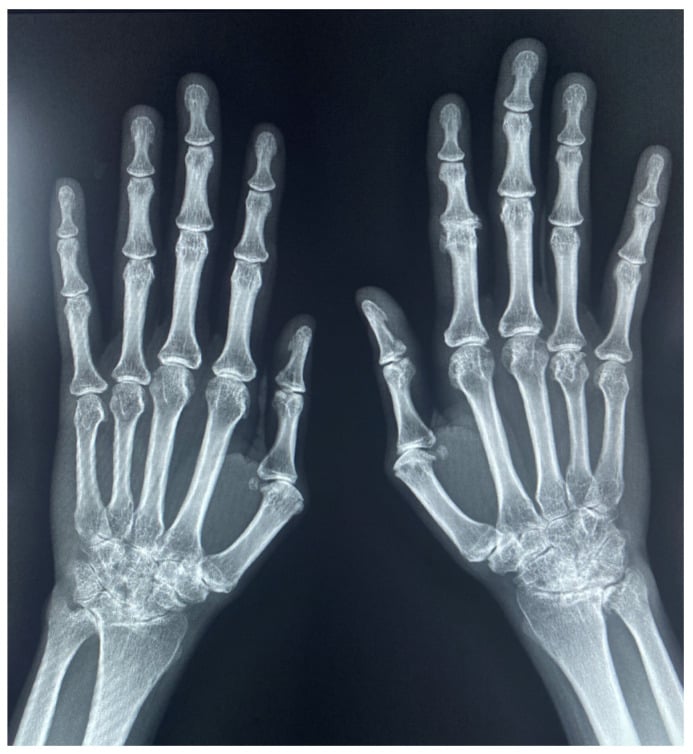
The pattern is the diagnosis. Nodal OA is typically bilateral, symmetrical and polyarticular, with a strong family history, and the pattern itself is diagnostic: it usually needs no serology. When you see one painful Heberden's node, examine all the finger interphalangeal joints and the thumb base. You will usually find the wider nodal pattern, which confirms primary OA and reframes the consultation: the patient can be reassured that this is "wear-and-tear" nodal OA, not rheumatoid.
Prognosis. Nodal OA carries a better long-term prognosis than the aggressive erosive subset, and it is managed the same way, joint by joint.
Anatomy and Pathophysiology
The joint. The DIP is a hinge (ginglymus) joint with a range of motion of 0-80 degrees. The bicondylar head of the middle phalanx (P2) articulates with the biconcave base of the distal phalanx (P3). The dorsal capsule is thin, and the thicker volar plate prevents hyperextension.
The tendons. The terminal extensor tendon is formed by the convergence of the lateral bands and inserts on the dorsal lip of P3, and it is affected by the deformity of DIP arthritis. Flexor digitorum profundus inserts on the volar base of P3.
The nail matrix. The germinal matrix of the nail fold extends proximally to within 1-2 mm of the extensor tendon insertion. That proximity explains why dorsal osteophytes compress the matrix and cause nail deformity.
Stability. Unlike the PIP joint, the DIP has relatively short collateral ligaments, and much of its stability comes from articular conformity, the "cup and cone" geometry. Loss of cartilage therefore brings instability, often seen as radial or ulnar deviation. Because the DIP is the terminal link in the kinematic chain, its stability is crucial for precision pinch in the index finger and for locking power grip in the ulnar digits.
Pathogenesis. The cascade begins with cartilage degradation from mechanical stress and ageing. Chondrocyte apoptosis leads to matrix metalloproteinase release and progressive cartilage loss, and the subchondral bone responds with sclerosis and osteophyte formation: the Heberden's node.
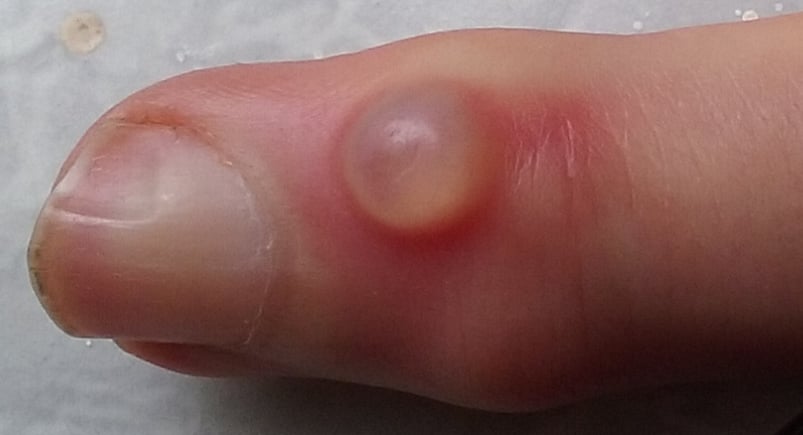
How a mucous cyst forms. An osteophyte at the joint margin can pierce the capsule and let synovial fluid herniate dorsally, where the sac becomes encapsulated as a mucous cyst (a ganglion). It sits between the extensor tendon and the nail matrix and causes a longitudinal nail groove by direct pressure. The cyst communicates with the joint in nearly all cases, often through a tortuous stalk that acts as a one-way valve: fluid enters the cyst but cannot return to the joint, so the cyst enlarges.
Primary or secondary. The table sets primary OA beside post-traumatic and erosive disease.
- Mechanism
- Age-related cartilage degeneration
- Features
- Multiple digits, symmetric
- Mechanism
- Intra-articular fracture
- Features
- Single digit, history of trauma
- Mechanism
- Inflammatory cascade
- Features
- Rapid progression, 'Seagull' sign
Classification
Radiographic grade. A simple descriptive grade, akin to a Kellgren-Lawrence reading, guides treatment and correlates well with symptoms.
- Radiographic Features
- Joint space narrowing, no osteophytes
- Management
- Conservative (Splint/NSAID)
- Radiographic Features
- Osteophytes present, sclerosis
- Management
- Injection / Procedure
- Radiographic Features
- Bone-on-bone, deformity, cysts
- Management
- Arthrodesis
The Eaton (Eaton-Littler / Eaton-Glickel) classification stages thumb carpometacarpal (basal joint) OA, not the DIP (see thumb-cmc-arthritis). It is sometimes loosely, and incorrectly, applied to finger interphalangeal OA. For the DIP, use the plain descriptive grade above.
Erosive osteoarthritis. An aggressive inflammatory variant affecting 10-15% of patients, with rapid onset, erythema, swelling and severe pain. Radiographs show central subchondral erosions that give a "gull-wing" or "saw-tooth" appearance. Psoriatic arthritis is the differential, so look for skin plaques and nail pits.
Its natural history. Erosive OA often ends in spontaneous ankylosis, and the spontaneous fusion stops the pain.
Clinical Presentation
History. Pain is worse with activity, pinch especially, and relieved by rest. Morning stiffness is short, under 30 minutes. Patients complain of "knobby fingers" and of difficulty with fine motor tasks such as buttons and needles.
Examination. Look at the whole hand for the nodal pattern, then at the affected joint:
- Heberden's nodes, bony hard swellings at the dorsolateral joint margin
- A mucous cyst, a translucent fluid-filled mass on the dorsum, often between the nail fold and the joint
- Nail deformity, a longitudinal groove or ridge that denotes cyst pressure on the matrix; always check for it when there is a cyst
- Crepitus and loss of flexion
- Deviation, often radial, or a flexed posture
Investigations
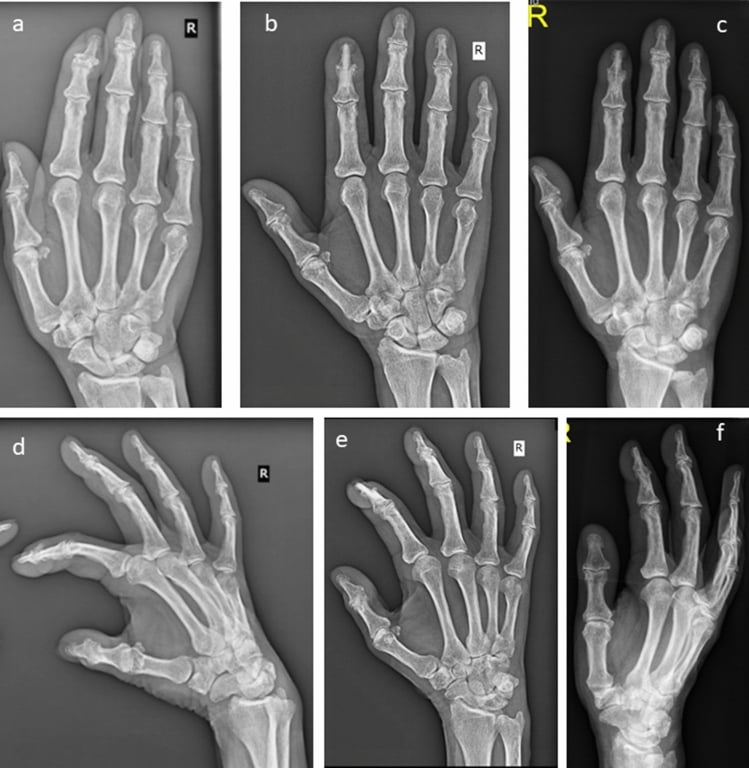
Radiographs are the gold standard, and are sufficient for both diagnosis and surgical planning. Request PA, lateral and oblique views, which show:
- Joint-space narrowing
- Subchondral sclerosis
- Osteophytes (Heberden's nodes)
- Subchondral cysts
- Alignment and deviation
MRI is not needed. It is indicated only if tumour or infection is suspected, which is rare.
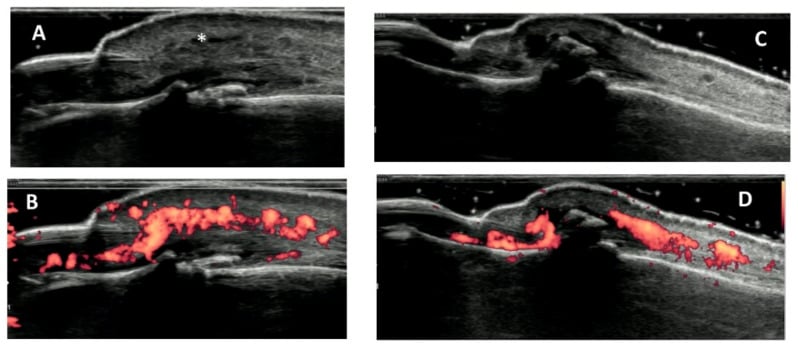
Ultrasound is useful when examination and radiographs do not distinguish an inflammatory flare. Psoriatic disease shows extensor-tendon and periarticular oedema with marked Doppler hyperaemia, while OA is dominated by osteophytes and less diffuse inflammation.
Differential Diagnosis
A systemic review is mandatory.
- Key Differentiators
- Heberden's nodes, no systemic symptoms
- Imaging Features
- Osteophytes, Sclerosis, Normal density
- Key Differentiators
- Nail pits, rash, dactylitis (sausage digit)
- Imaging Features
- "Pencil-in-cup", Periostitis, Osteolysis
- Key Differentiators
- Acute flare, Tophi (white chalky deposit)
- Imaging Features
- Punched out erosions with overhanging edges
- Key Differentiators
- Spares DIP (usually), symmetric MCP/PIP
- Imaging Features
- Juxta-articular osteopenia, erosions
Psoriatic arthritis. DIP involvement is common in psoriatic arthritis, and telling it apart from OA matters: fusion rates are lower in active inflammatory disease, and medical management with biologics or DMARDs is the primary treatment. Look for scaly plaques behind the ears and on the elbows, and check the nails for pitting or onycholysis. Morning stiffness lasting over 30 minutes suggests an inflammatory cause, and it is worth asking about psoriasis in first-degree relatives.
Refer early. Early rheumatology referral prevents joint destruction.
Why rheumatoid arthritis spares the DIP. Rheumatoid arthritis is a synovial disease: the inflammatory pannus arises in synovium-rich joints and tenosynovial sheaths. The joints with the most synovium, the MCPs, PIPs, wrists and the ulnar styloid/DRUJ, are therefore its targets, and the DIP, which has relatively little synovium, is characteristically spared. The dominant joint is therefore a diagnostic clue.
- Think
- Osteoarthritis (Heberden)
- Clue
- Osteophytes, no systemic features
- Think
- Psoriatic arthritis
- Clue
- The one inflammatory arthritis that DOES attack the DIP ('pencil-in-cup')
- Think
- Rheumatoid arthritis
- Clue
- DIP involvement argues AGAINST RA
Psoriatic arthritis is the exception. It characteristically targets the DIP, with adjacent nail disease, which is why it is the key inflammatory mimic of DIP OA.
Coexisting OA confuses the picture. Elderly rheumatoid patients very commonly also have nodal OA with Heberden's nodes. DIP osteophytes in a known RA patient usually reflect concomitant OA rather than RA attacking the DIP.
Management
The decision. Treatment is primarily conservative, and about 90% respond to NSAIDs and splinting. DIP arthrodesis is reserved for refractory cases.
- Severity
- Grade I-II
- Treatment
- NSAIDs + splinting
- Key Pearl
- 90% respond to conservative management
- Severity
- Grade II-III
- Treatment
- Procedures
- Key Pearl
- Corticosteroid injection (3-6 mo relief)
- Severity
- Grade III
- Treatment
- DIP arthrodesis
- Key Pearl
- 90% fusion rate, excellent pain relief
- Severity
- Any grade
- Treatment
- Cyst excision + Osteophytectomy
- Key Pearl
- Must remove spur to prevent recurrence
Non-operative care. First line for Grade I-II disease:
- A DIP extension splint (Stack splint) at night
- Topical NSAIDs such as diclofenac, preferred over oral NSAIDs in the elderly
- Intra-articular corticosteroid, 0.5 mL triamcinolone through a 25G or 27G needle, giving 60-70% relief for 3-6 months
Injection limits. Warn the patient about skin atrophy and hypopigmentation, and give no more than 3 injections a year.
Indications for surgery. Persistent pain, deformity, a mucous cyst at risk of rupture, and nail dystrophy.
Arthrodesis. Fusion is the gold standard for painful end-stage DIP OA. The technique, the fixation choice and the angle for each finger are set out under Surgical Technique.
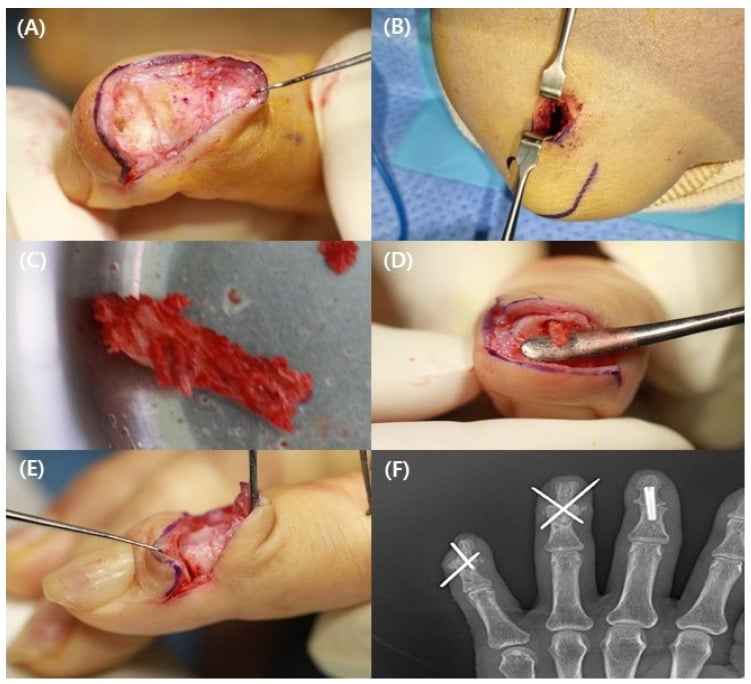
Mucous cyst excision. The crucial step is removing the marginal osteophyte. If the spur is left, recurrence is over 30%; with it removed, recurrence falls below 5%. A nail deformed by cyst pressure is treated the same way, by cyst excision plus osteophytectomy, and thinned or excised skin may need a rotation flap.
Arthroplasty. Silicone interposition has a niche role. Pooled data from a systematic review of 269 digits show high satisfaction (~98%) and a 7% reoperation rate, but the evidence base is small and low quality. Reserve it for low-demand patients who specifically want to retain motion, and avoid it where pinch stability is critical (the index) and in manual workers.
Other implants. Surface and pyrocarbon replacements are emerging only: early-stage, with no durable comparative data, and long-term DIP data that remain inferior to fusion.
- Arthrodesis (Fusion)
- Excellent (permanent post)
- Silicone Arthroplasty
- Generally preserved (~97%), risk of deviation
- Arthrodesis (Fusion)
- Excellent and durable
- Silicone Arthroplasty
- High satisfaction (~98% in pooled data)
- Arthrodesis (Fusion)
- None (rigid)
- Silicone Arthroplasty
- Retains ~33-36 degrees
- Arthrodesis (Fusion)
- Nonunion (~10-12%)
- Silicone Arthroplasty
- Reoperation ~7%; sparse long-term evidence
- Arthrodesis (Fusion)
- Manual workers, index pinch
- Silicone Arthroplasty
- Low-demand patient prioritising motion
Surgical Technique
Precise technique is required to prevent nonunion.
Exposure. An H-shaped or T-shaped dorsal incision is best, with the transverse limb distal to the DIP crease to allow good skin retraction; a Y-shaped incision is also used. Protect the nail matrix. Divide the terminal extensor tendon, either splitting it longitudinally or transecting it since the joint will be fused, and release the collateral ligaments for full access.
Joint preparation. Resect the cartilage to bleeding bone with either a cup-and-cone or a flat cut, and maximise the bone contact surface area. For the cup and cone, a small high-speed burr or a correctly sized reamer makes a concave cup in the distal phalanx, and the head of P2 is shaped into a convex cone. The two surfaces should lock together at the desired angle, a "Morse taper" effect.
Position. Flexion increases from the index to the ulnar digits, and an incorrect angle causes functional loss:
- Index: 0-10 degrees, for pinch
- Middle: 20 degrees
- Ring and small: 30-40 degrees, for grip
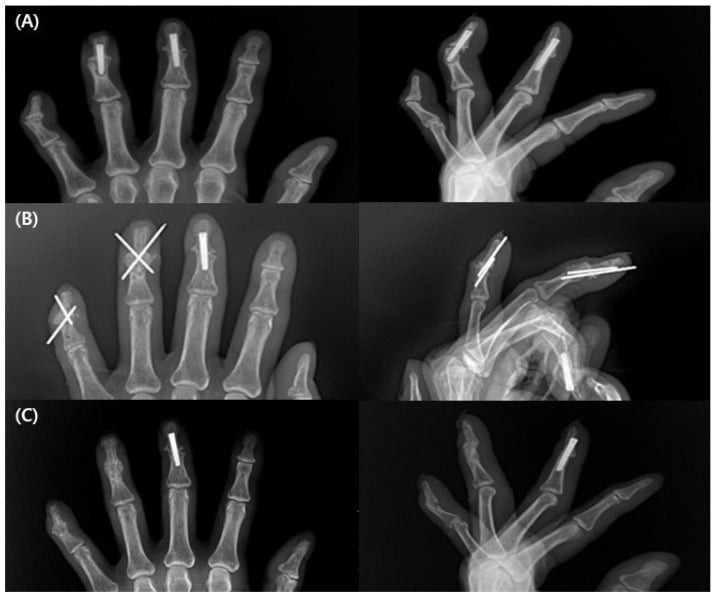
Fixation with a headless compression screw (for example Acutrak Mini or Micro). It gives compression with no external metalwork, but it costs more and the hardware is difficult to remove. It also carries a small risk of iatrogenic phalangeal fracture from screw-to-bone size mismatch.
- Insert the guide wire retrograde through P3 to the tip
- Reduce the joint at the desired angle
- Drive the guide wire antegrade into the P2 isthmus
- Measure and insert the screw
Checking the screw. Confirm central passage on AP and lateral images. Cortical breach, prominence or rotational error can cause pain, nail injury or nonunion.
Fixation with K-wires. Two 0.045 inch wires, parallel or crossed; crossed wires give better rotational control. They are cheap and easy to remove in clinic, but carry a pin-tract infection risk and give no compression.
Closure. Check alignment under fluoroscopy, repair the tendon if you choose (it is optional), close the skin with 5-0 nylon and apply a protective splint.
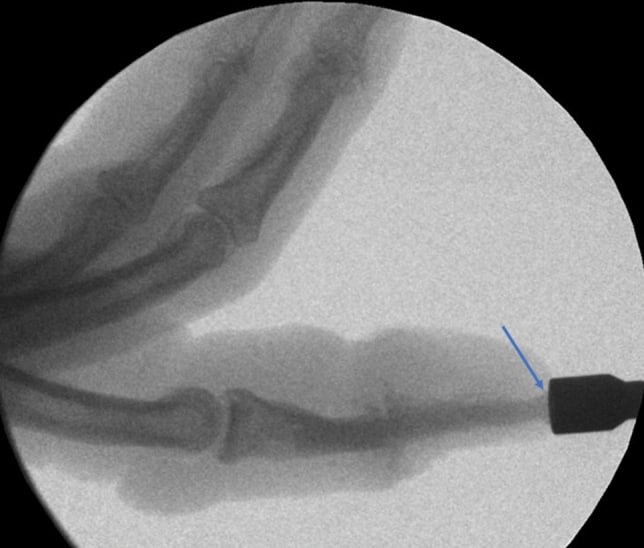
Rehabilitation. Pin fixation for 6 weeks is standard. Before unrestricted pinch and impact use, assess bridging, alignment, hardware position and fusion angle on matched AP and lateral images.
- 0-6 weeks, protection. Protect the fusion and let the wound heal in a pin-protecting splint (Stax or thermoplastic). Keep it dry and move the PIP gently with isolation exercises. X-ray at 6 weeks: if union is visible and K-wires are present, remove them.
- 6-12 weeks, remobilisation. Begin using the finger for light pinch, with scar desensitisation massage and Coban wrapping for oedema, to desensitise the tip and restore function.
- 3 months onwards, strengthening. Return to full unprotected use; full manual labour is allowed once radiographic union is solid.
Complications
- Incidence
- 5-10%
- Management
- Revision fusion vs Accept (fibrous union)
- Incidence
- 1-2%
- Management
- Antibiotics / Pin removal
- Incidence
- 5%
- Management
- Nail plate removal / Matrix repair
- Incidence
- Rare
- Management
- Corrective osteotomy
- Incidence
- 5-30%
- Management
- Re-excision + Osteophytectomy
Nonunion. Persistent pain and lucency at the fused joint indicate nonunion. Revision requires removal of fibrous tissue, fresh cancellous surfaces, grafting where needed and stable fixation, correcting malalignment at the same time.
Mucous cyst recurrence is almost exclusively due to failure to remove the osteophyte, which acts as a "can opener" on the capsule. It must be debrided down to the shaft level.
Intraoperative troubleshooting. When things go wrong in theatre:
- Bone too soft: augment with K-wires if the screw threads strip
- Nail bed injury: repair the germinal matrix immediately with 6-0 absorbable suture to prevent a nail ridge
- Malrotation: check the finger cascade in flexion before final fixation, because a clinical check is better than an X-ray for rotation
Patient Education and Expectations
Managing expectations is critical for satisfaction.
The first weeks. Severe pain usually subsides within 3-4 days, and the patient can move to simple analgesia (paracetamol) early. The finger will stay swollen for 3-6 months, which is normal. The PIP joint may stiffen from disuse, so early PIP motion is mandatory.
K-wires. If K-wires are used they may protrude, and they must be kept clean and dry. Infection requires their immediate removal.
The long term. Once the joint has fused the pain is gone, but the finger will not bend at the tip. Most patients (90%) are very satisfied and would have the surgery again, and grip strength improves because the pain is gone. There is a small risk that the bone does not knit, which may need a second operation. Recovery timelines vary with comorbidity and compliance.
Guidelines, Registries & Global Practice
Global Epidemiology
- Hand OA is among the most prevalent forms of OA worldwide; the DIP joint is the single most commonly affected hand joint.
- Strong female predominance and a steep rise after the sixth decade are consistent across population cohorts (e.g. Framingham, Rotterdam).
- Familial clustering is well recognised, supporting a heritable component to nodal hand OA.
Guidance Compared
- Position relevant to DIP OA
- First-line non-pharmacological care plus topical NSAIDs; intra-articular corticosteroid as adjunct; surgery for refractory disease
- Position relevant to DIP OA
- Core treatment is education, exercise and topical NSAIDs; oral NSAIDs at lowest effective dose; reserve referral for persistent functional limitation
- Position relevant to DIP OA
- Topical NSAIDs preferred over oral for hand OA; chondroitin may relieve symptoms; routine imaging not required for diagnosis
- Position relevant to DIP OA
- Arthrodesis is the reference operation for end-stage painful DIP OA; fixation choice (screw vs wire) at surgeon discretion
Registry & Practice Variation
- There is no dedicated implant registry for DIP arthroplasty (low volumes, predominantly fusion), so outcome data come from case series and systematic reviews rather than registry survivorship.
- High-resource settings: greater use of headless compression screws and hand-therapy-led rehabilitation.
- Limited-resource settings: K-wire fixation predominates due to cost and ease of clinic removal; topical/oral analgesia and splinting carry most of the non-operative burden where injectables or therapy access is limited.
Controversies & Areas of Uncertainty
Fusion or arthroplasty. Fusion is the long-standing default, and pooled arthroplasty data report high satisfaction (see Management), but there is no high-quality randomised comparison. The choice remains driven by demand, digit and patient preference rather than by the evidence hierarchy.
Screw or K-wire. Each has the trade-offs set out under Surgical Technique, and no single construct is proven superior across all digits.
Accepting a fibrous nonunion. A substantial proportion of radiographic nonunions are pain-free (more than half, in Stern's series). Whether to revise an asymptomatic stable fibrous union is debated, and many surgeons observe rather than reoperate.
Mucous cyst technique. Units vary on whether routine skin excision and flap coverage are needed or simple decompression with osteophyte removal suffices. The consensus point is that osteophyte removal is the step that determines recurrence.
Emerging options. Bioabsorbable implants, magnesium for example, obviate removal but are early-stage with no durable comparative data. Regenerative injections (BMAC, PRP) for early disease remain Level IV/V and unproven.
Clinical Decision Scenarios
Practise clinical reasoning and management decisions out loud
“A 68-year-old lady presents with a painful, deformed index finger DIP joint. X-rays show bone-on-bone arthritis. She asks about 'joint replacement' so she can keep moving it suitable.”
“A 50-year-old female presents with a burst mucous cyst on her middle finger. The area is red and discharging.”
“A manual labourer underwent DIP arthrodesis with crossed K-wires 4 months ago. He has mild discomfort and the radiograph shows persistent lucency across the fusion site without hardware failure.”
Key Concepts
- Heberden Node: Osteophyte at DIP
- Bouchard Node: Osteophyte at PIP (Also in OA)
- Mucous Cyst: Ganglion + OA (Connects to joint)
Radiographic Grade
- Grade I: Narrowing
- Grade II: Osteophytes
- Grade III: Deformity
- *(Eaton staging = thumb CMC, not DIP)*
Fusion Angles
- Index: 0-10 degrees
- Middle: 20 degrees
- Ring/Small: 30-40 degrees
Evidence Base
DIP/IP Arthrodesis: Complication Analysis
- 139 patients, 181 arthrodeses (144 finger DIP, 37 thumb IP)
- 21 nonunions (~12%); crossed K-wires, interfragmentary wire and Herbert screw had similar nonunion rates
- 13 of 21 nonunions were pain-free; major complications (nonunion/malunion/deep infection/osteomyelitis) in 20%
- Inadequate bone stock/resection, premature pin removal and infection predisposed to nonunion
Silicone Interpositional Arthroplasty of the DIP Joint
- Review of 38 digits, mean age 58 years, implants in situ a mean of 10 years
- Less than 10% of implants required removal over the follow-up period
- Mean retained DIP motion of 33 degrees with preserved stability
- Concluded arthroplasty relieves degenerative pain while retaining motion versus arthrodesis
Mucous Cyst Excision With Joint Debridement and Flap Coverage
- Prospective cohort of 35 patients with 37 digital mucous cysts
- Cyst excision plus joint debridement, capsulectomy and osteophyte removal; defect closed with local flap
- Only 1 of 37 cysts recurred at mean 4-year follow-up; preoperative nail ridging resolved in 7 of 9 digits
- Satisfaction improved (4.3 to 6.8) and pain fell (4.7 to 2.3) with no flap necrosis or joint stiffness
References
- Stern PJ, Fulton DB. Distal interphalangeal joint arthrodesis: an analysis of complications. J Hand Surg Am. 1992;17(6):1139-45. PMID: 1430956.
- Wilgis EF. Distal interphalangeal joint silicone interpositional arthroplasty of the hand. Clin Orthop Relat Res. 1997;(342):38-41. PMID: 9308522.
- Hojo J, Omokawa S, Shigematsu K, et al. Patient-based outcomes following surgical debridement and flap coverage of digital mucous cysts. J Plast Surg Hand Surg. 2016;50(2):111-4. PMID: 26541935.
- Ingoe HMA, O'Hare JF, Middleton A. A functional angle of up to 35 degrees at the distal interphalangeal joint can be achieved with headless compression screw fusion. J Hand Surg Asian Pac Vol. 2018;23(3):377-381. PMID: 30282554.
- Xu J, Gilpin B, McCarron L, et al. Distal interphalangeal joint arthroplasty - a systematic review. J Hand Surg Asian Pac Vol. 2023;28(3):409-414. PMID: 37501548.
- Fan Z, Chang L, Su X, et al. Treatment of mucous cyst of the distal interphalangeal joint with osteophyte excision and joint debridement. Front Surg. 2022;8:767098. PMID: 35145989.