Mucin-Filled Outpouchings | Dorsal Wrist Most Common | Benign Self-Limiting
- Most common soft tissue mass of the hand and wrist (50-70% of all soft tissue tumours)
- Mucin-filled (hyaluronic acid and glucosamine), NOT true cyst (no epithelial lining)
- Transilluminates with penlight (solid tumours do not)
- Dorsal wrist ganglion arises from scapholunate ligament capsular attachment
- Volar wrist ganglion is near radial artery - beware during excision
- Occult ganglion causes pain without visible mass - diagnosed on MRI/ultrasound
- “Contains mucin (hyaluronic acid) - clear, viscous, jelly-like
- “One-way valve mechanism allows fluid accumulation
- “Recurrence after aspiration 50-59%; after excision the published range is wide - 5% asserted in an old review, 21% pooled by meta-analysis, 39% when patients were asked at six years
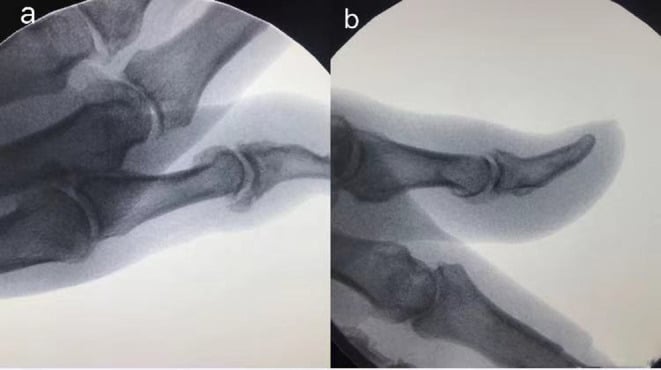
- “Mucous cyst from DIP - may cause nail deformity (longitudinal groove)
- “Bible bump therapy historical only - no evidence and risk of injury
Overview and Epidemiology
A ganglion is a cystic swelling of clear, viscous, jelly-like mucin arising from a joint capsule or tendon sheath. Ganglia are the most common soft tissue masses of the hand and wrist, accounting for 50-70% of all soft tissue tumours in the region. Most have a pedicle or stalk connecting them to the underlying joint or tendon sheath, and the word "cyst" is technically a misnomer, as the histology below shows.
Who and where. Ganglia are more common in women than men (3:1) and peak between 20 and 40 years, and they account for 60-70% of soft tissue masses around the wrist. By location:
- Dorsal wrist - 60-70%, the most common
- Volar wrist - 18-20%
- Flexor tendon sheath - 10%
- DIP joint mucous cyst - 5%
Natural history. The course is variable, and many ganglia fluctuate in size with activity and wrist position. In Dias's prospective series 23 of 55 untreated dorsal ganglia (58%) resolved spontaneously over a mean of 70 months.
Recurrence after treatment. Recurrence after aspiration is 50-59%. After surgical excision the published figures diverge sharply by method of ascertainment: 21% pooled across 14 surgical series (Head), but 39% when patients themselves were asked at six years (Dias).
The term "ganglion" derives from Greek meaning "knot" or "swelling." Early anatomists thought these cysts resembled nerve ganglia (nerve cell clusters), though they are entirely unrelated to the nervous system. The misnomer persists in modern terminology.
Pathology and Pathophysiology
Gross appearance. The contents are thick, clear, viscous and jelly-like, colourless to pale yellow, with the consistency of thick synovial fluid. The wall is a translucent to white fibrous capsule, and the stalk usually joins it to the underlying joint capsule or tendon sheath.
Microscopy. The wall is compressed collagen fibres arranged in concentric layers, and it may contain scattered fibroblasts and occasional chronic inflammatory cells. The mucin it holds is acellular.
Crucially, there is no epithelial lining: ganglia are technically pseudocysts, and this histological fact is frequently tested in exams. The absence of an epithelial lining also explains why simple drainage without removing the stalk leads to high recurrence - the source of mucin production persists.
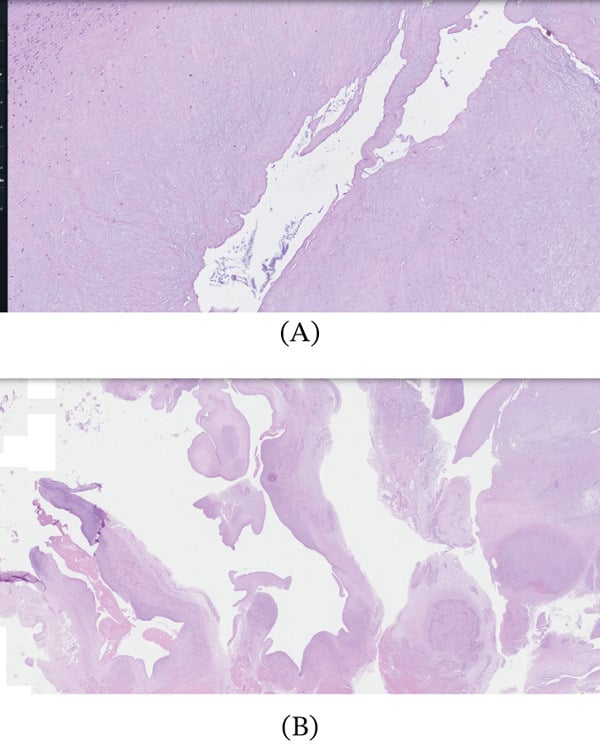
The mucin. It is chemically similar to synovial fluid but with a higher protein and glucosamine content:
- Hyaluronic acid (a glucosamine polymer) - the main component
- Glucosamine and other mucopolysaccharides
- Albumin and globulin from serum
- Water - 95% by volume
Pathogenesis. The exact cause remains incompletely understood. The leading theories:
- Synovial herniation - synovium pouches out through a defect in the joint capsule, and a one-way valve lets fluid accumulate
- Mucoid degeneration - myxoid degeneration of periarticular connective tissue creates mucin pools that coalesce to form the cyst
- Trauma - repetitive microtrauma causes collagen degeneration and mucin production
- Synovial proliferation - aberrant mesenchymal tissue produces synovial-type cells that secrete mucin
How a ganglion forms. Formation is described as a multi-step process. Myxoid degeneration of connective tissue at capsular attachments or tendon sheaths creates focal pools of mucin, which coalesce into a larger cavity. A stalk connects the cavity to the joint capsule or tendon sheath, often at a ligamentous attachment site.
The one-way valve. The stalk lets fluid in from the joint during motion but resists its outflow, and the pumping action of wrist motion forces more fluid in, so the cyst gradually enlarges. This valve mechanism is widely accepted.
Clinical Presentation by Location
Symptoms. Cosmetic concern is often the primary complaint, especially in young women. Pain comes from capsular distension, impingement on adjacent structures or occult intraosseous extension, and an occult ganglion may cause pain disproportionate to its size. The perception of weakness is common but objective weakness is rare unless the mass compresses a motor nerve, and tendon sheath ganglia may click as the tendons slide over the mass.
Dorsal wrist ganglion (60-70%). It arises from the dorsal capsule at the scapholunate ligament attachment, with its stalk penetrating between the fibres of the ligament. It presents as a firm, smooth, well-circumscribed swelling on the dorsum of the wrist, typically between EPL radially and EDC ulnarly, and usually 1-3 cm in diameter (range 0.5-4 cm).
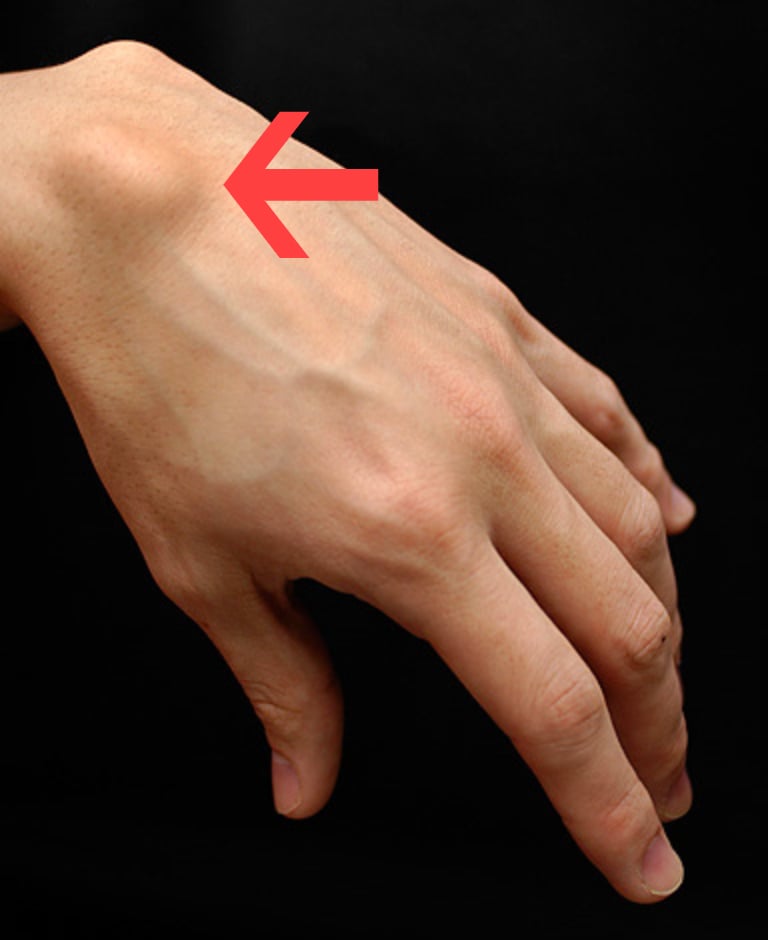
Symptoms and behaviour. It may be asymptomatic or cause vague wrist pain, typically worse with wrist extension, which increases pressure on the stalk. Its size may fluctuate with activity, larger after use. There is usually no joint instability, and wrist range of motion is typically normal, though the scapholunate interval may be tender.
The occult dorsal ganglion. Pain without a visible or palpable mass, with localised tenderness over the scapholunate ligament and pain on wrist extension. It may present as activity-related wrist pain or weakness, and it can be intraosseous, within the scaphoid or lunate. It requires imaging for diagnosis: high signal on T2 MRI, or ultrasound.
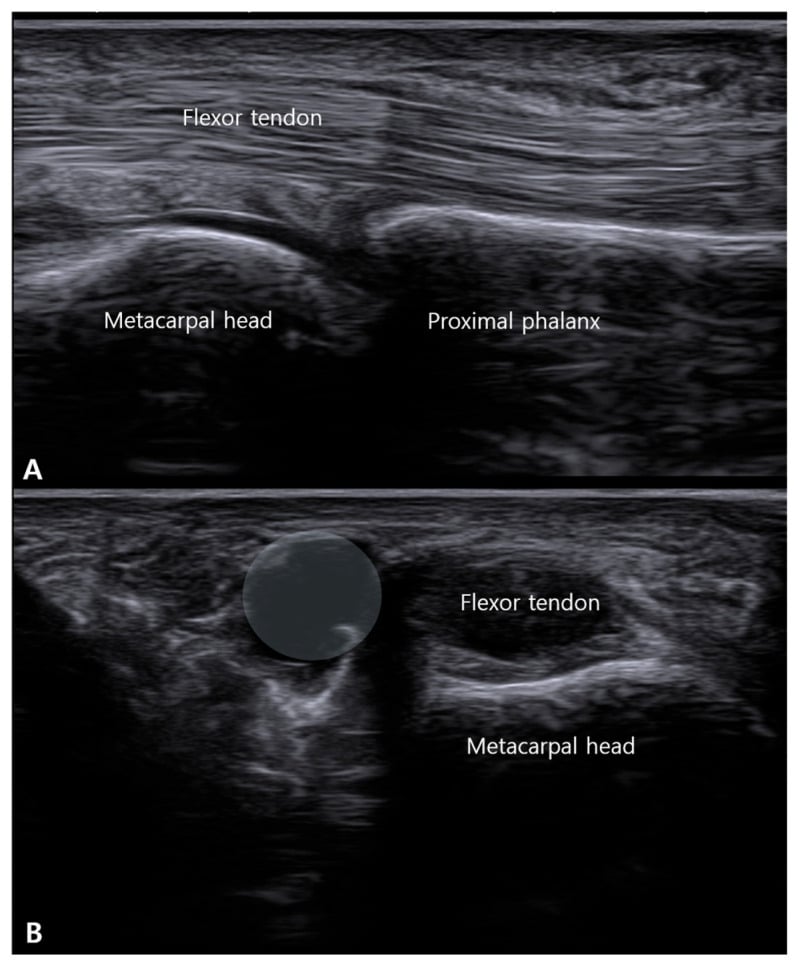
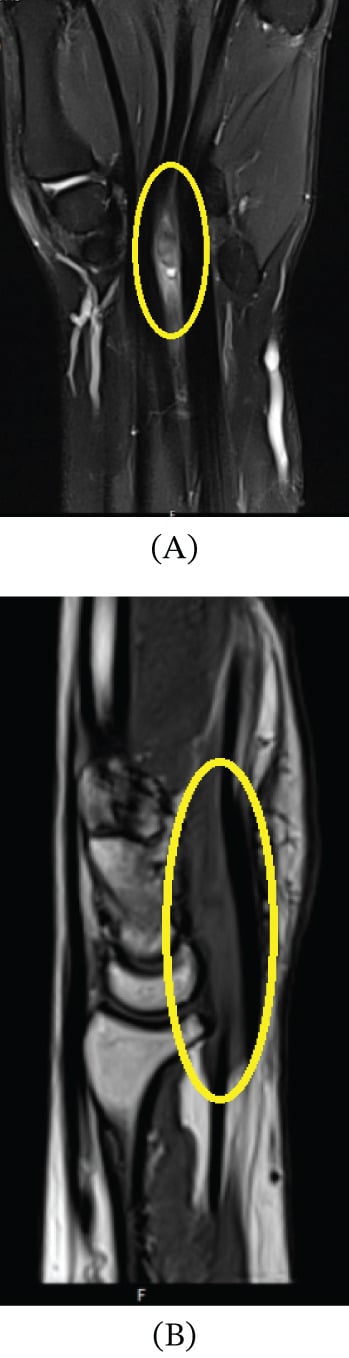
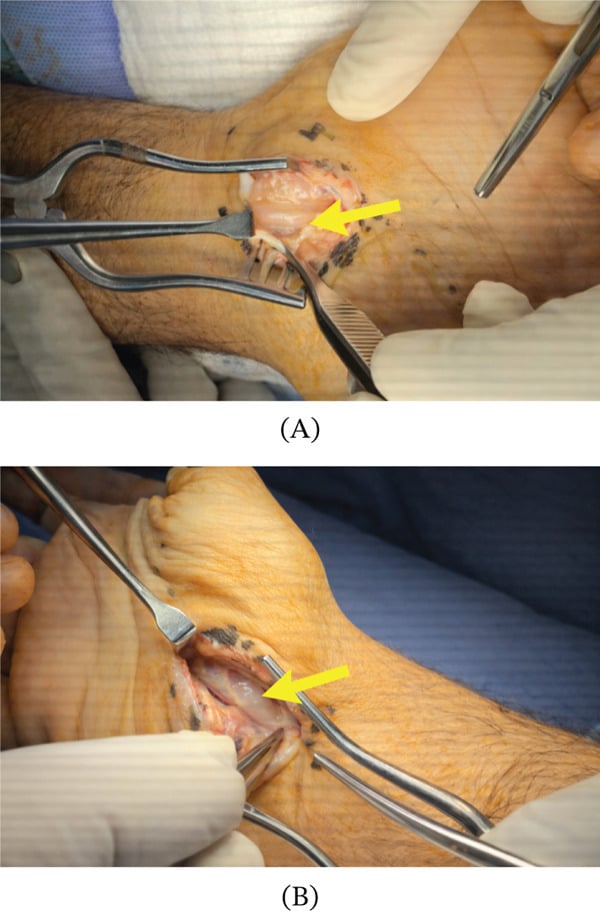
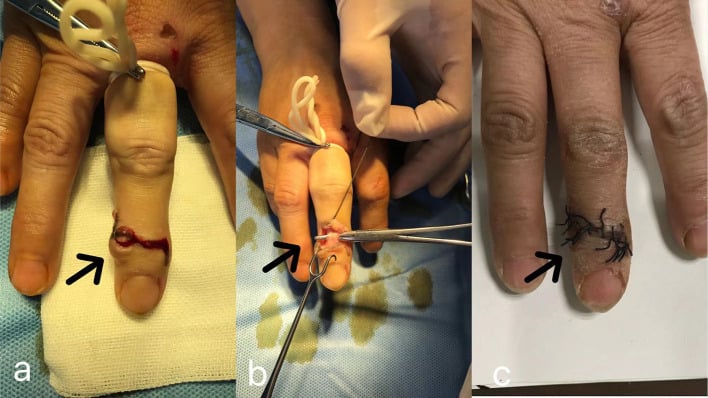
Clinical Examination
Inspection. Note the location of the swelling (dorsal, volar or digital), its size, measured with calipers if available, and the skin (normal, thinned, previous scars). A longitudinal nail groove at a DIP swelling means a mucous cyst. Position matters: a dorsal ganglion is more prominent in wrist flexion, which pushes it dorsally, and a volar one in wrist extension, and a change in size with position supports the diagnosis.
Palpation. A ganglion is firm but fluctuant, neither rock hard nor soft, smooth and well circumscribed. It moves with the skin but is fixed to deep structures, and you cannot get above the lesion, which distinguishes it from a skin lesion. Note where it is tender and how much.
Transillumination is the most important diagnostic test. In a darkened room, place a bright LED penlight directly behind the mass: a true ganglion glows red-orange like a lantern because the fluid transmits light, while solid masses (giant cell tumour, lipoma, abscess) do not. This simple test differentiates cystic from solid with high accuracy.
The wrist. Range of motion is usually normal or minimally reduced, and pain may limit terminal flexion or extension; compare with the other side. Wrist extension may reproduce the pain of a dorsal ganglion and wrist flexion that of a volar one. Grip strength is often reduced by pain rather than true weakness.
Neurovascular. Check the radial and ulnar pulses, and perform an Allen test for a volar ganglion, which is essential before surgery. Test the median nerve (Tinel, Phalen) if compression is suspected, and ulnar nerve sensation and intrinsic function.
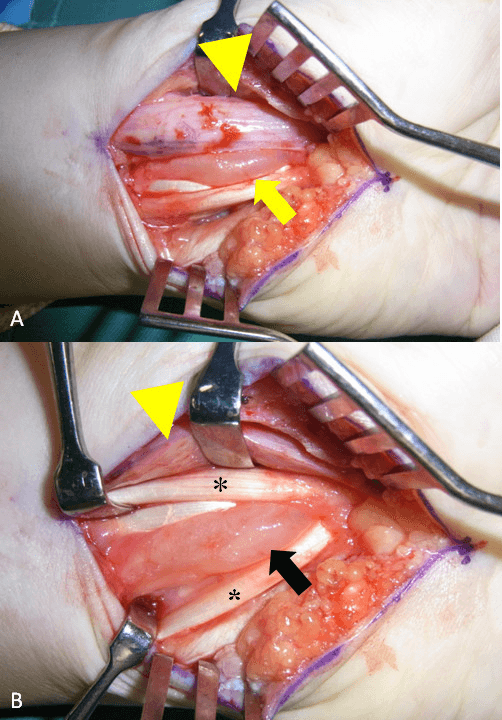
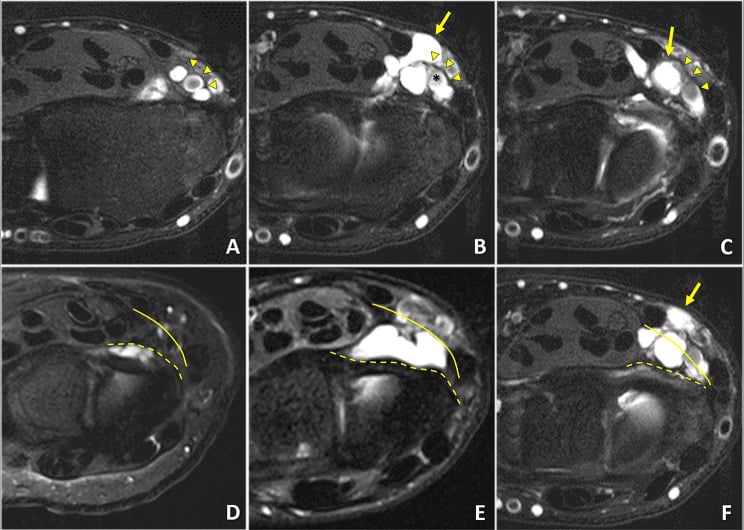
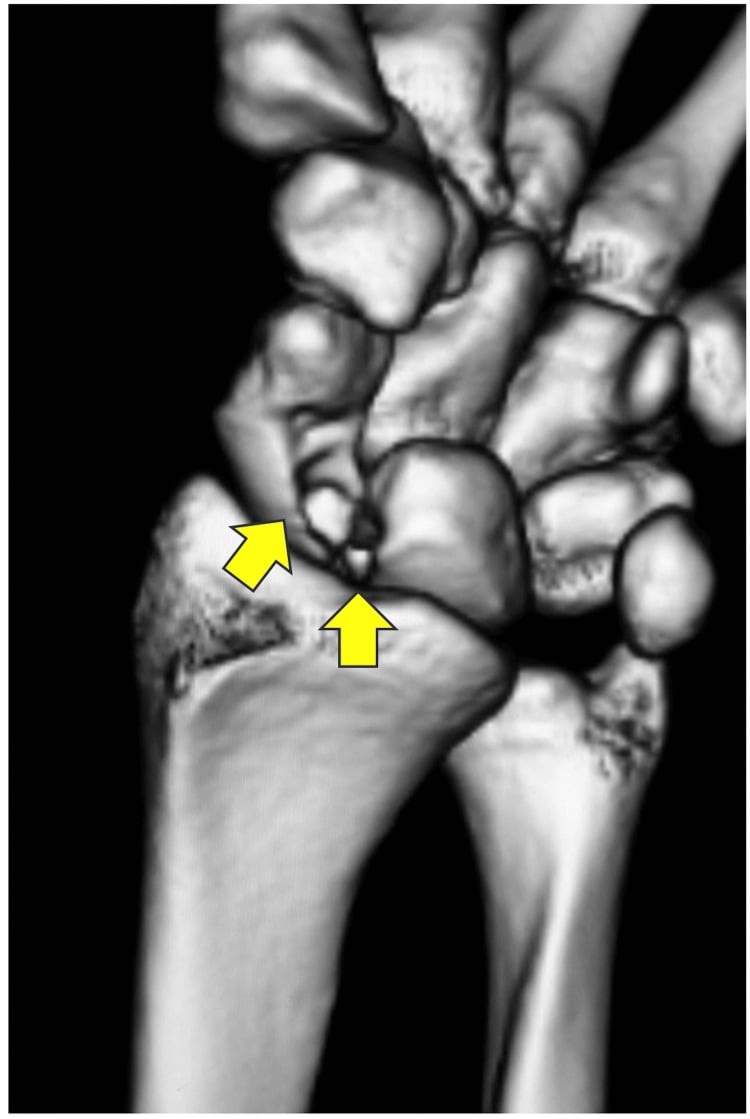
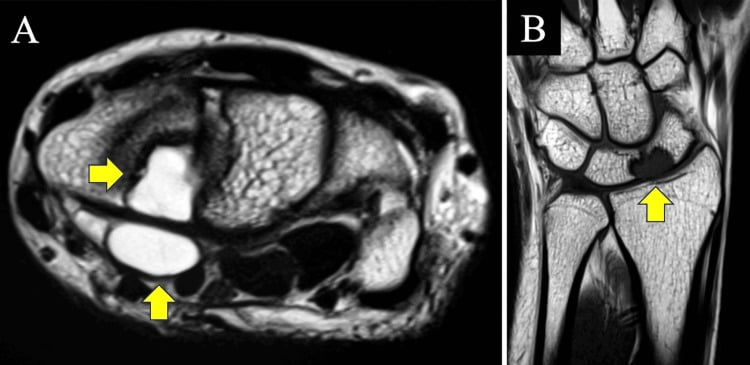
Intraosseous ganglion. It presents as bone pain, with tenderness over the scaphoid or lunate, where it is most common, and no palpable mass. The radiograph may show a lucent lesion within the bone, and MRI, showing high T2 signal within bone, confirms the diagnosis. In the case below, three-dimensional CT demonstrates communicating carpal bone defects across the scapholunate interval, distinguishing intraosseous extension from a purely soft-tissue ganglion, and MRI confirms fluid-signal lesions within the scaphoid and lunate and defines their extraosseous communication when radiographs show only lucency.
Investigations
A clinical diagnosis. Ganglion cysts are primarily a clinical diagnosis, and imaging is not required when the features are typical: a well-defined fluctuant mass in a typical location that transilluminates. That combination of location, transillumination and fluctuance has high diagnostic accuracy.
Radiographs are usually normal, because ganglia are soft tissue. They are taken to rule out bony pathology when the diagnosis is uncertain, to assess DIP osteoarthritis with a mucous cyst, and to evaluate an intraosseous ganglion. They may show:
- DIP osteophytes (mucous cyst)
- A cystic lucency in bone (intraosseous ganglion)
- Scapholunate widening if instability is present, which is unusual
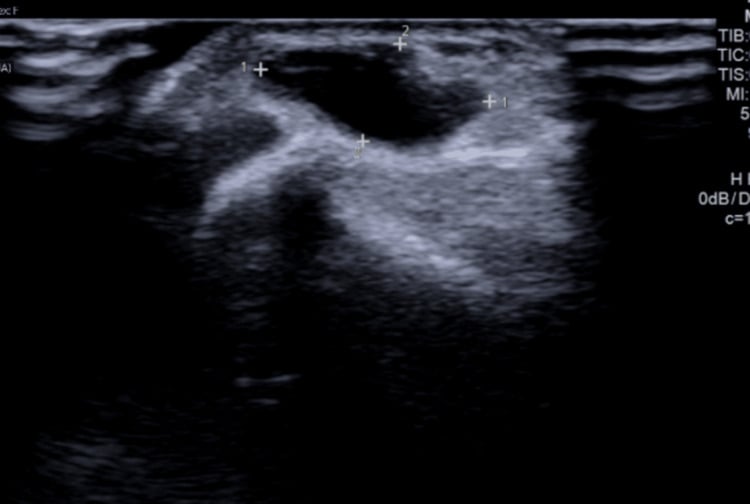
Ultrasound is non-invasive, inexpensive and free of radiation, but operator dependent. It confirms the cystic nature of the lesion as a well-defined anechoic (fluid-filled) or hypoechoic mass, which may have internal septations and shows no internal vascularity on Doppler. It shows the stalk communicating with the joint or tendon sheath, is useful for the occult ganglion and can guide aspiration, but it is less useful for an intraosseous or deep ganglion.
MRI is indicated for:
- The occult ganglion (pain without a palpable mass)
- An atypical presentation or location
- Failed conservative treatment
- Concern for an alternative diagnosis
- A suspected intraosseous ganglion
What MRI shows. The ganglion is well defined, low to intermediate on T1 (the same as muscle) and high on T2, following fluid, and very bright on T2 with fat saturation. The stalk may be visible connecting to the joint, and the surrounding tissue is normal, without oedema. Being acellular, a ganglion does not enhance with contrast; if it enhances, consider infection or a solid tumour.
A negative MRI. The high MRI sensitivity quoted in the table below is not what Borisch found for the occult ganglion: pre-operative MRI confirmed it in only 31 of 40 wrists. A negative MRI does not exclude the diagnosis when the clinical findings are classic.
Aspiration is diagnostic as well as therapeutic, and the gross appearance of the aspirate confirms the diagnosis: clear, colourless to pale yellow, thick and jelly-like, the consistency of hair gel or petroleum jelly. The fluid can be sent for cell count (acellular), cytology (scattered mesenchymal cells, no malignant features), and Gram stain and culture if infection is suspected. What comes out of the needle points to the diagnosis:
- Clear viscous mucin - ganglion
- Turbid fluid - infection
- Blood - trauma, solid tumour
- Chalky material - calcific tendinitis
- No fluid obtained - solid tumour (giant cell tumour, lipoma)
When imaging is mandatory.
- Pain without a palpable mass (occult ganglion)
- No transillumination (solid tumour)
- Atypical location or features
- Rapid growth (concern for malignancy)
- Atypical fluid on aspiration
- Recurrence after failed treatment, to evaluate for underlying pathology
Imaging is otherwise optional: for a patient who prefers confirmation, for medicolegal documentation, or for research or teaching.
- Indications
- Rule out bone pathology, DIP arthritis
- Findings
- Usually normal, may show osteophytes or intraosseous lucency
- Sensitivity
- Not sensitive for soft tissue
- Indications
- Confirm cystic nature, guide aspiration
- Findings
- Anechoic mass, visible stalk
- Sensitivity
- 85-95% sensitivity
- Indications
- Occult ganglion, intraosseous, atypical
- Findings
- T2 high signal, well-defined, no enhancement
- Sensitivity
- 95-100% sensitivity
Differential Diagnosis
- Transillumination
- Positive (glows)
- Consistency / key feature
- Firm but fluctuant, mobile, well-defined
- Discriminator
- Anechoic on US, high T2 on MRI, clear mucin on aspiration
- Transillumination
- Negative
- Consistency / key feature
- Solid, lobulated, volar fingers
- Discriminator
- Low T2 signal (haemosiderin); second commonest hand tumour
- Transillumination
- Negative
- Consistency / key feature
- Soft, compressible, lobulated
- Discriminator
- High T1 signal (fat) on MRI
- Transillumination
- Negative
- Consistency / key feature
- Firm, fixed to skin
- Discriminator
- History of penetrating injury; contains keratin
- Transillumination
- Negative
- Consistency / key feature
- Pulsatile, thrill or bruit (volar radial)
- Discriminator
- Doppler flow; history of puncture/trauma
- Transillumination
- Negative
- Consistency / key feature
- Hard, immobile bony prominence (CMC2/3)
- Discriminator
- Bone on radiograph - not cystic
- Transillumination
- Negative
- Consistency / key feature
- Solid, may be deep; grows over time
- Discriminator
- Internal vascularity on Doppler - biopsy if any doubt
Reading the table. A giant cell tumour of tendon sheath is also lobulated on ultrasound, and a lipoma moves with the skin. A pseudoaneurysm is pulsatile, and a ganglion may transmit the pulse.
Other lesions to consider.
- Synovial cyst - a true cyst with a synovial lining; rare in the wrist, more common in the spine, usually associated with arthritis
- Branchial cyst - congenital and rare, in the lateral neck; not in the wrist or hand
- Neuroma - painful, Tinel sign positive, along a nerve distribution, enhances on MRI
- Arteriovenous malformation - compressible and refills, thrill and bruit, may have skin changes
- Abscess - red, hot and tender, fluctuant but does not transilluminate (turbid), with systemic features (fever) and elevated inflammatory markers
- Rheumatoid nodule - with rheumatoid arthritis; firm, non-tender, over the extensor surface or pressure points
- DRUJ arthritis - caput ulna syndrome
- Intraosseous ganglion - see Clinical Examination
Do not diagnose a ganglion when any of these is present:
- Does not transilluminate (solid tumour)
- Rapidly enlarging (malignancy)
- Fixed to skin (invasive)
- Associated lymphadenopathy (malignancy)
- Constitutional symptoms (infection, malignancy)
- Pulsatile with bruit (vascular)
- Aspiration yields atypical fluid (blood, turbid)
Management
The decision. Dias found that neither excision nor aspiration gave significant long-term symptomatic benefit over no treatment, with symptom outcomes similar whether the ganglion was observed, aspirated or excised. Patient preference therefore genuinely drives the choice.
- 1
Clinical Diagnosis
Characteristic mass + transillumination positive
- 2
Counsel Patient
Discuss: benign nature, spontaneous resolution (58% untreated at six years), treatment options
- 3
Treatment Options
Aspiration (50-59% recur) vs Excision (21% pooled, 39% at six years)
- 4
Follow-up
Monitor for recurrence or complications
Conservative Management
Watch and wait. Many ganglion cysts resolve without intervention, and observation is appropriate first-line management for the asymptomatic or minimally symptomatic ganglion. Head's meta-analysis found aspiration not significantly better than reassurance in cohort studies, and no reliable predictors of spontaneous resolution have been identified.
Counselling. Explain that the lump is benign (not cancer, not dangerous), may fluctuate in size with activity, can resolve completely without treatment, is safe to observe indefinitely, and can be treated if symptoms develop. No routine follow-up is required. Advise return if it enlarges, becomes painful or becomes cosmetically unacceptable, and consider imaging if its features change, to rule out other pathology.
The trade. Observation carries no risk of complications and no cost. The ganglion may persist or enlarge, with ongoing cosmetic concern and the psychological impact of a "lump".
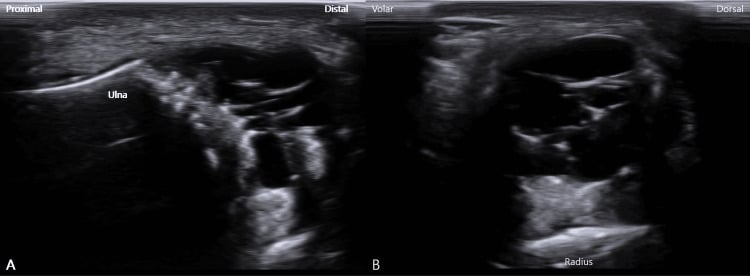
Surgical Management
Indications for excision.
- Symptomatic ganglion causing pain or functional impairment
- Failed conservative treatment (observation or aspiration)
- Patient preference for definitive treatment
- Recurrent ganglion after multiple aspirations
- Diagnostic uncertainty (excision allows histology)
- Neurovascular compression (rare - median nerve, ulnar artery)
- Cosmetic concerns (patient preference)
Relative contraindications.
- Medical comorbidities increasing surgical risk
- Unrealistic patient expectations (must counsel about recurrence)
- Inability to comply with post-op restrictions
- Active infection at the surgical site
Timing. Excision is an elective procedure that can be delayed for the patient's convenience, with no urgency unless there is neurovascular compromise.
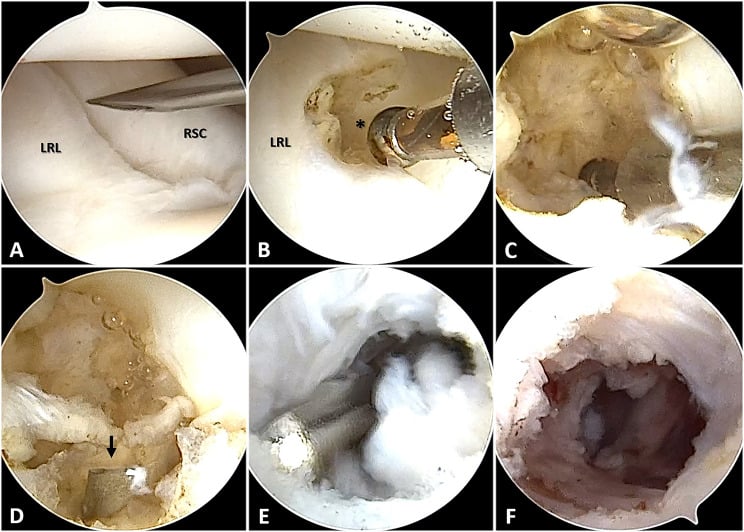
Post-operative Care
The first two weeks. A soft dressing for comfort, elevation of the hand above the heart and immediate finger range of motion. Sutures come out at 10-14 days.
Two to six weeks. Progressive wrist range of motion and strengthening exercises, with return to light activities at 2 weeks and to heavy activities at 4-6 weeks. Scar massage helps cosmesis in the longer term, and the patient is monitored for recurrence.
Recurrent and Revision Ganglion
How often, and why. Recurrence is the most common complication after excision: 21% pooled across surgical series, and 39% when patients were asked at a mean of six years. It usually appears within the first year. The commonest reason is an incompletely excised stalk or capsular origin, or, in a mucous cyst, unaddressed DIP osteophytes. Recurrence risk factors after excision:
- Incomplete stalk excision
- No capsular cuff removed
- Volar location (higher than dorsal), where the capsular cuff is harder to obtain
First, re-confirm the diagnosis. A recurrence after excision should prompt re-examination and usually imaging (ultrasound or MRI), to confirm a true recurrent ganglion rather than a different lesion (giant cell tumour, suture granuloma or a solid mass) and to define the stalk and capsular origin.
Revision is directed at the source. That means a wider excision of the capsular origin at the scapholunate ligament (dorsal) or the volar capsule, taking care not to destabilise the scapholunate ligament. It is harder through scarred tissue with distorted anatomy, raising the risk to the dorsal cutaneous nerves (dorsal) or the radial artery (volar). Arthroscopic revision is an option for dorsal recurrences, addressing the stalk and capsular window with less scar dissection.
Counselling. Re-recurrence rates are higher than after primary excision, and the patient must be counselled accordingly. Observation remains legitimate for a recurrent but only mildly symptomatic ganglion.
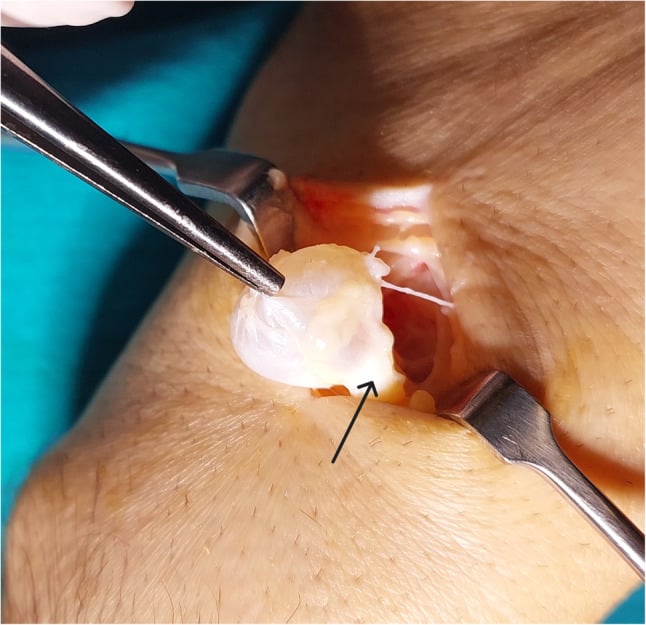
Complications
After aspiration. Complications are minimal and aspiration is a very low-risk procedure.
- Infection - less than 1%, rare with aseptic technique; presents as cellulitis or abscess and is treated with antibiotics with or without drainage
- Nerve injury - rare, from inadvertent puncture, usually a temporary neuropraxia; avoided by identifying the anatomy
- Incomplete aspiration - when the mucin is too thick
Nerve injury after excision. Dorsally, the dorsal cutaneous branch of the radial nerve is the most commonly injured, or the dorsal cutaneous branch of the ulnar nerve, and injury presents as numbness over the dorsal hand or thumb. It is usually a neuropraxia that recovers in 3-6 months; permanent injury is rare, and it is avoided by identifying and protecting the nerves. Volarly the superficial radial nerve and the lateral antebrachial cutaneous nerve are at risk, and injury is more common than dorsally because of the nerves' proximity, with the same presentation and management.
Radial artery injury is a risk of volar ganglion excision: laceration with intraoperative bleeding, post-operative thrombosis, or a delayed pseudoaneurysm. A laceration is managed by primary repair with a vascular surgery consultation.
Other complications of excision.
- Tendon injury - EPL or EDC in dorsal excision, FCR in volar; rare with careful technique; primary repair
- Scar - hypertrophic or keloid, tender or cosmetically unacceptable; prevented by respecting Langer lines and careful closure; managed with massage, steroid injection or revision
- Stiffness - reduced wrist motion, usually mild and temporary; prevented by early mobilisation; managed with hand therapy and stretching
- Infection - superficial (cellulitis) or deep (abscess), risk less than 2%, higher with a mucous cyst because of DIP joint communication; antibiotics, with washout if deep
- Complex regional pain syndrome - rare (less than 1%); disproportionate pain, swelling and stiffness; managed with hand therapy, desensitisation and pain management
Mucous cyst complications.
- Nail deformity - the longitudinal groove may improve after excision but can persist through permanent nail matrix damage, so counsel the patient preoperatively
- Skin necrosis - the cyst thins the overlying skin, which risks necrosis after excision and may need local flap coverage
- DIP joint infection - if the cyst communicates with the joint, a higher risk than at other ganglion locations; antibiotics with or without washout
Guidelines, Registries & Global Practice
Ganglion cysts are the most common soft tissue mass of the hand and wrist worldwide, accounting for 50-70% of all hand and wrist soft tissue masses and the majority of referrals for a wrist lump in every healthcare system. Demographics are remarkably consistent across populations: female predominance (roughly 3:1), peak incidence in the 20-50 year range, and the dorsal wrist as the dominant location.
Why no registry exists: Unlike arthroplasty, ganglia are not implant procedures and are not captured by national joint registries (NJR, AJRR, AOANJRR, SHAR). The evidence base is therefore driven by RCTs, prospective cohorts (Dias 2007) and meta-analyses (Head 2015) rather than registry data. There is no dedicated society "guideline" with graded recommendations; practice is built on this primary literature plus instructional reviews (Thornburg, JAAOS).
- Consensus position
- Reassurance and observation for asymptomatic or minimally symptomatic ganglia - no urgency to treat
- Evidence / source
- Dias 2007 cohort; Thornburg JAAOS review
- Consensus position
- Reasonable, low-risk office option but high recurrence (around 59%); steroid additive not proven
- Evidence / source
- Head 2015 meta-analysis
- Consensus position
- Reserved for persistent symptoms, functional limitation, nerve compression or patient preference
- Evidence / source
- Head 2015; Thornburg
- Consensus position
- Both acceptable; arthroscopic gives lower pooled recurrence but no proven superiority - equipment and skill dependent
- Evidence / source
- Head 2015; Clark 2022
High- vs limited-resource practice variation:
- Well-resourced settings: ready access to ultrasound and MRI for occult or atypical lesions; wrist arthroscopy offered as a minimally invasive option in specialist hand units.
- Limited-resource settings: diagnosis is almost entirely clinical (transillumination remains the single most valuable test where imaging is scarce); management favours reassurance and aspiration, with open excision when surgery is indicated because arthroscopic equipment and expertise are often unavailable.
- Universal principle: the diagnosis is clinical, imaging is selective rather than routine, and complete stalk-and-capsular-cuff excision is the determinant of low recurrence regardless of the resource setting.
Controversies and Areas of Uncertainty
Dias 2007 found no significant long-term symptomatic advantage of aspiration (or excision) over no treatment, and Head 2015 found aspiration no better than reassurance in cohort data. Yet aspiration persists because it is quick, confirms the diagnosis and gives temporary relief. The honest position: aspiration is a low-risk option, not a durable cure.
Injecting corticosteroid or sclerosant after aspiration is widely practised but the evidence for reduced recurrence is weak and inconsistent. It cannot be recommended as standard, and carries small risks (fat atrophy, skin depigmentation, flare).
Meta-analyses (Head 2015) show the lowest pooled recurrence with arthroscopy, but no RCT has demonstrated true superiority over open excision, and arthroscopy adds cost, theatre time and a learning curve. Choice remains surgeon- and resource-dependent.
Classic teaching mandates osteophyte debridement to prevent recurrence, but Kanaya 2014 achieved zero recurrence and resolution of nail deformity with dorsal capsulectomy ALONE, leaving cyst and osteophytes intact. This challenges the necessity of routine osteophyte removal.
Other unsettled questions:
- Role of the stalk in arthroscopy: Some authors argue meticulous stalk identification is unnecessary if an adequate capsular window is created (Borisch); others maintain stalk excision is the key to low recurrence (Thornburg). The two views are not fully reconciled.
- Negative MRI in occult ganglion: Imaging can be falsely negative; whether to operate on clinical grounds alone with a normal MRI remains a judgement call supported only by small series.
- Pathogenesis: The mucoid degeneration versus synovial herniation debate is still unresolved at a cellular level, though the one-way valve concept is broadly accepted clinically.
MCQ Practice Points
Q: What is the most common location for a ganglion cyst?
A: Dorsal wrist (60-70%), arising from the scapholunate ligament. Volar wrist accounts for 18-20%, flexor sheath 10%, DIP joint (mucous cyst) 5%.
Q: What is the histologic hallmark of a ganglion cyst?
A: Absence of epithelial lining. The cyst wall consists of compressed collagen fibers without epithelium, making it technically a pseudocyst rather than true cyst. Contains mucin (hyaluronic acid and glucosamine).
Q: What clinical test differentiates ganglion from solid tumor?
A: Transillumination. Shine bright light behind mass in dark room. Ganglion glows red-orange (fluid transmits light). Solid tumors (giant cell tumor, lipoma) do not transilluminate.
Q: What is the recurrence rate after aspiration vs excision?
A: Aspiration: 50-59%, and in Head's cohort data aspiration was not significantly better than reassurance. Surgical excision: 21% pooled across 14 series, rising to 39% when patients were asked at a mean of six years - the widely quoted 5% comes from a 1999 narrative review and is an assertion conditional on complete stalk and capsular cuff excision, not a measured rate. Spontaneous resolution occurred in 58% of untreated ganglia in Dias's prospective series.
Q: What is the critical anatomic structure at risk during volar wrist ganglion excision?
A: Radial artery - lies immediately lateral (radial) to the ganglion. Must perform Allen test preoperatively to confirm dual hand circulation. Use vessel loops for protection during dissection.
Q: What is the anatomic origin of dorsal wrist ganglion?
A: Scapholunate ligament attachment on dorsal capsule. Stalk connects cyst to SL ligament. Located between EPL (radial) and EDC (ulnar) tendons. Must excise stalk and 5mm cuff of capsule to minimize recurrence.
Q: What are the key features of mucous cyst at DIP joint?
A: Associated with DIP osteoarthritis (Heberden nodes). Causes longitudinal nail groove due to nail matrix compression. Excision requires debriding DIP osteophytes to prevent recurrence. May need local flap if skin thinned.
Exam Viva Scenarios
Practise clinical reasoning and management decisions out loud
“A 28-year-old woman presents with a painless swelling on the dorsum of her right wrist for 6 months. It fluctuates in size with activity. How do you assess and manage this?”
“A 35-year-old tennis player has dorsal wrist pain for 3 months. Examination reveals no visible mass, localized tenderness over scapholunate ligament, pain with wrist extension. X-rays normal. What is your differential and management?”
“A 42-year-old accountant has a 2cm volar wrist ganglion causing pain with typing. She has failed two aspirations and requests excision. Talk me through your surgical approach.”
Definition and Pathology
- Mucin-filled (hyaluronic acid, glucosamine) outpouching from joint/tendon sheath
- NOT true cyst - NO epithelial lining (pseudocyst)
- Most common soft tissue mass of hand/wrist (50-70%)
- One-way valve mechanism allows fluid accumulation
- Stalk connects to joint capsule or tendon sheath
Locations
- Dorsal wrist: 60-70% (SL ligament, between EPL and EDC)
- Volar wrist: 18-20% (near radial artery - BEWARE)
- Digital/flexor sheath: 10% (A1/A2 pulley - seed ganglion)
- DIP joint: 5% (mucous cyst, nail groove, OA association)
Diagnosis
- Clinical: firm, fluctuant, mobile, well-circumscribed
- TRANSILLUMINATION: key test (glows = cyst, no glow = solid)
- Imaging NOT needed if typical features
- MRI/ultrasound for occult ganglion (pain without visible mass)
- Aspiration: clear, thick, jelly-like mucin
Natural History and Treatment
- Spontaneous resolution: 58% of untreated ganglia at six years (Dias)
- Observation: appropriate first-line, reassure benign
- Aspiration: simple but 50-59% recurrence, and no better than reassurance in cohort data
- Surgical excision: 21% recurrence pooled, 39% at six years by patient report - not 5%
Surgical Technique - Dorsal (STALK)
- Scapholunate ligament origin
- Transverse or longitudinal incision (mark ganglion preop)
- Avoid EPL and EDC tendons (interval between)
- Ligate/excise stalk to capsular origin
- Keep 5mm capsular cuff with specimen (reduces recurrence)
Surgical Technique - Volar (CRITICAL ANATOMY)
- ALLEN TEST preop mandatory (confirm dual circulation)
- Radial artery immediately lateral - vessel loops essential
- Protect superficial radial nerve and lateral antebrachial cutaneous nerve
- Between FCR (ulnar) and radial artery (radial)
- Loupe magnification, gentle technique
- Reported as higher recurrence than dorsal, though no cited source quantifies the difference
Complications
- Recurrence: Aspiration 50-59%, Excision 21% pooled and 39% at six years
- Nerve injury: Dorsal cutaneous branches (numbness)
- Vascular: Radial artery (volar ganglion only)
- Scar, stiffness, infection, CRPS (all rare)
Evidence Pearls
- Dias 2007 (prospective cohort): 58% untreated resolve; aspiration no better than observation long-term
- Head 2015 meta-analysis: recurrence aspiration 59%, open 21%, arthroscopic 6%
- Clark 2022: arthroscopic vs open similar recurrence (9.4% vs 11.2%)
- Kanaya 2014: mucous cyst dorsal capsulectomy alone - no recurrence, nail deformity resolves
Evidence Base
Dias, Dhukaram & Kumar
- Prospective study of 236 dorsal wrist ganglia (excision vs aspiration vs no treatment), mean 70-month follow-up
- 23 of 55 (58%) untreated ganglia resolved spontaneously
- Recurrence: 58% (45/78) after aspiration, 39% (40/103) after excision
- Symptom resolution was similar across all three groups (p over 0.3)
- Patient satisfaction was higher after excision even when the ganglion recurred
Head, Gencarelli, Allen & Boyd
- Systematic review and meta-analysis of 35 studies, 2,239 wrist ganglia
- Mean recurrence: arthroscopic excision 6%, open excision 21%, aspiration 59%
- In RCTs surgical excision gave a 76% relative reduction in recurrence vs aspiration
- Aspiration was not significantly better than reassurance in cohort studies
- Complication rate: arthroscopic 4%, open 14%, aspiration 3%
Clark et al
- Systematic review of 23 studies, 1,670 dorsal wrist ganglion cases
- Recurrence lower with arthroscopic vs open excision (9.4% vs 11.2%)
- Higher patient satisfaction with arthroscopic excision (89.2% vs 85.6%)
- Lower overall complication rate with arthroscopic excision (7.5% vs 10.7%)
- Complication profiles differ between the two techniques
Borisch
- 40 wrists with occult (clinically invisible) dorsal wrist ganglia treated by arthroscopic capsular-window resection
- 29 of 30 patients reached at mean 28.5 months were satisfied
- Significant reduction in pain at rest and on load
- Pre-operative MRI confirmed the ganglion in only 31 of 40 cases
- Arthroscopy can be justified on typical clinical findings even with a negative MRI
Kanaya et al
- 19 DIP mucous cysts treated by total dorsal capsulectomy ALONE (no cyst or osteophyte excision)
- No recurrence at mean 26-month follow-up
- All 12 associated nail deformities resolved (mean 5 months)
- DIP range of motion was maintained or improved
- No skin necrosis or acquired nail deformity
Thornburg
- Classic JAAOS instructional review of hand and wrist ganglia
- Observation is acceptable in most cases; treat for pain, functional loss, nerve compression or impending ulceration
- Recurrence over 50% after aspiration in most locations, but under 30% for flexor sheath cysts
- Excision recurrence approximately 5% when stalk and a cuff of capsule are removed
- One-way valve and mucoid degeneration concepts of pathogenesis