Internal (Limb-Sparing) vs External (Hindquarter Amputation) | Enneking-Dunham Classification | Vascular Control | Reconstruction
- Enneking-Dunham classification defines pelvic resection zones (I-IV) - essential for surgical planning
- Internal hemipelvectomy is limb-sparing; external (hindquarter) involves complete limb removal
- Vascular control of common iliac vessels is critical before resection
- Sciatic nerve sacrifice often required for posterior tumours - counsel patient preoperatively
- Reconstruction options include endoprosthesis, allograft, saddle prosthesis, or no reconstruction
- “Type I resection (iliac wing) often requires no formal reconstruction
- “Type II resection (periacetabular) is most challenging - requires acetabular reconstruction
- “Posterior flap (gluteal) is preferred for external hemipelvectomy coverage
- “Mortality rate 1-5% - major blood loss is the primary intraoperative risk
Overview and Epidemiology
Hemipelvectomy is resection of part or all of one hemipelvis, performed primarily for malignant bone and soft-tissue tumours. An internal hemipelvectomy removes pelvic bone and preserves the ipsilateral lower limb (limb-sparing surgery). An external hemipelvectomy, the hindquarter amputation, is a complete amputation through the hemipelvis that removes the entire lower extremity.
What is resected. The tumours that bring a patient to hemipelvectomy are:
- Primary bone sarcomas: chondrosarcoma (the most common), osteosarcoma and Ewing sarcoma
- Soft-tissue sarcomas extending to bone
- Metastatic disease, rarely, for an isolated metastasis treated with curative intent
- Aggressive benign tumours: giant cell tumour and chordoma
Who. The age distribution is bimodal: adolescents and young adults with Ewing sarcoma or osteosarcoma, and older adults with chondrosarcoma. There is a slight male predominance, and the pelvis accounts for 10-15% of primary bone sarcomas.
History. Billroth performed the first hindquarter amputation in 1891. Limb-sparing techniques developed in the 1970s and 1980s with advances in chemotherapy and imaging, and the limb salvage rate for pelvic tumours at specialised centres is now 60-70%.
Clinical Presentation, Indications and Contraindications
Internal hemipelvectomy. Limb-sparing resection is indicated for:
- A primary bone sarcoma without neurovascular bundle involvement
- An achievable adequate margin (greater than 1cm, or a good response to chemotherapy)
- Preserved external iliac vessels
- A functional femoral and/or sciatic nerve
External hemipelvectomy. Hindquarter amputation is indicated for:
- Tumour involving the major neurovascular bundle (sciatic nerve, external iliac vessels)
- Extensive soft-tissue involvement, or an extensive soft-tissue sarcoma, precluding limb salvage
- Failed limb salvage (a failed internal hemipelvectomy) with local recurrence
- A severe pathological fracture with a contaminated field
- An infected tumour, or uncontrolled infection or sepsis with the tumour
The sciatic nerve on its own. Sciatic involvement appears in the list above, but Enneking and Dunham (1978) found that sciatic nerve resection alone was not a contraindication to a non-amputative procedure, and the indications for limb salvage above ask for a functional femoral and/or sciatic nerve. The primary indication for amputation is major vessel encasement, or a tumour extent that precludes a clear margin.
- Internal Hemipelvectomy
- Bone tumour without neurovascular bundle involvement
- External Hemipelvectomy
- Major vessel encasement, or tumour extent precluding a clear margin (sciatic nerve resection alone is NOT an absolute bar to salvage - Enneking 1978)
- Internal Hemipelvectomy
- Preserved external iliac vessels and femoral nerve
- External Hemipelvectomy
- Vessels and nerves sacrificed with specimen
- Internal Hemipelvectomy
- Ambulatory with or without aids depending on reconstruction
- External Hemipelvectomy
- Crutches in most (81%); prosthesis in 5%, wheelchair-bound in 9% (Apffelstaedt series)
- Internal Hemipelvectomy
- Required for Type II (acetabular) resections
- External Hemipelvectomy
- Flap coverage for wound closure
- Internal Hemipelvectomy
- 1-3%
- External Hemipelvectomy
- 3-5%
- Internal Hemipelvectomy
- 30-50% (infection, flap necrosis, dislocation)
- External Hemipelvectomy
- 20-40% (wound complications, phantom pain)
Contraindications. The absolute contraindications are an unresectable tumour (sacral body involvement, bilateral pelvic disease), distant metastatic disease except for palliation, medical unfitness for major surgery, and refusal after informed consent. Sacral body involvement is also listed below as an indication for extended hemipelvectomy, so it rules out a standard resection rather than an extended one. The relative contraindications are:
- Contralateral limb dysfunction, where amputation would leave the patient non-ambulatory
- Advanced age with significant comorbidities
- Poor response to neoadjuvant chemotherapy (osteosarcoma, Ewing sarcoma)
- Tumour crossing the sacroiliac joint extensively
Tumour-Specific Considerations
Chondrosarcoma. The most common primary pelvic bone sarcoma, and resistant to chemotherapy and radiation, so wide margins (greater than 1cm) are essential. There is no role for adjuvant chemotherapy except in the dedifferentiated form, which has a worse prognosis. Five-year survival falls with grade: 90% for grade I, 70% for grade II and 30% for grade III.
Osteosarcoma. Often a younger patient, and responsive to neoadjuvant chemotherapy (the MAP protocol), with surgery after 10-12 weeks of it. The histological response is assessed, greater than 90% necrosis counting as good, and margins can be closer after a good response.
Ewing sarcoma. Typically adolescents and young adults, sometimes presenting with systemic symptoms, and sensitive to chemotherapy and radiation. Neoadjuvant chemotherapy is essential and radiation may be used as an adjunct or an alternative; surgery is preferred when it is achievable with acceptable morbidity.
For both osteosarcoma and Ewing sarcoma, five-year survival is 60-70% for localised disease and 20-30% for metastatic disease.
Anatomy - Critical Vascular and Neural Structures
The arteries. The common iliac artery bifurcates into the external and internal iliac arteries. The internal iliac supplies the pelvic viscera and gluteal region and is often ligated. The external iliac continues as the femoral artery and must be preserved if the limb is to be salvaged.
The veins. The presacral venous plexus is the major source of intraoperative bleeding (see Controlling Catastrophic Pelvic Venous Haemorrhage). The internal iliac veins can be ligated; the external iliac vein must be preserved.
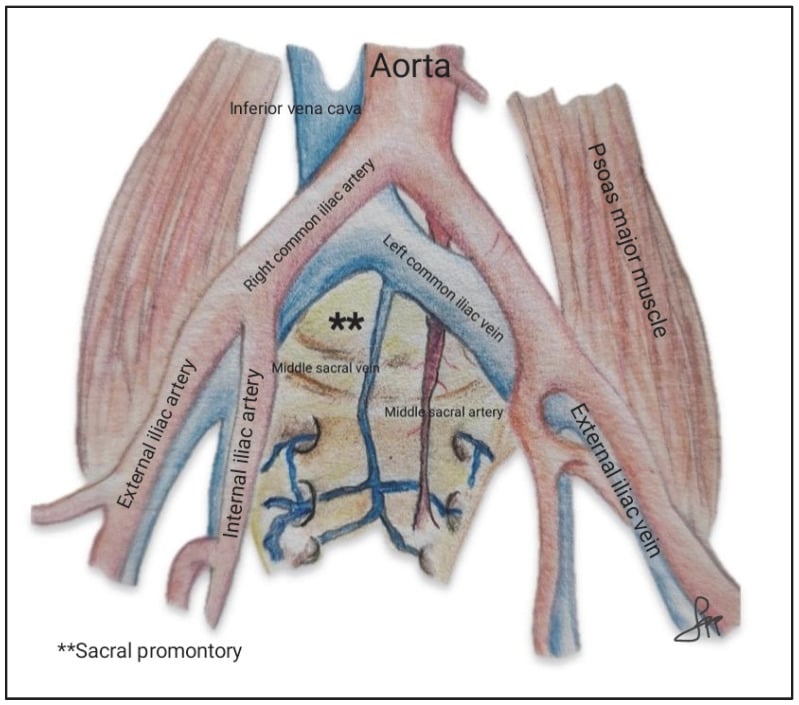
Collateral circulation. The collateral routes are:
- Lumbar arteries to the gluteal region
- Inferior epigastric artery to the pelvic wall
- Profunda femoris to the thigh
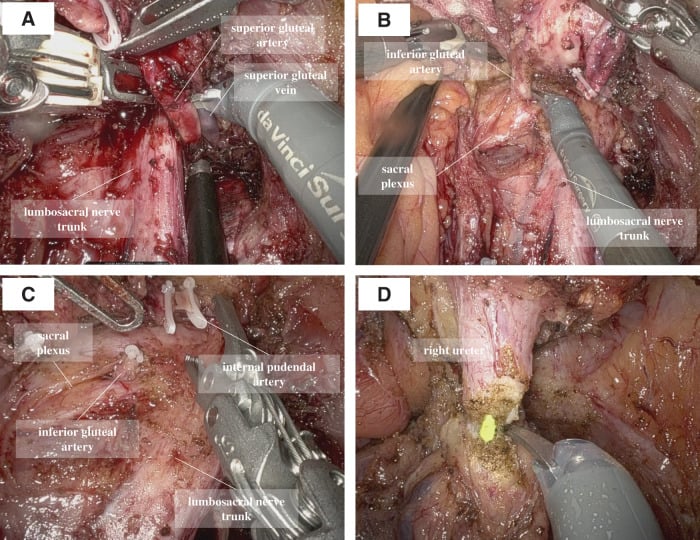
The nerves. The femoral nerve must be identified and protected anteriorly. The sciatic nerve often has to be sacrificed for posterior tumours, and involvement of the lumbosacral plexus may preclude limb salvage.
Classification Systems - Enneking-Dunham Zones
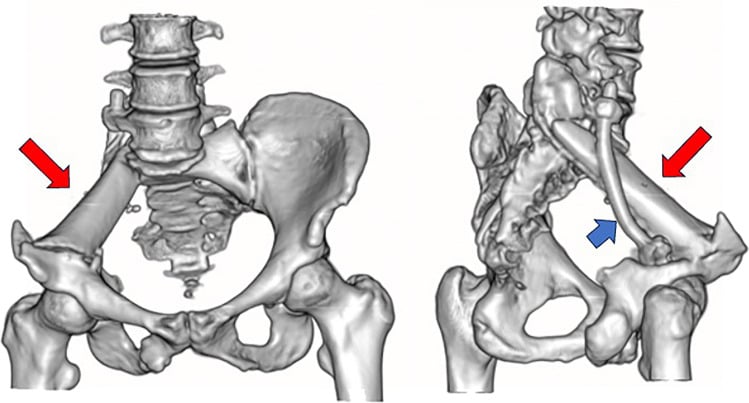
The Enneking-Dunham classification divides the pelvis into anatomical zones for surgical planning, and each zone has its own reconstruction implications.
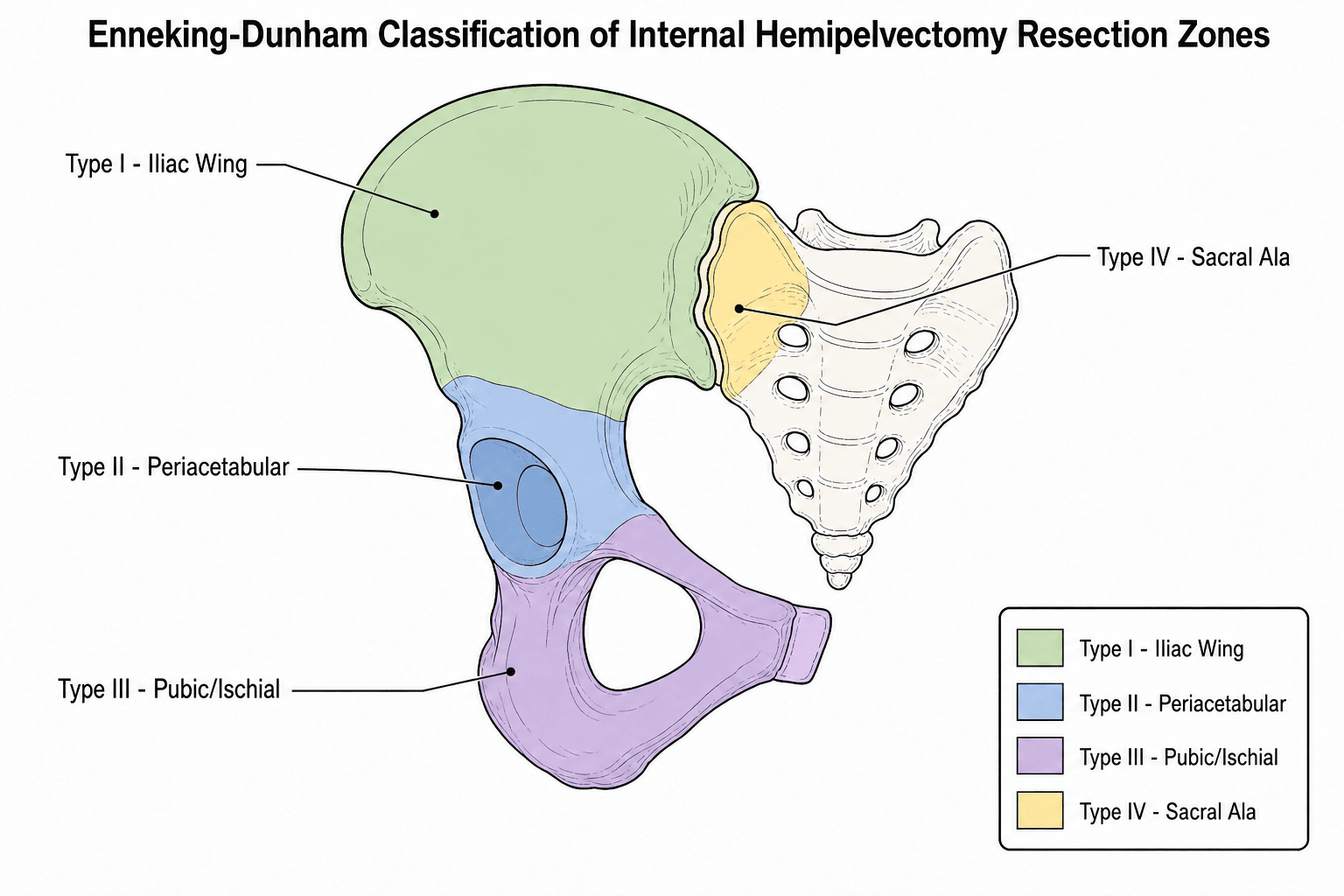
Type I: the iliac wing. The resection runs from the iliac crest to the sciatic notch, above the acetabulum, which it does not include. The gluteal muscles are detached, the iliac vessels preserved and retracted, and the sciatic nerve usually preserved unless the tumour extends posteriorly. Formal reconstruction is often unnecessary: the abdominal wall is repaired to the remaining pelvis, and because the hip is preserved the patient has a near-normal gait, full weight-bearing and minimal long-term disability.
Type II: periacetabular. The acetabulum and surrounding bone, which may extend superiorly into the ilium or inferiorly into the pubis and ischium; the extension defines subtypes IIA, IIB and IIC. The hip joint is sacrificed and the femoral head either removed with the specimen or preserved. The external iliac vessels must be preserved, and preservation of the femoral and sciatic nerves is attempted.
This is the most complex resection, and the defect is either reconstructed or accepted as a flail hip (see Reconstruction Options for Type II Defects). Function varies with the reconstruction; most patients walk with aids, and a significant limb-length discrepancy is expected.
Type III: the pubis and ischium. The superior and inferior pubic rami and the ischium, which is the anterior pelvic ring. The obturator nerve and vessels, the urethra and bladder anteriorly, and the spermatic cord or round ligament all lie in the field. Formal bony reconstruction is usually not required because the pelvic ring remains stable through its posterior elements, and with the acetabulum and weight-bearing preserved the functional outcome is excellent, with minimal gait disturbance and minimal disability.
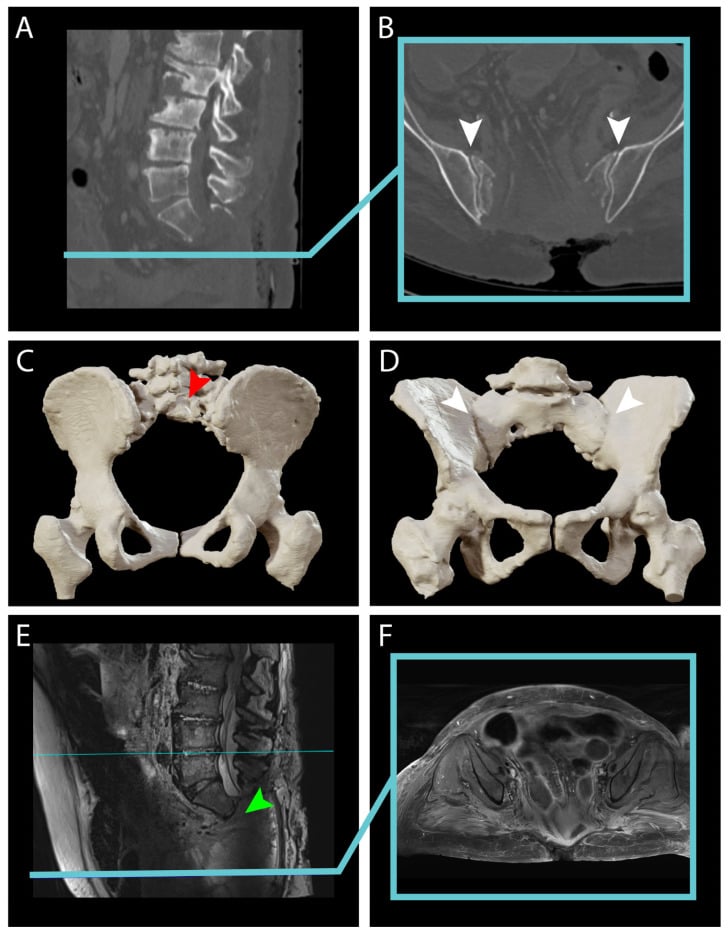
Type IV: the sacral ala. The sacral ala lateral to the sacral foramina and the sacroiliac joint, sometimes extending into the sacral body. The sacral nerve roots (S1-S3), the internal iliac vessels and the stability of the sacroiliac joint are all at stake. A significant sacral resection may require lumbopelvic fixation, spinopelvic dissociation must be addressed, and soft-tissue coverage is often challenging. Function depends on which nerve roots are preserved (see Sacral Nerve-Root Sacrifice).
Investigations and Preoperative Staging
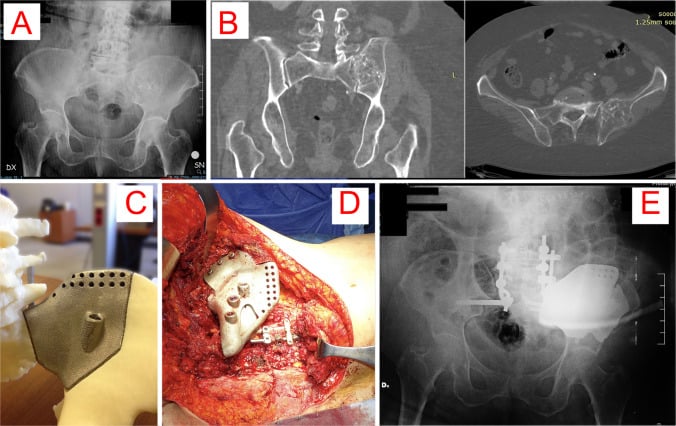
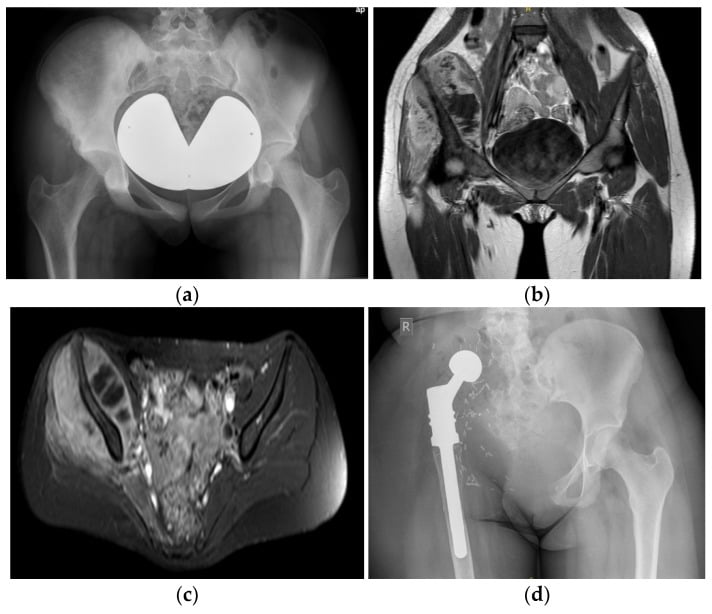
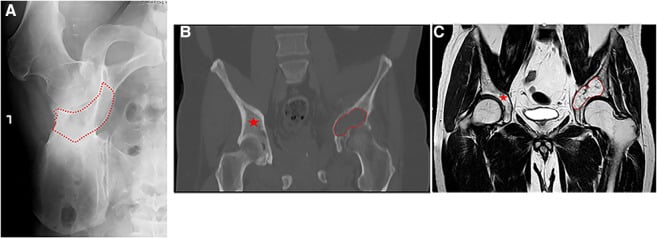
MRI. MRI is mandatory for surgical planning because it defines tumour extent and resectability. It shows the extent in bone and soft tissue, the relationship to the neurovascular bundle, skip lesions (additional foci) and joint involvement, and from it the resection margins, the neurovascular involvement and the reconstruction are planned, with 3D reformats for a custom prosthesis. The protocol:
- T1-weighted: bone marrow extent and fat planes
- T2/STIR: tumour extent and oedema
- Post-gadolinium: vascularity and viable tumour
- MRA: relationship to the major vessels
CT. CT provides the bone detail and is essential for staging and planning. It shows cortical destruction and breakthrough, pathological fracture, vascular encasement and the mineralisation pattern (rings and arcs in chondrosarcoma), and 3D reconstruction supports the surgical plan. CT angiography defines the vascular anatomy and its variants, the tumour's relationship to the vessels and the collateral circulation, and is the basis of the vascular control strategy.
Nuclear medicine. PET-CT is standard for staging high-grade bone and soft-tissue sarcomas. It is superior for soft-tissue and distant staging, detects skip metastases and assesses the metabolic response to chemotherapy, and is used for initial staging, response assessment after neoadjuvant therapy and surveillance for recurrence. A bone scan stages the skeleton for metastatic and polyostotic disease but is less specific than PET-CT.
Biopsy. Discuss the biopsy with the operating surgeon before it is done, because the tract must be excised en bloc with the tumour. A core needle biopsy is CT- or ultrasound-guided, takes multiple cores for adequate tissue, and places the tract where it can be excised with the specimen. An open biopsy, if needed, uses a longitudinal incision in line with the definitive surgery, meticulous haemostasis and a layered closure, without a drain if possible. Avoid contaminating neurovascular structures, and send tissue for histology, cytogenetics and microbiology.
Staging. The complete staging work-up:
- Chest CT for pulmonary metastases
- PET-CT or bone scan
- Bloods: FBC, UEC, LFT, LDH, ALP
- Bone marrow biopsy considered in Ewing sarcoma
The team. Planning is multidisciplinary: orthopaedic oncologist, medical oncologist, radiation oncologist, radiologist, pathologist and a reconstructive (plastic or vascular) surgeon.
Differential Diagnosis of a Destructive Pelvic Lesion
A destructive periacetabular or iliac lesion is not automatically a primary sarcoma. Distinguishing the differentials below determines whether hemipelvectomy is even appropriate.
- Typical Age / Clues
- Adult 40-70, indolent pain
- Imaging Signature
- Ring-and-arc / popcorn matrix, endosteal scalloping
- Implication for Surgery
- Wide resection - chemo/radio-resistant, surgery is curative treatment
- Typical Age / Clues
- Adolescent / young adult, rapid pain
- Imaging Signature
- Aggressive osteoid matrix, soft-tissue mass, periosteal reaction
- Implication for Surgery
- Neoadjuvant chemo then wide resection; margins can follow good response
- Typical Age / Clues
- Child / teenager, may have fever, raised inflammatory markers
- Imaging Signature
- Permeative lytic destruction, large soft-tissue mass
- Implication for Surgery
- Chemo +/- radiotherapy; surgery when achievable with acceptable morbidity
- Typical Age / Clues
- Older adult, known primary or anaemia/renal impairment
- Imaging Signature
- Often multiple lytic lesions; PET/skeletal survey positive elsewhere
- Implication for Surgery
- Biopsy and stage FIRST - hemipelvectomy almost never indicated
- Typical Age / Clues
- Adult, midline sacrococcygeal, slow growing
- Imaging Signature
- Midline destructive sacral mass, T2-bright
- Implication for Surgery
- En bloc sacral resection; margins drive recurrence, radio-resistant
- Typical Age / Clues
- Young adult 20-40, locally aggressive but benign
- Imaging Signature
- Eccentric lytic lesion, no matrix mineralisation
- Implication for Surgery
- Curettage/denosumab or resection - rarely needs hemipelvectomy
- Typical Age / Clues
- Any age, systemic features, raised CRP
- Imaging Signature
- Destruction with abscess, can mimic Ewing
- Implication for Surgery
- Diagnostic trap - biopsy with microbiology before any oncological surgery
Never plan a hemipelvectomy on imaging alone. A tissue diagnosis from a correctly placed biopsy (tract excisable en bloc) is mandatory - metastasis, myeloma and infection all mimic primary sarcoma and are not treated by amputation.
Management - Internal Hemipelvectomy Technique
Preoperative Preparation
Planning. The MDT confirms the diagnosis and staging, the completion of neoadjuvant therapy, and the surgical and reconstructive plan. Imaging review then defines the resection margins on MRI, the vascular plan on CT angiography and, for a custom prosthesis, the 3D reconstruction.
Preparation. Optimise the patient medically, arrange at least 6-10 units of red cells, have a cell saver available and confirm an ICU bed. Theatre needs tumour resection instruments, reconstruction implants with backup options, vascular instruments and a nerve stimulator.
Consent. The risks to discuss are those set out under Complications, with their figures: death, major blood loss, infection, wound complications, sciatic or femoral nerve injury, vascular injury that may require bypass, thromboembolism that remains a high risk despite prophylaxis, and local recurrence. Functionally, a limb-length discrepancy is expected, walking aids are likely to be required, further surgery may be needed for complications, and a reconstructed hip carries a risk of prosthetic dislocation. The alternatives are external hemipelvectomy, radiation alone (for Ewing sarcoma or palliation), and palliation without surgery.
Positioning. A modified lateral or floating position on a beanbag or pegboard gives access to the anterior and posterior pelvis and allows the patient to be rotated during surgery. Prep from the nipple line to the knee, include the perineum if a pubic resection is planned, and prep the leg circumferentially if the limb may be sacrificed. A Foley catheter is placed, and complex cases may need ureteric stents.
The team. The orthopaedic oncology surgeon operates with vascular surgery on standby, plastic surgery for flap coverage and a minimum of two consultant-level assistants.
Surgical Steps by Resection Type
Type I iliac wing resection.
- Anterior approach. An ilioinguinal or modified iliofemoral incision; identify and protect the external iliac vessels and the femoral nerve, and expose the iliac crest and anterior ilium.
- Posterior exposure. Extend the incision or use a separate posterior approach; detach the gluteal muscles from the iliac crest, identify the sciatic notch and sciatic nerve, and control the superior gluteal vessels.
- Osteotomies. Superiorly along the iliac crest (or through it for narrow margins); inferiorly above the acetabular dome, confirmed with the image intensifier; posteriorly through the sciatic notch, protecting the sciatic nerve; anteriorly through the ASIS or anterior ilium.
- Specimen removal. Remove the specimen en bloc, check the margins grossly and with frozen section, and secure haemostasis of the bony surfaces.
- Closure. Reattach the abdominal wall to the remaining pelvis and close in layers with a drain to the surgical bed.
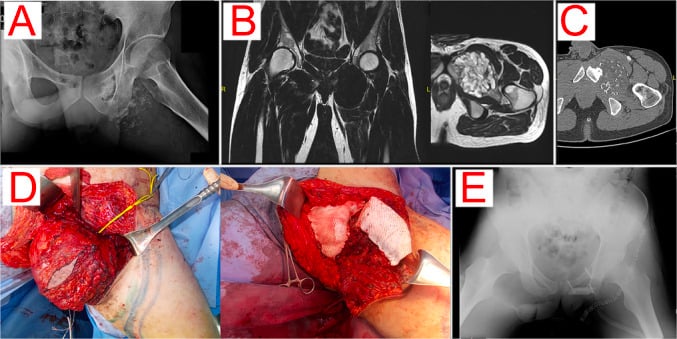
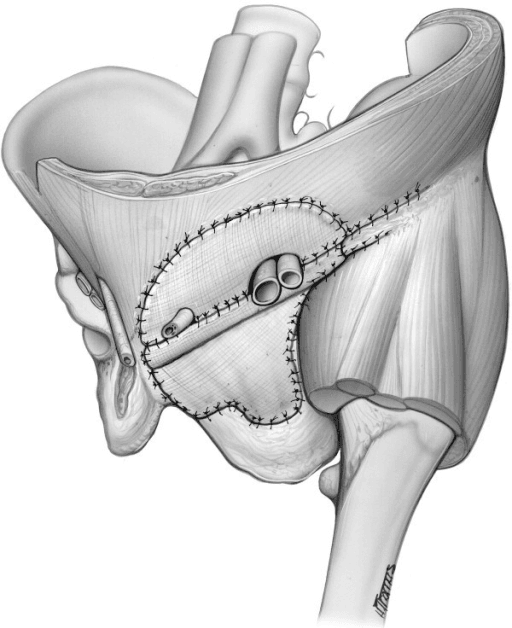
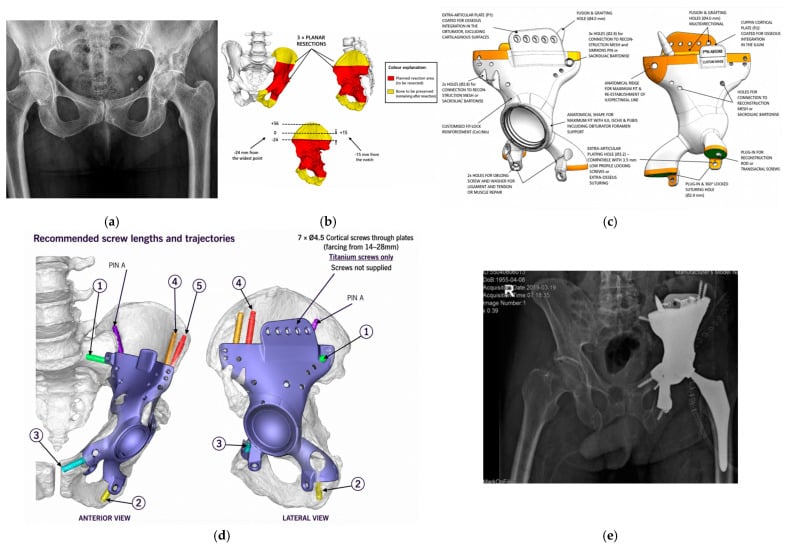
Reconstruction Options for Type II Defects
Saddle prosthesis. A saddle-shaped femoral component articulates with the cut surface of the remaining ilium, with no formal acetabular reconstruction. It suits a Type II resection that preserves the iliac wing, with enough remaining ilium for support, in a patient with good bone quality. The iliac surface is prepared, the femoral component inserted cemented or uncemented so that the saddle rests on the ilium, and the capsule repaired for stability. Patients walk with aids and have a significant leg-length discrepancy; the revision rate for mechanical failure is high, but salvage after failure is simple.
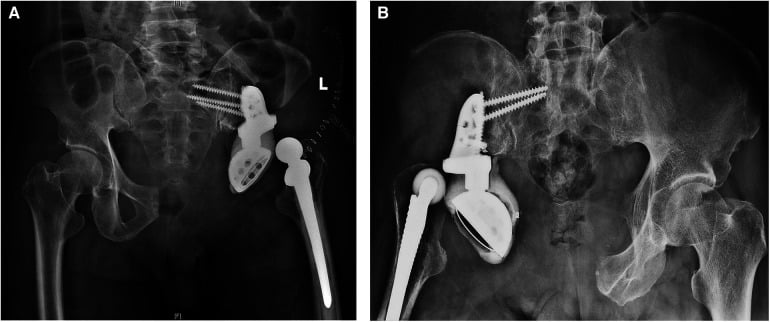
Custom pelvic endoprosthesis. A patient-specific implant designed from CT replaces the resected hemipelvis and articulates with standard hip components; modular systems are the alternative. It is indicated for large Type II defects with adequate remaining bone for fixation, in younger, active patients. Preoperative CT drives the custom design and 3D-printed cutting guides, and the implant is fixed with screws to the sacrum and remaining pelvis. It gives the best functional outcome if it succeeds, but the complication rate is high (30-50%), with infection, dislocation and loosening common, and it is costly with a long lead time.
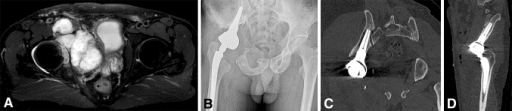
Allograft-prosthetic composite (APC). A hemipelvis allograft provides bone stock and carries total hip replacement components, a biological reconstruction with a mechanical joint. It suits large defects needing bone stock and younger patients, for whom it keeps future revision options open, and depends on a size-matched allograft. The allograft is matched to the defect and fixed to the remaining pelvis with plates and screws, the acetabular component is inserted into it and a standard femoral component is used. Function is good if it succeeds, but allograft nonunion and fracture occur in 20-30%, infection in 15-25%, and late allograft resorption is possible.
Arthrodesis. Iliofemoral or ischiofemoral fusion of the femur to the remaining pelvis.
Flail hip (resection arthroplasty). There is no formal reconstruction. The acetabulum is resected as required, the remaining bony surfaces smoothed and the soft tissues repaired around the proximal femur, which is left suspended by soft tissue and scar, with the limb in traction postoperatively. It accepts limb shortening and instability, and suits elderly or low-demand patients, a high infection risk, salvage after failed reconstruction, or any case where simplicity is preferred over function. Most patients walk with aids, with 5-10cm of shortening and a Trendelenburg gait, and the complication rate is low.
Surgical Technique - External Hemipelvectomy
The indications for hindquarter amputation are listed under Indications above. Whichever flap is used, the goal is an adequate sitting surface.
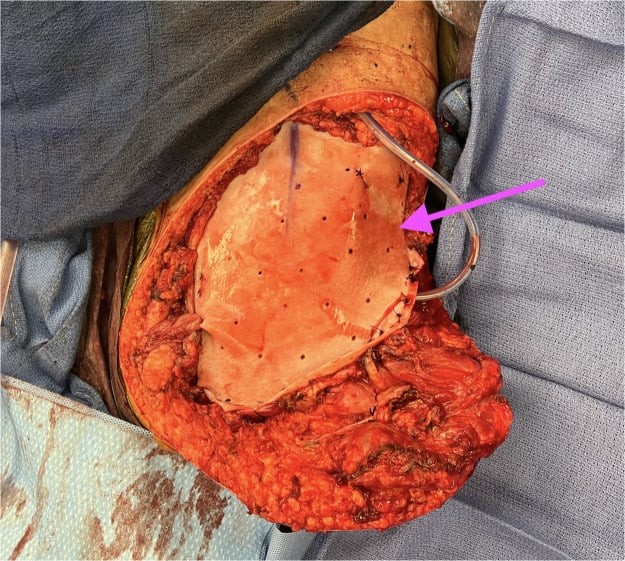
Posterior (gluteal) flap. The preferred technique. The gluteal muscles are kept on the flap, which gives excellent soft-tissue bulk for sitting, a reliable blood supply from the inferior gluteal vessels and good wound healing.
- Anterior dissection. An extended inguinal or ilioinguinal incision; ligate the femoral vessels at the inguinal ligament, divide the femoral nerve and the adductors at their origin, and transect the pubic symphysis or pubic ramus.
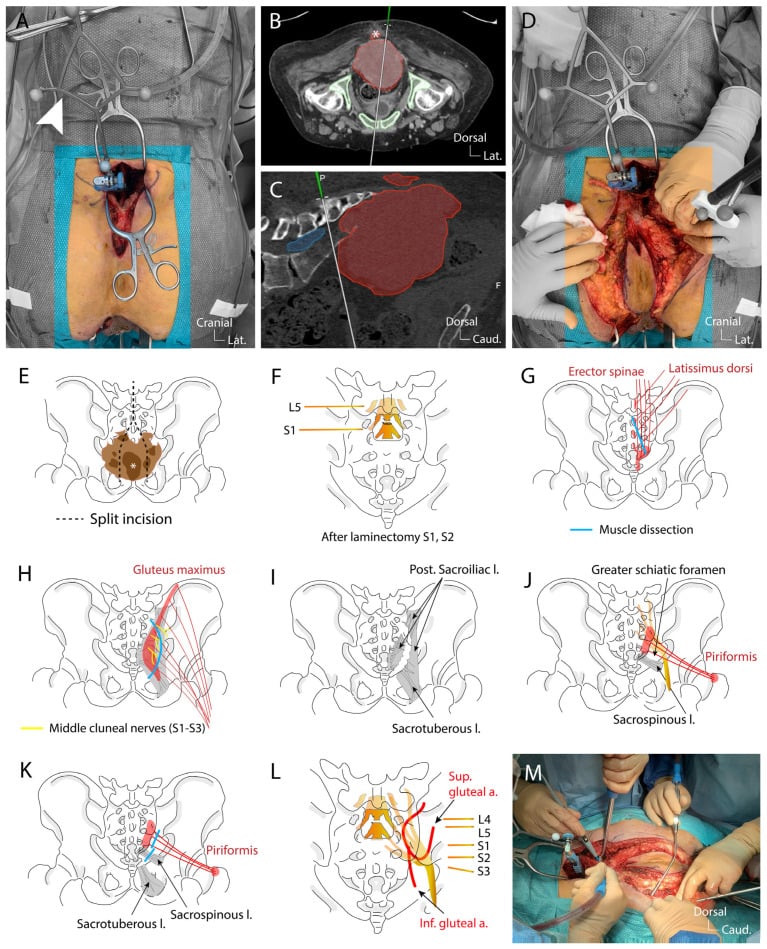
- Posterior dissection. An incision from the PSIS to the ischial tuberosity; preserve the gluteal muscles on the posterior flap, divide the sciatic nerve high in the pelvis, and control the gluteal vessels while maintaining flap perfusion through the inferior gluteal.
- Pelvic division. Disarticulate the sacroiliac joint or osteotomise through the sacral ala, divide the sacrospinous and sacrotuberous ligaments, and remove the specimen en bloc.
- Flap closure. Rotate the posterior flap anteriorly, trim excess tissue for contour, and close without tension, which is essential to prevent dehiscence, over suction drains.
Controlling Catastrophic Pelvic Venous Haemorrhage
Why it is so dangerous. The presacral (sacral) venous plexus and the internal iliac (hypogastric) veins form a valveless, high-flow, low-pressure network that communicates with the vertebral (Batson) and basivertebral plexuses. A torn presacral vein retracts into the sacral foramen and cannot be clamped or ligated; blind clamping tears it further and endangers the sacral nerve roots. This is why it bleeds catastrophically and why conventional vascular control fails.
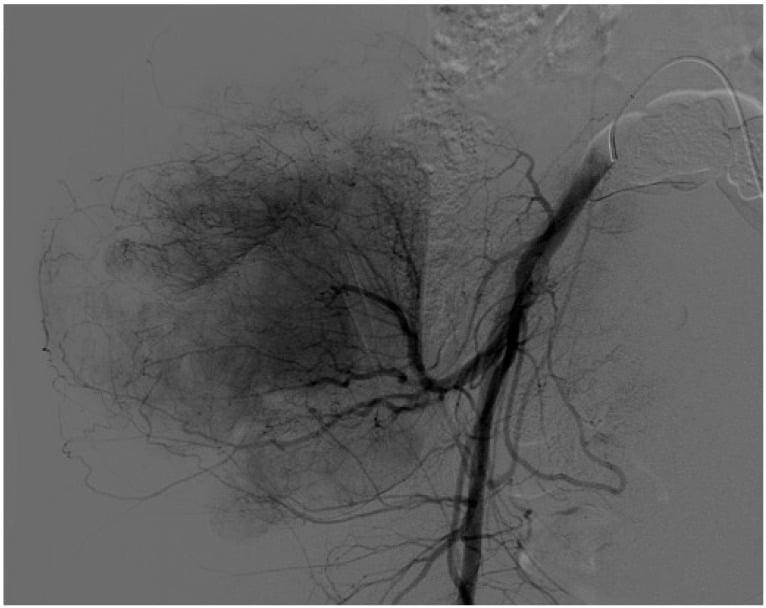
Prevent it with proximal control. Gain early retroperitoneal control of the common and internal iliac vessels before mobilising the tumour, and ligate the internal iliac artery (and vein) on the resection side. Preoperative selective arterial embolisation of the internal iliac can be considered to cut inflow; it is used selectively for hypervascular lesions and does not replace operative proximal control. Some centres use intraoperative aortic or internal-iliac balloon occlusion for temporary inflow control during the critical resection.
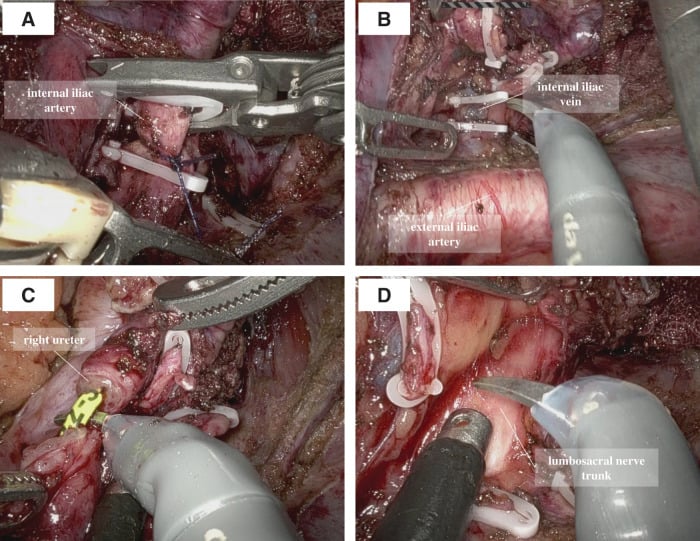
When it bleeds, do not clamp blindly. Direct pressure and packing come first, controlling the bleeding while the anaesthetist catches up. The definitive local options are sterile thumbtacks or bone wax pressed into the bleeding sacral foramen or cortex, muscle-fragment "welding" (a rectus or other muscle pledget pressed onto the bleeding point and cauterised), and topical haemostatic agents. If bleeding remains uncontrolled, pack the pelvis and move to damage control: temporary closure, resuscitation on ICU and a planned re-look at 24-48 hours.
Resuscitate in parallel. Activate the massive transfusion protocol, give tranexamic acid, run the cell saver, and actively prevent the lethal triad of hypothermia, acidosis and coagulopathy.
Sacral Nerve-Root Sacrifice: the Functional Map
The functional consequences of sacral resection are central to consenting a Type IV or extended hemipelvectomy.
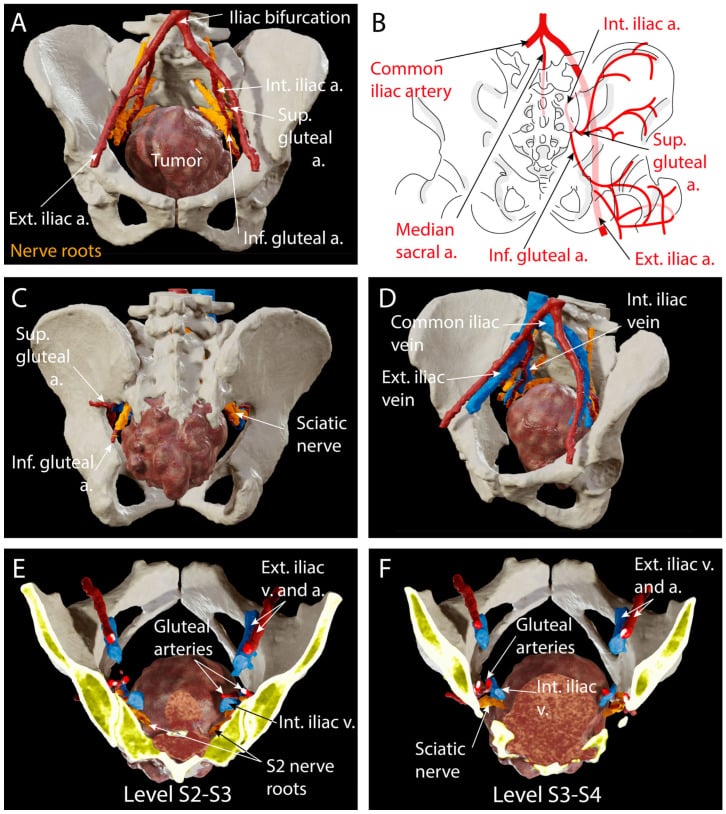
Unilateral or bilateral. This is the single most important rule. One intact side can maintain continence and useful function, so unilateral sacral-root sacrifice is generally acceptable, whereas bilateral loss of S2-S4 produces a neurogenic bladder and bowel and sexual dysfunction.
Continence: S2-S4. These roots, carrying parasympathetic fibres and the somatic pudendal supply, govern bladder, bowel and sexual function. As a working guide, preserving both S2 roots and at least one S3 usually maintains bladder and bowel control; bilateral sacrifice at or above S2-S3 does not. Counsel explicitly and plan for possible intermittent catheterisation or a stoma.
Walking: L5 and S1. Useful gait needs the L5 and S1 roots. S1 contributes to plantarflexion (gastrocnemius-soleus) and hip and pelvic stability, so its preservation matters for walking, and resections below S1 typically preserve ambulation.
Spinopelvic stability. A high sacral resection, through or proximal to S1 or crossing both sacroiliac joints, disconnects the spine from the pelvis (spinopelvic or lumbopelvic dissociation) and requires lumbopelvic reconstruction and fixation: lumbar pedicle and iliac screws, with or without fibular or allograft struts. Lower resections that keep S1 and at least one sacroiliac joint usually do not need spinopelvic fixation.
Complications
Haemorrhage. Expected blood loss is 3-10 litres, and massive blood loss of 5-15 units is expected. A cell saver is essential and vascular surgery is on hand as backup. There is a risk of presacral venous plexus injury, managed by direct pressure, packing and vascular control (see above).
Other intraoperative injuries. Nerve injury can involve the sciatic nerve (which may be an intentional sacrifice), the femoral nerve (which must be preserved in an internal hemipelvectomy), the lumbosacral plexus or the obturator nerve. Ureteric, bladder and rectal injuries, the last especially with posterior tumours, require intraoperative repair; preoperative ureteric stents may help.
Early complications. Wound complications affect 30-50%:
- Infection: 15-30%
- Dehiscence: 10-20%
- Flap necrosis: 5-15%
- Seroma and haematoma
Venous thromboembolism is a high risk, with DVT in 10-30% and a risk of pulmonary embolism. Systemic complications are respiratory, renal failure (from blood loss, contrast or myoglobin) and sepsis, and mortality is 1-5%.
Reconstruction failure. Prosthetic dislocation occurs in 10-30%, and prosthetic loosening and allograft nonunion or fracture also occur. Prosthetic infection runs at 10-20% overall, and often 15-30% after periacetabular endoprosthetic reconstruction, where five-year implant survival is around 50% in some series, a key counselling point.
Late function. Chronic pain, phantom limb pain after external hemipelvectomy, limb-length discrepancy and gait abnormality. Local recurrence is covered under Outcomes.
Postoperative Care and Rehabilitation
The ICU phase. Admit to ICU for a minimum of 24-48 hours after a major resection. Continue fluid resuscitation and transfusion, correct coagulopathy, give multimodal analgesia (epidural or PCA) including neuropathic agents for phantom or sciatic pain, and monitor the wound and flap perfusion hourly.
The wound. Remove drains when output is minimal and watch flap viability so that wound complications are identified early. Negative pressure wound therapy is used for dehiscence or high-risk wounds.
Thromboprophylaxis. Mechanical plus extended pharmacological prophylaxis for 4-6 weeks, with an IVC filter considered for very high-risk patients or those in whom anticoagulation is contraindicated.
Rehabilitation. Mobilise early once haemodynamically stable. After external hemipelvectomy the patient uses a wheelchair initially; after internal hemipelvectomy the reconstruction dictates protected or graduated weight-bearing. Prosthetic assessment follows, with realistic counselling (see Outcomes), and psychological support and oncological surveillance imaging are essential.
Outcomes and Prognosis
Survival. Five-year survival for localised pelvic sarcoma is approximately 60-70%, dominated by tumour grade, margin quality and histology. High-grade and dedifferentiated tumours fare far worse, and curatively resected external hemipelvectomy series report five-year survival closer to 20%.
Local control. Local recurrence is 15-25% with wide margins and rises sharply with close or positive margins, after which salvage options are limited. Margin adequacy, not the resection zone, is the principal modifiable driver of recurrence.
Function. After internal hemipelvectomy, mean MSTS/TESS scores cluster around 49-77% depending on the reconstruction, from 77% for irradiated autograft to 49% for the pedestal cup, and most patients walk with aids. After hindquarter amputation, counsel realistically: in the series cited on this page only 5% (3 of 68) used a prosthesis long-term, 81% mobilised on crutches and 9% remained wheelchair-bound.
Prognostic factors. From most to least powerful: histological grade, then surgical margin status, then tumour size and stage, then anatomical resectability. Achieving a wide margin while preserving the limb is the central goal; amputation is justified when salvage would compromise the margin in high-grade disease.
Guidelines, Registries & Global Practice
Global Epidemiology
- Pelvic and sacral sites account for roughly 10-15% of all primary bone sarcomas.
- Chondrosarcoma is the most common primary pelvic bone sarcoma in adults; osteosarcoma and Ewing sarcoma predominate in adolescents and young adults.
- Bimodal age distribution: peak in the 2nd-3rd decade (Ewing/osteosarcoma) and 5th-7th decade (chondrosarcoma), with a slight male predominance.
- Pelvic sarcomas carry worse local control and survival than appendicular sarcomas because deep location delays diagnosis and complex anatomy limits achievable margins.
Guideline Comparison (Side by Side)
- NICE / BSG / BOA (UK)
- Mandatory referral to a designated bone sarcoma centre before biopsy
- NCCN / MSTS (US)
- Care at a specialist sarcoma/multidisciplinary centre strongly recommended
- ESMO-EURACAN (Europe)
- Reference-centre management within recognised networks (EURACAN)
- NICE / BSG / BOA (UK)
- Performed at, or directed by, the treating sarcoma unit
- NCCN / MSTS (US)
- Image-guided core biopsy planned so tract is excisable en bloc
- ESMO-EURACAN (Europe)
- Biopsy by the team that will perform definitive surgery
- NICE / BSG / BOA (UK)
- Wide margin limb-sparing resection where oncologically safe
- NCCN / MSTS (US)
- Wide margins; amputation only when salvage compromises margins
- ESMO-EURACAN (Europe)
- En bloc wide excision; reconstruction individualised
- NICE / BSG / BOA (UK)
- Neoadjuvant chemo for osteosarcoma/Ewing; none for conventional chondrosarcoma
- NCCN / MSTS (US)
- MAP for osteosarcoma; VDC/IE for Ewing; surgery alone for chondrosarcoma
- ESMO-EURACAN (Europe)
- Same chemo-sensitivity framework; consider trials for high-grade disease
Registry and Outcome Signals
- Volume-outcome relationship: national audits and sarcoma networks consistently show better local control and survival when pelvic sarcoma surgery is concentrated in high-volume reference centres.
- Reconstruction durability: implant and reconstruction outcomes are tracked in institutional and national bone-tumour databases rather than standard arthroplasty registries (NJR/AJRR/AOANJRR exclude most tumour endoprostheses); reported pelvic endoprosthesis infection rates are far higher than primary THA.
- Functional benchmark: MSTS and TESS scores after internal hemipelvectomy typically cluster around 60-77%, versus markedly lower self-reported function and prosthetic use after external hemipelvectomy.
High- vs Limited-Resource Practice Variation
Custom 3D-printed endoprostheses, navigation/patient-specific cutting guides, on-table vascular and plastic reconstruction teams, neoadjuvant chemotherapy and routine MDT planning enable higher limb-salvage rates.
Later presentation, limited access to custom implants and intraoperative frozen section shift practice toward biological reconstruction (irradiated autograft, fibular graft, arthrodesis), flail-hip resection arthroplasty, or external hemipelvectomy when salvage is unsafe.
Controversies and Areas of Uncertainty
Limb salvage or amputation for function. Internal hemipelvectomy preserves the limb, but high reconstruction-failure rates mean some salvaged limbs function worse than a well-rehabilitated amputation. The trade-off between limb preservation and durable function remains unresolved.
The best Type II reconstruction. No method (saddle, custom endoprosthesis, APC, irradiated autograft, arthrodesis, flail hip) is clearly superior. Endoprostheses give the best early function but carry the highest infection and dislocation burden.
Navigation and 3D-printed implants. Computer navigation and patient-specific guides improve margin accuracy in studies, but evidence that they improve survival or long-term function, rather than the radiological margin, is still maturing.
Margin width in chondrosarcoma. A wide margin correlates with local control, but the exact safe distance, and how to treat planned close margins around neurovascular structures rather than converting to amputation, is debated.
Whether to reconstruct at all. Resection arthroplasty has the lowest complication rate yet significant shortening and instability, so the decision to reconstruct in low-demand or high-infection-risk patients is individualised.
The role of radiotherapy. For close or positive margins or unresectable disease, the benefit of adjuvant radiotherapy (including particle therapy for chondrosarcoma and chordoma) over re-resection is not firmly established.
MCQ Practice Points
Q: What does Type II resection in the Enneking-Dunham pelvic classification involve? A: Periacetabular resection - removal of the acetabulum and surrounding bone. This is the most complex resection type and requires formal hip reconstruction (saddle prosthesis, custom prosthesis, APC) or acceptance of flail hip.
Q: What is the key difference between internal and external hemipelvectomy? A: Internal hemipelvectomy is limb-sparing - pelvic bone is resected but the lower extremity is preserved. External hemipelvectomy (hindquarter amputation) removes the entire lower limb through the pelvis. The key determinant is neurovascular bundle involvement.
Q: Which vessel is typically ligated during internal hemipelvectomy? A: The internal iliac artery is typically ligated as its branches supply the resected specimen. The external iliac artery must be preserved to maintain limb perfusion. Early vascular control is essential before tumour mobilisation.
Q: What is the preferred flap for wound coverage in external hemipelvectomy? A: The posterior (gluteal) flap is preferred as it provides excellent soft tissue bulk for the sitting surface and has reliable blood supply from the inferior gluteal artery. The anterior flap is used when posterior tissues are involved by tumour.
Q: Why is surgical resection the primary treatment for pelvic chondrosarcoma? A: Chondrosarcoma is resistant to chemotherapy and radiation therapy. Wide surgical margins are the only treatment proven to achieve local control and cure. This distinguishes it from osteosarcoma and Ewing sarcoma, which respond to neoadjuvant chemotherapy.
Clinical Decision Scenarios
Practise clinical reasoning and management decisions out loud
“A 45-year-old presents with a 6-month history of left hip pain. Imaging shows a destructive lesion of the left iliac wing extending to the acetabular dome. Biopsy confirms Grade II chondrosarcoma. How would you manage this patient?”
“Describe the surgical approach for a Type II internal hemipelvectomy. What are the key steps for vascular control?”
“A patient is undergoing internal hemipelvectomy. Intraoperatively, you find the tumour is encasing the external iliac vessels. What are your options?”
Types and Definitions
- Internal hemipelvectomy: Pelvic bone resection with limb preservation
- External hemipelvectomy: Hindquarter amputation - complete limb removal
- Key determinant: Neurovascular bundle involvement
Enneking-Dunham Classification
- Type I: Iliac wing (above acetabulum) - often no reconstruction needed
- Type II: Periacetabular - most complex, requires reconstruction
- Type III: Pubic rami/ischium - minimal reconstruction needed
- Type IV: Sacral ala - may need lumbopelvic fixation
Vascular Control
- Control common iliac vessels retroperitoneally FIRST
- Internal iliac artery typically LIGATED
- External iliac vessels MUST BE PRESERVED for limb salvage
- Presacral venous plexus - major bleeding risk
Type II Reconstruction Options
- Saddle prosthesis: Femur articulates with remaining ilium
- Custom endoprosthesis: Best function, highest complication rate
- Allograft-prosthetic composite (APC): Biological bone stock
- Flail hip: No reconstruction, lowest complications, worst function
External Hemipelvectomy Flaps
- Posterior (gluteal) flap: PREFERRED - good bulk, reliable supply
- Anterior (quadriceps) flap: When posterior tissues involved
- Goal: Adequate sitting surface with tension-free closure
Indications for Amputation
- Tumour involving sciatic nerve
- External iliac vessel encasement
- Failed limb salvage with recurrence
- Uncontrolled infection
Tumour Considerations
- Chondrosarcoma: Chemo-resistant - surgery alone
- Osteosarcoma: Neoadjuvant chemo (MAP), assess response
- Ewing sarcoma: Chemo/radio-sensitive, surgery preferred when feasible
Complications
- Blood loss: 3-10L expected - cell saver essential
- Wound complications: 30-50%
- Infection: 15-30%
- Local recurrence: 15-25%
- Mortality: 1-5%
Key Numbers
- 5-year survival (localised pelvic sarcoma): 60-70%
- Limb salvage rate: 60-70%
- Prosthesis use post-hindquarter amputation: 5% (3 of 68)
- Major complication rate: 30-50%
Evidence Base
Enneking-Dunham Classification (Landmark Paper)
- Of over 200 patients evaluated, 57 were candidates for curative surgery - 25 underwent hemipelvectomy and 32 a non-amputative (limb-sparing) procedure
- Established the principle of zonal resection: iliac wing, periacetabular, and pubic regions
- Local recurrence 100% after oncologically inadequate resections versus 4% after adequate wide/radical resections
- Near-normal function when the hip joint was preserved; arthrodesis was achieved in only 50% of attempts
- Sciatic nerve resection was NOT a contraindication to a non-amputative procedure
Pelvic Chondrosarcoma - Landmark Outcomes Series
- 64 patients with localised pelvic chondrosarcoma; 51 limb-salvage, 13 hemipelvectomy
- Local recurrence 19% and distant metastases 17%
- Less than a wide surgical margin correlated with local recurrence (p=0.014)
- High tumour grade correlated with poor overall survival (p less than 0.001)
- All limb-salvage patients ambulatory; mean MSTS functional score 77%