Mature Bone Formation in Soft Tissues
- Brooker Grade III-IV = clinically significant (affects ROM)
- Prevention more effective than treatment (NSAIDs or radiation)
- Wait 6+ months for HO to mature before excision
- High-risk: head injury, burns, spinal cord injury, previous HO
- Recurrence rate significant without post-excision prophylaxis
- “Indomethacin 75mg daily x 6 weeks is classic prophylaxis regimen
- “Single-dose radiation (700cGy) within 72h is alternative to NSAIDs
- “Check ALP to confirm HO maturation before excision
- “Post-excision prophylaxis is MANDATORY to prevent recurrence
Overview and Epidemiology
What it is. Heterotopic ossification (HO) is the formation of mature lamellar bone in extra-skeletal soft tissues, typically muscle and periarticular connective tissue. It is not dystrophic calcification, and it is not myositis ossificans traumatica, which involves muscle injury specifically.
How common. The figure depends on the setting, and males are more commonly affected:
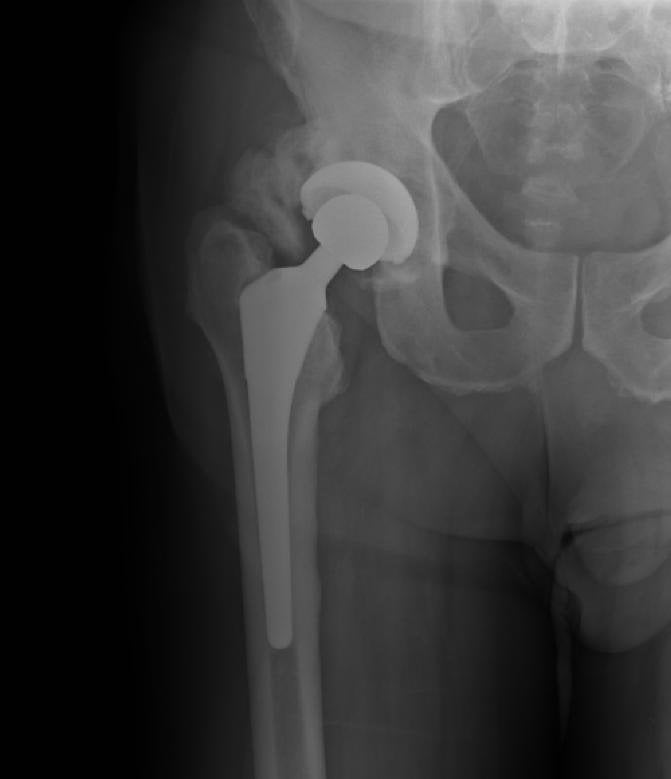
- Total hip arthroplasty: 10-50% radiographic, 3-5% symptomatic
- Acetabular fractures: 20-40% overall
- Elbow surgery: 3-20%
- Spinal cord injury: 20-30%
- Traumatic brain injury: 10-20%
After an acetabular fracture, the approach is the variable. The surgical approach is the dominant variable, not the fracture pattern. The Kocher-Langenbeck and extended iliofemoral approaches strip and devitalise the abductors and carry the great majority of the risk; the ilioinguinal approach does not violate that muscle envelope and carries very little. Debriding necrotic gluteus minimus at closure is the one intraoperative step shown to reduce it.
In the randomised acetabular trial in the evidence section, HO prevalence was not associated with fracture type or with posterior dislocation. Risk-stratify on the exposure you used, not on the injury film.
Who is at high risk. Previous HO is the strongest predictor, with a 50% recurrence rate. The other high-risk groups:
- Traumatic brain injury
- Spinal cord injury
- Burns greater than 20% TBSA
- Ankylosing spondylitis, a systemic tendency to ossification
- Diffuse idiopathic skeletal hyperostosis (DISH)
- Hypertrophic osteoarthritis
- Polytrauma
A head-injured patient with an acetabular fracture is at very high risk; the HO is often bilateral and may be severe.
Pathophysiology
Three things have to be present. HO requires osteogenic precursor cells, an inducing signal and a permissive environment. Understanding the triad is what guides prevention.
The cells. Mesenchymal stem cells in muscle and connective tissue, circulating osteoprogenitor cells, local fibroblasts with osteogenic potential and endothelial cells via endothelial-to-mesenchymal transition. Under the right signals they differentiate into osteoblasts and lay down osteoid, which then mineralises to form mature bone.
The signal. Bone morphogenetic proteins are key: BMP-2, BMP-4 and BMP-7 are released from damaged tissue, and hypoxia upregulates their expression. Inflammatory cytokines (IL-6, TGF-beta) promote differentiation, and prostaglandins stimulate osteogenesis. That last step is why NSAIDs prevent HO: they inhibit prostaglandin synthesis and so block one of the key osteoinductive signals.
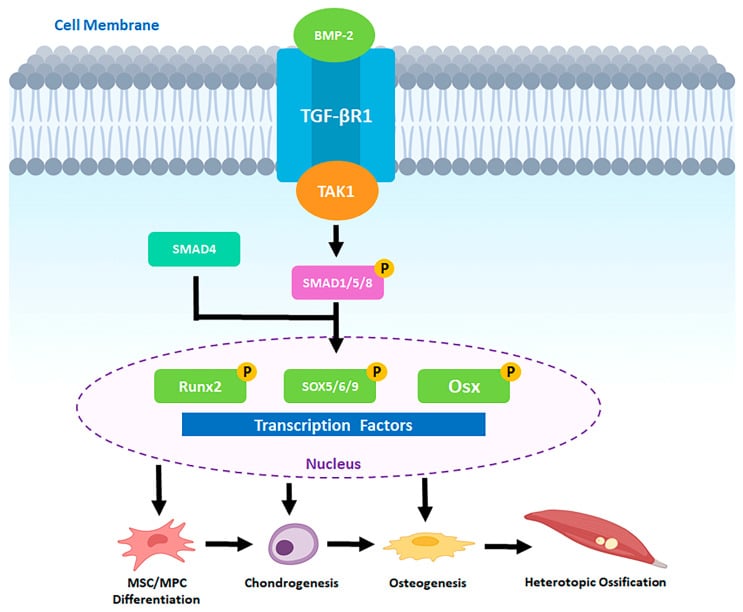
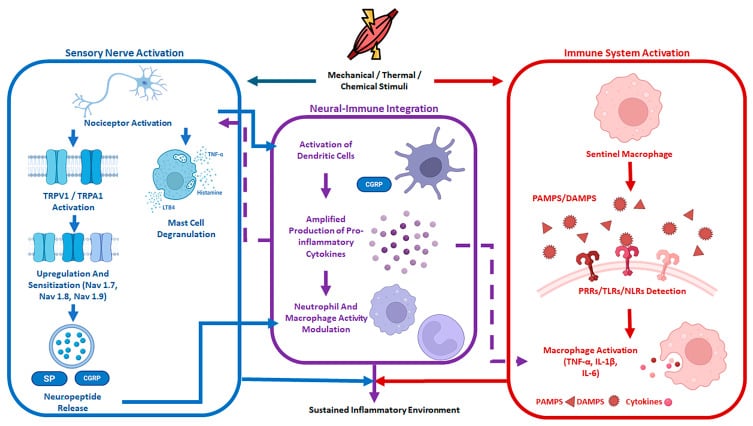
The environment. Tissue hypoxia from trauma or surgery, a haematoma to provide scaffolding, denervation, immobilisation and local inflammation. Burns cause a systemic inflammatory response.
Why head injury in particular. Four mechanisms operate at once: loss of inhibitory neural signals to bone turnover, release of brain-derived osteogenic factors into the circulation, a systemic inflammatory response and prolonged immobilisation. Spinal cord injury shares the loss of inhibitory neural signals and the systemic release of osteogenic factors, which is why both carry such a high incidence. Head-injured patients can develop HO at sites remote from any surgery or local trauma.
Fibrodysplasia ossificans progressiva. FOP is a rare autosomal-dominant disorder caused by a gain-of-function mutation in ACVR1/ALK2, a BMP type I receptor, in which connective tissue progressively turns into bone. The pathognomonic clue is present at birth, before any ossification: a congenital malformation of the great toes (short, valgus, monophalangic hallux). Affected children then suffer episodic painful soft-tissue "flares" that ossify, progressing axial to appendicular, proximal to distal and cranial to caudal, and eventually causing widespread ankylosis.
The cardinal rule is that trauma triggers ossification, so surgery and biopsy are contraindicated. Each of these provokes catastrophic flares:
- Biopsy
- Intramuscular injections, including some immunisations
- Dental blocks
- Surgical excision
Recognise FOP clinically, great-toe sign plus flares, avoid the knife, and manage with flare protection and emerging ACVR1-targeted therapy such as palovarotene. The NSAID, radiation and excision pathway used for acquired HO is never applied to it.
Classification Systems
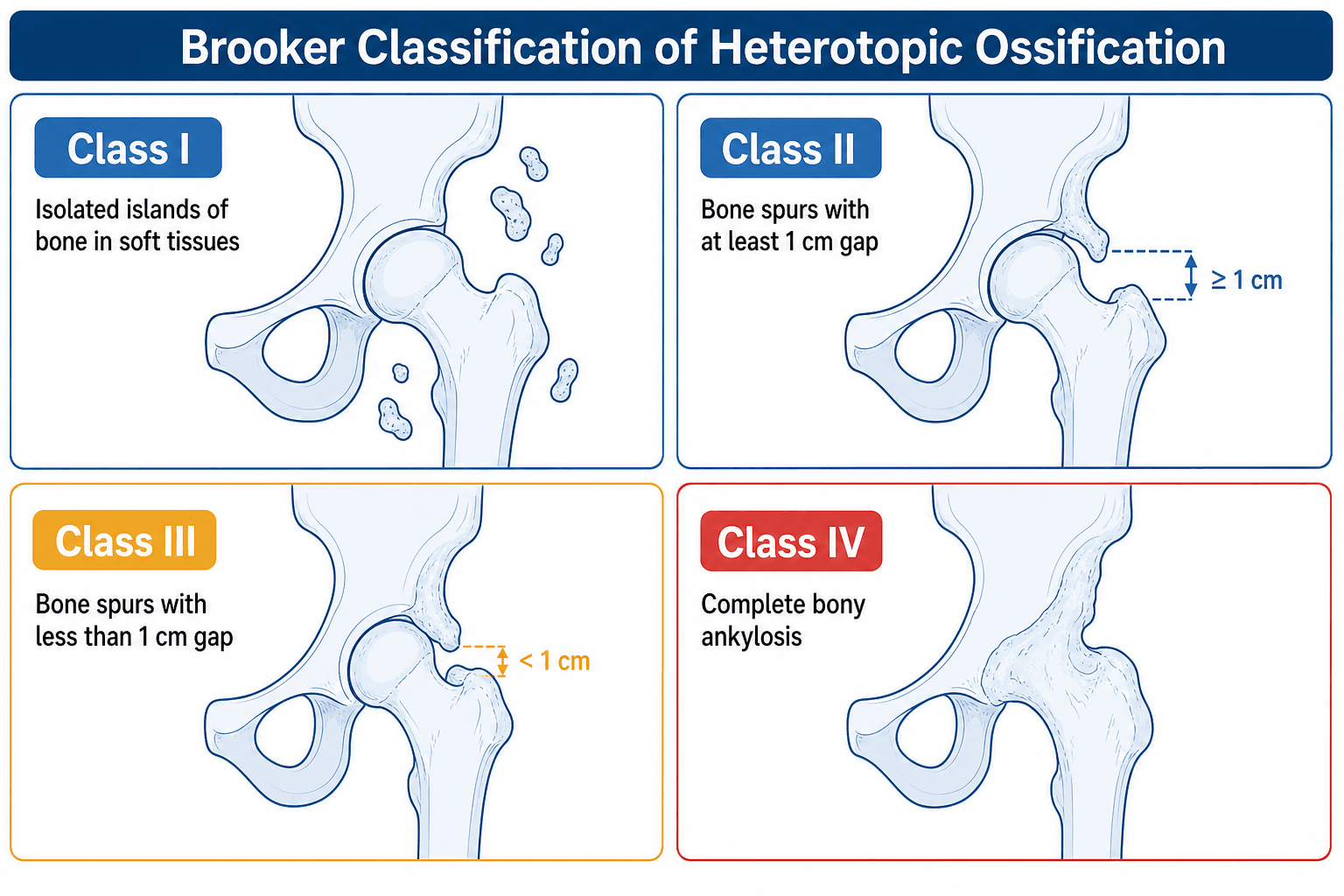
Brooker (1973) is the most commonly used system and is a classification of hip HO. Grades I-II are usually observed; grades III-IV typically require surgical consideration, which is why "Brooker III-IV" is shorthand for clinically significant disease.
- Description
- Islands of bone within soft tissues about the hip
- Clinical Significance
- Usually asymptomatic
- Description
- Bone spurs from pelvis or femur with gap greater than 1cm
- Clinical Significance
- Mild, usually asymptomatic
- Description
- Bone spurs from pelvis or femur with gap less than 1cm
- Clinical Significance
- Moderate - may affect ROM
- Description
- Apparent bone ankylosis of the hip
- Clinical Significance
- Severe - significant functional impairment
Della Valle (2002) is the alternative that grades functional impact: Type A, HO does not affect function; Type B, HO affects function; Type C, HO prevents function (ankylosis). It is more clinically relevant but less commonly used than Brooker.
Hastings-Graham is the elbow classification, and it separates the two arcs of elbow motion.
- Description
- HO without functional limitation
- Treatment
- Observation
- Description
- Limitation of flexion-extension only
- Treatment
- Excision if symptomatic
- Description
- Limitation of pronation-supination only
- Treatment
- Excision if symptomatic
- Description
- Both arcs limited
- Treatment
- Excision usually required
- Description
- Ankylosis
- Treatment
- Excision and possible arthroplasty
Clinical Assessment
History. The questions that change the plan:
- Previous surgery or trauma to the area
- Risk factors: head injury, spinal cord injury, burns
- Timeline of symptom development
- Previous HO at any site
- Current medications, especially NSAIDs
- Functional limitations
Examination. Range of motion is the key functional assessment. In the early, active phase the signs are local warmth and swelling; a palpable firm mass is a late finding. Record pain on movement, especially at end-range, any skin change over the lesion, and the neurovascular status (compression is rare).
Natural history. The lesion passes through recognisable phases, and the imaging and biochemistry follow them.
Natural History
Local warmth, swelling and pain, which may mimic infection or DVT. The X-ray is usually negative; the bone scan may already be positive.
Early mineralisation begins and a soft-tissue mass becomes palpable. The X-ray shows faint calcification and ALP is elevated.
Progressive ossification and organisation, with range of motion progressively limited. The X-ray shows maturing bone; ALP peaks and then normalises.
Bone fully mature with cortical margins, ALP normal, bone scan cold or showing minimal uptake. This is the safe window for excision.
Early HO mimics other things. In the inflammatory phase the X-ray is usually still negative, so the picture of swelling, warmth and a mass overlaps with DVT, infection, stress fracture and tumour. Bone scan and serial X-rays help differentiate them. Do not miss the DVT: consider duplex if the limb is a lower limb.
- Discriminating features
- Calf/limb swelling and warmth, often without a discrete mass; risk after surgery/immobility
- Key investigation
- Duplex ultrasound; D-dimer
- Pitfall to avoid
- Anticoagulating presumed DVT when it is early HO - and vice versa, missing a real DVT
- Discriminating features
- Fever, raised CRP/ESR, wound discharge, rest pain
- Key investigation
- CRP/ESR, joint aspiration, cultures
- Pitfall to avoid
- Attributing post-THA stiffness to HO without excluding infection
- Discriminating features
- Enlarging deep mass, atypical site, no preceding trauma
- Key investigation
- MRI with contrast; biopsy if features atypical
- Pitfall to avoid
- Biopsying a 'zonal' maturing HO and over-calling malignancy
- Discriminating features
- Follows discrete muscle injury; classic peripheral (zonal) mineralisation maturing outward
- Key investigation
- Serial radiographs showing zoning
- Pitfall to avoid
- Early biopsy mimics sarcoma histologically - wait and image
- Discriminating features
- Amorphous calcium without organised trabeculae; metabolic context (renal failure, hypercalcaemia)
- Key investigation
- Calcium/phosphate, renal function
- Pitfall to avoid
- Confusing soft-tissue calcification with true lamellar HO
- Discriminating features
- Periarticular lobulated calcific masses, often familial/renal
- Key investigation
- Radiograph, phosphate profile
- Pitfall to avoid
- Treating as HO and giving futile NSAID/radiation prophylaxis
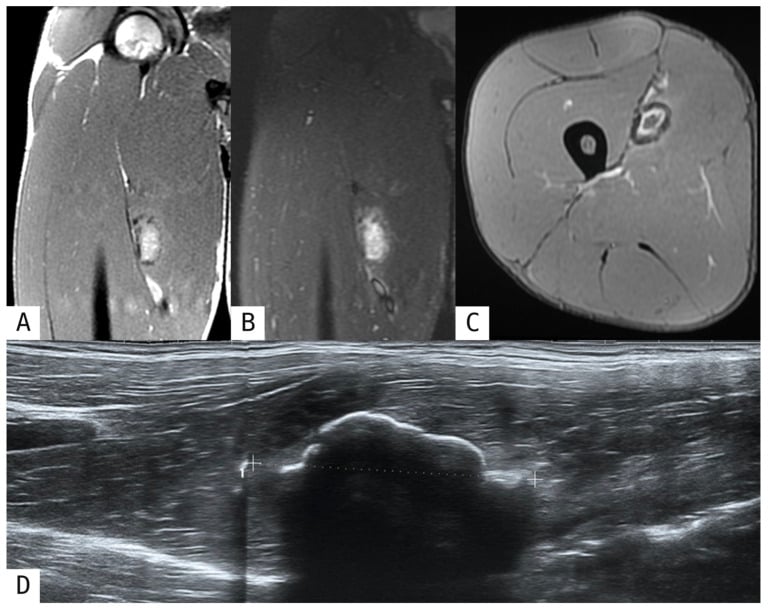
Myositis ossificans traumatica and the zonal phenomenon. This is the post-traumatic, muscle-specific form of heterotopic ossification, classically in the quadriceps or brachialis after a contusion or dislocation. Its defining feature is the zonal phenomenon: the lesion matures from the outside in, so a mature, well-organised, mineralised bony rim surrounds an immature, cellular centre. That is the exact reverse of a soft-tissue sarcoma, which is most cellular and aggressive at its periphery.
On radiographs, peripheral mineralisation appears at about 3 to 6 weeks and a corticated rim defines the lesion by 6 to 8 weeks; serial films showing maturing, sharply marginated peripheral bone are reassuring. The trap is the early biopsy: before zoning, the tissue is hypercellular, mitotically active osteoid that is histologically indistinguishable from osteosarcoma. Wait, image serially, and biopsy only if the appearance is atypical or progressive.
Investigations
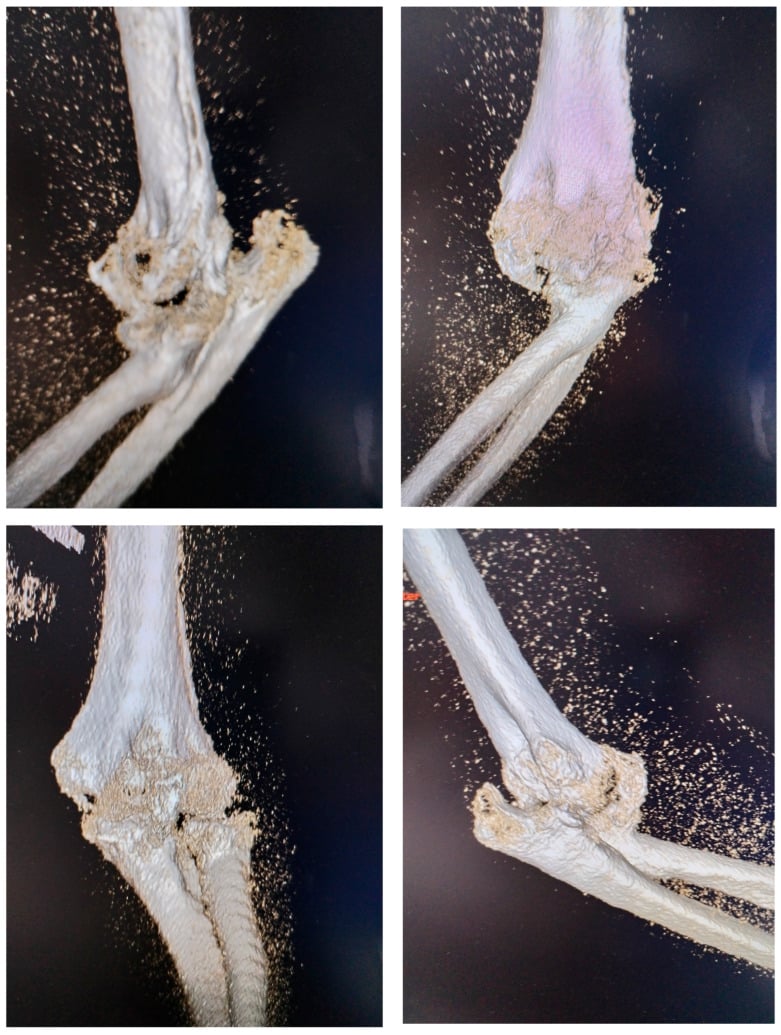
Imaging. Plain radiographs are the primary study and the basis of classification, but they are usually negative early, with calcification appearing from 3-6 weeks. The bone scan may be positive earlier, at 1-2 weeks, and its role at the other end of the process is to judge activity before surgery. CT is the pre-operative planning study once the HO is mature. MRI is rarely needed; it shows soft-tissue oedema and early changes.
- Timing
- From 3-6 weeks
- Findings
- Calcification, bone formation, Brooker grading
- Role
- Primary imaging, classification
- Timing
- Mature HO
- Findings
- Precise anatomy, surgical planning
- Role
- Pre-operative planning
- Timing
- Early (1-2 weeks)
- Findings
- Increased uptake (hot) = active
- Role
- Assess maturity for timing of surgery
- Timing
- Early phase
- Findings
- Soft tissue oedema, early changes
- Role
- Rarely needed, can show early HO
Blood tests. Alkaline phosphatase rises while HO is active, to 2-3 times normal, and returns to normal as it matures, so it is followed as a marker of activity. CRP and ESR may be elevated in active HO, and their real job is to rule out infection. Calcium and phosphate are usually normal and are checked to exclude a metabolic disorder.
- Active HO
- Elevated (2-3x normal)
- Mature HO
- Normal
- Clinical Use
- Followed for maturity, never the sole criterion
- Active HO
- May be elevated
- Mature HO
- Normal
- Clinical Use
- Rule out infection
- Active HO
- Usually normal
- Mature HO
- Normal
- Clinical Use
- Exclude metabolic disorders
Judging maturity. Maturity rests on a stable, corticated, trabeculated mass on serial radiographs with a quiescent bone scan. Before excision, confirm all four:
- Normal ALP for at least 2-3 months
- Cold or inactive bone scan, with no increased uptake or minimal activity
- Cortical margins on X-ray
- Stable radiographic appearance on serial imaging
The conventional timing rule is to wait until ALP has returned to baseline and the bone scan is cold. Keep ALP in its place, though: it is a supporting number only, since it rises with any healing fracture and with liver disease, and it should never be the criterion on its own. Operating on immature HO dramatically increases recurrence.
Management
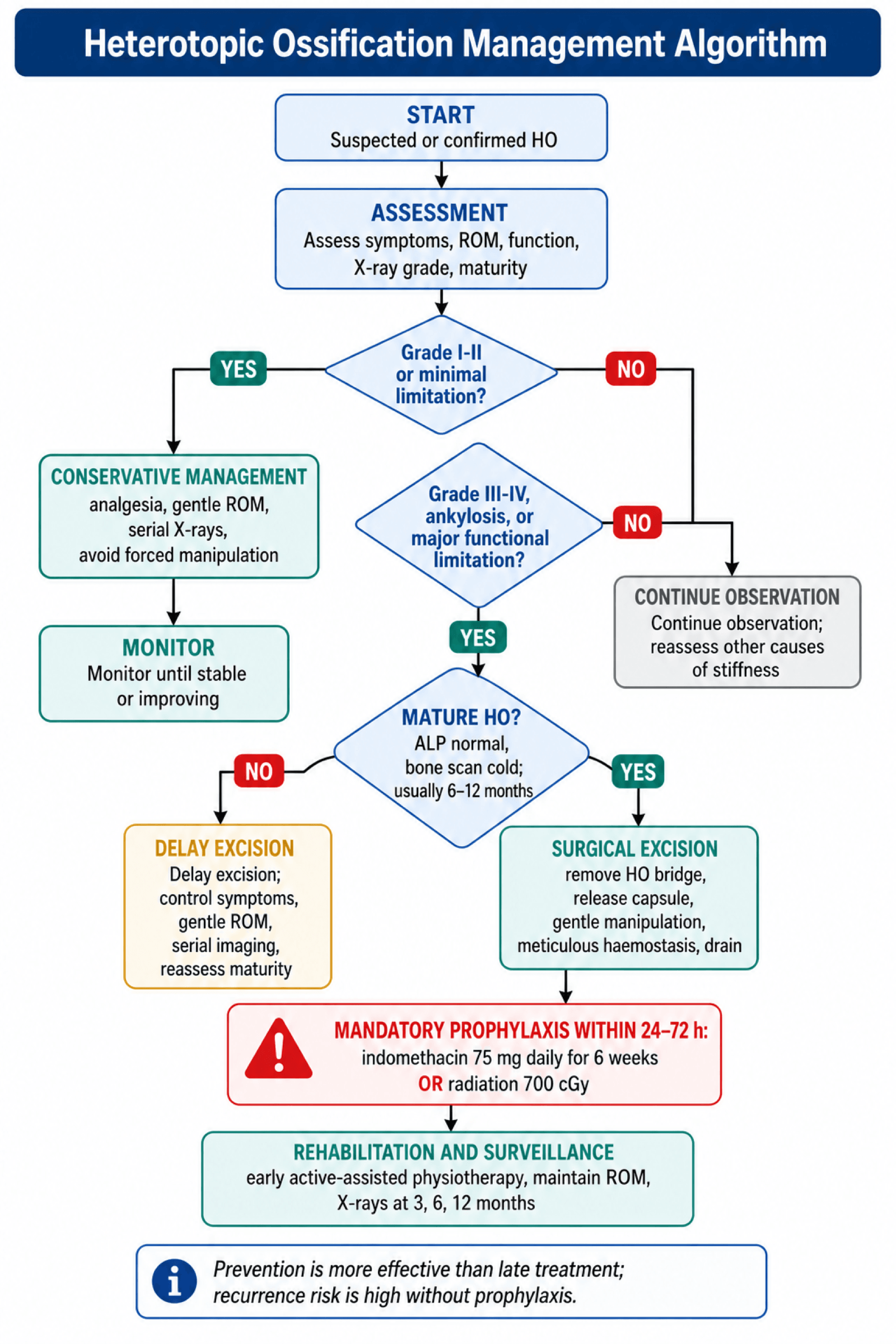
The decision. Three questions settle it: what grade, how much function is lost, and whether the HO is mature. Brooker I-II or minimally limiting disease is observed; grade III-IV with functional limitation is considered for excision, but only once it has matured.
Conservative management is for Brooker grade I-II, minimal functional limitation, and HO that is still maturing. It consists of pain management, physiotherapy to maintain range of motion (gentle, not forced), serial X-rays, and a wait-and-watch stance, since some HO resorbs partially. Asymptomatic Brooker I-II needs no further prophylaxis if primary prevention was given, and rarely progresses if stable at 6 months.
Aggressive physiotherapy does not cause HO; that is an old myth. Forced range of motion through established HO, however, can cause fracture or bleeding.
Surgical excision is indicated for:
- Brooker grade III-IV with functional limitation
- Established maturity (ALP normal, bone scan cold)
- Failed conservative management
- Ankylosis preventing function
Timing. Wait a minimum of 6 months after HO formation, and ideally 12 months, especially for neurogenic HO after head injury or spinal cord injury, confirming maturity with ALP and bone scan. There is no single waiting time because the cause sets the pace: Garland's 1991 review recommended traumatic HO at 6 months, spinal cord injury at 1 year and traumatic brain injury at 1.5 years. Establish the cause before quoting a date to the patient.
Know what kind of rule that is. It is an expert recommendation from a review article, never tested against earlier or later excision, so treat it as the accepted convention rather than a validated threshold.
Principles of the operation. Complete excision of the HO bridge, capsule release as needed, gentle manipulation after excision, meticulous haemostasis (haematoma promotes recurrence), a drain, and immediate prophylaxis post-operatively.
Recurrence. Quote it by site rather than using one number. The conventional hip-derived figures are 20-30% with prophylaxis and over 50% without. The largest pooled series of elbow excisions (Lee, 384 patients across 24 studies) reports 11.9%, so do not carry the hip numbers to the elbow. Whichever site, recurrence is the commonest complication of excision.
The surgical field is highly osteogenic after excision and recurrence is the commonest complication, so prophylaxis is given routinely, with the same regimens as for primary prevention. Both NSAIDs and radiation are effective; begin within 24-72 hours of surgery. The case for prophylaxis after excision is different from the case for routine primary prophylaxis before elective hip replacement: HIPAID found that reduced radiographic HO with ibuprofen after arthroplasty produced no gain in pain or function and doubled major bleeding, whereas after excision the reason to prophylax is a demonstrated recurrence risk in a field that has already made bone.
Surgical Technique Considerations
Hip. Use the same approach as the index surgery if possible; lateral or anterolateral serves most THA HO, and circumferential HO may need dual approaches. Identify and protect the neurovascular structures first. The sciatic nerve is at risk posteriorly, especially with posterior or circumferential HO, and may be encased in bone, so find it early, trace it proximally from known anatomy and protect it throughout; neuromonitoring is advisable for complex cases. Excise the HO to restore the bone-capsule plane, release the contracted capsule, and ensure full range of motion before closure.
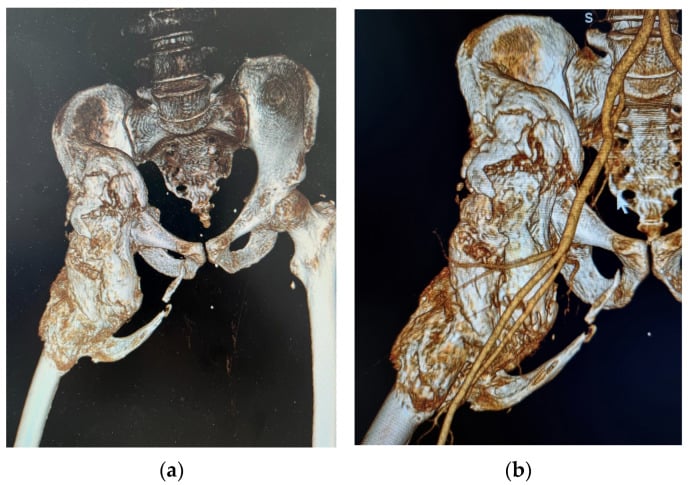
Elbow. The approach follows the HO: lateral for lateral HO and radiocapitellar access, medial for medial HO (protect the ulnar nerve), posterior for posterior or triceps HO, and combined approaches are often required. Transpose the ulnar nerve if it is at risk, excise the anterior capsule separately if it is contracted, and a hinged external fixator may help maintain range of motion.
Complications
The complications divide into those of the HO itself and those of removing it.
- HO-Related
- Grade IV HO
- Surgery-Related
- -
- Management
- Surgical excision when mature
- HO-Related
- Rare but serious
- Surgery-Related
- -
- Management
- Urgent excision may be needed
- HO-Related
- -
- Surgery-Related
- Commonest complication of excision (rates by site under Management)
- Management
- Re-excision possible
- HO-Related
- -
- Surgery-Related
- During excision (sciatic, ulnar)
- Management
- Careful identification, protect
- HO-Related
- -
- Surgery-Related
- During manipulation
- Management
- Gentle technique, staged if needed
- HO-Related
- -
- Surgery-Related
- Promotes recurrence
- Management
- Meticulous haemostasis, drain
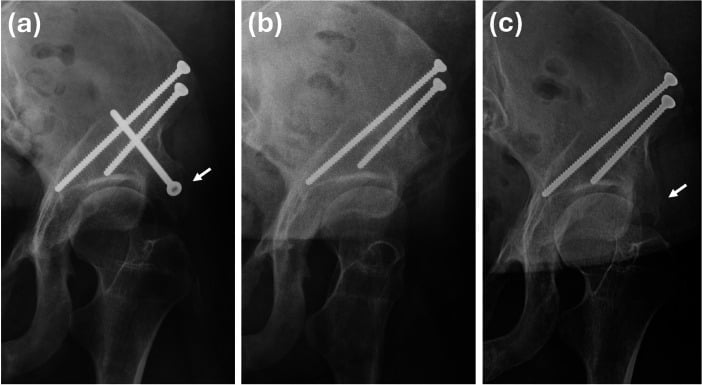
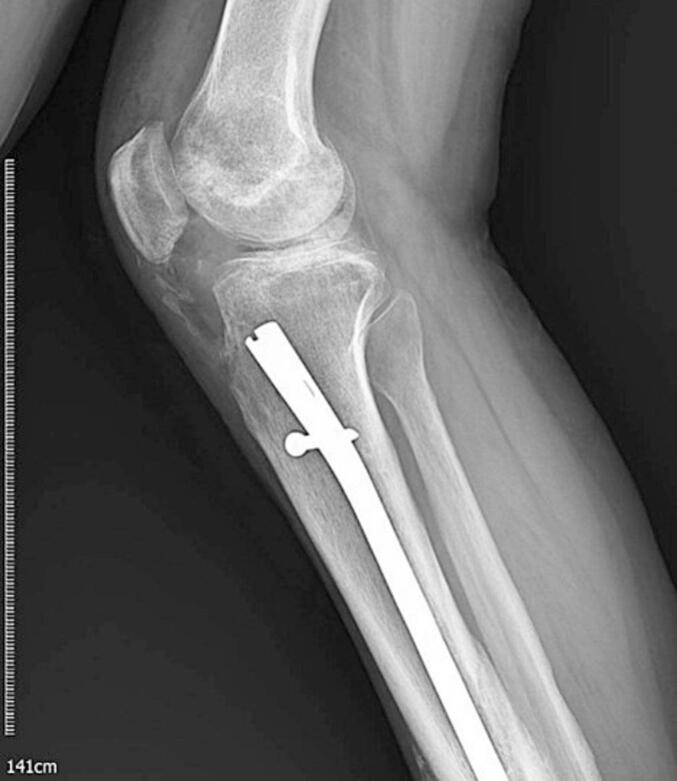
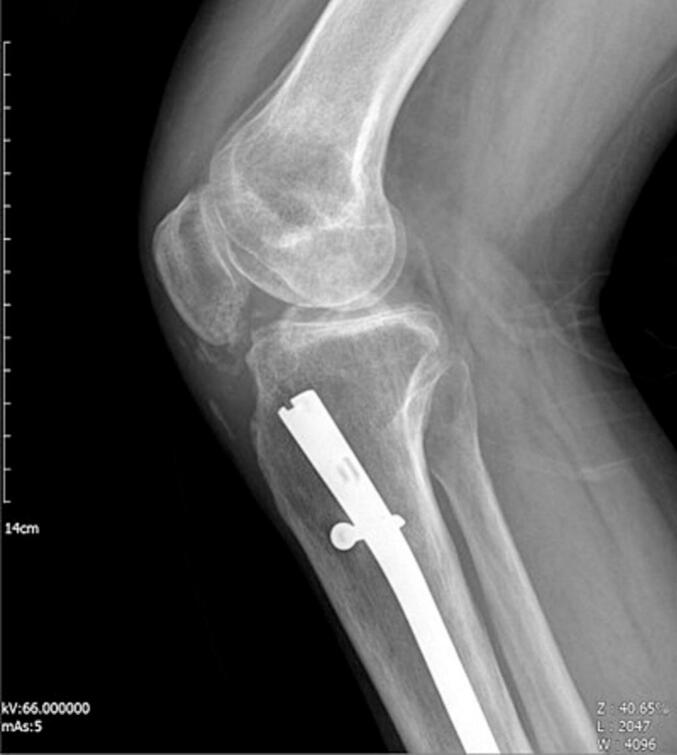
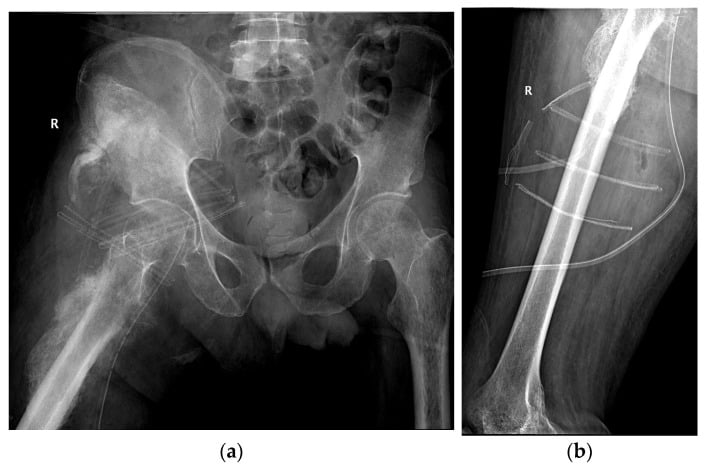
Surveillance. Serial radiographs after excision are how recurrence is found. The pair below shows a knee early after excision and again two months later.
Postoperative Care
The aim is to keep what was won in theatre. Prophylaxis starts immediately and runs its full course, motion starts on day one, and the radiographs continue to 12 months; most recurrence is evident by 6 months.
Post-Excision Protocol
Begin prophylaxis immediately: indomethacin 75mg daily or radiation 700cGy within 72h. Drain in situ until output is minimal. CPM if available, with active-assisted range of motion exercises.
Aggressive physiotherapy, daily initially, to maintain the range gained at surgery, with active and active-assisted exercises. Weight bearing as tolerated unless there is a concurrent fracture.
Continue NSAID prophylaxis for the full 6 weeks. Progressive strengthening and functional training, with range of motion monitored closely and serial X-rays for recurrence.
Regular clinical review with an ongoing home exercise programme and return to functional activities. X-rays at 3, 6 and 12 months.
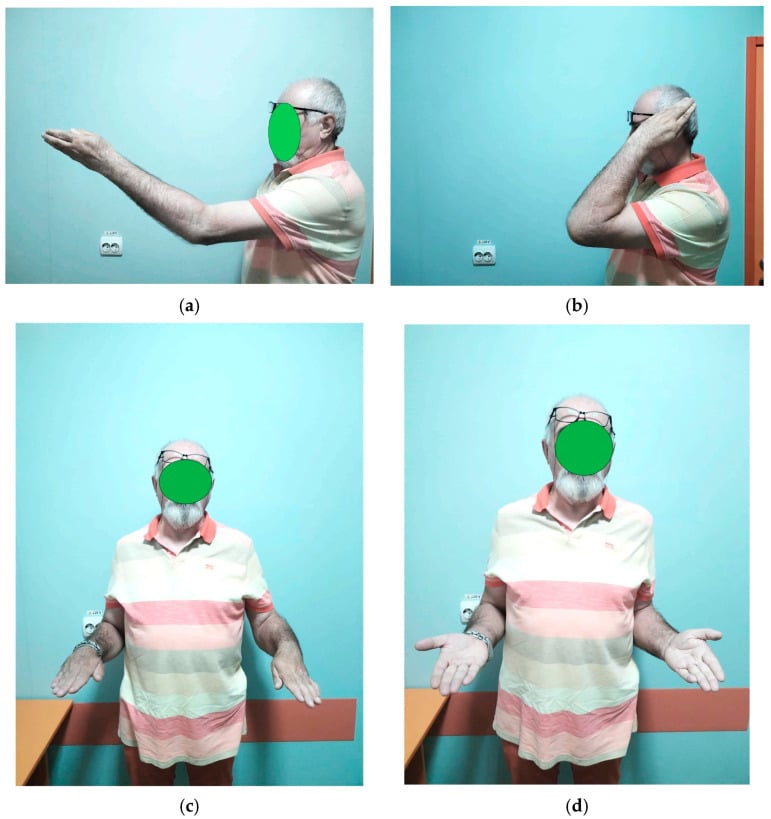
Continuous passive motion may help maintain the range gained after excision, especially at the elbow. The evidence is mixed but it is commonly used, started immediately post-operatively, with the goal of holding the range achieved at surgery.
Outcomes and Prognosis
The prognosis is set by the cause of the HO, the joint's starting point, and how the excision was timed and protected.
Good prognosis
- Isolated HO without a neurological cause
- Good range of motion before the HO developed
- Mature HO at the time of excision
- Prophylaxis given post-excision
- A patient motivated for rehabilitation
Poor prognosis
- Neurogenic HO (TBI, SCI)
- Previous recurrence
- Circumferential HO
- Poor range of motion before the HO
- Non-compliance with physiotherapy
Prevention Strategies
What prophylaxis actually prevents. Prophylaxis reduces severe (Brooker III-IV) HO by roughly 70-80% in high-risk surgery; in the acetabular-fracture trial in the evidence section, grade III-IV fell from 38% untreated to 7% treated. It does far less to any HO. In the HIPAID trial the relative risk for any ectopic bone was 0.69, a reduction of about a third, and every one of Burd's sixteen untreated patients formed some HO regardless.
Quote the endpoint with the number. "Reduces HO by 70-80%" is true of the ossification that limits movement and false of ossification in general. Note too what the reduction bought: HIPAID found no improvement in pain or function despite the radiographic benefit, so prophylaxis is justified by the severe grades it prevents in patients at real risk, not by a headline percentage applied to everyone.
NSAIDs. They inhibit prostaglandin synthesis and so block an osteogenic signal. Begin within 24-48 hours of surgery, since a delayed start reduces efficacy, and run the course for 6 weeks, the minimum duration for NSAID prophylaxis.
- Dose
- 75mg daily (or 25mg TDS)
- Duration
- 6 weeks
- Notes
- Classic regimen - best evidence
- Dose
- 500mg BD
- Duration
- 6 weeks
- Notes
- Alternative if indomethacin not tolerated
- Dose
- 200mg daily
- Duration
- 6 weeks
- Notes
- COX-2 selective - fewer GI effects
- Dose
- 600-900mg daily
- Duration
- 6 weeks
- Notes
- Less effective than other NSAIDs
The contraindications are a history of GI ulcer or bleed, renal impairment, anticoagulant use, and concern about fracture healing.
Radiation. It kills the osteoprogenitor cells in the irradiated field. A single dose of 700-800 cGy within 24-72 hours of surgery is the most common protocol and is as effective as fractionation.
- Dose
- 700-800 cGy
- Timing
- Within 24-72h of surgery
- Notes
- Equally effective as fractionated
- Dose
- 1000 cGy in 5 fractions
- Timing
- Starting within 72h
- Notes
- No advantage over single dose
- Dose
- 700 cGy
- Timing
- Within 4h of surgery
- Notes
- NOT interchangeable with post-op - the meta-analysis in the evidence section found RT given 16-20h pre-operatively was LESS effective, so a pre-op dose must be immediately pre-operative
Its advantages over NSAIDs are that it has no systemic effects, no GI risk and no effect on fracture healing. Against it are the need for radiotherapy access, cost, a theoretical malignancy risk (minimal), and the prosthesis, which must be shielded.
Who should get it. High-risk patients who should receive prophylaxis:
- Previous HO at any site
- Ankylosing spondylitis
- DISH
- Traumatic brain injury
- Spinal cord injury
- Burns greater than 20% TBSA
- Hypertrophic osteoarthritis
- Extensive surgical approach, since extensive soft-tissue dissection increases risk
- Acetabular fracture with TBI, where prophylaxis is mandatory
Routine THA is the controversy: some give prophylaxis to all, others only to the high-risk. The evidence supports prophylaxis in high-risk patients.
Choosing between them. NSAIDs are the most common choice, convenient and cheap, and are used when there is no contraindication. Radiation is preferred where NSAIDs are contraindicated (GI, renal), where fracture healing is a concern, and where the anatomy is difficult to shield.
On efficacy the two are roughly equivalent, with a tilt toward radiation. The randomised acetabular trial found no significant difference (grade III-IV 4% radiation versus 11% indomethacin, p=0.22), and the meta-analysis found radiation better in relative terms (RR 0.42) but by an absolute margin of only about 1%, too small to justify radiotherapy logistics on efficacy alone. Choose on the contraindication, not the percentage.
Where the two genuinely part company is the fracture: indomethacin trebled long-bone nonunion in patients with concomitant fractures, and radiation does not.
Guidelines, Registries & Global Practice
- THA: 10-50% radiographic, 3-5% symptomatic worldwide
- Acetabular fracture (posterior/extensile approach): 20-40%, the highest-risk elective indication for prophylaxis
- Elbow trauma/fracture-dislocation: 3-20%
- Combat/blast amputations: up to 60-65% (high-energy soft-tissue injury)
- Spinal cord injury: 20-30%; traumatic brain injury: 10-20%
- Male predominance across most series
- Arthroplasty registries (NJR, AOANJRR, AJRR, SHAR) do not code HO routinely, so registry-level incidence is under-captured - cohort and trial data remain the reference
- Registry signal is indirect: HO contributes to stiffness/dissatisfaction and a minority of revisions for impingement or limited ROM
- Direct anterior and tissue-sparing hip approaches report lower HO than extensile/posterior exposures
Side-by-Side Guidance on Prophylaxis
- Position on routine prophylaxis
- Selective - target high-risk, not routine THA
- Preferred modality
- NSAID first-line; radiation if contraindicated
- Practical note
- Aligns with HIPAID showing no functional gain from routine NSAIDs
- Position on routine prophylaxis
- Risk-stratified; emphasis on documentation and consent
- Preferred modality
- Indomethacin or COX-2; radiation reserved
- Practical note
- Radiotherapy access via oncology pathways can delay the 72h window
- Position on routine prophylaxis
- Recommend prophylaxis after high-risk acetabular fixation
- Preferred modality
- Single-dose radiation or indomethacin
- Practical note
- Avoid indomethacin where concurrent long-bone fractures must unite
- Position on routine prophylaxis
- NSAIDs/radiation NOT used; surgery contraindicated (triggers flares)
- Preferred modality
- ACVR1-targeted therapy (e.g. palovarotene), flare prophylaxis
- Practical note
- Recognise FOP - great toe malformation plus flares; do NOT biopsy or excise
- Ready access to single-dose linear-accelerator radiotherapy within 24-72h
- Tc-99m bone scan / SPECT-CT and serial CT for maturity and surgical planning
- Intra-operative neuromonitoring for complex peri-articular excision
- NSAID prophylaxis dominates - cheap, oral, no specialised equipment
- Plain radiographs and serum ALP substitute for bone scan to judge maturity
- Prevention emphasised because revision/excision capacity is scarce
Record risk factors and the prophylaxis decision. Offering prophylaxis to genuinely high-risk patients is expected practice globally; consent for HO excision must include recurrence risk, neurovascular injury, and the need for post-operative prophylaxis.
Controversies and Areas of Uncertainty
Radiographic HO falls with prophylaxis, but the HIPAID RCT showed no functional benefit and increased bleeding from routine NSAIDs after hip replacement. Most authorities now restrict prophylaxis to high-risk patients rather than treating every arthroplasty.
Meta-analysis suggests postoperative radiation is modestly more effective for Brooker III-IV, but the absolute difference is around 1%. Cost, access, the 72h window, and fracture-healing concerns usually decide, not efficacy alone.
The old dogma of waiting for a "cold" bone scan and normal ALP is increasingly challenged - several series report safe early excision of mature-appearing HO with prophylaxis, particularly at the elbow, to limit secondary contracture. Bone scan/ALP remain imperfect maturity markers.
ACVR1/BMP-pathway and retinoic-acid-receptor agents (e.g. palovarotene) are validated in FOP and under study for acquired/neurogenic HO, raising the prospect of biologic prevention beyond NSAIDs and radiation.
MCQ Practice Points
Q: What is the Brooker Grade III classification for heterotopic ossification of the hip? A: Bone spurs from pelvis or femur with a gap of less than 1 cm. Grade I = islands, Grade II = gap greater than 1cm, Grade III = gap less than 1cm, Grade IV = ankylosis.
Q: What is the standard NSAID prophylaxis regimen for prevention of heterotopic ossification after high-risk hip surgery? A: Indomethacin 75mg daily (or 25mg TDS) for 6 weeks, starting within 24-48 hours of surgery. It reduces Brooker III-IV HO by 70-80%; the reduction in any-grade HO is nearer a third. Do not give it to a patient who also has a long-bone fracture - use radiation instead.
Q: When is the optimal timing for surgical excision of heterotopic ossification? A: Minimum 6 months after formation, when ALP has normalized and bone scan is cold. For neurogenic HO (TBI/SCI), wait 12+ months. Early excision of immature HO leads to high recurrence.
Q: What is the strongest risk factor for developing heterotopic ossification after hip surgery? A: Previous HO at any site (50% recurrence risk). Other major risk factors: TBI, SCI, burns, ankylosing spondylitis, DISH.
Q: What is the recommended single-dose radiation protocol for HO prophylaxis? A: 700-800 cGy within 72 hours of surgery (preferably within 24h). Single dose is as effective as fractionated. Pre- or post-operative delivery equally effective.
Q: What is the recurrence rate after surgical excision of HO without prophylaxis? A: Greater than 50%. With prophylaxis (NSAIDs or radiation), recurrence is 20-30%. Post-excision prophylaxis is mandatory.
Exam Viva Scenarios
Practise clinical reasoning and management decisions out loud
“A 62-year-old man is 4 months post total hip arthroplasty. He had a history of ankylosing spondylitis. He now presents with progressive stiffness of the hip and reduced range of motion from 100 degrees flexion at 6 weeks to 60 degrees now. How would you assess and manage this patient?”
“You are performing a total hip arthroplasty on a 58-year-old woman who had previous heterotopic ossification after her contralateral THA which required excision. What would be your prophylaxis strategy?”
“A 28-year-old man who sustained a severe traumatic brain injury 8 months ago now presents with gradually worsening elbow stiffness bilaterally. He has a functional arc of only 30-80 degrees flexion on the right and the left elbow is nearly ankylosed. X-rays show extensive heterotopic ossification at both elbows. How would you manage this patient?”
Key Facts
- 10-50% radiographic after THA, 3-5% symptomatic
- Brooker III-IV = clinically significant
- Prevention cuts Brooker III-IV by 70-80%; any-grade HO by about a third
- Previous HO = strongest risk factor (50% recurrence)
Brooker Classification
- Grade I: Islands of bone in soft tissue
- Grade II: Bone spurs, gap greater than 1cm
- Grade III: Bone spurs, gap less than 1cm
- Grade IV: Apparent ankylosis
Prevention
- Indomethacin 75mg daily x 6 weeks
- OR Radiation 700cGy within 72h
- Start within 24-48 hours of surgery
- Both equally effective
Surgical Excision
- Wait 6+ months for maturity (12+ for neurogenic)
- Confirm normal ALP, cold bone scan
- Post-excision prophylaxis MANDATORY
- Recurrence 20-30% with prophylaxis, 50%+ without
Risk Factors
- Head injury / Hypertrophic OA
- Ankylosing spondylitis / DISH
- Burns / Bilateral hip OA
- Previous HO / Invasive surgery
- Trauma / Spinal cord injury
Evidence Base and Key Trials
Brooker - Original Classification of Ectopic Ossification After THR
- Original description of the four-grade radiographic classification still in universal use
- Grade I islands of bone, Grade II spurs with gap greater than 1cm, Grade III spurs with gap less than 1cm, Grade IV apparent ankylosis
- Defined incidence and a reproducible AP-pelvis grading method after total hip replacement
Kaliya-Perumal Review - Pathophysiology of HO and FOP (ACVR1/BMP)
- Acquired HO is a two-step process: inflammation/tissue injury, then endochondral bone formation
- Dysregulated BMP signalling is central; gain-of-function ACVR1 (ALK2) mutations cause fibrodysplasia ossificans progressiva
- Explains why anti-inflammatory and prostaglandin-blocking strategies (NSAIDs) attenuate HO
- ACVR1/BMP-targeted agents (e.g. palovarotene) are in clinical development for genetic HO