Compression at 30° Flexion | Hip and Training Load | Activity Modification Key | Rarely Surgical
- Compression, not friction - at about 30 degrees of knee flexion the ITB is pressed against the lateral femoral epicondyle onto a richly innervated fat layer; the band is anchored to the femur and cannot slide over the epicondyle
- Hip abductor weakness is the leading candidate driver, not a proven cause - found in case series, but a systematic review judged the evidence limited and conflicting
- Noble compression test reproduces the pain at 30 degrees, but no clinical test for this condition has been formally validated
- Load reduction, hip and trunk strengthening, and gait retraining are the cornerstones of treatment
- Surgery is rarely needed - and the published surgical series are very small
- “The commonest cause of LATERAL knee pain in distance runners; as a share of all running injuries, reported figures range 5-14% with pooled prevalence around 8%, behind patellofemoral pain and medial tibial stress syndrome
- “Maximum compression occurs about 2 cm proximal to the lateral femoral epicondyle at 30 degrees of flexion - the impingement zone, not a friction zone
- “Ober test is traditionally read as ITB tightness, but it is not specific and a positive test does not confirm the diagnosis
- “Downhill running and always turning the same way on a track increase load at the vulnerable flexion angle
Overview and Epidemiology
Iliotibial band (ITB) syndrome is the commonest cause of lateral knee pain in runners. It presents as lateral knee pain caused by repetitive compression of an innervated fat layer where the ITB is pressed against the lateral femoral epicondyle during the gait cycle.
How common. As a share of all running injuries the reported figures range from 5 to 14% (van der Worp systematic review), with a pooled prevalence of approximately 8% (Kakouris systematic review). That makes it one of the more prevalent running injuries, though not the second commonest: in the largest systematic review of running injuries it sat behind patellofemoral pain (16.7%) and medial tibial stress syndrome (9.1%), level with plantar fasciitis, and outside the highest-incidence group altogether.
Who. Distance runners are predominantly affected, especially marathon and ultramarathon runners. The condition is also seen in:
- Cyclists, the second most common group, particularly with improper bike fit or excessive saddle height
- Military recruits during basic training
- Rowers, and endurance and multisport athletes
- Athletes in cutting sports (basketball, soccer), less commonly
ITB syndrome is sometimes called "runner's knee" (though this term more commonly refers to patellofemoral pain). The distinction is important - ITB syndrome is lateral knee pain, while patellofemoral pain is anterior. In the exam, always clarify pain location.
Pathophysiology and Mechanisms
The band. The iliotibial band is a thickened fascial structure running from the iliac crest to Gerdy's tubercle on the anterolateral proximal tibia. Proximally it arises from the iliac crest and receives tensor fasciae latae anteriorly and gluteus maximus posteriorly, which contributes 75% of its fibres.
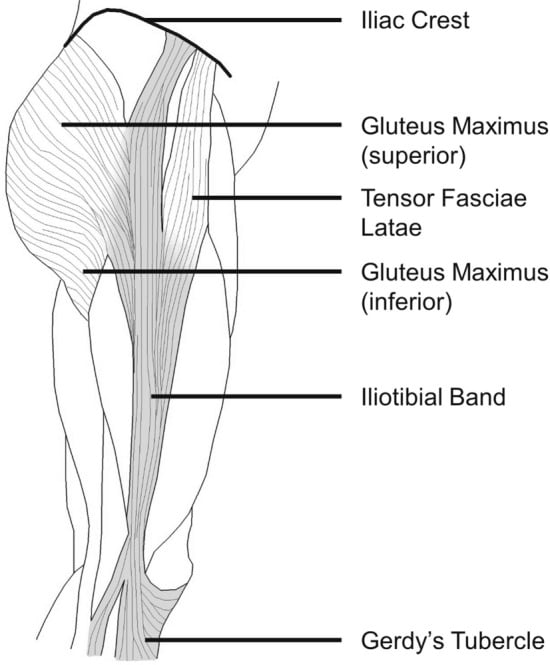
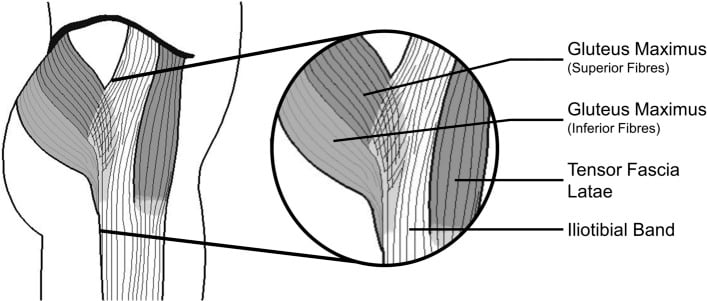
Distally. The band inserts on Gerdy's tubercle and sends fibres to the lateral patellar retinaculum. At the lateral femoral epicondyle it has no tendon-like insertion, but it is firmly tethered by coarse fibrous bands to the supracondylar femur, and this is the compression zone.
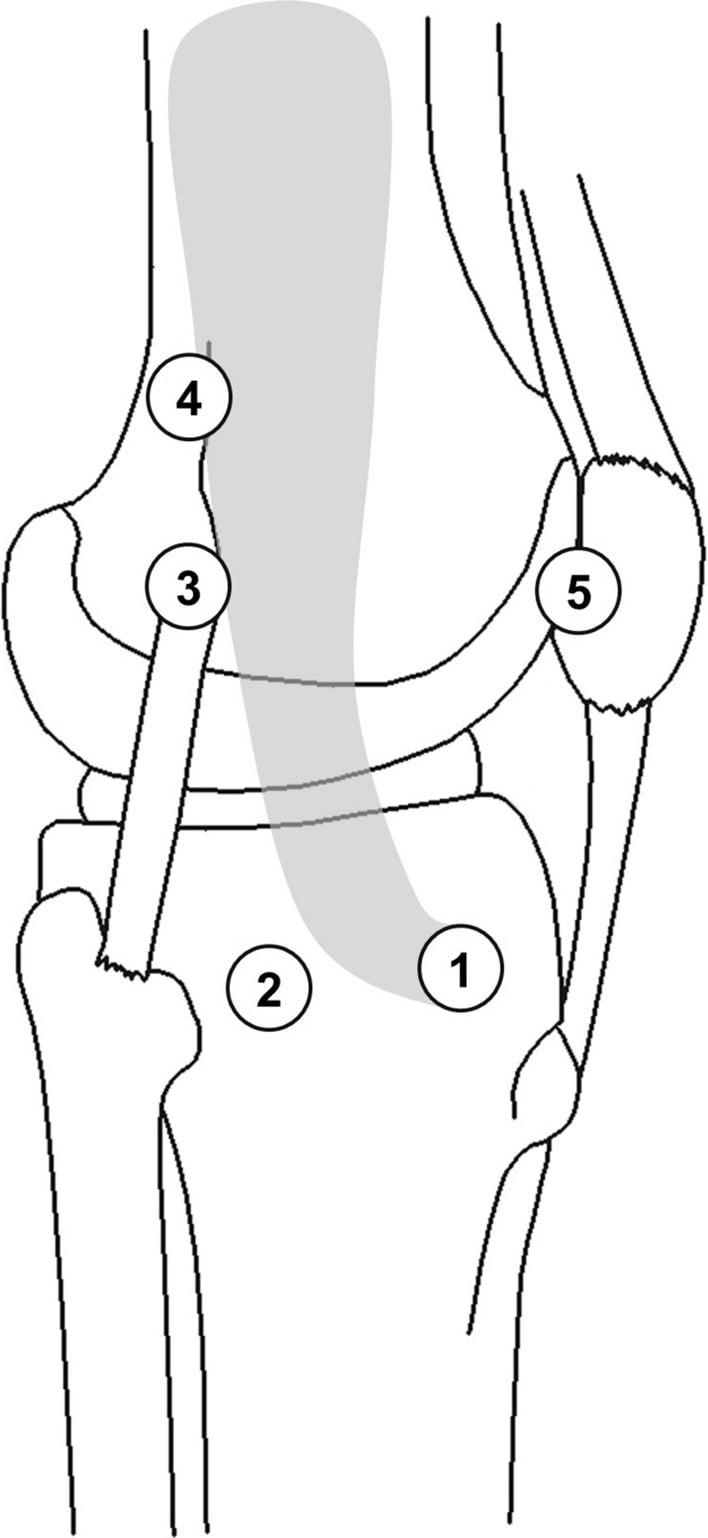
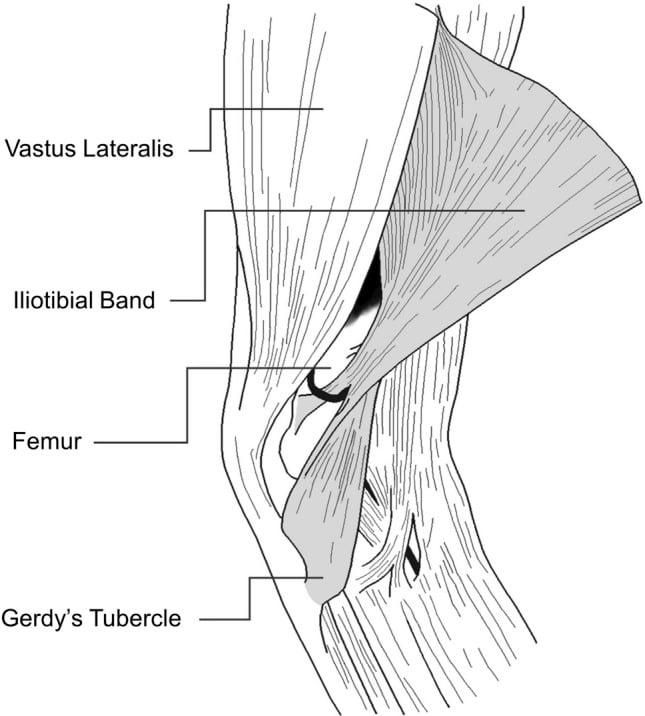
Why it cannot be friction. The ITB is a thickened part of the fascia lata, continuous with the intermuscular septum down to the linea aspera. The fibrous bands that anchor it to the supracondylar femur are visible on dissection and on MRI, and they are normal anatomy, not adhesions. A structure tethered at both ends cannot travel forwards and backwards over a bony prominence.
What happens instead. As the knee flexes, load shifts from the anterior to the posterior fibres, which creates a convincing illusion of the band moving. Near 30 degrees of flexion the band is pressed hardest against the epicondyle, compressing the richly innervated and vascularised layer of fat that separates the two. That fat is where MRI signal change appears in symptomatic athletes, and it is why the condition hurts.
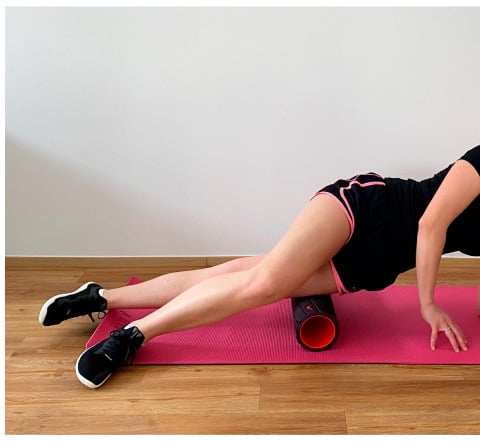
Why the distinction matters. If nothing is rubbing, then "breaking down adhesions", foam-rolling to lengthen a fascia that does not stretch, and releasing a band that is not sliding all lose their rationale. The targets become the load going through the band and the hip and trunk control that governs it.
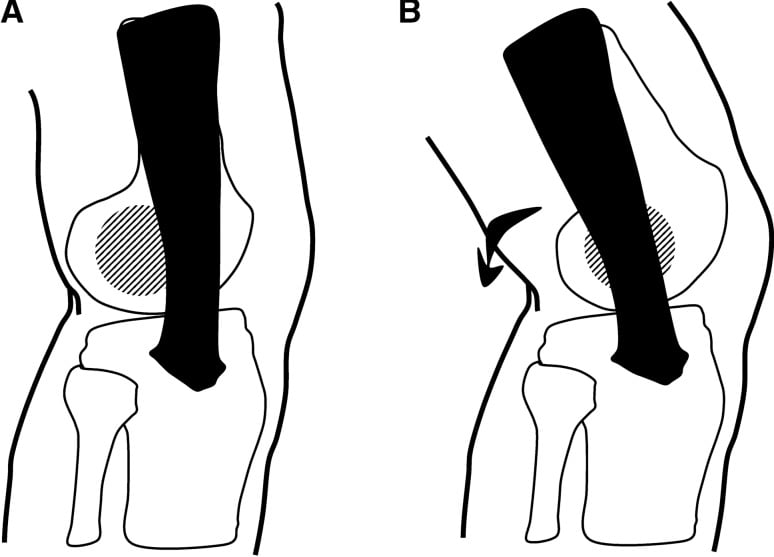
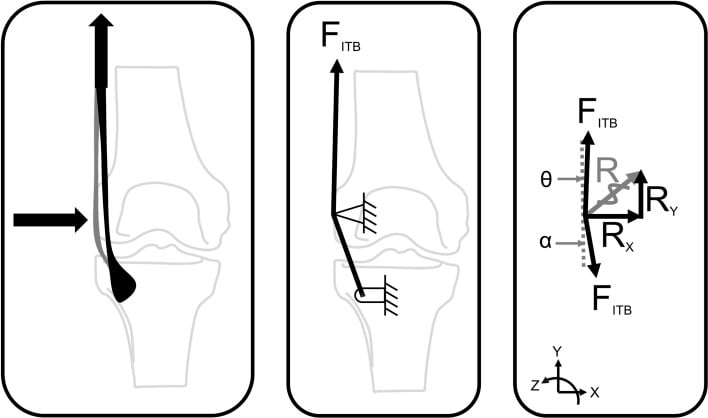
Position through the arc. The traditional description tracks where the band appears to lie as the knee moves. Read the position column as a shift in tension, not travel.
- ITB Position
- Anterior to epicondyle
- Function
- Knee extensor
- Clinical Significance
- Minimal compression; band taut but clear of the epicondyle
- ITB Position
- Appears to move posterior (tension shifts to posterior fibres)
- Function
- Transitioning
- Clinical Significance
- COMPRESSION ZONE - fat beneath the band is squeezed against the epicondyle
- ITB Position
- Posterior to epicondyle
- Function
- Knee flexor
- Clinical Significance
- Compression falls away again as the knee flexes past the zone
During running. It is the number of loading cycles through the vulnerable arc, not any sliding, that accumulates the injury, and the arc is crossed approximately 1,000 times per mile:
- Foot strike: the knee is at approximately 20-30 degrees of flexion and the deep fat is compressed hardest against the epicondyle
- Mid-stance: the knee extends, tension shifts anteriorly and compression falls
- Toe-off: the knee flexes past the zone and compression falls again
The hip abductors. Gluteus medius is the primary hip abductor and prevents contralateral pelvic drop in single-leg stance, the mid-stance of gait. Weakness produces a Trendelenburg gait pattern with increased hip adduction on the stance leg, and hip adduction increases ITB tension over the lateral femoral epicondyle. The proposed cascade runs:
Weak gluteus medius → pelvic drop → increased hip adduction → increased ITB strain → greater compression of the fat beneath the band.
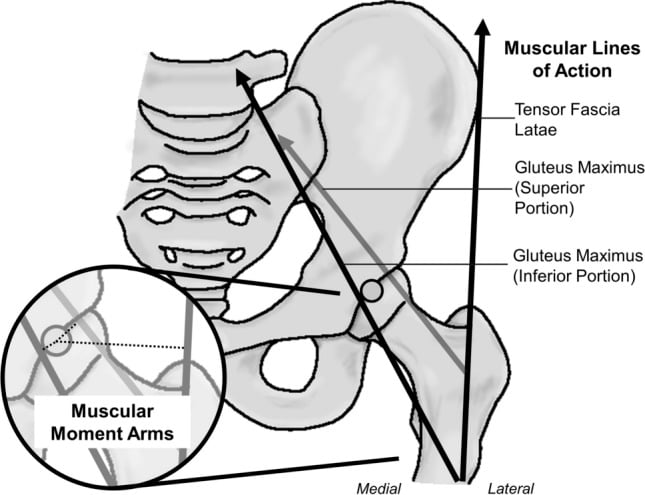
How good is the evidence. Weak hip abductors are the most cited mechanism, and the cascade is coherent and standard, but it is not yet proven causal. Fredericson found significantly weaker abductors in the injured limb of 24 runners; a systematic review of the whole literature judged the evidence that abductor weakness has a major causal role limited and conflicting. Weakness measured in a painful limb may equally be the consequence of pain, so assess hip strength but treat it as one modifiable factor, not the diagnosis.
Downhill running. Two linked reasons. Running downhill the knee is less flexed at foot strike, so it sits closer to the roughly 30 degree impingement zone at the moment of peak load, and the ITB is compressed against the epicondyle exactly when the braking load is highest. Downhill running also greatly increases the eccentric braking load and stance time, so each stride transmits more force through the ITB. Noble's original series noted the pain is "more severe running downhill".
Slow running and overstriding. Counter-intuitively, ITB syndrome is often worse at slower speeds and with overstriding. A slower cadence with a longer stride keeps the knee near the impingement angle for longer during stance, whereas faster running flexes the knee past the compression zone more quickly.
Camber and track direction. Running the same side of a cambered road, or always the same direction on a track, loads the down-slope limb into relative hip adduction, mimicking pelvic drop and raising ITB strain.
Other risk factors. Beyond downhill running, speed and camber, look for:
- Training error: increased mileage or intensity, uphill and downhill training, new shoes or surfaces
- Genu varum, and excessive foot pronation with tibial internal rotation, both of which increase the tension and compression of the ITB over the lateral epicondyle
- A narrow running base or crossover gait, which increases hip adduction and ITB strain
- A tight ITB, with a positive Ober test
- Cycling, including as cross-training
Classification Systems
ITB syndrome is typically classified by symptom severity and functional limitation.
- Symptoms
- Pain after running, resolves within minutes
- Functional Impact
- No limitation of distance or speed
- Treatment Approach
- Activity modification, ITB stretching, continue running
- Symptoms
- Pain during running but tolerable
- Functional Impact
- Can complete runs but painful
- Treatment Approach
- Structured rehabilitation, reduce mileage/intensity
- Symptoms
- Pain limits running distance
- Functional Impact
- Cannot complete planned distance
- Treatment Approach
- Cease running, intensive physiotherapy
- Symptoms
- Pain with daily activities (stairs, sitting)
- Functional Impact
- Unable to run, affects quality of life
- Treatment Approach
- Complete rest, consider cortisone injection
Catching ITB syndrome at Stage 1 and implementing proper rehabilitation prevents progression to chronic, disabling pain. Most runners who progress to Stage 3-4 either ignored early symptoms or attempted to "run through" the pain.
Clinical Presentation and Assessment
The pain. Lateral knee pain 2-3 cm proximal to the joint line, sharp, burning or aching, coming on gradually over days to weeks. It arises during running, especially on hills or turns, and is relieved by rest and by stopping running.
The running history. Look for the risk factors above: recent changes in mileage, intensity or hills; the surface, including a track run always in the same direction, camber and downhill; new or worn-out shoes; and cycling as cross-training. Ask about previous ITB problems, because recurrence is common if rehabilitation was incomplete.
Red flags. These questions exclude other pathology:
- Locking or catching (meniscal tear)
- Giving way (ligament injury)
- Night pain (tumour, infection)
- Systemic symptoms (inflammatory arthropathy)
Inspection and palpation. Watch the gait for a Trendelenburg pattern, in which the hip drops on the opposite side during stance, and look for genu varum and, in chronic cases, gluteus medius wasting. The point tenderness lies 2 cm proximal to the lateral femoral epicondyle. Palpate the whole band from the iliac crest to Gerdy's tubercle for tightness, and the lateral joint line to make sure the tenderness is not meniscal.
Range of motion and strength. Knee range is usually full, though pain may limit terminal extension. Assess the hip for limited adduction (tight ITB). Test hip abduction strength by gluteus medius manual muscle testing, often 3-4/5, and examine the ACL, PCL and collateral ligaments to exclude instability.
Special tests. The Noble compression test, the Ober test and the Trendelenburg test follow, with the single-leg squat as a biomechanical assessment.
Noble compression test. The most useful bedside test, because pain at the 30-degree position reproduces the compression that occurs during running:
- Patient supine or standing
- Flex the knee to 90 degrees
- Press with the thumb 2 cm proximal to the lateral femoral epicondyle
- While maintaining pressure, passively extend the knee
- Positive: pain at approximately 30 degrees of flexion
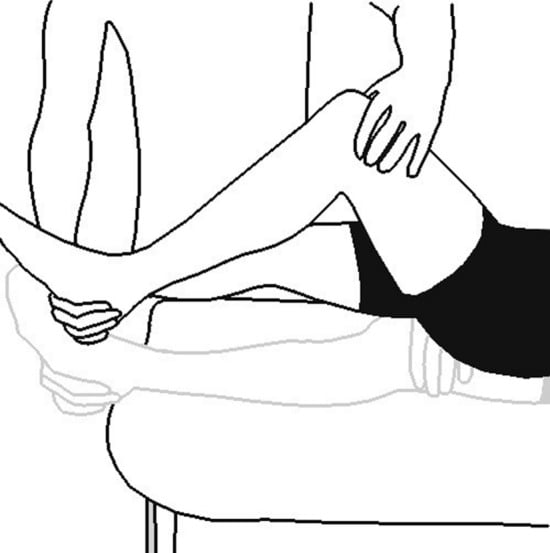
No sensitivity or specificity figure should be quoted for the Noble test: the systematic review of this condition found that the clinical tests in routine use have not been validated in this patient group. Treat a positive test as strong support in the right clinical context, not as confirmation, and still exclude the lateral-knee differential.
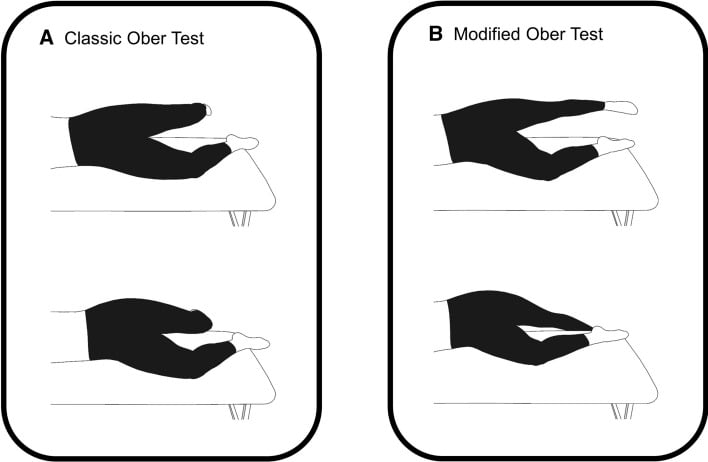
Ober test. A test of ITB tightness. The classic test keeps the upper knee flexed to 90 degrees; the modified test keeps it extended. In both, the examiner stabilises the pelvis, extends and abducts the hip, then allows adduction.
- Patient side-lying, affected side up
- Flex the lower knee to 90 degrees for stability
- Flex the upper hip and knee to 90 degrees
- Extend the upper hip, bringing the leg in line with the trunk
- Abduct the upper hip, then release and let gravity adduct it
- Positive: the leg remains abducted and does not fall to the table, indicating ITB contracture
A positive Ober test indicates restricted adduction from ITB tightness but is not specific for ITB syndrome, since many asymptomatic individuals test positive.
Trendelenburg test. The patient stands on the affected leg while you watch the pelvis from behind; a positive test is a contralateral pelvic drop, because a weak gluteus medius cannot stabilise the pelvis. It is often positive in ITB syndrome. It identifies the hip abductor weakness that is the most cited driver of the condition, and that weakness must be addressed in rehabilitation.
The differential. Not all lateral knee pain is ITB syndrome.
- Onset / Mechanism
- Gradual, overuse (training error, downhill/track)
- Pain Location
- 2-3cm proximal to lateral joint line over epicondyle
- Discriminating Features
- Positive Noble test at 30 degrees, hip abductor weakness, no effusion
- Onset / Mechanism
- Acute twisting, or degenerative in older patients
- Pain Location
- Lateral joint line
- Discriminating Features
- Joint-line tenderness, catching/locking, positive McMurray/Thessaly, effusion
- Onset / Mechanism
- Overuse, downhill running
- Pain Location
- Posterolateral corner
- Discriminating Features
- Tender at popliteus origin, pain on resisted tibial internal rotation
- Onset / Mechanism
- Acute varus/contact injury
- Pain Location
- Lateral, along LCL course
- Discriminating Features
- Pain/laxity on varus stress at 30 degrees, often acute
- Onset / Mechanism
- Acute or insidious
- Pain Location
- Over fibular head (more posterior/distal)
- Discriminating Features
- Tenderness and translation at PTFJ, fibular head mobility
- Onset / Mechanism
- Chronic, older patient, varus alignment
- Pain Location
- Lateral joint line and compartment
- Discriminating Features
- Crepitus, radiographic joint space loss, morning stiffness
- Onset / Mechanism
- Insidious or post-injury
- Pain Location
- Fibular neck radiating to leg
- Discriminating Features
- Paraesthesia/foot drop, positive Tinel at fibular neck
Investigations
A clinical diagnosis. ITB syndrome is diagnosed from the history (a runner with lateral knee pain), the examination (a positive Noble test) and the biomechanical assessment (hip weakness). Imaging is not required for a typical presentation with a positive Noble test and a clear running history, and should not be ordered routinely. Image when there are:
- Atypical features (young patient, no running history)
- Failed conservative treatment, to exclude other pathology
- Severe symptoms (Stage 4)
- Medicolegal or compensation issues
Plain radiographs. AP and lateral views of the knee exclude bony pathology: lateral compartment osteoarthritis, osteochondral lesions and avulsion fractures. They are usually normal in ITB syndrome and may show non-specific soft-tissue swelling lateral to the knee.
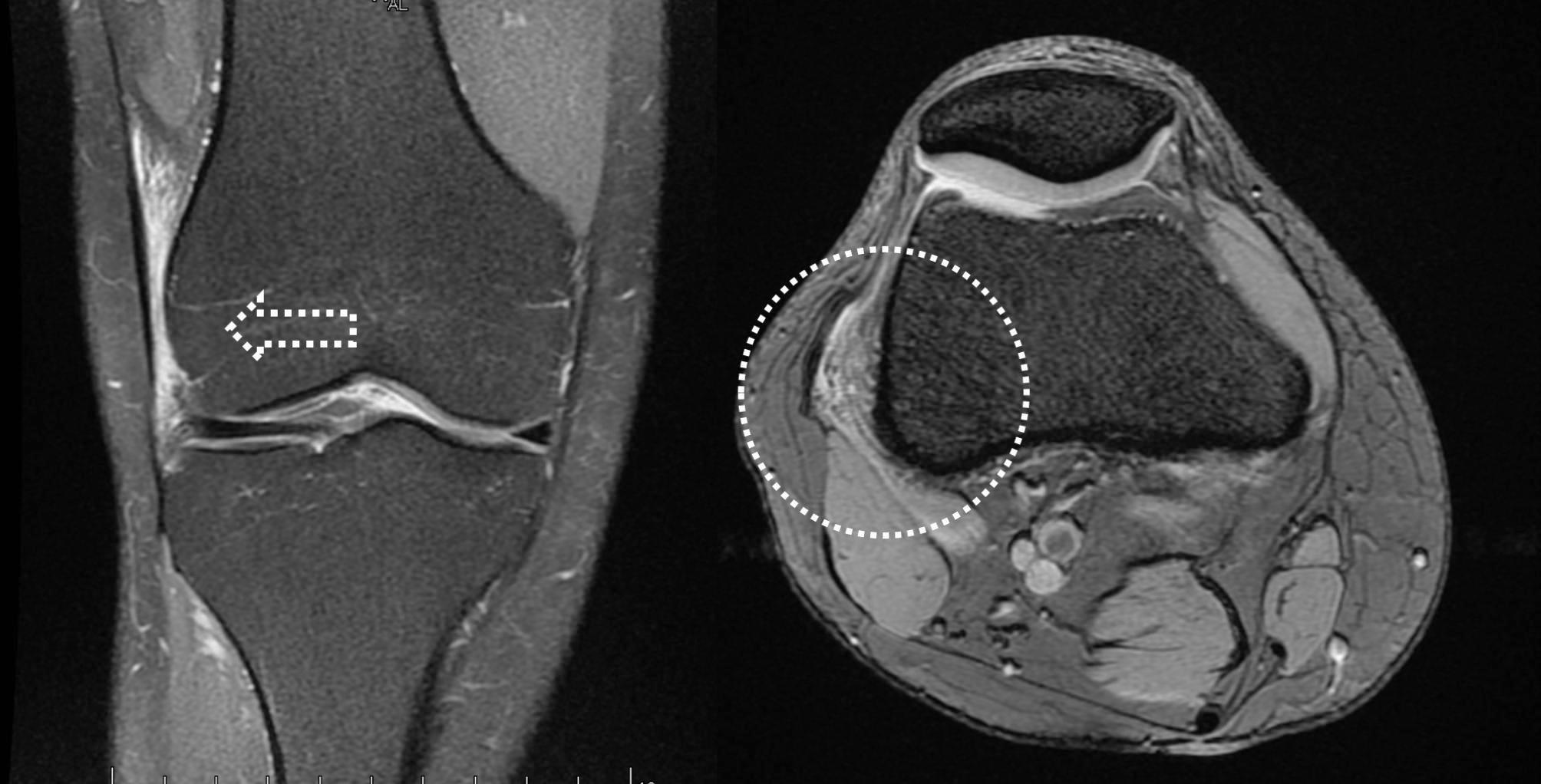
MRI is the gold standard for soft-tissue assessment. The typical findings in ITB syndrome are:
- T2 hyperintensity (fluid signal) deep to the ITB at the lateral femoral epicondyle
- Thickening of the ITB over the epicondyle
- Periosteal oedema at the lateral epicondyle (bone stress)
- Bursal fluid, if a bursa is present
It also excludes the mimics: lateral meniscal tears, lateral collateral ligament injury, popliteus tendinopathy, an osteochondral lesion of the lateral femoral condyle and proximal tibiofibular joint pathology.
Ultrasound is rarely used. It allows dynamic assessment, showing thickening of the ITB and fluid deep to it, and can demonstrate the ITB snapping over the epicondyle with knee flexion and extension. It is operator-dependent, and MRI is preferred if imaging is needed.
Management Algorithm
Conservative care is the standard. Fewer than 10% of cases come to surgery, and surgery should only be considered after 6-12 months of failed comprehensive conservative treatment. Avoiding surgery is not the same as prompt resolution: in Noble's original series only 30 of 73 runners settled on the first round of treatment, so counsel patients for a course measured in months. The key is addressing the biomechanics, not just the symptoms.
The goal is to reduce inflammation and keep the patient running with modifications.
Treatment Steps
- Reduce running mileage by 25-50%
- Avoid provocative activities: downhill running, the track run in the same direction, steep hills
- Cross-train with swimming or pool running, which maintain fitness without impact
- Change surface: treadmill (flat), grass, trails (varied terrain)
- Ice for 15-20 minutes after running, 3-4 times daily
- NSAIDs: ibuprofen 400mg TDS or naproxen 500mg BD for 1-2 weeks
- Topical NSAIDs: diclofenac gel applied to the lateral knee
- Standing cross-leg stretch: cross the affected leg behind and lean away from the affected side
- Side-lying stretch: bottom leg straight, top leg crossed over, rotate the trunk
- Foam rolling for 30 seconds along the ITB (may be very painful initially)
- Hold stretches for 30-60 seconds, repeated 3-5 times daily
- Side-lying hip abduction, 3 sets of 15
- Clamshells with a resistance band, 3 sets of 15
- Bridge progressing to single-leg bridge, 3 sets of 10
- Single-leg squat, progressing difficulty as tolerated
Eccentric strengthening of hip abductors is more effective than concentric. Slow lowering phase (3-5 seconds) during exercises creates greater strength gains.
- Gait analysis by a running store or sports physiotherapist
- Footwear: replace shoes if over 500-800km
- Orthotics if there is significant pronation or supination
- Running form: increase cadence (reduce stride length), avoid crossover gait
Progress to the graded return to running once its prerequisites are met (Return to Running Protocol tab).
Gait retraining. Gait retraining aims to reduce peak stance-phase hip adduction and contralateral pelvic drop, the mechanics that hip-abductor weakness produces and at which ITB load peaks. Runners with ITB syndrome who fatigue self-reduce hip adduction to offload the band (Brown). The evidence is mostly small biomechanical studies, so gait retraining is an adjunct to hip strengthening and load management, not a replacement, and each change must be practised long enough to become automatic.
- Raise cadence by about 5-10% at the same speed. This shortens the stride, reduces the vertical loading rate and typically lowers peak hip adduction and knee-joint load, and it is one of the best-supported single changes.
- Widen the step. A narrow base or crossover gait (the foot landing across the midline) increases hip adduction and ITB strain; cueing a slightly wider step width reduces it.
- Cue the pelvis and trunk. "Run tall, don't let the hip drop", or a small contralateral trunk lean, reduces pelvic drop and hip adduction. Mirror or real-time (video or wearable) feedback on hip adduction and pelvic drop makes the change stick.
- Protect the new pattern. Avoid downhill and cambered surfaces early and progress load by the 10% rule while capacity rebuilds.
Surgical Management (Rarely Indicated)
Surgery for ITB syndrome is considered only after:
- 6-12 months of failed comprehensive conservative treatment
- Confirmed compliance with physiotherapy and activity modification
- Exclusion of other pathology (MRI scan)
- A documented attempt at biomechanical correction
- Impact on quality of life (unable to work, exercise or manage daily activities)
The options. Three procedures are described. The rationale for bursectomy is weakened by the absence of a bursa between the ITB and the lateral femoral epicondyle in every cadaver in Muhle's series.
- Technique
- Z-plasty incision in ITB at the compression zone to lengthen
- Rationale
- Reduces tension over lateral epicondyle
- Evidence
- Most commonly described technique; the evidence is a single small series (see Outcomes)
- Technique
- Excision of posterior 2cm of ITB over epicondyle ± bursa
- Rationale
- Removes impinging tissue
- Evidence
- Good results but some reports of weakness
- Technique
- Remove ellipse of ITB (4×2cm) over the compression zone
- Rationale
- Decompresses the fat beneath the band
- Evidence
- Variable results, theoretical weakness concern
Z-lengthening, step by step.
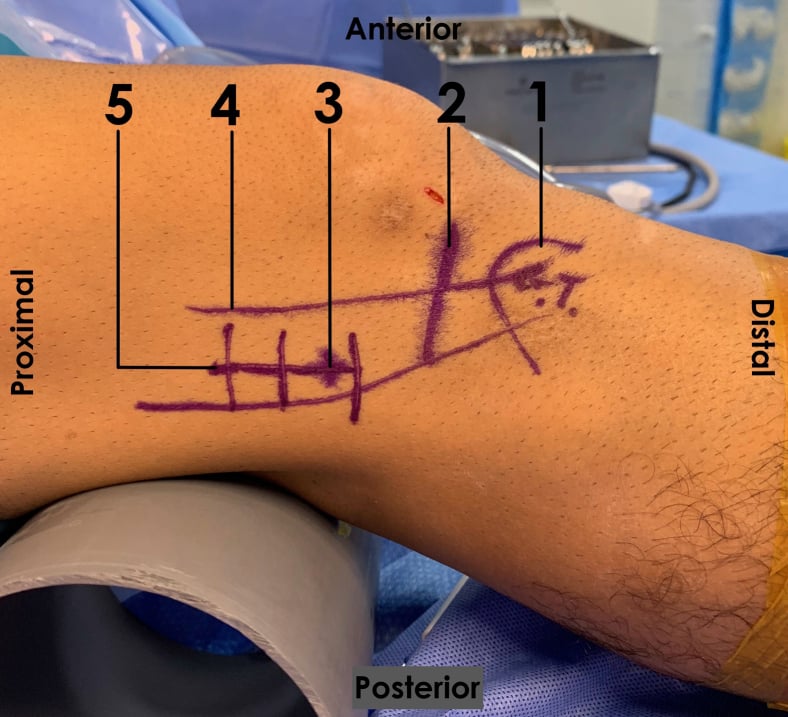
- Position and mark. Supine, with the affected leg free-draped and the knee flexed to 30 degrees; a tourniquet is optional, used if required for a clear field. Mark Gerdy's tubercle, the joint line, the lateral femoral epicondyle and the proximal course of the ITB.
- Expose and protect. Make a 4-cm longitudinal lateral incision along the axis of the ITB, beginning approximately 2 cm proximal to the joint line, and expose and mobilise the band. Release pathological adhesions and excise inflammatory bursal tissue only when present. Reflect the ITB anteriorly, then identify and protect the lateral collateral ligament beneath it before cutting the band; the ligament lies close to the lateral epicondyle and is the principal structure at risk during the distal release.
- Design and divide. Mark a 2-cm central longitudinal line along the ITB axis, centred on the lateral femoral epicondyle. Extend its proximal end to the posterior edge and its distal end to the anterior edge to complete the Z, place stay sutures in both arms before mobilisation, and cut the Z while protecting the capsule and lateral collateral ligament deep to the band.
- Lengthen, repair and close. Advance the two arms and repair them end to end to gain approximately 2 cm of length, using simple number 2 high-strength nonabsorbable sutures, reinforced with marginal coronal absorbable sutures without overtensioning the band. Test knee stability and band tension through motion, then close in layers.
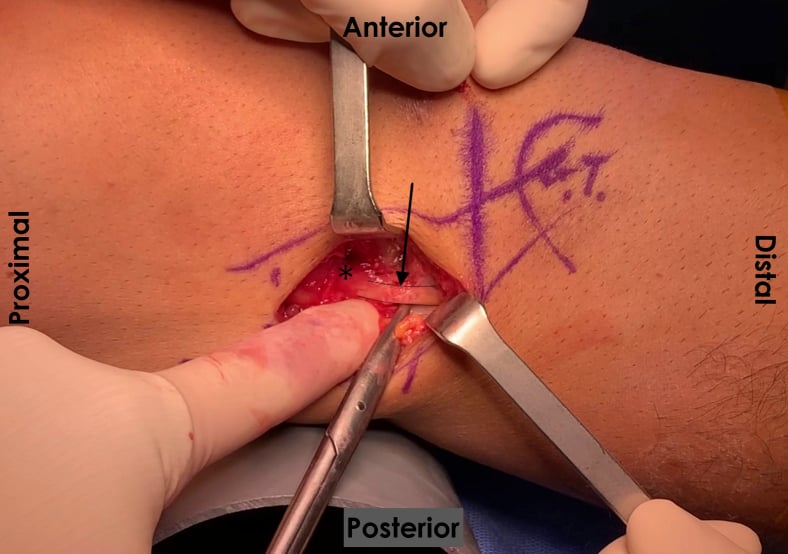
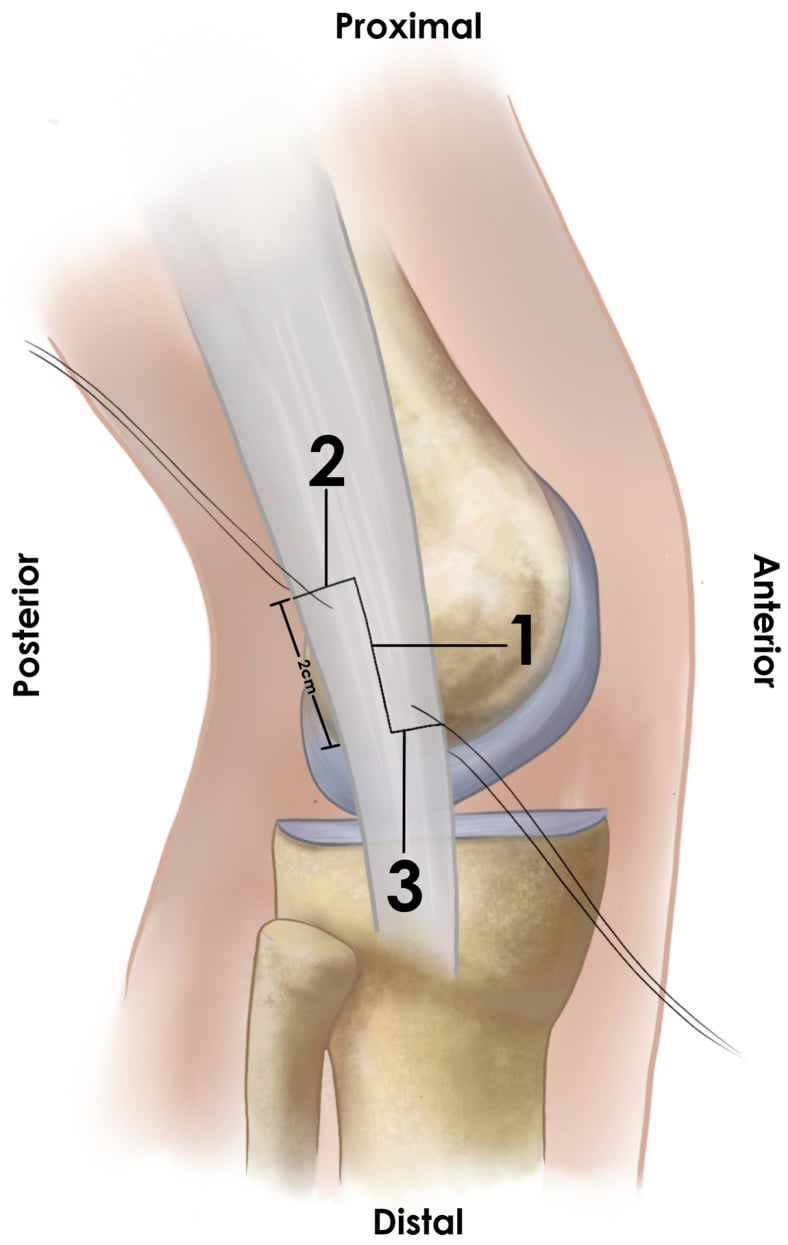
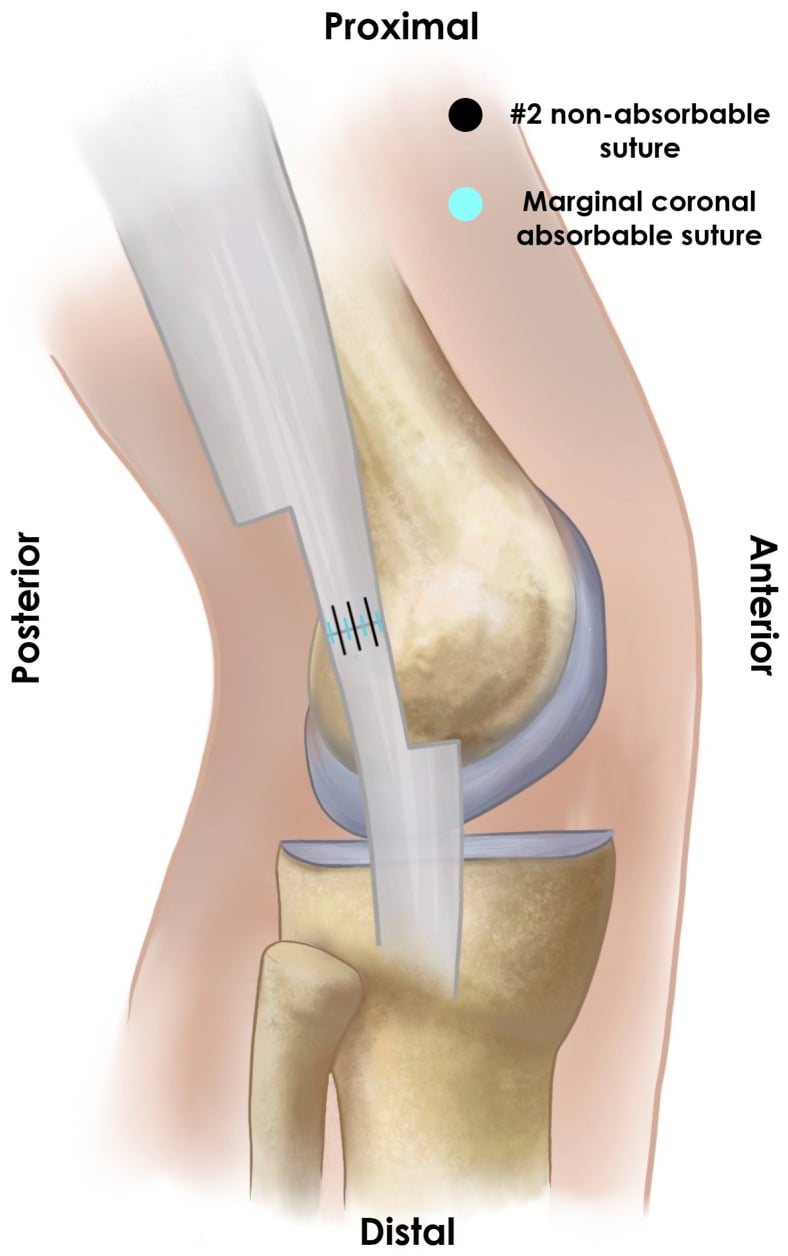
Arthroscopic adhesion release. A motorised shaver releases pathological adhesions in the plane between the ITB and the lateral femoral condyle. The instrument stays superficial to the capsule and confined to the documented compression zone.
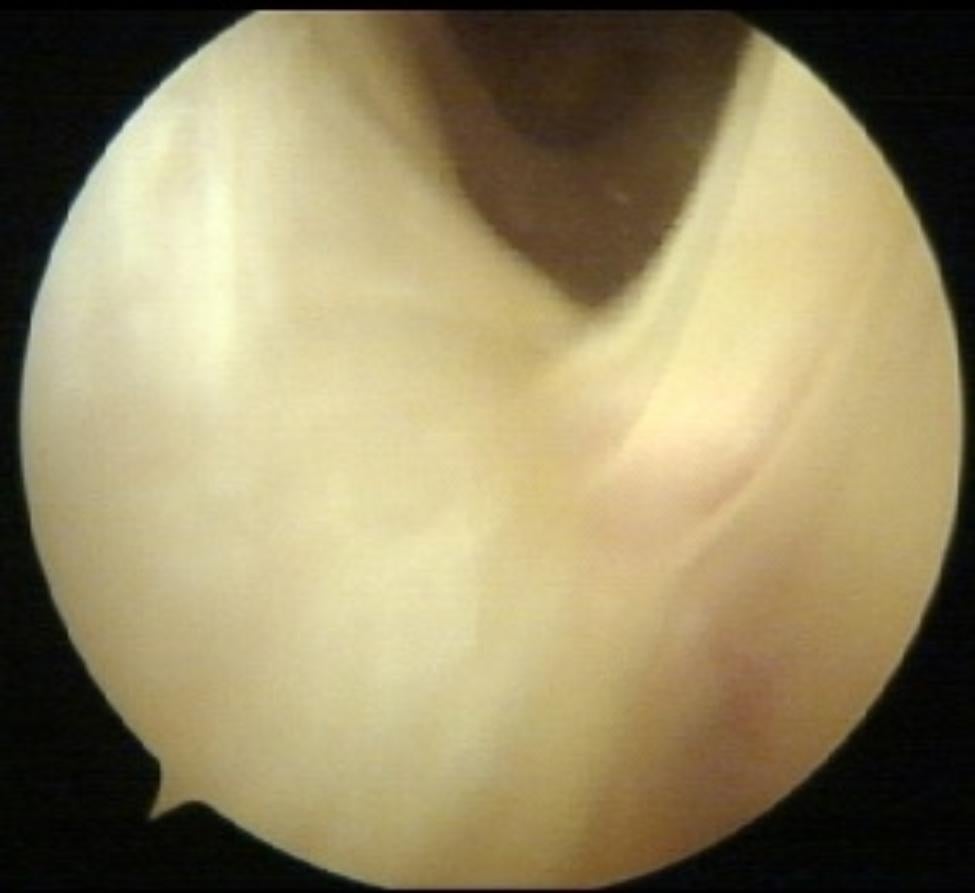
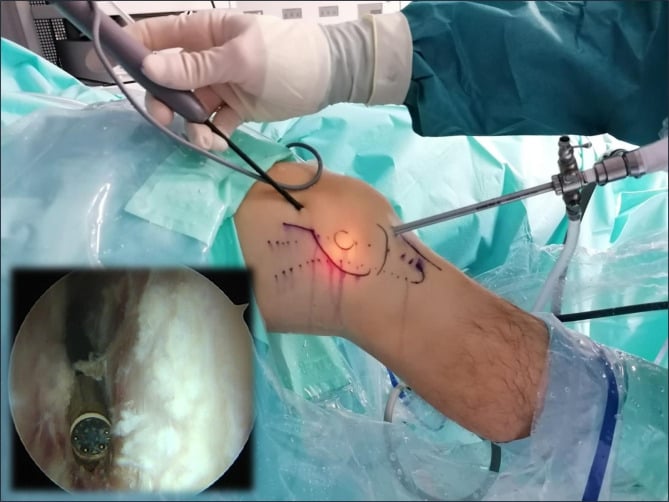
Surgery addresses the local anatomical issue (tight ITB) but does not correct hip weakness or running biomechanics. Post-surgical rehabilitation MUST include the same hip strengthening and gait retraining as conservative care, or symptoms recur.
Complications and Management
Conservative Treatment Complications
- Incidence
- Common if rehab incomplete (not reliably quantified)
- Prevention/Management
- Complete 6-8 week return protocol, maintain hip strengthening
- Incidence
- 5-10%
- Prevention/Management
- Ensure compliance, exclude other pathology (MRI), consider surgery
- Incidence
- Common
- Prevention/Management
- Cross-training (swimming, cycling), maintain cardiovascular fitness
Surgical Complications
- Incidence
- 10-20%
- Prevention/Management
- Comprehensive post-op rehab, biomechanical correction
- Incidence
- Less than 5%
- Prevention/Management
- Sterile technique, prophylactic antibiotics
- Incidence
- Rare (excessive release)
- Prevention/Management
- Conservative Z-lengthening, avoid excessive ITB excision
- Incidence
- Rare (less than 2%)
- Prevention/Management
- Careful dissection, avoid deep dissection near fibular head
Postoperative Care and Rehabilitation
This applies to the few patients who undergo ITB Z-lengthening or release.
Post-Surgical Rehabilitation Protocol
Goals: wound healing, pain control, preventing stiffness.
- Full weight-bearing as tolerated, with crutches for comfort
- Immediate knee range-of-motion exercises to avoid stiffness
- Gentle ankle pumps, quadriceps sets, passive knee flexion and extension
- Paracetamol, NSAIDs, ice and elevation
- Keep the dressing dry; remove sutures at 10-14 days
Goals: full range of motion, the start of strengthening, weaning the crutches.
- Wean crutches as comfortable, usually by week 3-4
- Active and active-assisted knee range of motion, aiming for full range by week 6
- Gentle hip abductor strengthening: side-lying hip abduction (light resistance), clamshells, bridges
- Stationary bike from week 3-4, for range of motion and cardiovascular fitness
- Avoid running, jumping and impact activities
Goals: build strength, prepare for running.
- Intensive hip and knee strengthening: single-leg squats, single-leg deadlifts, step-ups, resistance band work
- Proprioception: single-leg balance, perturbation exercises
- Continue cycling; add the elliptical trainer if pain-free
- Functional testing: pain-free single-leg hop, single-leg squat (10 repetitions)
Once every functional milestone below is met, follow the same 6-8 week graded return protocol as conservative care (Management section, Return to Running tab), starting with walk-run intervals on a flat, soft surface.
Full return to running is expected by 3-6 months after surgery. From then on the lifelong prevention programme applies: hip strengthening, proper running biomechanics, appropriate mileage progression and no training errors.
- Criteria
- Pain-free daily activities 2+ weeks
- Test
- Stairs, prolonged walking, single-leg stance
- Criteria
- Full active knee ROM
- Test
- 0-135 degrees minimum, symmetrical
- Criteria
- Hip abduction 90%+ of opposite
- Test
- Manual muscle testing or dynamometry
- Criteria
- Pain-free single-leg squat (10 reps)
- Test
- Controlled descent, no pain
- Criteria
- Single-leg hop distance 90%+ of opposite
- Test
- Within 10% limb symmetry
Outcomes and Prognosis
Conservative treatment. Recovery averages 4-6 weeks at Stage 1-2 and 8-12 weeks at Stage 3-4; refractory cases are considered for surgery after 6-12 months.
- Unfavourable
- Late presentation (symptoms more than 6 months)
- Unfavourable
- Poor compliance, or continued running despite pain
- Unfavourable
- Persistent hip weakness
- Unfavourable
- Rapid return to high mileage
Surgery. The honest answer is that the evidence is eight patients. Barber's consecutive Z-plasty series followed 8 of 11 to a mean of 6.3 years: all 8 reported complete resolution of pain and return to their preoperative activity level, but the mean Tegner activity score was 4.4, recreational rather than competitive running, and scores ranged as low as Lysholm 57. There is no randomised evidence for surgery in this condition and no comparative series.
Who does well after surgery. Selected patients with:
- A clear mechanical cause (tight ITB on examination), having failed conservative care because of anatomical factors rather than poor compliance
- A failed appropriate conservative trial
- No other knee pathology
- Commitment to postoperative rehabilitation
Why surgery fails. Persistent biomechanical problems (hip weakness not addressed), other unrecognised knee pathology, and inadequate postoperative rehabilitation.
Prevention Strategies
Training. Build mileage gradually by the 10% rule, vary the surface between road, trail, grass and treadmill, and alternate clockwise and anticlockwise on a track. Avoid running the same side of a cambered road, introduce hill training gradually and avoid excessive downhill running.
Strength. Hip abductor strengthening 2-3 times per week is the backbone:
- Gluteus medius: side-lying abduction, clamshells, single-leg work
- Core: plank variations, rotational exercises
- Running-specific: single-leg squats, single-leg deadlifts
Footwear and equipment. Replace shoes every 500-800km (300-500 miles), consider a professional gait assessment at a running store, and use orthotics for biomechanical abnormalities such as pronation or leg-length discrepancy. Cyclists need a proper bike fit, with the right saddle height and cleat position.
Flexibility and recovery. Stretch the ITB daily after running and foam-roll the ITB, quadriceps and hip flexors. Build rest days into the schedule rather than running every day, and reduce training immediately at the first lateral knee discomfort.
After an episode. Secondary prevention means lifelong hip strengthening at least 2 times per week, higher cadence with a shorter stride and no crossover gait, never a rapid increase in mileage or intensity, and modifying training at the first sign of lateral knee pain.
Recurrence is common when runners return to their previous training pattern without changing load or addressing hip and trunk control - but note that no study on this page quantifies it, and the recurrence rates quoted in review articles are not traceable to a cohort. What the evidence does show is that the original series needed repeated treatment in most patients, so counsel that relapse is likely if nothing changes, without attaching a false number. The practical measures are a graded return, the 10% rule, and continued hip strengthening.
Guidelines, Registries & Global Practice
Global Epidemiology
- Figure
- 5-14%
- Source
- van der Worp systematic review (Sports Med 2012)
- Figure
- ~7.9%
- Source
- Kakouris systematic review (J Sport Health Sci 2021)
- Figure
- Yes
- Source
- Multiple series
- Figure
- Cyclists, rowers, military recruits, court-sport athletes
- Source
- Global cohorts
- ITB syndrome is culturally universal - reported wherever distance running, cycling and military training occur. There is no meaningful geographic variation in the underlying biology; differences are in access to gait analysis and rehabilitation rather than disease itself.
Guidelines and Society Positions (Side by Side)
There is no dedicated national-society clinical guideline specific to ITB syndrome (it is a benign overuse condition managed within broader running-injury pathways). The consistent message across consensus statements and major sports-medicine texts is conservative, load- and biomechanics-focused care.
- Emphasis
- Load management, hip strengthening, gait retraining
- Position on Imaging
- Clinical diagnosis; MRI only for atypical or refractory cases
- Position on Surgery
- Reserved for refractory cases after prolonged rehab
- Emphasis
- Relative rest, progressive loading, address training error
- Position on Imaging
- Imaging not routine; ultrasound/MRI selectively
- Position on Surgery
- Rare; small uncontrolled evidence base
- Emphasis
- Training-load monitoring and prevention
- Position on Imaging
- Diagnosis primarily clinical
- Position on Surgery
- Last resort
- Emphasis
- Evidence is low quality; multimodal conservative care
- Position on Imaging
- No high-level data favouring routine imaging
- Position on Surgery
- No RCT evidence for any surgical technique
Registry and Evidence Notes
- No implant or arthroplasty registry applies to ITB syndrome (it is a soft-tissue overuse condition, not an implant procedure). Quality evidence therefore comes from systematic reviews and small RCTs/cohorts, not joint registries.
- The highest-level evidence is conservative-care systematic review data (van der Worp 2012; Ellis 2007), which is uniformly graded as low to moderate quality - a recurring exam point about the weak evidence base.
High- vs Limited-Resource Practice Variation
- Access to 3D gait analysis, video running assessment and sports physiotherapy
- Ultrasound-guided injection and MRI readily available for refractory cases
- Structured return-to-running programs and load-monitoring technology (GPS/wearables)
- Diagnosis remains fully clinical (history plus Noble test) - no imaging needed
- Core treatment is free or low-cost: activity modification, simple hip-abductor exercises, education on training load
- The condition is self-limiting in most, so outcomes remain good without advanced technology
Across every health system, first-line management is identical: reduce load, correct training error, strengthen hip abductors, retrain gait. Imaging and surgery are exceptions, not the rule. This makes ITB syndrome a model "clinical diagnosis, conservative management" topic for exams worldwide.
Controversies and Areas of Uncertainty
The traditional "friction syndrome" model (ITB rubbing back and forth over the lateral femoral epicondyle) has been challenged by anatomical and MRI evidence. Examiners increasingly expect candidates to acknowledge this nuance rather than recite the old friction dogma uncritically.
Cadaveric dissection and MRI (Fairclough 2006) showed the distal ITB is firmly anchored to the supracondylar femur by fibrous strands and is part of the fascia lata - it cannot truly slide antero-posteriorly. The perception of movement is an illusion from shifting tension in anterior and posterior fibres. The lesion is compression of a richly innervated fat pad deep to the ITB, not a true friction bursitis.
Whether friction or compression, the clinical and rehabilitative endpoint is the same: reduce the load transmitted through the ITB at roughly 30 degrees of flexion. This still means addressing hip abductor function, gait mechanics and training load. The terminology debate does not change first-line management.
A discrete "ITB bursa" is frequently absent on cadaveric and MRI study (Muhle 1999; Fairclough 2006). What is often labelled a bursa may be the lateral synovial recess of the knee or oedematous fat. This undermines historical "bursectomy" surgical rationale.
Fredericson (2000) found hip abductor weakness in the injured limb only, raising the question of whether weakness is the cause or a consequence of pain-related inhibition. The 2012 systematic review (van der Worp) concluded the evidence that hip abductor weakness drives ITB syndrome is limited and conflicting. Strengthening still helps, but a single unifying cause is not proven.
- Stretching/foam rolling: widely prescribed but the ITB is largely inextensible fascia; meaningful lengthening is questionable and benefit may relate to local soft-tissue/neural effects rather than true elongation.
- Corticosteroid injection: only short-term benefit demonstrated (Gunter 2004), and repeated injections risk collagen weakening.
- Surgery: all surgical series are small, retrospective and uncontrolled - there is no high-level evidence comparing surgical techniques.
- MRI grading (Fredericson classification): not validated against outcomes and rarely alters management.
MCQ Practice Points
Q: At what angle of knee flexion does ITB friction occur over the lateral femoral epicondyle? A: 30 degrees of flexion. At this angle the ITB sits closest to the lateral femoral epicondyle and compression of the fat beneath it is maximal - which is why the Noble compression test is positive there. Note the band does not slide across the bone; what changes through the arc is the tension distribution between its anterior and posterior fibres.
Q: What is the leading biomechanical explanation for ITB syndrome in runners, and how good is the evidence? A: Hip abductor (gluteus medius) weakness is the most cited mechanism: weak abductors are held to allow contralateral pelvic drop in single-leg stance, increasing stance-leg hip adduction and so the tension - and therefore the compression - at the lateral femoral epicondyle. Say the mechanism, then say what it rests on. It comes from a case series of 24 runners in which the injured limb was significantly weaker than the uninjured limb and than controls; but the injured limb was also the painful one, and pain inhibits abduction torque, so cause and consequence are not separable. The systematic review of the whole literature judged the evidence that abductor weakness plays a major causal role limited and conflicting, and a later kinematic study found that symptomatic runners spontaneously reduce hip adduction when fatigued. The defensible position: hip and trunk control is the most important modifiable factor and the mainstay of rehabilitation, but it is not an established single cause, and training load remains the one variable that reliably provokes the condition.
Q: Describe the Noble compression test and its significance in ITB syndrome. A: Apply thumb pressure 2cm proximal to the lateral femoral epicondyle while passively extending the knee from 90 degrees flexion. Positive test = pain at 30 degrees of flexion. It is the single most useful bedside test because it reproduces the compression at the angle where it occurs - but resist calling it pathognomonic: the systematic review of this condition found that the clinical tests in routine use have not been validated in this patient group, so no sensitivity or specificity figure can honestly be quoted. A positive test in a distance runner with lateral pain 2 cm above the joint line supports the diagnosis; it does not by itself establish it, and the differential (lateral meniscal tear, popliteus tendinopathy, lateral collateral injury, patellofemoral pain) still needs excluding.
Q: What percentage of running injuries are caused by ITB syndrome? A: Between 5 and 14% of running injuries depending on the series, with a pooled prevalence proportion of about 7.9%. That makes it one of the more prevalent running injuries but not the second commonest - patellofemoral pain (16.7%) and medial tibial stress syndrome (9.1%) both rank above it, and it does not feature among the highest-incidence diagnoses at all. What it is unambiguously is the commonest cause of lateral knee pain in runners, particularly distance runners.
Q: What percentage of ITB syndrome cases respond to conservative management? A: More than 90% respond to conservative treatment with activity modification, hip abductor strengthening, and biomechanical correction. Less than 10% require surgical intervention.
Q: What are the indications for surgical management of ITB syndrome? A: Surgery is indicated only after 6-12 months of failed comprehensive conservative treatment including documented physiotherapy compliance, activity modification, biomechanical correction, and consideration of corticosteroid injection. The patient must have significant functional impairment affecting quality of life or career.
Exam Viva Scenarios
Practise clinical reasoning and management decisions out loud
“A 32-year-old female recreational marathon runner presents with 3 weeks of lateral knee pain. She is training for her first marathon and increased her weekly mileage from 40km to 70km over the past month. The pain starts after about 5km of running and worsens on downhill sections. It resolves with rest but returns with the next run. On examination, she has point tenderness 2cm proximal to the lateral femoral epicondyle. Noble compression test is positive at 30 degrees. What is your assessment and management?”
“The examiner asks: Explain the biomechanics of ITB syndrome. Why does friction occur at 30 degrees of flexion? What is the role of hip abductor weakness?”
“A 28-year-old male competitive runner presents after 10 months of ITB syndrome symptoms. He has failed comprehensive conservative treatment including physiotherapy (3 months of hip strengthening documented), activity modification, two corticosteroid injections, and biomechanical assessment with orthotics. MRI shows thickening of the ITB with T2 hyperintensity deep to the band at the lateral epicondyle. He is unable to run more than 2km without severe lateral knee pain and this is affecting his career as a professional athlete. He asks about surgery. How would you manage this?”
“A 45-year-old recreational runner presents with lateral knee pain. She thinks she has ITB syndrome because her friend had it. However, the pain is more localized to the lateral joint line, she describes occasional catching, and there was an acute onset after a twisting injury playing tennis 2 weeks ago. Noble compression test is negative. What is your assessment?”
Key Anatomy
- ITB = fascial band from iliac crest to Gerdy tubercle (lateral tibia)
- Receives 75% fibers from gluteus maximus, 25% from tensor fasciae latae
- Compression zone = 2cm proximal to lateral femoral epicondyle
- At 30° flexion the band lies closest to the epicondyle (compression peaks)
- No tendon insertion at the epicondyle, but tethered there - the band does not glide
Clinical Diagnosis
- 5-14% of running injuries; pooled prevalence ~7.9%, behind patellofemoral pain and medial tibial stress syndrome
- Lateral knee pain 2cm proximal to joint line, worse during running
- Noble test: pain at 30° with compression - supportive, not validated as diagnostic
- Ober test: ITB tightness (hip abduction contracture)
- Trendelenburg test: hip abductor weakness (primary cause)
Biomechanical Cascade
- Gluteus medius weakness → pelvic drop → hip adduction
- Hip adduction → increased ITB tension → compression at epicondyle
- 1,000 foot strikes per mile = 1,000 compression cycles
- Risk factors: training error, downhill running, genu varum, leg length discrepancy
Conservative Treatment (90% Success)
- Activity modification: reduce mileage 50%, avoid downhill/track
- Hip abductor strengthening: gluteus medius exercises (cornerstone)
- ITB stretching and foam rolling
- NSAIDs for 1-2 weeks, ice after running
- Return to running: graded 6-8 week protocol, 10% rule
- Cortisone injection: short-term benefit (4-8 weeks) to facilitate rehab
Surgical Management (Less Than 10%)
- Indications: failed 6-12 months comprehensive conservative care
- ITB Z-lengthening preferred technique
- Evidence base: single series, 8 of 11 followed to mean 6.3 years, all reporting resolution
- Recovery: 3-6 months to return to competitive running
- Post-op rehab MUST include hip strengthening (surgery doesn't fix biomechanics)
Key Numbers
- 30° = angle of peak compression
- 2cm = proximal to lateral femoral epicondyle (compression site)
- 5-14% = share of running injuries (pooled prevalence ~8%)
- Under 10% = proportion coming to surgery
- 10% rule = maximum weekly mileage increase
- Recurrence: common with incomplete rehab, not reliably quantified
Evidence Base and Key Studies
Noble. Iliotibial Band Friction Syndrome in Runners
- Classic descriptive series of 100 consecutive knees in long-distance runners (age 19-48, mean 31)
- Pain over the lateral femoral epicondyle, worse running downhill and with excessive striding
- On initial regimen (single steroid injection plus training reduction), 30 of 73 followed-up resolved; 21 needed a second and 8 a third injection
- 14 underwent total rest for 4-6 weeks; only 5 ultimately required surgery
Fredericson et al. Hip Abductor Weakness in Distance Runners with ITB Syndrome
- Case series: 24 distance runners with ITB syndrome vs 30 healthy distance-runner controls
- Injured limb had significantly weaker hip abductors than the uninjured limb and controls (eg injured females 7.82 vs 9.82 %BWh; p less than 0.05)
- After a 6-week gluteus medius strengthening program, abductor torque rose 34.9% (females) and 51.4% (males)
- 22 of 24 became pain-free and returned to running, with no recurrence at 6 months
Gunter & Schwellnus. Local Corticosteroid Injection in ITB Friction Syndrome - RCT
- Randomised, placebo-controlled trial in 18 runners with recent-onset (under 2 weeks) grade 2+ ITB syndrome
- Methylprednisolone acetate 40mg plus local anaesthetic versus local anaesthetic alone
- The day 0 to day 7 comparison did not reach significance (p = 0.07); the significant difference was between day 7 and day 14 (p = 0.01)
- Benefit was confined to the early treatment window (first two weeks)
Muhle et al. ITB Friction Syndrome - MRI and Cadaveric Arthrography
- 17 MRI studies in 16 patients plus MR arthrography of 6 cadaveric knees
- Signal abnormality / fluid lay in a compartment-like space bounded laterally by the iliotibial tract and medially by the epicondyle and capsule
- No primary bursa was found between the ITB and lateral femoral epicondyle in any cadaver
- No interference of the lateral synovial recess with the epicondyle at 0, 30 or 60 degrees
Fairclough et al. Functional Anatomy of the ITB - Friction or Compression?
- Gross and microscopic dissection of 15 cadavers plus MRI of 6 volunteers and 2 acute ITB syndrome patients
- Distal ITB is anchored to the femur by fibrous strands and is part of the fascia lata - it cannot roll antero-posteriorly over the epicondyle
- No bursa identified; a richly innervated, vascularised fat layer lies deep to the tract
- MRI signal change in patients was located in this deep fat, with the ITB compressed at ~30 degrees flexion
Fairclough et al. Is ITB Syndrome Really a Friction Syndrome?
- Critical anatomical review challenging the friction-syndrome paradigm
- ITB is a thickened part of the fascia lata, tethered to the linea aspera and supracondylar femur - not a discrete sliding band
- Apparent movement over the epicondyle is an illusion from changing anterior/posterior fibre tension
- Proposes compression of vascularised fat and emphasises impaired hip muscle function as the key driver
van der Worp et al. Iliotibial Band Syndrome in Runners - Systematic Review
- Systematic review of aetiology, diagnosis and treatment of ITB syndrome in adult runners
- Estimated incidence of 5-14% of running injuries; the commonest lateral knee injury in runners
- Evidence that hip abductor weakness has a major causal role was judged limited and conflicting
- Hip/knee coordination and running style emerged as key, but overall methodological quality was poor
Kakouris et al. Running-Related Musculoskeletal Injuries - Systematic Review
- Systematic review of running-related injury incidence and prevalence by site and pathology
- Overall injury prevalence 44.6% of runners; the knee was the most frequently affected region
- ITB syndrome had a prevalence proportion of 7.9%, among the highest of named pathologies
- Patellofemoral pain (16.7%) was the single most prevalent specific diagnosis
Brown et al. Lower-Limb Kinematics and Fatigue in Female Runners with ITB Syndrome
- 12 symptomatic female ITB syndrome runners vs 20 uninjured controls, run-to-fatigue protocol
- Fatigue reduced peak hip adduction in injured runners, suggesting they self-modify gait to offload the ITB
- Hip abductor/external-rotator moments and frontal-sagittal coupling were not differentially affected by fatigue
- The authors speculate that reducing hip adduction may reduce ITB strain and pain - they did not test it
Barber et al. Z-plasty Lengthening for Iliotibial Band Friction Syndrome
- Consecutive series of 11 patients undergoing ITB Z-plasty after a mean 6.9 months of failed non-operative treatment; 8 were evaluated at a mean of 75.6 months (range 59-97)
- All 8 reported complete resolution of lateral knee pain and full return to their preoperative activity level, sustained to eight years
- Mean Lysholm 88.6 (range 57-100), Cincinnati 82.9 (range 55-95), Tegner activity 4.4 (range 2-7)
- No adverse events occurred during surgery