Circular Frame | Tensioned Wires | Ring Fixation
- Wire tension: aim near 1000N within the quoted 90-130kg (900-1300N) range. Frame stiffness follows a peaked curve, so tighter is not stiffer past the optimum
- Wire crossing angle: 90 degrees ideal, minimum 60 degrees
- Safe zones: Wire placement avoiding neurovascular structures
- Ring sizing: 2 finger breadths clearance from skin circumferentially
- Stability: 3-4 wires per ring minimum, half-pins add significant rigidity
- “Tensioned wires behave like guitar strings - deflection proportional to load
- “Olive wires provide compression/distraction and prevent translation
- “Half-pins cannot be tensioned but provide excellent rigidity
- “Ilizarov designed the apparatus in Kurgan, Siberia in 1950s
Overview and Epidemiology
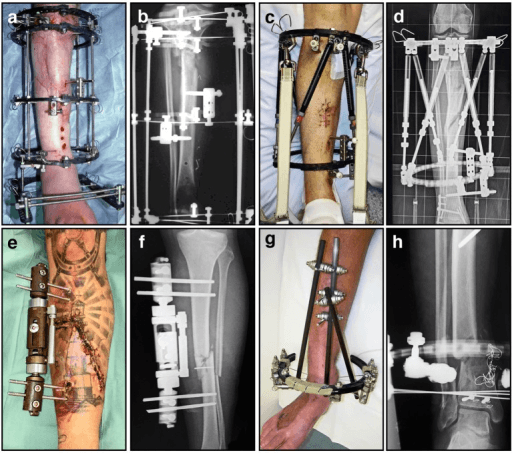
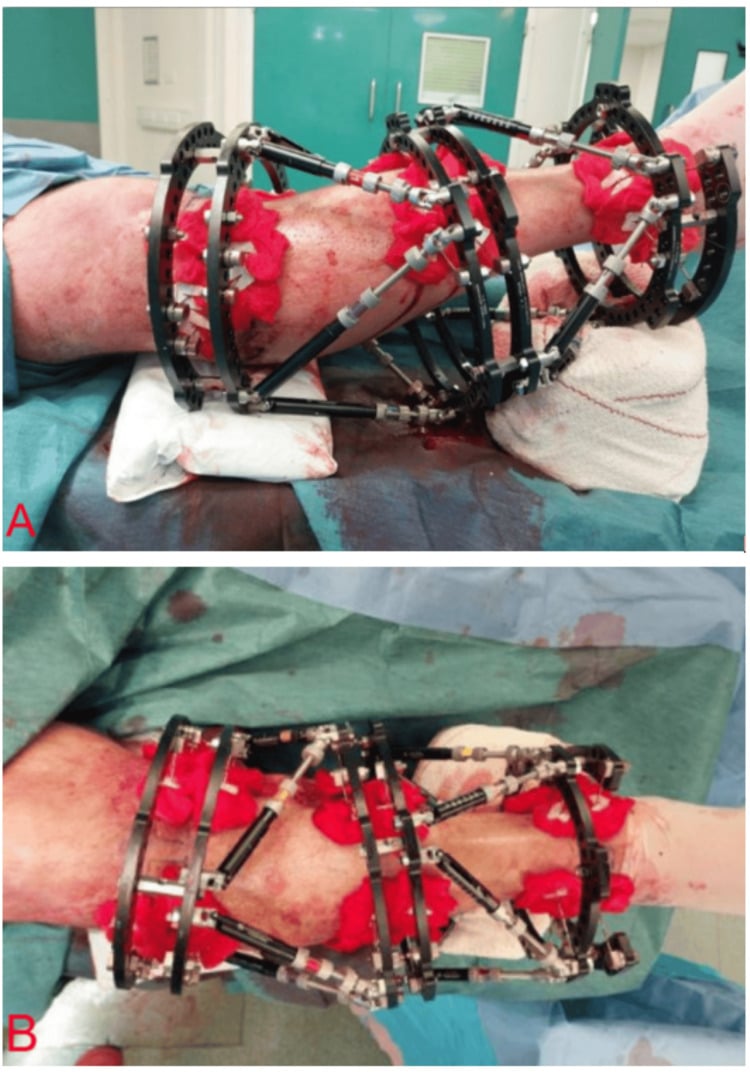
The Ilizarov external fixator is a circular frame: rings around the limb, held to the bone by fine wires under tension. Gavriil Ilizarov developed it in Kurgan, Siberia, from the 1950s, and it changed the treatment of complex fractures, nonunions, deformities and limb length discrepancy.
History. Ilizarov built the frame while treating veterans of the Second World War with osteomyelitis and nonunions, in a remote region with few resources. His principles of distraction osteogenesis and the "tension-stress effect" were unknown in the West until Italian surgeons visited Kurgan in the 1980s.
What it is used for. The frame is used for:
- Limb lengthening, and limb length discrepancy combined with deformity
- Deformity correction, including multiplanar deformity
- Complex fracture stabilisation, including open fractures with soft-tissue compromise
- Nonunion, including infected nonunion, where the infection can be treated while the bone is stabilised
- Bone transport for segmental bone loss
Why choose it. Soft-tissue disruption is minimal and there is little implant in the wound. The frame can be adjusted after application, tolerates weight-bearing, corrects multiplanar deformity gradually, and is the vehicle for lengthening and bone transport.
What it costs. The technique is demanding, with a steep learning curve for the surgeon. For the patient it means a long treatment, discomfort, and the daily burden of pin-site care.
Pathophysiology
The frame is a delivery system, and two things have to be understood to use it: the biology it delivers, and the mechanics that let it do so.
Distraction Osteogenesis: The Biological Engine
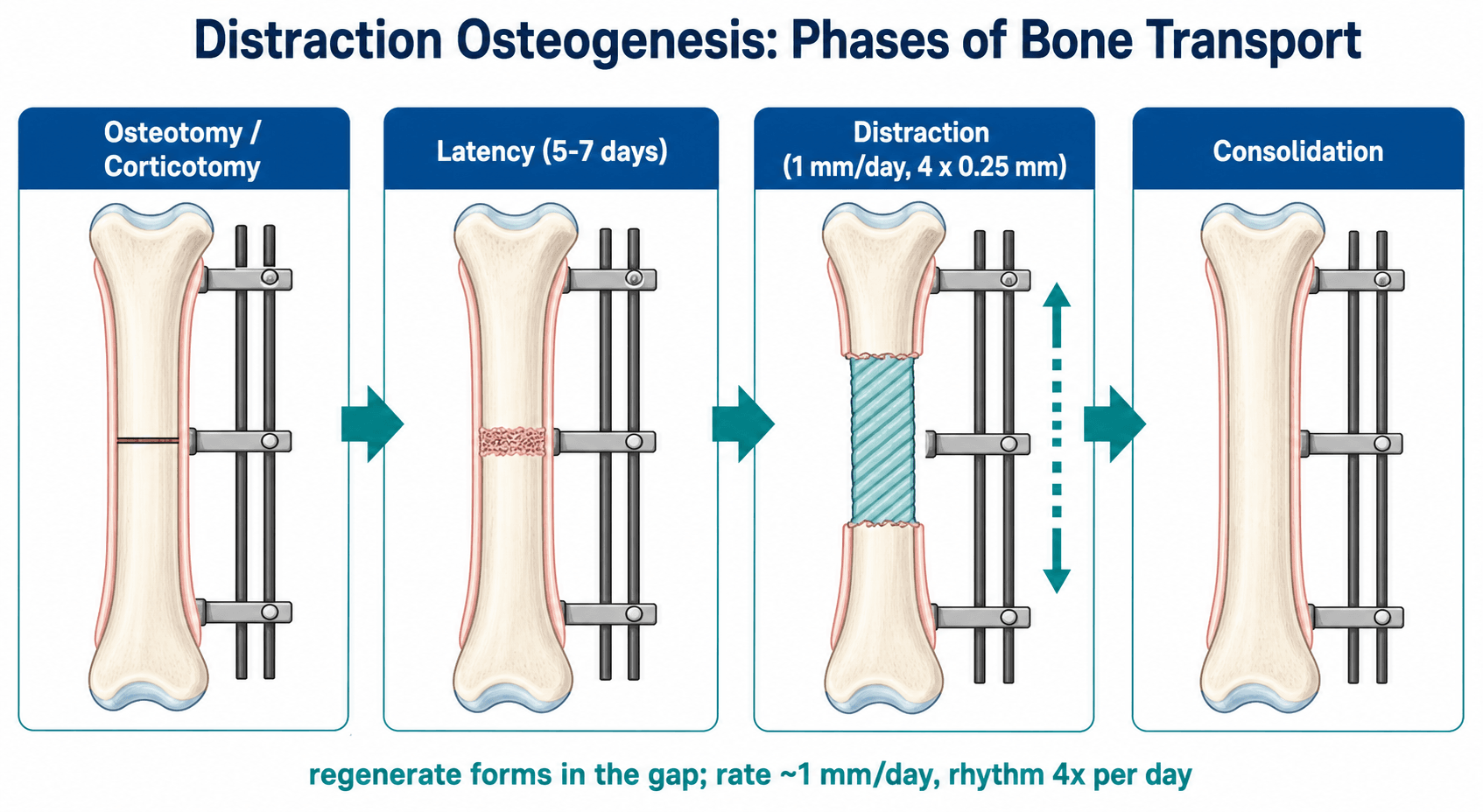
Distraction osteogenesis is new bone formed under gradual tension across a low-energy corticotomy. The process runs in three phases:
- Latency - typically 5-7 days (shorter in children, longer in adults and in poor biology). The early reparative haematoma and callus organise before distraction begins.
- Distraction - lengthening at approximately 1mm/day, divided into small frequent steps (classically 4 x 0.25mm). New bone forms in parallel columns extending from a central radiolucent growth zone, predominantly by intramembranous ossification.
- Consolidation (neutral fixation) - the regenerate mineralises and remodels. The frame is retained until corticalisation across the gap is seen on radiographs, usually roughly twice the distraction time.
The tension-stress effect. Slow, steady traction on living tissue stimulates regeneration not only of bone but of vessels, nerve, muscle and skin (histogenesis), provided blood supply and stable fixation are preserved. The cost of that biology is time: the external-fixation index (days in frame per centimetre gained) typically runs 30-45 days/cm.
Wire Biomechanics
The wire alone. A tensioned wire acts as a beam on an elastic foundation: its deflection under load is inversely proportional to its tension, so for the wire considered alone, higher tension means less deflection and more stability. Wire stiffness is proportional to the square of the diameter, which is why a 1.8mm wire is stiffer than a 1.5mm one.
The assembled frame. The frame does not behave like the wire alone. Measured whole-frame bending stiffness follows a peaked (Gaussian) curve against tension, so past the optimum extra tension stops helping. Clinical practice quotes 90-130kg (900-1300N); whole-frame stiffness peaks near 1000N, so treat that as the target and the rest of the range as tolerance rather than as "more is better". Below 70kg the construct is not stable enough; above 150kg the wire risks breakage or cutting out of the bone.
Getting and keeping the tension. Under-tensioned wires allow excessive motion and poor healing; over-tensioned wires can cut through bone. Tension with a tensioner device, and check it again at follow-up, because wires loosen over time.
Crossing angle. Two wires crossing at 90 degrees give the most stability; 60 degrees is the minimum acceptable, and wires crossing at acute angles provide less. Plan the wires to reach the best crossing angle the safe corridors allow.
Olive wires. Olive wires push and pull where you need them. Their uses are compression across an osteotomy or fracture, pushing or pulling a bone segment during lengthening or transport, holding a fragment against translation during correction, and capturing a short periarticular segment.
Half-pins. A half-pin cannot be tensioned, but it provides excellent rigidity. It behaves as a cantilever beam rather than a beam on an elastic foundation, and its place is diaphyseal bone and hybrid constructs.
- Tensioned Wires
- 1.5-1.8mm
- Half-Pins
- 5-6mm
- Tensioned Wires
- 90-130kg required
- Half-Pins
- Cannot be tensioned
- Tensioned Wires
- Moderate (beam on elastic foundation)
- Half-Pins
- High (cantilever beam)
- Tensioned Wires
- Through-and-through
- Half-Pins
- One cortex to opposite
- Tensioned Wires
- Less common
- Half-Pins
- More common (6mm vs 1.8mm hole)
- Tensioned Wires
- Metaphyseal bone
- Half-Pins
- Diaphyseal bone, hybrid constructs
Frame Stability Factors
Stiffness is built from the wires, the rings and the construct as a whole, and the order matters: wire tension is the most important single factor.
- Wires - tension (most important), number per ring (minimum three), crossing angle (90 degrees ideal), diameter (1.8mm stiffer than 1.5mm)
- Rings - diameter (a closer fit is stiffer), number (more is stiffer), material (steel, aluminium or carbon fibre), spacing (closer near the pathology)
- Construct - overall length, position relative to the pathology, connecting rod configuration, and the addition of half-pins
Classic teaching: A well-tensioned 2-ring tibial frame with 4 wires per ring crossing at 90 degrees provides stability equivalent to a plated fracture. The frame allows axial micromotion (beneficial for healing) while preventing shear (detrimental).
Classification Systems
Two classifications dominate exam discussion of ring fixation - one for complications, one for pin-site infection.
Paley Classification of Difficulties
Used to report any adverse event during distraction osteogenesis:
- Problem - a difficulty resolved without operative intervention (e.g. pin-site infection settling on antibiotics, minor contracture managed by physiotherapy).
- Obstacle - a difficulty requiring operative intervention before the end of treatment but ultimately overcome (e.g. premature consolidation needing re-osteotomy).
- Complication - any intra-operative injury, or any problem not resolved by the end of treatment (subdivided into minor and major; major complications interfere with the original treatment goal).
This taxonomy is the standard language for reporting distraction-osteogenesis outcomes in the literature.
Clinical Presentation
Who suits a frame. The indications are listed in the overview; the harder judgement is who will struggle with the treatment. The challenging candidates are:
- Poor compliance
- Significant comorbidities affecting healing
- Morbid obesity, which makes the frame difficult to fit
- Severe vascular disease
- Psychological unsuitability
History. Establish the mechanism and how long the problem has existed, what surgery has already been done and what went wrong, any history of infection, and the medical comorbidities. Then assess the social support and the likelihood of compliance.
Examination. Record limb alignment and length, the condition of the soft tissues, neurovascular status, the range of motion of the adjacent joints and muscle strength.
Choosing the Right Reconstruction (Differential of Options)
The exam-relevant "differential" for the Ilizarov is the decision against competing strategies for the same clinical problem. Frame fixation is rarely the only option; the candidate must justify it.
- Best Indication
- Infected nonunion, segmental bone loss, multiplanar deformity, complex LLD
- Key Advantage
- Treats infection while reconstructing; gradual multiplanar correction; minimal implant in wound
- Key Limitation
- Long treatment, pin-site burden, demanding for patient and surgeon
- Best Indication
- Complex multiplanar deformity needing software-guided correction
- Key Advantage
- Six-axis correction with computer planning; accurate residual correction
- Key Limitation
- Cost, strut/programming complexity, same pin-site burden
- Best Indication
- Diaphyseal lengthening/nonunion with clean soft tissues, no active infection
- Key Advantage
- No external frame, better patient comfort and joint motion
- Key Limitation
- Contraindicated with active infection; limited deformity correction
- Best Indication
- Aseptic nonunion, periarticular fracture with good soft tissues
- Key Advantage
- Direct reduction, early stability
- Key Limitation
- Soft-tissue stripping; poor choice in infection or major bone loss
- Best Indication
- Segmental defect (often under 6cm) with adequate soft-tissue cover
- Key Advantage
- Single-stage transport avoided; quicker than long transport
- Key Limitation
- Two-stage, graft volume limited, less suited to very large defects
- Best Indication
- Unreconstructable limb, failed reconstruction, non-compliant patient
- Key Advantage
- Definitive, faster return to function with prosthesis
- Key Limitation
- Irreversible; psychological impact
Investigations
Plain radiographs. AP and lateral views of the entire bone, including the joints above and below, weight-bearing if possible, with the contralateral limb for comparison.
Long-leg standing films. These are the deformity-planning study: they show the mechanical axis, allow the deformity to be analysed, and give a full-length comparison with the other side.
CT. Gives the detailed bone anatomy and an assessment of bone quality, lets wire trajectories be planned, and evaluates union or nonunion.
Infection work-up. For nonunion and infection cases, take baseline ESR and CRP and a white cell count, send deep tissue cultures at surgery, and consider bone biopsy.
Management
Preoperative Planning
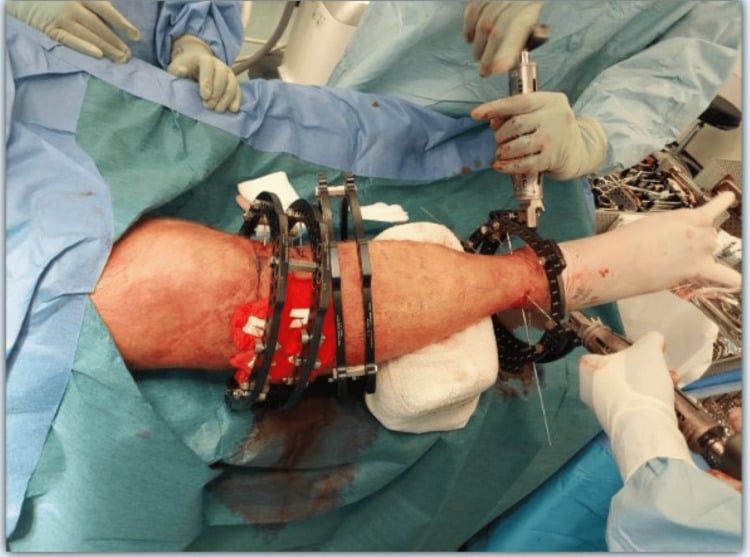
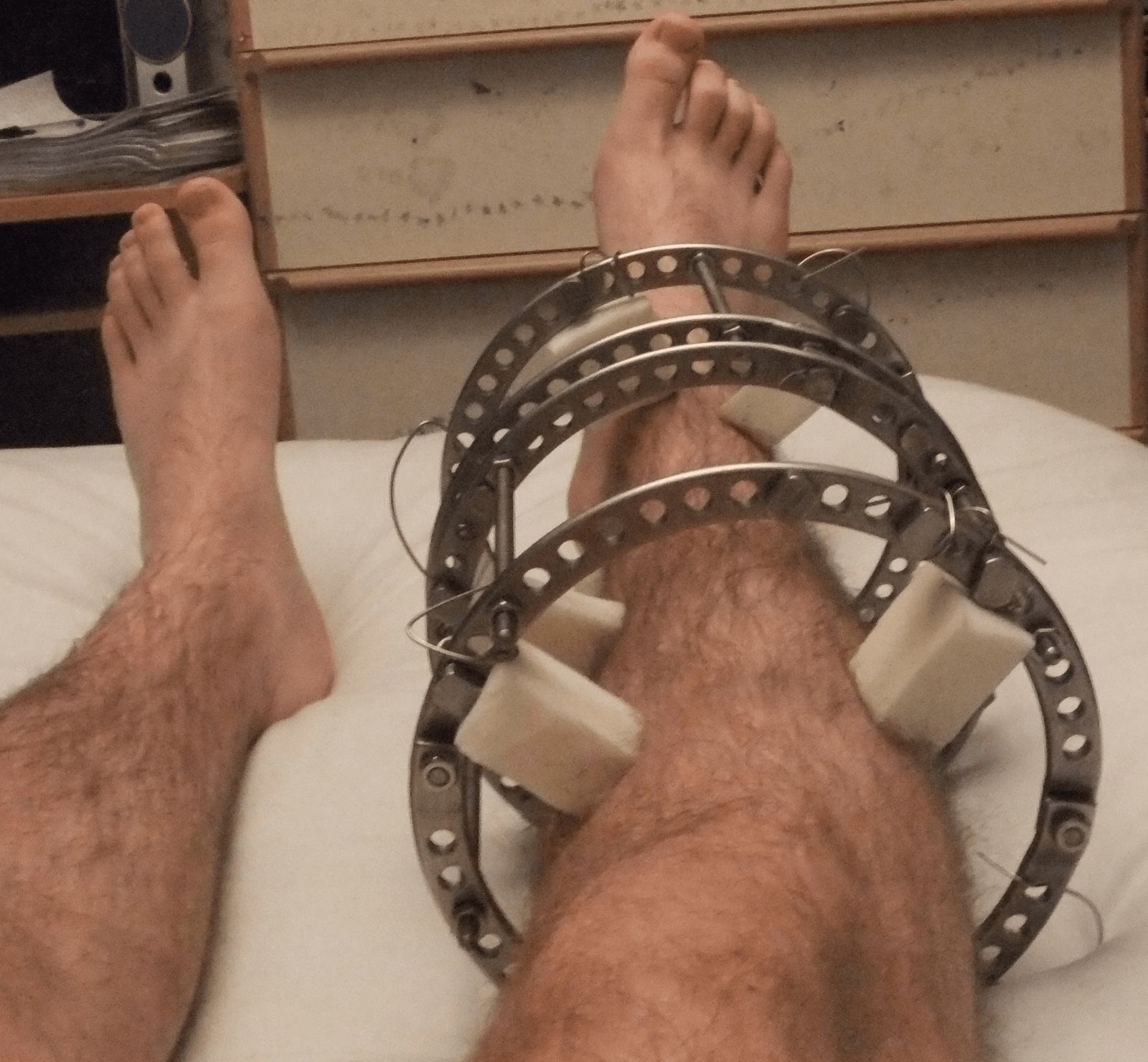
Ring size. Measure the limb diameter at each ring level and add 3-4cm (2 finger breadths) of clearance circumferentially, allowing for swelling; standard rings run from 100 to 240mm in diameter. Too tight a ring causes skin problems, too loose a ring compromises stability, and each ring should sit perpendicular to the mechanical axis.
Wire trajectories. Identify the safe corridor at each level and mark the neurovascular structures, then plan crossing angles greater than 60 degrees within those corridors. Decide where olive wires are needed.
Deformity correction. Identify the CORA, choose the osteotomy level and the hinge placement, and calculate the correction required. The rules that govern this are set out under deformity correction below.
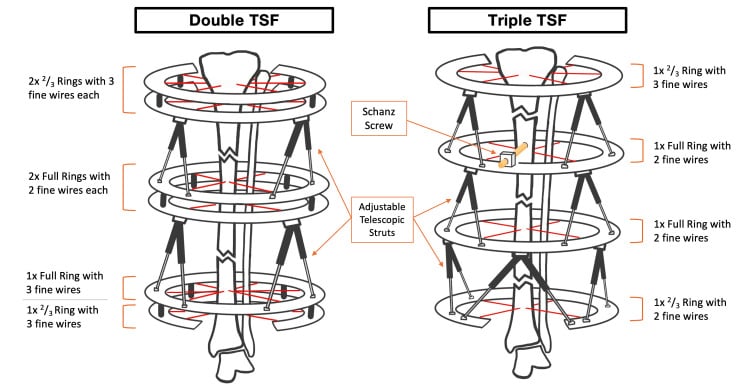
The construct. Use a minimum of 2 rings per segment, with the rings closer together near the osteotomy or fracture, and plan the connecting rod configuration. Consider a hybrid construct with half-pins.
Surgical Management
Safe Corridors
Every wire crosses the limb from one side to the other, so every wire has to pass between the neurovascular structures rather than through them. The tibia has a relatively safe anteromedial surface along its length; the femur needs more careful planning, with a lateral approach for the structures that lie posteriorly.
Tibial Wire Placement
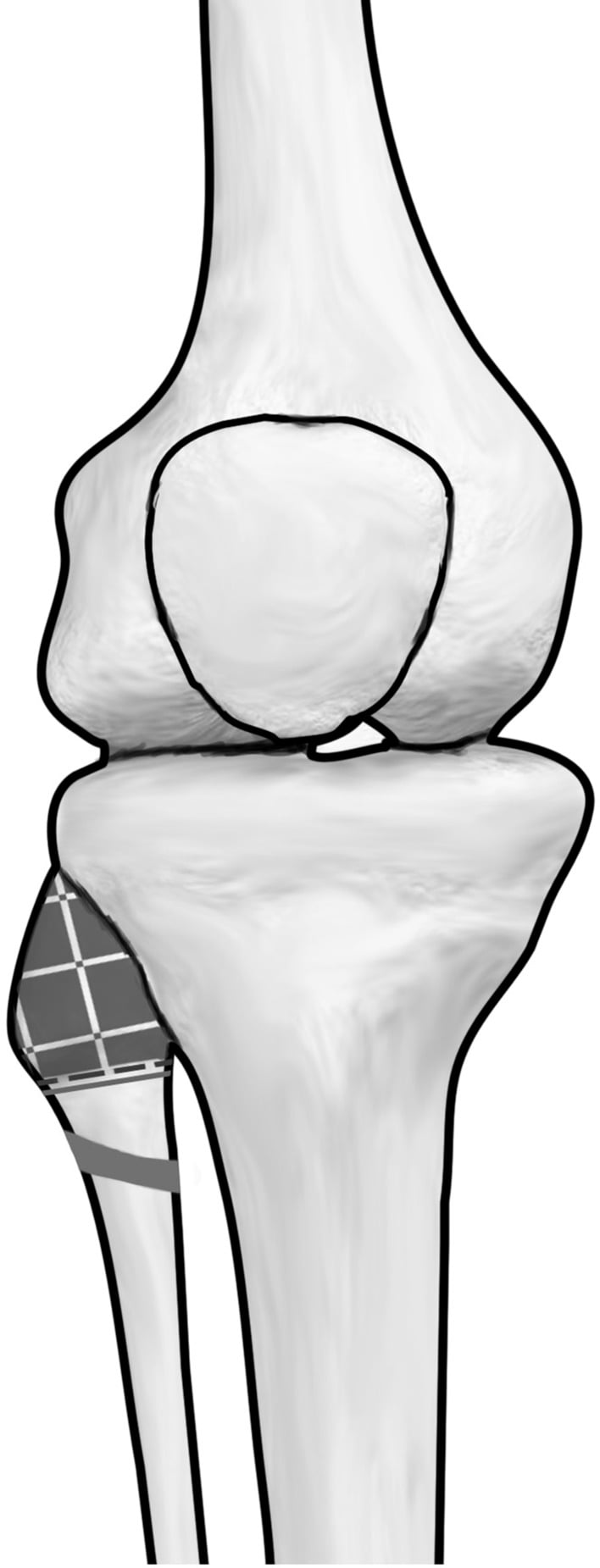
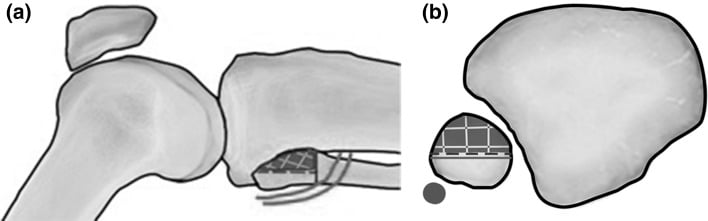
Proximal tibia. Anteromedial to posterolateral is the safest trajectory, keeping away from the popliteal vessels posteriorly; an anterior wire avoids the origin of the anterior tibial artery. At the fibular head the structure at risk is the common peroneal nerve at the fibular neck.
Mid tibia. The anteromedial surface is subcutaneous and a posterolateral wire is safe; this is the widest safe corridor in the body.
Distal tibia. Again anteromedial to posterolateral. Anteriorly the anterior tibial artery and deep peroneal nerve are at risk at the ankle; posteromedially the posterior tibial artery and tibial nerve.
Along the anteromedial side the saphenous nerve is also at risk.
Deformity Correction & Bone Transport Principles
The frame is only a tool — correct deformity correction depends on the CORA concept and Paley's osteotomy rules, and large defects are managed by bone transport with attention to the docking site.
CORA and the Osteotomy Rules
The CORA (Centre Of Rotation of Angulation) is the point at which the proximal and distal axis lines (mechanical or anatomical) intersect — it is the true apex of the deformity, and it does not always lie at the most obvious bend on the radiograph. Identifying the CORA is the first step in any correction.
Paley's osteotomy rules describe what happens depending on where the osteotomy and the hinge / axis of correction (ACA) are placed relative to the CORA:
- Rule 1 — osteotomy AND hinge both at the CORA → pure angular correction, with the bone ends realigning without any translation or secondary deformity. This is the goal.
- Rule 2 — osteotomy at the CORA but the hinge placed away from it → angular correction PLUS a translation at the osteotomy.
- Rule 3 — osteotomy placed away from the CORA → correction introduces a translational (secondary) deformity; sometimes used deliberately (a "translation osteotomy") to realign the mechanical axis when osteotomising at the true CORA is impractical.
The position of the hinge relative to the bone also dictates whether correction produces lengthening (hinge on the concavity/convexity) — a key planning decision in the frame.
Bone Transport and the Docking Site
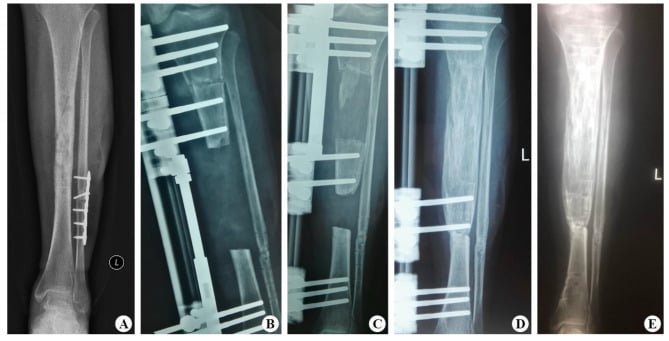
For segmental bone loss (e.g. after resection of infected nonunion), a corticotomy is made away from the defect and a bone segment is transported across the gap, laying down regenerate behind it while the gap ahead closes:
- Monofocal — lengthening or compression at a single site.
- Bifocal — one corticotomy with transport: regenerate forms at the corticotomy and the transported segment docks against the far fragment.
- Trifocal — two corticotomies / two transport segments for very large defects, halving the transport distance and treatment time.
The docking site. Where the transported segment meets the target fragment is the classic trouble spot: interposed soft tissue, sclerotic or atrophic bone ends and a tapered transport segment frequently cause docking-site nonunion. Management therefore often includes freshening the bone ends, compression at docking, and autologous bone grafting (typically iliac crest) at the docking site. Acute docking (shortening to appose the ends, then re-lengthening at the corticotomy) is an alternative to long gradual transport.
Complications
Pin sites. Pin-site infection is the dominant morbidity, quoted at 30-100% of cases, and most episodes resolve with oral antibiotics. Pin tract osteomyelitis is rare and may need pin removal and debridement. Pin loosening is common and may require replacement of the pin.
The frame. Wires break from overtensioning or fatigue. Rings loosen, so connections are checked and tightened at every review. A frame that is unstable because the construct was inadequate is revised.
The treatment. Aggressive physiotherapy is essential against joint contracture. Neurovascular injury comes from wire placement, delayed union or nonunion may need bone grafting, and refracture occurs after frame removal.
Postoperative Care
Early phase (first 6 weeks). Weight-bearing is encouraged early: the circular frame is designed to share load, and full weight-bearing stimulates regenerate formation in lengthening cases. Physiotherapy starts on day one, with active and passive joint mobilisation to prevent contractures, especially equinus in tibial lengthening and knee stiffness in femoral frames.
Distraction. In lengthening cases distraction starts after the latency period at approximately 1mm/day in 4 small steps, and the patient or carer is taught to turn the struts or nuts.
Pin-site care. Protocols vary, but the principles are shared: begin a standardised routine once the initial ooze settles, keep the sites clean and dry, inspect them daily, clean a discharging site gently with saline, and a crust can be left, as it forms a seal. Teach the patient and carer to do this themselves. Spreading cellulitis is treated with oral antibiotics; deep infection or osteomyelitis means the pin comes out.
Ongoing monitoring. Serial AP and lateral radiographs assess regenerate quality, alignment and consolidation; slow the distraction if the regenerate is poor and speed it up if premature consolidation threatens. Stay vigilant for stretch neuropraxia (the peroneal nerve in tibial lengthening) and for joint subluxation, and re-check wire tension and tighten connections at each clinic visit.
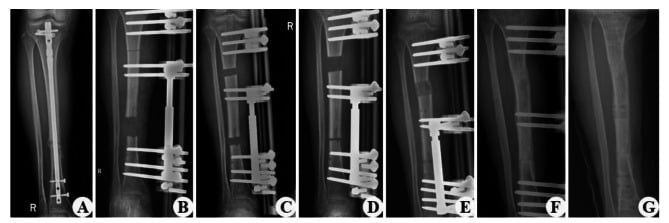
Frame removal. Remove the frame only once radiographic corticalisation of the regenerate, or union, is confirmed across the gap on orthogonal views. Refracture risk is highest in the weeks immediately after removal, and a period of protected weight-bearing or a cast or brace reduces it.
Outcomes & Prognosis
Union and goal achievement. In experienced units the goals of distraction osteogenesis are met in the large majority of segments: Paley reported the original goal achieved in 57 of 60 segments, with 94% patient satisfaction. For bone transport in infected nonunion, union rates over 85-90% with eradication of infection are reported, at the cost of long treatment and frequent complications, around one minor and one major complication per patient.
Treatment burden. Total time in frame for a multi-centimetre lengthening or transport is often 6-12 months. Quality-of-life scores dip during treatment and recover toward normal after consolidation; counselling the patient on that trajectory improves compliance.
Adverse prognostic factors. Smoking, diabetes, large defects, previous infection, poor soft-tissue cover and non-compliance all worsen outcome.
Guidelines, Registries & Global Practice
Global Epidemiology and Use
Circular external fixation is concentrated in dedicated limb reconstruction units worldwide, reflecting a steep learning curve and the need for multidisciplinary support. Its case-mix differs sharply by setting: in high-resource health systems the dominant indications are congenital/developmental deformity, post-traumatic malunion, leg-length discrepancy and aseptic nonunion; in conflict zones and limited-resource settings the technique is a workhorse for high-energy open fractures, segmental bone loss and chronic osteomyelitis, where its low implant burden and tolerance of contaminated wounds are decisive advantages.
Side-by-Side Guidance
Unlike arthroplasty there is no single high-level guideline that dictates frame parameters; practice is governed by foundational biology (Ilizarov), complication taxonomy (Paley) and society/consensus statements on adjacent issues.
- Domain
- Frame principles & education
- Key Position
- Codified Ilizarov/distraction-osteogenesis teaching; corticotomy preserving periosteum, 1mm/day rhythm, structured pin-site care
- Domain
- Open fractures & osteomyelitis
- Key Position
- Ring fixation endorsed within combined ortho-plastic ('orthoplastic') pathways for severe open tibial injury and infected nonunion
- Domain
- Limb reconstruction
- Key Position
- Paley problems/obstacles/complications framework standard for reporting; hexapod frames accepted for complex multiplanar deformity
- Domain
- Pin-site care & DGOU/EBJIS-aligned infection
- Key Position
- No mandated regimen; emphasis on standardised, evidence-based pin-site protocols and antibiotic stewardship
Registry and Outcome Notes
External fixation is not captured by the major arthroplasty registries (NJR, AJRR, AOANJRR, SHAR), so the evidence base rests on single-centre and multicentre cohort series rather than registry data. Reported benchmarks across series include union rates over 85-90% for bone transport in infected nonunion, an external-fixation index commonly 40-45 days/cm, and pin-site infection in a large minority of pins (most minor and managed without hardware removal).
High- vs Limited-Resource Practice
- Equipment - High-resource units increasingly use computer-assisted hexapod frames (Taylor Spatial Frame, TL-HEX, Orthex) with web-based deformity software; classic Ilizarov ring-and-strut sets remain the global standard and dominate in cost-constrained settings.
- Imaging and planning - CT and long-leg alignment films and digital deformity analysis are routine in high-resource centres; limited-resource units rely on careful clinical and plain-radiograph CORA planning.
- Aftercare - Dedicated frame clinics, physiotherapy and patient self-management education improve compliance; where these are unavailable, pin-site complications and joint contractures rise.
Controversies & Areas of Uncertainty
A mature exam answer acknowledges that several aspects of ring fixation remain unsettled.
Pin-site care. Despite the Checketts-Otterburn grading, the best cleaning solution (saline, chlorhexidine or alcohol), the frequency (daily or weekly) and the dressing remain debated; high-quality randomised evidence is limited and protocols vary widely between units.
Latency and distraction rhythm. The classic 5-7 day latency and 1mm/day rate derive from canine experiments. The ideal values differ with age, biology and the use of adjuncts, and accelerated or trifocal strategies are used selectively.
Hexapod versus classic Ilizarov. Computer-assisted frames give accurate multiplanar correction, but the evidence that they improve hard outcomes (union, complications) over a well-executed classic frame is modest, and they add cost and programming complexity.
Frame versus lengthening nail. Magnetic lengthening nails offer comfort and avoid pin-site problems for clean diaphyseal lengthening, but cannot be used in infection and are far costlier; the boundary between the two continues to shift.
Frame fatigue. Treatment is long and psychologically demanding. Patient selection, expectation-setting and support are as important as technique, yet are hard to standardise.
Transport versus induced membrane. Both bone transport and the Masquelet technique are valid for segmental loss; the threshold defect size, infection status and soft-tissue cover at which one is preferred is not firmly defined.
MCQ Practice Points
Q: What is the optimal distraction rate and rhythm? A: 1mm/day, divided into more frequent smaller steps (classically 4 x 0.25mm). Derived from Ilizarov's canine experiments - 0.5mm/day risks premature consolidation, 2mm/day risks ischaemia and a poor regenerate.
Q: By what mechanism does the regenerate form? A: Predominantly intramembranous ossification from a central radiolucent growth zone, with new bone laid down in parallel columns aligned to the tension vector. The latency period before distraction is typically 5-7 days (shorter in children).
Q: At what wire tension is a full circular frame stiffest? A: Around 1000N (frame stiffness vs tension follows a Gaussian curve in full-ring frames). Wire stiffness is also inversely proportional to wire length, favouring smaller rings and closely supported wires. Ideal wire crossing angle is 90 degrees (minimum 60 degrees).
Q: Which structure is classically at risk with proximal tibial wires? A: The common peroneal nerve at the fibular neck. Active infection is a contraindication to intramedullary lengthening, which is why the Ilizarov is favoured for infected nonunion and segmental loss. Refracture risk is highest immediately after frame removal - confirm radiographic corticalisation first.
Exam Viva Scenarios
Practise clinical reasoning and management decisions out loud
“You are planning an Ilizarov frame for tibial lengthening. Describe your approach to wire placement at the proximal tibia.”
“A patient with an Ilizarov frame for tibial nonunion returns 4 weeks postoperatively. X-rays show the fracture is moving within the frame. How do you assess and address this?”
“A patient with an Ilizarov frame develops purulent discharge from a wire site with surrounding erythema extending 2cm. How do you manage this?”
“You plan to lengthen a tibia by 5cm in an adult. Take me through the biological principles and the phases of treatment, and tell me what determines how long the frame stays on.”
Wire Parameters
- Diameter: 1.5-1.8mm standard
- Tension: 90-130kg (900-1300N)
- Crossing angle: 90 degrees ideal, minimum 60 degrees
- Minimum 3-4 wires per ring
Ring Sizing
- 2 finger breadths (3-4cm) clearance
- Account for soft tissue swelling
- Rings perpendicular to mechanical axis
- Minimum 2 rings per bone segment
Safe Corridors - Tibia
- Proximal: Anteromedial to posterolateral
- Avoid peroneal nerve at fibular neck
- Mid: Widest safe zone - anteromedial surface
- Distal: Avoid anterior tibial vessels anteriorly
Olive Wire Uses
- Compression across fracture/osteotomy
- Bone transport pushing/pulling
- Prevent translation during correction
- Capture short periarticular segments
Pin Site Infection Grades
- Grade 1-3: Mild, respond to oral antibiotics
- Grade 4-5: Moderate, may need wire removal
- Grade 6: Osteomyelitis, wire removal + debridement
- Daily pin care reduces infection
Frame Stability Checklist
- Wire tension adequate (90-130kg)
- Crossing angle greater than 60 degrees
- All connections tight
- Sufficient wires per ring (minimum 3)
Evidence Base
The two foundational Ilizarov experimental papers and Paley's complication taxonomy are the most heavily cited references in limb reconstruction and remain core exam knowledge.
Tension-Stress Effect Part I: Stability and Soft-Tissue Preservation
- Increased fixator stability enhances osteogenesis
- Maximal preservation of periosseous/intraosseous soft tissue enhances bone formation
- Regenerate bone forms parallel to the distraction (tension) vector
- Marrow element preservation at osteotomy is critical
Tension-Stress Effect Part II: Rate and Frequency of Distraction
- 0.5mm/day risks premature consolidation
- 2.0mm/day risks ischaemia and poor regenerate
- 1.0mm/day is optimal; more frequent steps improve outcome
- Distraction regenerate is a unique physis-like structure