Kocher Criteria for the Irritable Paediatric Hip
- Treating the rule as a rule-OUT test. Kocher GUIDES, gestalt decides — a low count never excludes septic arthritis in a child who looks unwell, and external cohorts perform worse than the derivation (Luhmann: only ~59% with all four). When in doubt, aspirate.
- Quoting the derivation probabilities as universal truth. The 0.2 / 3 / 40 / 93.1 / 99.6% figures are the Boston derivation cohort — say so, and acknowledge they run lower elsewhere.
- Adding CRP as if it were part of the rule. CRP over 20 mg/L is a useful adjunct (Caird), but it is NOT one of the original four and a 2024 meta-analysis found it non-significant — don't present a 'five-criterion Kocher'.
- Antibiotics before cultures. Always send joint fluid + blood cultures BEFORE starting antibiotics — pre-treatment sterilises the tap and loses the organism.
- Imaging instead of aspirating. Ultrasound confirms an effusion but cannot tell septic from sterile; don't delay theatre for MRI when the picture is clear — aspiration is the definitive step.
- Applying it to the wrong joint or the wrong age. Kocher is for the HIP, and non-weight-bearing can't be assessed in a non-walking infant (under ~2y).
The Kocher criteria
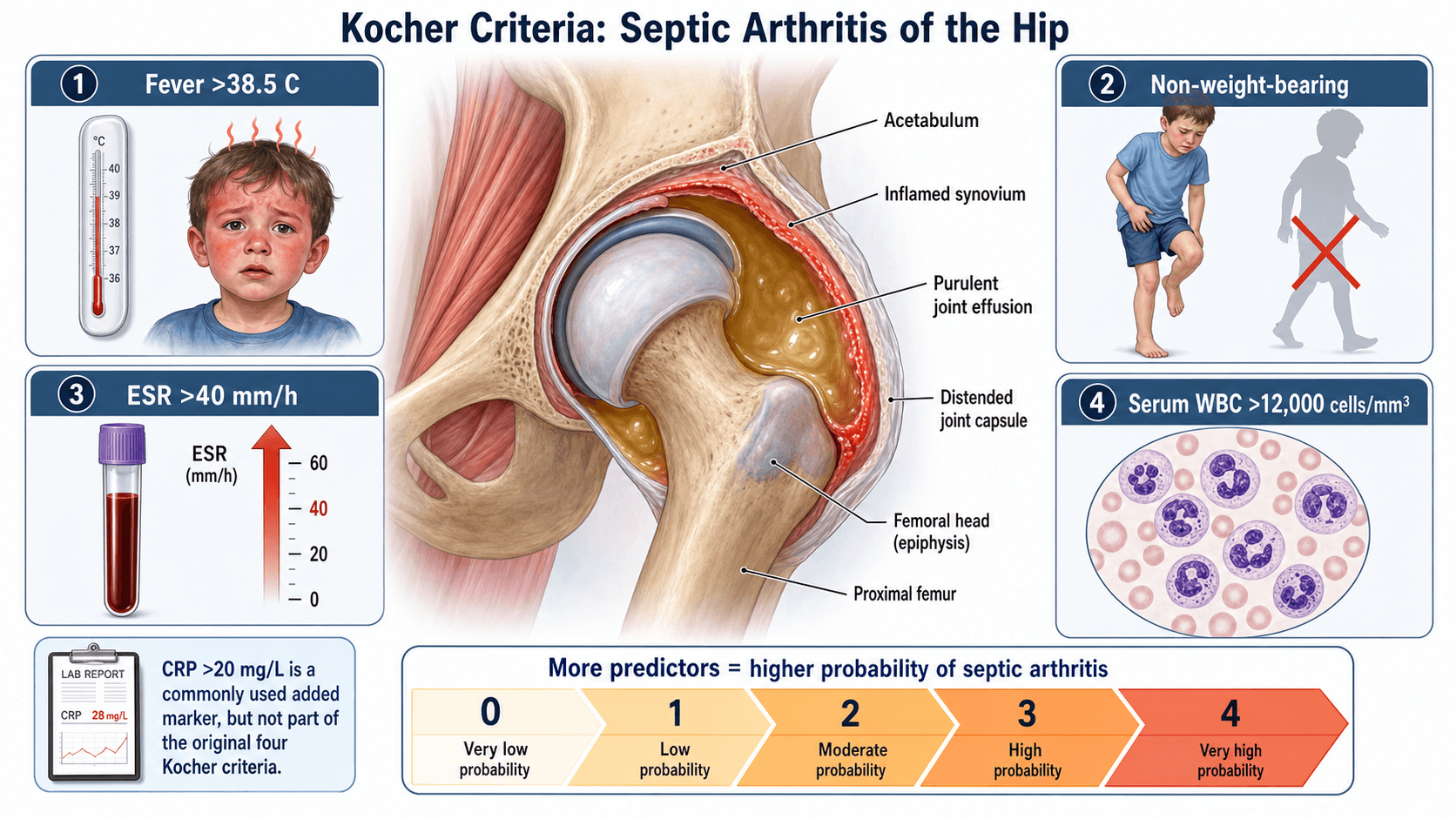
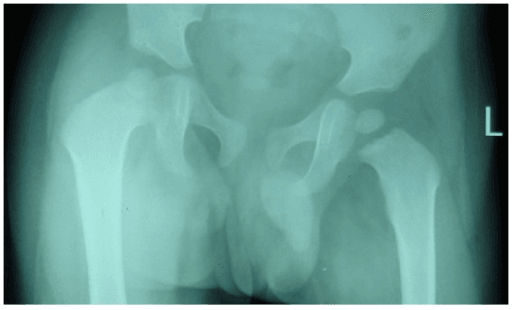
Each of the four independent predictors is simply present or absent. The total number positive stratifies the probability of septic arthritis versus transient synovitis.
- Threshold
- Clinical history
- Positive if
- Child refuses to bear weight on the affected limb
- Threshold
- Greater than 38.5 degrees Celsius
- Positive if
- Documented temperature above the threshold
- Threshold
- At least 40 mm/hr
- Positive if
- Elevated to or beyond the threshold
- Threshold
- Greater than 12,000 per cubic millimetre
- Positive if
- Leucocytosis beyond the threshold
FEWNThe four predictors
Hook:FEWN predictors: count them up — the higher the count, the higher the probability of septic arthritis.
A child who absolutely refuses to put the foot to the floor raises pre-test probability more than any single laboratory value. The combination of non-weight-bearing with any elevated inflammatory marker should already prompt urgent aspiration, regardless of the total count. The criterion is binary and observer-dependent, and cannot be assessed in a child who is not yet walking (under ~2 years).
Kocher only separates septic arthritis from transient synovitis; the acutely limping/irritable child has a broader, age-aware differential the examiner expects:
- Transient synovitis (commonest, post-viral, self-limiting) and septic arthritis (the can't-miss) — the two the rule addresses.
- Osteomyelitis — adjacent or coexisting (proximal femur/pelvis), with focal bony tenderness and sometimes a sympathetic effusion; MRI distinguishes it.
- Perthes (insidious, afebrile, normal inflammatory markers) and SUFE (older/overweight adolescent, obligatory external rotation on hip flexion).
- Juvenile idiopathic arthritis, reactive/post-streptococcal arthritis, Lyme (geographic), and trauma / non-accidental injury.
- RED FLAG — malignancy (leukaemia/lymphoma, neuroblastoma): suspect when bone/joint pain is disproportionate or nocturnal, the ESR is very high but the WBC is normal or LOW with cytopenias (anaemia/thrombocytopenia), or there is hepatosplenomegaly/lymphadenopathy — acute lymphoblastic leukaemia classically masquerades as an irritable hip/limp, so check a blood film when the pattern is atypical.
Probability by number of positive predictors
The original Kocher derivation cohort produced a steep probability curve. The count of positive criteria is the clinical output — not a weighted score.
- Probability of septic arthritis
- Less than 0.2 percent
- Clinical implication
- Transient synovitis overwhelmingly likely; observe, reassess, ultrasound to confirm effusion
- Probability of septic arthritis
- About 3 percent
- Clinical implication
- Transient synovitis probable; observe with serial examination and ultrasound
- Probability of septic arthritis
- About 40 percent
- Clinical implication
- Urgent hip aspiration required; the inflection point between observe and intervene
- Probability of septic arthritis
- About 93 percent (93.1%)
- Clinical implication
- Septic arthritis likely; emergency aspiration and washout in theatre
- Probability of septic arthritis
- About 99.6 percent
- Clinical implication
- Septic arthritis almost certain; theatre aspiration, washout, and culture-directed antibiotics
0–40–99The probability gradient (original derivation)
Hook:Under 1 → 3 → 40 → 93 → 99.6 percent: each extra positive predictor steepens the climb. (These are the derivation figures; external cohorts run lower.)
Septic arthritis of the paediatric hip can destroy the joint within hours. The femoral head epiphysis relies on a single tenuous blood supply that is exquisitely sensitive to raised intracapsular pressure from pus. A missed or delayed diagnosis leads to avascular necrosis of the femoral head, growth disturbance, early degenerative arthritis, and lifelong disability. When in doubt, aspirate — observation is safe only when septic arthritis is genuinely unlikely.
Clinical application & action thresholds
- 1Examine and send the four variablesDocument weight-bearing status and temperature; send ESR and WBC (and CRP as an adjunct). Plain films are often subtle/normal early — do not be falsely reassured.
- 2Count the predictorsEach is binary. 0–1 positive favours transient synovitis (<3%); 2 is the ~40% inflection point; 3–4 makes septic arthritis likely-to-certain (93–99.6% in the derivation cohort).
- 30–1 → observe; ≥2 → aspirateObserve with serial examination and ultrasound for 0–1. For ≥2, perform urgent ultrasound-guided hip aspiration — send fluid for cell count, Gram stain, culture and sensitivity. Always take cultures BEFORE antibiotics.
- 43–4 or infected aspirate → theatreEmergency arthrotomy/arthroscopic washout, then empirical IV antibiotics covering Staphylococcus aureus (and Kingella kingae in the under-5s), narrowed to culture results.
- Action
- Observe with serial examination; ultrasound to confirm/monitor effusion; NSAIDs; review within 24–48 h if not improving
- Urgency
- Outpatient or short-stay observation
- Action
- Urgent ultrasound-guided hip aspiration for cell count, culture and sensitivity; prepare for theatre if the aspirate is consistent with infection
- Urgency
- Same-day aspiration; do not discharge
- Action
- Emergency theatre aspiration and washout; send fluid for Gram stain, culture and sensitivity; start empirical IV antibiotics after cultures
- Urgency
- Theatre within hours
ACTClinical action rule
Hook:ACT: Aspirate at 2, Cut to theatre at 3, Trust observation at 0–1. A simple bedside rule that saves paediatric hips.
- Derived at one centre (Boston Children's) and validated less well elsewhere — external cohorts show lower sensitivity/specificity (Luhmann found four positives gave only ~59%). Treat the rule as a guide, not a diagnostic test.
- CRP (over 20 mg/L) is a useful adjunct proposed by later work (Caird), and some centres use a five-predictor model — but evidence is mixed (a 2024 meta-analysis found CRP non-significant) and the classic four-criterion rule is the one most examined.
- Kocher applies to the HIP — not the knee, shoulder or other joints; each has its own differential and thresholds.
- Ultrasound confirms an effusion but cannot tell septic from sterile fluid — aspiration is definitive.
- Always obtain joint fluid and blood cultures BEFORE antibiotics.
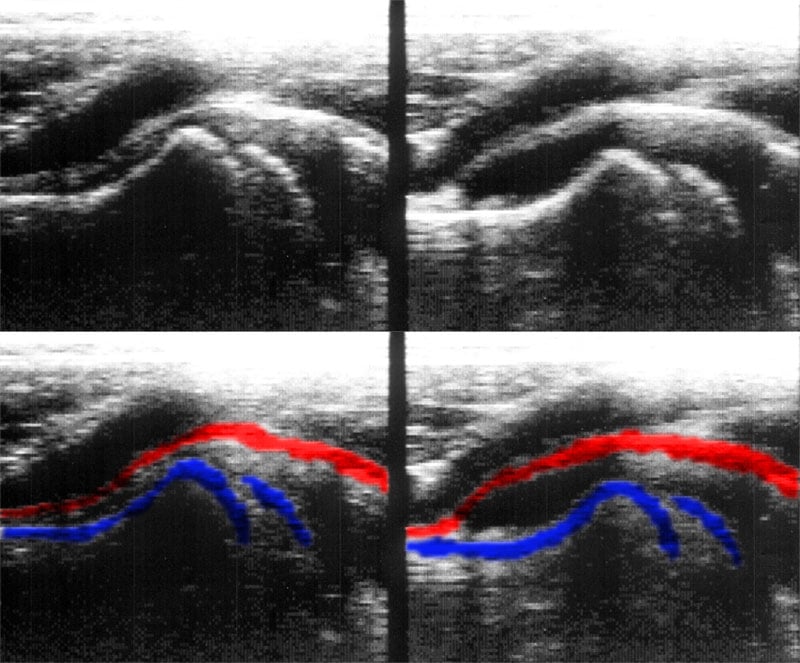
The whole rule builds toward the tap — so know how to read it:
- Synovial white-cell count: a count over about 50,000/mm³ with a neutrophil (PMN) predominance over ~75% strongly suggests septic arthritis; 25,000 to 50,000 is equivocal/suspicious. But no single value is perfectly sensitive — septic arthritis can occur with lower counts (early, partially treated, or immunocompromised), so interpret it with the whole picture, and frank pus mandates washout regardless of the count.
- Gram stain: positive in only a minority (roughly 30 to 50%) — a negative Gram stain does not exclude septic arthritis.
- Culture: positive in only about half to two-thirds; improve the yield by inoculating fluid into blood-culture bottles and adding PCR, especially for the fastidious Kingella kingae (frequently missed on standard plates in the under-5s).
- Adjuncts: synovial glucose is low and lactate raised; always send blood cultures too (positive in a substantial minority) — all before antibiotics.
Viva practice
Exam viva
Practise clinical reasoning and management decisions out loud
“A 4-year-old boy presents with a 2-day history of a painful right hip, refusing to walk, and a temperature of 38.8 degrees Celsius. His WBC is 14,200 per cubic millimetre and his ESR is 58 mm/hr. How would you manage this child?”
“A 7-year-old girl presents with a 1-day history of right hip pain and a limp. She is weight-bearing but limping. Her temperature is 37.4 degrees, WBC is 9,800, and ESR is 22. Her ultrasound shows a small hip effusion. The examiner asks: what is your probability assessment, and how do you exclude septic arthritis?”
Exam cheat sheet
The four predictors (present or absent)
- Non-weight-bearing — child refuses to put the affected foot to the floor
- Fever greater than 38.5 degrees Celsius
- ESR at least 40 mm/hr
- WBC greater than 12,000 per cubic millimetre
Probability and action by count (derivation figures)
- 0 positive: under 0.2 percent — observe with serial review and ultrasound
- 1 positive: about 3 percent — observe, reassure, reassess if not improving
- 2 positive: about 40 percent — urgent ultrasound-guided hip aspiration
- 3 positive: about 93 percent — emergency theatre aspiration and washout
- 4 positive: about 99.6 percent — emergency theatre aspiration and washout
Key exam points
- Non-weight-bearing is the single strongest predictor
- Kocher criteria apply to the hip only, not other joints
- CRP over 20 mg/L is a proposed fifth predictor — evidence mixed; not in the original rule
- External cohorts perform worse than the derivation — use as a guide, not a diagnostic test
- Ultrasound confirms an effusion but cannot differentiate septic from sterile fluid — aspiration is definitive
- Always obtain cultures before starting antibiotics; never delay theatre for imaging when clinically clear
Evidence Base
Differentiating between septic arthritis and transient synovitis of the hip in children: an evidence-based clinical prediction algorithm
- Retrospective derivation identifying four independent multivariate predictors: history of fever, non-weight-bearing, ESR at least 40 mm/hr, and serum WBC over 12,000/mm³.
- Predicted probability of septic arthritis was under 0.2% for zero predictors, 3.0% for one, 40.0% for two, 93.1% for three, and 99.6% for all four.
- The combination of predictors had excellent diagnostic performance (high area under the ROC curve), despite substantial overlap when any single variable was used alone.
Validation of a clinical prediction rule for the differentiation between septic arthritis and transient synovitis of the hip in children
- Prospective validation of the same four predictors in a new cohort at the same institution (51 septic, 103 transient synovitis).
- The predicted probabilities matched the actual distributions, but discrimination was lower than derivation: area under the ROC curve 0.86 versus 0.96 originally.
- Confirms the expected drop in performance when a prediction rule is applied to a new population — still very good, but no longer near-perfect.
According to PubMed, the four predictors and the probability figures (under 0.2% / 3% / 40% / 93.1% / 99.6%) come from Kocher et al. 1999 (DOI), the prospective validation (AUC 0.86 vs 0.96) from Kocher et al. 2004 (DOI), the external caution (59% with four positives) from Luhmann et al. 2004 (DOI), the CRP adjunct from Caird et al. 2006 (DOI), and the pooled meta-analysis (CRP non-significant) from Tang et al. 2024 (DOI).