Malignant Adipocytic Tumor | Most Common Adult Sarcoma | Variable Prognosis by Subtype
- Most common soft tissue sarcoma in adults (24% of all sarcomas)
- Well-differentiated liposarcoma (atypical lipomatous tumor) has excellent prognosis in extremity
- MDM2 amplification distinguishes well-differentiated liposarcoma from lipoma
- Dedifferentiated liposarcoma has high metastatic potential (15-30%)
- Wide excision with negative margins is cornerstone of treatment
- “Atypical lipomatous tumor and well-differentiated liposarcoma are same entity, different names by location
- “Myxoid liposarcoma is radiosensitive unlike other sarcomas
- “Retroperitoneal liposarcomas have worse prognosis than extremity due to margins
- “Round cell variant of myxoid has worse prognosis and higher metastatic rate
Overview and Epidemiology
Liposarcoma is the most common soft tissue sarcoma in adults, 20-24% of all adult sarcomas. Where a lipoma is benign, liposarcoma can recur locally and metastasise. It arises from primitive mesenchymal cells rather than from mature adipocytes, which is why its differentiation, and with it its behaviour, varies so widely from one subtype to the next.
Who. The peak is at 50-65 years (median 55), with a slight male predominance (M:F 1.2:1). Hereditary cases, with Li-Fraumeni syndrome, are rare.
Where. About 75% arise in an extremity or the trunk and the rest mostly in the retroperitoneum. The extremities alone account for around 60%, the thigh most often; the trunk for 15%; the head and neck for a rare few. The site-by-site figures, and what each site means for surgery, are tabulated in the next section.
One tumour, two names. Atypical lipomatous tumour (ALT) and well-differentiated liposarcoma (WDLS) are the same entity. An extremity or superficial lesion is called ALT because its metastatic potential is negligible; a deep retroperitoneal lesion is called WDLS because incomplete excision leaves it a higher risk of recurrence. Both carry MDM2 amplification.
Pathophysiology and Anatomy
Anatomical distribution. Liposarcoma can develop anywhere there is adipose tissue, and the site shapes both the operation and the outcome.
- Frequency
- 40%
- Anatomical Considerations
- Deep compartments, femoral vessels/nerve proximity
- Prognosis Impact
- Best prognosis
- Frequency
- 20%
- Anatomical Considerations
- Large at diagnosis, organ displacement, IVC/aorta adjacent
- Prognosis Impact
- Worse prognosis, 40-60% recurrence
- Frequency
- 15%
- Anatomical Considerations
- Variable depth, chest/abdominal wall
- Prognosis Impact
- Intermediate prognosis
- Frequency
- 15%
- Anatomical Considerations
- Smaller compartments, neurovascular proximity
- Prognosis Impact
- Good, smaller tumours
- Frequency
- 5%
- Anatomical Considerations
- Rare, complex anatomy
- Prognosis Impact
- Variable by site
Tumour biology. The tumour arises from mesenchymal stem cells and carries clonal chromosomal aberrations, MDM2 amplification or the FUS-DDIT3 fusion, that define its subtypes. How far the cells differentiate determines the subtype, and a tumour can dedifferentiate over time, with a worse prognosis when it does.
How it spreads. Liposarcoma respects fascial boundaries at first and spreads within the muscle along its fibres; eventually it breaks through the compartment. Retroperitoneal tumours infiltrate the adjacent organs.
Histology and Molecular Pathology
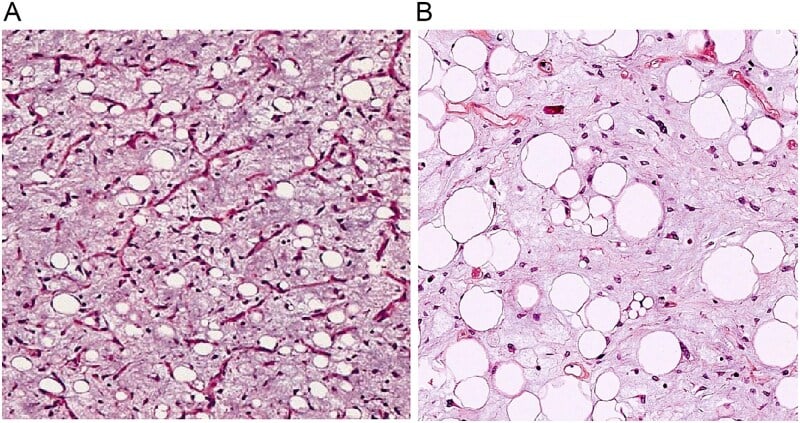
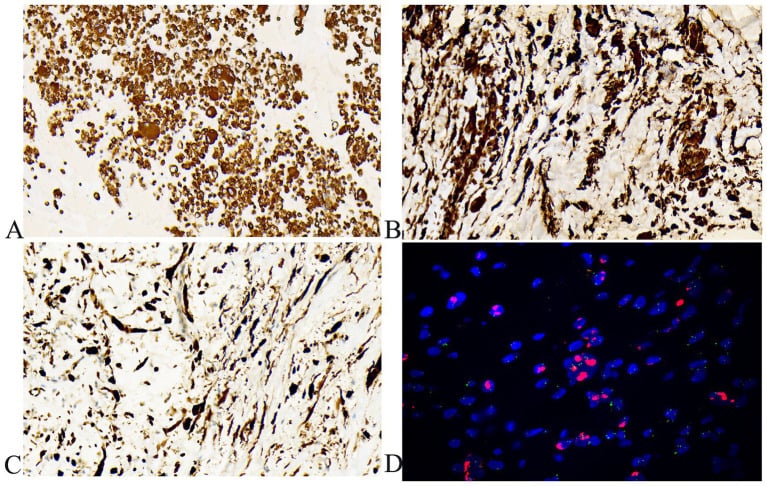
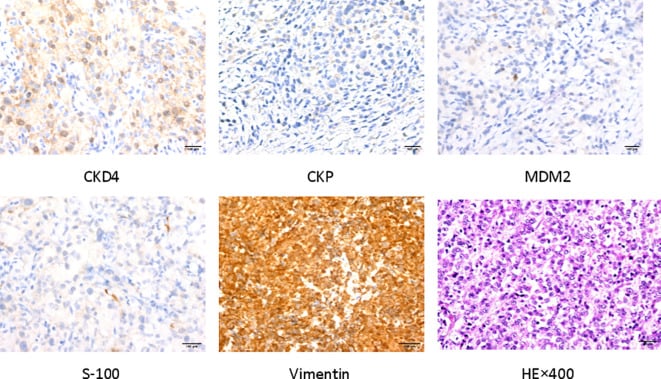
MDM2 amplification is the diagnostic hallmark of well-differentiated and dedifferentiated liposarcoma. A positive result confirms the diagnosis and separates the tumour from lipoma; a negative result excludes the well-differentiated and dedifferentiated subtypes; and the answer guides surgical planning, because a confirmed tumour needs wide margins. Test any deep or large fatty tumour, and note that CDK4 co-amplification adds specificity.
- FISH (fluorescence in situ hybridisation): the gold standard
- Immunohistochemistry: a screening tool, showing MDM2 and CDK4 overexpression
- Next-generation sequencing: can detect the amplification
FUS-DDIT3 fusion, the t(12;16) translocation, is pathognomonic for myxoid liposarcoma, and a negative test excludes it. The fusion is associated with radiosensitivity, which matters for treatment, and a round cell variant, with more than 5% round cells, has a worse prognosis. The alternative fusion EWSR1-DDIT3, t(12;22), occurs in 5% of myxoid liposarcomas.
- RT-PCR: detects the fusion transcript
- FISH: break-apart probes for FUS and DDIT3
- Karyotype: can identify the t(12;16) translocation
The pairs most often confused, and what separates them:
- Pleomorphic lipoma (benign with bizarre nuclei) versus pleomorphic liposarcoma: MDM2 negative in the benign variant
- Spindle cell lipoma versus spindle cell liposarcoma: clinical and molecular distinction essential
- Myxoid liposarcoma versus myxofibrosarcoma: FUS-DDIT3 testing differentiates
- Well-differentiated liposarcoma versus lipoma: MDM2 amplification is key
Classification Systems
The WHO 2020 classification separates liposarcoma into its subtypes by histology and molecular signature, and the subtype determines both treatment and prognosis. Staging then sets the intensity of treatment and the adjuvant decisions.
WHO 2020 Classification of Liposarcoma
- Frequency
- 40-45%
- Key Features
- Mature fat with atypical cells, thick septa
- Molecular Marker
- MDM2/CDK4 amplification
- 5-Year Survival
- 80-90% (extremity)
- Frequency
- 10-15%
- Key Features
- High-grade non-lipogenic within well-diff
- Molecular Marker
- MDM2+ with high-grade areas
- 5-Year Survival
- 30-40%
- Frequency
- 25-30%
- Key Features
- Myxoid matrix, lipoblasts, arborising vessels
- Molecular Marker
- FUS-DDIT3 fusion
- 5-Year Survival
- 70%
- Frequency
- 5%
- Key Features
- greater than 5% round cells in myxoid background
- Molecular Marker
- FUS-DDIT3 fusion
- 5-Year Survival
- 40%
- Frequency
- 5-10%
- Key Features
- High-grade, pleomorphic lipoblasts
- Molecular Marker
- Complex karyotype
- 5-Year Survival
- 30%
Investigations and Staging
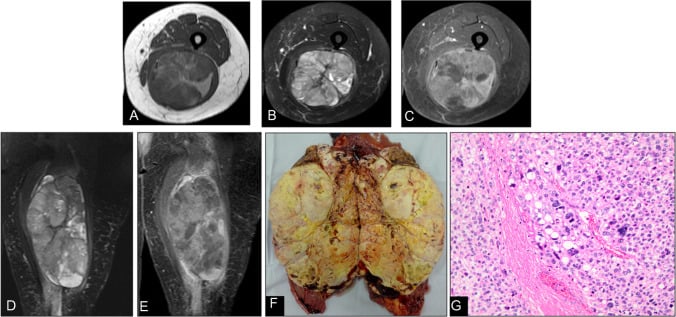
MRI is the gold standard for local staging of soft tissue sarcomas, and it guides both biopsy planning and the surgical approach. The protocol:
- T1-weighted: anatomical detail, fat signal
- T2-weighted with fat suppression: tumour extent, oedema
- Post-contrast T1 with fat suppression: enhancement pattern
- Include the entire muscle compartment plus the joint above and below
- MRI Characteristics
- Predominantly fat signal with thick septa (greater than 2mm), nodular areas
- MRI Characteristics
- Mixed fat and solid enhancing areas (high-grade component)
- MRI Characteristics
- High T2 signal (myxoid matrix), minimal fat, lacy enhancement
- MRI Characteristics
- Heterogeneous, minimal fat, irregular enhancement, necrosis
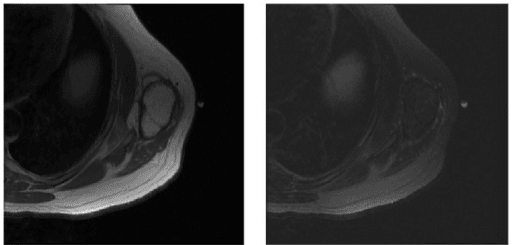
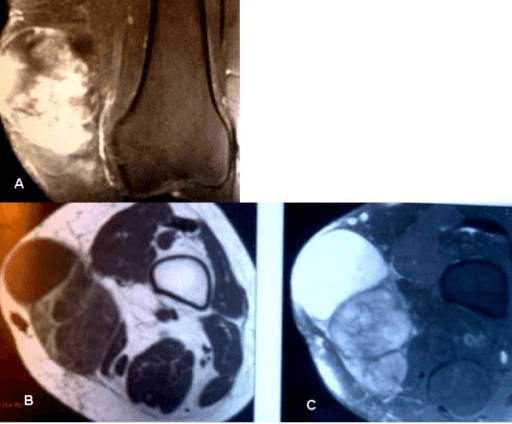
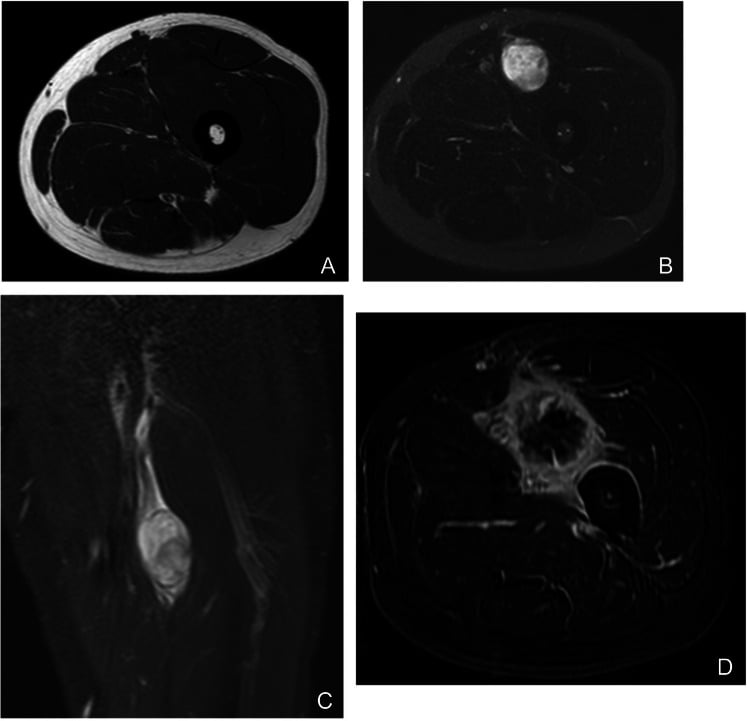
Staging for metastases. A CT chest looks for lung metastases, the most common site; a CT abdomen and pelvis is added for retroperitoneal primaries and for other metastases; and PET-CT is used for the myxoid subtype, which is highly FDG-avid, and for recurrent disease. Staging is completed before biopsy so that treatment can be planned on the full picture. The metastatic pattern differs by subtype:
- Well-differentiated: rare metastasis (less than 2%)
- Myxoid: lung, bone, soft tissue (10-15%)
- Dedifferentiated: lung, liver (15-30%)
- Pleomorphic: lung, liver (30-40%)
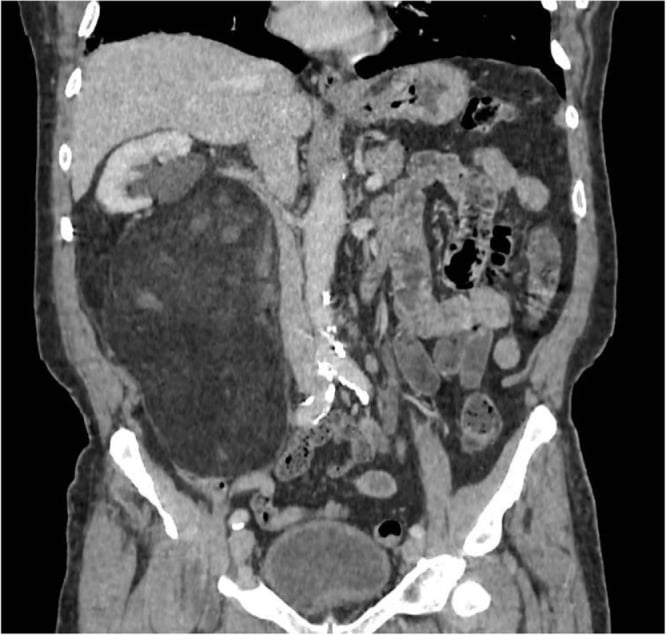
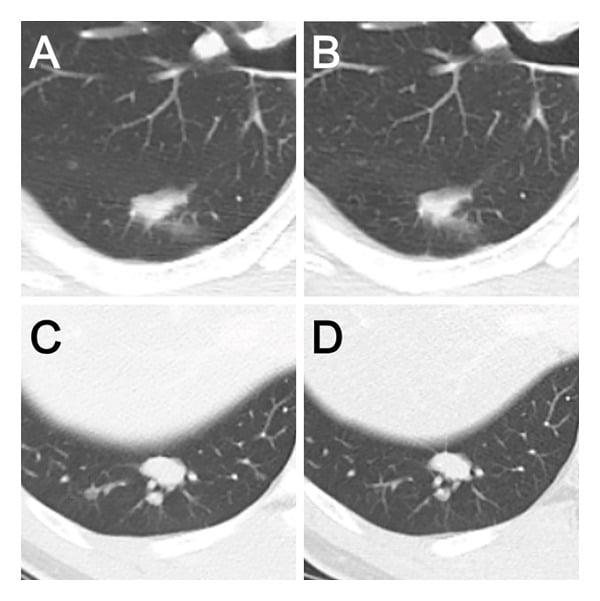
Biopsy. The tissue diagnosis comes last in the workup and is taken in a way that does not compromise the operation to follow.
- Core needle biopsy (14-16 gauge) is preferred over incisional biopsy
- The biopsy tract must be excisable at definitive surgery (plan the incision)
- Avoid contaminating neurovascular structures or adjacent compartments
- Request MDM2 or FUS-DDIT3 testing on the biopsy specimen
- Never perform an excisional biopsy for a suspected sarcoma (risks seeding, inadequate margins)
Referral to a sarcoma centre before biopsy is ideal for optimal outcomes.
MBCPMLiposarcoma Staging Workup
Hook:MBCPM = Must Be Checked Pre-Management - complete staging before surgery!
Clinical Assessment
Presentation. A painless mass is the commonest story (70-80%), noticed growing over months. Pain occurs in 20-30%, from compression of nerves or vessels, and a large mass impairs movement.
Red flags for high grade. Any of the following raises the suspicion of a high-grade tumour:
- Rapid growth, over weeks to months
- Systemic symptoms: weight loss, malaise
- Size greater than 10cm
- Deep location: retroperitoneal or intramuscular
Inspection and palpation. Measure the mass in centimetres and decide whether it is superficial or deep; skin changes are rare except over large tumours, and note any asymmetry of the limb. On palpation the tumour is firm to hard, unlike a soft lipoma, usually non-tender, and a deep lesion is fixed to fascia or muscle. Record fixation to skin or to deep structures.
Neurovascular examination. Document the distal pulses and sensory and motor function, and look for signs of nerve compression and of venous congestion from vascular compression.
Regional nodes. Palpate the regional lymph nodes for a baseline. Nodal metastasis is rare in sarcomas, and nodal involvement in liposarcoma is uncommon (less than 5%) except for the myxoid round cell variant.
Differential Diagnosis
A fatty or deep soft tissue mass has a broad differential, and the clinical task is to separate the benign lesions that can be observed or simply excised from the malignancies that need formal staging and wide excision. Molecular testing (MDM2/CDK4, FUS-DDIT3) resolves most of the difficult cases.
- Distinguishing Features
- Soft, mobile, often superficial, stable size
- Imaging / Molecular Clue
- Uniform fat signal, thin septa (under 2mm), MDM2 negative
- Why It Matters
- Simple excision adequate; do NOT over-treat
- Distinguishing Features
- Deep, large, thick septa or nodules in fat
- Imaging / Molecular Clue
- Thick enhancing septa, nodular non-fatty areas, MDM2/CDK4 amplified
- Why It Matters
- Needs wide excision and surveillance for dedifferentiation
- Distinguishing Features
- Thigh, younger adults, can mimic a cyst
- Imaging / Molecular Clue
- High T2 signal, fluid-like but enhances; FUS-DDIT3 fusion
- Why It Matters
- Radiosensitive; can metastasise to bone/soft tissue, not just lung
- Distinguishing Features
- Elderly, superficial, infiltrative 'tails'
- Imaging / Molecular Clue
- Myxoid signal but FUS-DDIT3 negative; curvilinear tails on MRI
- Why It Matters
- High local recurrence; needs generous margins
- Distinguishing Features
- Posterior neck, shoulder, back in older men
- Imaging / Molecular Clue
- CD34 positive, RB1 loss, MDM2 negative
- Why It Matters
- Benign mimic of pleomorphic liposarcoma
- Distinguishing Features
- Deep, rapidly enlarging high-grade mass
- Imaging / Molecular Clue
- No lipogenic differentiation, complex karyotype
- Why It Matters
- Overlaps with pleomorphic/dedifferentiated liposarcoma
Management
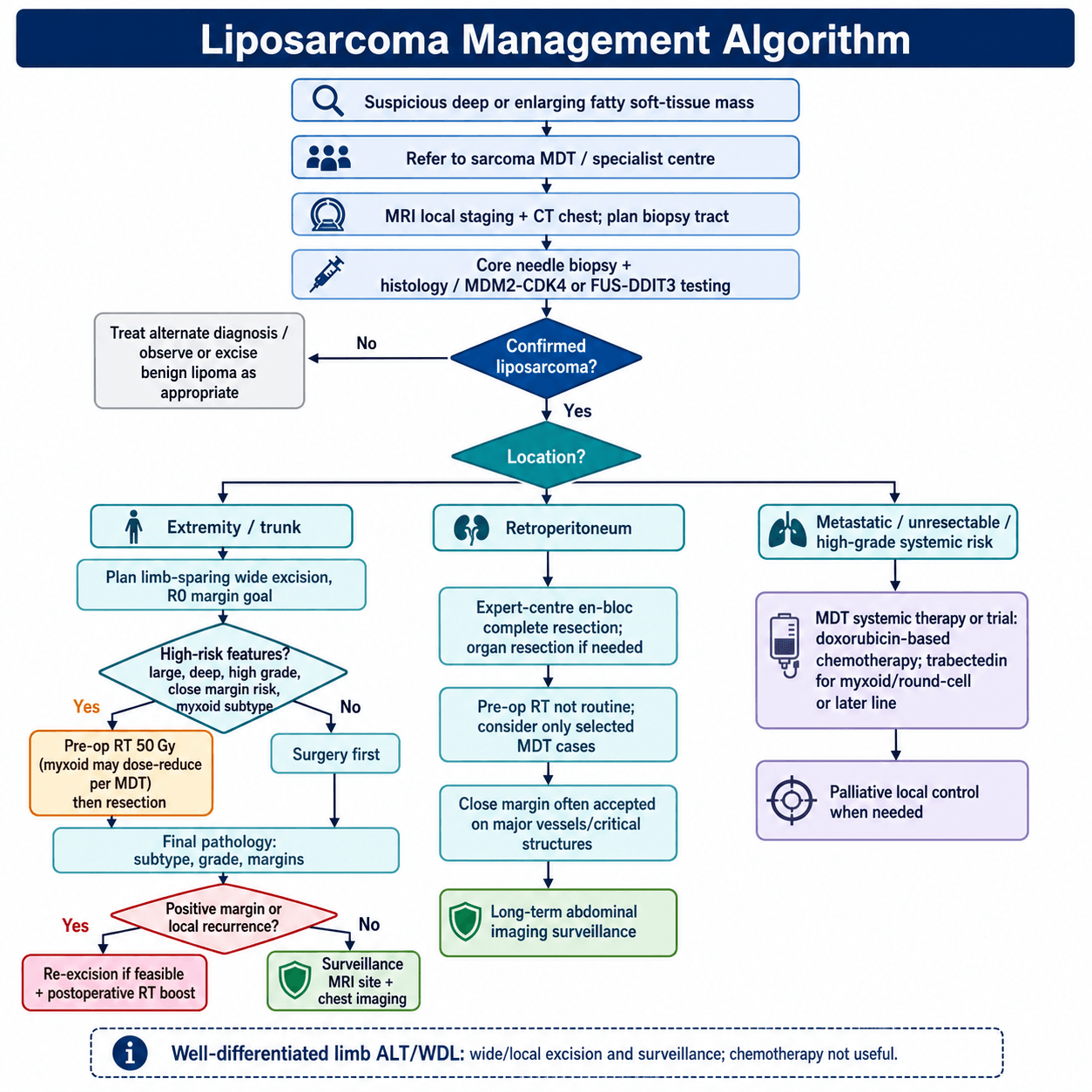
The decision. Subtype, site and stage set the plan, and the matrix below is the summary of it.
- Primary Treatment
- Wide excision (1-2cm margins)
- Adjuvant Therapy
- None (low grade)
- Prognosis
- Excellent (80-90% 5-year)
- Primary Treatment
- Wide excision
- Adjuvant Therapy
- Radiation (radiosensitive)
- Prognosis
- Good (70% 5-year)
- Primary Treatment
- Wide excision
- Adjuvant Therapy
- Radiation + chemotherapy
- Prognosis
- Poor (30-40% 5-year)
- Primary Treatment
- Complete resection + organs
- Adjuvant Therapy
- Radiation not routine (selected MDT cases only)
- Prognosis
- Variable (50% 5-year)
Margins. The goal of surgery is complete excision with negative margins, an R0 resection. The vocabulary:
- Negative margin: greater than 1mm of clear tissue
- Wide margin: 1-2cm of normal tissue, the goal for extremity sarcomas
- Marginal: through the tumour capsule or pseudocapsule (inadequate)
- Intralesional: tumour violated (unacceptable)
Extremity resection. The operation is a limb-sparing wide excision, planned on the MRI with the biopsy tract excised en bloc with the tumour and the neurovascular structures identified before they are approached. Where a critical structure is at risk, a closer margin is accepted rather than the function lost. Reconstruction is planned before the resection, and limb salvage is achieved in over 95% of extremity sarcomas. The steps are set out in the Surgical Technique section.
Retroperitoneal resection. These tumours are large at diagnosis (median 20cm), commonly involve adjacent organs, are hard to clear, and recur in 40-60%. The operation is a complete resection taking the involved organs (kidney, colon and so on) with them, on a radical compartmental philosophy that removes the whole compartment, and it accepts positive margins on the critical structures, the IVC and aorta. Routine preoperative radiotherapy is not standard after STRASS (see the evidence section) and is considered only in selected cases at the MDT. Five-year survival tracks the margin:
- R0 resection: 60%
- R1 resection (microscopic positive): 40%
- R2 resection (gross residual): 20%
Retroperitoneal sarcomas should be managed at specialised centres.
Radiotherapy. Timing is a trade-off. The preoperative course uses a lower dose and a smaller field, so it leaves less late fibrosis, at the cost of more acute wound complications. The indications, doses and what each achieves are tabulated below.
- Timing
- Preoperative or postoperative
- Dose
- 50 Gy (preop) or 60-66 Gy (postop)
- Benefit
- Reduces local recurrence from 30% to 10%
- Timing
- Preoperative (radiosensitive)
- Dose
- 50 Gy; 36 Gy in the DOREMY trial
- Benefit
- Excellent local control, superior to other subtypes
- Timing
- Postoperative
- Dose
- 66 Gy to margin
- Benefit
- Improves local control but re-excision preferred
- Timing
- Preoperative, selected MDT cases only
- Dose
- 50-50.4 Gy
- Benefit
- Not routine after STRASS; reduces tumour size
Myxoid liposarcoma is uniquely radiosensitive among soft tissue sarcomas. Radiotherapy produces excellent local control and may achieve near-complete pathological response. This is attributed to FUS-DDIT3 fusion affecting DNA repair mechanisms. Radiation is standard adjuvant therapy for myxoid subtype.
Chemotherapy. Well-differentiated liposarcoma does not respond to chemotherapy, so systemic treatment is reserved for the high-grade subtypes and for advanced disease. The indications:
- High-grade liposarcoma: dedifferentiated, pleomorphic, round cell myxoid
- Metastatic disease
- Neoadjuvant, for large or unresectable tumours
The regimens:
- Doxorubicin + ifosfamide: standard first line (response rate 25-30%)
- Trabectedin: active in myxoid liposarcoma (response rate 50% for the myxoid subtype)
- Eribulin: the one systemic agent with a survival signal specific to this tumour - in the pre-planned liposarcoma subgroup of the phase III trial, overall survival 15.6 vs 8.4 months versus dacarbazine (HR 0.51, p less than 0.001)
- The 12q13-15 amplicon that defines WD/DD liposarcoma co-amplifies MDM2 (which degrades p53) and CDK4 (which drives the cell cycle via Rb). Both are druggable.
- CDK4/6 inhibitors (e.g. palbociclib, abemaciclib) have shown progression-free-survival benefit in CDK4-amplified WD/DD liposarcoma - relevant precisely because conventional cytotoxic chemotherapy is largely ineffective in well-differentiated disease.
- MDM2 inhibitors (restoring p53 activity) are in clinical trials for MDM2-amplified liposarcoma, and trabectedin/eribulin retain a role in advanced disease (with trabectedin especially active in the myxoid subtype, as above).
- The unifying concept: in liposarcoma the diagnostic molecular marker is increasingly also the therapeutic target, which is why molecular confirmation matters beyond classification.
Exam point: in advanced/unresectable WD-DD liposarcoma where standard chemotherapy underperforms, the MDM2-CDK4 amplicon offers targeted options - CDK4/6 inhibitors (palbociclib) and trial-stage MDM2 inhibitors - so the marker that diagnoses the tumour can also guide treatment.
Surgical Technique
The wide excision of an extremity liposarcoma is planned the day before it is performed, and the plan covers the incision, the reconstruction and what will be done if a vessel or nerve turns out to be involved.
Surgical Protocol for Wide Excision
- Review the MRI with the surgical and radiology team
- Mark the tumour extent on the skin under MRI guidance
- Identify the biopsy tract for en bloc excision and plan the incision along it
- Plan the reconstruction and a contingency for vessels and nerves
- Position for access to the entire tumour
- Tourniquet for extremity lesions (bloodless field)
- Wide skin flaps to visualise the compartment fully
- Identify and protect the major neurovascular structures
- Excise the biopsy tract with the tumour (contaminated tissue)
- Dissect along fascial planes, preserving the compartment barriers, with 1-2cm margins in all dimensions where feasible
- Accept closer margins on critical structures (vessels, nerves, bone)
- Frozen section if a margin is uncertain
- Orient the specimen with sutures (superior, lateral, deep) for the pathologist
- Ink margins if concerned about specific areas
- Send to pathology fresh for molecular testing if needed
- Document the margin distances from critical structures and the neurovascular preservation
- Primary closure if tension-free
- Local flaps or skin grafts for large defects
- Vascular repair if sacrifice was necessary; tendon transfers if muscle was resected
- Drain placement for dead space management
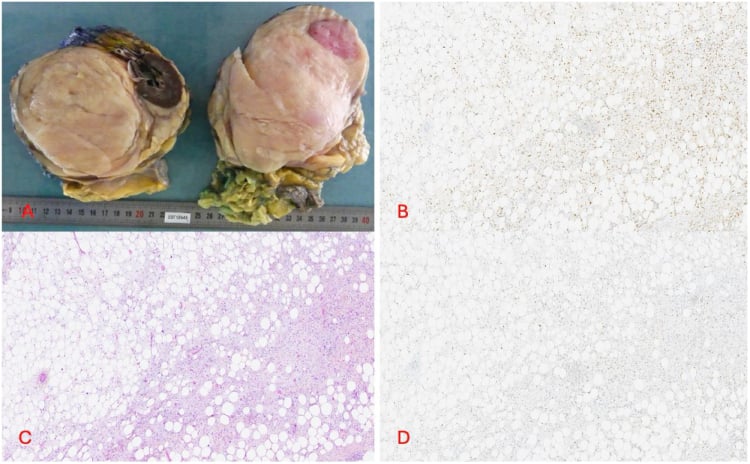
A positive margin on frozen section. Re-excise immediately if feasible, and document the location so that a postoperative radiation boost can be aimed at it. A closer margin on a vessel or nerve is acceptable because radiation can cover it; limb function is not traded for a marginal gain.
Approaching a nerve or vessel. Preserve the structure if a margin of 1mm or more can be achieved and sacrifice it if the tumour encases it. A sacrificed vessel can be reconstructed; a sacrificed nerve is documented so that rehabilitation can be planned around the deficit.
Complications
- Incidence
- 10% (R0) to 50% (R1)
- Risk Factors
- Positive margins, high grade, retroperitoneal
- Management
- Re-excision ± radiation, MDT review
- Incidence
- 10-30% (high-grade)
- Risk Factors
- Dedifferentiated, pleomorphic, round cell
- Management
- Systemic chemotherapy, palliative care
- Incidence
- 10-20%
- Risk Factors
- Preoperative radiation, large resection
- Management
- VAC therapy, debridement, flap coverage
- Incidence
- 5-10%
- Risk Factors
- Proximity to major nerves, sacrifice
- Management
- Physiotherapy, tendon transfers, orthotics
- Incidence
- 5-10%
- Risk Factors
- Lower extremity surgery, prolonged immobility
- Management
- Prophylaxis, early mobilisation, anticoagulation
Chronic lymphoedema. The risk rises with a groin or axillary dissection, with postoperative radiotherapy and with an extensive resection. It is managed with compression, lymphatic massage and elevation.
Radiation fibrosis. The skin thins and develops telangiectasia, the muscle and fascia fibrose, and the joint stiffens; a secondary malignancy is rare, about 1%. Preoperative radiotherapy causes less fibrosis than postoperative.
Postoperative Care
Recovery runs from inpatient wound and thrombosis care through the histology review that decides adjuvant treatment, and the end of adjuvant treatment marks the start of surveillance.
Postoperative Management
- Wound monitoring (flap viability, drainage)
- DVT prophylaxis (mechanical + pharmacological)
- Multimodal analgesia
- Early mobilisation with physiotherapy
- Drain management (remove when less than 30ml/24h)
- Wound assessment (infection, dehiscence)
- Progressive mobilisation
- Discharge planning when mobile and wound stable
- Wound check, suture removal
- Final histology and margin review
- MDT discussion of adjuvant therapy
- Radiation planning if indicated
- Radiotherapy (50-66 Gy over 5-7 weeks) if indicated
- Chemotherapy for high-grade (doxorubicin-based)
- Continue physiotherapy during adjuvant treatment
Rehabilitation. What the patient recovers depends on what was taken, and the programme is matched to it.
- Rehabilitation Focus
- ROM, strengthening, return to activity
- Expected Outcome
- Full function 6-12 weeks
- Rehabilitation Focus
- Compensatory strengthening, gait training
- Expected Outcome
- Good function with adaptation
- Rehabilitation Focus
- Orthotics, tendon transfers, gait retraining
- Expected Outcome
- Functional ambulation achievable
- Rehabilitation Focus
- Gentle ROM, lymphoedema management
- Expected Outcome
- Variable, may require intensive therapy
Prognosis and Surveillance
What decides the outcome. Histological subtype, site and margin status are the dominant determinants; size, depth and grade also count. Margin status is the most important prognostic factor for local recurrence: about 10% after an R0 resection, rising to 30-50% after a positive margin, which is why a positive margin is re-excised rather than watched.
- Favourable
- Well-differentiated, myxoid
- Unfavourable
- Dedifferentiated, pleomorphic, round cell
- Favourable
- Less than 5cm
- Unfavourable
- Greater than 10cm
- Favourable
- Superficial
- Unfavourable
- Deep (subfascial)
- Favourable
- Negative (R0)
- Unfavourable
- Positive (R1/R2)
- Favourable
- Extremity
- Unfavourable
- Retroperitoneum
- Favourable
- Low (G1)
- Unfavourable
- High (G2-3)
Surveillance. Follow-up is front-loaded, and for the well-differentiated and dedifferentiated subtypes it is never abandoned, because they can recur late.
Follow-Up Schedule
- Clinical examination
- MRI of primary site every 6 months
- CT chest every 6 months (high-grade subtypes)
- Clinical examination
- MRI primary site annually
- CT chest annually (high-grade subtypes)
- Clinical examination
- Imaging as clinically indicated
- Well-differentiated may recur late (10+ years)
Surveillance continues indefinitely for well-differentiated/dedifferentiated due to late recurrence risk.
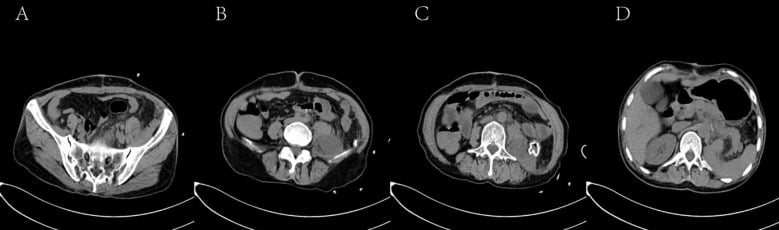
- Most soft tissue sarcomas metastasise haematogenously to the LUNG, so a CT chest is the standard screen. Myxoid liposarcoma is the classic exception - it has a striking tendency to spread to extrapulmonary / soft-tissue sites and BONE, particularly the SPINE/paraspinal soft tissue, retroperitoneum and other fat-bearing regions, sometimes before (or without) lung disease.
- These bony/soft-tissue deposits are frequently occult on CT and on bone scan (myxoid deposits can be lytic/non-mineralised and PET-variable), so whole-body MRI (or at least spine/abdomen-pelvis MRI) is increasingly recommended for staging and surveillance of myxoid liposarcoma rather than relying on CT chest alone.
- The round-cell (hypercellular, high-grade) component drives this metastatic risk - higher round-cell percentage means a stronger case for extended cross-sectional surveillance.
Exam point: for myxoid liposarcoma, do not limit surveillance to CT chest - it characteristically metastasises to extrapulmonary soft tissue and bone (especially the spine), so add whole-body or spine/abdomino-pelvic MRI, and raise that vigilance further with a significant round-cell component.
Guidelines, Registries & Global Practice
Global Epidemiology
Liposarcoma is the most common soft tissue sarcoma in adults, representing roughly 20-25% of all soft tissue sarcomas. Soft tissue sarcomas overall have an incidence of approximately 4-5 per 100,000 per year across most high-income populations, so liposarcoma incidence is on the order of 1-2.5 per 100,000 per year. Peak incidence is in the sixth and seventh decades, with a slight male predominance. Well-differentiated and dedifferentiated subtypes are concentrated in the retroperitoneum and deep extremity, while myxoid liposarcoma characteristically affects a younger cohort (median in the 40s) and arises in the thigh.
Side-by-Side Guideline Comparison
- Biopsy
- Image-guided core needle through excisable tract at reference centre
- Local Treatment
- Wide excision with negative margins; MDT-led
- Radiotherapy Stance
- Recommended for high-grade, deep, large extremity tumours; not standard for retroperitoneal disease
- Biopsy
- Core needle biopsy preferred; coordinate with sarcoma team
- Local Treatment
- Limb-sparing wide resection; amputation rarely needed
- Radiotherapy Stance
- Pre- or postoperative radiotherapy for higher-risk extremity sarcoma; selective in retroperitoneum
- Biopsy
- Refer suspicious lumps (deep, over 5cm, or growing) to sarcoma service before intervention
- Local Treatment
- Planned wide excision at a specialist sarcoma centre
- Radiotherapy Stance
- Neoadjuvant or adjuvant radiotherapy for high-risk limb sarcoma per MDT
- Biopsy
- Molecular confirmation: MDM2/CDK4 for ALT-WDLS-DDLS, FUS-DDIT3 for myxoid
- Local Treatment
- Classification drives prognosis and therapy
- Radiotherapy Stance
- Subtype (esp. myxoid) informs radiosensitivity expectations
All major bodies agree on biopsy-before-resection, wide negative margins, and management within a sarcoma MDT. The key area of genuine divergence is retroperitoneal radiotherapy: after the STRASS trial, routine preoperative radiotherapy is no longer recommended for primary retroperitoneal sarcoma, whereas radiotherapy retains a clear role in high-risk extremity disease.
Registry and Reference-Centre Evidence
- Large prospective single-institution databases (e.g. Memorial Sloan Kettering, 801-patient series) underpin the subtype-specific nomograms used worldwide
- National cancer registries (SEER in the US, RARECARE in Europe) confirm liposarcoma as the leading adult soft tissue sarcoma and the rising relative incidence with age
- Outcomes are consistently better when care is delivered at high-volume reference centres
- Well-resourced: routine MRI, MDM2 FISH, intensity-modulated radiotherapy, trabectedin access, and formal sarcoma MDTs
- Limited-resource: reliance on histology and immunohistochemistry where FISH is unavailable; wider use of upfront surgery; constrained access to radiotherapy and modern systemic agents
- Universal principle: any deep or large (over 5cm) lipomatous mass warrants imaging and biopsy before excision, regardless of setting
Process safeguards that protect patients in any health system:
- Pre-biopsy imaging and staging completed before intervention
- Biopsy performed by or in consultation with a sarcoma team, through an excisable tract
- MDT discussion documented before definitive surgery
- Informed consent covering recurrence risk, margin status, and adjuvant therapy
- A defined surveillance plan at discharge
Recurring pitfalls (the "whoops" lesion):
- Unplanned excision of a presumed lipoma without imaging/biopsy (missed liposarcoma)
- Inadequate margins requiring re-excision
- Failure to refer to a sarcoma MDT
- Inadequate surveillance leading to late detection of recurrence
Controversies and Areas of Uncertainty
Liposarcoma management contains several genuinely unsettled questions that examiners use to probe depth of understanding. Acknowledging uncertainty (rather than overstating dogma) is a marker of consultant-level reasoning.
The STRASS trial showed no abdominal recurrence-free survival benefit for routine preoperative radiotherapy. Debate continues over whether specific subgroups (well-differentiated or low-grade liposarcoma) may still benefit, and the STRASS-2 trial is examining the question further. Current consensus: not routine.
The 'compartmental' or extended frontline resection (en-bloc removal of adjacent uninvolved organs) reduces local recurrence in some series but increases morbidity, and high-quality randomised data are lacking. Practice varies between expert centres.
There is no consistent survival benefit from adjuvant chemotherapy across soft tissue sarcoma trials. Its role in high-grade liposarcoma (dedifferentiated, pleomorphic, round-cell myxoid) remains individualised and MDT-driven rather than standard.
The same MDM2-amplified entity is called atypical lipomatous tumour in the limb and well-differentiated liposarcoma in the retroperitoneum. Some argue uniform malignant nomenclature improves follow-up compliance; others favour 'ALT' to avoid over-treatment of indolent limb lesions.
MCQ Practice Points
Q: What molecular marker distinguishes well-differentiated liposarcoma from benign lipoma? A: MDM2 amplification - MDM2 and CDK4 amplification detected by FISH is diagnostic for well-differentiated liposarcoma (atypical lipomatous tumor) and absent in benign lipoma. This testing is essential for any deep or large fatty tumor to guide surgical planning.
Q: Which liposarcoma subtype is most radiosensitive and why? A: Myxoid liposarcoma - This subtype shows unique radiosensitivity attributed to the FUS-DDIT3 fusion protein affecting DNA repair. Radiotherapy achieves excellent local control and may produce near-complete pathological response. This is the only soft tissue sarcoma subtype where radiation is more effective than others.
Q: What is the 5-year survival for extremity well-differentiated liposarcoma after complete excision? A: 80-90% - Extremity well-differentiated liposarcoma (atypical lipomatous tumor) has excellent prognosis with wide excision achieving negative margins. Metastatic potential is less than 2%. In contrast, retroperitoneal well-differentiated liposarcoma has worse prognosis (50% 5-year survival) due to difficulty achieving negative margins and higher recurrence rate.
Q: What is the most important prognostic factor for local recurrence in liposarcoma? A: Surgical margin status - Negative margins (R0 resection) are associated with 10% local recurrence. Positive margins increase recurrence to 30-50%. Re-excision to achieve negative margins significantly improves local control and is mandatory if initial margins positive.
Q: What chromosomal translocation is pathognomonic for myxoid liposarcoma? A: t(12;16) producing FUS-DDIT3 fusion - This translocation is present in 95% of myxoid liposarcomas. Alternative fusion EWSR1-DDIT3 from t(12;22) occurs in 5%. Detection by RT-PCR or FISH confirms diagnosis and has therapeutic implications (radiosensitivity, trabectedin efficacy).
Exam Viva Scenarios
Practise clinical reasoning and management decisions out loud
“A 55-year-old man presents with a 10cm deep mass in his thigh that has grown over 6 months. MRI shows a predominantly fatty mass with thick septations and some solid enhancing areas. What is your differential diagnosis and initial management?”
“You excised a 12cm deep thigh mass thinking it was a lipoma. Histology returns as dedifferentiated liposarcoma with positive deep margin (tumor 1mm from fascia). The patient is 10 days post-op. How do you proceed?”
“Biopsy of a 15cm calf mass confirms myxoid liposarcoma, FUS-DDIT3 positive. CT staging shows no metastases. The tumor is close to the tibial nerve. The MDT asks for your surgical plan. What do you propose?”
Key Epidemiology
- Most common soft tissue sarcoma in adults (24% of all sarcomas)
- Peak age 50-65 years, slight male predominance
- 75% extremity/trunk, 25% retroperitoneum
- Incidence 2.5 per million per year
WHO Classification (Prognosis)
- Well-differentiated (40-45%) = ALT = MDM2+ = 80-90% 5-year (extremity)
- Myxoid (30-35%) = FUS-DDIT3 = radiosensitive = 70% 5-year
- Dedifferentiated (10-15%) = MDM2+ with high-grade = 30-40% 5-year
- Pleomorphic (5-10%) = poorest prognosis = 30% 5-year
Molecular Markers
- MDM2 for Well-differentiated/dedifferentiated (FISH gold standard)
- FUS-DDIT3 for Myxoid (t12;16 translocation)
- MDM2 negative excludes well-differentiated/dedifferentiated
- Round cell variant (greater than 5% round cells) worse prognosis
Staging Workup (MBCPM Mnemonic)
- MRI of primary = local staging and surgical planning
- Biopsy (core needle 14-16G) = never excisional biopsy
- CT chest = rule out lung metastases
- PET-CT if myxoid = FDG-avid subtype
- MDT discussion = before definitive treatment
Surgical Principles
- Wide excision with 1-2cm margins (R0 resection goal)
- Excise biopsy tract en bloc with tumor
- Positive margins mandate re-excision (within 2-4 weeks)
- Limb salvage possible in over 95% extremity sarcomas
- Retroperitoneal requires organ resection, accept close margins on vessels
Adjuvant Therapy
- Radiotherapy for high-grade or close/positive margins (reduces recurrence 30% to 10%)
- Myxoid subtype uniquely radiosensitive (preop RT 50 Gy)
- Chemotherapy: Doxorubicin + ifosfamide for high-grade
- Trabectedin highly active in myxoid subtype (50% response)
- Well-differentiated does NOT respond to chemotherapy
Prognosis and Surveillance
- 5-year survival: Well-differentiated extremity 80-90%, myxoid 70%, dediff/pleo 30-40%
- Positive margins increase local recurrence from 10% to 30-50%
- Follow-up: Q3-4mo years 1-2, Q6mo years 3-5, annual after 5 years
- MRI primary site and CT chest (high-grade) per schedule
- Well-differentiated can recur late (10+ years) - indefinite surveillance
Evidence Base and Key Studies
Subtype-Specific Prognostic Nomogram for Primary Liposarcoma (801 patients)
- 801 patients with primary liposarcoma from a single prospective database (1982-2005)
- Subtype distribution: well-differentiated 46%, dedifferentiated 18%, myxoid 18%, round cell 10%, pleomorphic 8%
- Overall 5-year and 12-year disease-specific survival 83% and 72%
- Independent predictors of survival: age, histologic variant, primary site, tumour burden, and gross margin status
- A liposarcoma-specific nomogram outperformed the generic sarcoma nomogram (concordance 0.83 vs 0.78)
MDM2/CDK4 Amplification Distinguishes Atypical Lipomatous Tumour from Lipoma
- All atypical lipomatous tumours showed ring chromosomes and 12q13-15 amplification
- MDM2 protein overexpressed in atypical lipomatous tumours but NOT in any ordinary lipoma
- CDK4 overexpression present in 100% of atypical lipomatous tumours (only weak focal staining in 11% of lipomas)
- MDM2 and CDK4 immunohistochemistry increases diagnostic accuracy in distinguishing ALT from lipoma
Trabectedin (Ecteinascidin-743) in Advanced Pretreated Myxoid Liposarcoma
- 51 patients with advanced pretreated myxoid liposarcoma treated in a compassionate-use programme
- Overall RECIST response 51% (2 complete, 24 partial responses)
- Median progression-free survival 14.0 months; 6-month PFS 88%
- Characteristic radiological pattern: tissue-density and enhancement changes preceded tumour shrinkage
- Mechanism linked to the FUS-DDIT3 (DDIT3-FUS) translocation that defines this sarcoma
Radiosensitivity Translates into Excellent Local Control in Extremity Myxoid Liposarcoma
- 88 extremity myxoid liposarcomas compared with 603 other soft tissue sarcomas
- 5-year local recurrence-free survival 97.7% for myxoid vs 89.6% for other subtypes (p=0.008)
- Superior systemic control: 5-year overall survival 93.9% vs 76.4%
- No myxoid liposarcoma patient required amputation as primary management
- Findings support a distinctive radiosensitivity of the myxoid subtype
- Of the 12 myxoid patients who developed distant metastases, 7 appeared in NON-PULMONARY sites (bone and serosa) - whereas 78% of metastases in the other-sarcoma group were pulmonary. Surveillance for myxoid liposarcoma cannot rely on a CT chest alone.