Subtle Diagnosis | Myerson Classification | ORIF vs Primary Arthrodesis
- Fleck sign = avulsion of Lisfranc ligament from base of 2nd MT (pathognomonic)
- No bony columns align normally on AP, oblique, and lateral views
- 2mm diastasis between 1st and 2nd MT bases = absolute surgical indication
- Primary arthrodesis beats ORIF on the outcomes that drive reoperation - far less midfoot post-traumatic arthritis and roughly a third the unplanned reoperation rate - but it is NOT a clean win: return to sport is no different, and its long-term cost in the young athlete is unquantified
- Weight-bearing CT gold standard for subtle injuries in high-suspicion cases
- “Piano key test: pain with dorsoplantar force on metatarsal heads
- “ALWAYS check medial column alignment on lateral X-ray (1st TMT joint)
- “Purely ligamentous injuries have worse outcomes than fracture-dislocations
- “Say primary arthrodesis is FAVOURED for the purely ligamentous injury, not proven superior - the AOFAS advantage is statistically significant but may not be clinically meaningful, and return-to-sport rates are equivalent
Overview and Epidemiology
Lisfranc injuries are easily missed, up to 20% on initial presentation, and devastatingly disabling if untreated. The tarsometatarsal (TMT) joint complex is critical for foot stability and push-off power, and even a subtle ligamentous injury leads to progressive deformity and post-traumatic arthritis in over 90% if it is not recognised and treated. A high index of suspicion for any midfoot pain after trauma is the whole of the early diagnosis.
Who. Two populations. The low-energy injury is the more common, from a twisting fall, a foot on the brake pedal or sport (football, basketball), with a peak age of 30-40 years. The high-energy injury comes from motor vehicle collisions, falls from height and industrial crush, and is associated with other foot and ankle fractures.
Untreated. The midfoot collapses progressively and becomes arthritic, leaving chronic pain and disability, loss of push-off power and secondary forefoot deformities. Delayed diagnosis carries worse outcomes than acute treatment and often ends in salvage arthrodesis.
Anatomy and Biomechanics
The Lisfranc ligament. The oblique ligament is the strongest ligament in the TMT complex, running from the lateral plantar aspect of the medial cuneiform to the medial base of the 2nd metatarsal. It has three bundles: dorsal (weakest), interosseous (strongest) and plantar (second strongest). There is no ligamentous connection between the 1st and 2nd metatarsal bases, so the Lisfranc ligament is the sole stabiliser of that interval; when it fails, the medial column can separate from the middle column, and progressive deformity and instability follow.
The keystone. The 2nd metatarsal base is recessed 2-3mm proximally, the keystone of a "Roman arch" configuration that gives the midfoot its stability.
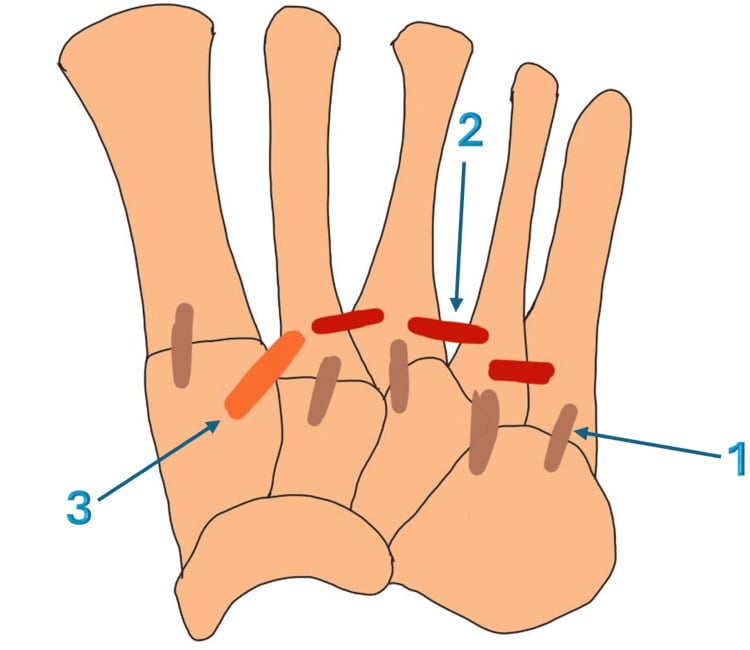
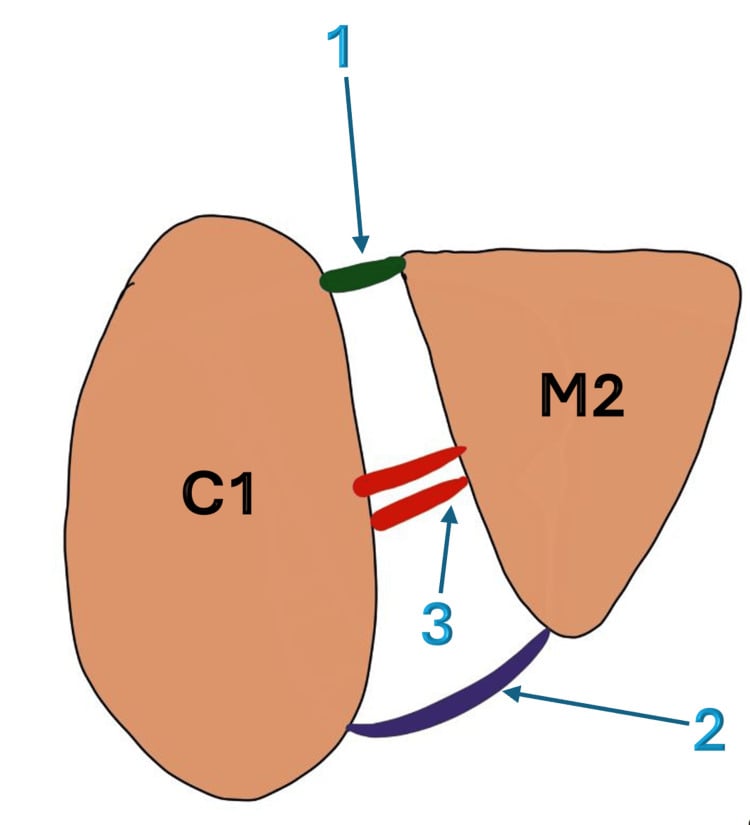
Two columns, two jobs. The medial column is a rigid lever for push-off; the lateral column is flexible and adapts the foot to uneven terrain; the transverse arch is maintained by the Lisfranc complex. The difference in mobility is the reason the two columns are fixed differently.
- TMT Joints
- 1st-2nd-3rd TMTs
- Mobility
- Minimal (2-3°)
- Fixation Strategy
- Screw fixation or primary arthrodesis
- TMT Joints
- 4th-5th TMTs
- Mobility
- Significant (10-15°)
- Fixation Strategy
- Temporary K-wires only (preserve motion)
Pathophysiology and Injury Mechanism
Two mechanisms. Direct, a crush, and indirect, rotational or axial loading. The indirect mechanism is the more common and involves hyperplantar flexion with axial load, which makes the Lisfranc ligament fail. Knowing the mechanism helps predict the associated injuries and guides treatment.
- Direct (high-energy): industrial crush, a heavy object dropped on the midfoot, direct impact in a motor vehicle collision. Significant soft-tissue damage, with a higher rate of open injuries and compartment syndrome.
- Indirect (more common): axial load on a plantarflexed foot (the driver's foot on the brake during a collision), rotational force with the foot fixed to the ground (sporting injuries), a fall from height onto a plantarflexed foot, hyperabduction or hyperadduction with the forefoot fixed.
How the stabilisers fail. The ligaments fail in sequence.
Sequential Failure of Stabilisers
The dorsal TMT ligaments are weakest and fail first under dorsiflexion-abduction stress.
The interosseous portion of the Lisfranc ligament (strongest component) fails next, allowing dorsal-lateral displacement of the metatarsals.
Complete failure of plantar ligaments allows full TMT dislocation. Associated fractures may occur (2nd MT base avulsion, cuneiform fractures).
Why it progresses without treatment. The Roman arch configuration is lost and the 1st and 2nd metatarsals drift progressively apart. The medial column becomes unstable and push-off power goes with it; the lateral column adapts and the forefoot drifts into abduction; the transverse arch collapses and the midfoot becomes arthritic.
The 2mm rule. Diastasis of greater than 2mm between the 1st and 2nd metatarsal bases indicates ligamentous incompetence. Even minimal displacement raises joint contact pressures, and articular cartilage degeneration begins within weeks.
Classification Systems
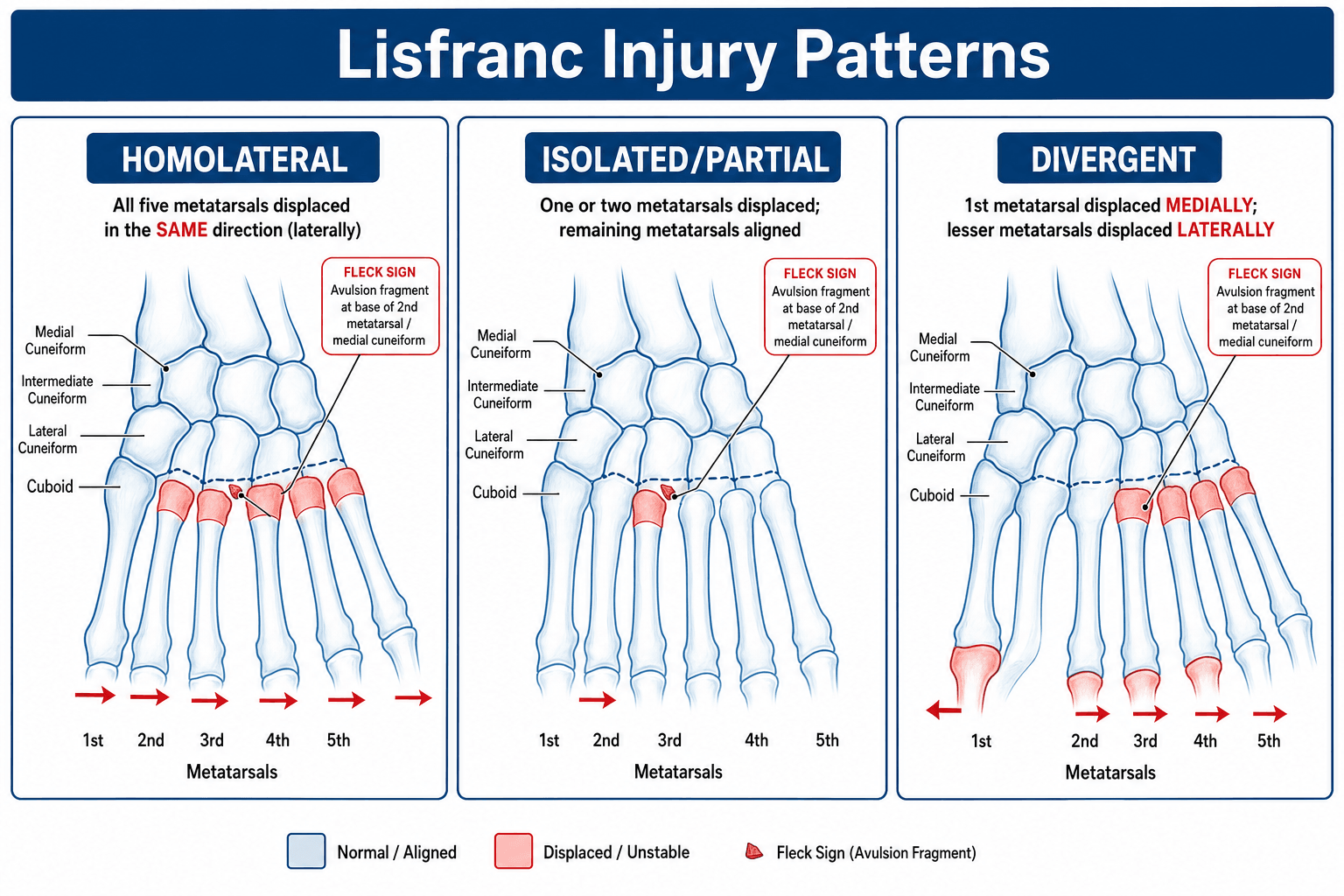
The system in daily use is the Hardcastle (1982) classification as modified by Myerson, itself descended from Quénu and Küss, so "Hardcastle-Myerson" and "Myerson" name the same system; quote either, but be consistent. It is based on the direction and pattern of displacement at the TMT joints and guides the treatment strategy. Type C, the divergent pattern, carries the highest energy, the most soft-tissue damage and the worst prognosis.
- Pattern
- All 5 TMTs displaced same direction
- Key Features
- Lateral or dorsomedial (most common)
- Treatment Approach
- ORIF all columns
- Pattern
- 1st-2nd TMTs involved
- Key Features
- Medial column instability
- Treatment Approach
- ORIF medial, assess lateral
- Pattern
- 3rd-4th-5th TMTs involved
- Key Features
- Lateral column injury
- Treatment Approach
- ORIF or K-wire lateral column
- Pattern
- 1st ray medial, 2-5 lateral
- Key Features
- High energy, worst outcomes
- Treatment Approach
- ORIF both columns, consider staging
Nunley-Vertullo Classification (Athletic Midfoot Sprains)
The Myerson and Quenu-Kuss systems describe the high-energy fracture-dislocation. They do not capture the subtle, low-energy athletic midfoot (Lisfranc) sprain, which spans a spectrum from a stable ligament sprain to frank diastasis and needs its own staging because treatment differs. Nunley and Vertullo (2002) staged these injuries using weight-bearing radiographs (the original description also used bone scintigraphy to detect the radiographically occult sprain), and reported excellent results in 93% of athletes managed by this scheme.
- Diastasis (1st-2nd ray)
- None (positive bone scan or MRI, normal radiographic alignment)
- Arch height (lateral view)
- Preserved
- Treatment
- Non-operative: non-weight-bearing cast, then progressive return to activity
- Diastasis (1st-2nd ray)
- Diastasis present (approximately 1 to 5 mm)
- Arch height (lateral view)
- Preserved (no flattening)
- Treatment
- Anatomic reduction and internal fixation
- Diastasis (1st-2nd ray)
- Diastasis present
- Arch height (lateral view)
- LOST (arch flattening on the lateral view)
- Treatment
- Anatomic reduction and internal fixation
Where the operative line falls. Between Stage I and Stage II. A true Stage I, in which the radiographs look aligned and the diagnosis rests on a positive bone scan or MRI, is managed in a non-weight-bearing cast with a graded return; any diastasis, Stage II or III, needs anatomic reduction and fixation. Weight-bearing radiographs are the key diagnostic step.
Clinical Assessment
History. Ask for the mechanism and whether the patient could weight-bear immediately after the injury; being unable to is a red flag. The complaints are midfoot pain and swelling, dorsal and plantar, an inability to push off or walk normally, and pain that is worse with weight-bearing. "Just a sprain" is the most common misdiagnosis, and the patient who presents days to weeks later with persistent pain is the classic story of the missed injury.
Look. Midfoot ecchymosis, dorsal and plantar; plantar ecchymosis is highly specific, and a Lisfranc injury should always be suspected when it is seen. Diffuse swelling over the TMT joints, and a forefoot abduction deformity if the injury is severe.
Feel. Point tenderness over the TMT joints, especially the 1st and 2nd, and a palpable step-off or gap.
Move. The piano key test: pain with dorsoplantar force on the metatarsal heads. Passive abduction stress is painful, and the patient cannot perform a single-leg heel rise.
The occult injury. Suspect it in midfoot pain after a twisting injury even when the X-rays appear "normal", and in the patient who cannot weight-bear or push off despite "normal" static films. If suspicion is high and the static films are normal, the pathway is weight-bearing views and then weight-bearing CT.
- Distinguishing Features
- Plantar ecchymosis, pain on piano-key / abduction stress, fleck sign, 1st-2nd MT diastasis
- Key Investigation
- Weight-bearing radiographs; weight-bearing CT if normal
- Distinguishing Features
- Tenderness without diastasis or malalignment, able to weight-bear, stable on stress
- Key Investigation
- Weight-bearing radiographs normal; consider Nunley-Vertullo stage I
- Distinguishing Features
- Focal tenderness over a single MT base, no TMT diastasis or incongruity
- Key Investigation
- Plain radiographs; CT if intra-articular
- Distinguishing Features
- Tenderness more proximal/medial, midfoot bony tenderness
- Key Investigation
- Plain radiographs; CT for occult fracture
- Distinguishing Features
- Swollen, warm, often painless insensate foot; may lack clear trauma history
- Key Investigation
- Radiographs (fragmentation/collapse), inflammatory markers, MRI
Investigations
Radiographs first: AP, oblique and lateral. The plain-film diagnosis is one of alignment, joint by joint, and each view has its own lines to check. The lateral is the one that is forgotten.
- AP: medial border of the 1st MT with the medial border of the 1st cuneiform; medial border of the 2nd MT with the medial border of the 2nd cuneiform; medial border of the 4th MT with the medial border of the cuboid
- Oblique: medial border of the 3rd MT with the medial border of the 3rd cuneiform; lateral border of the 4th MT with the lateral border of the cuboid
- Lateral: dorsal border of the 1st MT with the dorsal border of the 1st cuneiform
Having checked the lines, look for the four findings:
- The fleck sign, an avulsion from the 2nd MT base, which is pathognomonic
- Diastasis greater than 2mm between the 1st and 2nd MT bases
- A step-off at any TMT joint
- Fractures of the cuneiforms or metatarsal bases
FLECKRadiographic Signs of Lisfranc Injury
Hook:FLECK sign is the key - if you see the tiny avulsion fracture from the 2nd MT base, you've found your Lisfranc injury!
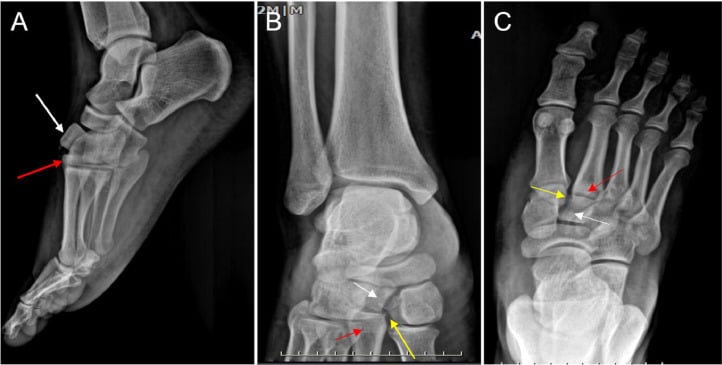
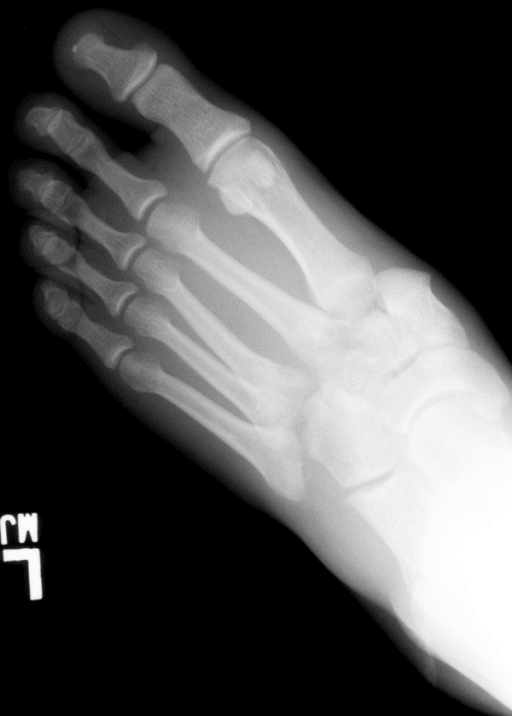
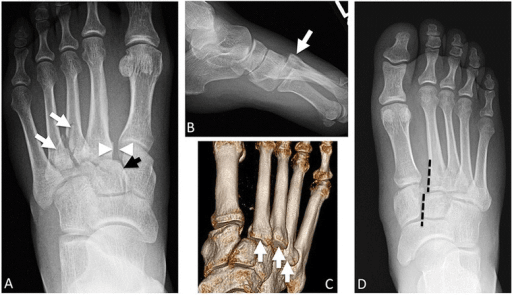
Weight-bearing radiographs. The next step when a Lisfranc injury is suspected and the non-weight-bearing films are normal. The patient stands on the injured foot, with bilateral comparison views; the AP and lateral are the most useful. The study is positive if there is:
- Diastasis greater than 2mm between the 1st and 2nd MT bases on the AP
- Loss of medial column alignment on the lateral (1st TMT joint)
- Greater than 2mm difference compared with the contralateral side
CT. Sagittal reconstructions show the dorsal subluxation of the metatarsal bases, which may not be apparent on the AP radiograph, along with the pattern of soft-tissue swelling and any associated cuneiform fractures. 3D reconstruction is invaluable for pre-operative planning and for understanding a complex fracture-dislocation pattern.
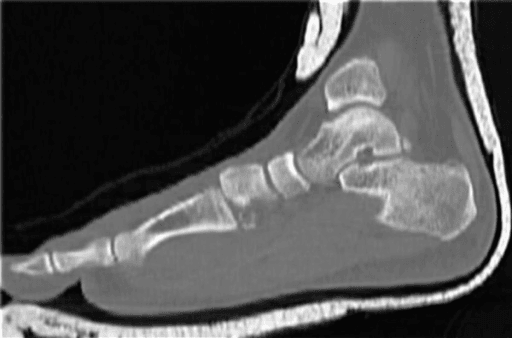
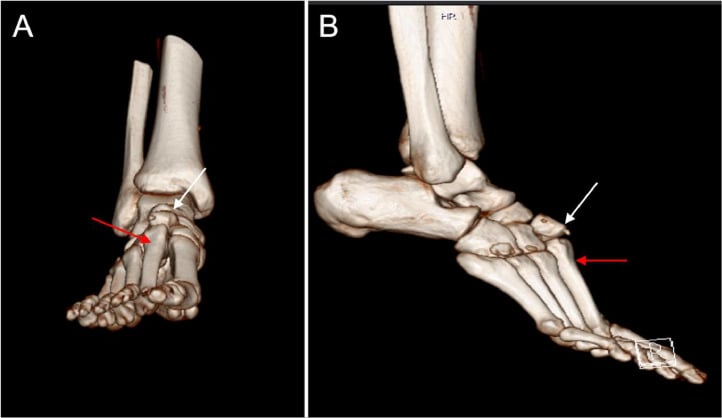
Weight-bearing CT. The gold standard for the subtle injury: high clinical suspicion with normal weight-bearing radiographs, the subtle ligamentous injury, and pre-operative planning for the complex one. It detects diastasis under 2mm, identifies occult fractures, allows bilateral comparison and gives 3D reconstruction for surgical planning, with a sensitivity of 94% and specificity of 99% for Lisfranc injuries.
MRI. Less commonly used. It can identify the Lisfranc ligament disruption directly, the bone marrow oedema pattern and the soft-tissue injuries, but it is non-weight-bearing and may miss subtle instability, and it is more expensive and time-consuming than CT. It complements other imaging and is not typically first-line.
Associated injuries. 39% have additional foot injuries: navicular fractures, cuneiform fractures, metatarsal shaft fractures, and compartment syndrome in the high-energy injury. Always assess the neurovascular status (dorsalis pedis, posterior tibial), the soft-tissue envelope (an open injury is rare but possible) and the ankle and hindfoot.
Management Algorithm
The decision. It turns on what is injured and what the soft tissues will allow:
- Purely ligamentous (Type A or B) → primary arthrodesis of the 1st-2nd-3rd TMTs
- Fracture-dislocation, acute (Type A, B or C) → ORIF, screws medial and K-wires lateral
- High-energy with soft-tissue compromise or comminuted base fractures (Type B2 or C) → temporary K-wires, bridge plating or external fixation, staged to definitive fixation or primary arthrodesis at 7-14 days once the soft tissues have recovered
- Chronic (greater than 6 weeks) → primary arthrodesis of the 1st-2nd-3rd TMTs
Who qualifies. Rarely anyone. Non-operative treatment is for the injury with no diastasis on weight-bearing X-rays (under 2mm), no loss of alignment on the AP, oblique and lateral views, a stable clinical examination and a low-energy mechanism.
Non-Operative Treatment
- Non-weight-bearing in short leg cast or boot
- Strict compliance critical
- Weekly X-rays first 3 weeks to detect displacement
- Transition to weight-bearing in boot if X-rays stable
- Gradual progression over 6 weeks
- Continue weekly X-rays
- Wean from boot
- Physiotherapy for gait retraining
- Avoid high-impact until 4-6 months
Why it so often fails. Even "stable" Lisfranc injuries have high failure rates with non-operative treatment, which is why the monitoring is so close. Any displacement on follow-up X-rays mandates surgical intervention, and many surgeons advocate early surgical fixation even for minimally displaced injuries to prevent late collapse.
Surgical Technique
Consent. The risks to name, with the figures:
- Infection: 2-5% superficial, 1-2% deep
- Nerve injury: superficial peroneal, deep peroneal (2-5%)
- Malunion or loss of reduction: 10-30% with ORIF
- Post-traumatic arthritis: 30-50% despite treatment
- Hardware removal: required at 4-6 months if ORIF
- Need for revision or arthrodesis: 20% with ORIF
- Compartment syndrome: rare but possible (high-energy)
Equipment. Have everything the operation might turn into:
- Implants: 3.5mm or 4.0mm screws for the medial column, 1.6mm K-wires for the lateral
- Power: drill, small fragment set
- Imaging: C-arm with AP, oblique and lateral capability
- Reduction aids: pointed reduction clamps, bone hooks, K-wires
- Arthrodesis set: if planning primary fusion (curettes, reamers, bone graft)
- External fixator: if a staged approach for a high-energy injury
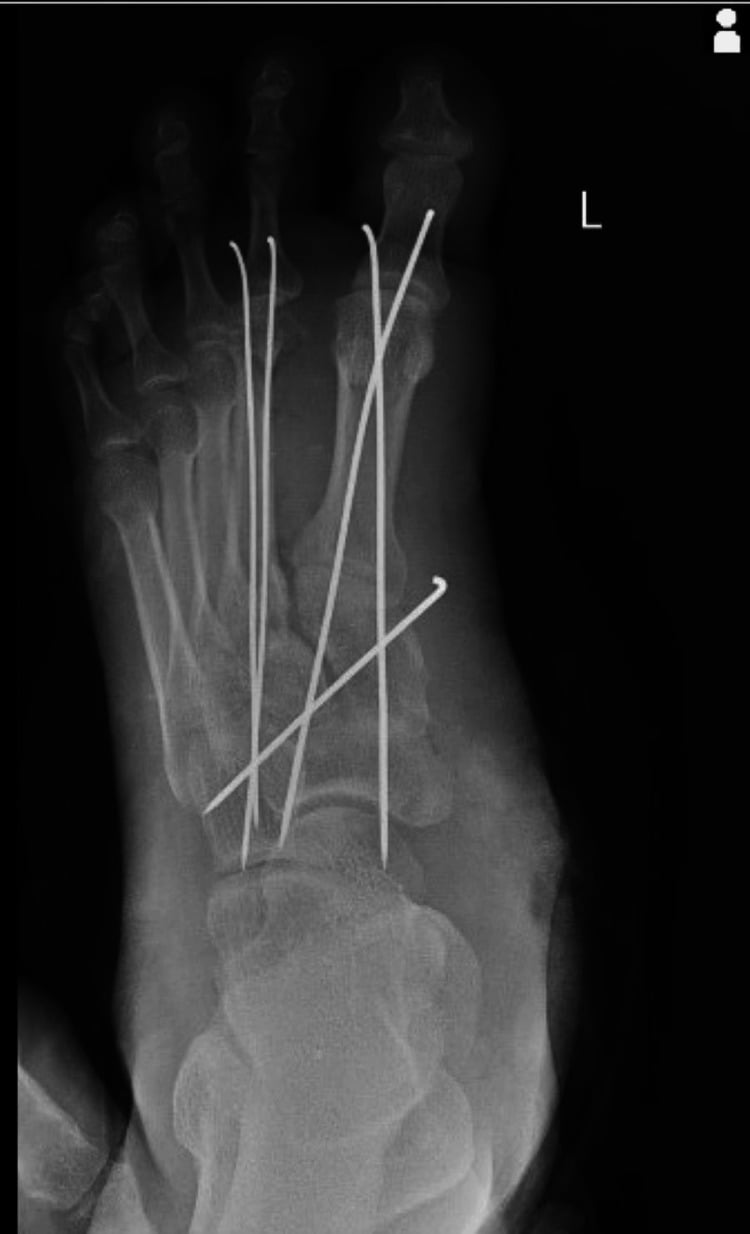
Choice of Fixation Construct
When ORIF is chosen, the construct matters. The traditional construct is the transarticular screw, but each screw crossing the tarsometatarsal joint violates articular cartilage and fatigues across the joint, so a dorsal bridge plate (extra-articular, cartilage-sparing) and a suture-button / flexible device (allowing physiological micromotion) are alternatives. No single construct is proven universally superior; selection follows the injury pattern, the degree of comminution, and the wish to avoid joint violation.
- How it works
- Rigid screws crossing the TMT joints (medial three columns)
- Advantages and trade-offs
- Strong, well-studied, the traditional default; but they damage articular cartilage and fatigue across the joint - planned removal at 4 to 6 months, risk of breakage
- How it works
- Plate spanning the joint with screws in the metatarsal and cuneiform (not crossing the joint)
- Advantages and trade-offs
- Extra-articular, so it spares cartilage; comparative data trend in its favour over transarticular screws (Philpott meta-analysis, pooled AOFAS approximately 79 vs 74); useful with comminution or dorsal bone loss; usually still removed
- How it works
- Cortical button-and-suture across the medial cuneiform to the 2nd metatarsal base, giving dynamic stabilisation
- Advantages and trade-offs
- Allows physiological micromotion, no routine removal operation, spares cartilage; attractive for isolated ligamentous instability; limited comparative data and a risk of incomplete reduction
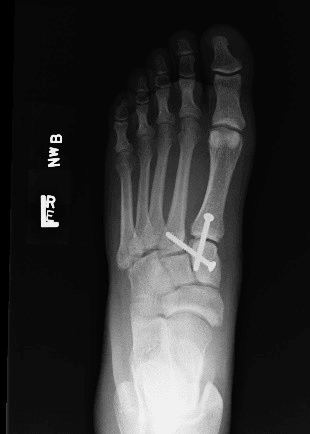
Complications
- Incidence
- 30-50% overall
- Risk Factors
- Residual displacement, high-energy injury, cartilage damage
- Management
- Activity modification, orthotics, NSAIDs; salvage arthrodesis if severe
- Incidence
- 10-30%
- Risk Factors
- Purely ligamentous injury, inadequate fixation, early weight-bearing
- Management
- Revision ORIF or convert to primary arthrodesis
- Incidence
- 20-30%
- Risk Factors
- Screw heads not countersunk, thin soft tissue dorsum of foot
- Management
- Hardware removal at 4-6 months (planned)
- Incidence
- 5-10%
- Risk Factors
- High-energy injury, soft tissue damage, diabetes, smoking
- Management
- Wound care, antibiotics; may require debridement or flap
- Incidence
- 2-5%
- Risk Factors
- Iatrogenic during approach, traction injury
- Management
- Usually neuropraxia; observe, most recover in 3-6 months
- Incidence
- 5-10%
- Risk Factors
- Smoking, diabetes, inadequate fixation, bone loss
- Management
- Revision arthrodesis with bone graft and supplemental fixation
- Incidence
- Under 5%
- Risk Factors
- High-energy injury, crush mechanism
- Management
- Emergency fasciotomy (4 compartments of foot)
The arthritis conversation. Even with perfect reduction and fixation, some patients develop symptomatic post-traumatic arthritis at the TMT joints, and high-energy injury and cartilage damage at the time of injury are the major risk factors. Counsel patients from the outset that salvage arthrodesis may be needed in the future; this risk is one reason some surgeons advocate primary arthrodesis, especially for the ligamentous injury.
Postoperative Care and Rehabilitation
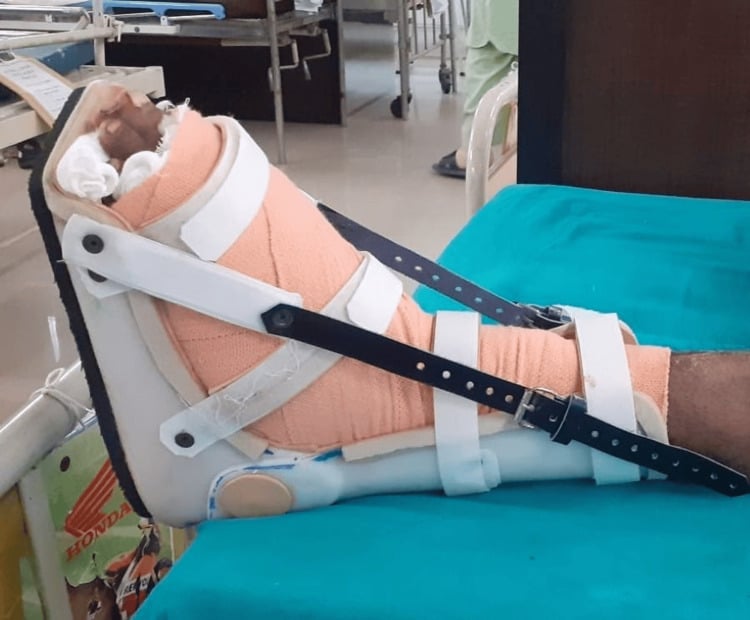
Rehabilitation After ORIF
- Non-weight-bearing in short leg splint
- Elevation above heart level (reduce swelling)
- DVT prophylaxis (aspirin or LMWH per protocol)
- Wound check at 2 weeks, transition to cast/boot
- Non-weight-bearing in short leg cast or boot
- Weekly X-rays first 3 weeks to detect loss of reduction
- Remove lateral column K-wires at 6 weeks (in clinic)
- Transition to weight-bearing in boot (10-20% per week)
- Continue in boot full-time
- Radiographs at 8, 12 weeks
- Start gentle ROM exercises at 8 weeks
- Wean from boot
- Supportive shoes with rigid sole
- Physiotherapy for gait retraining
- Custom orthotics if arch collapse
- Remove medial column screws at 4-6 months
- Brief period non-weight-bearing (1-2 weeks) after hardware removal
- Return to full activity at 6 months
Why the screws come out. Screws crossing the TMT joints are subject to repetitive cyclical loading during gait and will eventually break or loosen, 30-50% by 1 year. Planned removal at 4-6 months, once the bone has healed, prevents that and lets the patient move to full activity without the risk of hardware failure.
Return to sport. Low-impact activities at 4-6 months, high-impact sports at 6-9 months, and competition at 9-12 months, depending on the severity of the initial injury, the type of surgery, the demands of the sport and whether arthritis is present. Many athletes never return to their pre-injury level, 30-40% in high-impact sports, and the patient should hear that early.
Long-term follow-up. Radiographs at 2, 6 and 12 weeks, clinical and radiographic review at 6, 12 and 24 months, then annually if symptomatic. The things to watch for are progressive arthritis, hardware failure after ORIF, midfoot collapse and transfer metatarsalgia; custom orthotics and rigid-soled shoes are the long-term support.
Outcomes and Prognosis
- Patient Population
- Acute, good bone quality
- Outcomes
- 70-80% good/excellent, most return to activity
- Complications
- 20-30% loss of reduction, hardware removal required
- Patient Population
- No fractures, ligament only
- Outcomes
- 50% poor outcomes, high revision rate
- Complications
- 30% loss of reduction, 20% conversion to arthrodesis
- Patient Population
- No fractures, or chronic
- Outcomes
- 85% good/excellent, better than ORIF for this group
- Complications
- 5-10% nonunion, eliminates arthritis risk
- Patient Population
- Truly non-displaced, compliant
- Outcomes
- High failure rate, most end up needing surgery
- Complications
- Progressive deformity, arthritis
What predicts a poor result. A high-energy mechanism does worse than a low-energy one; the purely ligamentous injury does badly with ORIF and needs primary arthrodesis; a diagnosis delayed beyond 6 weeks significantly worsens the prognosis; residual displacement, even 2mm of diastasis, leads to progressive arthritis in 90%; associated navicular or cuneiform fractures worsen the overall outcome; and smoking and diabetes increase the risk of complications and poor healing.
Guidelines, Registries & Global Practice
Lisfranc injuries are uncommon but high-morbidity, and are misdiagnosed in approximately 20% of cases on initial radiographs across health systems. They are caused by both high-energy (motor vehicle, fall from height, crush) and low-energy (athletic, twisting plantar-flexed foot) mechanisms, and should be considered in any patient with midfoot pain, swelling or ecchymosis after a foot injury. Missed or inadequately reduced injuries lead to chronic pain, deformity and post-traumatic arthritis, which is why prompt diagnosis and anatomic reduction are emphasised worldwide.
- Recommendation
- Weight-bearing radiographs, then CT (weight-bearing CT increasingly preferred)
- Evidence / Source
- Systematic reviews and emergency-medicine reviews (Level III-IV)
- Recommendation
- Most studies use diastasis of 2 mm (range 1-3 mm) or any TMT incongruity
- Evidence / Source
- Pearsall 2023 systematic review of operative indications (Level IV)
- Recommendation
- Primary arthrodesis of medial 2-3 rays favoured over ORIF
- Evidence / Source
- Ly & Coetzee RCT (Level I)
- Recommendation
- Anatomic reduction with stable fixation (screws or bridge plate); avoid fusing all 5 joints
- Evidence / Source
- Myerson 1986; Mulier 2002; Philpott 2021 meta-analysis
- Classification used: Nunley-Vertullo for subtle athletic sprains; Myerson for fracture-dislocations (most cited operative-indication systems, Pearsall 2023).
- Fixation construct: transarticular screws vs dorsal bridge plating; some evidence favours bridge plating, but no construct is proven universally superior (Philpott 2021).
- Suture-button / flexible fixation: used in some centres for isolated ligamentous instability; promising single-study results, limited comparative data.
- Weight-bearing CT availability drives how often subtle injuries are detected (resource-dependent).
- No dedicated joint registry captures Lisfranc injuries (national joint registries such as NJR, AJRR, AOANJRR track arthroplasty, not TMT trauma); evidence is from trials, cohorts and systematic reviews.
- Diabetic / neuropathic patients: higher rate of delayed diagnosis and progression to Charcot neuroarthropathy; consider extended fixation and lower threshold for surgery (Levitt 2013).
- Paediatric / adolescent: rare and easily missed (about 20% missed); satisfactory outcomes if adequately reduced (Kushare 2020).
Across emergency and orthopaedic literature, the recurring reasons for a missed Lisfranc injury are: accepting a "normal" radiology report without personally reviewing the films, not obtaining weight-bearing or CT imaging when suspicion is high, missing a subtle fleck sign, and dismissing the injury as a simple midfoot sprain. Document the mechanism, weight-bearing status, plantar ecchymosis, neurovascular examination, the specific radiographic lines checked, and the measured 1st-2nd metatarsal diastasis. If treated non-operatively, repeat weight-bearing radiographs to detect late displacement.
MCQ Practice Points
Q: What is the Lisfranc ligament and where does it attach?
A: The Lisfranc ligament (oblique ligament) is the strongest ligament of the TMT complex. It runs from the lateral plantar aspect of the medial cuneiform to the medial base of the 2nd metatarsal. It has three bundles: dorsal (weakest), interosseous (strongest), and plantar. Critically, there is NO ligament between the 1st and 2nd metatarsal bases - the Lisfranc ligament from the medial cuneiform is the sole stabilizer of this interval.
Q: Describe the Myerson classification of Lisfranc injuries.
A: Type A = total incongruity (all 5 TMTs displaced in same direction, homolateral). Type B = partial incongruity (B1 = medial column involved, 1st-2nd TMTs; B2 = lateral column involved, 3rd-4th-5th TMTs). Type C = divergent (1st ray displaced medially, 2nd-5th rays displaced laterally; highest energy, worst prognosis). Classification guides fixation: screws for medial column, K-wires for lateral column.
Q: What is the fleck sign and what is its significance?
A: The fleck sign is a small avulsion fracture at the base of the 2nd metatarsal, best seen on AP radiograph. It represents avulsion of the Lisfranc ligament insertion. The fleck sign is pathognomonic for Lisfranc injury (93% sensitivity, 100% specificity). Its presence mandates surgical exploration even if no other radiographic abnormalities are apparent. Average size is 2-3mm, so it can be easily missed on cursory review.
Q: What is the key difference in outcomes between ORIF and primary arthrodesis for purely ligamentous Lisfranc injuries?
A: Purely ligamentous Lisfranc injuries (no fractures, ligament disruption only) have 50% poor outcomes with ORIF due to progressive loss of reduction. Primary arthrodesis of the medial 3 TMTs shows 85% good/excellent outcomes with only 5% revision rate (Ly & Coetzee, JBJS 2006). This represents an evidence-based shift in practice over the last 15 years. ORIF remains acceptable for fracture-dislocations where bone provides stability.
Q: Why are screws used for the medial column but only K-wires for the lateral column in Lisfranc ORIF?
A: The medial column (1st-2nd-3rd TMTs) is rigid with minimal physiologic motion (2-3°), serving as a stable lever for push-off. Screw fixation provides necessary stability. The lateral column (4th-5th TMTs) is mobile with 10-15° of physiologic motion, essential for foot adaptation to terrain. Rigid screw fixation of the lateral column destroys this motion, leading to overload of the medial column and accelerated arthritis. Temporary K-wires maintain reduction during healing but are removed at 6 weeks to restore motion.
Q: What is the incidence of post-traumatic arthritis after Lisfranc injury and what are the risk factors?
A: 30-50% of patients develop symptomatic post-traumatic arthritis despite optimal treatment. Risk factors include: high-energy mechanism, cartilage damage at time of injury, residual displacement (even 2mm leads to 90% arthritis rate), associated navicular or cuneiform fractures, and delayed diagnosis. Many patients eventually require salvage arthrodesis of affected TMT joints. This high arthritis rate is why some surgeons advocate primary arthrodesis to eliminate this risk.
Exam Viva Scenarios
Practise clinical reasoning and management decisions out loud
“A 28-year-old footballer presents to emergency department after twisting his midfoot during a tackle. He has midfoot swelling and is unable to weight-bear. X-rays are reported as 'normal' by the emergency physician. How would you assess and manage this patient?”
“You are taking a 35-year-old patient to theatre for ORIF of an acute Lisfranc fracture-dislocation (Myerson Type A). Walk me through your surgical approach and fixation strategy.”
“You have a 32-year-old high-demand manual laborer with a purely ligamentous Lisfranc injury (no fractures, 4mm diastasis on weight-bearing CT). Your colleague suggests ORIF. What is your management and what evidence guides your decision?”
Key Anatomy
- Lisfranc ligament = medial cuneiform to 2nd MT base (strongest TMT ligament)
- NO ligament between 1st-2nd MT bases (Lisfranc ligament is sole stabilizer)
- 2nd MT recessed 2-3mm (keystone of Roman arch configuration)
- Medial column (1st-2nd-3rd TMTs) = rigid, minimal motion
- Lateral column (4th-5th TMTs) = mobile, 10-15° motion
Classification - Myerson
- Type A = total incongruity (all TMTs same direction)
- Type B1 = partial medial (1st-2nd TMTs)
- Type B2 = partial lateral (3rd-4th-5th TMTs)
- Type C = divergent (1st medial, 2-5 lateral, worst prognosis)
Diagnosis - FLECK Mnemonic
- Fleck sign = avulsion 2nd MT base (pathognomonic, 93% sensitivity)
- Line disruption = 1st MT to 1st cuneiform on AP
- Extra space = greater than 2mm between 1st-2nd MTs (surgical indication)
- Column disruption = 2nd MT to 2nd cuneiform on AP (most critical)
- K-sign = 4th MT to cuboid on oblique
- Weight-bearing CT = gold standard if X-rays normal (94% sensitivity)
Treatment Algorithm
- Purely ligamentous injury → Primary arthrodesis 1st-2nd-3rd TMTs (85% good outcomes)
- Fracture-dislocation → ORIF (screws medial 3, K-wires lateral 2)
- Greater than 2mm diastasis = absolute surgical indication
- Hardware removal mandatory at 4-6 months after ORIF (prevent screw breakage)
- Non-weight-bearing 6 weeks → progressive weight-bearing 6-12 weeks
Surgical Pearls
- Dorsal double-incision approach (medial + lateral)
- Protect deep peroneal nerve (medial) and superficial peroneal (lateral)
- Reduction sequence: 1st TMT → 2nd TMT keystone → 3rd TMT → lateral column
- Screw 2nd MT into medial cuneiform (NOT 2nd cuneiform - poor purchase)
- K-wires only for lateral column (preserve motion)
- Anatomic reduction critical - even 2mm residual leads to 90% arthritis
Evidence Base and Key Trials
Primary Arthrodesis vs ORIF for Primarily Ligamentous Lisfranc Injuries (Landmark RCT)
- Prospective randomised trial: 41 patients with isolated primarily ligamentous Lisfranc injuries (20 ORIF, 21 primary arthrodesis of medial 2-3 rays), mean follow-up 42.5 months
- Mean AOFAS Midfoot score at 2 years: 88 (arthrodesis) vs 68.6 (ORIF), p less than 0.005
- Patient-estimated activity level: 92% of pre-injury (arthrodesis) vs 65% (ORIF), p less than 0.005
- 5 of 20 ORIF patients developed deformity or osteoarthrosis and were eventually treated with arthrodesis
- Anatomic initial reduction obtained in 18 of 20 (ORIF) and 20 of 21 (arthrodesis)
Myerson Classification: Fracture-Dislocations of the Tarsometatarsal Joints (Defining Paper)
- Series of 76 tarsometatarsal fracture-dislocations in 72 patients; introduced the type A (total incongruity), B (partial incongruity) and C (divergent) classification still used today
- Only 27 of 55 feet (49%) achieved an excellent or good result at mean 4.2-year follow-up
- Quality of the initial reduction was the major determinant of outcome
- Direct crush injuries did poorly (1 of 8 good or excellent)
- Recommended open reduction for displacement greater than 2 mm or talometatarsal angle greater than 15 degrees after closed reduction