Physeal Stress Fracture | Repetitive Rotational Stress | Mandatory Rest | Growth Arrest Rare
- Definition: Stress fracture of the proximal humeral physis (Salter-Harris Type I equiv)
- Mechanism: Repetitive rotational stress during late cocking/acceleration phases
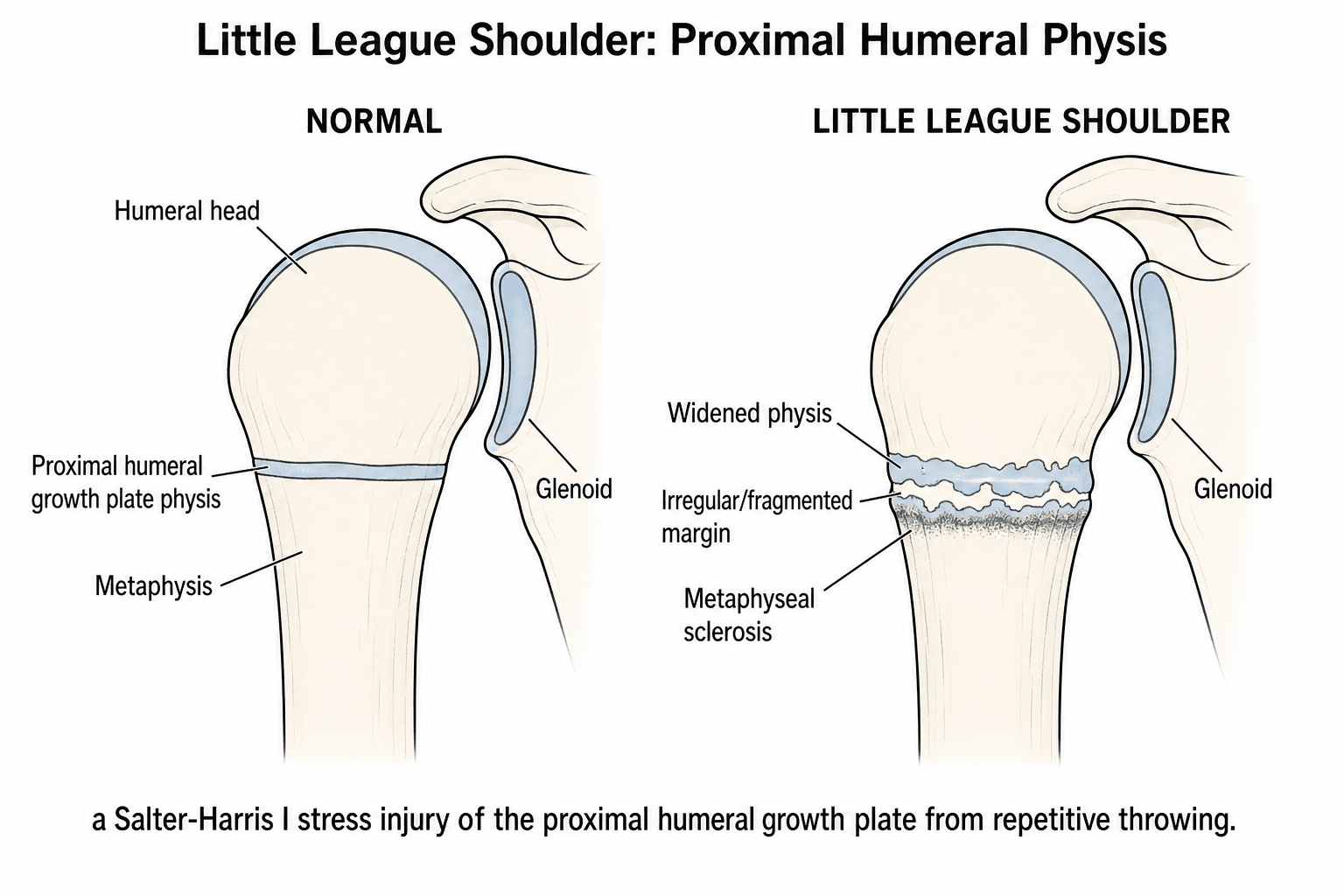
- Imaging: X-ray shows physeal widening, sclerosis, and fragmentation
- Treatment: STRICT REST from throwing is the only effective treatment
- Return to Sport: Gradual program only after symptom-free and X-rays normalize
- Complication: Premature physeal closure with humeral length discrepancy (rare)
- “Classic patient is an 11-16 year old male pitcher
- “Pain is localized to the proximal humerus (lateral shoulder), not the cuff
- “Comparison views are essential to detect subtle widening
- “Must differentiate from rotator cuff tendonitis (uncommon in this age)
- “Pitch count limits are necessary but NOT sufficient - Pytiak (PMID 28567429) found 48% of players developed MRI change despite 100% pitch-count compliance, while year-round play was the factor that tracked with damage
Overview and Epidemiology
Little League shoulder (proximal humeral epiphysiolysis) is an overuse injury of the proximal humeral growth plate in skeletally immature throwing athletes. It is essentially a Salter-Harris Type I stress fracture of the proximal humeral physis, produced by repetitive rotational shear and distraction. The physis is the weak link in the young athlete's kinetic chain, and rapid growth spurts increase susceptibility as the physis widens and weakens.
The rule. Shoulder pain in a skeletally immature thrower is Little League shoulder until proven otherwise. Rotator cuff pathology is extremely rare in this age group, so do not diagnose a "strain" without radiographs.
Who. The largest series (Heyworth et al. 2016, n=95) describes the patient: mean age 13.1 years (range 8-16) with an open proximal humeral physis, and strongly male-predominant (93 of 95) but not exclusive to males. 97% were baseball players (86% pitchers, 8% catchers) and about 3% tennis players; the injury is also reported in other overhead athletes (volleyball, cricket). Glenohumeral internal rotation deficit (GIRD) was present in about 30%.
Trend. The condition is diagnosed with increasing frequency, attributed to early sport specialisation and year-round play (Ina et al. 2026; Heyworth et al. 2016). The modifiable risk factors to ask about are:
- High pitch counts exceeding recommended limits
- Intensity: throwing hard, at high velocity, is the real driver, which is why breaking balls (thrown by the harder throwers) are a confounded marker rather than the cause
- Poor technique: opening early, arm lagging, poor mechanics
- Chronicity: playing year-round with no off-season
- Weighted-ball training started prematurely
The adult equivalent of this rotational stress is internal impingement or SLAP lesions. In children, the bone/physis fails before the ligaments or labrum.
Pathophysiology and Mechanisms
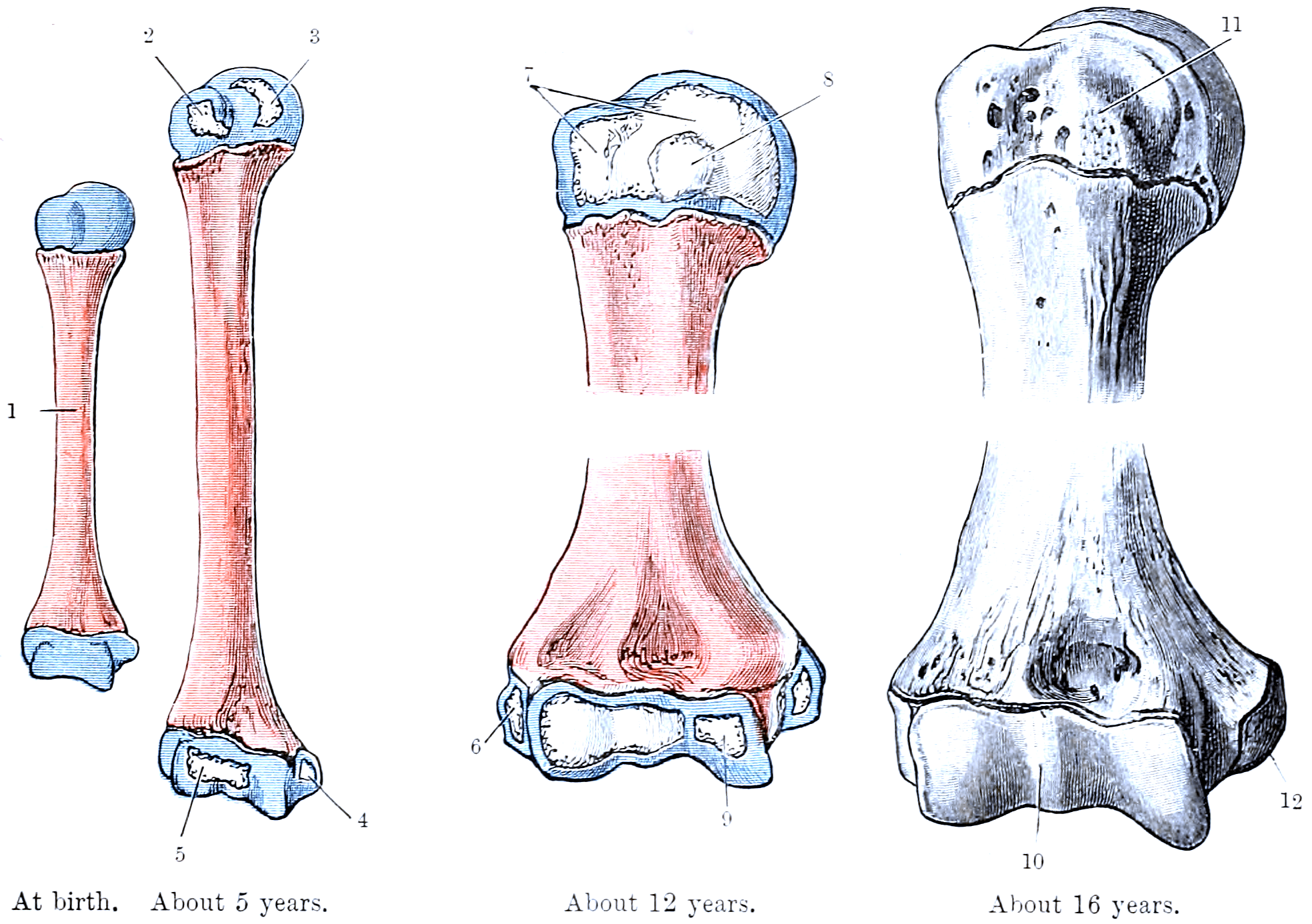
Development of the proximal humerus. Three ossification centres appear in turn and merge at 5-7 years into a single epiphysis. The physis typically closes at 14-17 years in females and 16-19 years in males, and it contributes 80% of humeral length.
- Head: appears at 6 months
- Greater tuberosity: appears at 3 years
- Lesser tuberosity: appears at 5 years
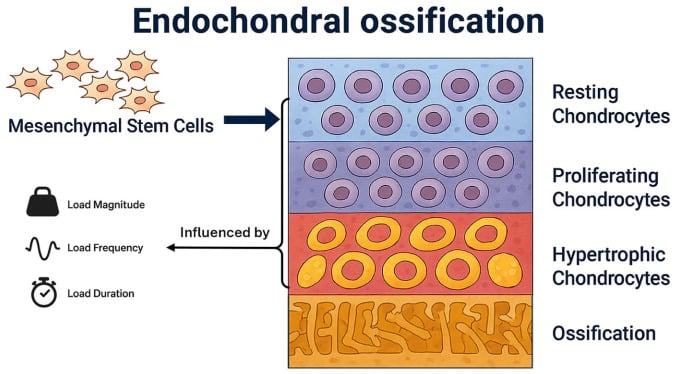
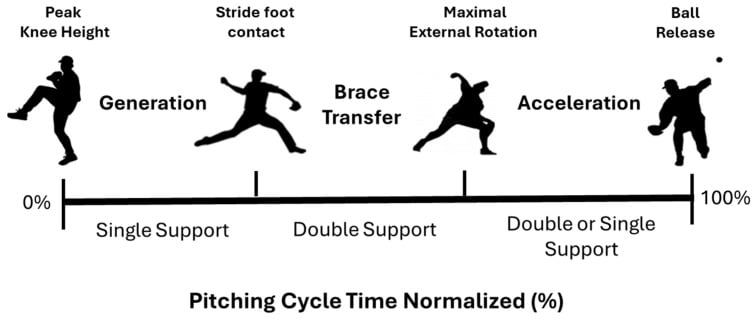
Mechanics of injury. In the late cocking phase, maximal external rotation places rotational shear stress across the physis; in the deceleration phase, distraction forces pull on the epiphysis. The physis is weaker against shear and tension than against compression, and the mechanism is repetitive overhead throwing generating high rotational torque at the physis (Sabick et al. 2005). Repeated microtrauma widens the hypertrophic zone of the physis, calcification fails, and a stress fracture eventually follows.
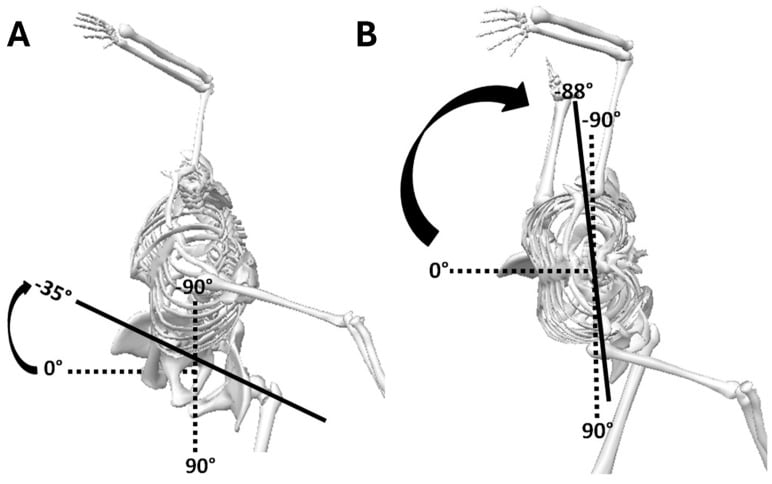
The kinetic chain. A pitcher who "opens up early" (anterior trunk rotation) leaves the arm lagging behind, and the torque on the physis rises beyond its limits. Biomechanical analysis often reveals a pitcher who relies too much on the arm and not enough on the legs and trunk, the "arm thrower". Poor trunk rotation, scapular dyskinesis or core weakness often predisposes to shoulder overload, which is why rehabilitation must address the entire chain.
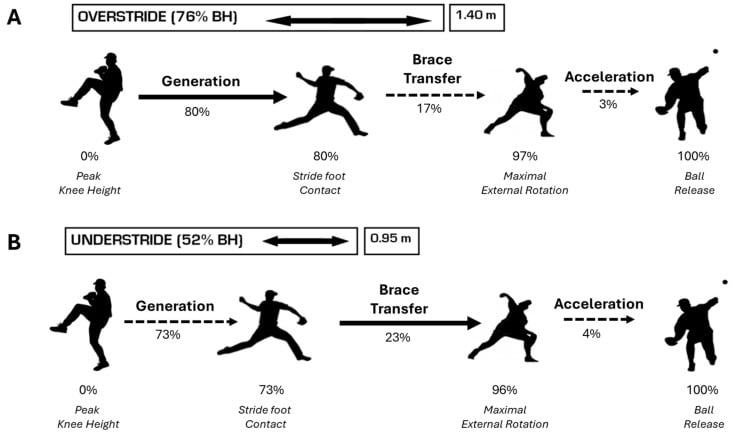
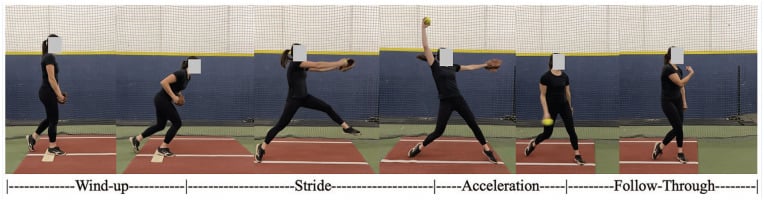
Blood supply. The proximal humeral epiphysis is supplied by the arcuate artery, the ascending branch of the anterior humeral circumflex artery, and the physis acts as a barrier to blood flow from the metaphysis. Damage to the physis could in theory disrupt that supply, but avascular necrosis is extremely rare in Little League shoulder because the fracture is usually a Type I slip without significant displacement or vessel disruption.
Adaptation: humeral retrotorsion. Throwers normally develop increased humeral retroversion, a bony adaptation in which the proximal humerus "twists" during growth to let the hand reach further back in late cocking. The result is increased external rotation and decreased internal rotation, with the total arc of motion (external plus internal) remaining equal to the contralateral side; the extra external rotation is gained without checking the capsule.
Classification Systems
Clinical grading. The classic grading is by symptoms, and it sets the length of rest. Most patients present at Grade II or III; Grade IV represents completion of an acute Salter-Harris fracture. The diagnosis is primarily clinical, supported by the radiographic findings.
- Symptoms
- Pain only after throwing
- Pathological Correlate
- Physeal irritation
- Management
- Rest 2-4 weeks
- Symptoms
- Pain during throwing
- Pathological Correlate
- Microfractures
- Management
- Rest 6-8 weeks
- Symptoms
- Pain with ADLs
- Pathological Correlate
- Significant widening
- Management
- Rest 3+ months
- Symptoms
- Pain at rest / night
- Pathological Correlate
- Impending/Complete fracture
- Management
- Immobilisation
Salter-Harris context. Little League shoulder is a chronic Salter-Harris Type I stress fracture: the line runs through the physis only, the mechanism is slip or shear, and the prognosis is excellent because the blood supply is preserved. Unlike an acute fracture, there is rarely displacement requiring reduction.
Clinical Presentation and Assessment
History. The typical patient is a young male pitcher aged 11-16 with progressive shoulder pain, a deep ache over the proximal humerus and lateral shoulder. The pain begins only with throwing and progresses to activities of daily living. Ask about volume: high pitch counts, a recent increase in play, or "showcase" events. The patient often reports fatigue or a "dead arm" sensation.
Patients often point to the lateral deltoid area (insertion of deltoid or proximal humerus). They rarely point to the AC joint or subacromial space. Pain is deep inside the bone.
Examination. Inspection is usually normal, with mild atrophy in chronic cases. The hallmark is maximal tenderness over the proximal humeral physis, on the lateral aspect just below the acromion. Strength is often normal, but resisted abduction or rotation is painful.
Range of motion. GIRD is common, and increased external rotation is the adaptive counterpart. Measure internal rotation rather than estimate it: supine, scapula stabilised, arm abducted to 90 degrees, goniometer aligned with the forearm, both sides measured the same way. A side-to-side internal rotation deficit greater than about 20 degrees defines GIRD.
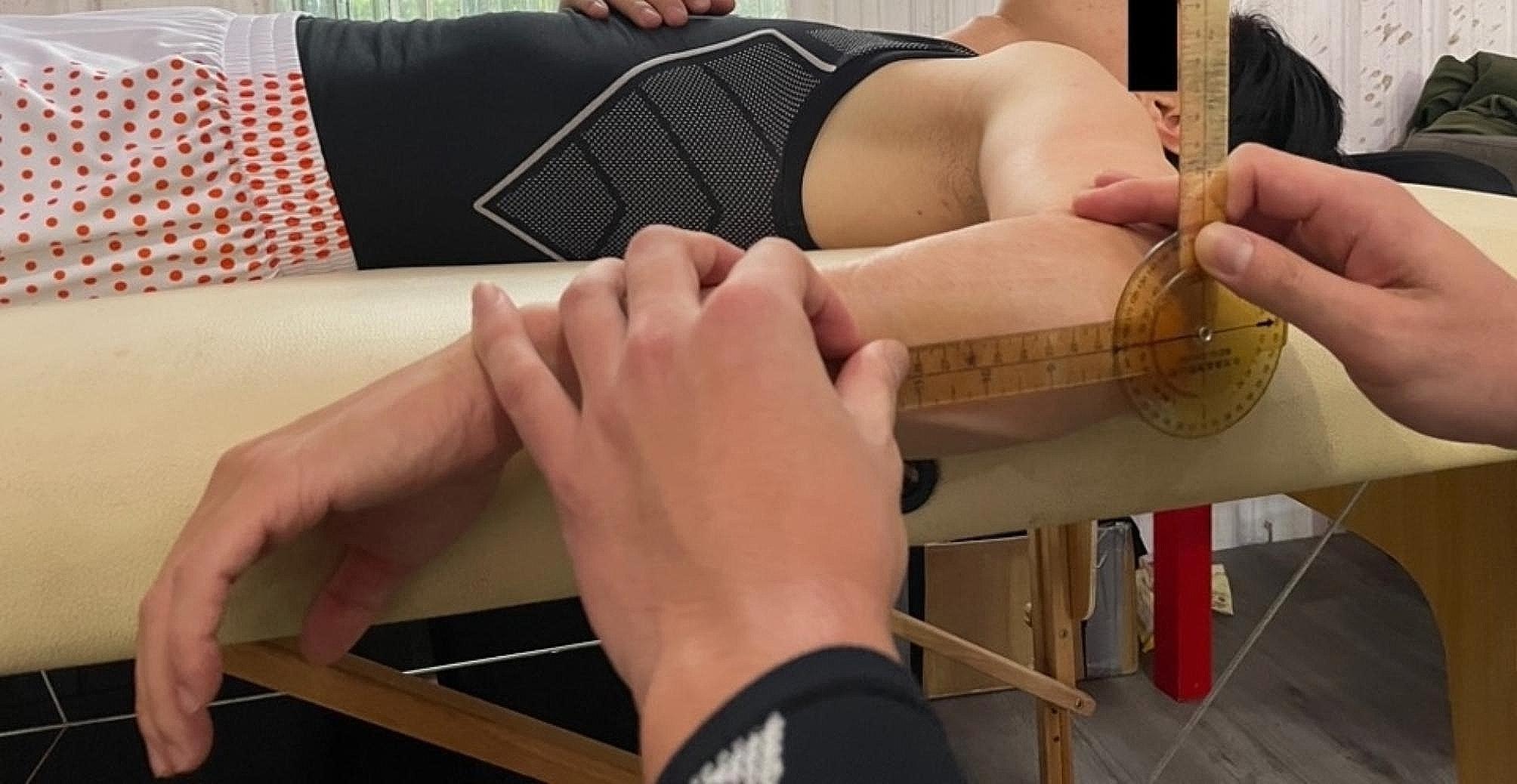
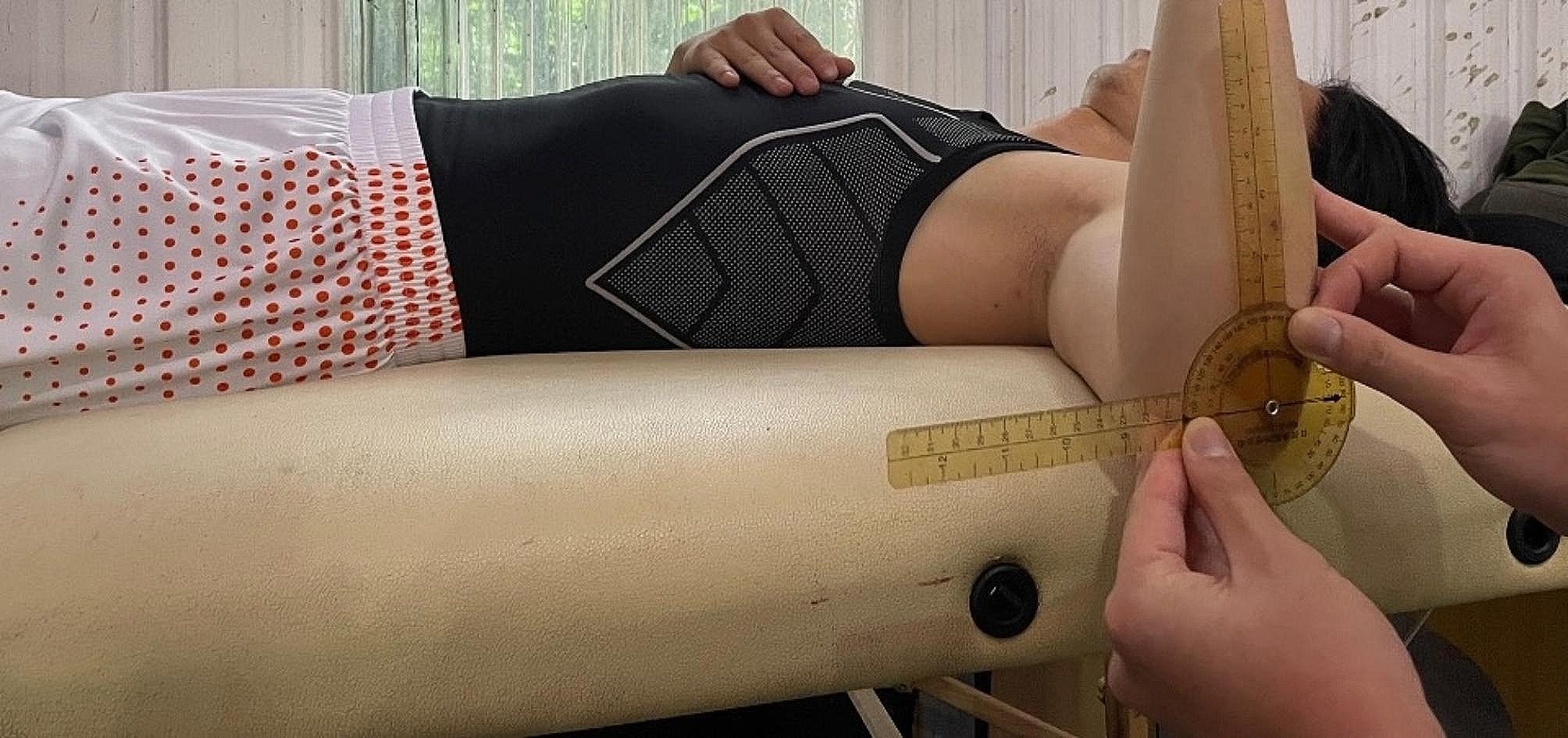
Special tests.
- Neer and Hawkins: negative, or falsely positive from extensive irritability
- O'Brien's: usually negative
- Scapular dyskinesis: check for winging or dysrhythmia, a predisposing factor
- Age
- 11-16 (physis open)
- Key Differentiating Feature
- Lateral shoulder pain, tenderness over the proximal humerus, widened proximal physis
- Investigation / Management
- X-ray with comparison views; strict throwing rest (3 months)
- Age
- 12-18 (hypermobile)
- Key Differentiating Feature
- Global laxity, positive sulcus sign, atraumatic
- Investigation / Management
- Clinical exam; rehabilitation (cuff/scapula)
- Age
- Any age
- Key Differentiating Feature
- Acute trauma history, visible deformity
- Investigation / Management
- Immobilisation vs surgery
- Age
- Usually over 18 (adults)
- Key Differentiating Feature
- Rare in children (less than 1%), overdiagnosed; positive Neer/Hawkins
- Investigation / Management
- Rule out LLS first; physiotherapy, rarely surgery in children
- Age
- —
- Key Differentiating Feature
- Incidental or pathological fracture
- Investigation / Management
- X-ray (lytic lesion)
- Age
- —
- Key Differentiating Feature
- Night pain, systemic symptoms, mass
- Investigation / Management
- MRI / biopsy
Associated Throwing Injuries to Screen For
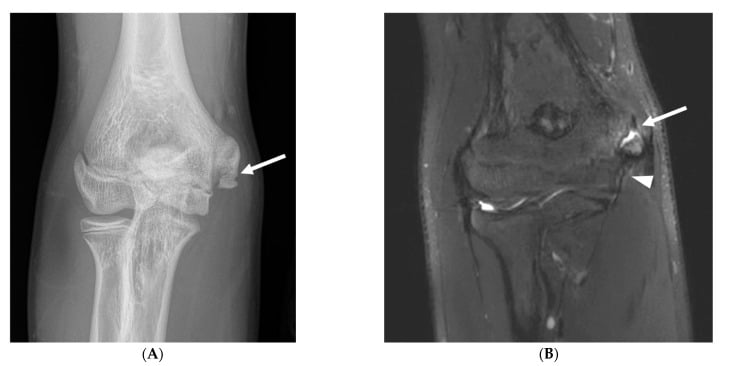
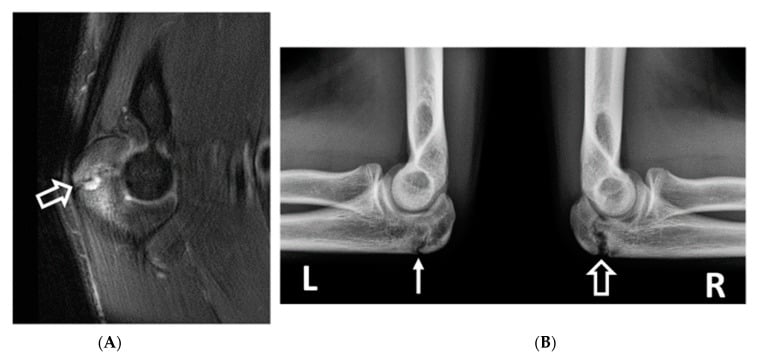
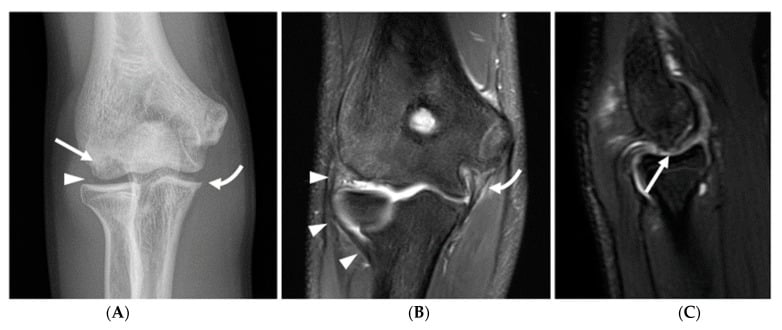
Little League shoulder is one node in a wider spectrum of open-physis overuse injuries in the skeletally immature thrower (Ina et al. 2026). Roughly 13% of children with Little League shoulder have concurrent elbow pain (Heyworth et al. 2016), so the whole arm must be examined end to end: never clear the shoulder and ignore the elbow.
- Site / pathology
- Proximal humeral physis (Salter-Harris I stress injury)
- Key clue
- Lateral/proximal humeral tenderness, physeal widening
- Site / pathology
- Traction apophysitis, sometimes acute avulsion, of the medial epicondyle from repetitive valgus
- Key clue
- Medial elbow pain and tenderness; can avulse acutely with a 'pop'
- Site / pathology
- Lateral-compartment compression/shear of the capitellum
- Key clue
- Lateral elbow pain, effusion, loss of extension; can shed loose bodies
- Site / pathology
- Medial elbow ligament under valgus load (more in the older, closing-physis adolescent)
- Key clue
- Medial pain on valgus stress, loss of velocity/control
- Site / pathology
- Soft-tissue/labral analogue of LLS in the adult or older thrower
- Key clue
- Posterior shoulder pain in abduction–external rotation
GIRD, scapular dyskinesis and a poor kinetic chain predispose to all of these, so the rehabilitation that protects the shoulder also protects the elbow. Lateral elbow pain, a mechanical block or an effusion should trigger dedicated elbow radiographs to exclude capitellar OCD, which, unlike Little League shoulder, can require surgery and can end a throwing career if missed.
Investigations
Radiographs are mandatory. Request an AP in internal and external rotation and an axillary lateral, and always order comparison views of the contralateral shoulder. The widening can be subtle and physiological asymmetry exists, but significant widening suggests pathology. The signs to look for:
- Widening of the proximal humeral physis
- Sclerosis of the metaphyseal margin
- Fragmentation or cystic change in the lateral metaphysis
- Demineralisation
- Periosteal reaction (rare, implies a healing fracture)
MRI is usually not necessary if the radiographs are diagnostic. It is indicated when:
- Radiographs are normal but clinical suspicion is high (early stress reaction)
- The presentation is unusual and tumour or infection must be ruled out
- Healing or readiness to return to sport needs assessing (sometimes)
The findings are physeal oedema (high T2 signal), metaphyseal oedema usually extending into the shaft, and periosteal oedema.
CT is rarely indicated; avoid the radiation in children.
Management Algorithm
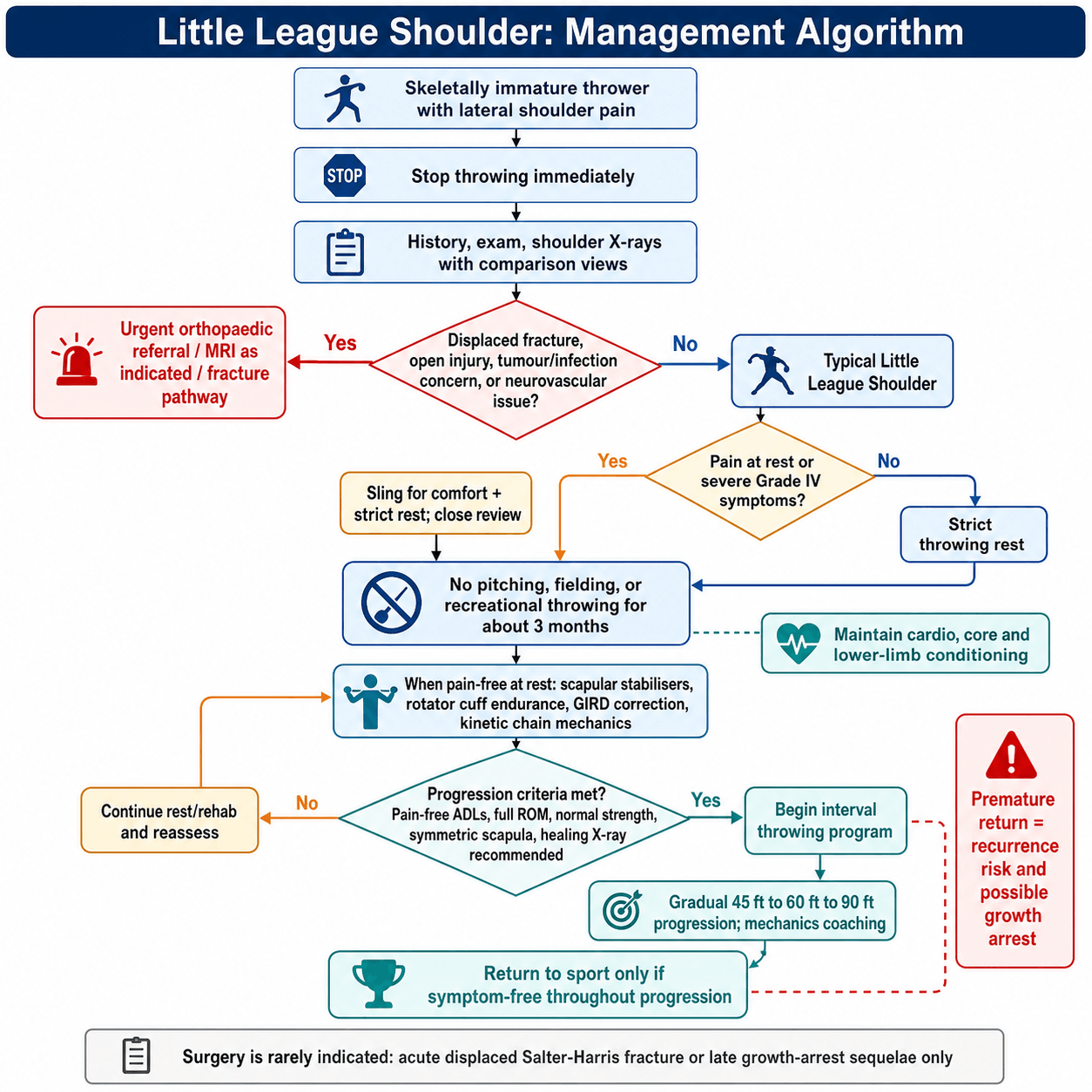
The cornerstone is complete rest. Simply "reducing pitch count" or "playing other positions" is insufficient: continued stress leads to growth arrest. Active treatment supplements the primary treatment, which is time.
Phase 1: rest (0-3 months). The goal is healing of the physis, so there is no throwing at all: an absolute ban on pitching, fielding and even recreational throwing. A sling is usually not needed unless there is Grade IV pain. Cardio, core and leg work are permitted immediately, and the downtime is used to scan the kinetic chain.
Phase 2: rehabilitation (months 1-3). Initiated once pain-free at rest:
- Scapular stabilisers: serratus anterior, trapezius
- Rotator cuff: high repetition, low weight
- Core mechanics: kinetic chain integration (hip-shoulder separation)
- GIRD correction: gentle sleeper stretches, restoring posterior capsule flexibility without stressing the anterior structures
- Lower extremity: lunges, single-leg stability; a stable base reduces the requirement for arm velocity generation
The progression checklist before Phase 3:
- No pain with activities of daily living
- Full range of motion (comparable to the contralateral side)
- Symmetrical scapular kinesis (no winging)
- Core strength baseline met (e.g. plank hold greater than 60 s)
Phase 3: return to throwing (months 3-6). The criteria are complete resolution of pain, full range of motion, normal strength, and radiographs showing healing (optional but recommended). Throwing resumes through an interval throwing programme of gradual progression (e.g. 45 ft to 60 ft to 90 ft). Mechanics coaching is essential to prevent recurrence, with the focus on leg drive and trunk rotation to spare the shoulder.
Returning to throwing before physeal healing leads to rapid recurrence and significantly increases risk of growth arrest. The minimum timeline is usually 3 months.
Surgical Technique
Why surgery is rare. The periosteum is thick and intact, which provides stability and prevents significant displacement. Remodelling potential in the proximal humerus, the physis that contributes most of the bone's length, is massive, so even significant angulation corrects over time. Operative intervention is a salvage procedure and carries higher risks.
Complications
- Mechanism
- Returning too early
- Outcome
- Prolonged rest needed
- Mechanism
- Chronic continued stress
- Outcome
- Humeral length discrepancy
- Mechanism
- Adaptive bone remodelling
- Outcome
- Usually functional/asymptomatic
- Mechanism
- Posterior capsule tightness
- Outcome
- Increased risk of recurrence
Growth arrest is the most feared complication. Continued throwing through pain leads to bar formation, and the result is a shortened humerus or a varus deformity; the shortening is usually well tolerated functionally but cosmetically apparent. It is rare (less than 1%) and reported only rarely in the published series, but it can occur if the warnings are ignored.
Counselling the family. The resultant shortening is usually 1-2 cm if the child is near skeletal maturity. In a young child (e.g. 10-12 years) the shortening can be significant, 5 cm or more.
Postoperative Care and Rehabilitation
Standard nonoperative cases follow the nonoperative protocol in the Management section.
If surgery was performed (acute fracture fixation), the timeline is slower than for the stress fracture:
- 0-4 weeks: sling immobilisation, pendulums only
- 3-4 weeks: K-wires removed (if used); active-assisted range of motion starts at 4 weeks
- 6-12 weeks: strengthening phases
- Return to sport: delayed compared with the stress fracture, often 6 months or more
Outcomes and Prognosis
Prognosis with rest and physiotherapy is excellent (Heyworth et al. 2016). Mean time to symptom resolution was 2.6 months and mean time to return to competition 4.2 months; the large majority return. Recurrent symptoms occurred in 7% at a mean of 7.6 months after diagnosis. The key determinant is patient and parent compliance with throwing rest, and GIRD increases recurrence risk, so it should be corrected before return.
Throwing through it. Continued throwing gives a poor return to sport: the pain persists, the symptoms worsen chronically, recurrence risk is high, and growth arrest with the shortening it can bring becomes possible.
Long term. The adaptation of humeral retroversion, a normal throwing adaptation, persists.
Pitch-Count Guidelines (Pitch Smart)
Because overuse and fatigue, not pitch type, are the dominant modifiable risks (Olsen et al. 2006; Fleisig et al. 2011), age-based pitch counts with mandatory rest days are the cornerstone of both prevention and safe return. The widely used USA Baseball / MLB Pitch Smart limits are examinable; representative daily maxima are:
- Approx. max pitches/day
- About 50
- Rest
- Rest days scale with the day's count (see below)
- Approx. max pitches/day
- About 75
- Rest
- Rest days scale with count
- Approx. max pitches/day
- About 85
- Rest
- Rest days scale with count
- Approx. max pitches/day
- About 95
- Rest
- Rest days scale with count
- Approx. max pitches/day
- About 95
- Rest
- Rest days scale with count
- Approx. max pitches/day
- About 105
- Rest
- Rest days scale with count
The rest-day rule scales with the day's pitch count rather than being fixed. For a 13–14-year-old, for example, roughly: 1–20 pitches need no rest day, 21–35 need one, 36–50 need two, 51–65 need three, and 66 or more need four days off. Additional sport-agnostic principles:
- No pitching on consecutive days in the youngest age groups.
- An annual off-season of roughly four months with no competitive throwing.
- Avoid the dual pitcher–catcher role (it multiplies total throws; Fleisig et al. 2011).
- Do not exceed about 100 innings pitched in a calendar year: exceeding this raised serious-injury risk roughly 3.5-fold (Fleisig et al. 2011).
- Never pitch through arm fatigue or pain, the single strongest behavioural risk factor (Olsen et al. 2006).
"How many pitches can a 13-year-old throw?" — about 95 in a day, with a rest-day count that rises with the day's workload (four days off after 66 or more pitches), no more than about 100 innings in a year, and a genuine off-season. These limits exist precisely to prevent the cumulative physeal overload that causes Little League shoulder.
Guidelines, Registries & Global Practice
Global epidemiology:
- Concentrated in baseball-playing regions (USA, Japan, Latin America, Caribbean, parts of East Asia) where youth pitching volume is high; the largest published cohorts come from US paediatric sports-medicine centres (Heyworth et al. 2016).
- Less common where baseball participation is low, but the same physeal overuse mechanism is seen in other overhead-loading sports: tennis (kick/topspin serve with extreme external rotation), volleyball (spikers/jump servers) and cricket (bowlers, although lumbar spondylolysis is the dominant fast-bowler injury).
- Incidence is reported to be rising, attributed to early single-sport specialisation and year-round play without an off-season (Ina et al. 2026).
Major guidelines and consensus, side by side:
- Core recommendation
- High index of suspicion in skeletally immature throwers; rest-based treatment; adherence to pitch-count and rest guidelines for prevention
- Evidence basis
- Narrative/consensus review
- Core recommendation
- Age-based pitch-count limits and mandatory rest days; avoid pitching through fatigue; limit innings; avoid year-round pitching (~4 months off/year); discourage dual pitcher–catcher roles
- Evidence basis
- Derived from prospective/cohort data (Fleisig 2011; Olsen 2006; Lyman 2002)
- Core recommendation
- Limit single-sport specialisation and total throwing load in skeletally immature athletes to reduce overuse injury
- Evidence basis
- Cohort/observational evidence
- Core recommendation
- Complete cessation of throwing until pain-free, staged return via an interval throwing programme, correct GIRD and kinetic-chain deficits before return
- Evidence basis
- Level III-IV series (Heyworth 2016)
- No dedicated implant registry applies (this is a non-operative, non-implant condition). The relevant high-quality evidence comes from prospective youth-pitcher cohorts: Fleisig et al. 2011 (n=481, 10-year follow-up, 5% serious-injury incidence) and Lyman et al. 2002 (n=476), plus the Heyworth et al. 2016 case series (n=95).
- In high-baseball-volume regions, ultrasound screening of youth pitchers and formal pitch-count enforcement are increasingly used; in low-baseball regions the condition is rare and may be under-recognised, with cricket/tennis/volleyball being the more likely contexts.
- Workload-management frameworks differ by sport (pitch counts in baseball, over/spell limits in cricket, serve volume in tennis) but share the same principle: limit cumulative load on the immature physis and rest at the first sign of arm pain or fatigue.
- Adhere to age-appropriate pitch/over/serve count limits and mandatory rest days.
- Build in an annual off-season (no competitive throwing for roughly 3-4 months).
- Avoid "showcase" events that demand maximal-intensity throwing without a build-up.
- Address fatigue, mechanics and GIRD proactively, since overuse and fatigue are the strongest modifiable risk factors (Olsen et al. 2006).
MCQ Practice Points
Q: Where is the specific site of pathology in Little League Shoulder? A: Proximal Humeral Physis (Growth Plate). Specifically the hypertrophic zone which is weakest against shear stress.
Q: What is the classic X-ray finding? A: Widening of the physis compared to the contralateral side. Also sclerosis and fragmentation.
Q: Which phase of throwing places maximal stress on the proximal humeral physis? A: Late Cocking (Rotational torque) and Deceleration (Distraction).
Q: What is the risk of Avascular Necrosis (AVN) in this condition? A: Extremely Low. Unlike acute femoral neck fractures, the blood supply (arcuate artery) is usually preserved in this stress phenomenon.
Q: What is the adult equivalent of this condition in throwers? A: Internal Impingement (Posterior Superior Glenoid Impingement) and SLAP lesions. In adults, the soft tissue fails; in kids, the physis fails.
Q: What is the earliest finding on MRI before X-rays changes appear? A: Physeal Edema on T2-weighted images. This represents the "pre-slipped" stress reaction phase (Grade I).
Clinical Decision Scenarios
Practise clinical reasoning and management decisions out loud
“A 14-year-old male baseball pitcher presents with 3 weeks of progressive lateral shoulder pain. He has been pitching on two teams this season. Pain is now present during daily activities. Exam shows tenderness lateral shoulder. X-ray shows widening of proximal humeral physis. Diagnosis and Plan?”
“The father of a star 13-year-old pitcher with Little League Shoulder asks if he can just take anti-inflammatories and pitch in the championship next week. 'He has no pain if he takes Advil'. Counseling?”
“A 12-year-old pitcher has 6 weeks of lateral shoulder pain during throwing. Tenderness is over the proximal humerus. Plain radiographs including contralateral comparison views look essentially symmetrical. How do you proceed, and what is your evidence-based reasoning?”
DEMOGRAPHICS
- 11-16 year old Males
- Pitchers most affected
- Rapid growth phase
- Open Proixmal Humeral Physis
- Year-round participation
PATHOLOGY
- Salter-Harris I Stress Fracture
- Proximal Humeral Physis
- Rotational Shear Stress
- Widening of Hypertrophic Zone
- Failure of Calcification
DIAGNOSIS
- Lateral/Deep Shoulder Pain
- TTP Proximal Humerus
- X-Ray: WIDENING of physis
- GIRD often present
- Negative Cuff Signs
MANAGEMENT
- REST (Strict)
- 3 Months Minimum
- Mechanics Rehab
- Return when Pain-free + X-ray healed
- Sequential Return to Throwing
- Pitch Count Adherence
Evidence Base
Barnett. Little League shoulder syndrome: proximal humeral epiphyseolysis in adolescent baseball pitchers
- Early case description in the orthopaedic literature establishing proximal humeral epiphyseolysis as the lesion underlying 'Little League shoulder'.
- Affected an adolescent male baseball pitcher with widening of the proximal humeral physis on radiographs.
- Symptoms resolved with cessation of throwing.
Sabick et al. Biomechanics of the shoulder in youth baseball pitchers: implications for proximal humeral epiphysiolysis and humeral retrotorsion
- 14 elite youth pitchers (mean age 12.1 years) studied during fastball pitching.
- Peak external-rotation torque about the humerus reached 17.7 N.m just before maximal external rotation; a distraction force of ~215 N (~50% body weight) occurred near ball release.
- Shear stress from the high arm-cocking torque is large enough to deform the weak proximal humeral epiphyseal cartilage.
- Rotational (torque) stresses far exceed distraction forces as the dominant mechanism.
Heyworth et al. Trends in the Presentation, Management, and Outcomes of Little League Shoulder
- 95 patients (93 male, 2 female; mean age 13.1 years, range 8-16).
- 97% baseball players (86% pitchers); 3% tennis players; GIRD present in 30%.
- Rest recommended in 99%, physical therapy in 79%; mean time to symptom resolution 2.6 months and to return to competition 4.2 months.
- Recurrence in 7% at a mean of 7.6 months; GIRD group had ~3.6x higher odds of recurrence (not statistically significant).
Olsen et al. Risk Factors for Shoulder and Elbow Injuries in Adolescent Baseball Pitchers
- 95 adolescent pitchers requiring shoulder/elbow surgery vs 45 uninjured controls.
- Injured pitchers threw significantly more months/year, games/year, innings/game, pitches/game and pitches/year.
- Strongest associations with injury were overuse and fatigue; higher pitch velocity and showcase participation also increased risk.
- No significant difference in pitch-type frequency or age at which pitch types were first thrown.
Lyman et al. Effect of Pitch Type, Pitch Count, and Pitching Mechanics on Risk of Elbow and Shoulder Pain in Youth Baseball Pitchers
- 476 pitchers aged 9-14 followed for one season; ~50% experienced elbow or shoulder pain.
- Curveball associated with a 52% increased risk of shoulder pain; slider associated with an 86% increased risk of elbow pain.
- Number of pitches per game and per season was significantly associated with elbow and shoulder pain.
Fleisig et al. Risk of Serious Injury for Young Baseball Pitchers: a 10-Year Prospective Study
- 481 youth pitchers (aged 9-14) followed for 10 years; cumulative incidence of serious injury (surgery or career-ending injury) was 5.0%.
- Pitching more than 100 innings in a single year increased injury risk 3.5-fold (95% CI 1.16-10.44).
- Concomitantly playing catcher trended toward higher risk; the study could not demonstrate that curveballs before age 13 increased risk.
Ina et al. Treatment and Prevention of Injuries in Skeletally Immature Throwing Athletes
- Contemporary AAOS-published review of throwing injuries in skeletally immature athletes.
- Frames Little League shoulder (proximal humeral epiphysiolysis) alongside internal impingement, Little League elbow, UCL injury and capitellar OCD as a spectrum of open-physis overuse injuries.
- Attributes the rising incidence to early sport specialisation and year-round play without adequate rest.
- Emphasises pitch-count/pitching guidelines and rest as the core of prevention and treatment.