Posterior Meniscocapsular Separation | ACL Associated | Hidden Lesion
- Ramp lesion = peripheral posterior horn medial meniscus tear at the meniscocapsular/meniscotibial junction
- Around 17-23% of ACL tears have an associated ramp lesion - the widely quoted 40% is a proportion of MEDIAL MENISCAL TEARS, not of ACL tears
- MRI performance is protocol- and reader-dependent - a negative scan does not exclude a ramp lesion, especially when the knee is imaged near extension
- Always view posteromedially (trans-notch / posteromedial portal) during ACL reconstruction
- All-inside or suture-hook repair through a posteromedial portal is the workhorse technique
- “Ramp lesions increase anterior tibial translation in the ACL-deficient knee (about 2.6mm, Peltier 2015)
- “Pivot shift is restored only when ACLR is combined with ramp repair (DePhillipo 2018)
- “Located in the peripheral vascular (red-red) zone, giving good healing potential
- “Small stable ramp lesions may not need fixation once the ACL is reconstructed (Deichsel 2024) - controversial
Overview and Epidemiology
Definition. A ramp lesion is a tear of the peripheral posterior horn of the medial meniscus at its meniscocapsular or meniscotibial junction, close to the posteromedial capsule.
The ACL association. Ramp lesions accompany around 17-23% of ACL tears in the series cited on this page. The familiar "40%" is 40% of the medial meniscal tears in Sonnery-Cottet's cohort, not of the ACL tears. Prevalence tends to rise with chronicity and is similar in adolescents and adults, so suspect a ramp lesion with any ACL injury.
The hidden lesion. Ramp lesions were historically under-recognised and are still easily missed: they are often invisible from the standard anterior portals, and about 17% stay hidden even at arthroscopy until a posteromedial portal and minimal debridement are used (Sonnery-Cottet 2014). Better arthroscopic technique and awareness mean they are now routinely identified during ACL surgery. That matters, because failure to address a ramp lesion may contribute to ACL graft failure and persistent rotational instability.
Risk factors. Suspicion rises with:
- Younger age (under 30)
- Male sex
- High-grade pivot shift
- Chronic ACL injury, with delayed presentation (over 6 months)
- Contact sport mechanism
Anatomy and Biomechanics
The ramp. The name refers to the sloping posterior meniscocapsular junction of the medial meniscus, which connects the posterior horn to the posteromedial capsule. It sits in the peripheral third, the vascular red-red zone, supplied from the posteromedial capsule, the meniscocapsular vessels and the perimeniscal capsular plexus. That vascularity gives a repair a more favourable healing environment than a central avascular tear.
Two posterior attachments. The posterior horn is held by two attachments, and the distinction underpins both the classification and the biomechanics.
- Superior, meniscocapsular: the meniscosynovial or capsular junction joining the peripheral meniscus to the posteromedial capsule and the semimembranosus expansion. It is seen and probed from above and behind, through a trans-notch or posteromedial view.
- Inferior, meniscotibial (coronary) ligament: runs from the undersurface of the meniscus to the posterior tibial plateau. It is assessed by probing the meniscotibial face from the posteromedial portal.
What each restrains. The posterior medial meniscocapsular complex is a secondary stabiliser against anterior tibial translation. Disrupting the superior meniscocapsular attachment predominantly increases anterior translation: in Peltier's cadaveric study a ramp lesion added about 2.6mm to the ACL-deficient knee. Detaching the meniscotibial ligament is what adds internal and external rotatory laxity and drives the pivot shift (Peltier 2015, DePhillipo 2018).
What a lesion does, and what repair restores. A ramp lesion increases anterior translation, decreases rotational stability, compromises posterior horn function and increases the stress on an ACL graft; repair restores these. In DePhillipo's robotic study, ACL reconstruction alone restored anterior translation but not the pivot shift, which was eliminated only when both attachments were repaired alongside the reconstruction. Even then, internal and external rotation above 30° of flexion was not restored.
A common viva trap is to define a ramp lesion purely as a "meniscocapsular separation." The examiner-satisfying answer distinguishes the superior meniscocapsular attachment from the inferior meniscotibial (coronary) ligament, and links the meniscotibial component to rotational laxity (DePhillipo, Peltier). An isolated superior tear can look like a stable ramp from above yet conceal an unstable inferior meniscotibial detachment, which is exactly why you must probe the meniscotibial face from behind, and why ACL reconstruction alone fails to abolish the pivot shift.
Pathophysiology
Mechanism. Ramp lesions occur through the same mechanisms as ACL injury. The pivot-shift mechanism combines knee flexion, valgus and internal tibial rotation, and the anterior tibial translation of ACL rupture shears the posterior meniscocapsular junction. The contact mechanism is a direct blow to the lateral knee with the foot planted.
Why the posterior horn. The posterior horn of the medial meniscus is fixed to the tibia by the coronary ligament. As the tibia translates anteriorly it pulls on the posterior horn, and the femoral condyle impinges on it, grinding it between condyle and tibial plateau. Add the rotational component, which shears the capsular attachment, and the meniscocapsular junction tears.
Natural history. Left unrepaired, a ramp lesion may lead to:
- Progressive meniscocapsular separation
- Increased knee laxity despite ACL reconstruction, with persistent rotational instability
- Increased stress on the ACL graft and a higher risk of re-rupture or graft failure
- Potentially accelerated cartilage degeneration
- Residual symptoms
The graft risk is why the posteromedial compartment is assessed at every ACL reconstruction and unstable lesions are repaired at the same sitting. Robust prospective evidence that repair reduces graft re-rupture is still incomplete (see Outcomes).
Classification and Stability Assessment
Thaunat (2016). The classification describes ramp tears by tear pattern, partial or full thickness, and by whether the meniscotibial ligament is disrupted. Most ramp lesions are peripheral meniscocapsular or meniscotibial separations in the vascular red-red zone, which gives them favourable healing potential.
- Description
- Meniscocapsular lesion in the synovial sheath, very peripheral
- Stability
- Very low mobility
- Treatment
- Assess morphology and stability; type alone is not an indication
- Description
- Partial superior lesion
- Stability
- Low mobility; usually stable
- Treatment
- Observation or biological stimulation may be reasonable if stable
- Description
- Partial inferior or hidden lesion
- Stability
- May be unstable despite an intact superior surface
- Treatment
- Inspect the inferior surface and repair if unstable
- Description
- Complete tear in the red-red zone
- Stability
- High mobility
- Treatment
- Repair when unstable; select the construct by tear morphology
- Description
- Double tear: peripheral ramp tear plus a second longitudinal tear
- Stability
- Usually unstable
- Treatment
- Address both clinically relevant tear planes
Use the type to describe, not to decide. Type 4 is the complete tear, not the double-tear category, which is Type 5. The type describes what you see, and the decision to repair rests on stability on probing rather than on the type number alone.
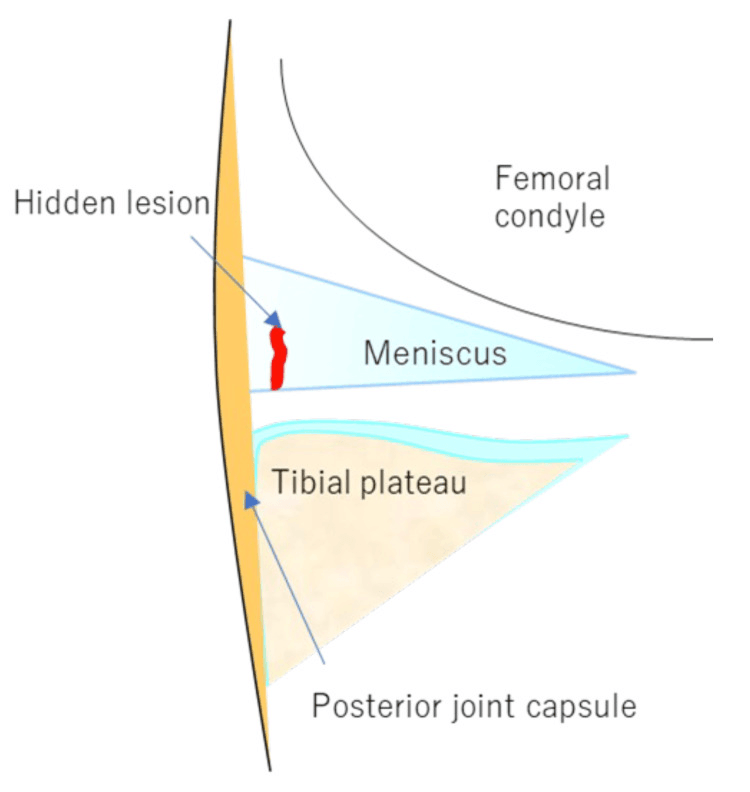
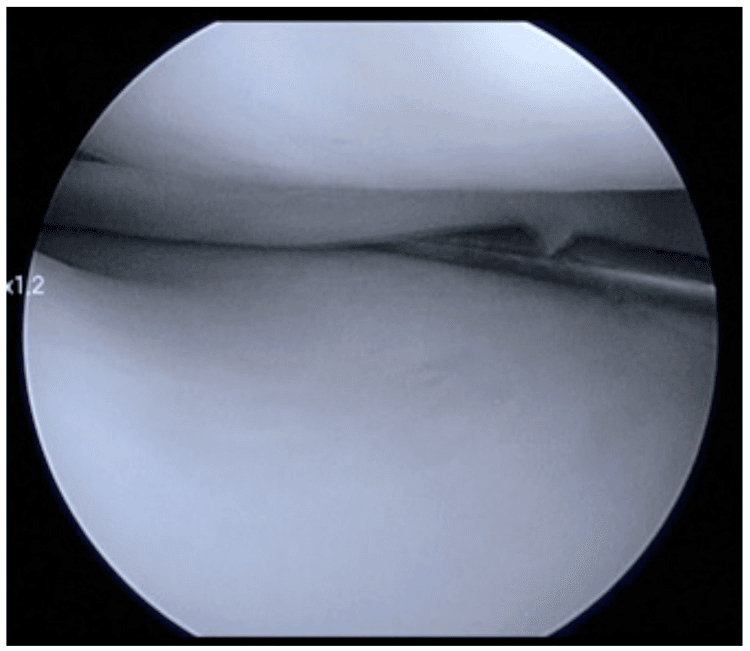
Assessing stability at arthroscopy. Stability is a functional finding, established by systematic probing of the whole posterior horn-capsule junction.
Probing Protocol
Use a 70° scope through the anterolateral portal looking posteromedially, or create a posteromedial viewing portal for direct visualisation.
Insert the probe through the anteromedial portal. Systematically probe the entire posterior horn-capsule junction from superior to inferior, on both surfaces.
Record tear length, depth, tissue quality, vascular zone and involvement of the meniscocapsular and meniscotibial attachments.
Apply controlled anterior and superior traction. Easy displacement, a missing firm endpoint or persistent gapping indicates instability and supports repair.
The gap. A measured gap may support the assessment, but no single gap threshold is independently validated. The classic "gap greater than 4mm on probing" is a pragmatic guide, not a validated cut-off. Probing technique, lesion length and meniscotibial-ligament integrity all influence the decision, and definitions of instability vary between surgeons.
PROBEPROBE - Systematic Assessment
Hook:Always PROBE posteromedially during ACL surgery - you'll miss hidden lesions if you don't!
Clinical Assessment
History. The mechanism is a pivot-shift injury, usually with an ACL tear, and the ramp lesion's symptoms are often masked by the ACL's. Pain, when present, is at the posteromedial joint line and may be subtle. Instability shows as giving way, especially rotational; note how long it has been since the ACL injury.
Examination. Posteromedial joint-line tenderness is subtle. Lachman and pivot shift are positive for the ACL; grade the pivot shift, because a higher grade carries a higher ramp risk. McMurray's test is often negative for a ramp lesion alone, and a deep squat may reproduce posterior pain.
Ramp lesions rarely have clinical findings distinct from the associated ACL tear. The diagnosis is primarily made on MRI and confirmed at arthroscopy, and since MRI misses many lesions, keep a high index of suspicion in every ACL tear, especially when the risk factors above are present.
- Distinguishing features
- Peripheral posterior horn MM tear at meniscocapsular junction; often asymptomatic in isolation
- Key investigation / finding
- Trans-notch / posteromedial arthroscopy; MRI often normal
- Distinguishing features
- Loss of hoop tension, meniscal extrusion, may have insidious onset
- Key investigation / finding
- Coronal MRI 'ghost sign', radial extrusion on MRI
- Distinguishing features
- Mechanical locking, true block to extension
- Key investigation / finding
- Displaced fragment / 'double PCL' sign on MRI
- Distinguishing features
- Posteromedial laxity, overlaps with ramp spectrum
- Key investigation / finding
- Arthroscopic probing of meniscotibial attachment
- Distinguishing features
- Valgus and rotatory laxity, medial tenderness
- Key investigation / finding
- Valgus stress test, MRI of POL/sMCL
- Distinguishing features
- Older patient, no acute pivot injury
- Key investigation / finding
- MRI signal not reaching surface, no capsular separation
Investigations
MRI. The first-line test, with 3T preferred and dedicated sequences for the posterior horn. Sagittal images show the integrity of the posterior horn and the separation sign; coronal images show peripheral irregularity and increased signal at the meniscocapsular junction. Two indirect clues are useful: a posteromedial tibial bone bruise, and fluid interposed between the posteromedial tibial edge and semimembranosus, which should prompt deliberate review of the meniscocapsular and meniscotibial attachments.
- View
- Sagittal
- Description
- Gap between posterior horn and capsule
- Reliability
- High if present
- View
- Coronal/Sagittal
- Description
- T2 hyperintensity at junction
- Reliability
- Moderate
- View
- Sagittal
- Description
- Abnormal peripheral margin
- Reliability
- Moderate
- View
- All planes
- Description
- Fluid tracking along capsule
- Reliability
- Low specificity
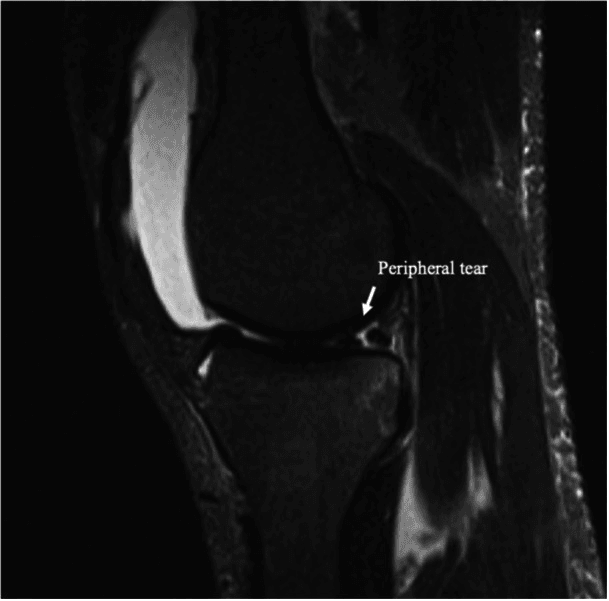
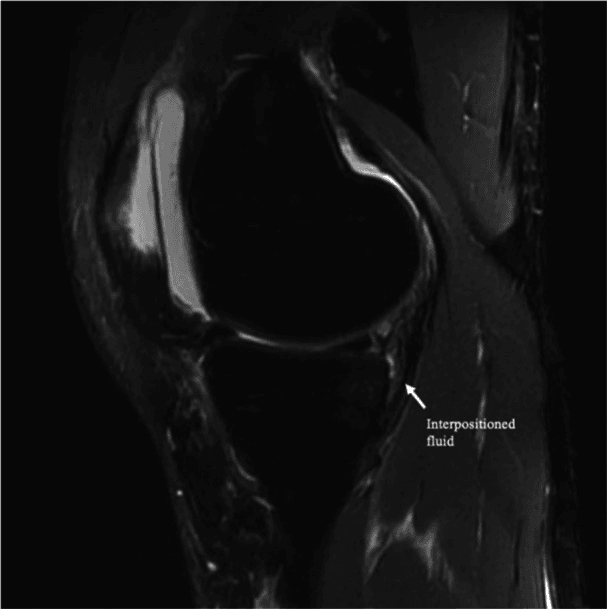
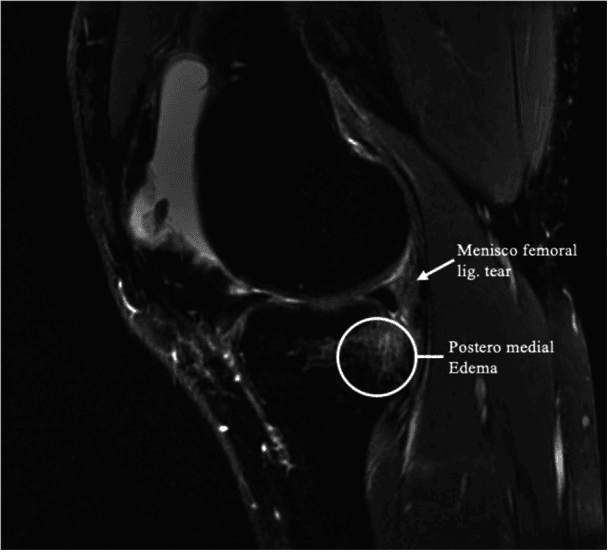
Sensitivity. MRI is poor at finding ramp lesions: about 27-46% overall in dedicated series. The split by location is the figure that matters, roughly 40-80% for tears in the red-red zone but 0-20% at the true meniscocapsular junction. The more peripheral the lesion, the blinder the scan, and the meniscocapsular junction is what the word "ramp" actually names. Inter-observer reliability was only fair to moderate. A negative MRI does not exclude a ramp lesion.
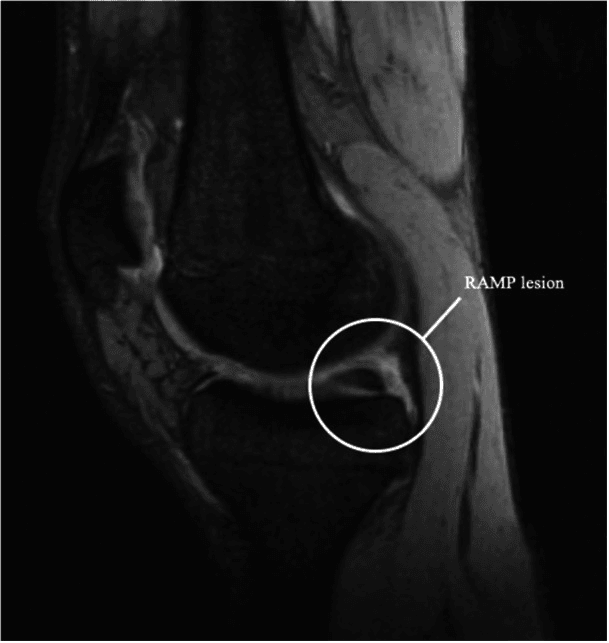
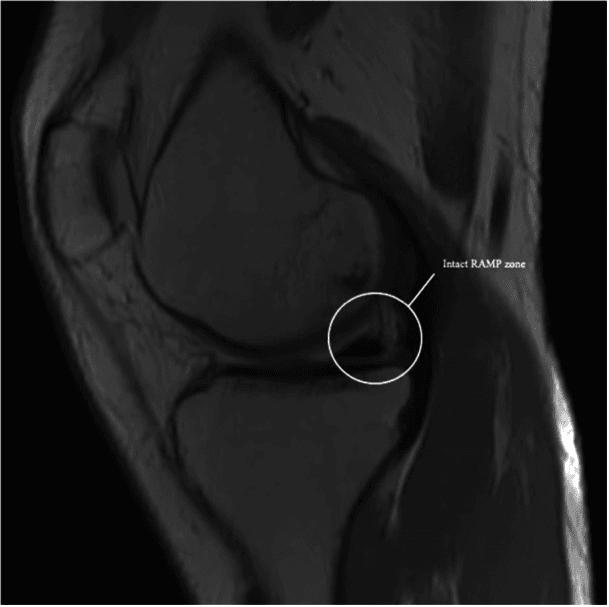
Arthroscopy is the gold standard for diagnosis. Because MRI cannot be relied on to rule a lesion out, arthroscopic assessment is mandatory during every ACL reconstruction: view trans-notch and probe the posteromedial compartment systematically, with a 70° scope to improve visualisation.
Management
The decision. Probe, describe, then decide. A vascular location supports healing, but it does not make fixation risk-free or mandatory. Whether every visualised ramp lesion should be repaired is debated: robotic data show small ramp lesions have little kinematic effect once the ACL is reconstructed (Deichsel 2024), which supports selective, stability-based repair rather than reflex fixation of every lesion.
Repair. The strong indications are:
- Frank instability or displacement on probing: the posterior horn displaces easily or lacks a firm endpoint
- A complete full-thickness or double-tear morphology
- Meniscotibial detachment that leaves the posterior horn mobile
- A repairable tear associated with symptomatic or reconstructable ACL deficiency
Repair is also generally favoured when tissue quality and tear morphology permit durable fixation, and when concomitant ACL reconstruction restores the environment for healing. The decision is modified by tear length, depth, vascular zone and tissue quality, by associated meniscal tears and the planned ACL procedure, and by the patient's activity goals and ability to follow rehabilitation restrictions.
Observation or biological stimulation. A selective option rather than a default, the stimulation by abrasion or trephination according to surgeon preference. It may be appropriate for:
- A short lesion that remains stable through systematic posteromedial probing
- A stable lesion found during ACL reconstruction
- A short, truly stable lesion with a firm endpoint after ACL reconstruction
- A lesion in which repair would sacrifice more viable tissue than it preserves
- A patient in whom fixation risk or rehabilitation burden outweighs the likely benefit
Observation is defensible only after the concealed inferior surface has been inspected and the posterior horn has a firm endpoint on probing. A normal MRI or an intact superior surface does not establish stability.
Conservative Protocol
Protected weight-bearing if symptomatic. Avoid deep flexion and twisting. Physiotherapy for range of motion and quadriceps strengthening.
Progressive activity as tolerated. Closed chain strengthening. Monitor for symptoms of instability.
Gradual return to sport if asymptomatic. May still have increased laxity. Consider delayed repair if symptomatic.
Surgical Technique
Choosing a construct. All-inside devices, inside-out sutures and single-portal suture-hook repair all have advocates. All-inside repair is a common option during ACL reconstruction, but high-quality comparative outcome data are limited, so the choice is driven by training, access and lesion morphology rather than proven superiority. Match the construct to the tear plane.
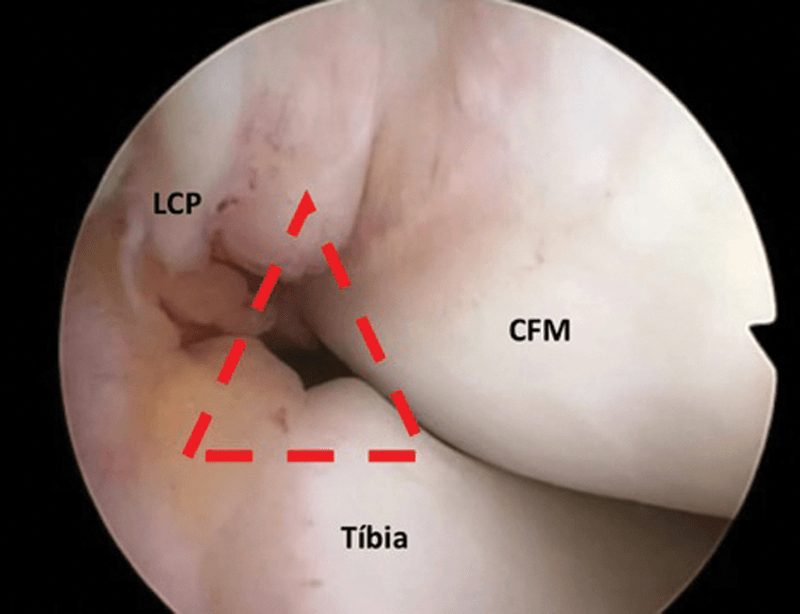
Visualisation comes first. The key to ramp repair is seeing the whole posterior horn-capsule junction. Use the 70° scope for the initial assessment; if repair is needed and the view is difficult, create a dedicated posteromedial viewing portal for direct access.
- Pros
- No additional portal, familiar
- Cons
- Limited access, awkward angle
- Pros
- Direct visualisation, best view
- Cons
- Additional portal, learning curve
- Pros
- Good for posterior horn
- Cons
- Limited for ramp specifically
- Pros
- Opens posteromedial compartment
- Cons
- Limited surgical access in this position
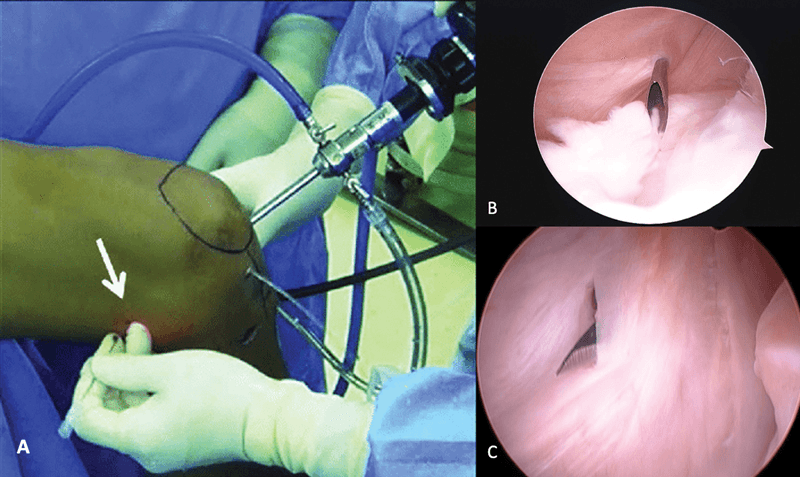
Surgical Steps
Use a 70° arthroscope through the anterolateral portal to view the posteromedial compartment, or create a posteromedial viewing portal. The entire posterior horn-capsule junction must be seen.
Debride the tear edges minimally with a shaver. Rasp the meniscal and capsular surfaces to stimulate bleeding and a healing response. Do not over-debride.
Create a posteromedial working portal, confirming the trajectory with a spinal needle. Entry is typically 1cm above the joint line, posterior to the MCL; stay anterior to sartorius to avoid the saphenous nerve.
Use an all-inside meniscal repair device (FasT-Fix, ULTRA FasT-Fix, etc.), passing sutures through the meniscus and then into the capsule. Typically 1-3 sutures, depending on lesion length.
Tension the sutures to reduce the meniscus to the capsule. Confirm reduction with the probe: no gap should remain and the meniscus should be stable.
Pitfalls. Missing the lesion is avoided by probing systematically, and saphenous nerve injury by careful portal placement. Over-debridement loses tissue, the reduction should be checked after suturing, and an associated body tear must not be left unaddressed.
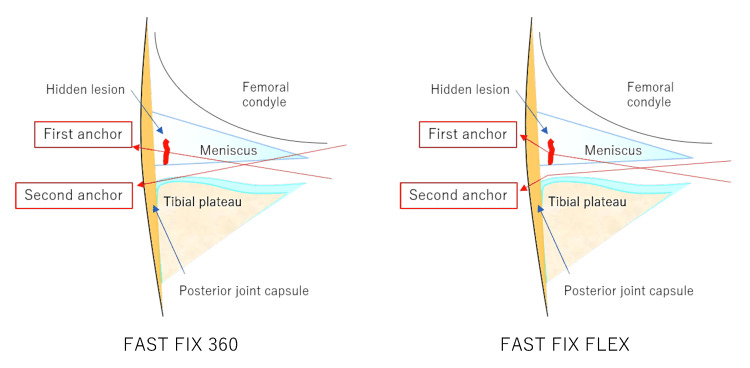
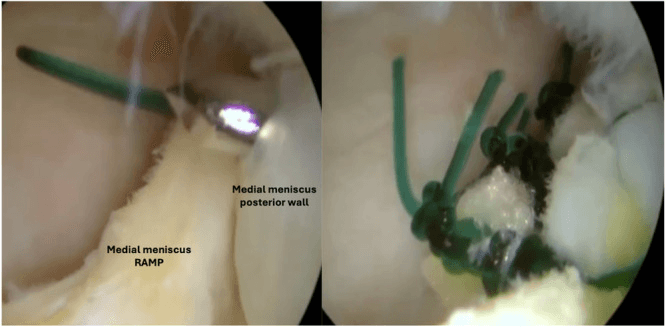
Complications
- Incidence
- Under 10%
- Risk Factors
- Poor technique, inadequate fixation
- Prevention/Management
- Adequate sutures, good reduction
- Incidence
- Rare
- Risk Factors
- Portal placement
- Prevention/Management
- Careful PM portal creation
- Incidence
- 5-10%
- Risk Factors
- Prolonged immobilisation
- Prevention/Management
- Early ROM protocol
- Incidence
- Under 5%
- Risk Factors
- Trauma, early return to sport
- Prevention/Management
- Protected rehabilitation
- Incidence
- Variable
- Risk Factors
- Poor visualisation technique
- Prevention/Management
- Systematic probing every case
A missed lesion carries the consequences set out under natural history, and systematic posteromedial probing in every ACL reconstruction is what prevents it.
Postoperative Care and Rehabilitation
With ACL reconstruction. The protocol follows ACL rehabilitation with minor modifications. Because ramp lesions sit in the red-red zone with excellent healing, the combined protocol is essentially the same as for the ACL alone, and no significant restriction is needed for the ramp repair itself.
Combined ACL + Ramp Repair Protocol
Brace locked or 0-90°. Partial weight-bearing with crutches. Quadriceps sets, straight leg raises. Avoid forced flexion beyond 90°.
Progressive range of motion to full. Advance weight-bearing. Closed chain strengthening. Avoid deep squats.
Full weight-bearing. Progressive resistance training. Stationary cycling, swimming. Avoid pivoting.
Jogging progression. Agility drills begin. Sport-specific training. Functional testing.
Return to non-contact sport if criteria met. Full return at 9-12 months, following ACL return-to-sport criteria.
Isolated ramp repair. Rare, because ramp lesions typically occur with ACL tears and are addressed together. When a ramp lesion is repaired without ACL reconstruction:
Isolated Ramp Repair Protocol
Weight-bearing as tolerated with crutches. Brace for comfort. Avoid deep flexion beyond 90°.
Full weight-bearing. Range of motion exercises to full. Strengthening programme.
Progressive return to sport. Usually faster than ACL recovery. Depends on healing and symptoms.
Outcomes and Prognosis
Healing. Repaired ramp lesions have generally high healing rates, the product of the peripheral red-red zone's vascularity and secure fixation; unrepaired lesions heal variably. Repair adds little time and morbidity to ACL reconstruction.
Stability and the graft. Biomechanically, repair best restores the pivot shift (DePhillipo 2018) and helps restore rotational stability, whereas an unrepaired lesion leaves increased laxity, and missed lesions are implicated in residual rotatory laxity. Repair may protect the graft, and an unrepaired lesion carries a potentially higher risk of ACL graft failure, but robust prospective clinical evidence that ramp repair reduces graft re-rupture remains incomplete.
Return to sport. After repair, return is similar to ACL reconstruction alone; an unrepaired lesion may leave instability, and repair is recommended.
Guidelines, Registries & Global Practice
Ramp lesions complicate roughly 17-23% of ACL tears in the series cited on this page - 50 of 302 ACL reconstructions (16.6%) in Sonnery-Cottet's cohort and 90 of 387 (23.3%) in a paediatric systematic review. The widely repeated "40%" comes from the same Sonnery-Cottet paper but is 40% of the 125 MEDIAL MENISCAL TEARS in that cohort, not 40% of the ACL tears, and it is quoted with the wrong denominator across much of the secondary literature. Prevalence is comparable across adult and adolescent populations and tends to rise with chronicity and high-grade pivot shift. There is no formal national-society registry dedicated to ramp lesions; evidence is drawn from cadaveric, cohort and systematic-review data across centres in Europe, North America and Asia.
Related pages: Meniscal Repair for repair technique and healing biology across all tear patterns, Meniscal Root Tears for the other peripheral attachment failure and its very different consequences, Meniscus Tears for the general classification and management, and Meniscus Structure and Function for the hoop-stress mechanics that explain why a peripheral tear matters.
- Detection
- Recommend posteromedial / trans-notch arthroscopic assessment in ACLR
- Treatment stance
- Repair unstable lesions; stability-based decision-making
- Detection
- High index of suspicion; MRI alone insufficient
- Treatment stance
- Repair displaced/unstable tears at time of ACLR
- Detection
- No ramp-specific recommendation; broad ACL guidance only
- Treatment stance
- Defers to surgeon judgement / lesion stability
- Detection
- Emphasise routine posteromedial inspection
- Treatment stance
- Repair when displaceable; preserve meniscal tissue
- Routine trans-notch viewing and dedicated posteromedial portal
- All-inside devices and suture-hook repair readily available
- 3T MRI and intra-operative image capture standard
- Strong sports-medicine fellowship exposure to the technique
- Reliance on lower-field MRI (or none) increases dependence on arthroscopic skill
- All-inside implants may be costly or unavailable - inside-out / suture-hook alternatives used
- Awareness and training are the main determinants of detection
- Emphasis on simple, low-cost suture repair to preserve the meniscus
- Record that the posteromedial compartment was systematically inspected (trans-notch and/or posteromedial portal)
- Record presence or absence of a ramp lesion
- If present: document tear pattern, stability on probing, and treatment
- Capture arthroscopic images of the lesion and repair where possible
- If not repaired, document the rationale (small, stable, patient factors)
- Counsel the patient about the possibility of an undetected lesion and the small chance of further surgery if symptomatic
MCQ Practice Points
Q: What is the prevalence of ramp lesions in patients with ACL tears? A: Around 17-23% of ACL tears - 50 of 302 ACL reconstructions (16.6%) with systematic three-stage exploration (Sonnery-Cottet 2014) and 90 of 387 (23.3%) in a paediatric systematic review. Be careful with the familiar "40%": that is 40% of the medial meniscal tears in Sonnery-Cottet's cohort, not of the ACL tears. Prevalence tends to be higher in chronic injuries and is similar in adolescents and adults.
Q: How reliable is MRI for detecting ramp lesions? A: Poor - about 27-46% in adults, and effectively blind at the meniscocapsular junction. Yasuma's two readers achieved 27.3-45.5% overall, but split by location that was 40-80% for tears in the red-red zone and only 0-20% for true meniscocapsular-junction lesions - the very lesion the term "ramp" names. A paediatric systematic review pooled 50% sensitivity with 75% specificity. This is why systematic arthroscopic exploration of the posteromedial compartment is mandatory during ACL reconstruction.
Q: In the Thaunat classification, which type represents a double tear? A: Type 5 - Type 5 combines the peripheral ramp tear with a second longitudinal tear. Type 4 is a complete full-thickness tear in the red-red zone; Types 2 and 3 are partial superior and partial inferior lesions.
Q: What arthroscopic finding most strongly supports repair? A: Instability on systematic probing - easy displacement, persistent gapping or absence of a firm endpoint is more important than a single measured gap. The often-quoted 4 mm value is a pragmatic guide, not a validated independent threshold.
Q: In which meniscal zone are ramp lesions located, and what is the healing implication? A: Red-red zone - Ramp lesions are located at the peripheral meniscocapsular junction in the red-red zone, which has good blood supply. This vascularity supports the generally high healing rates seen with repair.
Q: How should the repair construct be selected? A: Match it to the tear plane and access. All-inside devices, posteromedial suture-hook repair and inside-out sutures are all valid. Direct posteromedial visualisation helps reduce the concealed inferior component; probe after fixation to confirm a stable endpoint.
Exam Viva Scenarios
Practise clinical reasoning and management decisions out loud
“A 22-year-old male footballer presents for ACL reconstruction 3 months after injury. MRI shows complete ACL tear. There is a subtle increased signal at the posterior medial meniscus-capsule junction. How would you approach this case?”
“During ACL reconstruction on a 25-year-old female athlete, you probe the posteromedial compartment and find a 6mm gap between the posterior horn of the medial meniscus and the capsule with easy separation on probing. Walk me through your management.”
“A 28-year-old male presents 18 months after ACL reconstruction with persistent rotational instability. He has positive pivot shift. MRI shows intact ACL graft but a posterior medial meniscocapsular separation. How do you assess and manage this?”
Definition
- Ramp = posterior meniscocapsular separation
- Location: posterior horn medial meniscus at capsule junction
- Zone: Red-red (peripheral, excellent vascularity)
- Function: secondary stabilizer to anterior translation
Epidemiology
- Around 17-23% of ACL tears in the cited series - the widely quoted 40% is 40% of MEDIAL MENISCAL TEARS, not of ACL tears
- Higher prevalence with chronic ACL injury
- Similar prevalence in adolescents and adults (about 23%)
- MRI sensitivity roughly 27-46% (0-20% at the meniscocapsular junction) - arthroscopy is the diagnostic gold standard
Thaunat Classification
- Type 1 = Meniscocapsular separation (most common)
- Type 2 = Partial superior lesion
- Type 3 = Partial inferior lesion
- Type 4 = Complete tear in the red-red zone
- Type 5 = Double tear
Repair Indications
- Easy displacement or no firm endpoint on probing
- Complete full-thickness or double-tear morphology
- Disrupted meniscotibial restraint
- Repairable tissue and a construct that captures the tear plane
- Stable short lesions may be observed after systematic posterior assessment
Surgical Technique
- 70° scope for visualization
- Posteromedial working portal
- Rasp both surfaces
- All-inside repair (1-3 sutures)
- Confirm reduction after tensioning
Key Numbers
- Healing rate generally high (red-red zone)
- MRI sensitivity roughly 27-46% in adults and 50% pooled in children - near-blind (0-20%) at the meniscocapsular junction
- Gap size supports but does not replace a complete stability assessment
- Repair typically adds under 15-30 min to ACL surgery (DePhillipo 2019 survey)
- Return to sport: follows ACL protocol (9-12 months)
Evidence Base and Key Trials
The 'Hidden Lesion' - Prevalence with Systematic Exploration
- 302 consecutive ACL reconstructions with a 3-stage systematic posteromedial exploration
- 50 ramp lesions in 302 ACL reconstructions - 16.6% of the ACL cohort, and 40% of the 125 medial meniscal tears. The frequently quoted '40% of ACL tears' misreads that denominator
- 16.8% were 'hidden lesions' seen only after debridement through a posteromedial portal
- Standard anterior arthroscopy alone misses a substantial proportion of ramp tears
Thaunat Classification of Ramp Lesions
- Defines ramp tears by tear pattern (partial vs full thickness) and meniscotibial ligament disruption
- Describes a single posteromedial portal suture-hook repair technique
- Provides a common language to grade lesion severity and guide repair
- Higher-grade / unstable lesions are those warranting fixation
Posterior Medial Meniscus as a Secondary Restraint (Biomechanics)
- Cadaveric study (10 knees) of sequential ACL, ramp and meniscotibial ligament sectioning
- Ramp lesion increased anterior tibial translation by 2.6mm over the isolated ACL-deficient state
- Meniscotibial ligament detachment increased internal and external rotatory laxity
- Posterior horn of medial meniscus acts as a secondary restraint to anterior translation
Repair Needed to Restore the Pivot Shift (Robotic Biomechanics)
- 12 matched cadaveric pairs tested in a 6-DOF robotic system
- Combined meniscocapsular + meniscotibial lesions increased translation, rotation and the pivot shift
- ACLR alone restored anterior translation but did NOT restore the pivot shift
- Pivot shift was eliminated only when ACLR was combined with ramp repair
Do Small Ramp Lesions Need Repair? (Defect-Size Biomechanics)
- 8 cadaveric knees, robotic 6-DOF testing of 1cm, 2cm and 3cm ramp lesions
- Only a 3cm lesion significantly increased anterior translation in the ACL-deficient knee
- After simulated ACL reconstruction, ramp lesions had NO significant kinematic effect
- Small, stable ramp lesions may be left untreated when the ACL is reconstructed
MRI Has Low Sensitivity for Ramp Lesions
- 81 ACL-injured knees with methodical 3-step arthroscopic exploration as reference
- MRI sensitivity for ramp lesions only 27 to 46%; specificity 84 to 96%
- Sensitivity was lowest (0 to 20%) for true meniscocapsular-junction lesions
- Inter-observer reliability of MRI was only fair to moderate
Ramp Lesions in Children and Adolescents
- Systematic review, 387 paediatric/adolescent ACL injuries, 90 ramp lesions (23.3%)
- Prevalence in children similar to adult populations
- Pooled MRI sensitivity 50%, specificity 75%, accuracy 70%
- Posteromedial tibial bone bruise or thin fluid at the meniscocapsular junction should raise suspicion