Most Common Benign Bone Tumour | Cartilage-Capped Exostosis | Malignant Transformation Risk 1%
- Most common benign bone tumour - represents 35% of all benign bone lesions
- Stops growing at skeletal maturity - continued growth after maturity suggests malignancy
- Cartilage cap under 2cm in adults is reassuring; greater than 2cm raises malignancy concern
- HME has autosomal dominant inheritance with 5-25% malignant transformation risk
- Surgical indications: pain, neurovascular compromise, cosmesis, or suspected malignancy
- “Examiners ask about continued growth after skeletal maturity - this is sarcomatous change until proven otherwise
- “Know imaging features of malignancy: cartilage cap greater than 2cm, irregular calcification, soft tissue mass
- “EXT1 and EXT2 mutations cause hereditary multiple exostoses (HME)
- “Distinguish from parosteal osteosarcoma - osteochondroma has cortical and medullary continuity
Overview and Epidemiology
Osteochondroma is the most common benign bone tumour, accounting for 35% of all benign osseous lesions and 8-9% of all bone tumours. It is a developmental anomaly rather than a true neoplasm: a cartilage-capped projection of bone that grows by enchondral ossification while the skeleton grows, and stops when it matures.
Who. Peak age is 10-20 years, the years of active growth, with a male predominance of 2:1.
Where. A solitary lesion can occur in any bone formed by enchondral ossification and is rare in bones of membranous origin such as the skull vault. 70% arise in the metaphysis of a long bone, most often the distal femur, proximal tibia and proximal humerus. Axial lesions (spine, ribs, pelvis) have a higher malignant potential.
How many. 85% of cases are solitary, sporadic and non-hereditary. The other 15% are hereditary multiple exostoses (HME), caused by EXT1 or EXT2 mutations.
Natural history. The lesion enlarges during skeletal growth and stops when the physis closes. Any growth after physeal closure is highly suspicious for malignant transformation to secondary chondrosarcoma.
Pathophysiology and Genetics
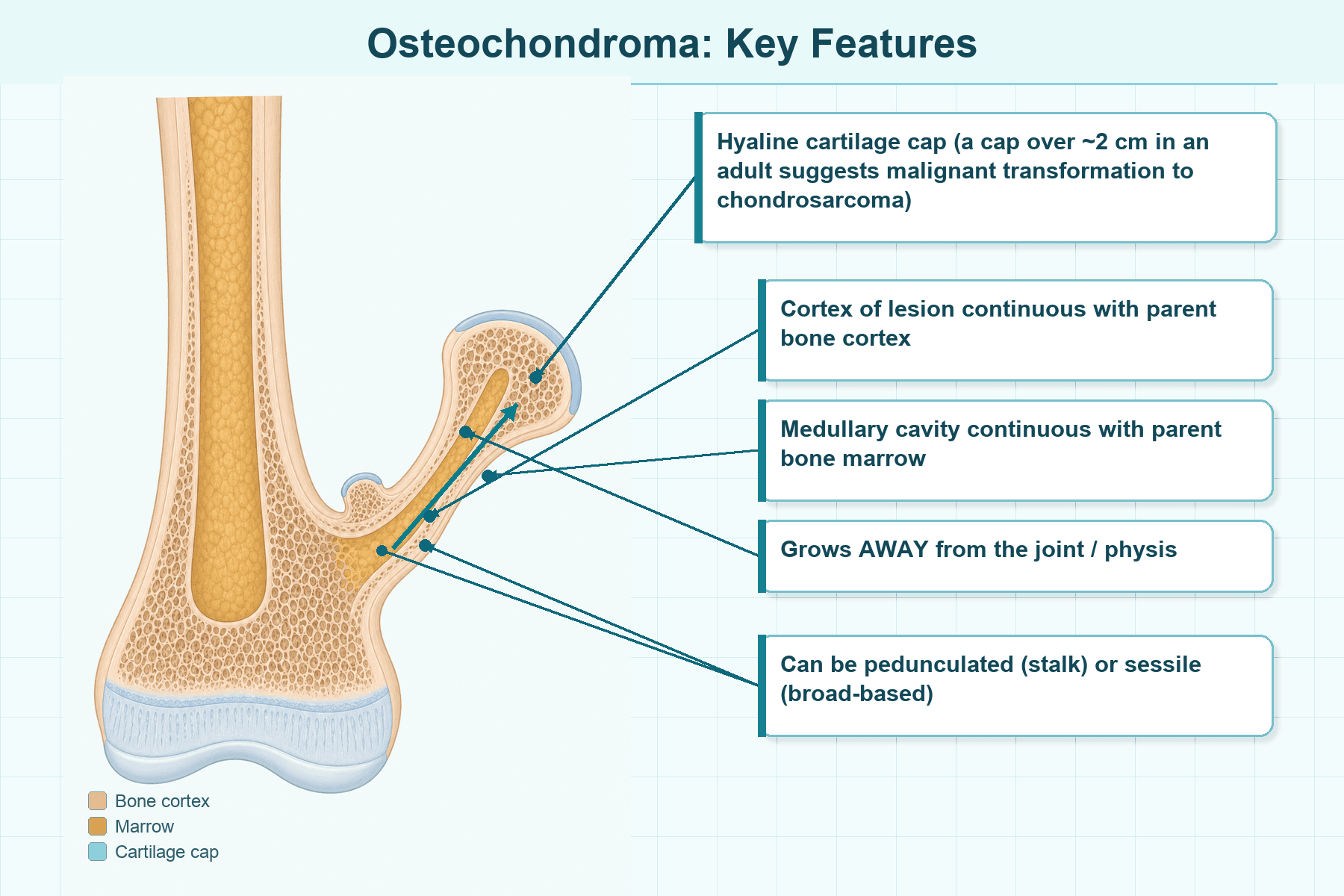
A developmental error. Osteochondroma arises from aberrant cartilage at the periphery of the growth plate, which herniates through a defect in the perichondral ring. The displaced cartilage keeps its growth potential and undergoes enchondral ossification, forming a cartilage-capped bony projection whose cortex and medullary cavity are continuous with those of the underlying bone.
The lesion grows by the same mechanism as normal physeal growth and stops enlarging at skeletal maturity. This distinguishes it from neoplastic processes, which continue growing regardless of skeletal age.
The genetics of HME. Inheritance is autosomal dominant with high penetrance. Mutations lie in EXT1 on chromosome 8q24 or EXT2 on 11p11-13, genes that encode glycosyltransferases for heparan sulfate synthesis, and loss of heterozygosity is required for a lesion to develop.
What it means for the family. The transmission risk to offspring is 50%, so first-degree relatives of HME patients are screened and genetic counselling is important for family planning. The disease also disturbs growth, producing deformities of the forearm and lower leg.
Malignant transformation. Secondary chondrosarcoma develops in 1% of solitary osteochondromas and in 5-25% of HME cases, although the upper end of that range is disputed (see Controversies). Transformation typically occurs in adulthood and is heralded by renewed growth, increasing pain or an enlarging cartilage cap. The chondrosarcoma is usually low-grade (Grade 1), but wide excision is required for cure.
Pathology
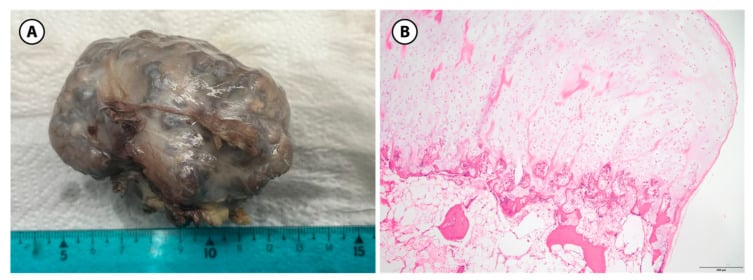
Gross. A cap of hyaline cartilage, covered by a fibrous perichondrium, sits on a bony stalk of normal trabecular bone and marrow that is continuous with the parent bone. The cap is typically 3-10 mm thick in adults; paediatric caps can be up to 20-30 mm during active growth.
Histology. In the benign cap, chondrocytes sit in lacunae, and enchondral ossification is active at the base of the cap during growth. Malignant change shows:
- Hypercellularity - increased chondrocyte density
- Nuclear atypia - enlarged, hyperchromatic nuclei
- Myxoid change - degeneration of the cartilage matrix
- Permeative growth - invasion into adjacent soft tissue
Biopsy of the cartilage cap is challenging - active enchondral ossification in paediatric patients can show cellular atypia that mimics low-grade chondrosarcoma. Correlation with imaging (cap thickness) and clinical features (age, growth pattern) is essential. Biopsy is only indicated if malignancy is suspected.
Classification and Morphology
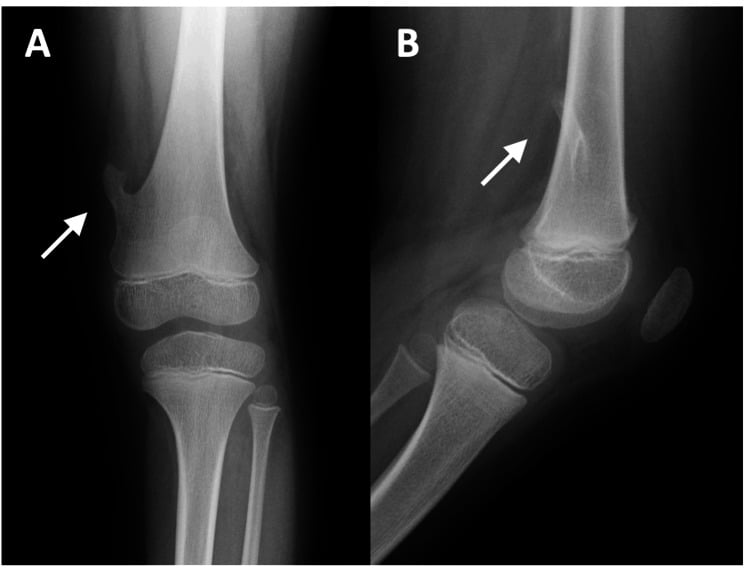
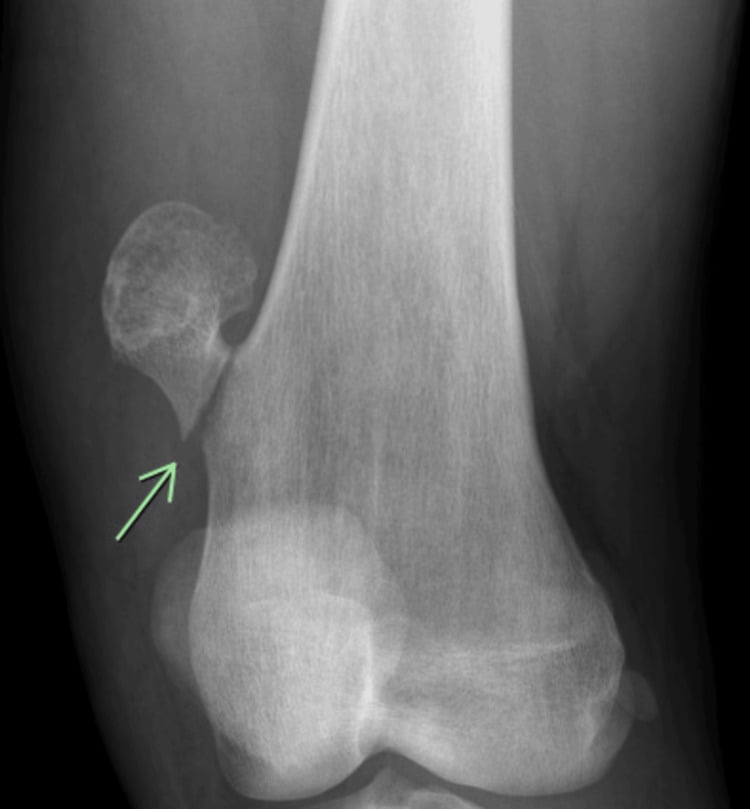
Pedunculated. A narrow stalk carries a bulbous cap. Pedunculated lesions are more common in the metaphyses of long bones and point away from the adjacent joint, because muscle and tendon traction draws the growing stalk in that direction over years. They are easier to excise and cause less deformity. A lesion pointing toward the joint should make you question the diagnosis.
Sessile. A broad base attaches the lesion to the bone. Sessile lesions are more common in flat bones such as the pelvis and scapula, and they carry a slightly higher risk of malignant transformation because their cartilage caps are typically thicker.
Skeletal Deformity in Multiple Osteochondromas (HME)
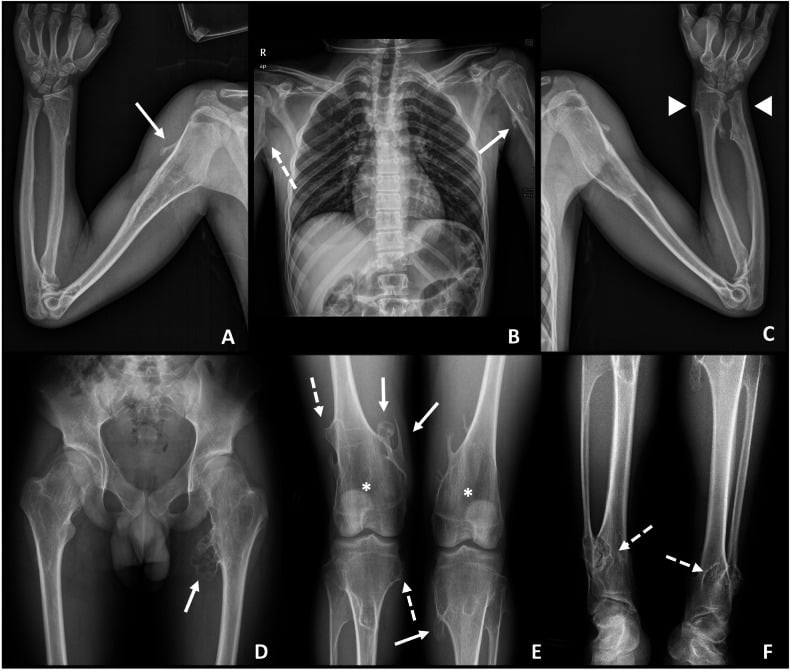
Beyond malignancy risk, the major morbidity of HME is growth-plate tethering deformity. The lesions tether physes asymmetrically, and deformities of the forearm and lower leg are the most common. The governing principle is guided growth (hemiepiphysiodesis) while the physes are open, and corrective osteotomy nearer maturity or where a deformity impairs function. HME children therefore need regular monitoring of alignment and limb length throughout growth, not just malignancy surveillance.
The characteristic deformities and their treatment:
- Forearm - ulnar shortening, radial bowing, radial head subluxation and reduced forearm rotation; managed according to Masada type by osteochondroma excision, ulnar lengthening, radial osteotomy or hemiepiphysiodesis
- Ankle valgus - from distal fibular shortening or distal tibial physeal involvement; medial distal-tibial hemiepiphysiodesis (guided growth) in the growing child, or supramalleolar osteotomy near maturity
- Genu valgum - medial distal-femoral or proximal-tibial guided growth, or osteotomy
- Coxa valga and acetabular dysplasia
- Limb-length discrepancy - guided growth or osteotomy, with early recognition and intervention
The forearm is the classic site and has its own named classification.
- Main lesion / pattern
- Osteochondroma at the DISTAL ULNA with ulnar shortening
- Key feature
- Relative ulnar shortening, radial bowing, ulnar tilt of the distal radius (pseudo-Madelung); radial head reduced
- Main lesion / pattern
- Radial head DISLOCATION with an osteochondroma at the PROXIMAL RADIUS
- Key feature
- Dislocated radial head + proximal radius lesion
- Main lesion / pattern
- Radial head DISLOCATION without a proximal radius lesion
- Key feature
- Dislocation driven by ulnar shortening alone
- Main lesion / pattern
- Osteochondroma at the DISTAL RADIUS with relative radial shortening
- Key feature
- Distal radius lesion, ulna relatively spared
Clinical Presentation
History. The most common presentation is a painless mass, found incidentally, or an enlarging lump that parents notice in their child. Mechanical pain comes from impingement on adjacent structures or from a bursa over the lesion, a common reason these lesions become painful. A tendon or muscle irritated over the lesion may snap, and the stalk of a pedunculated lesion can fracture, which is rare.
Examination. The mass is firm, non-tender and fixed to bone, in the metaphyseal region of a long bone, and typically 1-10 cm across. Check for neurovascular compression and assess joint motion for a mechanical block.
Any of these findings in an adult with a known osteochondroma requires urgent imaging and possible biopsy:
- New or increasing pain not explained by mechanical factors
- Growth after skeletal maturity - the lesion should be quiescent after physeal closure
- A rapidly enlarging mass - suggests aggressive cartilage proliferation
- Neurovascular symptoms - new-onset compression or ischaemia
Imaging and Diagnosis
Plain Radiographs
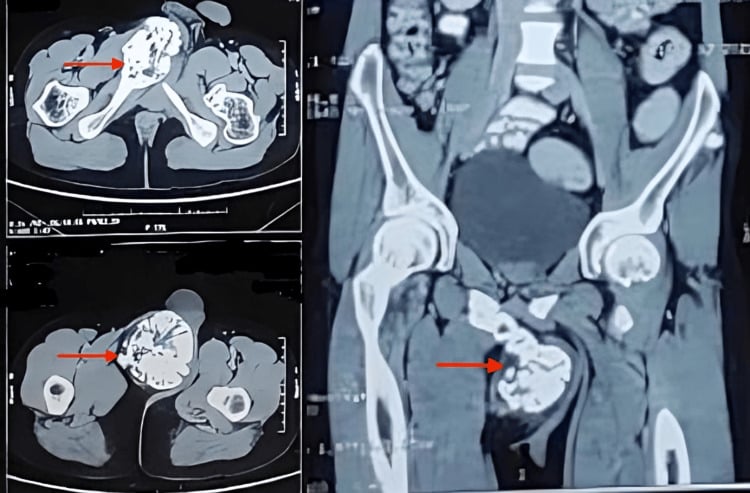
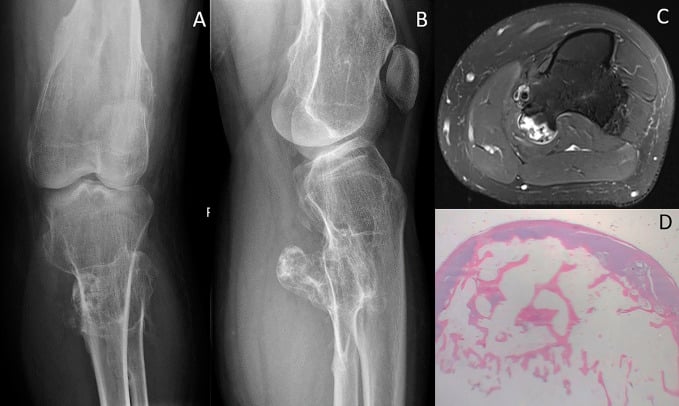
Corticomedullary continuity. The cortex of the lesion runs continuously into the cortex of the parent bone, and its medullary cavity is confluent with the host canal. This is the pathognomonic feature, and it follows from the pathology: displaced physeal cartilage that has grown its own bone is part of the host bone, not a mass stuck onto it. Demonstrate continuity and the diagnosis is made; a lesion that merely abuts the cortex is something else.
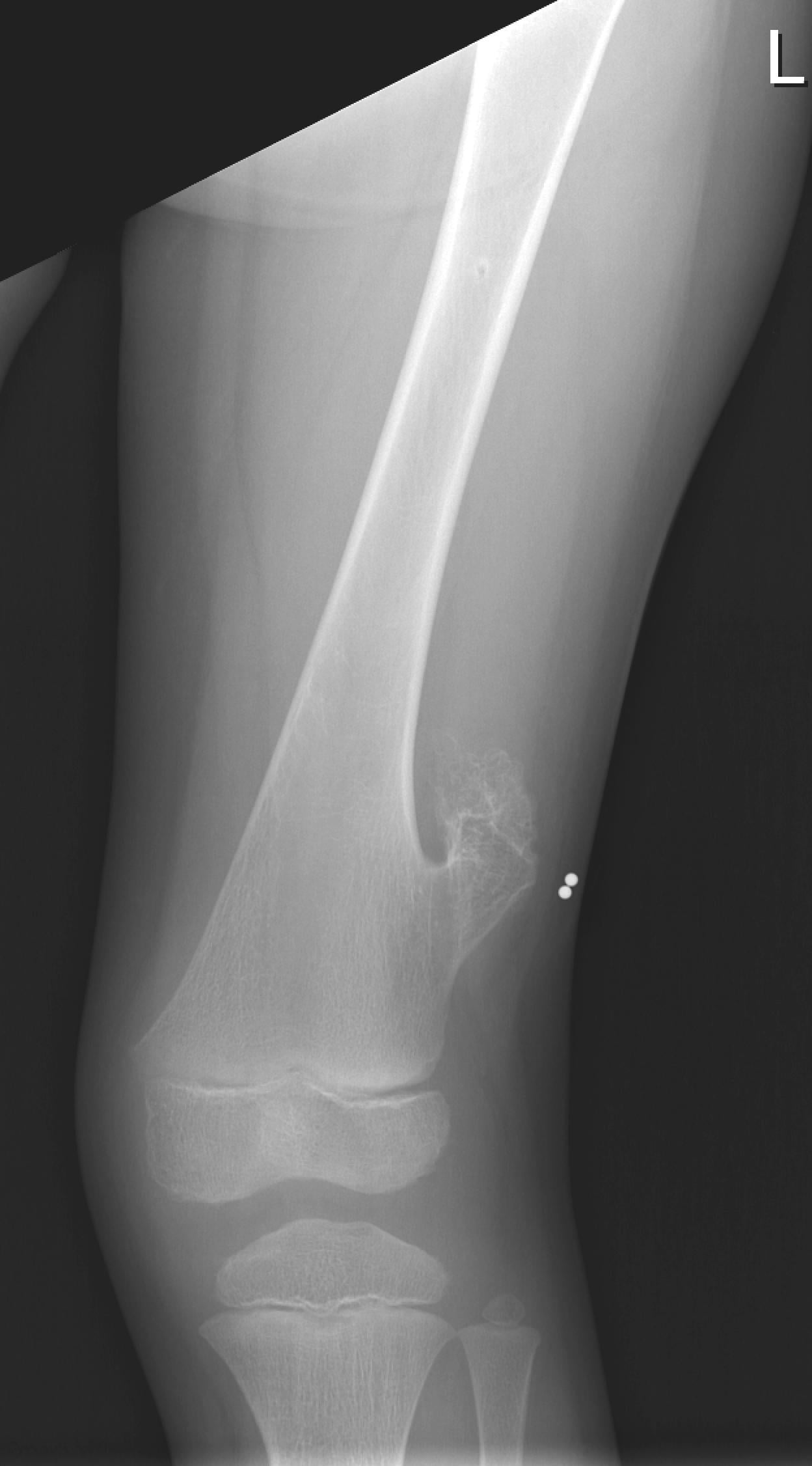
The cap is invisible. The cartilage cap is not seen on plain films unless it contains calcification, so a normal radiograph says nothing about cap thickness, and cap thickness is the measurement that matters for malignant transformation. A plain film alone cannot reassure a patient with a painful or enlarging lesion; the cap has to be measured on cross-sectional imaging, with MRI the reference standard.
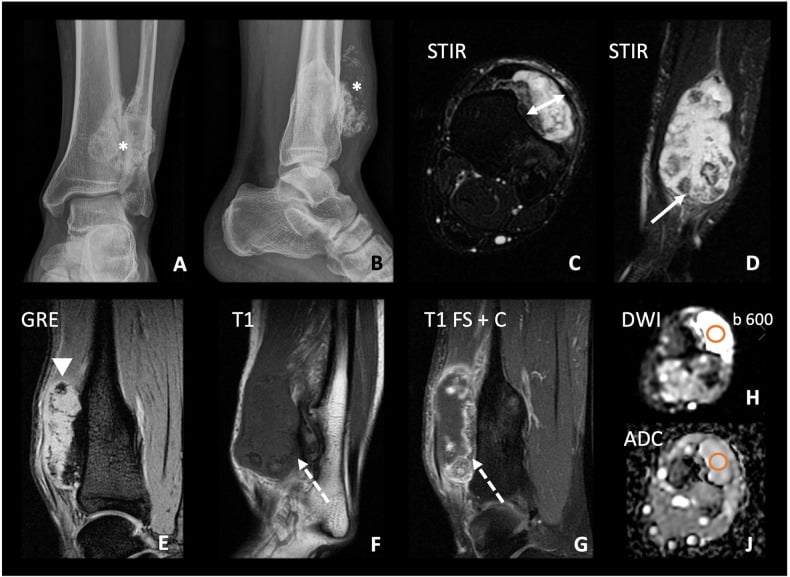
Calcification. Benign caps calcify, if at all, in an organised ring-and-arc pattern. Punctate, irregular calcification scattered into the soft tissues suggests malignant transformation: the cartilage is proliferating faster than it can mineralise in an orderly way. Read it alongside the other warnings, new pain in a skeletally mature patient, growth after physeal closure and a thickened cap on MRI.
MRI - Gold Standard for Cap Assessment
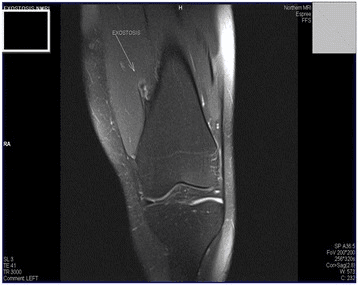
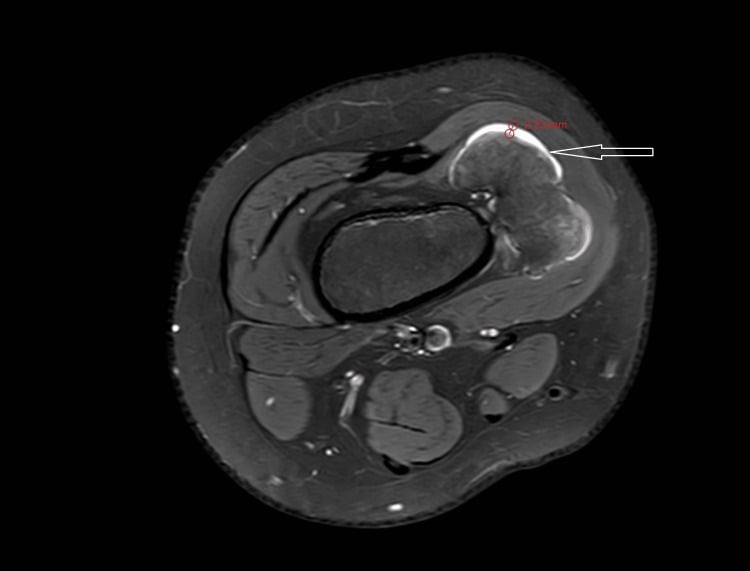
When and how. MRI is used when a lesion is symptomatic or when the cartilage cap must be measured. Normal hyaline cartilage is high signal on T2, and fluid-sensitive MRI makes the cap bright and measurable; use the thickest perpendicular measurement.
Reassuring and worrying signs. A benign cap is smooth and regular, with homogeneous signal and no soft-tissue mass beyond it. An irregular, nodular cap with heterogeneous signal, a soft-tissue mass extending beyond the cap, or destruction of the underlying cortex is suspicious.
Cartilage cap thickness greater than 2cm in a skeletally mature patient is concerning for malignant transformation. This should prompt biopsy. In children and adolescents, caps up to 3cm may be acceptable as the cartilage is still actively growing. Serial MRI is useful to document stability.
CT Scan
Bone detail. CT is less useful than MRI for measuring the cartilage cap but superior for bone detail. It is used for:
- Assessment of cortical breach or bone destruction
- Preoperative planning in complex anatomy (pelvis, scapula)
- The calcification pattern in the cartilage cap
Differential Diagnosis
- Key Distinguishing Feature
- NO cortical/medullary continuity
- Imaging Clue
- Lesion wraps around bone, distinct from cortex
- Key Distinguishing Feature
- Zonal phenomenon (mature periphery)
- Imaging Clue
- History of trauma, maturation pattern
- Key Distinguishing Feature
- Scalloping of cortex, no continuity
- Imaging Clue
- Small, often in hand/foot
Management Algorithm
Observation
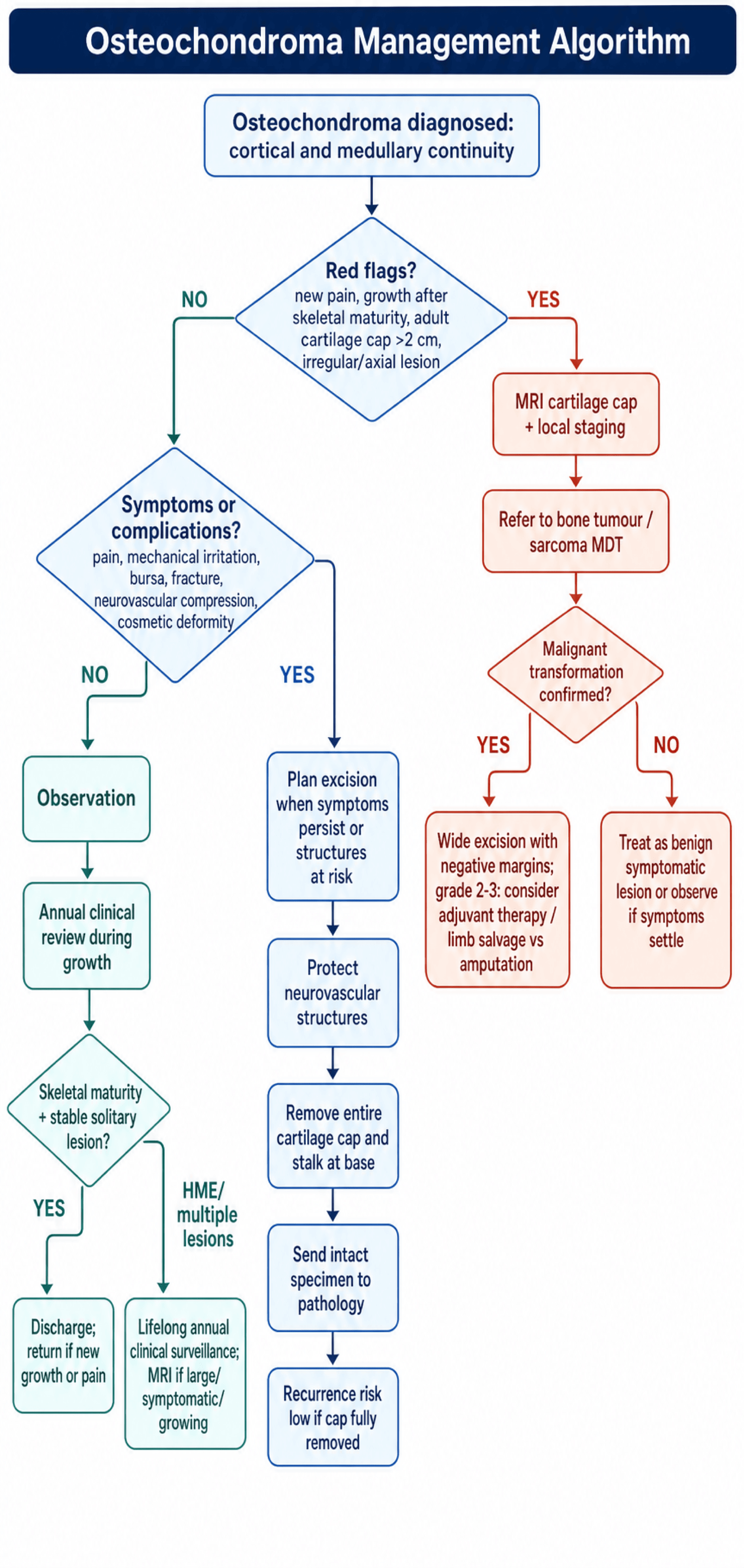
Observation is appropriate for:
- An asymptomatic lesion in a child or adolescent
- Small size with no neurovascular compromise
- Typical imaging (cortical continuity, thin cap)
- No growth after skeletal maturity
During growth. Children are examined clinically once a year, with a radiograph if symptoms develop or a change in size is noted.
At skeletal maturity. Once the growth plates have closed and a solitary lesion is stable and asymptomatic, no further routine follow-up is needed. The patient is discharged and told to return with new growth, pain or other new symptoms.
In HME. Lifelong clinical surveillance is recommended because of the higher malignancy risk: annual clinical examination for life, a baseline MRI of any large or symptomatic lesion, and a repeat MRI if growth or pain develops.
Surgical Excision
The indications, remembered as PNCC:
- Pain - mechanical, from impingement or bursa formation, not relieved by conservative measures
- Neurovascular compromise - compression of adjacent nerves or vessels
- Cosmesis - a deformity that concerns the patient or family
- Concern for malignancy - growth after maturity, a cap greater than 2cm, pain in an adult
The technique, in order:
- Approach - expose the lesion through an approach that protects neurovascular structures: direct lateral or medial for the femur and tibia, deltopectoral for the proximal humerus
- Excision - osteotomise at the junction of stalk and parent bone with an osteotome or oscillating saw, removing the entire cartilage cap with the base of the stalk and aiming for a 5mm margin of normal bone at the base
- Specimen - send the entire specimen to pathology intact and oriented; if malignancy is suspected, send the cap separately for immediate frozen section before closing the wound
- Closure - irrigate, close the periosteum if possible to prevent soft-tissue adhesion, and close the soft tissues in layers; a drain is not usually required for simple excisions
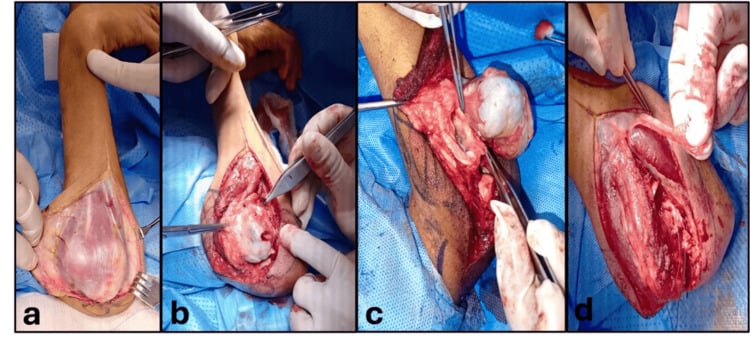
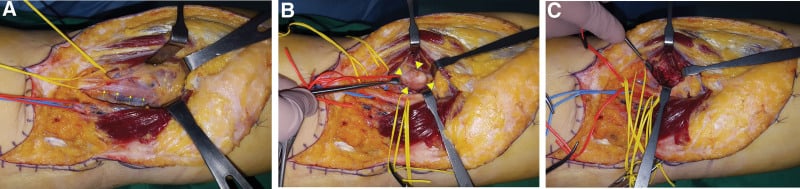
Find the nerve first. The giant radial osteochondroma shown below was excised through an extended lateral exposure, with elevation of the fascio-muscular flap, direct visualisation and protection of the posterior interosseous nerve, then reconstruction of the soft-tissue envelope. The operative priority is identifying the displaced nerve before the stalk is mobilised. Around the proximal fibula, plan for variant nerve displacement and expose the nerve before excision; a posteromedial fibular-head lesion can compress the tibial nerve.
Failure to remove the entire cartilage cap results in a 2% recurrence rate. Any residual cartilage can regenerate the lesion. Ensure complete excision at the base and inspect the wound cavity for residual cap fragments.
Management of Malignant Transformation
Confirmed secondary chondrosarcoma is treated by wide excision, with the margin and any adjuvant therapy set by grade.
- Treatment
- Wide excision with negative margins
- Margin Goal
- Wide margin (5-10mm normal tissue)
- Treatment
- Wide excision +/- adjuvant therapy
- Margin Goal
- Wide margin, consider limb salvage vs amputation
Prognosis. Low-grade secondary chondrosarcoma has an excellent prognosis with wide excision, 90% 5-year survival. High-grade lesions have poorer outcomes and may require chemotherapy or radiotherapy, though chondrosarcoma is relatively chemo-resistant.
Complications
During surgery. Neurovascular injury risk depends on location, the common peroneal nerve at the proximal fibula and the axillary nerve at the proximal humerus, and is rare (under 1%) with careful dissection. A pedunculated stalk may fracture during manipulation, and incomplete excision of the cap leads to recurrence.
After surgery. Wound infection occurs at standard surgical-site rates (2-3%). Haematoma is rare and usually self-limiting. Pathological fracture through weakened bone at the excision site is rare, and more common with large sessile lesions.
Of the disease. Malignant transformation is the most serious complication, and the local ones sit alongside it in the table.
- Mechanism
- Secondary chondrosarcoma develops in cartilage cap
- Management
- Wide excision with negative margins
- Prevention
- Surveillance for red flags; intervene if cap greater than 2cm
- Mechanism
- Friction over bony prominence creates fluid-filled sac
- Management
- Excision of lesion if symptomatic
- Prevention
- Cannot be prevented; patient education
- Mechanism
- Mass effect on adjacent vessels/nerves
- Management
- Surgical decompression and excision
- Prevention
- Early intervention for enlarging lesions
- Mechanism
- Trauma to pedunculated lesion
- Management
- Usually non-operative, excision if symptomatic
- Prevention
- -
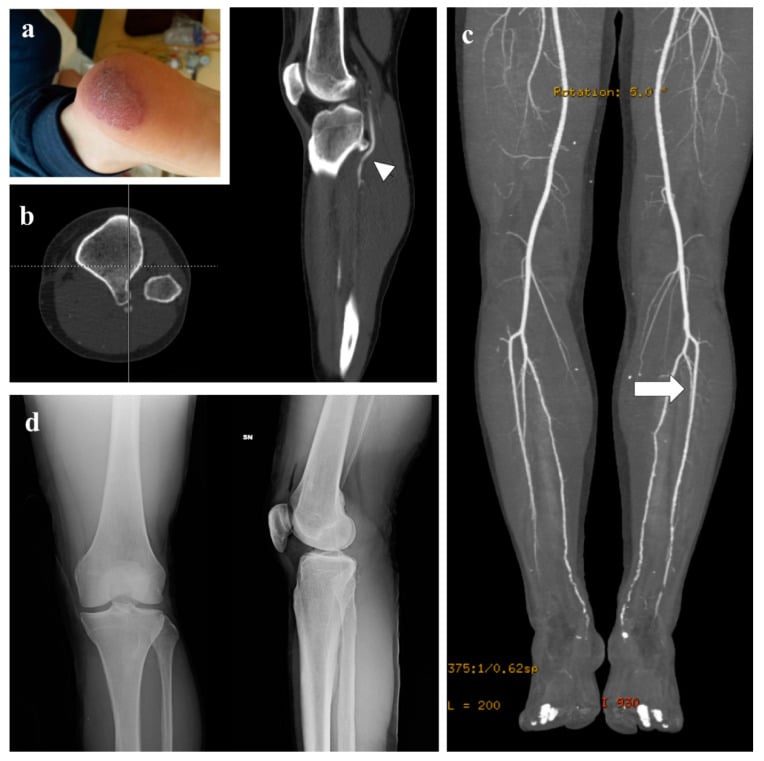
Vascular compression. New swelling, bruising, pulse change or ischaemic symptoms require urgent vascular imaging.
Outcomes and Prognosis
Recurrence. Complete excision brings recurrence to nearly 0%. Recurrences typically occur within 2 years and may require re-excision.
Solitary lesions. The prognosis is excellent. Most lesions are asymptomatic and require no treatment, and those that are excised have excellent outcomes with low recurrence.
HME. Quality of life is impaired by multiple lesions, skeletal deformities of the forearm and lower leg, and lifelong malignancy surveillance.
Guidelines, Registries & Global Practice
Global Epidemiology
- Solitary osteochondroma: most common benign bone tumour worldwide; true prevalence underestimated as most are asymptomatic
- Multiple osteochondromas (MO/HME): estimated prevalence around 1 in 50,000 in populations of European descent
- Higher reported rates in some isolated and indigenous populations (founder effect)
- Sex: male predominance for solitary lesions and for symptomatic MO disease
- Solitary: approximately 1% lifetime risk of secondary chondrosarcoma
- MO/HME: widely quoted at 1-5% in modern series, historically reported up to 25%
- EXT1 genotype and axial/pelvic lesions carry the highest risk
- Median age at transformation in the 30s - surveillance must extend into adulthood
Society Guidance - Side by Side
- Diagnosis
- Plain film usually diagnostic; MRI to measure cartilage cap if growing or painful
- Surveillance
- Active surveillance for asymptomatic lesions; cap measurement to triage
- Surgery / Referral
- Refer suspected secondary chondrosarcoma to a specialist bone-sarcoma centre before any biopsy
- Diagnosis
- Suspected primary bone cancer pathway triggered by an enlarging or painful bony mass in an adult
- Surveillance
- Urgent imaging within defined cancer-pathway timeframes
- Surgery / Referral
- Biopsy and definitive surgery only at a recognised bone-tumour unit
- Diagnosis
- Imaging-led diagnosis; biopsy reserved for malignancy concern
- Surveillance
- Observation for typical asymptomatic lesions
- Surgery / Referral
- Wide excision for confirmed secondary chondrosarcoma; en-bloc principles
- Diagnosis
- Osteochondroma classified as benign; secondary peripheral chondrosarcoma graded 1-3
- Surveillance
- Grading drives prognosis and margin planning
- Surgery / Referral
- Atypical cartilaginous tumour / grade 1 distinguished from higher-grade disease
Across all major frameworks the principle is identical: do not biopsy a suspected cartilage malignancy outside a specialist bone-sarcoma unit. A poorly placed biopsy tract can compromise later limb-salvage surgery. The 2cm adult cartilage-cap threshold and growth-after-maturity are the shared triggers for referral.
Registries & Resource-Setting Variation
- Disease-specific registries (e.g. the Registry of Multiple Osteochondromas, Rizzoli) underpin natural-history and transformation data
- National bone-tumour networks (UK, several European countries) centralise sarcoma care
- Genetic databases catalogue EXT1/EXT2 variants for diagnosis and counselling
- No arthroplasty-style implant registry applies, as treatment is excisional
- High-resource: MRI cap measurement, EXT genotyping, multidisciplinary sarcoma boards, limb salvage
- Limited-resource: plain radiographs and clinical surveillance are the mainstay; MRI and genetics may be unavailable
- Shared minimum standard: recognise red flags (growth after maturity, new pain, palpable enlargement) and refer
- Telemedicine and regional referral increasingly bridge access gaps for suspected malignancy
- Risk of incomplete excision and recurrence (around 2%)
- Site-specific neurovascular injury risk
- Risk of underlying malignancy if cartilage cap greater than 2cm (document pre-operative imaging)
- For MO/HME patients: counsel about lifelong surveillance and autosomal dominant inheritance
Record cartilage cap thickness on MRI in adults, the rationale for observation versus surgery, and (for MO/HME) family history and the genetic counselling offered.
Controversies & Areas of Uncertainty
The cartilage cap threshold. The classic 2cm adult threshold is a pragmatic rule, not an absolute cut-off. Murphey's original archival data used 1.5cm, and later MRI series favour 2cm in adults. Caps change with technique (ultrasound or MRI) and slice plane, so serial change matters more than any single number, and growth after maturity outweighs a static cap measurement as a red flag.
The true malignancy risk in multiple osteochondromas (MO, synonymous with HME). Historical figures of up to 25% came from referral-centre cohorts with selection bias, and contemporary population-based estimates cluster around 1-5% lifetime risk. EXT1 genotype, pelvic or axial sites and large sessile lesions concentrate the risk. The right denominator, all MO patients or only those reaching sarcoma units, remains debated.
Surveillance strategy. No randomised evidence defines the optimal interval or imaging modality for MO surveillance. Whole-body MRI is attractive, but cost and access limit its routine use, and most centres rely on symptom-driven imaging plus periodic clinical review. Over-surveillance risks incidental findings and patient anxiety.
Atypical cartilaginous tumour. The line between grade 1 secondary chondrosarcoma and a benign reactive cap is genuinely difficult, and WHO now uses the term atypical cartilaginous tumour for some low-grade appendicular lesions. Imaging-pathology-clinical correlation, not histology alone, drives the call.
MCQ Practice Points
Q: What is the most common benign bone tumor? A: Osteochondroma - accounts for 35% of all benign bone tumors and 8-9% of all bone tumors. Peak age 10-20 years during active skeletal growth.
Q: What is the pathognomonic imaging feature of osteochondroma? A: Cortical and medullary continuity with the parent bone. The cortex of the lesion is continuous with the cortex of the underlying bone, and the medullary cavity merges with the host bone marrow.
Q: What cartilage cap thickness raises concern for malignant transformation in an adult? A: Greater than 2cm in a skeletally mature patient. Caps under 2cm are reassuring. In children, caps up to 3cm may be acceptable during active growth.
Q: What genes are mutated in Hereditary Multiple Exostoses? A: EXT1 (chromosome 8q24) and EXT2 (chromosome 11p11-13). These genes encode glycosyltransferases required for heparan sulfate synthesis. Inheritance is autosomal dominant.
Q: When does osteochondroma stop growing? A: At skeletal maturity when the growth plates close. Any growth after physeal closure is concerning for malignant transformation to secondary chondrosarcoma.
Q: What is essential during surgical excision to prevent recurrence? A: Complete removal of the entire cartilage cap with the base of the stalk. Recurrence rate is 2% with incomplete excision, nearly 0% with complete excision.
Exam Viva Scenarios
Practise clinical reasoning and management decisions out loud
“A 14-year-old boy presents with a painless mass on his distal femur noticed by his mother. X-ray shows a pedunculated lesion with cortical and medullary continuity with the femur. What is your diagnosis and management?”
“A 35-year-old woman with known osteochondroma of the proximal humerus since childhood presents with increasing pain and size of the lesion over 6 months. MRI shows cartilage cap thickness of 3.5cm. How do you proceed?”
“A 10-year-old boy presents with multiple bony prominences around his knees and ankles. His father had similar lesions. What is your diagnosis and how do you manage this patient and family?”
Key Facts
- Most common benign bone tumor (35% of all benign bone lesions)
- Peak age 10-20 years, male 2:1
- Metaphysis of long bones (distal femur, proximal tibia most common)
- Stops growing at skeletal maturity - growth after = malignancy
Diagnosis
- Cortical and medullary continuity = pathognomonic
- Cartilage cap under 2cm in adults (under 3cm in children)
- MRI gold standard for cap assessment
- No biopsy needed unless malignancy suspected
Malignant Transformation
- Solitary: 1% risk; HME: 5-25% risk
- Red flags: growth after maturity, cap greater than 2cm, new pain
- Secondary chondrosarcoma (usually low-grade)
- Wide excision curative - 90% 5-year survival for low-grade
Surgical Indications (PNCC)
- Pain (mechanical or mass effect)
- Neurovascular compromise
- Cosmetic deformity
- Concern for malignancy (cap greater than 2cm, growth)
HME
- EXT1/EXT2 mutations (autosomal dominant)
- Lifelong surveillance required (annual clinical exam)
- Manage skeletal deformities (forearm, lower leg)
- Genetic counseling - 50% transmission risk
Surgical Pearls
- Remove ENTIRE cartilage cap to prevent recurrence
- Recurrence 2% if incomplete, 0% if complete excision
- Send entire specimen to pathology intact
- If malignancy suspected, frozen section before closure
Evidence Base and Key Studies
Imaging of Osteochondroma - Radiologic-Pathologic Correlation
- Definitive AFIP radiologic-pathologic review of osteochondroma and its variants
- Cortical and medullary continuity with the parent bone is the pathognomonic hallmark
- Malignant transformation in roughly 1% of solitary lesions and 3-5% of HME
- Continued growth or a hyaline cap thicker than 1.5cm after skeletal maturity suggests malignancy
Severity of Disease and Risk of Malignant Change in HME - Genotype-Phenotype
- Prospective genotype-phenotype study of 172 individuals from 78 HME families
- EXT1 and EXT2 mutations were almost equally common (identified in 83%)
- EXT1 mutations produced significantly worse disease (stature, deformity, function) than EXT2
- Seven sarcomas arose in EXT1 carriers versus one in an EXT2 carrier
Secondary Peripheral Chondrosarcoma in Multiple Osteochondromas
- Single-institution series of 105 secondary peripheral chondrosarcomas in MO (1960-2019)
- Median age at diagnosis 34 years (range 13-63) - transformation can occur in young adults
- Pelvis was the most frequent site (44%), followed by the lower limb
- Most lesions were grade 1 (59) with grade 2 or 3 and partial resection predicting worse disease-free survival
Cartilage Cap Thickness Measurement - Benign vs Exostotic Chondrosarcoma
- Cartilage cap thickness measured by ultrasound versus pathology in 22 exostoses and 2 chondrosarcomas
- Mean measurement error under 2mm for caps less than 2cm thick
- Ultrasound accuracy exceeded CT and was comparable to MRI
- A thin cap suggests a benign exostosis whereas a thick cap suggests malignancy
Surgical Management of Chest Wall Osteochondroma in Children
- Series of 7 children operated for chest wall osteochondroma from a clinic cohort of 854 exostosis patients
- Indications were pain, diagnostic confirmation, recurrent pneumothorax, and malignancy
- No recurrence of exostosis on follow-up after excision
- No malignant transformation or intrathoracic complications occurred
Shoulder Exostoses as a Marker of EXT1 Genotype and Malignant Change
- Prospective HME database of 172 patients with 5361 palpable exostoses analysed
- Shoulder exostoses strongly predicted an EXT1 genotype (odds ratio 20.6)
- Scapular exostoses carried the highest probability of malignant change of any site
- Seven chondrosarcomas occurred (2 scapular, 1 proximal humeral)