Neuralgic Amyotrophy | Severe Pain THEN Patchy Palsy | The Great Mimic
- Pain BEFORE palsy: severe neuropathic shoulder/arm pain for days to weeks, then weakness emerges as pain settles
- Patchy, multifocal: affects individual nerves or fascicles (long thoracic, suprascapular, AIN, PIN), not a single root or trunk
- Immune-mediated: often triggered by infection, vaccination, surgery, or strenuous exercise
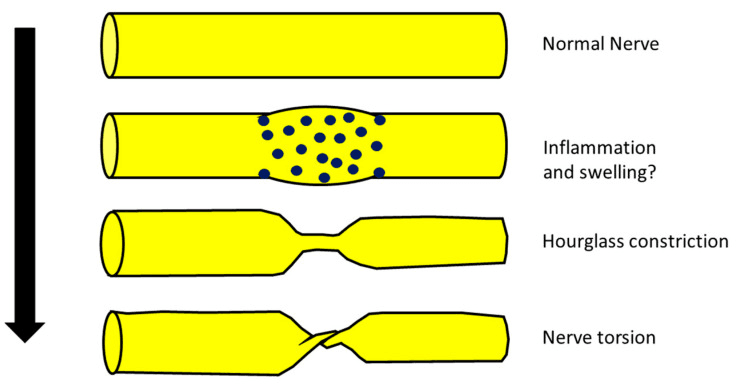
- Hourglass fascicular constrictions: the structural lesion sits WITHIN the parent nerve, proximal to the branch point
- Recovery is slow and often incomplete: two-thirds have residual pain or weakness at 3 years
- “Disproportionate early pain that wakes the patient is the giveaway
- “Scapular winging plus a dropped shoulder = long thoracic plus suprascapular involvement
- “It is the classic cause of 'spontaneous' AIN or PIN palsy
- “No randomised evidence for any drug - steroids are used early on weak evidence
Overview and Epidemiology
Parsonage-Turner syndrome (neuralgic amyotrophy, idiopathic brachial plexus neuritis) is an immune-mediated disorder of the brachial plexus and its branches. It is defined by attacks of severe neuropathic upper-limb pain followed by patchy, multifocal weakness and atrophy.
Why it matters. It is the great mimic of the upper limb and is frequently misdiagnosed as a rotator cuff tear, a cervical radiculopathy or a simple compressive nerve entrapment. Recognising the painful-onset, patchy palsy prevents the misdiagnosis and the unnecessary operation that goes with it. Early recognition also allows pain control, rehabilitation and realistic counselling, because recovery takes months to years and is often incomplete.
How common. A prospective primary-care cohort found a one-year incidence of classic neuralgic amyotrophy of 1 per 1,000, suggesting the disorder is 30-50 times more common than previously thought (DOI). It has long been under-recognised, and awareness is the main barrier to diagnosis. Idiopathic disease has a slight male predominance.
Pathophysiology and Mechanisms
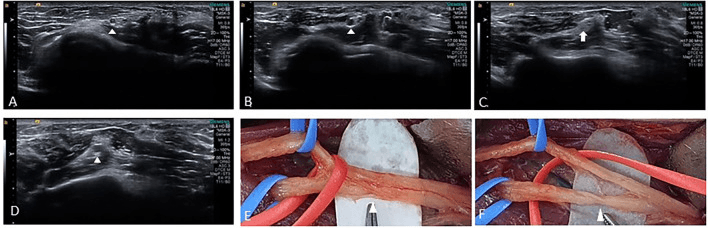
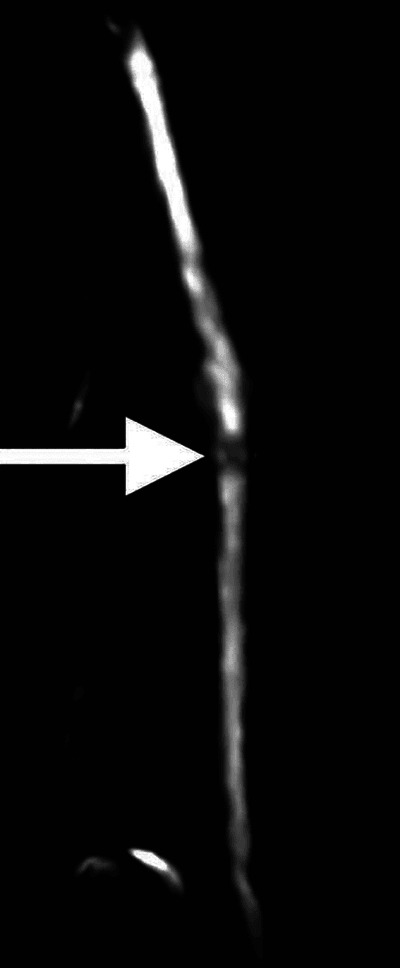
In neuralgic amyotrophy the structural lesion is an intraneural hourglass-like fascicular constriction located WITHIN the parent nerve, proximal to the branch point - not external compression at the usual entrapment sites. This is why a "spontaneous AIN palsy" is really a proximal median-nerve fascicular problem.
A two-hit model. The proposed mechanism runs from a susceptible nervous system to a structural lesion in four steps:
- Predisposition - a susceptible peripheral nervous system, clear in hereditary disease with SEPT9 mutations
- Trigger - an immune-activating event, listed under the history below
- Immune attack - focal inflammatory injury to specific nerves or fascicles within the brachial plexus
- Fascicular constriction - swelling, then incomplete and complete hourglass constriction, and finally fascicular entwinement, a continuum seen on high-resolution ultrasound
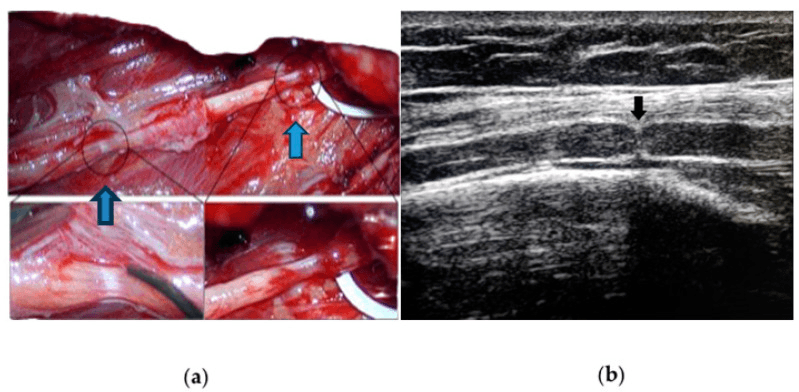
The constricted segment. Histology shows inflammatory cell infiltration, demyelination and a reduced number of nerve fibres.
Classification Systems
Idiopathic versus hereditary. The hereditary form is roughly ten times less common than the idiopathic form.
- Idiopathic (INA)
- Around 40 years
- Hereditary (HNA)
- Younger, late 20s
- Idiopathic (INA)
- Usually single or few
- Hereditary (HNA)
- Recurrent, more frequent
- Idiopathic (INA)
- Sporadic
- Hereditary (HNA)
- SEPT9 mutation, autosomal dominant
- Idiopathic (INA)
- Less common (~17%)
- Hereditary (HNA)
- More common (~56%)
- Idiopathic (INA)
- Better on average
- Hereditary (HNA)
- Poorer, more severe paresis
By nerve distribution. The disease has a predilection for the upper and middle trunk, and the long thoracic and suprascapular nerves are the ones most often hit. Distal mononeuropathies occur too, but the lesion still sits proximally in the parent nerve. A patchy distribution that crosses nerve and root territories is the hallmark.
- Typical nerves
- Long thoracic, suprascapular
- Clinical clue
- Winging plus weak external rotation
- Typical nerves
- AIN, PIN, superficial radial
- Clinical clue
- Weak OK sign or finger drop
- Typical nerves
- Phrenic, recurrent laryngeal
- Clinical clue
- Breathlessness, hoarse voice
- Typical nerves
- Several nerves at once
- Clinical clue
- Patchy, asymmetric weakness
Clinical Assessment
Pain comes first. The attack opens with sudden, severe, neuropathic shoulder or arm pain that often wakes the patient. It lasts days to weeks, and the weakness emerges as it eases. This painful prodrome is the single most useful historical clue: a spontaneous upper-limb palsy with a preceding bout of disproportionate neuropathic pain is neuralgic amyotrophy until proven otherwise.
Triggers. Ask about each, because one is found in roughly half of cases:
- Infection - a viral illness, including hepatitis E
- Vaccination - reported after several vaccines
- Surgery - a recent operation or anaesthetic
- Pregnancy - peripartum attacks are well described
- Exercise - strenuous or unaccustomed exertion
The rest of the history. Sensory symptoms are present in most (around three-quarters) but are milder than the pain. Take a family history, since recurrent attacks suggest the hereditary form.
Patchy, not anatomical. Weakness does not respect a single nerve or root, and a patchy pattern (for example winging plus deltoid weakness) points away from a compressive lesion and towards neuralgic amyotrophy. Examine the whole upper limb, because the deficit is rarely where the pain is worst. Inspect for scapular winging and periscapular and deltoid wasting, which comes on rapidly in affected muscles. Sensory loss is variable and often patchy, and reflexes are usually preserved unless a major nerve is affected.
Targeted motor testing. Four nerves deserve careful examination in any suspected case:
- Suprascapular - supraspinatus and infraspinatus weakness, with deep shoulder pain
- Long thoracic - serratus anterior weakness and medial scapular winging
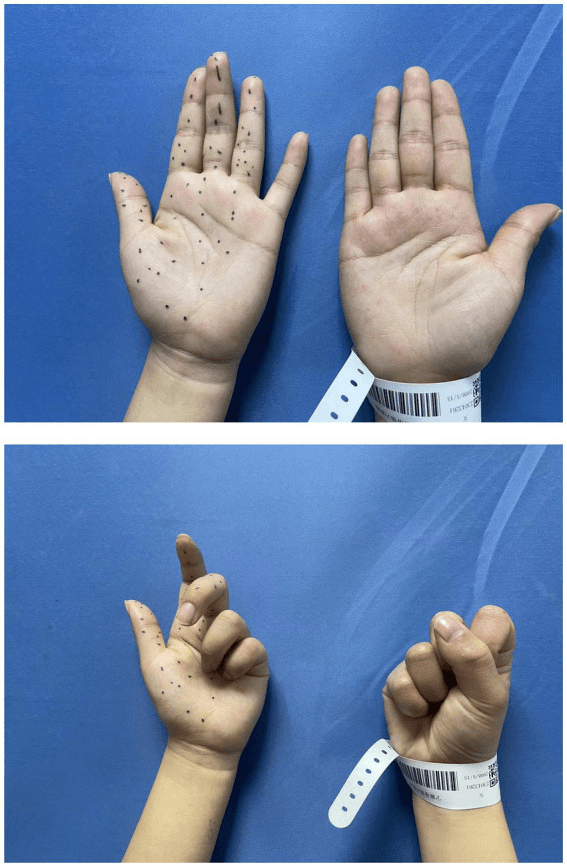
- Anterior interosseous - FPL and FDP weakness, a weak OK sign, no sensory loss
- Posterior interosseous - finger extensor weakness, finger and thumb drop, wrist radial deviation
- Shared feature
- Shoulder/arm pain plus weakness
- Key difference
- Radiculopathy follows a dermatome/myotome; pain is neck-related and worse with neck movement
- Shared feature
- Painful weak shoulder
- Key difference
- Cuff tear has no patchy distal palsy and no severe neuropathic prodrome
- Shared feature
- Isolated distal motor palsy
- Key difference
- Neuralgic amyotrophy has a painful onset and proximal fascicular lesion
- Shared feature
- Sudden severe shoulder pain
- Key difference
- No motor palsy; calcium on radiograph
Bilateral or rapidly ascending weakness, prominent sensory level, or bowel/bladder change should prompt consideration of Guillain-Barre syndrome, myelopathy, or a structural plexus lesion (tumour). Patchy painful upper-limb palsy with normal cord signs favours neuralgic amyotrophy.
The Three Phases of Pain
The pain runs in three consecutive phases, and its character changes over time. Misreading the phase drives the wrong treatment.
Phase 1: neuropathic pain. The initial pain is intense and continuous, typically lasts around four weeks, and is out of proportion to any mechanical finding.
Phase 2: musculoskeletal pain. As the acute pain fades and weakness develops, especially periscapular weakness, a second, more musculoskeletal pain appears. It comes from altered scapular biomechanics, muscle imbalance and overuse of the compensating muscles, and it responds to scapular rehabilitation rather than to neuropathic drugs.
Phase 3: chronic intermittent pain. A longer-term pattern of intermittent neuropathic and exertional pain with fatigability follows. It is part of the residual burden that affects the majority at three years.
Why the phase matters. Phase 1 is treated with neuropathic analgesia and possibly early steroids; phases 2 and 3 with scapular and postural rehabilitation and pacing. Neuropathic drugs for the mechanical pain, or physiotherapy for the acute neuropathic pain, misfire. Persistent phase-1-type neuropathic pain alongside a structural constriction on imaging is what raises the question of surgery.
Investigations
Diagnosis is clinical. History and examination carry the diagnosis: a painful onset followed by patchy upper-limb weakness with a typical nerve distribution. Investigations support and localise rather than confirm.
Electrodiagnostics. EMG and nerve conduction studies after about 2-3 weeks show patchy denervation in the affected muscles, with relatively preserved sensory studies in pure-motor branches. They help map the multifocal pattern and exclude radiculopathy.
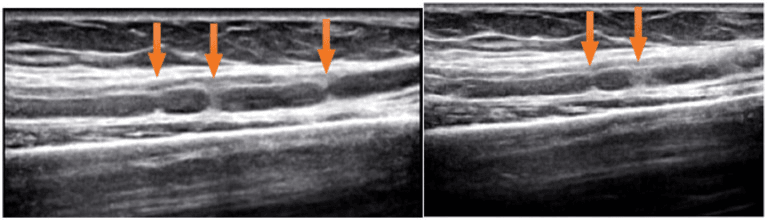
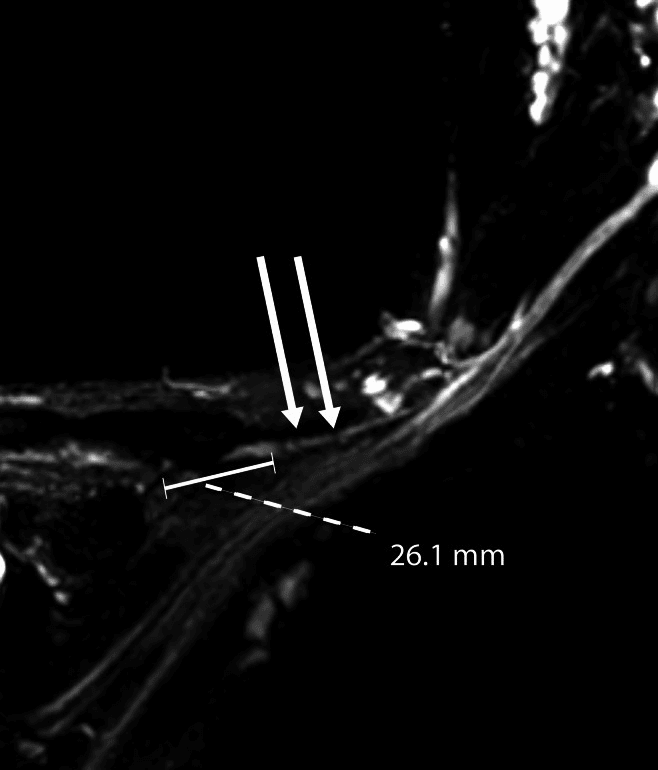
High-resolution ultrasound. HRUS of the clinically affected nerves can show nerve swelling, incomplete or complete constriction, and fascicular entwinement. These form a continuum that may help predict recovery versus the need for surgery.
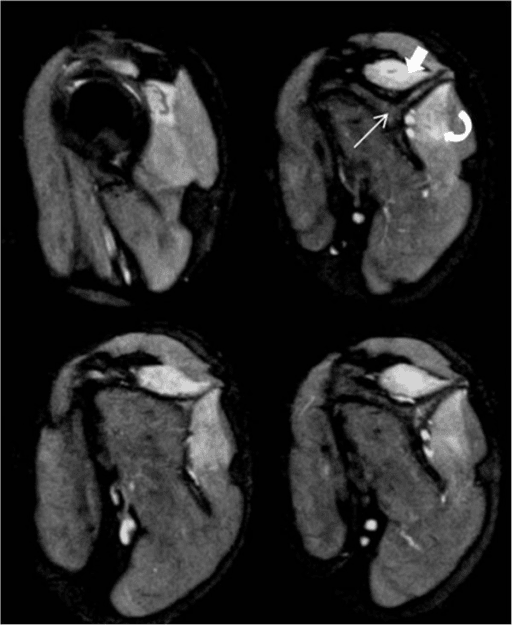
MRI. MRI shows muscle denervation oedema as bright T2 signal. It is useful when the affected nerve is hard to pin down, or to exclude a structural plexus lesion.
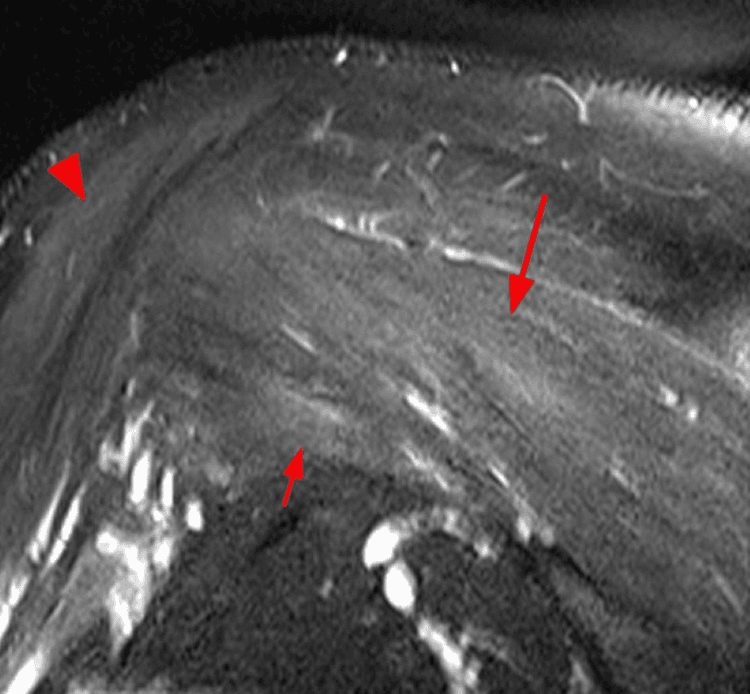
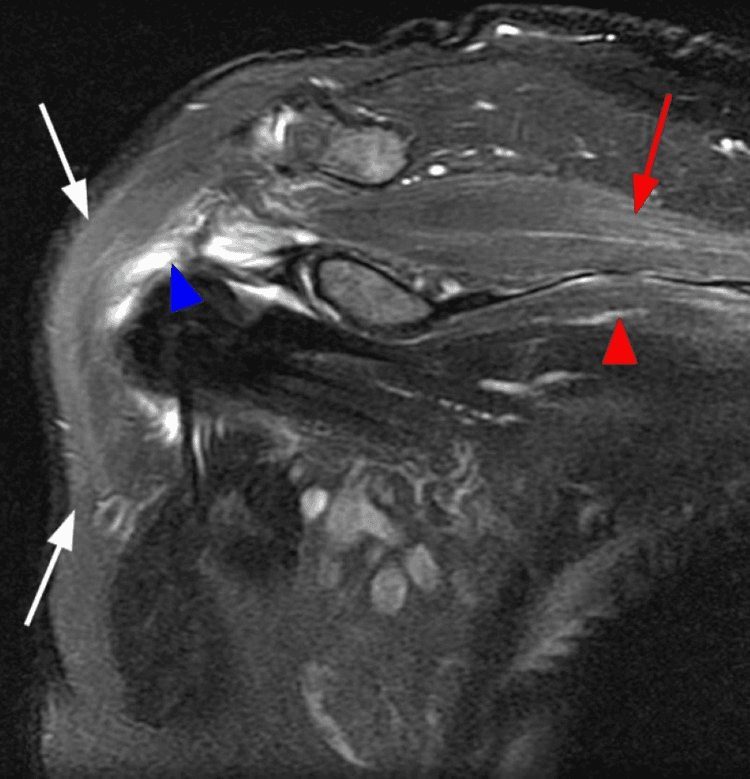
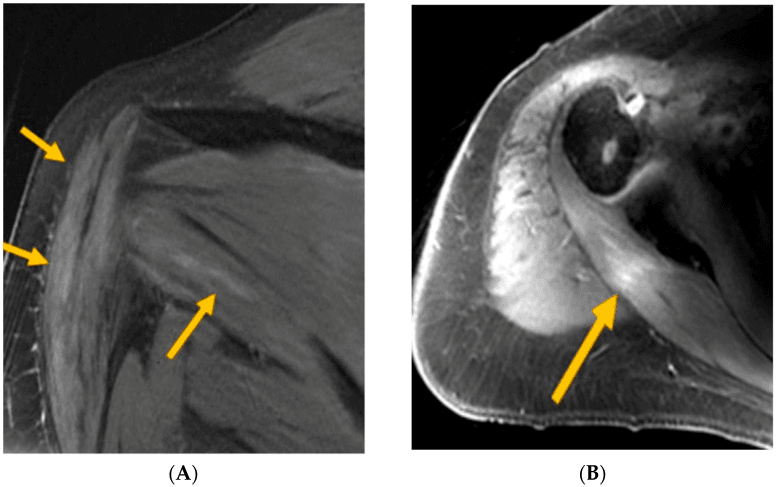
MR neurography. High-resolution MR neurography can localise the fascicular lesion itself.
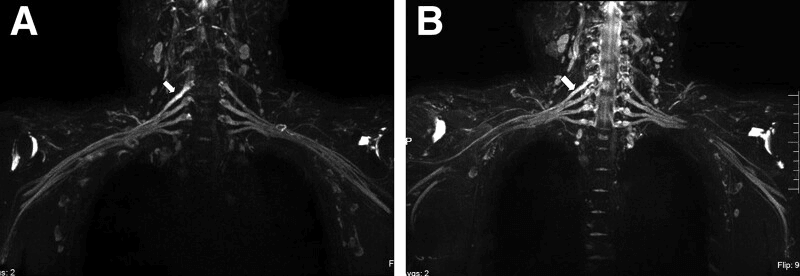
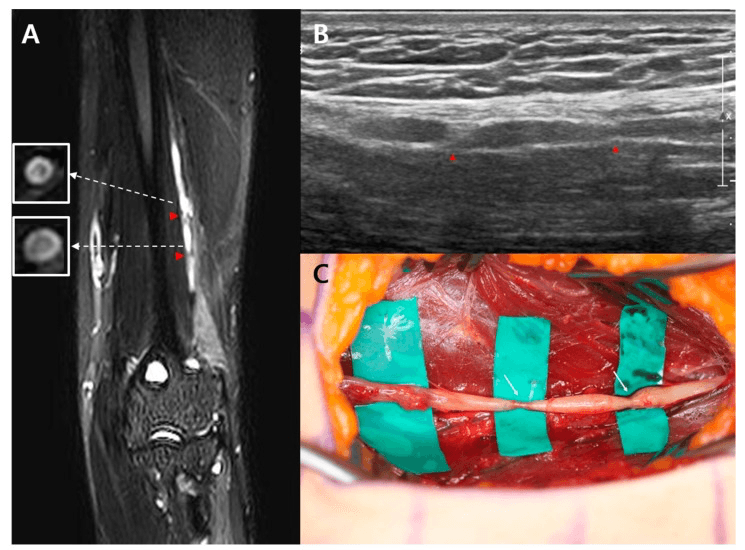
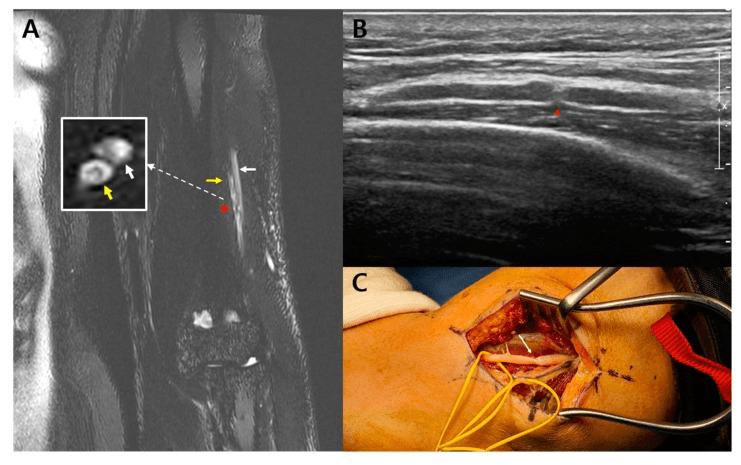
Bloods. No specific blood test confirms the diagnosis. Where relevant, test for an antecedent trigger: hepatitis E serology is worthwhile, as acute hepatitis E virus infection has a recognised association with neuralgic amyotrophy. A Swiss multicentre case-control study found a moderate association with neuralgic amyotrophy, but not with Guillain-Barre syndrome or Bell's palsy (DOI).
Management Algorithm
There is no proven disease-modifying drug, and treatment is largely supportive. The acute phase is dominated by pain, the recovery phase by weakness.
Pain control (days 0-14). The early pain is severe and a major source of distress, so analgesia is aggressive and multimodal. Neuropathic agents (for example gabapentinoids, amitriptyline) are combined with simple analgesia, and opioids may be needed short term.
Early corticosteroids (first month). Oral corticosteroids in the first month may shorten the painful phase and accelerate recovery in some patients. The evidence is weak and non-randomised, so discuss the uncertainty and risks before starting.
Protect and educate. Avoid overuse of the painful limb, protect it from traction injury, and explain the natural history early. Reassurance about the typical sequence, in which the pain settles and then weakness emerges, reduces anxiety.
Rehabilitation in the recovery phase. Rehabilitation is the mainstay once pain allows:
- Scapular stabilisation and periscapular strengthening
- Avoiding compensatory overload and glenohumeral stiffness
- Pacing and energy conservation for fatigability
- Addressing aberrant movement patterns, where a structured neuromuscular programme helps
Monitoring. Review the patient serially for re-innervation. Repeat EMG at 3-6 months if recovery stalls, and re-image with HRUS or MR neurography if a focal constriction is suspected and there is no recovery. Most spontaneous recovery occurs over months, but counsel that it can take 1-3 years.
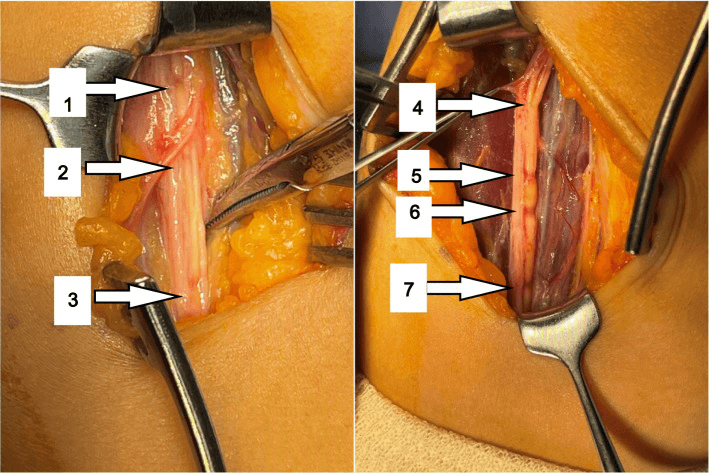
When to consider surgery. Surgery targets the proximal intraneural lesion, not the classic distal entrapment site. The indications are:
- A discrete hourglass fascicular constriction on imaging with no recovery
- No clinical or electrical recovery by around 3-6 months
- A severe, persistent isolated mononeuropathy (for example AIN or PIN) amenable to neurolysis
The window is a range because the timing is uncertain: the Wang series recommends early surgery if there is no recovery by 3 months, but that comes from an operated population rather than a comparison of strategies.
Which operation. The options:
- Interfascicular neurolysis for a mild-to-moderate constriction
- Resection and neurorrhaphy (or grafting) for a severe constriction with loss of fascicle continuity
- Tendon transfers as salvage for established, non-recovering deficits (for example for serratus anterior or finger extension)
Complications and Sequelae
A study of the clinical spectrum in 246 patients found that overall recovery is less favourable than usually assumed, with persisting pain and paresis in approximately two-thirds of patients followed for three years or more (DOI).
- Frequency
- Common (up to two-thirds at 3 years)
- Management
- Rehabilitation, tendon transfer if fixed
- Frequency
- Common
- Management
- Neuropathic analgesia, pacing
- Frequency
- Frequent
- Management
- Energy conservation, graded activity
- Frequency
- Frequent with long thoracic involvement
- Management
- Scapular rehab, transfer if persistent
- Frequency
- ~25% idiopathic, higher hereditary
- Management
- Counsel, treat each attack acutely
- Frequency
- Uncommon
- Management
- Monitor; plication in selected cases
Extra-Plexal Involvement: Phrenic Nerve and Diaphragmatic Palsy
The phrenic nerve is the classic extra-plexal target, and its involvement is easily missed as "just deconditioning".
Presentation. Dyspnoea, especially orthopnoea (breathlessness lying flat), reduced exercise tolerance and disturbed sleep. These are often overshadowed by the shoulder pain and weakness, so the palsy is under-recognised.
Diagnosis. The diaphragm is assessed three ways:
- A raised hemidiaphragm on the chest radiograph
- Paradoxical diaphragm movement on the sniff test (fluoroscopy or ultrasound)
- Lung-function tests showing a fall in vital capacity from erect to supine; a supine drop of about 20% or more suggests diaphragm weakness
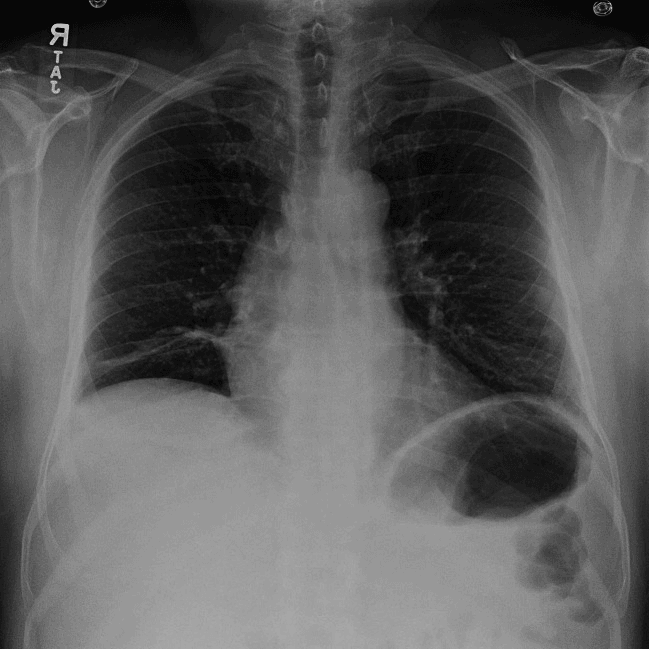
Management. Most recover spontaneously over months to a couple of years, in line with the general natural history. Non-invasive ventilation for symptomatic or nocturnal hypoventilation bridges severe cases, and diaphragmatic plication is reserved for persistent, symptomatic unilateral palsy that fails to recover.
Clinical Relevance for the Orthopaedic Surgeon
The orthopaedic trap is operating on the wrong problem: a "frozen shoulder" or "cuff tear" that is actually neuralgic amyotrophy, a discectomy for what looked like radiculopathy, or a "compressive AIN/PIN palsy" decompressed at the forearm when the lesion is a proximal fascicular constriction. The painful prodrome and patchy pattern are what save the patient an unnecessary operation.
The spontaneous AIN or PIN palsy. Most spontaneous AIN and PIN palsies are now understood as forms of neuralgic amyotrophy with proximal fascicular constrictions. That reframes both diagnosis (image proximally) and surgery (operate proximally, if at all).
After surgery. Neuralgic amyotrophy can occur after any surgery or anaesthetic, sometimes in a limb remote from the operation. New patchy, painful weakness after an operation is not always a positioning or block injury.
The winging scapula. When serratus anterior winging follows a painful episode, neuralgic amyotrophy is the leading cause. Most recover, so nerve or tendon transfer is reserved for persistent, disabling winging after prolonged failure to recover.
Counselling. Set expectations early: the pain settles first, strength returns slowly over months to years, and recovery may be incomplete. Do not promise full recovery; honest counselling protects both patient and surgeon.
Guidelines, Registries & Global Practice
Global Epidemiology:
- Annual incidence around 1 per 1,000 in a prospective primary-care setting - far higher than older hospital-based estimates
- Long under-recognised; awareness is the main determinant of diagnosis rate worldwide
- Idiopathic form peaks around age 40; hereditary form (SEPT9) is roughly ten times less common with earlier, recurrent attacks
- Recognised triggers (infection including hepatitis E, vaccination, surgery, peripartum period, exertion) are identified in roughly half of cases
Side-by-Side Practice (no condition-specific registry exists for neuralgic amyotrophy):
- Diagnostic emphasis
- Clinical pain-then-palsy pattern
- Acute treatment
- Supportive; early oral steroids on weak evidence
- Imaging
- EMG to map multifocal denervation
- Diagnostic emphasis
- Recognise spontaneous AIN/PIN palsy as neuralgic amyotrophy
- Acute treatment
- Observe first; analgesia
- Imaging
- HRUS / MR neurography to localise constriction
- Diagnostic emphasis
- Functional and patchy deficit mapping
- Acute treatment
- Scapular and energy-conservation rehab
- Imaging
- Clinical and serial EMG follow-up
- Diagnostic emphasis
- Localise fascicular constriction
- Acute treatment
- As above
- Imaging
- HRUS continuum (swelling to entwinement) guides surgery
There is broad agreement that the diagnosis is clinical, that most cases are observed first with supportive care, and that imaging (HRUS / MR neurography) is increasingly used to localise a proximal fascicular constriction and select the minority who may benefit from surgery.
- Well-resourced settings: HRUS and MR neurography localise intraneural constrictions; interfascicular microneurolysis and nerve reconstruction available for non-recovering focal lesions
- Limited-resource settings: diagnosis is clinical (painful onset, patchy palsy, typical nerve distribution), often without electrodiagnostics or advanced imaging; management defaults to analgesia, rehabilitation, and observation, with tendon transfer as the principal salvage for established deficits
- Record the painful prodrome and the patchy, multifocal distribution that define the diagnosis
- Counsel on slow, often incomplete recovery and the possibility of recurrence
- For surgery on a fascicular constriction, consent should cover incomplete recovery and the need for possible nerve grafting or later tendon transfer
- Document trigger screening, including hepatitis E serology where liver enzymes are deranged
Related pages: Cervical Radiculopathy for the compressive diagnosis this is most often mistaken for - the discriminator is that a radiculopathy follows one myotome while this is patchy across nerves; Scapular Winging and Long Thoracic Nerve Anatomy for the commonest single presentation, and Suprascapular Neuropathy for the nerve most often affected alongside it; Brachial Plexus Anatomy for the upper and middle trunk territory that accounts for 71% of cases; Anterior Interosseous Nerve Syndrome and Posterior Interosseous Syndrome for the distal phenotypes, where the lesion sits proximally in the parent nerve rather than at the classic entrapment point - which is why decompressing the usual site fails; Rotator Cuff Tears for the shoulder pathology that so often gets blamed and occasionally operated on before the diagnosis is made; Nerve Injury and Regeneration for why recovery is measured in months to years; Nerve Transfers for the reconstructive option when a constriction is diagnosed too late; and Thoracic Outlet Syndrome for the other non-compressive-looking cause of a painful upper limb.
MCQ Practice Points
Q: What is the characteristic temporal sequence of Parsonage-Turner syndrome? A: Severe neuropathic pain first, then patchy weakness as the pain subsides over days to weeks. This pain-before-palsy sequence is the key diagnostic clue.
Q: Which nerves are most commonly involved? A: The long thoracic and suprascapular nerves (upper/middle trunk distribution), involved in the majority of cases; distal branches such as the AIN and PIN are also classically affected.
Q: What is the structural lesion in spontaneous distal mononeuropathies due to neuralgic amyotrophy? A: An hourglass-like fascicular constriction within the parent nerve, proximal to the branch point - not external entrapment at the usual distal site.
Q: What is the level of evidence for corticosteroids in neuralgic amyotrophy? A: Weak. A Cochrane review found no randomised trials; one open-label series suggested early oral prednisone may shorten initial pain and speed recovery in some patients.
Q: What proportion of patients have residual deficit at three years? A: About two-thirds have persisting pain or weakness at three years or more - recovery is slower and less complete than older teaching suggested.
Q: Which viral infection has a recognised association with neuralgic amyotrophy? A: Acute hepatitis E virus infection, particularly when accompanied by raised liver enzymes at onset.
Exam Viva Scenarios
Practise clinical reasoning and management decisions out loud
“A 38-year-old man develops sudden severe right shoulder pain that wakes him at night and lasts about two weeks. As the pain settles he notices his shoulder blade sticks out and he struggles to lift his arm overhead. He had a flu vaccine three weeks ago. What is your diagnosis and approach?”
“A 30-year-old woman presents with a weak OK sign and no sensory loss, preceded by a few days of forearm and arm pain. She has no history of trauma or mass. Imaging of the forearm is normal. How do you reconcile this with classic anterior interosseous syndrome, and what does it change?”
“A patient with confirmed neuralgic amyotrophy affecting the posterior interosseous nerve has had no clinical or electrical recovery at six months. High-resolution ultrasound shows a complete hourglass constriction of the affected fascicles. What are the options and how do you decide?”
Core Concept
- Immune-mediated neuralgic amyotrophy of the brachial plexus
- Pain FIRST, then patchy multifocal weakness and atrophy
- Lesion = hourglass fascicular constriction within the parent nerve
- Incidence about 1 per 1,000/year - common, not rare
Triggers
- Infection (including hepatitis E)
- Vaccination
- Surgery / anaesthesia
- Pregnancy/postpartum and strenuous exercise
Most Affected Nerves
- Long thoracic - scapular winging
- Suprascapular - weak external rotation
- Anterior interosseous - weak OK sign
- Posterior interosseous - finger drop
Diagnosis
- Clinical: painful onset plus patchy palsy
- EMG/NCS: multifocal denervation, maps pattern
- HRUS / MR neurography: localise constriction
- MRI: muscle denervation oedema (bright T2)
Management
- Aggressive neuropathic pain control
- Early oral corticosteroids (weak evidence)
- Scapular and energy-conservation rehabilitation
- Surgery only for non-recovering focal constriction
Prognosis
- Recovery slow: months to years
- Residual deficit in about two-thirds at 3 years
- Recurrence in ~25% idiopathic, higher hereditary
- Counsel realistically - do not promise full recovery
Evidence Base
van Alfen & van Engelen - Clinical Spectrum in 246 Cases
- 246 patients (199 idiopathic, 47 hereditary); pain runs in three phases with an initial severe phase lasting about 4 weeks
- Sensory involvement in 78.4%; upper/middle trunk distribution (long thoracic and/or suprascapular) most common (71.1%)
- Hereditary form: earlier onset, more attacks, more extra-plexal nerves, worse outcome than idiopathic
- Persisting pain and paresis in about two-thirds of patients followed for 3+ years; recurrent attacks in 26.1% of idiopathic cases over a mean 6 years
- NO correlation between the distribution of motor and sensory symptoms - you cannot infer the weak muscles from the numb patch, or the reverse
- Sex differences matter: initial pain lasted 45 days in men versus 23 in women, while women had more middle/lower plexus involvement (23.1% vs 10.5%) and a WORSE functional outcome
van Alfen et al. - Incidence in Primary Care
- Prospective primary-care registration of new neck/shoulder/arm complaints in 14,118 people over one year
- 14 confirmed classic neuralgic amyotrophy cases, giving a one-year incidence of 1 per 1,000
- Suggests the disorder is 30-50 times more common than previously believed
- Under-recognition, not rarity, explains the historical low estimates