Inherited Collagenopathy (Hereditary Arthro-Ophthalmopathy)
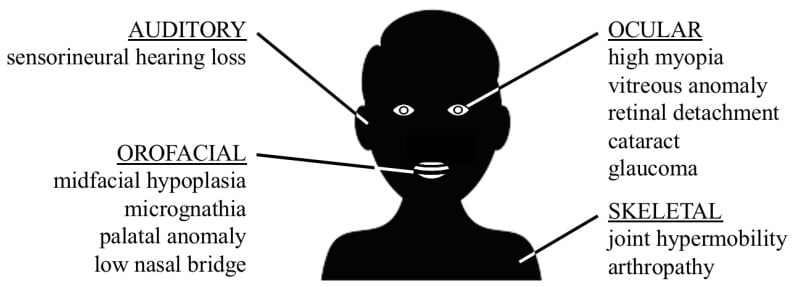
- STICKLER SYNDROME is an inherited COLLAGENOPATHY (hereditary arthro-ophthalmopathy), usually AUTOSOMAL DOMINANT, most commonly caused by COL2A1 (type I) or COL11A1 (type II) mutations - it is characterised by heterogeneous OROFACIAL, OCULAR, AUDITORY and SKELETAL abnormalities.
- The OCULAR features are the most serious: high (often congenital) MYOPIA and vitreous abnormalities with a major risk of RETINAL DETACHMENT (and cataract/glaucoma), which is potentially BLINDING - so MANDATORY ophthalmology SURVEILLANCE (and prophylaxis/prompt treatment of retinal tears/detachment) is the single most important management point.
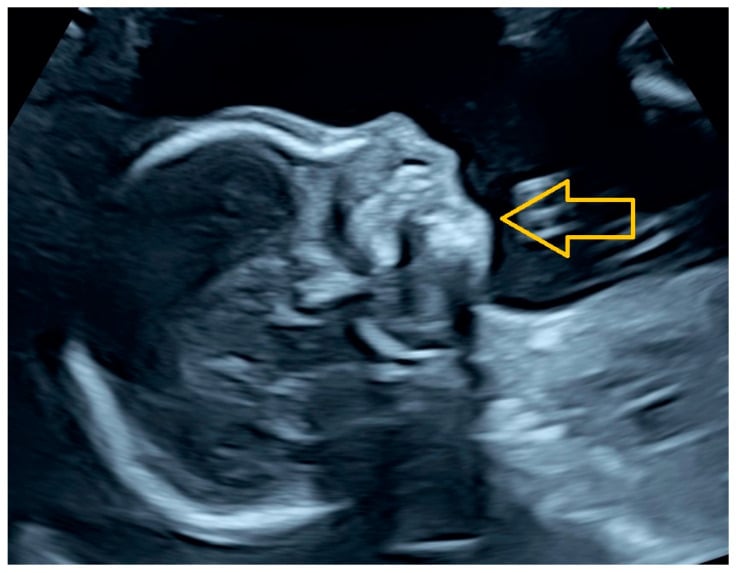
- OROFACIAL features include the PIERRE ROBIN sequence (micrognathia, glossoptosis, with neonatal airway/feeding problems) and CLEFT PALATE, which produces VELOPHARYNGEAL INSUFFICIENCY in about 16% (5 of 31 in one paediatric series) - all of whom needed surgery, and 2 of the 5 needed REVISION.
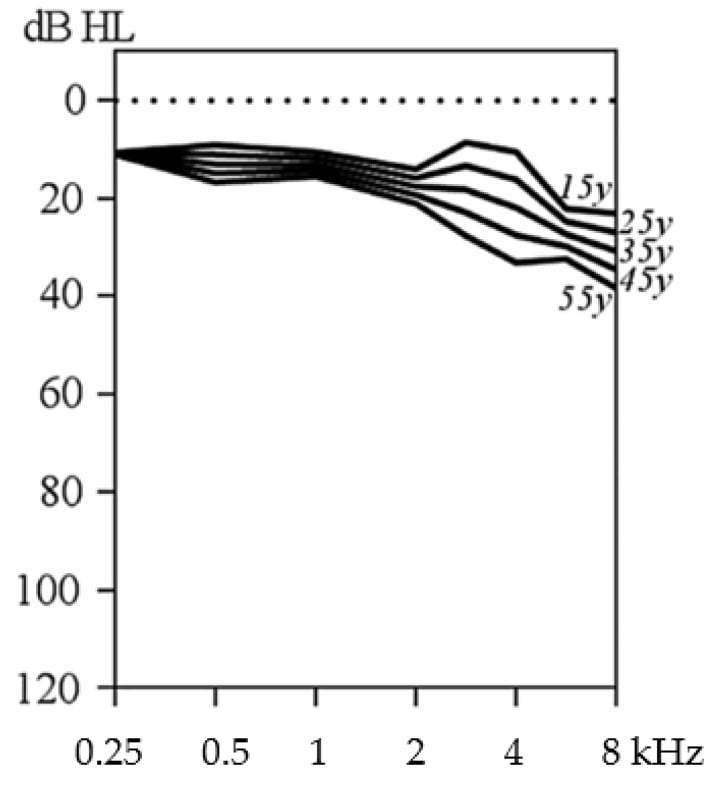
- HEARING LOSS IS GENOTYPE-SPECIFIC, and 'sensorineural hearing loss' alone is too blunt an answer. COL2A1 (type 1): a rather MILD HIGH-FREQUENCY loss in about HALF of patients. COL11A1/COL11A2: more frequent, MODERATE, involving ALL frequencies. Biallelic COL9: MODERATE-TO-SEVERE DOWNSLOPING. Non-collagen genes: none or mild. A CONDUCTIVE component from the orofacial abnormalities is also common in young children. Because most patients also have visual impairment, hearing must be actively sought and treated - this is DUAL SENSORY impairment.
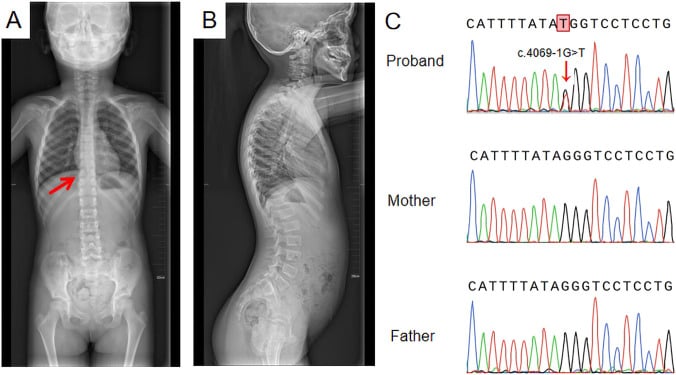
- The SKELETAL/ORTHOPAEDIC footprint includes EARLY-ONSET OSTEOARTHRITIS (often in early adulthood), JOINT HYPERMOBILITY (which can progress to stiffness and pain), mild SPONDYLOEPIPHYSEAL changes and SCOLIOSIS - so patients present to orthopaedics with premature arthritis. Be honest about the evidence: NO cohort supplies the prevalence of osteoarthritis, the age it appears, the proportion coming to joint replacement, or any arthroplasty outcome in Stickler syndrome, so do not quote a percentage or a mean age. The features are well described; the numbers are not published.
- THE ORTHOPAEDIC CONSEQUENCES THAT ARE CERTAIN: these are YOUNG arthritic patients facing a lifetime of possible revisions; most have COEXISTING VISUAL AND HEARING IMPAIRMENT affecting consent, rehabilitation and falls risk; and micrognathia with prior cleft surgery can make INTUBATION DIFFICULT - so the anaesthetic assessment matters as much as the implant choice.
- DIAGNOSIS is clinical (the multisystem features) supported by GENETIC testing (COL2A1/COL11A1 etc.); distinguishing the subtypes can matter (e.g. ocular phenotype and certain associations differ between type I and type II), and Stickler should be considered in any child with Pierre Robin sequence, high myopia/retinal detachment, or early-onset OA with the syndromic features.
- MANAGEMENT is MULTIDISCIPLINARY and surveillance-based: MANDATORY OPHTHALMOLOGY surveillance (retinal-detachment prevention/treatment), management of the airway/cleft palate (and velopharyngeal insufficiency) and HEARING, and ORTHOPAEDIC care of early osteoarthritis, joint symptoms and scoliosis - with genetic counselling; the orthopaedic surgeon's key contribution beyond joint care is to RECOGNISE the syndrome and ensure the sight- and airway-threatening features are addressed.
- “Stickler syndrome = inherited COLLAGENOPATHY (COL2A1 type I / COL11A1 type II); tetrad of OCULAR + OROFACIAL + AUDITORY + SKELETAL features.
- “OCULAR is the danger: high myopia + RETINAL DETACHMENT (potentially blinding) requires MANDATORY ophthalmology surveillance. OROFACIAL: Pierre Robin sequence + cleft palate (velopharyngeal insufficiency). AUDITORY: sensorineural hearing loss.
- “Orthopaedic: EARLY-ONSET OSTEOARTHRITIS + joint hypermobility + mild spondyloepiphyseal changes + scoliosis - but NO cohort gives its prevalence, age of onset or arthroplasty outcome, so quote no figure. Young patients, dual sensory impairment, and a potentially difficult airway (micrognathia + prior cleft surgery).
- “Hearing is GENOTYPE-SPECIFIC: COL2A1 mild high-frequency in ~half; COL11A1/COL11A2 moderate across all frequencies; biallelic COL9 moderate-severe downsloping; plus a conductive component in young children. With visual impairment too, this is DUAL SENSORY loss.
Collagenopathy (COL2A1/COL11A1) with high myopia, Pierre Robin/cleft palate, sensorineural hearing loss, and early-onset OA/hypermobility = Stickler syndrome.
Retinal detachment (potentially blinding) - mandatory ophthalmology surveillance and prompt treatment of retinal tears/detachment. Don't let the joint symptoms distract from the eyes/airway.
Features & Management
Stickler syndrome is an inherited collagenopathy (usually autosomal dominant; COL2A1 type I, COL11A1 type II) with a tetrad of ocular, orofacial, auditory and skeletal features. The ocular disease is the most serious - high myopia and retinal detachment (potentially blinding) - mandating ophthalmology surveillance. Orofacial features are the Pierre Robin sequence and cleft palate (velopharyngeal insufficiency); auditory is a sensorineural hearing loss. The orthopaedic footprint is early-onset osteoarthritis, joint hypermobility, mild spondyloepiphyseal changes and scoliosis. Management is multidisciplinary and surveillance-based - mandatory ophthalmology, airway/cleft/hearing care, and orthopaedic management of early OA/joint symptoms/scoliosis - with genetic counselling.
The orthopaedic surgeon will often encounter Stickler syndrome through its skeletal footprint - early-onset osteoarthritis (sometimes in early adulthood), joint hypermobility evolving to pain and stiffness, mild spondyloepiphyseal changes and scoliosis - and these warrant standard joint-preserving and symptomatic management. But the single most important responsibility is to recognise the syndrome and ensure the sight-threatening ocular disease is managed: high myopia and vitreoretinal abnormalities give a major risk of retinal detachment, which is potentially blinding and demands lifelong ophthalmology surveillance with prophylaxis and prompt treatment of retinal tears and detachment. Stickler is also a leading syndromic cause of Pierre Robin sequence, so the neonatal airway and cleft palate (and velopharyngeal insufficiency) and the sensorineural hearing loss must be addressed. Considering Stickler in any child with Pierre Robin, high myopia/retinal detachment, or early-onset osteoarthritis with syndromic features ensures these non-orthopaedic but vision- and airway-critical issues are not missed.
The Subtypes: Membranous versus Beaded Vitreous, and Non-Ocular Stickler
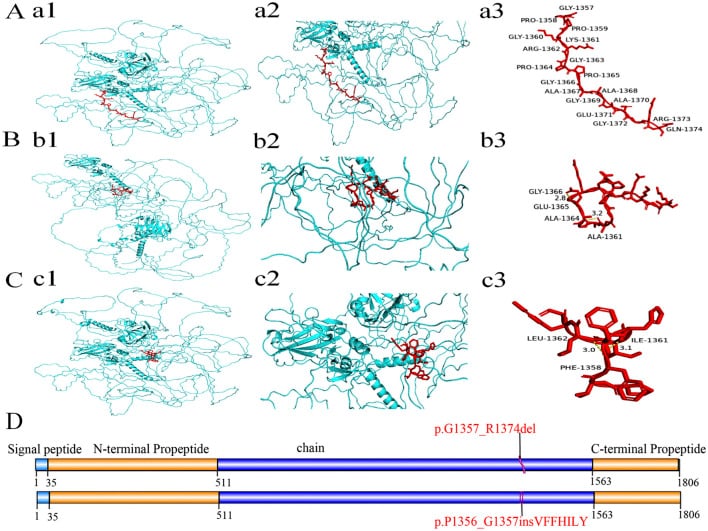
- Type 1 (COL2A1) - the commonest. Shows a membranous vitreous anomaly on slit-lamp (a fold/veil of vestigial vitreous behind the lens) and carries the highest retinal-detachment risk.
- Type 2 (COL11A1) - shows a beaded (fibrillar) vitreous anomaly (irregular beaded fibrils), with ocular involvement but often a more prominent sensorineural hearing loss.
- Type 3 (COL11A2) - non-ocular Stickler. Because COL11A2 is not expressed in the vitreous, there is no eye involvement; the orofacial, auditory and skeletal features remain (the severe recessive COL11A2 end is oto-spondylo-megaepiphyseal dysplasia, OSMED).
- Recessive forms (COL9A1/A2/A3) - rarer autosomal-recessive types with moderate-high myopia and prominent hearing loss.
- Why it matters. The vitreous phenotype (membranous vs beaded, described by Snead) identifies which eyes are most at risk and guides how aggressively to screen and prophylax the retina; and recognising the non-ocular COL11A2 type prevents wrongly excluding Stickler in a child with a normal eye exam.
Q: How do the Stickler subtypes differ, and why does the vitreous phenotype matter?
A: Type 1 (COL2A1), the commonest, has a membranous vitreous anomaly and the highest retinal-detachment risk; type 2 (COL11A1) has a beaded/fibrillar vitreous anomaly and often more prominent sensorineural hearing loss; type 3 (COL11A2) is non-ocular (COL11A2 is not expressed in the vitreous, so there is no eye disease) with the orofacial/auditory/skeletal features preserved; recessive COL9 forms are rarer. The vitreous phenotype (Snead) identifies the eyes most at risk and guides retinal surveillance and prophylaxis.
Retinal Detachment: Why It Is Dangerous and What Prophylaxis Means
- Why it is dangerous. Stickler syndrome is the commonest inherited cause of retinal detachment in childhood. The detachments are often due to giant retinal tears (a tear of 90 degrees or more - three clock hours - of the retinal circumference), are frequently bilateral, and can present in young children - so a wait-and-treat approach alone is inadequate.
- Prophylaxis. In specialist genetic-eye centres, prophylactic 360-degree retinopexy - the Cambridge protocol using cryotherapy (or laser) around the retinal periphery - markedly reduces the retinal-detachment rate, particularly in type 1 Stickler, and is offered on an individualised basis.
- Red flags. New flashes, floaters, a curtain/shadow or field loss demand urgent, same-day ophthalmology - a retinal tear/detachment must be treated promptly to save vision. This is the single most important message the non-ophthalmologist must carry.
Q: Why is retinal detachment in Stickler syndrome so serious, and what does prophylaxis mean?
A: Stickler is the commonest inherited cause of childhood retinal detachment; the detachments are often from giant retinal tears (90 degrees or more), frequently bilateral and can occur young, so ordinary watch-and-treat is inadequate. In specialist centres, prophylactic 360-degree retinopexy (the Cambridge cryotherapy protocol, or laser) reduces the detachment rate, especially in type 1. New flashes, floaters, a curtain or field loss need urgent same-day ophthalmology.
Hearing Loss Is Genotype-Specific - and the Patient Is Often Already Losing Vision
"Sensorineural hearing loss" is too blunt an answer, because the pattern and severity track the gene, and because the audiological stakes in Stickler are unusually high.
- COL2A1 (type 1, the commonest). A relatively mild, HIGH-FREQUENCY sensorineural loss, in about half of patients - so it is easily missed on casual testing and easily dismissed as insignificant.
- COL11A1 and COL11A2-related disease. Hearing loss is more frequent, and is moderate and involves ALL frequencies rather than only the high tones.
- Biallelic type IX collagen (COL9) mutations. Moderate to severe DOWNSLOPING loss - the most severe pattern in the group.
- Non-collagen gene forms. No hearing loss, or only mild.
- Do not forget the conductive component. Middle-ear problems and temporary conductive loss are also prevalent, especially in young children, arising directly from the orofacial abnormalities and cleft palate - so a child with Stickler may have a mixed, fluctuating loss during the years that matter most for speech.
- Why this matters more here than elsewhere. Most Stickler patients have concomitant visual impairment. A patient who is losing vision cannot afford an unrecognised hearing loss, so hearing must be actively sought and adequately treated rather than screened casually - the combination is a dual sensory impairment, not two separate minor problems.
What the Orthopaedic Claims Actually Rest On
Stickler reaches orthopaedic clinics through its joints, so it is worth being clear about how firm that side of the evidence is - it is much weaker than the ophthalmic side.
- The skeletal features themselves are well described: joint hypermobility in childhood, early-onset osteoarthritis, mild spondyloepiphyseal change and scoliosis are consistently listed among the syndrome's core manifestations across sources.
- But the numbers do not exist. Searching the literature does not yield a cohort giving the prevalence of osteoarthritis in Stickler syndrome, the age at which it appears, the proportion coming to joint replacement, or the age and outcome of arthroplasty in these patients. "Early-onset osteoarthritis, often in early adulthood" is a description repeated across reviews rather than a figure from a series, and it should be offered that way.
- What that means in a viva. Say that the arthropathy is characteristic and expect it early, but do not invent a percentage or a mean age at replacement. There is no Stickler-specific evidence on implant choice, bearing surface, fixation, or revision rate, and none on whether the hypermobility affects stability after arthroplasty - so operative decisions rest on general principles for a young arthritic patient with a collagenopathy.
- The practical orthopaedic consequences that are certain. These patients are young, are likely to need revision surgery over a long life, frequently have coexisting visual and hearing impairment that affects consent, rehabilitation and falls risk, and may have airway abnormalities from micrognathia and prior cleft surgery that make intubation difficult. The anaesthetic assessment matters as much as the implant choice.
Mnemonics & Memory Aids
STICKLER
Hook:STICKLER: Sight-threatening (retina), Type I/II collagen, Inner-ear hearing loss, Cleft palate/Pierre Robin, Knee/joint early OA, Lax joints/spondyloepiphyseal, Epiphyseal/scoliosis, Refer (MDT).
Clinical Decision Scenarios
Practise clinical reasoning and management decisions out loud
“A young adult with high myopia, a history of cleft palate and hearing loss presents with early osteoarthritis. What syndrome is this, and what is the key non-orthopaedic priority?”
What it is
- Inherited collagenopathy (hereditary arthro-ophthalmopathy); usually autosomal dominant
- COL2A1 (type I), COL11A1 (type II), other collagen genes
- Tetrad: ocular + orofacial + auditory + skeletal
Ocular (the priority)
- High (congenital) myopia + vitreous abnormalities
- Retinal detachment risk - potentially blinding
- Mandatory ophthalmology surveillance + prophylaxis/treatment of tears
Orofacial & auditory
- Pierre Robin sequence (micrognathia/glossoptosis - airway)
- Cleft palate + velopharyngeal insufficiency in 5 of 31 (16%); all operated, 2 of 5 needed revision
- Hearing by genotype: COL2A1 mild high-frequency in ~half; COL11A1/A2 moderate, all frequencies
- Biallelic COL9 moderate-severe downsloping; conductive component common in young children
- Most also have visual impairment - treat as DUAL SENSORY impairment
Skeletal / management
- Early-onset osteoarthritis; joint hypermobility; spondyloepiphyseal changes; scoliosis
- NO cohort gives OA prevalence, age of onset, or arthroplasty outcome - quote no figure
- Young patients facing lifelong revision risk; no Stickler-specific implant or bearing evidence
- Difficult airway (micrognathia + prior cleft surgery) - weight the anaesthetic assessment
- Multidisciplinary + genetics; recognise the syndrome and ensure eye/airway/hearing care
Evidence & Key Studies
Velopharyngeal insufficiency in Stickler syndrome (COL2A1 vs COL11A1)
- SCOPE: a single-institution retrospective chart review at one tertiary paediatric hospital, addressing the OROFACIAL features only. It supplies no ocular, auditory or skeletal outcome data.
- 43 children were diagnosed with Stickler syndrome between 2003 and 2018; 31 met inclusion criteria (18 type I, 13 type II) after excluding those without genetic testing or craniofacial evaluation.
- Velopharyngeal insufficiency occurred in 5 of 31 (16%) - 2 of 18 type I (11%) versus 3 of 13 type II (23%), a difference that was not significant. Note the subgroup sizes: with 2 and 3 events this comparison is far too small to detect a real subtype difference, so 'no difference' means none was detectable, not that none exists.
- All 5 underwent surgery - sphincter pharyngoplasty in 3, pharyngeal flap in 2. IMPORTANTLY, 2 of the 5 required REVISION: two type II patients had revision sphincter pharyngoplasty, one converted to a pharyngeal flap. So the first operation did not settle the problem in a substantial fraction.
- The authors themselves state that the incidence of velopharyngeal insufficiency in Stickler syndrome is poorly studied and that future studies are needed to confirm these findings.
Hearing loss in Stickler syndrome: an update
- A NARRATIVE REVIEW, not a cohort - it synthesises the audiological literature and supplies patterns rather than measured prevalences from a single population.
- Hearing loss is GENOTYPE-SPECIFIC. COL2A1 (the most frequent type) causes a rather MILD HIGH-FREQUENCY sensorineural loss in about HALF of patients. COL11A1- and COL11A2-related disease causes more frequent hearing loss that is MODERATE and involves ALL frequencies.
- Biallelic type IX collagen (COL9) mutations cause MODERATE TO SEVERE DOWNSLOPING loss, while the non-collagen gene forms cause no or only mild loss - severity tracks gene expression in the cochlea.
- A CONDUCTIVE component is also prevalent: middle-ear problems and temporary conductive hearing loss occur particularly at young age, arising from the orofacial manifestations - so paediatric losses may be mixed and fluctuating during the years critical for speech development.
- The authors' central practical point: hearing loss should be ACTIVELY SOUGHT AND ADEQUATELY TREATED given its high prevalence and the CONCOMITANT VISUAL IMPAIRMENT in most patients - the combination constitutes dual sensory impairment.
- Limitations: as a review it does not report a single denominator, and the phenotype-genotype statements aggregate small published series with substantial phenotypic variability.
The velopharyngeal-insufficiency figures (5 of 31, 16%; 2 of 18 type I versus 3 of 13 type II; all 5 operated, 2 requiring revision) come from Swanson (DOI), a single-centre paediatric chart review. The genotype-specific hearing-loss patterns - mild high-frequency loss in about half of COL2A1 patients, moderate all-frequency loss in COL11A1/COL11A2, moderate-to-severe downsloping loss with biallelic COL9, the paediatric conductive component, and the dual sensory impairment argument - come from Acke and De Leenheer (DOI), a narrative review. The vitreous phenotypes, the Cambridge prophylactic retinopexy protocol, the giant-retinal-tear pattern, and the COL2A1/COL11A1/COL11A2/COL9 genetics are standard, well-established teaching.
What does not exist: no cohort has been published giving the prevalence of osteoarthritis in Stickler syndrome, the age at which it develops, the proportion requiring joint replacement, or arthroplasty outcomes and revision rates in these patients. "Early-onset osteoarthritis, often in early adulthood" is a description repeated across reviews, not a measured figure, and no percentage should be quoted for it. There is likewise no Stickler-specific evidence on implant selection, bearing choice or fixation, no scoliosis prevalence or curve-progression data, and no validated screening interval for the skeletal features - in contrast to the ocular surveillance, which is well established.