Overgrowth, Hemihypertrophy & Tumour Risk
- BECKWITH-WIEDEMANN SYNDROME (BWS) is a rare IMPRINTING/OVERGROWTH disorder (about 1 in 10,000 live births) caused by dysregulation of imprinted genes at chromosome 11p15.5 (IGF2/H19 and CDKN1C); it is characterised by a predilection for embryonal tumour growth (especially WILMS TUMOUR) together with lateralised overgrowth/hemihypertrophy, macroglossia, macrosomia, anterior abdominal wall defects and hyperinsulinism.
- The SYSTEMIC features include MACROSOMIA, MACROGLOSSIA, ABDOMINAL WALL DEFECTS (omphalocele/umbilical hernia), neonatal HYPERINSULINISM with HYPOGLYCAEMIA (important to treat), visceromegaly (nephromegaly, hepatomegaly) and ear creases/pits; diagnosis can be made on clinical criteria where molecular testing is unavailable.
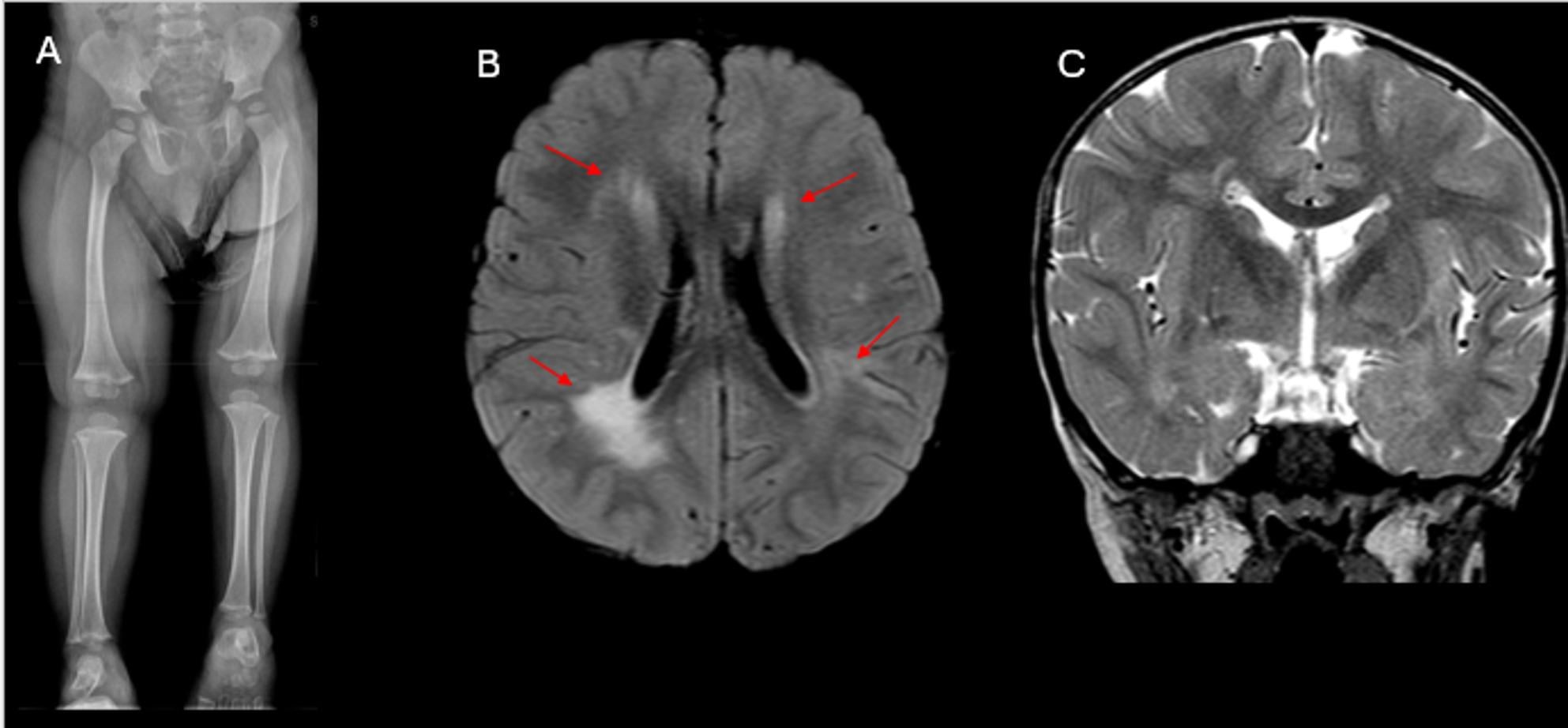
- The principal ORTHOPAEDIC relevance is LATERALISED OVERGROWTH (hemihypertrophy/hemihyperplasia), producing LIMB-LENGTH DISCREPANCY and limb/segment asymmetry - which is the main reason a child with BWS comes to the orthopaedic surgeon.
- The most important association is the predisposition to EMBRYONAL TUMOURS - especially WILMS TUMOUR (nephroblastoma) and HEPATOBLASTOMA - so REGULAR TUMOUR SURVEILLANCE (abdominal ultrasound at intervals through childhood, with serum alpha-fetoprotein for hepatoblastoma) is MANDATORY, and lateralised overgrowth is itself a marker of higher tumour risk.
- Therefore an orthopaedic surgeon assessing a child with lateralised overgrowth/limb-length discrepancy MUST consider BWS (and related overgrowth syndromes) and ensure the child is in an appropriate TUMOUR SURVEILLANCE programme - recognising the overgrowth is not just a limb issue but a marker of cancer risk.
- MANAGEMENT of the orthopaedic problem is that of LIMB-LENGTH DISCREPANCY: monitor the discrepancy and predicted difference at maturity, and treat with EPIPHYSIODESIS of the longer limb (timed to growth) or, less commonly, lengthening - within a multidisciplinary team that also manages the macroglossia (airway/feeding/speech), hypoglycaemia, abdominal wall defect and the essential tumour surveillance.
- “Beckwith-Wiedemann = 11p15 imprinting/OVERGROWTH disorder (~1 in 10,000): macrosomia, macroglossia, abdominal wall defects (omphalocele), neonatal hyperinsulinism/hypoglycaemia.
- “Orthopaedic relevance = LATERALISED OVERGROWTH (hemihypertrophy) → LIMB-LENGTH DISCREPANCY.
- “CRITICAL: embryonal-tumour predisposition (WILMS tumour, hepatoblastoma) → MANDATORY surveillance (abdominal ultrasound +/- AFP); lateralised overgrowth is a tumour-risk marker. Manage discrepancy with epiphysiodesis/lengthening + MDT (macroglossia, hypoglycaemia, tumour screening).
Lateralised overgrowth/hemihypertrophy → limb-length discrepancy. Manage with epiphysiodesis (timed) or lengthening.
Predisposition to embryonal tumours - Wilms tumour, hepatoblastoma. Tumour surveillance (abdominal ultrasound +/- AFP) is mandatory; overgrowth is a risk marker.
Features, Orthopaedic Relevance & Tumour Risk
Beckwith-Wiedemann syndrome is a rare 11p15.5 imprinting/overgrowth disorder (about 1 in 10,000) with macrosomia, macroglossia, abdominal wall defects (omphalocele), neonatal hyperinsulinism/hypoglycaemia and visceromegaly. Its principal orthopaedic relevance is lateralised overgrowth (hemihypertrophy) causing limb-length discrepancy. Critically, it predisposes to embryonal tumours - especially Wilms tumour and hepatoblastoma - so regular tumour surveillance (abdominal ultrasound +/- serum alpha-fetoprotein) is mandatory, and lateralised overgrowth is itself a marker of higher tumour risk. The orthopaedic surgeon assessing a child with lateralised overgrowth/limb-length discrepancy must therefore consider BWS and ensure the child is in a surveillance programme.
- Limb-length discrepancy: the decision number is the predicted discrepancy at skeletal maturity, not today's measurement. Conventional thresholds are less than 2 cm observe or use a shoe raise, 2 to 5 cm timed epiphysiodesis of the longer limb while growth remains, and more than 5 cm lengthening or reconstruction. Those thresholds are consensus-based rather than trial-derived, and a symptomatic child with a smaller discrepancy is a different problem from an asymptomatic one with the same number.
- Tumour surveillance (mandatory): ensure the child is in a programme - abdominal ultrasound at intervals through childhood (for Wilms tumour) and serum alpha-fetoprotein (for hepatoblastoma).
- Multidisciplinary: macroglossia (airway/feeding/speech/possible reduction), neonatal hypoglycaemia, abdominal wall defect repair, genetics/counselling.
- Recognise overgrowth as a marker: lateralised overgrowth flags both the discrepancy and the cancer risk.
The crucial point for the orthopaedic surgeon in Beckwith-Wiedemann syndrome (and in lateralised overgrowth generally) is that the overgrowth is not merely a limb-length issue but a marker of an increased risk of embryonal tumours, especially Wilms tumour (nephroblastoma) and hepatoblastoma. A child presenting with hemihypertrophy and limb-length discrepancy must therefore be recognised as potentially having BWS (or a related overgrowth syndrome) and be in an appropriate tumour-surveillance programme - typically regular abdominal ultrasound through childhood to detect Wilms tumour early, with serum alpha-fetoprotein monitoring for hepatoblastoma - because early detection markedly improves outcome. The orthopaedic management of the limb-length discrepancy itself (monitoring and epiphysiodesis or lengthening) is straightforward, but it must be delivered within multidisciplinary care that also addresses macroglossia, neonatal hypoglycaemia from hyperinsulinism, the abdominal wall defect, and - above all - ensures the tumour surveillance is in place. Missing the syndromic diagnosis behind isolated hemihypertrophy is the error to avoid.
Overview, Epidemiology & Diagnosis
How common, and who gets it. BWS has a prevalence of about 1 in 10,000 live births (Hailu 2023; consensus figures), almost certainly an underestimate because milder Beckwith-Wiedemann spectrum presentations go unascertained. About 85% of cases are sporadic; the familial minority is driven mainly by maternally transmitted CDKN1C mutations. Two epidemiological quirks are worth knowing for the exam: an excess of monozygotic (predominantly female) twins (Weksberg 2005 - the imprinting error arises around pre-implantation imprint maintenance), and an over-representation among children conceived by assisted reproductive technology, an association shared with other imprinting disorders and noted in the international consensus (Brioude 2018).
Making the diagnosis. Molecular testing (methylation analysis of the 11p15.5 imprinting centres, with upd(11)pat and CDKN1C sequencing as indicated) confirms most cases, but BWS can be diagnosed clinically where testing is unavailable - the Hailu case report is an example. The Brioude 2018 international consensus provides a scoring system:
- Features
- Macroglossia; omphalocele (exomphalos); lateralised overgrowth; bilateral or multifocal Wilms tumour / nephroblastomatosis; prolonged hyperinsulinism (over 1 week); characteristic pathology (e.g. adrenal cytomegaly, placental mesenchymal dysplasia)
- Points
- 2 each
- Features
- Macrosomia; umbilical hernia or diastasis recti; nephromegaly or hepatomegaly; ear pits or creases; polyhydramnios; transient neonatal hypoglycaemia; haemangiomas; structural cardiac anomalies
- Points
- 1 each
- Features
- Score 4 or more = clinical diagnosis (even without a molecular result); score 2 or more = molecular testing indicated; score under 2 does not exclude the spectrum if suspicion persists
- Points
- Thresholds
The orthopaedic surgeon's place in this system is the lateralised overgrowth row: a child referred for limb-length discrepancy with hemihypertrophy already holds a 2-point cardinal feature, and the consultation should trigger the question "has this child been assessed for BWS and enrolled in tumour surveillance?"
Pathophysiology: The Imprinting Genetics and Why the Subtype Drives Tumour Risk
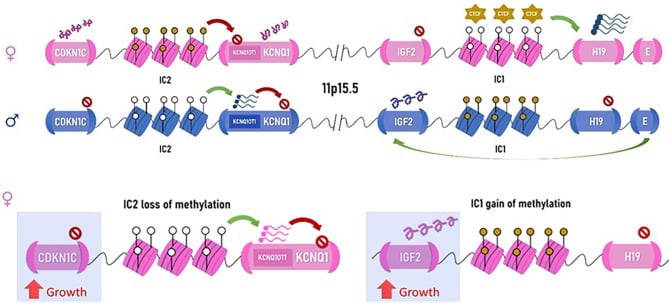
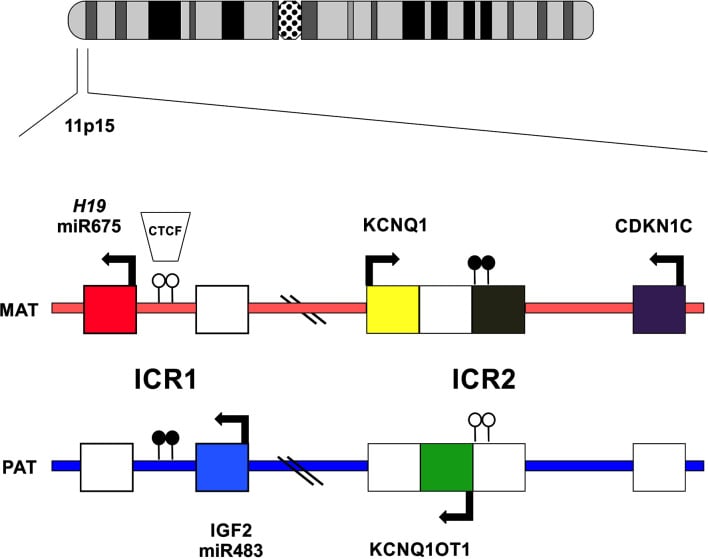
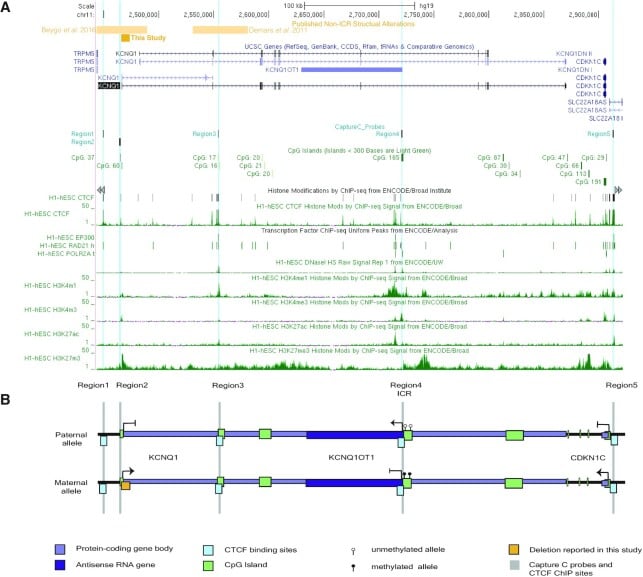
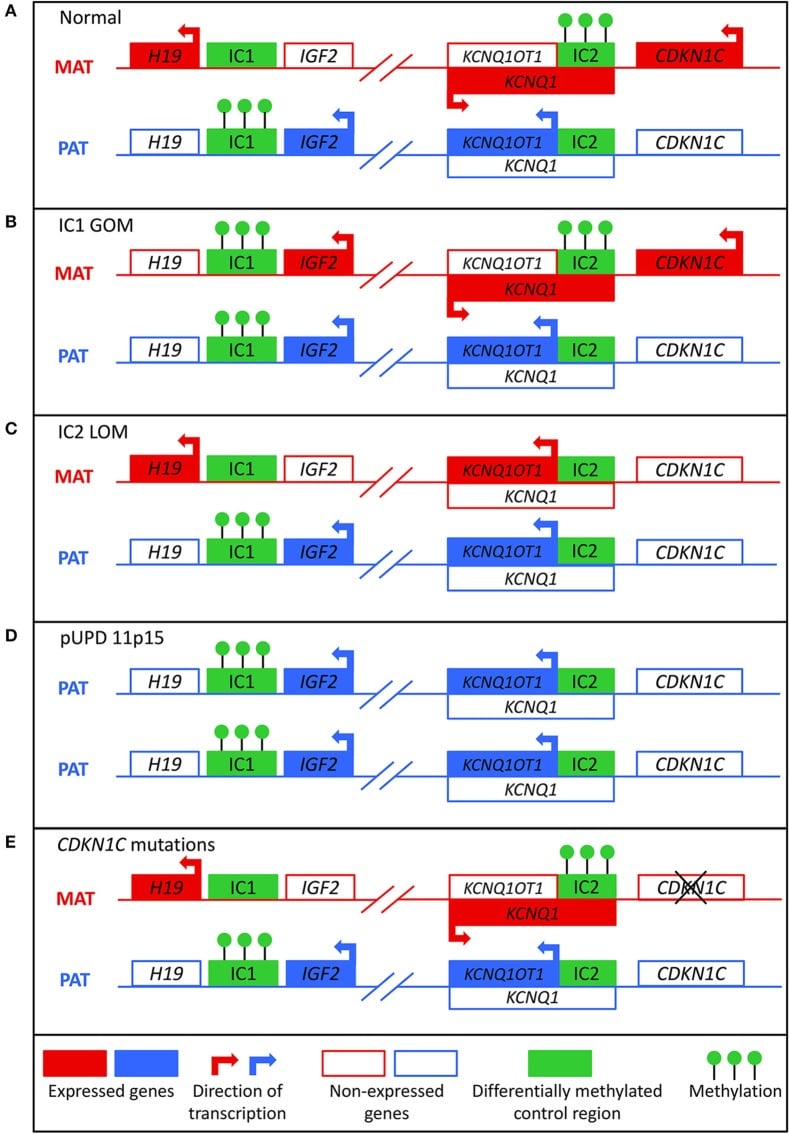
- Two imprinted domains at 11p15.5. IC1 (imprinting centre 1) controls IGF2 (a growth-promoter, paternally expressed) and H19 (maternally expressed); IC2 controls CDKN1C (a growth-suppressor, maternally expressed) and KCNQ1OT1. BWS results from over-expression of the growth-driver IGF2 and/or loss of the growth-suppressor CDKN1C.
- The main molecular mechanisms (mostly sporadic): loss of methylation at IC2 (about 50% - the commonest); paternal uniparental disomy of 11p15 (about 20%, usually mosaic); gain of methylation at IC1 (about 5-10%); and CDKN1C loss-of-function mutations (about 5% - the main inherited/familial, maternally transmitted, form).
- Why the subtype matters - tumour risk. The embryonal-tumour risk varies by molecular subtype: IC1 gain-of-methylation and paternal uniparental disomy carry the highest Wilms-tumour risk; IC2 loss-of-methylation carries a lower tumour risk (and is more associated with hepatoblastoma); CDKN1C mutations have a relatively low tumour risk. So the genotype guides how intensively to surveil, and molecular testing (methylation analysis of 11p15) is worthwhile where available.
Q: What is the molecular basis of Beckwith-Wiedemann syndrome, and why does the subtype matter?
A: BWS results from dysregulation of imprinted genes at 11p15.5 - over-expression of the growth-driver IGF2 and/or loss of the growth-suppressor CDKN1C. The main (mostly sporadic) mechanisms are loss of methylation at IC2 (about 50%), paternal uniparental disomy (about 20%), gain of methylation at IC1 (about 5-10%), and CDKN1C mutations (about 5%, the main familial form). The subtype matters because the tumour risk varies: IC1 gain-of-methylation and paternal UPD carry the highest Wilms risk, whereas IC2 loss-of-methylation carries a lower risk (more hepatoblastoma) - so genotype guides surveillance intensity.
Investigations & The Tumour Surveillance Protocol
- Abdominal (renal) ultrasound every 3 months from diagnosis until about age 7-8 years - to detect Wilms tumour (and nephroblastomatosis) early, when it is curable.
- Serum alpha-fetoprotein (AFP), historically every few months in the first few years, for hepatoblastoma (increasingly reserved for, or intensified in, the higher-risk IC1/paternal-UPD genotypes).
- Why it stops around 7-8 years. Embryonal tumours present in early childhood - roughly 95 percent of Wilms tumours occur by about age 7, which is the actual basis for the cut-off. That leaves a real residual: a child with isolated hemihypertrophy has been reported developing a Wilms tumour at age 9, after the surveillance window closed. Stopping screening is therefore a reasonable trade rather than a guarantee, and new abdominal symptoms after the window still deserve imaging rather than reassurance.
- How big is the risk? The tumour risk quoted from classic BWS cohorts is 8 to 10 percent overall. Risk is genuinely higher with IC1 gain of methylation and paternal uniparental disomy, and isolated lateralised overgrowth without full BWS still carries roughly 5 percent Wilms risk - which is why it is surveilled in its own right.
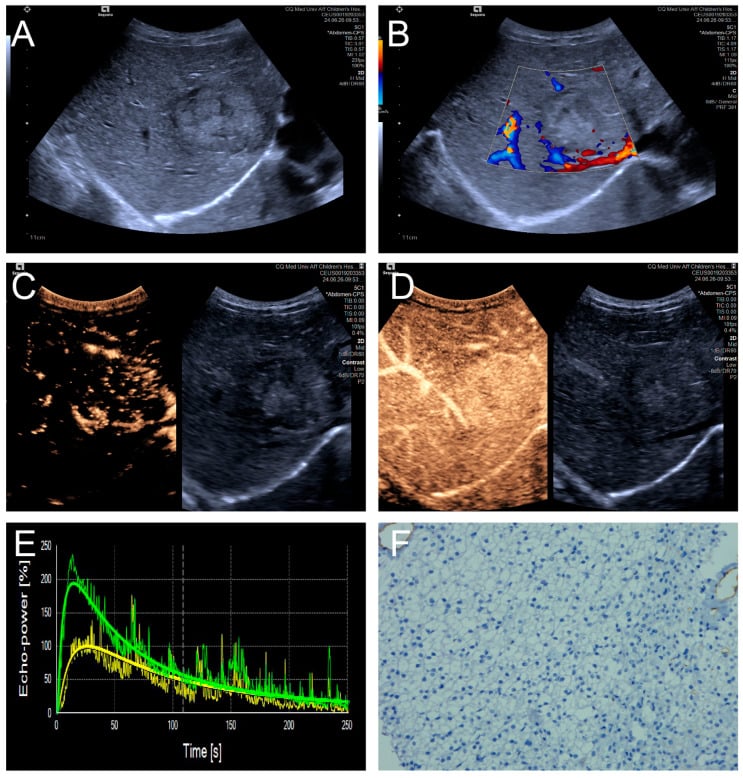
- But do not de-escalate on a blood genotype. The largest assembled series of BWS-associated hepatoblastoma (50 patients) found epigenotype mosaicism: the 11p15 alteration differed between blood, tumour and normal liver in the same child, so a reassuring blood result does not reliably mean low tissue risk. Those authors recommend universal screening for all patients with BWS rather than genotype-restricted screening. A separate spectrum-wide analysis likewise found that blood testing results are not synonymous with tissue testing results and that risk across the wider Beckwith-Wiedemann spectrum does not simply mirror classic BWS. Use the genotype to raise vigilance, not to withdraw it.
Q: What is the tumour-surveillance protocol in Beckwith-Wiedemann syndrome, and why is it age-limited?
A: Abdominal (renal) ultrasound every 3 months until about age 7-8 for Wilms tumour, plus serum alpha-fetoprotein in the first few years for hepatoblastoma (increasingly genotype-stratified). It is age-limited because embryonal tumours present in early childhood and Wilms is rare after about 7-8 years, so screening stops then. Higher-risk subtypes (IC1/paternal UPD) warrant the most vigilant screening, and isolated lateralised overgrowth still needs Wilms surveillance.
Management: Orthopaedic Treatment of the Limb-Length Discrepancy
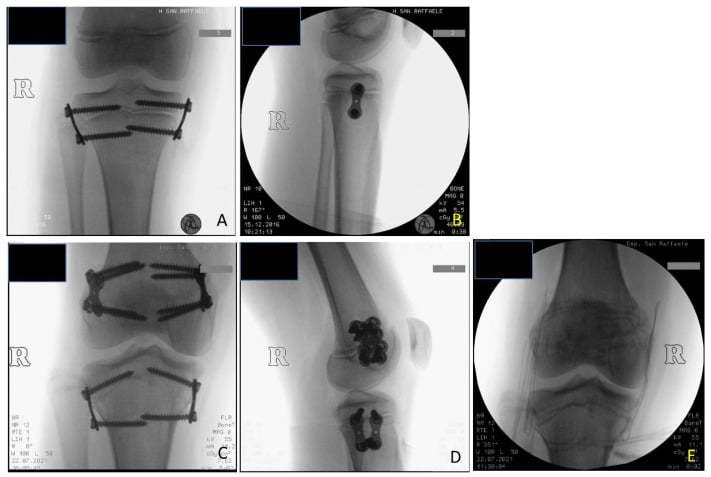
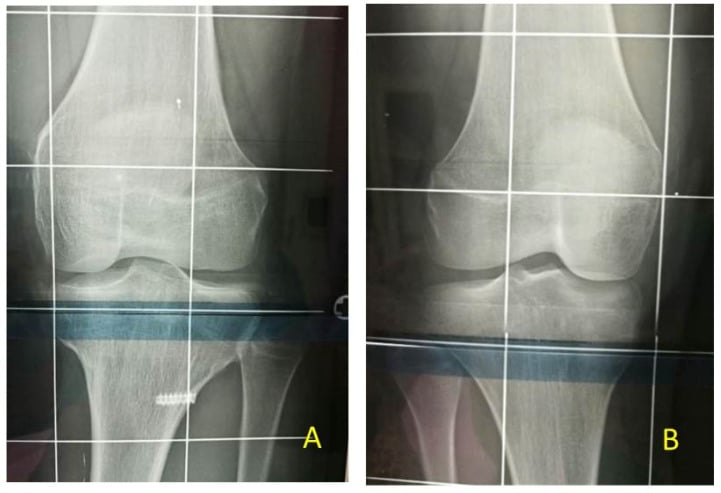
Management turns on the predicted discrepancy at skeletal maturity, not today's number. Follow the child with serial clinical assessment (block test, gait observation, pelvic tilt and any compensatory scoliosis) and radiographic measurement - a standing scanogram/orthoroentgenogram (or low-dose biplanar imaging such as EOS where available). Project the mature discrepancy using a growth-remaining method (Anderson-Green charts or the multiplier method).
Complications & Prognosis
- Hypoglycaemia from hyperinsulinism is the dangerous early complication - unrecognised, it risks seizures and neurodevelopmental injury, which is why it is screened for and treated aggressively in the nursery.
- Macroglossia: airway obstruction, feeding difficulty, drooling and speech problems; most children grow into the tongue, and reduction glossoplasty is reserved for significant functional problems.
- Abdominal wall defects (omphalocele, umbilical hernia) require surgical repair; nephromegaly and nephrogenic rests are the substrate the Wilms surveillance watches.
- Cardiac anomalies and rare cardiomyopathy are described; most systemic features improve with age.
- Epiphysiodesis: over- or under-correction if timing or growth prediction is off, and angular deformity if the arrest is asymmetric - hence serial measurement before acting.
- Lengthening (rarely needed): pin-site infection, muscle contracture, joint stiffness and neurovascular stretch - the usual lengthening burden, weighed against the modest discrepancies typical of BWS.
Prognosis. Growth velocity is greatest in early childhood and typically normalises later in childhood, so final height is often above average but near-normal; intellectual development is normal provided neonatal hypoglycaemia was controlled. The dominant determinant of outcome is the embryonal-tumour risk - which is exactly what the surveillance programme exists to neutralise, because a Wilms tumour caught on surveillance is usually curable.
Mnemonics & Memory Aids
BWS
Hook:BWS: Big (overgrowth/macroglossia), Wilms tumour surveillance, Skeletal (limb-length discrepancy).
LUGC11p15.5 Molecular Subtypes
Hook:LUGC the subtypes: LOM-IC2 commonest, UPD and GOM-IC1 carry the Wilms risk, CDKN1C is the familial one.
SCREENTumour Surveillance
Hook:SCREEN every BWS child: Sonogram, AFP, Renal target, End at 7-8, Even isolated hemihypertrophy, Never trust blood alone.
Clinical Decision Scenarios
Practise clinical reasoning and management decisions out loud
“A child is referred with hemihypertrophy and a limb-length discrepancy. Why must you think beyond the limb, and how do you manage it?”
What it is
- Imprinting/overgrowth disorder (11p15.5 - IGF2/H19, CDKN1C); ~1 in 10,000
- Macrosomia, macroglossia, abdominal wall defects (omphalocele)
- Neonatal hyperinsulinism/hypoglycaemia; visceromegaly
Orthopaedic relevance
- Lateralised overgrowth (hemihypertrophy) → limb-length discrepancy
- Monitor discrepancy / predicted difference at maturity
- Treat with timed epiphysiodesis of the longer limb (or lengthening)
Critical association
- Embryonal-tumour predisposition: Wilms tumour, hepatoblastoma
- Mandatory surveillance: abdominal ultrasound +/- serum alpha-fetoprotein
- Lateralised overgrowth is a tumour-risk marker (not just a limb issue)
Evidence & Key Studies
Beckwith-Wiedemann syndrome with Wilms tumour and lateralised overgrowth
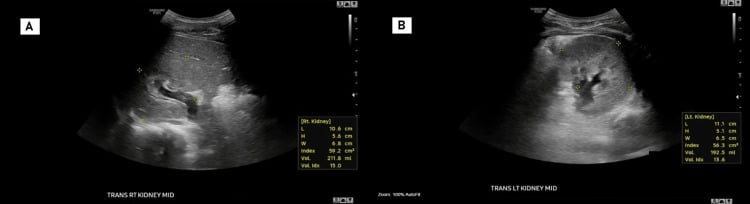
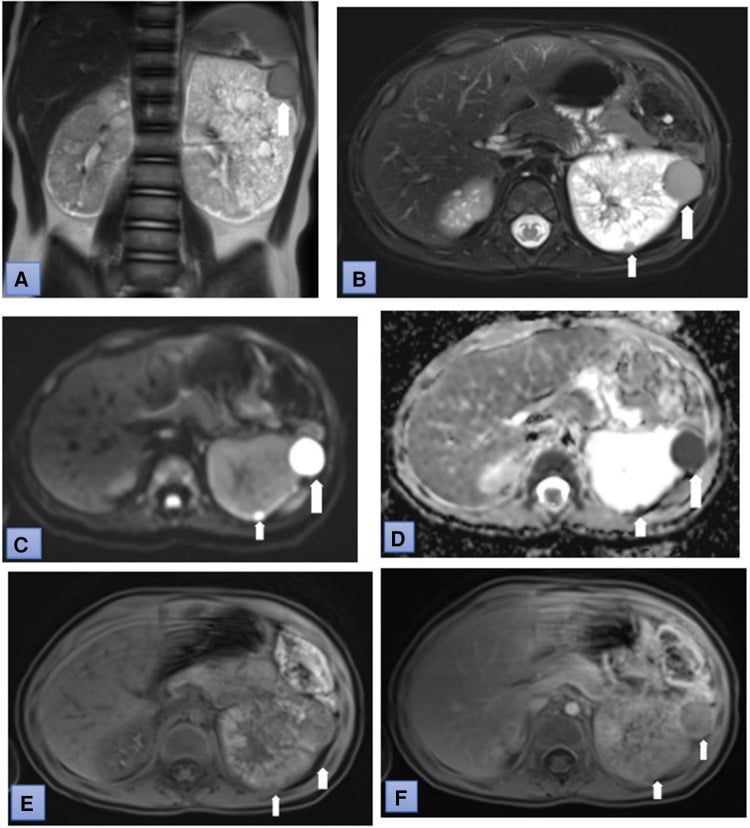
- Beckwith-Wiedemann syndrome is a rare imprinting/overgrowth disorder (prevalence about 1 in 10,000 live births), characterised by a predilection for embryonal tumour growth, especially Wilms tumour, and manifestations such as lateralised overgrowth/hemihypertrophy, macroglossia, macrosomia, anterior abdominal wall defects and hyperinsulinism.
- The reported child presented with abdominal swelling and limb-length discrepancies, with a clinical diagnosis of BWS made on multifocal Wilms tumour, organomegaly and lateralised overgrowth.
- Clinical criteria can diagnose BWS where confirmatory molecular testing is unavailable, changing management of complications such as Wilms tumour.
BWS as a rare imprinting/overgrowth disorder (about 1 in 10,000) with a predilection for embryonal tumours (especially Wilms tumour), the manifestations of lateralised overgrowth/hemihypertrophy, macroglossia, macrosomia, abdominal wall defects and hyperinsulinism, the association of limb-length discrepancy, and the ability to diagnose on clinical criteria come from the cited Hailu report. The 11p15.5 imprinting genetics, the hepatoblastoma risk and alpha-fetoprotein surveillance, and the orthopaedic management of limb-length discrepancy (epiphysiodesis/lengthening) are standard, well-established teaching. The 8 to 10 percent tumour risk from classic BWS cohorts, and the finding that risk across the wider Beckwith-Wiedemann spectrum does not mirror it, come from Duffy and colleagues (Genes 2021, PMID 34828445). The epigenotype mosaicism between blood, tumour and normal liver, and the resulting recommendation for universal rather than genotype-restricted screening, come from the assembled hepatoblastoma series of Klein and colleagues (Cancers 2023, PMID 37174013) - 50 patients, of whom 16 were the authors' own and 34 collected from published case reports, so it is a pooled case series rather than a cohort. That paternal uniparental disomy and IC1 gain of methylation carry the highest Wilms risk is long-established (Weksberg, Am J Med Genet C 2005, PMID 16010676). The 95-percent-by-age-7 figure, the roughly 5 percent Wilms risk in isolated hemihyperplasia and the late case at age 9 are taken in substance from hemihypertrophy, and the limb-length thresholds from limb-length discrepancy and epiphysiodesis, where that topic notes the thresholds are consensus-based rather than supported by high-quality evidence. Lengthening technique is developed in limb lengthening principles. No trial comparing surveillance schedules in this syndrome was retrieved, so the three-monthly interval and the age cut-off are consensus practice rather than trial-derived.