Formerly MFH | Diagnosis of Exclusion | Reclassification Shrank the Category
- UPS is a diagnosis of EXCLUSION - a high-grade pleomorphic sarcoma showing NO specific line of differentiation after a full immunohistochemistry and molecular workup
- The term replaced 'malignant fibrous histiocytoma' (MFH) because the cell of origin is not histiocytic; many former MFH cases are reclassified once a lineage is found
- Most common presentation is an enlarging, deep, painless soft-tissue mass in the thigh of an older adult
- Treatment is wide surgical resection; radiotherapy improves LOCAL control for extremity soft-tissue tumours and is timing-dependent (preop lower dose/more wound problems vs postop higher dose)
- Primary UPS of bone behaves like and is treated like osteosarcoma, with neoadjuvant chemotherapy plus wide resection
- “Storiform (cartwheel) and pleomorphic patterns are classic but NOT specific - the diagnosis depends on excluding dedifferentiated liposarcoma, leiomyosarcoma, MPNST, melanoma, sarcomatoid carcinoma
- “Always exclude dedifferentiated liposarcoma with MDM2/CDK4 (FISH or IHC) before settling on UPS, especially retroperitoneal tumours
- “Lung is the dominant metastatic site; staging CT chest is mandatory and lymph node spread is uncommon
- “Grade, tumour size and depth, and margin status are the key prognostic drivers
Overview and Epidemiology
Undifferentiated pleomorphic sarcoma (UPS) is a high-grade malignant mesenchymal tumour with no identifiable line of differentiation on light microscopy, immunohistochemistry or molecular testing. It is best understood as a default category rather than a single disease: what remains once every definable sarcoma and non-sarcoma has been excluded.
The old name. It was called malignant fibrous histiocytoma (MFH) in the belief that it arose from histiocytes. That origin was disproven, the cells are not histiocytic, and the WHO classification replaced the term with undifferentiated pleomorphic sarcoma. If you say "MFH" in a viva, add at once that it is now called UPS and explain why.
Why the name change matters. MFH was once the most common adult soft-tissue sarcoma diagnosis, but improved immunohistochemistry and molecular testing showed that a large proportion of these tumours were dedifferentiated liposarcoma, leiomyosarcoma, MPNST or other definable entities. Only the tumours truly without a line of differentiation are now called UPS. The label is therefore valid only after a thorough exclusion process, and finding a lineage (MDM2 amplification, for example) changes both the diagnosis and the prognosis.
Who and where. Most patients are over 50, with a peak in the 6th-7th decade and a slight male predominance. It is strongly age-associated, unlike the paediatric round-cell sarcomas, and even after reclassification it remains one of the most common adult soft-tissue sarcomas. It arises in the deep soft tissue of the extremities, especially the thigh, and also in the retroperitoneum and, less commonly, as a primary tumour of bone.
Prior radiotherapy. UPS is a recognised radiation-associated sarcoma, arising in a previous radiotherapy field after a latency of years.
Soft-tissue UPS and primary UPS of bone present, image and are treated differently:
- Soft-Tissue UPS
- Enlarging deep painless mass, often thigh
- Primary UPS of Bone
- Progressive bone pain, lytic destructive lesion
- Soft-Tissue UPS
- Large heterogeneous mass with necrosis on MRI
- Primary UPS of Bone
- Lytic, permeative, no mineralised matrix
- Soft-Tissue UPS
- Selective (large, high-grade, deep extremity tumours)
- Primary UPS of Bone
- Standard - osteosarcoma-type neoadjuvant and adjuvant
- Soft-Tissue UPS
- Improves local control for extremity tumours
- Primary UPS of Bone
- Adjunct for inadequate margins / unresectable sites
- Soft-Tissue UPS
- Dedifferentiated liposarcoma (MDM2)
- Primary UPS of Bone
- Osteosarcoma (any osteoid changes the diagnosis)
Pathophysiology and Histology
Pathogenesis. UPS arises from primitive mesenchymal cells that fail to differentiate along any recognisable lineage. Cytogenetically it has a complex karyotype with multiple non-specific chromosomal gains and losses and no single recurrent translocation, in contrast to the recurrent gene fusions of synovial sarcoma (SS18-SSX) or Ewing sarcoma (EWSR1-FLI1). There is no diagnostic positive marker, so the diagnosis is reached by exclusion.
Microscopy. Marked nuclear pleomorphism with bizarre giant cells, frequent and often atypical mitoses, and necrosis, which is common in high-grade tumours. A storiform (cartwheel) arrangement of spindle cells is the classic pattern, but it is not specific. What the tumour lacks matters as much: no osteoid, no chondroid, no lipoblasts and no specific differentiation.
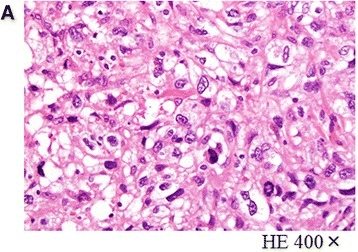
Immunohistochemistry. The only positive stain is vimentin, a non-specific mesenchymal marker that is positive but unhelpful for typing. Every other stain in the panel is there to exclude something, and all must be negative:
- Cytokeratin / EMA - excludes sarcomatoid or metastatic carcinoma
- S100 / SOX10 - excludes melanoma and MPNST
- Desmin / SMA / h-caldesmon - excludes leiomyosarcoma and other smooth-muscle or myofibroblastic tumours
- Myogenin / MyoD1 - excludes rhabdomyosarcoma
- MDM2 / CDK4 not amplified - excludes dedifferentiated liposarcoma
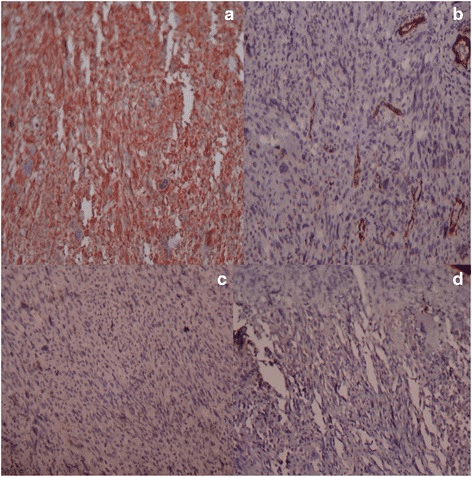
A pleomorphic high-grade sarcoma should be called UPS only after a full panel has excluded a definable line of differentiation. Missing a dedifferentiated liposarcoma is the classic error, because it changes management and prognosis.
The old MFH variants. The tumours once grouped under MFH map onto modern entities as follows:
- Key feature
- Cartwheel pattern, pleomorphic cells
- Modern view
- Core of present-day UPS
- Key feature
- Myxoid stroma, curvilinear vessels
- Modern view
- Now a separate entity - myxofibrosarcoma
- Key feature
- Osteoclast-like giant cells
- Modern view
- Undifferentiated pleomorphic sarcoma with giant cells
- Key feature
- Xanthoma cells, inflammation
- Modern view
- Often reclassified (e.g. dedifferentiated liposarcoma)
- Key feature
- Blood-filled spaces, young patients
- Modern view
- Now angiomatoid fibrous histiocytoma - low malignant potential
The former "myxoid MFH" is now myxofibrosarcoma, the myxoid end of the pleomorphic-sarcoma spectrum. It is typically a superficial or subcutaneous tumour of elderly limbs, often low-grade for metastasis but high for local recurrence, the opposite emphasis to deep high-grade UPS, where metastasis dominates.
It spreads insidiously along fascial planes well beyond the apparent mass, producing a curvilinear infiltrative "tail" of high T2 signal on MRI that is easy to under-resect. As a result it has the highest local-recurrence rate of the soft-tissue sarcomas, and recurrences can be repeated.
- Image and resect the tail, not just the obvious lump: take generous margins and plan the excision on the MRI tail sign, because a margin that looks adequate around the bulk can still leave infiltrative disease
- A positive or close margin warrants re-excision and radiotherapy
- The long natural history means prolonged local surveillance
Clinical Presentation
Soft-tissue UPS. The commonest presentation is a painless, progressively enlarging deep mass, most often in the thigh, then other extremity sites and the retroperitoneum. Because the tumour is deep and grows slowly at first, patients frequently present late with a large mass, frequently over 5 cm. Pain is often absent until the mass is large, and when present it is usually due to compression of adjacent structures rather than the tumour itself. Patients are usually systemically well, with weight loss only in advanced disease.
Primary UPS of bone. Progressive bony pain, which may be nocturnal, and a pathological fracture in a minority. The lesion is lytic, destructive and metaphyseal, commonly around the knee (distal femur, proximal tibia). Laboratory tests are usually non-specific, unlike those of Paget-associated tumours.
A deep-seated soft-tissue mass, a mass larger than 5 cm, or any lump that is enlarging should be referred to a sarcoma unit and imaged before any intervention. UPS is frequently mislabelled as a haematoma, lipoma or cyst. Do not perform an unplanned excision ("whoops procedure"), drain it, or biopsy it through a non-excisable track, as this compromises later limb-salvage surgery.
Examination. Measure the mass and record its site and its depth relative to fascia. It is firm, often fixed to deep structures, with mobility reduced when it lies deep to or is fixed to fascia, and tenderness is often minimal. Then examine the rest:
- Skin - usually intact; look for prior scars or radiotherapy tattoos, and venous prominence over large tumours
- Neurovascular - distal pulses, sensation and motor function
- Joint range - may be limited if the mass is juxta-articular; document baseline function for reconstruction planning
- Lymph nodes - usually not enlarged, but examine them, as nodal spread is possible
- Chest - keep a low threshold for CT chest
Investigations and Imaging
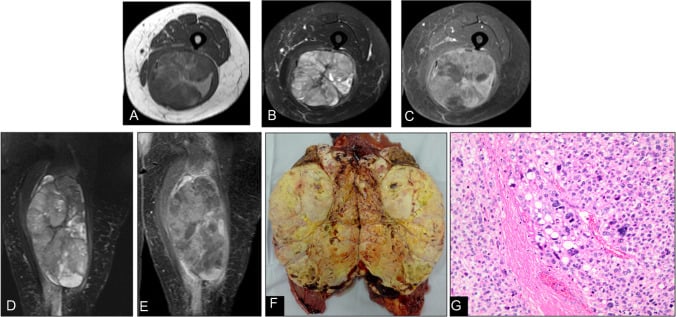
MRI is the imaging modality of choice for a soft-tissue mass. It defines the compartment, the relationship to neurovascular structures and the resection plan. UPS typically appears as a large, deep, heterogeneous mass with internal necrosis:
- Signal Intensity
- Low to intermediate (isointense to muscle)
- Clinical Significance
- Defines anatomical extent and fascial relationships
- Signal Intensity
- High and heterogeneous
- Clinical Significance
- Shows necrosis, peritumoral oedema, soft-tissue extent
- Signal Intensity
- Heterogeneous enhancement
- Clinical Significance
- Viable tumour enhances; necrosis does not - helps biopsy targeting
- Signal Intensity
- High signal
- Clinical Significance
- Sensitive for tumour and oedema beyond the gross mass
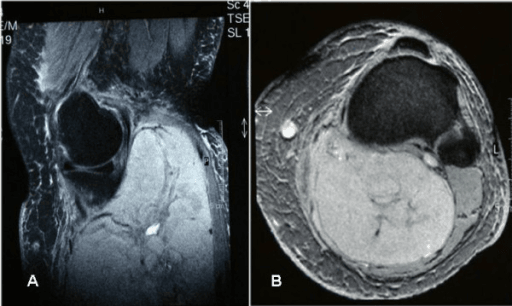
Where it spreads. The lung is the dominant metastatic site, so staging CT chest is mandatory. Lymph-node spread is uncommon, but more frequent than for most other sarcomas.
Staging. The full workup combines local imaging, chest staging, a planned biopsy and, for the key exclusion, molecular testing:
- Purpose
- Local staging and surgical planning
- Findings
- Large heterogeneous mass, necrosis, neurovascular relationship
- Purpose
- Detect pulmonary metastases (dominant site)
- Findings
- Lung nodules if metastatic - mandatory in high-grade disease
- Purpose
- Histological diagnosis, grade, exclusion panel
- Findings
- Pleomorphic sarcoma, lineage markers negative
- Purpose
- Characterise lytic lesion, exclude matrix
- Findings
- Permeative lytic lesion with no mineralised matrix
- Purpose
- Exclude dedifferentiated liposarcoma
- Findings
- Negative supports UPS; positive changes the diagnosis
Biopsy Principles
Histological confirmation is mandatory before definitive treatment. The biopsy is planned so that its track can be excised at the definitive operation, and is ideally performed by, or in coordination with, the treating sarcoma surgeon.
- Image-guided core needle biopsy preferred over open biopsy (less contamination)
- Track placed so it can be excised en bloc at definitive surgery (longitudinal in an extremity)
- Avoid crossing uninvolved compartments, joints or neurovascular bundles
- Multiple cores from enhancing (viable) areas, avoiding necrosis
- Meticulous haemostasis to avoid a contaminating haematoma
- Expert musculoskeletal pathology review with a full immunohistochemistry and molecular panel
The unplanned excision. An unplanned excision of an unsuspected sarcoma, the "whoops procedure", contaminates the surgical field, leaves microscopic disease and converts a straightforward wide excision into a re-excision of a larger volume of tissue, frequently requiring adjuvant radiotherapy and worsening function. The correct sequence is image, then biopsy through a planned track, then resect; never excise a deep or large soft-tissue mass without a diagnosis.
The examinable follow-up is what to do once an unplanned (marginal or intralesional) excision has already happened, a common real referral. Do not simply observe:
- Re-stage properly - dedicated MRI of the operated bed (interpreted with caution, because post-surgical change mimics or masks tumour), a CT chest, and expert pathology review of the resected specimen and its margins
- Re-excise the entire tumour bed, including all scars and drain sites, even when imaging looks clear: residual tumour is found in a large proportion of "whoops" re-excision specimens (commonly cited as around one-third to one-half), and residual disease drives recurrence
- Add radiotherapy in most cases, since the contaminated, ill-defined field after an unplanned procedure usually warrants it, and manage through the sarcoma MDT
The penalty for the original error is a larger resection, more frequent flap reconstruction, more radiotherapy and worse function than a correctly staged primary wide excision would have needed.
Differential Diagnosis
The differential of a high-grade pleomorphic sarcoma is the exclusion list, each entity separated by its immunoprofile or molecular test:
- Distinguishing histology
- Pleomorphic, storiform, no lineage
- Immunohistochemistry / molecular
- Vimentin+, all specific markers negative
- Key point
- Diagnosis of exclusion
- Distinguishing histology
- Pleomorphic areas, may lack obvious fat
- Immunohistochemistry / molecular
- MDM2 and CDK4 amplified
- Key point
- Must always exclude - changes prognosis
- Distinguishing histology
- Spindle cells, cigar-shaped nuclei
- Immunohistochemistry / molecular
- SMA+, desmin+, h-caldesmon+
- Key point
- Smooth-muscle markers positive
- Distinguishing histology
- Spindle cells, nerve association
- Immunohistochemistry / molecular
- S100 patchy, SOX10+, H3K27me3 loss
- Key point
- Often arises from a nerve or in NF1
- Distinguishing histology
- Epithelioid or spindled pleomorphic
- Immunohistochemistry / molecular
- S100+, SOX10+, HMB45+, Melan-A+
- Key point
- Can perfectly mimic sarcoma
- Distinguishing histology
- Spindle/pleomorphic, epithelial clues
- Immunohistochemistry / molecular
- Cytokeratin+, EMA+
- Key point
- Look for a known carcinoma primary
Dedifferentiated liposarcoma. The most important mimic, and the single most important exclusion. It is biologically distinct and carries a different prognosis, yet it can look identical to UPS, and the distinction is frequently impossible on morphology alone. Test for MDM2 and CDK4, by FISH for amplification or immunohistochemistry for overexpression: amplification indicates dedifferentiated liposarcoma, a negative result supports UPS. This matters most for retroperitoneal pleomorphic tumours, where dedifferentiated liposarcoma is common.
Management Algorithm
The goal is complete tumour resection with wide oncological margins, preserving limb function where possible. It is delivered through a sarcoma multidisciplinary team of surgeon, radiologist, pathologist, and radiation and medical oncologists. The MDT reviews the MRI for extent and neurovascular relationships and the CT chest for staging, confirms the diagnosis and grade on expert pathology with the exclusion panel, plans the margins and reconstruction, and counsels the patient.
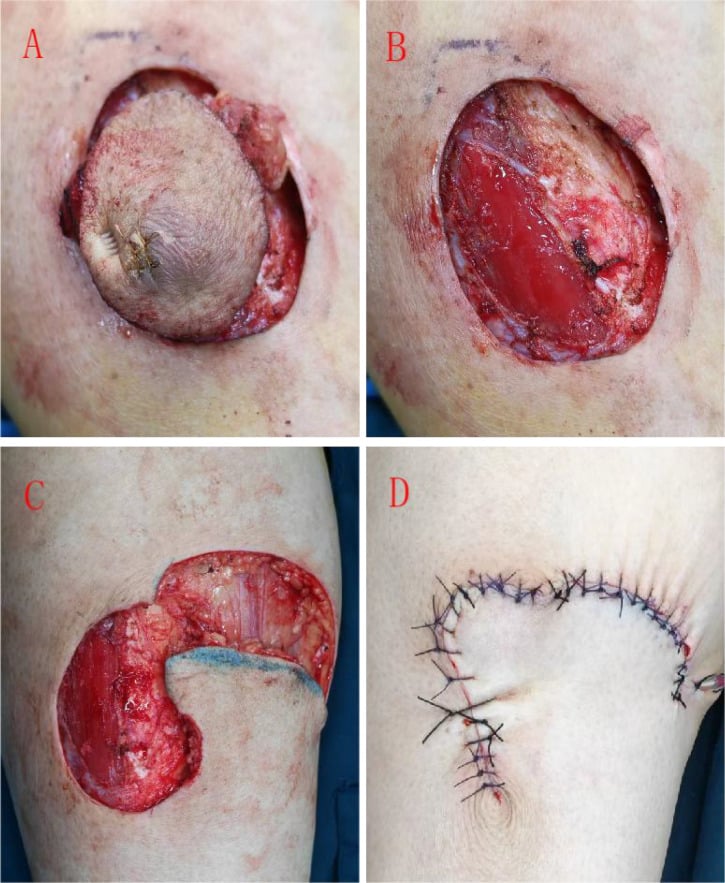
Wide local excision. An en bloc excision through normal tissue, taking the biopsy track with it, aiming for a clear margin; a fascial or anatomical barrier counts as a margin. Major neurovascular structures are preserved when that is oncologically safe, and the soft-tissue defect is reconstructed, with flap coverage as needed.
- Intralesional: through the tumour - unacceptable, gross disease remains
- Marginal: through the reactive pseudocapsule - microscopic disease likely, high recurrence
- Wide: through normal tissue around the tumour - the goal for UPS
- Radical: removal of the whole compartment - rarely needed with modern radiotherapy
A wide margin (a cuff of normal tissue or an intact anatomical barrier such as fascia) combined with radiotherapy gives good local control while preserving the limb.
Radiotherapy. For extremity soft-tissue UPS, surgery alone is often not enough. Radiotherapy improves local control and is added for large, deep, high-grade extremity tumours, and its timing is an active surgical decision, individualised at the MDT on tumour size, site and the reconstruction plan. Local control is similar with either timing, and the two trade acute wound complications against late fibrosis:
- Preoperative
- Lower dose (around 50 Gy), smaller treatment volume
- Postoperative
- Higher dose (around 60-66 Gy), larger volume to cover the surgical bed
- Preoperative
- More - roughly double in the randomised trial (35% versus 17%)
- Postoperative
- Fewer
- Preoperative
- Less late fibrosis and better long-term function
- Postoperative
- More late fibrosis, oedema, joint stiffness and fracture risk
- Preoperative
- Easier to define the target before surgery distorts anatomy
- Postoperative
- Allows full pathological assessment of margins before treatment
Chemotherapy. Not routine. UPS shows some chemosensitivity (anthracycline / ifosfamide based), and chemotherapy is considered for large, deep, high-grade extremity tumours, discussed within the MDT and ideally within a clinical trial.
Complications and Outcomes
- Setting
- Inadequate margins, high-grade tumour
- Management
- Re-excision with wider margins, radiotherapy
- Setting
- High-grade, large, deep tumours
- Management
- Metastasectomy if oligometastatic, systemic therapy
- Setting
- After preoperative radiotherapy especially
- Management
- Vigilant wound care, flap coverage, delayed closure
- Setting
- After postoperative radiotherapy
- Management
- Physiotherapy; fracture risk in irradiated bone
- Setting
- Osteosarcoma-type regimens (bone UPS)
- Management
- Significant haematologic and organ toxicity - supportive care
Prognosis. High histological grade is the dominant driver of metastasis and death, and positive or close margins drive local recurrence. The adverse factors:
- High grade, with necrosis and a high mitotic count
- Size over 5 cm, a key AJCC and prognostic factor, and especially over 10 cm
- Deep rather than superficial location
- Positive or close margins
- Retroperitoneal or axial site, where wide margins are hard to achieve
- Older age, and metastatic disease
The favourable profile is the mirror image: lower grade within the high-grade category, under 5 cm, superficial, wide negative margins, an extremity site and no metastases at presentation.
Surveillance. High-grade UPS recurs and metastasises mainly in the first 2-3 years, so surveillance is most intensive early: clinical review with imaging of the primary site and CT chest every few months for the first 2-3 years, then less frequently out to 5-10 years. Chest surveillance is essential because of the lung's dominance as a metastatic site, and the intensity is tailored to grade, size and margin status.
Clinical Relevance and Controversies
Is UPS a single entity? As immunohistochemistry and molecular testing improve, more "UPS" is reclassified to definable entities (dedifferentiated liposarcoma, leiomyosarcoma, MPNST). Whether a true lineage-negative UPS is a distinct biological disease or simply the current limit of our diagnostic tools is debated.
Radiotherapy timing and survival. On survival the randomised trial is slightly more interesting than "no difference": overall survival was marginally better with preoperative treatment (p=0.0481). That is a borderline result on a secondary endpoint at a median 3.3 years, not a reason to choose preoperative treatment by itself, but not nothing either, and plausibly related to the lower dose and smaller field. The right choice is individualised, not settled.
Adjuvant chemotherapy in soft-tissue UPS. The survival benefit for localised soft-tissue UPS is modest and contested. It is generally reserved for large, deep, high-grade tumours and trial settings, unlike bone UPS, where osteosarcoma-type chemotherapy is standard.
Immunotherapy. UPS is relatively immune-responsive among sarcomas, but checkpoint inhibition is not yet standard of care and patient selection is unresolved.
Guidelines, Registries & Global Practice
Global Epidemiology
Undifferentiated pleomorphic sarcoma is one of the most common adult soft-tissue sarcomas worldwide, even after the reclassification of many former MFH cases. It is strongly age-associated, peaking in the 6th-7th decade, with the deep soft tissue of the thigh the commonest site. Primary UPS of bone is rare, falling within the group of rare primary malignant bone sarcomas (RPMBS) that together make up 5-10% of high-grade bone tumours (EURO-B.O.S.S.).
Society Guidance, Side by Side
- Diagnostic stance
- UPS is defined by exclusion after IHC/molecular workup; replaces 'MFH'
- Treatment emphasis
- Grade-based risk stratification; defines the entity rather than therapy
- Diagnostic stance
- Mandatory expert sarcoma pathology review at a reference centre
- Treatment emphasis
- Wide excision plus radiotherapy for extremity tumours; chemo selective and case-by-case
- Diagnostic stance
- Referral to a designated sarcoma diagnostic and treatment centre (network model)
- Treatment emphasis
- MDT-directed wide excision and limb salvage with radiotherapy for local control
- Diagnostic stance
- Pleomorphic soft-tissue sarcoma managed on the soft-tissue sarcoma pathway; bone UPS on the osteosarcoma pathway
- Treatment emphasis
- Wide resection plus radiotherapy (soft tissue); osteosarcoma-type chemo for bone UPS
- Diagnostic stance
- Pre-treatment biopsy along an excisable track planned with the resecting surgeon
- Treatment emphasis
- Reconstruction and stable fixation after wide resection of bone tumours
Registries and Evidence Networks
- Cooperative trial groups (EURO-B.O.S.S., COSS, EORTC and SARC networks) pool these relatively uncommon tumours to generate the prospective evidence base for chemotherapy and radiotherapy.
- Population registries such as SEER provide large-scale incidence, metastasis and survival data that complement single-centre series for a tumour distributed across many institutions.
- There is no implant-survivorship registry endpoint specific to UPS; reconstruction outcomes are extrapolated from general limb-salvage endoprosthesis and allograft data.
High- versus Limited-Resource Practice
- Specialist MSK pathology with full IHC and MDM2/CDK4 molecular testing
- MRI and CT chest staging and access to radiotherapy planning
- Limb salvage with custom endoprostheses or allografts and flap coverage
- Multidisciplinary tumour board and clinical-trial enrolment
- Restricted IHC and molecular testing may force a descriptive "pleomorphic sarcoma" diagnosis
- Late presentation with large tumours is common
- Amputation more often the realistic margin-achieving option than complex reconstruction
- Radiotherapy and chemotherapy access constrain multimodal treatment
MCQ Practice Points
Q: What defines undifferentiated pleomorphic sarcoma? A: A high-grade pleomorphic sarcoma showing no identifiable line of differentiation after a full immunohistochemistry and molecular workup. It is a diagnosis of exclusion. The only positive marker is the non-specific mesenchymal marker vimentin.
Q: Why was 'malignant fibrous histiocytoma' renamed undifferentiated pleomorphic sarcoma? A: Because the tumour is not histiocytic in origin - the proposed histiocytic cell of origin was disproven. With modern testing, many former MFH cases are reclassified as dedifferentiated liposarcoma, leiomyosarcoma, MPNST and other definable entities; the remaining lineage-negative tumours are called UPS.
Q: What is the single most important entity to exclude before diagnosing UPS, and how? A: Dedifferentiated liposarcoma, by testing for MDM2 and CDK4 amplification (FISH) or overexpression (immunohistochemistry). This is especially important for retroperitoneal pleomorphic tumours.
Q: How do preoperative and postoperative radiotherapy differ for extremity soft-tissue sarcoma? A: Preoperative uses a lower dose (around 50 Gy) and smaller field but causes roughly twice the acute wound complications; postoperative uses a higher dose (around 60-66 Gy) with fewer acute wound problems but more late fibrosis and stiffness. Local control and survival are similar (O'Sullivan, Lancet 2002).
Q: How is primary UPS of bone treated? A: On the high-grade osteosarcoma pathway - neoadjuvant chemotherapy, wide resection, and adjuvant chemotherapy. EURO-B.O.S.S. showed survival comparable to age-matched osteosarcoma with an osteosarcoma-type regimen.
Q: What is the dominant site of metastasis in UPS, and is lymph node spread common? A: The lung is the dominant metastatic site, so CT chest is the key staging investigation. Lymph-node spread is uncommon in soft-tissue sarcoma overall, although UPS is one of the subtypes with a relatively higher (still low) nodal risk.
Exam Viva Scenarios
Practise clinical reasoning and management decisions out loud
“A 64-year-old man presents with a deep, firm, painless mass in the anterior thigh that has slowly enlarged over 6 months. It is now 9 cm and fixed to the deep tissues. His GP is about to arrange a list to 'shell it out'. How would you manage this patient?”
“A pathology report from another hospital labels a resected pleomorphic sarcoma as 'malignant fibrous histiocytoma'. The trainee asks you what this means and whether the diagnosis can be trusted. How do you respond?”
“A 45-year-old presents with progressive knee pain. Radiographs show a lytic, permeative, destructive lesion in the distal femur with no mineralised matrix. Biopsy reports a high-grade pleomorphic sarcoma with no osteoid and a negative lineage panel - primary undifferentiated pleomorphic sarcoma of bone. How would you manage this?”
Key Features
- High-grade pleomorphic sarcoma with NO line of differentiation - diagnosis of exclusion
- Formerly 'malignant fibrous histiocytoma' (MFH) - histiocytic origin disproven
- One of the most common adult soft-tissue sarcomas; peaks in the 6th-7th decade
- Deep thigh the commonest site; also retroperitoneum and primary bone
- Complex karyotype, no single recurrent translocation
Histology and Diagnosis
- Pleomorphic cells, bizarre giant cells, storiform pattern (classic but not specific)
- Vimentin positive; cytokeratin, S100/SOX10, desmin, SMA all negative
- MUST exclude dedifferentiated liposarcoma with MDM2/CDK4
- Also exclude leiomyosarcoma, MPNST, melanoma, sarcomatoid carcinoma
- Expert MSK pathology review essential
Imaging and Staging
- MRI of primary with contrast: large deep heterogeneous mass, necrosis (T1 low, T2 high)
- CT chest mandatory - lung is the dominant metastatic site
- Lymph-node spread uncommon (but UPS relatively higher than most subtypes)
- Bone UPS: lytic permeative lesion with NO mineralised matrix
- Whole-bone MRI for skip lesions in bone UPS
Biopsy Principles
- Image-guided core needle biopsy preferred
- Track must be excisable at definitive surgery (longitudinal in a limb)
- Coordinate with the sarcoma surgeon - never an unplanned excision
- Sample enhancing viable areas, avoid necrosis
- Full IHC and molecular panel on the cores
Treatment
- Soft-tissue UPS: wide local excision plus radiotherapy for local control
- Preop RT - lower dose, more acute wound problems; postop RT - higher dose, more late fibrosis
- Chemotherapy selective for large, deep, high-grade soft-tissue tumours
- Bone UPS: osteosarcoma pathway (neoadjuvant chemo, wide resection, adjuvant chemo)
- Metastatic: metastasectomy for oligometastatic lung disease; immunotherapy under study
Prognosis and Surveillance
- Adverse factors: high grade, size over 5 cm, deep, positive margins, axial site, older age
- Localised high-grade UPS ~60-70% 5-year survival; bone UPS ~70% (EURO-B.O.S.S.)
- Lung is the dominant metastatic site
- Most recurrence and metastasis within the first 2-3 years
- Surveillance: clinical and imaging of primary plus CT chest, intensive early then tapering
Evidence Base and Key Studies
Preoperative versus Postoperative Radiotherapy in Soft-Tissue Sarcoma of the Limbs: A Randomised Trial
- Multicentre randomised trial of 190 adults with limb soft-tissue sarcoma allocated to preoperative (50 Gy) or postoperative (66 Gy) external-beam radiotherapy
- Wound complications within 120 days occurred in 35% of the preoperative group versus 17% of the postoperative group (difference 18%, p=0.01)
- Larger tumour size and lower-limb site were also significant risk factors for wound complications
- Overall survival was marginally better with preoperative radiotherapy (p=0.0481)
- Establishes that radiotherapy timing trades higher acute wound complications (preop) against higher dose and later toxicity (postop)
Outcome of Rare Primary Malignant Bone Sarcoma Treated With Multimodal Therapy (EURO-B.O.S.S.)
- Prospective European study of 113 patients aged 41-65 with high-grade spindle cell, pleomorphic or vascular bone sarcoma; 88 were undifferentiated pleomorphic sarcoma (UPS)
- Treated with an osteosarcoma-type regimen (doxorubicin, ifosfamide, cisplatin; methotrexate added for poor responders)
- 5-year overall survival 68.4% for localised disease overall, and 71.7% specifically for UPS
- Better survival with localised disease, complete surgical remission and extremity location
- Grade III-IV haematologic toxicity in 81% of patients - the regimen is intensive
Pembrolizumab in Advanced Soft-Tissue and Bone Sarcoma (SARC028): A Multicentre, Two-Cohort, Single-Arm, Phase 2 Trial
- Phase 2 trial of pembrolizumab in 84 patients with advanced soft-tissue or bone sarcoma across 12 US centres
- Among soft-tissue sarcomas, 4 of 10 patients (40%) with undifferentiated pleomorphic sarcoma achieved an objective response
- Responses were also seen in dedifferentiated liposarcoma, while leiomyosarcoma showed none
- The prespecified overall response endpoint was not met for either cohort, but UPS and dedifferentiated liposarcoma showed encouraging activity
- Immune-related serious adverse events included pneumonitis and adrenal insufficiency
Surgical Resection of the Primary Tumour in the Extremities Improves Survival for Metastatic Soft-Tissue Sarcoma: A SEER Population-Based Study
- SEER analysis of 1453 patients presenting with metastatic extremity soft-tissue sarcoma between 1983 and 2016
- After propensity-score matching, primary tumour resection was associated with improved cancer-specific survival (HR 0.59) and overall survival (HR 0.60)
- The survival benefit held for undifferentiated pleomorphic sarcoma specifically (cancer-specific survival HR 0.60, overall survival HR 0.61)
- High-grade tumours, leiomyosarcoma and synovial sarcoma also benefited from primary resection
- Supports considering primary resection even in selected metastatic UPS
Pan-Soft-Tissue Sarcoma Analysis of Incidence, Survival and Metastasis: A SEER Population-Based Study
- SEER study of 35,987 soft-tissue sarcoma patients diagnosed 2000-2018
- Distant metastasis was present in 11.9% and isolated lymph-node metastasis in only 3.4%, confirming nodal spread is uncommon in soft-tissue sarcoma
- Undifferentiated pleomorphic sarcoma was among the subtypes with a higher relative risk of lymph-node metastasis
- Larger tumour size and axial sites (head and neck, viscera, retroperitoneum) carried higher metastatic risk
- Patients with isolated nodal disease fared better than those with distant metastasis but worse than node-negative patients