Benign Lytic Lesion | Metaphyseal Cyst in Children | Fallen-Fragment Sign
- Most common benign lytic bone lesion in children: central metaphyseal, does NOT cross the physis
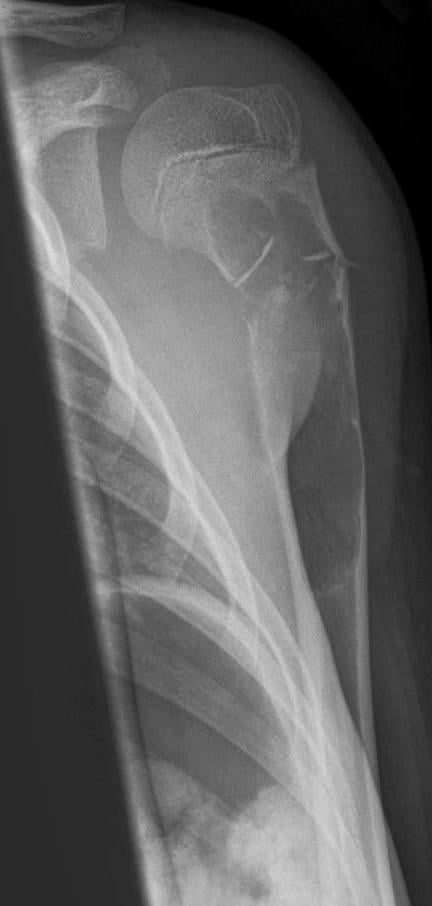
- Fallen-fragment sign is pathognomonic: a cortical fragment sinks to the dependent portion after pathological fracture because the cyst is fluid-filled
- Active cysts abut the physis and carry higher recurrence than latent cysts that have migrated away from the physis with growth
- First-line treatment is aspiration and methylprednisolone acetate injection; curettage and bone graft reserved for injection failure or recurrent cysts
- Pathological fractures of the proximal femur require internal fixation; proximal humerus fractures heal with sling immobilisation
- “Fallen-fragment sign is specific for UBC: fluid allows a fragment to fall to the bottom of the cavity, unlike solid tumours
- “UBC never crosses the physis, unlike infection which may seed across the growth plate
- “Bone scan shows a cold centre with rim uptake (photopenic focus), unlike osteoid osteoma which has intense central uptake
- “Repeated steroid injections may be needed: healing rate per injection is around 40-60 percent, cumulative healing approaches 65-80 percent
Overview and Epidemiology
The unicameral (simple) bone cyst is the most common benign lytic bone lesion in children: a solitary, fluid-filled, benign lesion in the metaphysis of a growing bone. It is a frequent source of pathological fracture, particularly through the proximal humerus. The fallen-fragment sign on a plain radiograph is a classic examination discriminator, because it allows a confident diagnosis without biopsy.
Who. Children, with a peak age of 5-15 years; the cyst is rare after skeletal maturity. Boys are affected two to three times as often as girls (2-3:1), and there is no strong laterality preference. The lesion accounts for approximately 3% of all bone biopsies.
Where. The cyst sits centrally in the metaphysis and does not cross the physis. By site:
- Proximal humerus - 50%
- Proximal femur - 25%
- Calcaneus - less than 5%
- Other sites (tibia, ilium, distal femur and elsewhere) - the remaining 20%
Pathophysiology
Cause. The exact cause remains uncertain. The leading theory is venous outflow obstruction, proposed by Cohen in 1970: blocked venous drainage from the metaphysis elevates intraosseous pressure, which leads to focal bone resorption and fluid accumulation. The cavity enlarges until the cortex is thinned, and fracture occurs when the mechanical load exceeds what the thinned cortex can bear.
Other theories include a defect in metaphyseal remodelling during growth, localised failure of bone formation, and altered osteoclast and osteoblast activity.
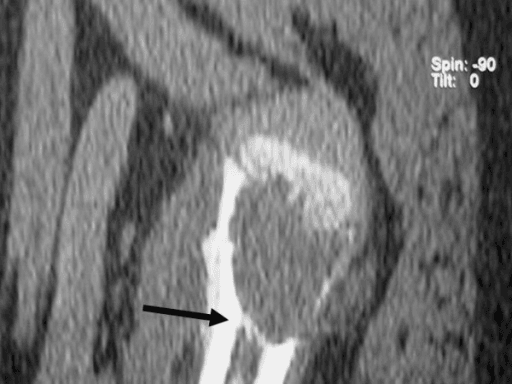
Not a true cyst. The cavity contains serosanguineous fluid and is lined by a thin fibrovascular (connective-tissue) membrane with no epithelial lining, so the lesion is not a true cyst: the fluid is interstitial rather than secreted. Despite the name "unicameral", the cavity is often multiloculated by thin bony septa.
Histology. The diagnosis is made on imaging, but know the slide:
- Scattered multinucleated giant cells, haemosiderin-laden macrophages and reactive woven bone
- The hallmark: amorphous eosinophilic fibrinous material that mineralises into curvilinear "cementum-like" bodies (Liesegang-type structures), a useful clue distinguishing UBC from other lytic lesions
The fluid. Intracystic pressure is elevated, approaching local venous pressure, which is consistent with the venous-outflow-obstruction aetiology. The fluid is rich in bone-resorbing mediators - prostaglandins (PGE2), interleukins, oxygen free radicals, nitric oxide and matrix metalloproteinases - and these drive the local osteolysis that enlarges the cavity.
Why it matters for treatment. Decompression lowers the raised pressure, which is the basis of continuous-decompression techniques, and intracystic steroid reduces the inflammatory and resorptive mediators. Both interrupt the resorptive cycle rather than simply filling the cyst.
Classification and Types
Activity (Neer). An active cyst abuts the physis and its cortex is thinned, so the risk of fracture is high. As the bone grows the cyst moves away from the physis toward the diaphysis, the cortex thickens and the fracture risk decreases: the latent phase, from which the cyst may resolve spontaneously at skeletal maturity.
Why activity matters. It guides treatment intensity and predicts recurrence. Active cysts require more aggressive treatment; latent cysts may be observed.
- Location relative to physis
- Abuts or touches the physis
- Cortex
- Very thin, at risk of fracture
- Recurrence risk
- High (up to 50 percent)
- Treatment approach
- Aspiration and steroid injection; consider curettage if refractory
- Location relative to physis
- Near physis but not abutting it
- Cortex
- Thin but some cortical thickening
- Recurrence risk
- Intermediate
- Treatment approach
- Injection or observation depending on cortex thickness and fracture risk
- Location relative to physis
- Away from physis, migrated distally with growth
- Cortex
- Thicker, partially healed cortex
- Recurrence risk
- Low (less than 20 percent)
- Treatment approach
- Observation; intervention only if fracture occurs or cyst enlarges
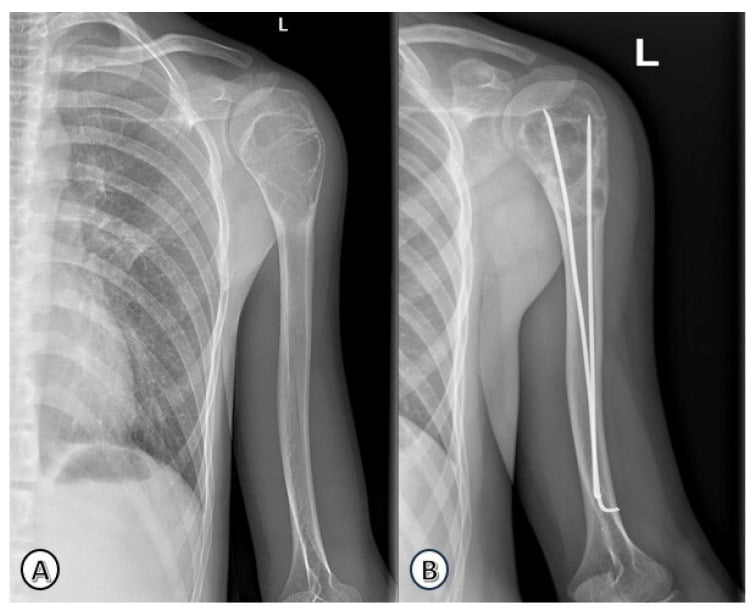
Site. The anatomical location determines fracture risk, treatment urgency and the threshold for surgical intervention. The proximal femur is the single most important site to recognise early, because the consequences of a fracture there are far more severe than at the humerus.
- Fracture risk
- Moderate; fractures heal well with sling
- Treatment priority
- Injection after fracture heals if cyst persists
- Key concern
- Cosmetic bump from proximal humerus remodelling common but benign
- Fracture risk
- High; coxa vara, growth arrest, refracture
- Treatment priority
- Aggressive treatment; internal fixation indicated
- Key concern
- Growth arrest and limb-length discrepancy if the physis is damaged
- Fracture risk
- Low; weight-bearing causes pain rather than fracture
- Treatment priority
- Observation or injection for pain
- Key concern
- Calcaneal UBC persists into adulthood more commonly
- Fracture risk
- Variable depending on cortex thickness
- Treatment priority
- Site-specific; injection or curettage
- Key concern
- Pelvic UBC is rare; exclude other diagnoses carefully
Clinical Assessment
History. The typical patient is a boy with acute pain after minor trauma, which is the pathological fracture: approximately 80% present this way. Between fractures the cyst is painless, and there may have been a previous fracture through the same area. There is usually no functional limitation unless the bone has fractured or a proximal femoral cyst is causing a limp.
The incidental cyst. Cysts are increasingly detected on radiographs performed for other reasons. The finding causes significant parental concern, and reassurance is important.
Examination. A normal child with no systemic symptoms: no weight loss, fever or malaise. After an acute fracture there may be swelling, bruising and tenderness at the fracture site, with limited and painful movement; otherwise the range is full. There is no palpable mass, no skin change and no warmth (rules out infection).
The neurovascular examination is normal, because UBC does not affect nerves or vessels, and the regional lymph nodes are normal.
A lytic bone lesion in a child with ANY of the following features is NOT a simple bone cyst and warrants urgent investigation (MRI, biopsy referral to a bone tumour centre):
- Systemic symptoms (fever, weight loss, night pain waking from sleep)
- Elevated inflammatory markers (ESR, CRP)
- Soft tissue mass palpable or visible on imaging
- Periosteal reaction outside a fracture context
- Lesion crossing the physis
- Multiple lesions (consider Langerhans cell histiocytosis, metastasis, or multifocal lesions)
- Lesion in diaphysis rather than metaphysis
UBC is a diagnosis of imaging: a well-defined central metaphyseal lytic lesion with no soft tissue mass, no periosteal reaction (unless fractured), and a normal child with no systemic symptoms. If red flags are present, do NOT assume UBC.
Unicameral versus aneurysmal bone cyst. The two are separated by age, position in the bone, contents, MRI appearance and behaviour after treatment.
- Unicameral Bone Cyst
- 5-15 years (children)
- Aneurysmal Bone Cyst
- 10-20 years (adolescents/young adults)
- Unicameral Bone Cyst
- Intramedullary, central metaphysis
- Aneurysmal Bone Cyst
- Eccentric, metaphysis but may extend beyond cortex
- Unicameral Bone Cyst
- Serous fluid, thin membrane
- Aneurysmal Bone Cyst
- Blood-filled spaces, septated
- Unicameral Bone Cyst
- Central, well-defined, no expansion
- Aneurysmal Bone Cyst
- Eccentric, blow-out expansion of cortex
- Unicameral Bone Cyst
- Rare, only after recent fracture
- Aneurysmal Bone Cyst
- Characteristic and prominent
- Unicameral Bone Cyst
- Present and pathognomonic
- Aneurysmal Bone Cyst
- Not a feature
- Unicameral Bone Cyst
- Observation, injection, or curettage and graft
- Aneurysmal Bone Cyst
- Curettage with or without adjuvants
- Unicameral Bone Cyst
- Moderate (30-50 percent after one injection)
- Aneurysmal Bone Cyst
- Higher (20-60 percent after curettage)
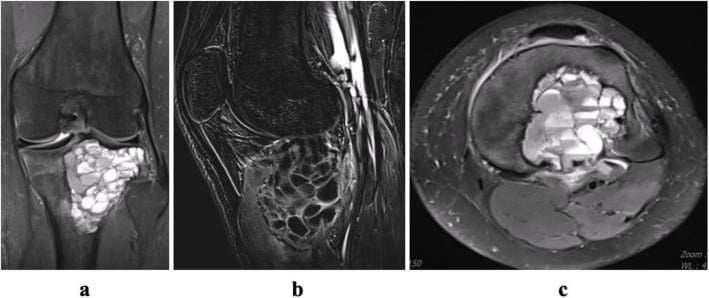
Other lytic lesions in children. The rest of the differential, benign and malignant, and how each is told apart.
- Key distinguishing features
- Metaphyseal, eccentric, cortically based, well-defined, sclerotic border
- Radiographic clues
- Eccentric scalloped lucency with sclerotic margin; no cortical breakthrough
- Management differs
- Observation; resolves spontaneously
- Key distinguishing features
- Ground-glass matrix, diaphyseal or metaphyseal, may be polyostotic
- Radiographic clues
- Ground-glass appearance on radiograph, no fluid on MRI, endocrine features if McCune-Albright
- Management differs
- Observation or curettage for symptomatic lesions
- Key distinguishing features
- Diaphyseal, permeative, layered periosteal reaction, systemic illness
- Radiographic clues
- Permeative moth-eaten pattern, Codman triangle, large soft tissue mass, fever
- Management differs
- Urgent referral to bone tumour centre; chemotherapy and surgery
- Key distinguishing features
- Metaphyseal, mixed lytic and sclerotic, new bone formation, Codman triangle
- Radiographic clues
- Sunburst periosteal reaction, osteoid matrix, soft tissue mass
- Management differs
- Urgent referral to bone tumour centre; chemotherapy and surgery
- Key distinguishing features
- Skull, diaphysis, vertebra; may be painful without fracture
- Radiographic clues
- Bevelled edge, well-defined but may be diaphyseal; vertebra plana if spinal
- Management differs
- Observation, curettage, or low-dose radiotherapy; often self-limiting
- Key distinguishing features
- Metaphyseal lytic lesion with surrounding sclerosis; may have symptoms
- Radiographic clues
- Central lucency with thick sclerotic rim; tract to physis visible on CT
- Management differs
- Antibiotics, surgical drainage and curettage
Investigations
Radiographs. UBC is primarily a radiographic diagnosis, made on plain radiographs alone in the vast majority of cases, and biopsy is NOT required when the imaging is characteristic. Take AP and lateral views of the entire affected bone, including the full joint above and below.
The characteristic cyst:
- A well-defined, central, geographic lytic lesion in the metaphysis
- Cortex thinned but intact unless fractured
- Thin internal septa or ridges, which may make it look multiloculated
- No periosteal reaction, no soft tissue mass, and no crossing of the physis
Then look for anything that does not fit: periosteal reaction, a soft tissue mass, or cortical destruction outside a fracture. A well-defined central metaphyseal lesion with cortical thinning, no soft tissue mass and a normal healthy child is sufficient for the diagnosis, and a characteristic UBC is not routinely biopsied.
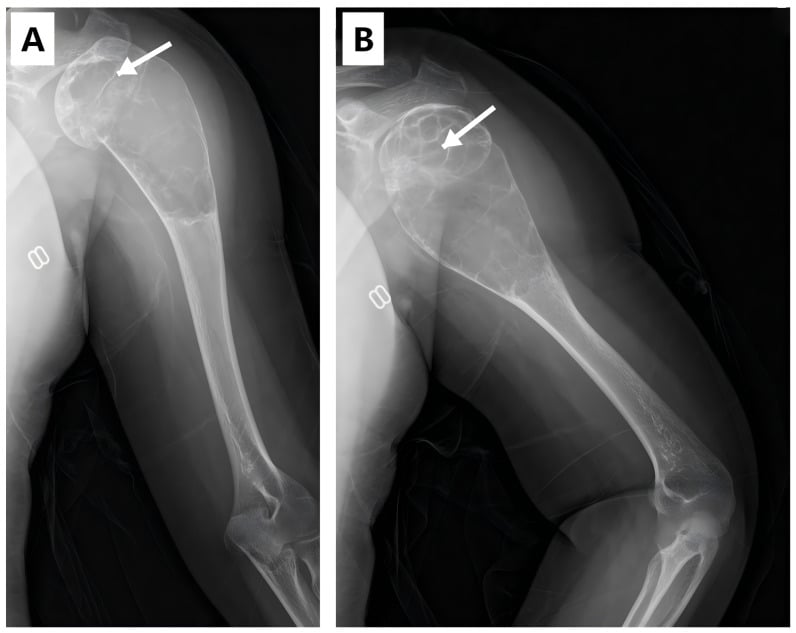
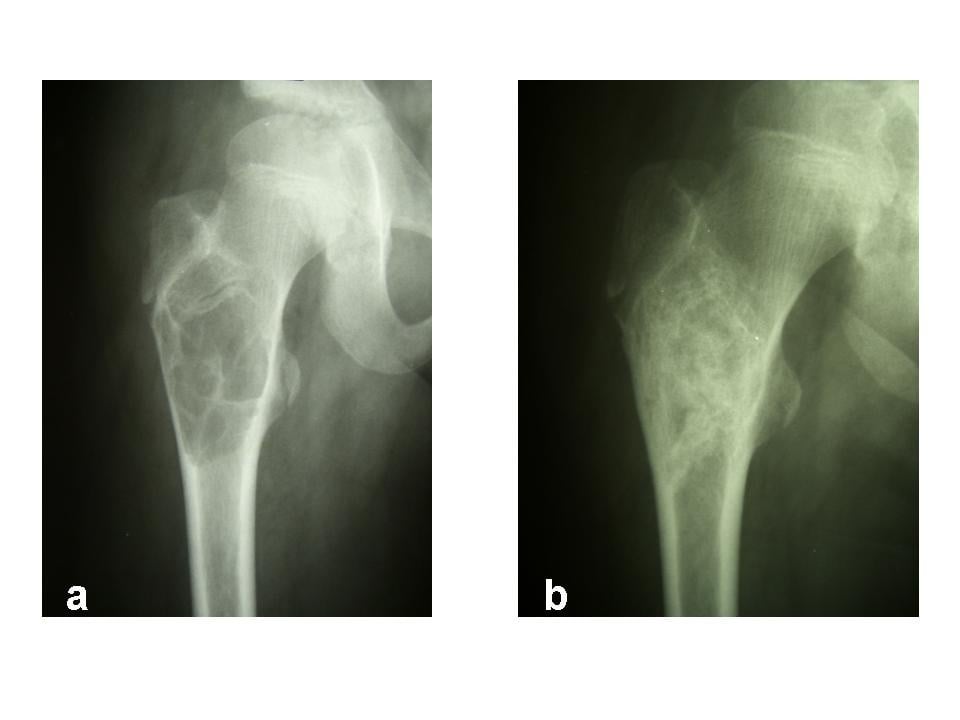
The fallen-fragment sign. The sign is seen when a pathological fracture through the cyst produces a cortical fragment that settles to the dependent portion of the cavity. Only a fluid-filled cavity allows a fragment to sink; solid tumours (fibrous dysplasia, NOF, Ewing sarcoma) hold fragments in place.
The sign is pathognomonic, since no other bone lesion produces it, and when present it is considered virtually diagnostic, so biopsy is not required before treatment. Look for the fragment on a cross-table lateral.
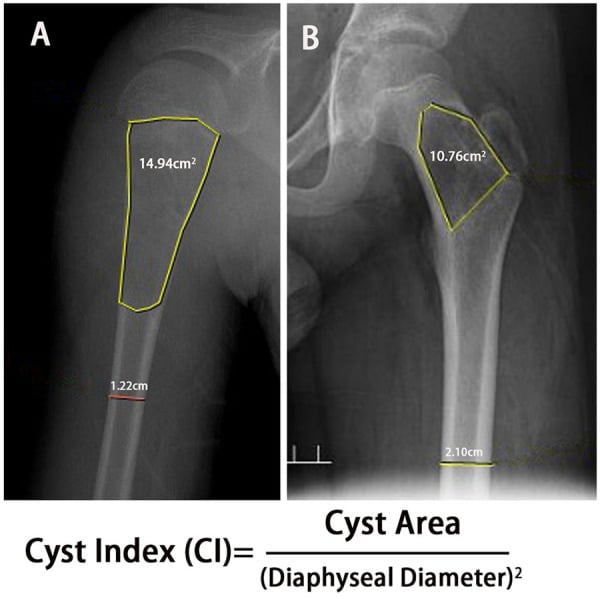
What to measure. Three measurements on the radiograph set the fracture risk and the treatment.
- Method
- Measure thinnest cortical wall on AP radiograph
- Threshold for concern
- Less than 5 mm = high fracture risk
- Clinical action
- Consider injection or stabilisation before fracture occurs
- Method
- Widest diameter of lucency on AP radiograph
- Threshold for concern
- Greater than 80 percent of bone width = high risk
- Clinical action
- More aggressive treatment; proximal femur cysts near this threshold need fixation
- Method
- Measure gap between cyst and physis on lateral radiograph
- Threshold for concern
- Abutting physis = active cyst (higher recurrence)
- Clinical action
- Active cysts need injection or curettage; latent cysts may be observed
Cyst index. The cyst area divided by the square of the diaphyseal diameter. A cyst index above 4 indicates a high risk of pathological fracture.
MRI with gadolinium is for atypical radiographic features, or when the differential includes malignancy. Sequences are T1, T2, STIR and T1 post-gadolinium with fat suppression. A UBC gives low T1 and high T2 fluid signal, with no soft tissue component, no peritumoural oedema, and a thin cyst wall with no solid nodular enhancement.
Fluid-fluid levels may appear after a recent fracture but are less prominent than in aneurysmal bone cyst. The key discriminator is the absence of solid enhancing tissue: if it is present, consider an alternative diagnosis such as telangiectatic osteosarcoma or ABC secondary to another tumour.
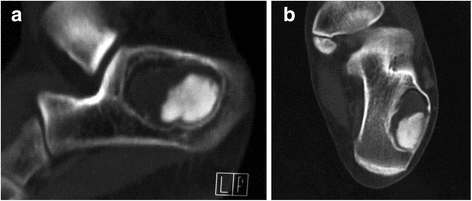
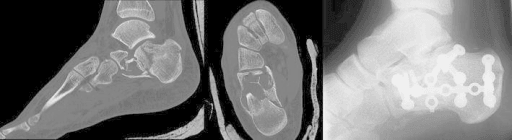
CT comes in when a fracture or surgery is planned. It assesses cortical thickness and integrity for fracture-risk stratification, showing fluid density within the cyst, cortical thinning and a precise measurement of the remaining cortical bone. Before surgery it determines the entry point for aspiration, the cortical window for curettage and the relationship to the physis. In the calcaneus CT is useful to map the extent of the cyst and assess fracture risk before weight-bearing.
When red flags are present, stage fully and refer to a bone tumour centre before any biopsy:
- Full blood count, ESR and CRP
- Bone scan or whole-body MRI
- Chest CT and CT of the primary site
Do NOT biopsy a potentially malignant lesion outside a bone tumour centre. An improperly performed biopsy contaminates compartments and compromises limb-salvage surgery.
Management Algorithm
The principle. Treatment is guided by fracture risk, activity status and skeletal maturity. Pathological fractures through a UBC generally heal normally, and the site decides what the bone needs.
The proximal femur is fixed internally with flexible intramedullary nails or a plate, because the cyst weakens the bone and the risk of recurrent fracture is high.
- Diagnosis
- Well-defined central metaphyseal lucency, no fracture
- Treatment
- Observation if latent; aspiration and steroid injection if active and thin cortex
- Key Pearl
- Latent cysts may resolve at skeletal maturity without intervention
- Diagnosis
- Fallen-fragment sign on radiograph confirms UBC
- Treatment
- Sling immobilisation until fracture heals, then consider injection if cyst persists
- Key Pearl
- Fracture heals normally; treat the cyst only if persistent or recurrent after healing
- Diagnosis
- Lytic lesion with thin cortex, high risk of refracture
- Treatment
- Curettage, bone grafting, and internal fixation (flexible nails or plate)
- Key Pearl
- Proximal femur UBC fractures do NOT heal well with observation alone; fix internally
Not every UBC needs treatment. The goal is to prevent pathological fracture while allowing the cyst to resolve spontaneously where possible. A latent cyst away from the physis with adequate cortical thickness can be safely observed with serial radiographs.
The first visit. Take a full history and examination to exclude red flags, and AP and lateral radiographs of the entire bone to assess activity, cortical thickness and fracture risk. Observe a latent cyst with adequate cortex (greater than 5 mm) in the proximal humerus or another low-risk site. Consider early intervention for an active cyst with cortex less than 5 mm, especially in the proximal femur.
Follow-up. Repeat radiographs at 3-6 monthly intervals until skeletal maturity, watching cyst size, cortical thickness and distance from the physis. Proceed to treatment if the cyst enlarges, the cortex thins further or a pathological fracture occurs; a fracture is treated first, and the cyst addressed afterwards if it persists.
A cyst that persists at skeletal maturity with adequate cortex needs no further intervention.
Counselling. Explain to the family that the cyst is benign, does not undergo malignant transformation, and will likely stabilise or resolve, often at skeletal maturity. The child should avoid contact sports only while the cortex is critically thinned; once the cyst becomes latent and cortical thickness improves, normal activity may resume.
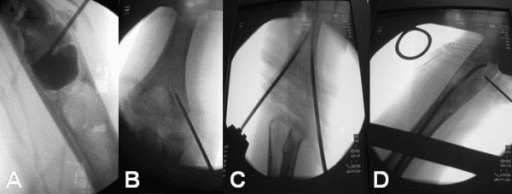
Continuous decompression with cannulated screws. A recognised minimally invasive technique that targets the raised intracystic pressure directly. One or more cannulated screws are placed percutaneously across the cyst and left in situ, providing ongoing drainage and decompression so the bone-resorbing fluid cannot re-accumulate.
It is a low-morbidity, day-case percutaneous procedure, with fewer repeat anaesthetics than the multiple sessions steroid injection often needs, and in the femur the screw also adds modest stability.
The multimodal variant combines percutaneous decompression or curettage with instillation of autologous bone marrow aspirate, demineralised bone matrix and/or an injectable calcium-phosphate or calcium-sulfate bone substitute: the substitute scaffolds healing while decompression prevents recurrence.
Decompression is an alternative or adjunct to repeated steroid injection for active cysts, with reported healing and recurrence rates at least comparable while needing fewer procedures. It does not replace open curettage, grafting and flexible nailing for the high-risk proximal femur.
Complications
Because the cyst does NOT cross the physis, limb-length discrepancy is rare.
- Incidence
- Most common presentation
- Risk Factors
- Active cyst, cortex less than 5 mm, proximal femur location
- Management
- Humeral fractures: sling and heal. Femoral fractures: internal fixation
- Incidence
- 30-50 percent after one injection; 10-30 percent after curettage
- Risk Factors
- Active cyst (near physis), young age, large cyst
- Management
- Repeat injection or curettage; flexible nails reduce recurrence at proximal femur
- Incidence
- Rare; mainly proximal femur
- Risk Factors
- Surgical trauma near physis, multiple procedures
- Management
- Monitor limb length; limb length equalisation if needed
- Incidence
- Risk after pathological fracture or surgery
- Risk Factors
- Proximal femur location, untreated fracture, inadequate fixation
- Management
- Valgus osteotomy if progressive deformity; internal fixation to prevent
- Incidence
- Common if cyst persists after fracture healing
- Risk Factors
- Residual cyst cavity, premature return to sport
- Management
- Treat cyst definitively before allowing full activity; protective bracing
A pathological fracture through a proximal femoral UBC is an orthopaedic emergency because the resulting deformity (coxa vara) can be severe and permanent. Unlike proximal humerus fractures that remodel well in children, proximal femur fractures through UBC have a high rate of coxa vara, growth disturbance, and refracture. These patients should be managed by an orthopaedic surgeon experienced in paediatric bone lesions and should receive internal fixation (flexible intramedullary nails or plate) at the time of fracture.
Outcomes and Prognosis
- Healing rate
- 20-30 percent spontaneous resolution
- Recurrence
- Not applicable (no intervention)
- Return to activity
- Full activity once cortex adequate
- Long-term function
- Excellent; no surgical morbidity
- Healing rate
- 40-60 percent healing
- Recurrence
- 50-60 percent need repeat injection
- Return to activity
- Protected activity until cyst heals
- Long-term function
- Good if heals; repeat injection if not
- Healing rate
- Cumulative 65-80 percent healing
- Recurrence
- 20-35 percent still fail
- Return to activity
- Full activity once cortical thickness adequate
- Long-term function
- Good; lower morbidity than surgery
- Healing rate
- 70-90 percent healing
- Recurrence
- 10-30 percent recurrence
- Return to activity
- Protected 8-12 weeks until graft incorporated
- Long-term function
- Good; small donor site morbidity if autograft
- Healing rate
- 75-90 percent healing
- Recurrence
- Low recurrence (nails provide mechanical support)
- Return to activity
- Protected weight-bearing 8-12 weeks
- Long-term function
- Excellent at proximal femur; hardware removal may be needed
Best prognosis. A latent cyst away from the physis, adequate cortical thickness, a proximal humeral location, and an older child closer to skeletal maturity.
Poorer prognosis. An active cyst abutting the physis, cortex less than 5 mm, a proximal femoral location, a very young child far from skeletal maturity, and a large cyst (greater than 80% of bone diameter).
The key principle. UBC does NOT undergo malignant transformation, and a cyst that persists remains benign. Treatment aims to prevent fracture and allow normal bone development.
Guidelines, Registries & Global Practice
- UBC is the most common benign lytic bone lesion in children worldwide, accounting for approximately 3 percent of bone biopsies across all regions
- No geographic or ethnic predilection has been demonstrated
- Proximal humerus and femur predominate consistently across international series
- Calcaneal UBC is relatively more common in adults and may persist beyond skeletal maturity
- Male predominance (2-3:1) is consistent across all published series
- High-resource centres: Image-guided percutaneous injection under general anaesthetic, CT or MRI for atypical lesions, bone graft substitutes (calcium phosphate) to avoid donor site morbidity
- Limited-resource settings: Aspiration and injection under local anaesthesia with radiographic guidance; open curettage with allograft when injection not available
- Universal principle: Diagnosis is made on plain radiographs in most cases; MRI and biopsy are reserved for atypical features
- Referral: Complex proximal femur cysts and recurrent cysts should be referred to paediatric orthopaedic or bone tumour specialists
- Diagnosis emphasis
- Plain radiograph diagnosis; MRI reserved for atypical lesions
- Treatment preference
- Steroid injection first-line; curettage for refractory; flexible nails for proximal femur
- Follow-up
- Radiographs at 6 and 12 weeks post-injection; monitor until skeletal maturity
- Diagnosis emphasis
- Clinical and radiographic diagnosis; do not biopsy characteristic UBC
- Treatment preference
- Injection preferred; surgical referral for proximal femur cysts or recurrent lesions
- Follow-up
- Observation for latent cysts; serial radiographs every 3-6 months
- Diagnosis emphasis
- Standard radiographic criteria; CT/MRI when diagnosis uncertain
- Treatment preference
- Minimally invasive approaches preferred; curettage for refractory or high-risk sites
- Follow-up
- Growth monitoring in young children with proximal femur involvement
- Diagnosis emphasis
- Strict adherence to radiographic diagnostic criteria to avoid unnecessary biopsy
- Treatment preference
- Injection for humeral lesions; curettage and fixation for femoral lesions
- Follow-up
- Document cortical thickness serially; intervene before cortex is critically thinned
There is no dedicated national or international registry for unicameral bone cysts. The condition is benign, does not undergo malignant transformation, and is not reportable to tumour registries. Evidence is derived from single-centre retrospective case series and a small number of comparative studies. There are no large randomised controlled trials comparing treatment modalities. International consensus generally favours steroid injection as first-line for most cysts, with curettage and internal fixation reserved for proximal femur lesions and injection failures.
Record at every UBC encounter:
- Cyst activity grade (active, transitional, or latent) based on relationship to physis
- Cortex thickness measurement (critical for fracture risk assessment)
- Presence or absence of pathological fracture and fallen-fragment sign
- Treatment performed (observation, injection type and dose, or surgery)
- Plan for follow-up and intervention thresholds clearly communicated to family
A pathological fracture through an undiagnosed proximal femur UBC that leads to coxa vara is a recognised source of medicolegal claims. Radiographic review of paediatric long-bone radiographs should specifically check for incidental metaphyseal lucency.
Controversies & Areas of Uncertainty
Methylprednisolone acetate is the most widely studied agent, but bone marrow aspirate, autologous concentrated bone marrow, calcium phosphate cement, and demineralised bone matrix have all been used as alternatives. No randomised trial has established superiority of one agent over another. The choice is often driven by availability and surgeon preference.
There is no evidence-based consensus on how many steroid injections should be attempted before proceeding to open curettage. Some centres inject up to 4-5 times; others switch to surgery after 2 failed injections. Each subsequent injection has diminishing returns.
Some surgeons advocate flexible intramedullary nailing of proximal femur UBC before fracture occurs (prophylactic fixation), arguing that the morbidity of coxa vara from fracture justifies early surgery. Others favour injection first and reserve nails for fracture or injection failure. No trial has compared these strategies.
Bone marrow aspirate injection has been proposed as an alternative to steroid injection based on the osteogenic potential of marrow-derived stem cells. Early series reported healing rates comparable to steroid, but the evidence remains limited to small non-comparative studies and the optimal preparation and concentration are not standardised.
MCQ Practice Points
Q: A 10-year-old boy has a pathological fracture through the proximal humeral metaphysis. A cortical fragment is seen at the bottom of the lytic cavity. What is the most likely diagnosis? A: Unicameral bone cyst. The fallen-fragment sign (cortical fragment at the dependent portion of the cyst) is pathognomonic for UBC. This occurs because the cyst is fluid-filled and the fragment sinks. No other bone lesion produces this sign.
Q: What is the typical bone scan appearance of a unicameral bone cyst? A: Photopenic centre with peripheral rim uptake. The fluid-filled cyst does not take up tracer centrally, but the surrounding reactive bone produces rim uptake. This contrasts with osteoid osteoma, which has intense central uptake (the nidus), and helps distinguish UBC from other lytic lesions.
Q: What is the first-line treatment for an active unicameral bone cyst in the proximal humerus of an 8-year-old child? A: Percutaneous aspiration and methylprednisolone acetate injection. Steroid injection is first-line because it is effective (40-60 percent healing per injection, 65-80 percent cumulative with multiple injections) and has far lower morbidity than open curettage and bone grafting. Curettage is reserved for injection failure or high-risk proximal femur lesions requiring fixation.
Q: A 6-year-old boy has a pathological fracture of the proximal femur through a unicameral bone cyst. How should this be managed? A: Internal fixation with flexible intramedullary nails, with or without curettage and bone grafting. Proximal femur UBC fractures are at high risk for coxa vara, refracture, and growth disturbance. Unlike humeral fractures that heal with a sling, femoral fractures through UBC require surgical stabilisation. Flexible nails protect against refracture while the cyst heals.
Q: What happens to a unicameral bone cyst at skeletal maturity? A: Many latent cysts resolve spontaneously. As the physis closes and the metaphyseal region remodels, the cyst may fill in with bone. However, some cysts persist into adulthood, particularly calcaneal UBC. Importantly, UBC does NOT undergo malignant transformation regardless of age or treatment history.
Q: How do you distinguish a unicameral bone cyst from an aneurysmal bone cyst on MRI? A: UBC shows uniform fluid signal (T1 low, T2 high) without solid tissue and only occasional fluid-fluid levels after fracture. ABC characteristically shows prominent fluid-fluid levels on T2-weighted sequences (blood degradation products in different stages), eccentric cortical expansion with a blown-out appearance, and a solid component in the cyst wall that enhances with gadolinium. The fallen-fragment sign is specific to UBC.
Exam Viva Scenarios
Practise clinical reasoning and management decisions out loud
“A 9-year-old boy presents to the emergency department after falling onto his shoulder during football. He has pain and swelling over the proximal left humerus. Radiographs show a transverse fracture through a well-defined lytic lesion in the proximal humeral metaphysis. A small cortical fragment is seen at the dependent portion of the cyst cavity. What is your diagnosis, how would you manage the fracture, and how would you manage the cyst?”
“A 7-year-old girl had a radiograph of the left hip after a minor fall. She has minimal pain and is walking well. Radiographs show a well-defined lytic lesion in the proximal femoral metaphysis. The cortex is thinned to approximately 3 mm. The lesion abuts the proximal femoral physis. There is no fracture. She is otherwise healthy with no systemic symptoms. What would you do?”
Key Facts
- Most common benign lytic bone lesion in children: central metaphyseal, fluid-filled, no true epithelial lining
- Male to female ratio 2-3:1, peak age 5-15 years, rare after skeletal maturity
- Sites: proximal humerus 50 percent, proximal femur 25 percent, calcaneus and others 25 percent
- Does NOT cross the physis and does NOT undergo malignant transformation
Diagnosis
- Fallen-fragment sign = pathognomonic (cortical fragment sinks to dependent portion of fluid-filled cyst)
- Well-defined central lytic lesion, thin cortex, thin septa, no soft tissue mass, no periosteal reaction
- Bone scan: photopenic centre with rim uptake (cold lesion, unlike osteoid osteoma hot nidus)
- MRI: uniform T1 low and T2 high fluid signal, no solid enhancing tissue, no significant soft tissue mass
Classification
- Active: cyst abuts physis, cortex very thin, high recurrence risk, needs treatment
- Latent: cyst away from physis with growth, thicker cortex, lower recurrence, may be observed
- Key prognostic factors: cortex thickness (less than 5 mm = high risk), cyst-bone diameter ratio (greater than 80 percent = high risk)
Treatment Algorithm
- Observation: latent cysts with adequate cortex, especially proximal humerus
- Aspiration and steroid injection (methylprednisolone acetate): first-line for active cysts, 40-60 percent heal per injection, repeat up to 3-4 times
- Curettage and bone grafting: for injection failure, refractory cysts, or when internal fixation is needed
- Flexible intramedullary nails: treatment of choice for proximal femur UBC (provides stabilisation and biological stimulus)
Fracture Management
- Proximal humerus: sling immobilisation, fracture heals normally, address cyst after union
- Proximal femur: internal fixation (flexible nails or plate) required to prevent coxa vara and refracture
- Fallen-fragment sign confirms UBC diagnosis; do not biopsy if characteristic features present
Differential Diagnosis
- Aneurysmal bone cyst: eccentric, expanding cortex, prominent fluid-fluid levels on MRI, no fallen fragment
- Non-ossifying fibroma: eccentric, cortically based, sclerotic border, no central location
- Fibrous dysplasia: ground-glass matrix, may be polyostotic, no fluid on MRI
- Malignant bone tumours (Ewing, osteosarcoma): periosteal reaction, soft tissue mass, systemic symptoms
Exam Pearls
- Fallen-fragment sign is the single most specific radiographic finding for UBC
- Proximal femur UBC is the highest-risk site: fracture causes coxa vara and growth disturbance
- UBC is a radiographic diagnosis: do not biopsy characteristic lesions
- Spontaneous resolution occurs in 20-30 percent at skeletal maturity without treatment
Evidence Base and Key Trials
Final results obtained in the treatment of bone cysts with methylprednisolone acetate (depo-medrol) and a discussion of results achieved in other bone lesions
- Original and landmark description of percutaneous aspiration and methylprednisolone acetate injection for unicameral bone cysts
- Studied cysts of long bones in children and adolescents with follow-up ranging from three to ten years
- Demonstrated that steroid injection produced healing with new bone formation and cortical thickening in the majority of treated cysts
- Established the technique as a low-morbidity alternative to open curettage and bone grafting
Unicameral and aneurysmal bone cysts
- Large single-centre series comparing 178 unicameral bone cysts treated by curettage and bone grafting against 141 treated by cortisone injection, alongside 198 aneurysmal bone cysts
- The headline finding is a negative one that is easy to lose: the END RESULTS WERE COMPARABLE IN THE TWO GROUPS. This is the larger series and it does not reproduce the marked advantage for injection reported two years earlier
- Recurrence risk factors differed by treatment - after surgery, an active cyst and previous operations; after injection, an active cyst, multilocular architecture and cyst size
- Active cysts (abutting the physis) recurred more often than latent cysts that had migrated away with growth, in both treatment groups - the activity distinction that still guides management
- The same paper proposed the radiographic classification of aneurysmal bone cyst and argued ABC treatment should be surgical, selected by radiographic appearance and growth rate
Flexible intramedullary nailing for the treatment of unicameral bone cysts in long bones
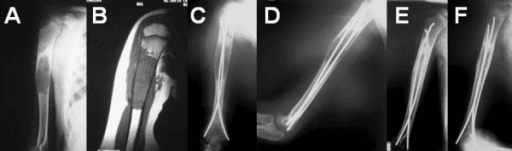
- Reported results of flexible intramedullary nailing (titanium elastic nails) for unicameral bone cysts in children
- Demonstrated that nails provide mechanical stabilisation while the continuous reaming effect of load-bearing through the nail promotes cyst healing
- Particularly effective for proximal femur cysts where pathological fracture carries high morbidity
- All 32 cysts responded; only 2 recurred, both after healing with residual radiolucency - a low recurrence figure for a non-comparative series