Additive Manufacturing in Orthopaedic Surgery
Anatomical Models: Pre-operative planning, education
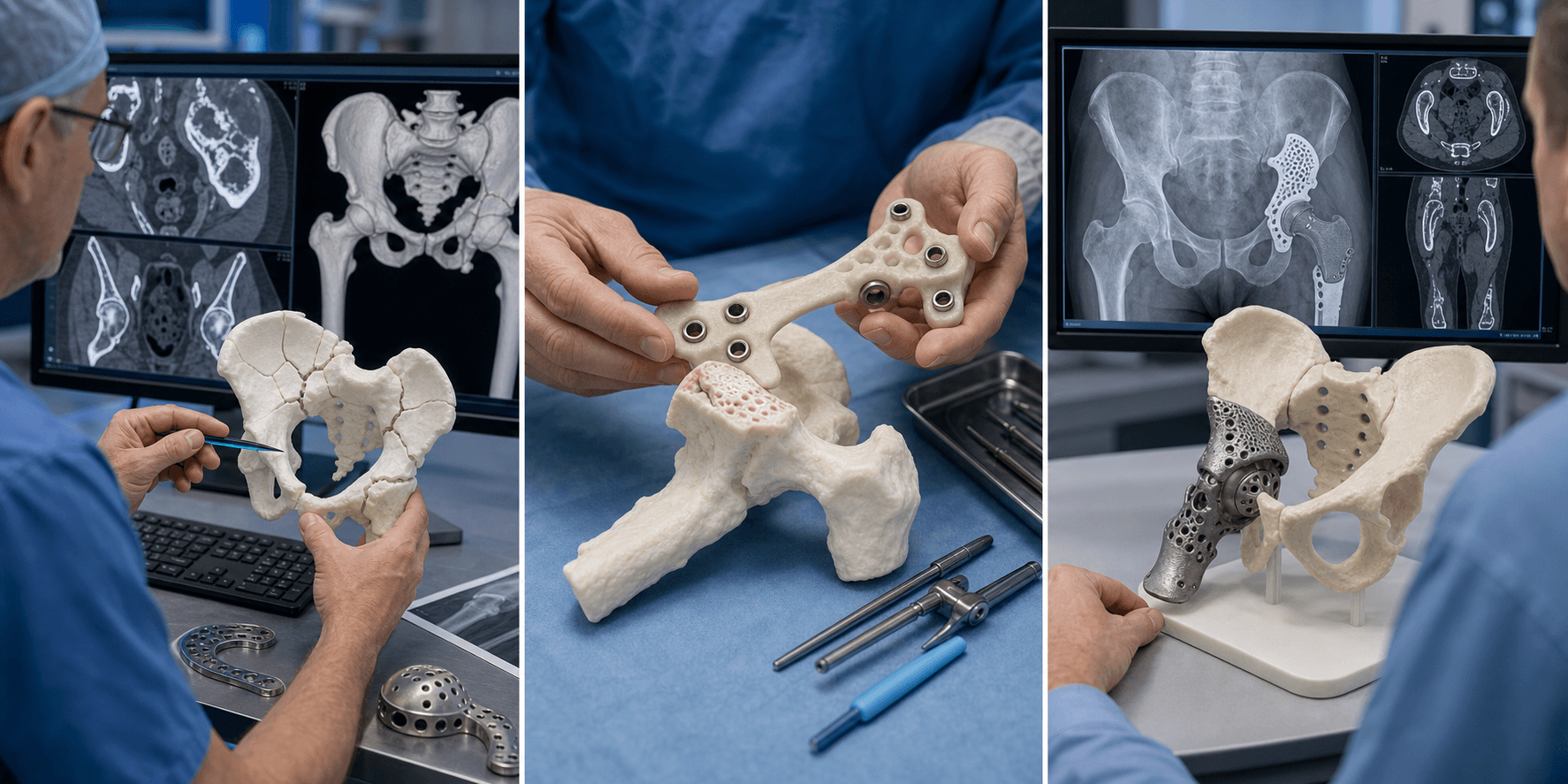
Patient-Specific Instruments: Cutting guides, drill guides
Custom Implants: Tumour reconstruction, revision arthroplasty
Key: 3D printing transforms 2D imaging into tangible surgical tools
- CT provides best data for 3D printing (bone segmentation)
- Thin-slice (less than 1mm) CT required for accuracy
- Patient-specific instruments improve implant POSITIONING - but Level I evidence shows no clinically relevant OUTCOME benefit in routine TKA
- Custom implants for complex reconstruction
- Regulatory requirements for implantable devices
- “DICOM to STL conversion is the key processing step
- “Segmentation quality determines print accuracy
- “Anatomical models reduce operative time in complex cases
- “PSI improves component alignment but NOT patient outcomes in routine TKA - the surrogate moved, the endpoint did not (Level I, 43 RCTs)
Overview
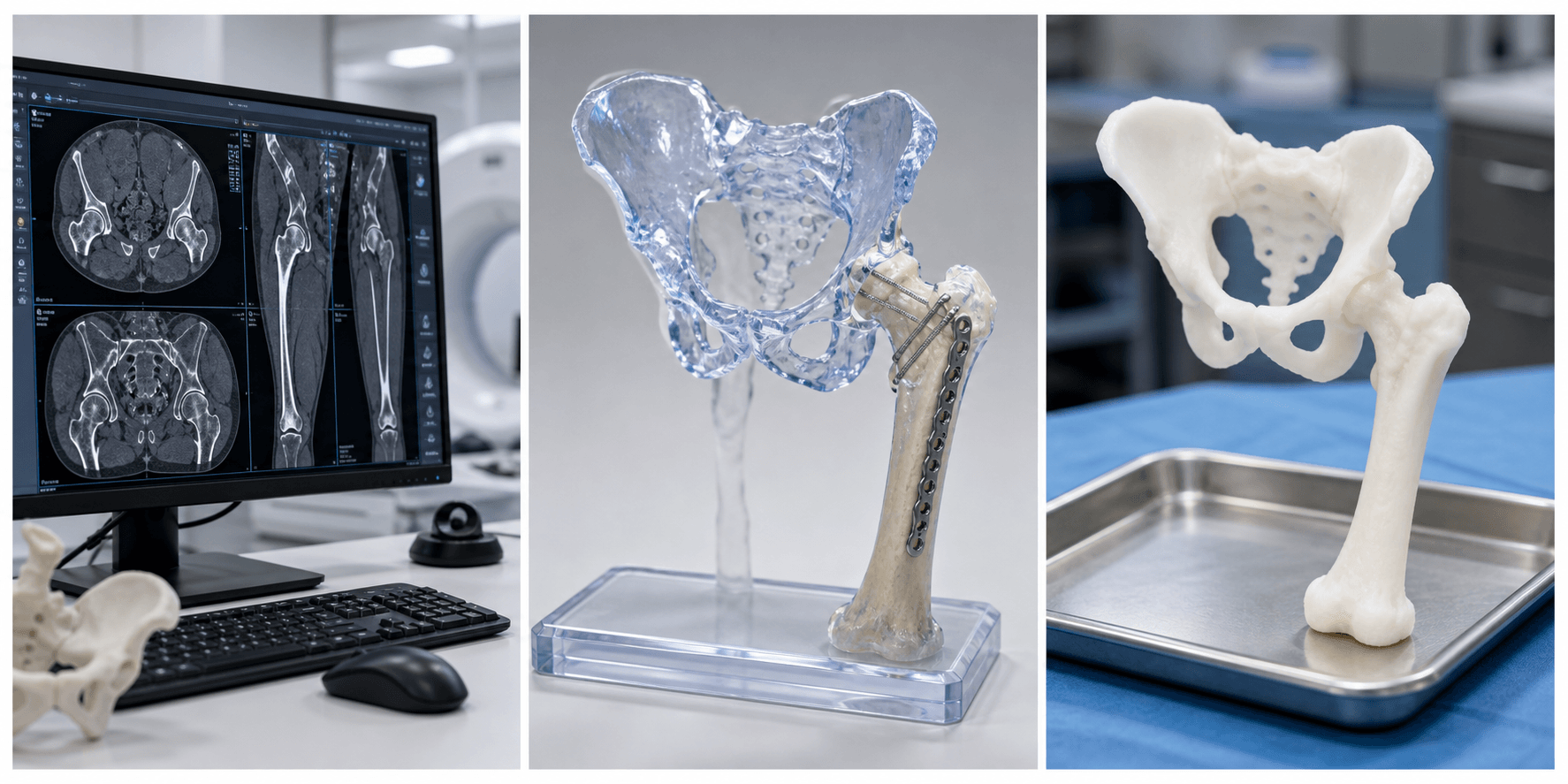
What it is. Three-dimensional printing is a downstream use of imaging, not a separate imaging modality. The quality of the printed model depends first on acquisition, then segmentation, then the clinical relevance of the model that is produced. Good orthopaedic printing starts with the imaging dataset, not the printer, and with the surgical question, which is defined before anything is segmented.
Where it earns its place. The strongest orthopaedic indications are complex articular trauma, deformity planning, implant templating, and patient-specific education where spatial understanding genuinely changes decision-making.
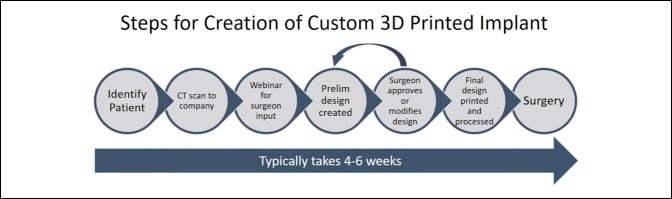
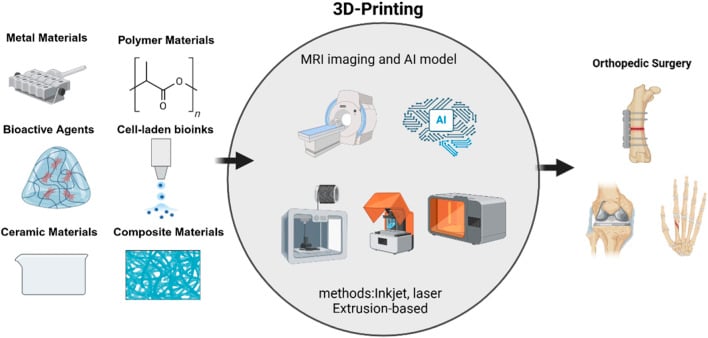
From Scan to Print: the Workflow
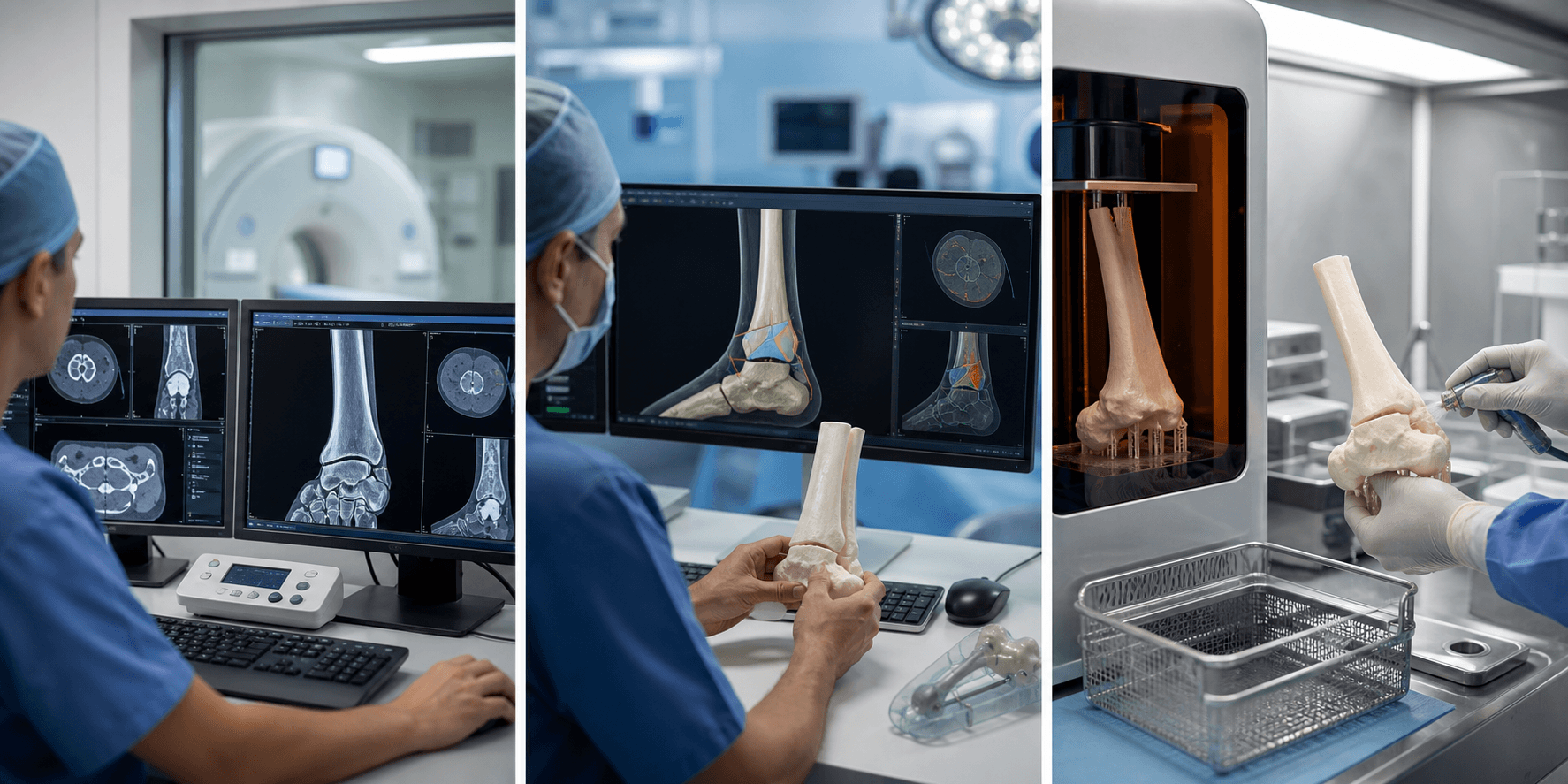
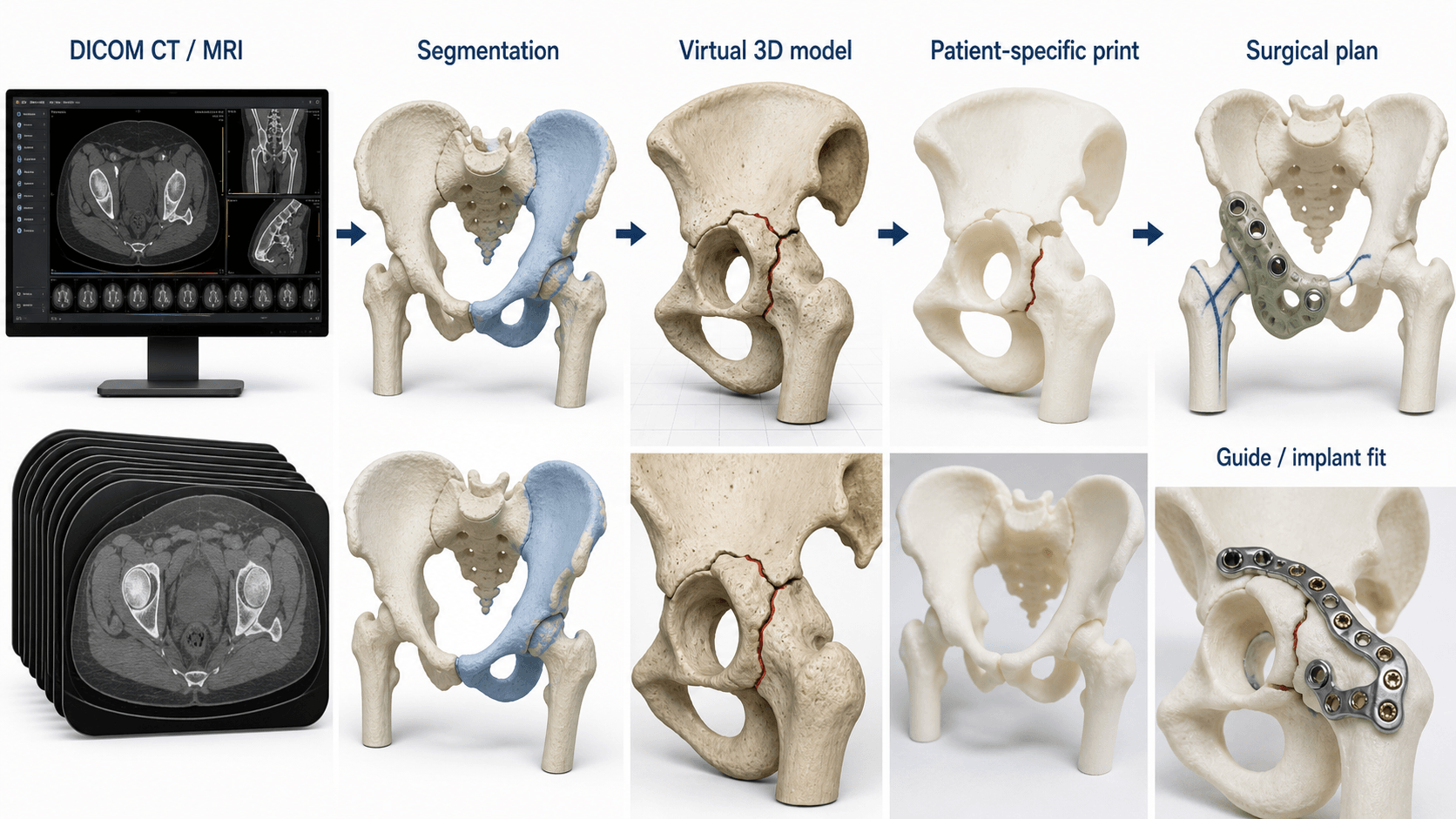
The steps run in sequence from the scanner to the operating theatre:
- Acquire. CT, or MRI for soft-tissue assessment in complex cases, with minimal artefact. The data must be in DICOM format for processing.
- Transfer. The DICOM data go to the processing software, anonymised and by secure transfer.
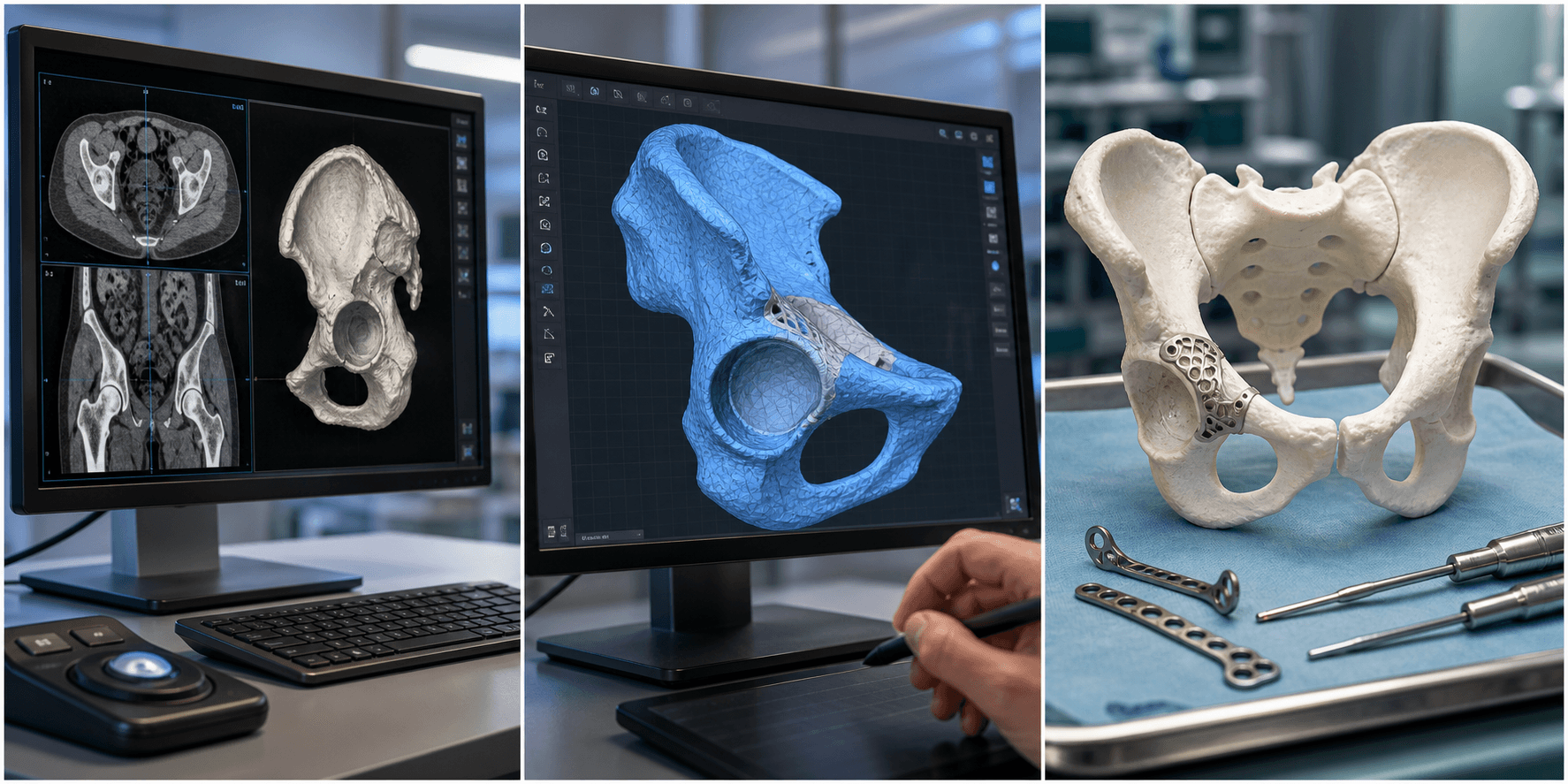
- Segment. The structures of interest are separated: threshold-based bone segmentation, manual refinement for accuracy, then quality-control checks.
- Build the model. A surface mesh is generated and saved as an STL file. This DICOM-to-STL conversion is the key processing step.
- Design and plan. Virtual surgical planning, guide design (cutting planes, cutting slots, drill trajectories) and implant templating, with engineering input for instruments and sterilisation considered at the design stage.
- Print. The printer translates the STL into G-code and builds the construct from its parameters. The material (PLA, nylon, titanium) is chosen for the purpose, and the printer is calibrated and quality-controlled.
- Post-process. Cleaning, surface finishing for theatre use and validated sterilisation, with regulatory compliance for implants.
- Use. A pre-operative team briefing with the model, intraoperative guide placement, and post-operative validation.

Segmentation. Segmentation identifies and separates specific anatomical structures from the imaging data, and its quality directly affects the accuracy of the final print. For bone, thresholding on Hounsfield units, typically above 150-200 HU, can segment cortical bone automatically. Manual refinement is often needed for pathological areas, fracture fragments and tumour boundaries.
Imaging Requirements
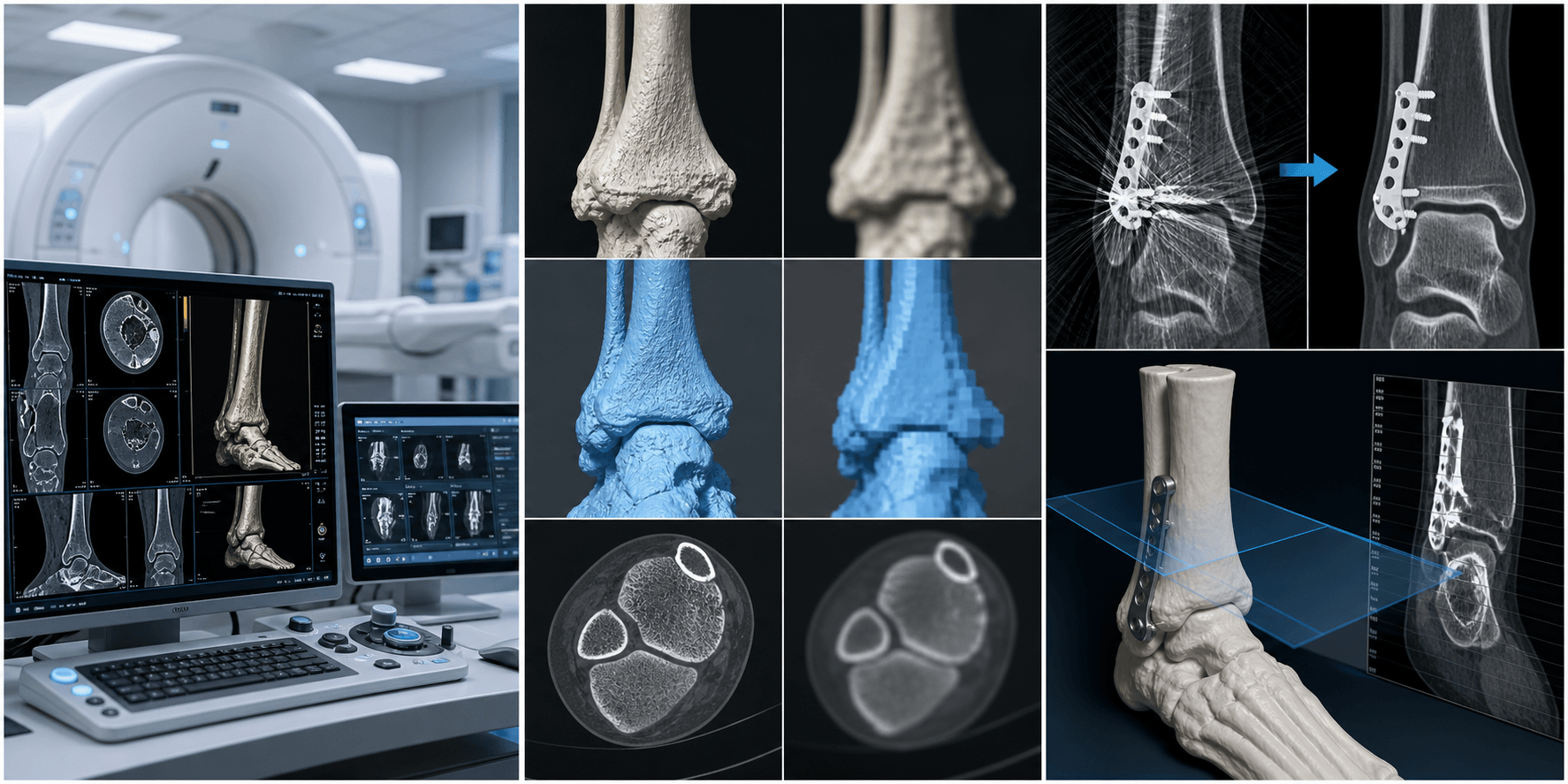
- Recommendation
- CT preferred for bone
- Rationale
- Superior bone-soft tissue contrast
- Recommendation
- Less than 1mm (ideally 0.5-0.625mm)
- Rationale
- Reduces stair-stepping artefact
- Recommendation
- Include relevant anatomy
- Rationale
- Sufficient margins for planning
- Recommendation
- MARS protocol if hardware present
- Rationale
- Improves segmentation accuracy
- Recommendation
- Usually unnecessary for bone
- Rationale
- May help tumour delineation
Why CT. Its contrast between bone and soft tissue enables automated segmentation. The linear relationship between Hounsfield units and density allows consistent thresholding, and isotropic voxels allow high-quality reformats in any plane.
When MRI. MRI can be used for soft-tissue models such as cartilage and tumour margins, but its variable signal intensity means more manual segmentation. MRI-CT fusion may combine anatomical and soft-tissue information for comprehensive planning.
Clinical Applications
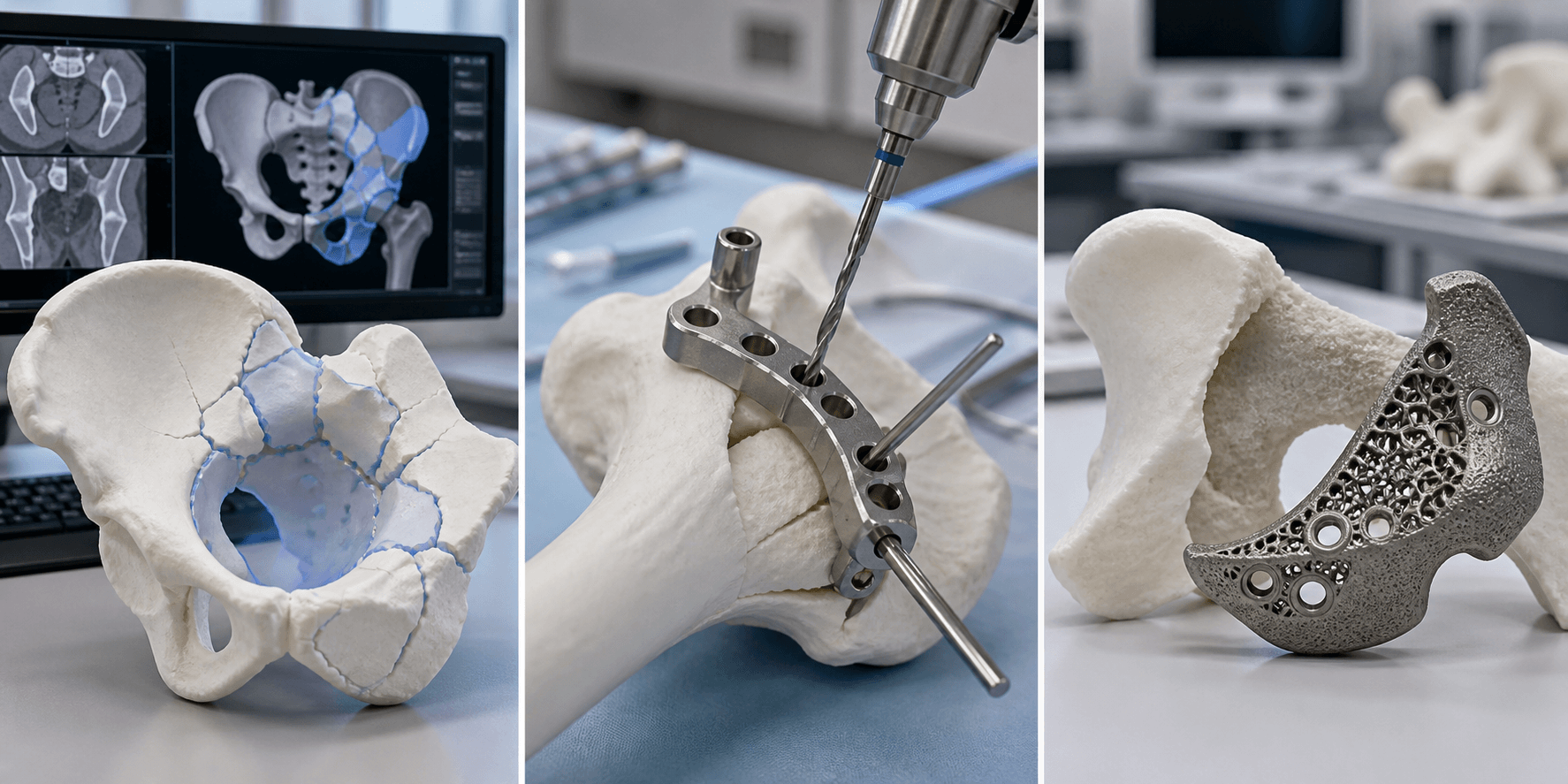
The review by Wong and colleagues names four core orthopaedic uses of additive manufacturing: anatomical models, patient-specific instruments (PSI), custom implants, and bone and cartilage tissue engineering.
- Benefit
- 3D visualisation of pathology
- Examples
- Complex fractures, tumour resection
- Benefit
- Pre-bend plates, trial implants
- Examples
- Pelvic fractures, spine deformity
- Benefit
- Tangible explanation of surgery
- Examples
- Joint replacement, deformity correction
- Benefit
- Practice complex procedures
- Examples
- Resident education, rare procedures
- Benefit
- Anatomical guide in OR
- Examples
- Tumour margins, fracture reduction
The trauma evidence. In complex acetabular fractures, a comparative study found that pre-operative 3D models significantly reduced operative time, blood loss and fluoroscopy (Ivanov 2022). Boudissa (2021) found shorter operative time and less blood loss with patient-specific virtual planning, in which no physical model is printed. The print cost is often offset by reduced theatre time.
Models are particularly valuable in pelvic and acetabular trauma, complex spine deformity and tumour surgery.
Printing Technologies
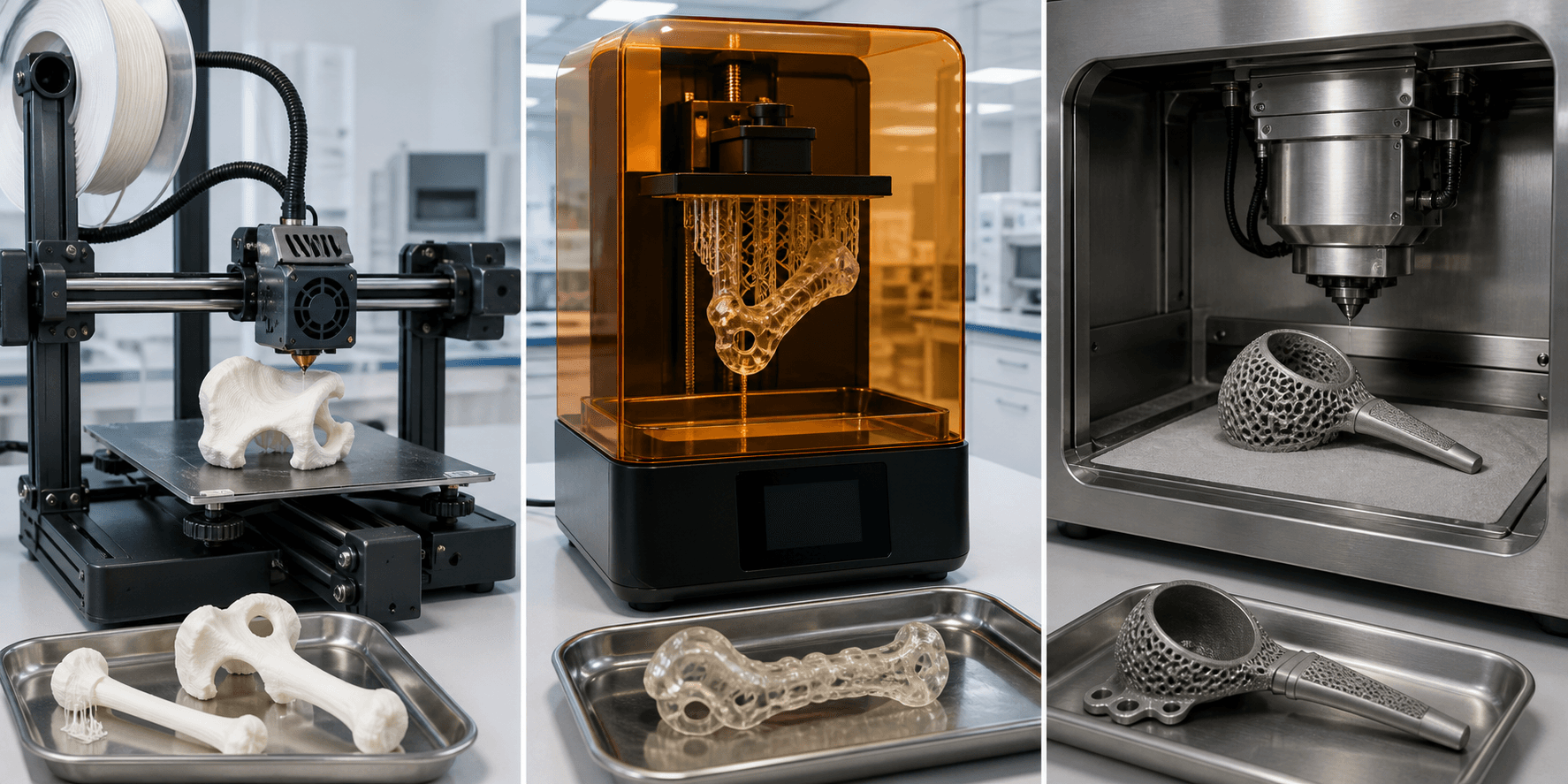
- Mechanism
- Extruded thermoplastic
- Applications
- Anatomical models, low-cost
- Mechanism
- UV-cured resin
- Applications
- High detail models, surgical guides
- Mechanism
- Laser-fused powder
- Applications
- Durable guides, nylon models
- Mechanism
- Metal powder laser fusion
- Applications
- Titanium implants
- Mechanism
- Metal powder electron beam
- Applications
- Porous metal implants
Materials. Material choice follows the application: PLA or ABS plastics for anatomical models, biocompatible resins for surgical guides, and titanium alloys (Ti6Al4V) for implantable devices.
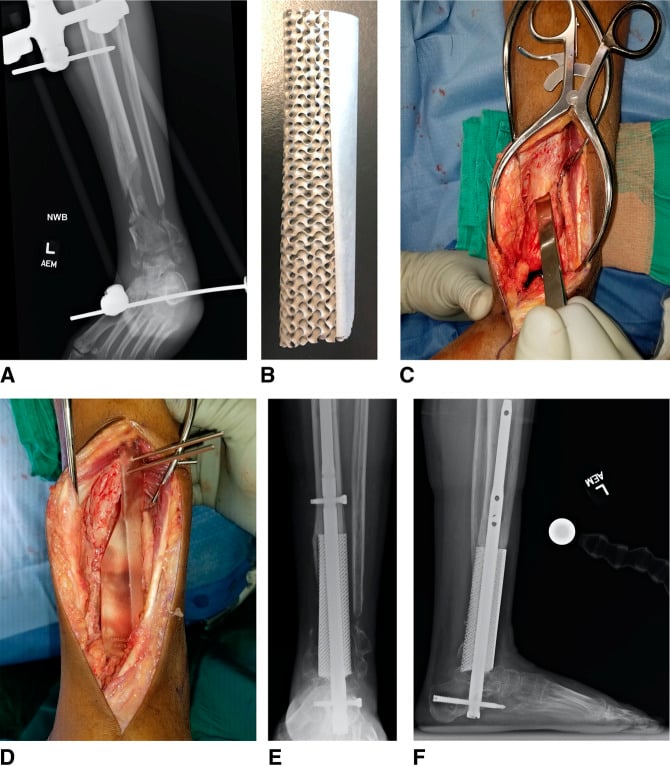
The porous lattice. Metal additive manufacturing, by laser sintering or electron-beam melting, can build a porous or trabecular lattice inside a titanium implant that a solid cast or machined implant cannot, and the porosity can be varied regionally within one part. The lattice is designed to do two things:
- Reduce stress shielding. It lowers the implant's effective elastic modulus toward that of bone (solid titanium around 110 GPa, cortical bone roughly 15-20 GPa), so more load is transferred to the surrounding bone and less is shielded, reducing peri-implant bone resorption.
- Promote osseointegration. The interconnected pores, optimally roughly 300-700 micrometres, allow bone to grow into the implant, giving durable biological fixation on the same principle as a trabecular-metal ingrowth surface.
How far the case goes. Both advantages are engineering rationale supported by bench and animal data, not by clinical comparison. No trial has shown that a printed lattice implant outperforms a conventional one in patients.
Quality Assurance
- Requirement
- Less than 1mm deviation
- Verification
- Calliper measurement, CT comparison
- Requirement
- Matches patient anatomy
- Verification
- Overlay on source CT
- Requirement
- Appropriate for OR use
- Verification
- Validated sterilisation process
- Requirement
- Non-toxic, implant grade
- Verification
- Material certification
- Requirement
- Withstands intended use
- Verification
- Mechanical testing
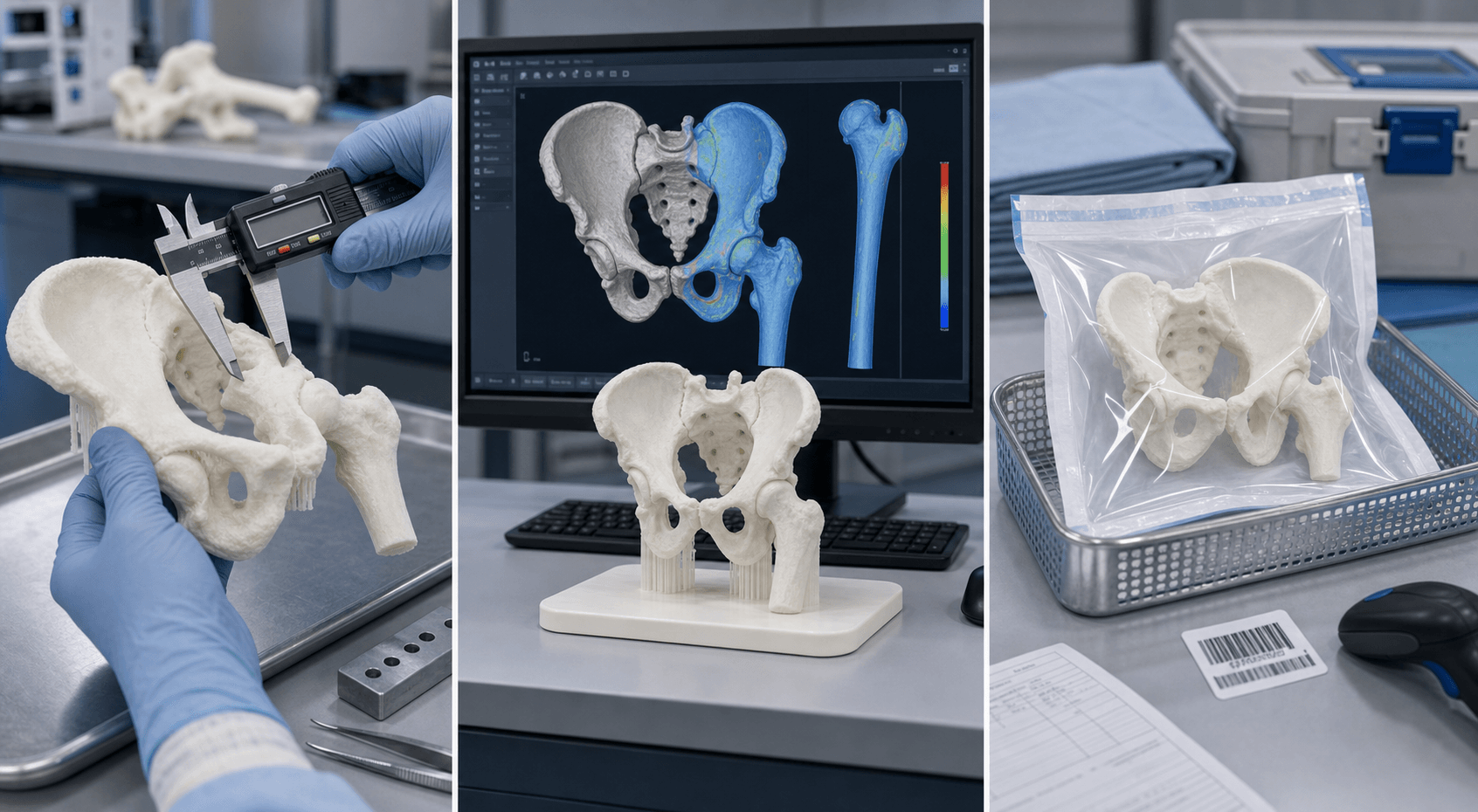
Accuracy. Studies show printed anatomical models typically achieve dimensional accuracy within 0.5-1 mm of the source CT data, so sub-millimetre fidelity is achievable. Accuracy depends on segmentation quality, printer resolution and post-processing, and degrades with metal artefact. The requirement for implantable devices is a deviation under 1 mm, yet there is no universal validation or verification standard.
Before clinical use. Surgical guides and implants must be verified against the original imaging data. Documentation must give full traceability from imaging to implant, and sterilisation calls for gamma irradiation or autoclave-compatible materials.
Limitations
- Explanation
- Days to weeks for complex prints
- Mitigation
- Early planning, in-house printing
- Explanation
- Equipment, materials, expertise
- Mitigation
- Case selection, shared services
- Explanation
- Metal hardware degrades segmentation
- Mitigation
- MARS protocols, manual editing
- Explanation
- Especially for custom implants
- Mitigation
- Partner with approved manufacturers
- Explanation
- Segmentation and design skills
- Mitigation
- Training, dedicated staff
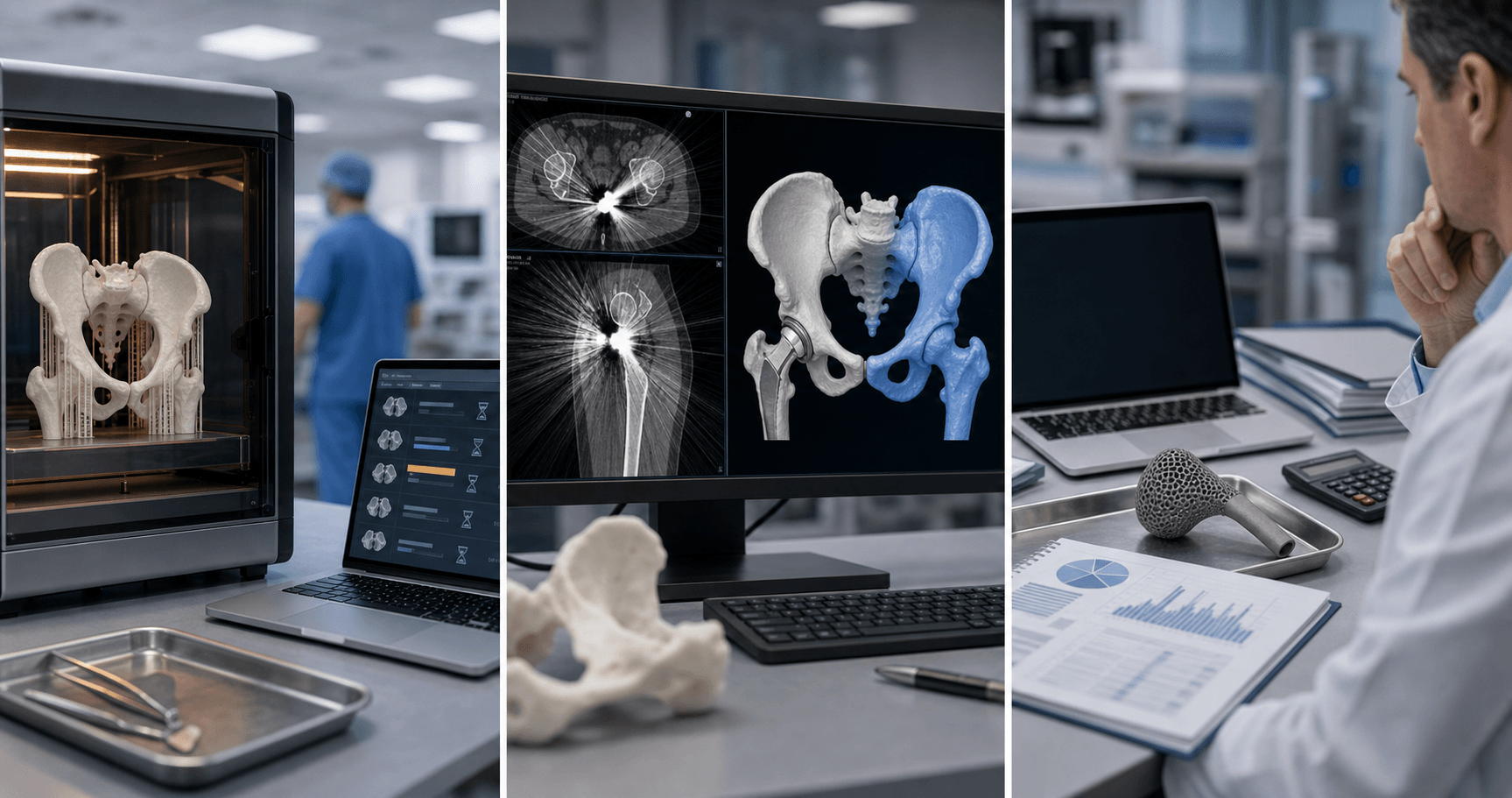
Point-of-care printing. Hospital-based printing allows rapid turnaround and lower costs for anatomical models, and models and guides are increasingly printed in-house. It requires significant infrastructure and expertise, and the in-hospital quality-management burden is high. For implantable devices, regulatory requirements generally necessitate partnership with certified manufacturers.
Choosing the Right Technology
Examiners often probe whether a candidate can select the appropriate technology rather than reach for a 3D print by reflex. Printing competes with these alternatives for the same clinical problems:
- 3D-printed model/guide
- Yes
- On-screen virtual planning
- No
- Intra-op CT navigation
- No
- Robotic assistance
- No
- 3D-printed model/guide
- Yes
- On-screen virtual planning
- No
- Intra-op CT navigation
- No
- Robotic assistance
- No
- 3D-printed model/guide
- Low (fixed at print)
- On-screen virtual planning
- n/a (planning only)
- Intra-op CT navigation
- High
- Robotic assistance
- High
- 3D-printed model/guide
- No
- On-screen virtual planning
- No
- Intra-op CT navigation
- Yes
- Robotic assistance
- Yes
- 3D-printed model/guide
- Days to weeks
- On-screen virtual planning
- Hours
- Intra-op CT navigation
- None
- Robotic assistance
- None
- 3D-printed model/guide
- Low to moderate
- On-screen virtual planning
- Low
- Intra-op CT navigation
- High
- Robotic assistance
- Very high
- 3D-printed model/guide
- Complex articular/pelvic trauma, deformity, tumour
- On-screen virtual planning
- Rapid templating, teaching
- Intra-op CT navigation
- Pedicle screws, tumour margins
- Robotic assistance
- Arthroplasty alignment
The decision rule. Print when a physical model or a custom cut or drill trajectory genuinely changes the operative plan and there is time to manufacture. For routine arthroplasty alignment, navigation or robotics outperform a static guide because they allow intraoperative correction. For most standard cases, no advanced technology is needed at all.
When a printed guide helps. A guide is a one-shot pre-operative plan with no intraoperative feedback: where the plan may need to change on the table, navigation adapts and a guide does not. It earns its place where the unaided hand has a real error rate to remove, and where accuracy is itself the outcome, as with a pedicle screw, whose breach is the complication. The evidence section reconciles the two Level I meta-analyses on exactly these two conditions.
Guidelines, Registries & Global Practice
- Framework
- Guidance on technical considerations for additively manufactured devices; point-of-care framework
- Practical implication
- Anatomical models and guides have clear pathways; patient-matched implants need validated processes
- Framework
- Custom-made device provisions under MDR 2017/745; notified-body oversight for higher-risk implants
- Practical implication
- Documentation and conformity assessment scale with device risk class
- Framework
- Quality management system for medical devices
- Practical implication
- Required for any site manufacturing implantable or patient-contacting printed devices
- Framework
- Education and consensus on computer-assisted and patient-specific planning
- Practical implication
- Endorse case selection over routine use; emphasise verification against source imaging
- Framework
- Appropriateness and quality criteria for clinical 3D printing in radiology
- Practical implication
- Standardise indications, segmentation QA, and reporting for point-of-care labs
Related pages: CT Imaging Principles governs the input that determines everything downstream - sub-millimetre slices, bone algorithm, and the artefact from existing metalwork that segmentation cannot recover from; MRI Imaging Principles is the alternative when soft tissue or cartilage must be in the model. Robotic and Navigated Arthroplasty and Navigation and Robotics in Spine Surgery are the competing guidance technologies, and the comparison matters: a printed guide is a one-shot preoperative plan with no intraoperative feedback, while navigation adapts - which is why the pedicle-screw meta-analysis carded here compares templates with freehand rather than with navigation. Apply the same two questions to those pages that this one applies to printing. TKA Alignment Options and TKA Alignment Philosophies explain why alignment accuracy in the knee is a surrogate rather than an outcome, which is the reason patient-specific instrumentation failed there, and The Painful Total Knee Replacement shows what actually drives dissatisfaction. On the applications side, Acetabular Fractures and Both-Column Acetabular Fractures are where printed models have the best trauma evidence, Adolescent Idiopathic Scoliosis is the deformity in which the drill-guide meta-analysis was performed, and Custom Triflange Acetabular Components with Megaprosthesis in Non-Oncologic Salvage and Limb Salvage Surgery Principles are the reconstructions in which a custom printed implant is genuinely the only option. Titanium Alloys and Implant Fracture Biomechanics cover the material and the fatigue behaviour of a printed porous lattice, and Gene Therapy and Tissue Engineering carries the scaffold and bioprinting application - the fourth category, and still the least clinically realised of the four.
Controversies and Areas of Uncertainty
Do 3D models help complex trauma? The evidence is mostly small single-centre series with few multicentre RCTs, and benefit to outcome, as opposed to process, is less proven.
Custom tumour and revision implants. They allow reconstruction that is otherwise impossible, but long-term survivorship data are immature, and failure modes and registry capture are incomplete.
Clinical Decision Scenarios
Practise clinical reasoning and management decisions out loud
“You are planning surgery for a complex acetabular fracture. How might 3D printing assist your pre-operative planning?”
“A patient requires resection of a pelvic chondrosarcoma with reconstruction. How can 3D printing technology assist?”
“You are considering patient-specific instruments (PSI) for a complex total knee replacement in a patient with severe extra-articular deformity from a malunited tibial fracture.”
Workflow
- CT acquisition (less than 1mm slices)
- DICOM to segmentation software
- Generate STL file
- Print and post-process
- Sterilise if for OR use
Applications
- Anatomical models (planning, education)
- PSI (cutting guides, drill guides)
- Custom implants (tumour, revision)
- Pre-contoured plates
Imaging Requirements
- CT preferred for bone
- Slice thickness less than 1mm
- MARS protocol if metal present
- Include relevant anatomy margins
Limitations
- Time (days to weeks)
- Cost (equipment, materials)
- Regulatory for implants
- Requires expertise
Evidence Base
Landmark and Supporting Studies
The efficacy and safety of patient-specific instrumentation in primary total knee replacement: a systematic review and meta-analysis
Comparison of 3D-printed Navigation Template-assisted Pedicle Screws versus Freehand Screws for Scoliosis in Children and Adolescents: A Systematic Review and Meta-analysis
Key Points
- Trauma planning: Comparative evidence supports reduced operative time, blood loss, and fluoroscopy with pre-operative 3D models in complex acetabular fractures.
- Deformity guides: Meta-analytic Level I evidence shows 3D-printed drill guides improve pedicle screw accuracy and lower radiation exposure.
- PSI in routine TKA: High-quality Level I evidence shows no clinically relevant outcome benefit — value is confined to selected, atypical anatomy.
- Custom implants: Geometry and stiffness matching are real advantages, offset by cost, multi-week lead time, and loss of intraoperative flexibility.
Reconciling the two Level I findings - the question an examiner will ask. This page carries two meta-analyses of the same technology reaching opposite conclusions: 3D-printed drill guides clearly improve pedicle screw accuracy in paediatric scoliosis (OR 2.96), while patient-specific instrumentation confers no clinically relevant benefit in routine primary TKA across 43 randomised trials. The technology did not change; the task did. A patient-specific guide helps only where BOTH conditions hold.
- The unaided task must be unreliable. Freehand pedicle screw placement in a rotated, dysplastic adolescent spine has a real and consequential error rate. Conventional TKA instrumentation, by contrast, already delivers acceptable alignment in the large majority of routine knees - there is little error left for a guide to remove.
- The accuracy gained must BE the outcome, not a surrogate for it. A malpositioned pedicle screw is itself the complication - breach, neurological injury, revision. Coronal alignment in TKA is a surrogate: the patient-reported result is dominated by soft-tissue balance, rotational positioning and expectation, so tightening alignment by a degree or two changes a number without changing a knee.
Apply the same two questions to any new planning or guidance technology - navigation, robotics, augmented reality. Where the unaided task is already reliable, or where the thing being made more accurate is only a surrogate, the technology will measure better and the patient will not notice.