Blood-Filled Cavities | Fluid-Fluid Levels | USP6 Gene | Curettage + Adjuvant
- Fluid-fluid levels on MRI are the diagnostic hallmark (but not pathognomonic)
- USP6 gene rearrangement in 70% of primary ABC confirms diagnosis
- Eccentric expansile lytic lesion with soap-bubble appearance on X-ray
- 30% are secondary - always exclude underlying primary tumour (GCT, chondroblastoma)
- Not a true cyst - blood-filled spaces separated by fibrous septa
- “Fluid-fluid levels also seen in GCT, telangiectatic osteosarcoma - not specific
- “Spine ABC can present with neurological deficit requiring urgent decompression
- “Denosumab emerging as effective non-surgical treatment option
- “Recurrence usually within first 2 years after surgery
Overview and Epidemiology
Aneurysmal bone cyst (ABC) is a benign, locally aggressive bone lesion made of blood-filled cavities separated by fibrous septa that contain fibroblasts and osteoclast-like giant cells. Despite the name it is not a true cyst: there is no epithelial lining.
Who. Three quarters of patients are under 20, with the peak between 10 and 20 years. The lesion is rare under 5 and over 50.
Where. Long-bone metaphyses account for half of cases:
- Long bones - 50%. Metaphyseal and eccentric; femur, tibia and humerus most often
- Spine - 15-20%. Posterior elements, with the neurological risk that follows
- Pelvis - 10%. Often large at presentation; embolisation is useful here
- Flat bones - 10%. Scapula, ribs, clavicle
- Small bones - 10%. Hands and feet; talus and calcaneus
Primary or secondary. About 70% arise de novo and carry the USP6 rearrangement. The remaining 30% are conventionally quoted as arising within a pre-existing bone lesion, and it is that lesion which then needs treating. Read the 30% as a pathology-referral proportion rather than a surgical one: in Mankin's 150 consecutive patients only one lesion was considered secondary. The clinical instruction does not depend on the percentage, and solid areas are biopsied to exclude malignancy whatever the figure.
Pathophysiology and Genetics
The USP6 rearrangement. Understanding of ABC was transformed by the discovery that primary lesions carry a rearrangement of the USP6 (Tre2) gene on chromosome 17p13, found in 36 of 52 primary ABC (69%, quoted as 70%). The commonest fusion partner is CDH11 (cadherin-11), through t(16;17)(q22;p13): the highly active, bone-restricted CDH11 promoter is juxtaposed to the USP6 coding sequence and drives its over-expression, which leads to increased MMP production and osteoclast activation.
Which cell is neoplastic. The rearrangement is confined to the spindle (stromal) cells and absent from the giant cells. That identifies the stromal cell as the neoplastic one and confirms ABC as a true neoplasm, not a reactive process.
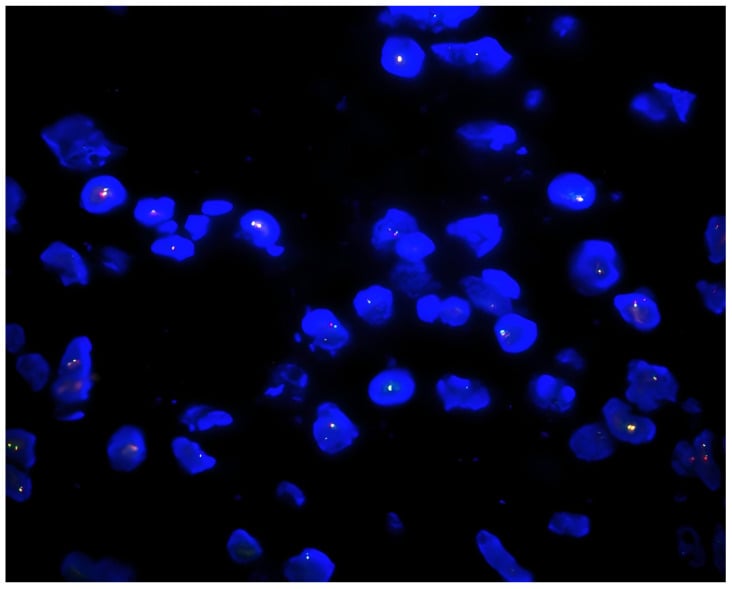
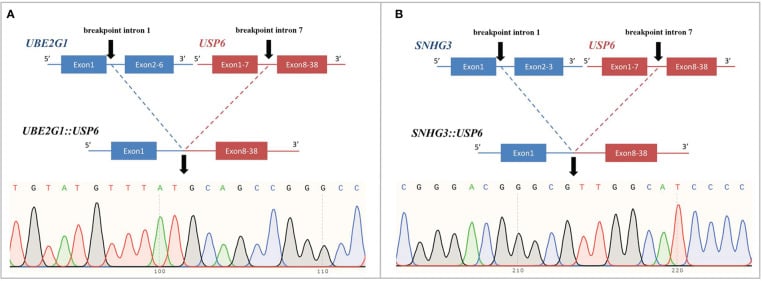
USP6 rearrangement was absent in all 17 secondary ABC tested (arising in giant cell tumour, chondroblastoma, osteoblastoma and fibrous dysplasia), so a positive result is powerful evidence of primary ABC. But roughly 30% of primary ABC are USP6-negative, so a negative result does not reclassify the lesion as secondary and above all does not exclude a malignancy mimicking ABC. The lesion that must still be excluded on histology, by cytological atypia and malignant osteoid, is telangiectatic osteosarcoma, and no molecular test substitutes for that assessment.
Secondary ABC arises within a pre-existing bone lesion and carries no USP6 rearrangement. The precursors:
- Giant cell tumour (most common)
- Chondroblastoma
- Osteoblastoma
- Fibrous dysplasia
- Osteosarcoma, above all telangiectatic osteosarcoma, which must be excluded
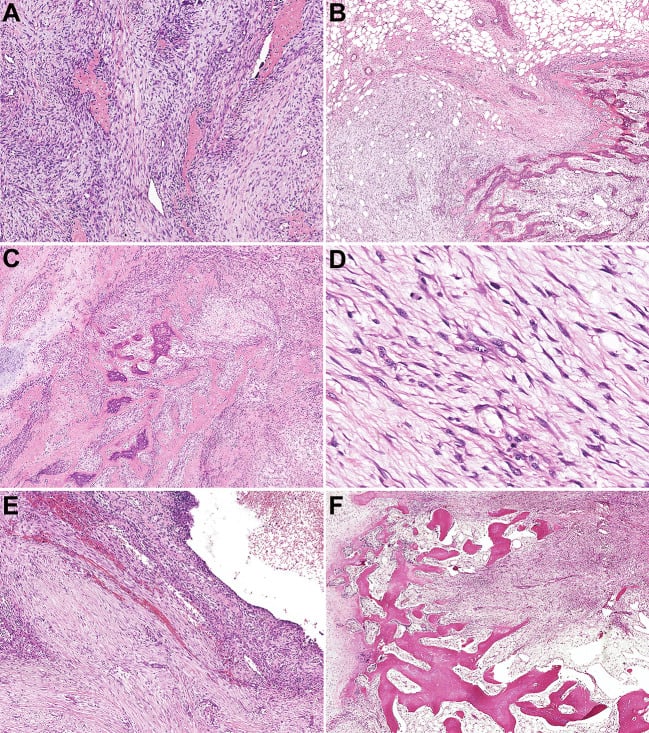
Histology. Blood-filled cavities without an endothelial lining, separated by fibrous septa of spindle-shaped fibroblasts, osteoclast-type giant cells, reactive woven bone and haemosiderin. Blue reticulated chondroid material, a basophilic calcified matrix, is characteristic. There is no cytological atypia; atypia is the finding that points to malignancy.
Classification
By morphological pattern. The solid variant is the difficult one for the pathologist: it must be distinguished from giant cell reparative granuloma and low-grade malignancy.
- Description
- Multiple blood-filled cystic cavities with septa
- Clinical significance
- Most common presentation
- Description
- Predominantly solid with minimal cysts
- Clinical significance
- Higher recurrence, needs careful pathology
- Description
- Combination of solid and cystic areas
- Clinical significance
- Evaluate solid areas for malignancy
By radiological stage. Enneking's stages run from a contained lesion to a destructive one:
- Stage 1 (latent) - small, well-contained lesion
- Stage 2 (active) - progressive growth, thin cortex
- Stage 3 (aggressive) - cortical destruction, soft-tissue extension
Clinical Presentation
Pain. Local pain is the presenting complaint in 80%. It comes on gradually, progresses and may worsen with activity; night pain is uncommon, unlike malignancy.
Swelling. A visible or palpable mass, which may be warm because the lesion is vascular. Rapid enlargement can occur.
Pathological fracture. Roughly 8-12% present with a fracture through the thinned, expanded cortex: about 8% in a systematic review of the literature (PMID 38731012) and 11.6% of 258 consecutive primary ABCs (PMID 40640436). It may be the presenting complaint.
The spinal lesion. Posterior elements are most commonly affected, and neurological symptoms are reported in about half of paediatric spinal ABC: lower-limb weakness in 8 of 17 (47%) in a 20-year children's-hospital series, against pain in 16 of 17 (94%) (PMID 38252929). Radiculopathy or myelopathy may require urgent decompression. Spinal stability was compromised in 15 of 17 (88%), requiring instrumented fusion, so plan for stabilisation rather than curettage alone.
Examination. Local tenderness over the lesion, swelling or mass effect, reduced range of motion if the lesion lies near a joint, and a neurological deficit with spinal lesions.
Red flags. Features that should make you doubt a benign diagnosis:
- Systemic symptoms (fever, weight loss)
- Rapid progression
- Severe night pain
- Very young or very old patient
Investigations
What you see. An eccentric, expansile lytic lesion, usually metaphyseal in a long bone, with a soap-bubble or honeycomb appearance from the internal septations and a pencil-thin periosteal shell, the eggshell cortex of a blown-out bone. The pattern is geographic with a narrow zone of transition and a trabeculated internal architecture, and there is no periosteal reaction unless the lesion has fractured.
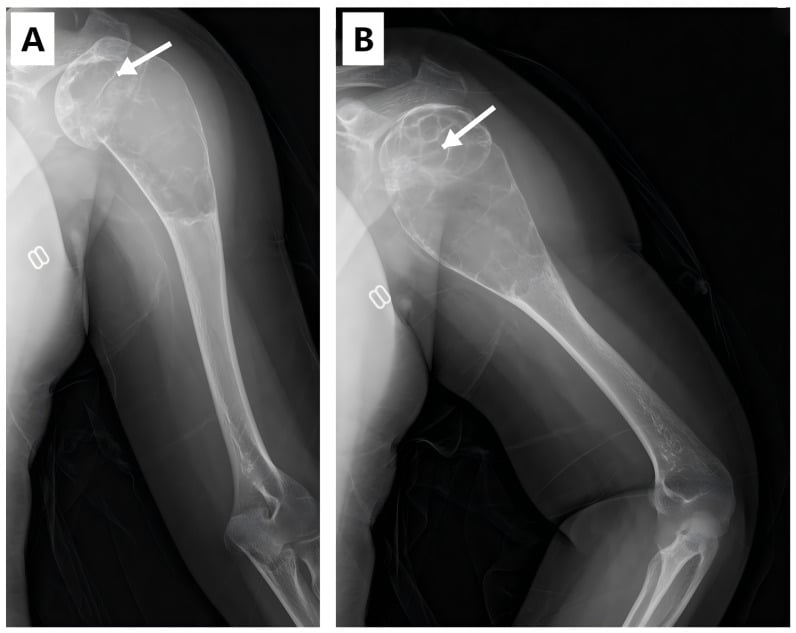
Aggressive features. Cortical breach or soft-tissue extension require careful evaluation, because they may indicate a secondary ABC within a malignant lesion. Plain radiographs are the first-line imaging but cannot reliably distinguish ABC from other lesions.
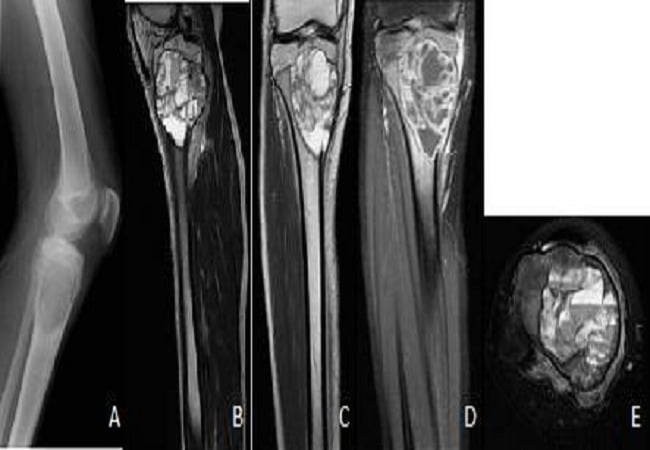
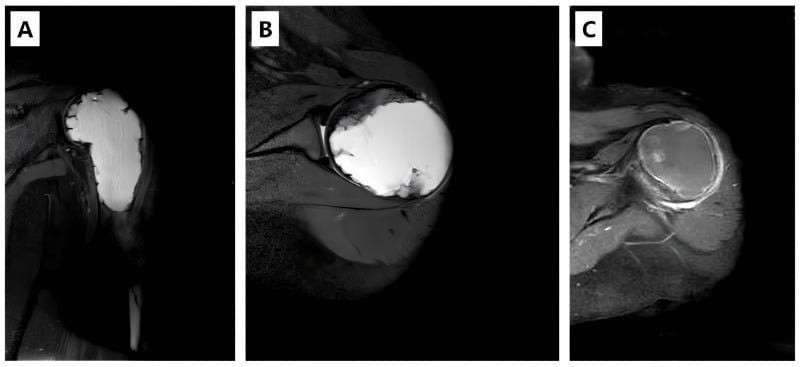
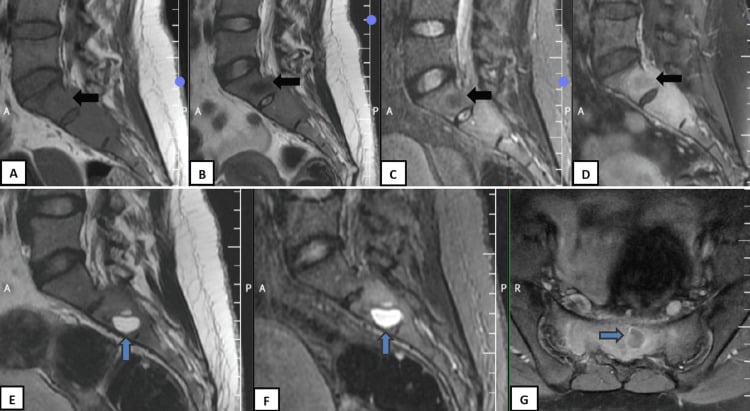
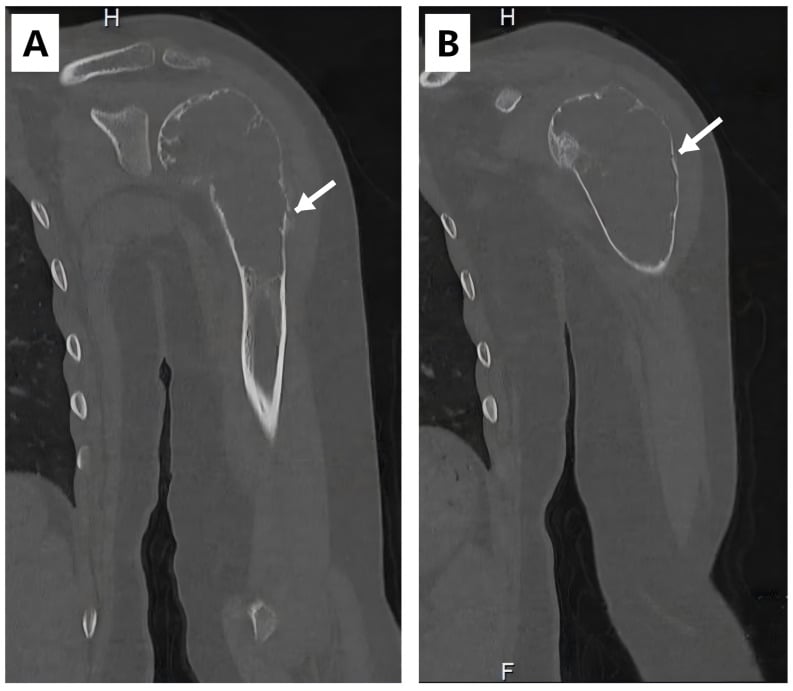
Biopsy. Required for diagnostic confirmation, to rule out malignancy (especially a secondary ABC) and before definitive treatment. A CT-guided core needle biopsy is preferred, and it must sample the solid areas rather than purely cystic regions. Send tissue for histology and for cytogenetics: the USP6 rearrangement is detectable by FISH or RT-PCR. The report should confirm ABC histology and exclude telangiectatic osteosarcoma by the absence of cellular atypia; a USP6 rearrangement confirms a primary ABC.
Management
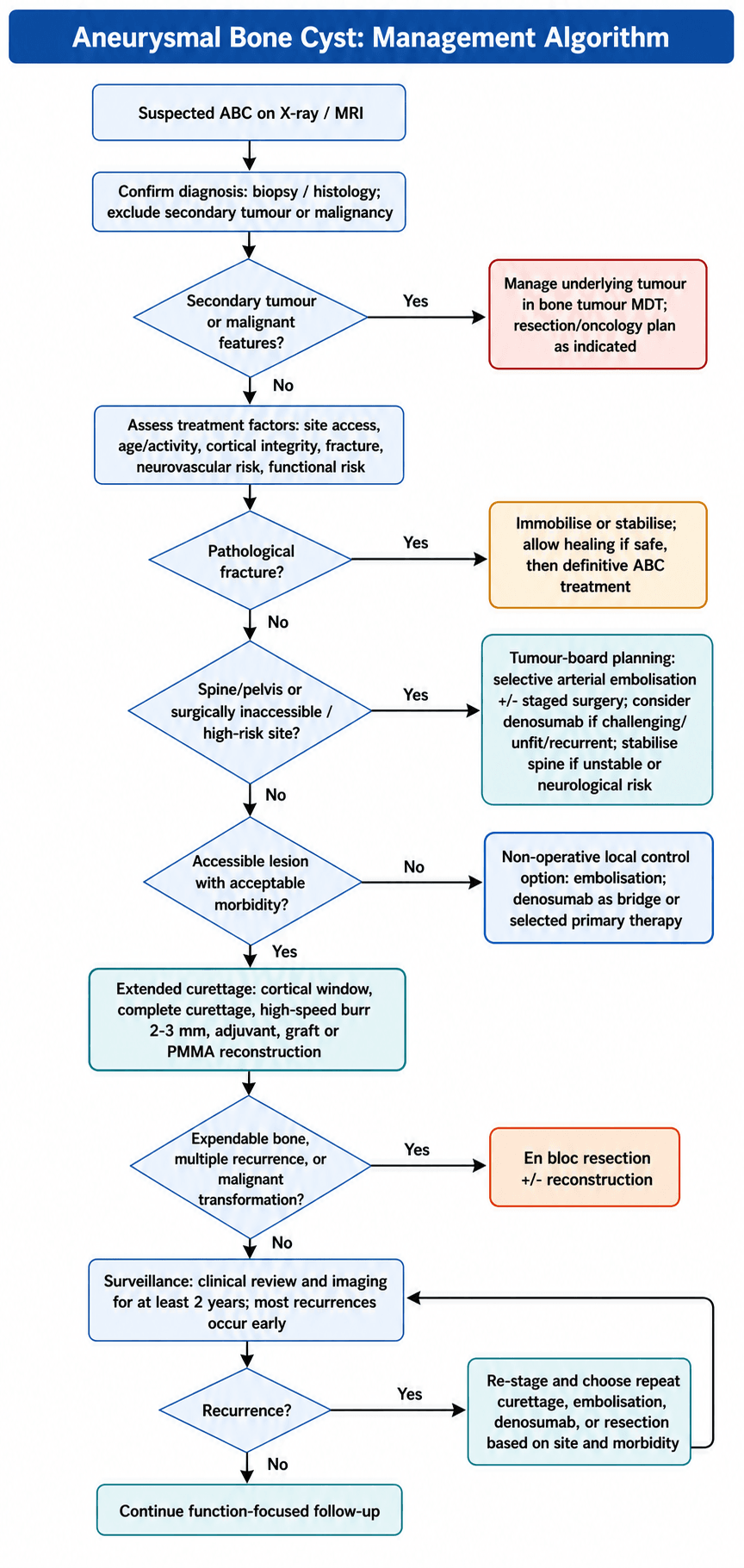
The decision. Biopsy comes first, to confirm ABC and exclude a secondary lesion or a malignant mimic. What follows depends on:
- Location and accessibility
- Patient age and activity level
- Presence of a pathological fracture
- Secondary versus primary ABC
- Risk of functional impairment
The gold standard for an accessible lesion. Extended intralesional curettage: open a cortical window, clear the cyst, extend the margin with a high-speed burr, apply a local adjuvant and reconstruct the defect with bone graft, PMMA cement or both. It preserves bone stock and function while achieving local control. The steps, the adjuvant options and the reconstruction choices are set out under Surgical Technique.
What to expect. Local recurrence after curettage is about 20% overall (Mankin's 150-patient series, PMID 16170183), and the roughly 10-30% range quoted in the literature is largely explained by whether a local adjuvant was used. In 258 primary ABCs, adding a high-speed burr and/or electrocautery to curettage cut recurrence from 31.97% to 11.03% (p less than 0.001; PMID 40640436), which makes the adjuvant the biggest modifiable factor. Most recurrences declare within 2 years.
Spinal ABC. The options are embolisation followed by surgery, curettage with stabilisation, and radiation, which is controversial and reserved for inaccessible lesions. Denosumab is showing promise.
The pathological fracture. Immobilise or splint first and, if possible, allow the fracture to heal before definitive treatment; curettage with internal fixation may proceed instead. A fracture at presentation raises the recurrence rate (Complications and Prognosis).
Surgical Technique
Planning. Review the imaging for extent and cortical integrity, consider pre-operative embolisation for a large or vascular lesion, and decide the reconstruction (bone graft versus cement).
Exposure. Position for adequate access and use the standard approach to the affected bone, identifying and protecting the neurovascular structures.
The cortical window. Make it large enough for adequate visualisation, usually through the area of maximal cortical thinning, and preserve the cortical rim where possible for stability.
Curettage. Remove all the cyst contents systematically: the septa and lining completely, and every corner and recess.
Be prepared for significant bleeding and have blood products available for large lesions. Sample any suspicious solid tissue for pathology.
Complications and Prognosis
Local recurrence. The complication that matters most. Beyond the adjuvant, the 258-patient series (PMID 40640436) puts numbers on the other risk factors:
- Age under 5 years: 34.4% versus 19.0% (p = 0.046). The discriminator is very young age, not simply an open physis
- Pathological fracture at presentation: 40.0% versus 18.4% (p = 0.006)
- No adjuvant use
- Inadequate surgical margins or incomplete curettage
- Solid ABC variant
When it recurs. Usually within the first 2 years: mean time to first recurrence was 24.2 months, but the median disease-free survival was only 10 months, so surveillance must start early. Soft-tissue oedema and fluid-fluid levels predict a faster recurrence (median 5 and 6 months respectively, against 12 months without).
Managing recurrence. Re-curettage is usually effective. Resection may be considered after multiple recurrences, and embolisation or denosumab for difficult locations.
Treatment-related complications. The operation carries its own risks:
- Pathological fracture, intra- or post-operative
- Infection
- Joint stiffness with periarticular lesions, and osteoarthritis later
- Growth disturbance in children, the risk of a physeal-crossing lesion
- Neurological injury in spinal ABC
Malignant transformation. Extremely rare, usually to a secondary osteosarcoma, and often after radiation therapy.
Prognosis. ABC is benign, with zero metastatic potential and no mortality from the disease. Local control is achieved in most cases, 70-90% with adjuvant therapy, and 10-year disease-free survival is greater than 90%. Most patients return to full activity with minimal long-term disability; functional outcomes are excellent, with MSTS scores of 85-95%, and limb salvage is greater than 99%.
Observation is rarely appropriate. A small asymptomatic lesion may stabilise, but the risk of progression and pathological fracture means close monitoring is required.
Postoperative Care
The first two weeks. Standard wound care, watching for infection and haematoma, with drains removed once output is minimal. Analgesia is multimodal, with ice and elevation for swelling.
Mobility. Weight-bearing status depends on the location and size of the lesion, the reconstruction (cement or graft) and whether internal fixation was used. In the upper limb, a sling for comfort; in the lower limb, protected weight-bearing with crutches.
VTE prophylaxis. Mechanical prophylaxis, with chemical prophylaxis according to risk assessment.
Guidelines, Registries & Global Practice
Global Epidemiology
- Incidence: Approximately 0.14 per 100,000 population per year (roughly 1.4 per million); ABC accounts for around 1-6% of primary bone tumours
- Age: Peak 10-20 years; about 75-80% occur before age 20, consistent across populations
- Sex: Slight female predominance in most series
- Site distribution: Long-bone metaphysis (most common), spine and pelvis next; this pattern is stable worldwide
Side-by-Side Guidance and Consensus
- Position relevant to ABC
- Defines ABC as a benign USP6-rearranged neoplasm; recognises primary vs secondary and solid variant
- Position relevant to ABC
- Tissue diagnosis before definitive treatment; intralesional surgery (extended curettage + adjuvant) for accessible lesions
- Position relevant to ABC
- Suspected primary bone tumours referred to a specialist sarcoma/bone-tumour centre before biopsy
- Position relevant to ABC
- Endorses minimally invasive options (sclerotherapy, embolisation, denosumab) alongside curettage, especially in spine/pelvis
- Position relevant to ABC
- Multidisciplinary planning and centralised biopsy for axial and pelvic lesions
Where guidelines genuinely differ, the divergence is mainly in first-line modality for accessible lesions (curettage in most US/UK practice versus greater early use of sclerotherapy/embolisation in several European and high-volume Asian centres) rather than in oncological principles.
Registry and Trial Evidence
- No implant joint-registry (NJR/AJRR/AOANJRR) directly tracks ABC because reconstruction is usually graft or cement, not arthroplasty
- Evidence is driven by bone-tumour centre series and the single randomised trial comparing sclerotherapy with curettage (Varshney 2010)
- Multi-institutional sarcoma networks (e.g. EMSOS, regional bone-tumour registries) provide the pooled outcome data underpinning recurrence estimates
High- vs Limited-Resource Practice
- Typical pathway
- MRI + image-guided biopsy, USP6 FISH, MDT planning, choice of curettage, embolisation, sclerotherapy or denosumab
- Typical pathway
- Reliance on plain films and clinical diagnosis; percutaneous sclerotherapy attractive as low-cost, repeatable and theatre-light; molecular testing and denosumab often unavailable
Suspected primary bone tumours, and all spinal/pelvic or recurrent ABC, should be referred to a specialist bone-tumour/sarcoma centre before biopsy to avoid compromising later surgery.
Radiology, pathology, interventional radiology and orthopaedic oncology should jointly plan management, particularly for axial lesions and minimally invasive options.
Controversies and Areas of Uncertainty
- Optimal first-line modality: extended curettage remains standard, but the only randomised trial showed sclerotherapy with comparable healing, fewer complications and lower hospital burden. Practice varies by region and lesion site rather than by high-level consensus.
- Denosumab: effective for inaccessible or recurrent ABC, but the evidence is case-series level; the concerns are the rebound after cessation, treatment duration and the open physis, and it is not first-line for accessible lesions.
- Adjuvant choice: phenol, cryotherapy, argon beam and high-speed burring all reduce recurrence, but no adjuvant has been shown superior in randomised comparison.
- Solid ABC variant: its true recurrence risk is debated.
- Radiotherapy: historically used for inoperable lesions but largely abandoned because of the small but real risk of post-radiation sarcoma.
- Spinal ABC stabilisation: timing and extent of instrumentation versus embolisation-led management remain individualised, with no trial-level guidance.
MCQ Practice Points
Q: What is the characteristic MRI finding in aneurysmal bone cyst? A: Fluid-fluid levels - representing layered blood products of different ages within cystic spaces. Present in 70-90% of ABCs. However, this finding is NOT pathognomonic - also seen in GCT (14%), telangiectatic osteosarcoma, and chondroblastoma.
Q: What genetic marker confirms the diagnosis of primary ABC? A: USP6 gene rearrangement - present in 70% of primary ABC. CDH11-USP6 is the most common fusion. This confirms ABC is a true neoplasm. Importantly, USP6 is ABSENT in secondary ABC and other lesions with fluid-fluid levels.
Q: What is the typical age distribution of ABC? A: 75% occur in patients under 20 years with peak incidence at 10-20 years. Long bone metaphysis is the most common location (50%), followed by spine (20%) and pelvis (10%).
Q: What percentage of ABC are secondary and what lesions are they associated with? A: 30% are secondary - arising within pre-existing lesions. Common precursors include: giant cell tumour (most common), chondroblastoma, osteoblastoma, fibrous dysplasia, and rarely telangiectatic osteosarcoma. Always biopsy solid areas to exclude malignancy.
Q: What is the gold standard treatment for accessible ABC and expected recurrence rate? A: Extended curettage with a local adjuvant (high-speed burr, electrocautery, phenol, cryotherapy or argon beam) is the gold standard. Reconstruct with bone graft, PMMA or a combination. Quote the adjuvant effect rather than a bare range: recurrence is about 20% overall, and in 258 primary ABCs it was 11.03% when a burr and/or cautery was added against 31.97% when it was not (p less than 0.001).
Clinical Decision Scenarios
Practise clinical reasoning and management decisions out loud
“A 14-year-old presents with a 3-month history of proximal tibial pain. X-ray shows an eccentric expansile lytic lesion with soap-bubble appearance. MRI demonstrates fluid-fluid levels. What is your diagnosis and how would you manage this patient?”
“Tell me about the pathological features of aneurysmal bone cyst and how you distinguish it from other lesions.”
“A 25-year-old presents with back pain and leg weakness. MRI shows an expansile lesion of L3 posterior elements with fluid-fluid levels causing neural compression. How would you manage this?”
“What is the role of denosumab in managing aneurysmal bone cyst?”
Definition & Epidemiology
- Benign expansile lesion with blood-filled cavities
- Peak age 10-20 years, 75% under 20
- Primary (70%, USP6+) vs Secondary (30%, in other lesion)
- Long bone metaphysis, then spine, then pelvis
Imaging Features
- X-ray: Eccentric, expansile, soap-bubble, pencil-thin cortex
- MRI: Fluid-fluid levels (70-90%), peripheral low signal rim
- CT: Cortical detail, septations, surgical planning
- Fluid-fluid levels NOT pathognomonic - also GCT, telangiectatic OS
Pathology
- Blood-filled cavities (not true cysts - no epithelial lining)
- Fibrous septa with giant cells, fibroblasts, reactive bone
- Blue reticulated chondroid material characteristic
- USP6 gene rearrangement in 70% of primary ABC
Management
- Extended curettage + adjuvant (phenol, cryo, burr)
- Reconstruct with bone graft, cement, or combination
- Embolisation for spine/pelvis or pre-operatively
- Denosumab emerging for difficult cases
Prognosis & Recurrence
- Local recurrence ~20% - and the adjuvant is the modifiable factor: 11% with burr/cautery, 32% without
- Higher recurrence under age 5 (34% vs 19%) and after pathological fracture (40% vs 18%)
- Zero metastatic potential
- Re-curettage effective for recurrence
Exam Pearls
- Always exclude secondary ABC (biopsy solid areas)
- USP6 testing differentiates from other lesions
- Spinal ABC may need urgent decompression
- Denosumab - know mechanism and indications
Evidence Base
USP6/CDH11 Rearrangement Defines Primary ABC
- USP6 and/or CDH11 rearrangement in 36 of 52 primary ABC (69%)
- Rearrangement restricted to spindle (stromal) cells, absent in giant cells
- Absent in all 17 secondary ABC (GCT, chondroblastoma, osteoblastoma, fibrous dysplasia)
- Confirms primary ABC is a true clonal neoplasm, not a reactive process
CDH11-USP6 Fusion Oncogene Mechanism
- t(16;17)(q22;p13) juxtaposes the CDH11 promoter to the USP6 coding sequence
- The highly active bone-restricted CDH11 promoter drives USP6 over-expression
- Other ABC carry CDH11 or USP6 rearrangements via alternate mechanisms
- Established the oncogenic basis of ABC as a USP6-driven neoplasm
ABC Natural History and Curettage Outcomes (n=150)
- 150 ABC treated over 20 years; tibia, femur, pelvis, humerus, spine predominate
- Primary curettage with allograft/PMMA or autograft was standard
- Local recurrence rate 20%, consistent with other major series
- Lesions remain difficult to distinguish radiologically from other entities
Unicameral and Aneurysmal Bone Cysts (radiographic classification, n=198 ABC)
- Proposed a radiographic staging system for ABC from a series of 198 cases
- Treatment of choice is surgical (curettage +/- phenol/cryosurgery, or resection)
- Surgical type selected by radiographic stage and growth rate of the cyst
- Radiotherapy reserved only for inoperable lesions
Sclerotherapy vs Curettage (Randomised Trial, n=94)
- 94 patients randomised to polidocanol sclerotherapy vs extended curettage + graft
- Healing 93.3% (sclerotherapy) versus 84.8% (curettage) at mean 4.4 years
- Fewer major complications and better function with sclerotherapy
- Similar recurrence rates between groups in this preliminary study
Selective Arterial Embolisation with NBCA (n=102)
- 102 patients referred; embolisation FEASIBLE in only 88 (86.3%) - not feasible in 14 (13.6%) where feeding arteries could not be found or the artery of Adamkiewicz lay in the field. Mean follow-up seven years, no patient lost
- Complete healing in 72 of those 88 (81.8%) - after one embolisation in 50, two in 17 and three in 5
- Low complication rate (4.5%); not feasible in 13.6% (e.g. Adamkiewicz at risk)
Denosumab (RANKL Inhibition) in ABC
- Stromal cells express RANKL; giant/precursor cells express RANK in ABC
- RANKL expression comparable to giant cell tumour of bone
- Aggressive sacral ABC: tumour shrinkage and fracture healing after 3 months denosumab
- Function restored at 6 months; treatment well tolerated
What Actually Drives Recurrence: 258 Primary ABCs
- 258 primary ABCs (secondary excluded) over 30 years, minimum 24 months follow-up; mean age 17.3 years, 67% under 18
- ADDING A HIGH-SPEED BURR AND/OR ELECTROCAUTERY TO CURETTAGE CUT RECURRENCE FROM 31.97% TO 11.03% (p less than 0.001) - the single largest modifiable factor identified
- Recurrence was higher in children under FIVE years (34.38% vs 19.03%, p = 0.046) and after pathological fracture (40.00% vs 18.42%, p = 0.006)
- Median disease-free survival was only 10 months; mean time to first recurrence 24.2 months
- Soft-tissue oedema (median 5 vs 12 months) and fluid-fluid levels (6 vs 12 months) predicted FASTER recurrence
- Pain was the presenting symptom in 80%; 11.63% presented with a pathological fracture and 5% were incidental
Pathological Fracture in ABC: Systematic Review
- Pathological fracture occurs in about 8% of ABCs
- 37 articles, 140 patients pooled: 124 (88.6%) treated by curettage and 15 (10.7%) by en bloc resection
- 47% (70 patients) required synthesis with a plate, screw, nail or external fixator alongside the tumour operation
- Adjuvant treatments were used in only 8.6% of this pooled fracture population
- Complications affected 20.7% (29 patients)
- No standard guideline exists for managing the fractured ABC
Suggested Reading
Key References
-
Oliveira AM, Hsi BL, Weremowicz S, et al. USP6 (Tre2) fusion oncogenes in aneurysmal bone cyst. Cancer Res. 2004;64(6):1920-1923.
-
Oliveira AM, Perez-Atayde AR, Inwards CY, et al. USP6 and CDH11 oncogenes identify the neoplastic cell in primary aneurysmal bone cysts and are absent in so-called secondary aneurysmal bone cysts. Am J Pathol. 2004;165(5):1773-1780.
-
Campanacci M, Capanna R, Picci P. Unicameral and aneurysmal bone cysts. Clin Orthop Relat Res. 1986;(204):25-36.
-
Mankin HJ, Hornicek FJ, Ortiz-Cruz E, et al. Aneurysmal bone cyst: a review of 150 patients. J Clin Oncol. 2005;23(27):6756-6762.
-
Varshney MK, Rastogi S, Khan SA, et al. Is sclerotherapy better than intralesional excision for treating aneurysmal bone cysts? Clin Orthop Relat Res. 2010;468(6):1649-1659.
-
Rossi G, Mavrogenis AF, Facchini G, et al. How effective is embolization with N-2-butyl-cyanoacrylate for aneurysmal bone cysts? Int Orthop. 2017;41(8):1685-1692.
-
Pelle DW, Ringler JW, Peacock JD, et al. Targeting receptor-activator of nuclear kappaB ligand in aneurysmal bone cysts: verification of target and therapeutic response. Transl Res. 2014;164(2):139-148.
-
De Cristofaro R, Biagini R, Boriani S, et al. Selective arterial embolization in the treatment of aneurysmal bone cyst and angioma of bone. Skeletal Radiol. 1992;21(8):523-527.
Suggested Reading
- WHO Classification of Tumours: Soft Tissue and Bone Tumours (5th Edition)
- Greenspan's Orthopedic Imaging
- Dahlin's Bone Tumors (6th Edition)