Rare Carpal Injury | Scaphocapitate Syndrome | High AVN Risk
- Rarest of common carpals to fracture - only 1-2% of carpal injuries
- Scaphocapitate syndrome is classic pattern - both bones fractured
- Proximal fragment rotates 180 degrees in scaphocapitate syndrome
- High AVN risk due to retrograde blood supply to proximal pole
- 50% have associated injuries - always examine entire carpus
- “Capitate is protected centrally - fracture implies significant force
- “Scaphocapitate syndrome = scaphoid waist + capitate neck fractures
- “Look for 180-degree rotation of proximal capitate fragment
- “AVN risk similar to scaphoid proximal pole fractures
Overview and Epidemiology
The carpus has a family of bones that die the same way, and the capitate belongs to it. Retrograde intraosseous supply entering distally means the PROXIMAL pole is the fragment at risk - the identical arrangement that makes a scaphoid proximal-pole fracture the one that goes on to nonunion, and that produces idiopathic necrosis of the scaphoid in Preiser disease and of the lunate in Kienböck disease. Reading them together is more useful than reading any of them alone.
And an isolated capitate fracture should make you doubt the word "isolated". The capitate sits in the middle of the carpus and is shielded by everything around it, so the energy needed to break it usually breaks something else too: the scaphoid, in scaphocapitate syndrome, or the whole greater arc, in a perilunate injury. The neighbouring carpal fractures with the same high-energy company are the hamate and the lunate.
What it is, and how often. A capitate fracture is a fracture of the largest carpal bone, lying centrally in the distal carpal row. It accounts for 1-2% of all carpal fractures, which places it among the least common carpal injuries, and the mechanism is high-energy axial loading with hyperextension. The patients are predominantly young adults, with a male predominance.
The company it keeps. Over 50% of capitate fractures occur with another carpal injury, so the assessment is of the whole carpus. The scaphoid waist is the most common association, giving scaphocapitate syndrome; beyond it come perilunate injury as part of the greater arc, fracture of the hamate, lunate or triquetrum, and ligamentous injury of the scapholunate and lunotriquetral ligaments.
When it really is isolated. Fewer than half are, and those tend to be body or avulsion fractures, with a better prognosis and often no need for surgery. At the other end, a capitate broken alongside several other carpal bones may need complex reconstruction.
Anatomy/Biomechanics
The shape, and the part that breaks. The capitate is the largest carpal bone and occupies the central position. Its head is proximal and rounded, carrying the smooth convexity that sits in the concavity of the lunate; the neck is the constricted waist and the usual fracture site; and the body is the larger distal portion, with a flat distal surface for the metacarpal bases.
What it articulates with. Its articular surfaces, with its size and central position, are what make the capitate critical to wrist function:
- Proximal, the head, with the lunate
- Radial, with the scaphoid
- Ulnar, with the hamate
- Distal, with the bases of the 2nd, 3rd and 4th metacarpals
Load and motion. As the keystone of the distal carpal row the capitate takes axial load from the 2nd and 3rd metacarpals and distributes it to the proximal row through the lunate, which is what makes it essential to wrist stability and motion. It moves as part of the distal row rather than independently, following the scaphoid and the lunate.
Why it is so rarely broken. It is recessed in the carpal concavity and surrounded by the other carpal bones, so significant force is required to fracture it.
The blood supply, and the trap inside it. The capitate has a retrograde blood supply similar to the scaphoid. Palmar (volar) vessels contribute the majority of its supply (Vander Grend, PMID 6386955) - a common exam trap, because the dorsal supply is often mis-remembered as the dominant one. Dorsal vessels enter through the dorsal non-articular surface and make a real but smaller contribution, and Vander Grend described three patterns of intraosseous supply, so the surface of dominance varies and a single arrangement should not be over-specified.
The point that actually causes necrosis. Whichever surface predominates, the proximal pole (head) receives its supply exclusively in a retrograde direction across the capitate waist, exactly analogous to the proximal scaphoid. No vessel enters the head independently, so a fracture at the neck or waist can devascularise the proximal pole regardless of which surface the parent vessel came from, and a displaced or rotated proximal fragment is more vulnerable still.
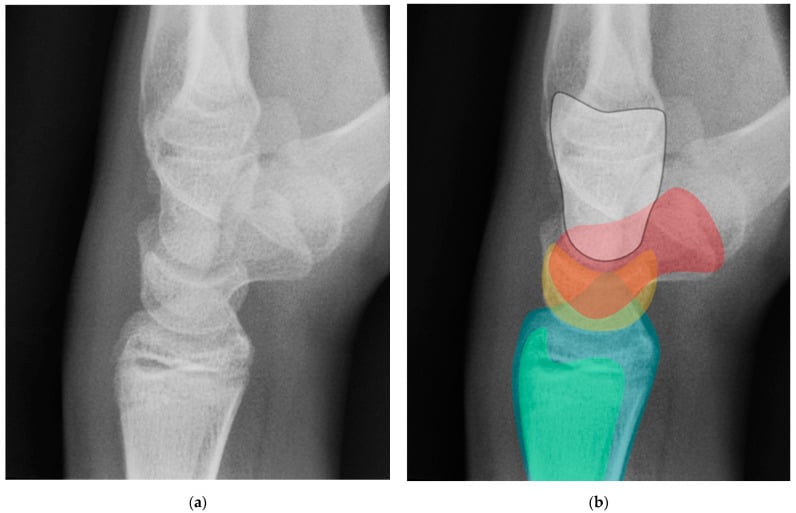
Classification Systems
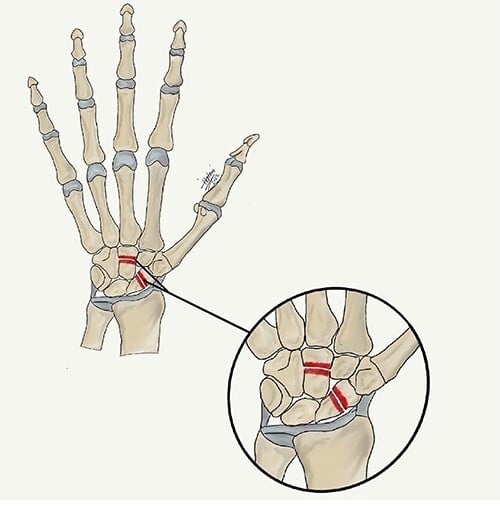
Capitate fractures are described by where the line runs and by what else is broken. Location determines the prognosis and the treatment; the company it keeps determines how much of the carpus the operation has to address.
Neck fractures are the most common, running through the waisted region, and are prone to displacement.
Body fractures run through the distal capitate and may be undisplaced.
Head (proximal pole) fractures are the least common pattern, isolated or alongside other injuries; the fragment involved is the one living on retrograde flow, so it is the fragment at risk of avascular necrosis, and it is fixed to preserve what supply it has.
Avulsion fractures are small fragments pulled from ligament insertions, usually of minimal clinical significance and treated conservatively unless large or symptomatic.
A different patient, a different history. Beyond the acute high-energy fracture, the capitate can fail under chronic repetitive load, typically in gymnasts and other athletes who weight-bear on the wrist or load it axially and repetitively, and occasionally in manual workers. The mechanism is repetitive dorsiflexion-loading rather than a single high-energy event.
How it presents. Gradual-onset, activity-related central dorsal wrist pain that settles with rest - quite different from the acute swollen wrist after trauma.
How it is found. Plain radiographs are usually normal; MRI (marrow oedema, a stress line) or CT makes the diagnosis. The same "plain films miss it" rule applies as for the acute fracture, so maintain suspicion.
What to do. Most respond to activity modification and immobilisation; persistent, displaced or high-risk lesions, or a frank stress fracture through the waist, may need screw fixation, given the same proximal-pole vascular vulnerability.
Exam point: a gymnast with insidious central dorsal wrist pain and normal X-rays is a capitate (or other carpal) stress fracture until MRI proves otherwise - do not wait for a radiographic line.
Clinical Assessment
The mechanism is the first clue. The energy required is the point of the history:
- High-energy trauma - motor vehicle accident, motorcycle crash, fall from height
- Sports injury - contact sports, gymnastics with axial load
- FOOSH - fall onto the outstretched hand with hyperextension
- Direct trauma - rare, given the protected position
What else to ask. The energy of the injury, since significant force is required; the position of the wrist at impact; symptoms suggesting other injuries; the immediate disability and swelling pattern; and hand dominance and occupation.
Inspection and palpation. Swelling sits over the central wrist and may be diffuse, less localised than with a scaphoid or triquetral injury, so compare with the other side. Capitate tenderness is difficult to isolate because the bone is deep: palpate through the axis of the 3rd metacarpal and over the dorsal central wrist, then palpate every other carpal bone in turn.
Movement and nerves. Range of motion is limited by pain; test flexion, extension and deviation against the contralateral side. Neurovascular function is usually preserved, and a baseline is documented.
The tests worth doing.
- Axial compression - load through the 3rd metacarpal; pain suggests capitate pathology
- Watson test - for associated scapholunate injury, which matters given how often the scaphoid is involved
- Systematic carpal examination - the rate of associated injury is high enough that every carpal bone is examined
- Finger cascade - to be sure there is no metacarpal malrotation; grip strength is limited by pain
Clinical examination is often non-specific, so a high index of suspicion after high-energy wrist trauma is what carries the diagnosis.
Differential diagnosis. Central dorsal wrist pain after trauma has several mimics. Because the capitate is hard to isolate clinically and is frequently missed on plain films, the differential drives the imaging strategy.
- Distinguishing features
- Central dorsal tenderness, pain on axial loading of the 3rd metacarpal, high-energy mechanism
- Key investigation
- CT (plain films frequently negative)
- Distinguishing features
- Anatomical snuffbox and scaphoid tubercle tenderness, pain on thumb axial load
- Key investigation
- Dedicated scaphoid views; MRI/CT if occult
- Distinguishing features
- Combined scaphoid and capitate signs after hyperextension; rotated proximal capitate fragment
- Key investigation
- CT showing both fractures and 180-degree fragment rotation
- Distinguishing features
- Gross swelling, deformity, median nerve symptoms, disrupted Gilula arcs
- Key investigation
- Lateral radiograph (capitolunate malalignment); CT
- Distinguishing features
- Dorsal SL tenderness, positive Watson (scaphoid shift) test, SL gap
- Key investigation
- Clenched-fist PA; dynamic/stress views; MRI
- Distinguishing features
- Diffuse wrist tenderness, deformity, more distal/radial focus
- Key investigation
- PA and lateral radiographs
- Distinguishing features
- Diffuse mild tenderness, full passive motion, low-energy mechanism
- Key investigation
- Diagnosis of exclusion after negative imaging
Why the capitate. As a Group I carpal bone, with a single dominant retrograde intraosseous vessel across the waist, the proximal pole is intrinsically vulnerable even without a fracture. Proposed contributors include repetitive microtrauma, steroids and the watershed anatomy.
How it presents. Insidious central dorsal wrist pain and stiffness with no clear injury, which is what distinguishes it from an acute fracture.
How it is diagnosed. Radiographs may be normal early; MRI shows the characteristic low T1 signal of osteonecrosis in an intact, non-fractured capitate, and CT assesses collapse.
How it is managed, on a stage-based approach mirroring Kienbock:
- Early, no collapse - rest and immobilisation, core decompression with or without bone grafting, or a vascularised bone graft
- Late, collapse or arthrosis - limited intercarpal fusion, proximal row carpectomy, or capitate-related salvage
Exam point: atraumatic central wrist pain with MRI low-T1 in an intact capitate = idiopathic capitate osteonecrosis - manage by Kienbock-style staging (unload/revascularise early, salvage once collapsed).
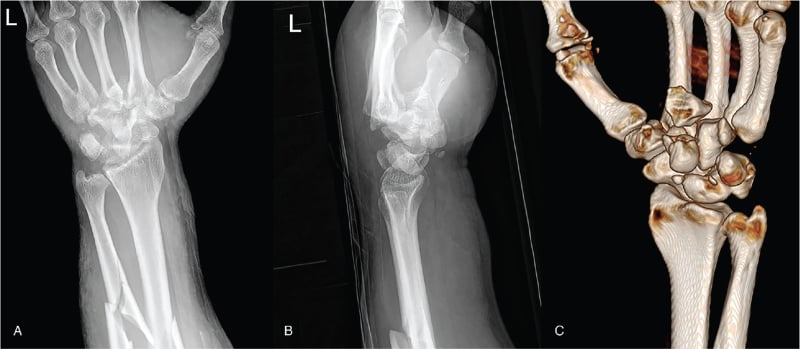
Investigations
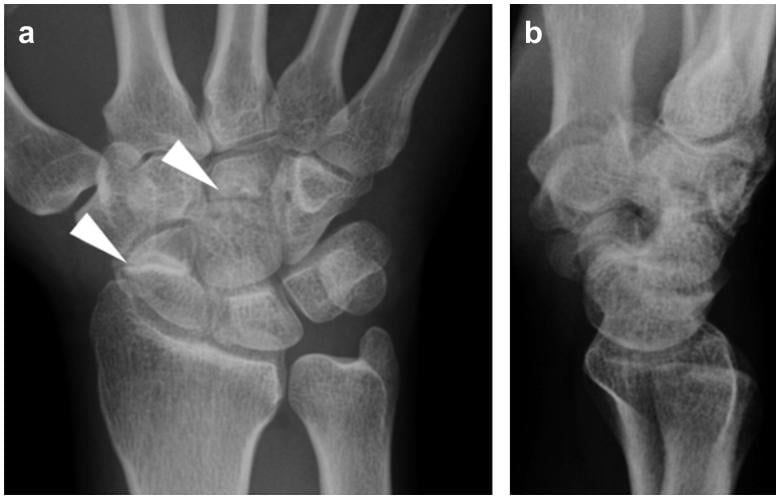
Radiographs first, and expect them to under-report. They are quick and available, so they are the screening test, but the overlapping carpal bones obscure the capitate, the fracture is often not visible on the initial films, and scaphocapitate syndrome is frequently missed altogether. Carpal alignment has to be assessed alongside the fracture line:
- PA - may show the fracture line through the capitate
- Lateral - carpal alignment and displacement
- Oblique - an additional perspective on the bone
What to look for when nothing is obvious. A fracture line through the capitate, which is often subtle; disruption of the carpal arcs (Gilula's lines); an associated scaphoid fracture; and a DISI or VISI pattern on the lateral.
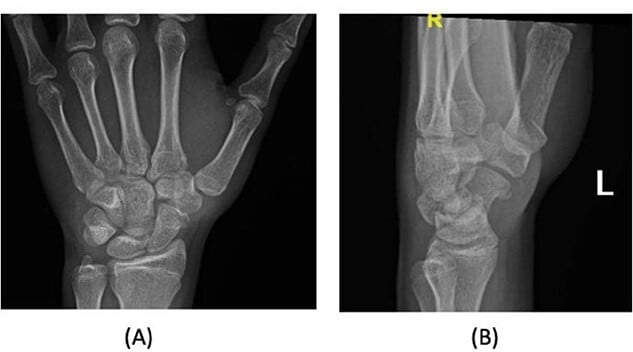
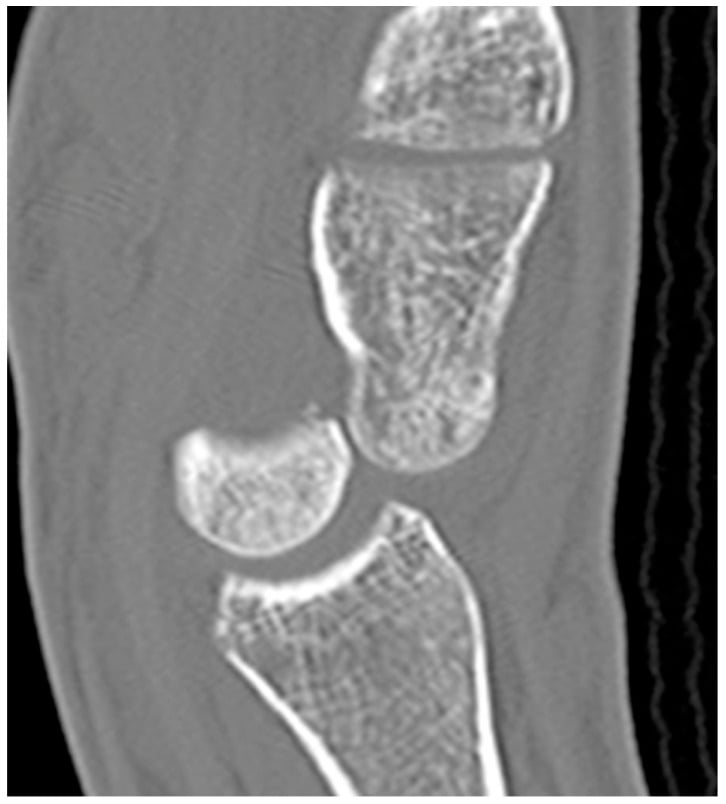
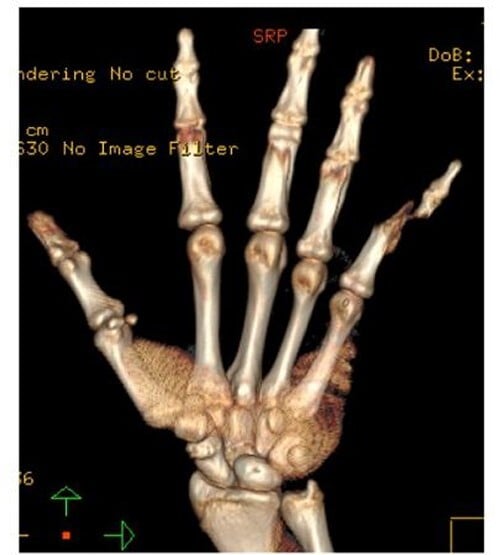
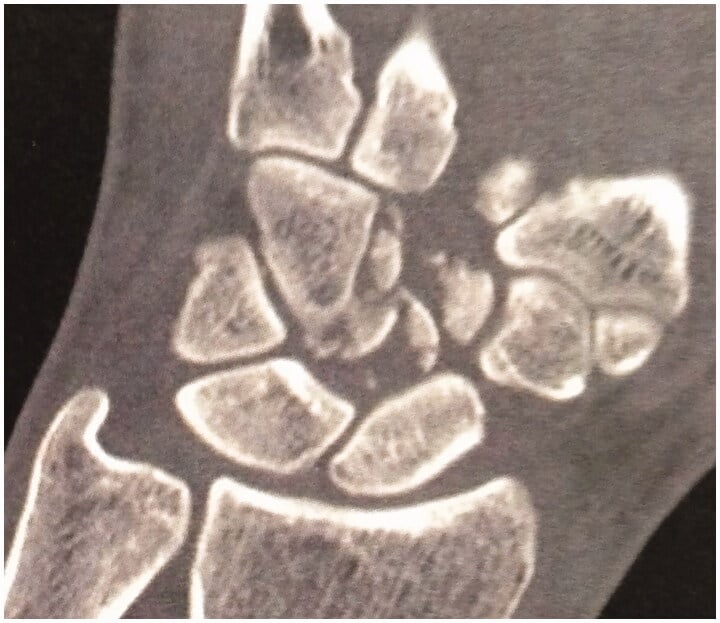
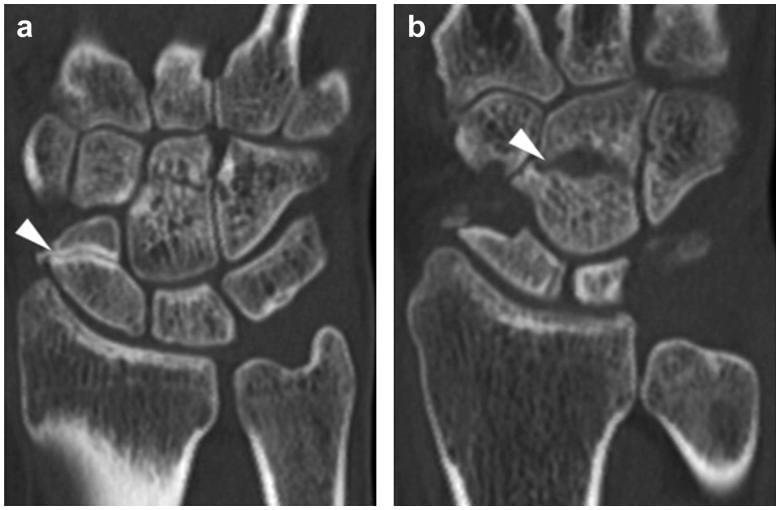
CT is the study that makes the diagnosis. Obtain it for any suspected capitate injury, after high-energy wrist trauma, for surgical planning and to assess fragment rotation. It shows the orientation of the fracture line, the displacement and rotation of the fragments, associated carpal fractures and articular involvement. In scaphocapitate syndrome both fractures are visible and the 180-degree rotation of the proximal capitate is seen directly, its articular surface facing the fracture site.
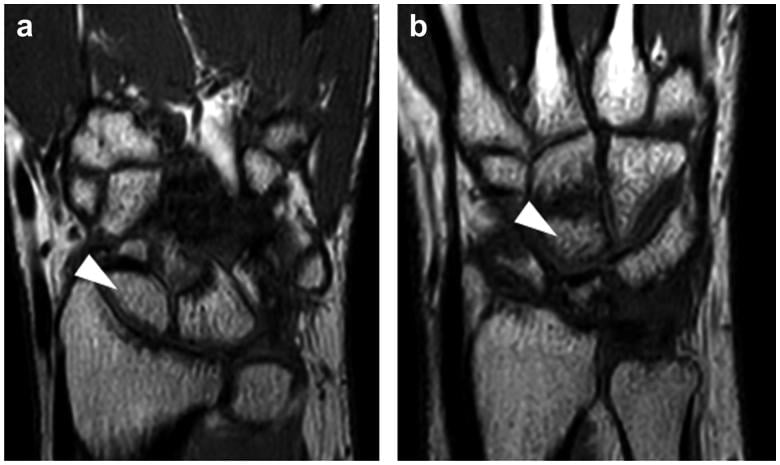
MRI answers the questions CT cannot. Use it to assess vascularity, to detect an occult fracture, to evaluate ligamentous injury and to monitor for AVN. It shows bone marrow oedema in an acute fracture, signal change suggesting necrosis, and associated soft-tissue injury. Cost and availability are what limit it.
Bone scintigraphy is sensitive and non-specific, and is rarely needed where CT and MRI are available, though it may detect occult injuries.
Management Algorithm
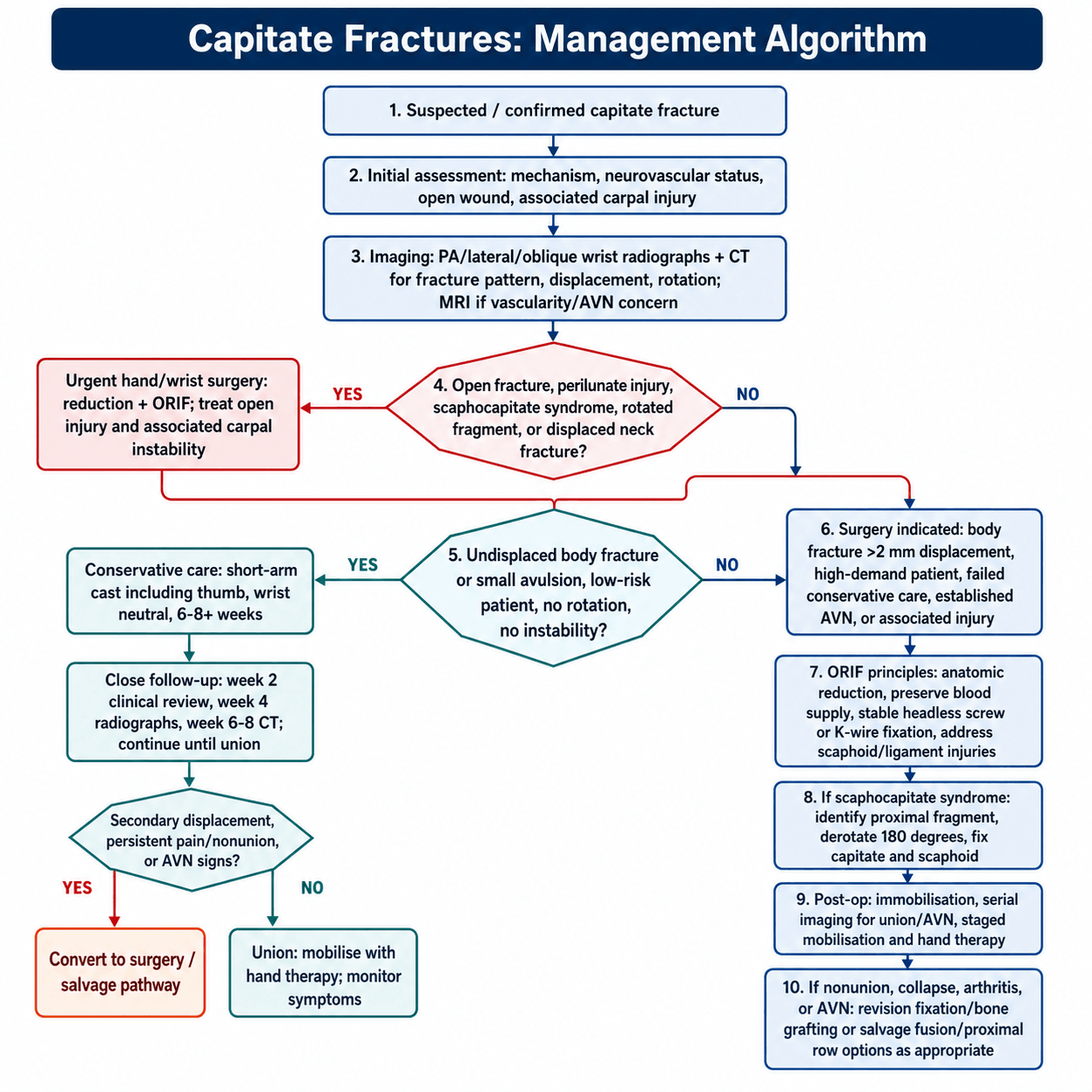
The decision. It turns on the displacement, the level of the fracture and what else is broken, and the threshold differs by level: displacement of a body fracture over 2mm is a relative indication, whereas any displacement of the neck, and any rotation, is an absolute one.
- Displacement
- Undisplaced
- Management
- Cast 6-8 weeks
- Key Consideration
- Monitor for displacement
- Displacement
- Displaced
- Management
- ORIF with screws
- Key Consideration
- Restore articular surface
- Displacement
- Any
- Management
- ORIF recommended
- Key Consideration
- High AVN risk to proximal pole
- Displacement
- Rotated fragment
- Management
- ORIF both bones
- Key Consideration
- Derotate proximal capitate
- Displacement
- Variable
- Management
- Address entire injury
- Key Consideration
- Comprehensive carpal stabilisation
Who can be treated in a cast. Undisplaced body fractures, which are rare; small avulsion fragments; the elderly or low-demand patient with an undisplaced fracture; and the patient with a medical contraindication to surgery.
The cast. A short arm cast including the thumb, wrist in neutral, for a minimum of 6-8 weeks, and longer again for a neck fracture.
Follow-up is the whole point of choosing a cast. Clinical review at week 2 for comfort, repeat radiographs at week 4 to look for displacement, and CT at 6-8 weeks to assess healing, with immobilisation continuing until union is confirmed. Three findings send the patient to theatre instead:
- Secondary displacement on follow-up imaging
- Persistent pain suggesting nonunion
- Development of AVN signs
What to expect. Undisplaced body fractures generally heal. Neck fractures have a higher failure rate in a cast, and either way close monitoring for AVN is essential.
Surgical Technique
Positioning. Supine with an arm table and an upper-arm tourniquet; a traction tower may help the exposure.
Exposure. A dorsal longitudinal incision of 4-5 cm centred on Lister's tubercle, extended if there are associated injuries. Incise the extensor retinaculum between the 3rd and 4th compartments, retract EDC ulnarly and EPL radially, and open the capsule - ligament-sparing if possible - to expose the capitate fully. Keep the stripping to a minimum, to preserve the blood supply.
Reduction. With the fracture in direct view, reduce it with a dental pick or small elevator, assess the articular surface, and hold it with a provisional K-wire.
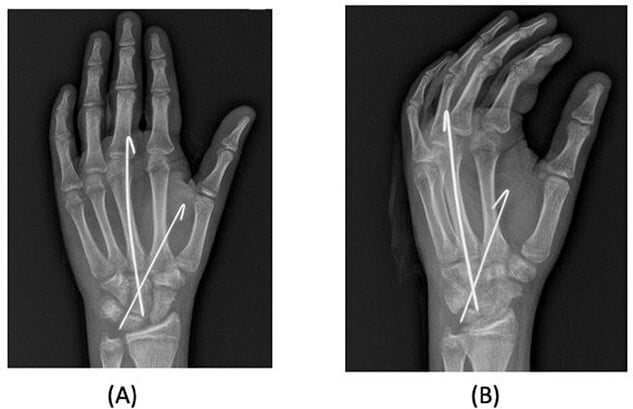
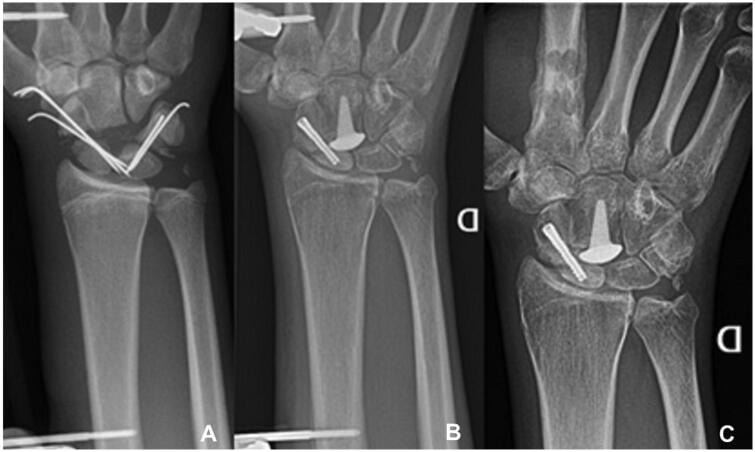
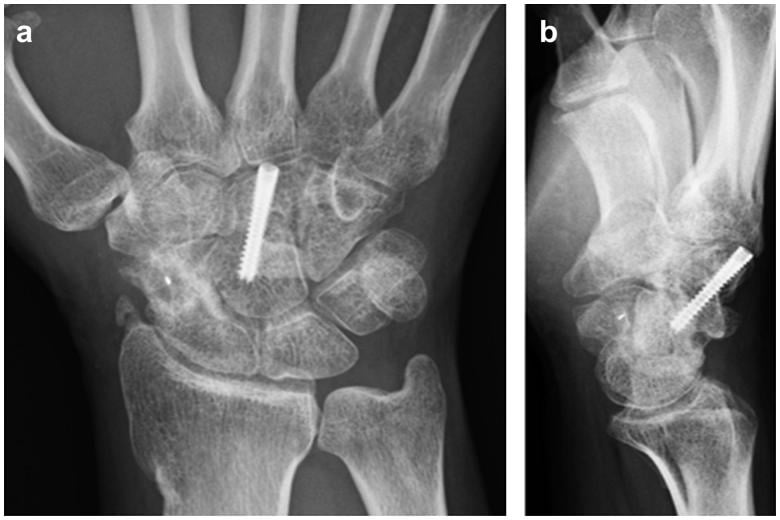
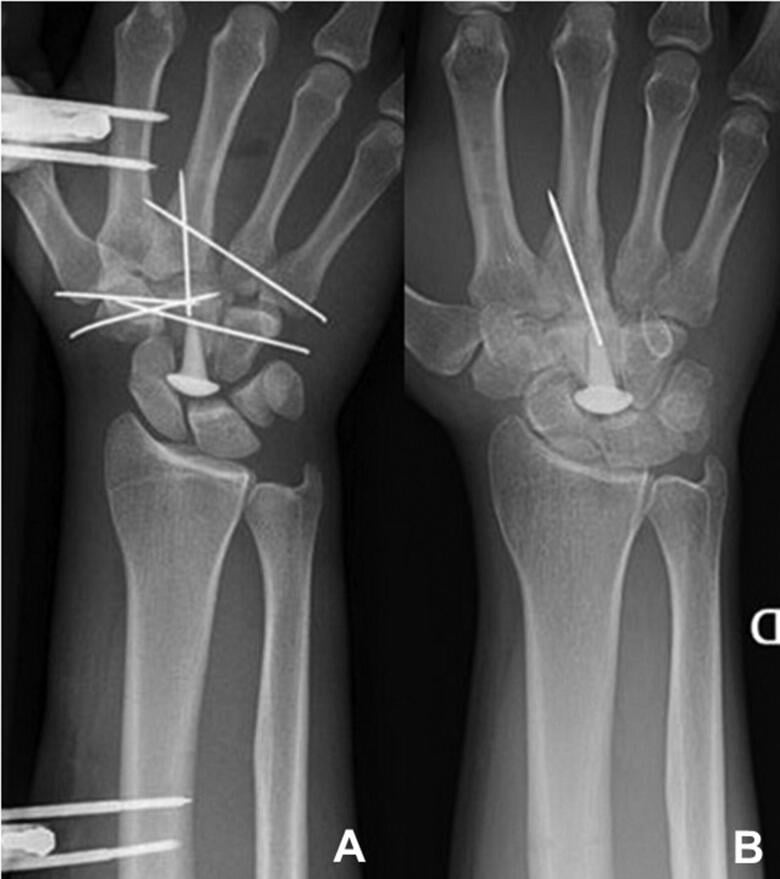
Fixation. A headless compression screw of 2.0-2.4mm, placed centrally in the capitate, retrograde (distal to proximal) or antegrade, countersunk beneath the cartilage with its position confirmed on fluoroscopy. Check the screw length carefully, avoid articular penetration, and consider a second screw for rotational control; K-wires are used for smaller fragments.
Closure. Repair the capsule, close the retinaculum loosely, close the skin and splint in neutral.
Complications
On the table. The capitate is small and may fragment during manipulation, so the technique is gentle and a comminuted bone takes additional fixation. A screw can penetrate the joint or fail to gain purchase: measure carefully, check on fluoroscopy, and revise it if it is intra-articular.
In the first weeks. Infection is rare; dehiscence may expose hardware and is managed with antibiotics, and debridement if needed. A prominent screw or a migrating K-wire comes out once the fracture has healed. Stiffness is common after prolonged immobilisation, which is the argument for early finger motion, then hand therapy and patience.
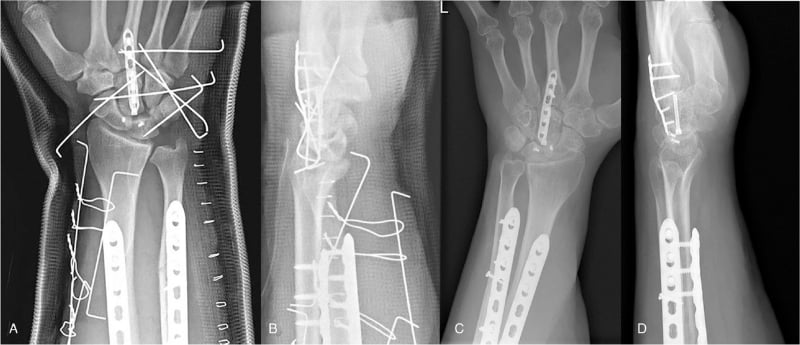
Later. Avascular necrosis is the most significant complication of a capitate fracture. Nonunion follows from AVN, from inadequate fixation or from the biology, and may require bone grafting, with a vascularised graft where the pole is avascular. Post-traumatic arthritis is the consequence of AVN or malreduction and declares itself as progressive wrist pain, managed from activity modification upwards. Carpal instability may develop where the ligaments were injured, as a DISI or VISI pattern, and may require carpal fusion.
- Risk Factors
- Neck fracture, rotation
- Prevention
- Early fixation, preserve blood supply
- Management
- Stage-dependent salvage
- Risk Factors
- AVN, inadequate fixation
- Prevention
- Stable fixation, bone graft
- Management
- Revision with vascularised graft
- Risk Factors
- Missed rotation
- Prevention
- Recognise scaphocapitate
- Management
- Corrective osteotomy
- Risk Factors
- Malreduction, AVN
- Prevention
- Anatomic reduction
- Management
- Fusion if severe
AVN may appear months to years after the injury and is progressive once established, so these fractures are followed long after they look healed, and a patient whose symptoms return is re-imaged. Symptomatic necrosis needs a salvage procedure.
Postoperative Care
The first fortnight. A volar resting splint including the thumb, wrist neutral and thumb in a functional position, with finger motion allowed immediately and the hand elevated above heart level. Analgesia is multimodal, ice and elevation control the swelling, and the monitoring is neurovascular checks, inspection for infection and assessment of swelling.
The wound. First dressing change at 48-72 hours, with attention to the K-wire sites if wires were used. Sutures out at 10-14 days, steri-strips applied, and the patient transitioned to a cast.
Phase 1, protection, 0-6 weeks. Thumb spica cast, active finger motion throughout, shoulder and elbow range of motion, and oedema control.
Phase 2, early motion, 6-8 weeks. If CT shows healing, begin wrist range of motion with a removable splint between exercises, gentle and progressive, and no loading. A scaphocapitate injury may need longer than an isolated fracture before this starts.
Phase 3, progressive loading, 8-12 weeks. Progressive strengthening and light grip activities, with splint protection as needed under hand-therapy guidance.
Phase 4, return to function, 12 weeks onwards. Full range of motion and strength, then sport-specific activity and work conditioning, watching for the late complications.
- Assessment
- Wound, comfort
- Imaging
- None
- Assessment
- Clinical review
- Imaging
- Radiographs if needed
- Assessment
- Healing assessment
- Imaging
- CT scan
- Assessment
- ROM, K-wire removal
- Imaging
- Radiographs
- Assessment
- Function
- Imaging
- As needed
- Assessment
- Final outcome
- Imaging
- Consider MRI
- Assessment
- AVN surveillance
- Imaging
- If symptomatic
Rehabilitation is prolonged because union has to be confirmed and necrosis watched for.
Outcomes and Prognosis
Isolated body fractures. Generally good outcomes when appropriately treated, with range of motion recovering to 80-90% of the contralateral side, variable recovery of grip strength, and return to previous activities expected.
Neck fractures. A higher complication rate than body fractures, and a meaningful avascular necrosis risk given the retrograde proximal-pole supply, although rates are uncertain owing to rarity and small series. The outcome depends on whether AVN develops, and residual stiffness may remain.
Scaphocapitate syndrome. The outcome depends on recognition and treatment. Delayed or missed diagnosis worsens the prognosis, while reasonable outcomes are reported in small series when the injury is properly treated; nonunion and AVN risk are higher than for an isolated body fracture.
What favours a good result.
- A body fracture, undisplaced
- Early diagnosis
- Anatomic reduction achieved
- An isolated injury
What counts against it.
- A neck fracture, or a rotated fragment
- Delayed diagnosis
- The scaphocapitate pattern
- Associated carpal injuries and a high-energy mechanism
AVN by pattern. Precise AVN rates are not reliably established, because capitate fractures are rare and reported only in small series. The relative risk gradient, however, is consistent across the literature:
- Body fractures - lowest risk, the fracture lying distal to the watershed
- Neck fractures - higher, interrupting the retrograde supply to the proximal pole
- Scaphocapitate syndrome - highest, with a rotated, devascularised proximal fragment
The basis is anatomical: the proximal pole's exclusive retrograde intraosseous supply across the waist, analogous to the proximal scaphoid (PMID 6386955, 6886331).
Return to activity. After cast treatment, light activities at 8-12 weeks and full activities at 12-16 weeks if healed. After fixation, light activities at 8-12 weeks, full activities at 12-16 weeks and contact sports at 4-6 months.
What to tell the patient. That AVN can develop late and may need a salvage procedure, and that outcomes are generally good with appropriate treatment.
Guidelines, Registries & Global Practice
Global Epidemiology
Capitate fractures are among the rarest carpal injuries worldwide, classically quoted at roughly 1-2% of carpal fractures, with the great majority occurring in young men after high-energy axial loading and hyperextension. Because the scaphoid alone accounts for the large majority of carpal fractures, robust population data for the capitate are scarce and most evidence comes from case series.
- Figure / Finding
- Most common carpal fracture; scaphoid approx 2.4% of all wrist fractures
- Source population
- US NEISS database (Van Tassel/Wolf, PMID 20684922)
- Figure / Finding
- Approx 12.4 per 100,000/year; peak in males 15-19 years
- Source population
- UK regional cohort (Garala/Dias, PMID 27143737)
- Figure / Finding
- Young adult male predominance, high-energy mechanism
- Source population
- Case series (Rand/Linscheid/Dobyns, PMID 7075062)
- Figure / Finding
- Group I carpal bone (single dominant intraosseous vessel)
- Source population
- Cadaveric vascular studies (PMID 6886331, 3514029)
Guidance Across Major Bodies
No society publishes a capitate-specific guideline; management is extrapolated from carpal/perilunate injury principles and the historical case-series literature. The table summarises how the major bodies' frameworks apply.
- Relevant guidance
- Anatomic reduction and stable fixation of displaced carpal fractures; address perilunate/greater-arc components
- Evidence level
- Expert consensus / Level V
- Relevant guidance
- High-energy wrist injuries follow open-fracture and major-trauma standards; CT where plain films are inconclusive
- Evidence level
- Consensus standard
- Relevant guidance
- No capitate-specific clinical practice guideline; managed under general carpal fracture principles
- Evidence level
- Not graded
- Relevant guidance
- Maintain suspicion of occult carpal injury after high-energy trauma; cross-sectional imaging for diagnosis and planning
- Evidence level
- Consensus / Level V
Registry Evidence
Capitate fractures are not tracked by the national arthroplasty registries (NJR, AJRR, AOANJRR, SHAR, Norwegian, NZJR), which capture joint replacements rather than carpal trauma. The evidence base therefore rests on case series and cadaveric vascular studies rather than registry data. Registries become relevant only at the salvage end of the spectrum (for example total wrist arthroplasty for post-AVN arthritis), where implant survival data inform the choice between arthrodesis and arthroplasty.
Global Practice Variation
- Imaging access: In high-resource settings CT is the default for diagnosis and planning, and MRI is added for vascularity; where cross-sectional imaging is limited, diagnosis depends on a high index of suspicion, repeat radiographs and clinical follow-up, so missed scaphocapitate syndrome is more likely.
- Fixation hardware: Headless compression screws are standard where available; K-wire fixation remains a wholly acceptable and widely used alternative in resource-limited environments and for small fragments.
- Referral pathways: Complex perilunate and scaphocapitate patterns are concentrated in units with hand/wrist expertise globally; initial stabilisation and imaging are performed at the presenting hospital with onward referral for definitive reconstruction.
Viva Scenarios
Clinical Decision Scenarios
Practise clinical reasoning and management decisions out loud
“A 25-year-old motorcyclist presents after a crash with central wrist pain and swelling. Initial PA radiograph shows no obvious fracture. How do you approach this patient?”
“CT confirms a scaphoid waist fracture and capitate neck fracture. The proximal capitate fragment appears rotated 180 degrees. How do you manage this injury?”
“A patient returns 8 months after ORIF of a capitate neck fracture. Despite initial healing, they now have worsening wrist pain. MRI shows AVN of the proximal capitate. How do you manage this complication?”
MCQ Practice Points
Q: What percentage of carpal fractures involve the capitate? A: Capitate fractures account for only 1-2% of all carpal fractures, making them among the rarest carpal injuries. Their central, protected location requires significant force to fracture.
Q: What is the characteristic feature of scaphocapitate (Fenton's) syndrome? A: The proximal capitate fragment rotates 180 degrees so its articular surface faces the fracture site instead of the lunate. This occurs as the wrist returns to neutral after hyperextension injury.
Q: Why is the capitate proximal pole vulnerable to AVN? A: Because the proximal pole (head) has no vessel of its own - in every described pattern it is supplied exclusively in a retrograde direction across the capitate waist, exactly like the proximal scaphoid, so a neck or waist fracture can cut it off. Note the detail examiners use to catch people out: the PALMAR vessels contribute the majority of the capitate's overall supply (Vander Grend), not the dorsal ones - though the retrograde proximal-pole pattern holds either way, which is why it is the retrograde direction, not the entry surface, that explains the AVN risk.
Q: What is the imaging modality of choice for diagnosing capitate fractures? A: CT scanning is essential. Plain radiographs often miss capitate fractures due to overlapping carpal bones. CT also reveals fragment rotation in scaphocapitate syndrome.
Q: What percentage of capitate fractures have associated carpal injuries? A: Over 50% of capitate fractures occur with other carpal injuries, most commonly scaphoid fractures (scaphocapitate syndrome), perilunate injuries, or other carpal fractures.
Q: In scaphocapitate syndrome, which bone should be addressed first surgically? A: The capitate should be reduced and fixed first. The rotated proximal fragment must be derotated 180 degrees before fixation. Then the scaphoid is reduced and fixed.
Understanding these key concepts will help with exam success.
Key Statistics
- 1-2% of all carpal fractures (rare)
- Largest carpal bone, central location
- Over 50% have associated injuries
- Retrograde blood supply like scaphoid
- High AVN risk for neck fractures
Scaphocapitate Syndrome
- Fenton's syndrome = scaphoid + capitate
- Scaphoid waist + capitate neck fractures
- Proximal capitate rotates 180 degrees
- Articular surface faces fracture site
- ORIF both bones, derotate capitate first
Imaging Strategy
- Plain films often miss fracture
- CT essential for diagnosis
- Assess fragment rotation on CT
- MRI for vascularity if AVN concern
Treatment Algorithm
- Undisplaced body: Cast 6-8 weeks
- Neck fracture: ORIF (high AVN risk)
- Scaphocapitate: ORIF both bones
- Derotate capitate before fixation
Surgical Pearls
- Dorsal approach through 3rd/4th compartments
- K-wire joystick to derotate fragment
- Headless compression screws for fixation
- Fix capitate first, then scaphoid
Complications & Outcomes
- AVN risk: body lowest, neck higher, scaphocapitate highest
- Exact rates uncertain (rare injury, small series)
- May present months to years later
- Salvage: core decompression to fusion
Evidence Base
Fenton RL. The naviculo-capitate fracture syndrome
- Original description of the naviculo-capitate (scaphocapitate) fracture syndrome
- Combined scaphoid waist and capitate neck fractures with rotation of the proximal capitate fragment
- Proposed hyperextension with axial load as the mechanism
- Established that the rotated proximal fragment must be recognised and reduced
Vander Grend R, Dell PC, Glowczewskie F, Leslie B, Ruby LK. Intraosseous blood supply of the capitate and its correlation with aseptic necrosis
- Cadaveric injection study plus five patients with proximal-pole aseptic necrosis
- The proximal pole is supplied exclusively in retrograde fashion across the capitate waist, analogous to the proximal scaphoid
- Palmar vessels contribute the majority of the capitate blood supply
- Aseptic necrosis without collapse was managed with curettage and bone grafting; collapse with arthrosis required intercarpal fusion
Rand JA, Linscheid RL, Dobyns JH. Capitate fractures: a long-term follow-up
- Capitate fractures should be treated as aggressively as scaphoid fractures
- Anatomic reduction is required to restore carpal kinematics, with open reduction if needed
- Even a proximal-pole fragment free of soft-tissue attachments can unite with adequate reduction and immobilisation
- Some post-traumatic carpal arthrosis may still be seen at long-term follow-up
Panagis JS, Gelberman RH, Taleisnik J, Baumgaertner M. The arterial anatomy of the human carpus. Part II: the intraosseous vascularity
- Twenty-five cadaver limbs studied by injection and Spalteholz clearing
- The capitate, scaphoid and 20% of lunates form Group I, with large areas dependent on a single intraosseous vessel
- Group I bones are at greatest risk of avascular necrosis after fracture
- Trapezoid/hamate (Group II) and trapezium/triquetrum/pisiform (Group III) carry lower AVN risk
Gelberman RH, Gross MS. The vascularity of the wrist: identification of arterial patterns at risk
- Seventy-five cadaver limbs studied for intra- and extraosseous vascularity
- Scaphoid and capitate share a vascular pattern most vulnerable to post-traumatic avascular necrosis
- In the capitate a pure intraosseous disruption is sufficient to produce avascular necrosis
- Defines at-risk arterial patterns correlated with the clinical incidence of AVN
Moneim MS. Management of greater arc carpal fractures
- Reviews greater arc perilunate fracture-dislocations, of which the scaphocapitate syndrome is part
- Recommends open reduction and Kirschner-wire/screw fixation of the displaced capitate fragment through a dorsal approach
- If the scaphoid is displaced it is also openly reduced and fixed
- A dorsal midline approach stabilises the midcarpal joint in transscaphoid perilunate patterns
The evidence supports early recognition and anatomic surgical treatment for most displaced capitate fractures, with the retrograde proximal-pole blood supply explaining the avascular necrosis risk.