CAVE Deformity | Ponseti Method Gold Standard | Tenotomy in 90% | Bracing Critical
- CAVE deformity: Cavus, Adductus, Varus, Equinus - corrected in this specific order
- Ponseti method: Gold standard - serial casting corrects all except equinus, then tenotomy
- Tenotomy timing: After foot corrected to 60-70 degrees abduction, perform percutaneous Achilles tenotomy
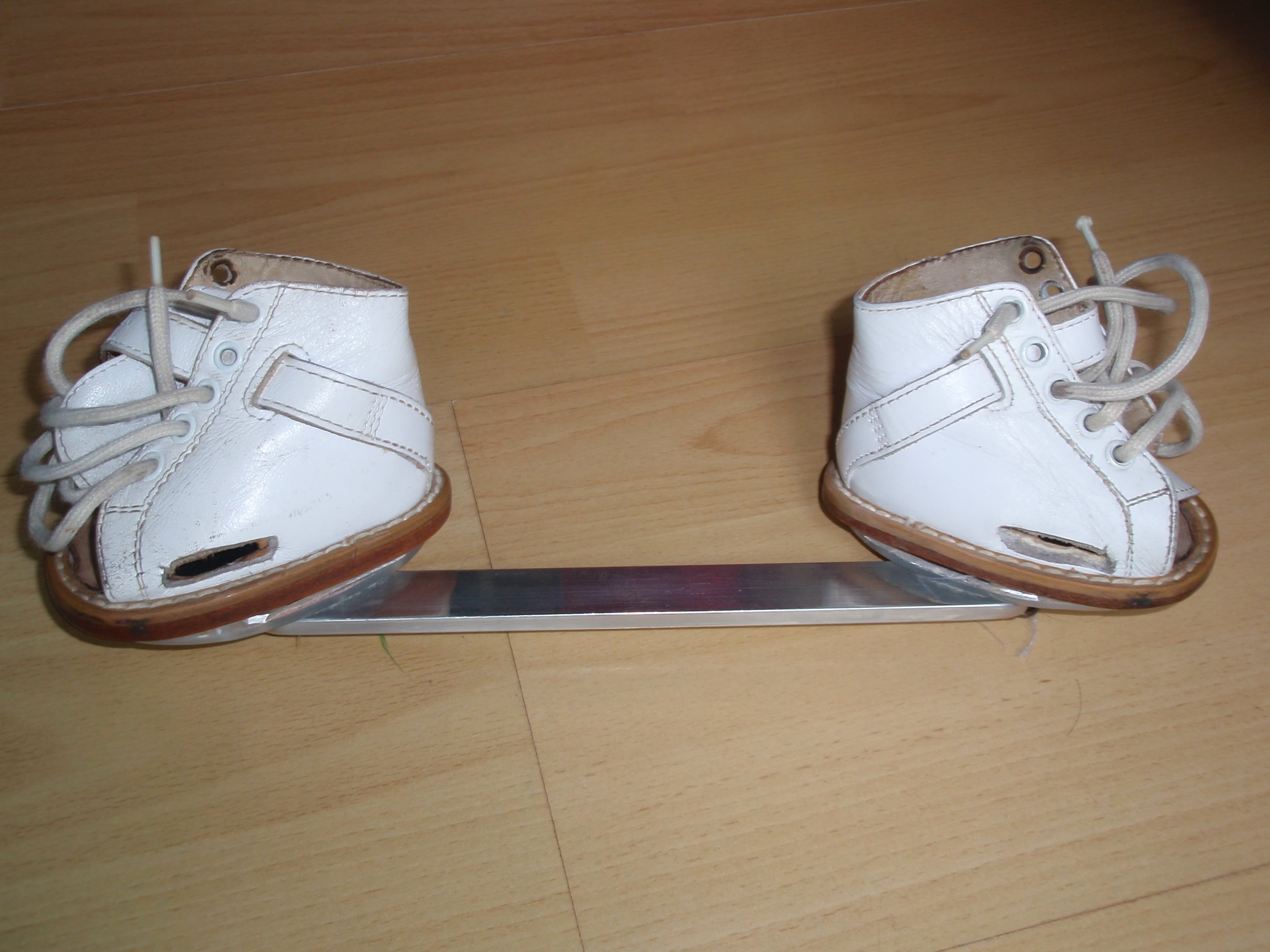
- Bracing critical: FAO (foot abduction orthosis) prevents recurrence - 23hrs/day for 3 months then nighttime until age 4-5
- Recurrence causes: brace non-compliance is overwhelmingly the strongest factor - odds ratio 183 (p less than 0.00001) in the Dobbs series (PMID 14711941). In a prospective New Zealand cohort, overall recurrence requiring surgery was 41%, but only 3 of 26 brace-compliant children had a major recurrence (compliance OR 0.2, p = 0.009; PMID 17332096)
- “Correct cavus FIRST by supinating the forefoot to align with hindfoot
- “Never pronate the forefoot - worsens cavus and creates rocker-bottom deformity
- “Talar head is the fulcrum for correction - thumb pressure over lateral talar head
- “Abduction happens around the TALAR HEAD, with the whole foot swinging beneath the talus - NEVER with counter-pressure on the calcaneocuboid joint or cuboid, which is Kite's error and physically blocks the calcaneus from rotating out of varus
Overview and Epidemiology
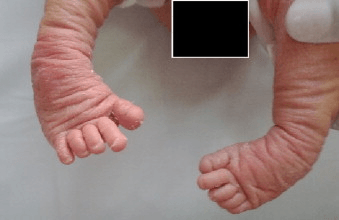
Clubfoot (congenital talipes equinovarus, CTEV) is one of the most common congenital musculoskeletal deformities: a complex three-dimensional deformity of the foot and ankle made up of cavus, adductus, varus and equinus, which the mnemonic CAVE lists in the order in which they are corrected.
Who. The male to female ratio is 2:1, half of cases are bilateral, and 25% have a positive family history, the inheritance being multifactorial. Incidence varies with ethnicity:
- Maori and Polynesian 6-7 per 1000
- Caucasian 1 per 1000
- Asian 0.5 per 1000
Idiopathic or syndromic. 80% of clubfoot is idiopathic, an isolated deformity in an otherwise normal child. The other 20% is associated with a syndrome (arthrogryposis, myelomeningocele, Larsen syndrome, diastrophic dysplasia) or with other anomalies. Syndromic feet are more rigid, recur more often and frequently need surgery despite initial success with Ponseti casting.
Genetics. Concordance is 33% in monozygotic twins and 3% in dizygotic twins, and PITX1, TBX4 and genes for muscle contractile proteins have been implicated. The risk is 3-4% with one affected sibling and 10-20% with an affected parent.
Environment and theories. Intrauterine crowding is implicated through the association with oligohydramnios, and maternal smoking raises the risk 1.5-2 times. Two further theories are neuromuscular imbalance, a theory of muscle abnormality, and vascular disruption, proposed as the mechanism in some cases.
Pathophysiology and Mechanisms
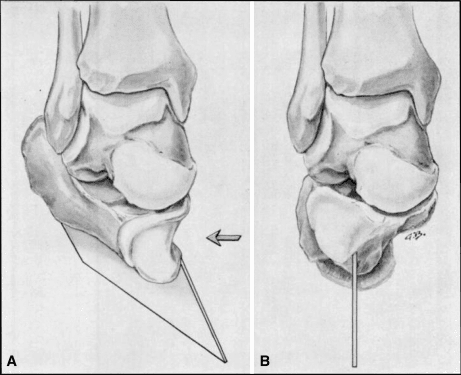
The bones. The deformity is a set of abnormal relationships between the talus, calcaneus, navicular and cuboid, and correction depends on understanding them.
- Normal Position
- 90 degrees tibiotalar articulation
- Clubfoot Position
- Plantar flexed, externally rotated, laterally tilted in mortise
- Correction Goal
- Cannot be directly manipulated - other bones rotate around it
- Normal Position
- Below talus, neutral alignment
- Clubfoot Position
- Inverted (varus), adducted, rotated under talus
- Correction Goal
- Abduct and evert by stretching medial structures
- Normal Position
- Aligned with talar head
- Clubfoot Position
- Severely medially displaced, may abut medial malleolus
- Correction Goal
- Reduce onto talar head with abduction
- Normal Position
- Aligned with calcaneus
- Clubfoot Position
- Medially displaced relative to calcaneus
- Correction Goal
- Follows correction of calcaneus
The talus is the fixed point. It sits plantar flexed in the ankle mortise and externally rotated relative to the leg, and it cannot be manipulated directly. Everything else moves around it: the navicular, calcaneus and cuboid are rotated laterally around the talar head, which is why the talar head is the fulcrum for correction.
Soft tissues. The medial and posterior structures are contracted and the lateral ones attenuated. The contracted structures lie medially and posteriorly:
- Achilles tendon - the equinus, and the structure the tenotomy divides
- Tibialis posterior - contributes to varus and adduction
- Toe flexors (FDL, FHL) - may contribute to cavus
- Tibionavicular ligament - tethers the navicular medially
- Plantar fascia - contributes to cavus
- Deltoid ligament - fibrosed, limiting valgus
Laterally the tissues are attenuated:
- Peroneal tendons - stretched over the lateral malleolus
- Lateral ligaments - attenuated by the varus position; the calcaneofibular ligament may be lax and the anterior talofibular ligament is stretched
Muscle. Histology shows an increase in type 1 (slow-twitch) fibres, of smaller diameter and with more collagen, and the posterior compartment (gastrocnemius and soleus) is particularly affected. This contributes to the stiffness of the deformity.
Classification Systems
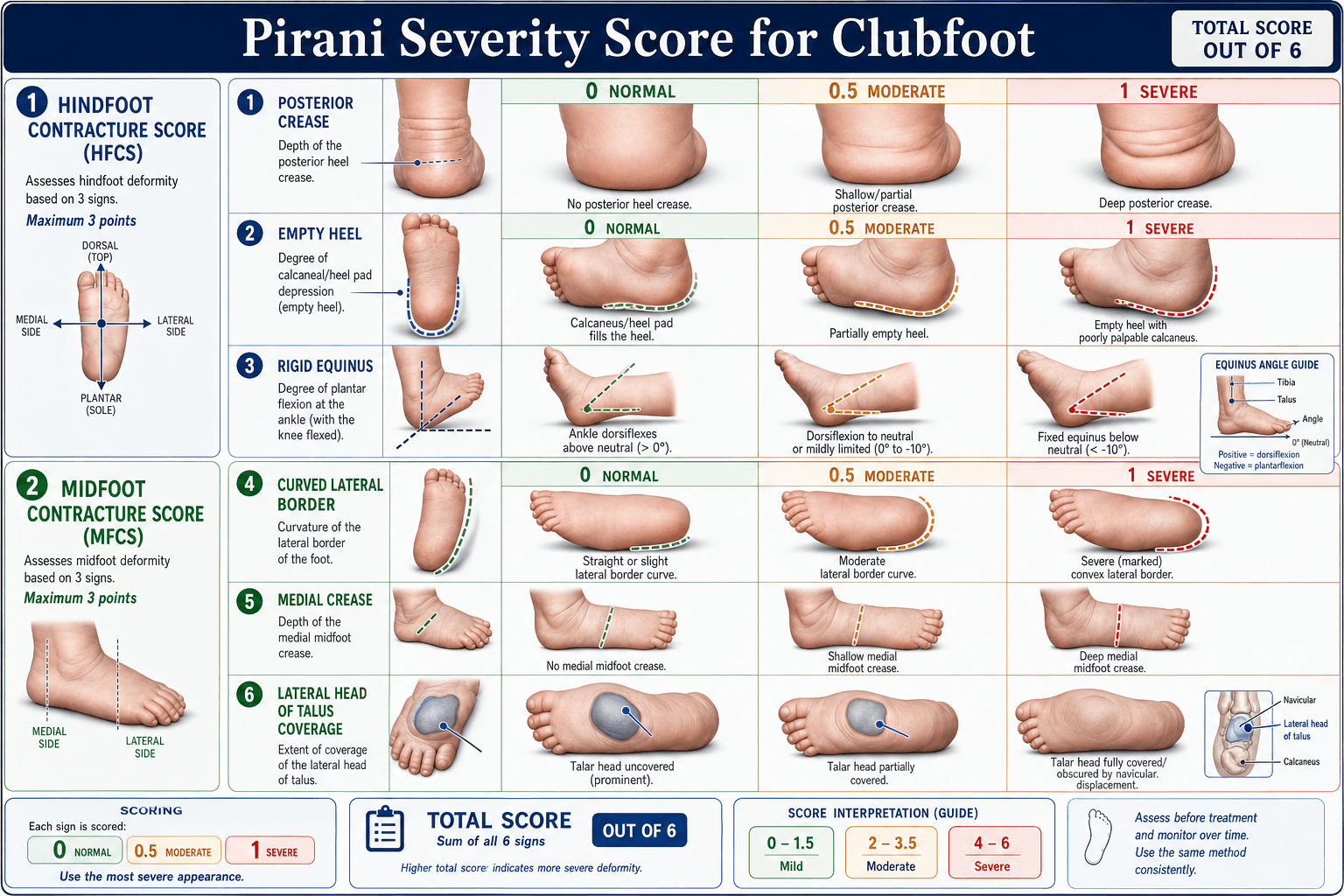
Pirani. The most widely used clinical score: six signs, three in the hindfoot and three in the midfoot, each scored 0, 0.5 or 1 for a total out of 6, used to guide treatment and predict outcome.
- Sign
- Posterior crease
- 0 (Normal)
- Multiple fine creases
- 0.5 (Moderate)
- 1-2 moderate creases
- 1 (Severe)
- Single deep crease
- Sign
- Empty heel
- 0 (Normal)
- Calcaneus easily palpable
- 0.5 (Moderate)
- Partially palpable
- 1 (Severe)
- Calcaneus not palpable
- Sign
- Rigidity of equinus
- 0 (Normal)
- Foot dorsiflexes
- 0.5 (Moderate)
- Slight dorsiflexion
- 1 (Severe)
- No dorsiflexion possible
- Sign
- Curved lateral border
- 0 (Normal)
- Straight lateral border
- 0.5 (Moderate)
- Mild curve
- 1 (Severe)
- Severe curve/comma shape
- Sign
- Medial crease
- 0 (Normal)
- Multiple fine creases
- 0.5 (Moderate)
- 1-2 moderate creases
- 1 (Severe)
- Single deep crease
- Sign
- Talar head coverage
- 0 (Normal)
- Navicular covers talar head
- 0.5 (Moderate)
- Partial coverage
- 1 (Severe)
- Talar head fully palpable laterally
Using the score. The total falls as treatment succeeds. The midfoot score predicts the number of casts that will be needed; the hindfoot score, and the empty heel in particular, predicts whether a tenotomy will be needed, and tenotomy is indicated when the hindfoot score has come down to 0.5-1 but equinus persists.
The complex (atypical) clubfoot. A short, plump, stiff foot with all the metatarsals in equinus rather than only the first ray, a deep transverse crease across the sole, a deep crease above the heel, and a short hyperextended great toe over a fat foot pad that makes the toes look pulled back. It is often idiopathic but more rigid, and is over-represented among feet that have previously been over-manipulated.
Why standard Ponseti fails it. Pushing up under the first ray and abducting hard makes the soft, fat foot slip in the cast and develop pressure sores, and simple supination does not correct the equinus of all the metatarsals.
Ponseti's modified technique. Hold the toes and push up on all the metatarsal heads at once to lift the whole forefoot; do not hyperabduct, limiting abduction to about 40 degrees rather than 60-70; apply very careful, well-moulded casts with the knee at 90 degrees to stop slippage; and proceed to tenotomy, which a higher proportion of these feet often need. Relapse is commoner.
Clinical Assessment
History. Clubfoot can be seen on ultrasound from 12-16 weeks of gestation. Ask about oligohydramnios, clubfoot in first-degree relatives, and other anomalies seen antenatally, hip dysplasia and spina bifida among them.
Birth and neonatal history. Prematurity is not protective, and birth trauma is not a cause of idiopathic clubfoot. Ask about other congenital anomalies of the hands, spine and hips; multiple anomalies suggest a syndrome.
Examination. Work through the foot in sequence, then screen the rest of the child.
Clubfoot Examination Sequence
- Confirm the CAVE components are present
- Compare the two sides; bilateral disease may be asymmetric
- Medial and posterior skin creases are severity markers
- Calf size, smaller on the affected side
- Talar head - normally covered by the navicular; in clubfoot it is palpable laterally, anterolateral to the ankle
- Empty heel sign - the posterior calcaneus is difficult to palpate in severe cases
- Forefoot-hindfoot alignment: is the forefoot supinated relative to the hindfoot?
- Muscle bulk: calf wasting and the anterior compartment
- Supinate the forefoot to correct the cavus: does the arch flatten?
- Abduct the forefoot with the talar head as the fulcrum: how much correction is there?
- Do not test dorsiflexion until the foot is corrected
- Score the flexibility with Pirani or Dimeglio
- Hips - Barlow and Ortolani tests for DDH (3-5% association)
- Spine - midline stigmata of dysraphism: dimple, tuft, lipoma
- Neck - torticollis (5% association)
- Full neurological examination, since syndromic clubfoot may have other findings
Bilateral severe rigid feet, other limb anomalies, facial dysmorphism, multiple joint contractures (arthrogryposis) and spinal abnormalities (myelomeningocele).
Differential Diagnosis
The task is to separate a true, structural idiopathic clubfoot from the postural foot that will resolve and from the rigid foot that is syndromic or a different diagnosis altogether; reducibility and rigidity are what discriminate. A clubfoot that is not idiopathic is a different conversation: see arthrogryposis and myelomeningocele. The newborn deformity most often confused with clubfoot is metatarsus adductus, and its mirror image is congenital vertical talus, which has a section of its own below.
- Key Distinguishing Features
- Full CAVE deformity, calf wasting, medial/posterior creases, talar head palpable laterally
- Rigidity / Reducibility
- True fixed deformity but responds to Ponseti manipulation
- Management Difference
- Ponseti casting, tenotomy in most, then bracing
- Key Distinguishing Features
- Foot looks turned in but no true cavus or fixed equinus; from intrauterine packing
- Rigidity / Reducibility
- Fully passively correctable to neutral and beyond
- Management Difference
- Reassurance and stretching; resolves without casting
- Key Distinguishing Features
- Forefoot adduction only; normal hindfoot, NO equinus or hindfoot varus
- Rigidity / Reducibility
- Usually flexible; convex lateral border
- Management Difference
- Observation/stretching; casting only if rigid
- Key Distinguishing Features
- Convex plantar surface, dorsiflexed/abducted forefoot - the opposite of equinus
- Rigidity / Reducibility
- Rigid dorsal dislocation of navicular on talus
- Management Difference
- Reverse Ponseti casting then surgery; often syndromic
- Key Distinguishing Features
- Multiple joint contractures, other limb anomalies, very stiff feet
- Rigidity / Reducibility
- Markedly rigid, resistant to casting
- Management Difference
- Extended Ponseti, higher tenotomy/surgery and relapse rates
- Key Distinguishing Features
- Spinal stigmata, sensory loss, muscle imbalance
- Rigidity / Reducibility
- Rigid, insensate, prone to skin breakdown in casts
- Management Difference
- Cautious casting, address neurological cause, higher relapse
Congenital Vertical Talus: the Critical Mimic
The one diagnosis you must not treat as a clubfoot is congenital vertical talus. It looks like a reverse clubfoot, and casting it in the clubfoot direction drives the deformity precisely the wrong way. At the cot side the quickest discriminators are the sole, concave in clubfoot and a convex rocker-bottom in vertical talus, and the hindfoot, varus against valgus; the forced-plantarflexion lateral radiograph confirms it.
- Clubfoot (CTEV)
- Concave — high medial arch, cavus
- Congenital vertical talus
- Convex — rigid rocker-bottom
- Clubfoot (CTEV)
- Adducted and supinated
- Congenital vertical talus
- Abducted and dorsiflexed
- Clubfoot (CTEV)
- Equinus plus VARUS
- Congenital vertical talus
- Equinus plus VALGUS
- Clubfoot (CTEV)
- Displaced medially on the talus
- Congenital vertical talus
- Dorsally dislocated onto the talar neck, irreducible
- Clubfoot (CTEV)
- Around 20% syndromic or neuromuscular
- Congenital vertical talus
- Strongly associated with neuromuscular disease and chromosomal/CNS anomalies
- Clubfoot (CTEV)
- Not routine — a clinical diagnosis
- Congenital vertical talus
- Forced-PLANTARFLEXION lateral: the talus stays vertical and the navicular does not reduce
Vertical talus is managed by the reverse Ponseti (Dobbs) method: serial casts that plantarflex and invert the foot, the opposite direction to clubfoot, to reduce the talonavicular joint, followed by percutaneous pinning of the reduced talonavicular joint and an Achilles tenotomy.
Investigations
A clinical diagnosis. Imaging is not required to diagnose clubfoot or to manage the routine case. Radiographs are reserved for:
- The atypical foot, with features not consistent with idiopathic clubfoot
- Confirming that correction has been achieved after treatment
- Relapse, to separate bony deformity from soft-tissue recurrence
- Planning before surgical correction
- Research, as radiographic outcome measures
Views. The AP foot gives the talocalcaneal angle; the lateral gives the tibiocalcaneal angle and the talus-first metatarsal alignment; a maximal-dorsiflexion lateral stress view assesses correction of the equinus. Parallelism of the talus and calcaneus (Kite's angle) indicates persistent deformity.
- Normal Value
- 20-40 degrees
- Clubfoot Finding
- Less than 20 degrees (parallel)
- Clinical Significance
- Hindfoot varus - bones parallel
- Normal Value
- 25-50 degrees
- Clubfoot Finding
- Less than 25 degrees
- Clinical Significance
- Persistent equinus/varus
- Normal Value
- 0-20 degrees
- Clubfoot Finding
- Negative (overlapping)
- Clinical Significance
- Forefoot adduction
- Normal Value
- 10-40 degrees
- Clubfoot Finding
- Less than 10 degrees
- Clinical Significance
- Equinus deformity
Other investigations. Genetic testing (karyotype or specific gene panels) if there are syndromic features; MRI of the spine for a sacral dimple, tuft or other stigmata of spinal dysraphism; and hip ultrasound only if the clinical examination is concerning for DDH, since routine ultrasound is not required.
Management Algorithm
The Ponseti method is the gold standard, and be precise about what its success rate means. Initial correction is achieved in the great majority of feet, which is what the widely quoted 95% refers to; it is not the long-term figure. Followed to adolescence, excellent or good ICFSG results were 76% after Ponseti versus 45% after posteromedial release (PMID 32982254). Ponseti was superior for final, functional and radiological scores (all p less than 0.001), preserved better foot and ankle mobility, and produced fewer flat-top tali (relative risk 0.49, p = 0.002).
- Findings
- CAVE deformity, Pirani 4-6, flexible
- Treatment
- Ponseti casting starting week 1-2, tenotomy, FAO
- Key Pearl
- Start early, parents as partners in treatment
- Findings
- Rigid, associated anomalies, resistant
- Treatment
- Extended Ponseti, often surgical release needed
- Key Pearl
- Stiffer feet need more casts, higher recurrence
- Findings
- Recurrent equinus or varus, loss of abduction
- Treatment
- Repeat casting, tenotomy, tibialis anterior transfer if over 2.5 years
- Key Pearl
- Check bracing compliance first
- Findings
- Rigid deformity, callosities, adapted gait
- Treatment
- Soft tissue release or osteotomies depending on age/rigidity
- Key Pearl
- Ponseti less effective after walking age
Cavus first. Supinate the forefoot, elevating the first ray to line up with the lesser rays and the hindfoot. This flattens the arch and turns the foot into a single lever with one fulcrum, the talar head. Never pronate the forefoot: it worsens the cavus and produces a rocker-bottom.
Then adductus and varus, together. With the thumb over the lateral talar head as counter-pressure, abduct the forefoot and midfoot as a unit so that the whole foot swings beneath the talus. The stretch falls on the contracted medial structures and the calcaneus follows, derotating and everting beneath the talus. Never push on the calcaneus, which blocks correction, never evert the foot, and never apply counter-pressure on the calcaneocuboid joint or the cuboid: that is Kite's error, and it physically blocks the calcaneus from rotating out of varus.
Equinus last. Only once the foot is abducted, the navicular covers the talar head and the heel varus is corrected is dorsiflexion assessed, and about 90% of feet then need a percutaneous Achilles tenotomy. The trigger is ankle dorsiflexion still under about 15 degrees, not "cannot dorsiflex past neutral": that bar is far too low, leaves a foot with a few degrees of dorsiflexion untreated, and is a recognised route to residual equinus and relapse. For reference, mean dorsiflexion in a midterm Ponseti series was 15.9 degrees, with only 9% of feet below 10.
CAVECAVE - Clubfoot Deformity Components
Hook:CAVE - the foot is hiding in a cave, all curled up. Correct in this exact order during Ponseti treatment.
Ponseti Treatment Steps
- Forefoot supinated, first ray elevated; the first cast holds this position
- Casts changed weekly, each gaining 10-15 degrees of abduction
- Goal 60-70 degrees of abduction
- Complete percutaneous division, then the final cast in maximum dorsiflexion (technique and cast under Surgical Technique)
- Fitted the day the last cast comes off; protocol under the Bracing tab
Dorsiflexing the uncorrected clubfoot creates a rocker-bottom deformity. The talus stays in equinus and the midfoot breaks instead. Cavus first, then abduction, then the tenotomy.
The French functional method. The conservative alternative to Ponseti is a physiotherapy-based programme: daily manipulation of the foot by a trained physiotherapist, taping or strapping to hold the corrected position, continuous passive motion (sometimes on a CPM machine) and temporary splinting between sessions, aiming to stretch the contracted structures gradually rather than to cast them. It is labour- and resource-intensive, with daily sessions initially, often for weeks to months, tapering over the first 2-3 years, and it is highly operator-dependent.
How it compares. In experienced hands the outcomes are broadly comparable to Ponseti, but Ponseti is cheaper, faster, less labour-intensive and more easily taught and scaled, including by non-specialists in low-resource settings, which is why it is the global first-line standard; the French method is mainly used in centres with the physiotherapy infrastructure to deliver it. Both rely on a maintenance phase of splinting or bracing, and both may need an Achilles tenotomy and a later tibialis anterior transfer for residual or recurrent deformity.
Surgical Technique
The procedure. An outpatient procedure under local anaesthesia; sedation is not usually required.
Tenotomy Procedure
- Local anaesthesia (0.5-1ml of 1% lidocaine) or EMLA cream
- Hold the foot in dorsiflexion to identify the tight cord
- Mark the site 1cm above the calcaneal insertion
- 11 or 15 blade
- Enter the skin medial to the tendon with the blade parallel to it, then rotate 90 degrees
- Cut from anterior (deep) to posterior (superficial)
- An audible or palpable pop as the tendon divides
- The foot should immediately dorsiflex 15-20 degrees
- Long-leg cast in maximum dorsiflexion, aiming 15 degrees above neutral, with 70 degrees of abduction maintained
- Left for 3 weeks while the tendon regenerates, healing in its lengthened position
The posterior tibial artery and nerve lie anteromedial to the Achilles tendon. Entering medially with the blade parallel to the tendon and then rotating moves the blade away from them. The division must be complete: an incomplete section gives inadequate correction.
Complications
- Cause
- Non-compliance with bracing, inadequate initial correction
- Prevention
- Parent education, proper bracing protocol, regular follow-up
- Management
- Repeat Ponseti casting, tenotomy, TATT if over 2.5 years
- Cause
- Dorsiflexion before abduction corrected
- Prevention
- Correct CAVE in proper order, never dorsiflex early
- Management
- Difficult - may need plantar release, casting, or osteotomy
- Cause
- Excessive dorsiflexion, repeated aggressive manipulation
- Prevention
- Gentle manipulation, proper tenotomy timing
- Management
- Avoid continued dorsiflexion, may need osteotomy later
- Cause
- Tight casts, pressure sores, slippage
- Prevention
- Proper padding, well-molded casts, weekly changes
- Management
- Cast removal, local wound care, delay recasting if needed
- Cause
- Surgical technique, scarring
- Prevention
- Careful tendon handling, appropriate rehabilitation
- Management
- Physiotherapy, usually mild and improves
- Cause
- Excessive surgical release
- Prevention
- Use Ponseti method, avoid extensive release
- Management
- Difficult to treat - may need posterior ankle block
Recurrence. It typically occurs between 6 months and 4 years of age, the period of active bracing, and is rare after age 5 if treatment was properly carried out. Most recurrences are due to bracing non-compliance. The first signs are a tight Achilles with loss of dorsiflexion, returning heel varus and dynamic forefoot supination.
Postoperative Care and Rehabilitation
After the tenotomy cast. The orthosis is fitted immediately when the cast comes off. During the first three months of full-time wear it comes off only for bathing, the skin is checked daily for pressure areas, and the socks are put on properly to prevent blisters. During the transition to night wear the child is allowed out of the brace for supervised play but keeps it on for naps and nights, with clinic follow-up every 2-3 months; through the years of night-time bracing the fit is checked as the feet grow and follow-up becomes annual or twice-yearly.
What to tell the parents. Recurrence is preventable with proper compliance, so the counselling is about the brace. Parents should watch for tightness, loss of dorsiflexion and in-toeing, and they should hear at the outset that the calf and foot on the affected side will stay smaller (the figures are under Outcomes).
Outcomes
After Ponseti treatment. Most patients achieve a plantigrade, pain-free, functional foot, and full sports participation is usually possible. Ponseti-treated feet have better function, motion and strength, and less pain, than surgically released feet. What persists is the size difference: the calf remains 1-2cm smaller and the foot may be 0.5-1.5 sizes smaller on the affected side.
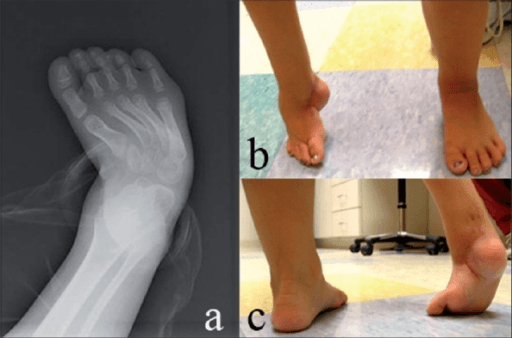
Predictors of a poor outcome. The following predict a worse result:
- Syndromic clubfoot (arthrogryposis, myelomeningocele)
- A severe initial Pirani score with a rigid deformity
- Non-compliance with bracing
- Treatment started late, after 6 months of age
- Extensive surgical release
Guidelines, Registries & Global Practice
Clubfoot is a worldwide problem, and the Ponseti method is now the agreed first-line standard of care across every health system. The clinically important differences between regions are not in the technique itself but in access, follow-up infrastructure, and how brace compliance is supported - particularly the large share of cases that occur in low- and middle-income countries.
Global Epidemiology
- Figure
- Roughly 1 per 1000 live births
- Note
- Most widely quoted figure for idiopathic clubfoot in populations of European ancestry
- Figure
- Lowest in East-Asian populations; highest in Polynesian/Pacific populations
- Note
- Polynesian rates reported several-fold higher; supports a strong genetic contribution
- Figure
- Approximately 2:1 male predominance
- Note
- Consistent across populations
- Figure
- Bilateral in around half of cases
- Note
- Unilateral feet more often right-sided
- Figure
- Around 80% idiopathic
- Note
- Syndromic feet (arthrogryposis, myelomeningocele) are stiffer with higher relapse
- Figure
- The large majority of new cases arise in low- and middle-income countries
- Note
- Drives the need for scalable, non-specialist-deliverable treatment
Guidance and Programmes, Side by Side
- Position on first-line treatment
- Ponseti serial casting as initial standard for idiopathic clubfoot
- Emphasis
- Percutaneous tenotomy for residual equinus; foot abduction orthosis to prevent relapse
- Position on first-line treatment
- Ponseti method as first-line; reserve extensive surgery for failure
- Emphasis
- Early referral, structured cast pathways, dedicated clubfoot clinics and brace surveillance
- Position on first-line treatment
- Endorse Ponseti as a cost-effective, scalable intervention
- Emphasis
- Recognise neglected clubfoot as a preventable cause of disability in LMICs
- Position on first-line treatment
- Train non-specialist health workers to deliver Ponseti at scale
- Emphasis
- National programmes, brace supply chains, and follow-up registries
The strength of evidence is consistent: comparative and long-term cohort data place Ponseti above extensive surgical release for function and mobility, and prospective studies repeatedly identify brace non-compliance - not deformity severity - as the dominant driver of relapse.
Registries, Surveillance and Practice Variation
- Birth-defect surveillance, not arthroplasty-style implant registries, is the relevant registry evidence for clubfoot. National and programme registries (for example WHO-linked surveillance and large LMIC programmes) track incidence and treatment coverage; trained midwives can diagnose talipes equinovarus with high positive predictive value where surveillance systems exist.
- High-resource settings: near-universal Ponseti uptake, antenatal ultrasound detection, dedicated clubfoot clinics, and structured brace-compliance monitoring. The main challenge is sustaining bracing through to age 4-5 years.
- Limited-resource settings: the dominant challenge is late presentation (neglected clubfoot) and loss to follow-up. Task-shifting to trained non-specialists, local brace manufacture, and community follow-up are the key adaptations; outcomes approach high-income results when bracing compliance is maintained.
- Universal principle: regardless of setting, the determinants of success are early start, correct CAVE-order casting, timely tenotomy, and relentless brace compliance.
MCQ Practice Points
Q: What does a Pirani hindfoot score of 2.5 indicate? A: Moderate-severe hindfoot involvement with at least two of three signs significantly present (posterior crease, empty heel, rigid equinus). This predicts need for percutaneous Achilles tenotomy. A hindfoot score approaching 0 with persistent equinus is the classic indication for tenotomy.
Q: Why must cavus be corrected before other components in Ponseti method? A: Correcting cavus first (by supinating the forefoot) creates a single lever arm for correction. If cavus is not corrected, the forefoot and hindfoot are misaligned, and attempting abduction will increase midfoot deformity. Supinating the forefoot aligns the 1st ray with the hindfoot, allowing the entire foot to rotate as a unit around the talar head.
Q: What causes iatrogenic rocker-bottom deformity in clubfoot treatment? A: Dorsiflexing the foot before adequate abduction is achieved. The talus is fixed in equinus in the ankle mortise. If you dorsiflex without first abducting and derotating the calcaneus, the midfoot breaks dorsally while the talus remains plantarflexed, creating a convex plantar surface (rocker-bottom). This is why equinus is corrected LAST via tenotomy.
Q: A 2-year-old with prior Ponseti treatment presents with returning varus and loss of dorsiflexion. What is the most likely cause? A: Non-compliance with foot abduction orthosis (FAO) bracing. This is responsible for 80% of recurrences. Management includes repeat Ponseti casting and emphasizing bracing importance. For children over 2.5 years with dynamic supination, tibialis anterior transfer should be considered.
Q: What features distinguish syndromic from idiopathic clubfoot? A: Syndromic clubfoot is associated with other congenital anomalies, tends to be more rigid, has higher recurrence rates, and often requires surgical intervention despite initial Ponseti success. Look for: bilateral severe rigid feet, other limb anomalies, facial dysmorphism, joint contractures (arthrogryposis), spine abnormalities (myelomeningocele).
Medicolegal Considerations
- Recurrence risk: quote it as the compliance effect, because that is what the evidence measures - overall recurrence requiring surgery was 41 percent in a prospective cohort, but only 3 of 26 brace-compliant children had a major recurrence (compliance odds ratio 0.2, p = 0.009); non-compliance carried an odds ratio of 183 in a separate series
- Calf size difference: Affected side remains smaller (1-2cm)
- Foot size difference: May be 0.5-1.5 sizes smaller
- Need for prolonged bracing: 4-5 years commitment
- Possible need for further procedures: Tenotomy, TATT, other surgery
- Initial assessment including Pirani score
- Cast number and position achieved at each change
- Tenotomy performed and outcome
- Bracing prescription and compliance documentation
- Evidence of screening for associated conditions (hips, spine)
Document bracing compliance and any non-compliance at each visit. If recurrence occurs, documentation of counseling about bracing importance protects against litigation. Photograph feet in brace showing proper fit.
Clinical Decision Scenarios
Practise clinical reasoning and management decisions out loud
“A 2-week-old baby boy is referred with bilateral clubfeet diagnosed on prenatal ultrasound. Describe your assessment and management plan.”
“A 3-year-old child presents with recurrent clubfoot deformity 2 years after initially successful Ponseti treatment. The parents report they stopped using the brace at 18 months because the child refused to wear it.”
“You are performing a percutaneous Achilles tenotomy on a 6-week-old infant with clubfoot. Describe your technique and how you would manage a complication.”
CAVE Deformity Order
- Cavus first: supinate forefoot to flatten arch
- Adductus + Varus: abduct around talar head
- Equinus last: percutaneous Achilles tenotomy
- NEVER dorsiflex before abduction - causes rocker-bottom
Ponseti Key Numbers
- 5-7 casts: typical number for initial correction
- 60-70 degrees: target abduction before tenotomy
- 90%: percentage requiring tenotomy
- 3 weeks: final cast duration post-tenotomy
- 4-5 years: bracing duration
FAO Bracing Protocol
- 70 degrees external rotation (60 degrees unilateral)
- 23 hours/day for first 3 months
- Nighttime only (12 hours) until age 4-5
- Non-compliance causes 80% of recurrences
Recurrence Management
- First: repeat Ponseti casting
- Tenotomy if equinus persists
- TATT if over 2.5 years with dynamic supination
- Surgical release reserved for failures only
Pirani Score Components
- Midfoot (3): curved border, medial crease, talar head
- Hindfoot (3): posterior crease, empty heel, rigid equinus
- Total 0-6: higher = more severe
- Guides cast number and tenotomy timing
Evidence Base
Ponseti & Smoley - Congenital Club Foot: The Results of Treatment (Classic)
- The foundational long-term series describing manipulation, serial casting and limited surgery (reprinted 2009 as a Classic; originally J Bone Joint Surg Am 1963)
- Reported good or excellent results in the large majority of feet treated with the specific manipulation and casting sequence
- Identified relapse, particularly with inadequate post-correction bracing, as the principal threat to a durable result
- Established that the great majority of feet require percutaneous Achilles tenotomy for residual equinus
Dobbs - Factors Predictive of Outcome After Ponseti Treatment
- Retrospective analysis of 51 infants (86 idiopathic clubfeet) treated with the Ponseti method
- Brace non-compliance was the factor most strongly associated with recurrence (odds ratio 183, p less than 0.00001)
- Lower parental educational level (high-school or less) was also an independent risk factor for recurrence (odds ratio 10.7)
- Initial deformity severity, age at starting treatment and previous treatment did NOT predict recurrence
Haft - Early Recurrence After Ponseti Method (New Zealand)
- Prospective cohort of 51 babies (73 clubfeet) followed for a minimum of two years
- Overall recurrence requiring surgery was 41%, but only 3 of 26 brace-compliant children had a major recurrence
- Compliance with abduction bracing gave the greatest risk reduction for recurrence (odds ratio 0.2, p = 0.009)
- Non-compliant families had roughly a five-fold higher chance of recurrence; severity, ethnicity and cast number did not predict relapse
Corbu - Posteromedial Release vs Ponseti, Long-Term Into Adolescence
- Retrospective comparison of Ponseti (34 feet) versus posteromedial surgical release (31 feet) followed to adolescence
- Excellent or good ICFSG results in 76% of Ponseti feet versus 45% of surgically released feet
- Ponseti was superior for final, functional and radiological scores (all p less than 0.001) and preserved better foot and ankle mobility
- Flat-top talus was less frequent after Ponseti (relative risk 0.49 versus surgery, p = 0.002)
Gray - Tibialis Anterior Tendon Transfer for Recurrent Clubfoot
- Prospective controlled study of 20 children with recurrent (dynamic supination) clubfoot undergoing tibialis anterior tendon transfer
- By three months post-transfer, eversion-to-inversion strength ratio, plantar loading and function/satisfaction were no longer different from non-relapsed controls
- Improvements were maintained at 12 months
- Confirms TATT is indicated for recurrent dynamic supination once the foot is passively correctable
Lampasi - Dimeglio vs Pirani Score Predicting Casts and Tenotomy
- Prospective study of 91 feet (54 patients) scored at presentation with both the Dimeglio and Pirani systems
- Both scores correlated with the number of casts needed (Dimeglio r = 0.73; Pirani r = 0.56)
- Both scores were significantly associated with the need for tenotomy (p less than 0.0001)
- The Dimeglio score showed slightly better accuracy for predicting casts and tenotomy, though not significantly so