Corticosteroids in Orthopaedics
Overview
Corticosteroids (glucocorticoids) are among the most powerful anti-inflammatory drugs in medicine. In orthopaedics they appear in two very different ways: as systemic therapy for inflammatory and autoimmune disease, where the orthopaedic surgeon usually sees the side effects rather than prescribes the drug, and as local injections into joints, bursae and tendon sheaths to relieve pain.
The benefit is rapid, strong suppression of inflammation. The harm is what the examiners probe, because the musculoskeletal complications are heavily examined, and three threads run through this page: how the drugs work, what they do to bone (glucocorticoid-induced osteoporosis and osteonecrosis, the two headline harms) and how to use them safely, both as an injection and around surgery. The bone-density side is developed further in osteoporosis.
The conditions for which the injection is given each have their own page: subacromial impingement, trigger finger, de Quervain tenosynovitis, carpal tunnel syndrome and lateral epicondylitis, as does the disease that most often puts a patient on long-term systemic steroids in the first place, rheumatoid arthritis of the hand and wrist.
Indications in Orthopaedic Practice
Inflammatory arthritis. Systemic steroids control flares of rheumatoid arthritis and other inflammatory or autoimmune joint disease, and an intra-articular injection can settle a single hot joint.
Osteoarthritis pain. An intra-articular injection gives short-term pain relief in a flaring osteoarthritic joint. It is useful as a bridge or for a special event, not as a long-term treatment.
Soft-tissue and compressive conditions. Injection is used for subacromial bursitis, trigger finger, de Quervain tenosynovitis and carpal tunnel syndrome, and for enthesopathies such as tennis elbow, where benefit is short-lived and may be no better than other options long term.
Non-orthopaedic disease the surgeon inherits. Patients are often on long-term steroids for asthma, inflammatory bowel disease, transplantation or connective-tissue disease, and the surgeon must manage the bone, healing and adrenal consequences.
Giving the injection safely
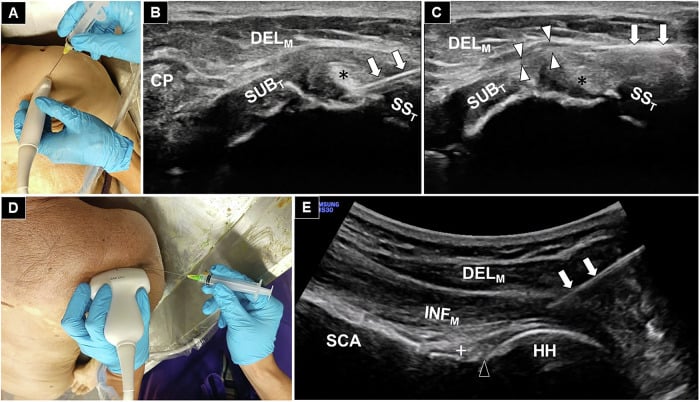
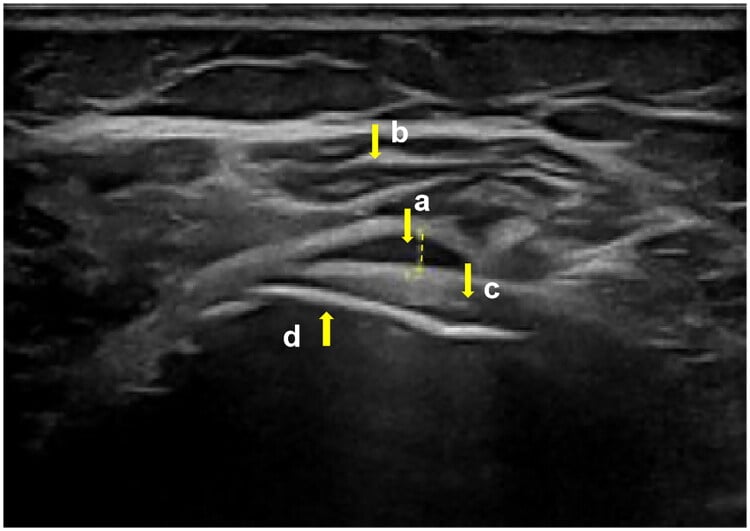
Before the needle. Confirm the diagnosis and the indication: the pain should be from inflammation, not infection, and a joint that might be septic is never injected. Explain that the benefit is temporary, weeks of relief rather than a cure. Use strict aseptic technique to avoid septic arthritis, avoid repeated frequent injections, and warn diabetics about a transient rise in glucose and monitor it.
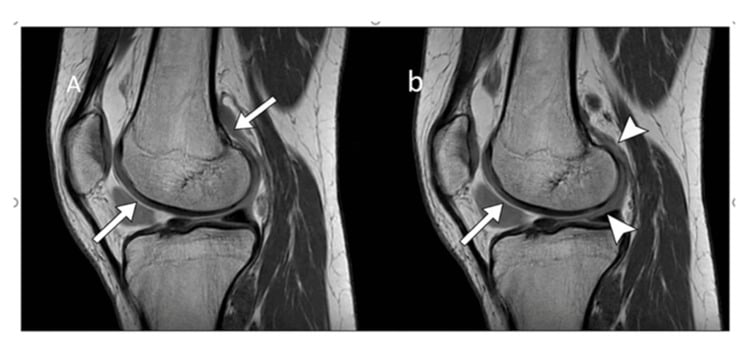
Why the relief is short-term. In the knee, McAlindon's trial of triamcinolone every 12 weeks against saline found no significant difference in pain at two years and greater cartilage loss (the evidence section below), which is the reason intra-articular steroid is used for short-term symptom control rather than as a repeated long-term treatment.
The local soft-tissue price. Repeated local injection weakens tendon and causes skin or fat atrophy at the site, so do not inject into a load-bearing tendon.
After the injection. Any hot, swollen joint after a corticosteroid injection is septic until aspiration proves otherwise. The steroid story does not exclude it.
CLEANBefore You Inject a Joint
Hook:Keep it CLEAN before a steroid joint injection - Confirm, Look for infection, Explain, Aseptic, Note the limits.
Mechanism of Action
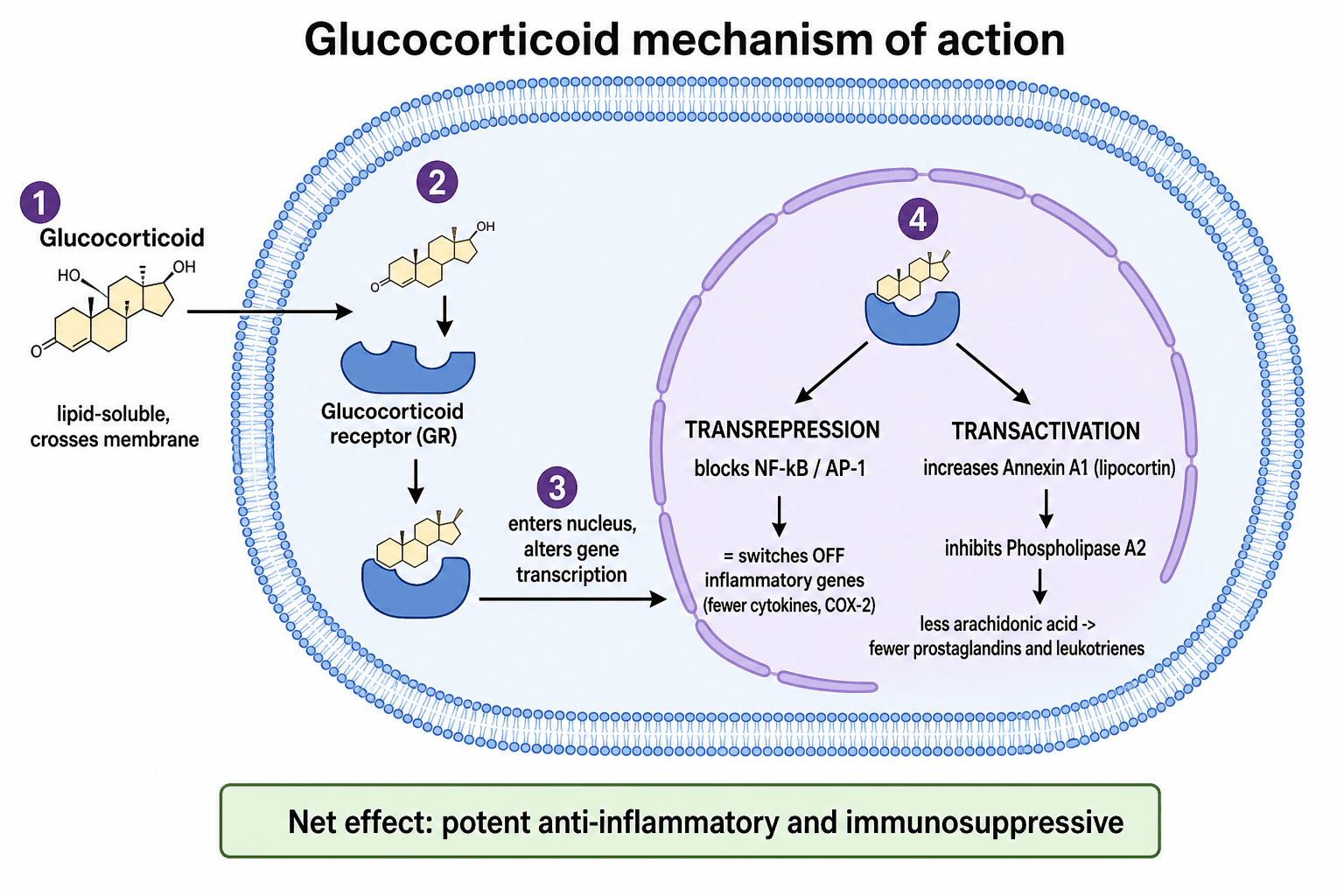
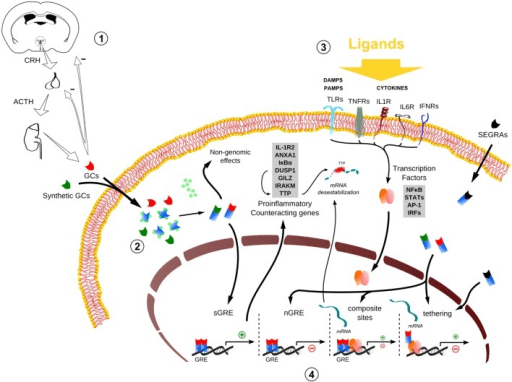
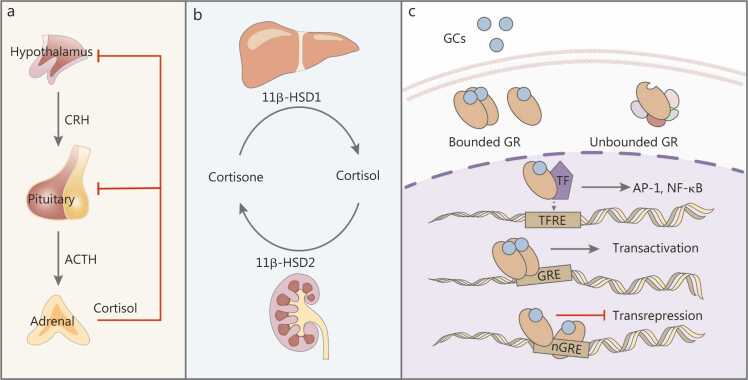
Glucocorticoids are lipid-soluble and pass straight through the cell membrane. Inside the cell they bind the glucocorticoid receptor in the cytoplasm, and the activated receptor-steroid complex enters the nucleus and changes which genes are switched on and off. They reduce inflammation in two ways.
Transrepression. The complex blocks transcription factors such as NF-κB and AP-1, so the cell makes fewer cytokines, fewer adhesion molecules and less of the enzymes that drive inflammation. This is the switching off of inflammatory genes.
Transactivation. The complex increases production of anti-inflammatory proteins such as lipocortin (annexin A1), which inhibits phospholipase A2 and so reduces the release of arachidonic acid, the raw material for prostaglandins and leukotrienes. This is the switching on of anti-inflammatory genes.
The net effect is less inflammation, less immune activity and less pain. Because the glucocorticoid receptor is present in almost every tissue, the same drug also affects bone, muscle, skin, blood vessels, glucose handling and the immune system, which is exactly why the side-effect list is so long.
Effects on bone. This is the orthopaedic core of the pharmacology, and four processes account for it.
- What the steroid does
- Reduce osteoblast number and activity and increase osteoblast and osteocyte apoptosis
- Result
- Less new bone is laid down - the dominant effect
- What the steroid does
- Increase osteoclast survival early on (partly via RANKL)
- Result
- More bone is removed, especially in the first months
- What the steroid does
- Reduce gut calcium absorption and increase urinary calcium loss
- Result
- A tendency to secondary hyperparathyroidism that further drives bone loss
- What the steroid does
- Cause osteocyte apoptosis that is cumulative and not repaired
- Result
- Loss of the bone's mechanosensors - a key step toward osteonecrosis
The osteocyte point is the one to understand. Unlike the gradual thinning of osteoporosis, osteocyte apoptosis is thought to disrupt the bone's ability to sense and repair damage, helping to explain why corticosteroids cause osteonecrosis and not just low bone density.
Agents, Potency and Routes
- Relative potency
- Low (short-acting)
- Typical use in or around orthopaedics
- Intravenous perioperative stress-dose cover; adrenal replacement
- Notes
- Has significant mineralocorticoid (salt-retaining) effect
- Relative potency
- Intermediate
- Typical use in or around orthopaedics
- Oral therapy for inflammatory arthritis and autoimmune disease
- Notes
- The standard oral maintenance steroid
- Relative potency
- Intermediate to high
- Typical use in or around orthopaedics
- Intra-articular and soft-tissue injection; intravenous pulses
- Notes
- Common depot injection agent
- Relative potency
- High
- Typical use in or around orthopaedics
- Intra-articular and soft-tissue injection (depot)
- Notes
- Widely used injectable; long local duration of action
- Relative potency
- Very high (long-acting)
- Typical use in or around orthopaedics
- Strong anti-inflammatory and anti-emetic uses; negligible salt retention
- Notes
- Most potent of the common agents, long duration
Relative anti-inflammatory potency runs dexamethasone greater than triamcinolone and methylprednisolone greater than prednisolone greater than hydrocortisone.
Equivalent doses
Why the conversion matters. The perioperative section defines who needs stress cover in prednisolone (more than about 5 mg/day) but gives the doses in hydrocortisone, and the patient in front of you may be on dexamethasone or methylprednisolone. Without the conversion the protocol cannot be applied, and steroid equivalence is a stock viva question in its own right.
- Equivalent dose
- 20 mg
- Relative anti-inflammatory potency
- 1 (the reference)
- Mineralocorticoid activity
- Significant
- Biological half-life
- Short (8-12 h)
- Equivalent dose
- 5 mg
- Relative anti-inflammatory potency
- About 4
- Mineralocorticoid activity
- Low
- Biological half-life
- Intermediate (12-36 h)
- Equivalent dose
- 4 mg
- Relative anti-inflammatory potency
- About 5
- Mineralocorticoid activity
- Minimal
- Biological half-life
- Intermediate (12-36 h)
- Equivalent dose
- 4 mg
- Relative anti-inflammatory potency
- About 5
- Mineralocorticoid activity
- None
- Biological half-life
- Intermediate (12-36 h)
- Equivalent dose
- 0.75 mg
- Relative anti-inflammatory potency
- About 25 to 30
- Mineralocorticoid activity
- Negligible
- Biological half-life
- Long (36-72 h)
The anchor. The single line worth memorising is hydrocortisone 20 = prednisolone 5 = methylprednisolone 4 = dexamethasone 0.75. From that one line you can convert any patient onto the stress-cover threshold and back again.
The pattern the table makes obvious. As potency and duration rise, mineralocorticoid (salt and water retaining) activity falls. That is why hydrocortisone is the agent for adrenal replacement, since it supplies both glucocorticoid and mineralocorticoid effect, while dexamethasone is chosen when you want anti-inflammatory action without salt and water retention.
Complications and How to Limit Them
Glucocorticoid-Induced Osteoporosis
The commonest serious systemic harm. Bone is lost fastest in the first 3 to 6 months of long-term systemic use, driven by suppressed osteoblasts plus early increased resorption, so fracture risk is assessed and bone protected early rather than after a fracture. The ACR guideline in the evidence section applies to adults on glucocorticoids for more than 3 months at 2.5 mg daily or more: calcium and vitamin D for all, and an antifracture drug (bisphosphonate, denosumab or an anabolic agent) for those at medium to very high risk.
Osteonecrosis of the Femoral Head
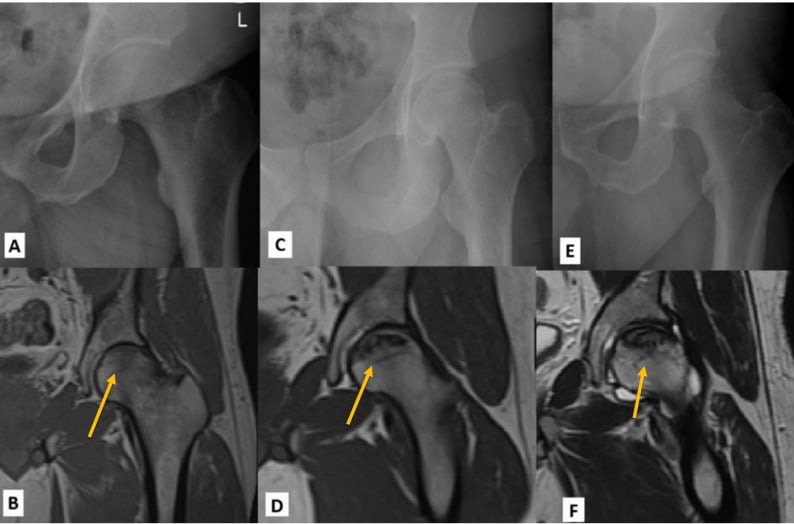
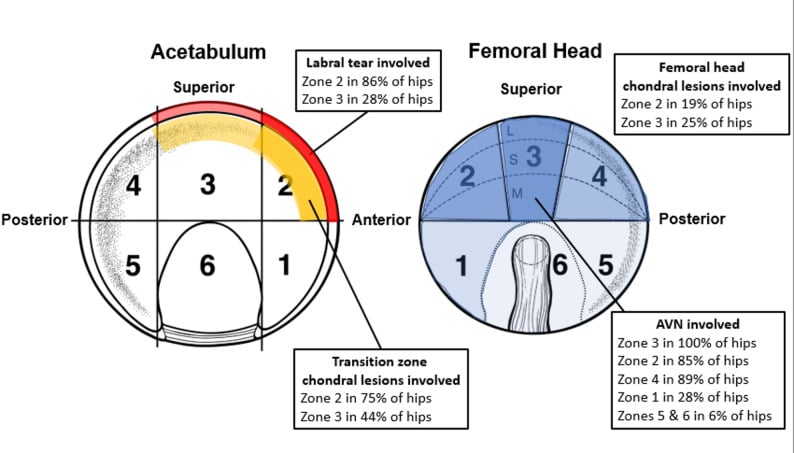
The lesion. Corticosteroids are the most common cause of non-traumatic osteonecrosis, and the femoral head is the typical site. The bone dies through a combination of the osteocyte apoptosis described above and impaired blood supply; the dead segment loses its ability to repair, and over time the subchondral bone collapses, leading to pain and secondary osteoarthritis. Early radiographs are often normal, so MRI is the key early investigation, and because the insult is systemic the disease is frequently bilateral.
Who gets it. Glucocorticoid-induced osteonecrosis develops in 9 to 40 percent of patients receiving long-term therapy (PMID 22169965), and it can follow even short high-dose courses or intra-articular injection. That is a very wide band, and it is worth being able to say why: the figure depends on the cumulative dose and peak daily dose, on the underlying disease (series in lupus and transplantation sit at the high end, and the disease itself carries risk), and above all on how hard the study looked, since cohorts screened with MRI find asymptomatic lesions that symptom-triggered radiographic series never count. Quote it as a range and name the reason for the spread; a single figure here would be false precision.
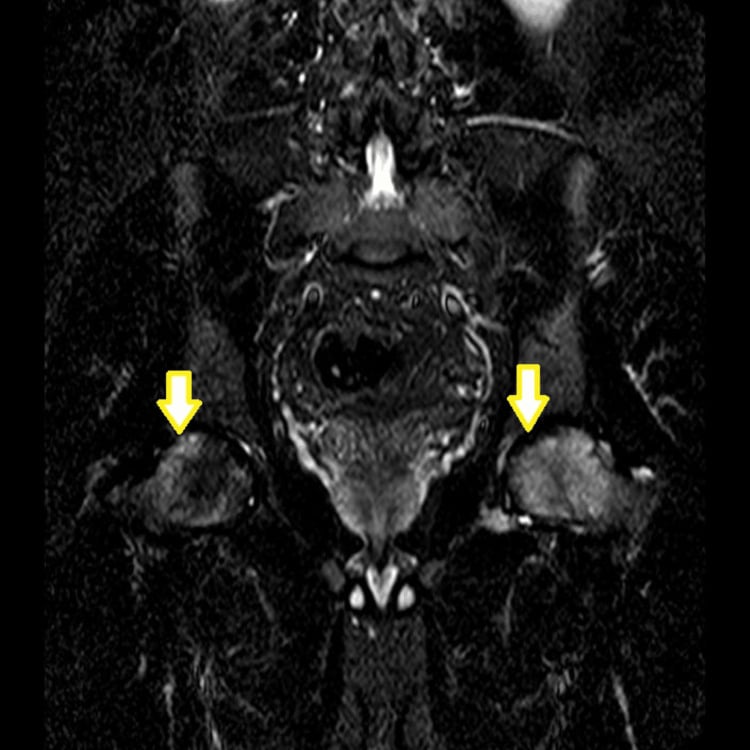
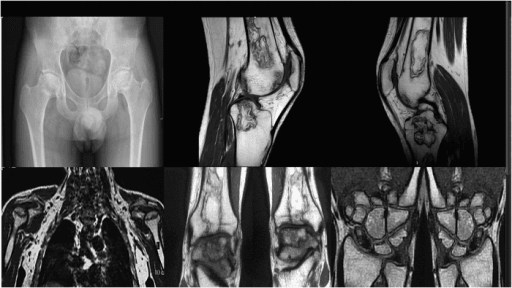
Two points from the same source that change practice and are routinely missed. First, osteonecrosis can occur without glucocorticoid-induced osteoporosis. The two headline bone harms are dissociated, so a normal DEXA scan offers no protection and no reassurance against osteonecrosis, and a patient whose bone density has been checked and treated is not thereby screened for it. They are different lesions of different cells on different timescales: osteoporosis is a quantitative loss of bone driven by suppressed osteoblasts, osteonecrosis is death of osteocytes in a segment of bone.
Second, bisphosphonates have a role in established osteonecrosis, not only in preventing the osteoporosis. Current evidence indicates they may rapidly reduce pain, increase ambulation and delay joint collapse in patients who already have osteonecrosis (PMID 22169965), a useful adjunct to mention alongside protected weight-bearing when the head has not yet collapsed, though it does not displace core decompression or arthroplasty as definitive treatment.
New hip, groin or thigh pain in a patient on (or recently on) corticosteroids is osteonecrosis until proven otherwise. A normal radiograph does not exclude it: request an MRI, image both hips, and refer early.
The differential and the other causes. The differential for a painful hip with a normal radiograph also includes transient osteoporosis of the hip, which is self-limiting and must not be mistaken for early osteonecrosis on MRI. The knee has its own steroid-associated and idiopathic pattern, spontaneous osteonecrosis of the knee, and the other non-traumatic causes worth naming in a viva are dysbaric osteonecrosis, sickle cell disease, alcohol excess and Gaucher disease.
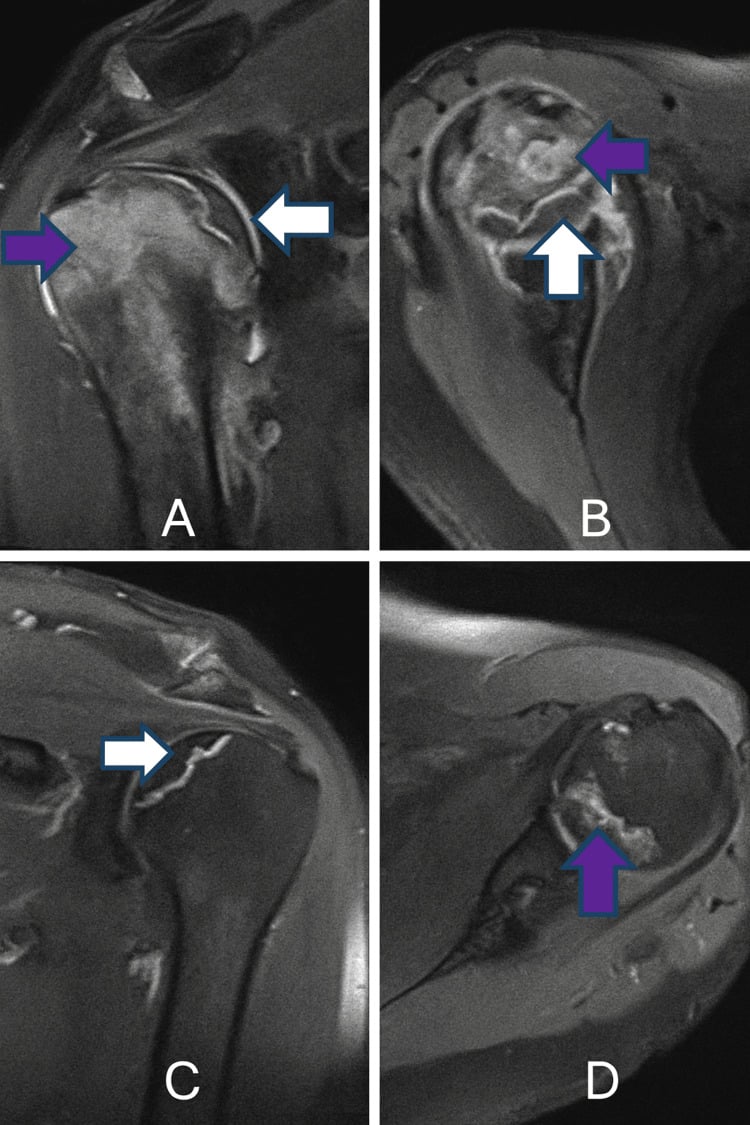
Staging. Staging the femoral head drives the joint-preserving-versus-arthroplasty decision and is a frequent viva follow-up. The classic Ficat and Arlet stages are:
- Stage 0: normal radiograph and normal MRI (the asymptomatic "silent" at-risk hip, often the contralateral side)
- Stage I: radiograph normal but MRI positive (early marrow oedema and the characteristic double-line sign); the patient has pain
- Stage II: radiographic change without collapse, sclerosis and/or cysts, but the head is still spherical and the joint space preserved
- Stage III: subchondral collapse, the crescent sign (a subchondral lucent fracture line) and/or flattening of the head, with the joint space still preserved
- Stage IV: end-stage, with head collapse, joint-space loss and secondary arthritis
The watershed is the crescent sign, the subchondral fracture of Stage III. Before it the head is intact and joint-preserving surgery (core decompression, with or without bone graft) can be offered; once the head has collapsed, arthroplasty is usually needed. The more modern ARCO system refines this with MRI and adds prognostic weight to the size and (especially lateral) location of the necrotic segment, which predict collapse.
Healing, Infection and the Wider Systemic Picture
Healing and infection. Long-term steroids impair wound and fracture healing and raise infection risk in the perioperative period. Optimise where possible, watch wounds closely, and keep a low threshold to treat infection.
Glucose. Hyperglycaemia affects diabetics and follows systemic dosing and injection alike, so warn diabetics and monitor glucose around both.
The cushingoid patient. The long-term steroid patient looks cushingoid, and the systemic effects are worth being able to list:
- Cataracts and glaucoma
- Peptic ulcers, especially with NSAIDs added
- Skin thinning, striae and easy bruising
- Hypertension and hyperglycaemia, from salt and water retention and raised glucose
- Infections, from immunosuppression
- Central obesity and moon face, from fat redistribution, and weight gain
- Immune and adrenal suppression
- Depression and mood change
- Tendon weakening and proximal myopathy
Stopping and the Stress Response
A patient on long-term glucocorticoids has a suppressed adrenal axis and cannot mount the normal cortisol surge that surgery demands. Stopping suddenly, or operating without extra cover, can precipitate an adrenal crisis (hypotension, collapse). Continue the usual steroid, give perioperative stress-dose cover, and wean any long-term course gradually.
Who needs cover. Patients with a suppressed hypothalamic-pituitary-adrenal axis: conventionally those on more than about 5 mg/day of prednisolone for longer than roughly three weeks, anyone with a cushingoid appearance, or a recent prolonged course. Patients on low doses or short courses usually need only their usual dose on the day.
Convert the trigger to your patient's drug. From the equivalence table, 5 mg prednisolone is equivalent to about 20 mg hydrocortisone, 4 mg methylprednisolone or 0.75 mg dexamethasone, so a patient on 2 mg of dexamethasone daily is well above the threshold even though the number looks small. Do the conversion before deciding a patient does not need cover.
Graded by surgical stress, always continuing the patient's normal steroid:
- Minor surgery: the usual oral dose, with about 25 mg of hydrocortisone at induction if there is any concern
- Moderate surgery: about 50 mg of hydrocortisone at induction, then roughly 25 mg every 8 hours for around 24 hours, then back to the usual dose
- Major surgery: about 100 mg of hydrocortisone at induction, then of the order of 50 mg every 8 hours (or a continuous infusion) for 24 to 48 hours, tapering to the usual dose as the patient recovers
Adrenal crisis is hypotension unresponsive to fluids and vasopressors. Give intravenous hydrocortisone immediately.
This is genuinely contested, and you should say so rather than reciting the regimen. The graded protocol above is the classical teaching. The ACR/AAHKS perioperative guidance for patients with inflammatory arthritis undergoing elective hip or knee arthroplasty points the other way: continue the patient's usual daily glucocorticoid dose rather than giving supraphysiologic "stress-dose" steroids, and it treats reflexive stress-dosing as an error rather than a safety net. That position is developed in arthroplasty preoperative optimisation.
How to reconcile them. The populations are not the same. The ACR/AAHKS recommendation addresses elective arthroplasty in patients on chronic, relatively modest doses for inflammatory arthritis, where the evidence has not shown benefit from supraphysiologic cover and over-replacement carries its own costs (hyperglycaemia, infection, poor wound healing). The classical graded regimen retains its place at the other end of the spectrum: profound or prolonged suppression, a cushingoid patient, known adrenal insufficiency, major or emergency surgery, and the haemodynamically unstable patient.
The position to hold. Always continue the usual daily steroid and never stop it abruptly. Whether to give additional cover depends on the degree of axis suppression and the magnitude of the surgical stress: for elective arthroplasty on a modest maintenance dose, current guidance favours simply continuing the usual dose, whereas for major or emergency surgery in a profoundly suppressed patient, give graded hydrocortisone cover. Either way, recognise and treat adrenal crisis immediately if it occurs. The one thing that is not contested is never stopping the steroid.
Guidelines, Registries and Global Practice
- Glucocorticoid-induced osteoporosis guidelines (for example the American College of Rheumatology, and equivalent guidance from NOGG in the UK and other national societies) agree on the core principles: assess fracture risk early, give calcium and vitamin D to all long-term users, and add an antifracture drug (oral bisphosphonate is the usual first choice) for those at moderate or higher risk, with anabolic agents reserved for the highest-risk patients.
- Osteoarthritis guidelines (for example AAOS and NICE) place intra-articular corticosteroid as an option for short-term symptom relief, not as disease-modifying treatment, reflecting trial evidence that the benefit is temporary and that repeated injection may harm cartilage.
- Where guidance differs is mainly the threshold for starting bone-protecting drugs and the place of newer anabolic agents, rather than any disagreement on the underlying harm of long-term steroids.
- Global practice variation largely reflects drug availability and cost (for example the choice between oral and intravenous bisphosphonates or anabolic agents) rather than differences in the principles of safe corticosteroid use.
Exam Viva Scenarios
Practise clinical reasoning and management decisions out loud
“A patient with rheumatoid arthritis is on long-term prednisolone. The examiner asks how corticosteroids work and what they do to bone.”
“A 35-year-old man who took high-dose steroids for a flare of inflammatory bowel disease six months ago now has several weeks of right groin pain, worse on weight-bearing. His hip radiograph is reported as normal. How do you proceed?”
Mechanism
- Bind cytoplasmic glucocorticoid receptor, alter gene transcription
- Switch off inflammatory genes; switch on anti-inflammatory proteins (lipocortin)
- Potent anti-inflammatory and immunosuppressive
- Affect almost every tissue - hence the wide side-effect list
Effects on Bone
- Reduce bone formation, increase early resorption - osteoporosis
- Most bone loss in the first 3 to 6 months
- Osteocyte apoptosis drives osteonecrosis
- Most common cause of non-traumatic osteonecrosis (femoral head, often bilateral)
Intra-Articular Use
- Short-term pain relief in osteoarthritis and soft-tissue conditions
- Repeated triamcinolone gave no pain benefit over saline at 2 years and more cartilage loss
- Strict aseptic technique; never inject a possibly septic joint
- Warn diabetics about a transient rise in glucose
Red Flags
- New hip or groin pain on steroids - MRI both hips for osteonecrosis
- Start bone protection early for courses of 3 months or more
- Give perioperative stress-dose cover; never stop long-term steroids abruptly
- Watch for impaired healing and infection after surgery
Evidence: Intra-Articular and Bone Effects
The McAlindon RCT is why intra-articular steroid is a short-term, not a repeated long-term, treatment; the Weinstein review explains the osteocyte-apoptosis mechanism of osteonecrosis; and the ACR guideline sets the early, risk-matched approach to bone protection in long-term steroid users.
Effect of Intra-articular Triamcinolone vs Saline on Knee Cartilage Volume and Pain (RCT)
- Two-year double-blind RCT, 140 patients with symptomatic knee osteoarthritis and ultrasound synovitis
- Triamcinolone 40mg every 12 weeks versus saline injection
- Triamcinolone caused significantly greater cartilage volume loss than saline (between-group difference about 0.11mm)
- There was no significant difference in knee pain between the two groups at 2 years
Glucocorticoid-Induced Osteonecrosis - Mechanism and Significance (Review)
- Glucocorticoids are the most common cause of non-traumatic osteonecrosis
- Osteonecrosis develops in roughly 9 to 40 percent of patients on long-term therapy and can follow short high-dose exposure or even intra-articular injection
- The primary lesion is osteocyte apoptosis - a cumulative, unrepairable defect - rather than a single vascular event
- This loss of osteocytes disrupts the bone's mechanosensing and leads to collapse of the femoral head
Preventing and Treating Glucocorticoid-Induced Osteoporosis (ACR Guideline)
- Applies to adults on glucocorticoids for more than 3 months at 2.5mg daily or more
- Strongly recommends early fracture-risk assessment (including bone density and FRAX where appropriate)
- Recommends calcium and vitamin D for all, with an antifracture drug (bisphosphonate, denosumab, or an anabolic agent) for those at medium to very high risk
- Anabolic agents are conditionally preferred as initial therapy for the highest-risk patients