Palmar Fibromatosis | Progressive Flexion Contracture
- Myofibroblasts produce Type III collagen causing contracture
- Ring and little fingers most commonly affected (ulnar predominance)
- Spiral cord displaces NV bundle central and superficial - highest injury risk
- Surgical indications: MCP greater than 30° or ANY PIP contracture
- Diathesis features: Young onset, bilateral, ectopic fibromatosis, family history
- “Northern European/Celtic/Viking ancestry 15x risk
- “Diabetes: 20% prevalence (vs 4% general)
- “PIP contractures harder to correct - operate early
- “Recurrence vs extension: important distinction
Overview and Epidemiology
Dupuytren's disease is a benign fibroproliferative disorder of the palmar and digital fascia. Nodules and cords form in the fascia and draw the digits into a progressive flexion contracture. It is named after Baron Guillaume Dupuytren, who described its surgical treatment in 1831.
Who gets it. Prevalence is highest in populations of Northern European, Celtic or Viking descent, reaching up to 30% in Norwegian men over 60, and it is markedly lower in African, East Asian and South Asian populations. Pooled data from Western, European-ancestry populations give mean prevalences of 12% at 55, 21% at 65 and 29% at 75, rising dramatically with age after 50.
Age and sex. Presentation peaks at 50-60 years, although a patient with a diathesis can present younger. The male-to-female ratio is 7:1 in younger patients and equalises after the age of 70.
Which hand and which finger. The right hand is slightly more often affected, and 40-60% of patients have bilateral disease, which may be asymmetric in severity. The ring finger is involved most often, then the little, middle and index fingers, and the thumb least.
Risk factors. Heredity and Northern European ancestry are the strongest predictor: the pattern is autosomal dominant, and the risk is 15 times higher in Northern European, Celtic or Viking populations. The full list is remembered as DASHED:
- Diabetes mellitus - 20% prevalence in diabetics, against 4% in the general population
- Alcohol - a dose-dependent association, linked to hepatic fibrosis
- Smoking - a 2-3x increased risk, through microvascular effects
- Hereditary / Northern European ancestry - as above
- Epilepsy medication - phenytoin and phenobarbital
- Disease associations - the ectopic fibromatoses: Peyronie (penile), Ledderhose (plantar) and Garrod pads (knuckles)
Dupuytren's diathesis. The term describes an aggressive phenotype with a poor prognosis. The core features are remembered as YBEF, and two more complete the list:
- Young onset, under 40 years
- Bilateral hand involvement
- Ectopic fibromatoses - Peyronie, Ledderhose
- Strong Family history
- Radial-side involvement - index, middle, thumb
- Garrod pads over the dorsal PIP knuckles
Diathesis patients recur more often and may benefit from more aggressive initial surgery (dermofasciectomy). Be careful with a percentage here: no study on this page reports a recurrence rate stratified by diathesis, and figures quoted for it in reviews predate the 2014 consensus definition, so counsel on the direction and the reason rather than on a number.
Cord Anatomy and Types
The normal palmar fascia is organised in four groups:
- Structures
- Pretendinous bands - four, from palmaris longus to the digits, the ring and little most prominent. Spiral band - from the natatory ligament to the lateral digital sheet
- Structures
- Transverse palmar ligament at the MCP level. Natatory ligament across the distal palm between the web spaces, connecting the pretendinous bands distally
- Structures
- Septa of Legueu and Juvara - eight vertical septa that anchor the fascia to the skeleton and create the palmar compartments
- Structures
- Lateral digital sheet, lateral to the flexor sheath. Grayson ligament, volar to the neurovascular bundle. Cleland ligament, dorsal to the bundle and not involved in Dupuytren's
The spiral cord is the most dangerous anatomically because it displaces the neurovascular bundle central and superficial. During dissection, the NV bundle is at high risk of injury as it lies in an abnormal position. Always identify the NV bundle before dividing any cords.
Pretendinous cord, the most common. It arises from the pretendinous band, runs from the distal palmar crease to the base of the digit and causes MCP contracture. The neurovascular bundle stays in its normal position, and the cord is relatively safe to excise.
Central cord. The continuation of the pretendinous cord into the digit, lying centrally over the flexor sheath and causing PIP contracture. The bundle is in its normal position, and the cord is common in the ring and little fingers.
Spiral cord, the most dangerous. It is built from four components, remembered as PSLG: the pretendinous band, the spiral band, the lateral digital sheet and the Grayson ligament. It spirals around the neurovascular bundle and displaces it centrally and superficially, by up to 1cm from its normal position, which gives it the highest risk of iatrogenic nerve injury and demands careful dissection under loupe magnification.
Lateral cord. It forms from the lateral digital sheet alone and causes PIP contracture. It is less common than the other types, and the bundle is usually in its normal position.
Rarer cords complete the list:
- Retrovascular cord - dorsal to the neurovascular bundle, very rare
- Natatory cord - in the web space, causing web-space contracture
- Thumb cords - first-web pretendinous and proximal commissural cords
- Location
- Palm to finger base
- Contracture
- MCP
- NV Bundle
- Normal position
- Risk Level
- Low
- Location
- Digit over flexor sheath
- Contracture
- PIP
- NV Bundle
- Normal position
- Risk Level
- Low
- Location
- Wraps around NV bundle
- Contracture
- MCP and PIP
- NV Bundle
- Central and superficial
- Risk Level
- HIGH
- Location
- Lateral digital sheet
- Contracture
- PIP
- NV Bundle
- Usually normal
- Risk Level
- Moderate
Pathophysiology
The myofibroblast is the central pathological cell. It is a modified fibroblast with a smooth muscle-like contractile apparatus, including stress fibres of alpha-smooth muscle actin (alpha-SMA), and it generates contractile force through actin-myosin interaction. It lays down excessive Type III collagen, where normal fascia is Type I.
The signals. The myofibroblast responds to TGF-beta and to mechanical stress, and several pathways feed the process:
- TGF-beta signalling - the central driver of myofibroblast differentiation
- Wnt pathway - promotes fibroblast-to-myofibroblast transformation
- Mechanical stress - tension induces myofibroblast activation
- Hypoxia - local tissue hypoxia may trigger fibrogenesis
- Free radicals - oxidative stress in the pathological tissue
Proliferative phase. Myofibroblasts proliferate in a highly cellular tissue of immature fibroblasts and form nodules in the palm and digits. Type III collagen predominates, and the nodules may be painful and progressive.
Involutional phase. The myofibroblasts align along the lines of stress, and cords form from the palmar nodules and extend into the digits. Contracture begins and progresses as the tissue becomes less cellular and more organised, with a transition from Type III to Type I collagen.
Residual phase. A mature, relatively acellular cord of dense Type I collagen bundles holds an established, fixed contracture. There is minimal active disease, and the recurrence risk is low if the cord is excised.
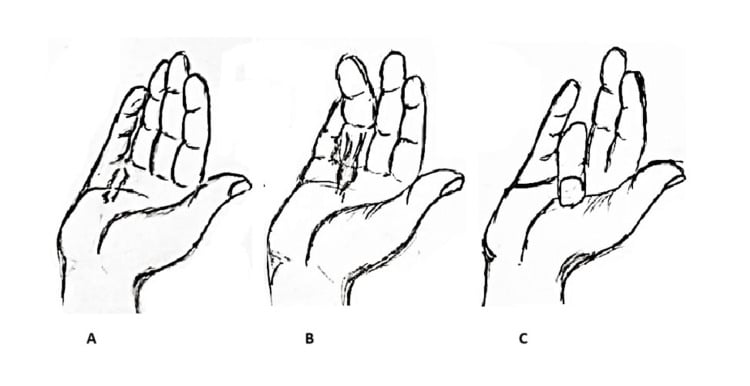
Classification Systems
Tubiana is the most used classification. It stages each digit by its total passive extension deficit (TPED), the sum of the MCP, PIP and DIP contractures.
- Total Flexion
- 0°
- Description
- Nodules only, no contracture
- Treatment
- Observation
- Total Flexion
- 0-45°
- Description
- Mild contracture
- Treatment
- Consider treatment if progressive
- Total Flexion
- 45-90°
- Description
- Moderate contracture
- Treatment
- Surgery indicated
- Total Flexion
- 90-135°
- Description
- Severe contracture
- Treatment
- Surgery, may need skin graft
- Total Flexion
- Greater than 135°
- Description
- Very severe contracture
- Treatment
- Surgery, often dermofasciectomy
The stage is prognostic: higher stages have worse outcomes and higher recurrence, and stages III-IV have significantly worse correction rates, especially at the PIP joint.
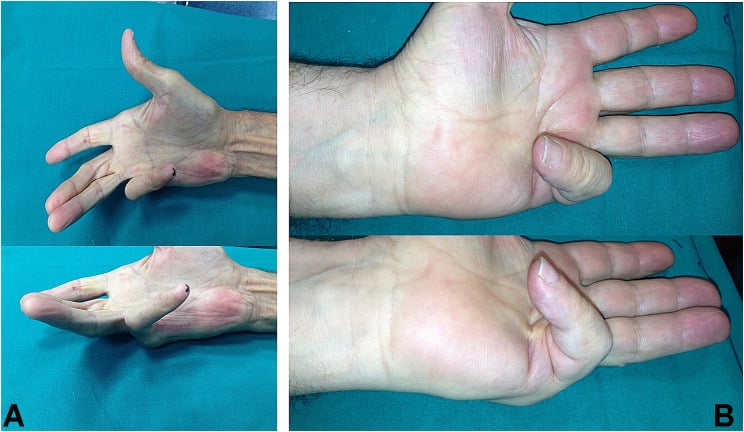
Clinical Presentation and Assessment
The complaint. A progressive inability to extend the fingers fully, and difficulty placing the hand flat on a surface. Everyday tasks suffer: hand hygiene, putting on gloves, putting the hand in a pocket, fine motor work and gripping tools, and there may be cosmetic concerns or interference with the patient's occupation. It is usually painless, and pain suggests the active proliferative phase.
The course. Onset is insidious, and progression runs over months to years, with periods of rapid progression alternating with stability. The patient may notice a palmar nodule before any contracture develops.
The risk factors. Ask about each risk factor and diathesis feature listed above: ancestry, diabetes and its control, alcohol, epilepsy medication, family history, the other hand, and ectopic fibromatoses.
Look and feel. Palmar nodules are firm, subcutaneous and adherent to the skin, and the skin pits over involved cords. The cords are palpable as longitudinal bands from the palm into the digits; note their consistency, a hard mature cord against a soft nodule. Record which rays are involved, any previous surgical scars and the quality of the skin.
Measure every joint. Measure the MCP and PIP contractures separately with a goniometer, and sum all the joints for the total passive extension deficit. The PIP contracture is the most important for prognosis. Document both active and passive deficits, to rule out joint pathology.
The table-top test (Hueston). The patient tries to place the palm flat on a table, and the test is positive when the palm cannot make flat contact. It indicates a functionally significant contracture and is the traditional threshold for surgery.
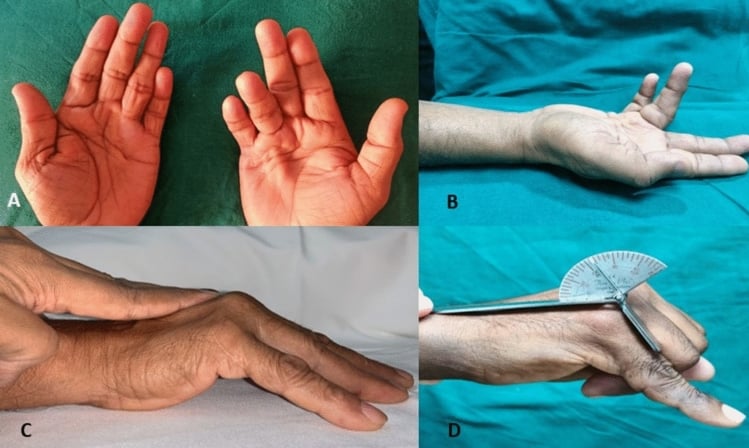
Neurovascular baseline. Record digital sensation (light touch and two-point discrimination), capillary refill and colour, and perform an Allen test if there is vascular concern. Document the baseline before any intervention.
Both hands. Always examine both hands, and look for the diathesis features.
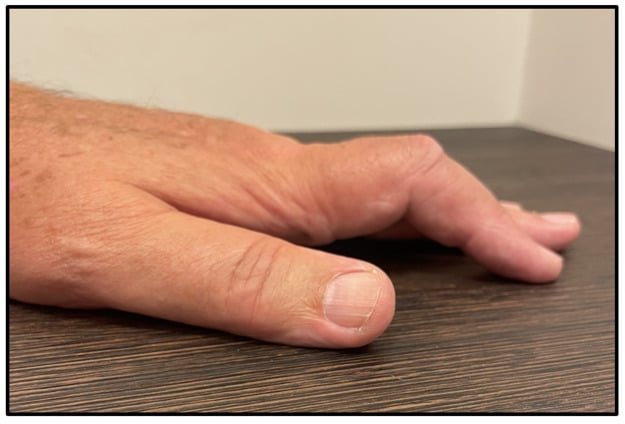
- Key Distinguishing Feature
- Firm palmar cord/nodule, skin pitting
- Cord/Contracture
- Yes — MCP/PIP flexion
- Clue
- Ulnar digits, NV bundle displaced by spiral cord
- Key Distinguishing Feature
- Triggering/locking with active flexion
- Cord/Contracture
- No fixed contracture
- Clue
- Nodule moves WITH tendon on flexion
- Key Distinguishing Feature
- Congenital, painless PIP flexion
- Cord/Contracture
- No palmar cord
- Clue
- Present from childhood, little finger
- Key Distinguishing Feature
- Persistent firm mass, may ulcerate
- Cord/Contracture
- Mass not cord
- Clue
- Young adult, suspicious mass — biopsy if atypical
- Key Distinguishing Feature
- Discrete mass, history of trauma
- Cord/Contracture
- No cord
- Clue
- Localised, no fascial band
- Key Distinguishing Feature
- Joint-line tenderness, radiographic changes
- Cord/Contracture
- Fixed but no palmar cord
- Clue
- X-ray shows joint pathology
A Dupuytren's cord does NOT move when the finger flexes (it is fascial, not tendinous), whereas a trigger-finger nodule moves with the flexor tendon. Skin pitting/tethering over the cord is pathognomonic of Dupuytren's.
Investigations
A clinical diagnosis. No routine investigations are required: the diagnosis rests on the characteristic palmar nodules and cords with flexion contracture. Imaging is for diagnostic uncertainty or for planning complex revision surgery.
Blood tests. There is no specific blood test for Dupuytren's disease. Screen for diabetes with an HbA1c or fasting glucose if it is not already known, and check liver function if the alcohol history suggests hepatic disease.
Radiographs. They are not routinely indicated for the diagnosis. Take them when joint pathology is suspected (arthritis, a previous fracture or a history of trauma), and before surgery on a severe contracture to assess joint integrity; a fixed PIP contracture warrants a film to look for secondary joint changes.
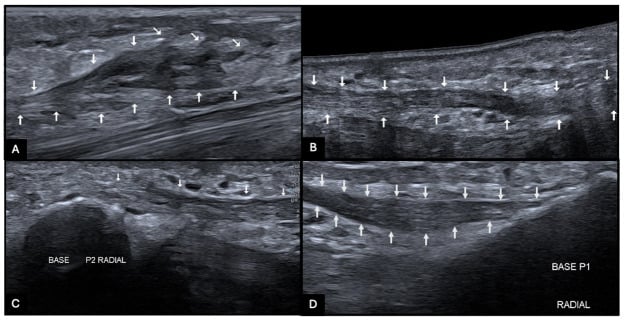
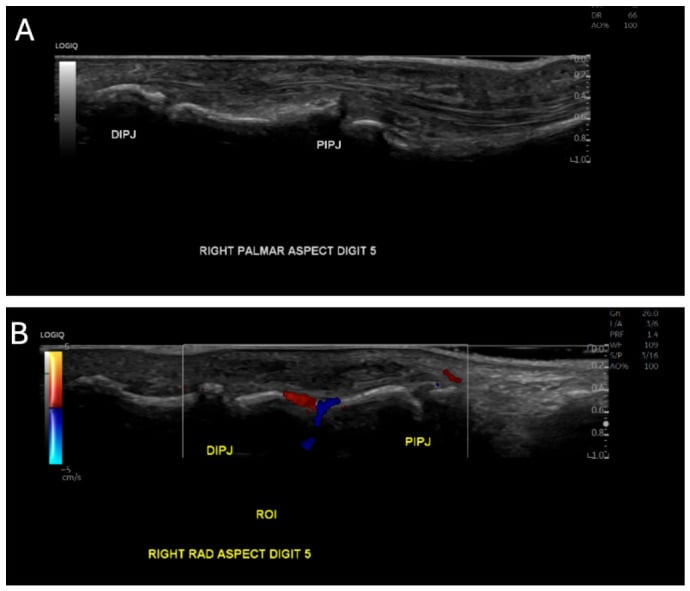
Ultrasound. High-resolution ultrasound can demonstrate thickened palmar fascia, the identity and extent of a cord, and its relationship to the neurovascular structures, and it may help distinguish Dupuytren's from other masses. It remains mainly a research tool rather than routine clinical practice.
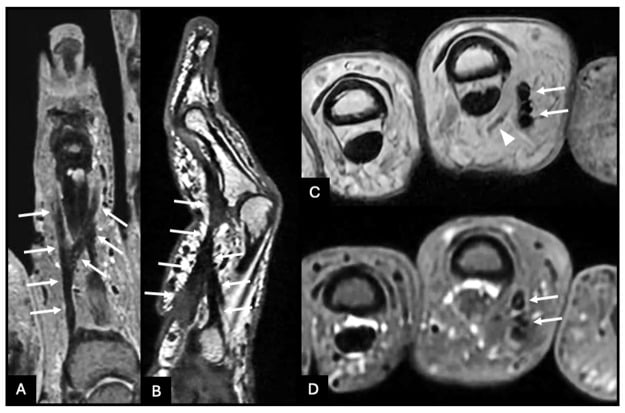
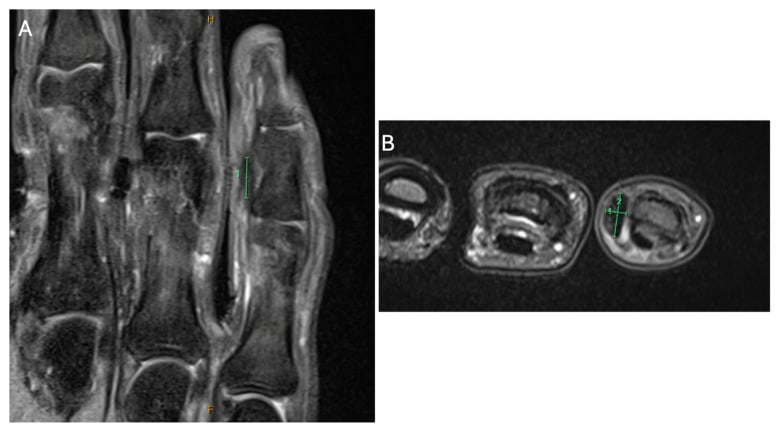
MRI. It is rarely indicated in primary disease and useful for complex cases or diagnostic uncertainty. It can show the full extent of fascial involvement, the relationship to the tendons, neurovascular bundles and joints, and secondary joint pathology. Cords are low signal on T1, and the T2 signal varies with cellularity and phase.
Histopathology. It is not required for diagnosis. Tissue, if obtained, shows myofibroblasts with alpha-SMA immunostaining, Type III collagen predominance early and a transition to Type I late, cellularity that varies with the phase, and no malignant features, since this is a benign process.
Management Algorithm
Observation. Nodules without contracture, or minimal contracture (less than 30° at the MCP and none at the PIP), are observed, with review of progression every 6-12 months and education about the natural history. No method has been proven to prevent progression.
Corticosteroid injection. Intralesional triamcinolone, 10-40mg injected directly into the nodule, may reduce nodule size in early disease, but the evidence is limited to case series. It can cause fat pad atrophy and skin depigmentation, and it is not effective for established cords.
Radiotherapy. Low-dose radiation, by superficial X-ray or electron beam, may slow progression in the early nodular phase. The evidence is limited and it is not standard of care: it is used in parts of Europe, notably Germany, but not widely adopted elsewhere, and there are concerns about long-term radiation effects.
Splinting. Splinting has no role in preventing contracture progression and may worsen the disease through mechanical stress. Extension splinting after an intervention is a different matter, covered under post-operative care.
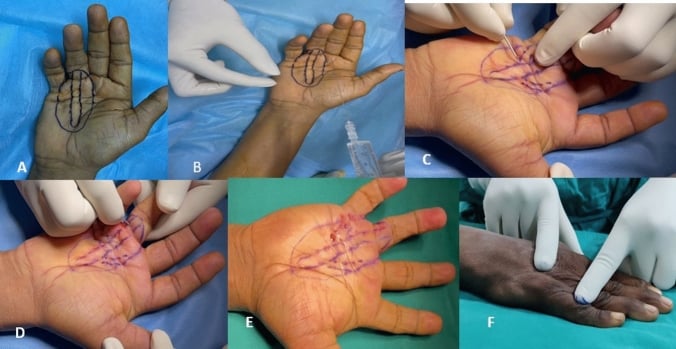
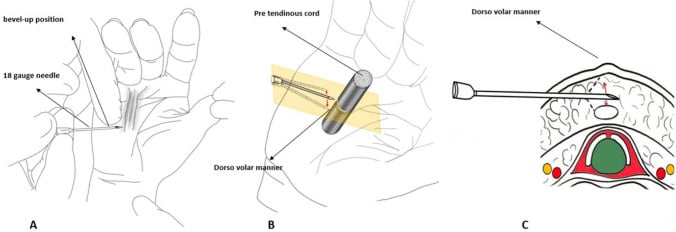
How it works. Collagenase from Clostridium histolyticum (Xiaflex) breaks down the Type I and III collagen of the cord enzymatically, weakening it so that it can be manipulated and ruptured.
Technique.
- Inject 0.58mg into the palpable cord: at the level of the distal palmar crease for an MCP contracture, at the base or mid-proximal phalanx for a PIP contracture.
- The patient returns the next day (24-48 hours) for manipulation to rupture the cord under local anaesthetic.
- Extension splinting follows for 4 months.
Who it suits. An MCP contracture with a palpable cord, preferably a single joint, in a patient who prefers a non-surgical option or whose comorbidity precludes surgery. Allergy to collagenase is a contraindication, and anticoagulation a relative one; multiple joints in the same finger are listed as a contraindication, though they can be treated sequentially.
Outcomes. In Hurst's trial (n=308), 64.0% of collagenase-treated cords reached 0-5 degrees of full extension 30 days after the last injection, against 6.8% with placebo. That is a short-term endpoint, and the comparator was placebo rather than surgery. MCP joints respond better than PIP joints; recurrence is covered with the other treatments under Complications.
Complications. Skin tears are common and usually heal. The others are bruising, swelling and pain, lymphadenopathy, allergic reaction, flexor tendon rupture (rare but reported) and CRPS (rare).
Availability. Collagenase is region-dependent: FDA-approved in the US, it was withdrawn from UK and EU markets in 2020 for commercial reasons despite retained efficacy. Where it is unavailable, needle fasciotomy fills the minimally invasive niche, and cost remains a major access barrier in many health systems.
- 1
Initial Assessment
Palmar nodules only, no contracture
- 2
Measure Contracture
Document MCP and PIP angles separately
- 3
Patient Assessment
Evaluate comorbidities, diathesis features, functional impact
- 4
Select Treatment
Limited fasciectomy (gold standard), Needle aponeurotomy (elderly/MCP), Collagenase (non-surgical option)
- 5
Post-operative Care
Early mobilization day 1-2, night splinting 3-6 months, hand therapy essential
Surgical Management
Limited fasciectomy is the gold standard: excision of the diseased fascia only, preserving normal fascia and all vital structures. It is the standard surgical treatment, balancing efficacy against morbidity.
Indications.
- MCP contracture greater than 30°
- Any PIP contracture - harder to correct, with lower success than the MCP, so operate earlier
- Positive table-top test
- Failed conservative, needle or collagenase treatment
- Primary surgical treatment
Before surgery. Document the contractures with goniometry and photographs, assess neurovascular status, and radiograph as described under Investigations. Optimise diabetes and other comorbidities and counsel smoking cessation. Set realistic expectations, since the PIP is harder to correct, and counsel on the risks of nerve injury, recurrence, stiffness and CRPS.
Anaesthesia. General anaesthesia or a regional (axillary) block, with local anaesthetic and adrenaline for vasoconstriction, under tourniquet control.
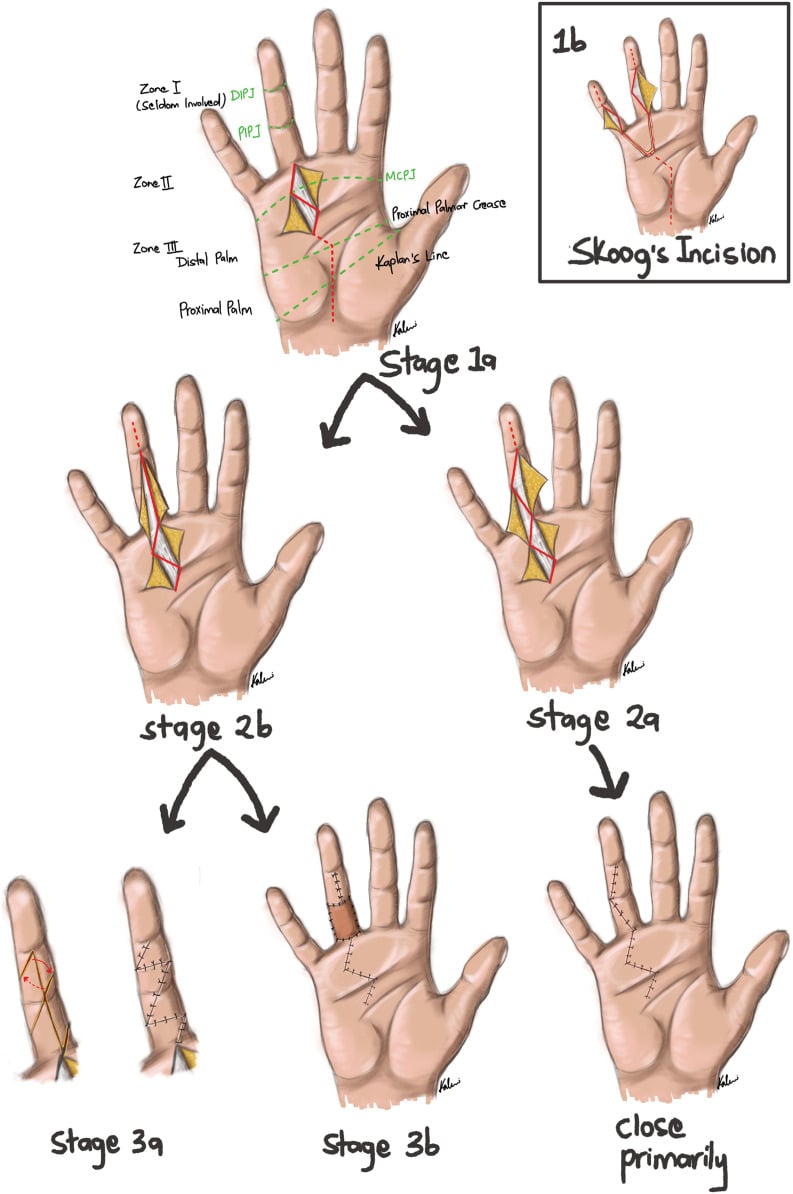
Incisions. A Bruner zigzag of alternating transverse and oblique limbs carries the incision across the creases; a midlateral incision suits an isolated cord. Never cross a crease with a straight longitudinal incision, which risks contracture. Extend into the palm as needed, and use Z-plasties to lengthen the skin if it is deficient.
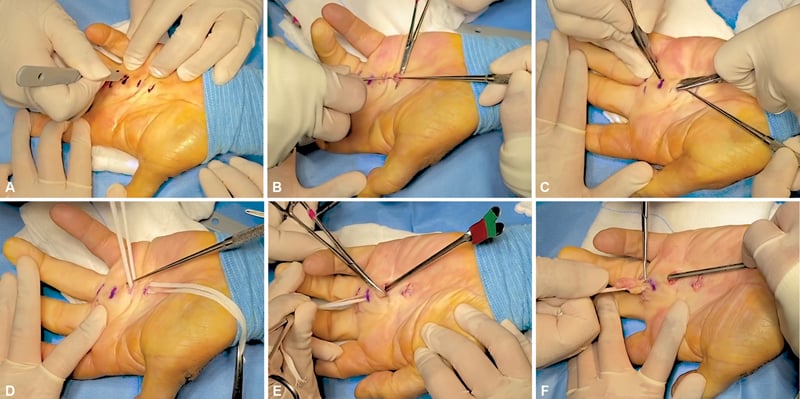
Dissection.
- Elevate the skin flaps carefully, because the fascia is adherent to the skin.
- Identify the diseased fascia: white, firm cords and nodules.
- Identify the neurovascular bundles, which a spiral cord displaces.
- Trace the bundles proximally and distally to define safe zones.
- Use loupe magnification for the digital dissection.
- Excise the diseased fascia by careful sharp dissection.
- Trace the cords to their insertions into the flexor sheath and skeleton.
- Excise completely while preserving normal structures, and release the contracture to full extension if possible.
What must survive. The digital nerves and arteries, the flexor tendons, the PIP joint capsule (to avoid destabilising the joint) and the normal fascial bands.
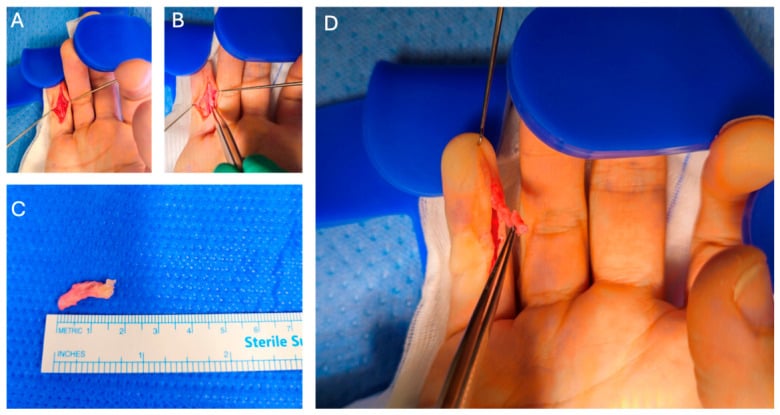
Closure. Leave the wound open to heal by secondary intention, close it with Z-plasties if there is adequate skin, or graft deficient skin (dermofasciectomy). A bulky dressing with a splint in extension follows.
Outcomes. MCP correction is the reliable one, and every treatment on this page shows the same gradient: PIP correction is less reliable and recurs more. Satisfaction in the only randomised comparison was high, and significantly higher than after needle fasciotomy, though 53% of patients said they would still choose needle fasciotomy if the disease recurred.
Complications
Neurovascular injury is the most important complication to avoid. It occurs in 1-5% of fasciectomies, more often with a spiral cord and in revision surgery. The digital nerve is injured most often, because of spiral cord anatomy; a digital artery can also be injured, and bleeding may be the only sign. Prevention is identification of the bundles, loupe magnification and gentle dissection throughout.
If the bundle is injured. Repair the nerve primarily with 8-0 or 9-0 nylon, or graft it if there is a gap. Repair the artery if possible, or ligate it if necessary and check perfusion.
Flexor tendon injury is rare (less than 1%) and occurs while cords are dissected from the flexor sheath; repair it primarily if identified.
Skin flap necrosis. The skin is adherent to the diseased fascia, and thin flaps are at risk. Handle them gently and preserve their blood supply.
Early complications, within 6 weeks.
- Haematoma (2-5%) - prevented by meticulous haemostasis, deflating the tourniquet before closure and a pressure dressing; observe a small one, evacuate a large one
- Wound problems - delayed healing is common with the open-palm technique, which heals by secondary intention; wound breakdown occurs in 5-10%, especially over the PIP, and infection in 1-2%, rare with proper technique. Manage with regular dressings, hand therapy, and antibiotics if infected
- Skin graft loss after dermofasciectomy - partial in 5-10%, complete loss rare (less than 2%); prevented by adequate haemostasis, a secure bolster dressing and immobilisation, and managed by allowing granulation, with a split skin graft if needed
Recurrence or extension. Recurrence is the return of disease in a previously treated area; extension is new disease in a previously unaffected area. Extension represents disease progression rather than true recurrence and is managed as primary disease. The risk factors for recurrence are the diathesis features, young age and PIP involvement.
How often it recurs depends on the definition. The only randomised comparison, of needle fasciotomy against limited fasciectomy found 84.9% against 20.9% at five years, defining recurrence as a total passive extension deficit increase of more than 30 degrees. After collagenase, CORDLESS found 47% of successfully treated joints recurred at five years using a 20-degree threshold, 32% at 30 degrees, with 66% of PIP joints against 39% of MCP joints; that figure is not directly comparable with the needle-fasciotomy one. The five-year ranges in the table below carry no stated definition and cannot be set against those trial figures.
Recurrent disease. Distinguish recurrence from extension, assess severity and functional impact, review the previous operative notes if available, and consider the diathesis features. Observe mild, minimal or asymptomatic disease, and intervene again when it is symptomatic:
- Needle aponeurotomy - repeatable, useful for recurrent MCP disease
- Repeat fasciectomy - technically challenging, with a higher nerve injury risk
- Dermofasciectomy - lower recurrence; consider it in young patients
- Amputation - salvage for a repeatedly recurrent, non-functional digit
Stiffness. Some loss of flexion is common after surgery, and a pre-operative PIP contracture may not fully correct, so realistic expectations matter. Active mobilisation and hand therapy are essential.
CRPS occurs in 5-10%, varying with the definition. Extensive surgery, prolonged immobilisation and nerve injury are risk factors; early mobilisation and gentle surgery are the prevention; and it is managed with hand therapy, pain management and CRPS protocols.
Sensation, scar and pain. Numbness in the distribution of the affected nerves usually improves over 6-12 months and is permanent if a nerve was injured. Scar contracture can occur with inadequate skin coverage: Z-plasty reduces the risk, a skin graft treats deficiency, and hand therapy includes scar massage. Scar tenderness is common initially and usually resolves over time, but a nerve injury can leave neuropathic pain.
- Needle Aponeurotomy
- Less than 1%
- Collagenase
- Less than 1%
- Limited Fasciectomy
- 1-5%
- Dermofasciectomy
- 2-6%
- Needle Aponeurotomy
- 50-60%
- Collagenase
- 50%
- Limited Fasciectomy
- 30-50%
- Dermofasciectomy
- 10-20%
- Needle Aponeurotomy
- Rare
- Collagenase
- Rare
- Limited Fasciectomy
- 1-2%
- Dermofasciectomy
- 2-3%
- Needle Aponeurotomy
- Rare
- Collagenase
- Rare
- Limited Fasciectomy
- 5-10%
- Dermofasciectomy
- 5-10%
Post-operative Care and Rehabilitation
The first two weeks. A bulky dressing with an extension splint, elevation to reduce oedema, neurovascular monitoring, and oral analgesia, which is usually sufficient. Change the dressing at 2-3 days if drainage is excessive. Remove sutures at 2 weeks, or leave the wounds open; an open palm needs regular dressings until it heals, at 4-6 weeks.
Early mobilisation starts on day 1-2 after surgery and is critical for the outcome. Active flexion exercises prevent stiffness, and extension is gentle and never forced.
Hand therapy, 2-12 weeks. An essential component of treatment: active range-of-motion exercises, scar massage once the wounds have healed, oedema control with compression and elevation, and progressive strengthening.
Night splinting. A custom thermoplastic splint holds the fingers in extension at night for 3-6 months, maintaining the correction while the tissues heal. It is commonly practised, although the evidence that it reduces recurrence is unclear.
Return to activities. Light activities at 2-4 weeks and heavy activities at 6-12 weeks, individualised to the occupation and healing.
Follow-up. Review at 6 weeks, 3 months, 6 months and 12 months, assessing range of motion, scar and function, monitoring for recurrence as distinct from extension, and educating the patient about the recurrence risk. The full outcome is assessed at 12 months: MCP contractures show excellent correction and low recurrence, PIP contractures more variable correction and higher recurrence, and patient satisfaction is generally high despite the recurrence risk.
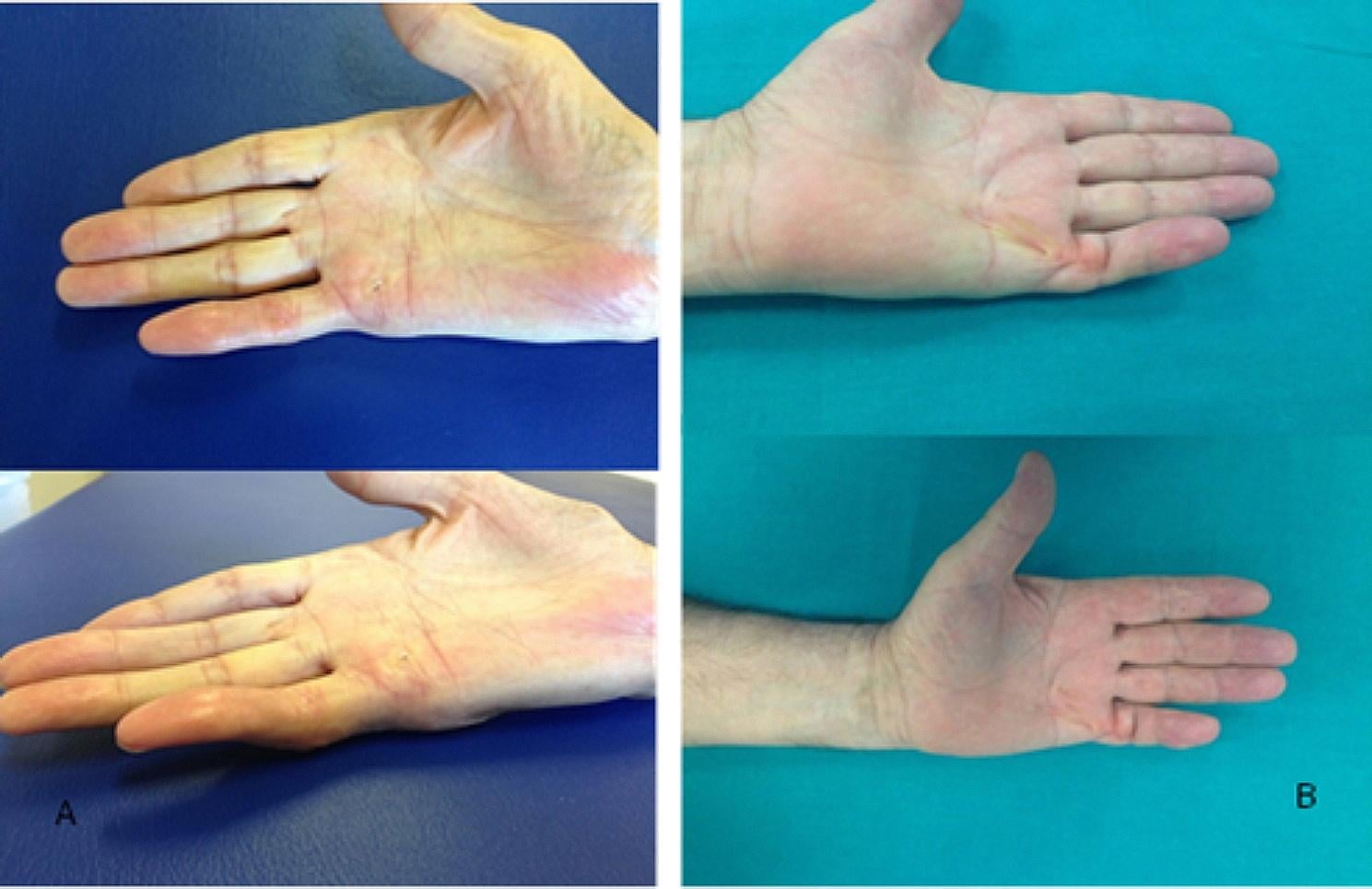
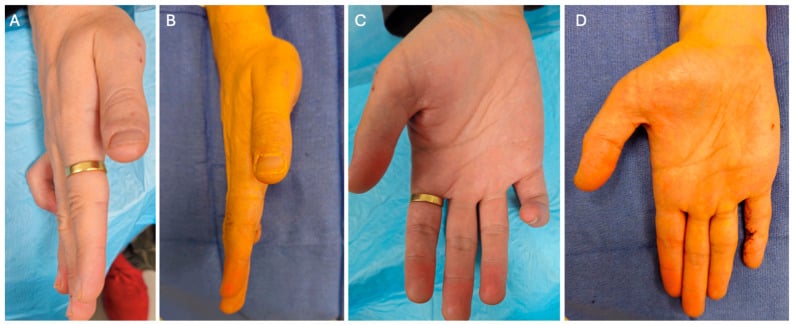
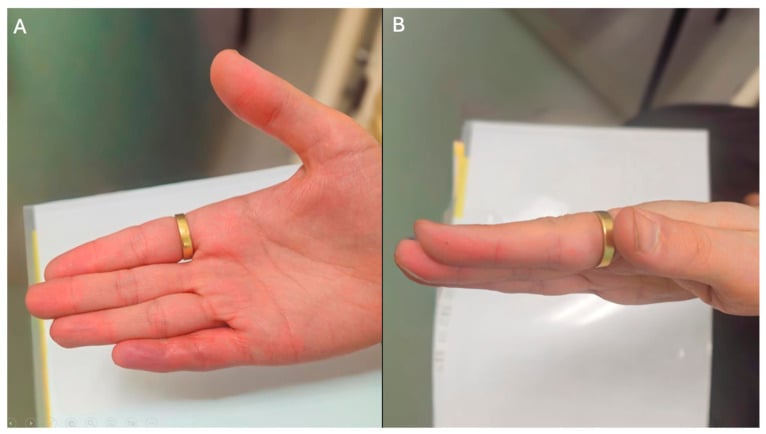
Correcting the Stiff PIP: the Check-Rein Release Ladder
- Why the PIP resists correction. Longstanding PIP flexion produces fixed secondary soft-tissue changes independent of the cord: shortened check-rein ligaments (the proximal fibrous extensions of the volar plate that tether it to the proximal phalanx), a contracted volar plate, tight accessory collateral ligaments and finally the proper collateral ligaments and flexor sheath - plus a skin/soft-tissue shortage. Excising the cord addresses only the first cause.
- The sequential release "ladder" - stop as soon as it is straight. After complete cord excision, if a passive extension deficit remains, release in escalating order, re-checking correction after each step:
- Check-rein ligaments - divide the two proximal extensions of the volar plate (often the single most effective step).
- Accessory collateral ligaments.
- Volar plate release from its proximal attachment.
- Proper collateral ligaments / flexor sheath (rarely, and reluctantly).
- The cost of going too far. Each rung buys more extension but risks PIP instability, swan-neck deformity, stiffness and vascular compromise (aggressive extension can kink the digital arteries) - so the surgeon stops at "good enough", accepting a residual deficit rather than destabilising the joint.
- When release fails. If the joint is destroyed or uncorrectable, the salvage options the topic lists - PIP arthrodesis in a functional position, or ray amputation - apply; a skin shortage unmasked by correction is managed with a graft (dermofasciectomy) or by leaving the wound open.
Q: After excising the cord the PIP still will not extend - what do you release, and in what order? A: Longstanding PIP flexion causes fixed secondary changes the cord excision cannot fix. Release in a ladder, checking after each step and stopping once straight: (1) check-rein ligaments (proximal extensions of the volar plate - the most effective step), (2) accessory collaterals, (3) volar plate, (4) rarely the proper collaterals/flexor sheath. Going too far risks instability, swan-neck, stiffness and kinking the digital arteries, so accept a residual deficit; a destroyed joint is salvaged by PIP arthrodesis or ray amputation.
Finding and Protecting the Digital Nerve
The single most-repeated safety instruction in this topic is "identify the neurovascular bundle before dividing any cords" (because the spiral cord displaces it central and superficial), and a viva explicitly asks "how would you identify the digital nerve in scarred tissue" - but the body never gives the technique.
- The golden rule: start where the anatomy is normal. Begin the dissection proximally in the palm, where the digital nerves and arteries lie in their expected position deep to the pretendinous cord; positively identify each neurovascular bundle, then trace it distally into the diseased digit under loupe magnification. Never divide a cord until the nerve has been seen and protected on both sides of it.
- Anticipate the spiral cord. Signs that a spiral cord has dragged the nerve central and superficial (into the line of dissection) include a soft fullness at the web or proximal digit, skin dimpling proximal to the MCP, and a PIP contracture with the cord seeming to disappear centrally. Here the nerve may lie directly under the skin at the base of the finger - dissect toward it from normal proximal tissue, expecting it there.
- In revision surgery. Scar obliterates the tissue planes and the nerve may be tethered in scar, so extend the incision proximally and distally into virgin (unoperated) tissue, find the nerve outside the scar first, and trace it into the scarred zone - never dissect blindly through scar. Revision carries the highest nerve-injury risk (up to 6%).
- If the nerve is divided. Repair it primarily with 8-0/9-0 suture under magnification, or bridge a gap with a nerve graft/conduit. Always document a baseline neurovascular examination before every case.
Q: How do you find and protect the digital nerve, especially with a spiral cord or in revision? A: Start proximally in the palm where the nerve is in its normal position, identify it, then trace it distally under loupe magnification - never divide a cord until the nerve is seen on both sides. A spiral cord pulls the nerve central and superficial (soft web fullness, dimpling proximal to the MCP, PIP contracture) so it may sit just under the skin at the finger base. In revision, extend into virgin tissue to find the nerve outside the scar first (nerve-injury risk up to 6%); repair a division primarily or graft a gap.
Guidelines, Registries & Global Practice
Global Epidemiology
- Western/European-ancestry meta-analysis: mean prevalence 12% at age 55, 21% at 65, 29% at 75 (Lanting 2014)
- Highest rates in Scandinavian/Celtic populations; Norwegian men over 60 up to 30%
- Markedly lower in African, East Asian and South Asian populations
- Male predominance (up to 7:1 in younger cohorts), narrowing with age
Side-by-Side Guidance
- Position on intervention
- Collagenase and surgery both endorsed for palpable cords
- Notes
- FDA-approved CCH (2010); MCP responds better than PIP
- Position on intervention
- Fasciectomy, needle fasciotomy and CCH all options; therapy-led service
- Notes
- UK NICE previously appraised CCH; NHS access has varied over time
- Position on intervention
- Stepwise approach by cord type, joint and recurrence risk
- Notes
- Strong emphasis on PIP being harder to correct
- Position on intervention
- Recurrence = PED greater than 20° at a treated joint with palpable cord
- Notes
- Standardises outcome reporting worldwide
Note: collagenase clostridium histolyticum (Xiapex/Xiaflex) was withdrawn from several markets including the UK and EU in 2020 for commercial reasons, despite retained efficacy — availability is now region-dependent.
Registry and Outcome Notes
- No dedicated international Dupuytren implant registry exists (no implant involved)
- Best comparative long-term data come from RCTs (van Rijssen) and pharmacovigilance cohorts (CORDLESS)
- National hand-surgery audits increasingly track recurrence using the Felici per-joint definition
High- vs Limited-Resource Practice
- Well-resourced settings: full menu — needle fasciotomy, collagenase (where available), limited fasciectomy, dermofasciectomy, hand-therapy-led rehabilitation
- Limited-resource settings: open fasciectomy under regional/local anaesthesia is the mainstay; collagenase often unavailable due to cost; emphasis on single definitive procedure
- Constitutional, not occupational: generally regarded as a heritable/constitutional disease; heavy manual vibration exposure is at most a weak contributory factor
Controversies & Areas of Uncertainty
Historical recurrence figures (10% to 85%) largely reflect different definitions, not different biology. The Felici consensus (PED greater than 20° at a treated joint with palpable cord) is now standard but older literature must be read with caution.
Both are minimally invasive; head-to-head data are limited and short-term outcomes are broadly similar for MCP cords. With collagenase withdrawn from several markets, needle fasciotomy is the default minimally invasive option in many regions.
Skin grafting clearly lowers recurrence, but whether it should be used primarily in diathesis (vs reserved for recurrence) is debated — graft morbidity and longer recovery must be weighed against recurrence reduction.
Routine post-operative night extension splinting is widely practised but RCT evidence that it reduces recurrence or improves outcome is weak; it is often used selectively rather than for all patients.
Low-dose radiotherapy may slow early nodular disease in some series, but evidence is low quality and it is not standard of care outside a few European centres; long-term safety concerns persist.
Fixed PIP contractures frequently fail to fully correct regardless of technique because of secondary capsular and check-rein changes — managing patient expectations is as important as the operation chosen.
MCQ Practice Points
Q: What is the pathological cell in Dupuytren's disease and what does it produce? A: Myofibroblast - modified fibroblast with contractile apparatus containing alpha-smooth muscle actin. Produces excessive Type III collagen in early phases, transitioning to Type I in mature disease. Generates contractile force via actin-myosin interaction.
Q: What are the surgical indications for Dupuytren's disease? A: MCP contracture greater than 30 degrees OR ANY PIP contracture OR Positive table-top test. PIP contractures are harder to correct so intervene earlier. This is the most commonly tested point about Dupuytren's.
Q: What makes the spiral cord dangerous and what are its four components? A: The spiral cord displaces the neurovascular bundle central and superficial creating high risk of iatrogenic nerve injury. Four components (PSLG): Pretendinous band, Spiral band, Lateral digital sheet, Grayson ligament. Always identify NV bundle before dividing cords.
Q: What are the recurrence rates for different Dupuytren's treatments at 5 years? A: The honest answer is that they cannot be compared directly, and saying so is the mark. Each figure comes from a study using its own definition, and a common definition was only agreed by consensus in 2014 - a passive extension deficit over 20 degrees in a treated joint with a palpable cord, measured against the result at 6 weeks to 3 months. What the cited trials report: needle fasciotomy 84.9% and limited fasciectomy 20.9% at 5 years in the same randomised trial, using a greater than 30 degree threshold (van Rijssen); and collagenase 47% at 5 years using a 20 degree threshold, falling to 32% when re-analysed at 30 degrees (CORDLESS) - with the PIP recurring far more than the MCP, 66% against 39%. Dermofasciectomy is chosen for the lowest recurrence but has no comparable trial. Lower recurrence comes at the cost of greater surgical morbidity.
Q: What are the features of Dupuytren's diathesis and why do they matter? A: YBEF: Young onset (less than 40), Bilateral disease, Ectopic fibromatosis (Peyronie, Ledderhose, Garrod pads), Family history. These patients recur earlier and more often and may be offered dermofasciectomy for that reason. Note for the examiner that no cited trial reports a recurrence rate stratified by diathesis - it is a well-founded clinical concept without a number attached, and quoting one is a trap.
Exam Viva Scenarios
Practise clinical reasoning and management decisions out loud
“A 58-year-old man of Scottish ancestry presents with progressive ring finger contracture over 2 years. On examination, he has 40° MCP and 30° PIP contracture with palpable cords. Positive table-top test. How would you manage this patient?”
“A 35-year-old man presents with bilateral Dupuytren's affecting multiple digits. He has a strong family history and Peyronie's disease. What features make this case high-risk and how does this influence management?”
“A 62-year-old man had limited fasciectomy 3 years ago for ring finger Dupuytren's. He now has 35° recurrent MCP contracture in the same finger. Discuss management.”
Pathophysiology Essentials
- Myofibroblast = pathological cell (alpha-SMA positive)
- Type III collagen predominates (early), transitions to Type I (late)
- 3 phases: Proliferative → Involutional → Residual
- TGF-beta pathway central to pathogenesis
- Ring and little fingers most affected (ulnar predominance)
Spiral Cord Anatomy (PSLG)
- P = Pretendinous band (palm)
- S = Spiral band (from natatory ligament)
- L = Lateral digital sheet
- G = Grayson ligament (volar to NV bundle)
- Displaces NV bundle CENTRAL and SUPERFICIAL
- Highest risk of iatrogenic nerve injury
Surgical Indications (30-ANY)
- MCP contracture greater than 30 degrees
- ANY PIP contracture (harder to correct, operate earlier)
- Positive table-top test (Hueston)
- Progressive disease with functional limitation
Treatment Options and Recurrence
- Needle aponeurotomy: 50-60% recurrence at 5y
- Collagenase injection: ~50% recurrence at 5y
- Limited fasciectomy: 30-50% recurrence at 5y (gold standard)
- Dermofasciectomy + skin graft: 10-20% recurrence at 5y
Diathesis Features (YBEF)
- Y = Young onset (less than 40 years)
- B = Bilateral hand involvement
- E = Ectopic fibromatosis (Peyronie, Ledderhose, Garrod)
- F = Family history (autosomal dominant pattern)
- Predicts earlier and more frequent recurrence - consider dermofasciectomy
Risk Factors (DASHED)
- D = Diabetes (20% prevalence)
- A = Alcohol (dose-dependent)
- S = Smoking (2-3x risk)
- H = Hereditary/Northern European (15x risk)
- E = Epilepsy medications (phenytoin)
- D = Disease associations (Peyronie, Ledderhose)
Key Complications to Know
- Digital nerve injury: 1-5% (higher with spiral cord)
- Recurrence: Most common long-term issue
- CRPS: 5-10% (early mobilization reduces risk)
- PIP contractures: Harder to correct than MCP
- Distinguish recurrence (same area) from extension (new area)
Post-operative Essentials
- Early mobilization from day 1-2 (critical)
- Night extension splinting for 3-6 months
- Hand therapy mandatory for optimal outcome
- MCP correction is the reliable one
- PIP correction is less reliable and recurs more - 66% vs 39% after collagenase at 5 years
Evidence Base
Hurst et al — CORD I
- Prospective double-blind placebo-controlled RCT, 308 patients, contractures of 20° or more
- Collagenase achieved reduction to 0-5° in 64.0% of cords vs 6.8% placebo (p less than 0.001)
- Range of motion improved 43.9° to 80.7° vs 45.3° to 49.5° with placebo
- 3 treatment-related serious events: 2 tendon ruptures, 1 CRPS; no nerve injuries
van Rijssen et al — 5-year RCT
- 111 patients randomised to needle fasciotomy vs limited fasciectomy, minimum 30° deficit
- 5-year recurrence (defined as TPED increase greater than 30°): 84.9% needle vs 20.9% fasciectomy (p less than 0.001)
- Recurrence occurred sooner with needle fasciotomy; older age reduced recurrence
- Satisfaction high in both groups but greater after fasciectomy; 53% preferred needle if recurrence
Peimer et al — CORDLESS
- 5-year non-interventional follow-up of 644 collagenase-treated patients (1081 joints)
- Recurrence (20° or more worsening with palpable cord) in 47% of successfully treated joints
- MCP recurrence 39% vs PIP recurrence 66% at 5 years
- Only one mild treatment-related late adverse event; recurrence comparable to surgery
Dolmans et al — Wnt GWAS
- Genome-wide association study, 2325 cases and 11,562 controls (Dutch/German/UK)
- Nine susceptibility loci identified at genome-wide significance
- Six of nine loci harbour Wnt-signalling genes (WNT4, SFRP4, WNT2, RSPO2, SULF1, WNT7B)
- Implicates aberrant Wnt signalling as central to the fibromatosis
Lanting et al — Prevalence meta-analysis
- Systematic review and meta-analysis of 23 studies in Western populations
- Reported prevalence ranged widely from 0.6% to 31.6%
- Mean prevalence rises with age: 12% at 55, 21% at 65, 29% at 75 years
- Strong age and male-sex relationship across populations
Felici et al — Recurrence consensus
- Delphi consensus of 24 hand surgeons from 17 countries
- Recurrence defined as PED greater than 20° in a treated joint with a palpable cord vs the time-0 result
- Nodules or cords without contracture do NOT constitute recurrence
- Recurrence should be reported per joint, not by Tubiana stage or per ray
McFarlane — Classic cord anatomy
- Seminal anatomical study of diseased digital fascia in Dupuytren's contracture
- Defined patterns of cord formation and the spiral cord
- Documented displacement of the neurovascular bundle by diseased fascia
- Foundation for modern safe surgical dissection