Isolated vs. Syndesmotic Injury | Maisonneuve Fracture | Management
- Isolated fibular shaft fractures are stable and treated non-operatively (WBAT in boot).
- Maisonneuve fracture: Proximal fibular fracture + medial malleolus fracture/deltoid ligament rupture + syndesmosis injury. Unstable.
- Common Peroneal Nerve runs around the FIBULAR neck (proximal fibula) - assess motor (EHL/TA) and sensation (dorsum foot).
- Syndesmosis assessment is critical - use gravity stress view or ER stress view if suspicious.
- Tibial shaft fractures often have associated fibular fractures - intact fibula may prevent reduction (strut effect).
- “Always examine the medial ankle (tenderness = deltoid injury) in proximal fibular fractures.
- “Isolated fibular shaft fracture = 'Ankle sprain of the bone' → Treat symptoms.
- “Bilateral ankle X-rays (weight bearing) are gold standard for assessment.
- “Missed Maisonneuve = Chronic ankle instability/pain.
Overview and Epidemiology
A fibular shaft fracture is a fracture of the fibular diaphysis. It may be an isolated injury from a direct blow, or one part of a complex ankle or leg injury: the Maisonneuve fracture, or the fibular half of a tibia-fibula fracture.
Mechanism. The mechanism points to the pattern:
- Direct blow - the "nightstick" fracture, an isolated transverse fracture that is stable. It is typically sustained in contact sports such as soccer or rugby, where a kick or impact strikes the lateral leg.
- Rotational force - external rotation of the ankle. The medial structures (deltoid) fail first, then the syndesmosis, and the energy exits through a proximal fibular fracture: the Maisonneuve fracture, which is unstable.
- Axial load - a fall from height, usually with a tibial fracture. The fibula fails in compression, often with comminution.
- Repetitive load - the stress fracture, which is stable.
Who. A common fracture in active adults, and fibular fractures, malleolar ones included, make up a significant portion of ankle trauma. Football or soccer (a direct kick) is the most common cause of the isolated fracture. The risk factors are contact sport and, in the elderly, osteoporosis; in older patients a fibular fracture may be part of a fragility fracture of the ankle.
Prognosis. Isolated fractures have excellent union rates. When the fibula is part of a larger injury, the outcome depends on the other injuries, tibial alignment and chondral damage among them.
Anatomy and Pathophysiology
The bone. A long, slender bone, triangular in cross-section through the shaft. The head articulates with the tibia, the neck lies just distal to it and carries the nerve risk, and the distal end forms the lateral malleolus. The fibula acts as a strut for muscle attachment and ankle stability but plays a minor role in weight transmission, bearing approximately 6-17% of the body's load.
The ends matter, the shaft does not. The mid-diaphysis is not essential for weight-bearing stability, but the proximal end is critical for the knee (the LCL attaches there) and the distal end for the ankle. So the shaft can be lost, resected for a bone graft or comminuted in a fracture, without significant functional deficit, provided the distal syndesmosis is intact. Loss of the distal fibula or the syndesmosis is another matter.
The lateral malleolus. The distal fibula acts as a buttress that stops the talus shifting laterally. Even 1mm of lateral shift can reduce the tibiotalar contact area by 42%, leading to early osteoarthritis.
The interosseous membrane and syndesmosis. The membrane is a strong fibrous sheet joining tibia and fibula. It stabilises the ankle mortise, gives origin to muscles, and its fibres run obliquely from proximal-medial on the tibia to distal-lateral on the fibula, resisting distal migration of the fibula. At the ankle the distal tibiofibular joint is held by the AITFL, the PITFL, the transverse ligament and the distal interosseous membrane, which together prevent diastasis (widening) of the mortise.
The common peroneal nerve. It winds around the fibular neck, passing from the popliteal fossa into the anterior and lateral compartments, and is highly susceptible to injury there from direct trauma, casts and splints, or surgical retractors. It divides just distal to the fibular head:
- Deep peroneal nerve - the anterior compartment (tibialis anterior, EHL, EDL): dorsiflexion, and sensation in the first dorsal web space
- Superficial peroneal nerve - the lateral compartment (peroneus longus and brevis): eversion, and sensation over the dorsum of the foot except the first web space. It usually pierces the deep fascia in the distal third of the leg, anterior to the fibula.
Blood supply. The nutrient artery, from the peroneal artery, typically enters the middle third of the shaft. The periosteal supply is rich because so many muscles attach to the bone: soleus, the peroneals, tibialis posterior and EHL.
- The robust vascularity contributes to high union rates, even in displaced fractures. Nonunion is rare, and malunion is generally well tolerated unless it affects the ankle mortise.
- The predictable peroneal pedicle makes the middle third the "workhorse" donor site for vascularised bone grafts (see the final section).
- The distal third has a relatively poorer supply, closer to the watershed area of the ankle, which can impact wound healing after surgery.
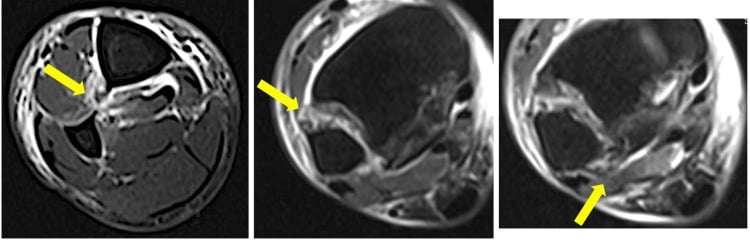
The Maisonneuve fracture. A spiral fracture of the proximal third of the fibula with a rotational ankle injury. The level of the fracture indicates where the rotational force exited: a proximal exit implies that the energy has travelled through the interosseous membrane and syndesmosis, rupturing them. The membrane injury can be discontinuous, so a proximal fibular fracture does not define the exact extent of membrane failure.
Force travels in a circle: medial ankle (deltoid rupture or medial malleolus fracture) → interosseous membrane and syndesmosis tear → exit via proximal fibula fracture. Always check the whole circle!
Classification Systems
The AO/OTA code for the fibular diaphysis is 4F2, and it describes morphology.
- Subgroup
- A1
- Pattern
- Spiral
- Subgroup
- A2
- Pattern
- Oblique (over 30°)
- Subgroup
- A3
- Pattern
- Transverse (under 30°)
- Subgroup
- B2
- Pattern
- Intact wedge
- Subgroup
- B3
- Pattern
- Fragmented wedge
- Subgroup
- C2
- Pattern
- Intact segmental
- Subgroup
- C3
- Pattern
- Irregular
When the tibia is also fractured, the injury is classified under the tibia (42) with a fibular modifier. For the isolated fibula the code does not strongly dictate treatment, since most are treated non-operatively regardless of comminution; its main value is in research and database tracking.
Clinical Assessment
History. The mechanism is the first clue. A direct blow from a hockey stick or a kick suggests an isolated fracture; a twisting injury suggests a rotational component and possible syndesmotic injury. Ask where it hurts, mid-calf or ankle: patients with a Maisonneuve fracture may complain only of ankle pain, and the proximal fibular tenderness is missed if it is not palpated. Patients with isolated fractures can often bear weight, though painfully, whereas those with unstable syndesmotic injuries usually cannot.
Examination. A proximal fibular fracture is rarely isolated. It is often part of a rotational ankle injury (a PER stage), so the medial ankle and the syndesmosis must be examined. Look for deformity, swelling and bruising, for skin tenting or an open wound (rare in an isolated fracture), and specifically for medial ankle ecchymosis. Then palpate:
- The whole fibula, along its entire length
- The medial ankle - tenderness over the deltoid ligament or medial malleolus is the red flag for Maisonneuve
- The AITFL, over the anterior ankle, for syndesmotic injury
- The squeeze test - compressing tibia and fibula together at mid-calf; pain distally suggests syndesmotic injury
- The knee - to rule out associated injuries (LCL, PLC) or proximal tibiofibular dislocation
Neurovascular status. Check before and after any intervention. Common peroneal nerve palsy shows as foot drop (weak dorsiflexion and eversion) with a numb dorsal foot.
- Deep peroneal nerve: dorsiflexion (tibialis anterior) and great toe extension (EHL), and sensation in the first web space. Always document EHL function specifically, as a sensitive indicator of deep peroneal function.
- Superficial peroneal nerve: eversion (peroneals), and sensation over the dorsum of the foot
- Pulses: dorsalis pedis and posterior tibial
MINDMaisonneuve Examination
Hook:Keep Maisonneuve in MIND for any ankle injury!
Investigations
Radiographs. Two series:
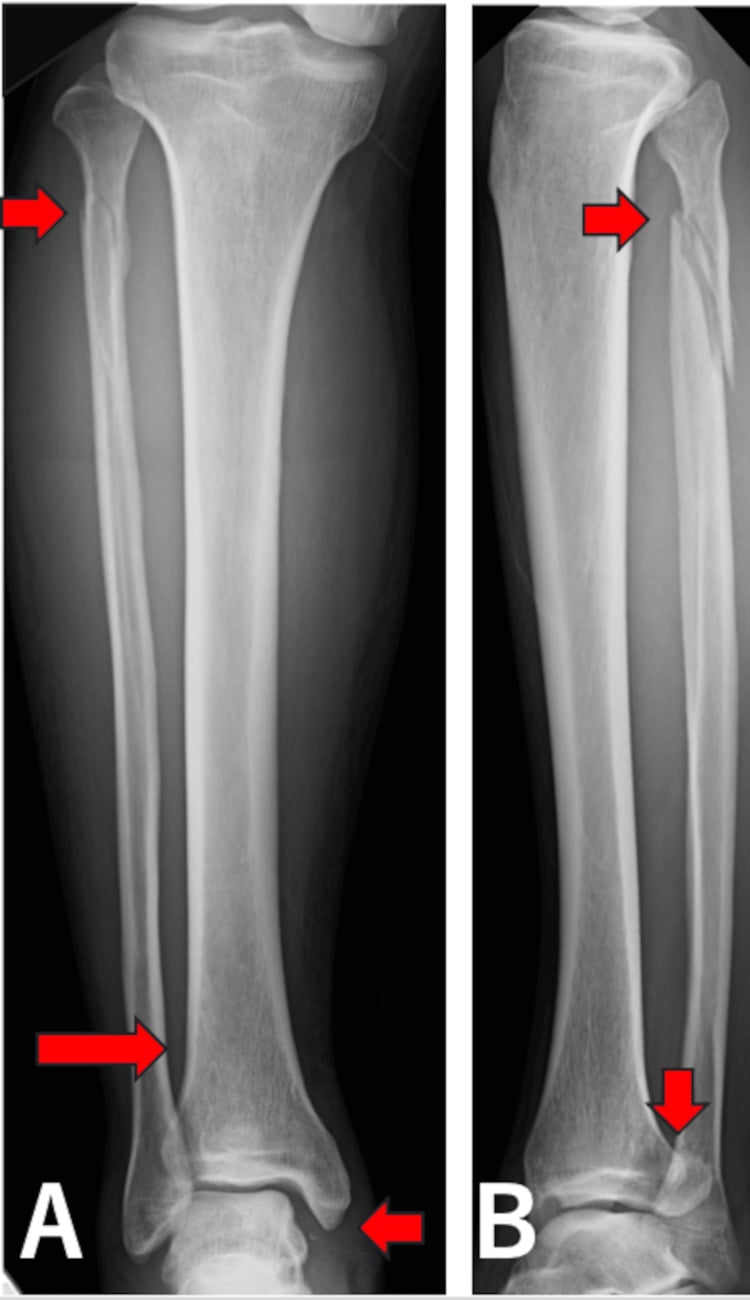
- Tibia and fibula, AP and lateral, including the joints above and below, to rule out proximal extension or an associated tibial fracture
- Ankle, AP, lateral and mortise. Weight-bearing views are the gold standard if the patient can tolerate them, as they stress the syndesmosis physiologically.
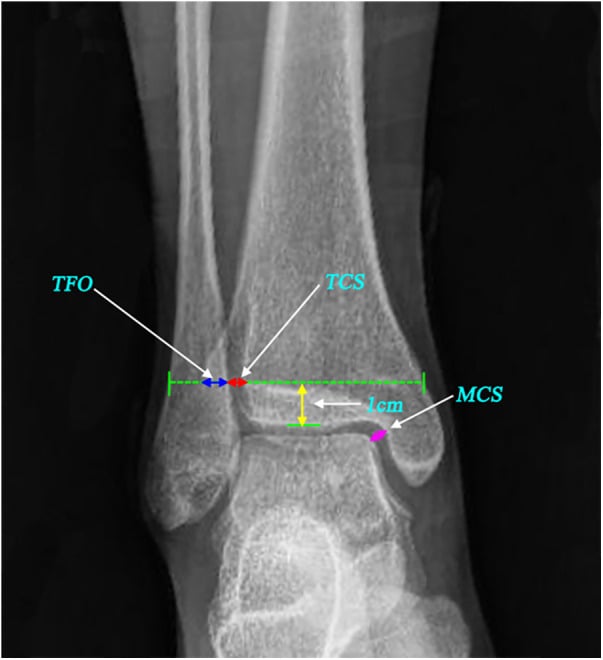
The mortise measurements. Measure them on a true mortise view, and compare with the opposite ankle and with intraoperative stress, because rotation changes every value.
- Medial clear space (MCS) - should equal the superior clear space; greater than 4mm suggests deltoid rupture or instability
- Tibiofibular clear space - from the medial fibular border to the incisura; should be less than 6mm
- Tibiofibular overlap - should be greater than 1mm on the mortise view (greater than 6mm on the AP)
- Talar shift - lateral displacement of the talus
Stress radiographs. Indicated for an isolated fibular fracture with medial tenderness but normal static films, where occult syndesmotic instability is suspected. A positive test is medial clear space widening to greater than 4-5mm, or asymmetry with the contralateral side, and implies instability.
- Gravity stress view - the patient lies in lateral decubitus, injured side up, with a horizontal beam. The weight of the foot stresses the deltoid and syndesmosis; if they are unstable, the talus tilts or slides laterally.
- Manual external rotation stress - the surgeon stabilises the leg and externally rotates the foot while the image is taken. It is more painful, and it exposes the surgeon to radiation.
CT is rarely needed for a simple shaft fracture. It is useful for the distal tibiofibular relationship when radiographs are equivocal, and essential for complex articular fractures (pilon, trimalleolar). If the fibula is comminuted at the level of the syndesmosis with a posterior malleolus fracture, consider a "posterior pilon" variant, which needs CT to assess the articular surface of the tibia.
MRI has high sensitivity for ligament injury (AITFL, PITFL, deltoid). Use it for persistent pain with normal radiographs, where the question is a stress fracture or occult syndesmotic injury. It is rarely used for the acute fracture unless checking for associated internal derangement.
Differential Diagnosis
The "lateral leg / ankle pain after a twist or blow" presentation has several mimics. The critical task is separating a benign isolated shaft fracture from an unstable rotational injury.
- Key Discriminator
- Direct-blow mechanism, focal mid-shaft tenderness, no medial tenderness, normal mortise
- Stability / Action
- Stable - boot, WBAT
- Key Discriminator
- Twisting mechanism, proximal fibula tenderness plus medial ankle tenderness, widened medial clear space
- Stability / Action
- Unstable - syndesmotic fixation
- Key Discriminator
- Fracture at/below or above the plafond on ankle films, talar shift
- Stability / Action
- Stress-dependent - often ORIF
- Key Discriminator
- Positive squeeze/ER test, AITFL tenderness, no cortical break
- Stability / Action
- Variable - stress views to exclude latent diastasis
- Key Discriminator
- Insidious load-related pain in runner/recruit, distal third, no acute trauma
- Stability / Action
- Stable - relative rest, boot
- Key Discriminator
- Pain anterior to lateral malleolus, normal proximal fibula, negative squeeze
- Stability / Action
- Stable - functional rehab
- Key Discriminator
- Fibular head pain, knee instability, LCL/biceps avulsion
- Stability / Action
- Knee-driven - assess PLC
Management Algorithm
The decision. Is the fracture isolated? Check the medial ankle, and check the integrity of the syndesmosis with a stress view. A medial clear space under 4mm means the injury is stable.
- Mechanism
- Direct blow
- Stability
- Stable
- Treatment
- Walking boot / WBAT
- Mechanism
- External rotation
- Stability
- Unstable (Syndesmosis)
- Treatment
- Surgery (Syndesmotic screws/buttons)
- Mechanism
- High energy
- Stability
- Unstable (Tibial)
- Treatment
- Treat Tibia (IM Nail/Plate)
- Mechanism
- Repetitive load
- Stability
- Stable
- Treatment
- Activity modification / Boot
The isolated fracture. This is the standard non-operative case, and the treatment is symptomatic. A walking (CAM) boot is preferred; an Aircast stirrup will do if pain is minimal, and a short leg cast is rarely needed unless pain is severe. The patient bears weight as tolerated from the start, "let pain be your guide", and early weight bearing stimulates healing.
Its follow-up. X-ray at 1-2 weeks to ensure there is no interval displacement or shortening, though this is rare. Clinical union, a pain-free fracture site, comes at 4-6 weeks; radiographic union may take longer, 3-4 months. Even displaced isolated fractures heal well without functional deficit.
The syndesmotic injury. A Maisonneuve fracture or other syndesmotic injury is unstable, and the operation is syndesmotic fixation with a screw or a TightRope. The fibula rarely needs plating, and the fracture itself is often not plated: it is too high, the nerve is at risk, and the exposure is unnecessary.
With a tibial shaft fracture. Fix the tibia (IM nail). The fibula is usually ignored unless the syndesmosis is disrupted or the fibula is blocking reduction. An intact fibula can itself be the problem, acting as a strut that prevents compression or reduction of the tibia and holds it in varus.
Operative indications.
- Syndesmotic instability: the Maisonneuve fracture
- Open fracture, rare for an isolated fibula: debridement and fixation
- Tibial reduction blocked by the fibula
- Common peroneal nerve palsy with the nerve entrapped: explore (rare)
- Severe shortening, greater than 2cm: controversial (see Controversies)
- Symptomatic nonunion: rare
Surgical Technique
This is the primary operation for the unstable "fibular shaft" fracture, the Maisonneuve. The goal is to stabilise the mortise, not necessarily the fibular shaft, and the proximal fibular fracture is left alone to heal.
- Set-up - supine, sandbag under the ipsilateral buttock, tourniquet, C-arm.
- Approach - a distal lateral ankle incision, visualising the syndesmosis directly if needed.
- Reduction - a large reduction clamp (pelvic or lobster claw), one tine on the fibula and one on the medial tibia, reduces the fibula into the incisura of the tibia. Do not over-compress, and make sure the fibula is not fixed in posterior translation. Rotational and length reduction must precede screw placement.
- Fixation - either one or two screws, 3.5mm or 4.5mm, quadricortical (crossing four cortices) or tricortical, placed 2-3cm above the joint line; or a suture button (TightRope), passed through a bone tunnel drilled through fibula and tibia and tightened, which allows flexible, physiologic motion.
- Verification - an intraoperative stress test: the Cotton test (a lateral pull on the fibula with a hook) or external rotation stress under fluoroscopy.
Ankle position. Traditional teaching held the ankle in dorsiflexion during fixation to avoid over-tightening. That teaching is now largely discredited: recent evidence suggests ankle position matters less than clamp position and fibular rotation, which are the real determinants of malreduction.
Checking the reduction. Post-reduction CT is reserved for concern about malreduction not resolved by fluoroscopy. Plain images are weak reassurance: in Gardner's series radiographs detected only 4 of 13 malreductions seen on CT (see Evidence Base).
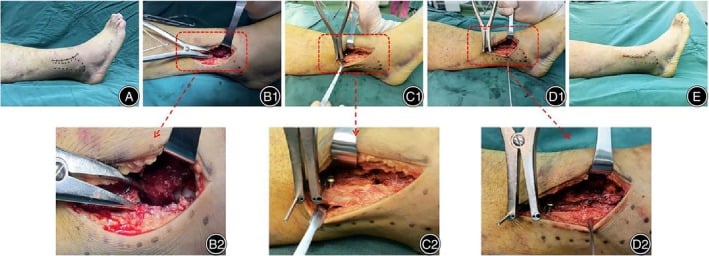
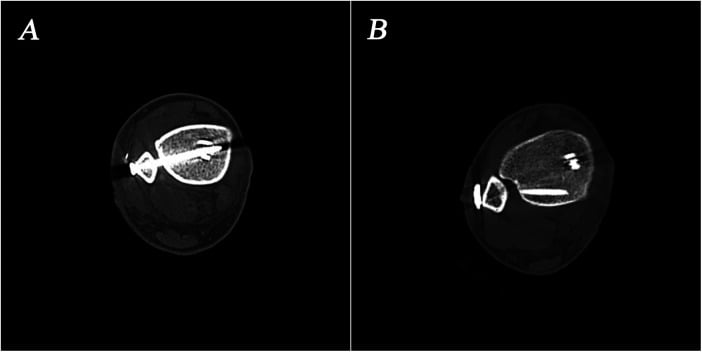
In proximal fibula surgery or plating, the Common Peroneal Nerve is at high risk. Identify and protect. If unsure, avoid proximal dissection and use MIPO (Minimally Invasive Plate Osteosynthesis) or manage non-operatively if possible.
Complications
- Risk
- Low (less than 1%)
- Management
- Symptomatic? Bone graft + Plate.
- Risk
- Low
- Management
- Usually well tolerated. Resection osteotomy if needed.
- Risk
- Variable
- Management
- AFO (Splint). Explore if iatrogenic.
- Risk
- Variable
- Management
- Physiotherapy. Check for missed syndesmosis/chondral injury.
- Risk
- Medium
- Management
- Remove screws/plate after union.
Missed syndesmosis. The leading cause of a poor outcome in an "isolated" fibular fracture. It leaves chronic instability, talar shift and early post-traumatic arthritis, and needs reconstruction with a graft (semitendinosus, for example), or arthrodesis if late degeneration has occurred.
Compartment syndrome. Rare in the isolated fibular fracture, though it can occur with a direct crush, and common in associated tibia-fibula fractures. Check for it in high-energy and crush injuries and be vigilant in tight anterior and lateral compartments. The signs are pain out of proportion to the injury and pain on passive stretch of the toes.
Nerve injury. The common peroneal nerve is at risk from the injury itself and in proximal approaches; the superficial peroneal nerve in lateral approaches to the distal third. Symptomatic neuromas may require surgical excision.
Superficial peroneal nerve entrapment. Where the nerve pierces the deep fascia in the distal third it can be tethered in fracture callus or surgical scar, and the risk is higher with lateral approaches or percutaneous pin placement. The patient describes burning pain over the dorsum of the foot, often worse with inversion and plantarflexion, which stretch the nerve. Tinel's sign is positive over the scar or fracture site, and sensation over the dorsum may be altered. Treat with desensitisation massage and gabapentin, reserving surgical neurolysis for refractory cases.
Complex regional pain syndrome. Can occur after any ankle trauma. Early mobilisation and vitamin C may reduce the risk.
Postoperative Care
After non-operative treatment. Rehabilitation of the isolated fracture runs in three stages:
- 0-2 weeks - boot, weight bearing as tolerated with crutches for comfort, elevation to reduce swelling
- 2-6 weeks - wean the boot to a supportive shoe or brace; physiotherapy for range of motion (the ankle alphabet) and strengthening (peroneals, calf)
- 6 weeks onwards - impact activities as pain allows
After syndesmotic fixation. Protocols vary widely, and suture buttons often allow earlier weight bearing (for example, weight bearing as tolerated at 2 weeks) than rigid screws.
- 0-2 weeks - non-weight-bearing in a cast or splint on crutches, elevation, wound check at 2 weeks
- 2-6 weeks - non-weight-bearing in a tall boot; active dorsiflexion and plantarflexion allowed; avoid external rotation
- 6-12 weeks - progressive weight bearing, proprioception training (wobble board), strengthening (theraband)
Rehabilitation phases after syndesmotic fixation. The exercise programme runs in three phases:
- Protection and oedema control (0-6 weeks) - heal the soft tissues and protect the fixation: toe curls, knee range of motion, hip strengthening (straight leg raises).
- Mobility and strength (6-10 weeks) - restore full range and normalise gait: calf stretching (gastrocnemius and soleus), four-way theraband ankle strengthening, a stationary bike at low resistance, and single-leg stance with eyes open, then closed.
- Return to function (10 weeks onwards) - power, agility and sport-specific skills: heel raises (bilateral to single), plyometrics (box jumps, hopping) and a walk-jog-run progression. A hop test greater than 90% of the contralateral side is required before the athlete is cleared to return to play.
Hardware removal. Rigid screws were traditionally removed at 3-4 months, before full unrestricted activity, to prevent screw breakage, with activity restricted until removal and then while the screw holes heal (6 weeks). Many intact screws are asymptomatic, however, and practice is shifting to removing only symptomatic implants. Suture buttons stay in permanently unless symptomatic (knot irritation), with no activity restriction once healed.
Chemical thromboprophylaxis (LMWH or aspirin) is debated for isolated fibular fractures treated in a boot, and routine prophylaxis is not supported for low-risk patients. Current guidelines often suggest it for immobilised patients with risk factors (e.g., previous DVT, obesity, OCP); risk-stratified use is recommended, assessed with a risk stratification tool, but thresholds vary by guideline.
Outcomes and Prognosis
The isolated fracture. Excellent: 95%+ of patients return to their pre-injury level of activity. Healing is rapid, pain usually resolves by 3-4 months, and long-term functional deficits are rare.
The Maisonneuve fracture. Good, if the syndesmosis is reduced accurately. Poor reduction, a malreduced fibula or a widened syndesmosis, risks ankle arthritis, and the ankle ends up stiffer than after an isolated fracture.
Prevention and Return to Sport
Prevention. Shin guards in soccer are effective in preventing the direct-blow ("nightstick") fracture.
Return after an isolated fracture. The criteria are pain-free full weight bearing and single-leg hopping, full strength, and a full range of motion with dorsiflexion and plantarflexion equal to the other side. Return to sport comes once the patient is pain-free with strength restored, at 6-8 weeks, within a quoted range of 4-8 weeks for return to play; most patients are back to full sport by 8-12 weeks.
Return after a Maisonneuve fracture. Return to play takes 4-6 months and requires solid syndesmotic healing and rehabilitation. Full return to sport takes longer than after an isolated injury, 6-9 months.
Fibular Stress Fracture: the Runner's Fracture
Who. Distance runners, military recruits, ballet dancers and other endurance or impact athletes. It is a bone-stress injury from repetitive submaximal loading rather than a single blow.
Where. Two sites, both on this bone:
- Distal third - the common "runner's fracture", roughly 5 to 7 cm above the lateral malleolus. This is the prototypical low-risk stress fracture and heals reliably.
- Proximal fibula - much less common. It matters because it mimics a Maisonneuve fracture or, occasionally, a bone tumour. It is seen in jumpers and runners and with altered mechanics, a valgus knee or pes planovalgus loading the fibula abnormally, for example.
Mechanism. Because the fibula carries only a small share of axial load, stress injury here is driven mainly by repetitive muscle traction (peroneals, soleus, tibialis posterior) and altered load transfer rather than pure axial overload. Pes planovalgus, rapid increases in training volume, hard surfaces and inadequate footwear are recognised contributors.
Diagnosis. Radiographs lag: they are frequently normal for the first 2 to 3 weeks, until periosteal callus or a faint lucent line appears, so persistent focal fibular pain despite normal initial films warrants MRI or repeat radiography. MRI (marrow and periosteal oedema) or a bone scan is the investigation of choice when plain films are normal but the history is suggestive. MRI also grades the injury, and excludes a tumour when the proximal fibula is involved.
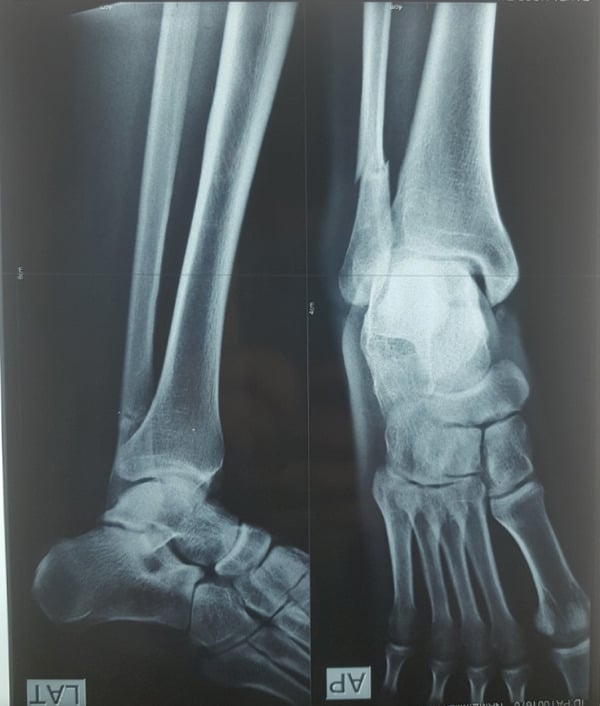
Management. A low-risk stress fracture is managed by controlling load, not by surgery:
- Relative rest with a walking boot or activity modification for symptom control, and pain-guided cross-training
- Correct the cause: review training load, footwear and foot posture (orthoses for planovalgus), and optimise bone health (energy availability, vitamin D), especially in amenorrhoeic athletes and recruits
- A graded return over roughly 6 to 8 weeks once pain-free. Return to running requires painless loading, restored strength and proof of union rather than elapsed time alone.
Surgery. Operative fixation is essentially never required. It is reserved for displacement, nonunion, high-demand patients or failure of protected weight bearing, and the patient illustrated here was plated.
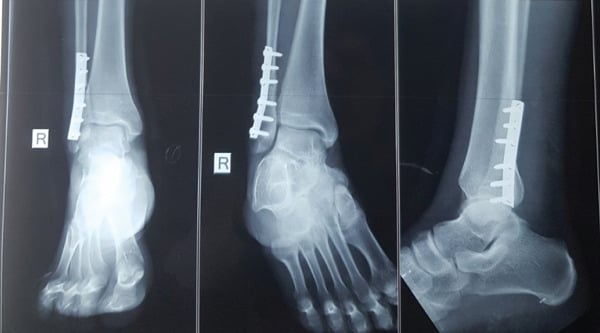
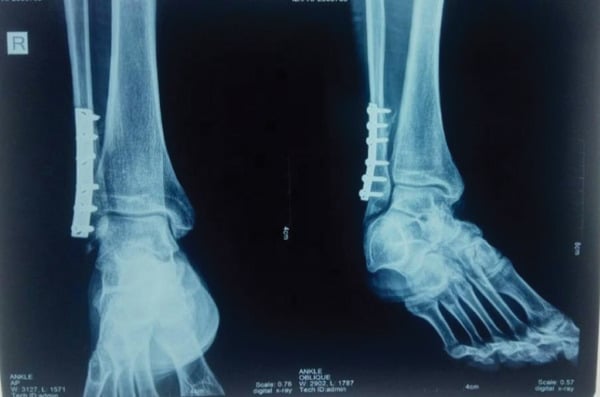
General high-risk vs low-risk stress-fracture principles are developed in stress-fractures-overview; the tibial counterpart in tibial-stress-fractures.
The Fibula as a Vascularised Bone-Graft Donor: Harvest Limits and Donor-Site Morbidity
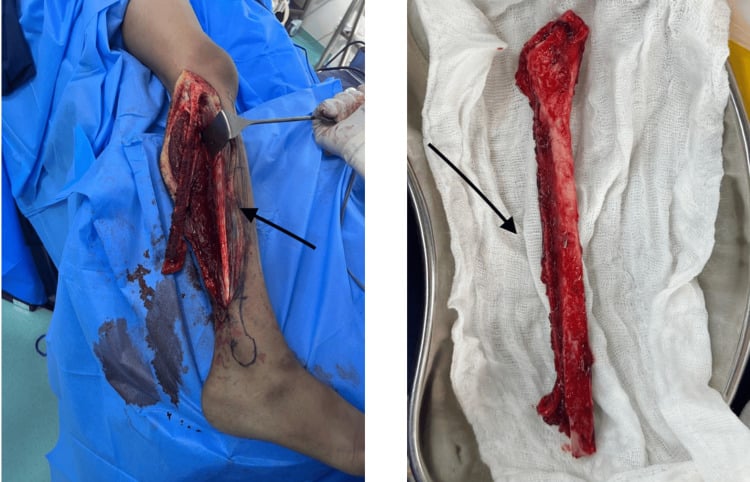
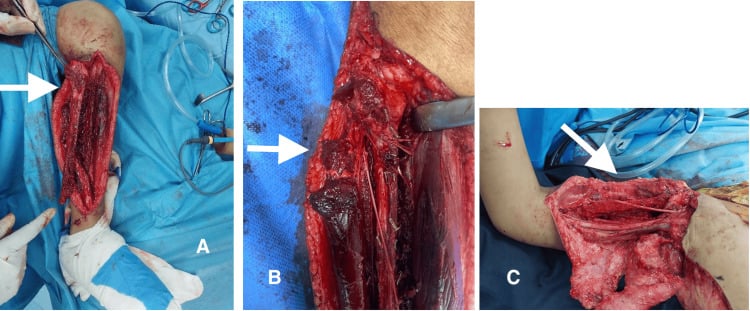
Why the fibular shaft. It is a long, straight, tubular cortical strut with a segmental blood supply: the peroneal (fibular) artery's nutrient branch to the middle third, plus periosteal perforators. That lets a large diaphyseal segment be raised as a free vascularised (osteoseptocutaneous) flap with predictable healing and hypertrophy under load. Up to roughly 25 cm of diaphysis can be harvested, which makes it the standard donor for mandibular reconstruction, large tibial or femoral segmental defects, congenital pseudarthrosis of the tibia, and osteonecrosis of the femoral head.
The harvest rules. The harvestable bone is the diaphysis between two safe zones.
- Preserve the distal segment, about 6 cm above the ankle, to protect the syndesmosis and the mortise. Inadequate distal preservation risks ankle valgus and instability.
- Preserve the proximal segment, to protect the common peroneal nerve at the fibular neck.
- In children the retained distal fibula can drift into progressive ankle valgus after harvest, so surgeons preserve more distal bone or stabilise the distal tibiofibular remnant.
Donor-site morbidity. Donor-site planning must account for:
- Great-toe or lesser-toe flexion contracture, or claw toe, from scarring of flexor hallucis longus and flexor digitorum longus, which take origin close to the fibula
- Transient superficial peroneal nerve sensory disturbance, or peroneal weakness
- Ankle pain, valgus or instability if the distal preservation rule is broken
- Wound morbidity
Free-flap technique and its use in congenital pseudarthrosis of the tibia are developed in congenital-pseudarthrosis-of-the-tibia; common peroneal nerve anatomy in common-peroneal-nerve-anatomy.
Guidelines, Registries & Global Practice
Global Epidemiology
- Ankle fractures (of which the fibula is the most frequently involved bone) occur at roughly 100-180 per 100,000 person-years, with a bimodal distribution: young men from sport/high-energy injury and older women from fragility fractures.
- Isolated diaphyseal ("nightstick") fibula fractures are most common in contact and kicking sports (soccer/football, rugby, hockey) where a direct blow strikes the lateral leg.
- Maisonneuve fractures represent a small but high-stakes subset; they are disproportionately represented among "missed" rotational ankle injuries.
Side-by-side Guidance
- Emphasis
- Mechanism and mortise restoration
- Practical Recommendation
- Reduce and stabilise the syndesmosis anatomically; the fibula sets ankle length and rotation
- Emphasis
- Soft tissues and timely fixation
- Practical Recommendation
- Document neurovascular status; operate before significant swelling or after it settles; weight-bear early when stable
- Emphasis
- Evidence-based stability assessment
- Practical Recommendation
- Stress testing to distinguish stable from unstable lateral malleolar/fibula fractures before committing to non-operative care
- Emphasis
- Syndesmosis reduction quality
- Practical Recommendation
- Favours direct visualisation or intra-operative CT to avoid malreduction; flexible fixation increasingly preferred
Registry and System Notes
- National arthroplasty/trauma registries (AOANJRR, NJR, SHAR) track ankle fracture fixation as a high-volume procedure; metalwork removal (notably syndesmosis screws) is a frequent secondary procedure, a burden that suture-button fixation aims to reduce.
- Routine removal of intact syndesmosis screws is now questioned; many systems remove only symptomatic implants.
High- vs Limited-resource Practice
- Well-resourced settings: stress radiographs or CT for equivocal syndesmosis, suture-button options, formal physiotherapy-led rehabilitation, early weight-bearing protocols.
- Limited-resource settings: reliance on plain radiographs and clinical examination (proximal fibula palpation, medial tenderness, calf squeeze); cast or boot immobilisation; syndesmotic screws preferred over costlier suture-button devices, with later removal where feasible.
- The universal, resource-independent priority is the same: do not miss the unstable medial side or a proximal (Maisonneuve) fibula fracture.
Controversies and Areas of Uncertainty
Screw or suture button. Level I meta-analysis favours suture buttons for function and lower reoperation, but a long-term RCT found malreduction and osteoarthritis rates comparable between the two. Reduction quality may matter more than the implant chosen.
Which "isolated" fractures are truly stable. Static radiographs miss latent instability. Whether to rely on gravity or external-rotation stress views, weight-bearing radiographs or MRI to declare stability remains debated.
Number, size and cortices of screws. Quadricortical or tricortical, 3.5 or 4.5mm, one screw or two: there is no consensus, and the trend is towards fewer, smaller or flexible constructs.
Fibular shortening and malunion. Mid-diaphyseal fibular malunion is usually well tolerated, but the threshold of shortening that alters ankle mechanics is poorly defined. For shortening greater than 2cm, some studies suggest an effect on ankle mechanics and others say no.
MCQ Practice Points
Q: What is the most commonly missed aspect of an isolated fibula fracture? A: Syndesmosis injury (Maisonneuve). Always squeeze the calf and check the medial ankle.
Q: Which nerve is at risk with fractures of the fibular neck? A: Common Peroneal Nerve - causes foot drop and numbness on the dorsum of the foot.
Q: Treatment for a closed, neurovascularly intact, isolated mid-shaft fibula fracture? A: Non-operative - WBAT in a boot. It is a stable injury.
Q: In a tibia shaft fracture, what role does the fibula play? A: Strut. An intact fibula may prevent varus correction of the tibia.
Q: What is the most common location for fibular stress fractures? A: Distal third (6-7cm above lateral malleolus) - Common in runners and military recruits due to repetitive loading.
Q: A proximal fibula avulsion fracture in the setting of a knee injury indicates what? A: Posterolateral corner (PLC) injury - The LCL and biceps femoris insert on the fibular head; avulsion suggests significant knee ligament damage.
Exam Viva Scenarios
Practise clinical reasoning and management decisions out loud
“A 25-year-old soccer player presents with a 'high ankle sprain'. X-ray shows a proximal fibula fracture.”
“A hockey player took a stick to the leg. Isolated mid-shaft transverse fracture. Ankle stable. N/V intact.”
“Post-op patient after fibula plating has inability to dorsiflex big toe.”
Key Concepts
- Isolated usually = Stable
- Proximal fracture = check Ankle (Maisonneuve)
- Distal fracture = check Syndesmosis
- Common Peroneal Nerve risk
Management
- Stable: Boot, WBAT, 4-6 weeks
- Unstable (Syndesmosis): Surgery
- Open: Debride & Fix
- Tibia associated: Fix Tibia
Complications
- Missed Syndesmosis (Early Arthritis)
- CPN Palsy (Foot Drop)
- Non-union (Rare)
- Compartment Syndrome (with Tibia)
Exam Quotes
- The fibula is the lighthouse of the ankle
- Always X-ray one joint above and below
- Don't forget the medial ankle tenderness
- Respect the soft tissues
Evidence Base
Operative vs Non-operative for Unstable Lateral Malleolar (Isolated Fibula) Fractures
- Randomised multicentre trial of 81 patients with undisplaced but unstable isolated fibula fractures (medial clear space 5mm or more on external rotation stress).
- No statistically significant difference in Olerud-Molander or SF-36 functional outcome between operative and non-operative groups at any time point.
- Non-operative group had higher rates of late displacement (medial clear space 5mm or more in 8 patients) and delayed/non-union (8 patients); operative group had 5 infections and 5 hardware removals.
The Proximal Fibula Must Be Examined in All Ankle Injuries: Missed Maisonneuve Fractures
- Five patients with Maisonneuve fractures were missed at first presentation despite ankle radiographs because examination focused on the ankle.
- Most patients reported severe ankle pain but little pain over the proximal fibula fracture.
- All five ultimately required open reduction and internal fixation.
Suture Button vs Syndesmotic Screw: Meta-analysis of RCTs
- Meta-analysis of 5 RCTs (143 suture button vs 142 screw patients).
- Suture button gave higher mean AOFAS score (95.3 vs 86.7) at a mean 20.8 months.
- Suture button had lower rates of broken implant (0% vs 25.4%), implant removal (6.0% vs 22.4%) and malreduction (0.8% vs 11.5%).
Syndesmotic Malreduction Is Common and Under-detected on Plain Films
- Postoperative CT of 25 ankles with syndesmotic fixation showed incongruity (malreduction) in 52% (13/25), averaging 3.6mm.
- Plain radiographs detected only 4 of these, giving a sensitivity of just 31% versus CT.
- Most malreductions involved internal rotation or anterior translation of the fibula.
Tibial Fractures with an Intact Fibula: The Strut Effect
- In 23 adults with tibial shaft fracture and intact fibula, 26% developed delayed union or non-union and 26% developed varus malunion.
- Biomechanical testing showed an intact fibula creates a tibiofibular length discrepancy and altered tibial strain, predisposing to malunion/non-union.
- Younger patients (under 20) had fewer complications, attributed to greater fibular compliance.
Distal Tibiofibular Syndesmosis Anatomy and the Cost of Mortise Widening
- Detailed multimodality description of the four syndesmotic ligaments (AITFL, PITFL, transverse, interosseous).
- Widening of the ankle mortise by just 1mm decreases tibiotalar contact area by 42%.
- Syndesmotic injury occurs in about 50% of Weber B and effectively all Weber C ankle fractures.
Immediate vs Restricted Weight-bearing after Ankle Fracture ORIF (INWN) - Trial Protocol, No Results
- A published PROTOCOL, not a results paper: it sets out the design of a pragmatic multicentre randomised trial comparing immediate weight-bearing with early range of motion within 24 hours against 6 weeks of non-weight-bearing cast immobilisation after ORIF of unstable ankle fractures.
- The primary outcome will be the Olerud-Molander Ankle Score; secondary outcomes include deep and superficial wound infection, displacement of the osteosynthesis, ankle arc of motion, SF-36, time to return to work and length of stay.
- Its Discussion summarises OTHER studies as showing equivocal outcomes and favourable satisfaction with earlier weight-bearing but higher wound complications - that is the trial's rationale, not its finding.