Suture Techniques and Biomechanics
- A 4-strand core suture is the absolute minimum for Early Active Motion.
- The Epitendinous suture adds 10-20% strength and reduces gapping.
- Gapping greater than 3mm leads to poor outcomes (adhesions/rupture).
- Preserve A2 and A4 pulleys to prevent bowstringing.
- Repair ideally within 24-72 hours and within 10-14 days at the latest, before the pulleys collapse and the muscle contracts.
- WALANT (Wide Awake) allows intra-operative testing of glide.
- “Strength is proportional to the number of strands crossing the repair site.
- “Locking loops prevent suture pull-out but can strangle the tendon (ischemia).
- “The placement of the knot (inside or outside) is debated; mostly inside to reduce friction.
Overview
Flexor tendon repair aims to restore digital flexion while minimising adhesion formation. The challenge is balancing mechanical strength, which is what allows early motion, against gliding resistance, the bulkiness of the repair.
How we got here. The history of flexor tendon repair has evolved from "primary repair is impossible" (Bunnell's "No Man's Land") to the current standard of primary repair with robust constructs that allow early active motion (EAM). Three names mark the road:
- Bunnell advocated tendon grafting in Zone II
- Kleinert introduced immediate controlled active motion with rubber bands
- Strickland defined the biomechanical requirements for EAM: work of flexion against repair strength
Anatomy: Tendons, Zones, Pulleys and Nutrition
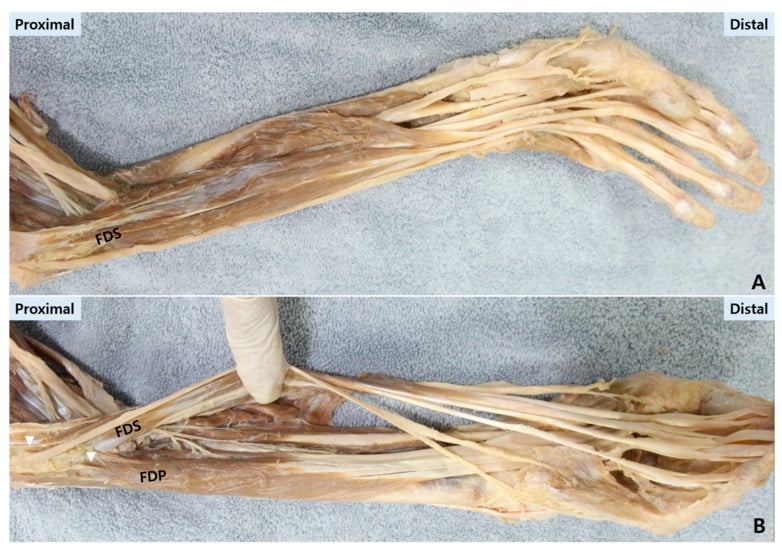
The tendons. Flexor digitorum superficialis (FDS) and flexor digitorum profundus (FDP) travel together into each finger, FDS splitting around FDP at Camper's chiasm. Distal to the FDS insertion only FDP continues, to the distal phalanx.
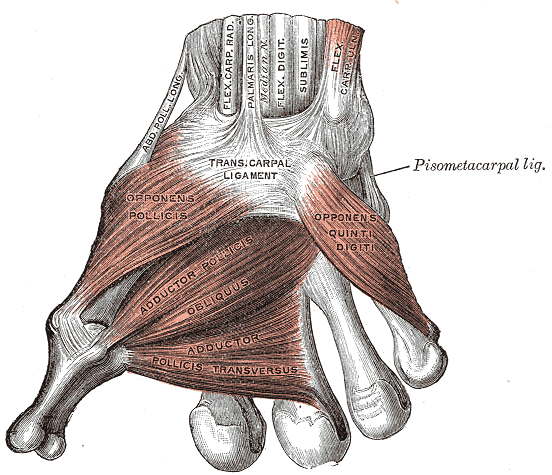
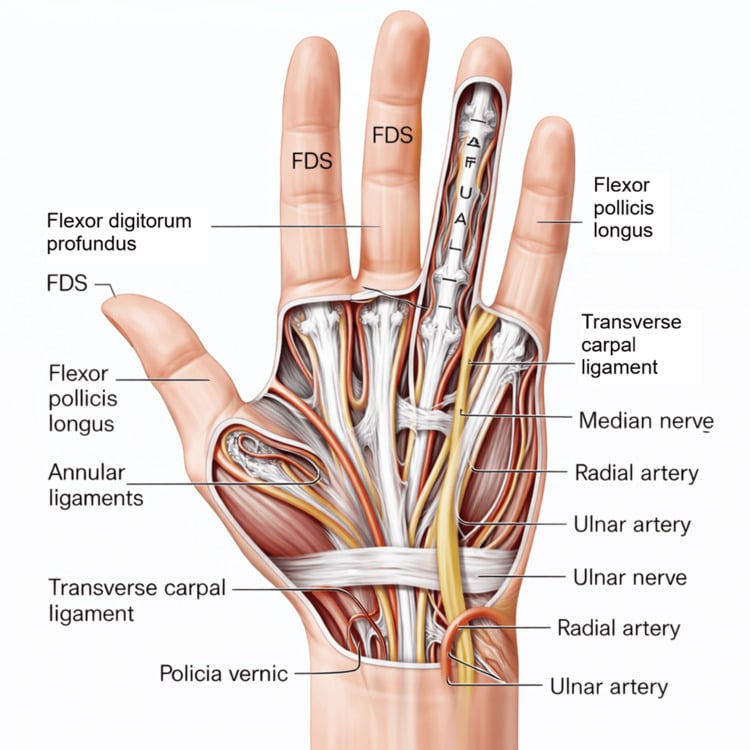
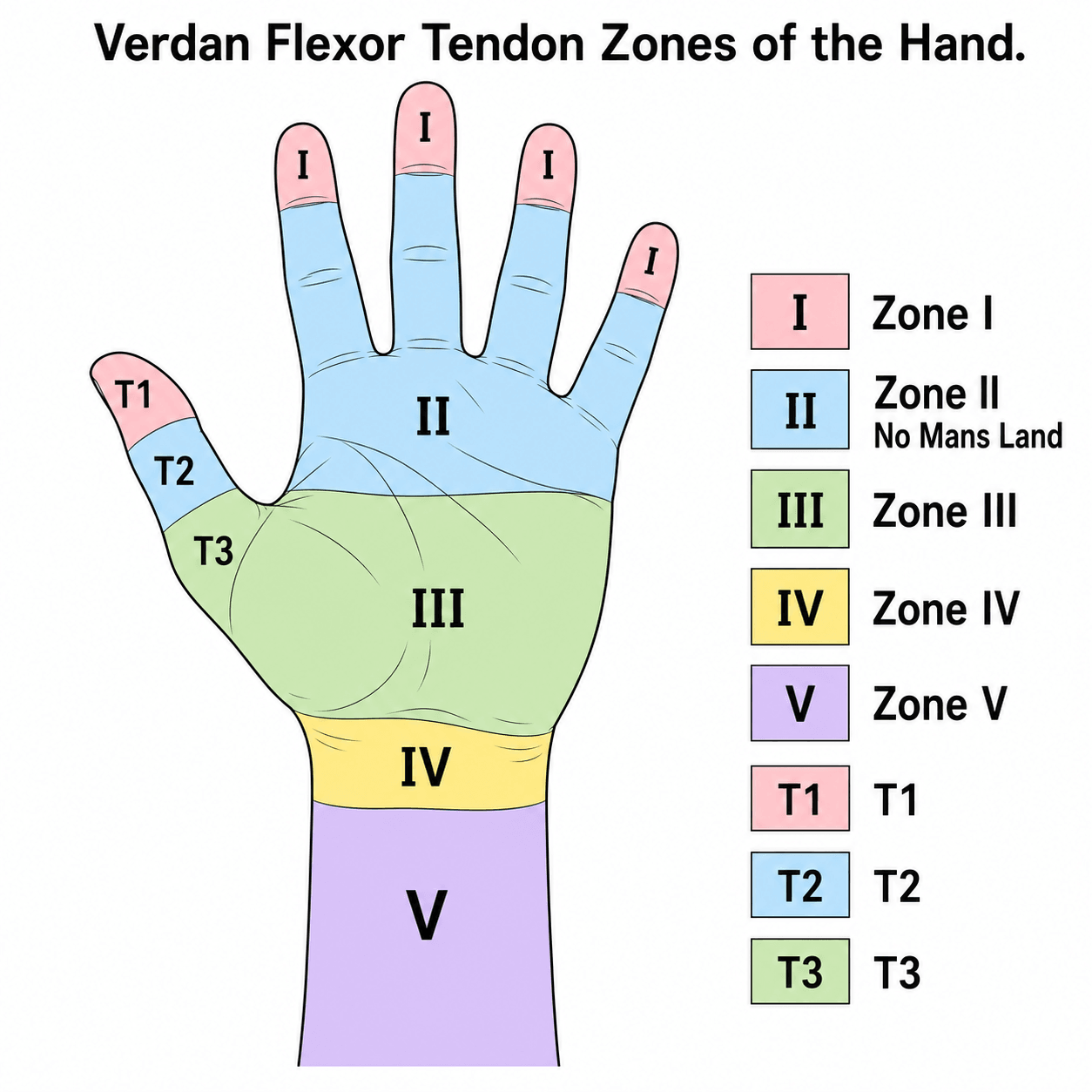
Verdan zones. Five zones for the fingers:
- Zone I - distal to the FDS insertion, so FDP only. Repair is straightforward (or advancement).
- Zone II - from the A1 pulley to the FDS insertion, where FDS and FDP share the sheath. The most complex zone, and the one with the highest adhesion risk.
- Zone III - the palm, at the lumbrical origin. Good prognosis.
- Zone IV - the carpal tunnel. Crowded.
- Zone V - the distal forearm, proximal to the carpal tunnel. Good prognosis.
The transition from Zone II to Zone III is defined by the distal palmar crease. The thumb is graded separately as T1-T3.
The pulleys. The annular pulleys (A1-A5) are thick and prevent bowstringing; the cruciate pulleys (C1-C3) are thin and collapsible, allowing flexibility. Two are critical and must be preserved: A2 on the proximal phalanx, which handles the highest load, and A4 on the middle phalanx, which is critical for DIPJ flexion. A pulley can be "vented", partially incised laterally, to let a bulky repair pass. Understanding the sheath roof is what prevents iatrogenic pulley loss.
Nutrition. The tendon is fed two ways. The vincula enter dorsally (VBC and VBP) and supply blood; synovial diffusion (imbibition) is the primary source of nutrition in Zone II. Early motion pumps synovial fluid, enhancing nutrition and healing; without motion the diffusion gradient is insufficient for the repair to heal.
Tendon Healing Biology: Intrinsic vs Extrinsic
How a flexor tendon heals determines whether it glides or scars, and is the biological justification for early motion.
Intrinsic healing is mediated by the tenocytes within the tendon itself, nourished by synovial diffusion and the vincula. It restores tendon continuity without binding the tendon to its surroundings, so glide is preserved; early controlled motion promotes this pathway.
Extrinsic healing comes from fibroblasts that invade from the surrounding sheath and soft tissues, laying down scar that bridges the repair but tethers the tendon as adhesions. Immobilisation, rough tissue handling, sheath and pulley damage, and gapping all push healing toward this pathway.
The phases. Healing runs through three overlapping phases, and the strength of the repair follows them:
- Inflammatory (0 to about 5 days) - the repair is held almost entirely by the suture and tensile strength is at its lowest, the classic early "soft" period
- Proliferative / fibroblastic (about 5 days to 3-4 weeks) - collagen is laid down and strength climbs, often after an early dip
- Remodelling (from about 3-4 weeks, continuing for months) - collagen aligns along lines of stress and the repair regains functional strength; controlled loading guides this alignment
Why early motion works. Controlled early motion shifts healing toward the intrinsic pathway and remodels collagen along the line of pull, improving glide and final strength, but only if the core repair is strong enough to survive the loads applied during the weak inflammatory phase. That is the biological reason a strong repair and early motion are inseparable.
FDP Avulsion (Jersey Finger): Leddy-Packer Classification
A closed avulsion of the FDP from the distal phalanx ("jersey finger", classically the ring finger caught in a jersey) is a distinct Zone I injury graded by how far the tendon retracts and whether a bony fragment is attached. That is the Leddy-Packer classification, and it sets the urgency.
- Retraction / fragment
- Tendon retracts into the palm
- Vincula / blood supply
- Both vincula ruptured (no nutrition)
- Implication
- Surgical emergency - repair within about 7-10 days before the tendon necroses and the muscle contracts
- Retraction / fragment
- Retracts to the PIP joint (most common)
- Vincula / blood supply
- Held by an intact long vinculum (vincula preserved)
- Implication
- More time available, but still repair early; can convert to type I if the vinculum tears
- Retraction / fragment
- Large bony fragment avulsed, caught at the A4 pulley
- Vincula / blood supply
- Vincula usually intact
- Implication
- Fix the fragment (suture or screw); the tendon stays attached to bone
- Retraction / fragment
- Bony fragment PLUS tendon avulsed off the fragment ('double avulsion')
- Vincula / blood supply
- Variable
- Implication
- Two-level problem: fix the fragment AND reattach the tendon
The 1 cm advancement rule. When reattaching an avulsed or lacerated FDP to the distal phalanx, with a pull-out suture over a dorsal button or a bone anchor, the tendon must not be advanced more than about 1 cm. Over-advancing shortens the FDP and, because the profundi share a common muscle belly, produces a quadriga effect, in which the other fingers cannot fully flex, together with a DIP flexion contracture.
Clinical Presentation and Assessment
The presentation. A flexor tendon injury classically presents after a sharp laceration to the volar finger, hand or wrist with loss of the normal resting flexion cascade: the injured finger lies more extended than its neighbours. The resting cascade and individual FDS/FDP testing are the cornerstone of bedside diagnosis; imaging is rarely needed acutely.
What is lost depends on which tendon is cut:
- FDP division - loss of active DIPJ flexion
- FDS division - loss of active PIPJ flexion
- Both divided (Zone II) - loss of active flexion at both PIPJ and DIPJ
- FPL division - loss of active thumb IP flexion
The partial laceration. Active flexion may be preserved but painful, with weakness, triggering or catching. This is a high-risk trap for missed injury; what to do about it once the tendon is exposed is decided at operation and is set out under Surgical Technique.
Associated injuries. Digital nerve injury, giving altered sensation on the side of the laceration, and digital artery injury are frequently concomitant because both lie adjacent to the tendon, the digital nerves lateral to it.
History. Sharp, clean lacerations have the best prognosis, and the rest of the history is what shapes the plan:
- Mechanism - sharp (knife, glass) or crush (machinery)
- Time - hours since injury
- Contamination - animal bite, soil, marine environment
- Occupation - manual worker, musician, typist
- Hand dominance
- Smoking - a major risk factor for complications
- Diabetes - impaired healing
- Previous hand surgery - scarring, previous tendon injury
Red flags. Each of these requires urgent specialist consultation:
- Vascular injury - a cool, pale digit requires urgent revascularisation
- Compartment syndrome - rare in an isolated tendon injury; suspect it with a crush
- High-pressure injection - paint or grease requires emergent debridement
- Delayed presentation - greater than 3 weeks means muscle contracture and a scarred sheath
- Bite wounds - animal or human bites require thorough washout and antibiotics
Examination. To test FDS, hold the other fingers in extension and ask the patient to flex the PIPJ. To test FDP, hold the PIPJ in extension and ask the patient to flex the DIPJ. Test FDS for each digit individually: some patients have an independent FDP to the index finger (absent FDS). Check the digital nerves, check perfusion through the digital arteries (capillary refill, Allen's test), and assess the wound for depth, contamination and tissue loss.
Investigations
Ultrasound can locate retracted tendon ends and confirm the diagnosis in a partial tear; it also quantifies sheath fluid and pulley thickening. A radiograph rules out an avulsion fracture (jersey finger) or a foreign body.
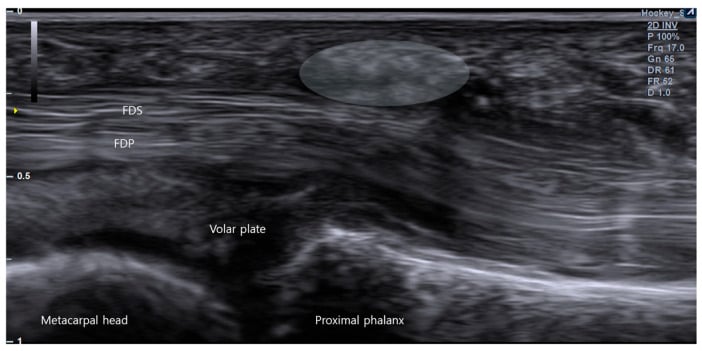
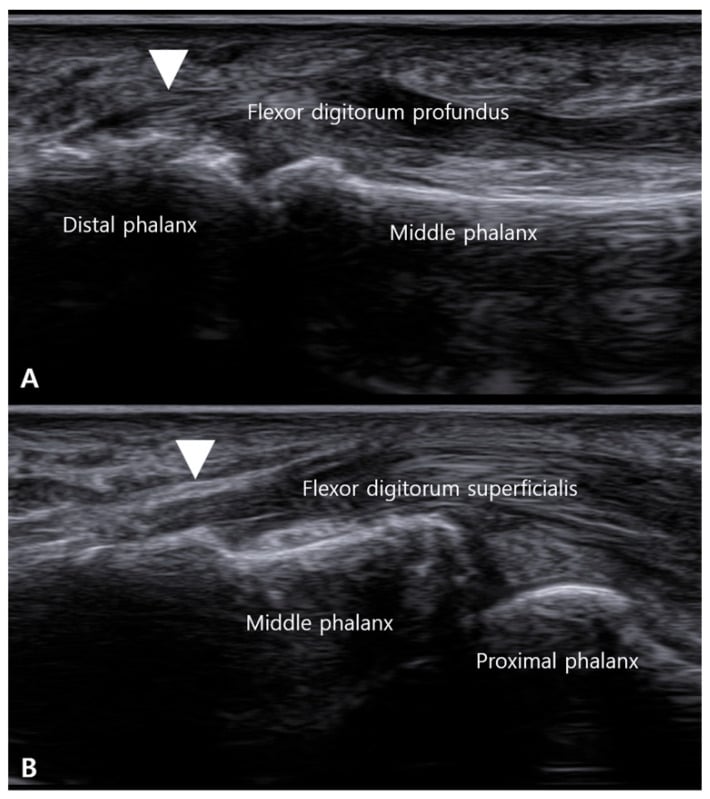
MRI is rarely needed for an acute laceration but is useful for a chronic rupture, where it shows the location of the tendon stump (retraction), the integrity of the pulley system, and scar tissue or adhesions, which helps in planning tenolysis or staged reconstruction.
Differential: Why Is the Finger Not Flexing?
A common exam and clinic problem is the digit that will not actively flex. The differential turns on the passive versus active discrepancy, timing, and the integrity of the repair.
- Active ROM
- Absent
- Passive ROM
- Full
- Timing / Clue
- Often a sudden 'pop'; resting cascade lost
- Action
- Explore early; re-repair if possible, else graft/reconstruct
- Active ROM
- Reduced
- Passive ROM
- Full
- Timing / Clue
- Gradual; weeks 6-12; passive much greater than active
- Action
- Therapy first, then tenolysis once tissues mature
- Active ROM
- Reduced
- Passive ROM
- Reduced
- Timing / Clue
- Loss of passive extension; capsular
- Action
- Aggressive splinting; capsulotomy if fixed
- Active ROM
- Absent or weak
- Passive ROM
- Full
- Timing / Clue
- Initial assessment; FDS vs FDP test
- Action
- Re-examine and explore
- Active ROM
- Limited fist (all fingers)
- Passive ROM
- Full
- Timing / Clue
- Over-tightened/advanced FDP; adjacent fingers short
- Action
- Release/lengthen the tethering tendon
- Active ROM
- Curls, incomplete flexion
- Passive ROM
- Full
- Timing / Clue
- Lost A2/A4; tendon lifts off bone
- Action
- Pulley reconstruction
Management
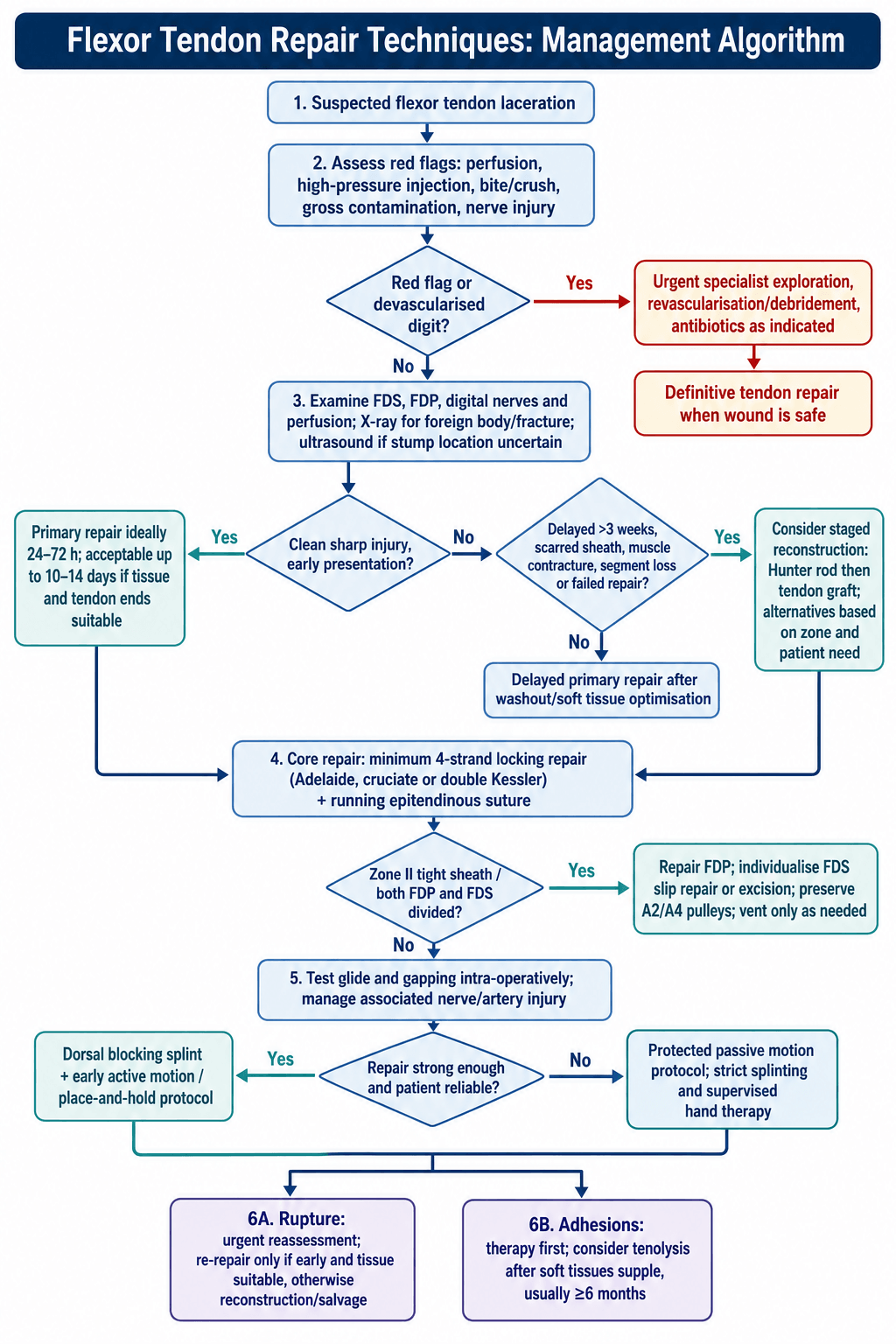
Timing. Primary repair within 24-72 hours is the gold standard, and the limit is 10-14 days: after this the pulleys collapse and the muscle contracts. Beyond 3 weeks a two-stage reconstruction (Hunter rod) may be needed. Immediate repair is always technically easier than delayed repair.
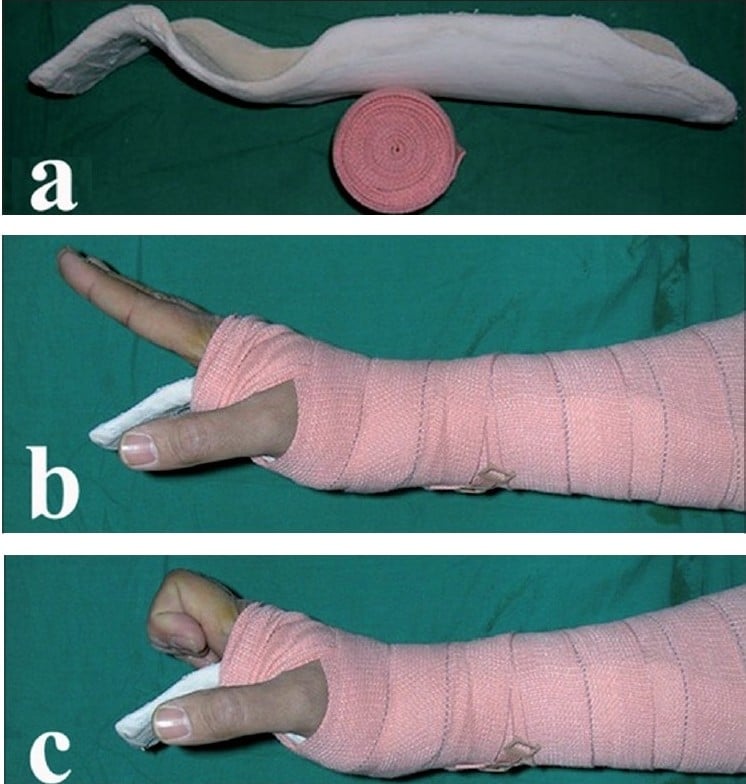
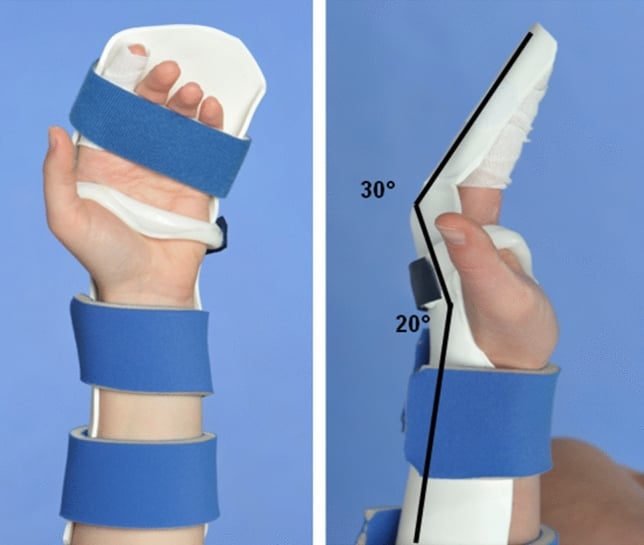
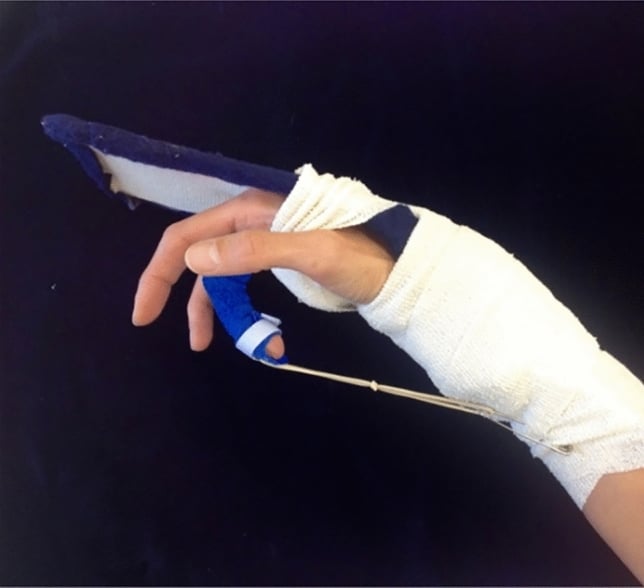
The rehabilitation protocol. A dorsal blocking splint (wrist 30° flexion, MCP 70° flexion, IP joints extended), then one of passive flexion (Duran), place-and-hold (an active hold), or true active flexion (Stark/Manchester), which requires a 4-strand repair. The choice of protocol dictates the strength required of the repair.
Surgical Technique
Exposure. Zig-zag (Bruner) incisions prevent scar contracture. Raise full-thickness flaps and extend the incisions proximally and distally, because good exposure is key. Window the sheath between the pulleys (a C1 window, for example) to reach the tendon, and do not vertically slice A2 or A4 if it can be avoided.
Retrieval. The proximal end retracts. Retrieve it with a skin hook or a catheter; milking the forearm or flexing the wrist helps. Avoid repeated grabbing with forceps, which crushes the tendon: trauma to the tendon surface (the epitenon) causes adhesions, so be gentle. Once retrieved, pin the tendon in the sheath with a 25G needle to hold it for the repair.
The core suture. The number of core strands is the most important factor: the mechanical strength of the repair is linearly related to the number of strands crossing the repair site, and a 4-strand core is the minimum for early active motion: a 2-strand Kessler is insufficient. Use 3-0 or 4-0 non-absorbable suture (Prolene, Ethibond, FiberWire). Locking loops grab the tendon fibres and prevent pull-out, but can strangle the tendon (ischaemia). Knot placement, inside or outside, is debated; mostly inside, to reduce friction.
Purchase. Take the core suture 7-10 mm back from the cut end. This is the parameter most often left out, and it matters as much as strand count: a short purchase (under about 7 mm) lets the loops pull through the longitudinal fibres and gap, while going much beyond 10 mm buys no extra strength and strangles more of the tendon's intrinsic blood supply.
Configurations. The 4-strand options include the Adelaide, the cruciate and the double Kessler. The modified Kessler is rectangular and locking, 2 strands per pass; the Adelaide is a 4-strand locking repair developed for EAM; the cruciate is a 4-strand cross pattern; the Tajima uses locking loops to grasp the end; the Lim/Tsai is a 6-strand loop repair.
- Modified Kessler
- Locking Rectangular
- Adelaide
- Cross-Locking (4 strand)
- Cruciate
- Cross-Stitch
- Modified Kessler
- 2 (Standard)
- Adelaide
- 4 (Standard)
- Cruciate
- 4 (Standard)
- Modified Kessler
- Moderate
- Adelaide
- High
- Cruciate
- High
- Modified Kessler
- Low
- Adelaide
- Moderate
- Cruciate
- Low
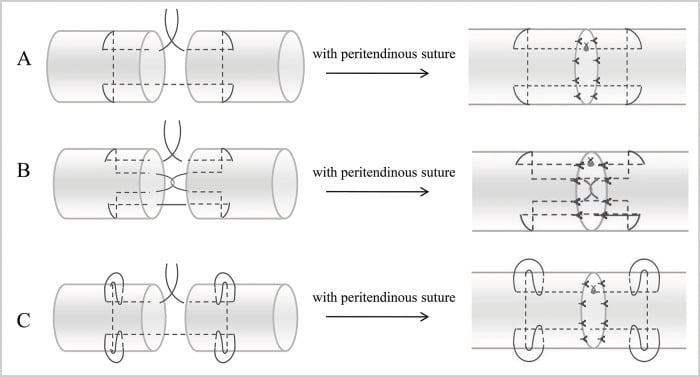
The gap. A gap greater than 2 mm at the repair site allows fibrous tissue ingrowth (adhesions) rather than tendon healing, weakens the repair significantly and predisposes to rupture; gapping greater than 3 mm leads to poor outcomes. Pre-tensioning the core suture ensures the faces are opposed, and the epitendinous running suture is critical for resisting gap formation.
The epitendinous suture. A running cross-stitch (Silfverskiold) in 6-0 Prolene, placed 1-2 mm from the cut edge. It streamlines the repair, reducing catching, smooths the edges and adds 10-20% strength.
The partial laceration on the table. What to do once you have exposed it depends on the cross-sectional area divided. The conventional threshold is around 50-60%. Below it, do not place a core suture: trim the ragged flap and, if anything, run a fine epitendinous stitch, because a bulky repair in a partial injury causes triggering and catching within the sheath and can turn a functioning tendon into a blocked one. Above it, treat as a complete division and repair formally, since the residual tendon will not survive early motion.
Test before closing. Always test the finger through a full active arc before closing, whether or not you repaired; the point is to see it glide. WALANT (Wide Awake Local Anaesthesia No Tourniquet) allows this intra-operative testing of glide.
Antibiotics.
- Cefazolin (Kefzol) 2 g IV at induction
- Post-operative oral cephalexin is often given for 5 days because of the length of the procedure and the implant material, though the evidence is debated
- Contaminated wounds: Augmentin
Complications
Adhesions are the most common complication: loss of active flexion despite good passive range, and the finger needs a tenolysis.
Rupture is the catastrophic failure. It occurs if rehabilitation is too aggressive or the repair is weak (fewer than 4 strands).
Bowstringing follows loss of the A2 or A4 pulley: the moment arm increases but excursion is lost, so the finger curls but does not fully flex.
Contracture. PIPJ flexion contracture is common if the joint is not splinted in extension.
Quadriga effect. Overtightening the FDP in one finger tethers the others through the shared muscle belly: the patient cannot make a full fist because the repaired finger hits the palm first. It is the reason for the 1 cm limit on advancement.
Infection. Deep space infection is disastrous for tendon gliding.
Rehabilitation
Four phases, from protection to strengthening:
- Dorsal blocking splint: wrist 30° flexion, MCP 70° flexion, IP joints extended
- Passive flexion within the splint (Duran protocol)
- Controlled active extension to the splint limits
- Synergistic motion: wrist extension with finger flexion (tenodesis effect)
- Early active: gentle active flexion to a third of a fist if the repair is 4-strand (Manchester/Stark)
- Oedema control: Coban wrap, elevation, retrograde massage
- Progress the wrist position to neutral
- Place and hold: active extension, passive flexion, then hold
- Tendon gliding: hook, straight, fist and table-top positions
- Differential glide: isolated FDS and FDP exercises
- Scar management: silicone gel sheets, massage
- Splint weaned to day use only; night splint continues
- Full active motion: unrestricted active range of motion exercises
- Blocking exercises: isolated joint motion (DIP blocking for FDP)
- Light functional use: activities of daily living with precautions
- Splint discontinued at week 8
- Progressive resistance: putty, hand exercisers
- Work hardening: task-specific conditioning
- Return to work: light duties week 8, full duties week 12
- Sport: full contact sports at week 12
Prognosis
By zone. Zones I, III and V give excellent results. Zone II results are "fair" to "good": stiffness and adhesions remain a challenge, tenolysis is required in 15-20% of Zone II repairs, and the rupture rate is quoted at 10-15% depending on compliance, against the roughly 4-10% used as an audit benchmark in the Guidelines section below.
By patient. Children have excellent healing potential, but poor compliance with rehabilitation creates a high risk of rupture or adhesion, so cast immobilisation is often used. Smokers have higher rates of complications (infection, poor healing).
Guidelines, Registries & Global Practice
Global Epidemiology
- Demographics: Peak incidence in working-age males (20-40 years) worldwide; hand lacerations are among the most common reasons for emergency hand referral.
- Mechanism: Sharp lacerations (glass, knives, sheet metal) dominate in high-income settings; agricultural and machinery injuries are proportionally higher in rural and lower-resource regions.
- Occupational burden: Construction, manufacturing, food/meat processing and fishing industries carry the highest occupational rates.
- Zone II predominance: Zone II remains the most frequently injured and the most outcome-determining zone across all populations.
Injury patterns shift with economy and occupation, but the surgical principles are universal.
Controversies & Areas of Uncertainty
Four versus six strands. Six-strand repairs are stronger biomechanically, but the added bulk increases gliding resistance and work of flexion. Most surgeons accept a robust 4-strand repair as the pragmatic standard; the incremental clinical benefit of 6 strands is unproven.
Knot placement. Internal knots reduce surface friction but may bulk the juncture; external knots are simpler but can catch. The evidence does not strongly favour one.
How much to vent. How much of A2 or A4 can be vented before bowstringing matters clinically is debated; small partial venting is widely accepted, but the safe upper limit is not precisely defined.
The rehabilitation protocol. Early active motion improves motion (Level I) but demands a strong repair and skilled therapy; where therapy is unavailable, the trade-off against rupture risk remains contested.
The slightly bulky repair. The Tang/Lalonde approach tolerates a slightly bulky repair plus venting to favour strength; traditionalists prioritise a slim, low-resistance juncture. Both have advocates.
FDS in Zone II. Whether to repair one or both FDS slips, or to excise FDS, when the sheath is tight is individualised, not standardised.
MCQ Practice Points
Q: How much strength does a standard epitendinous suture add to a repair? A: 10-20%.
Q: Which nutrient pathway is most important in Zone II? A: Synovial diffusion (Imbibition).
Q: What is the Quadriga Effect? A: Limitation of flexion in adjacent fingers due to overtightening/shortening of the FDP in the repaired finger (shared muscle belly).
Q: What is the minimum strand count for Early Active Motion? A: 4 Strands.
Q: Why is Zone II called 'No Man's Land'? A: FDP and FDS travel within a tight fibro-osseous tunnel, making repair technically challenging and historically associated with poor outcomes due to adhesion formation.
Q: Which pulleys are critical and must be preserved during flexor tendon surgery? A: A2 and A4 - They prevent bowstringing. A1, A3, and A5 can be released if needed for exposure.
Viva Scenarios
Practise clinical reasoning and management decisions out loud
“A 25-year-old carpenter presents with a laceration over Zone II of the index finger. FDS and FDP are non-functional. He wants a quick return to work. Discussion?”
“6 weeks post-op Zone II repair, a patient feels a 'pop' lifting a coffee cup. Finger is extended, no active flexion. What now?”
“4 months post-op. Full passive flexion, but no active flexion. What is the diagnosis and management?”
“A 35-year-old presents with a glass laceration at the thenar crease. FPL is non-functional. Describe the anatomy and management.”
Technique
- 4-Strand Core (Min)
- Epitendinous Running
- Vent Pulleys if tight
- Preserve A2/A4
Rehab
- Dorsal Block Splint
- Early Active Motion
- Passive Flexion (Duran)
- Place and Hold
Complications
- Rupture (Worst)
- Adhesion (Common)
- Bowstringing (Pulley loss)
- Quadriga (Length mismatch)
Evidence Base
Scientific Basis for Modern Flexor Tendon Surgery
- Synthesis of 40 years of basic-science research on tendon structure, biomechanics, healing and suture methods
- Articulates the attributes of an ideal repair: easily placed sutures, secure knots, smooth juncture, minimal gapping, preserved vascularity and adequate strength throughout healing
- Repair strength scales with the number of core suture strands crossing the juncture
- Early controlled motion increases gliding and tensile strength of the healing repair
Cruciate Four-Strand Repair
- Cadaveric biomechanical study of 40 FDP tendons (modified Kessler, Strickland, modified 4-strand Savage, Cruciate)
- Cruciate repair was nearly twice as strong to 2mm gap formation (44 N) as the Kessler, Strickland and Savage repairs
- Ultimate tensile strength was significantly higher for the Cruciate (56 N)
- Performed with the speed of a 2-strand technique while exceeding the strength of existing 4-strand repairs
Comparative 4-Strand Zone II Repairs
- In-situ testing of six 4-strand repairs in 54 cadaver profundus tendons at Zone II
- Locked cruciate, modified double Tsuge and modified Becker were strong enough for an early active motion protocol
- Mean gaps after 1000 load-unload cycles did not approach the 3mm clinical limit in any group
- Locked cruciate and modified double Tsuge were easier to perform with less gliding interference than the modified Becker
Active vs Passive Motion After Zone II Repair (RCT)
- Randomised prospective trial: 103 patients (119 digits) with Zone II repairs, active place-and-hold vs passive motion
- Active group achieved greater IP joint motion at final follow-up (156 degrees vs 128 degrees, p less than 0.05) with smaller flexion contractures and higher satisfaction
- Rupture occurred in only 2 digits per group - active motion did not increase rupture risk
- Smoking, concomitant nerve injury and multiple-digit injury all worsened outcomes; certified hand-therapist supervision improved them
- The honest caveat: the 28-degree motion advantage did NOT translate into the patient-reported outcome - DASH scores and dexterity testing showed no difference between the groups
WALANT and Wide-Awake Flexor Tendon Repair
- Wide Awake Local Anaesthesia No Tourniquet (WALANT) allows intra-operative active flexion to test the repair before closure
- Strong sutures, a slightly bulky repair, intra-operative active testing and judicious venting of the A2 and A4 pulleys improve flexor tendon results
- Intra-operative testing detects gapping or triggering so it can be corrected before skin closure
- Reduces cost and improves accessibility, particularly in resource-limited settings
Ex-Vivo Comparison of 4-Strand Core Techniques
- Biomechanical comparison of double-modified Kessler, augmented Becker, Savage and modified Tang 4-strand repairs in 56 tendons (all with a 5-0 epitendinous running suture)
- All peripheral (epitendinous) sutures ruptured near the yield point, confirming their load-sharing contribution
- Augmented Becker had the greatest ultimate strength (98.7 N); the double-modified Kessler was weakest against 2mm gapping
- Modified Tang was fastest to perform; technique choice trades operative time against gap resistance
General Principles of Flexor Tendon Repair
- Contemporary review confirming Strickland's 1995 attributes of the ideal repair still hold
- A stout multi-strand repair with a smooth juncture and minimal gapping is sufficient for early mobilisation and intrinsic healing
- Reaffirms preservation of tendon vascularity and a secure, low-friction knot
- Modern repair philosophy favours strong constructs that permit immediate controlled active motion
AO Foundation / AO Surgery Reference - Flexor Tendon Repair
- Recommends a multi-strand (minimum 4-strand) core suture with a circumferential epitendinous suture for Zone I-II injuries
- Advocates atraumatic tendon handling, preservation of critical pulleys and judicious venting to allow glide
- Supports early controlled mobilisation under hand-therapy supervision
- Consensus surgical-technique resource used internationally for training and exam preparation