Benign-Aggressive Tumor | Epiphyseal Location | RANK-RANKL Pathway
- GCT is benign histologically but locally aggressive with high recurrence rates (10-50%)
- An eccentric epiphyseal lytic lesion reaching subchondral bone in a closed physis is the CHARACTERISTIC pattern and the single most useful discriminator - but not pathognomonic: this page's own differential includes ABC, brown tumour, clear cell chondrosarcoma and, before physeal closure, chondroblastoma
- RANK-RANKL pathway drives osteoclastic giant cell recruitment - denosumab targets this
- Extended curettage with local adjuvants (phenol, PMMA, argon beam) is standard treatment
- Pulmonary metastases occur in 1-5% despite benign histology - requires chest CT surveillance
- “H3F3A G34W is highly SPECIFIC among bone tumours but only about 92% sensitive (49 of 53, Behjati) - a negative result does NOT exclude GCT. Its sibling gene H3F3B K36M defines chondroblastoma instead
- “Denosumab causes tumor ossification but may increase recurrence risk - controversial
- “Pathological fracture occurs in 10-20% and does NOT contraindicate curettage
- “Malignancy in GCT is commoner than the often-quoted 'under 1%' - the pooled estimate is about 4%, split into 1.6% primary and 2.4% secondary, and the secondary group arises mainly AFTER RADIOTHERAPY, which is the single strongest argument against irradiating a benign tumour in a young adult
Overview and Epidemiology
Giant cell tumour (GCT) of bone is a benign but locally aggressive neoplasm. The name describes the wrong cell: the abundant osteoclast-like multinucleated giant cells are reactive, and the neoplastic component is the population of mononuclear spindle-shaped stromal cells that recruits them. Despite benign histology it recurs locally in 10-50% depending on treatment and metastasises to the lung in 1-5%.
Definition. A primary bone tumour composed of three cell populations: mononuclear histiocyte-like cells, mononuclear spindle-shaped stromal cells carrying the H3F3A mutation, and multinucleated osteoclast-like giant cells with 20-100 nuclei per cell. It characteristically arises in the epiphysis of a long bone after physeal closure.
Why it matters. Five things make this tumour examinable: its local aggression demands meticulous surgical technique; its eccentric epiphyseal position threatens the joint; pathological fracture complicates 10-20% of cases; the RANK-RANKL pathway gives it a targeted therapy, denosumab, whose outcomes are controversial; and it can metastasise to the lung despite benign histology.
Who. Peak age is 20-40 years (range 15-65), after physeal closure, with a slight female predominance of 1.5:1 and a higher incidence in Asian populations. It is rare in children: under 2% occur before physeal closure.
How common. Annual incidence is about 1 per million. GCT makes up 5% of primary bone tumours, 20% of benign bone tumours, and 18% of all bone tumours biopsied.
Where. About 85% occur around the knee.
- Distal femur - 30%, the most common single site
- Proximal tibia - 25%
- Distal radius - 10%
- Sacrum - 5-10%
Pathophysiology
The neoplastic cell. The stromal cell carries an H3F3A G34W mutation (rarely G34L), a histone H3.3 alteration that drives histone modification and gene dysregulation, and the result that matters is overexpression of RANKL. Behjati showed the mutation is confined to the stromal cells and not detectable in the osteoclasts or their precursors, which is the molecular proof that the giant cells are a reactive population recruited by stromal RANKL.
RANKL and the giant cell. RANKL (receptor activator of nuclear factor kappa-B ligand) is the key cytokine for osteoclast differentiation. Secreted by the neoplastic stromal cells, it binds RANK on osteoclast precursors of monocyte-macrophage lineage and stimulates their fusion into multinucleated giant cells, creating a local microenvironment that favours bone resorption. The giant cells then resorb bone: the tumour expands eccentrically in the epiphysis, reaches the subchondral bone, and in grade III eventually breaks through the cortex.
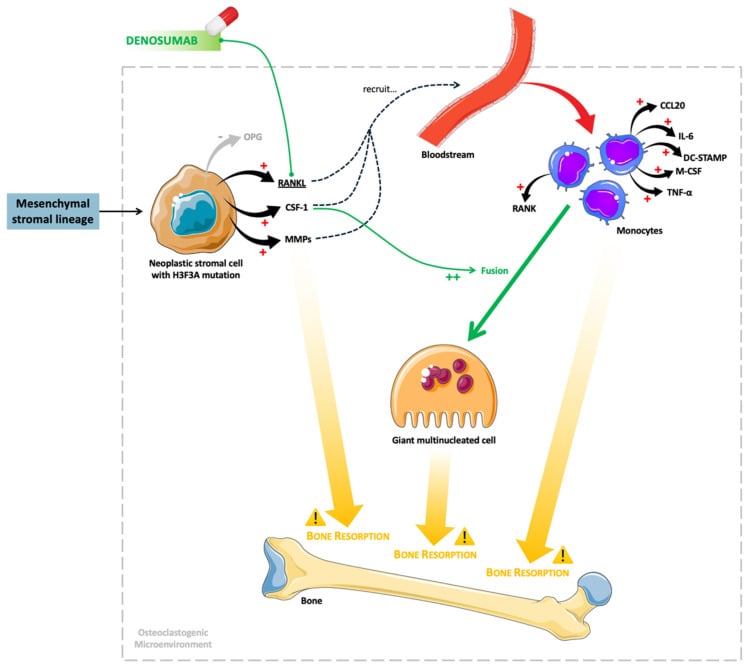
Denosumab. A fully human monoclonal antibody against RANKL. By blocking RANKL it prevents RANK activation on osteoclast precursors, so giant cell recruitment and bone resorption stop, and the tumour ossifies and shrinks. It does not eliminate the neoplastic stromal cells, which may lead to recurrence when treatment stops.
Get the operating characteristics the right way round. Behjati's defining study found H3F3A alterations in 49 of 53 giant cell tumours (92%) - G34W in all but one, which was G34L. So the marker is highly specific among bone tumours and is the diagnostic discriminator in practice, but its sensitivity is about 92%: a negative G34W does not exclude GCT, and roughly one tumour in twelve will be negative. Do not let a negative result overturn a confident radiological and histological diagnosis.
Two further points that the word "pathognomonic" obscures. First, the gene is not unique to bone - H3F3A alterations at the same codon (G34R, G34V) occur in paediatric high-grade glioma, and the K27M alteration in diffuse midline glioma; it is the specific G34W substitution in a bone lesion that carries the meaning. Second, the closely related H3F3B K36M defines chondroblastoma (73 of 77, 95%) - so the two histone H3.3 genes separate the two tumours, and naming the wrong gene reverses the diagnosis.
Histology
Three cell populations. The giant cells have 20-100 nuclei, express RANK, and are distributed evenly through the tumour. The stromal cells are spindle-shaped, carry the H3F3A mutation, produce RANKL, and have ovoid nuclei that look like the giant-cell nuclei. The histiocyte-like cells are round to ovoid, of monocyte-macrophage lineage, and are the osteoclast precursors.
What the slide shows. Sheet-like growth with no fibrous stroma, and giant cells scattered evenly rather than clumped, which is the diagnostic feature. Mitoses are frequent in the stromal cells, not the giant cells. Haemorrhage is common and produces ABC-like areas and golden-brown haemosiderin; older lesions contain lipid-laden foam cells.
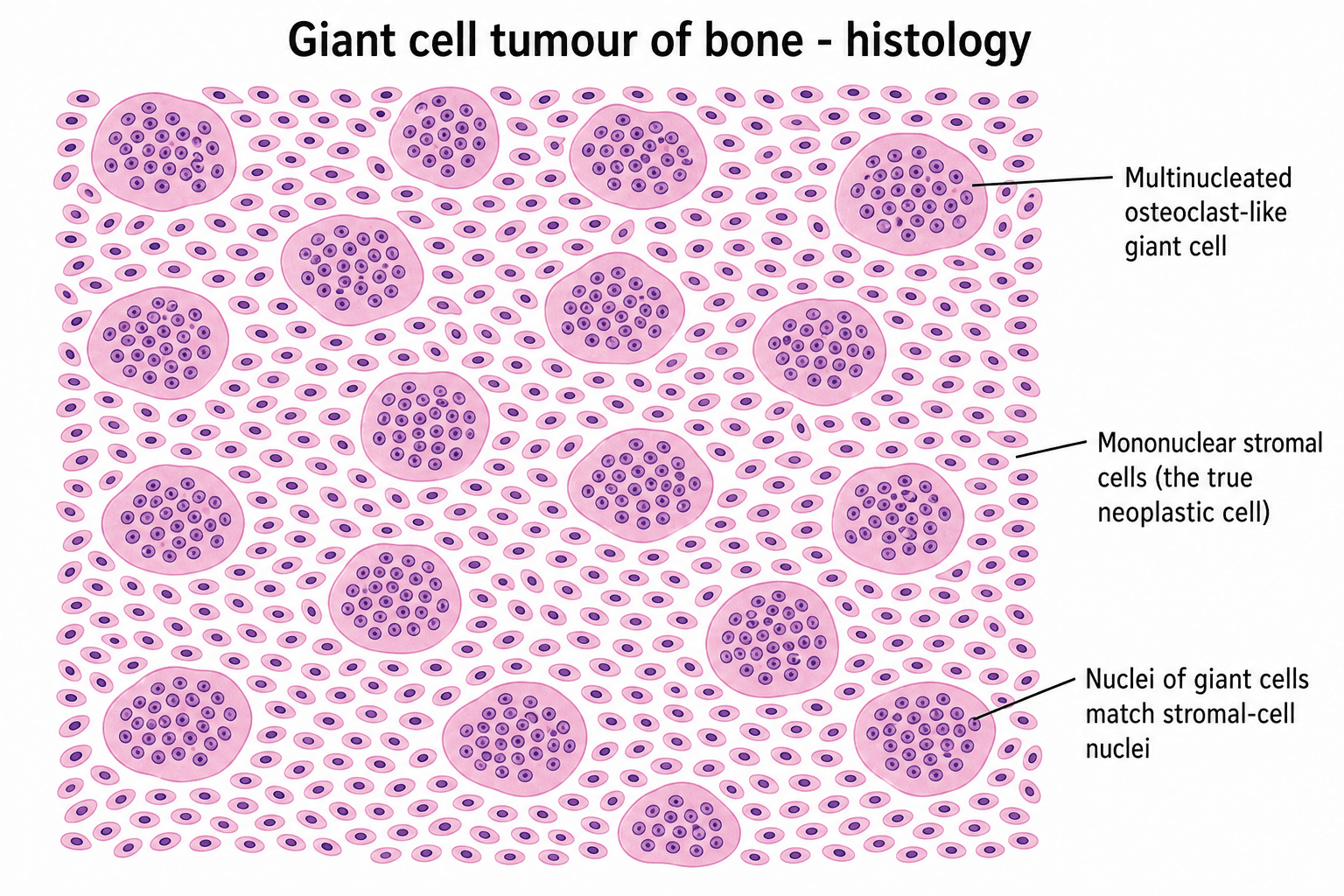
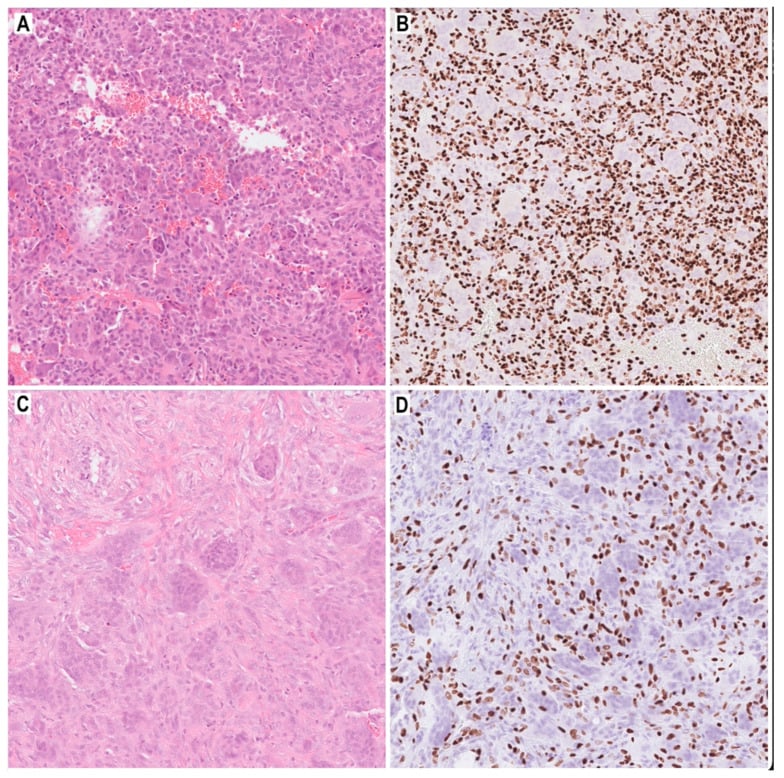
Telling it from osteosarcoma with giant cells. Four features separate benign GCT from a malignant giant-cell-rich tumour:
- Uniform nuclear features - the stromal nuclei match the giant-cell nuclei
- No osteoid or malignant bone production
- Sheet-like distribution without necrosis
- Mitoses in the stromal cells are normal in form, not atypical
Malignancy in GCT
About 4% overall, and the split matters. Primary malignant GCT (about 1.6%) is a sarcoma arising within or alongside a GCT at first presentation, with atypical stromal cells showing frankly malignant features; it needs wide resection and treatment as a sarcoma. Secondary malignant GCT (about 2.4%) is a sarcoma developing in a previously benign, previously treated GCT, and it arises mainly after radiotherapy. It is the larger of the two groups, and it is the iatrogenic one.
That asymmetry is the argument. Most malignancy in GCT is not something the tumour did; it is something the treatment did, in a young adult with a benign lesion and a normal life expectancy. Radiotherapy is therefore reserved for genuinely unresectable disease with no alternative, and the availability of denosumab and of serial embolisation for axial lesions has narrowed that group considerably.
A rapidly changing lesion in a patient irradiated years earlier is a secondary sarcoma until proven otherwise.
Classification Systems
Campanacci grading
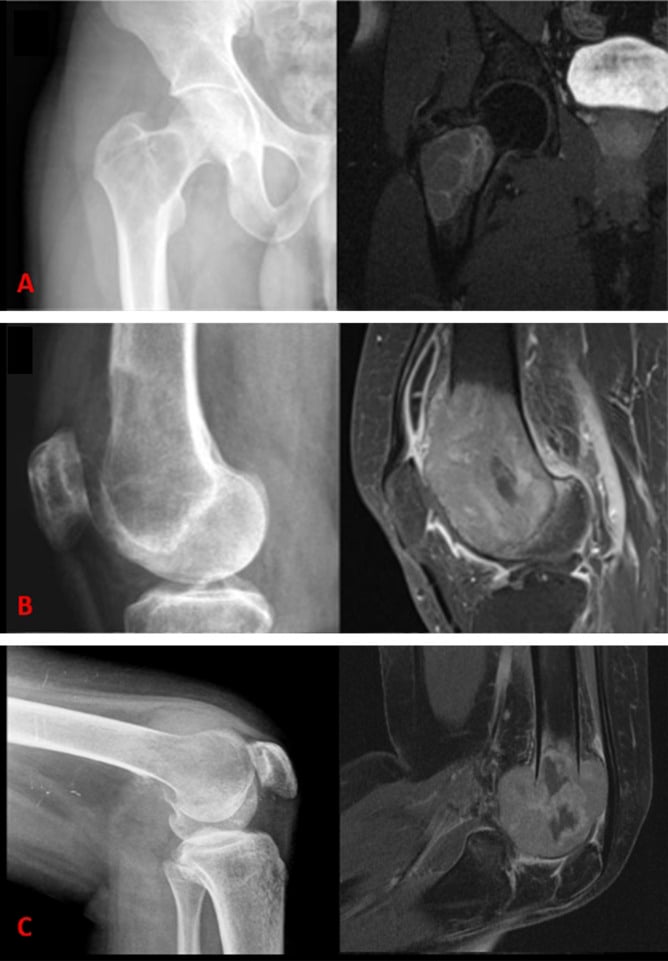
Campanacci grades the tumour on its radiographs and is the most widely used classification for treatment planning. The grade is read from the cortex, not from the distance to the joint: all three grades extend to subchondral bone, which is why the epiphyseal, subchondral position is the characteristic pattern rather than a pathognomonic one and does not by itself separate GCT from its differential. Grades I and II are treated by extended curettage; grade III may need resection depending on what can be reconstructed.
- Radiographic Features
- Well-defined intramedullary lesion with thin sclerotic rim
- Cortical Integrity
- Intact cortex
- Soft Tissue
- None
- Treatment
- Extended curettage + adjuvants
- Radiographic Features
- Expanded lesion with thinned cortex, no sclerotic rim
- Cortical Integrity
- Thinned but intact
- Soft Tissue
- None
- Treatment
- Extended curettage + adjuvants
- Radiographic Features
- Ill-defined lesion breaking through cortex
- Cortical Integrity
- Destroyed
- Soft Tissue
- Soft tissue mass
- Treatment
- Curettage vs resection with or without denosumab
Recurrence by grade. Recurrence rates increase with grade: 10-15% for grade I and 15-25% for grade II after extended curettage with adjuvants, and 25-50% for grade III treated by curettage alone, against 10% for grade III after resection. A grade III lesion that has fractured is managed as grade III once the fracture has healed, with a recurrence risk quoted at 20-30%, similar to grade III.
The grade tells you what is technically feasible. It does not tell you who will recur — and the original series says so. In Campanacci's own 1987 paper (PMID 3805057), recurrence did NOT correlate with radiographic grade. What did correlate was the margin achieved:
- Local recurrence
- 27%
- Local recurrence
- 8%
- Local recurrence
- 0%
That is the head-to-head comparison the commonly quoted "10-50%" band leaves out, and it explains why the operative debate is about how completely you can clear the lesion and still keep the joint - not about which grade number is on the report. Use the grade to judge whether the cortex will hold a curettage, then judge the risk by the margin you actually achieved.
And it gives you the surveillance interval: 90% of recurrences appeared within the first 3 years, so that is where imaging follow-up should be concentrated. (Caveat the era honestly - this series predates routine phenol, PMMA and denosumab, so the absolute intralesional figure is higher than a modern adjuvant series would give. The ranking by margin is the durable part.)
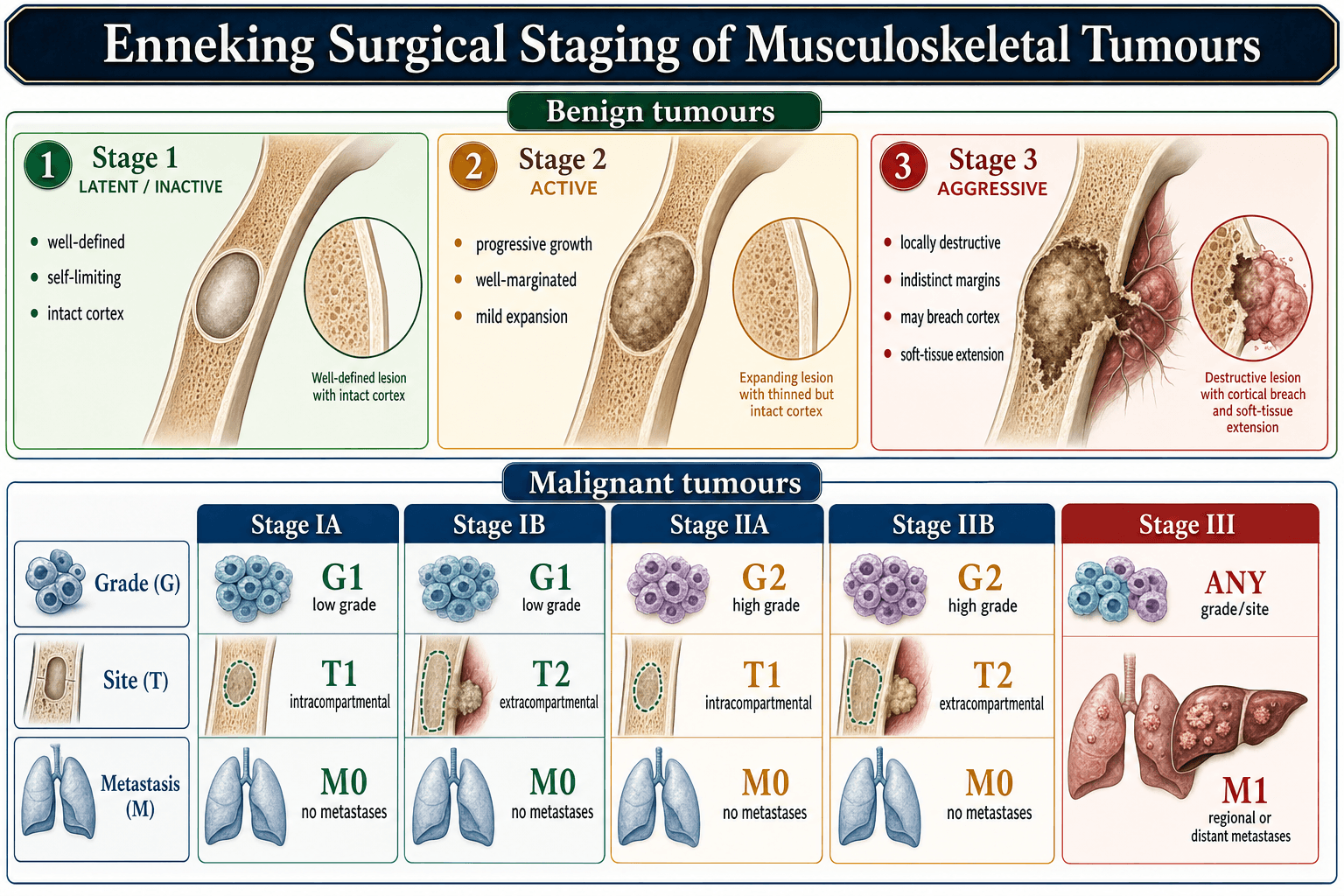
Enneking staging
GCT is a stage 3 (aggressive) benign tumour in Enneking's system: stage 1 is latent (asymptomatic, well contained), stage 2 active (symptomatic, progressive), stage 3 locally aggressive with high recurrence. The system's real use here is its vocabulary for margins, which is the vocabulary Campanacci's recurrence table is written in.
- Intralesional - curettage, the standard operation for grades I-II
- Marginal - shelling out through the pseudocapsule, inadequate for GCT
- Wide - 1-2 cm of normal tissue, the margin of a resection
- Radical - the whole compartment, not needed for GCT
Clinical Assessment
Presentation. Progressive pain localised to the involved bone, present for several months before diagnosis (median 6-12 months), activity-related at first and then constant. Swelling may be visible when the bone is superficial, at the distal radius or proximal tibia. In 10-20% the presenting event is a pathological fracture with acute pain.
The joint. Because the lesion is epiphyseal, a knee effusion is common, motion is lost to pain, and weakness shows as an antalgic gait or muscle inhibition. Catching or locking suggests intra-articular extension. Instability is rare unless cortical destruction is massive.
Examination. The skin is normal, neither warm nor red, and the mass, if the bone is superficial enough to feel one, is firm and fixed to bone. The rest is the standard sequence.
- Look - swelling or a palpable mass if superficial (distal radius); bone expansion or angulation if fractured; quadriceps wasting with chronic knee pain; antalgic gait in the lower limb
- Feel - localised bony tenderness; normal temperature; knee effusion with a distal femoral or proximal tibial lesion; distal pulses and sensation
- Move - active and passive range equally limited by pain when the lesion is juxta-articular; strength reduced by pain inhibition or atrophy; crepitus if fractured
- Assess - signs of pathological fracture (point tenderness, abnormal mobility); a comprehensive distal neurovascular examination; lymph nodes for the rare metastasis; a full neurological examination for a sacral lesion
Any of the following needs immediate evaluation.
- Rapid symptom progression over weeks (suggests malignant transformation)
- Systemic symptoms (fever, weight loss, night sweats)
- Respiratory symptoms (suggests pulmonary metastases)
- Multiple bone lesions (GCT is almost always solitary)
- Age under 15 or over 65 (unusual for GCT, consider alternatives)
Differential diagnosis. The epiphyseal lytic lesion overlaps radiologically and histologically with several other giant-cell-rich and lytic lesions. Age, exact location, biochemistry and H3F3A status are the discriminators.
- Typical Age / Location
- 20-40y, epiphysis-metaphysis extending to subchondral bone
- Distinguishing Features
- Eccentric purely lytic lesion, no matrix, no rim; H3F3A G34W positive
- Key Discriminator vs GCT
- Reference diagnosis
- Typical Age / Location
- Under 20y, metaphysis (eccentric, expansile)
- Distinguishing Features
- Fluid-fluid levels, thin rim enhancement only, USP6 rearrangement
- Key Discriminator vs GCT
- Younger, metaphyseal, USP6 positive and H3F3A negative; GCT may have secondary ABC change
- Typical Age / Location
- Any age, often multiple lesions
- Distinguishing Features
- Raised PTH and calcium, subperiosteal resorption, multifocal
- Key Discriminator vs GCT
- Abnormal calcium/PTH and multifocality - always check biochemistry
- Typical Age / Location
- 10-20y, epiphysis (open physis)
- Distinguishing Features
- Lytic with chondroid matrix/calcification, H3F3B K36M
- Key Discriminator vs GCT
- Skeletally immature, matrix mineralisation, H3F3B (not H3F3A)
- Typical Age / Location
- 10-25y, metaphysis
- Distinguishing Features
- Permeative margins, malignant osteoid, atypical mitoses
- Key Discriminator vs GCT
- Aggressive periosteal reaction, atypia and osteoid production
- Typical Age / Location
- 25-50y, epiphysis of long bones
- Distinguishing Features
- Lytic epiphyseal lesion that mimics GCT; clear cells with matrix
- Key Discriminator vs GCT
- Consider in older patient with epiphyseal lesion; biopsy essential
Investigations
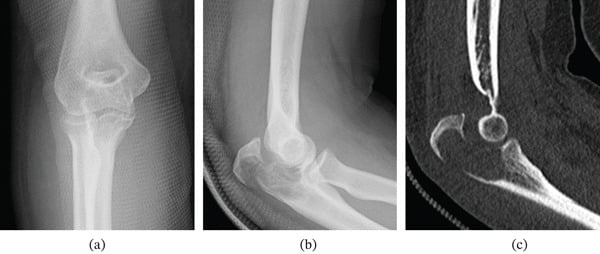
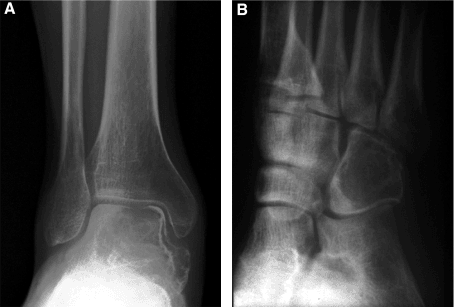
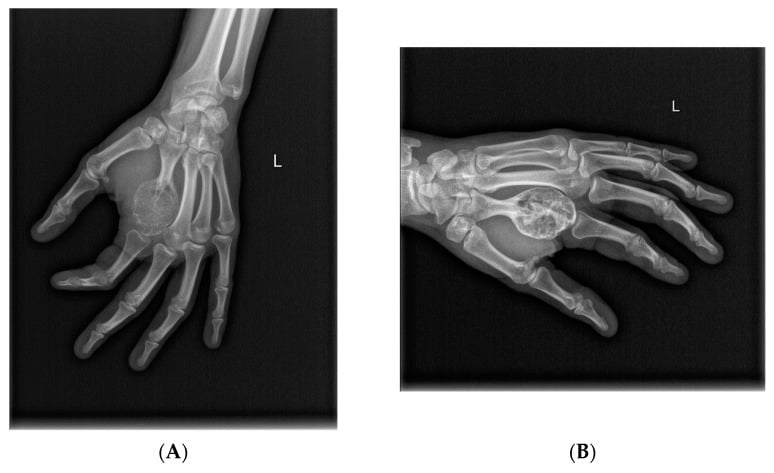
Radiographs. The first test and often highly characteristic: an eccentric epiphyseal lytic lesion reaching the subchondral bone, geographic and well defined, with no matrix mineralisation and no sclerotic rim (unlike an ABC). The eccentric epiphyseal position is the most useful single feature, but not a diagnosis on its own. There is no periosteal reaction unless the bone has fractured, in which case the film shows cortical disruption with angulation or displacement. The soap bubble appearance is multiple trabeculated compartments within the lucency; it is less specific than the location.
CT. CT provides superior delineation of cortical integrity, trabecular destruction and the soft-tissue extension through the cortex, which is why it is particularly useful for assigning the Campanacci grade and planning the cortical window. Acquire thin slices (1 mm or less) with bone and soft-tissue windows, multiplanar coronal and sagittal reconstruction, and 3D reconstruction for planning. Read it for cortical thickness, trabecular architecture, soft-tissue extension, proximity to neurovascular structures and the joint, and the bone stock available for reconstruction.
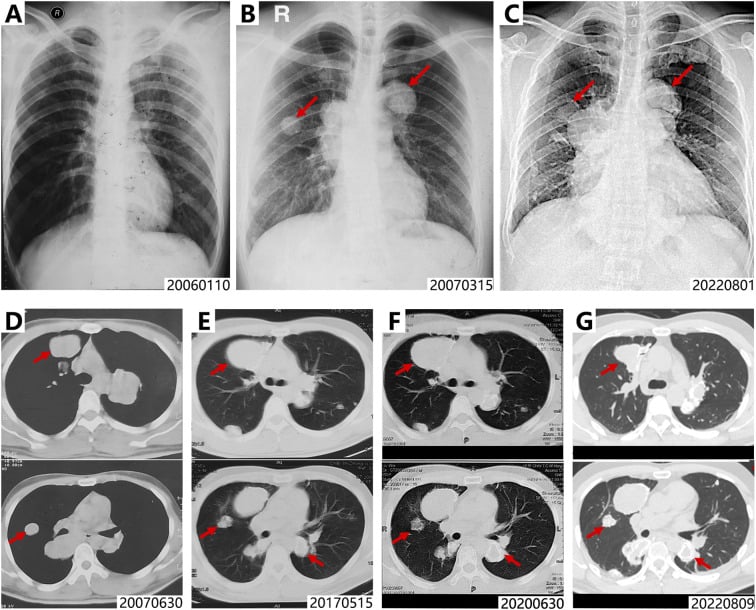
Chest CT. A baseline chest CT is mandatory to look for pulmonary metastases, since 1-5% have lung nodules at presentation, and serial imaging follows. Nodules may be benign implantation metastases.
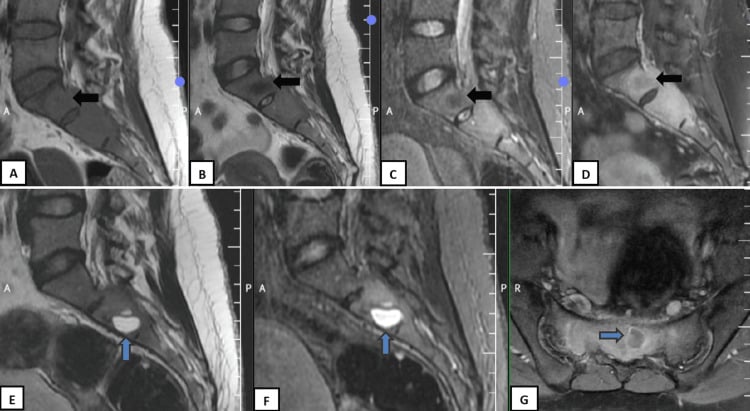
MRI. MRI is the test for soft-tissue extent, intra-articular extension, skip lesions and neurovascular involvement, and for surgical planning. The lesion is low to intermediate on T1, heterogeneously bright on T2, and enhances intensely.
- Signal Intensity
- Low to intermediate signal (hypointense to muscle)
- Clinical Significance
- Lesion extent in bone marrow, skip lesions
- Signal Intensity
- Heterogeneous high signal (hyperintense)
- Clinical Significance
- Solid tumour with cystic/haemorrhagic areas (ABC-like)
- Signal Intensity
- Very high signal, fluid-fluid levels if haemorrhage
- Clinical Significance
- Distinguish solid vs cystic components
- Signal Intensity
- Intense heterogeneous enhancement
- Clinical Significance
- Hypervascular tumour, distinguish from oedema
- Signal Intensity
- High signal with extensive marrow oedema
- Clinical Significance
- Marrow oedema extent, intra-articular involvement
Fluid-fluid levels. Seen in 10-15% of GCTs, from secondary aneurysmal bone cyst change after intratumoral haemorrhage, and they do not make the diagnosis a primary ABC. The discriminator is a solid enhancing tumour component with superimposed cystic areas; a true ABC enhances only as a thin rim.
Biopsy. Histological confirmation is mandatory before definitive treatment, and the biopsy is done by the treating surgeon or under their guidance so that the tract can be excised during the curettage. CT-guided core needle biopsy (11-14 gauge) is preferred because it contaminates less; take 3-5 cores from different areas because the tumour is heterogeneous; and plan the tract for excision, which for the knee means an anterior approach. Avoid a transarticular, transneural or transgastrocnemius trajectory; crossing the joint risks contaminating it.
What the pathologist needs. Review by an expert musculoskeletal pathologist is mandatory, to exclude brown tumour, ABC and osteosarcoma with giant cells and to look for the malignant features of atypical stromal cells and necrosis. Send tissue for H3F3A mutation testing if the diagnosis is uncertain. Frozen section can confirm GCT but cannot grade it, and histological grading is unreliable in any case, since all GCT is treated alike.
Management Algorithm
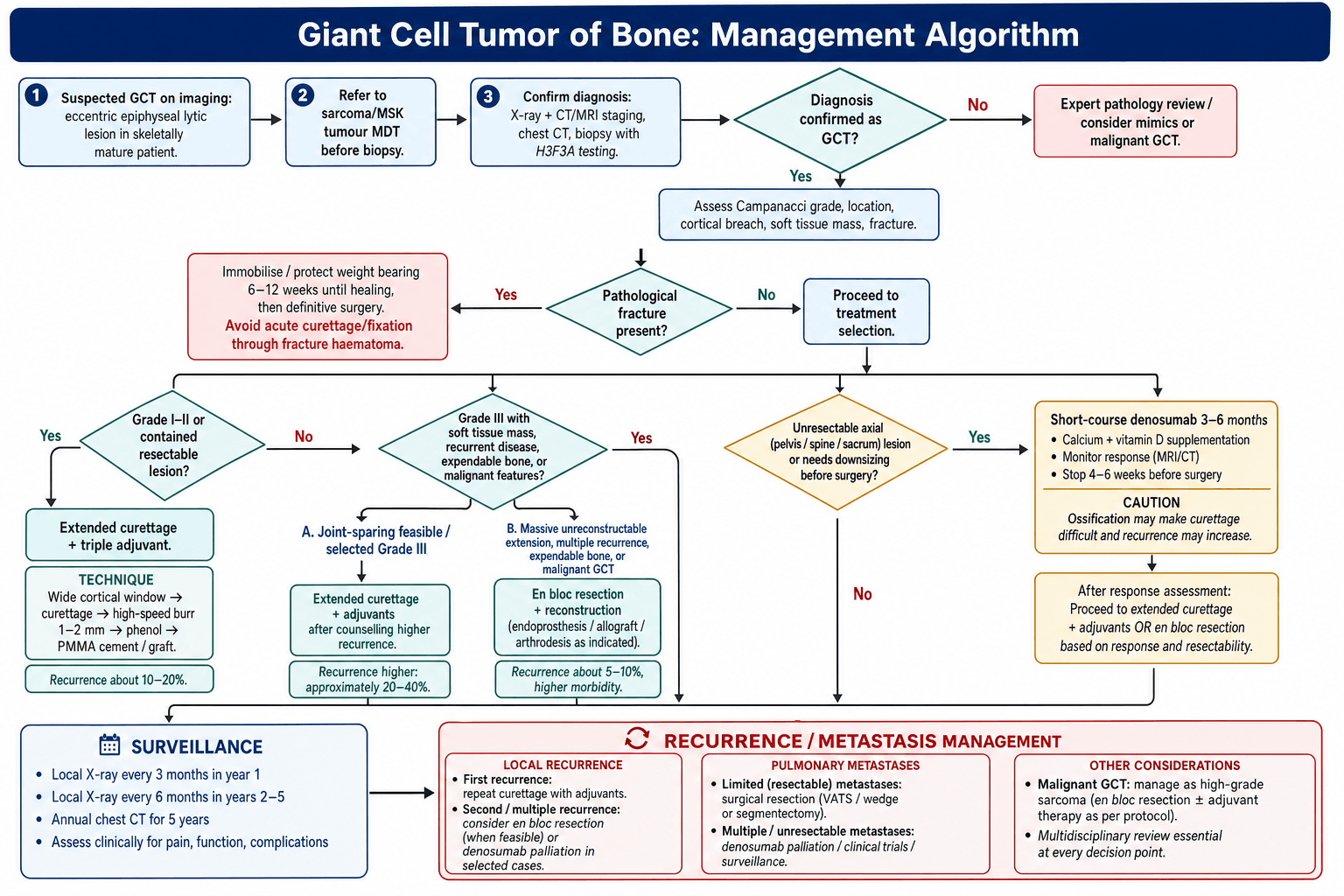
The decision. Grade and location decide what is technically possible, and the joint decides what it is worth. Grade I and II lesions receive extended curettage with the triple adjuvant, which preserves the joint at a recurrence cost of 10-20%. A resectable grade III lesion is treated by curettage or en bloc resection; an unresectable one, in the sacrum or spine, receives neoadjuvant denosumab for 2-4 months and then curettage. Resection with wide margins and reconstruction brings recurrence down to 5-10% at the price of the joint.
Joint preservation comes first. Extended curettage with adjuvants is the preferred operation for grade I-II because the triple adjuvant (burr, phenol, PMMA) brings recurrence down to an acceptable rate while keeping the joint. En bloc resection is reserved for recurrence after curettage (especially a second recurrence), grade III with massive soft-tissue extension, expendable bones such as the proximal fibula, and malignant GCT; its lower recurrence rate comes with higher functional morbidity.
Pathological fracture. A fracture does not contraindicate curettage, provided it is allowed to heal first. Immobilise for 6-12 weeks, then curette; acute surgery increases recurrence because tumour is seeded into the fracture haematoma.
Denosumab's place. It is reserved for unresectable tumours (sacrum, spine, pelvis) and as a neoadjuvant to downsize grade III lesions. It is controversial because incomplete removal of the ossified tumour periphery raises recurrence to 20-50%, and it is stopped 4-6 weeks before surgery.
Surgical Technique
Extended curettage with the triple adjuvant
The goal is complete tumour removal with the joint preserved and recurrence held to 10-20%. Curettage alone recurs in about 50%; each adjuvant attacks the residual tumour by a different mechanism, and the combination is what brings the rate down.
Planning. CT to plan the cortical window, anterior or lateral according to the lesion; MRI for soft-tissue extent and neurovascular proximity; an approach that excises the biopsy tract; a decision between cement and bone graft; and consent for the 10-20% recurrence risk.
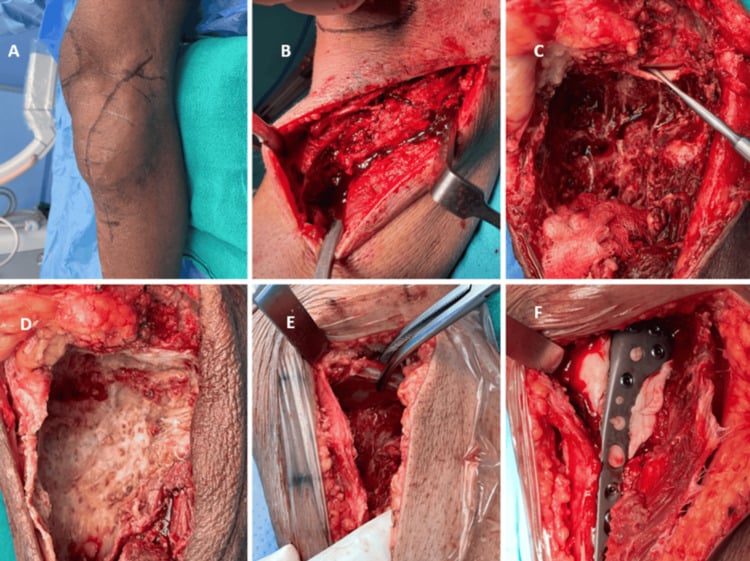
Exposure. An extensile approach, with the biopsy tract excised en bloc with the cortical window. The window must be large, one-third to one-half of the circumference, because a small window means inadequate visualisation; keep an intact cortical buttress to contain the cement. With the cavity open, identify the tumour's extent and any soft-tissue breakthrough.
Curettage. Remove the bulk piecemeal with large curettes, then extend under direct vision to every margin, using angled curettes for the recesses. Take the soft-tissue component with it if the cortex has been breached, preserve the articular cartilage, and send representative tissue for final pathology.
Burr. A high-speed burr takes a 1-2 mm layer off the entire cavity wall: a mechanical margin beyond the curettage plane that removes microscopic tumour in the trabecular bone while preserving the cortical shell. Irrigate copiously to clear the debris and inspect for complete trabecular removal.
Phenol. Pure phenol on soaked gauze against the cavity wall for 2-3 minutes, with the soft tissues and neurovascular structures protected by moist packs. Irrigate with alcohol, which neutralises phenol, then with copious saline, and make sure none remains: phenol on skin or soft tissue causes necrosis.
Cement. PMMA polymerises at 70-80°C, so pack it in while liquid to maximise the thermal effect and make sure it reaches every recess; the heat kills cells beyond the curettage margin, and an incomplete fill leaves residual niches. It also gives immediate structural stability, which is why the patient mobilises the next day. Bone graft is the alternative in a young patient with a small defect. Keep cement out of the joint, where it causes arthrofibrosis.
Closure. Haemostasis, a drain for 24-48 hours, layered closure, and immediate mobilisation. Protect weight-bearing if the mechanical defect exceeds 50% of the cortex.
The wider adjuvant menu
The principle behind every local adjuvant is the same, to extend the cytotoxic kill zone a few millimetres beyond the visible curettage plane; the agents differ in mechanism, depth and complications. No single adjuvant is proven superior, which is why they are combined. Phenol penetrates bone more deeply than argon beam coagulation, so the more superficial argon beam is favoured next to neurovascular structures or thin cortex where a phenol spill would be dangerous. Cryotherapy achieves the deepest kill, roughly 1-2 cm, but historically carried higher rates of post-operative fracture, skin necrosis and nerve injury, so many units prefer burr, phenol and PMMA.
- Mechanism
- Mechanical removal of 1-2 mm of cavity wall
- Notes
- Standard first step; physically removes tumour in trabecular bone
- Mechanism
- Chemical cytotoxicity (protein denaturation) to the cavity surface
- Notes
- Penetrates bone more deeply than argon beam; must protect soft tissues and neutralise with alcohol
- Mechanism
- Thermal necrosis from the exothermic polymerisation (70-80 degrees C)
- Notes
- Doubles as immediate structural reconstruction; alternative to bone graft
- Mechanism
- Thermal coagulation of the cavity wall
- Notes
- More superficial penetration than phenol; useful near neurovascular structures where phenol spill is risky
- Mechanism
- Freeze-thaw cycles causing cell death to roughly 1-2 cm depth
- Notes
- Effective local control but historically higher rates of fracture, skin necrosis and nerve injury; modern probes are safer
- Mechanism
- Chemical and mechanical removal of residual cells and debris
- Notes
- Adjunctive; low cost; used alongside the main adjuvant
En bloc resection
Indications. Recurrence after multiple curettages; grade III with a soft-tissue mass too large to reconstruct after curettage; an expendable bone (proximal fibula, distal ulna); the rare primary malignant GCT; and patient preference after counselling about recurrence risk.
Planning. MRI for soft-tissue extent and neurovascular involvement, CT angiography where the tumour lies against vessels such as the popliteal, a planned wide margin of 1-2 cm of normal tissue that includes the biopsy tract, and a reconstruction chosen in advance from allograft, endoprosthesis or arthrodesis.
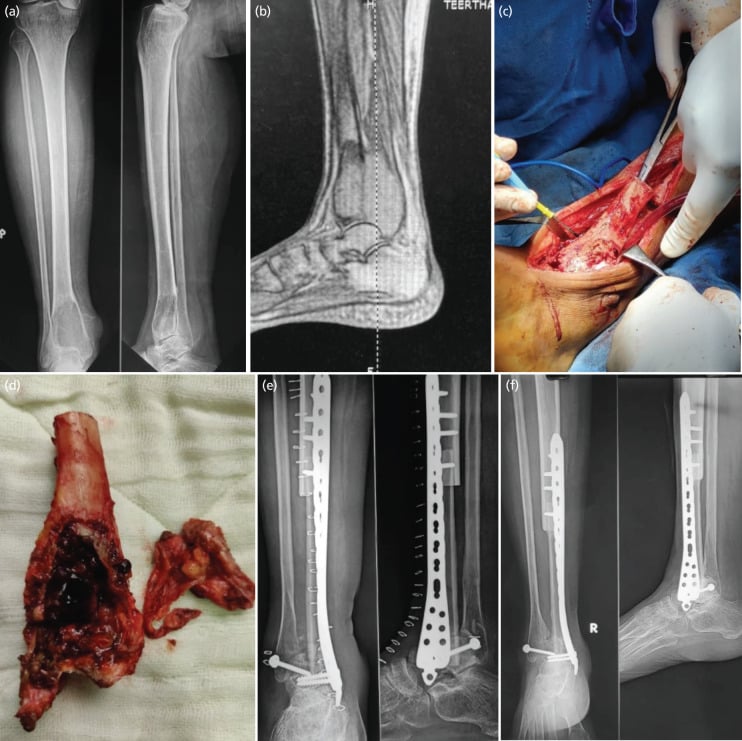
Resection. The tumour comes out en bloc with 1-2 cm of normal bone, the entire pseudocapsule and the soft-tissue mass. Margins go for frozen section to confirm they are clear, the neurovascular bundle is preserved if uninvolved, and the skeletal defect is assessed for reconstruction.
- Allograft - osteoarticular or intercalary, with plate fixation
- Endoprosthesis - tumour prosthesis at the distal femur or proximal tibia
- Arthrodesis - where sacrificing the joint is acceptable (wrist, ankle)
- No reconstruction - expendable bones (proximal fibula, distal ulna)
The trade. Resection recurs in 5-10% against 10-20% after adjuvant curettage, but it costs the joint, adds reconstruction complications and lengthens recovery. That is why most grade I-II and selected grade III lesions are curetted, and resection is kept for recurrent disease, malignant GCT and expendable bones.
Neoadjuvant denosumab
Role. Downsizing an unresectable tumour of the sacrum, spine or pelvis, or converting a grade III to a grade II so that curettage becomes feasible. The indications are an unresectable grade III lesion (sacrum, spine, skull base), a grade III needing downsizing for joint-sparing curettage, recurrent disease after multiple operations as palliation, and metastatic disease. It is not for routine grade I-II, where it makes the operation harder.
Dosing. Loading doses of 120 mg subcutaneously on days 1, 8, 15 and 29, then 120 mg every 4 weeks.
Duration depends on the plan. When the plan is surgery, keep the course short: 2 to 4 months, and no longer. This is a ceiling, not a floor. Van der Heijden's consensus limits the neoadjuvant course precisely because prolonged treatment ossifies the lesion so thoroughly that curettage becomes macroscopically incomplete, leaving viable peripheral tumour behind a hard rim; more denosumab before an operation makes the operation worse, not better. When the disease is unresectable, denosumab is the definitive therapy rather than a bridge, and it continues long-term with response reassessed periodically.
Monitoring and hazards. Supplement calcium and vitamin D throughout and correct any deficiency before the first dose: hypocalcaemia occurred in 5% and grade 3-4 hypophosphataemia in 3% in the Chawla trial. Osteonecrosis of the jaw occurred in 1% at this dose, which is 120 mg every 4 weeks, roughly twenty times the cumulative osteoporosis exposure, so the risk is not the one quoted in osteoporosis practice; arrange a dental assessment and complete invasive dental work before starting, as for high-dose bisphosphonates. Atypical femoral fracture is described with prolonged high-dose antiresorptive therapy, so ask about new thigh or groin pain at each review. On the other side is rebound hypercalcaemia after stopping, reported particularly in younger patients weeks to months after the last dose and sometimes severe, so a patient coming off denosumab needs a plan and a calcium check rather than simple discharge.
Response and timing. MRI every 2-3 months for size, CT for ossification (a rim of bone formation), and the patient's pain. Stop 4-6 weeks before surgery because of rebound growth, and operate 4-6 weeks after the last dose. Expect a dense, ossified tumour that may need osteotomes rather than curettes, with a higher risk of incomplete removal because the ossified periphery hides viable tumour; some surgeons avoid neoadjuvant denosumab for this reason.
The controversy. Proponents point to downsizing that allows joint-sparing surgery, conversion of unresectable to resectable, and less intraoperative bleeding. Critics point to ossification that makes complete curettage difficult, viable tumour persisting at the periphery, rebound growth after discontinuation, and recurrence after denosumab-treated curettage of 20-50% against 10-20% for adjuvant curettage without it; across the wider literature van der Heijden reviewed the range ran from 20% to 100%. The consensus is to reserve it for genuinely unresectable disease or downsizing, avoid it for routine grade I-II, and stop it 4-6 weeks before surgery.
Sacral and Axial GCT: Embolization and Nerve-Sparing Strategy
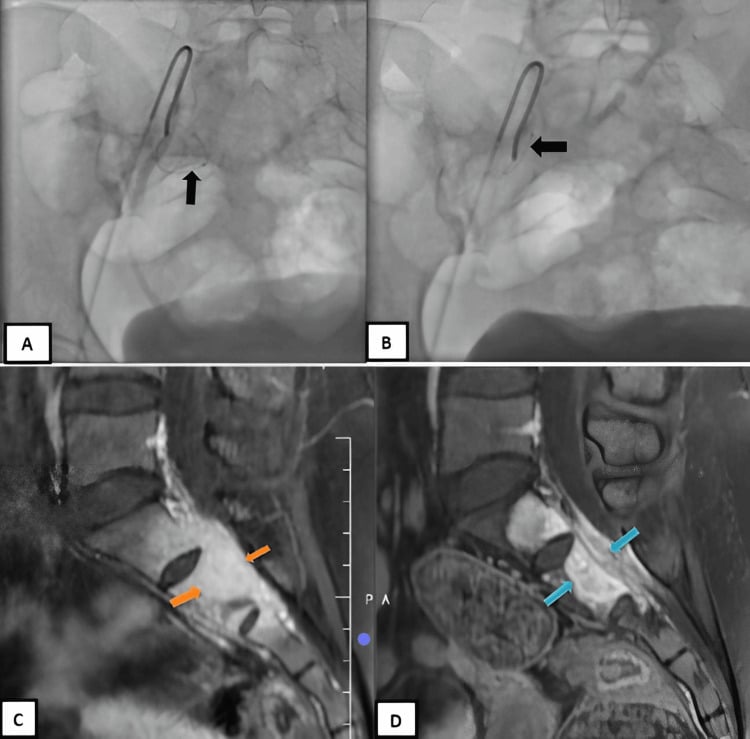
Why the sacrum is different. The sacrum is the classic site where complete resection is limited by morbidity: en bloc sacrectomy sacrifices sacral nerve roots, and bilateral loss above S3 means loss of bowel, bladder and sexual function. It offers the lowest local recurrence and the highest neurological and visceral morbidity, and is reserved for selected or malignant cases.
The two options the long-bone pathway omits. Nerve-sparing intralesional curettage accepts a higher recurrence rate to preserve continence. Serial selective arterial embolisation, as a primary and definitive treatment or before surgery, controls growth over repeated sessions, induces ossification, relieves pain and reduces operative blood loss; it is valuable when resection is too morbid. Denosumab is now a mainstay for unresectable sacral disease, with recurrence on stopping, and radiotherapy is the last resort because of the malignant-transformation risk. These cases belong in a specialist sarcoma multidisciplinary team.
- Role
- Preserves sacral roots and continence while controlling tumour
- Key consideration
- Bilateral root sacrifice above S3 risks loss of bowel, bladder and sexual function; accept higher recurrence to preserve function
- Role
- Primary/definitive devascularisation, or pre-operative to reduce blood loss
- Key consideration
- Repeated sessions control growth, induce ossification and relieve pain - valuable when resection is too morbid
- Role
- Systemic control and downsizing of unresectable axial disease
- Key consideration
- Recurrence on stopping; reserve for unresectable/axial disease (see the denosumab section)
- Role
- Lowest local recurrence
- Key consideration
- Highest morbidity (neurological and visceral); reserved for selected or malignant cases
- Role
- Last resort for truly unresectable axial lesions
- Key consideration
- Avoid where possible because of malignant-transformation risk
Complications
- Incidence
- 10-20% (curettage + adjuvants), 5-10% (resection)
- Risk Factors
- Incomplete curettage, no adjuvants, Grade III, soft tissue extension
- Management
- Repeat curettage with adjuvants OR en bloc resection
- Incidence
- 5-10%
- Risk Factors
- Large defect (over 50% cortex), cement fracture, inadequate fixation
- Management
- Protected weight-bearing, consider prophylactic fixation if high risk
- Incidence
- 2-5%
- Risk Factors
- Prolonged surgery, cement use, prior surgery
- Management
- Antibiotics, debridement if deep, retain cement if well-fixed
- Incidence
- 1-5%
- Risk Factors
- Subchondral lesion, inadequate cortical buttress
- Management
- Arthroscopic removal if symptomatic, may cause arthrofibrosis
- Incidence
- Under 1%
- Risk Factors
- Inadequate protection of soft tissues during application
- Management
- Prevention crucial, treat with debridement if occurs
- Incidence
- 1-5% (benign lung nodules despite histology)
- Risk Factors
- Grade III, recurrent disease, pathological fracture
- Management
- Resection if few nodules, denosumab if multiple, surveillance
- Incidence
- About 4% (1.6% primary, 2.4% secondary)
- Risk Factors
- Prior radiation therapy, recurrent disease
- Management
- Wide resection, chemotherapy as per sarcoma protocol
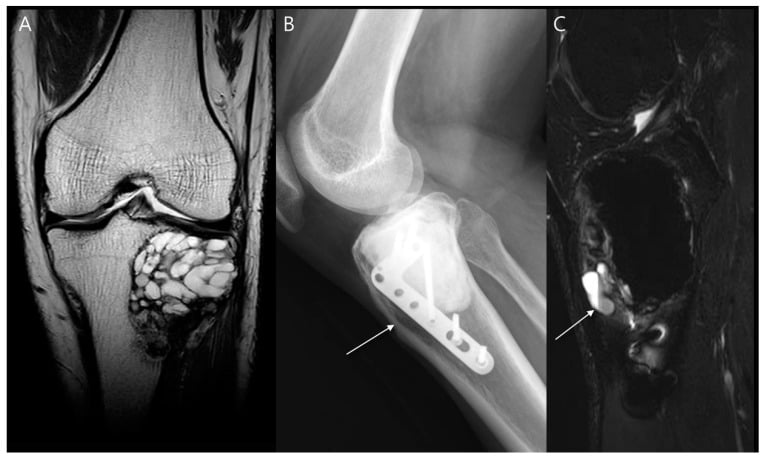
Local recurrence. The complication the whole operation is designed around. 90% occur within the first 2 years (Campanacci's pre-adjuvant series put 90% within 3 years), usually at the periphery of the cement, and MRI finds them before the radiograph does; early detection improves salvage outcomes. The risk factors are the ones the technique section predicts: no adjuvant (about 50% against 10-20% with adjuvants), a grade III lesion with a soft-tissue mass, incomplete curettage of that soft-tissue component, and a sacral or spinal location where complete removal is difficult.
Treating a recurrence. A first recurrence is treated by repeat extended curettage with adjuvants, which succeeds in 70-80%. At a second recurrence the success of repeat curettage falls to 50% while en bloc resection succeeds in 90%, so resection is considered. After multiple recurrences the options are en bloc resection or denosumab for palliation where resection is not feasible.
Pulmonary metastases. They occur in 1-5% despite benign histology, are usually asymptomatic and found on surveillance, and the risk factors are grade III, recurrent disease and pathological fracture. A few nodules (under 5) are resected; multiple or unresectable nodules are treated with denosumab. Lung nodules do not mean the tumour has become malignant.
Postoperative Care
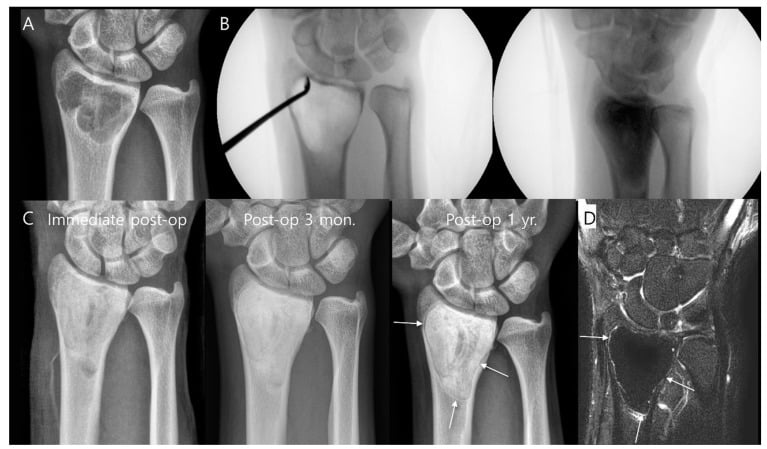
The cement is load-bearing from the moment it sets, so a curetted patient mobilises on day one and the early weeks are about the wound, the cement and the joint. Surveillance then runs for five years, because the recurrence risk is front-loaded and the lungs need watching as well as the bone.
Postoperative Protocol
- Multimodal analgesia
- Drain removed at 24-48 hours (output less than 50 mL/24 h)
- Mobilisation on day 1 - the cement provides instant stability
- Ice and elevation for swelling
- DVT prophylaxis, mechanical and chemical
- Wound check at 2 weeks
- Radiograph at 2 weeks to check cement position and exclude fracture
- Protected weight-bearing if the mechanical defect exceeds 50% of the cortex; otherwise full weight-bearing as tolerated
- Gentle range of motion to avoid stiffness
- Radiographs at 6 weeks and 3 months
- Progress to full weight-bearing in all cases
- Strengthening and return to activities of daily living
- Ask about pain and swelling, the symptoms of early recurrence
- Clinical review every 3 months
- MRI at 6 months and 1 year
- Chest CT annually
Local surveillance. Radiographs every 3 months in year 1 and every 6 months in years 2-5, with MRI at 6 months, 1 year and 2 years because it detects recurrence earlier than a radiograph, and CT if a radiograph is suspicious. At each visit ask about pain and swelling, check motion and function, and feel for a mass if the bone is superficial. On the films, a thin uniform lucent or fluid-signal rim around the cement can be the stable postoperative clear zone; a lucency that is progressive, focal or deepening is different and should trigger MRI.
Pulmonary surveillance. Chest CT at diagnosis and then annually for 5 years; a chest radiograph is the less sensitive fallback where CT is not available.
Discharge. Five years disease-free, with no local recurrence and no pulmonary metastases, is the discharge point: 90% of recurrences have declared themselves by 2 years and 98% by 5 years, so the risk of a late recurrence after 5 years is under 2%. Discharge to primary care with instructions to return for new symptoms. Three groups stay under surveillance beyond 5 years: malignant GCT (lifelong, as for a sarcoma), pulmonary metastases (annual chest CT lifelong), and denosumab-treated cases, whose higher recurrence risk extends follow-up to 10 years.
Outcomes and Prognosis
What predicts a good result. A grade I-II lesion, complete curettage with adjuvants, no pathological fracture (better bone stock for reconstruction), a resectable location that allows complete removal, and a young patient with better functional recovery and remodelling.
What predicts a poor one. Grade III, soft-tissue extension that is hard to clear completely, a sacral or spinal location with inadequate access, recurrent disease with its lower success rate at repeat curettage, and a pathological fracture that has seeded tumour into the haematoma.
- Recurrence Rate
- 40-60%
- Functional Outcome
- Excellent (joint preserved)
- Morbidity
- Low
- Recurrence Rate
- 25-35%
- Functional Outcome
- Excellent (joint preserved)
- Morbidity
- Low
- Recurrence Rate
- 10-20%
- Functional Outcome
- Excellent (joint preserved)
- Morbidity
- Low to moderate
- Recurrence Rate
- 5-10%
- Functional Outcome
- Good (joint sacrifice or prosthesis)
- Morbidity
- Moderate to high
- Recurrence Rate
- 20-50% (controversial - may be higher)
- Functional Outcome
- Variable (depends on tumour ossification)
- Morbidity
- Moderate
Guidelines, Registries & Global Practice
Global Epidemiology
Giant cell tumour of bone (GCT) is consistently reported as roughly 4-5% of all primary bone tumours and around 20% of benign bone tumours worldwide, with an estimated incidence of approximately 1 per million population per year. A long-recognised geographic pattern is a relatively higher proportion in East and South Asian series (where GCT can account for up to 20% of primary bone tumours) compared with Western series, with a peak in the third to fourth decade and a slight female predominance. Single-institution and pooled series (Rizzoli, Mayo, UK and Asian sarcoma centres) consistently localise about 85% of lesions to around the knee, with the distal radius and sacrum the most common non-knee sites.
Side-by-Side Guidance & Consensus
- Position on Surgery
- Intralesional curettage with local adjuvants for resectable limb GCT; en bloc resection for expendable bone or extensive destruction
- Position on Denosumab
- Reserved for unresectable/axial disease and to downstage morbid surgery; short neoadjuvant course; not routine for resectable GCT
- Typical Evidence Level
- Expert consensus / low-moderate
- Position on Surgery
- Curettage with adjuvant for most appendicular GCT; resection for selected aggressive/recurrent disease; serial imaging surveillance
- Position on Denosumab
- Recommended for unresectable, axial (spine/sacrum/pelvis) or metastatic GCT, and as neoadjuvant in selected cases
- Typical Evidence Level
- Category 2A (consensus)
- Position on Surgery
- Suspected primary bone tumour referred urgently to a recognised bone-sarcoma centre before biopsy; MDT-directed curettage or resection
- Position on Denosumab
- Used within MDT for axial/unresectable disease; caution re: recurrence after curettage following denosumab
- Typical Evidence Level
- Service-standard / consensus
- Position on Surgery
- Urgent referral of suspected bone tumour to a tertiary sarcoma unit; biopsy and definitive surgery performed only at that unit
- Position on Denosumab
- Denosumab for unresectable, recurrent-inoperable or metastatic GCT under specialist supervision
- Typical Evidence Level
- Service-standard / consensus
Despite differing health systems, the major networks and specialist sarcoma services converge on the same core principles: (1) refer suspected bone tumours to a specialist sarcoma centre BEFORE biopsy; (2) treat most appendicular GCT with extended curettage plus local adjuvants to preserve the joint; (3) reserve resection for expendable bone, extensive destruction or recurrence; (4) restrict denosumab to unresectable, axial or metastatic disease and use only short neoadjuvant courses; and (5) avoid radiotherapy except for truly unresectable axial lesions because of malignant-transformation risk.
Registry & Real-World Evidence
There is no dedicated international GCT registry; population-level estimates derive from national bone-tumour and sarcoma registries (e.g. the Netherlands Cancer Registry, the UK National Cancer Registration and Analysis Service, and the Rizzoli and Mayo institutional databases) and from the pooled denosumab trial programme (NCT00680992). These data sources underpin the convergent ~1 per million incidence figure and the recognition that recurrence after curettage following denosumab may exceed that of curettage with adjuvants alone, as summarised by van der Heijden et al (Curr Opin Oncol 2020).
Practice Variation & Access
Practice variation is greatest around denosumab (duration of neoadjuvant therapy, and whether to use it at all in resectable disease) and around reconstruction after resection (endoprosthesis vs allograft vs arthrodesis), reflecting differing drug access, reimbursement and surgical resources. Internationally, denosumab is reserved for unresectable, recurrent-inoperable or metastatic GCT with histological confirmation and specialist management; loading doses are given on days 1, 8, 15 and 29 followed by 120 mg subcutaneously every 4 weeks, with calcium and vitamin D supplementation to prevent hypocalcaemia, though funding and access pathways differ markedly between health systems. Across all systems, outcomes are best when GCT is managed within a specialist sarcoma multidisciplinary team with structured long-term surveillance.
MCQ Practice Points
Q: What percentage of giant cell tumors occur around the knee, and what is the characteristic radiographic feature? A: 85% occur around the knee (distal femur 30%, proximal tibia 25%, distal radius 10%). The characteristic feature is an eccentric epiphyseal lytic lesion extending to subchondral bone after physeal closure (age 20-40), with no sclerotic rim and no matrix mineralization. Say "characteristic" or "highly suggestive", not "pathognomonic" - aneurysmal bone cyst, brown tumour of hyperparathyroidism and clear cell chondrosarcoma all occupy the same territory, and before physeal closure the epiphyseal lesion is more likely chondroblastoma. The location narrows the differential sharply; it does not close it.
Q: What molecular alteration characterises giant cell tumour of bone, how specific is it, and how does it drive the tumour? A: H3F3A G34W (rarely G34L), found in 49 of 53 tumours (92%) in Behjati's defining study. It is highly specific among bone tumours and is the practical diagnostic discriminator - but at ~92% sensitivity a negative result does not exclude GCT. Two traps: the sibling gene H3F3B K36M defines chondroblastoma (95%), and H3F3A alterations at the same codon (G34R, G34V) occur in paediatric high-grade glioma, so it is the specific substitution in a bone lesion that carries the meaning. Mechanistically the mutation sits only in the neoplastic stromal cells - Behjati could not detect it in osteoclasts or their precursors - and those stromal cells overexpress RANKL, which recruits osteoclast-like giant cells through RANK. The giant cells are therefore reactive, which is exactly why denosumab clears them without eradicating the clone.
Q: What is the triple adjuvant technique for GCT curettage and what is the mechanism of each adjuvant? A: Triple adjuvant technique:
- High-speed burr: Mechanical removal of 1-2mm margin from cavity wall (removes microscopic tumor in trabecular bone)
- Phenol cauterization: Chemical cytotoxicity to cavity surface for 2-3 minutes (destroys residual cells)
- PMMA cement: Thermal necrosis reaching 70-80°C during polymerization (kills cells beyond curettage margin)
Reduces recurrence from 50% (curettage alone) to 10-20% (triple adjuvant).
Q: What is the mechanism of action of denosumab in GCT and what is the controversy regarding its use? A: Denosumab is a monoclonal antibody against RANKL. It blocks RANK-RANKL pathway, preventing osteoclast recruitment and causing tumor ossification and size reduction.
Controversy:
- Proponents: Downsizes Grade III allowing joint-sparing surgery
- Critics: Ossifies tumor making complete curettage difficult, viable tumor persists at periphery, studies show higher recurrence (20-50% vs 10-20%)
- Current consensus: Reserve for truly unresectable cases (sacrum, spine), not routine Grade I-II
Q: Describe the Campanacci grading system for GCT and how it guides treatment decisions. A: Campanacci grading based on cortical integrity:
- Grade I: Intramedullary with intact cortex and thin sclerotic rim → Extended curettage + adjuvants (10-15% recurrence)
- Grade II: Expanded bone with thinned but intact cortex, no rim → Extended curettage + adjuvants (15-25% recurrence)
- Grade III: Cortical destruction with soft tissue mass → Curettage vs resection, consider denosumab (25-50% recurrence if curettage alone)
All grades extend to subchondral bone. Grading determines surgical approach and predicts recurrence risk.
Q: What is the incidence of pulmonary metastases in GCT and how are they managed? A: Pulmonary metastases occur in 1-5% of GCT cases despite benign histology. Lung nodules are histologically benign but biologically metastatic (implantation metastases). Baseline and annual chest CT mandatory for 5 years.
Management:
- Few nodules (under 5): Surgical resection (curative in 50-70%)
- Multiple nodules: Denosumab therapy or observation (many remain stable)
- Progressive disease: Denosumab 120mg monthly
Presence of lung nodules does NOT indicate malignant transformation.
Exam Viva Scenarios
Practise clinical reasoning and management decisions out loud
“A 28-year-old female presents with 6 months of progressive left knee pain. X-ray shows a 4cm eccentric epiphyseal lytic lesion in the distal femur extending to the subchondral bone with thinned but intact cortex. MRI confirms a solid tumor with some cystic areas and marrow edema. How would you assess and manage this patient?”
“A 32-year-old male has a 6cm distal radius GCT with cortical destruction and a 3cm soft tissue mass. He is a professional violinist concerned about hand function. MRI shows extensive soft tissue extension but no neurovascular involvement. How would you approach this case?”
“A 25-year-old athlete presents to emergency with acute onset knee pain and inability to weight-bear after landing from a jump. X-ray shows a pathological fracture through a 5cm proximal tibial epiphyseal lytic lesion with 10 degrees of varus angulation. How would you manage this acutely and definitively?”
Key Features
- Benign but locally aggressive, 5% of primary bone tumors, 20% of benign
- Peak age 20-40 years (after physeal closure), slight female predominance 1.5:1
- Eccentric epiphyseal location extending to subchondral bone (characteristic, NOT pathognomonic)
- 85% occur around knee (distal femur 30%, proximal tibia 25%, distal radius 10%)
- Recurrence rate 10-20% with triple adjuvant, 50% without adjuvants
Pathophysiology and Histology
- H3F3A G34W in about 92% - highly specific among bone tumours, but a negative does NOT exclude
- RANK-RANKL pathway: stromal cells produce RANKL recruiting giant cells
- Three cell populations: giant cells (20-100 nuclei), stromal cells (neoplastic), histiocytes
- Sheet-like growth, evenly distributed giant cells, no fibrous stroma
- Pulmonary metastases 1-5% despite benign histology (implantation metastases)
Campanacci Grading
- Grade I: Intramedullary, intact cortex, thin sclerotic rim (10-15% recurrence)
- Grade II: Expanded bone, thinned cortex, no rim (15-25% recurrence)
- Grade III: Cortical destruction, soft tissue mass (25-50% recurrence curettage alone)
- All grades extend to subchondral bone (articular surface involvement)
- Grading determines treatment: I-II curettage, III curettage vs resection
Imaging
- X-ray: Eccentric epiphyseal lytic lesion, no sclerotic rim, no mineralization, soap bubble
- CT: Assess cortical integrity (Campanacci grade), trabecular destruction, surgical planning
- MRI: Low T1, high T2, intense enhancement, fluid-fluid levels if ABC component (10-15%)
- Chest CT: Mandatory baseline and annual surveillance (1-5% pulmonary metastases)
- Biopsy: CT-guided core needle, excisable trajectory, H3F3A mutation testing
Treatment Algorithm
- Grade I-II: Extended curettage + triple adjuvant (burr + phenol + PMMA cement)
- Grade III resectable: Extended curettage + adjuvants OR en bloc resection
- Grade III unresectable: Neoadjuvant denosumab 2-4 months then curettage
- Pathological fracture: Immobilize 6-12 weeks for healing, then curettage
- Recurrence: Repeat curettage (70-80% success) OR en bloc resection (90% success)
Triple Adjuvant Technique
- High-speed burr: Removes 1-2mm margin from cavity wall (mechanical adjuvant)
- Phenol cauterization: Apply 2-3 minutes, neutralize with alcohol (chemical adjuvant)
- PMMA cement: Thermal necrosis 70-80°C during polymerization (thermal adjuvant)
- Reduces recurrence from 50% (curettage alone) to 10-20% (triple adjuvant)
- Wide cortical window essential for complete visualization and curettage
Denosumab Therapy
- Anti-RANKL monoclonal antibody, blocks osteoclast recruitment
- Indication: Unresectable Grade III (sacrum, spine), metastatic, recurrent
- Dosing: 120mg subcutaneous days 1,8,15,29 then monthly, no more than 2-4 months before surgery
- Controversy: Ossifies tumor (difficult curettage), may increase recurrence (20-50%)
- Discontinue 4-6 weeks before surgery (rebound growth risk if continued)
Surveillance Protocol
- X-ray every 3 months year 1, every 6 months years 2-5
- MRI at 6 months, 1 year, 2 years (more sensitive for recurrence than X-ray)
- Chest CT annually for 5 years (pulmonary metastases surveillance)
- 90% of recurrences within first 2 years, 98% by 5 years
- Discharge at 5 years if disease-free (except malignant or metastatic cases)
Evidence Base
Aggressive Curettage with Local Adjuvants for GCT of the Extremity
- Single-institution review of 349 GCT of the extremity (Rizzoli Institute)
- 200 patients underwent intralesional curettage; 64 received triple adjuvants (phenol, alcohol and cement)
- Aggressive curettage with adjuvants reduced local recurrence and improved local control
- Proximal femur and distal radius identified as sites with higher recurrence and more difficult treatment
- Curettage preserves joint function compared with segmental resection
Distinct H3F3A and H3F3B Driver Mutations Define GCT and Chondroblastoma
- H3F3A G34W (or rarely G34L) histone H3.3 mutations found in 92% (49/53) of GCT of bone
- Chondroblastoma instead harboured H3F3B K36M mutations in 95% (73/77)
- Mutations were restricted to the neoplastic stromal cells, not the osteoclast-like giant cells
- Demonstrates exquisite tumour-type specificity of histone H3.3 driver alterations
- Provides a molecular diagnostic marker (G34W immunohistochemistry/sequencing) for uncertain cases
Denosumab for Giant Cell Tumour of Bone: Phase 2 Interim Analysis
- International open-label, parallel-group phase 2 study of denosumab 120mg every 4 weeks (n=282, NCT00680992)
- Surgically unsalvageable cohort: 163/169 (96%) had no disease progression at median 13 months
- Salvageable-but-morbid cohort: 74/100 (74%) avoided surgery; 62% of those operated had a less morbid procedure than planned
- Osteonecrosis of the jaw in 3 (1%) and hypocalcaemia in 15 (5%) patients
- Established denosumab as a treatment option that reduces the need for morbid surgery
Histologically Verified Lung Metastases in Benign GCT
- Single-institution series: 14/649 benign GCT (2.1%) developed lung metastases (Rizzoli Institute, 1975-1997)
- Metastases appeared a mean of 35 months after diagnosis (range 3 months to 11.9 years)
- All metastases were histologically identical to the primary bone lesion
- All 14 patients had an Enneking stage III tumour; local recurrence preceded or coincided with metastasis in 7
- A NEGATIVE FINDING that corrects a commonly taught association: 'in contrast to previous reports, we could not detect a predominance of the distal radius' - do not teach distal radius location as a metastatic risk factor on the basis of older series
- After metastasectomy all patients were alive at median 70 months follow-up (10 with no evidence of disease)
Giant-Cell Tumour of Bone: Original Campanacci Grading Series
- 327 patients with GCT of bone; 280 followed for 2 to 44 years (Istituto Rizzoli)
- Radiographic grade before treatment: Grade I 4%, Grade II 74%, Grade III 22%
- Local recurrence by margin: 27% after intralesional procedures, 8% after marginal excision, 0% after wide/radical surgery
- Recurrence rate did NOT correlate with radiographic grade
- Pathological fracture present in 9%; 90% of recurrences appeared within the first 3 years
Current Concepts in the Treatment of Giant Cell Tumour of Bone
- Narrative/systematic review framing the contemporary multidisciplinary approach to GCT
- Recurrence after denosumab-treated curettage ranged from 20% to 100% across the literature (subject to bias)
- Recommends only short neoadjuvant denosumab (2-4 months) to facilitate surgery and avoid incomplete curettage from macroscopic ossification
- Cumulative incidence of malignancy in GCT estimated at ~4% (1.6% primary, 2.4% secondary, the latter mostly post-radiation)
- A causal link between denosumab and pulmonary metastases is not confirmed; behaviour atypical of GCT should prompt re-assessment for malignancy