First MTP Joint Arthritis | Coughlin-Shurnas Classification | Grading-Based Treatment Algorithm
- Grading (Coughlin-Shurnas) determines treatment: Grade 1-2 = cheilectomy, Grade 3-4 = arthrodesis
- Cheilectomy requires at least 30 degrees dorsiflexion to be effective
- Arthrodesis fusion position: 10-15 degrees valgus, 15-20 degrees dorsiflexion, neutral rotation
- Cheilectomy contraindicated if cartilage loss extends beyond dorsal third of joint
- First MTP arthrodesis has 90-95% fusion rate with high satisfaction
- “Distinguish from hallux valgus (lateral deviation vs stiffness/pain on dorsiflexion)
- “Grind test (compression + rotation) reproduces pain from joint arthritis
- “Dorsal osteophyte causes impingement in toe-off phase of gait
- “Failed cheilectomy can proceed to arthrodesis without major compromise
Overview and Epidemiology
Hallux rigidus is degenerative arthritis of the first MTP joint and the most common arthritic condition of the foot. As a disorder of the first MTP joint it is second only to hallux valgus, but where hallux valgus is driven by deformity, hallux rigidus is driven by pain and stiffness, and it significantly affects gait and quality of life. Treatment is grading-based, with predictable outcomes.
Who. The age distribution is bimodal: adolescents, from osteochondritis, and adults of 40-60 years, from degenerative disease. Men are affected twice as often as women, and the condition is more frequent in athletes, dancers and manual labourers. Bilateral disease is common, but no source cited on this page quantifies the proportion.
Why. About 70% is primary: idiopathic, and likely multifactorial, with genetics, mechanics and anatomy all contributing. The other 30% is secondary to trauma, inflammatory arthritis (gout, rheumatoid arthritis) or osteochondritis dissecans.
What it costs the patient. Toe-off becomes painful, and the patient walks with the foot turned out, an external foot progression angle, to avoid dorsiflexing the joint. Squatting becomes impossible, stairs are difficult and running is impaired.
Pathophysiology and Mechanisms
Load and motion. The first MTP joint carries 2-3 times body weight in normal gait, increasing to 8 times with running. Normal toe-off needs 65-75 degrees of dorsiflexion; hallux rigidus typically reduces this to under 30 degrees, and the compensations that follow alter the mechanics of gait.
Through the gait cycle. The foot is plantigrade at heel strike and the first MTP joint is neutral in mid-stance. Toe-off needs the full dorsiflexion arc, and at push-off 60% of body weight passes through the hallux.
How the foot compensates. A patient who cannot dorsiflex at toe-off turns the foot out to avoid MTP dorsiflexion and shifts weight laterally, loading the lesser toes abnormally. Dorsal impingement then reinforces the stiffness, and the pain cycle perpetuates itself.
Cartilage and capsule. Cartilage erosion starts dorsally and progresses plantarward, so disease still confined to the dorsum is amenable to cheilectomy. The dorsal capsule, which normally allows 65-75 degrees of dorsiflexion, becomes contracted, fibrotic and thickened, and releasing it improves the range after cheilectomy.
Osteophyte and sesamoids. The dorsal osteophyte, absent from a normal joint, grows progressively and blocks extension; it is the primary cause of the impingement pain. The sesamoid complex normally glides smoothly under the metatarsal head, develops arthritic changes in advanced disease, and is considered for debridement when involved.
The stabilising complex. The plantar plate, collateral ligaments, sesamoids, flexor hallucis brevis and adductor hallucis form a coupled stabilising complex around the metatarsal head.
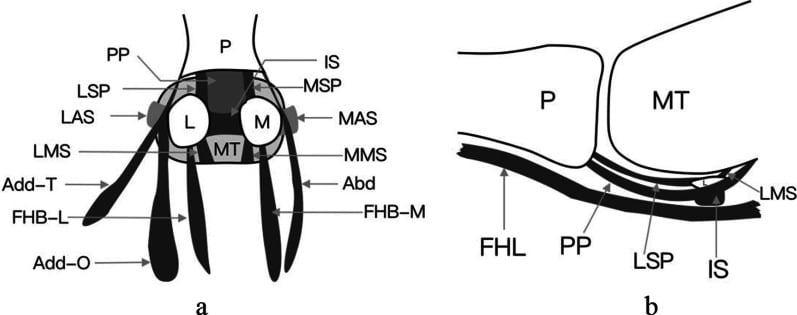
Classification Systems
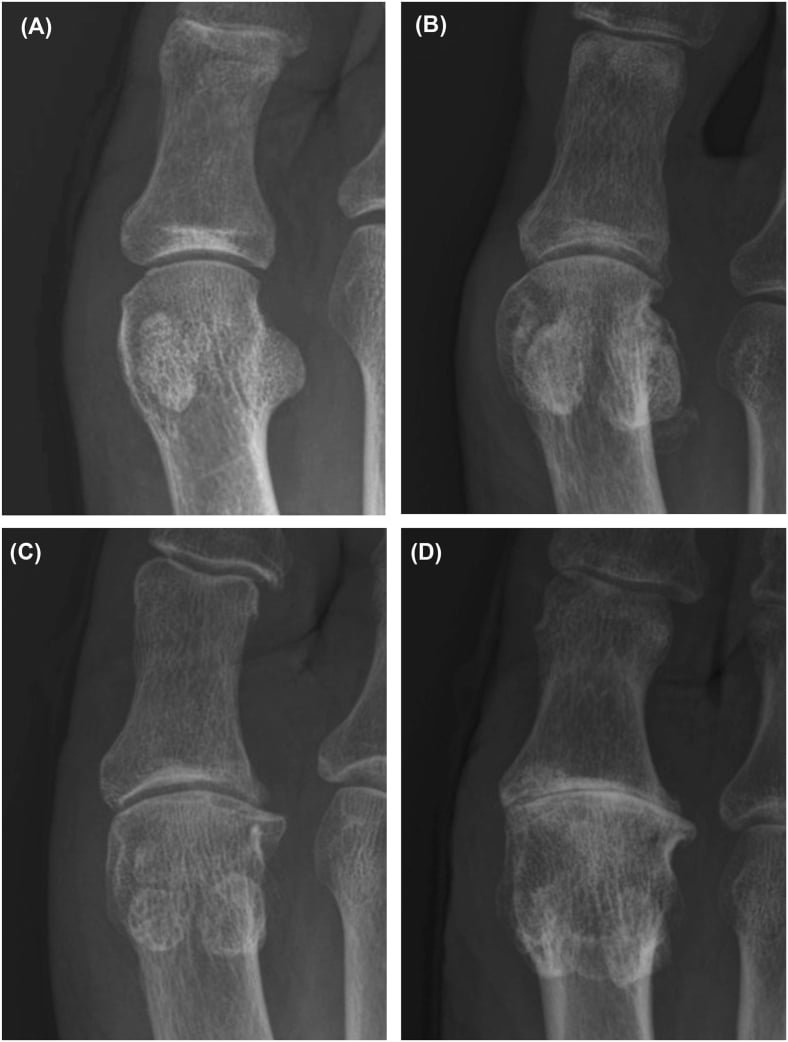
Two systems are in use. Coughlin-Shurnas grades the joint 0-4 on radiographic change and range of motion, is the most commonly used, and is the one that drives treatment. Hattrup-Johnson is simpler, with three grades, but less granular.
- Radiographic Findings
- Dorsal osteophyte, no JSN
- Clinical ROM
- 10-20% loss, over 60° dorsiflexion
- Treatment
- Conservative, consider cheilectomy if symptomatic
- Radiographic Findings
- Mild spurring, 20-50% JSN, minimal sclerosis
- Clinical ROM
- 20-50% loss, 40-60° dorsiflexion
- Treatment
- Cheilectomy first-line, excellent results
- Radiographic Findings
- Moderate spurring, 50-75% JSN, subchondral sclerosis
- Clinical ROM
- 50-75% loss, 20-40° dorsiflexion
- Treatment
- Cheilectomy if plantar cartilage OK, or interposition
- Radiographic Findings
- Severe spurring, over 75% JSN, cysts, loose bodies
- Clinical ROM
- Over 75% loss, under 20° dorsiflexion
- Treatment
- Arthrodesis gold standard
- Radiographic Findings
- Grade 3 changes plus hallux valgus or varus
- Clinical ROM
- Severe stiffness plus deformity
- Treatment
- Arthrodesis with deformity correction
How far to trust it. The grade organises the treatment decision sensibly, and nothing better has replaced it. Its clean link to outcome, however, comes from Coughlin and Shurnas's own series, in which the grade was assigned at the follow-up visit, so its predictive performance has never been tested prospectively. Radiographic grade also correlates poorly with the cartilage found at operation, which is why the final decision is made intraoperatively.
Clinical Assessment
History. The pain is dorsal, at the MTP joint, and worse with toe-off, stairs and squatting, and dorsiflexion is lost progressively. Heels, dress shoes and athletic shoes become difficult, and running, dancing and sport fall away. Record what has already been tried: orthotics, injections, activity modification.
Examination.
- Look: dorsal prominence, with skin irritation over the osteophyte
- Feel: tenderness over the dorsal MTP joint; the osteophyte is palpable
- Move: measure dorsiflexion; perform the grind test
- Deformity: a hallux valgus or varus component makes it Coughlin-Shurnas Grade 4
- Gait: watch toe-off and the external rotation compensation
- Neurovascular: confirm the dorsalis pedis pulse and sensation are intact
The grind test. Compress the first MTP joint while rotating the hallux. Reproduction of the pain indicates intra-articular pathology, that is, arthritis; pain only at end-range dorsiflexion is dorsal impingement. The specificity of the grind test is what distinguishes arthritis from isolated dorsal impingement.
Differential diagnosis. Hallux valgus and turf toe are the conditions to separate:
- Hallux Rigidus
- Pain and stiffness
- Hallux Valgus
- Deformity and bunion pain
- Turf Toe
- Acute traumatic pain
- Hallux Rigidus
- Dorsal osteophyte, usually straight alignment
- Hallux Valgus
- Lateral deviation, medial eminence
- Turf Toe
- Swelling, ecchymosis
- Hallux Rigidus
- Restricted dorsiflexion, painful
- Hallux Valgus
- Variable, often normal early
- Turf Toe
- All motion painful acutely
- Hallux Rigidus
- Dorsal osteophyte, JSN, sclerosis
- Hallux Valgus
- Hallux valgus angle, 1-2 IM angle
- Turf Toe
- Often normal, may show avulsion
Investigations
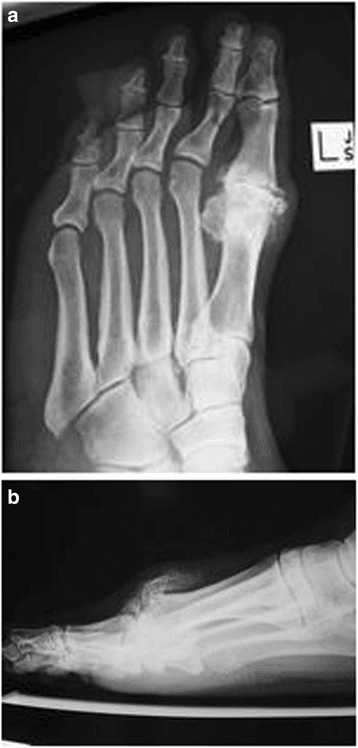
Radiographs. Weight-bearing AP and lateral views are the first line and are essential for grading and planning; a weight-bearing oblique is added:
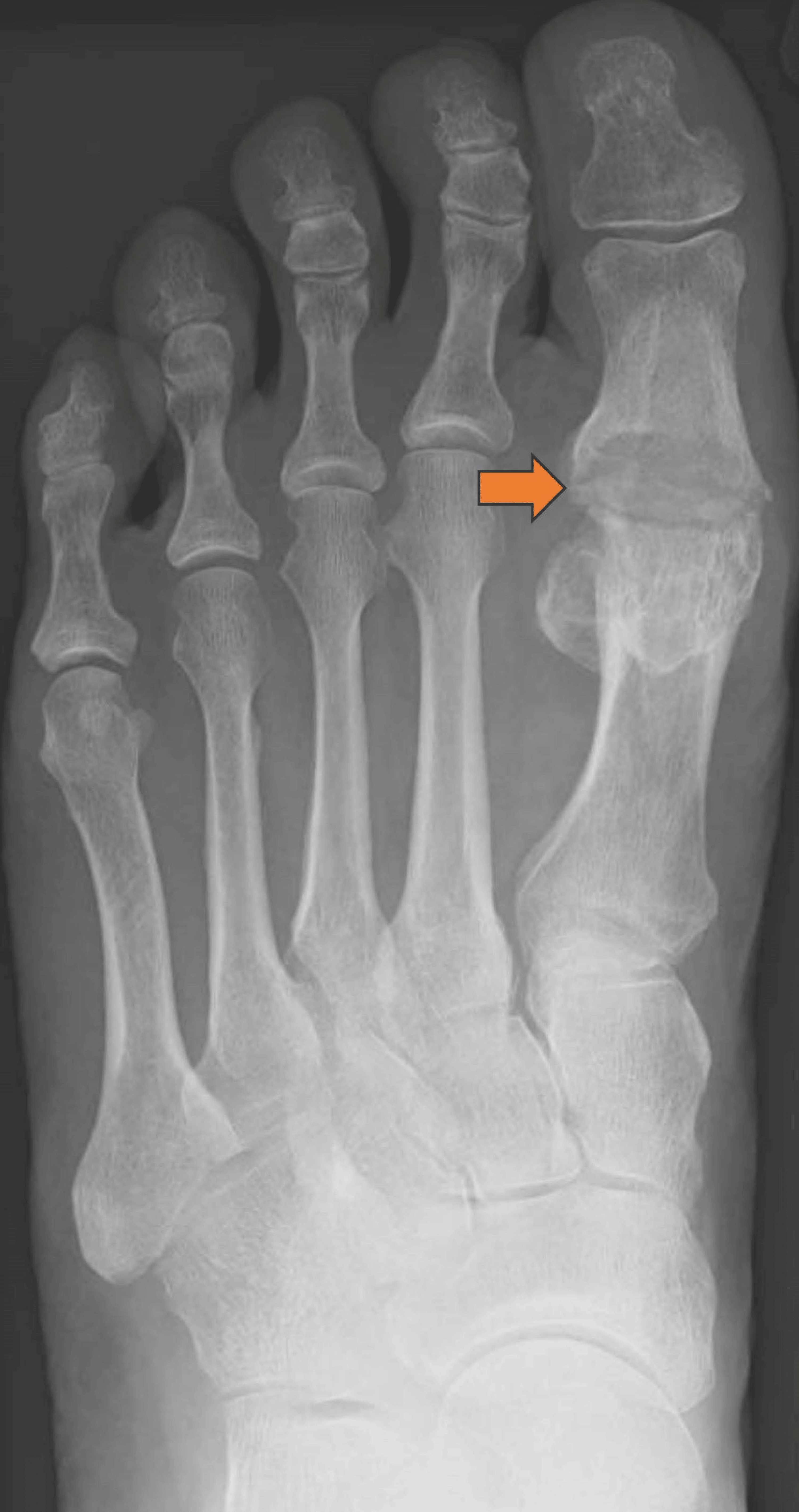
- AP: joint-space narrowing and the medial and lateral osteophytes
- Lateral: the dorsal osteophyte, the key view for cheilectomy planning, and the dorsal 30% of the metatarsal head
- Oblique: the sesamoids, whose arthritis may need debridement at surgery; more sensitive than the AP for lateral osteophytes
CT and MRI are rarely needed. CT helps plan surgery for complex deformity or after failed surgery. MRI is for suspected osteochondritis dissecans in a young patient, or to assess cartilage, and is not routine.
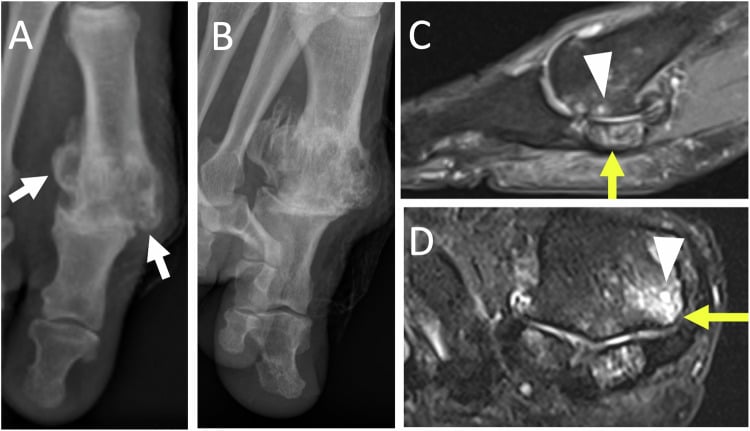
Planning from the films. Before operating, measure the dorsal osteophyte, which sets the extent of a cheilectomy resection, and judge from the joint space whether plantar cartilage is preserved. Check the sesamoids for arthritis that would need debridement, and measure any hallux valgus or varus that a fusion must correct.
Non-Operative Management
Who and for how long. All patients should trial non-operative management for 3-6 months before surgery, unless pain or functional limitation is severe. No source cited on this page quantifies how often conservative care succeeds: the evidence base here is entirely surgical, which is itself worth knowing when counselling a patient who wants to avoid an operation.
Footwear is the first line: a wide toe box and a stiff sole. A rigid sole reduces the dorsiflexion demand on the MTP joint, a rocker-bottom sole shifts toe-off proximally, and high heels, which increase the demand, are avoided.
Orthotics and pads are an adjunct. A Morton's extension orthotic, a carbon-fibre plate extending to the tip of the hallux, prevents MTP dorsiflexion, and a turf-toe plate has a similar effect. Padding over the dorsal osteophyte eases shoe pressure.
Activity modification is ongoing: avoid high-impact activity, running and jumping, in favour of cycling or swimming, and modify work that involves prolonged standing or walking.
NSAIDs, oral or topical, treat pain and inflammation. They control symptoms only and do not modify the disease; use them with caution in the elderly and in renal disease.
Intra-articular corticosteroid, with local anaesthetic, is both diagnostic, confirming an intra-articular source, and therapeutic, with 3-6 months of relief common. Give a maximum of 2-3 injections. Hyaluronic acid can be considered, on less evidence.
When to refer for surgery. Surgery is elective, and patients should hear that it is also highly effective. The indications:
- Failure of 3-6 months of conservative treatment
- Severe pain limiting daily activities
- Progressive deformity (Grade 4)
- Significant gait disturbance affecting work or recreation
Management
The decision. Conservative treatment comes first at every grade. After that, cheilectomy suits disease confined to the dorsum and arthrodesis suits advanced disease, while arthroplasty is controversial because of its high failure rate. The grade sets the plan and the cartilage found at operation confirms it:
- Coughlin-Shurnas Grade
- Grade 0-1: Dorsal spurring, mild JSN
- First-Line Surgical
- Cheilectomy (30% dorsal head + osteophyte)
- Key Pearl
- 92% of cheilectomies successful in Coughlin's series; preserves the joint
- Coughlin-Shurnas Grade
- Grade 2: 50-75% JSN, moderate ROM loss
- First-Line Surgical
- Cheilectomy vs Interposition arthroplasty
- Key Pearl
- Intraop assessment crucial - check cartilage
- Coughlin-Shurnas Grade
- Grade 3: Over 75% JSN, severe stiffness
- First-Line Surgical
- First MTP arthrodesis (gold standard)
- Key Pearl
- 90-95% fusion, 85-90% satisfaction
- Coughlin-Shurnas Grade
- Grade 4: Advanced disease plus deformity
- First-Line Surgical
- First MTP arthrodesis
- Key Pearl
- Correct alignment: 10-15° valgus, 15-20° dorsiflexion
The Grade 2 decision. This is the critical point. If intraoperative inspection shows preserved cartilage on the plantar surface, cheilectomy can succeed; if the loss is circumferential, proceed directly to arthrodesis rather than compromise with inadequate debridement. The boundary is not strictly at Grade 3: Coughlin and Shurnas found cheilectomy reliable in selected Grade 3 joints, and advised arthrodesis for Grade 4, or for Grade 3 with less than 50% of the metatarsal-head cartilage remaining at surgery.
The operation. Cheilectomy preserves the joint. The dorsal osteophyte and the dorsal 25-30% of the metatarsal head are removed to decompress the joint, and it works only while there is healthy plantar cartilage to keep.
Indications
- Coughlin-Shurnas Grade 1-2, mild to moderate arthritis
- A dorsal osteophyte causing impingement
- Preserved plantar cartilage, with loss confined to the dorsal third of the joint
- At least 30 degrees of dorsiflexion remaining
- An active patient who wants to preserve joint motion
- Failed conservative management
Contraindications
- Circumferential cartilage loss, an intraoperative finding
- Severe stiffness, under 20 degrees of dorsiflexion
- Grade 3-4 disease, with the selected Grade 3 exception above
- Sesamoid arthritis
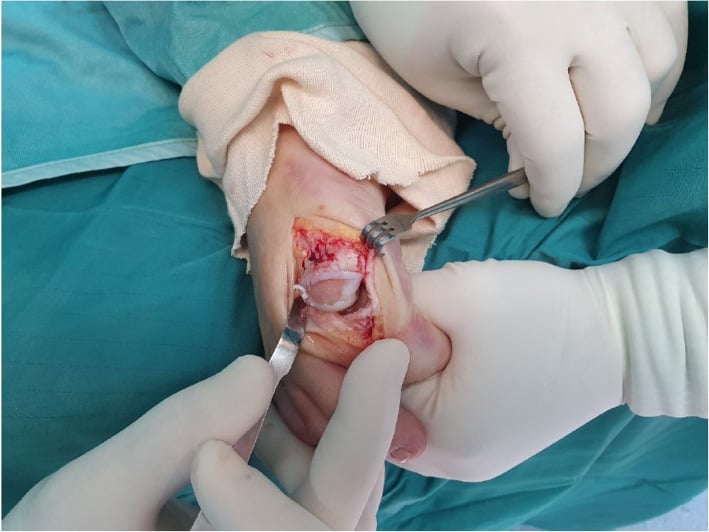
Outcomes. Coughlin's series reported 92% of 93 cheilectomies successful for pain relief and function at a mean 9.6 years, but that is one surgeon's retrospective practice with the grade assigned at follow-up, so treat it as the upper bound. Pain relief is predictable and the gain in range is variable. Durability is not quantified by any source cited here. A failed cheilectomy can proceed to arthrodesis without compromise.
Surgical Technique
Position. Supine on a standard table, with a bump under the ankle to rotate the leg internally and expose the medial side of the first MTP joint. The other leg lies flat or in a frog-leg position. The same set-up and approach serve cheilectomy and arthrodesis.
Tourniquet. Thigh or ankle; the ankle is preferred for better access. Exsanguinate with an Esmarch or by elevation, and inflate to 250-300 mmHg at the ankle or 100 mmHg above systolic at the thigh.
Draping. Free-drape the foot and ankle from the toes to mid-calf, with room for the C-arm to take AP and lateral views of the first MTP joint.
The approach
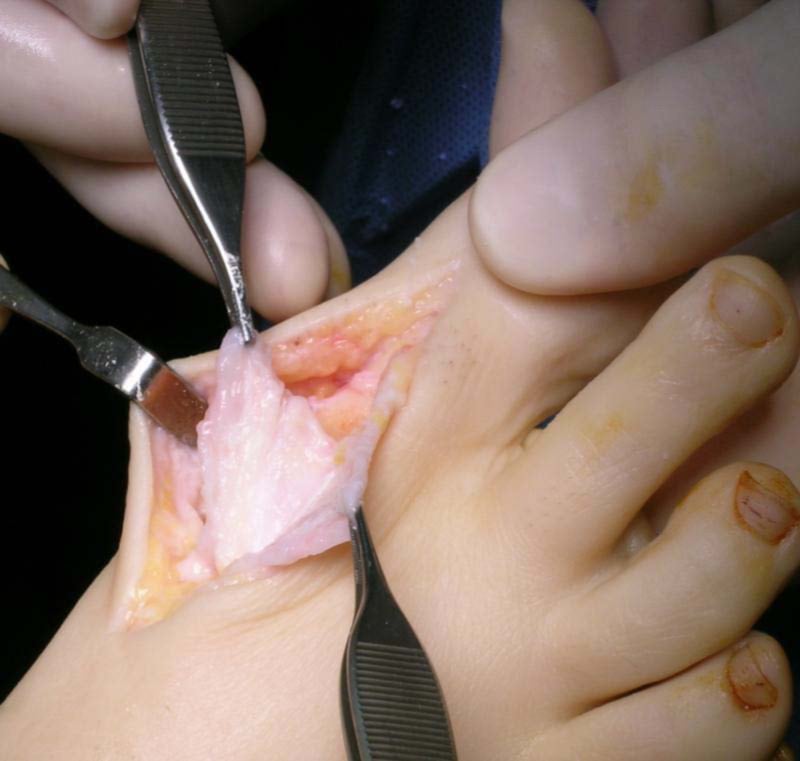
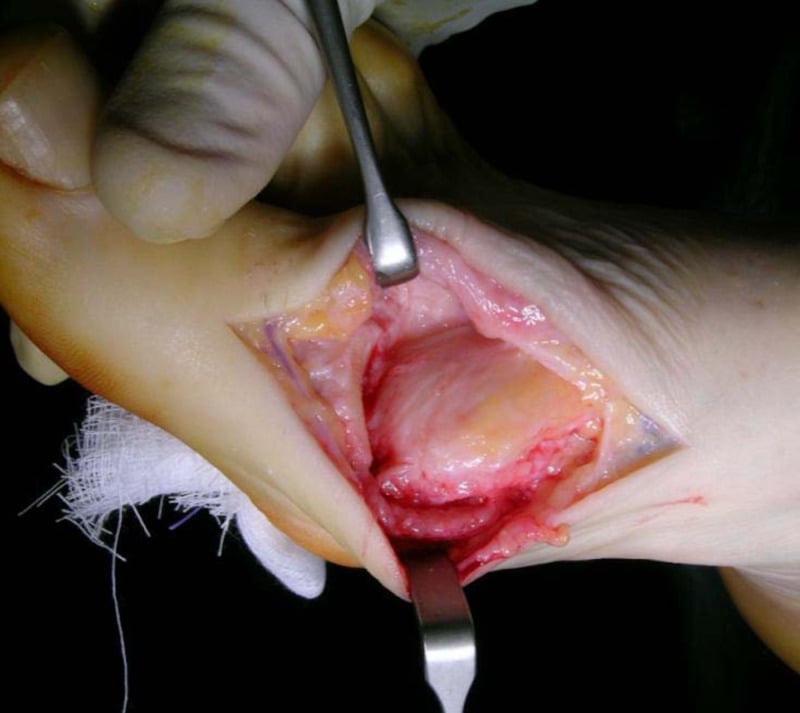
- Incision: a longitudinal dorsomedial incision along the medial aspect of the first MTP joint, from the proximal phalanx to mid-metatarsal, slightly curved along the medial border of the hallux; a dorsal longitudinal incision is also used for cheilectomy. 3-4 cm for cheilectomy, 4-5 cm for arthrodesis.
- Superficial dissection: identify and protect the dorsal sensory nerves, the medial dorsal cutaneous nerve, which branches at the level of the incision, and the lateral cutaneous branch. Retract gently or keep them in the flap, then incise the deep fascia longitudinally.
- Capsulotomy: a longitudinal incision over the dorsum of the joint, reflected medially and laterally, with the capsule preserved for repair.
- Exposure: plantarflex the hallux to expose the dorsal metatarsal head for cheilectomy, or the whole joint for arthrodesis, with retractors protecting the soft tissues.
The medial dorsal cutaneous nerve crosses the incision. See it and protect it, retracted or preserved in the flap, to prevent a neuroma. Injury rate: 5-10% if it is not identified, under 2% with careful dissection.
Moberg Osteotomy (Dorsal Closing-Wedge Phalangeal Osteotomy)
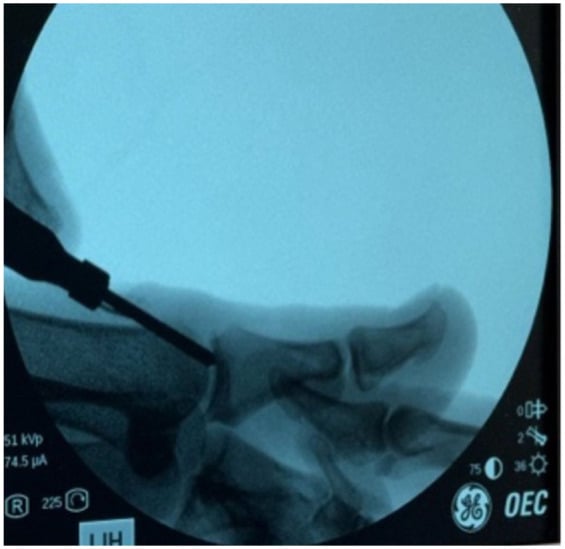
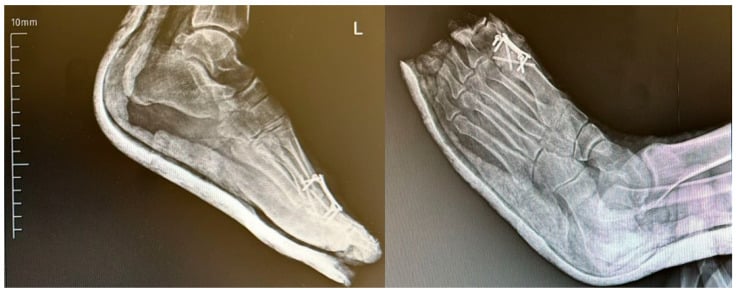
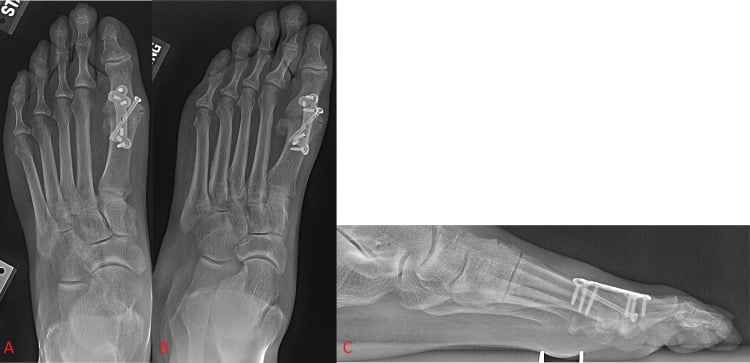
What it is. A dorsal closing-wedge osteotomy of the base of the hallux proximal phalanx. A small dorsally based wedge is removed, preserving the plantar hinge, and closed to tilt the toe into extension. It can be done percutaneously with a burr.
Why it works. Hallux rigidus loses dorsiflexion but usually retains plantarflexion. The Moberg does not create new joint motion; it rotates the retained arc dorsally, shifting the toe's functional position into more extension so the patient has usable dorsiflexion for toe-off without forcing the arthritic dorsal joint. In effect it borrows surplus plantarflexion for dorsiflexion.
How it is used. It is an adjunct to cheilectomy in Grade 1-2 disease: the cheilectomy removes the dorsal impingement and the Moberg adds functional dorsiflexion. It suits especially the younger patient left with limited dorsiflexion but a good plantarflexion arc after cheilectomy alone, and it is fixed with a small staple, screw or suture.
The caveat. It slightly shortens the phalanx, and its independent benefit over cheilectomy alone is not firmly established, so it is offered selectively rather than routinely.
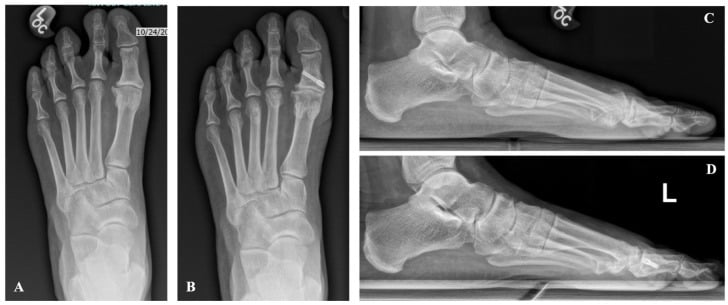
Synthetic Cartilage (Hydrogel) Implant
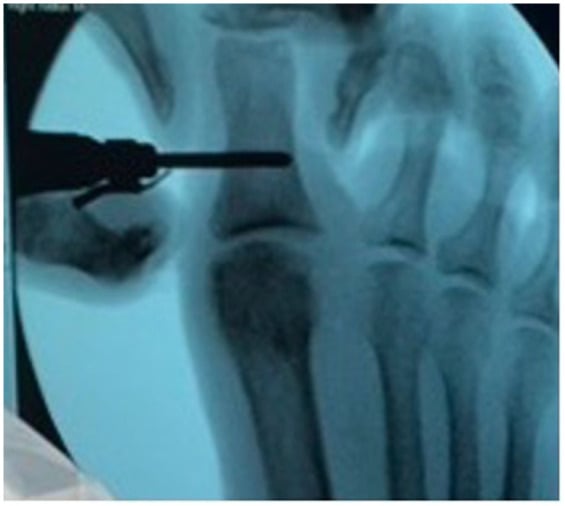
What it is. A small, about 8-10 mm, polyvinyl-alcohol (PVA) hydrogel implant (Cartiva) that mimics articular cartilage: a resilient, water-containing cylinder that resurfaces the metatarsal head.
How it is implanted. The joint is opened dorsally, with extensor hallucis longus retracted and a longitudinal capsulotomy, and a cheilectomy is performed. A cylindrical recess is drilled in the first metatarsal head, with a cannulated reamer over a central guide wire, and the plug is press-fit without cement or fixation. It sits slightly proud, to articulate against the phalangeal base and recreate joint space without excessive contact pressure, so the joint stays mobile as a partial resurfacing.
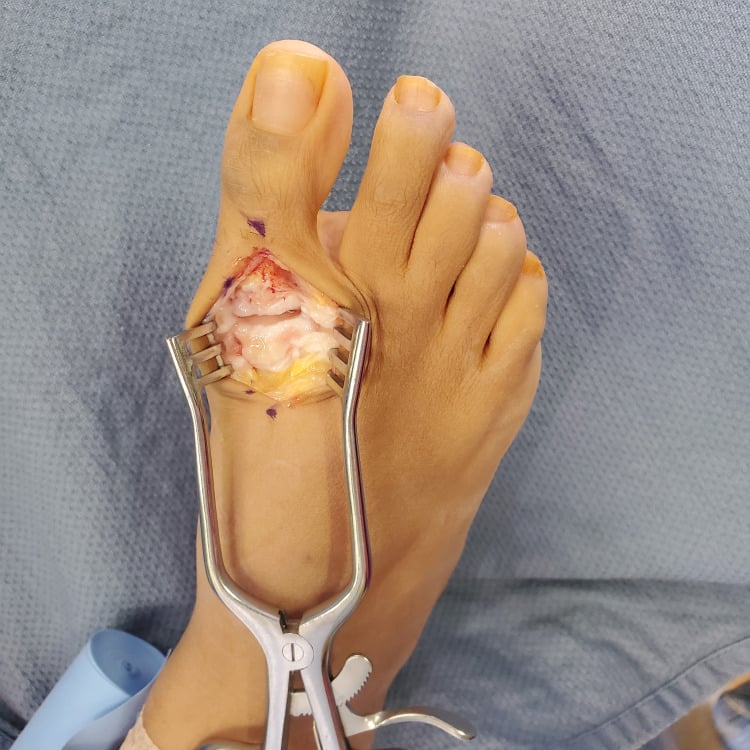
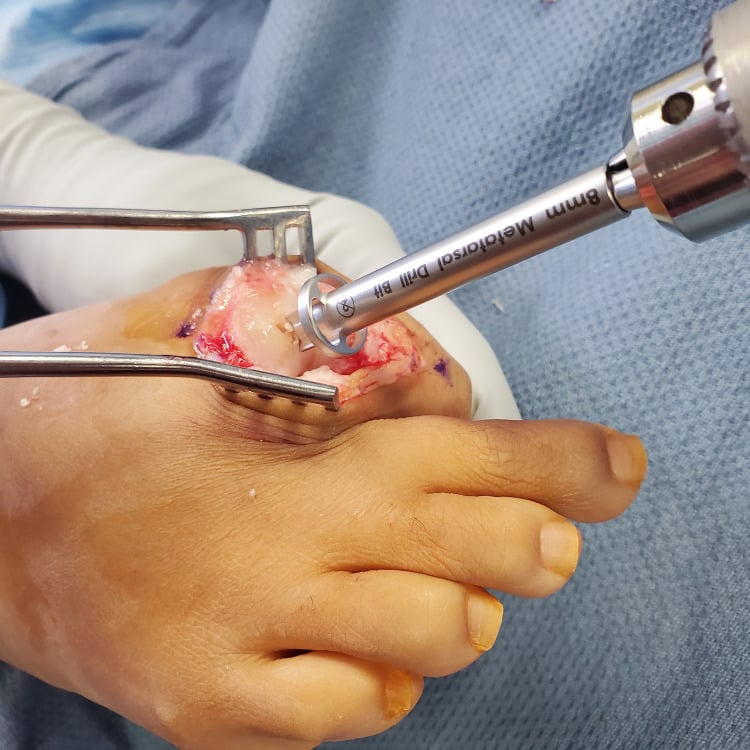
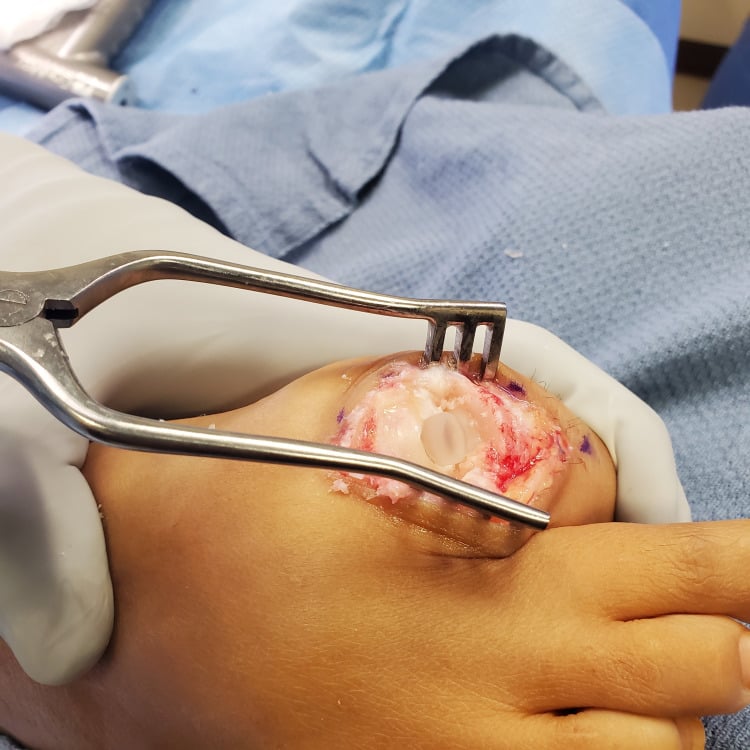
The evidence and its role. In the multicentre non-inferiority RCT (Baumhauer) the implant was statistically equivalent to arthrodesis at 2 years for pain and function. It gained about 6 degrees (27%) of active dorsiflexion, under 10% required conversion to fusion by 2 years, and there was no fragmentation, wear or bone loss. It is a motion-sparing alternative for advanced disease in a patient who prioritises retaining MTP motion and accepts a higher revision risk.
The caveat. The trial was industry-sponsored with only 2-year follow-up, and post-market series report higher early revision, subsidence and cyst formation than the trial. Arthrodesis remains the most durable, lowest-cost end-stage option, and the implant is offered selectively.
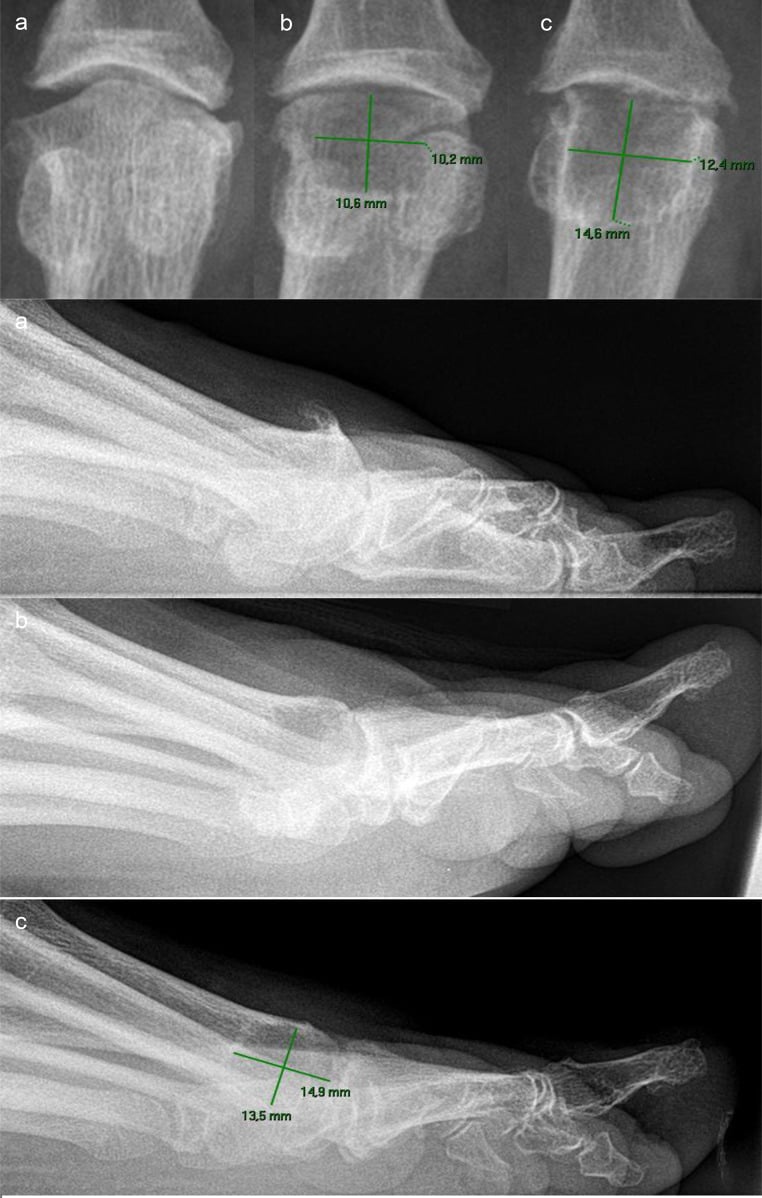
Complications
- Incidence
- 15-20% at 5-10 years
- Risk Factors
- Under-resection, progression of arthritis, Grade 3-4 disease
- Management
- Revision cheilectomy if residual osteophyte, or convert to arthrodesis
- Incidence
- 10-15% (most common complication)
- Risk Factors
- Technical error, inadequate fluoroscopy, poor positioning technique
- Management
- If symptomatic: revision arthrodesis with osteotomy
- Incidence
- 5-10%
- Risk Factors
- Smoking, diabetes, inadequate fixation, poor bone quality
- Management
- Revision arthrodesis with bone graft, biologics, rigid fixation
- Incidence
- 10-15%
- Risk Factors
- Prominent plate, low-profile skin, patient factors
- Management
- Hardware removal after union (typically 6-12 months)
- Incidence
- 5-10%
- Risk Factors
- Over-resection (cheilectomy), malunion (arthrodesis)
- Management
- Orthotics, metatarsal pads, rarely osteotomy
- Incidence
- 1-3%
- Risk Factors
- Diabetes, smoking, immunosuppression
- Management
- Antibiotics, wound care, rarely debridement or hardware removal
- Incidence
- 5-10% temporary, 1-2% permanent
- Risk Factors
- Dorsal medial/lateral cutaneous nerves
- Management
- Usually resolves, neuropathic pain management if persistent
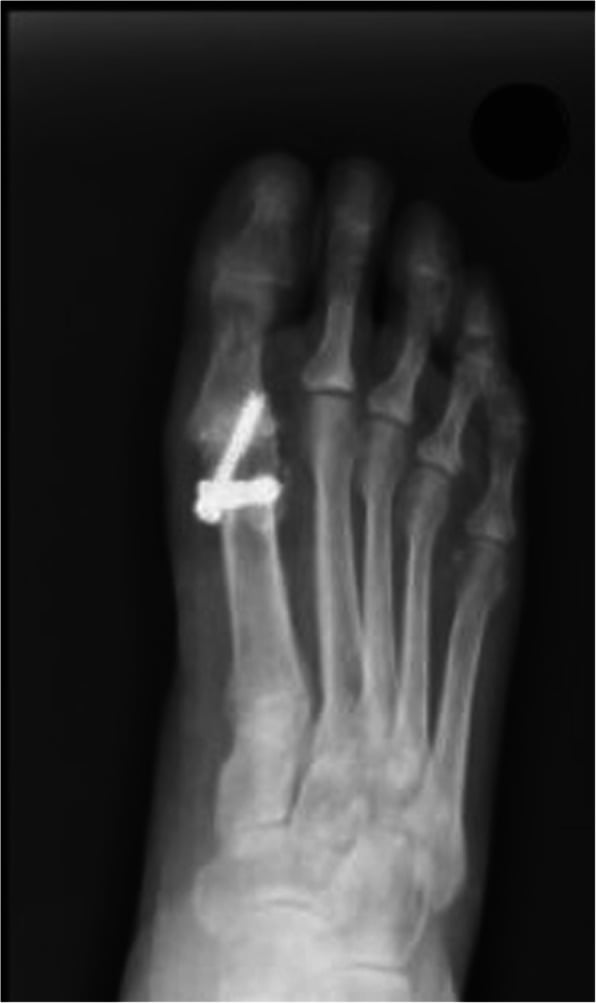
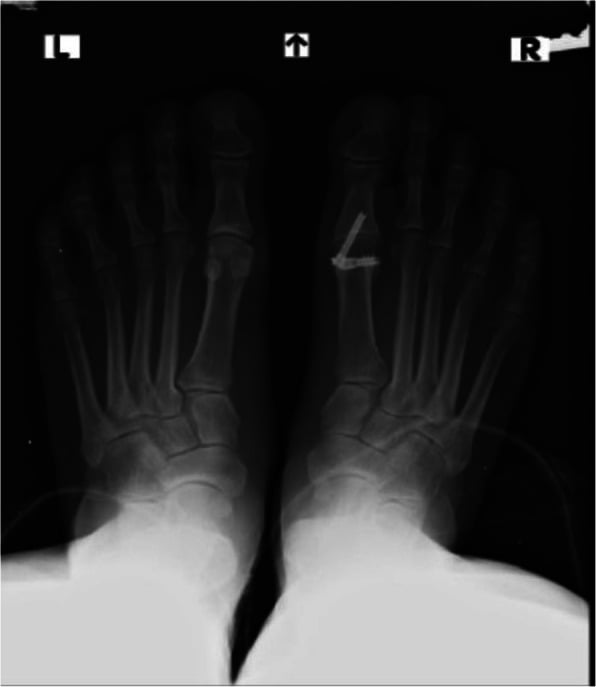
Postoperative Care and Rehabilitation
Cheilectomy Rehabilitation
Soft dressing and a wooden or post-operative shoe, weight-bearing as tolerated in the protective shoe from the start. Elevate, ice and keep walking to a minimum. Oral analgesics, with NSAIDs after 48 hours.
Gentle dorsiflexion exercises start at 2 weeks, with manual stretching and active ROM, aiming to regain 60-70 degrees. Full weight-bearing, moving into a stiff-soled athletic shoe; walking, but no running or jumping.
Strengthening with toe curls, marble pick-up and resistance-band dorsiflexion, plus balance work for proprioception. Gradual return to sport and impact activity in normal shoes, avoiding high heels at first.
Running, jumping and cutting at 3 months if the range is adequate. Expect 90% recovery by 6 months. Maintain the range with daily stretching, and avoid excessive high heels long-term.
Early range-of-motion work is critical to cheilectomy success, because capsular adhesions form quickly. Aggressive physiotherapy improves outcomes, and stiffness after cheilectomy often reflects inadequate rehabilitation rather than surgical failure.
Outcomes and Prognosis
- Best For
- Grade 1-2, dorsal disease
- Success Rate
- 80-90% satisfaction at 5 years
- Advantages
- Motion preserved, simple procedure, low morbidity
- Disadvantages
- May fail (15-20% at 10 years), arthritis progression
- Best For
- Grade 2, young patient
- Success Rate
- 60-80% satisfaction at 5 years
- Advantages
- Motion preserved, no implant
- Disadvantages
- Higher failure than cheilectomy or arthrodesis, limited evidence
- Best For
- Grade 3-4, failed cheilectomy
- Success Rate
- 85-90% satisfaction long-term
- Advantages
- Predictable pain relief, durable, low revision rate
- Disadvantages
- Loss of motion, malunion risk, longer recovery
- Best For
- Limited role (elderly, low demand)
- Success Rate
- 60-80% at 5 years, 60% at 10 years
- Advantages
- Motion preserved (theoretically)
- Disadvantages
- High failure, loosening, revision difficult, not recommended
Predictors of a poor outcome. Patient selection and meticulous technique are critical to the result.
- Cheilectomy: Grade 3-4 disease, circumferential cartilage loss, inadequate debridement
- Arthrodesis: malunion, which affects function and satisfaction; nonunion; smoking
- Any procedure: inflammatory arthropathy, workers' compensation, unrealistic patient expectations
Guidelines, Registries & Global Practice
Hallux rigidus is the most common arthritic condition of the foot and the second most common disorder of the first MTP joint after hallux valgus. Population studies estimate symptomatic disease in roughly 2.5% of adults over 50 years, with bilateral involvement in 50-80%. Peak incidence is in the fifth and sixth decades, with a bimodal pattern (adolescent osteochondral and adult degenerative). These figures are broadly consistent across high-income populations; data from low- and middle-income settings are sparse.
- Stance on Grading
- Coughlin-Shurnas 5-grade system most widely cited
- Joint-Preserving Surgery
- Cheilectomy for Grade 1-2 and selected Grade 3; synthetic cartilage implant an accepted alternative (FDA-approved)
- End-Stage Disease
- Arthrodesis is gold standard for advanced disease
- Stance on Grading
- Grading guides management; emphasis on shared decision-making
- Joint-Preserving Surgery
- Cheilectomy first-line for early disease; cautious adoption of synthetic implants pending long-term data
- End-Stage Disease
- Arthrodesis preferred for end-stage; replacement reserved for selected low-demand patients
- Stance on Grading
- Focus on fixation principles rather than grading
- Joint-Preserving Surgery
- Joint preparation to bleeding bone; congruent surfaces
- End-Stage Disease
- Rigid compression (lag screw plus dorsal plate or crossed screws) targeting 10-15 deg valgus, 10-15 deg dorsiflexion
- Stance on Grading
- Supports validated grading and patient-reported outcomes
- Joint-Preserving Surgery
- Motion-sparing options offered to younger, higher-demand patients after counselling
- End-Stage Disease
- Arthrodesis remains the most durable, cost-effective end-stage option
- No dedicated joint registry captures first MTP implants the way hip/knee registries do, so durability data rely on RCTs and case series
- Cartiva synthetic implant: equivalent to fusion at 2 years (Baumhauer RCT) but post-market series report higher early revision and subsidence
- Constrained total joint replacements: historically poor (Gibson RCT - loosening), largely abandoned
- Fusion union rates consistently 90-100% across series with rigid compression fixation
- High-resource: ready access to weight-bearing radiographs, locking plates, synthetic implants, formal physiotherapy and rocker-sole footwear
- Limited-resource: greater reliance on conservative care (stiff-soled footwear, activity modification); fusion favoured over implants given cost and lack of revision infrastructure
- Universal principles: grade-directed treatment, conservative trial first, fusion as the reliable end-stage solution regardless of setting
- Implant selection should reflect availability of revision capability, not novelty
Key documentation requirements:
- Conservative management trial documented (footwear, orthotics, injections, duration)
- Informed consent: procedure options (cheilectomy vs arthrodesis vs motion-sparing implant), fusion position (permanent loss of motion), outcomes (satisfaction and revision rates), complications (malunion, nonunion, infection, nerve injury)
- Realistic expectations: cheilectomy may fail (15-20% at 10 years); arthrodesis sacrifices motion but gives reliable pain relief
- Intra-operative decision-making: if converting from cheilectomy to arthrodesis based on cartilage status, document the finding and rationale
- Malunion prevention: document intra-operative checks (sterile block, fluoroscopy, alignment confirmation)
Common litigation themes: malunion (position not verified intra-operatively), deep infection, sensory nerve injury (medial dorsal cutaneous nerve), and unrealistic expectations of retained motion after arthrodesis.
Controversies and Areas of Uncertainty
The central debate is whether synthetic cartilage implants or interposition arthroplasty justify their higher revision risk to preserve motion in active patients. RCT data (Baumhauer) show 2-year non-inferiority for the hydrogel implant, but durability beyond 5 years and real-world revision rates remain contested. Fusion remains the most predictable, lowest-cost option.
Coughlin-Shurnas showed cheilectomy can succeed in SELECTED Grade 3 joints with greater than 50% cartilage remaining, blurring the simple "Grade 3 equals fusion" rule. The decision is ultimately intra-operative, based on cartilage assessment, not radiographs alone.
Earlier teaching favoured dorsal plate-plus-lag-screw over crossed screws, but the 2025 meta-analysis (Lim) found no difference in union or complications, only marginally faster fusion with plating. Construct choice is now driven by bone quality, cost and surgeon preference.
Texts quote 15-20 degrees of dorsiflexion relative to the ground, but AO and several series favour 10-15 degrees; excessive dorsiflexion causes interphalangeal joint overload and shoe-wear difficulty, while insufficient dorsiflexion causes pulp pressure. The functional reference (foot plantigrade on a block) matters more than an absolute number.
A dorsal closing-wedge phalangeal (Moberg) osteotomy is increasingly added to cheilectomy to augment effective dorsiflexion, but its independent contribution to outcome versus cheilectomy alone is not firmly established.
Radiographic grade correlates poorly with symptoms and with intra-operative cartilage status (Coughlin-Shurnas). Whether advanced imaging (MRI/CT cartilage mapping) should refine pre-operative decision-making, rather than intra-operative inspection, remains unresolved.
MCQ Practice Points
Q: What is the normal dorsiflexion range of the first MTP joint required for normal gait? A: 65-75 degrees. This range is required for toe-off phase of gait. Hallux rigidus typically reduces this to under 30 degrees, causing compensatory gait alterations (external foot progression angle, lateral weight shift).
Q: What are the key features distinguishing Coughlin-Shurnas Grade 2 from Grade 3 hallux rigidus? A: Grade 2: 50-75% joint space narrowing, moderate dorsal/lateral osteophytes, 20-50% ROM loss. Treatment: cheilectomy if plantar cartilage OK. Grade 3: Over 75% joint space narrowing, severe osteophytes, subchondral cysts, over 75% ROM loss (under 20 degrees dorsiflexion). Treatment: arthrodesis. The distinction guides surgical decision-making.
Q: What is the critical intraoperative decision point during cheilectomy for Grade 2 hallux rigidus? A: Assessment of plantar cartilage status. If cartilage is preserved on the plantar two-thirds of the joint, proceed with cheilectomy (30% dorsal head resection). If cartilage loss is circumferential, convert to arthrodesis. Do not compromise with inadequate debridement - this leads to poor outcomes.
Q: What is the optimal fusion position for first MTP arthrodesis? A: VDN mnemonic: Valgus 10-15 degrees (relative to first metatarsal axis), Dorsiflexion 15-20 degrees (relative to ground with foot plantigrade), Neutral rotation. Check alignment with foot on sterile block - hallux should clear ground by 1-2 cm and point between 2nd-3rd toes. Malunion is the most common complication and is position-dependent.
Q: What are the evidence-based success rates for cheilectomy vs arthrodesis in hallux rigidus? A: Cheilectomy (Grade 1-2): 92% successful in Coughlin's single-surgeon series at a mean 9.6 years, which is the best case rather than the expected case. Arthrodesis: union was 38 of 38 in the randomised trial cited here, and the meta-analysis of 1,035 toes found union equivalent between crossed screws and plating. Arthrodesis is the more durable operation but sacrifices motion; no source cited on this page compares satisfaction between the two directly. Both are evidence-based, appropriate procedures when used for correct indications.
Q: What is the most common significant complication of first MTP arthrodesis and how is it prevented? A: Malunion (10-15%) is the most common complication. Prevention requires meticulous intraoperative technique: use sterile block to simulate weight-bearing, check hallux alignment (between 2nd-3rd toes), ensure 15-20 degrees dorsiflexion (1-2 cm ground clearance), confirm 10-15 degrees valgus, fluoroscopy in multiple planes before final fixation. Do not accept suboptimal position.
Exam Viva Scenarios
Practise clinical reasoning and management decisions out loud
“A 55-year-old male accountant presents with 2 years of progressive pain and stiffness in his right great toe. Pain is worse with walking, particularly when pushing off. He has tried wider shoes and ibuprofen with minimal relief. On examination, there is a dorsal prominence at the first MTP joint, tenderness on palpation, and dorsiflexion limited to 25 degrees (plantarflexion full). Grind test is positive. Weight-bearing radiographs show a dorsal osteophyte, 60% joint space narrowing, and mild subchondral sclerosis. What is your assessment and management?”
“A 62-year-old female with severe hallux rigidus (Coughlin-Shurnas Grade 3, over 75% joint space loss, dorsiflexion 10 degrees) has failed conservative management and wants definitive treatment. You plan a first MTP arthrodesis. Walk me through your surgical technique, focusing on achieving optimal fusion position.”
“A 48-year-old male underwent cheilectomy for Grade 2 hallux rigidus 18 months ago. He returns with recurrent pain and stiffness. Dorsiflexion is now only 20 degrees. Radiographs show progression to Grade 3 disease with near-complete joint space loss and a small residual dorsal osteophyte. How do you manage this patient?”
Key Anatomy
- First MTP joint: 2-3x body weight in gait, 8x with running
- Normal dorsiflexion: 65-75 degrees (required for toe-off)
- Hallux rigidus: Typically under 30 degrees dorsiflexion
- Dorsal osteophyte: Blocks dorsiflexion, causes impingement pain
Coughlin-Shurnas Classification
- Grade 0: Dorsal osteophyte, no JSN = Conservative
- Grade 1: 20-50% JSN, mild spurring = Cheilectomy
- Grade 2: 50-75% JSN, moderate spurring = Cheilectomy or Interposition
- Grade 3: Over 75% JSN, severe changes = Arthrodesis
- Grade 4: Grade 3 plus hallux valgus/varus = Arthrodesis
Treatment Algorithm
- Conservative first (all grades): Stiff shoes, orthotics, NSAIDs, injections
- Cheilectomy: Grade 1-2, plantar cartilage preserved, 80-90% satisfaction
- Arthrodesis: Grade 3-4, failed cheilectomy, 90-95% fusion rate
- Arthroplasty: Limited role, high failure rates (20-40% at 10 years)
Surgical Pearls
- Cheilectomy: Remove dorsal 30% metatarsal head, achieve 60-70° intraop dorsiflexion
- Arthrodesis position (VDN): 10-15° Valgus, 15-20° Dorsiflexion, Neutral rotation
- Use sterile block to simulate weight-bearing when checking fusion position
- Plate vs crossed screws: no significant union-rate difference, plate marginally faster to fusion (meta-analysis)
- Intraop cartilage assessment determines cheilectomy vs arthrodesis
Complications
- Malunion (arthrodesis): 10-15%, most common, position-dependent
- Nonunion (arthrodesis): 5-10%, smoking major risk factor
- Recurrent pain (cheilectomy): 15-20% at 10 years, disease progression
- Hardware irritation: 10-15%, may require removal after union
- Transfer metatarsalgia: Over-resection or malunion
Evidence Base and Key Trials
Coughlin & Shurnas - The Landmark Grading and Long-Term Outcome Study
- Single-surgeon series of 110 patients (114 joints) followed over a 19-year period; mean follow-up 9.6 years (cheilectomy) and 6.7 years (arthrodesis)
- Introduced the now widely used 5-grade (0-4) clinical-radiographic classification combining ROM, pain and radiographic change
- 80 patients (93 feet) had cheilectomy, 30 patients (34 feet) had arthrodesis
- 92% (86/93) of cheilectomies were successful for pain and function; cheilectomy reliable for Grade 1-2 and SELECTED Grade 3
- Grade 4, or Grade 3 with less than 50% of metatarsal head cartilage remaining at surgery, should be treated with arthrodesis
- No association found between hallux rigidus and first-ray hypermobility or metatarsus primus elevatus
Cheilectomy vs Interpositional Arthroplasty - Procedure-Specific Outcomes
- Retrospective comparison: 19 patients (24 feet) Grade 2 disease treated with cheilectomy vs 11 patients (11 feet) Grade 3 disease treated with interpositional arthroplasty
- Cheilectomy satisfaction 87.5% vs interpositional arthroplasty 72.7%; mean AOFAS 77.3 vs 71.6
- Great-toe weakness reported in 72.7% of interposition patients vs only 16.7% of cheilectomy patients
- Pedobarography showed reduced great-toe load and weight transfer to lesser metatarsals in all patients, greatest after interposition
- Authors conclude interposition is a salvage procedure with less reliable results than cheilectomy
Arthrodesis vs Total Joint Replacement - Randomised Controlled Trial
- RCT of 63 patients (77 toes): 38 toes arthrodesis vs 39 toes total replacement arthroplasty, single surgeon, 24-month follow-up
- Pain improved in both groups but significantly more after arthrodesis (p = 0.01)
- All 38 arthrodeses united (mean dorsiflexion 26 degrees) with few complications
- 6 of 39 arthroplasty implants required removal for phalangeal component loosening; remaining implants gained poor motion
- Cost ratio 2:1 in favour of arthrodesis; arthrodesis preferred even when implant failures were excluded
Synthetic Cartilage Implant vs Arthrodesis - Multicentre Non-inferiority RCT
- Prospective randomised (2:1) non-inferiority trial across 12 centres in Canada and the UK; 152 hydrogel synthetic cartilage implants vs 50 arthrodeses, advanced-stage disease
- VAS pain and FAAM sport/ADL scores improved significantly in both groups at 12 and 24 months with statistical equivalence on the composite outcome
- Implant gained 6.2 degrees (27.3%) active dorsiflexion, maintained at 24 months
- Secondary surgery: 11.2% implant vs 12.0% arthrodesis; under 10% of implants required conversion to arthrodesis at 2 years
- No cases of implant fragmentation, wear or bone loss
Crossed Screws vs Plate-and-Screw Fixation - Meta-Analysis
- Systematic review and meta-analysis: 9 comparative studies, 976 patients (1,035 toes)
- NO significant difference in union rates between crossed screws and plate-plus-interfragmentary-screw (OR 0.75, p = 0.29)
- No significant difference in overall complications, revision, hardware removal or malunion
- Plate-and-screw construct gave a significantly shorter time to fusion (mean difference 0.51 weeks, p = 0.02)
- Choice should also weigh indication, bone quality and cost
Interposition Arthroplasty - Contemporary Systematic Review
- Systematic review of 20 studies, 498 patients (539 feet), mean follow-up 4.5 years
- Autogenous first MTP capsular tissue was the commonest interposition material (60% of studies)
- Mean improvements in standardised scores exceeded the minimal clinically important difference in most studies
- Progression to further surgery in only 3.8% of toes
- Transfer metatarsalgia was the commonest complication (up to 57.9% in one series)
- 85% of included studies were Level IV evidence