Joint Space Narrowing | Conservative First | THA When Failed
- Groin pain with activity is classic presentation
- Radiographs: JSN, osteophytes, sclerosis, cysts
- Conservative FIRST: weight loss, PT, NSAIDs, injections
- THA when conservative fails and quality of life impaired
- Primary OA most common; secondary includes AVN, DDH, FAI
- “Internal rotation first motion lost
- “AP pelvis + lateral of affected hip for imaging
- “Young patients consider hip preservation before THA
- “Avoid THA in active infection, poor health that precludes surgery
Overview and Epidemiology
Hip osteoarthritis affects about 10% of adults over 60, and prevalence rises with age. Women are more often symptomatic, obesity is a major risk factor, and it is the leading indication for total hip arthroplasty.
Risk factors. Age is the primary risk factor; the others:
- Obesity - increased joint loading
- Genetics - a strong family-history component
- Occupation - heavy labour
- Prior hip pathology - DDH, Perthes, SCFE, FAI
Primary or secondary. Primary (idiopathic) OA has no identifiable cause, is wear and tear, and is most common in the elderly. Secondary OA sits on an underlying condition and often affects younger patients:
- DDH (dysplasia)
- AVN
- FAI (cam or pincer)
- Post-traumatic
- Inflammatory (RA, AS)
- SCFE or Perthes sequelae
The aetiology guides treatment selection and prognosis, so in a patient under 50 with hip OA always consider a secondary cause - DDH, AVN, FAI, SCFE sequelae - before planning anything.
Pathophysiology and Anatomy
The joint. A ball and socket: the femoral head articulates with the acetabulum, both surfaces covered by hyaline cartilage 3-4mm thick. The fibrocartilaginous labrum deepens the socket by 22%, and the strong capsule is reinforced by the iliofemoral, pubofemoral and ischiofemoral ligaments. The femoral head is supplied primarily by the medial femoral circumflex artery, with the lateral femoral circumflex artery and the artery of the ligamentum teres.
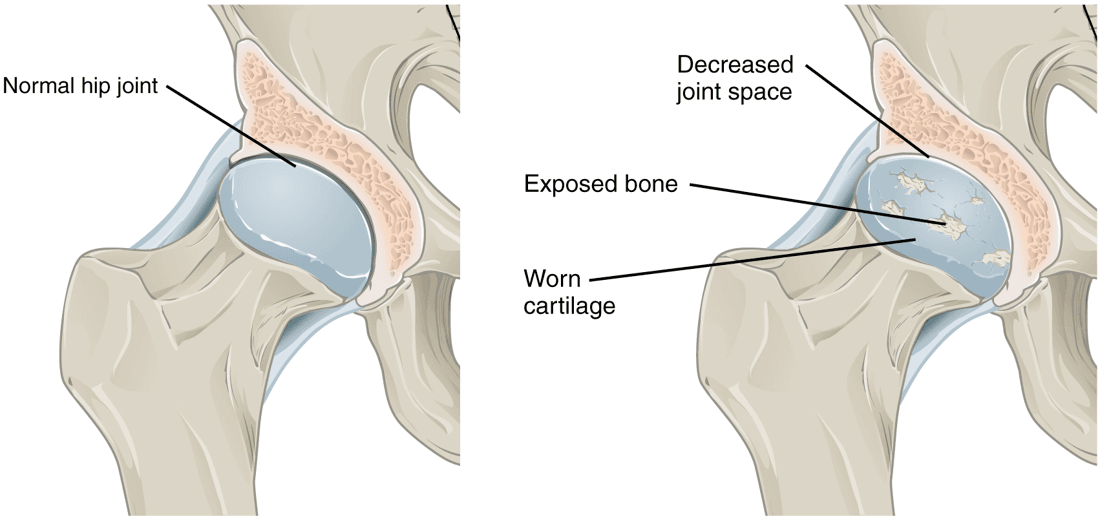
The disease process. OA is initiated by cartilage damage from mechanical or biological factors, and what follows involves the whole joint, not just the cartilage:
- Cartilage degradation (matrix metalloproteinases)
- Subchondral bone changes
- Synovitis (low-grade inflammation)
- Osteophyte formation
End-stage disease is bone-on-bone contact and severe pain.
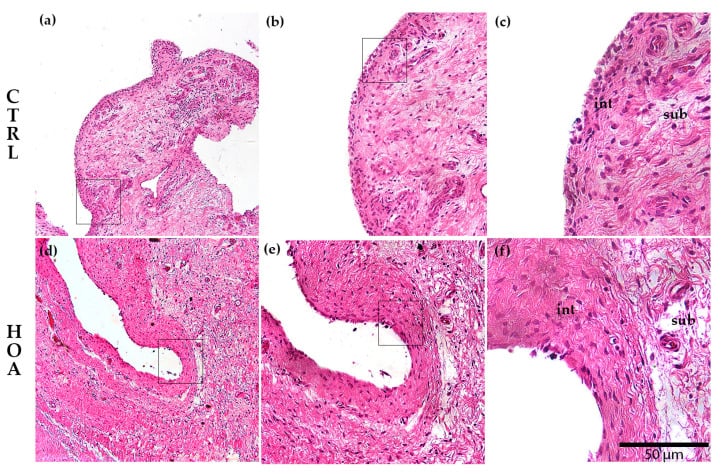
Patterns of wear. Where the cartilage is lost matters for surgical planning, because it determines the acetabular bone stock left to work with:
- Superior pole (lateral) - most common; the weight-bearing area
- Medial pole (superomedial migration) - less common; thin bone
- Concentric - uniform loss, often of inflammatory aetiology
Classification Systems
Kellgren-Lawrence and Tönnis answer different questions. Kellgren-Lawrence was devised for the knee and is used for the hip mainly for epidemiology; Tönnis is the grade of the hip preservation literature, and the one that decides whether a hip can still be preserved.
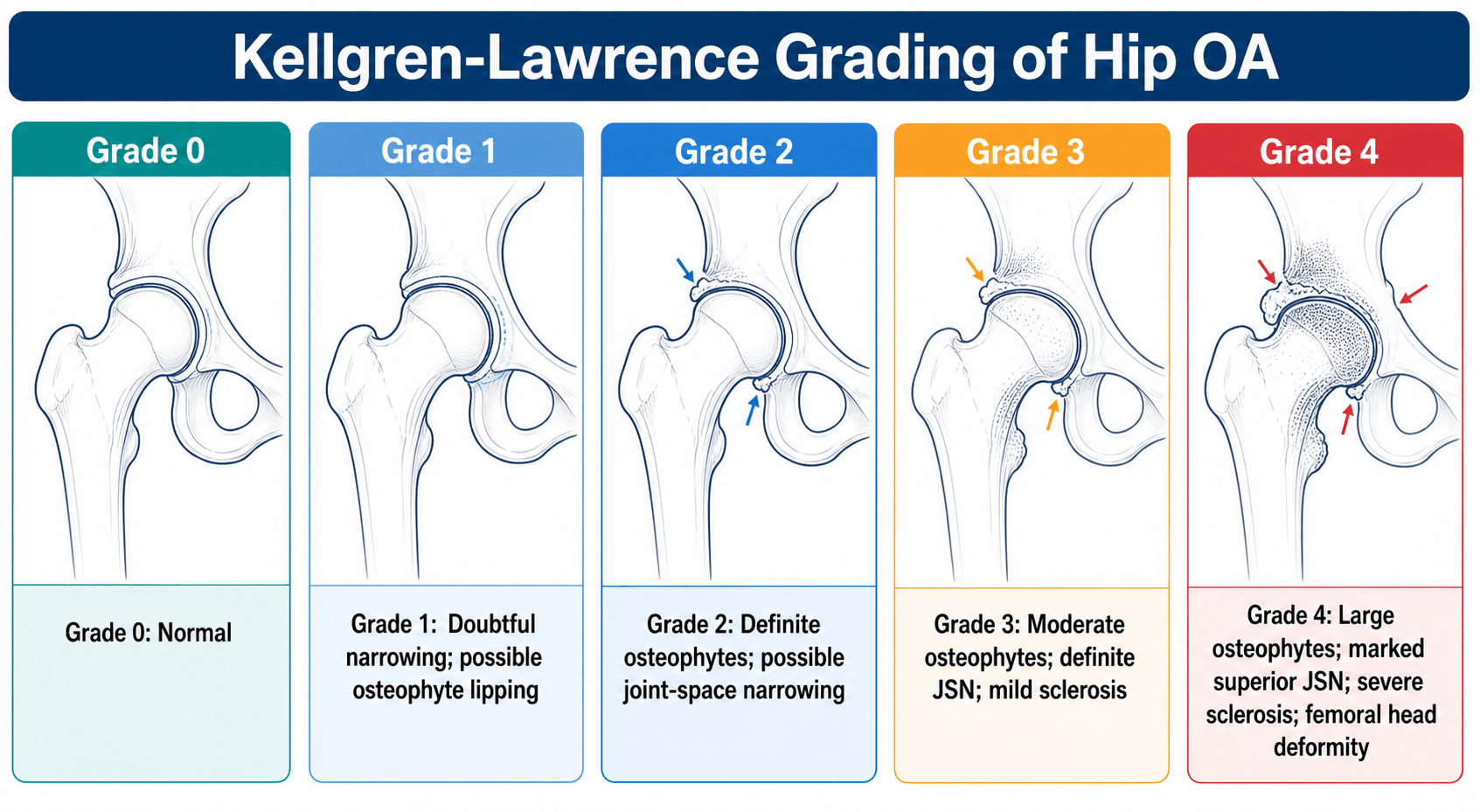
Kellgren-Lawrence. Widely used, with good inter-observer reliability at the extremes.
- Description
- No features of OA
- Clinical Correlation
- Normal
- Description
- Doubtful JSN, possible osteophytes
- Clinical Correlation
- May be asymptomatic
- Description
- Definite osteophytes, possible JSN
- Clinical Correlation
- Mild symptoms
- Description
- Moderate osteophytes, definite JSN, some sclerosis
- Clinical Correlation
- Moderate symptoms
- Description
- Large osteophytes, marked JSN, severe sclerosis, cysts
- Clinical Correlation
- Severe, THA candidate
Tönnis. Graded 0 to 3:
- Features
- Normal joint
- Features
- Increased sclerosis, slight JSN, no or slight osteophytes
- Features
- Small cysts, moderate JSN, moderate osteophytes
- Features
- Large cysts, severe JSN, severe osteophytes, deformity
Why Tönnis is the gatekeeper. Tönnis 0-1 is the territory where joint-preserving surgery works: periacetabular osteotomy for dysplasia, arthroscopy or osteochondroplasty for impingement. Tönnis 2 and above predicts failure of hip preservation and early conversion to arthroplasty, because the articular cartilage is already lost rather than merely at risk.
In a viva about a young adult with dysplasia or FAI, the sequence is: measure the deformity, then state the Tönnis grade - it is what separates "preserve" from "replace", and quoting Kellgren-Lawrence instead reads as knee thinking applied to a hip.
Clinical Assessment
History. The pain is in the groin and activity-related, with morning stiffness that improves with movement. The rest of the history measures what the hip has cost the patient, which is what the arthroplasty indications later turn on:
- Function - walking distance, stairs, activities of daily living
- Night pain - advanced disease
- Quality of life - work, recreation, sleep
Where it hurts. True hip pathology causes groin pain. Lateral hip pain is often trochanteric bursitis, and buttock pain may be referred from the spine. Hip OA not infrequently presents as knee pain, through obturator nerve referral, and a knee replacement done for referred hip pain relieves nothing - so examine the knee and the lumbar spine as well.
Gait and stance. The gait is antalgic or Trendelenburg; a positive Trendelenburg test means abductor weakness or pain inhibition. The leg may be short from superolateral migration of the head and joint-space loss.
The C-sign. The patient localises deep groin pain by cupping the hand around the greater trochanter, thumb behind and index finger in the groin, a hand forming a "C". It is the bedside clue that the pain is truly intra-articular rather than lumbar or lateral.
The Thomas test. Flex the unaffected hip fully to the chest to flatten the lumbar lordosis, then watch the affected thigh. If it lifts off the couch there is a fixed flexion deformity that was being hidden by compensatory lumbar lordosis; measure the angle the thigh makes with the couch. Always unmask lordosis before judging hip extension, or you will miss the contracture and mis-plan leg length.
Range of motion. Internal rotation is the first motion lost and often the most painful; check it with the patient supine and the hip at 90 degrees of flexion. Flexion and abduction go next. End-range pain in multiple planes is the OA signature; a single irritable plane with full range elsewhere suggests another diagnosis. FABER and FADIR both provoke pain, FADIR being the more specific for intra-articular pathology.
- Pain Location
- Groin
- Key Feature
- Activity-related, stiffness
- Imaging
- JSN, osteophytes
- Pain Location
- Lateral
- Key Feature
- Point tenderness GT
- Imaging
- Normal or bursitis
- Pain Location
- Groin
- Key Feature
- Risk factors (steroids, alcohol)
- Imaging
- Crescent sign, collapse
- Pain Location
- Groin, clicking
- Key Feature
- Younger, mechanical symptoms
- Imaging
- MRA shows tear
Outcome measures. In common use:
- Harris Hip Score - the classic measure: pain, function, range of motion, deformity
- Oxford Hip Score - patient-reported, 12 questions, widely used
- HOOS - Hip Disability and Osteoarthritis Outcome Score, the comprehensive one
Investigations
Radiographs. AP pelvis and a lateral, with the AP taken weight-bearing whenever possible: a weight-bearing AP pelvis shows the true joint-space narrowing, and non-weight-bearing films may overestimate cartilage thickness.
- AP pelvis - weight-bearing if possible
- Lateral of the affected hip - cross-table or frog-leg
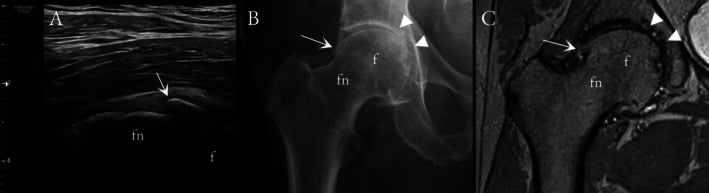
The findings are loss of joint space, osteophytes, subchondral sclerosis and subchondral cysts. Even so, plain films may underestimate cartilage loss compared with MRI.
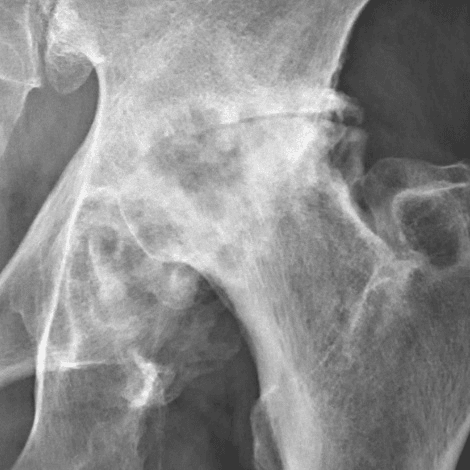
LOSSOA X-ray Findings
Hook:LOSS of cartilage causes all these changes!
MRI. Not required for typical end-stage OA before THA. Its indications are:
- Early OA with a normal radiograph
- To rule out AVN
- To assess labral pathology
- The young patient considering preservation
It shows cartilage loss, bone oedema, labral tears and effusion.
CT. The planning study, used for:
- Preoperative planning for THA
- Acetabular version and coverage
- Complex deformity (DDH, protrusio)
3D reconstructions help surgical planning, and templating software uses CT for component sizing.
Management Algorithm
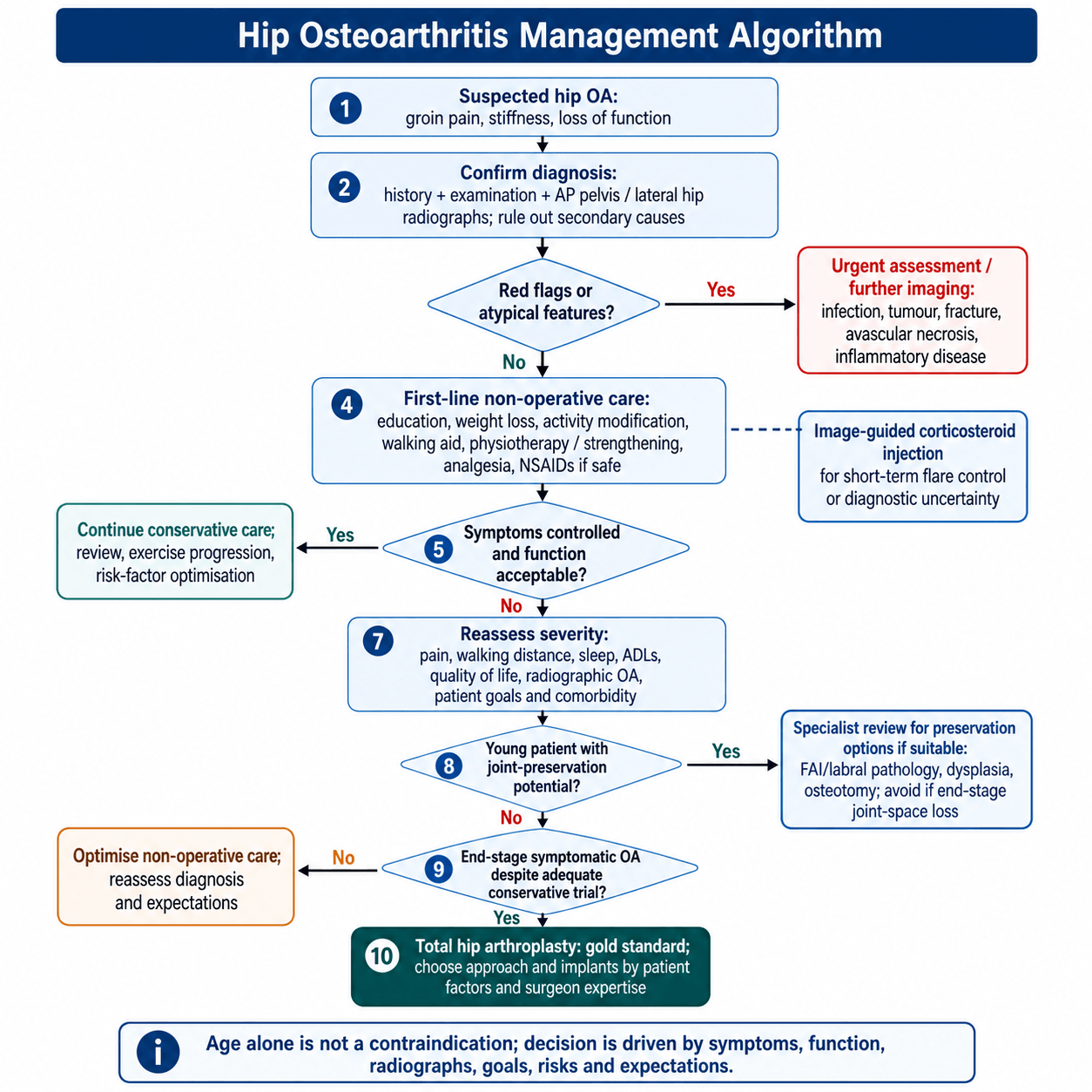
The pathway is stepwise. Confirm the diagnosis on history, examination and radiographs and rule out secondary causes; treat conservatively first; then reassess, and consider surgery if quality of life is significantly impaired despite conservative measures. THA is the usual operation, and the young patient is considered for preservation surgery if appropriate. Most patients trial multiple conservative options before considering surgery.
Lifestyle. Weight loss reduces joint loading, activity modification means avoiding high impact, and a walking aid means a cane in the opposite hand.
Physiotherapy. Muscle strengthening of the abductors and quadriceps, maintenance of range of motion, and pool exercises.
Medication. Paracetamol is first line, then NSAIDs, oral or topical. NSAIDs carry significant risks - GI bleeding, renal impairment and cardiovascular events - so use the lowest dose for the shortest time, consider PPI cover, and remember that paracetamol is the safer drug for chronic use. Note the tension with NICE (2022), which deprioritises paracetamol and weak opioids and makes therapeutic exercise the core treatment (see Guidelines below).
Injections. Intra-articular steroid gives short-term relief; hyaluronic acid has controversial evidence.
Surgery. Total hip arthroplasty is the gold standard for end-stage OA, with the choice between cemented and uncemented fixation taken up below. The choice of procedure depends on age, activity level and joint-preservation potential:
- Hip preservation (young patients) - hip arthroscopy (labral repair, FAI correction), periacetabular osteotomy (dysplasia), femoral osteotomy (varus or valgus)
- Hip resurfacing - metal-on-metal, with concerns over ALVAL; selected young active males; less common now
Surgical Considerations
Indications for THA. Age alone is not a contraindication. THA is appropriate when:
- Conservative treatment has failed
- There is significant functional impairment
- Pain affects quality of life
- There is radiographic evidence of OA
Relative contraindications are active infection, poor health precluding surgery, unrealistic expectations, and a neuropathic (Charcot) joint.
Approach. Surgeon experience is the most important factor: registry data show the approach matters less than surgeon volume and experience.
- Posterior - most common; good exposure; dislocation risk
- Direct anterior - muscle sparing; faster recovery; a learning curve
- Lateral (Hardinge) - good exposure; abductor risk
- Anterolateral - a balance of exposure and recovery
The patient under 50. Consider hip preservation first if appropriate, and rule out FAI and labral pathology before committing to an arthroplasty. THA in the young has good outcomes but higher revision rates, so counsel on activity modification, and prefer uncemented components.
Young patients (under 50) undergoing THA must be counselled about revision surgery probability. Current implants may last 20+ years but revision is likely within their lifetime.
THA Bearing Surfaces
The articulating couple, or bearing, determines wear, particle generation and therefore long-term survival. Wear debris drives osteolysis and aseptic loosening, so bearing choice is a core arthroplasty decision, particularly in younger, more active patients.
- Wear and behaviour
- Historical standard with relatively high polyethylene wear generating debris
- Key concern
- Osteolysis and aseptic loosening over time
- Wear and behaviour
- Markedly lower wear than conventional polyethylene; current workhorse
- Key concern
- Small oxidation risk, addressed by vitamin-E-doped variants
- Wear and behaviour
- Lowest wear, highly biocompatible, no metal ions
- Key concern
- Rare fracture and occasional squeaking
- Wear and behaviour
- Low volumetric wear but releases cobalt and chromium ions
- Key concern
- ALVAL, pseudotumour and high early revision; largely abandoned
Why cross-linking changed practice. Cross-linking polyethylene dramatically reduces wear and the osteolysis that historically limited implant life, which is why metal- or ceramic-on-highly-cross-linked-polyethylene and ceramic-on-ceramic have replaced conventional polyethylene and metal-on-metal in most practice.
THA Fixation: Cemented versus Uncemented
Components are fixed to bone either with polymethylmethacrylate (PMMA) cement or by biological bony integration. Cement is not an adhesive: it works by mechanically interdigitating into prepared trabecular bone, the principle behind Charnley's low-friction arthroplasty. Uncemented implants achieve fixation through bone ingrowth into a porous surface or ongrowth onto a hydroxyapatite coating, which requires a stable press-fit and adequate bone quality.
- Mechanism and best suited to
- PMMA interdigitation; reliable in older or osteoporotic bone; registries show low revision for cemented stems in older patients
- Key concern
- Bone cement implantation syndrome (hypotension, hypoxia, arrhythmia during cementation)
- Mechanism and best suited to
- Bone ingrowth or ongrowth; favoured in younger patients with good bone; needs initial press-fit stability
- Key concern
- Periprosthetic fracture, thigh pain and stress shielding
- Mechanism and best suited to
- Cemented stem with an uncemented cup (or the reverse), combining the advantages of each
- Key concern
- Selection by bone quality, age and surgeon practice
The practical rule. Cemented or hybrid fixation gives lower revision in older patients in registry data, while uncemented fixation is usually chosen for younger patients with good bone. Be alert to bone cement implantation syndrome during pressurised cementation.
Complications
- Conservative
- NSAIDs risk
- THA
- N/A
- Conservative
- N/A
- THA
- 1% (PJI)
- Conservative
- N/A
- THA
- 1-3%
- Conservative
- N/A
- THA
- Despite prophylaxis
- Conservative
- N/A
- THA
- Measured and addressed
- Conservative
- N/A
- THA
- Long-term, leads to revision
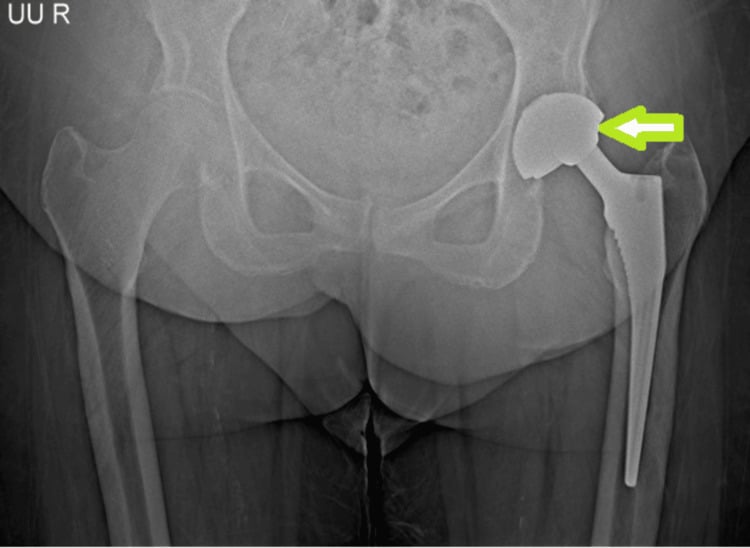
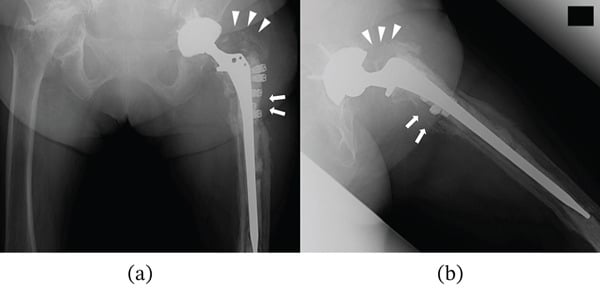
Late failure. An eccentric femoral head within the acetabular shell indicates polyethylene liner wear or failure; compare with prior films and assess for osteolysis, component migration and instability. Infection may coexist with mechanical failure, so unexplained pain or progressive osteolysis requires inflammatory markers and aspiration before revision planning.
Postoperative Care (THA)
THA Recovery
Mobilise day of surgery. DVT prophylaxis. Pain control. Precautions if posterior approach.
Discharge home 1-3 days. PT, gait aids. Wound care. Continue DVT prophylaxis.
Increase mobility. Wean walking aids. Drive when safe. Return to desk work.
Most return to pre-morbid activities. Low-impact sport allowed. Full function.
Posterior approach precautions: Avoid hip flexion greater than 90 degrees, internal rotation, adduction past midline. Duration varies (6-12 weeks). Anterior approach may have fewer precautions.
Outcomes and Prognosis
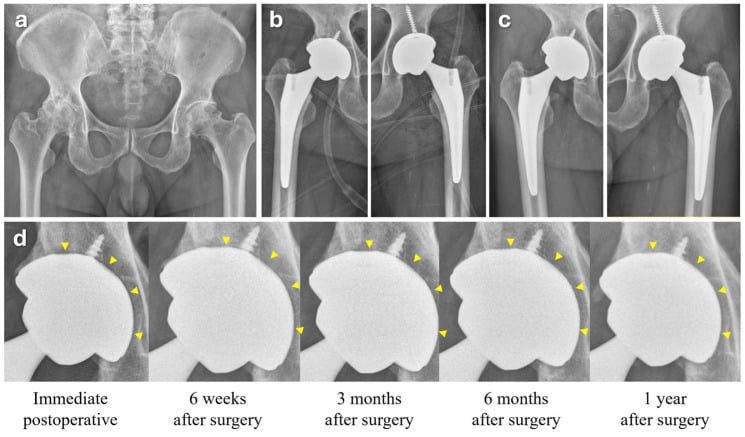
After THA. Survival is 95%+ at 15 years in correctly selected patients, with dramatic pain relief and functional improvement and over 90% satisfied. Over a longer horizon the registry figure is less flattering - about 58% of hip replacements survive 25 years (see the Evidence Base) - and that is the number to quote when consenting younger patients. Revision risk is higher in young, active patients, and polyethylene wear, loosening and infection are the main causes.
Without surgery. The natural history is progressive deterioration, at a rate that varies. Conservative treatment manages symptoms; it does not alter disease progression.
Guidelines, Registries & Global Practice
Global Epidemiology
- 595 million people lived with osteoarthritis worldwide in 2020 (7.6% of the global population); hip OA cases are projected to rise about 79% by 2050 with population ageing.
- High BMI accounts for roughly one-fifth of total OA burden, making obesity the dominant modifiable risk factor.
- Symptomatic radiographic hip OA prevalence rises steeply after age 50; secondary OA (DDH, FAI, AVN, post-trauma) predominates in younger patients.
Side-by-Side Major Guidelines
- Core Recommendation
- Therapeutic exercise as core treatment for all; offer arthroplasty when QoL substantially impaired
- Notable Position
- Do NOT refer based on age, sex, BMI or smoking alone; paracetamol/weak opioids deprioritised
- Core Recommendation
- Strongly recommends exercise and weight management; arthritis education core
- Notable Position
- Conditional support for topical/oral NSAIDs; IA steroid for short-term relief
- Core Recommendation
- Strong evidence for NSAIDs and physical therapy; THA effective for end-stage disease
- Notable Position
- Limited/inconclusive evidence for viscosupplementation and glucosamine in the hip
- Core Recommendation
- Strongly recommends exercise, weight loss, oral/topical NSAIDs; conditional IA steroid
- Notable Position
- Strongly recommends AGAINST hyaluronic acid injection in the hip
Registry Evidence
- National registries (AOANJRR, NJR for England and Wales, Swedish and Norwegian arthroplasty registries) consistently show THA among the most successful elective operations, yet report lower long-term survival than single-centre case series.
- Pooled registry data indicate about 58% of hip replacements survive to 25 years, versus the over-optimistic 78% from case series - the figure to quote when consenting younger patients.
- Registries demonstrate higher revision rates in younger, more active patients and have driven away from metal-on-metal bearings after high early-revision signals.
High- vs Limited-Resource Practice
- Timely access to elective THA, advanced bearings, navigation/robotics in some centres
- Registry-guided implant selection and outcome surveillance
- Multidisciplinary conservative care (physiotherapy, weight-management programmes)
- Arthroplasty may be unaffordable or unavailable, leading to prolonged conservative management and disability
- Greater reliance on analgesia, exercise and walking aids; later presentation with advanced disease
- GBD highlights this access gap as a driver of global health inequity
Hip OA is extremely common in viva. Know conservative treatment first, THA indications, and be able to consent a patient with registry-based longevity figures (around 58% at 25 years). Discuss approaches, complications, and manage expectations appropriately.
Controversies and Areas of Uncertainty
Repeated steroid injections. The McAlindon JAMA trial showed scheduled intra-articular triamcinolone caused greater cartilage loss with no durable pain benefit, in the knee. Whether repeated hip injections accelerate joint failure or compromise later arthroplasty remains debated; most now reserve injection for short-term flare relief or diagnosis.
Timing of THA. PROHIP confirms THA outperforms exercise once a surgical indication exists, but around 1 in 5 patients improve enough with exercise to defer surgery. Defining the tipping point, and avoiding both premature and unduly delayed surgery, is unresolved.
Surgical approach. Direct anterior versus posterior remains contested: anterior may speed early recovery but carries a learning curve and a lateral femoral cutaneous nerve risk.
Preservation versus early arthroplasty. In young dysplastic or FAI hips, the threshold of remaining cartilage at which PAO or arthroscopy still works, versus proceeding to THA, is uncertain; established radiographic OA predicts PAO failure, which is the Tönnis 2-and-above rule above.
There is no proven disease-modifying drug for hip OA. Glucosamine, chondroitin and hyaluronic acid injection lack convincing evidence in the hip (ACR strongly recommends against hip viscosupplementation). All current treatment is symptomatic or surgical.
MCQ Practice Points
Q: Where does true hip pathology cause pain? A: GROIN. Lateral pain = trochanteric bursitis. Buttock pain = sacroiliac or lumbar spine.
Q: What is the first motion lost in hip OA? A: Internal rotation. Often most painful as well. Test at 90 degrees flexion.
Q: What are the radiographic features of OA (LOSS)? A: Loss of joint space, Osteophytes, Subchondral Sclerosis, Subchondral cysts.
Q: What is Kellgren-Lawrence Grade 4? A: Large osteophytes, marked joint space narrowing, severe sclerosis, cysts, bone-on-bone. End-stage OA.
Q: What is first-line treatment for hip OA? A: Conservative: weight loss, exercise, physiotherapy, acetaminophen, walking aids. NSAIDs with caution.
Q: What is 15-year survival of THA? A: Greater than 95% in correctly selected patients. Higher revision in young, active patients.
Exam Viva Scenarios
Practise clinical reasoning and management decisions out loud
“A 68-year-old woman presents with 2 years of progressive right groin pain worse with walking and stairs. She has stiffness in the morning for 20 minutes. X-rays show joint space narrowing, osteophytes, and subchondral sclerosis. She has not tried any formal treatment. What is your management?”
“A 42-year-old active man presents with bilateral hip pain and stiffness. X-rays show moderate bilateral hip OA with acetabular dysplasia (CE angle 18 degrees). He is frustrated with symptoms affecting his tennis. What is your approach?”
“A 72-year-old woman has tried physiotherapy, lost 8kg, uses a walking stick, and has had two steroid injections over 18 months. She still has significant right hip pain limiting her to walking 200m and disturbing her sleep. X-rays show bone-on-bone changes. She asks about her options. What would you advise?”
Presentation
- Groin pain (true hip)
- Activity-related, improves with rest
- Morning stiffness (less than 30 min)
- Internal rotation first lost
Radiograph (LOSS)
- Loss of joint space
- Osteophytes
- Subchondral Sclerosis
- Subchondral cysts
Conservative
- Weight loss
- Injections (steroid)
- Physiotherapy
- Exercise and NSAIDs
Kellgren-Lawrence
- Grade 1: doubtful narrowing
- Grade 2: definite osteophytes
- Grade 3: definite narrowing
- Grade 4: bone on bone
THA Indications
- Failed conservative treatment
- Significant functional impairment
- Impact on quality of life
- Radiographic OA
Secondary Causes
- DDH (dysplasia)
- AVN
- FAI
- Trauma
Evidence Base and Key Studies
PROHIP: Total Hip Replacement vs Resistance Training for Severe Hip OA
- Multicentre RCT, 109 patients aged 50+ with severe hip OA and a surgical indication
- Oxford Hip Score improved 15.9 points with THA vs 4.5 with resistance training (difference 11.4, 95% CI 8.9 to 14.0, P less than 0.001) at 6 months
- 21% of the training group crossed over to THA by 6 months; 9% of surgical group had not had surgery
- Serious adverse events similar between groups, mostly known THA complications
How Long Does a Hip Replacement Last? Registry Meta-Analysis
- Systematic review and meta-analysis of case series plus AOANJRR and Finnish registry data (over 215,000 registry THAs)
- 25-year pooled survival was 77.6% from case series but only 57.9% from national registries
- Registry estimates regarded as less biased - about 58% of hip replacements last 25 years
- Case-series data systematically overestimate implant longevity
Intra-articular Triamcinolone vs Saline: Cartilage and Pain
- 2-year double-blind RCT, 140 patients with symptomatic knee OA and synovitis (40 mg triamcinolone every 12 weeks vs saline)
- Triamcinolone caused significantly greater cartilage volume loss (-0.21 vs -0.10 mm; difference -0.11 mm)
- No significant difference in pain between steroid and saline at 2 years
- Does not support repeated scheduled corticosteroid injection for symptomatic OA
Exercise for Osteoarthritis of the Hip (Cochrane Review)
- Meta-analysis of 10 RCTs (549-715 participants) of land-based exercise vs no exercise
- High-quality evidence: exercise reduced pain (SMD -0.38) and improved physical function (SMD -0.38)
- Benefit sustained for at least 3 to 6 months after stopping supervised treatment
- No clear effect on quality of life; adverse events rare and minor