Motion Segments | Load Distribution | Three-Column Theory
- Functional spinal unit = two adjacent vertebrae plus intervening disc and ligaments
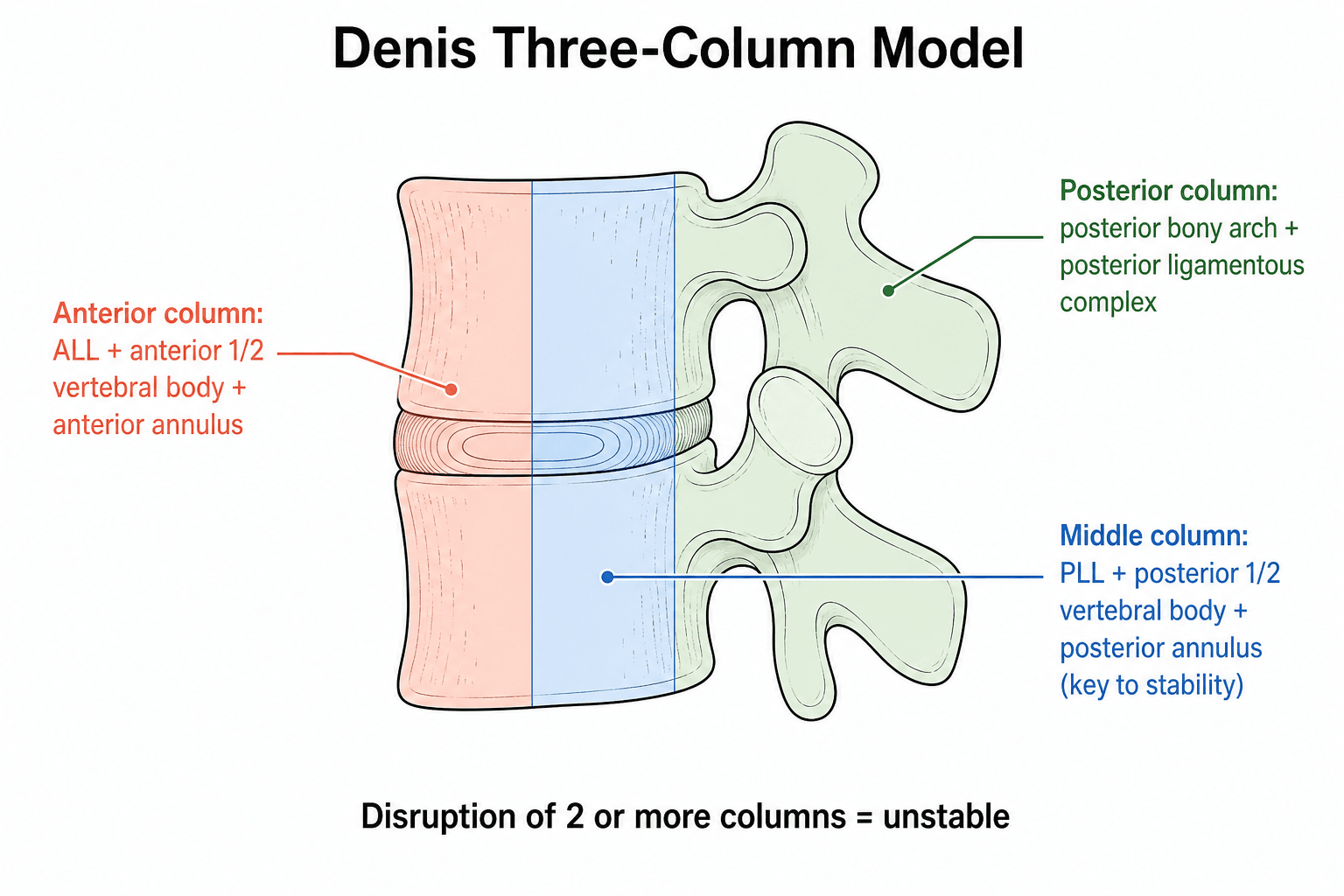
- Denis three-column theory: Anterior (ALL + anterior 50% body), Middle (posterior 50% body + PLL), Posterior (pedicles to spinous processes)
- Instantaneous axis of rotation (IAR) varies with spinal level and loading
- Nucleus pulposus behaves as incompressible fluid under axial load
- Facet joints resist shear and guide motion in sagittal or coronal plane
- “White and Panjabi criteria for clinical instability
- “Intradiscal pressure is highest in loaded flexion (lifting 20 kg with a round back, 2.3 MPa) - and in vivo, sitting is marginally LOWER than standing, not higher
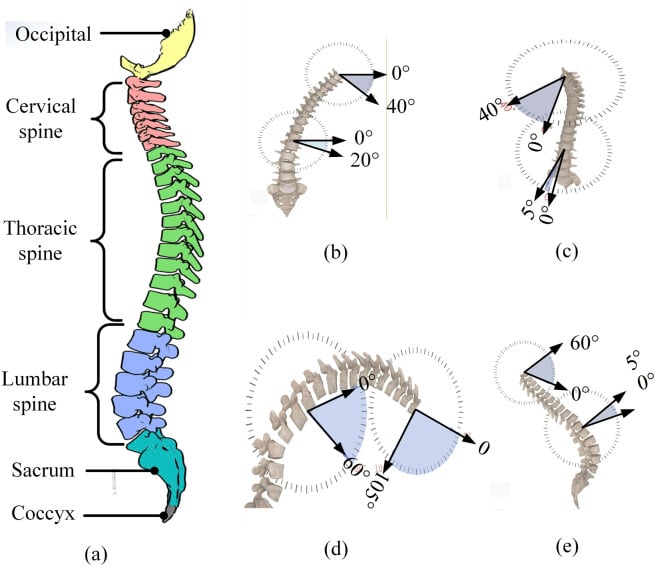
- “Cervical lordosis averages 40 degrees, lumbar lordosis 60 degrees
- “Coup and contrecoup injury patterns in spinal trauma
Overview
What spinal biomechanics is. The study of the mechanical principles governing spinal motion, load distribution and stability. The spine is a flexible column that has to balance two competing demands, mobility for daily activities and stability to protect the neural elements, and these principles are what let you interpret spinal pathology, assess instability and plan surgery.
The functional spinal unit. The functional spinal unit (FSU), also called the motion segment, is the smallest physiological unit of the spine whose biomechanical characteristics are similar to those of the entire spine. It is two adjacent vertebrae with the intervening intervertebral disc, all the adjoining ligaments and the paired facet joints.
- Anterior elements: vertebral bodies, intervertebral disc, anterior and posterior longitudinal ligaments
- Posterior elements: pedicles, facet joints, laminae, spinous process, ligamentum flavum, interspinous and supraspinous ligaments
- Neurovascular: nerve roots, the spinal cord where present, and the blood supply
What the unit does. It bears load, controls motion, resists excessive displacement under physiological loads and houses the neural elements within the spinal canal. Load is transmitted through two parallel systems, the anterior column of vertebral bodies and discs and the posterior column of facet joints and neural arch. In neutral standing approximately 70% of axial load passes through the anterior column and the posterior elements bear 10-30%; extension shifts load posteriorly and flexion shifts it anteriorly.
Six degrees of freedom. Each motion segment has three translations (anterior-posterior, lateral, vertical) and three rotations (flexion-extension, lateral bending, axial rotation). The range of motion varies by spinal region, and analysing instability starts from these six.
Denis Three-Column Theory
The model. Denis proposed the three-column model in 1983 to classify thoracolumbar fractures and predict stability. The rule to carry is that disruption of two or more columns indicates spinal instability; which columns, and what each one resists, is in the table.
- Anatomical Structures
- ALL, anterior 50% vertebral body, anterior annulus
- Primary Function
- Resists extension and axial load
- Failure Mode
- Compression fracture
- Anatomical Structures
- PLL, posterior 50% vertebral body, posterior annulus
- Primary Function
- Resists flexion, critical for stability
- Failure Mode
- Burst fracture with canal compromise
- Anatomical Structures
- Pedicles, facets, laminae, spinous processes, ligaments
- Primary Function
- Resists flexion and rotation, tension band
- Failure Mode
- Distraction injury (Chance fracture)
Middle column integrity determines spinal stability. Isolated anterior or posterior column injury is often stable. Middle column failure with one other column = unstable. This guides surgical decision-making for thoracolumbar fractures.
Spinal Stability: The Neutral Zone and Panjabi's Three Subsystems
Structure and control. Denis describes the structural anatomy of stability; Panjabi describes its functional control. Panjabi defined the neutral zone as the small region of intervertebral motion around the neutral posture within which the passive osteoligamentous spine offers minimal resistance. Beyond it lies the elastic zone, where resistance rises steeply up to the physiological limit.
Why the neutral zone matters. The neutral zone, not total range of motion, is the more sensitive marker of instability. It enlarges with injury, disc degeneration and ligamentous laxity.
Three subsystems. Panjabi conceived spinal stability as three interacting subsystems.
- Components
- Vertebrae, discs, facet joints, capsules and ligaments
- Role
- Provides intrinsic restraint, mainly near the end of range; defines the neutral zone
- Components
- Muscles and tendons and the tension they generate
- Role
- Generates force to control the neutral zone and respond to changing load
- Components
- Central nervous system, proprioceptors and feedback pathways
- Role
- Senses position and load and coordinates the muscle response in real time
Clinical instability is best understood as loss of control of the neutral zone rather than simply excessive total range of motion. This is why a segment can be unstable yet retain near-normal end-range motion, and why both muscle rehabilitation and segmental fixation reduce the neutral zone and restore stability.
The White and Panjabi thresholds. Clinical instability is quantified on imaging by the White and Panjabi criteria. In the cervical spine the thresholds are horizontal translation greater than 3.5 mm or angulation greater than 11 degrees; in the thoracolumbar spine, translation greater than 4.5 mm or angulation greater than 20 degrees. Disruption of two or more columns, and a progressive or significant neurological deficit, are further criteria.
Load Distribution and Disc Mechanics
The disc. The nucleus pulposus is 80% water in the young and behaves as an incompressible fluid: under axial compression it develops a hydrostatic pressure that distributes the load, and that pressure rises as compression increases. The annulus fibrosus is built of concentric lamellae of type I collagen. With degeneration the nucleus loses water and the disc loses shock absorption.
The facets. Facet orientation guides motion: sagittally oriented facets (lumbar) allow flexion-extension, and coronally oriented facets (thoracic) allow lateral bending. The facets' share of load increases with extension and with disc degeneration, and they resist shear, preventing anterior translation.
Intradiscal pressure. Know both the classic figures and the in vivo revision, because the examinable point is where they disagree. Nachemson's 1960s work gave relative pressures still widely quoted: supine lowest at about 25% of standing, standing 100%, and sitting and sitting-flexion progressively higher, with sitting in flexion at 275%. Standing in extension is quoted at 75% of standing.
Wilke's in vivo data. Wilke's later telemetric study recorded directly from a non-degenerate L4-L5 disc across a normal day. It reproduced Nachemson's pattern for most activities but disagreed on exactly the comparison people quote most: relaxed standing 0.5 MPa against sitting unsupported 0.46 MPa, so sitting measured marginally lower than standing, not higher. The other values are worth memorising as absolutes:
- Lying prone 0.1 MPa
- Nonchalant sitting 0.3
- Sitting in maximum flexion 0.83
- Standing flexed forward 1.1
- Lifting 20 kg with a round flexed back 2.3 MPa, the highest recorded and roughly four to five times relaxed standing, falling to 1.7 with the knees flexed and 1.1 with the load held close to the body
Reading the numbers. The worst thing in this dataset is not a sitting posture at all; it is lifting badly, and the lifting advice follows directly from those three lifting values. Read it with its stated limitation: a single subject and one healthy disc. The classic rankings rest on very small subject numbers, the sitting-versus-standing ordering is debated, and absolute figures should be quoted with caution.
Instantaneous Axis of Rotation
Definition. The instantaneous axis of rotation (IAR) is the point about which a vertebra rotates during motion. In a healthy spine it lies within the disc space or the adjacent vertebral body, and a normal IAR gives a consistent motion pattern. An IAR outside these boundaries indicates instability or degeneration.
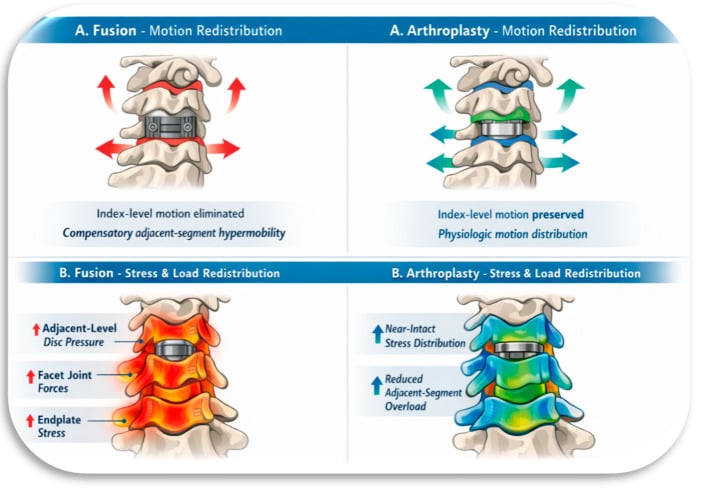
Degeneration and fusion. As disc height is lost the IAR shifts posteriorly. A fusion eliminates motion at that segment, and the IAR moves to the adjacent levels: eliminating motion at the index level redistributes it to the neighbours, which is the mechanism behind adjacent-segment change.
Regional Spinal Biomechanics
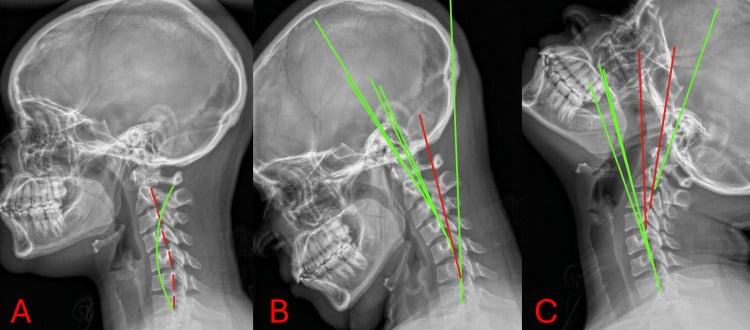
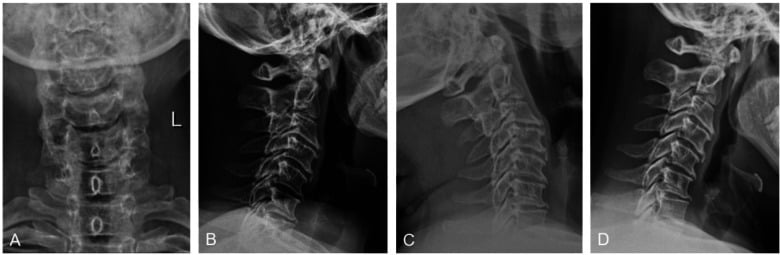
The cervical spine has the highest mobility of all spinal regions, and C5-C6 is the most mobile segment. The odontoid peg is the pivot for atlanto-axial rotation.
- Characteristic
- 40 degrees average
- Clinical Implication
- Maintains horizontal gaze
- Characteristic
- 45 degrees to horizontal
- Clinical Implication
- Allows flexion-extension and rotation
- Characteristic
- Posteroinferior quadrant of the lower vertebral body
- Clinical Implication
- Abnormal IAR outside the vertebral body suggests instability or pathology
- Characteristic
- Approximately 50% of total cervical rotation
- Clinical Implication
- At risk in RA, Down syndrome
Sagittal Balance and Spinopelvic Parameters
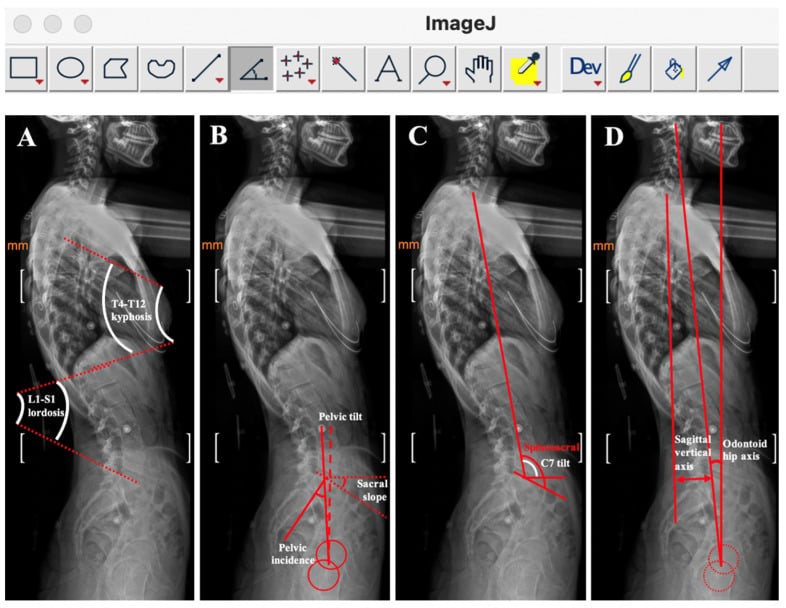
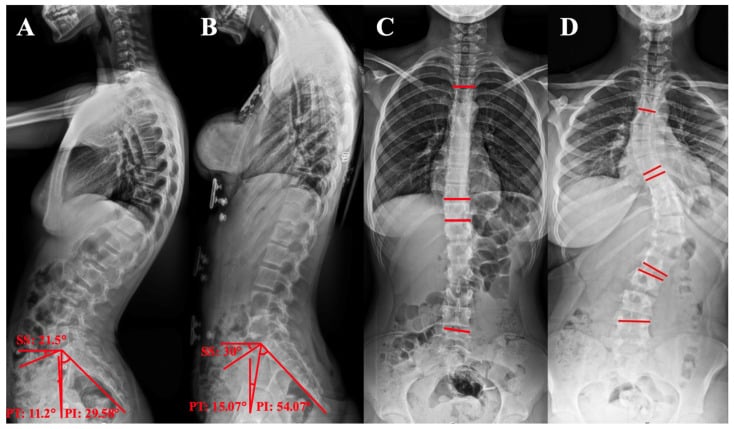
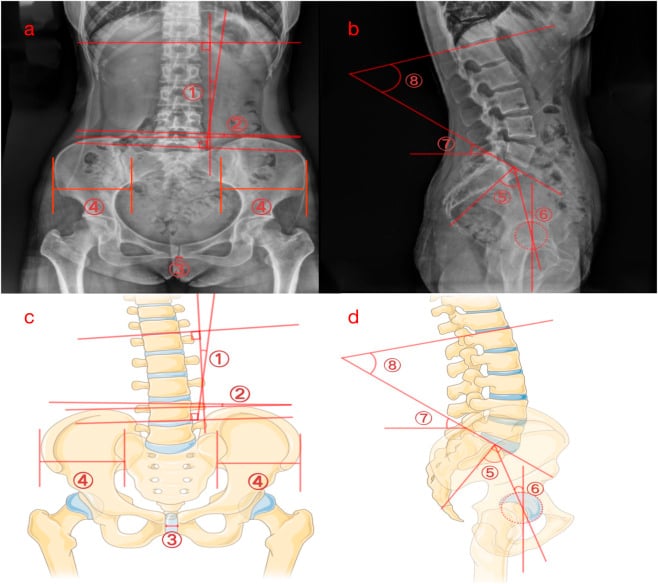
Why the curves exist. The regional curvatures above, cervical lordosis, thoracic kyphosis and lumbar lordosis, exist to keep the head balanced over the pelvis with minimal muscular energy. Global sagittal balance is governed by a small set of spinopelvic parameters, measured on full-length standing films and never on a supine study, and a mismatch between them predicts pain, disability and the outcome of deformity surgery.
- Definition
- Angle between a line perpendicular to the sacral end plate at its midpoint and a line from that midpoint to the femoral head axis
- Significance
- A fixed morphological value (averages about 50 to 55 degrees) that sets the lordosis the spine should have
- Definition
- Angle between the sacral end plate and the horizontal
- Significance
- Positional; a higher sacral slope accompanies greater lumbar lordosis
- Definition
- Angle between the vertical and the line from the sacral end-plate midpoint to the femoral head axis
- Significance
- Positional; rises as the pelvis retroverts to compensate for sagittal imbalance
- Definition
- Horizontal offset of a C7 plumb line from the posterosuperior corner of S1
- Significance
- Should sit within about 5 cm; larger positive values mean forward imbalance and correlate with disability
The identity. The fundamental relationship is PI equals PT plus SS. Pelvic incidence is a fixed anatomical constant for each person, so it dictates the ideal lumbar lordosis; pelvic tilt and sacral slope are the positional variables that sum to it. A PI minus lumbar lordosis mismatch, ideally kept within about 10 degrees, is one of the strongest predictors of disability and of revision after adult deformity correction.
Compensation and the goal. When the spine drifts forward the pelvis retroverts, so pelvic tilt rises, and the knees flex to bring the head back over the pelvis; this compensation is energy-costly and eventually fails. Restoring lumbar lordosis to match pelvic incidence, a low PI minus lumbar lordosis mismatch, and bringing the C7 plumb line back over the sacrum are the goals of sagittal realignment.
Clinical Applications and Relevance
Trauma. Biomechanics is how fracture patterns are read and stability is judged. The Denis three-column theory guides the surgical decision: isolated anterior column fractures (simple compression) are often stable, while burst fractures involving the anterior and middle columns require careful evaluation, and two-column disruption is the threshold for surgical stabilisation in most cases. Middle column compromise threatens the canal, and instability is assessed against the White-Panjabi criteria.
The differential by failed column. A frequent exam task is to differentiate fracture patterns by which columns fail and under what loading mode, the biomechanical differential of thoracolumbar trauma.
- Loading mode
- Axial + flexion
- Columns involved
- Anterior only (middle intact)
- Stability / key feature
- Usually stable; loss of anterior height, intact posterior wall
- Loading mode
- Axial compression
- Columns involved
- Anterior + middle
- Stability / key feature
- Retropulsion and canal compromise; stability depends on PLC
- Loading mode
- Flexion-distraction (tension)
- Columns involved
- Posterior + middle (anterior hinge)
- Stability / key feature
- Unstable; high association with hollow-viscus injury
- Loading mode
- Combined shear/rotation/flexion
- Columns involved
- All three columns
- Stability / key feature
- Highly unstable; frequent neurological deficit
Degeneration. The same principles explain the natural history of spinal degeneration. Disc degeneration leads to loss of disc height, which shifts the IAR posteriorly and increases facet loading; the increased facet stress accelerates facet arthropathy, which further alters load distribution, a degenerative cascade that feeds itself. The cascade also underlies stenosis, through facet hypertrophy from the altered load distribution, and it informs the choice between motion preservation and fusion.
Surgical decision-making. The biomechanics inform the choice of approach. Posterior fixation addresses the tension band but may not adequately restore anterior column height in a burst fracture; a combined anterior-posterior approach restores both columns. In the cervical spine, the share of rotation that C1-C2 provides explains why a C1-C2 fusion significantly limits neck rotation.
Patient education and rehabilitation. The intradiscal pressure measurements above are evidence-based guidance for activity modification. A patient with disc pathology benefits from knowing which postures load the disc least and which load it most, and that is the basis of posture recommendations and lifting technique education.
Controversies. Denis's three-column model is conceptually elegant but does not grade ligamentous injury or sagittal alignment. AO Spine and TLICS now lead surgical decision-making, yet column logic remains the teaching foundation; the two are complementary rather than competing.
Whether adjacent-level degeneration after fusion reflects altered mechanics or the natural progression of spondylosis is unresolved. Hilibrand's finding of higher risk after single-level than multilevel fusion argues against a purely mechanical explanation.
Disc arthroplasty aims to preserve the IAR and protect adjacent segments, but long-term registry evidence that it reduces clinically meaningful adjacent-segment disease compared with fusion remains contested.
Guidelines, Registries & Global Practice
Global Epidemiology and Burden
- Low back pain is the single leading cause of years lived with disability worldwide (Global Burden of Disease), driven largely by disc and motion-segment degeneration—the clinical endpoint of the biomechanical cascade described above.
- Thoracolumbar fractures cluster at the T10-L2 junction, the mechanical transition from the rib-stabilised thoracic spine to the mobile lumbar spine; burst fractures predominate in younger high-energy trauma and osteoporotic compression fractures in older low-energy injury.
- Adjacent-segment disease affects roughly one quarter of patients within 10 years of cervical fusion, a consistent finding across registry and cohort data internationally.
Side-by-Side Guidance on Instability and Classification
- Core principle
- Three columns; 2 or more disrupted = unstable; middle column pivotal
- Practical use
- Conceptual baseline for thoracolumbar fracture stability
- Core principle
- Checklist with translation/angulation thresholds plus neurology
- Practical use
- Reference radiographic instability criteria, cervical and thoracolumbar
- Core principle
- Morphology + PLC integrity + neurology, scored
- Practical use
- Operative threshold (score 5 or more); widely taught globally
- Core principle
- Morphology (A/B/C) + neurology + case modifiers
- Practical use
- International consensus language; favoured by AO-trained surgeons
- AAOS (US) and BOA / BASS (UK) endorse a biomechanically grounded, MRI-supported assessment of the posterior ligamentous complex when deciding operative versus non-operative care for thoracolumbar injury—conceptually aligned with the middle/posterior column emphasis above.
- AO Foundation / AO Spine has progressively shifted international teaching from pure column theory toward morphology-based classifications (AO Spine TLICS and subaxial cervical systems) while retaining Denis's stability logic.
- EFORT / European consensus stresses sagittal balance and segmental motion preservation as extensions of the same load-sharing principles.
High- vs Limited-Resource Practice Variation
- High-resource settings: routine MRI for PLC assessment, dynamic radiographs and occasionally upright/weight-bearing imaging to infer abnormal motion; access to motion-preserving devices (cervical and lumbar disc arthroplasty) where adjacent-segment mechanics are a concern.
- Limited-resource settings: stability decisions rely more heavily on plain radiographs, CT, and clinical examination; column theory and the White-Panjabi checklist remain robust, equipment-independent tools, and posterior instrumented fusion is the mainstay where arthroplasty implants are unavailable.
- Universal principle: regardless of setting, the same biomechanical reasoning—identify the failed column(s), assess the neutral zone/PLC, and match construct to the deforming force—governs sound surgical decision-making.
MCQ Practice Points
Q: Which structure is considered part of the middle column in the Denis three-column theory? A: Posterior longitudinal ligament (PLL) and posterior 50% of the vertebral body and disc. The middle column is critical for stability determination.
Q: In which position is intradiscal pressure highest - and where does the classic teaching need updating? A: In Nachemson's classic relative figures, sitting with forward flexion (~275% of standing) is quoted as the peak, and that is still the expected textbook answer. But Wilke's in-vivo telemetric measurements put the true peak in loaded flexion - lifting 20 kg with a round flexed back, 2.3 MPa, roughly four to five times relaxed standing, falling to 1.7 MPa with the knees flexed and 1.1 MPa with the load close to the body. Wilke also contradicted the classic sitting-versus-standing ranking: sitting unsupported measured 0.46 MPa against 0.5 MPa standing, so sitting is marginally lower, not higher. Quote Nachemson for the classic ordering, then add that the in-vivo data revise the sitting comparison and place the maximum on lifting technique rather than posture - noting Wilke was a single-subject study.
Q: What is the White-Panjabi threshold for cervical instability in terms of translation? A: Greater than 3.5mm horizontal displacement. This criterion guides surgical decision-making in trauma and degenerative disease.
Q: What defines a functional spinal unit? A: Two adjacent vertebrae plus the intervening disc, facet joints, and all associated ligaments. It is the smallest biomechanical unit of the spine.
Exam Viva Scenarios
Practise clinical reasoning and management decisions out loud
“The examiner shows a thoracolumbar burst fracture on CT. Describe the Denis three-column theory and how it guides your assessment of stability.”
“Explain the concept of instantaneous axis of rotation and how it changes in degenerative disc disease. What are the implications for adjacent segment degeneration after fusion?”
“A 45-year-old presents with chronic discogenic low back pain. Walk me through the normal mechanics of the intervertebral disc and how these change with degeneration. What is the biomechanical rationale for activity and posture advice?”
Key Concepts
- Functional spinal unit = 2 vertebrae + disc + ligaments + facets
- 6 degrees of freedom: 3 translations + 3 rotations
- IAR = instantaneous axis of rotation (normally in disc space)
- Load distribution: 70% anterior column, 10-30% facets
Denis Three-Column Theory
- Anterior = ALL + anterior 50% body + disc
- Middle = PLL + posterior 50% body + disc (KEY for stability)
- Posterior = pedicles, facets, laminae, spinous processes
- 2 or more columns disrupted = unstable
Clinical Instability Criteria
- Cervical: greater than 3.5mm translation or greater than 11 degrees angulation
- Thoracolumbar: greater than 4.5mm translation or greater than 20 degrees
- White-Panjabi criteria = gold standard
- Two-column disruption on Denis = surgical consideration
Regional Biomechanics
- Cervical: Highest mobility, C5-C6 most mobile, IAR posteroinferior body
- Thoracic: Limited motion, coronal facets, rib cage stability
- Lumbar: Highest load, sagittal facets, L4-L5 most mobile
- C1-C2: 50% cervical rotation at atlanto-axial joint
Disc Mechanics
- Nucleus pulposus: 80% water (young), incompressible fluid
- Intradiscal pressure: classic Nachemson 275% sitting flexion / 100% standing / 25% supine; in vivo (Wilke) sitting 0.46 vs standing 0.5 MPa, peak 2.3 MPa lifting 20 kg round-backed
- Annulus fibrosus: Concentric lamellae, type I collagen
- Degeneration: Water loss, IAR shift, reduced shock absorption
Evidence Base and Key Studies
Denis Three-Column Concept of Thoracolumbar Injury
- Retrospective review of 412 thoracolumbar injuries introduced the middle osteoligamentous column (posterior vertebral wall, PLL, posterior annulus)
- Anterior column = ALL + anterior body and annulus; posterior column = neural arch and posterior ligamentous complex
- Mode of middle column failure correlated with both fracture type and neurological injury
- Four major patterns described: compression, burst, seat-belt (Chance), and fracture-dislocation
Stabilizing System of the Spine: Neutral Zone and Instability Hypothesis
- Defined the neutral zone as the low-resistance region of intervertebral motion around the neutral posture
- Neutral zone increases with injury and degeneration and is a more sensitive marker of instability than total range of motion
- Neutral zone decreases with muscle force across the segment and with instrumented fixation/fusion
- Proposed the three-subsystem model of stability: passive (osteoligamentous), active (muscle), and neural control
In Vivo Intradiscal Pressure in Daily Life
- Telemetric pressure transducer implanted in a non-degenerate L4-L5 disc of one volunteer recorded pressure across daily activities
- Relaxed standing 0.5 MPa, standing flexed forward 1.1 MPa, sitting unsupported 0.46 MPa, lying prone 0.1 MPa
- Lifting 20 kg with a round flexed back reached 2.3 MPa versus 1.7 MPa with flexed knees and 1.1 MPa held close to the body
- Confirmed Nachemson's classic data overall but found sitting pressure may be lower than erect standing
Stress Distribution Inside Intervertebral Discs With Age and Degeneration
- Stress profilometry of 87 cadaver lumbar discs (ages 16-87) mapped compressive stress across the mid-sagittal diameter
- Degeneration reduced the central hydrostatic nucleus diameter by about 50% and nuclear pressure by about 30%
- Functional annulus width rose by about 80% and posterior annular stress peaks by about 160%
- Load transfers from the nucleus to the posterior annulus, concentrating stress where annular pain and disruption arise