FLNB (Filamin B) Osteochondrodysplasia | Multiple Congenital Large-Joint Dislocations | Cervical Kyphosis
- FLNB (filamin B) gain-of-function mutations cause the classic autosomal dominant Larsen syndrome by disrupting the actin cytoskeleton of chondrocytes
- Multiple large-joint dislocations - bilateral knees (anterior), hips and elbows - are the defining orthopaedic feature
- Cervical kyphosis (typically mid-cervical) with hypoplastic vertebrae is the dangerous lesion - it can cause progressive myelopathy and sudden death
- Dysmorphic facies (flat/dish face, prominent forehead, depressed nasal bridge, hypertelorism) plus spatulate thumbs and accessory carpal/tarsal bones
- Treat the spine first conceptually - always image and monitor the cervical spine before any anaesthetic or limb surgery
- “The classic neonatal picture is a baby with hyperextended (back-to-front) knees, dislocated hips and bilateral clubfeet - think Larsen syndrome or arthrogryposis
- “Cervical kyphosis is the leading cause of death - screen every patient with a lateral cervical radiograph and treat instability before it causes myelopathy
- “Supernumerary (accessory) carpal and tarsal ossification centres and a short, broad, spatulate distal thumb phalanx are highly suggestive of an FLNB mutation
- “Distinguish from arthrogryposis - Larsen joints are dislocated and often mobile, whereas arthrogrypotic joints are rigidly contracted
- “Order of limb surgery is usually knees and feet first, then hips - reducing the knees makes hip reduction and rehabilitation achievable
Overview and Epidemiology
Larsen syndrome is a rare congenital osteochondrodysplasia named after the American orthopaedic surgeon Loren Larsen, who in 1950 described children with multiple congenital joint dislocations and characteristic flat facies. The classic autosomal dominant form is caused by gain-of-function mutations in FLNB, encoding the cytoskeletal protein filamin B, which is essential for skeletal development (DOI). For the orthopaedic surgeon the condition is defined by multiple large-joint dislocations and, crucially, by a cervical kyphosis that can cause myelopathy and sudden death.
Who is affected. Larsen syndrome is rare, with an incidence commonly cited at around 1 per 100,000 live births, and it affects males and females. It is present at birth: the dislocations and clubfeet are evident in the neonate.
Natural history. Intelligence is usually normal in the FLNB-related form. The main threat is the cervical kyphosis, with myelopathy and respiratory compromise. The limbs are reconstructed in stages over the first years of life, and many children achieve walking after limb reconstruction. Hearing loss, airway problems including tracheomalacia, and cardiac anomalies can occur.
Why it matters in the exam. Larsen syndrome is a favourite paediatric viva and ISAWE topic because it tests three skills at once: pattern recognition of a syndromic child, prioritisation of a life-threatening cervical lesion over the obvious limb deformities, and a logical staged plan for multiple joint reconstructions.
Pathophysiology and Genetics
The gene and the protein. Autosomal dominant Larsen syndrome is caused by heterozygous missense mutations or small in-frame deletions in FLNB on chromosome 3p14. FLNB encodes filamin B, a large cytoskeletal protein that cross-links actin filaments and anchors membrane proteins and signalling molecules (DOI). Its actin-binding domain is formed by two calponin-homology domains, CH1 and CH2, followed by Ig-like filamin repeats, and the protein is highly expressed in growth-plate chondrocytes and developing joints.
Gain of function. The mutations act through a gain-of-function mechanism, the mutant protein having abnormal activity, rather than through simple loss of function. They are non-randomly distributed, clustering in the actin-binding (calponin-homology) domain and in filamin repeats 13 to 17; the CH2 domain and the hinge-1 region are among the hotspots.
What goes wrong in the tissues. Chondrocytes have a disordered cytoskeleton and the growth plate loses its organisation. Joints fail to form normally and the capsule and ligaments lack integrity, which leads to dislocation, while generalised connective-tissue laxity adds to the instability. Ossification centres in the carpus, tarsus and calcaneus are accessory and irregular, and the result is multiple dislocations plus vertebral and acral anomalies.
Genotype and phenotype. A molecular and clinical study of 20 Larsen syndrome probands found that all affected individuals were heterozygous for either missense mutations or small in-frame deletions, and that three mutations were recurrent: one variant, 5071G to A, was seen in 6 of 20 subjects. The clinical signs most strongly predictive of an FLNB mutation were supernumerary carpal and tarsal bones and short, broad, spatulate distal phalanges, particularly of the thumb (DOI). A separate series confirmed clustering of mutations in the CH2 domain and filamin repeats 14 and 15, simplifying diagnostic screening (DOI).
Inheritance and counselling. The classic FLNB-related form is autosomal dominant, so each child of an affected person has a 50% chance of inheriting the variant. Many cases are de novo, a new dominant mutation with no family history. Expressivity is variable, so severity differs even within a family, and unaffected carriers have been described, which means a mildly affected parent may be missed.
- Molecular confirmation of the FLNB variant enables predictive and prenatal testing
- Rare autosomal recessive forms of Larsen-like syndrome exist and may carry higher mortality, so distinguishing dominant FLNB disease from recessive phenocopies matters for counselling (see Classification)
Classification and Disease Spectrum
Larsen syndrome has no surgical classification system in the way a fracture does. It is classified instead by its place on the FLNB disease spectrum, by inheritance, and clinically by the pattern of presentation.
The FLNB spectrum. Larsen syndrome sits at the milder end of a spectrum of FLNB-related skeletal disorders. Depending on the variant, the same gene can cause atelosteogenesis types I and III and boomerang dysplasia, which are far more severe and often perinatally lethal, as well as the milder spondylocarpotarsal synostosis syndrome, caused by loss-of-function variants (DOI). Larsen syndrome and the atelosteogenesis-boomerang group share gain-of-function variants clustering in the calponin-homology 2 (CH2) domain and surrounding region.
- Severity
- Milder, carpal/tarsal fusions
- FLNB mechanism
- Loss-of-function
- Severity
- Moderate - multiple dislocations, survivable
- FLNB mechanism
- Gain-of-function
- Severity
- Severe, often perinatally lethal
- FLNB mechanism
- Gain-of-function
Dominant and recessive forms. Classic Larsen syndrome, the form tested in exams, is autosomal dominant from FLNB gain-of-function variants, with variable expressivity and common de novo cases. Recessive Larsen-like phenotypes are distinct or heterogeneous phenocopies, historically reported in isolated populations, and may carry a worse prognosis.
The recessive Larsen-like form is CHST3. A distinct autosomal recessive Larsen-like syndrome is caused by biallelic mutations in CHST3 (carbohydrate sulfotransferase 3, a chondroitin-6-sulfotransferase that sulfates cartilage proteoglycan). It overlaps historically with humero-spinal dysostosis and with spondyloepiphyseal dysplasia with congenital joint dislocations.
How CHST3 disease differs. It shares congenital large-joint dislocations, clubfeet and short stature with FLNB disease, but tends to show a spondyloepiphyseal dysplasia with progressive kyphoscoliosis, prominent elbow dislocation with limited elbow extension, and sometimes cardiac valve disease. It lacks the FLNB acral signature of spatulate thumbs and accessory carpal and tarsal bones. Because the inheritance is recessive, with a 25 percent recurrence rather than 50, telling FLNB-dominant Larsen from CHST3-recessive Larsen-like disease by phenotype and gene testing changes both counselling and prognosis.
Presentation patterns. Reported Larsen syndrome patients with craniovertebral involvement broadly fall into two presentation patterns, which influence the timing and aggressiveness of spinal surgery (DOI).
- Timing
- Infancy/early childhood
- Implication
- Presents with myelopathy; urgent spinal assessment and surgery
- Timing
- Later childhood
- Implication
- Deformity worsens over time; needs serial imaging and timely fixation
Clinical Features
The classic clinical picture combines multiple dislocations, a distinctive face and acral anomalies. The combination of dislocated knees and clubfeet in a newborn should immediately raise Larsen syndrome.
The joints. The knees show bilateral anterior dislocation, the tibia displaced forward on the femur, and are hyperextended at birth; on examination a knee is fixed in hyperextension or frankly dislocated, with the tibia sitting anterior to the femur. Both hips have a teratologic dislocation with limited abduction, and the elbows are dislocated or subluxated, often at the radial head. Bilateral clubfeet, with the rigid components of talipes equinovarus, usually complete the lower-limb picture, and other foot deformities also occur.
The face. A flat, broad 'dish' face with a prominent forehead (frontal bossing), a depressed nasal bridge and widely spaced eyes (hypertelorism). Cleft palate occurs in a minority.
The hands and feet. The thumbs are short, broad and spatulate, with broad distal phalanges, and there are accessory carpal and tarsal ossification centres, including accessory calcaneal ossification, the double calcaneus.
The spine, which must not be omitted. The spinal anomalies are a mid-cervical kyphosis with vertebral body hypoplasia or clefts, plus scoliosis. Look for a palpable cervical kyphus, assess neck posture and any neurological signs, and look for long-tract signs (hyperreflexia, clonus) that suggest cervical myelopathy.
Beyond the skeleton. Laryngotracheomalacia carries a risk of airway collapse. Conductive or sensorineural hearing loss has been reported, and septal defects and aortic dilatation occur in some.
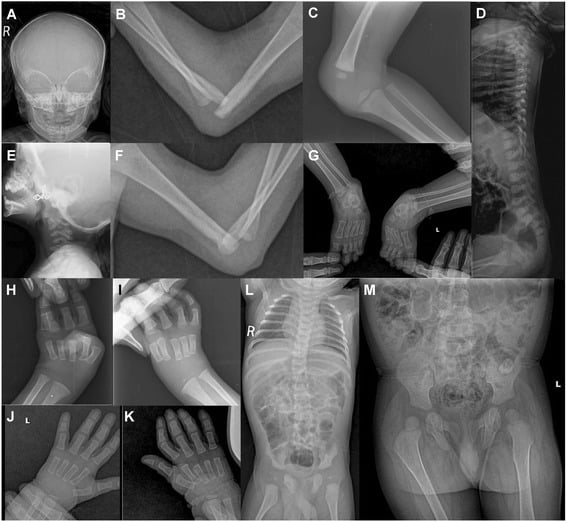
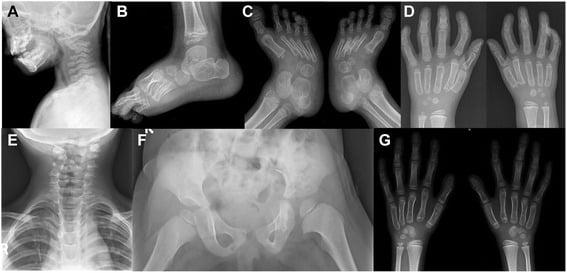
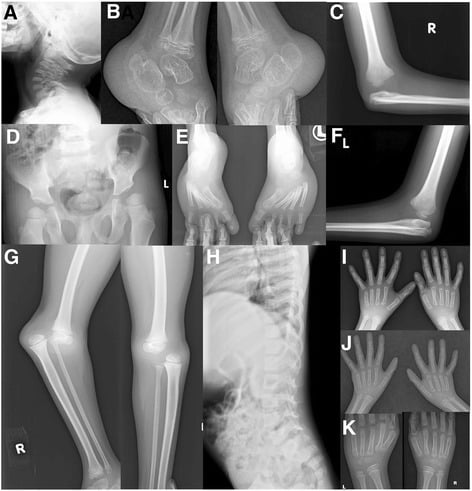
Investigations and Radiographic Features
Diagnosis is clinical and radiographic, and molecular confirmation of an FLNB variant secures it. The package to obtain, with the cervical film as the priority:
- A lateral cervical spine radiograph, with flexion-extension films or MRI as indicated, to detect mid-cervical kyphosis, vertebral hypoplasia and instability
- Radiographs of the dislocated joints: knees, hips and elbows
- Hand and foot films for the accessory ossification centres, double calcaneus and spatulate distal phalanges
- A scoliosis and whole-spine assessment
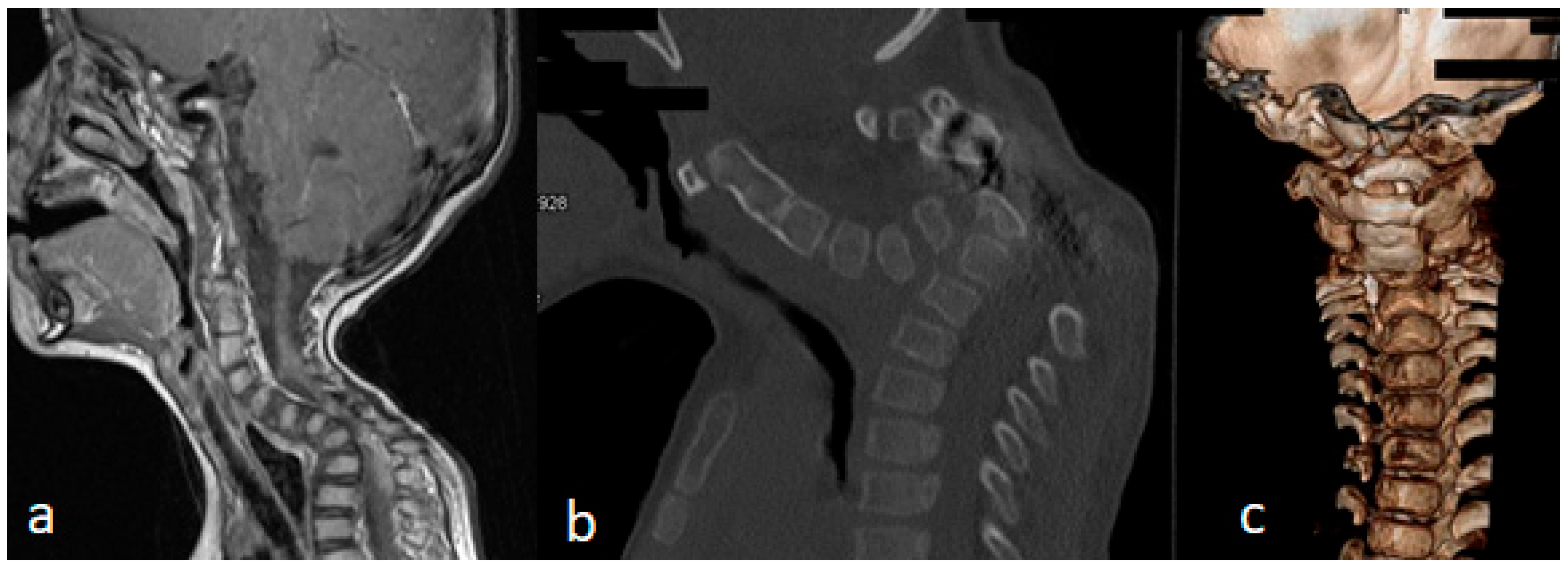
The cervical spine comes first. The lateral film shows the wedged, hypoplastic bodies, often with posterior-element or segmentation anomalies and subluxation. It is imaged before any anaesthetic, because an unstable kyphosis turns routine intubation and positioning into a hazard, and the child who arrives for a knee or hip procedure is the one at risk. CT and MRI define the bony detail and any cord compression, and dural ectasia occasionally complicates both the imaging and the surgery.
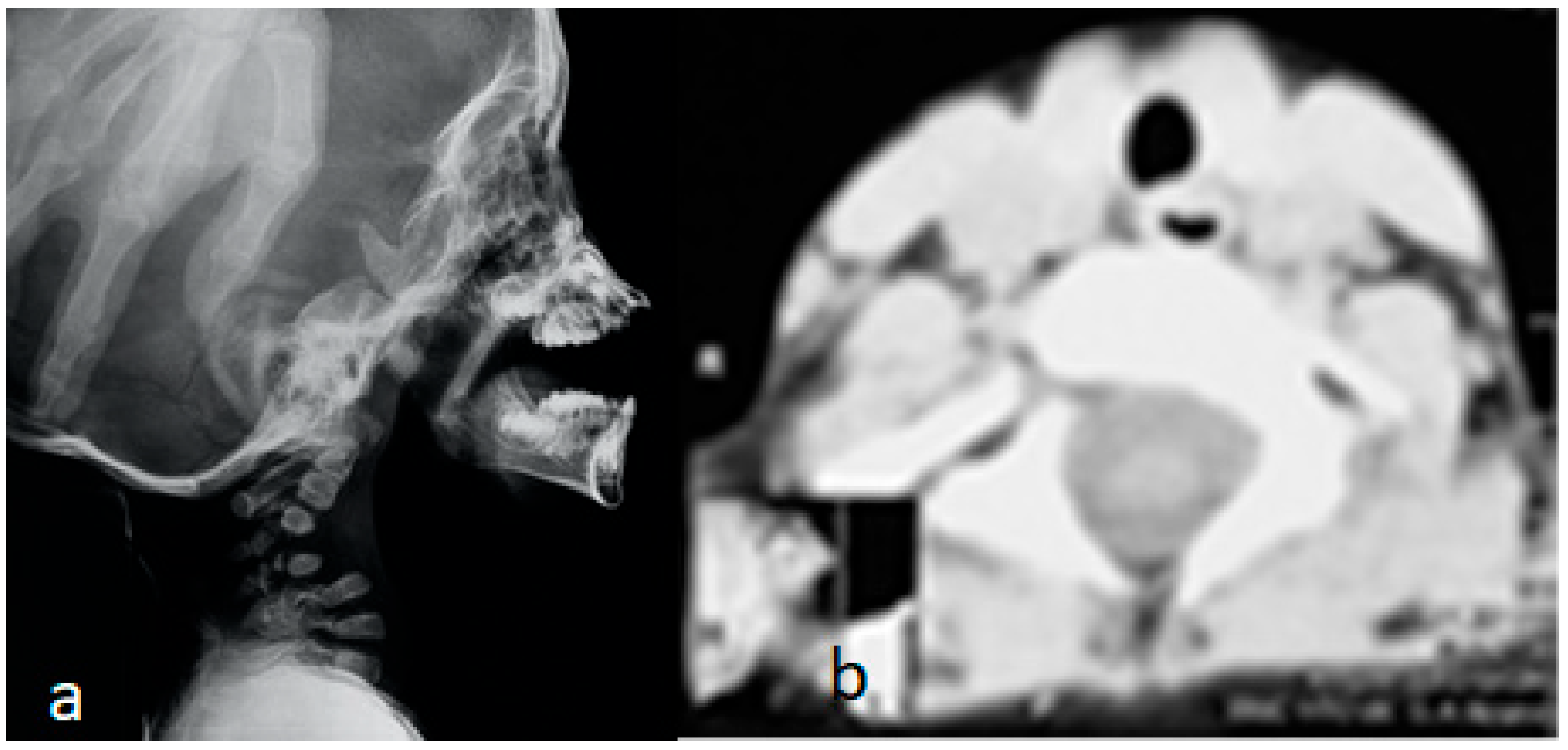
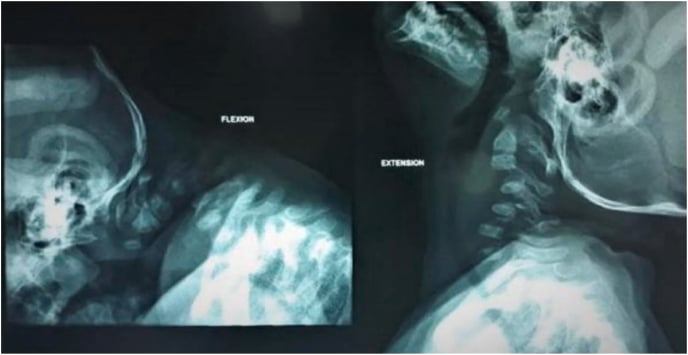
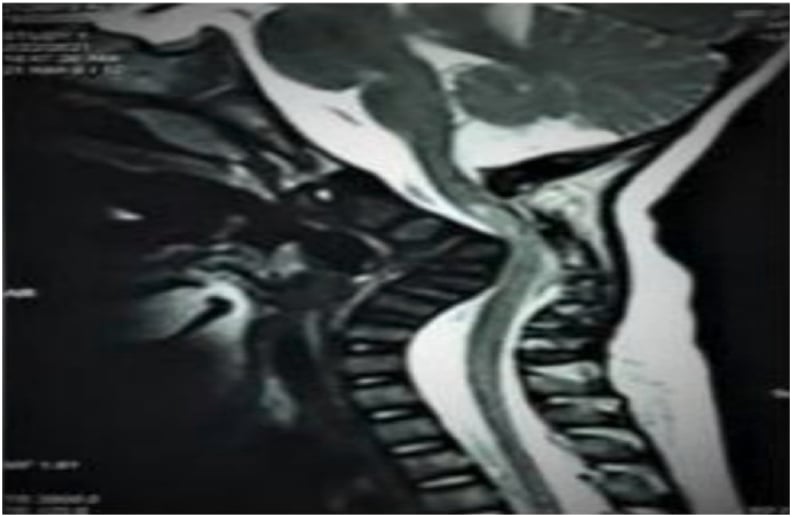
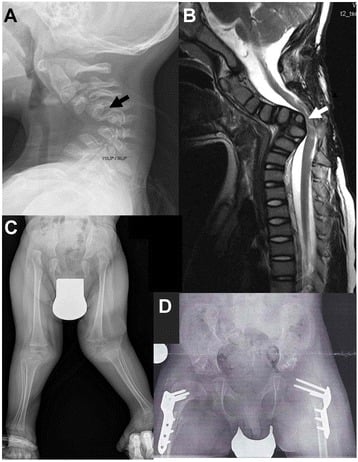
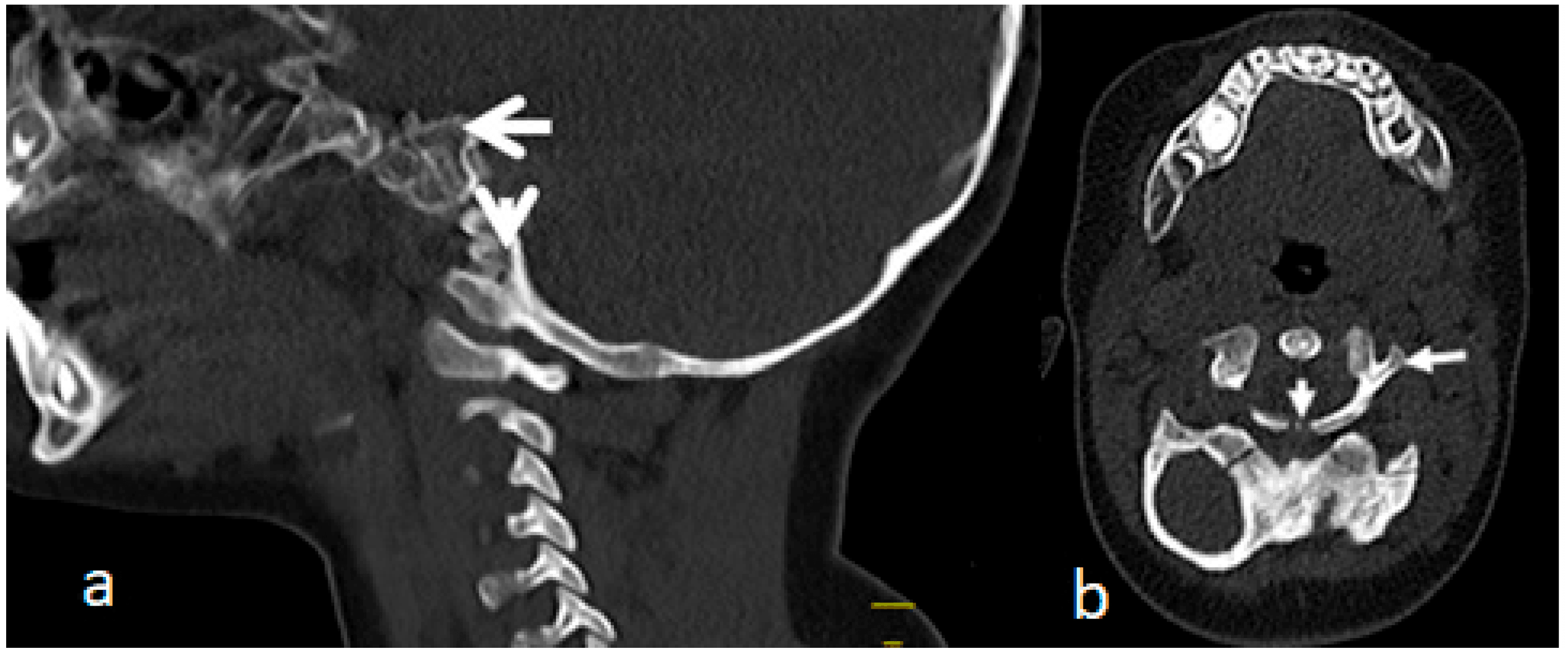
Knees, the most recognisable feature. The radiograph shows anterior dislocation of the tibia on the femur: the knee lies hyperextended with the tibia in front of the distal femur. Congenital knee dislocation is uncommon enough that finding it should prompt a search for the rest of the syndrome. It also dictates the order of lower-limb treatment: the knee is addressed before the hip, because a knee fixed in hyperextension makes hip reduction and spica positioning impossible.
Hips and elbows. The hips show bilateral teratologic dislocation, and the elbows dislocation or subluxation, commonly of the radial head. These hips are teratologic rather than dysplastic, dislocated in utero and irreducible by closed means, so assessing reducibility is really about planning the timing of open reduction rather than hoping for a Pavlik response.
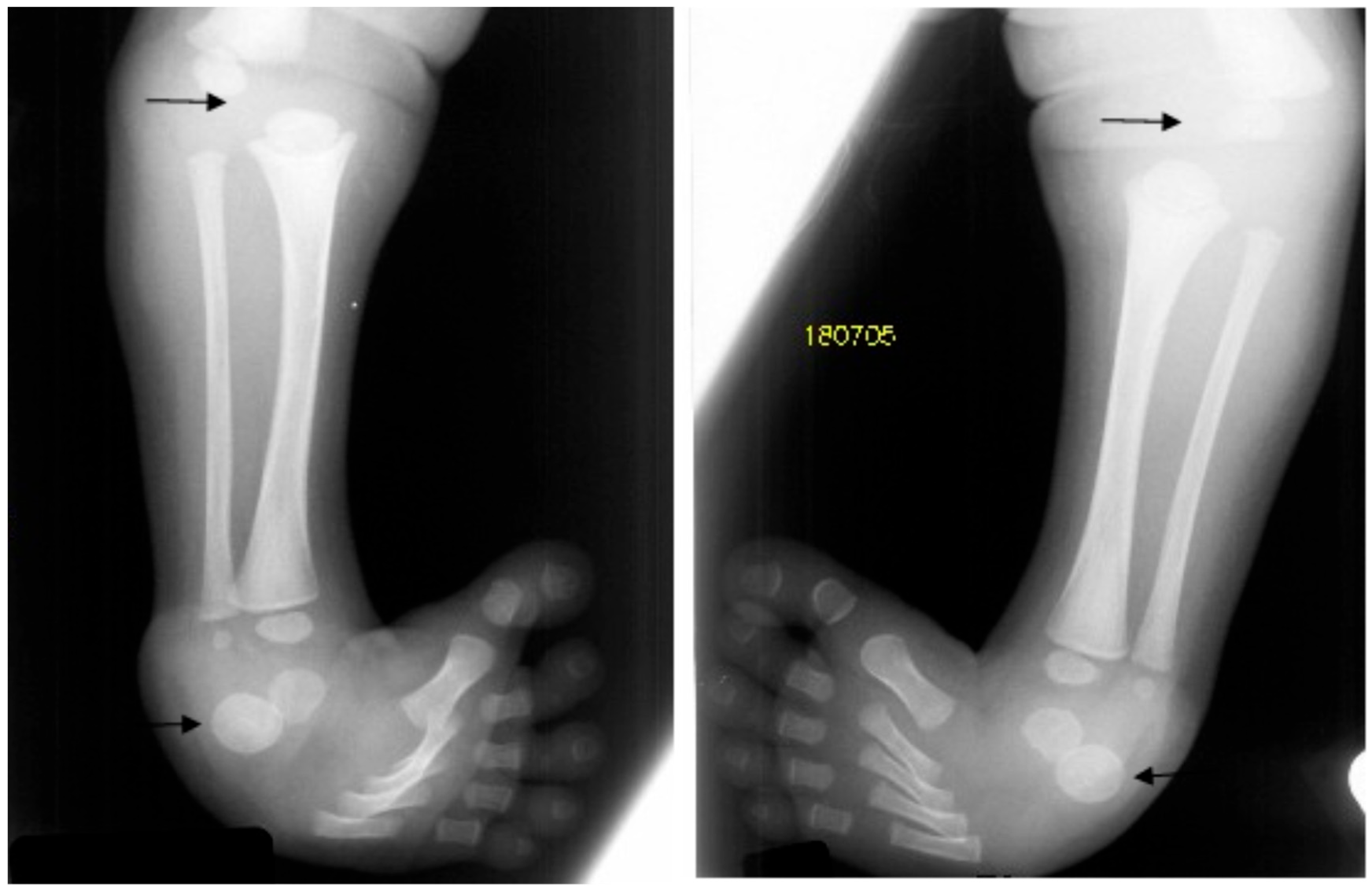
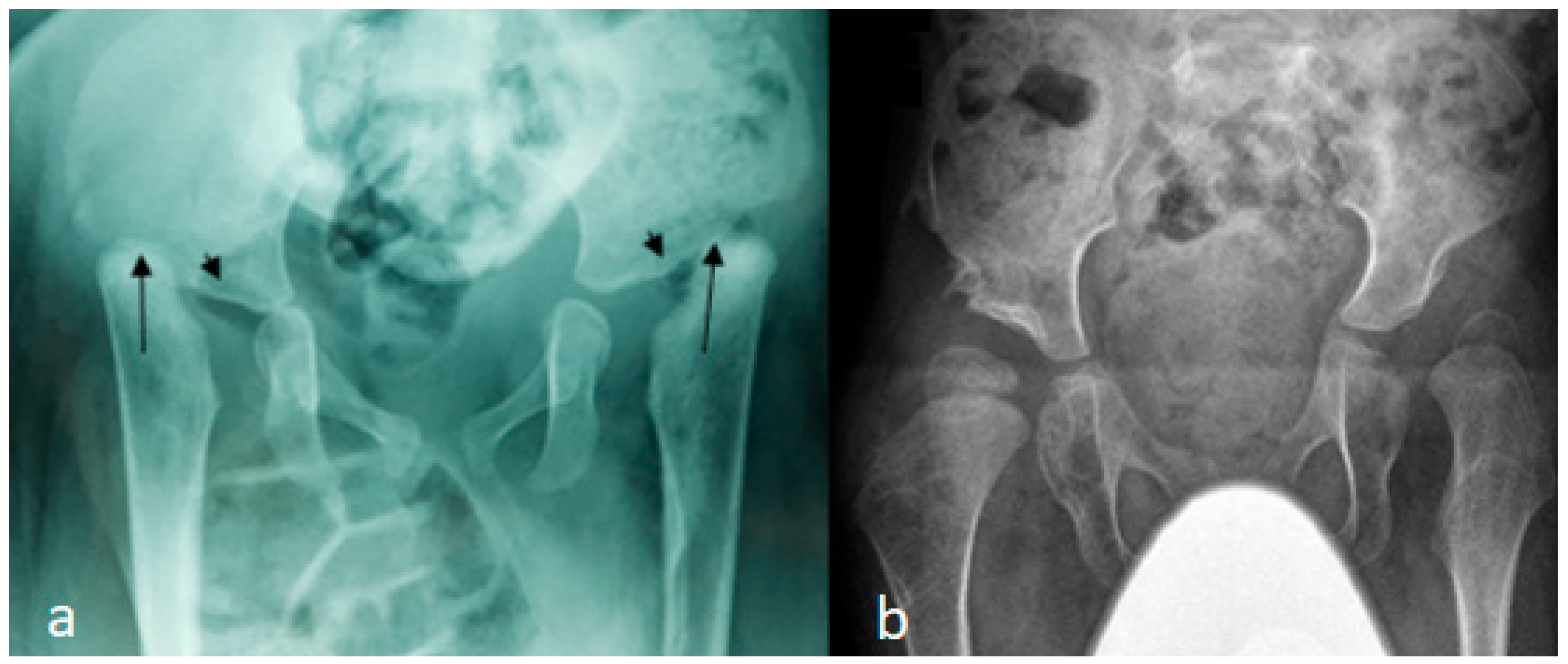
Hands and feet, the acral clues to FLNB. Look for supernumerary carpal and tarsal ossification centres, a double (bipartite) calcaneus, and short, broad, spatulate distal thumb phalanges. These acral findings are quietly the most specific radiographic pointers to an FLNB mutation, and the bipartite calcaneus in particular is close to unique to this syndrome. Bilateral clubfeet are usually obvious clinically.
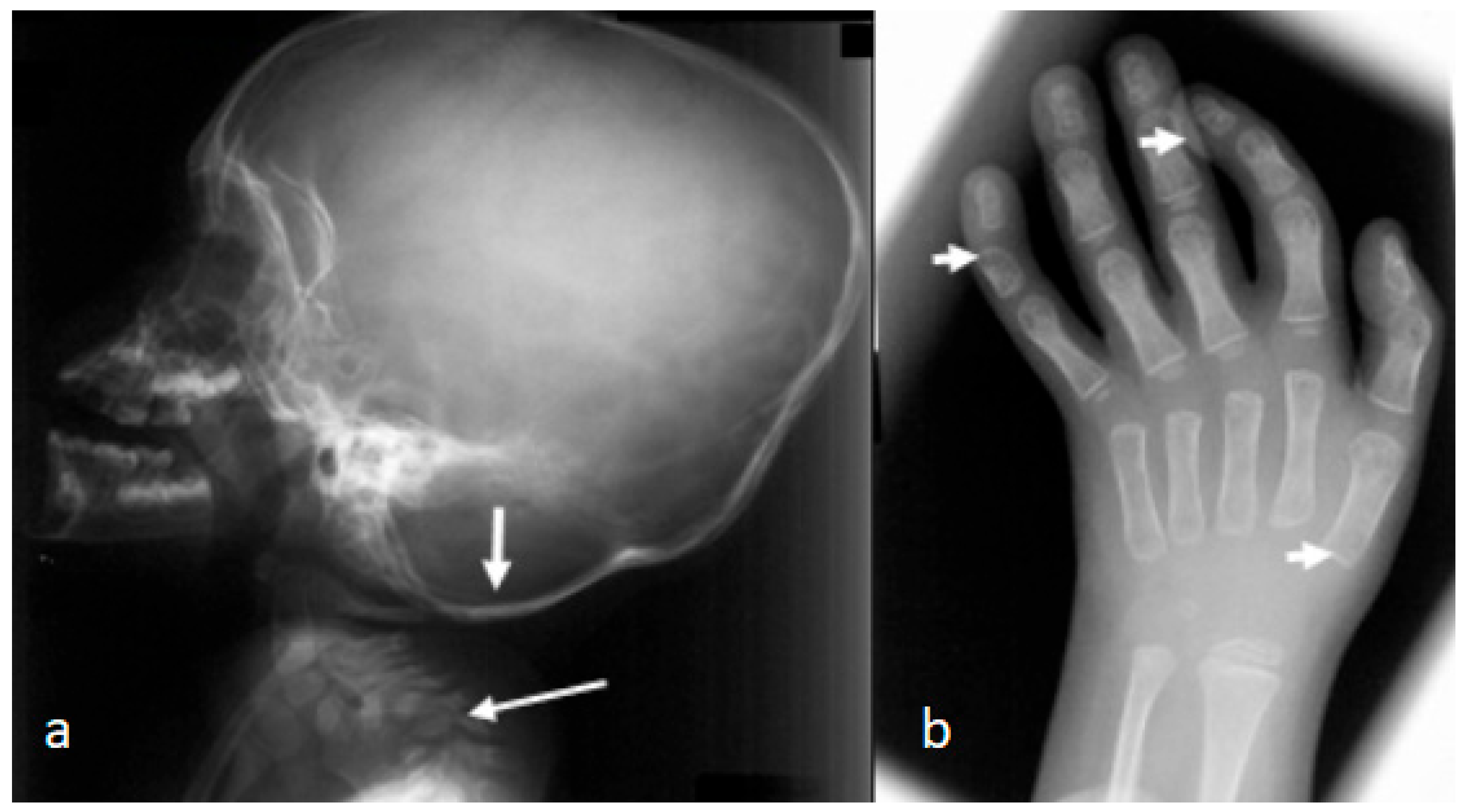
Genetic and pre-operative testing. Sequence analysis of FLNB confirms the diagnosis, and screening can focus on the mutation hotspot exons (CH2 domain, repeats 14 to 15). Before surgery, evaluate the airway for laryngotracheomalacia and the heart for cardiac anomalies.
Differential Diagnosis
Larsen Syndrome vs Arthrogryposis Multiplex Congenita
Both present at birth with multiple joint abnormalities and clubfeet, making this the classic exam comparison. The decisive separators are the state of the joints, dislocated in Larsen and rigidly contracted in arthrogryposis, and the facies and acral anomalies. The cervical spine risk also sets Larsen apart.
- Larsen Syndrome
- Dislocations (knees, hips, elbows), often mobile
- Arthrogryposis (Amyoplasia)
- Rigid contractures with absent skin creases
- Larsen Syndrome
- Flat 'dish' face, hypertelorism, depressed nasal bridge
- Arthrogryposis (Amyoplasia)
- Often normal face; midline facial haemangioma in amyoplasia
- Larsen Syndrome
- Spatulate thumbs, accessory carpal/tarsal bones
- Arthrogryposis (Amyoplasia)
- Fixed wrist flexion, ulnar deviation; clubfeet
- Larsen Syndrome
- Mid-cervical kyphosis with myelopathy risk
- Arthrogryposis (Amyoplasia)
- Not a characteristic feature
- Larsen Syndrome
- FLNB (filamin B) gain-of-function, autosomal dominant
- Arthrogryposis (Amyoplasia)
- Heterogeneous; fetal akinesia (neuropathic/myopathic)
Management
There is no cure. Management is supportive, anticipatory and multidisciplinary, with two overriding rules. First, the cervical spine takes priority: screen, monitor and treat instability before it causes myelopathy, and protect the neck during any anaesthetic. Second, limb reconstruction follows a logical staged sequence, generally feet and knees before hips, because a reduced, mobile knee is what makes hip reduction and subsequent walking achievable. Decisions are individualised to the child's function rather than driven by trial evidence, which is sparse.
Cervical Spine
Surveillance. Screen every patient with a lateral cervical radiograph and monitor as the child grows. Track progression with serial imaging, because the deformity can worsen over time, and assess the cord with MRI.
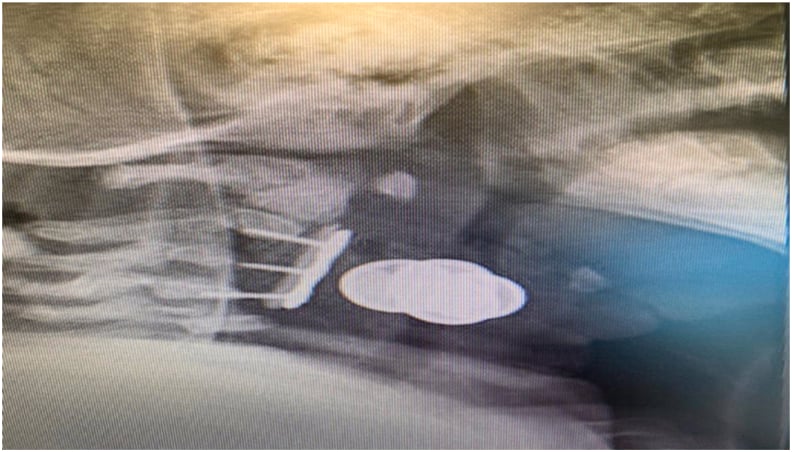
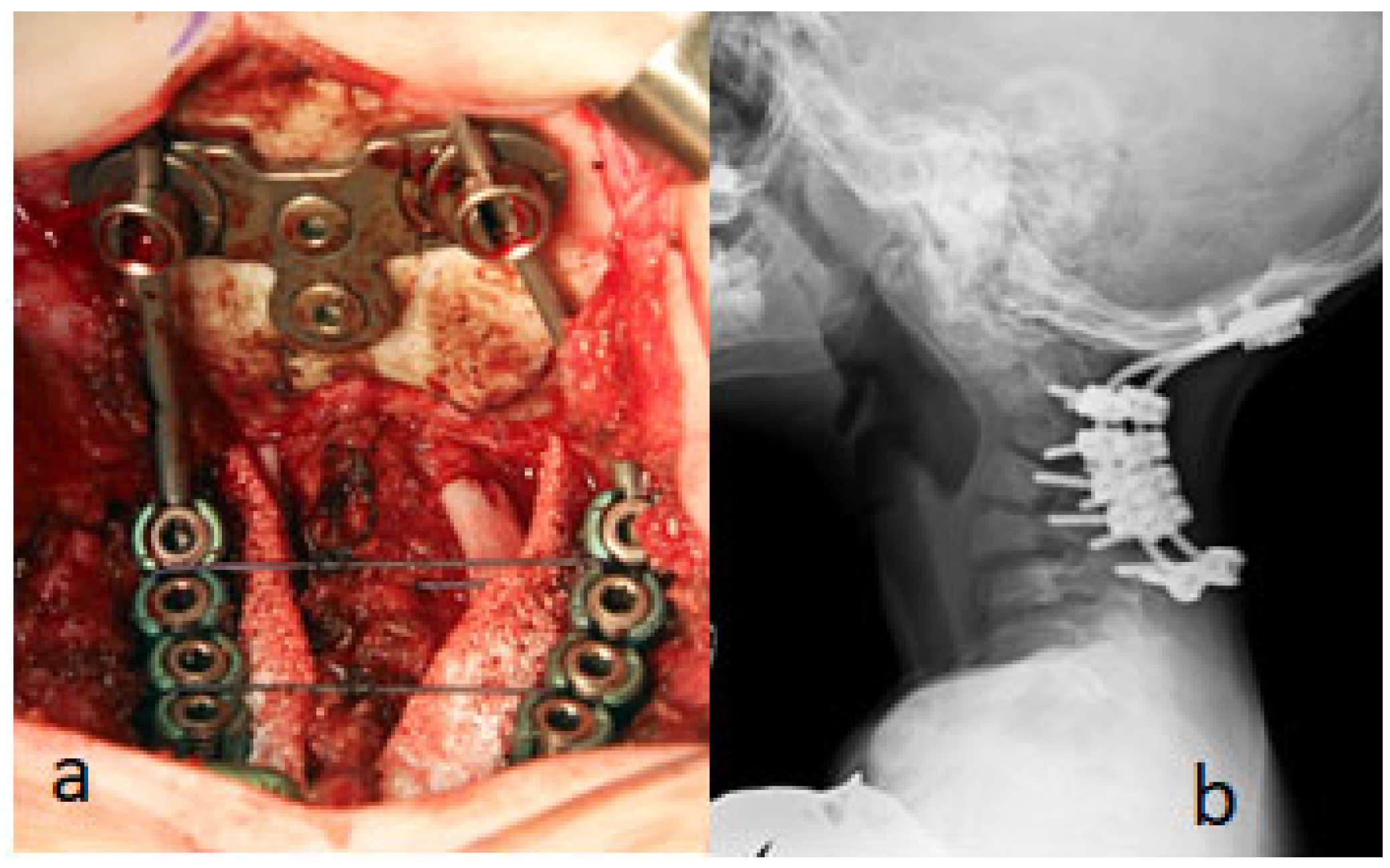
When to operate. The aim is to operate before myelopathy, and asymptomatic instability is an indication to consider fixation. An institutional series of ten children with craniovertebral junction instability treated by early posterior fixation showed improvement in Nurick myelopathy grade and a halt in disease progression, supporting early surgical stabilisation rather than watchful waiting once instability is identified (DOI). A reported case treated an asymptomatic cervical instability prophylactically with combined anterior and posterior fixation before any neurological deterioration (DOI). That evidence is one small series and a single case, and whether and when to stabilise an asymptomatic kyphosis prophylactically remains debated (see Controversies).
The operations. The options, matched to the deformity:
- Posterior fusion or fixation is the workhorse for instability and kyphosis
- Anterior decompression is added when there is anterior cord compression
- Combined (360 degree) procedures and halo immobilisation are used for severe deformity
- Growth-sparing constructs are used in very young children where appropriate
- Severe craniocervical dys-segmentation may require fixation beyond a short posterior fusion
Feet, Knees and Hips
Feet and knees first. Clubfeet are treated with Ponseti casting, often started early, and some casts can include the knee. Milder dislocated knees are serially cast to convert hyperextension into flexion; resistant knees need percutaneous quadriceps recession or V-Y quadricepsplasty with open reduction. The goal is a reduced, flexible knee before the hip is addressed.
Grading the knee. A protocol for congenital knee dislocation graded by the degree of obtainable flexion recommends serial casting for milder grades, percutaneous quadriceps recession when adequate flexion is not achieved, and V-Y quadricepsplasty for the most severe or recurrent cases (DOI).
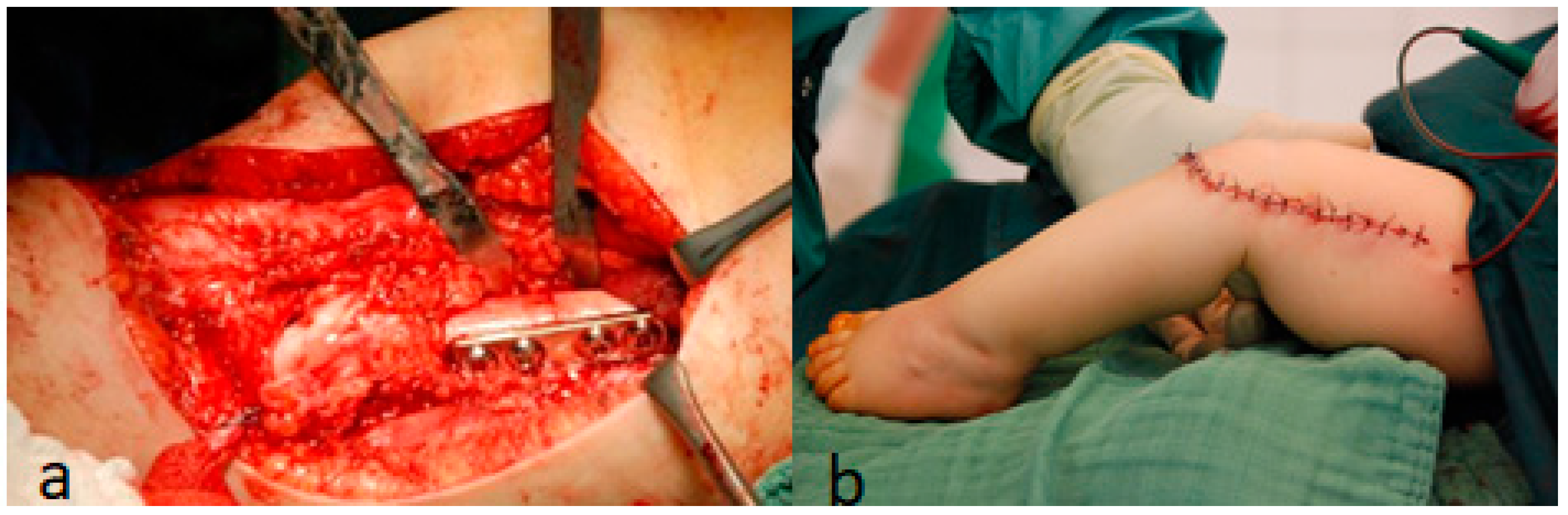
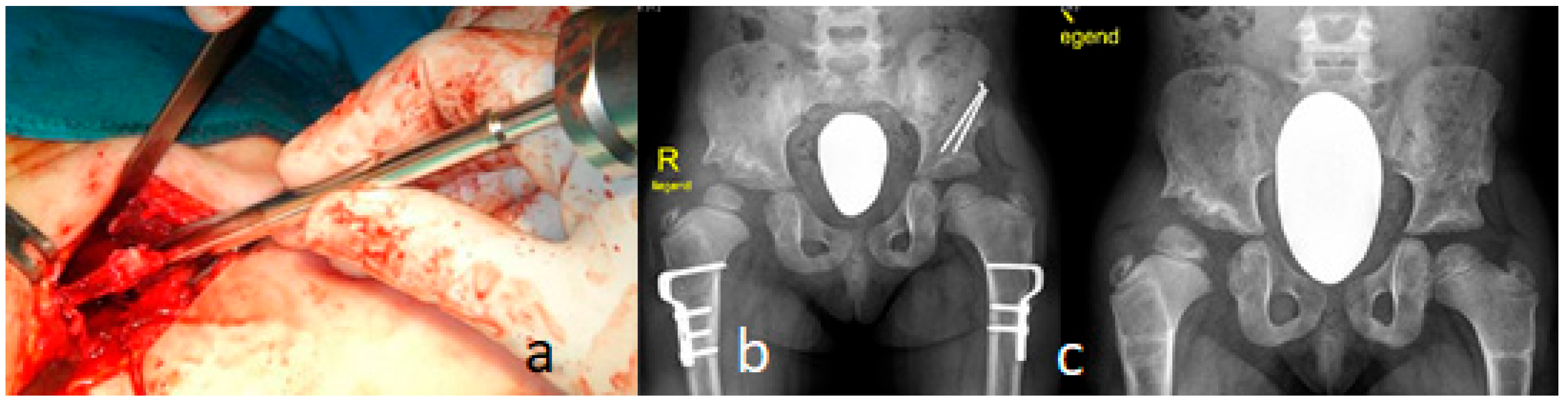
Hips later. The hips are openly reduced once the knees are reduced, because closed reduction of a teratologic hip usually fails. Decisions about bilateral hips are individualised, and some advocate addressing the hips only when they are functionally limiting. Clubfeet and knee deformity may relapse and need further surgery.
The sequence in practice. A Larsen syndrome case with bilateral dislocated hips and knees and severe clubfeet illustrated the practical sequence: clubfeet and dislocated knees treated early with Ponseti casts that included the knees, V-Y quadricepsplasty for a resistant knee, and open reduction of the hips performed later, with further intervention guided by functional need (DOI).
Anaesthesia and the Wider Team
The anaesthetic. The unstable cervical spine and possible tracheomalacia make Larsen syndrome a high-risk anaesthetic. Treat the neck as potentially unstable, minimise neck extension at intubation and plan for a difficult airway. Anticipate airway collapse and post-extubation problems, and protect the cervical spine during positioning.
Cervical imaging and an airway plan should precede any procedure, however minor. Never anaesthetise or position a Larsen patient without first knowing the state of the cervical spine.
The team. The multidisciplinary team shares the work:
- Clinical genetics confirms the FLNB variant and counsels the family
- Cardiology screens for septal defects and aortic dilatation
- ENT and audiology manage hearing loss and airway issues
- Physiotherapy maximises function after staged reconstruction
Complications
Neurological and spinal. The most important examinable complication is cervical kyphosis causing myelopathy and sudden death. Myelopathy from kyphosis or instability can be progressive, and sudden death has been related to cervical cord compression. Progressive scoliosis may require instrumentation, and long fusions bring implant failure, rod breakage and wound problems.
Limbs, airway and systemic. Knees and clubfeet can redislocate or relapse, and reconstructed joints may be left with residual stiffness or instability. Laryngotracheomalacia can cause airway collapse, and hearing loss (conductive and sensorineural), cardiac septal defects and aortic root dilatation complete the list.
Guidelines, Registries & Global Practice
Global Epidemiology
Larsen syndrome is a rare osteochondrodysplasia, commonly cited at around 1 per 100,000 live births, occurring worldwide and in both sexes. The classic form is autosomal dominant from FLNB gain-of-function variants; rarer autosomal recessive Larsen-like phenotypes have been reported, historically more frequent in some geographically isolated populations. The FLNB mutation spectrum is clustered and recurrent across international cohorts, with the same gene producing a severity spectrum from Larsen syndrome to lethal atelosteogenesis and boomerang dysplasia (DOI). There is no disease-specific international registry; evidence derives from case reports, institutional series and pooled molecular studies.
Why No Society "Guideline" Exists - and What Governs Practice
No orthopaedic society (AAOS, BOA, EFORT, SICOT) publishes a condition-specific guideline for Larsen syndrome given its rarity. Practice is extrapolated from general principles applied to a child with multiple dislocations and a vulnerable cervical spine:
- Governing principle
- Screen every patient; early posterior fixation for documented instability before myelopathy
- Source of guidance
- Spine case series (Singh 2020; Madera 2008)
- Governing principle
- Serial casting, then percutaneous quadriceps recession or V-Y quadricepsplasty by grade
- Source of guidance
- Congenital knee dislocation protocols (Abdelaziz 2011)
- Governing principle
- Open reduction (teratologic), usually after knees and feet
- Source of guidance
- Case-series experience (Matar 2017)
- Governing principle
- Ponseti method for clubfeet, anticipate relapse
- Source of guidance
- General clubfoot principles
- Governing principle
- Standard surveillance and treatment thresholds, with growth-sparing options
- Source of guidance
- Scoliosis Research Society principles
- Governing principle
- Autosomal dominant FLNB, 50% recurrence, variable expressivity
- Source of guidance
- Clinical genetics standards
Registry and Evidence Notes
- Implant/arthroplasty registries (NJR, AJRR, AOANJRR, SHAR, Norwegian, NZJR) do not capture Larsen syndrome separately; there are no registry-level outcome data specific to this condition.
- Best available synthesis: narrative reviews and institutional spine series are the closest thing to evidence-based guidance; the FLNB molecular studies provide the most robust diagnostic and counselling data.
High- vs Limited-Resource Practice Variation
- Well-resourced settings: FLNB sequencing, MRI-based cervical assessment, multidisciplinary spine/paediatric-orthopaedic/genetics/cardiology/ENT teams, and staged reconstruction with growth-sparing spinal constructs.
- Limited-resource settings: diagnosis is clinical and radiographic (multiple dislocations plus dish facies plus accessory bones), the cervical lateral radiograph is the single highest-value investigation, and Ponseti casting plus staged open reductions deliver meaningful function at low cost.
Genetic Counselling (Universal)
- Classic FLNB form is autosomal dominant: each child of an affected person has a 50% recurrence risk.
- Variable expressivity and reported unaffected carriers mean apparently unaffected parents should be examined.
- Distinguish dominant FLNB disease from rarer recessive Larsen-like phenotypes, which may carry a worse prognosis.
- Prenatal or preimplantation genetic testing is feasible once the family's FLNB variant is known.
Why the Cervical Kyphosis Progresses and Threatens the Cord
A deficient anterior column. The mid-cervical vertebral bodies, about C4 to C6, are hypoplastic and anteriorly wedged, often with segmentation and posterior-element anomalies. Combined with the generalised ligamentous laxity of the syndrome, the anterior column cannot resist flexion, so the segment collapses progressively into a kyphosis apexed at the deficient vertebra.
The cord is draped over the apex. As the kyphosis worsens, the spinal cord is stretched and compressed over the bony apex, a chronic anterior compression plus traction. The result is a progressive myelopathy, with spasticity, long-tract signs and respiratory compromise, and the risk of sudden death.
It worsens with growth. The deformity is dynamic and progresses through childhood, and a collapsed kyphosis is far harder to reduce. That is the rationale for serial imaging and early posterior fixation before cord compression rather than watchful waiting.
Controversies and Areas of Uncertainty
With an incidence around 1 in 100,000 and no randomised trials, virtually all management is extrapolated from case reports, small series and general paediatric-orthopaedic principles. Examiners reward a candidate who states the principle, prioritises the cervical spine, and frankly acknowledges the limited evidence base.
Timing of cervical surgery. Whether to stabilise an asymptomatic cervical kyphosis prophylactically, and exactly when, is debated. The weight of opinion favours early fixation once instability is documented, given the catastrophic consequences of cord compression, but thresholds rest on small series.
Sequence of limb surgery. Most authors favour feet and knees before hips, but the optimal order, timing and indication for each procedure, for example bilateral hip open reduction in a non-ambulator, remain individualised and based on case-series experience.
Recessive Larsen-like phenotypes. Historically reported autosomal recessive 'Larsen' cases may represent distinct entities or phenocopies. Distinguishing true FLNB-related dominant disease from recessive lethal multiple-pterygium-like conditions matters for prognosis and counselling.
Genotype-phenotype prediction. Although mutations cluster in defined FLNB domains, expressivity is so variable, including unaffected carriers, that genotype cannot reliably predict an individual child's severity or course.
Viva Practice Scenarios
Practise clinical reasoning and management decisions out loud
“A newborn presents with bilateral hyperextended knees, both hips dislocated and bilateral clubfeet. The face looks flat with a depressed nasal bridge. What is your diagnosis and what is your immediate priority?”
“You have confirmed Larsen syndrome in a 6-month-old with dislocated knees, dislocated hips and clubfeet. How do you sequence the orthopaedic reconstruction, and why?”
“How would you distinguish Larsen syndrome from arthrogryposis multiplex congenita, and why does it matter?”
Must-Know Facts
- Rare osteochondrodysplasia; classic form autosomal dominant from FLNB (filamin B) gain-of-function on 3p14
- Defining feature: multiple large-joint dislocations - bilateral anterior knees, hips, elbows
- Cervical kyphosis with hypoplastic vertebrae is the life-threatening lesion (myelopathy, sudden death)
- Dish facies, hypertelorism, depressed nasal bridge; spatulate thumbs and accessory carpal/tarsal bones
- Incidence around 1 per 100,000; usually normal intelligence
Key Radiographic Findings
- Lateral cervical spine: mid-cervical kyphosis, vertebral hypoplasia, instability (priority film)
- Knees: anterior dislocation of tibia on femur (hyperextended)
- Hips and elbows: bilateral dislocation/subluxation
- Hands/feet: accessory carpal/tarsal centres, double calcaneus, spatulate distal thumb phalanx
- Bilateral clubfeet; scoliosis on whole-spine assessment
Management Principles
- Screen and treat the cervical spine first - image before any anaesthetic
- Early posterior fixation for documented cervical instability (before myelopathy)
- Limb sequence: feet and knees before hips
- Knees: casting, then quadriceps recession or V-Y quadricepsplasty by grade; hips: open reduction
- Multidisciplinary care: genetics, cardiology, ENT/airway, physiotherapy
Common Exam Traps
- Missing the cervical kyphosis by focusing on the limbs
- Confusing Larsen (dislocations) with arthrogryposis (contractures)
- Anaesthetising without knowing cervical spine status
- Attempting closed reduction of teratologic hips
- Reducing hips before knees, leaving a stiff extended knee
Evidence Base
A Molecular and Clinical Study of Larsen Syndrome Caused by Mutations in FLNB
- Twenty Larsen syndrome probands and affected relatives evaluated for FLNB mutations and phenotype
- All affected individuals were heterozygous for missense mutations or small in-frame deletions
- Three mutations were recurrent; one (5071G to A) was seen in 6 of 20 subjects
- Mutations cluster in the actin-binding domain and filamin repeats 13 to 17 (non-random)
- Supernumerary carpal/tarsal bones and short, broad, spatulate distal thumb phalanges best predict an FLNB mutation
Larsen Syndrome and Associated Spinal Deformities
- Reviews the genetic basis, clinical features and treatment of Larsen syndrome
- Caused by mutations in FLNB encoding filamin B, crucial for skeletal development
- Core features are joint dislocations, characteristic facies and spinal anomalies
- May be treated conservatively initially but usually requires surgical intervention
- Surgical options include posterior spinal fusion, anterior decompression, circumferential arthrodesis, single-stage 360-degree fixation and growth-sparing procedures
Craniovertebral Junction Instability in Larsen Syndrome: An Institutional Series and Review
- Ten symptomatic children with craniovertebral junction instability underwent 12 surgeries (2011 to 2019)
- Posterior fixation improved median Nurick myelopathy grade and reduced anti-spasticity drug needs
- Neck pain improved in nine patients; five returned to school
- Early posterior fixation halted disease progression
- Describes two clinical presentation patterns informing surgical timing
Management of Joint Dislocations of the Lower Limb in Larsen Syndrome: Practical Approach
- Larsen syndrome child with bilateral dislocated hips and knees and severe clubfeet, 7-year follow-up
- Clubfeet and dislocated knees treated early with Ponseti casts that included the knees
- Open reduction and V-Y quadricepsplasty used for a resistant knee
- Bilateral open hip reduction performed later, after the knees were addressed
- Sequence and timing of interventions guided by functional needs; clubfoot relapse needed posteromedial release