Deltoid Ligament | Eversion Injuries | Underdiagnosed Entity
- Deltoid is STRONGEST ankle ligament - rarely injured in isolation
- Deep deltoid (ATTL) = primary stabiliser against lateral talar shift
- Always suspect syndesmosis and/or fibula fracture with deltoid injury
- Medial clear space greater than 4mm = abnormal (weight-bearing films)
- Isolated deltoid tears CAN cause chronic instability if missed
- “Eversion stress test = gold standard clinical exam
- “Gravity stress views to assess medial clear space
- “MRI to differentiate superficial vs deep layer tears
- “Associated fractures: Weber B/C, Maisonneuve, SER pattern
Overview and Epidemiology
This page and Medial Ankle Instability both cover deltoid ligament injury, and they are complementary rather than alternatives. Read this one for the acute problem: grading, the diagnostic-test comparison (ultrasound, gravity versus manual stress, the equivocal medial clear space) and repair during fracture fixation. Read the companion for chronic deltoid insufficiency: peritalar and rotational instability, deltoid-spring reconstruction, suture-tape augmentation and the flatfoot continuum.
Medial ankle sprains, injuries of the deltoid ligament, are significantly less common than lateral sprains because of the deltoid's strength and the biomechanics of ankle injury. They matter out of proportion to their frequency: they travel with other injuries, and the deep deltoid is critical to the stability of the ankle.
Why the isolated injury is rare. The deltoid is the strongest ankle ligament, and it takes significant force to injure it. Most mechanisms that stress the deltoid fracture the lateral malleolus or injure the syndesmosis first. A truly isolated deltoid injury typically follows forced eversion or external rotation on a planted foot.
Who gets it. The high-risk activities:
- Contact sports (football, rugby)
- Landing on an inverted ankle
- External rotation injuries
- Motor vehicle accidents
- Falls from height
The risk factors are a previous ankle injury, hindfoot valgus alignment, ligamentous laxity, inadequate proprioception and poor neuromuscular control.
Pathophysiology and Mechanisms
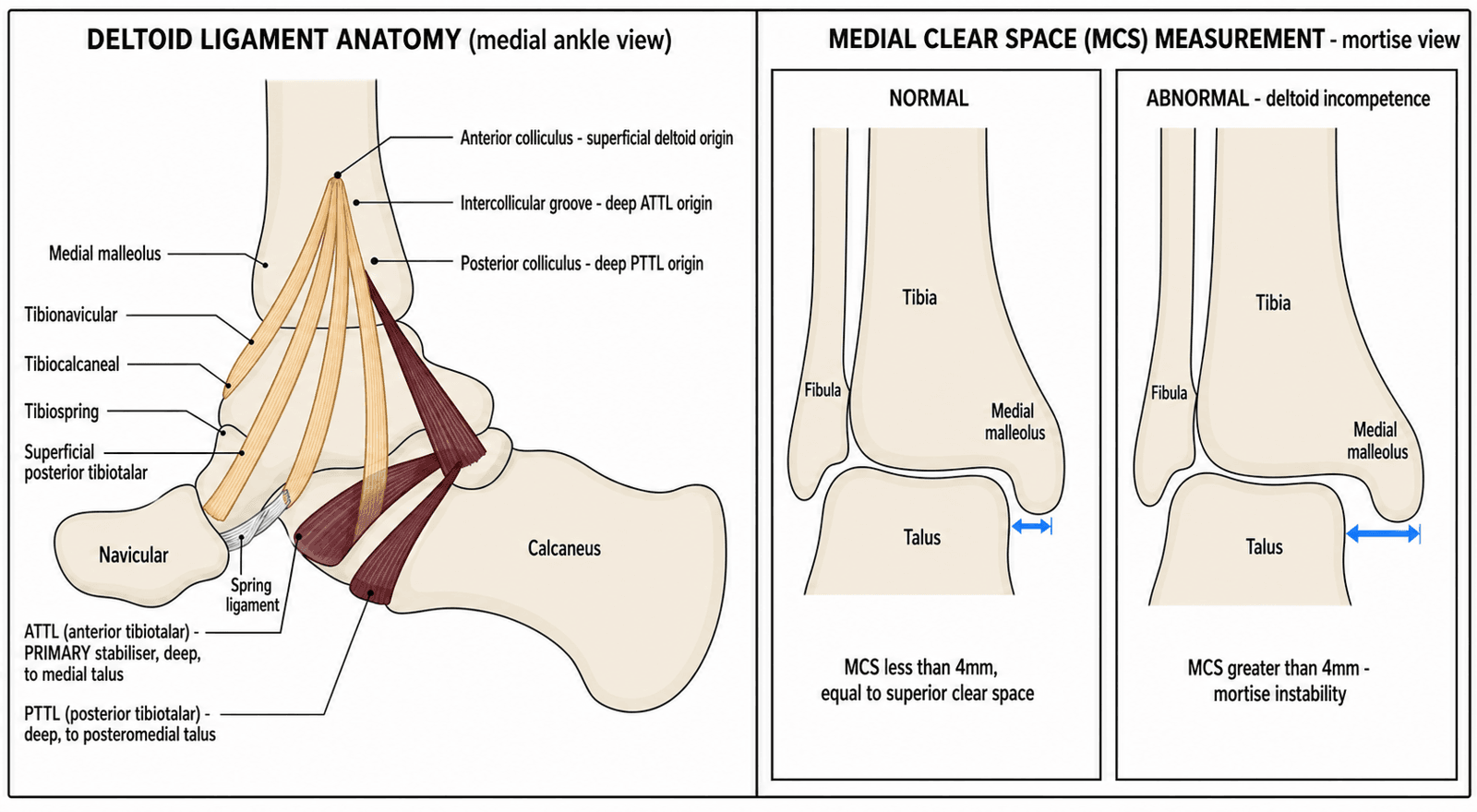
Two layers. The deltoid ligament is a fan-shaped complex arising from the medial malleolus in two distinct layers. The superficial layer has four bands, the tibionavicular, tibiocalcaneal, tibiospring and superficial posterior tibiotalar, the tibionavicular most anterior, the tibiocalcaneal in the middle and the superficial posterior tibiotalar most posterior. The deep layer is the anterior tibiotalar ligament (ATTL) and the posterior tibiotalar ligament (PTTL), and it attaches directly to the talus. Boss and Hintermann's dissections found the tibionavicular band to be a thickened fold of capsule rather than a discrete ligament.
The medial malleolus. Its three landmarks are the origins, and they matter for surgical planning:
- Anterior colliculus - the superficial deltoid origin, although the superficial posterior tibiotalar band arises from the posterior colliculus (see the table)
- Intercollicular groove - the ATTL origin
- Posterior colliculus - the PTTL origin
- Component
- Tibionavicular
- Origin
- Anterior colliculus
- Insertion
- Navicular tuberosity
- Function
- Resists eversion, ER
- Component
- Tibiocalcaneal
- Origin
- Anterior colliculus
- Insertion
- Sustentaculum tali
- Function
- Longest, resists valgus
- Component
- Tibiospring
- Origin
- Anterior colliculus
- Insertion
- Spring ligament
- Function
- Supports medial arch
- Component
- Superficial PTT
- Origin
- Posterior colliculus
- Insertion
- Talus (superficial)
- Function
- Resists ER
- Component
- ATTL
- Origin
- Intercollicular groove
- Insertion
- Talus (medial)
- Function
- PRIMARY STABILISER
- Component
- PTTL
- Origin
- Posterior colliculus
- Insertion
- Talus (posteromedial)
- Function
- Resists posterior shift
What each layer does. The superficial layer resists eversion and valgus tilt. The deep layer resists lateral talar translation, and the ATTL is the primary restraint against lateral talar shift: it is what keeps the talus centred in the mortise. Together the layers contribute 20-50% of mortise stability, working with the lateral ligament complex to balance the ankle.
A competent deep deltoid can maintain mortise stability even if the superficial layer is torn.
Classification Systems
Three frameworks describe the injury: the general sprain grade, the layers involved, and the fracture pattern it belongs to.
The standard ligament sprain classification. Grading guides rehabilitation intensity and return-to-activity timelines.
- Pathology
- Stretch, microscopic tears
- Clinical Features
- Mild pain, minimal swelling
- Stability
- Stable
- Recovery
- 2-4 weeks
- Pathology
- Partial macroscopic tear
- Clinical Features
- Moderate pain, swelling, ecchymosis
- Stability
- Mild laxity
- Recovery
- 6-8 weeks
- Pathology
- Complete rupture
- Clinical Features
- Severe pain, significant swelling
- Stability
- Unstable
- Recovery
- 3+ months
Grade III injuries may paradoxically have less pain due to complete ligament disruption. Always correlate with stress radiographs - clinical examination alone underestimates severity in 30% of cases.
Clinical Assessment
History. The mechanism is eversion, external rotation or an awkward landing. Establish whether this is an acute injury or chronic instability, and localise the swelling and tenderness to the medial ankle. Ask whether the patient heard or felt a pop and whether they could weight-bear.
Examination. Look for medial swelling and ecchymosis, and palpate the deltoid ligament, the medial malleolus and the proximal fibula. Range of motion is often limited by pain and swelling. Then stress the ankle in eversion and in external rotation.
Always examine the proximal fibula (Maisonneuve), perform the squeeze test (syndesmosis), test the lateral ligaments and feel for tenderness along the entire length of the fibula. A medial-sided injury with a proximal fibula fracture is an unstable pattern requiring surgery.
- Technique
- Stabilise leg, apply valgus stress to hindfoot
- Positive Finding
- Increased medial opening vs contralateral
- Interpretation
- Deltoid laxity
- Technique
- Foot in neutral, externally rotate
- Positive Finding
- Medial pain, lateral opening
- Interpretation
- Combined deltoid/syndesmosis
- Technique
- Along deltoid origin and insertion
- Positive Finding
- Point tenderness
- Interpretation
- Localise injury level
- Technique
- Compress tibia/fibula mid-leg
- Positive Finding
- Pain at syndesmosis
- Interpretation
- Associated syndesmosis injury
The Ottawa rules are not enough. They exist to exclude fracture. Even when they give no indication for a radiograph, persistent medial tenderness with the right mechanism warrants stress imaging to assess deltoid competence and mortise stability.
SMASHAssociated Injuries to Exclude
Hook:SMASH the differential - deltoid injuries rarely come alone!
- Discriminating Features
- Eversion/ER mechanism, medial swelling, positive eversion stress
- Key Investigation
- Weight-bearing/gravity stress XR, MRI
- Distinguishing Point
- Widened medial clear space, layer-specific tear on MRI
- Discriminating Features
- Bony point tenderness, inability to weight-bear
- Key Investigation
- Plain radiograph
- Distinguishing Point
- Cortical break; deltoid avulsion variant possible
- Discriminating Features
- Medial pain + proximal fibula tenderness
- Key Investigation
- Full-length tibia/fibula XR
- Distinguishing Point
- High fibula fracture with syndesmotic disruption
- Discriminating Features
- Chronic, progressive flatfoot, too-many-toes sign
- Key Investigation
- MRI, single heel-raise test
- Distinguishing Point
- Tendon (not ligament) pathology, arch collapse
- Discriminating Features
- Deep ache, mechanical catching, effusion
- Key Investigation
- MRI / CT
- Distinguishing Point
- Subchondral lesion on imaging, no MCS widening
- Discriminating Features
- Plantar-medial pain, arch sag
- Key Investigation
- MRI
- Distinguishing Point
- Talonavicular sag; often coexists with deltoid/PTT
- Discriminating Features
- Anteromedial pain on dorsiflexion, post-traumatic
- Key Investigation
- MRI, diagnostic injection
- Distinguishing Point
- Soft-tissue/osteophyte impingement, stable mortise
Investigations
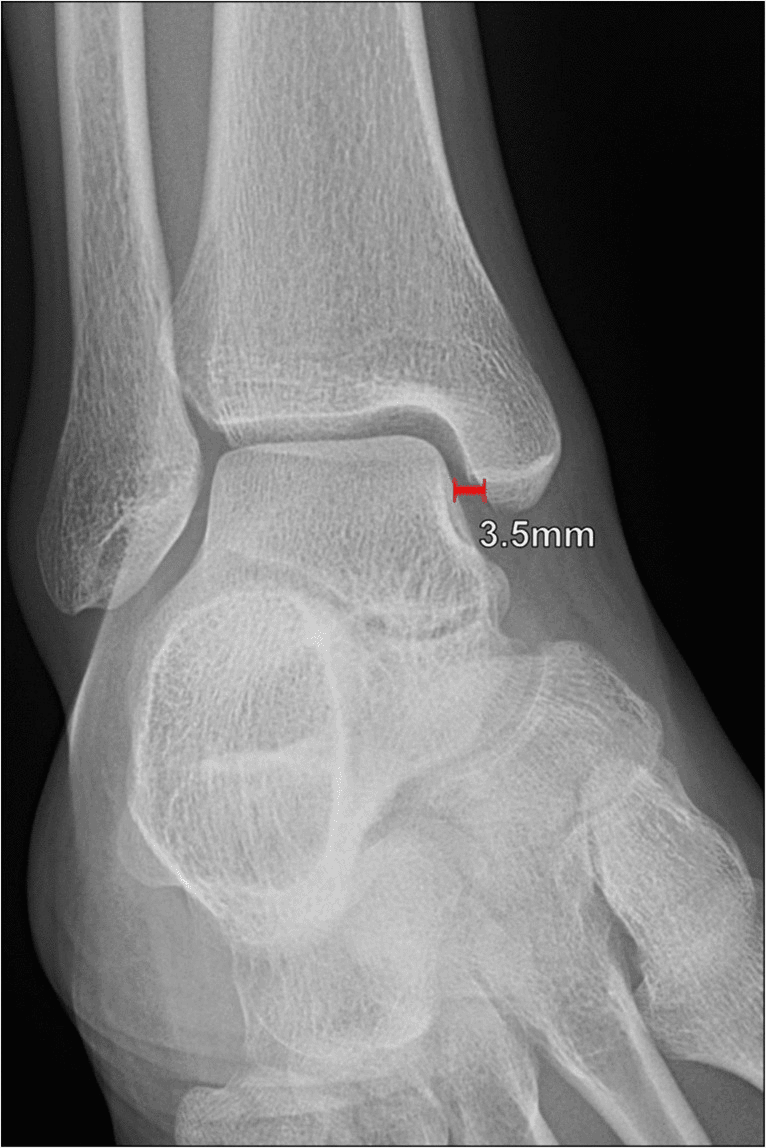
Weight-bearing radiographs first. AP, lateral and mortise views, taken weight-bearing, because non-weight-bearing films miss instability. Measure the medial clear space (MCS) on the mortise view. Normal is under 4mm and equal to the superior clear space; an MCS over 4mm, or one that exceeds the superior clear space by more than 1mm, means deltoid incompetence. The films also show:
- Talar tilt on stress views
- An associated fibular fracture or syndesmotic injury
- An avulsion from the medial malleolus
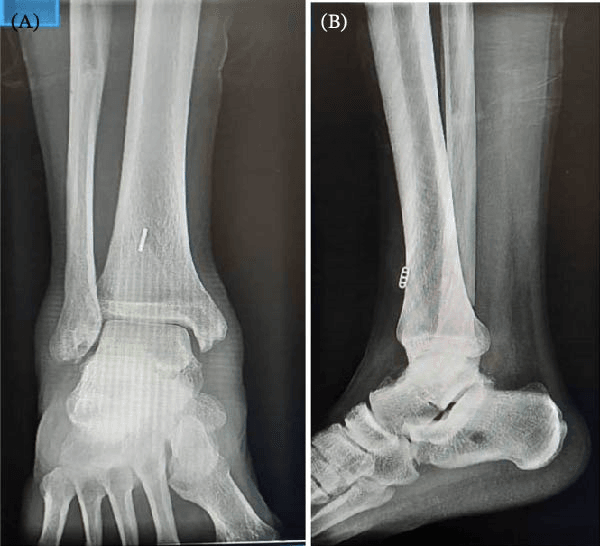
Stress views. A gravity stress view (lateral decubitus, affected side down) or a manual eversion stress view is essential when clinical suspicion is high but the standard films are normal, and it confirms mortise instability. The two are not interchangeable; the section below compares them.
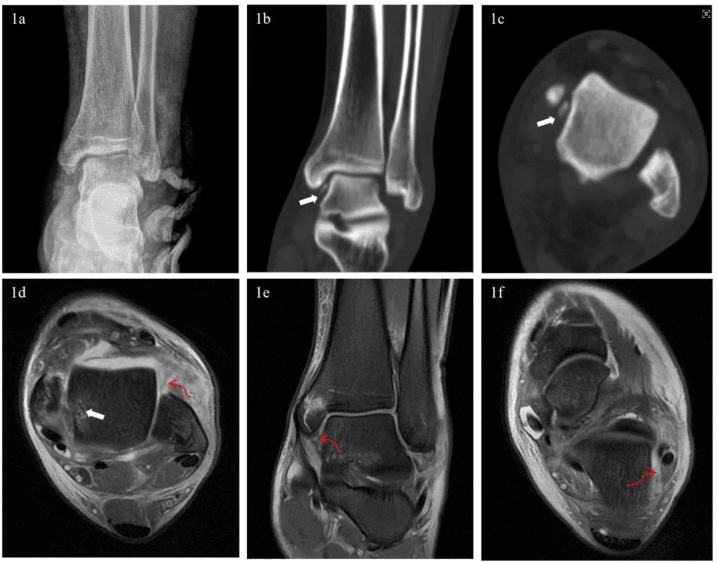
MRI. The gold standard for soft-tissue assessment. It distinguishes superficial from deep layer involvement, showing oedema or a partial or complete tear of the superficial layer and the integrity of the ATTL and PTTL, and grades the tear. It also identifies associated injuries, including an osteochondral lesion of the talus (OLT), syndesmotic injury, tibialis posterior pathology and bone marrow oedema from stress at the medial malleolus.
Two thresholds circulate and they are not competing. 4 mm is the conventional upper limit of a NORMAL medial clear space on a mortise view, while the 5 mm figure used later on this page is Warner's operative DECISION threshold on the injury film, validated against direct visualisation at surgery. Use 4 mm to call a film abnormal and 5 mm to decide you can proceed without further imaging.
Ultrasonography of the Deltoid Ligament
The most accurate single test. Ultrasound is the most accurate single test for confirming deltoid rupture in the acute setting, yet it is routinely overlooked in favour of radiographs and MRI. In the pooled meta-analysis by de Krom and colleagues it carried the highest diagnostic accuracy of any modality (sensitivity 1.00, specificity 0.89-1.00, the largest area under the curve), outperforming plain mortise radiography, stress views and even MRI for detecting deltoid incompetence in supination-external-rotation ankle fractures.
Why it works. It is dynamic: valgus or external-rotation load can be applied to the ankle while the medial gutter is imaged in real time, directly revealing fibre discontinuity, haematoma, effusion and pathological gapping. It gives a direct soft-tissue view of the superficial deltoid fibres and the medial clear space, carries no radiation, and is a low-cost, point-of-care test that can be repeated at the bedside.
Its limits.
- Highly operator-dependent - accuracy reflects sonographer experience
- The deep deltoid (ATTL) is harder to insonate than the superficial layer
- It does not replace weight-bearing films for whole-mortise assessment
- It is less useful once marked swelling obscures the medial structures
When an examiner asks for the single most accurate confirmatory test for deltoid integrity, dynamic ultrasonography is the evidence-based answer (highest AUC in meta-analysis), provided a skilled operator is available. In practice it complements rather than replaces weight-bearing and gravity stress radiographs, which stay first-line because they assess the entire mortise and are universally available.
Stress Radiography: Gravity Stress, Manual Stress and the Equivocal Medial Clear Space
Two ways to stress the ankle. Knowing which to trust, and when to abandon stress views for MRI, is a frequent exam discriminator. Gravity stress uses the weight of the limb (patient in lateral decubitus, injured side down) to apply a consistent, passive valgus and external-rotation load, so the patient cannot guard. Manual stress relies on examiner-applied force, which is painful and prone to protective guarding.
- Gravity Stress View
- Lateral decubitus, injured side down; limb weight provides valgus/ER load
- Manual External-Rotation Stress
- Examiner externally rotates the foot with the leg stabilised
- Gravity Stress View
- Minimal — passive, better tolerated
- Manual External-Rotation Stress
- Painful; voluntary guarding degrades reliability
- Gravity Stress View
- Consistent, examiner-independent load
- Manual External-Rotation Stress
- Operator-dependent applied force
- Gravity Stress View
- 0.71–1.00 (de Krom meta-analysis)
- Manual External-Rotation Stress
- Wide range; high false-positive rate in the equivocal zone
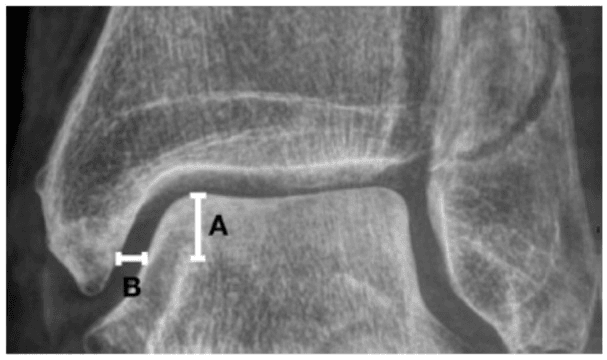
Warner and colleagues, using intra-operative direct visualisation as the reference standard, showed that an injury-film medial clear space greater than 5 mm predicts deep deltoid rupture with roughly 95% accuracy — enough to proceed with fixation and medial-side management without further tests. When the injury-film medial clear space is 5 mm or less, a manual stress view is unreliable (about 46% accuracy with an 80% false-positive rate), whereas MRI is the better tiebreaker (around 79% accuracy). This is why gravity stress is preferred over manual stress, and why an equivocal medial clear space is best resolved by MRI rather than by pushing harder on the foot.
Management Algorithm
The decision. Most isolated deltoid injuries heal well with conservative treatment, and surgery is reserved for specific indications. A widened medial clear space means mortise instability, but what it demands depends on the setting: with a fracture it points to fixation, and an MCS that stays wide after fibular or syndesmotic fixation is the point to consider deltoid repair; an isolated tear with a widened MCS is protected in a boot first, with surgery if instability persists despite conservative treatment.
The goal is to protect healing and restore range of motion, strength and proprioception. Outcomes are good for isolated Grade I-II injuries with an intact deep layer; deep layer involvement, an associated fracture, chronic instability and MCS widening despite bracing are poor prognostic factors.
Protection by grade, with proprioception the focus at every grade:
- Grade I - functional brace, weight-bearing as tolerated, 2-4 weeks
- Grade II - CAM boot for 4-6 weeks, then progressive rehabilitation
- Grade III - CAM boot for 6+ weeks; consider surgery if unstable
Rehabilitation Phases
Protection and inflammation control: RICE, a CAM boot or stirrup brace for Grade II-III, weight-bearing as tolerated with crutches, and gentle range of motion once swelling subsides.
Progressive loading: transition to supportive footwear, isometric and isotonic strengthening, proprioception exercises, and pool therapy for unloading.
Functional progression: resistance training, balance and agility drills, and sport-specific activities, addressing any residual stiffness.
Criteria-based return: full strength (greater than 90% of the contralateral side), pain-free sport-specific activity and normal proprioception. Consider taping or bracing initially.
- Investigation
- Weight-bearing XR
- Key Finding
- MCS normal
- Management
- Functional rehab 2-4 weeks
- Investigation
- Stress XR + MRI
- Key Finding
- MCS widened, partial tear
- Management
- Boot, protected WB 6 weeks
- Investigation
- Full ankle series
- Key Finding
- MCS greater than 4mm, Weber B/C
- Management
- ORIF + consider deltoid repair
- Investigation
- Full tibia/fibula XR
- Key Finding
- Maisonneuve fracture
- Management
- Syndesmosis fixation
Surgical Technique
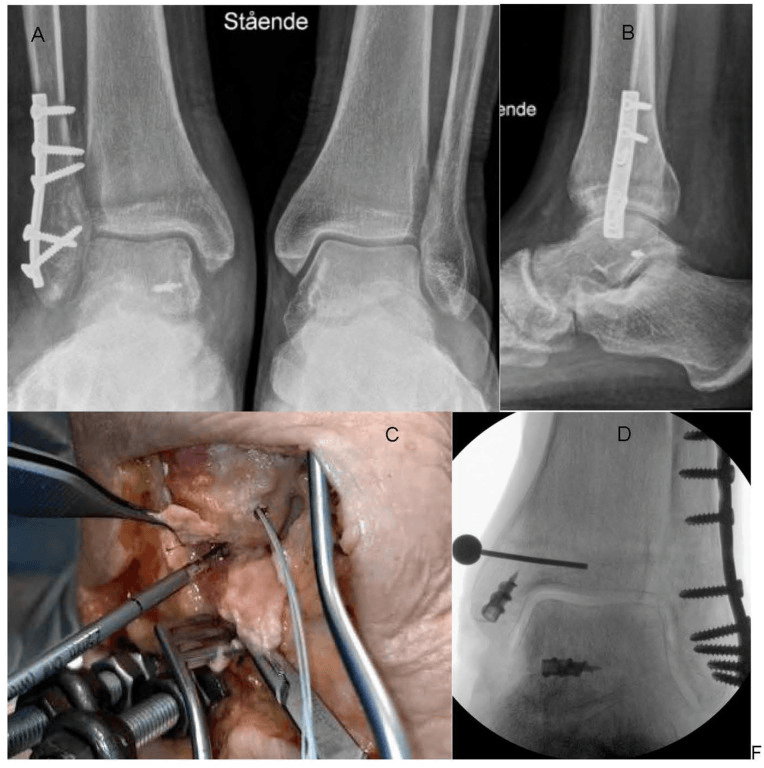
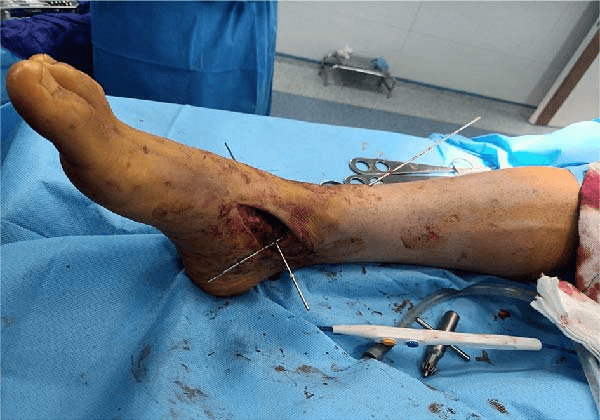
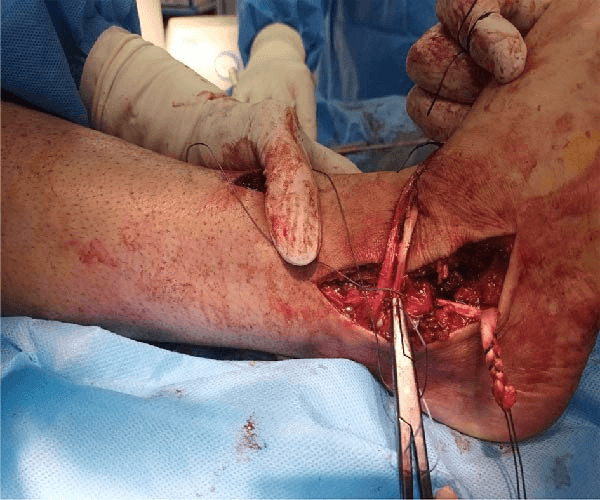
Acute deltoid ligament repair, with suture anchors the preferred technique.
Surgical Steps
Supine, with a bump under the ipsilateral hip and a thigh tourniquet. Ensure adequate exposure of the medial ankle.
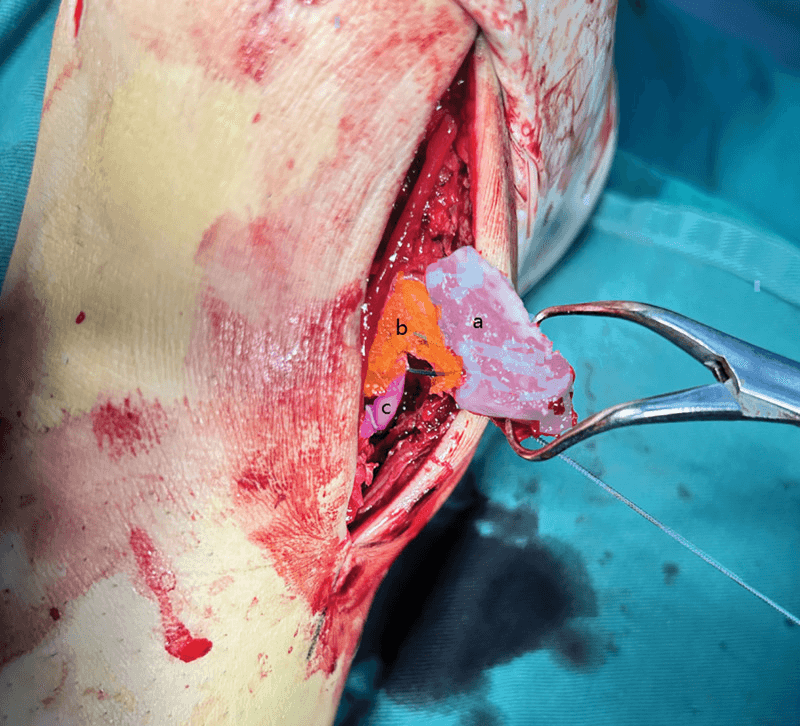
Curved medial incision centred on the medial malleolus. Protect the saphenous vein and nerve. Identify the tibialis posterior tendon sheath and retract it posteriorly.
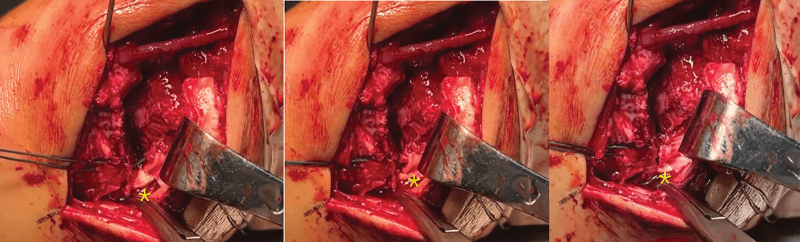
Identify the torn ligament ends and assess deep versus superficial layer involvement. Debride frayed tissue minimally. Assess the footprint on the malleolus and the talar attachments.
Place 2-3 anchors in the anterior colliculus (superficial) and intercollicular groove (deep). Pass sutures through the ligament substance and repair in layers, deep first, then superficial.
Tension the repair with the ankle in neutral dorsiflexion and slight inversion. Confirm mortise reduction with intraoperative imaging, and do not over-tighten.
Technical points. Deep layer repair is critical for restoring stability, so use at least one anchor in the intercollicular groove for the ATTL. Avoid aggressive debridement and preserve tissue for the repair; consider augmentation if tissue quality is poor.
Complications
- Risk Factors
- Missed diagnosis, inadequate rehab
- Prevention
- Early diagnosis, complete rehabilitation
- Management
- Reconstruction if symptomatic
- Risk Factors
- Prolonged immobilisation
- Prevention
- Early ROM, progressive loading
- Management
- Physiotherapy, possible MUA
- Risk Factors
- Surgical approach
- Prevention
- Careful dissection, protect nerve
- Management
- Observation, most resolve
- Risk Factors
- Missed initial OLT
- Prevention
- MRI in persistent symptoms
- Management
- Microfracture, OATS if needed
- Risk Factors
- Over-tightened repair, scarring
- Prevention
- Appropriate tensioning
- Management
- Debridement if symptomatic
The most significant complication is missing associated injuries - syndesmosis instability, Maisonneuve fracture, or lateral malleolus fracture. Always examine the entire leg and obtain appropriate imaging. Missed injuries lead to chronic instability and early arthritis.
Chronic medial instability. An underdiagnosed entity. Patients present with vague medial pain, giving way and difficulty on uneven ground, and the key examination finding is a positive eversion stress test. It may require reconstruction if it remains symptomatic despite rehabilitation.
Postoperative Care
Rehabilitation after reconstruction is similar to that after primary repair but may be slightly more conservative initially. The first two weeks are non-weight-bearing to let the wound heal, and return to sport comes at 4-6 months, on the same criteria as after conservative treatment.
Rehabilitation Protocol (Post-Repair/Reconstruction)
Immobilisation: CAM boot, non-weight-bearing. Elevate the limb, gentle toe range of motion, wound care, and control swelling with ice and compression.
Protected mobilisation: weight-bearing as tolerated in the CAM boot. Begin ankle range-of-motion exercises in the boot, isometric strengthening, and pool therapy once the wound has healed.
Progressive loading: wean from the boot at 6 weeks to supportive footwear. Progressive resistance training, balance and proprioception exercises, gait training.
Return to activity: sport-specific drills, agility and plyometric progression, then criteria-based return to sport.
Outcomes and Prognosis
- Good Prognosis
- Superficial only
- Poor Prognosis
- Deep layer (ATTL) involved
- Good Prognosis
- Isolated deltoid injury
- Poor Prognosis
- Fracture, syndesmosis involvement
- Good Prognosis
- Stable on stress views
- Poor Prognosis
- Persistent MCS widening
- Good Prognosis
- Early diagnosis and treatment
- Poor Prognosis
- Delayed diagnosis, chronic instability
Who goes on to chronic instability. The risk factors are deep layer involvement, missed associated injuries, inadequate rehabilitation and a premature return to sport. Chronic medial instability may require reconstruction for definitive management.
Guidelines, Registries & Global Practice
Medial (deltoid) sprains account for roughly 5–10% of ankle sprains, dwarfed by lateral injuries. The deep deltoid is the strongest ankle ligament, so isolated rupture is uncommon; most deltoid injuries accompany supination-external-rotation or pronation-external-rotation fracture patterns. Ankle fractures are among the most common operatively managed fractures worldwide, making deltoid competence a high-volume decision point.
- Region
- Global
- Emphasis on Deltoid / Medial Instability
- Stability-based fracture management; medial clear space and syndesmotic integrity drive operative decisions; deltoid repair optional where reduction is blocked or instability persists
- Region
- US
- Emphasis on Deltoid / Medial Instability
- Evidence-based ankle-fracture care; recognises limited high-level evidence for routine deltoid repair
- Region
- UK
- Emphasis on Deltoid / Medial Instability
- Standards for open and closed ankle fracture care emphasise anatomic mortise reduction and early weight-bearing rehabilitation
- Region
- Europe
- Emphasis on Deltoid / Medial Instability
- Consensus on ankle instability favours anatomic repair/reconstruction and structured functional rehabilitation
- No dedicated ligament registry; evidence comes from RCTs, cohorts and systematic reviews
- Ankle-fracture outcome data (e.g. national audit datasets) inform mortise-reduction quality benchmarks
- Functional outcomes broadly equivalent across repair strategies; radiographic reduction favours deltoid repair
- Well-resourced: stress XR, MRI/ultrasound, suture-anchor repair, graft reconstruction available
- Limited-resource: rely on weight-bearing/gravity stress radiographs and clinical stress testing; MRI may be unavailable
- Functional rehabilitation and accurate mortise reduction remain the universal, low-cost priorities
Examiners internationally will expect: deltoid anatomy (superficial vs deep), recognition of associated injury patterns, appropriate imaging protocols (weight-bearing/gravity stress views), the medial-clear-space concept, and evidence-based indications for surgical intervention. Maisonneuve fracture recognition is universally emphasized.
Controversies and Areas of Uncertainty
Routine deltoid repair in ankle fractures remains debated. Systematic reviews show equivalent functional outcomes but lower syndesmotic malreduction and hardware-removal rates with repair. High-quality RCT evidence is still lacking, leaving genuine clinical equipoise.
When the medial side is incompetent, some surgeons restore stability by repairing the deltoid, others by trans-syndesmotic fixation (screw or suture-button). Whether one reliably outperforms the other — and whether they should be combined — is unresolved.
The classic 4 mm cut-off is convenient but imperfect. An injury-film MCS over 5 mm is highly predictive of deep rupture, whereas manual stress views in the 4–5 mm range carry a high false-positive rate. The optimal confirmatory test (stress XR vs ultrasound vs MRI) is not standardized.
A genuinely underdiagnosed entity with no agreed classification or validated reconstruction algorithm. Graft choice, single- vs dual-tunnel technique, and the role of concomitant bony realignment (calcaneal osteotomy) are all surgeon-dependent.
MCQ Practice Points
Q: Which component of the deltoid ligament is the PRIMARY restraint against lateral talar translation? A: Anterior Tibiotalar Ligament (ATTL) - The deep ATTL is the primary stabilizer against lateral talar shift, attaching from the intercollicular groove to the medial talus. This is the critical component for ankle mortise stability.
Q: What is the threshold for abnormal medial clear space on weight-bearing ankle radiographs? A: Greater than 4mm or greater than 1mm difference from superior clear space - These thresholds indicate deltoid ligament incompetence and ankle mortise instability requiring intervention.
Q: A patient has isolated medial ankle tenderness with proximal fibula pain after a twisting injury. What diagnosis must be excluded? A: Maisonneuve fracture - This injury pattern (deltoid tear or medial malleolus fracture + proximal fibula fracture + syndesmosis disruption) represents a highly unstable ankle injury requiring syndesmosis fixation.
Q: What is the gold standard imaging modality for assessing deltoid ligament layer involvement? A: MRI - MRI accurately differentiates superficial from deep deltoid tears, which is critical for prognosis and treatment planning. Deep layer involvement has worse prognosis.
Q: What is the primary indication for deltoid ligament repair during ankle fracture surgery? A: Persistent medial clear space widening greater than 4mm after fibula ORIF - If the mortise is still unstable after lateral fixation, deltoid repair is indicated to restore mortise congruency and prevent post-traumatic arthritis.
Exam Viva Scenarios
Practise clinical reasoning and management decisions out loud
“A 45-year-old man sustains a twisting injury playing soccer. X-rays show a Weber B fibular fracture. After ORIF of the fibula, intraoperative stress views show persistent medial clear space widening of 6mm.”
“A 28-year-old female basketball player sustains an eversion injury to her ankle during a game. She has significant medial swelling and tenderness over the deltoid ligament. X-rays show no fracture but MCS of 5mm on weight-bearing views.”
“A 35-year-old recreational runner presents with 18 months of medial ankle pain and giving way episodes. He had an ankle sprain 2 years ago treated conservatively. Examination shows positive eversion stress test. MRI shows chronic deltoid attenuation.”
“A 50-year-old woman is 6 months post Weber B ankle fracture ORIF. She has persistent medial ankle pain and difficulty with uneven ground. Radiographs show healed fracture with MCS of 3mm.”
Key Anatomy
- SUPERFICIAL deltoid: 4 bands - resist eversion
- DEEP deltoid: ATTL + PTTL - resist lateral talar shift (PRIMARY STABILIZER)
- ATTL from intercollicular groove = key for mortise stability
- Anterior colliculus: superficial origin; Posterior: deep PTTL origin
Critical Imaging
- WEIGHT-BEARING films essential - NWB films miss instability
- MCS greater than 4mm = deltoid incompetence
- MCS greater than SCS by greater than 1mm = abnormal
- MRI for layer involvement (superficial vs deep)
Associated Injuries (SMASH)
- Syndesmosis injury - squeeze test, external rotation
- Maisonneuve fracture - ALWAYS examine proximal fibula
- Ankle fracture (Weber B/C) - lateral malleolus
- Spring ligament injury - medial arch collapse
- Hidden OLT - medial talar dome
Surgical Indications
- Persistent MCS widening after fibula ORIF
- Isolated Grade III with symptomatic instability failing conservative
- Chronic medial instability after rehab failure
- Acute: Repair (suture anchors); Chronic: Reconstruction (graft)
Exam Pearls
- Deltoid is STRONGEST ankle ligament - isolated injury RARE
- Deep layer (ATTL) integrity determines prognosis
- Truly isolated = pure eversion mechanism, uncommon
- Chronic medial instability is UNDERDIAGNOSED
Evidence Base
Boss & Hintermann — Anatomical study of the medial ankle ligament complex
- Dissection of 12 cadaveric ankles defined five main bundles (tibiospring, tibiocalcaneal, anterior and posterior deep tibiotalar, superficial posterior tibiotalar)
- Tibiocalcaneal and tibiospring ligaments are the longest; tibiocalcaneal and posterior deep tibiotalar are the thickest
- Tibionavicular 'ligament' is a thickened capsular fold rather than a discrete band
Hintermann & Ruiz — Biomechanics of Medial Ankle and Peritalar Instability
- The deltoid–spring ligament complex is the primary restraint against pronation/valgus and medial arch collapse
- Posterior tibial tendon is a secondary stabilizer whose load rises sharply once ligamentous restraints fail
- Tibionavicular tenodesis can over-constrain physiologic hindfoot pronation — favour anatomic reconstruction of the tibiocalcaneonavicular ligament
de Krom et al. — Diagnostic tools for deltoid rupture in SER ankle fractures (systematic review and meta-analysis)
- Twelve studies pooled; ultrasonography (AUC highest, sensitivity 1.00) and gravity stress radiography (sensitivity 0.71–1.00) were the most accurate tests
- Plain mortise radiography was insensitive (0.33–0.57); clinical examination alone was unreliable (sensitivity 0.20–0.90)
- MRI sensitivity 0.57–0.85, specificity 0.81–1.00
Warner et al. — Diagnostic accuracy of radiographs and MRI for deltoid rupture in ankle fractures
- Against intraoperative direct visualization, an injury-film medial clear space over 5 mm predicted deep deltoid rupture with 95% accuracy
- When MCS was under 5 mm, stress-view MCS was far less accurate than MRI (46% vs 79%) with an 80% false-positive rate
- Supports operative fixation without further imaging when injury-film MCS is over 5 mm
Wang et al. — Deltoid repair in ankle fractures with syndesmotic instability (systematic review)
- Nine studies, N=508; deltoid repair lowered syndesmotic malreduction (0–9% vs 20–35%) versus trans-syndesmotic screws
- Implant-removal rate was lower after repair (5.8% vs 41%) at the cost of 16–20 min longer operating time
- Pain, ROM, function and MCS were equivalent or better with repair
James & Dodd — Management of deltoid injuries in acute ankle fracture (systematic review)
- Eight studies; functional outcomes equivalent between repair and no-repair/syndesmotic fixation
- Five of six studies reporting radiographs showed reduced medial clear space and fewer malreductions after repair
- Authors conclude high-quality evidence is lacking and a multicentre RCT is warranted
Brodell et al. — Deltoid–spring (TCNL) reconstruction for medial peritalar instability
- Fourteen feet with advanced flatfoot and large spring-ligament tears; allograft tibiocalcaneonavicular reconstruction added to bony correction
- FAAM-ADL improved 69.3 to 90.1 and SF-36 pain 44.6 to 93.1 at mean 24 months
- Radiographic deformity (talo-first metatarsal, talonavicular coverage, Meary angle) significantly corrected