Preserve When Possible | Repair Better Than Resect | Red-White-White Zones
- Meniscus transmits 70% of knee load - preservation critical to prevent OA
- Blood supply: Red-red (outer third), red-white (middle), white-white (inner) zones
- Repair indications: Peripheral tears under 3mm from rim, length over 10mm, stable rim
- McMurray test: Joint line pain/click with rotation plus flexion-extension
- MRI: Gold standard (90-95% sensitivity) for tear detection and characterization
- “Always try to repair peripheral tears - better long-term outcomes than resection
- “Root tears disrupt hoop stress - treat like complete meniscectomy functionally
- “Degenerative tears in older patients: conservative management first (FIDELITY and METEOR trials)
- “ACL-deficient knee with meniscus tear: stabilize ACL to protect meniscus repair
Overview and Epidemiology
Meniscal tears are among the most common knee injuries. They occur at every age, but the pattern follows the mechanism: the young athlete tears a healthy meniscus with a twist, the middle-aged patient tears a degenerate one with minor trauma or none at all. The menisci are C-shaped fibrocartilaginous structures with critical roles in load transmission, shock absorption and joint stability.
Why preservation matters. The menisci transmit 70% of the knee's load in extension and 50% in flexion, and they increase the contact area by 50%, which lowers peak stress. Take one away and contact pressure rises by 200-300%. The clinical price is osteoarthritis: after meniscectomy for a degenerative tear, the relative risk of radiographic and symptomatic OA at 16 years was approximately 7 (Englund 2003). Repair, even when technically challenging, gives better ten-year outcomes than resection, and a young patient with a repairable tear should be offered one.
The shift in practice. The historical approach was arthroscopic partial meniscectomy for every symptomatic tear. Two randomised trials published in the NEJM in 2013, FIDELITY (Sihvonen et al) and METEOR (Katz et al), found no benefit from arthroscopic partial meniscectomy for degenerative tears, whether against sham surgery or against physiotherapy alone; the trials are set out under management. Repair techniques improved over the same period, and the modern position is to preserve meniscal tissue whenever possible.
Two populations. The traumatic tear and the degenerative tear are different diseases in different patients, and almost every decision on this page depends on which one is in front of you.
- Young / athletic
- Acute trauma: twisting, pivoting, deep squat
- Middle-aged / degenerative
- Minor trauma or spontaneous
- Young / athletic
- Immediate or within 24-48 hours
- Middle-aged / degenerative
- Gradual, over days to weeks
- Young / athletic
- Younger patients, under 40
- Middle-aged / degenerative
- Older patients, over 45
- Young / athletic
- Sharp pain, click, locking, swelling
- Middle-aged / degenerative
- Aching, catching, intermittent swelling, activity-related pain
- Young / athletic
- Vertical, longitudinal, bucket-handle
- Middle-aged / degenerative
- Horizontal cleavage, complex
- Young / athletic
- Often peripheral (red-red zone)
- Middle-aged / degenerative
- Often central (white-white zone)
- Young / athletic
- ACL injury: 40% of ACL tears have a meniscal injury
- Middle-aged / degenerative
- Early OA changes
- Young / athletic
- Repair strongly preferred
- Middle-aged / degenerative
- Conservative first, selective resection
Anatomy and Biomechanics
Gross anatomy. The two menisci differ in shape, mobility and attachment.
- Medial Meniscus
- C-shaped (covers 50-60% of plateau)
- Lateral Meniscus
- O-shaped (covers 70-80% of plateau)
- Medial Meniscus
- Less mobile (fixed to MCL)
- Lateral Meniscus
- More mobile (no MCL attachment)
- Medial Meniscus
- More common (60-70% of tears)
- Lateral Meniscus
- Less common (30-40% of tears)
- Medial Meniscus
- Attached to tibial plateau anterior
- Lateral Meniscus
- Attached near ACL
- Medial Meniscus
- Attached to PCL attachment area
- Lateral Meniscus
- Attached near PCL, popliteus hiatus
Microstructure. The meniscus is fibrocartilage: type I collagen makes up 90% of it, with proteoglycans and fibrochondrocytes. The collagen runs as circumferential fibres, which resist hoop stress, and radial tie fibres. Structurally there are three zones: a superficial zone in contact with femur and tibia, a deep transitional zone and a central lamellar zone.
Hoop stress. Load on the meniscus becomes circumferential hoop stress in those fibres, like the hoops on a barrel. A radial tear or a root tear cuts the circumferential fibres and abolishes that function: the meniscus becomes a washer with a cut in it, unable to resist extrusion and no longer load-bearing. That is why those two patterns are so damaging.
Blood supply. The perimeniscal capillary plexus, fed by the superior and inferior geniculate arteries, enters at the periphery and penetrates radially. In the adult only the outer 10-25% is vascular. Repair in the white-white zone succeeds in only 20-30%, which is why central tears are generally resected rather than sutured.
- Distance from Periphery
- 0-3mm
- Vascularity
- Excellent (perimeniscal capillary plexus)
- Healing Potential
- Good
- Distance from Periphery
- 3-5mm
- Vascularity
- Moderate (some penetration)
- Healing Potential
- Variable
- Distance from Periphery
- over 5mm (inner third)
- Vascularity
- Avascular
- Healing Potential
- Poor
Why children heal better. Paediatric menisci carry their blood supply further toward the centre; in young children the red-white zone may extend to 50%. Tears in children therefore have better healing potential, and repair should be attempted even for more central tears.
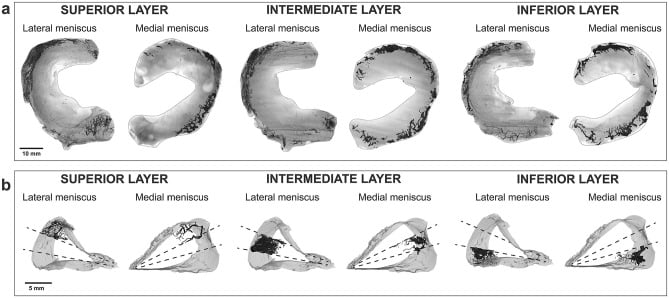
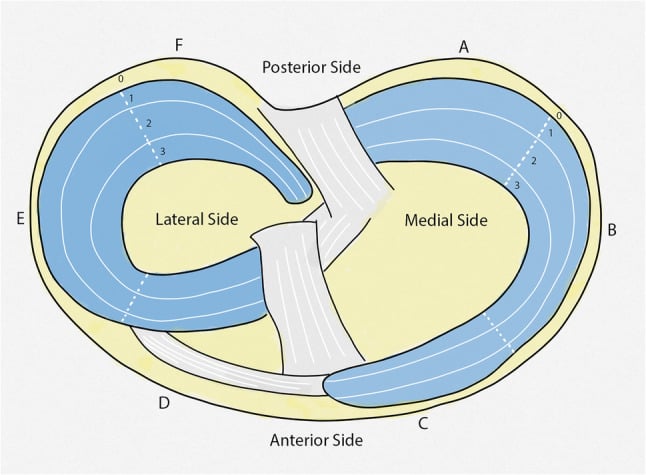
Function. The meniscus has five jobs.
- Load transmission
- Shock absorption: energy dissipation during loading
- Joint stability: a secondary stabiliser, especially the lateral meniscus in the ACL-deficient knee
- Joint lubrication: distribution of synovial fluid
- Proprioception: mechanoreceptors provide feedback
Classification Systems
Tears are described first by morphology, because pattern predicts both the symptoms and the chance of repair, and then by location, depth, length and tissue quality.
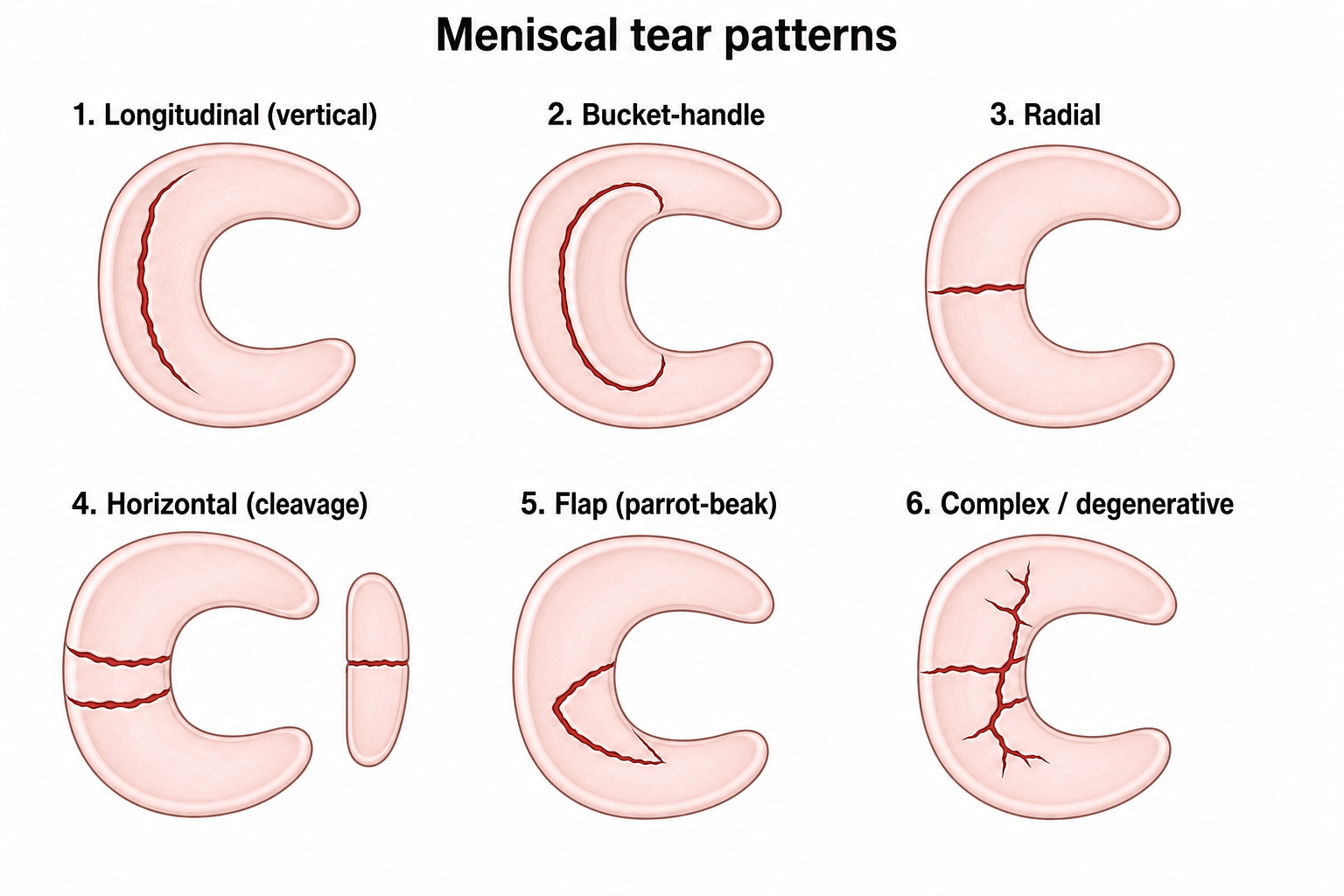
The ISAKOS system (International Society of Arthroscopy, Knee Surgery and Orthopaedic Sports Medicine) is the most comprehensive and widely accepted classification. Its strength is that it integrates the three things the surgical decision turns on: pattern, which determines load-bearing, location, which determines vascularity, and tissue quality, which determines healing.
- Description
- Parallel to circumferential fibres, longitudinal
- Mechanism
- Acute trauma, twisting
- Repairability
- Good if peripheral
- Description
- Cleavage tear, parallel to tibial plateau
- Mechanism
- Degenerative, chronic
- Repairability
- Poor - usually resect
- Description
- Perpendicular to circumferential fibres
- Mechanism
- Acute or chronic
- Repairability
- Difficult - consider if root
- Description
- Combination of patterns
- Mechanism
- Chronic, degenerative
- Repairability
- Variable, usually poor
Beyond pattern, ISAKOS records the location (anterior horn, body or posterior horn), the depth (partial, on the superior or inferior surface, or full-thickness), the length in millimetres and the tissue quality (traumatic, with good tissue, or degenerative, with poor tissue).
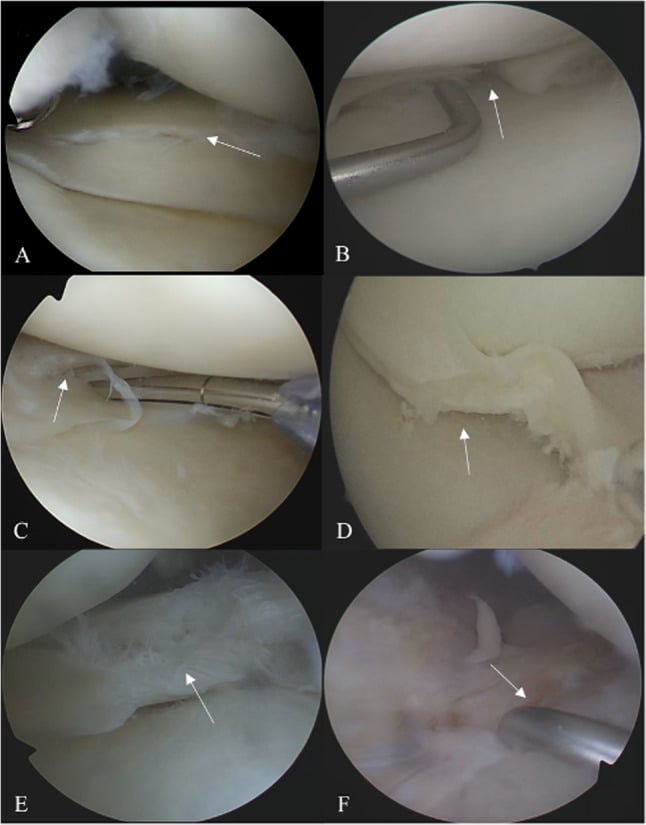
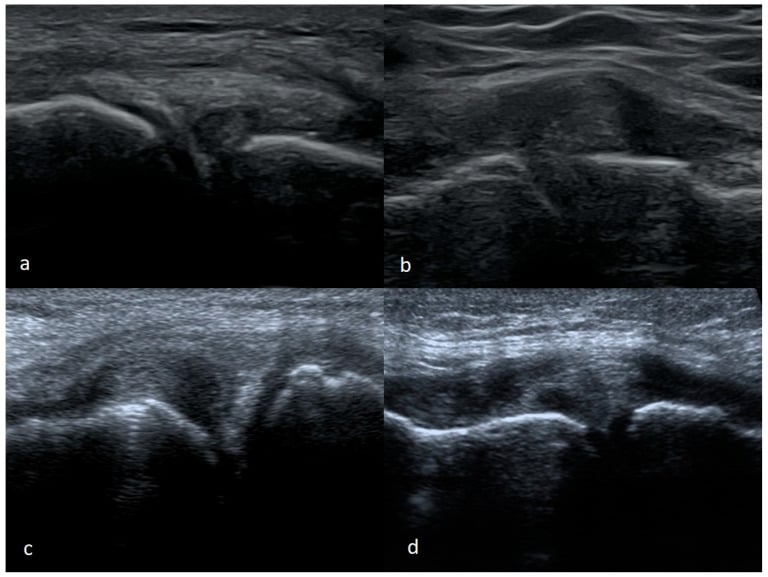
Parameniscal Cyst
A parameniscal cyst is a collection of synovial-like fluid beside the meniscus. It almost always communicates with a meniscal tear, characteristically a horizontal cleavage tear, through a one-way valve that pumps fluid peripherally, and it is a recurring exam favourite because of how it must be treated.
Where and how it presents. Lateral cysts are commoner and more often palpable; medial cysts tend to be larger and more posterior. The patient has joint-line pain and a firm joint-line swelling, which in the lateral cyst is classically most prominent near extension and reduces with flexion.
Imaging. MRI shows the cyst contiguous with the underlying meniscal tear, which is usually horizontal.
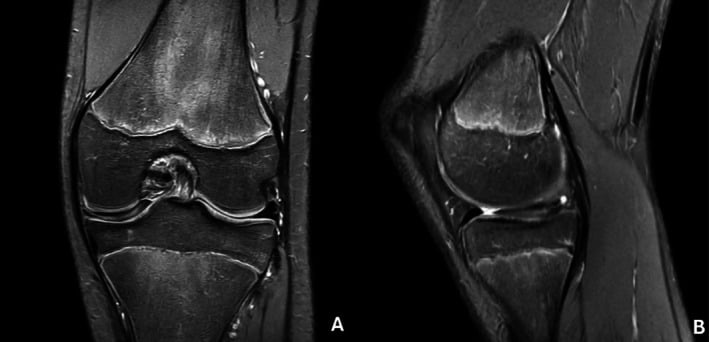
The cyst is secondary to the tear. Treat the tear arthroscopically, by debridement or partial meniscectomy, or by repair if it is repairable, and decompress the cyst at the same time: that is durable. Excising the cyst alone, without addressing the tear, leads to recurrence.
Clinical Assessment
History. The first task is to place the patient in one of the two populations in the overview table, traumatic or degenerative. Then the questions that change management:
- True locking or pseudo-locking: true locking is an inability to extend fully
- Mechanical symptoms: catching or clicking with specific movements
- The swelling pattern, immediate or delayed
- Previous knee injuries or surgery
- Activity level and goals
Examination. Inspect for effusion, for quadriceps wasting in the chronic case, and for alignment. Palpate the joint line, tenderness there being the most sensitive single finding. Check the range of motion for an extension deficit, the bucket-handle sign, and for a painful arc, then perform the special tests, and finish with stability, Lachman for the ACL and valgus stress for the MCL, for the associated injuries.
- Technique
- Flex knee fully, rotate tibia, extend knee
- Positive Finding
- Pain or click at joint line
- Sensitivity/Specificity
- Sens 70%, Spec 71%
- Technique
- Patient stands on one leg, knee flexed about 20 degrees, rotates body while held for balance
- Positive Finding
- Pain at joint line
- Sensitivity/Specificity
- Originally Sens 89%/Spec 97% (Karachalios); Sens ~0.62-0.66/Spec ~0.39-0.55 on independent validation (Blyth 2015)
- Technique
- Palpate medial/lateral joint line
- Positive Finding
- Point tenderness
- Sensitivity/Specificity
- Sens 83%, Spec 83%
- Technique
- Prone, flex knee 90 degrees, rotate with compression
- Positive Finding
- Pain with compression
- Sensitivity/Specificity
- Sens 61%, Spec 70%
The Thessaly test was described by Karachalios et al with very high reported accuracy, but those figures have not been reproduced: the independent NIHR HTA prospective study (Blyth et al, 2015) found it no better than McMurray, Apley or joint-line tenderness. The exam-safe answer is that no single physical test reliably diagnoses a meniscal tear, and clinical assessment is combined with MRI.
A substantial proportion of acute ACL tears have an associated meniscus injury, often the lateral meniscus at the time of injury. If the examination suggests a meniscal tear in a young patient with acute trauma, always assess ACL stability. Combined injuries need both addressed for the best outcome.
Differential diagnosis. The symptoms attributed to a meniscal tear (joint-line pain, catching, giving way, effusion) overlap with several other conditions, and a tear seen on MRI is frequently incidental in middle-aged and older patients (Englund, NEJM 2008). Consider the breadth of differentials before blaming the meniscus.
- Discriminating features
- Older patient, diffuse rather than point joint-line pain, crepitus, morning stiffness, often coexists with degenerative tear
- Key investigation
- Weight-bearing radiographs; MRI cartilage
- Discriminating features
- True intermittent locking that resolves, mechanical catching, younger patient (OCD)
- Key investigation
- Radiographs, MRI (cartilage and subchondral bone)
- Discriminating features
- Acute pivot injury, haemarthrosis, instability/giving way, positive Lachman
- Key investigation
- Lachman/pivot-shift, MRI
- Discriminating features
- Valgus stress mechanism, tenderness over MCL rather than joint line, valgus laxity
- Key investigation
- Valgus stress test, MRI
- Discriminating features
- Anterior knee pain, pain on stairs and prolonged sitting, apprehension
- Key investigation
- Clinical, skyline radiograph
- Discriminating features
- Pain and tenderness 4-5 cm below medial joint line, no true mechanical symptoms
- Key investigation
- Clinical; ultrasound if unclear
- Discriminating features
- Sudden severe medial pain in older patient, often with a degenerative root tear, marked bone marrow oedema
- Key investigation
- MRI
- Discriminating features
- Hot swollen knee, fever, systemic upset, raised inflammatory markers
- Key investigation
- Joint aspiration, bloods
Investigations
Radiographs first. AP standing, lateral and skyline patella, with a long-leg alignment film if surgery is being considered. Radiographs cannot show a meniscal tear; their job is to exclude bony injury and the differentials, fracture, OA and loose body, and to grade the OA and the alignment. Standing films are essential if a meniscal transplant or realignment surgery is contemplated.
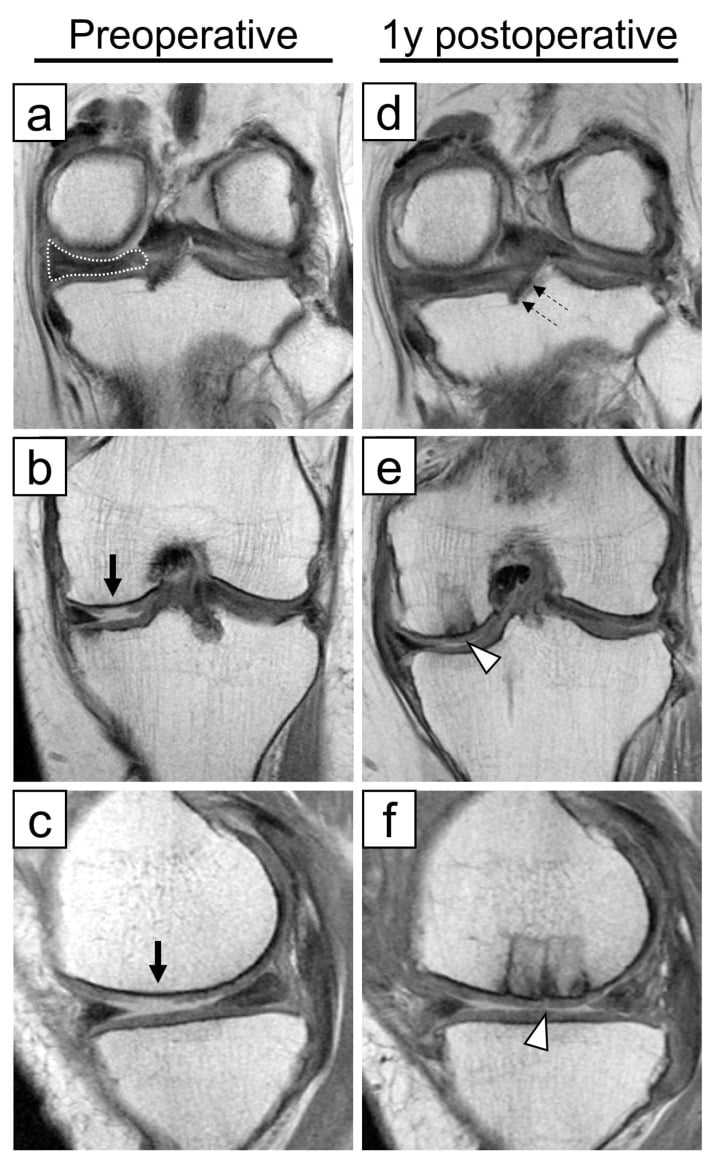
MRI is the gold standard, with sensitivity 90-95% and specificity 85-90%. A tear is increased signal within the meniscus on T2, graded by how far it reaches:
- Grade 0: normal
- Grade I: intrasubstance signal, no tear
- Grade II: linear signal that does not reach the surface, no tear
- Grade III: signal reaching the articular surface, a tear
Only grade III is a tear. Grades I and II are intrasubstance degeneration, are not surgical indications, and are often seen in asymptomatic patients over 45. Read the signal on two orthogonal planes, then report morphology, location, extrusion, associated chondral disease and whether the tear looks repairable, and look for the ACL, the MCL and bone marrow oedema. Extrusion of more than 3mm means a root tear or severe degeneration.
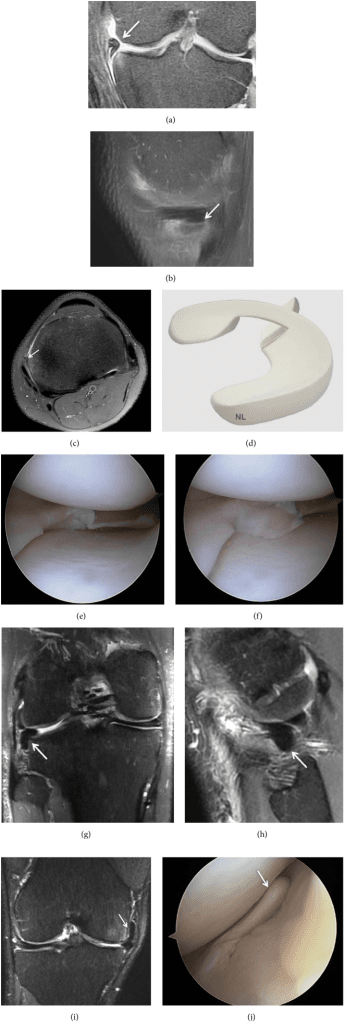
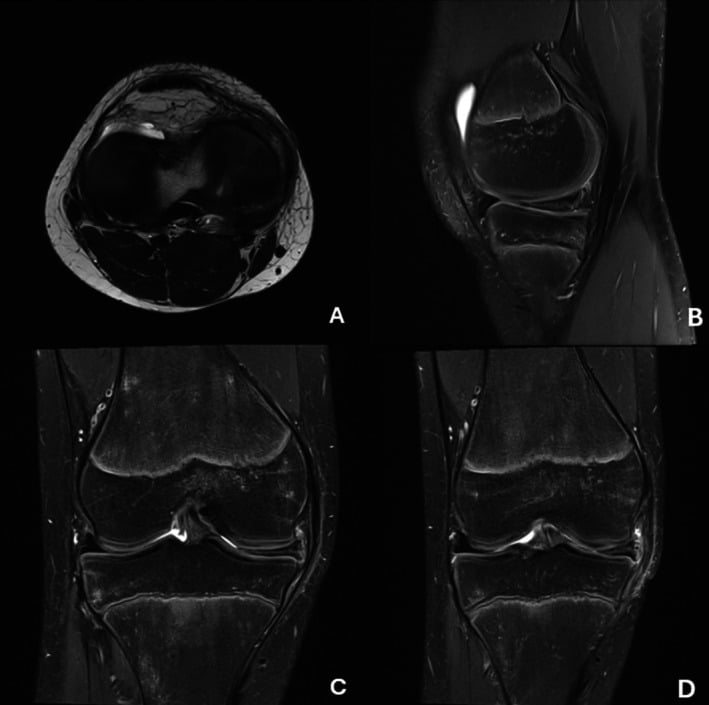
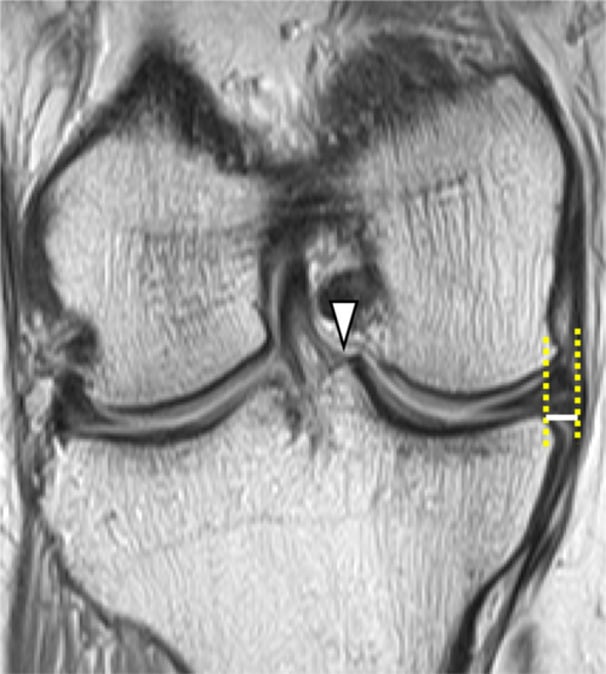
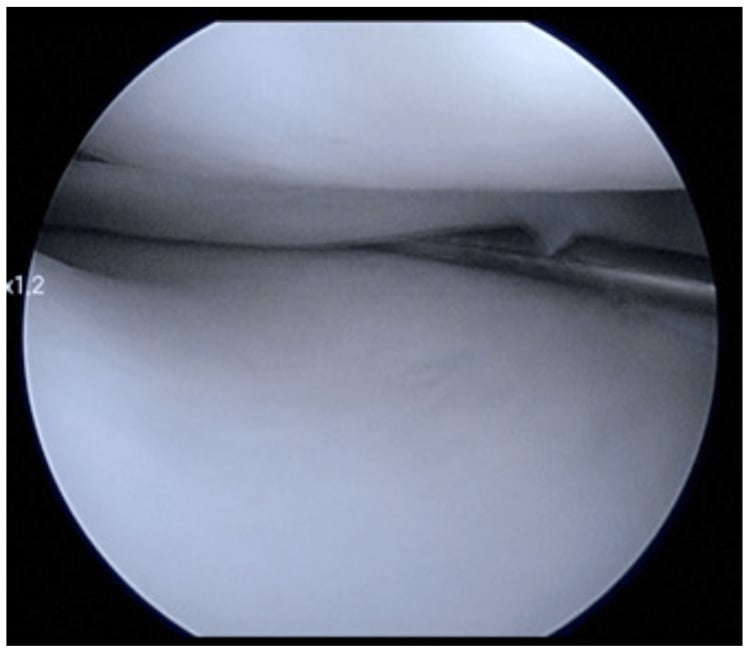
Arthroscopy is the true gold standard when it is performed, but it is invasive, and with modern MRI it is used therapeutically more than diagnostically.
Other tests. Ultrasound is operator-dependent but can identify peripheral tears. Arthro-CT is rarely used and is reserved for patients who cannot have an MRI.
Management
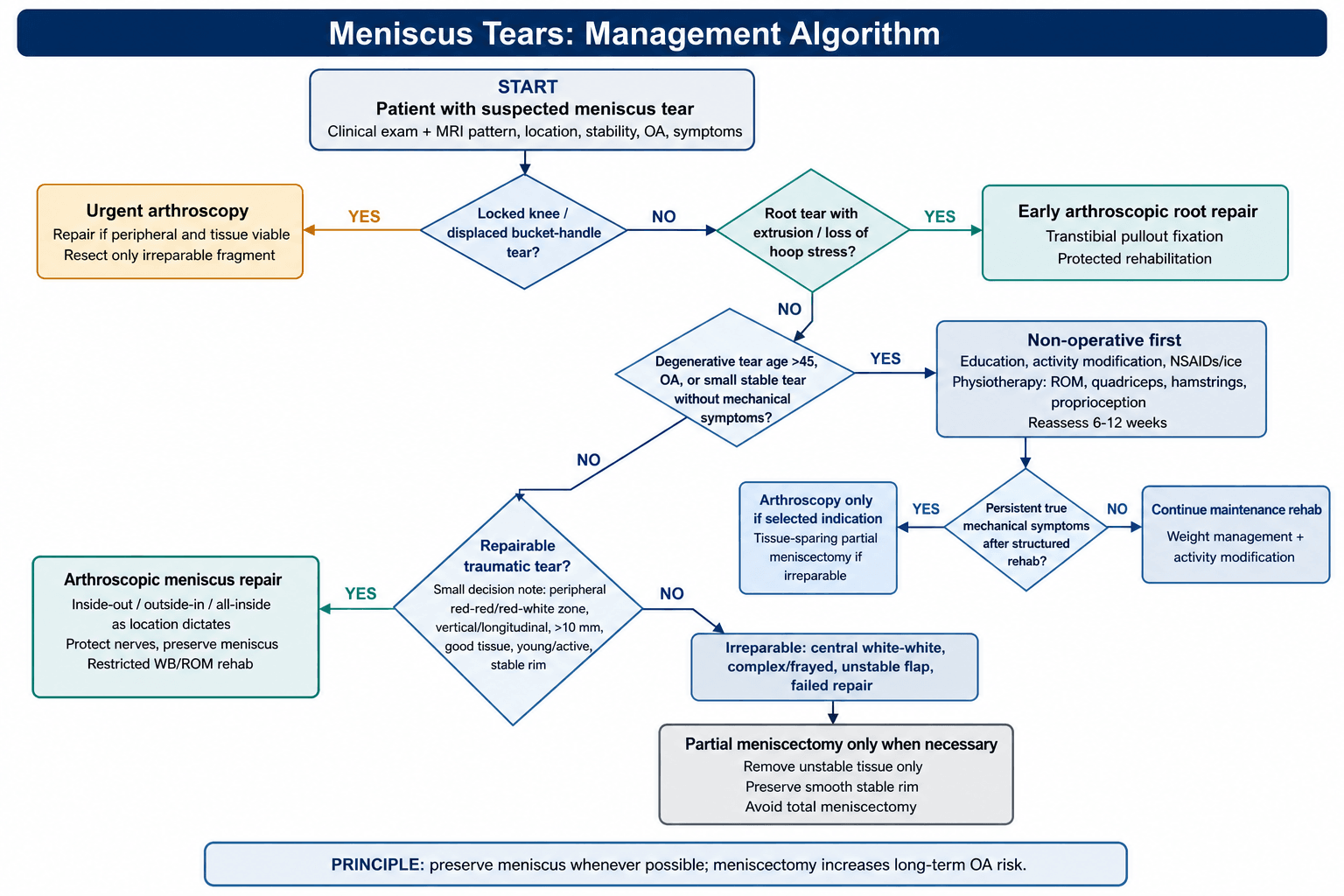
The decision. Everything follows from one principle: preserve meniscal tissue wherever possible, because meniscectomy accelerates osteoarthritis. Then ask the algorithm's three questions in order, locked knee, root tear, degenerative tear in an older knee, each of which has its own answer. Only the traumatic tear that has passed all three needs the repair-versus-resection judgement that follows.
Who. Non-operative treatment is the first line for:
- Degenerative tears in patients over 45 years (FIDELITY and METEOR trials)
- Small stable tears without mechanical symptoms
- Grade I-II MRI signal, which is intrasubstance degeneration
- Patient choice or medical comorbidity
Conservative Treatment Protocol
- Activity modification: avoid twisting, pivoting and squatting
- Ice and NSAIDs for symptom control
- Quadriceps strengthening: straight leg raises, quad sets
- Gentle flexion-extension range of motion
- Comprehensive physiotherapy programme
- Progressive resistance strengthening of quadriceps and hamstrings
- Proprioception training: balance exercises
- Functional, sport-specific training
- Continue strengthening
- Avoid deep squatting
- Weight management to reduce knee load
- Corticosteroid or hyaluronic acid injection if symptoms persist
A degenerative or complex tear in the white-white zone is given six months of this programme before partial resection is considered for the patient who fails it.
Two NEJM 2013 randomised trials reshaped management of degenerative tears. FIDELITY (Sihvonen et al, n=146, age 35-65, no OA) found arthroscopic partial meniscectomy no better than sham surgery at 12 months. METEOR (Katz et al, n=351, age 45+, with mild-to-moderate OA) found surgery plus physiotherapy no better than physiotherapy alone at 6 and 12 months, though 30% of the physiotherapy-only group crossed over to surgery within 6 months. Together they support a trial of physiotherapy first for degenerative tears.
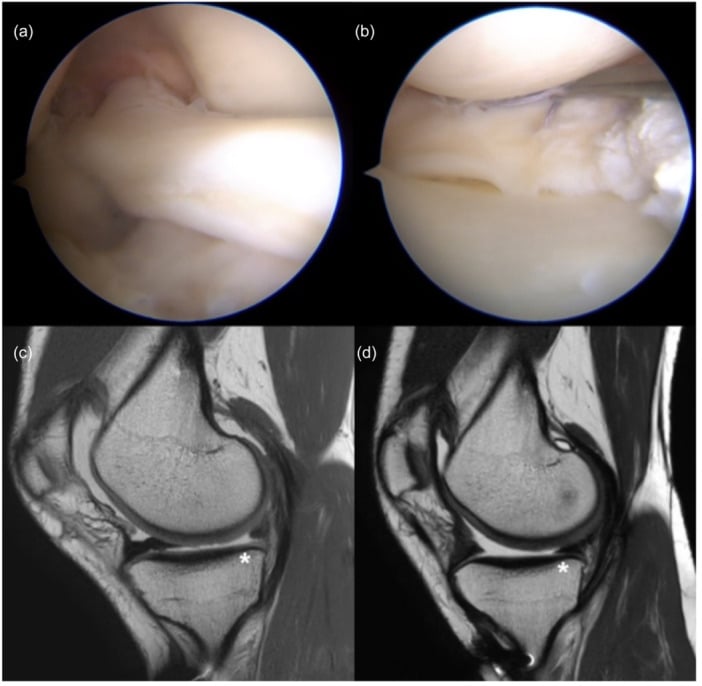
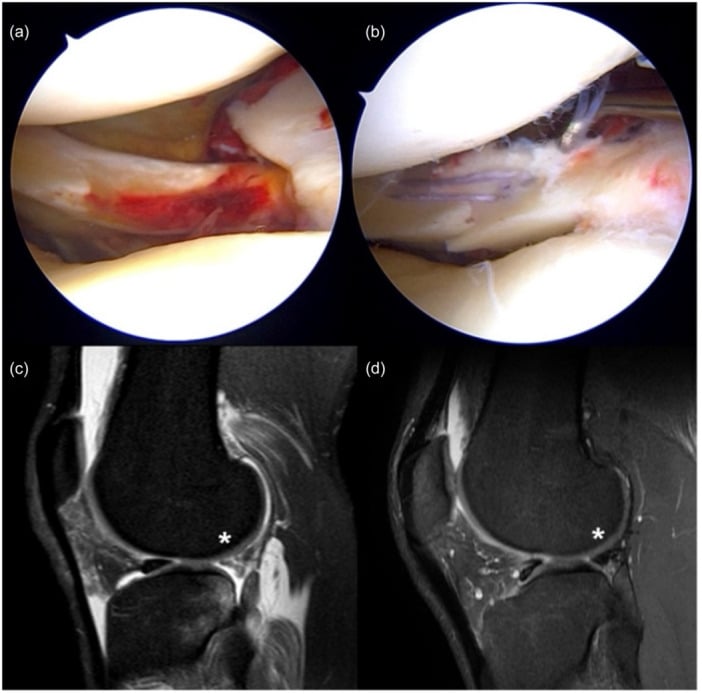
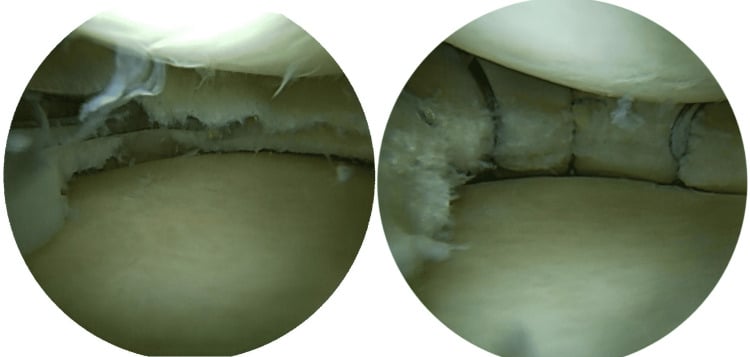
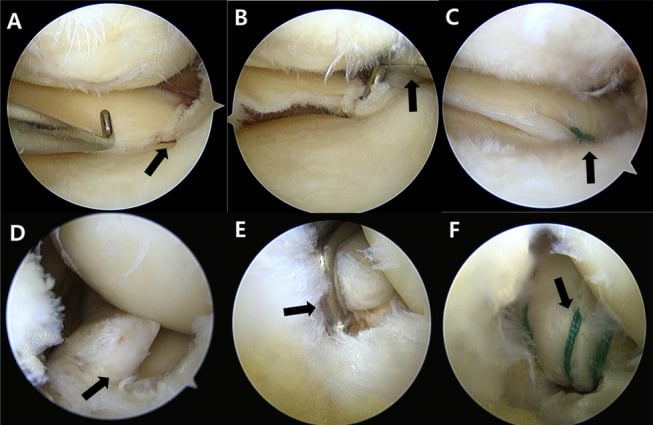
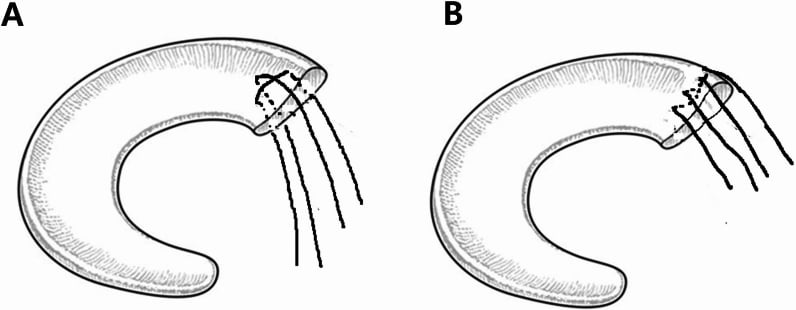
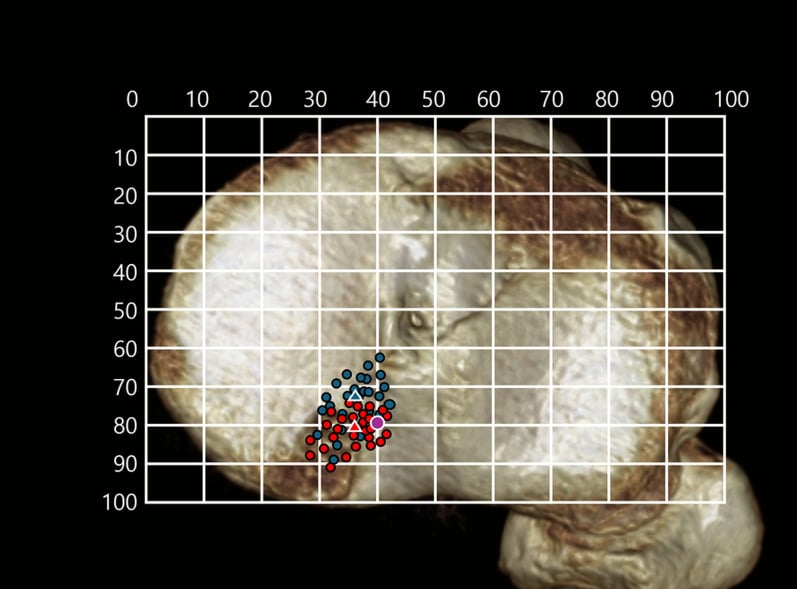
Surgical Technique - Arthroscopic Meniscectomy
When. Partial meniscectomy is for the tear that cannot be saved:
- An irreparable tear: central location, degenerative tissue
- A failed repair
- An unstable flap tear causing mechanical symptoms
- A complex tear with poor healing potential
Principles. Preserve as much meniscus as possible: remove only the unstable, damaged tissue and leave a smooth, stable rim. Never perform a total meniscectomy; it raises the OA risk dramatically.
Planning. Review the MRI for the tear pattern and location, and assess the degree of OA, because if it is advanced surgery will not help. Counsel the patient about preservation versus resection and about realistic outcomes, and plan the portals.
Equipment. Arthroscopy tower and camera; arthroscopic instruments (probes, graspers, punches); meniscal suture devices, in case repair proves possible; meniscal repair needles and sutures; basket forceps and shavers.
Complications
- Incidence
- less than 1%
- Prevention/Management
- Safe portal placement, protect structures during inside-out repair
- Incidence
- less than 1%
- Prevention/Management
- Sterile technique, prophylactic antibiotics
- Incidence
- 0.1-0.5%
- Prevention/Management
- Early mobilisation, thromboprophylaxis in high-risk patients
- Incidence
- 10-20%
- Prevention/Management
- Complete tear removal, assess for associated pathology
- Incidence
- 10-20%
- Prevention/Management
- Appropriate patient selection, protect repair with rehab protocol
- Incidence
- Substantially raised (Englund 2003)
- Prevention/Management
- Preserve meniscus tissue, counsel patient about long-term risk
After repair. Nerve injury is the significant risk of the inside-out technique. With medial repair the saphenous nerve is injured in 2-5%, presenting as numbness or paraesthesia over the posteromedial leg and usually resolving over 6-12 months. Peroneal nerve injury with lateral repair is under 1% but more serious, because it risks a foot drop, and a complete injury may need nerve exploration. Prevention is the retractor, the safe accessory incision and the flexed knee described under repair technique.
Repair failure runs at 10-20% depending on location and technique, 10-15% in the red-red zone and 20-30% in the red-white zone; the risk factors are a white-white location, poor tissue quality and non-compliance with rehabilitation. The other complications of repair are persistent pain in 5-10%, stiffness in 5%, which usually responds to physiotherapy, and, rarely, a postoperative meniscal cyst.
After resection. Haemarthrosis occurs in 5-10% and usually resolves. Residual symptoms may mean an incomplete resection or other pathology, chondral damage or a ligament injury; if they persist beyond 3 months, consider an MRI. The long-term complication is accelerated OA, the figures for which are in the overview: progressive joint space narrowing, increasing pain and functional limitation, and a higher long-term rate of progression to total knee arthroplasty. Prevention is to preserve every possible millimetre, to attempt repair in the red-red and red-white zones, to counsel patients about the long-term risk, and to consider meniscal transplant in the young patient who has already had a total meniscectomy. Understanding the OA risk is essential to shared decision-making.
General. Infection is usually superficial: oral antibiotics for a superficial infection, arthroscopic washout for a deep one, and prophylactic cefazolin 2g IV before the operation. DVT is rare because of early mobilisation; routine thromboprophylaxis is not indicated for isolated meniscal surgery and is considered for high-risk patients, obesity, thrombophilia or prolonged immobilisation. Regional anaesthesia, a nerve block or a spinal, is preferred: it reduces opioid requirements and allows same-day discharge. At the portals, numbness from the infrapatellar branch of the saphenous nerve is common and usually resolves; scar sensitivity occurs, and keloid rarely. These general complications are shared by all arthroscopic procedures and their overall rates are low.
Postoperative Care and Rehabilitation
Meniscectomy Recovery Timeline
- Weight-bearing as tolerated, with crutches if needed
- Immediate mobilisation
- Quadriceps sets, ankle pumps, straight leg raises
- Ice and elevation; paracetamol and NSAIDs for pain
- Full weight-bearing without aids
- Regain full flexion and extension
- Progressive quadriceps and hamstring strengthening
- Stationary bike at low resistance; pool therapy if available
- Advanced strengthening: leg press, step-ups
- Proprioception on a balance board
- Light jogging if pain-free
- Begin the transition to sport-specific training
- Full range of motion and strength
- Gradual progression toward sport
- Clearance: pain-free full activity
Return to work and sport is graded: desk work at 1-2 weeks, manual labour at 4-6 weeks, non-contact sport at 6-8 weeks, contact sport at 8-12 weeks, and full return to sport at 3-4 months. Meniscectomy buys this rapid return at the price of the long-term OA risk.
Outcomes and Prognosis
- Success Rate
- 80-90%
- Long-term OA Risk
- Low (preserved meniscus)
- Success Rate
- 60-70%
- Long-term OA Risk
- Low if successful
- Success Rate
- 85% (short term)
- Long-term OA Risk
- High (Englund 2003)
- Success Rate
- 70-85%
- Long-term OA Risk
- Moderate (better than no repair)
- Success Rate
- 60-70%
- Long-term OA Risk
- Natural progression
What predicts a successful repair. The same things that made the tear repairable: a peripheral location, a vertical longitudinal pattern, acute trauma and healthy tissue. The poor-prognosis tear is central, horizontal, complex or radial, chronic and degenerate, with frayed tissue. Age counts in its own right, under 30 good and over 50 poor, and so does the ACL: an intact or reconstructed ACL protects the repair, and the ACL-deficient knee is a poor-prognosis setting.
When meniscus repair is performed with concomitant ACL reconstruction, repair success rates are higher (85-90%) than for isolated meniscus repair (70-80%). The ACL reconstruction restores knee stability and protects the meniscus repair during healing. Always address both injuries together.
The long term. After partial meniscectomy the OA risk is substantially higher, and more extensive resection and a degenerative rather than traumatic tear are associated with worse radiographic and symptomatic outcomes. After a successful repair the OA risk approaches that of a normal knee, the joint is preserved and the long-term quality of life is better.
Lateral vs Medial Meniscus Loss
The medial meniscus is torn more often, but losing the lateral one costs the knee more, and the table says why: a less congruent compartment and a meniscus carrying a greater share of its load, so that lateral meniscectomy raises peak contact stress more.
- Medial meniscectomy
- Relatively congruent (concave medial tibial plateau)
- Lateral meniscectomy
- Less congruent (convex/flat lateral plateau under a convex femoral condyle)
- Medial meniscectomy
- High, but loss is tolerated relatively better
- Lateral meniscectomy
- Greater - the lateral meniscus covers more plateau and carries more of the compartment load
- Medial meniscectomy
- Progressive medial-compartment OA over years
- Lateral meniscectomy
- Faster, more severe chondral loss (rapid chondrolysis) and OA, especially in young active patients
- Medial meniscectomy
- Varus
- Lateral meniscectomy
- Valgus
- Medial meniscectomy
- Preserve where possible
- Lateral meniscectomy
- Even stronger imperative to preserve or repair
Although the medial meniscus is torn more often, loss of the lateral meniscus is functionally worse, consistent with the higher lateral reoperation rate in the Paxton review. The practical message: the threshold to preserve or repair is even lower for the lateral meniscus.
Guidelines, Registries & Global Practice
Global epidemiology
Meniscal tears are among the most common knee injuries worldwide and arthroscopic partial meniscectomy has historically been one of the highest-volume orthopaedic procedures in many health systems. The population burden is dominated by degenerative tears in middle-aged and older adults: in the population-based Framingham MRI study (Englund et al, NEJM 2008; PMID 18784100), the prevalence of a meniscal tear or destruction rose from 19% in women aged 50-59 to 56% in men aged 70-90, and 61% of those with a tear were asymptomatic in the preceding month. Traumatic tears predominate in younger, athletic populations and are commonly associated with ACL rupture.
Guidelines side-by-side
International guidance has converged against routine arthroscopy for degenerative tears since the FIDELITY and METEOR trials, although surgery retains a clear role for true mechanical locking, repairable traumatic tears and root tears.
- Position on degenerative tears
- Strong recommendation AGAINST arthroscopy for nearly all degenerative knee disease, including degenerative meniscal tears
- Evidence basis
- Linked systematic review of RCTs (incl. FIDELITY, METEOR)
- Position on degenerative tears
- Non-operative care first for degenerative meniscal lesions; arthroscopy only after a failed structured programme and selected indications
- Evidence basis
- Formal European consensus on degenerative meniscus
- Position on degenerative tears
- Management of OA of the knee guideline discourages arthroscopic lavage/debridement for primary OA; meniscectomy reserved for mechanical symptoms
- Evidence basis
- AAOS clinical practice guideline
- Position on degenerative tears
- Arthroscopic lavage and debridement not recommended for knee OA unless clear history of mechanical locking
- Evidence basis
- NICE osteoarthritis guidance
- Position on degenerative tears
- Do not perform arthroscopy with partial meniscectomy for degenerative tears without mechanical locking
- Evidence basis
- Specialty-society low-value-care lists
- Position on degenerative tears
- Preserve the meniscus - repair peripheral vertical tears; repair root tears via transtibial pull-out
- Evidence basis
- FIDELITY/METEOR do not apply; supported by preservation and biomechanical evidence
Registry and practice variation
There is no dedicated international meniscus registry comparable to arthroplasty registries (e.g. AOANJRR, NJR), so population-level evidence comes from administrative datasets and RCTs rather than implant-style registry survival data. Despite consistent guidance, large practice variation persists: arthroscopic partial meniscectomy rates differ several-fold between and within countries, and uptake of the FIDELITY/METEOR evidence into routine practice has been slow. This gap between evidence and practice is a recognised low-value-care target and a common exam discussion point.
- Re-tear / repair failure: long-term reoperation after repair around 20% versus around 4% after partial meniscectomy (Paxton 2011)
- Infection (less than 1%), DVT/PE (low), and neurovascular injury specific to inside-out repair (saphenous medially, common peroneal laterally)
- Long-term OA risk after meniscectomy (relative risk approximately 7 for degenerative tears; Englund 2003) versus tissue preservation with repair
- Alternatives: for degenerative tears, a structured non-operative programme first, per the FIDELITY and METEOR trials
meniscectomy for a degenerative tear without a documented non-operative trial; failure to offer repair for a repairable tear in a young patient; undocumented nerve protection during inside-out repair; and missed associated ACL injury leading to repair failure. Document the repair-versus-resection rationale, tear characteristics, pre- and post-operative neurovascular status, and the rehabilitation plan provided.
MCQ Practice Points
Q: What is the blood supply to the meniscus and which zone has the best healing potential? A: The perimeniscal capillary plexus from the geniculate arteries supplies the outer 10-25% of the meniscus. The red-red zone (0-3mm from periphery) has excellent blood supply and 80-90% repair success. The white-white zone (inner third) is avascular with poor healing potential (20-30% success).
Q: What is the biomechanical consequence of a meniscal root tear? A: A meniscal root tear disrupts the circumferential collagen fibers and eliminates the hoop stress mechanism, leading to meniscal extrusion. This is functionally equivalent to a total meniscectomy in terms of contact stress distribution. Root tears require repair via transtibial pullout technique to restore function.
Q: According to the ISAKOS classification, which meniscus tear pattern has the best repairability? A: Vertical longitudinal tears in the peripheral (red-red) zone have the best repairability. These tears run parallel to the circumferential fibers and can be sutured effectively. Horizontal cleavage tears and complex tears typically have poor healing potential.
Q: How accurate are clinical tests for meniscus tears? A: No single physical test is reliable in isolation. The Thessaly test was originally reported with sensitivity 89% and specificity 97% (Karachalios), but the independent NIHR HTA validation study (Blyth et al, 2015) found it no better than McMurray, Apley or joint-line tenderness (sensitivity ~0.62-0.66, specificity ~0.39-0.55). Diagnosis combines history, examination and MRI; joint-line tenderness remains a useful single finding.
Q: What did the landmark 2013 NEJM trials demonstrate about degenerative meniscus tears? A: The FIDELITY trial (Sihvonen et al, NEJM 2013) showed arthroscopic partial meniscectomy was no better than sham surgery at 12 months for degenerative medial tears without OA. The METEOR trial (Katz et al, NEJM 2013) showed surgery plus physiotherapy was no better than physiotherapy alone for degenerative tears with mild-to-moderate OA. Together they support conservative management first for degenerative tears without true mechanical locking.
Q: What are the long-term consequences of partial meniscectomy? A: Meniscectomy substantially increases the long-term risk of knee osteoarthritis. In Englund's 16-year matched cohort (2003), the relative risk of combined radiographic and symptomatic OA was approximately 7 after meniscectomy for a degenerative tear (and ~2.7 after a traumatic tear). Risk rises with the amount of meniscus removed, because resection reduces contact area and increases peak contact stress. This is why meniscus preservation is critical.
Exam Viva Scenarios
Practise clinical reasoning and management decisions out loud
“A 28-year-old footballer presents with acute knee pain after a twisting injury 3 days ago. He describes a popping sensation and immediate swelling. Examination shows joint line tenderness and positive McMurray test. MRI shows a vertical longitudinal tear of the posterior horn of the medial meniscus, 2cm in length, located 2mm from the meniscocapsular junction. What is your assessment and management?”
“A 52-year-old office worker presents with 3 months of medial knee pain. No specific injury - started after gardening. Examination shows joint line tenderness and positive Thessaly test. MRI shows Grade III signal in the posterior horn of the medial meniscus, horizontal cleavage tear pattern, with underlying Grade 2 chondral changes. How do you manage this patient?”
“A 45-year-old female presents with 6 months of medial knee pain and swelling. She describes a twisting injury at onset. MRI shows discontinuity of the posterior medial meniscus root with 5mm of meniscal extrusion. No significant chondral loss yet. She has failed 3 months of physiotherapy. How do you manage this?”
Key Anatomy and Function
- Transmits 70% of knee load in extension, 50% in flexion
- Blood supply: Red-red (0-3mm), red-white (3-5mm), white-white (inner third - avascular)
- Medial: C-shaped, less mobile, attached to MCL, more commonly torn
- Lateral: O-shaped, more mobile, no MCL attachment
- Hoop stress mechanism: circumferential fibers resist extrusion
Classification (ISAKOS)
- Vertical: longitudinal/bucket-handle - repairable if peripheral
- Horizontal: cleavage tear - usually resect
- Radial: perpendicular to fibers - repair if root
- Complex: multiple patterns - assess repairability
- Root tear: disrupts hoop stress = functional total meniscectomy
Clinical Assessment
- McMurray test: pain/click with rotation + flexion-extension (Sens 70%, Spec 71%)
- Thessaly test: stand on one leg, rotate body - originally Sens 89%/Spec 97%, but only ~0.62/~0.45 on independent validation (Blyth 2015)
- Joint line tenderness: 83% sensitive
- MRI: Grade III signal = tear (Sens 90-95%)
- Root tear: MRI shows extrusion over 3mm
Treatment Algorithm
- Young traumatic peripheral tear: REPAIR (inside-out or all-inside)
- Degenerative tear over 45: CONSERVATIVE first (FIDELITY/METEOR trials)
- Bucket-handle with locking: URGENT arthroscopy, repair if possible
- Root tear: Transtibial pullout repair
- Central white-white tear: Partial meniscectomy if conservative fails
Surgical Pearls
- Preserve every millimeter possible - even 10% more preservation reduces OA risk
- Inside-out: gold standard for posterior horn, protect saphenous (medial) or peroneal (lateral)
- All-inside: faster but watch neurovascular structures
- Root repair: tunnel at 7mm anterior to PCL, tie over button
- Protected WB for 6 weeks after repair, 4 weeks non-WB for root
Key Evidence and Outcomes
- FIDELITY (APM vs sham) and METEOR (surgery+PT vs PT): no benefit of surgery for degenerative tears
- Meniscectomy for degenerative tear: OA relative risk ~7 at 16 years (Englund 2003)
- Repair success: 80-90% (red-red), 60-70% (red-white), 20-30% (white-white)
- Repair with ACL reconstruction: 85-90% success (ACL protects repair)
- Root repair: 70-85% success, reduces extrusion, slows OA
Evidence Base and Key Trials
FIDELITY Trial - Arthroscopic Partial Meniscectomy vs Sham Surgery
- Multicentre, double-blind, sham-controlled RCT of 146 patients aged 35-65 with a degenerative medial meniscus tear and NO knee osteoarthritis
- Arthroscopic partial meniscectomy versus sham (diagnostic) arthroscopy
- No significant between-group difference in Lysholm, WOMET or post-exercise pain at 12 months
- Subsequent knee surgery: 2 in the meniscectomy group versus 5 in the sham group
METEOR Trial - Surgery plus Physiotherapy vs Physiotherapy Alone
- Multicentre RCT of 351 patients aged 45+ with a meniscal tear and mild-to-moderate OA on imaging
- Arthroscopic partial meniscectomy plus physiotherapy versus standardised physiotherapy (with optional crossover)
- Mean WOMAC improvement at 6 months similar between groups (difference 2.4 points, 95% CI -1.8 to 6.5)
- 30% of the physiotherapy-only group crossed over to surgery within 6 months
Incidental Meniscal Tears in the General Population (Framingham)
- Population-based MRI study of 991 subjects aged 50-90 (Framingham)
- Prevalence of meniscal tear/destruction rose from 19% (women 50-59) to 56% (men 70-90)
- 61% of subjects with a meniscal tear had no knee pain, aching or stiffness in the prior month
- Tear prevalence was similar in symptomatic and asymptomatic knees with radiographic OA
The evidence above is drawn from FIDELITY (DOI), METEOR (DOI), Englund 2008 (DOI), Englund 2003 (DOI), Paxton 2011 (DOI), LaPrade root classification 2015 (DOI) and LaPrade root biomechanics 2015 (DOI).