Needlestick and Sharps Injury
Overview
A needlestick or sharps injury is a contaminated needle, blade, wire, drill bit or bone fragment piercing the skin of a member of the surgical team. It is one of the most common occupational hazards in surgery and a favourite exam topic because it links microbiology (which viruses), risk assessment (how likely is transmission) and practical management (what you actually do at 2am when you are stuck).
Why it matters. A single percutaneous injury can transmit hepatitis B virus, hepatitis C virus or HIV from an infected source patient into the injured worker. The chance of transmission from any one injury is generally low, but it is not zero, and it depends on how the injury happened and on who the source was.
Why orthopaedics. We routinely handle sharp Kirschner wires, drill bits, oscillating saws, sharp-tipped suture needles and jagged bone ends, often with reduced tactile feedback through gloves and in awkward positions, so we have more sharps exposures than many other fields. The whole topic reduces to two threads the examiner will test: prevent the injury, and respond correctly when it happens.
Principles: The Viruses and the Transmission Risk
Three blood-borne viruses dominate the risk assessment after a sharps injury, and the order of transmission risk per injury is the single most testable fact: hepatitis B is the most transmissible, then hepatitis C, then HIV is the least transmissible per stick.
- Approximate risk per percutaneous injury (positive source)
- Highest of the three - can reach roughly one in three when the source is highly infectious (e antigen positive) and the worker is non-immune
- Key exam point
- Largely preventable by VACCINATION - a documented vaccine responder is well protected; an unvaccinated worker may need vaccine plus hepatitis B immunoglobulin
- Approximate risk per percutaneous injury (positive source)
- Intermediate - on the order of a few per cent (commonly quoted around 1 to 2 percent)
- Key exam point
- No vaccine and no effective drug prophylaxis after exposure - management is baseline testing, follow-up testing, and early antiviral treatment if seroconversion occurs
- Approximate risk per percutaneous injury (positive source)
- Lowest - on average about 0.3 percent (roughly 1 in 300) after a single percutaneous exposure from a positive source
- Key exam point
- The only one with time-critical drug PROPHYLAXIS (PEP). Risk is much lower if the source is on treatment with an undetectable viral load
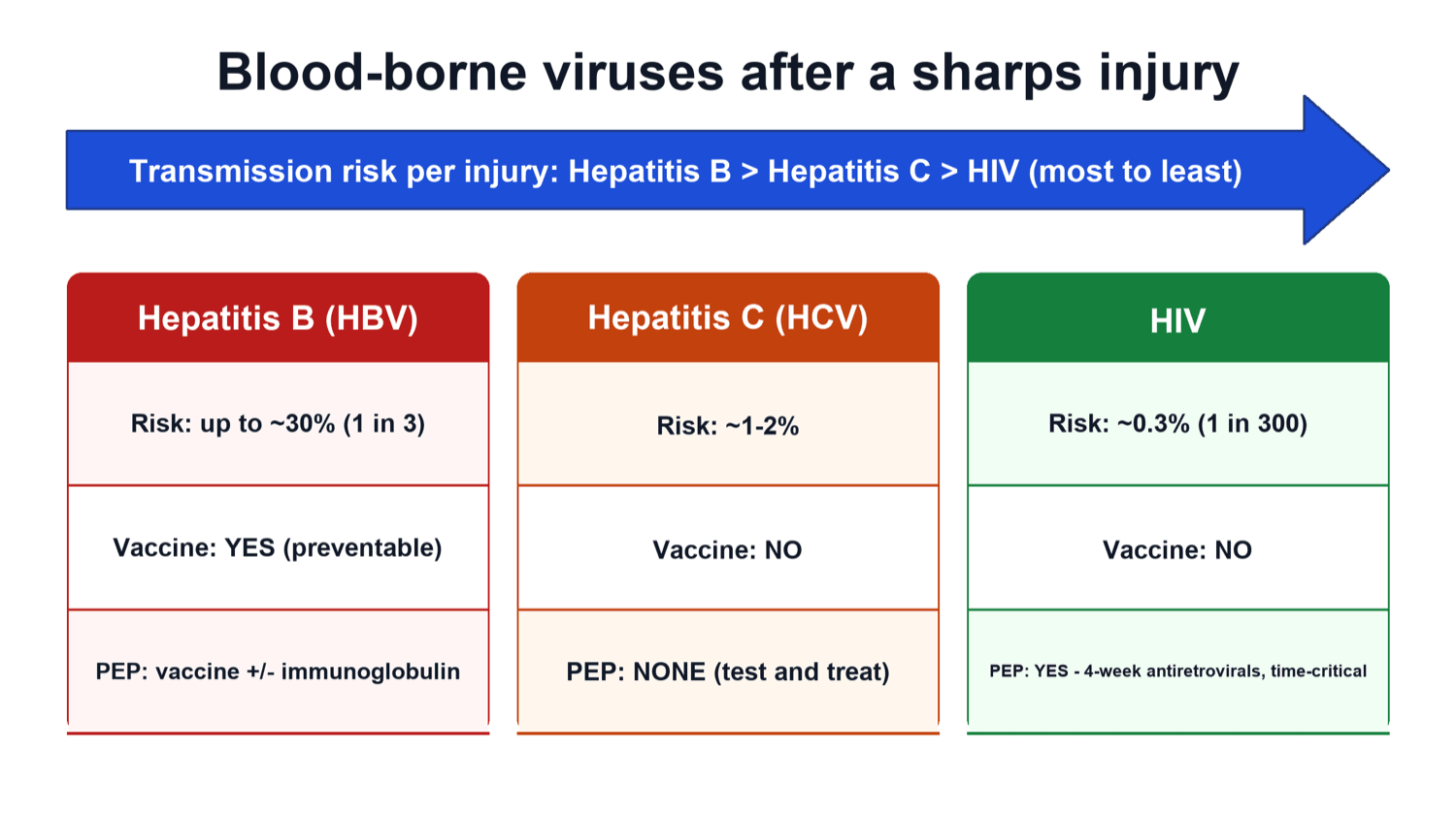
Why the risk varies so much between viruses. It comes down to how much circulating virus there usually is and how the body defends against it. Hepatitis B is present in very high concentrations in infected blood and is highly infectious, which is why an unprotected worker is at greatest risk, and why vaccination, which gives most people lasting protection, is so powerful. HIV circulates at far lower levels and is less hardy, so the average per-injury risk is low, but because untreated infection is so serious we still act urgently with drug prophylaxis.
Lead with the risk order: "Per injury, hepatitis B is the most transmissible, then hepatitis C, then HIV." Then add the twist examiners love: HIV is the least likely to transmit per stick but is the only one with time-critical drug prophylaxis, while hepatitis B is the most transmissible but is largely preventable by vaccination.
What makes a single injury more dangerous. Not every stick carries the same risk. These factors come straight from the landmark case-control work on HIV transmission and are used everywhere to decide whether the exposure is "significant" and whether PEP is offered. Transmission is more likely with:
- A deeper injury (more inoculum transferred)
- A hollow, blood-filled needle rather than a solid suture needle
- Visible blood on the device
- A needle that had just been in the source patient's artery or vein
- A source with advanced disease or a high viral load
Alongside those five, single gloving and a longer contact time both mean more blood is transferred, so an ungloved, deep, bloody stick from a hollow needle that had been in a vessel, in an ill source, is the high-transmission injury.
Immediate Management After an Injury
This is the most heavily tested practical sequence, and it is answered in a fixed order: first aid, report, risk-assess the source and the injury, then treat and follow up.
First aid. For a skin injury, encourage the wound to bleed gently and wash it with soap under running water. Do not suck it, scrub it or apply caustic agents; there is no evidence these help and they may worsen tissue damage. For a splash to the eye, mouth or nose, irrigate generously with water or saline, remove contact lenses and irrigate again.
Stop and report. Step away from the field safely, a colleague taking over if you are scrubbed, and report promptly to occupational health or the emergency department per local policy. Prompt reporting is what unlocks timely risk assessment and PEP.
Assess the source and the injury. Establish the source patient's blood-borne virus status, seeking consent for testing if it is unknown, and grade the injury against the factors above. Together these decide whether the exposure is significant.
Treat and follow up. Offer HIV PEP if indicated, manage hepatitis B according to the worker's vaccination status and the source, take baseline bloods from the worker and arrange follow-up testing. There is no PEP for hepatitis C.
If the exposure looks significant and the source is HIV-positive or high-risk, start PEP as soon as possible (ideally within hours; it is generally not started beyond 72 hours) and review/stop it once source results are back. Waiting for every test result before starting can mean missing the window where prophylaxis works.
Managing each virus
Hepatitis B. Management depends on the worker's vaccination and immune status. A documented vaccine responder is well protected and may need only a check or a booster; a non-responder or unvaccinated worker exposed to a hepatitis B source may need hepatitis B immunoglobulin plus an accelerated vaccine course.
Hepatitis C. There is no vaccine and no post-exposure drug prophylaxis, so management is baseline testing and then follow-up testing. If the worker seroconverts, modern direct-acting antivirals are highly effective, which is why the emphasis is on detection and early treatment.
HIV. A significant exposure from a positive or high-risk source gets a 4-week (28-day) course of combination antiretroviral PEP, started as early as possible, with counselling that PEP reduces but does not eliminate the risk, and with follow-up HIV testing. The regimen is typically a two-drug nucleoside backbone (tenofovir disoproxil plus emtricitabine) with a third agent, the modern preference being an integrase inhibitor (raltegravir or dolutegravir) for tolerability and few interactions.
Baseline and follow-up testing. Before starting, take baseline HIV (a fourth-generation antigen/antibody test), hepatitis B and C, plus renal and liver function and a pregnancy test. Follow-up HIV testing runs to around 12 weeks after exposure, the shorter window the fourth-generation tests allow, with hepatitis C antibody/RNA follow-up; counsel on barrier precautions and not donating blood during the follow-up period.
The exposure route. The average per-exposure HIV risk falls with the route: percutaneous (around 0.3%) is higher than a mucous-membrane splash (around 0.09%), which is higher than non-intact skin, and intact skin carries no meaningful risk.
Source unknown or untraceable. Make an individual risk assessment from the clinical setting and local prevalence rather than reflexively giving or withholding PEP.
Prevention in the Operating Theatre
Prevention is the part examiners reward most, because the best management of a needlestick is never to have one. The measures stack: no single step is perfect, but together they substantially cut exposures.
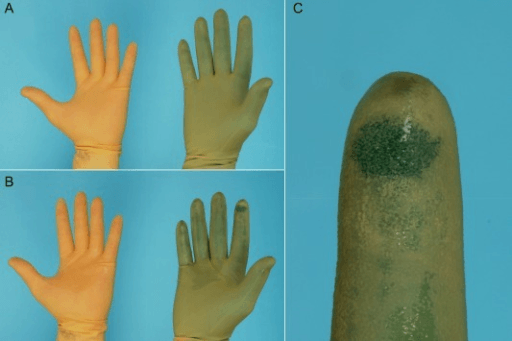
Double gloving. The single most reliable measure, and strongly advised in orthopaedics. Two glove layers dramatically reduce the rate at which the inner glove, and therefore the skin, is breached, and a coloured indicator under-glove makes a perforation immediately visible so the gloves can be changed.
Blunt suture needles. Blunt-tipped needles pass through fascia and muscle but are far less likely to puncture skin, and they markedly reduce sharps injuries during closure of the deep layers where a sharp tip is not needed.
No-touch, hands-free technique. Sharps are never passed hand to hand. A neutral zone, a kidney dish or a designated tray, receives the instrument; the person using it picks it up and puts it back, so no two people hold it at once.
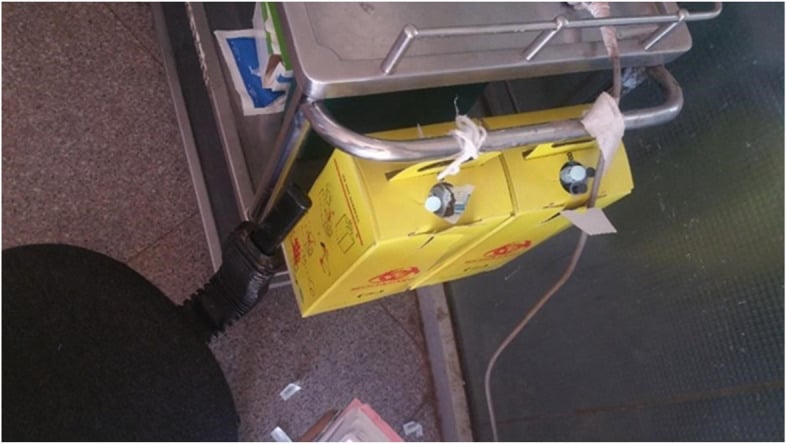
Safe disposal and no resheathing. Sharps go immediately into a puncture-proof container kept close to the point of use. Never resheath a needle by hand and never overfill the container; both are classic causes of injury.
Vaccination. Hepatitis B vaccination of all staff, with confirmation of an antibody response, converts the most transmissible virus into a largely preventable one and is the strongest single argument for a vaccinated workforce.
A blame-free reporting culture and training. Underreporting of sticks is common among surgeons. A clear, fast, non-judgemental reporting pathway is what makes timely risk assessment and PEP actually happen.
GUARDPrevention in Theatre
Hook:GUARD the team - double gloves, blunt needles, no hand-passing, safe disposal, and hepatitis B vaccination.
Clinical Relevance
Needlestick injury sits at the meeting point of personal safety, patient care and medico-legal responsibility, which is why it appears so often in basic-science and clinical vivas. Every orthopaedic surgeon will be exposed at some point, so the examiner expects you to be calm and systematic, to understand the risk in proportion, and to show professionalism: do you protect your team, and do you report honestly so the system can protect you?
The other direction: the infected surgeon and exposure-prone procedures. The professional duties are to know your status, not to self-diagnose or self-treat, and to disclose to occupational health. Whether an infected worker may perform exposure-prone procedures (EPPs) depends on the virus:
- Hepatitis B - an e-antigen-positive worker must not perform EPPs; an e-antigen-negative worker may, provided the HBV DNA viral load stays below a set threshold (around 200 IU/mL, or maintained low on antiviral treatment with monitoring)
- Hepatitis C - an HCV-RNA-positive worker must not perform EPPs until successfully treated and RNA-negative (cured), after which they may return
- HIV - historically barred, but modern guidance permits EPPs if the worker is on effective antiretroviral therapy with an undetectable plasma viral load (below about 200 copies/mL) and is regularly monitored by occupational health
Guidelines, Registries and Global Practice
- A consistent global message runs through occupational-health guidance (for example US CDC/US Public Health Service guidance, UK guidance from UKHSA/Public Health bodies and the Royal College of Surgeons, and WHO occupational-safety standards): treat every sharps injury as a potential blood-borne virus exposure, give immediate first aid, report promptly, risk-assess the source, and offer time-critical HIV PEP for significant exposures.
- Hepatitis B vaccination of all healthcare workers with confirmation of an antibody response is recommended worldwide and is the cornerstone of protecting against the most transmissible of the three viruses.
- Engineering and practice controls are emphasised everywhere: double gloving (with an indicator glove), blunt suture needles, safety-engineered devices, hands-free transfer/neutral zones, and puncture-proof sharps containers with no resheathing.
- Underreporting is a recognised global problem, especially among surgeons. Guidance stresses a fast, blame-free reporting pathway, because timely reporting is what makes risk assessment and prophylaxis possible.
- Practice varies by setting: source HIV testing, PEP drug availability, and hepatitis B immunoglobulin access differ between high- and low-resource environments, but the assess-and-act framework is the same everywhere.
Exam Viva Scenarios
Practise clinical reasoning and management decisions out loud
“You are operating and a suture needle pierces your finger through a single glove. The source patient's blood-borne virus status is unknown. The examiner asks exactly what you do, in order.”
“The examiner asks you to rank the transmission risk of the three main blood-borne viruses, explain why orthopaedics is high risk, and justify the measures you use to prevent sharps injuries.”
The Three Viruses
- Risk per injury: hepatitis B greater than hepatitis C greater than HIV
- Hepatitis B: most transmissible but vaccine-preventable
- Hepatitis C: intermediate; no vaccine, no PEP - test and treat if seroconverts
- HIV: about 0.3 percent per stick; the one with time-critical PEP
Immediate Steps
- First aid: encourage bleeding, wash with soap and water, irrigate splashes
- Do NOT suck, scrub, or apply caustic agents
- Report promptly to occupational health / emergency department
- Risk-assess the injury AND the source
High-Risk Injury Features
- Deep injury, visible blood on the device
- Hollow blood-filled needle (not solid suture needle)
- Needle that was in the source's artery or vein
- Source with advanced disease / high viral load
Treatment and Prevention
- HIV PEP: start ASAP (within hours, not beyond 72h), 4-week course
- Hepatitis B: booster or immunoglobulin per vaccination status
- Prevent: double glove with indicator glove, blunt needles, no-touch technique
- Safe disposal, never resheath; vaccinate staff; report honestly
Evidence: Risk, Prophylaxis and Prevention
The evidence base is built on a small number of influential studies: a case-control study that defined HIV transmission risk and the value of prophylaxis, and randomised trials showing that extra glove layers protect the surgeon.
The Cochrane review carries the pivotal case-control odds ratios that define a 'significant' exposure (deep injury, visible blood, vessel needle, terminal source) and the protective effect of prompt zidovudine PEP; the two randomised/controlled glove studies are the direct evidence that double gloving keeps the skin-facing inner glove intact.
Antiretroviral post-exposure prophylaxis (PEP) for occupational HIV exposure (Cochrane Review)
- Systematic review of occupational HIV post-exposure prophylaxis - no randomised trial exists (and one is neither ethical nor practical given the low seroconversion rate)
- The pivotal case-control study found HIV transmission was strongly associated with DEEP injury (odds ratio 15), VISIBLE BLOOD on the device (odds ratio 6.2), a needle that had been in the source's blood vessel (odds ratio 4.3), and a TERMINALLY ILL source (odds ratio 5.6)
- Workers who took zidovudine after exposure had markedly lower odds of seroconversion (odds ratio 0.19, an approximately 81 percent reduction in transmission)
- Three-drug regimens caused more adverse events than two-drug regimens, but discontinuation rates were similar
Double Gloving as Self-Protection in Surgery (Randomised Controlled Trial)
- Randomised controlled trial of 400 glove barriers worn by surgeons and assistants during consecutive abdominal operations
- Single gloves perforated in 20 percent of cases, but BOTH layers of a double-glove set were breached in only 4 percent (a fivefold reduction; p less than 0.001)
- Perforations were more common on the non-dominant hand, with longer operations, and with more senior operating roles
- Reducing inner-glove perforation directly reduces the episodes in which blood could pass between patient and surgeon
Efficacy of Double Gloving and Through-and-Through Perforation (Controlled Study)
- Controlled study of 1,536 surgical gloves (512 single, 1,024 double) tested for perforation by air-insufflation and water-leak methods
- Overall glove perforation rate was about 15 percent, highest among trainees and in deep general-surgery procedures, with the index finger most often involved
- Even when the outer glove of a double set was perforated, a through-and-through puncture reaching the inner glove occurred in only about 1 percent
- Double gloving provided greater than 98 percent protection against the inner glove being breached when the outer glove was punctured