Rare benign fibro-osseous lesion of anterior tibial cortex in children
- Intracortical lucent lesion with sclerotic borders on X-ray
- Critical differential: Adamantinoma (epithelial islands, low-grade malignant)
- OFD shows only scattered keratin-positive cells; adamantinoma has true epithelial islands
- Conservative observation - most resolve after skeletal maturity
- Surgery targets symptomatic deformity, not the lesion
- “Biopsy if atypical features OR age greater than 10 years
- “Fibula involvement in 8-10%
- “Anterior cortex preference with bowing
- “No epiphyseal involvement
Overview and Epidemiology
Osteofibrous dysplasia (OFD) is a rare benign fibro-osseous lesion that affects the anterior tibial cortex in 85-90% of cases, with its peak in the first decade of life. Radiographs show an intracortical lucent lesion with sclerotic borders causing anterior tibial bowing. Most cases are managed conservatively with observation, as spontaneous resolution commonly occurs after skeletal maturity, and surgery is reserved for pathological fracture or progressive deformity.
Who. Peak incidence is at 4-8 years, with a mean age of 6, and 90% of lesions are diagnosed before the age of 10. OFD is rare in adults, where it usually represents progression from childhood. There is no gender predilection (the male to female ratio is equal) and no known geographic predilection. Referral series report older mean ages, 13.4 years in Sweet's AFIP series and 13.5 years in Dala-Ali's, so the first-decade picture describes the typical child rather than every patient.
Where. The tibia dominates:
- Tibia - 85-90%, in the anterior cortex of the diaphysis or metaphysis
- Fibula - 8-10%
- Radius and ulna - under 2%, extremely rare
- Other bones - case reports only
How rare. OFD is extremely rare: fewer than 200 cases have been reported in the literature, and it represents less than 0.2% of benign bone tumours.
Pathogenesis and the Adamantinoma Spectrum
Proposed mechanisms. Four have been put forward:
- Developmental - a defect in cortical bone maturation
- Reactive - a response to microtrauma in growing bone
- Mesenchymal - abnormal differentiation of osteoblastic cells
- Genetic - no consistent chromosomal abnormality has been identified
Separate from fibrous dysplasia. OFD lacks the GNAS (Gsα) Arg201 mutation present in fibrous dysplasia, and the molecular distinction confirms that the two are separate entities.
A debated spectrum with adamantinoma. This is a genuine controversy. Three lesions are placed along it:
- OFD - benign
- OFD-like (differentiated) adamantinoma - scattered keratin-positive epithelial cells; indolent, paediatric
- Classic adamantinoma - frank epithelial islands; low-grade malignant, with metastatic potential
Does OFD become adamantinoma? Direct malignant transformation of pure OFD has not been demonstrated in the large pooled paediatric series, and most reported "transformations" reflect under-sampling of an OFD-like adamantinoma at first biopsy. Malignant transformation is extremely rare (less than 1%), known from case reports only, and usually represents a misdiagnosis of adamantinoma, so it requires careful histological review. Fewer than 5% of patients develop adamantinoma, which is likely to have been pre-existing.
Histopathology and the Zoning Phenomenon
Macroscopic. The lesion is well-circumscribed fibrous tissue within the cortex, sharply demarcated from the surrounding bone. Osteoid formation gives it a gritty texture, and there is no cystic change or haemorrhage.
Microscopic. A fibrous stroma of bland, uniform spindle cells with moderate cellularity, no cellular atypia and rare to absent mitoses. Irregular osteoid seams surround the fibrous tissue.
The zoning phenomenon is the defining microscopic feature: a centre-to-periphery maturation gradient, in place of the haphazard pattern of fibrous dysplasia.
- Centre - the most immature and cellular zone, a loose, mildly myxoid fibrous stroma containing irregular woven-bone trabeculae
- Periphery - bone that becomes progressively more mature and lamellar, the outer trabeculae remodelling and blending into the surrounding host cortex
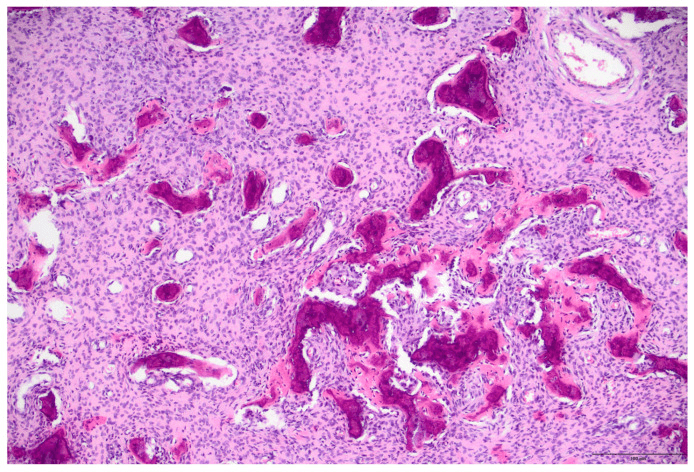
- Throughout - woven-bone trabeculae rimmed by a prominent layer of plump, active osteoblasts. This osteoblastic rimming is the single most useful discriminator
How zoning separates the fibro-osseous lesions. Fibrous dysplasia has curvilinear "alphabet-soup" or "Chinese-character" woven bone that arises directly from the stroma, without osteoblastic rimming and without a maturation gradient; its metaplastic bone is uniform and haphazard throughout. Adamantinoma and OFD-like adamantinoma share the fibro-osseous, osteoblast-rimmed background of OFD, so zonation alone does not exclude them. Zoning says "fibro-osseous, OFD family"; the epithelial islands say "adamantinoma".
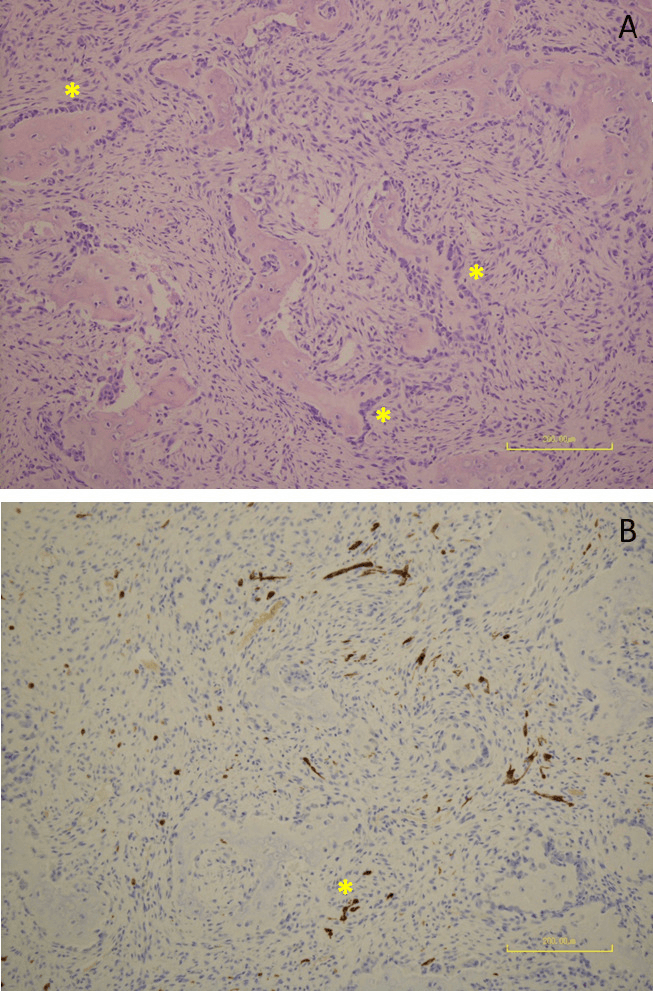
Immunohistochemistry. The panel in OFD:
- Cytokeratin (AE1/AE3) - scattered positive stromal cells
- Epithelial membrane antigen (EMA) - negative
- S100 - variable positivity in the fibrous component
- CD34 - may be positive in stromal cells
- Ki-67 index - low, under 5%
The keratin trap. OFD is not simply "cytokeratin negative". Sweet's AFIP series found isolated cytokeratin-positive stromal cells in 93% of OFD lesions and none in any fibro-osseous control, while hyperchromatic epithelial islands were absent in all 30 OFD cases. Keratin therefore separates OFD from fibrous dysplasia, which is uniformly negative, and not from adamantinoma: what defines adamantinoma is the presence of the islands.
Sampling. Small biopsies can miss both the maturation gradient and rare epithelial islands, which is why radiology-pathology correlation and generous sampling matter.
Osteoblastic rimming plus a peripheral maturation gradient is OFD. Lose the rimming and the gradient and think fibrous dysplasia. Add hyperchromatic epithelial islands and think adamantinoma.
Clinical Presentation
The classic case. A 6-year-old with painless anterior tibial swelling, or a lesion found incidentally on radiographs taken during a trauma work-up. The ways OFD presents:
- Asymptomatic - 40-50%, an incidental radiographic finding
- Painless swelling - 30-40%, an anterior tibial prominence
- Activity-related discomfort - 20-30%, mild aching with exercise
- Pathological fracture - 10-15%, with acute pain and deformity
Examination. There is a firm, non-tender mass over the anterior tibial cortex, and the overlying skin is normal, without warmth or erythema. An anterior tibial bow may be present with a long-standing lesion. Neurovascular status is always normal, and the adjacent joints have a full and painless range of motion.
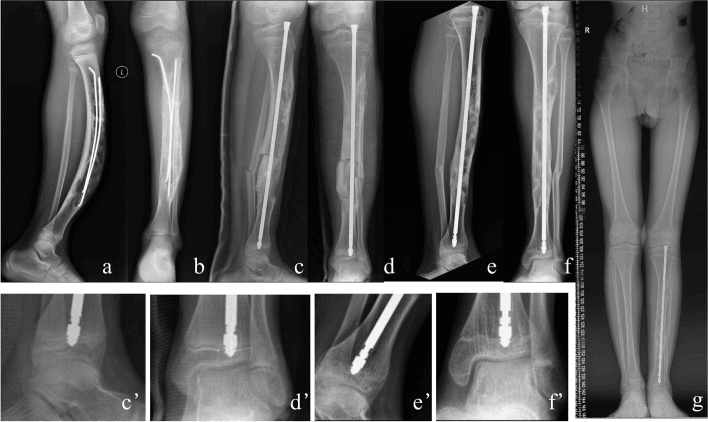
Deformity. Anterior tibial bowing occurs in 15-20% of cases and progresses with growth while the lesion is active. It is typically mild, under 15° of angulation, with minimal functional impact in most cases, and rarely requires corrective osteotomy; progressive deformity requiring intervention occurs in 5-10%.
Natural history. Activity and histology change together as the child grows:
- Childhood (active phase) - slow expansion with growth; high cellularity and prominent osteoid production
- Adolescence (quiescent phase) - stabilisation in most cases; reduced cellularity and increased bone formation
- After skeletal maturity (resolution phase) - spontaneous resolution is common; fibrous tissue replacement with mature bone
- Adult follow-up - residual cortical thickening, with no active lesion
Campanacci - Defining the Entity and Its Natural History
- 35 patients (plus 22 prior literature cases) reframed under the unifying term osteofibrous dysplasia, separating it from fibrous dysplasia and adamantinoma
- Lesions seldom progress through childhood and any progression ceases after puberty; several regressed spontaneously
- Frequent recurrence after curettage or subperiosteal resection, but recurrences are usually non-progressive
- Conclusion: delay surgery as long as possible; radical surgery is not required even after recurrence, fracture or pseudarthrosis
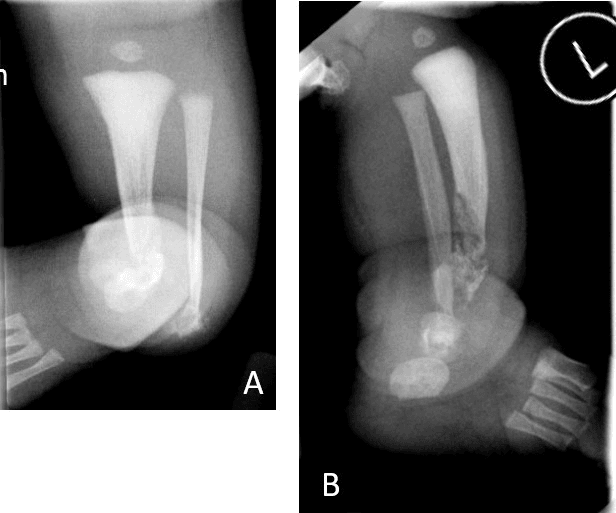
Investigations
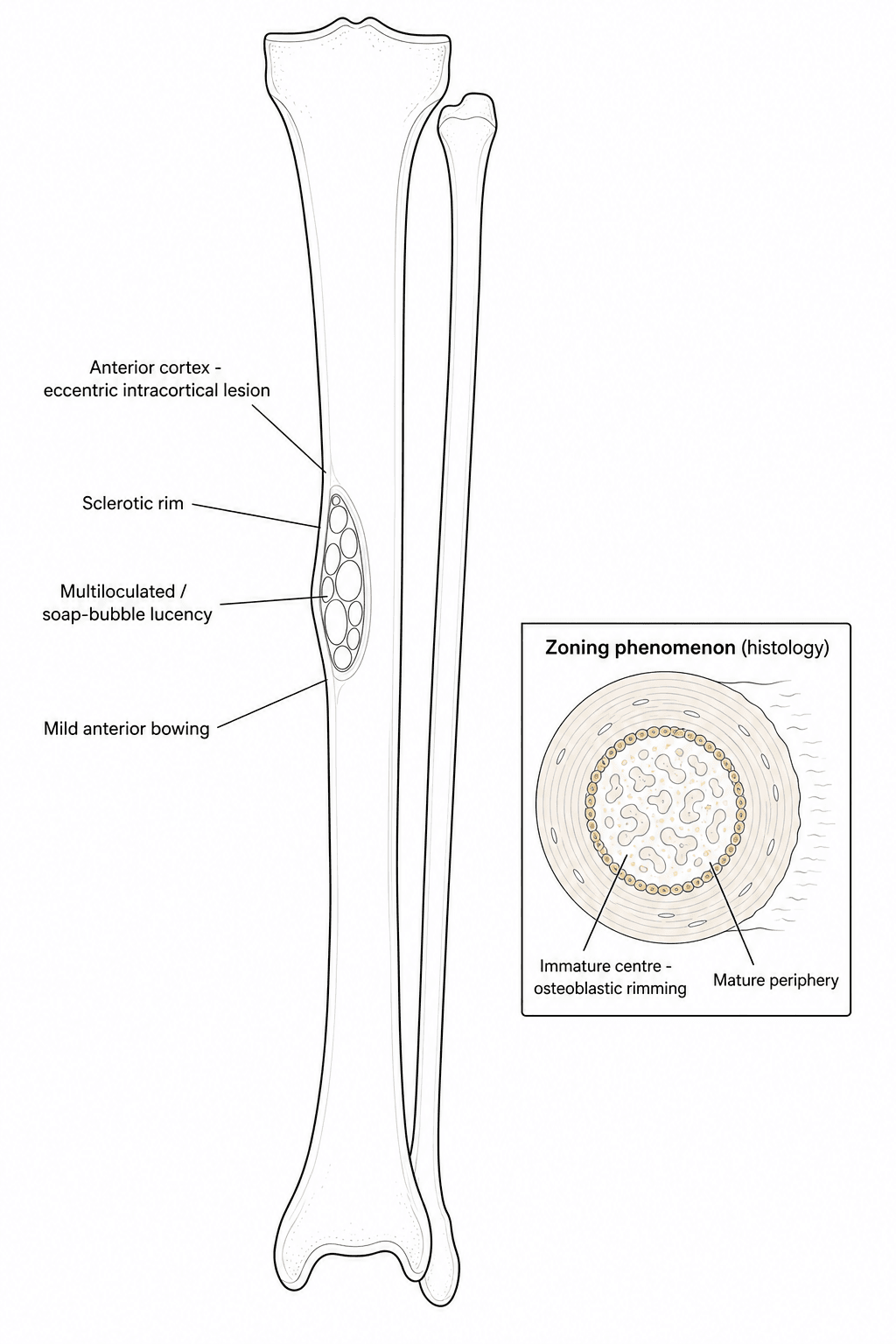
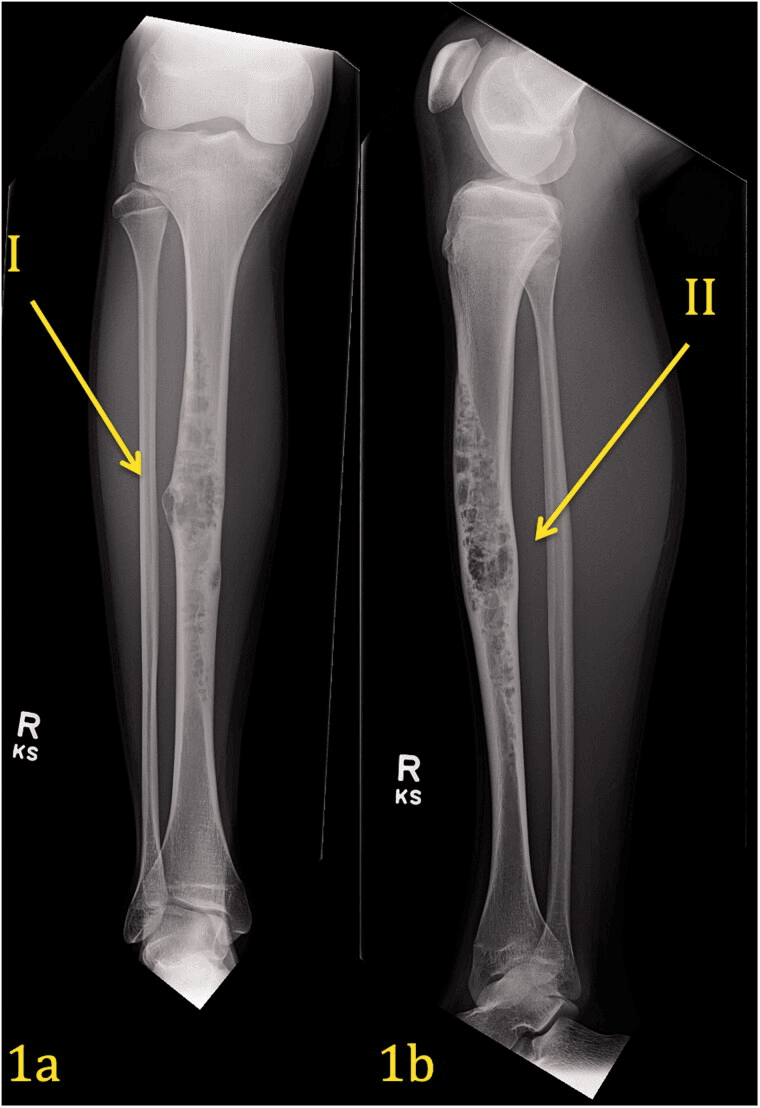
Radiographs come first, alongside clinical examination. The features of a classic lesion:
- An eccentric intracortical lesion of the anterior tibial cortex
- A well-defined lucency with sclerotic margins
- A geographic pattern of bone destruction, Lodwick grade IA
- Thinning, expansion and scalloping of the inner cortex
- Minimal or absent periosteal reaction in uncomplicated cases
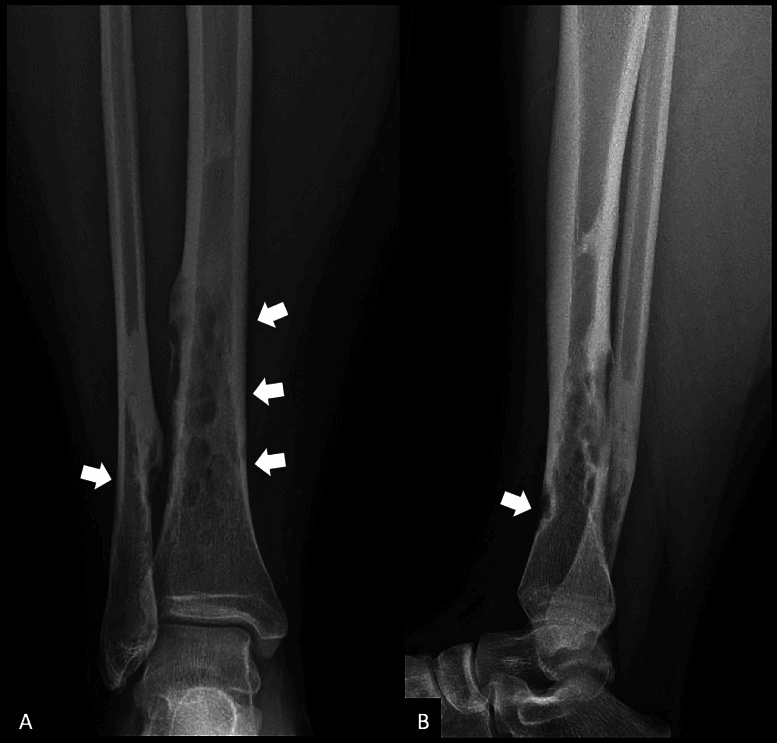
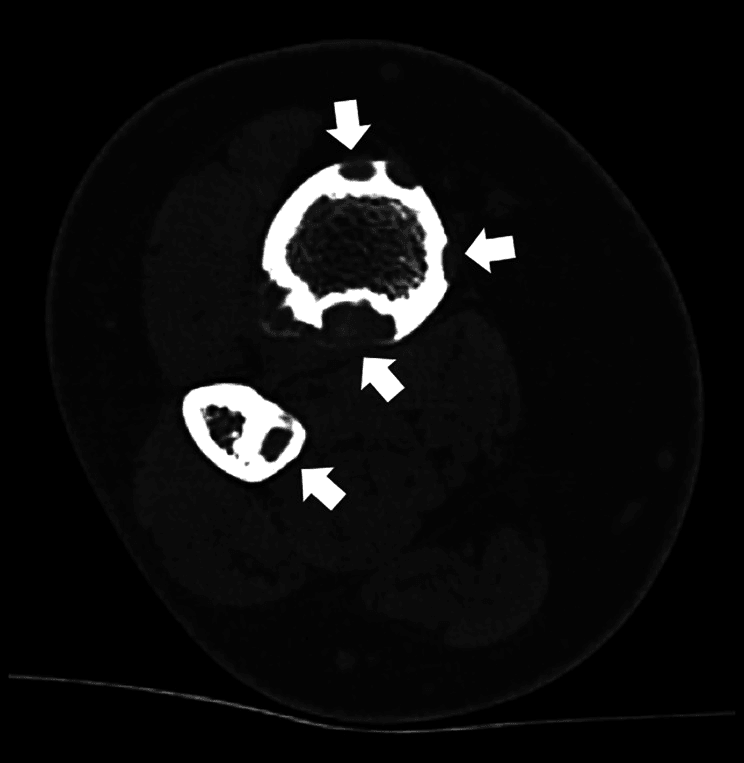
CT delineates cortical involvement precisely, shows no calcification or ossification pattern in the matrix, and confirms the absence of an extraosseous component. 3D reconstruction is useful for surgical planning if needed.
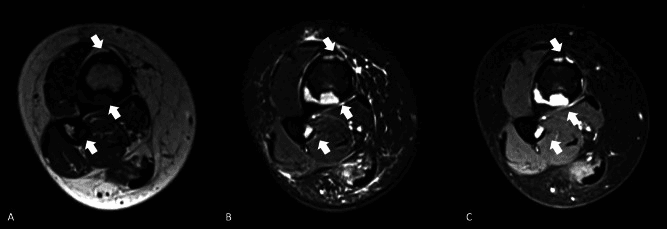
MRI is done to exclude a soft-tissue mass, which is the adamantinoma concern. The signal characteristics of OFD:
- T1 - low to intermediate
- T2 - variable, depending on the ratio of fibrous to osseous tissue
- STIR - high signal in active lesions
- Contrast - moderate enhancement in active lesions
MRI showing no soft-tissue component strongly supports the diagnosis of OFD. If there is any soft-tissue mass, you must suspect adamantinoma and proceed to biopsy.
Nuclear medicine. A bone scan shows increased uptake in active lesions but has limited clinical utility and is not routinely required. PET is not indicated for a benign lesion.
Differential Diagnosis
- ofd
- Anterior tibial cortex
- adamantinoma
- Any cortex, may be multicentric
- fibrous_dysplasia
- Medullary, not cortical
- ofd
- Well-defined, sclerotic rim
- adamantinoma
- Less defined, may breach cortex
- fibrous_dysplasia
- Ground glass, no sclerotic rim
- ofd
- Geographic, single lesion
- adamantinoma
- May be moth-eaten or permeative
- fibrous_dysplasia
- Ground glass, expansile
- ofd
- Less than 10 years typically
- adamantinoma
- 20-40 years peak
- fibrous_dysplasia
- Any age, often teenagers
- ofd
- Never present
- adamantinoma
- May be present in advanced cases
- fibrous_dysplasia
- Never present
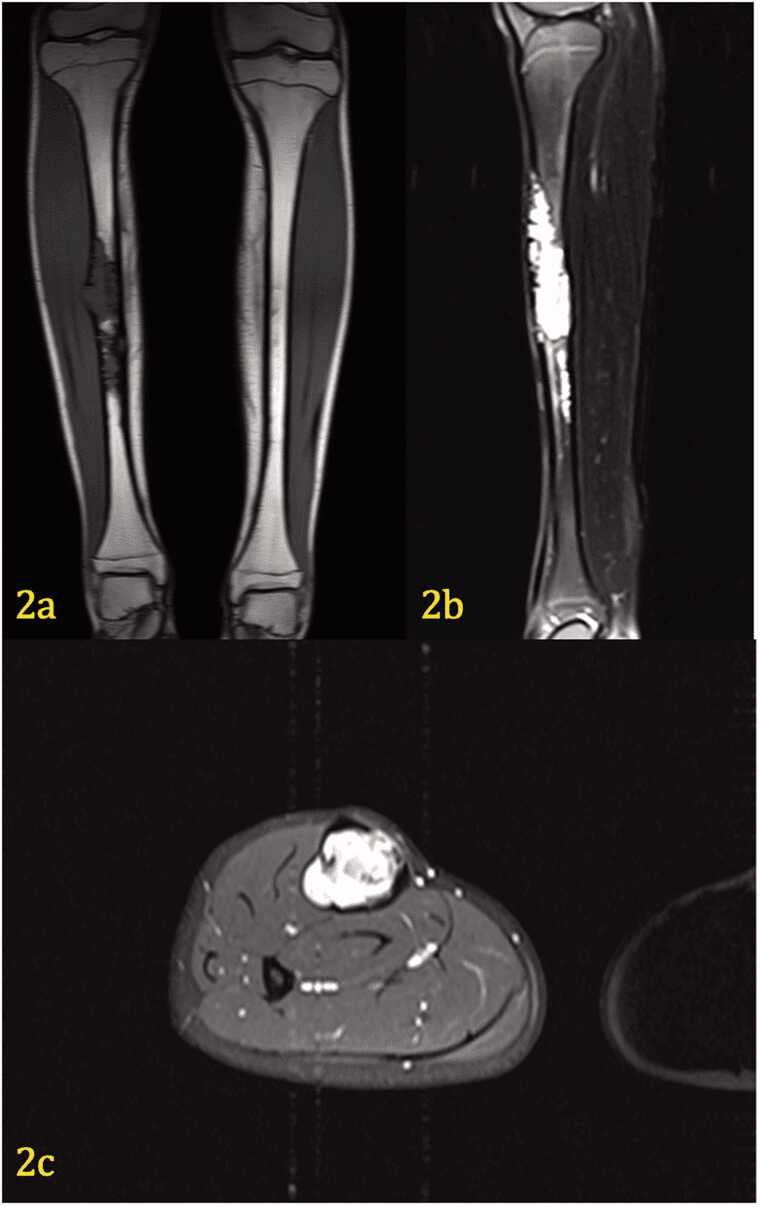
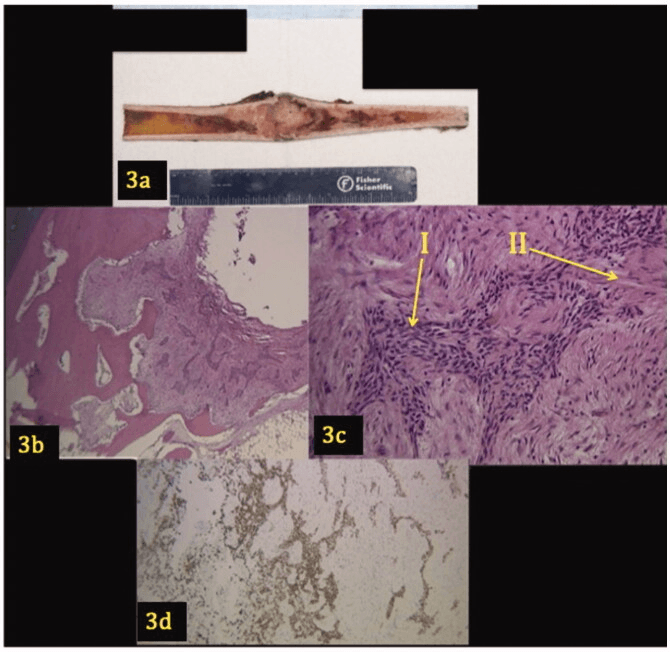
Adamantinoma. It is defined histologically by hyperchromatic epithelial islands; OFD shows only scattered cytokeratin-positive stromal cells, so keratin-positive cells alone do not make the diagnosis. Adamantinoma has malignant potential and requires wide resection.
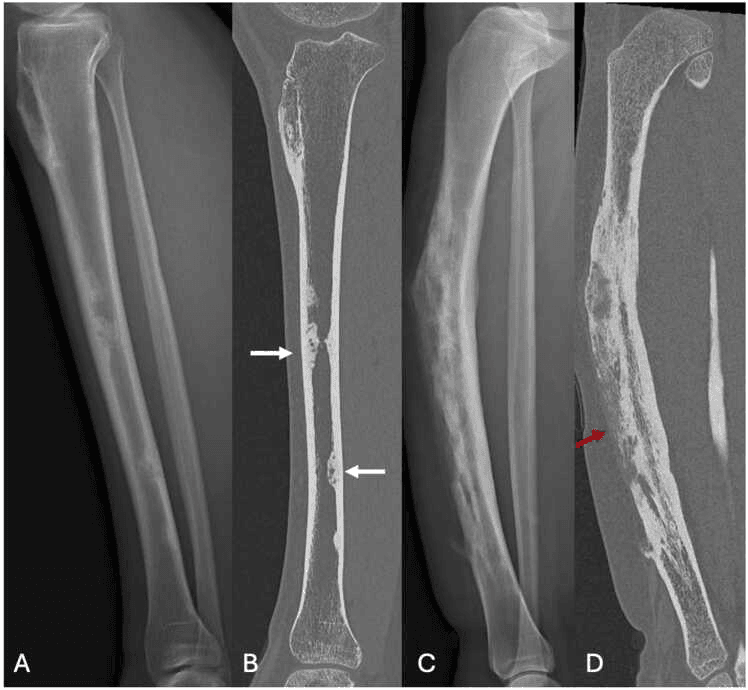
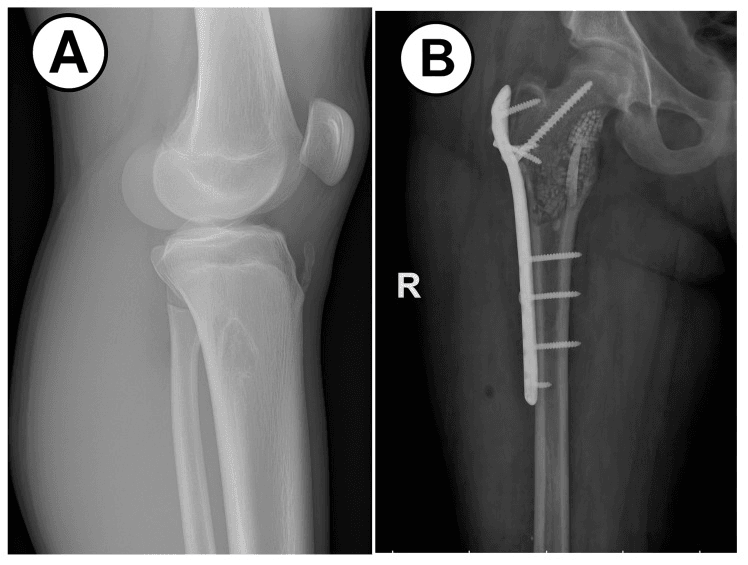
Fibrous dysplasia. Beyond its medullary, ground-glass appearance in the table above, it is typically seen in adolescents and young adults, its woven bone lacks osteoblastic rimming, and unlike OFD it does not resolve spontaneously.
The remaining differentials:
- Ossifying fibroma - primarily mandible and maxilla, rare in long bones; well-defined, radiolucent to radiopaque; spherical ossicles (psammomatoid bodies) on histology; young adults
- Stress fracture - activity-related pain of acute onset; a linear lucency with periosteal reaction; marrow oedema and a cortical fracture line on MRI; heals within 6-8 weeks
- Non-ossifying fibroma - metaphyseal, eccentric and medullary; sclerotic scalloped margins with cortical thinning; adolescents aged 10-15; storiform pattern, foam cells and haemosiderin on histology
(For the full behaviour and molecular basis of the two closest mimics, see the dedicated Fibrous Dysplasia, Adamantinoma and Non-Ossifying Fibroma topics; only their OFD-discriminating features are summarised here.)
Management
The principle. OFD is benign and self-limiting, so consider observation until skeletal maturity in most cases. Surgery targets symptomatic deformity, not the lesion.
The decision. Age, radiology and what the lesion is doing choose the pathway:
- Classic presentation (age under 10, typical radiographs) - observe with serial imaging; no biopsy.
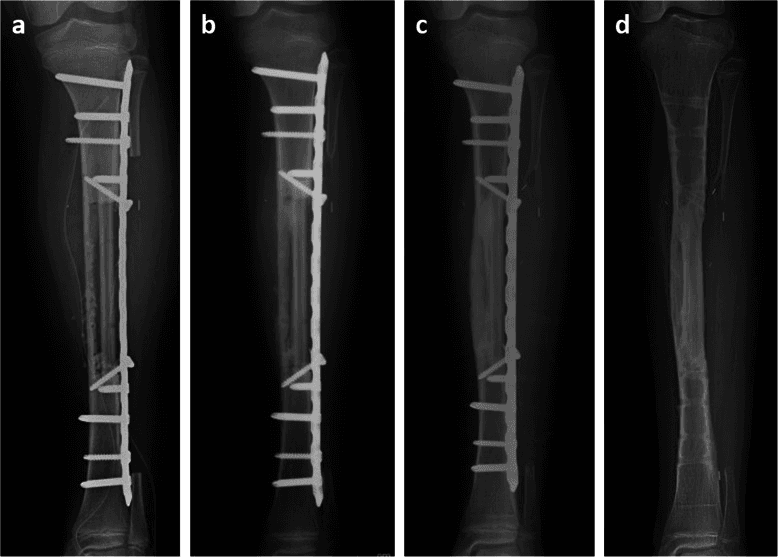
- Atypical features (age over 10, soft-tissue mass, aggressive appearance) - MRI to assess the soft-tissue component, and biopsy is mandatory to exclude adamantinoma. Consider en bloc resection if there are adamantinoma-like features.
- Pathological fracture - conservative fracture management first. Consider curettage if there is non-union after 6 months, with bone grafting to augment healing.
- Progressive deformity - observe until skeletal maturity if mild (under 15°); corrective osteotomy after maturity if significant (over 20°). Address the lesion separately if it is still active.
Largest Modern Series - Surgery Should Target Deformity, Not the Lesion
- International multicentre series of 101 tibial OFD lesions in 99 patients across three paediatric tertiary centres
- 41 lesions (40.6%) treated conservatively; anterior bowing under 10 degrees at presentation predicted successful non-operative management
- Progression or recurrence in only 9 lesions (8.9%); wide excision carried a high complication and surgical burden regardless of technique
- NO lesion transformed to adamantinoma, confirming OFD as a benign condition
- Surveillance should track angular deformity on full-length tibial radiographs; surgery is for symptomatic deformity, not the lesion itself
Who. Children under 15 with an asymptomatic lesion and a stable radiographic appearance.
Surveillance. Radiographs on a schedule that lengthens with time:
- First year - radiographs every 3-6 months
- Years 2-5 - every 6-12 months
- Until skeletal maturity - annual radiographs
- After maturity - discharge if stable
Activity. An asymptomatic lesion needs no specific restriction. Avoid high-impact sport if cortical thinning is severe (over 50%), and return to activity once a pathological fracture has healed.
What to tell the family. With observation, 40-60% resolve spontaneously after skeletal maturity and 30-40% stabilise without further progression. Progression occurs in 10-20%, and these may require intervention.
Management Algorithm
Outcomes and Prognosis
Pathological fracture usually follows minor trauma. About 90% heal with conservative management in a cast; non-union is rare (under 5%) and may require surgery, and refracture is possible if the lesion remains active.
Prognosis is excellent. OFD is a benign disease with the potential for spontaneous resolution, no metastatic potential and a normal life expectancy, and the vast majority have minimal functional impairment.
Long-term outcomes. By the age of 20, 70-80% of lesions are stable or resolved. Residual asymptomatic cortical thickening remains in 10-20%, and 5-10% require surgical intervention for complications.
Favourable prognostic indicators. Features that favour a good outcome:
- Classic radiology: well defined, with a sclerotic rim
- Early diagnosis, before the age of 10
- A single lesion rather than multicentric disease
- Observation accepted, with no rush to surgery
- Typical location in the anterior tibia
- Small size, under 5 cm
- Excellent bone quality surrounding the lesion
Dedifferentiated Adamantinoma - the Aggressive End of the Spectrum
- Three adamantinomas showed sarcomatoid (dedifferentiated) transformation of the epithelial component; one patient died of metastatic disease
- Dedifferentiated areas retained pankeratin positivity despite loss of overt epithelial morphology
- Illustrates the mesenchymal-epithelial plasticity that links OFD, OFD-like adamantinoma and classic adamantinoma
- A keratin-positive sarcomatoid tibial cortical tumour must include adamantinoma in the differential
Guidelines, Registries & Global Practice
Global Epidemiology
- OFD is rare worldwide - well under 0.2% of primary bone tumours - with consistent demographics across published series from Europe, North America and Asia: tibial predominance, anterior cortex of the middle third, and presentation in childhood/adolescence (mean age 7-13 years depending on series).
- No geographic or ethnic predilection and no sex predilection are reported. The largest single dataset is the 101-lesion international series pooling UK and Australian tertiary centres (Dala-Ali, 2022).
Side-by-Side Guidance
There is no single dedicated society guideline for this rare lesion; practice derives from bone-tumour society principles and the major case series. The recommendations below are broadly concordant rather than conflicting.
- principle
- Diagnose on radiology-pathology correlation; histology to exclude adamantinoma
- source
- WHO Classification of Bone Tumours; AAOS review (Most 2010)
- principle
- Avoid biopsy in classic young presentation; biopsy if atypical age, soft-tissue mass or progression
- source
- ESMO/EURACAN sarcoma principles; bone-tumour unit referral pathways
- principle
- Observation with serial full-length tibial radiographs tracking angular deformity
- source
- Dala-Ali 2022; Campanacci 1981
- principle
- Target symptomatic deformity (osteotomy near maturity); avoid lesion-directed curettage (high recurrence)
- source
- Dala-Ali 2022; Park 1993
- principle
- Refer to specialist sarcoma centre; wide en bloc excision with staging (chest CT)
- source
- Hazelbag 1994; Houdek 2018; BSG/ESMO principles
Registry Notes
- OFD is too rare for dedicated registry survival data. National bone-tumour and sarcoma registries (e.g. the UK NSSG/regional bone-tumour services, European EURACAN reference network, Scandinavian sarcoma group databases) capture it mainly to flag and track the OFD-like adamantinoma it can mimic, where long-term recurrence (beyond 15 years, Houdek 2018) justifies registry surveillance.
High- vs Limited-Resource Practice Variation
- Well-resourced settings: ready access to MRI, immunohistochemistry (cytokeratin/EMA) and specialist sarcoma MDTs allows confident observation of classic lesions and early detection of atypical ones; deformity is managed with planned osteotomy and growth modulation.
- Limited-resource settings: plain radiography remains the mainstay; the key practice point is to AVOID intralesional curettage of a presumed benign lesion that could be an under-sampled adamantinoma, and to refer atypical, painful or progressive cortical tibial lesions to a centre with histopathology and limb-salvage capability rather than treating locally.
Why This Matters in Exams
Globally, examiners test the OFD-adamantinoma-fibrous dysplasia triad: location (cortical vs medullary), cytokeratin nuance, GNAS molecular distinction, the observation-first natural history, and the danger of mislabelling an atypical lesion.
Related pages: Adamantinoma for the low-grade malignancy at the other end of this spectrum — and note the discriminator is hyperchromatic epithelial islands, not cytokeratin, which 93% of OFD lesions also express; Fibrous Dysplasia for the lesion cytokeratin genuinely does separate OFD from, and for the GNAS/Gsα mutation that is present there and absent here; Congenital Pseudarthrosis of the Tibia for the other cause of anterior tibial bowing in a young child, which must not be curetted; and Describing a Bone Tumour Radiograph and Predicting Bone Tumour by Age for the systematic approach that reaches an intracortical anterior tibial diaphyseal lesion in the first decade.
Controversies & Areas of Uncertainty
- Is OFD a precursor to adamantinoma? Unresolved. Large paediatric series (Park, Dala-Ali) report NO transformation, arguing OFD is a self-limiting benign lesion. Pathology series (Hazelbag) document OFD-like adamantinomas recurring as classic adamantinoma, supporting a precursor or sampling-bias model. The pragmatic consensus: pure OFD does not need to be treated as pre-malignant, but an atypical or relapsing lesion warrants thorough sampling to exclude OFD-like adamantinoma.
- OFD vs OFD-like adamantinoma on a small biopsy. Scattered keratin-positive cells occur in both; the malignant label requires hyperchromatic epithelial islands. Limited biopsies under-sample, so radiology-pathology correlation and, where feasible, generous sampling are essential.
- Role and timing of biopsy. Classic radiology in a young child can be observed without biopsy. Biopsy is reserved for atypical age (over the second decade), a soft-tissue mass, aggressive radiology, or progression - precisely because needling a benign lesion risks recurrence and offers little when the picture is typical.
- What to operate on. Modern thinking (Dala-Ali) shifts the surgical target from the lesion to the deformity: intralesional curettage has high recurrence and rarely changes natural history, while wide excision carries substantial morbidity. Corrective osteotomy for established angular deformity, ideally near maturity, is increasingly favoured over lesion-directed surgery.
- Surveillance metric. Anterior angular deformity on full-length tibial radiographs (not lesion size alone) is the most useful parameter to follow, with bowing under 10 degrees predicting successful conservative management.
MCQ Practice Points
Q: What is the classic location and appearance of osteofibrous dysplasia?
A: Anterior tibial cortex in children, typically first decade. Creates eccentric, cortical-based, intracortical lytic lesion with anterior bowing of tibia. Ground-glass or multiloculated appearance. Distinguished from fibrous dysplasia by cortical location (FD is medullary). May involve fibula. Self-limiting in most cases.
Q: What is the relationship between osteofibrous dysplasia and adamantinoma?
A: They lie on a spectrum: benign OFD, OFD-like (differentiated) adamantinoma, and classic adamantinoma. OFD contains only scattered keratin-positive stromal cells (seen in ~93% of cases), whereas adamantinoma shows true hyperchromatic epithelial islands and is a low-grade malignancy with metastatic potential. An atypical lesion in an older patient (over age 20) or with rapid growth or a soft-tissue mass warrants biopsy to exclude adamantinoma.
Q: What is the typical natural history of osteofibrous dysplasia?
A: Self-limiting in most children - lesions stabilize or regress with skeletal maturity. Progressive anterior tibial bowing may occur. Conservative management preferred: Observation, bracing if needed. Surgery reserved for pathological fracture, significant deformity, or suspicion of adamantinoma. High recurrence rate if curettage performed before maturity.
Q: How do you differentiate osteofibrous dysplasia from fibrous dysplasia radiographically?
A: Osteofibrous dysplasia: Cortical-based (eccentric), anterior tibia specific, multiloculated, causes anterior bowing, children only. Fibrous dysplasia: Medullary-based (central), any bone, ground-glass matrix, "shepherd's crook" proximal femur, any age. Both show fibrous tissue replacing bone but location is key differentiator.
Q: What histological feature distinguishes osteofibrous dysplasia from fibrous dysplasia?
A: Osteofibrous dysplasia: Woven bone trabeculae rimmed by prominent osteoblasts (osteoblastic rimming), may have cytokeratin-positive epithelial cells. Fibrous dysplasia: Chinese letter/alphabet soup woven bone pattern WITHOUT osteoblastic rimming. Presence of epithelial cells raises concern for adamantinoma spectrum.
Clinical Decision Scenarios
Practise clinical reasoning and management decisions out loud
“A 6-year-old boy presents after a soccer injury. Ankle radiographs show an incidental 3 cm well-defined intracortical lucent lesion in the anterior tibial diaphysis with sclerotic margins. The child is asymptomatic regarding the lesion.”
“A 9-year-old girl had curettage and bone grafting for osteofibrous dysplasia 18 months ago. Follow-up radiographs show recurrence with similar intracortical lucency. Parents are frustrated and want definitive treatment.”
“A 17-year-old presents with several months of anterior shin pain and swelling. Radiographs show a multilocular, eccentric cortical lesion in the mid-tibial diaphysis with some ill-defined margins. MRI shows a small soft-tissue component. The referring clinician has labelled it osteofibrous dysplasia.”
Must-Know Facts
- LOCATION: Anterior tibial cortex (85-90%), children less than 10 years
- RADIOLOGY: Intracortical lucency, well-defined, sclerotic rim, geographic pattern
- HISTOLOGY: Osteoblast rimming + scattered keratin+ cells; adamantinoma has true epithelial islands
- NATURAL HISTORY: Spontaneous resolution 40-60% after skeletal maturity
- TREATMENT: Observation preferred, curettage has 50-60% recurrence
- COMPLICATION: Pathological fracture 10-15%, heals with conservative Rx
- KEY DIFFERENTIAL: Adamantinoma (older, hyperchromatic epithelial ISLANDS, soft tissue mass possible)
Diagnostic Workup
- PLAIN X-RAY: First-line, usually diagnostic in classic presentation
- MRI: If atypical (age greater than 10, soft tissue suspected, aggressive features)
- BIOPSY: Not needed if classic (age less than 10, typical location/radiology)
- BIOPSY INDICATED: Age greater than 10, soft tissue mass, multicentric, aggressive
- IMMUNOSTAIN: scattered cytokeratin+ stromal cells are EXPECTED in OFD (93%, Sweet) — it is the absence of epithelial ISLANDS that excludes adamantinoma
- CT: Helpful for surgical planning if intervention considered
Management Algorithm
- OBSERVATION: First-line for asymptomatic, classic presentation
- FOLLOW-UP: X-ray every 6-12 months until skeletal maturity, then discharge if stable
- SURGERY INDICATIONS: Pathological fracture (non-healing), progressive deformity (greater than 20°), diagnostic uncertainty, persistent pain
- CURETTAGE: High recurrence (50-60%), especially age less than 10 years
- EN BLOC RESECTION: Definitive (less than 5% recurrence), reserved for adamantinoma concern or multiple recurrences
- FRACTURE MANAGEMENT: Conservative first (cast), 90% heal without surgery
Viva Traps to Avoid
- DON'T: Rush to biopsy classic presentation in young child
- DON'T: Offer curettage as 'cure' - high recurrence rate, inform consent
- DON'T: Miss adamantinoma - check age, soft tissue, cytokeratin on histology
- DON'T: Recommend prophylactic surgery - observation superior natural history
- DO: Explain spontaneous resolution potential to family
- DO: Document shared decision-making if family requests surgery
- DO: Review original histology if recurrence (confirm diagnosis)
Quick Differentials
- ADAMANTINOMA: Age 20-40 years, hyperchromatic epithelial ISLANDS (not merely keratin+), may have soft tissue, malignant potential
- FIBROUS DYSPLASIA: Medullary location, ground-glass matrix, no resolution
- STRESS FRACTURE: Acute pain, linear lucency, heals 6-8 weeks
- NON-OSSIFYING FIBROMA: Metaphysis, medullary, scalloped margins, age 10-15 years
- OSSIFYING FIBROMA: Jaw bones, rare in long bones, psammomatoid bodies
Evidence Base
Park / Mayo Clinic - 80-Case Clinicopathologic Reference
- 80 long-bone OFD cases; recurrence common after incomplete excision/biopsy regardless of regimen (9 of 18 consultation cases)
- Two paediatric lesions histologically matured into fibrous dysplasia on later sampling
- Adamantinoma did NOT develop in any of the 41 cases with follow-up; OFD does not progress to adamantinoma
- Surgery reserved for extensive lesions, pseudarthrosis or accentuated tibial bowing; overall prognosis good even with recurrence
Sweet (AFIP) - Cytokeratin-Positive Cells Are the Norm in OFD
- 30 cortical OFD cases (mean age 13.4 years); tibia involved in all, ipsilateral fibula in 17%
- Isolated cytokeratin-positive stromal cells found in 28 of 30 lesions (93%) - hyperchromatic epithelial islands were absent in all
- 50 control fibro-osseous lesions (fibrous dysplasia, fibroxanthoma, ossifying fibroma) had NO keratin-positive cells
- Dispels the exam oversimplification that OFD is uniformly cytokeratin negative; the discriminator from adamantinoma is absent epithelial islands
Sakamoto - GNAS (Gsα) Mutation Separates OFD from Fibrous Dysplasia
- 7 of 7 fibrous dysplasia lesions carried the Gsα Arg201 missense mutation (Arg-to-His or Arg-to-Cys)
- 0 of 7 osteofibrous dysplasia lesions and normal bone controls carried the mutation
- Confirms distinct molecular pathogenesis for OFD versus fibrous dysplasia
- Arg201 testing is a useful molecular discriminator between the two fibro-osseous lesions