Post-Amputation Pain Syndromes | Cortical Reorganisation | Prevention and Multimodal Management
- Phantom pain arises from cortical reorganisation in primary somatosensory cortex
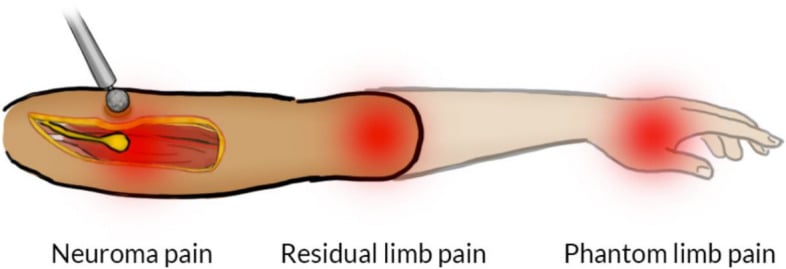
- Differentiate phantom pain from residual-limb pain and neuroma pain by location and character
- Perioperative epidural or regional analgesia may reduce phantom pain incidence, but the two randomised trials conflict
- Targeted muscle reinnervation (TMR) is the most effective surgical prevention strategy
- Mirror therapy exploits cortical plasticity and is first-line non-invasive treatment
- “Phantom pain is referred to the distal phantom limb, often with telescoping
- “Residual limb pain is superficial or deep in the stump, related to prosthetic use
- “Neuroma pain is focal, Tinel-positive, and often burning or electric
- “Cortical reorganisation maps the missing limb onto adjacent body representations
Overview and Epidemiology
Phantom limb pain is pain perceived in the absent limb. It arises from maladaptive cortical reorganisation after limb loss and is distinct from the two other pains of the amputee, residual limb pain and stump neuroma pain. Separating the three allows targeted prevention and treatment rather than generic opioid escalation.
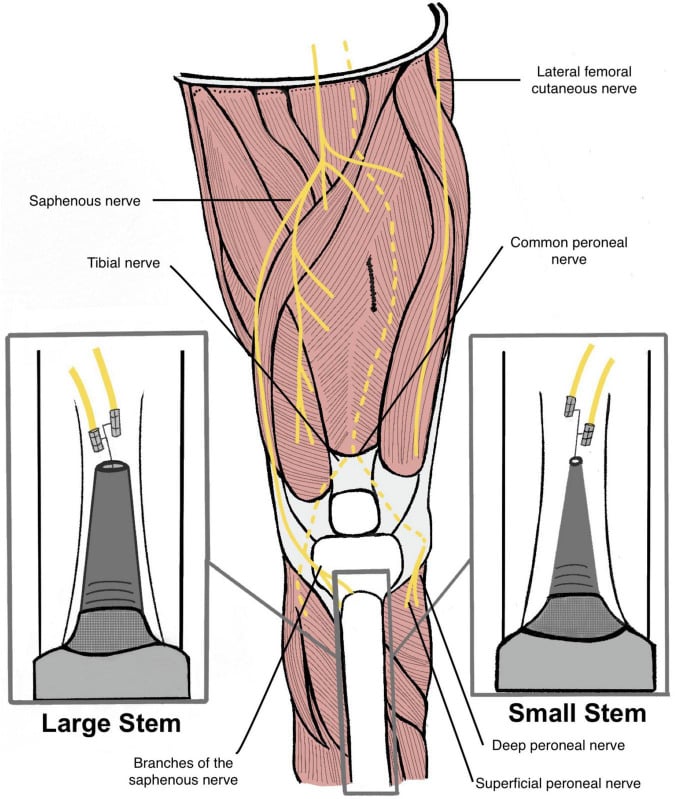
The painful stump neuroma - the peripheral driver that feeds the cortical reorganisation, and the target of TMR and RPNI - has a dedicated page: Neuroma Management. This page is the pain syndrome (central and peripheral); that one is the peripheral lesion itself.
How common. Among major limb amputees:
- Phantom pain - 50-80%
- Residual limb pain - 20-50%, often prosthetic-related
- Stump neuroma pain - 10-25%, focal and surgically treatable
- Telescoping - 30-50% report the phantom limb shortening over time
What it costs. Pain is the leading cause of prosthetic non-use. Chronic pain is strongly associated with depression and anxiety, repeated surgical interventions bring a risk of opioid dependence, and the effect on employment and social function is profound.
Pathophysiology
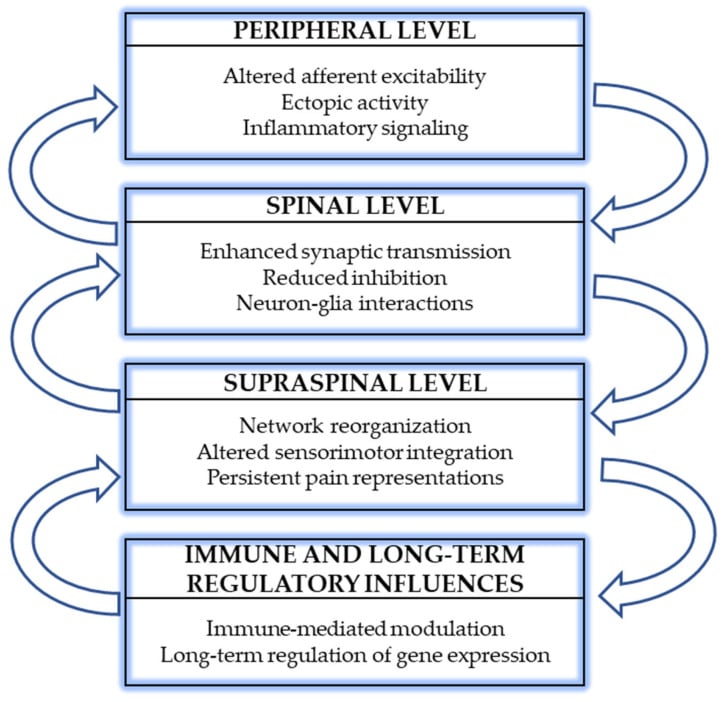
Where it arises. Phantom pain has mechanisms at every level from the cut nerve to the cortex, and a psychological one besides:
- Peripheral - ectopic firing from transected nerves and neuromas
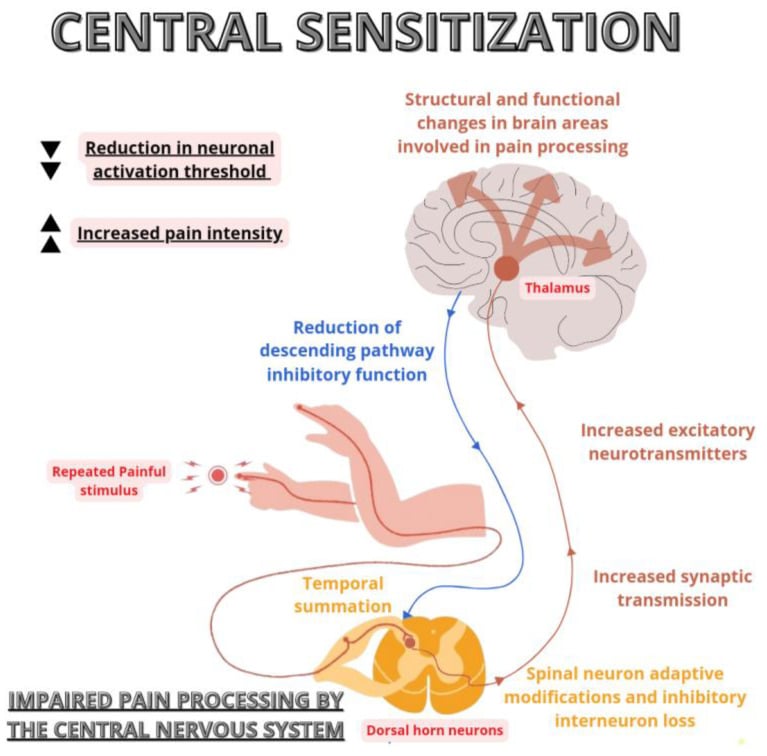
- Spinal - central sensitisation and disinhibition in the dorsal horn
- Cortical - reorganisation of the S1 map, with loss of inhibitory control
- Psychological - the memory of pre-amputation pain, and emotional processing
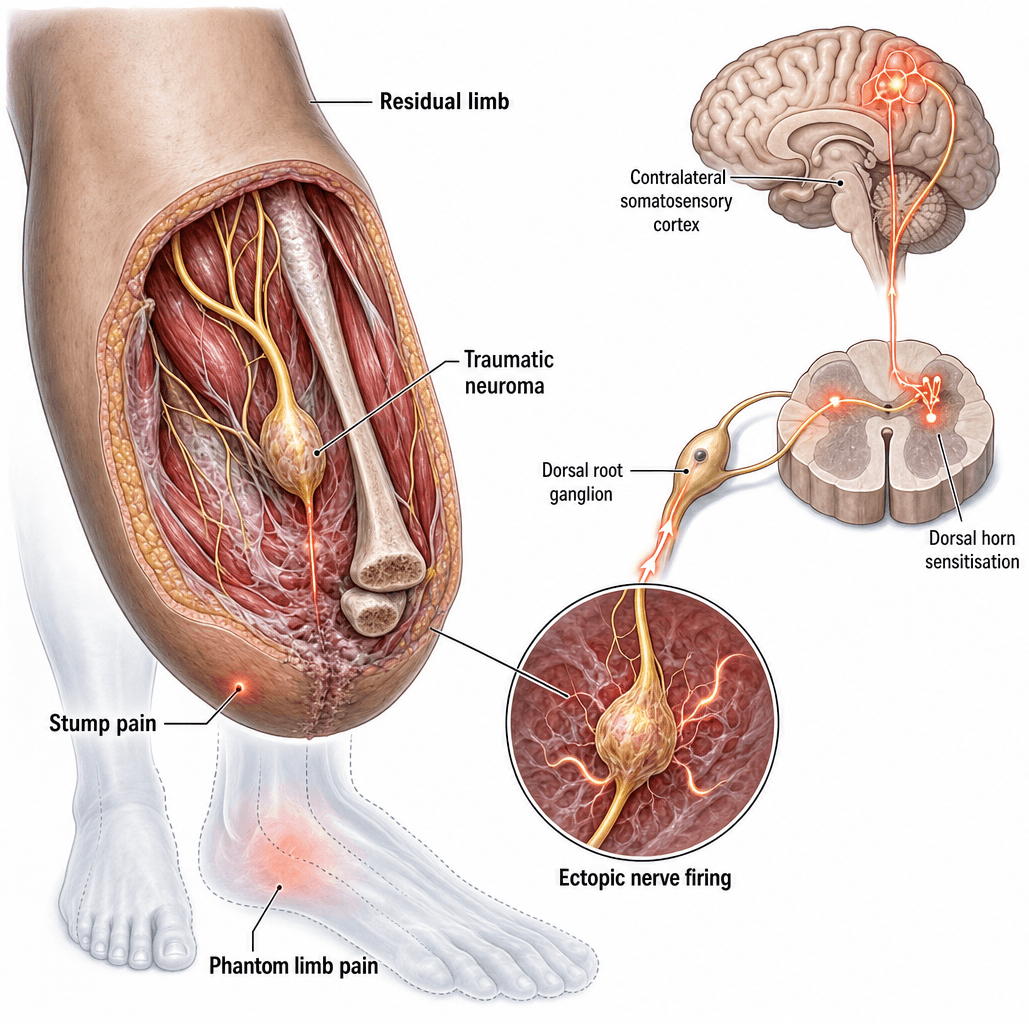
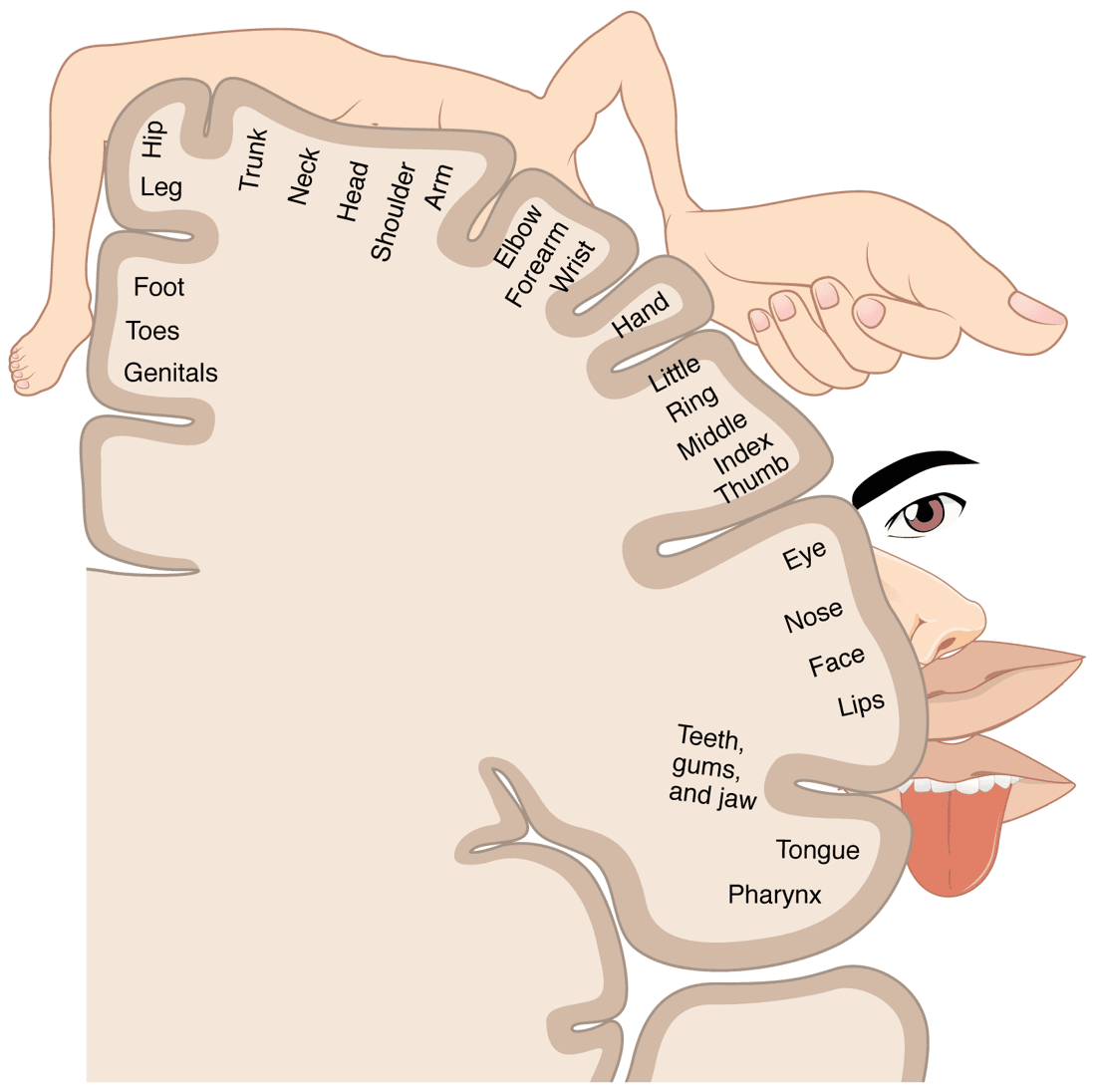
Cortical reorganisation. After amputation the primary somatosensory cortex reorganises rapidly: the map of the missing limb is invaded by the representations of adjacent body parts, the face and trunk. This maladaptive plasticity generates phantom sensations and pain, and functional imaging shows that the degree of reorganisation correlates directly with phantom pain intensity. Mirror therapy and TMR work by restoring appropriate cortical input, preventing or reversing the change.
Central sensitisation. In the dorsal horn the activation threshold falls and transmission strengthens while descending inhibition weakens. Once established, the pain persists without any peripheral generator, which is why a technically perfect neuroma excision can leave it unchanged.
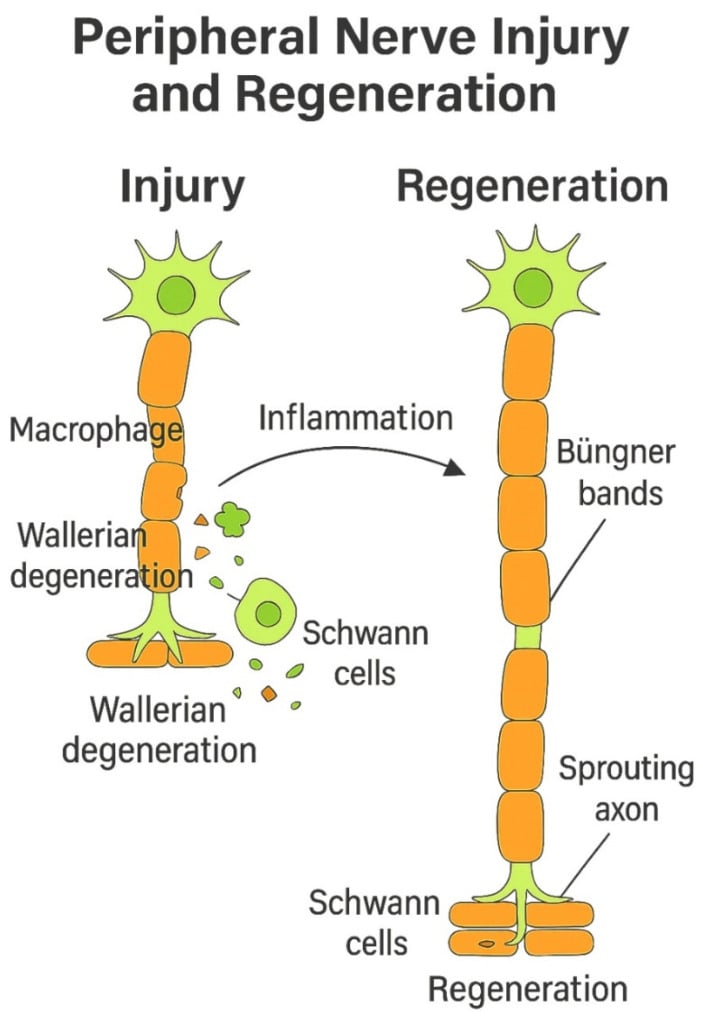
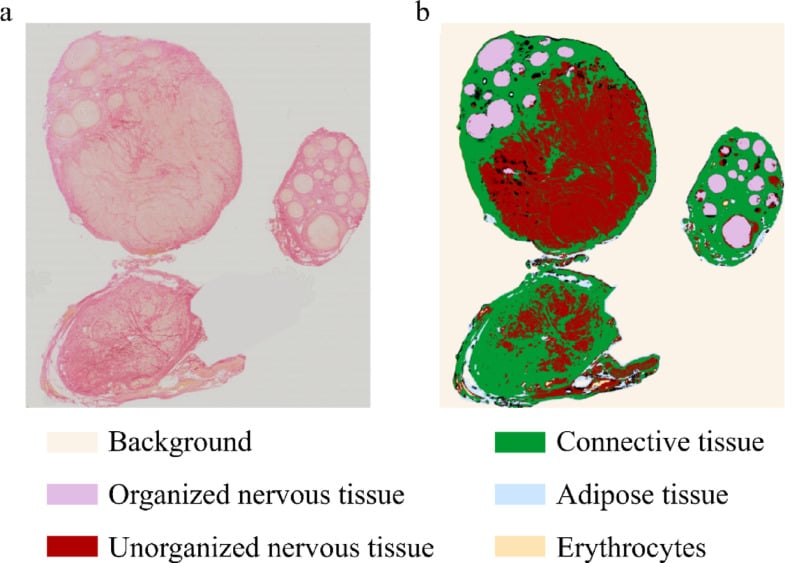
The neuroma. After transection the distal axon undergoes Wallerian degeneration while Schwann cells form Büngner bands to guide regrowth. With no distal target the sprouting axons coil into a tangled mass with ectopic pacemakers, the neuroma, and mechanical provocation of it generates paraesthesia felt distally (the Tinel sign). Both TMR and RPNI are designed to redirect this disorganised regeneration.
Residual limb pain has local causes: ischaemia, scar tethering and prosthetic pressure, the last from shear forces on the skin, a bony prominence or poor suspension.
Phantom Sensation versus Phantom Pain
An examiner discriminator the rest of this topic assumes: not every phantom phenomenon is painful. Three things must be separated.
- What the patient describes
- Painless awareness that the limb is still present - position, movement, touch, temperature or itch. Almost universal early after amputation
- Significance
- A normal consequence of deafferentation, not pathological; usually fades - needs explanation and reassurance, not drug escalation
- What the patient describes
- Painful sensations (burning, cramping, shooting) referred into the absent limb
- Significance
- A treatable target: mirror therapy, neuropathic agents and TMR
- What the patient describes
- Pain felt in the remaining stump tissues
- Significance
- A treatable target, often mechanical, prosthetic or neuroma - assess the stump first
Sub-types of non-painful phantom sensation worth naming in a viva:
- Exteroceptive - touch, temperature, itch or pressure felt in the phantom
- Kinetic - a sense of (often involuntary) movement of the phantom
- Kinaesthetic - the perceived size, shape and posture of the phantom, including telescoping, in which the phantom hand or foot is felt to retract gradually towards the stump. Telescoping is a clinical marker of the cortical reorganisation that also drives phantom pain
Classification and Types
Classification by mechanism directs therapy: cortical for phantom pain, mechanical for residual limb pain, surgical for neuroma pain.
- Phantom Limb Pain
- Absent limb (often distal)
- Residual Limb Pain
- Stump tissues
- Stump Neuroma Pain
- Focal at transection site
- Phantom Limb Pain
- Burning, cramping, shooting
- Residual Limb Pain
- Aching, pressure, ischaemic
- Stump Neuroma Pain
- Electric, shooting
- Phantom Limb Pain
- Emotional stress, weather
- Residual Limb Pain
- Prosthetic wear, weight-bearing
- Stump Neuroma Pain
- Direct pressure, tapping
- Phantom Limb Pain
- Cortical reorganisation after deafferentation
- Residual Limb Pain
- Mechanical, ischaemic or neuropathic
- Stump Neuroma Pain
- Ectopic firing from transected nerve end
- Phantom Limb Pain
- Pain referred to absent limb, telescoping
- Residual Limb Pain
- Pain with prosthetic loading, skin breakdown
- Stump Neuroma Pain
- Focal Tinel sign
- Phantom Limb Pain
- Mirror therapy first, gabapentinoids, consider TMR
- Residual Limb Pain
- Optimise prosthetic fit, desensitisation, address neuroma
- Stump Neuroma Pain
- TMR or targeted neurectomy
Phantom pain is not related to prosthetic wear, and the cortical plasticity behind it is reversible with early intervention. Residual limb pain needs prosthetic assessment before any pharmacological treatment. Neuroma pain has a definitive surgical option in TMR or targeted neurectomy, and early TMR at amputation prevents the neuroma forming.
Clinical Assessment
History. Establish the timing (immediate or delayed onset after amputation), the location (the absent limb, the stump or one focal point), the quality (burning, cramping, electric, aching) and the triggers (prosthetic use, weather, emotional stress, pressure). Then ask what has already been tried: mirror therapy and compliance with it, medications, surgery.
Examination. Inspect the stump for healing, skin quality, prosthetic fit and volume, and palpate it for a Tinel sign over a neuroma, a bony prominence and scar tethering. Assess the prosthesis (suspension, alignment, pressure points), the phantom (position sense, telescoping, movement control) and the neurology (allodynia, hyperalgesia, sensory mapping).
Telling the three apart. Ask the patient to point to the exact site of the pain. In phantom limb pain the patient points to the space where the limb used to be, often to cramping or burning in the phantom hand or foot, and stump palpation does not reproduce it. Residual limb pain is felt within the stump tissues themselves, often mechanical and worse with prosthetic donning or weight-bearing, and there may be skin breakdown or ischaemic features.
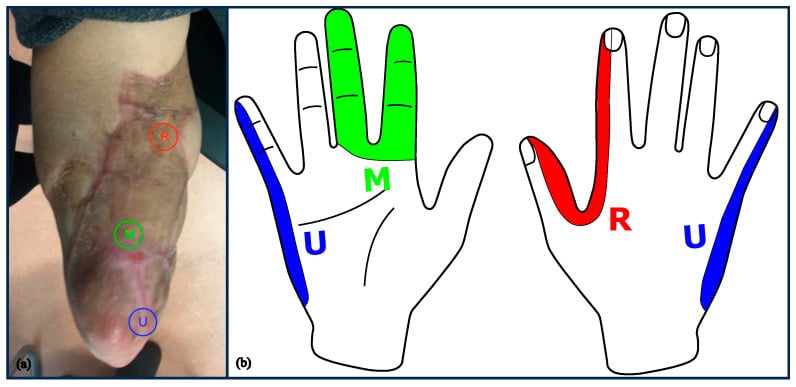
Stump neuroma pain is highly focal. A positive Tinel sign produces electric paraesthesia in the phantom distribution, and light touch or socket pressure at one point may trigger it.
Treating a neuroma when the dominant pain is cortical phantom pain will fail. Always map the pain location precisely, with the patient pointing to the exact site.
- Technique
- Percuss suspected neuroma site
- Positive Finding
- Electric shooting into phantom
- Interpretation
- Confirms symptomatic neuroma
- Technique
- Observe wear pattern and skin changes
- Positive Finding
- Focal erythema or breakdown
- Interpretation
- Identifies mechanical residual pain source
- Technique
- Ask patient to describe phantom position
- Positive Finding
- Phantom feels shorter or telescoped
- Interpretation
- Marker of cortical reorganisation severity
Investigations
Mostly clinical. Imaging is rarely required for diagnosis: most diagnoses are clinical, imaging is adjunctive, and the key is accurate pain mapping by the patient. The first-line work-up is clinical mapping:
- Pain diagram - the patient draws the pain on a body outline (phantom, stump or focal)
- Tinel mapping - mark every site that produces phantom paraesthesia
- Prosthetic review - socket fit, suspension and alignment, by the prosthetist
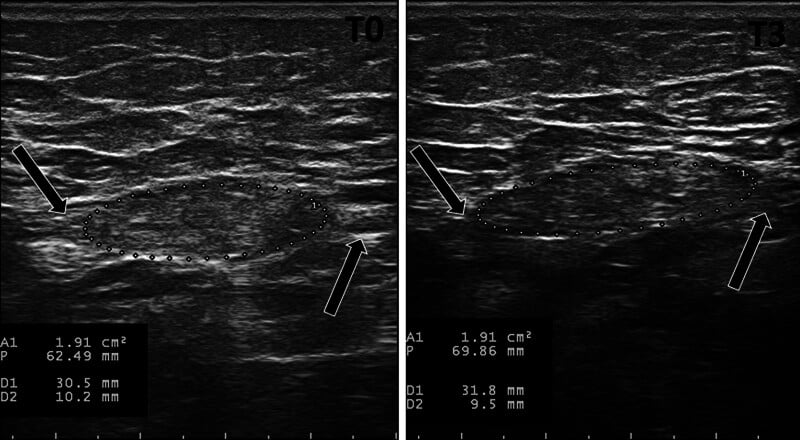
Ultrasound, if a neuroma is suspected. Focal Tinel-positive pain is the indication. Ultrasound confirms the neuroma's morphology, a hypoechoic mass in continuity with the transected nerve. It confirms the neuroma anatomy when surgical intervention is planned and guides targeted injection or surgical planning.
Functional MRI, for research or complex cases. It quantifies cortical reorganisation before and after mirror therapy or TMR, showing the lip or face representation shifted into the deafferented limb area. It is a research tool demonstrating the cortical basis of phantom pain rather than a clinical decision-making instrument.
Management Algorithm
Prevent first. Once phantom pain is established complete resolution is difficult, and late interventions have lower success rates. Always address the three pain syndromes separately rather than treating all post-amputation pain as a single entity.
At the time of amputation the aim is to stop maladaptive cortical reorganisation and neuroma formation becoming established. Early perioperative interventions, particularly TMR and optimised analgesia, significantly reduce incidence.
- Before surgery - pre-emptive epidural or continuous peripheral nerve block; counsel the patient about the risk of phantom pain and the mirror therapy plan; plan TMR or RPNI at the primary amputation when feasible
- At surgery (TMR) - identify the major peripheral nerves (median, ulnar, radial, tibial, peroneal) and coapt their ends to motor branches of the residual (target) muscles, which prevents neuroma and provides intuitive prosthetic control signals
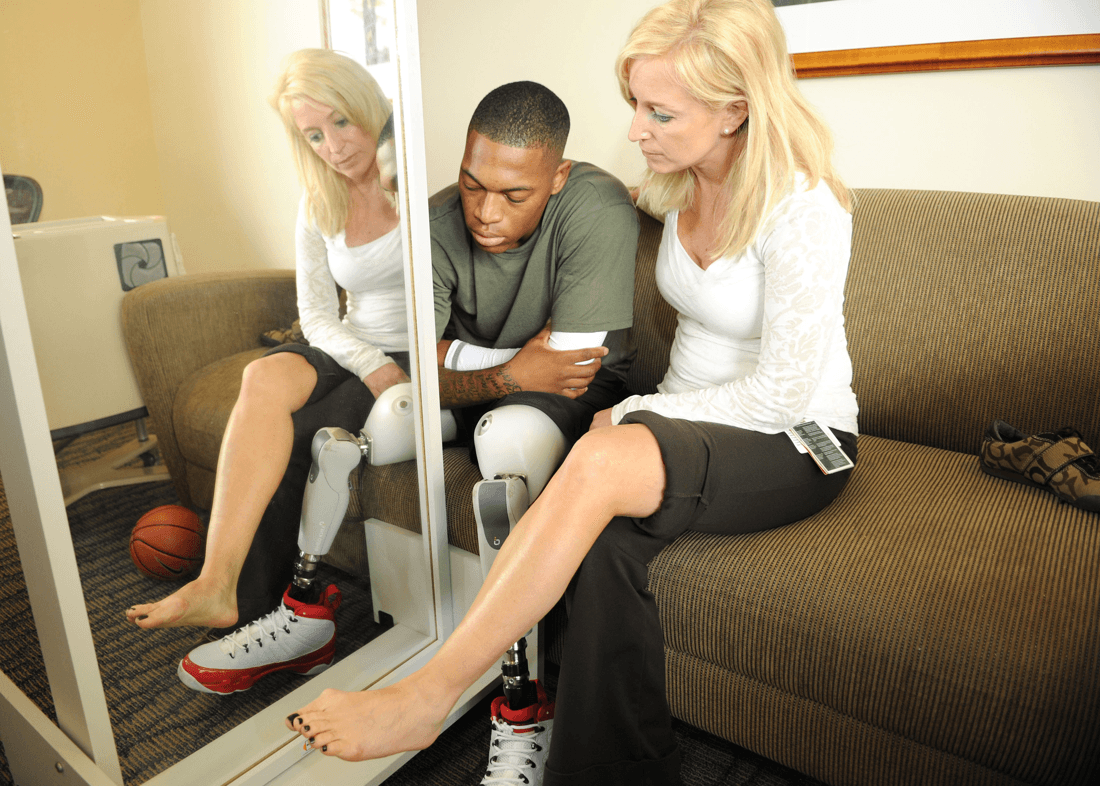
- Days 0-14 - continue regional analgesia for 5-7 days minimum; start mirror therapy on day 1, 15 minutes twice daily; rigid dressing or an immediate post-operative prosthesis
Targeted muscle reinnervation performed at the time of amputation is the single most effective intervention to reduce both phantom pain and neuroma pain. When TMR is not available, continuous regional analgesia for at least 5 days combined with immediate mirror therapy significantly lowers incidence compared with opioid-only regimens.
Where the analgesia evidence stands. The two randomised trials of perioperative analgesia conflict. Nikolajsen 1997 found that pre-emptive epidural blockade did not reduce phantom or stump pain; Karanikolas 2011 found that optimised analgesia started 48 hours before surgery reduced phantom pain at 6 months. The magnitude of prevention remains debated, and the 5-7 day duration commonly quoted is pragmatic, not trial-defined.
Complications
- Incidence
- 50-80 percent without prevention
- Risk Factors
- Delayed analgesia, no TMR, pre-amputation pain
- Management
- Multimodal: mirror therapy plus TMR revision
- Incidence
- 10-25 percent
- Risk Factors
- Nerve transection without reinnervation target
- Management
- TMR or targeted neurectomy
- Incidence
- 20-40 percent of amputees
- Risk Factors
- Uncontrolled pain, poor fit, lack of rehabilitation
- Management
- Pain control plus prosthetic team involvement
- Incidence
- Common after multiple revisions
- Risk Factors
- Inadequate multimodal regimen
- Management
- Opioid rotation, ketamine, interventional pain
- Incidence
- Elevated in chronic pain amputees
- Risk Factors
- Social isolation, unemployment, pain catastrophising
- Management
- Integrated psychological support essential
Outcomes and Prognosis
- Intervention
- TMR plus epidural analgesia plus mirror therapy
- Expected Outcome
- Phantom pain incidence reduced to less than 20 percent
- Long-term Function
- High prosthetic acceptance, return to work
- Intervention
- Mirror therapy plus gabapentinoid
- Expected Outcome
- 50-70 percent meaningful pain reduction
- Long-term Function
- Good prosthetic use with ongoing therapy
- Intervention
- Multimodal including late TMR
- Expected Outcome
- 30-60 percent improvement, rarely pain-free
- Long-term Function
- Variable prosthetic use, psychological support needed
The first 30 days. The first 30 days after amputation are the critical window for cortical reorganisation. Early intervention within the first month yields the greatest reduction in long-term pain burden, and interventions after the window have diminishing returns.
Prognostic factors. The best prognosis follows TMR at the index amputation, pre-emptive regional analgesia for more than 5 days, immediate mirror therapy, a compliant patient and no chronic pain before the amputation. Delayed presentation beyond 6 months, multiple failed neuroma excisions, opioid dependence, untreated depression and a poor prosthetic fit all predict a poor one.
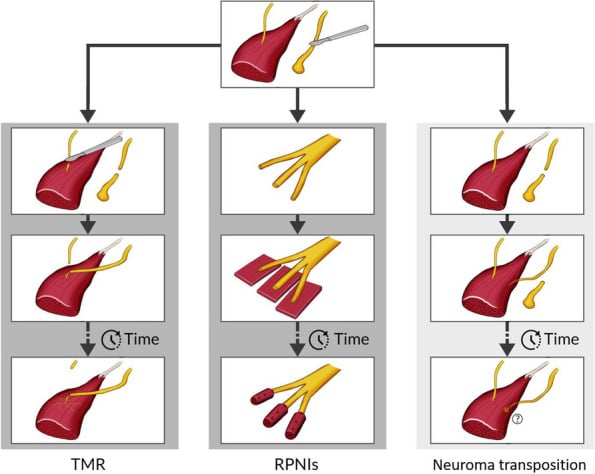
Surgical Neuroma Prevention: TMR versus RPNI
- TMR (Targeted Muscle Reinnervation)
- Transfer (coapt) the divided major nerve to a redundant motor branch of a nearby innervated muscle in situ
- RPNI (Regenerative Peripheral Nerve Interface)
- Implant the divided nerve end into a free (non-vascularised) autologous skeletal muscle graft that then revascularises and is reinnervated
- TMR (Targeted Muscle Reinnervation)
- A native, in-situ target muscle and its motor nerve
- RPNI (Regenerative Peripheral Nerve Interface)
- A small free muscle graft harvested and wrapped around the nerve end
- TMR (Targeted Muscle Reinnervation)
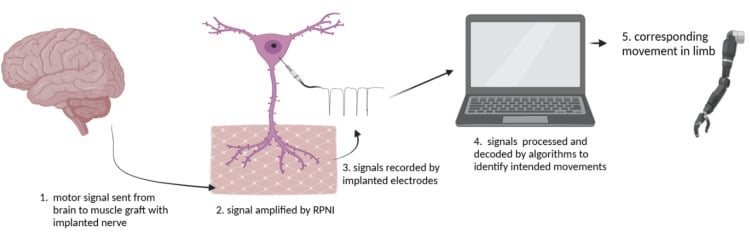
- Creates amplified, intuitive EMG control sites for myoelectric prostheses
- RPNI (Regenerative Peripheral Nerve Interface)
- The graft acts as a bioamplifier for small nerves or fascicles, also usable for prosthetic signalling
- TMR (Targeted Muscle Reinnervation)
- Needs an available expendable motor branch; well suited to the major mixed nerves
- RPNI (Regenerative Peripheral Nerve Interface)
- Handles small sensory fascicles and multiple nerve ends where no motor branch is available
Both can be performed at the time of amputation (preventive) or later for an established symptomatic neuroma. Both outperform simple traction neurectomy or repeated neuroma excision, which leave the nerve end without a target and tend to recur.
TMR transfers the cut nerve onto a motor branch of a living target muscle; RPNI buries the cut nerve end in a free muscle graft. Both give the axons somewhere to go.
Guidelines, Registries & Global Practice
- Phantom pain prevalence 50-80 percent across all amputation aetiologies worldwide
- Trauma and vascular disease are leading causes in high- and low-resource settings
- Paediatric amputees have lower phantom pain rates due to greater cortical plasticity
- Upper limb amputees report higher pain intensity and prosthetic abandonment rates
- High-resource: TMR at index amputation, certified prosthetists, functional MRI research
- Limited-resource: Emphasis on early mirror therapy and continuous regional analgesia using low-cost catheters
- Universal principle: Prevention at amputation is more effective than late treatment regardless of setting
- Surgery: TMR and RPNI are increasingly adopted globally as evidence accumulates
- Prevention Emphasis
- TMR at index amputation when expertise available
- First-Line Treatment
- Mirror therapy plus gabapentinoids
- Surgical Threshold
- TMR or peripheral nerve stimulation after 3-6 months failed conservative care
- Prevention Emphasis
- Pre-emptive epidural or regional block for 5-7 days
- First-Line Treatment
- Graded motor imagery then mirror therapy
- Surgical Threshold
- TMR for focal neuroma pain; psychological assessment first
- Prevention Emphasis
- Early prosthetic fitting and mirror therapy in all settings
- First-Line Treatment
- Low-cost mirror box plus desensitisation
- Surgical Threshold
- Referral to specialist centre for TMR when available
- Prevention Emphasis
- Multimodal perioperative analgesia including regional techniques
- First-Line Treatment
- Neuropathic agents plus psychological interventions
- Surgical Threshold
- Interventional options after optimised medical therapy
There is no dedicated international registry for post-amputation pain outcomes. Evidence is drawn from randomised trials of mirror therapy, prospective TMR series, and mechanistic imaging studies. The strongest data support prevention bundles at the time of amputation rather than reactive treatment of established pain.
Record in every amputation:
- Pre-operative discussion of phantom pain risk and prevention plan
- Type and duration of regional analgesia
- Whether TMR or RPNI was performed
- Initiation of mirror therapy and patient compliance
- Pain mapping at each follow-up (phantom vs residual vs neuroma)
A missed opportunity for TMR or inadequate perioperative analgesia leading to refractory phantom pain is a recurring source of long-term morbidity worldwide. Always document the prevention strategy employed.
Controversies & Areas of Uncertainty
The foundational evidence is conflicting. Nikolajsen 1997 (Lancet, n=60) found preoperative epidural blockade did NOT reduce phantom or stump pain, whereas Karanikolas 2011 (Anesthesiology, n=65) found optimized analgesia started 48 h pre-op significantly reduced 6-month phantom pain (1/13 vs 9/12 controls). The likely reconciliation is that earlier, more aggressive multimodal control matters more than the route. The 5-7 day duration commonly quoted is pragmatic, not trial-defined; continue while in hospital then transition to oral multimodal analgesia.
TMR clearly reduces neuroma pain. Its effect on pure cortical phantom pain without neuroma is less certain. Some series show benefit via altered peripheral input, but patient selection criteria remain undefined. Most surgeons reserve late TMR for patients with a clear neuroma component.
Both have case series support for refractory phantom pain. No head-to-head trials exist. Peripheral nerve stimulation may be more appropriate when pain is focal; spinal cord stimulation when pain is diffuse or bilateral. Cost and revision rates influence choice.
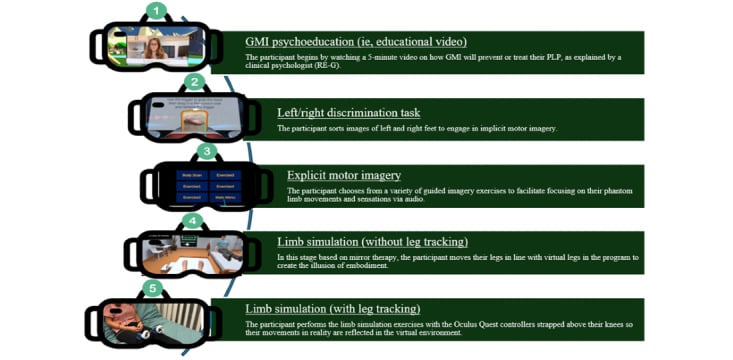
Graded motor imagery (laterality recognition then imagined movement then mirror) is popular in some centres. Randomised data are stronger for mirror therapy alone. The incremental benefit of the graded sequence is uncertain and may reflect therapist time rather than specific technique superiority.
MCQ Practice Points
Q: What is the primary mechanism underlying phantom limb pain? A: Maladaptive cortical reorganisation in the primary somatosensory cortex. After amputation the cortical map of the missing limb is invaded by adjacent representations (face, trunk). The degree of reorganisation correlates with pain intensity. Mirror therapy and TMR work by restoring appropriate sensory input and reversing this plasticity.
Q: How do you differentiate phantom limb pain from stump neuroma pain on clinical examination? A: Phantom pain is perceived in the absent limb and is not reproduced by stump palpation. Neuroma pain is focal, Tinel-positive, and produces electric paresthesia in the phantom distribution when tapped. Residual limb pain is felt within stump tissues and is often mechanical or ischaemic.
Q: What perioperative intervention most effectively reduces phantom and neuroma pain after major amputation? A: Targeted muscle reinnervation (TMR) performed at the time of amputation. TMR prevents neuroma formation by providing a reinnervation target and reduces phantom pain incidence to less than 20 percent. When combined with continuous regional analgesia for 5-7 days and immediate mirror therapy, outcomes are optimised.
Q: What is the first-line non-pharmacological treatment for established phantom limb pain? A: Mirror therapy. The patient views the reflection of the intact limb moving while imagining the phantom limb moving in synchrony. This provides visual feedback that reverses maladaptive cortical reorganisation. Sessions of 15-30 minutes daily produce measurable pain reduction within 4 weeks in randomised trials.
Q: When is targeted muscle reinnervation indicated for established neuroma pain? A: After failed conservative management or when neuroma pain is focal and Tinel-positive. TMR outperforms repeated neuroma excision. It also provides intuitive myoelectric signals for advanced prosthetics. Even late TMR can produce 50-70 percent pain reduction in appropriately selected patients.
Q: What is the critical time window for preventing chronic phantom limb pain? A: The first 30 days after amputation. Pre-emptive regional analgesia, TMR at index surgery, and immediate mirror therapy during this window yield the greatest reduction in long-term pain. After 6 months, interventions have lower success rates and chronic pain patterns are more established.
Exam Viva Scenarios
Practise clinical reasoning and management decisions out loud
“A 55-year-old diabetic undergoes below-knee amputation for critical ischaemia. The surgical team asks how to minimise his risk of phantom limb pain and neuroma pain. What perioperative strategy do you recommend?”
“A 42-year-old bilateral transtibial amputee presents 18 months after injury with severe phantom pain in both legs, focal Tinel-positive neuroma pain on the right, and residual limb pain related to prosthetic fit on the left. How do you approach management?”
Pain Classification
- Phantom limb pain: pain in absent limb from cortical reorganisation
- Residual limb pain: mechanical or ischaemic pain in stump tissues
- Stump neuroma pain: focal Tinel-positive ectopic firing at transection site
Key Mechanisms
- Cortical reorganisation: S1 map invaded by adjacent body parts
- Ectopic neuroma firing: sprouting axons form pacemakers
- Telescoping: phantom limb feels shorter over time, marker of plasticity
Prevention Bundle
- Continuous regional analgesia (epidural or nerve catheter) for 5-7 days
- TMR at index amputation: coapt nerves to motor branches
- Mirror therapy from postoperative day 1, 15 minutes twice daily
Management Hierarchy
- Mirror therapy first-line for phantom pain; reverses cortical changes
- Gabapentinoids and SNRIs for neuropathic component
- TMR for established neuroma pain; outperforms repeated excision
Critical Thresholds
- First 30 days: critical window for cortical reorganisation prevention
- Greater than 6 months: chronic patterns established, lower intervention success
- Tinel-positive focal pain: indicates neuroma amenable to TMR
Evidence Base and Key Trials
The central-mechanism papers (Melzack, Flor) explain why peripheral-only treatments fail. The two perioperative-analgesia trials directly conflict — a classic viva controversy: Nikolajsen 1997 (negative) versus Karanikolas 2011 (positive). Mirror therapy (Chan) and TMR (Valerio) carry the strongest treatment/prevention evidence.
Phantom limbs and the concept of a neuromatrix
- Introduced neuromatrix theory explaining phantom sensation as central pattern generation by a genetically determined, experience-modified neural network
- Phantoms after spinal cord transection, and in children born without a limb, argue for a central substrate independent of peripheral input
- Shifted the paradigm from peripheral (stump/neuroma) to central mechanisms
Phantom limb pain: a case of maladaptive CNS plasticity?
- Synthesises evidence that phantom pain intensity correlates with the magnitude of somatosensory cortical reorganisation
- Interventions that restore cortical representation (e.g. mirror/sensory feedback training) can reduce phantom pain
- Provides the mechanistic rationale for non-pharmacological, plasticity-targeting interventions