LUCL Insufficiency | Elbow Dislocation Spectrum | Horii Circle Injury
- LUCL originates from lateral epicondyle, inserts on supinator crest of ulna
- PLRI follows simple elbow dislocation or repetitive varus stress
- Pivot-shift test: patient supine, arm overhead, forearm supinated, valgus + axial load produces subluxation
- Horii circle describes sequential soft-tissue disruption from lateral to medial
- Reconstruction uses tendon graft (palmaris, gracilis, or triceps) through bone tunnels or anchors
- “PLRI often missed after simple dislocation - always test lateral stability
- “Chair push-up test and lateral pivot apprehension sign are highly sensitive
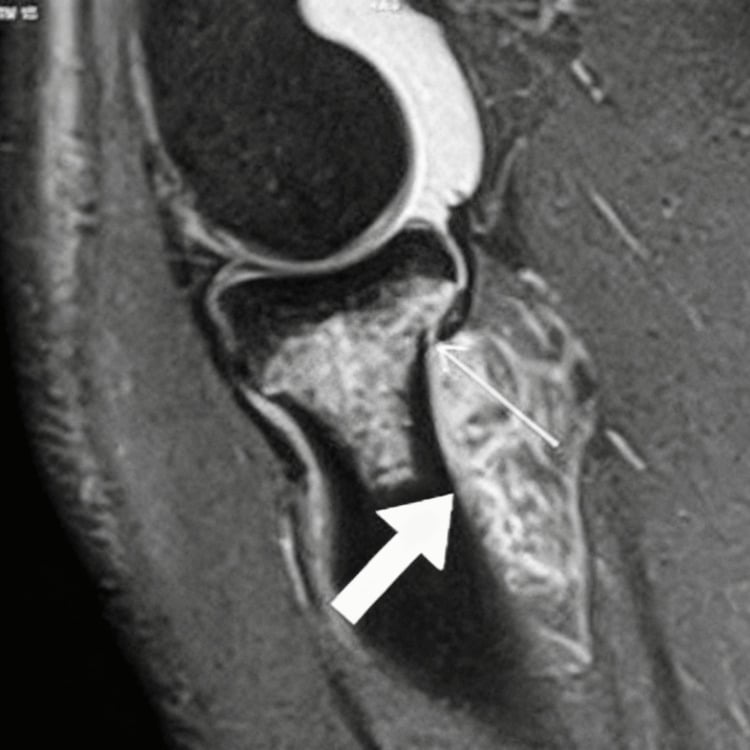
- “MRI in supination shows LUCL discontinuity and posterolateral capsule injury
- “Reconstruction indicated when instability persists beyond 3-6 months
Overview and Epidemiology
Posterolateral rotatory instability (PLRI) is the most common pattern of recurrent elbow instability after a simple dislocation. The lateral ulnar collateral ligament (LUCL) is the primary restraint. Missed or undertreated PLRI leads to chronic pain, mechanical symptoms and secondary osteoarthritis, whereas early recognition of the Horii circle injury pattern and appropriate ligament reconstruction restore stability in over 85 percent of patients.
Causes. Simple dislocation is the most common precursor, and there are three other routes:
- Simple elbow dislocation (valgus-hyperextension)
- Repetitive varus stress, in overhead athletes and gymnasts
- Iatrogenic, from excessive release during lateral epicondylitis surgery
- Trauma: a direct varus blow or a fall onto the outstretched hand
What it costs the patient. The instability is mechanical, with clicking and clunking during supinated activities, and the pain sits at the posterolateral elbow, worse with loading in supination. Pushing, throwing and weight-bearing through the arm become difficult. Chronic subluxation accelerates radiocapitellar wear, and that is the road to secondary osteoarthritis.
Pathophysiology
The lateral ulnar collateral ligament. The LUCL originates from the lateral epicondyle, just distal and slightly anterior to the common extensor origin, and courses distally to insert on the supinator crest of the proximal ulna. It is the primary static restraint to posterolateral rotatory instability.
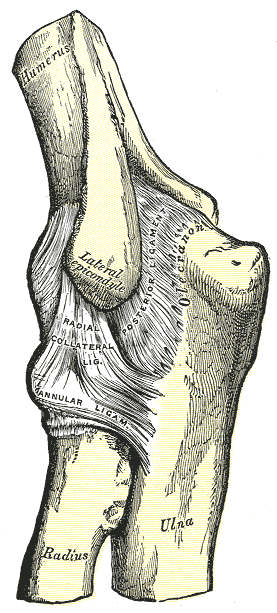
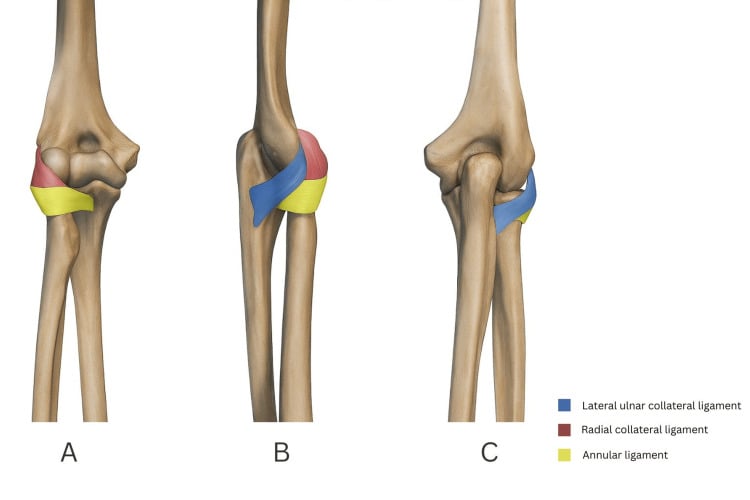
The secondary restraints. Behind the LUCL sit the radial collateral ligament, the posterolateral capsule and, when deficient, the medial collateral ligament complex.
- Function
- Primary restraint to external rotation of ulna
- When Deficient
- Allows posterolateral subluxation
- Clinical Relevance
- Target of reconstruction
- Function
- Resists varus and posterolateral rotation
- When Deficient
- Increases instability magnitude
- Clinical Relevance
- Often reconstructed together
- Function
- Secondary check-rein to rotation
- When Deficient
- Permits greater subluxation arc
- Clinical Relevance
- Repaired or imbricated during surgery
- Function
- Final restraint in complete dislocation
- When Deficient
- Complete dislocation occurs
- Clinical Relevance
- Rarely addressed in isolated PLRI
The radial head. The radial head is a secondary stabiliser too, and its excision dramatically increases the risk of PLRI.
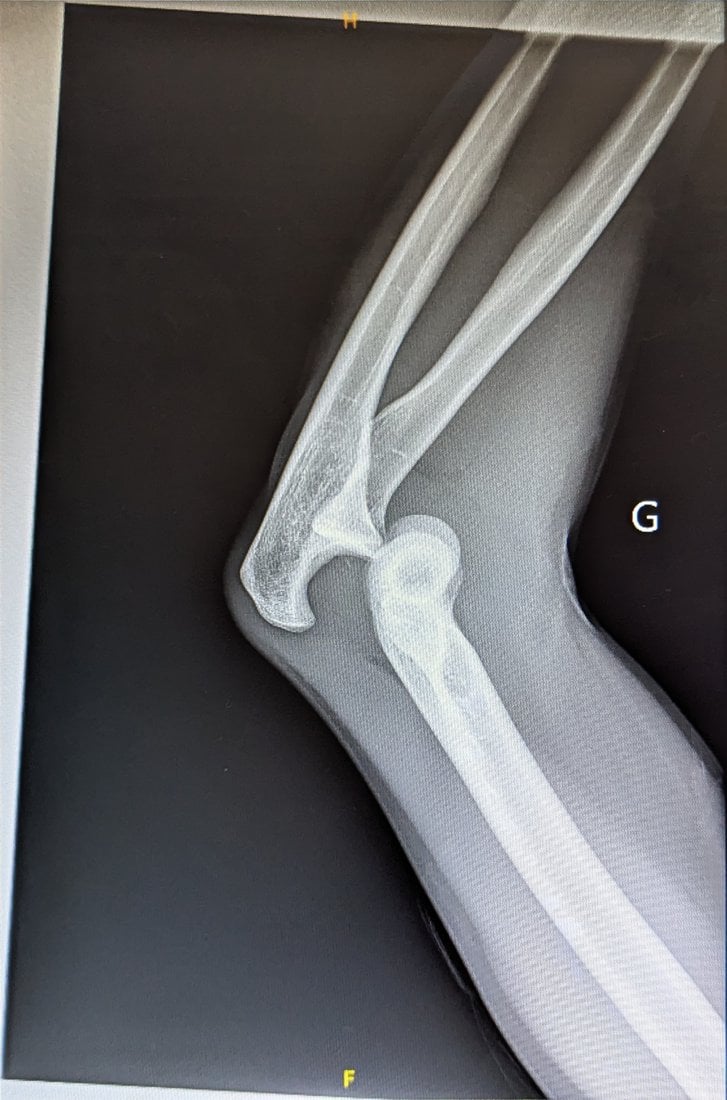
The mechanism. With the LUCL deficient, axial load, supination and valgus let the radius and ulna rotate off the humerus together as a unit. The ulna externally rotates on the humerus and the radial head subluxes, with a visible posterolateral prominence: posterolateral rotatory subluxation.
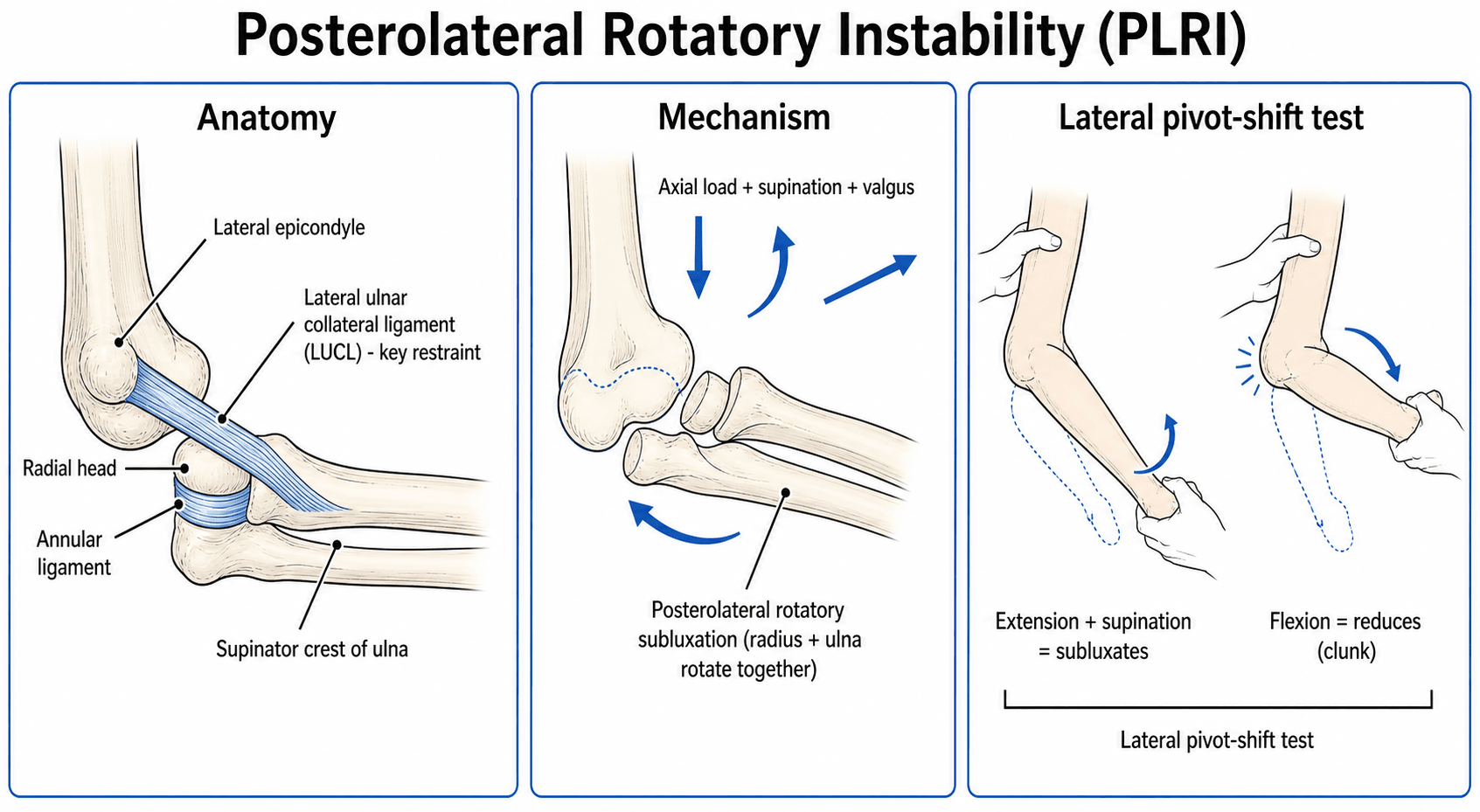
Why the elbow seems stable at first. Acutely, swelling and haemarthrosis provide temporary stability, and patients are often told they had a "simple dislocation" and discharged. The LUCL may heal in extension but not in supination. Late presentation comes 6-24 months later, with mechanical symptoms.
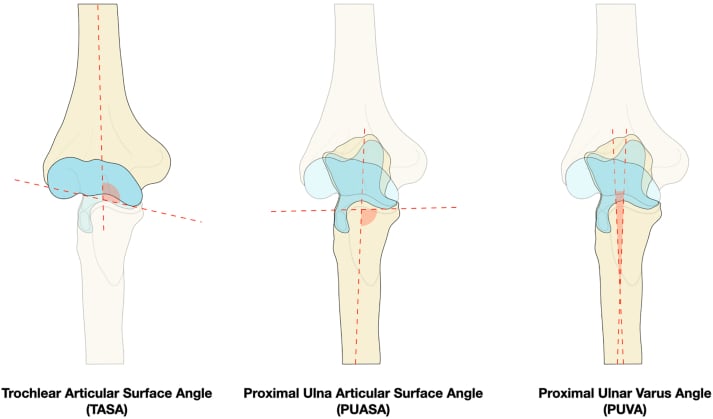
Varus alignment. Native varus alignment of the proximal ulna varies between people, and greater varus loads the lateral column. Measuring it explains why some elbows develop attritional lateral ligament failure without a single traumatic event.
Classification and Types
The Horii circle. During an elbow dislocation the soft tissues fail in sequence from lateral to medial, and recognising the stage guides how much has to be reconstructed.
- Stage 1 - LUCL disruption, giving posterolateral rotatory subluxation. PLRI is the residual of this stage
- Stage 2 - the anterior and posterior capsule as well, giving an incomplete (perched) dislocation
- Stage 3 - the MCL as well, giving complete dislocation: 3A with the posterior band of the MCL torn and the anterior band intact, 3B with the whole MCL torn, 3C with the common flexor-pronator origin stripped too
A spectrum of failed restraints. Instability is a spectrum rather than a single torn ligament. The circle explains why some elbows remain unstable after a "simple" dislocation is reduced: an elbow that reduces easily can still be grossly unstable in supination.
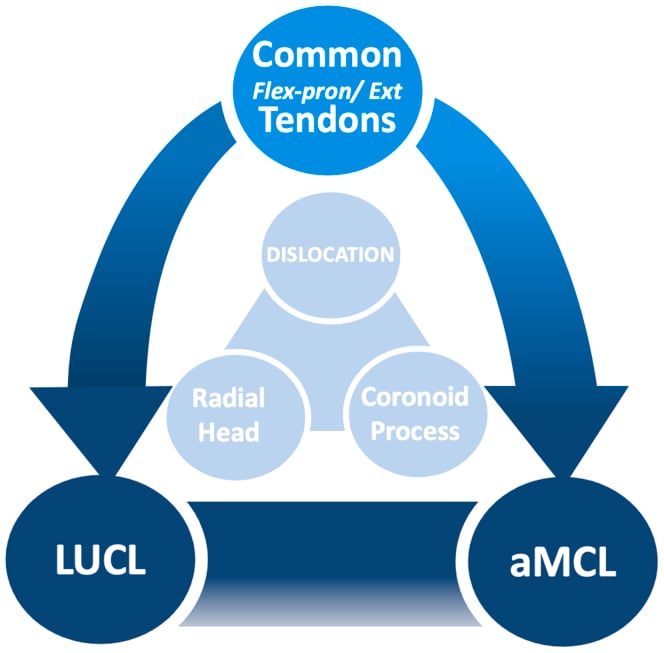
Grading the lateral injury. Within the lateral complex, each structure torn beyond the LUCL enlarges the instability and moves treatment from a non-operative trial or repair towards a graft.
- Clinical Findings
- Pivot-shift positive, apprehension
- Treatment
- Non-operative trial or repair
- Clinical Findings
- Gross pivot-shift, clunk, increased external rotation
- Treatment
- Reconstruction indicated
- Clinical Findings
- Gross subluxation: subluxation at rest, visible prominence
- Treatment
- Graft reconstruction mandatory
- Clinical Findings
- Recurrent dislocation episodes
- Treatment
- Staged or combined medial-lateral reconstruction
By timing. The time since injury is the other axis, and it sets the next step.
- Timing
- 0-6 weeks
- Key Features
- Persistent instability after reduction
- Management Notes
- Protected motion, reassess at 3 weeks
- Timing
- 6 weeks-6 months
- Key Features
- Mechanical symptoms, positive tests
- Management Notes
- MRI confirmation, plan reconstruction
- Timing
- Greater than 6 months
- Key Features
- Activity-limiting instability, OA changes
- Management Notes
- Reconstruction + address cartilage
Chronic cases often require assessment of bony deficiency (coronoid, radial head) before ligament surgery.
The Terrible Triad of the Elbow
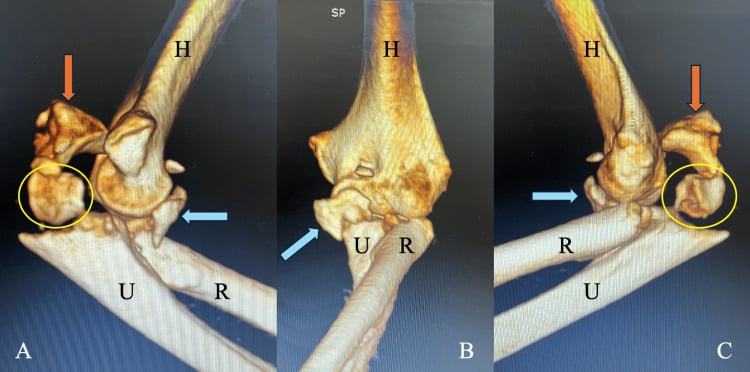
An elbow dislocation accompanied by both a radial head fracture and a coronoid fracture is the terrible triad, so named for its historically poor results from persistent instability and stiffness. It sits at the complex end of the same posterolateral injury spectrum as PLRI.
The lesions. A posterolateral dislocation, a radial head fracture and a coronoid fracture, usually of the tip, with the lateral collateral ligament avulsed off the lateral epicondyle. The elbow loses its bony buttress (the coronoid anteriorly, the radial head as a posterolateral and valgus secondary stabiliser) and its primary lateral ligament restraint at the same time.
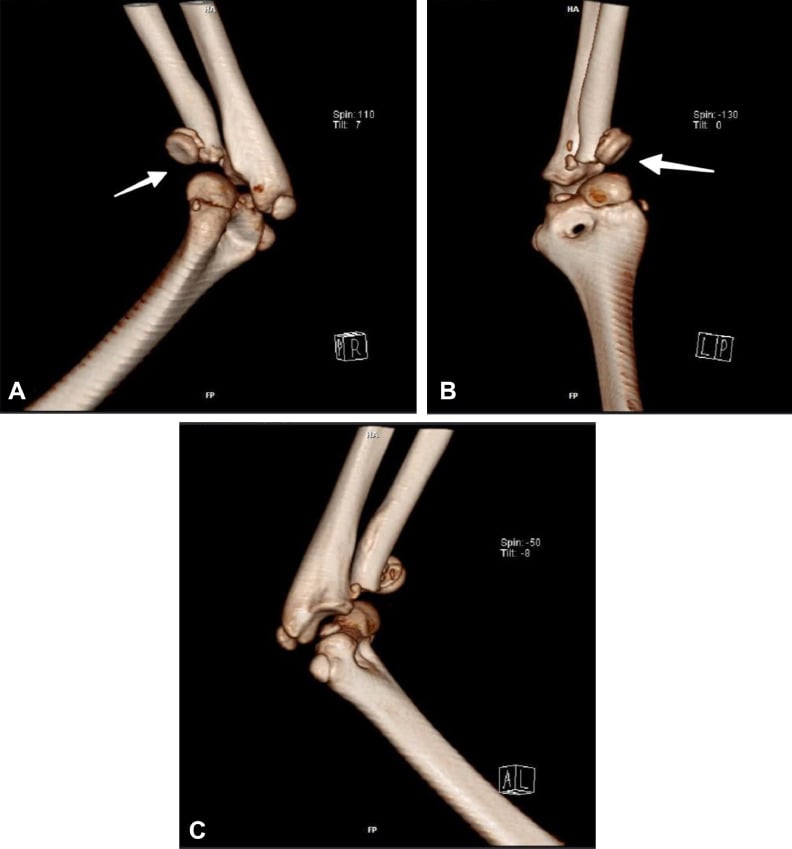
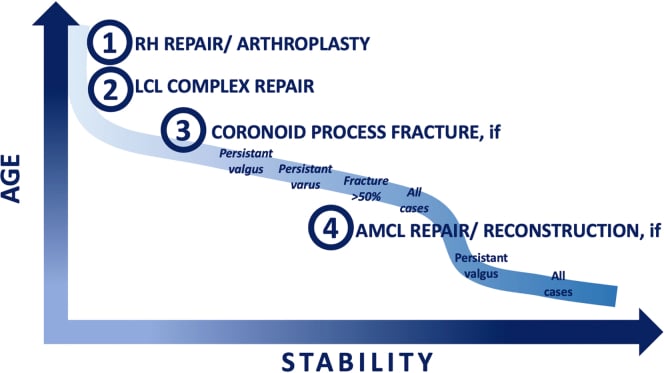
The operating order. Work from deep to superficial, coronoid first, because a repaired lateral ligament blocks access to everything deep to it.
- Structure
- Coronoid
- Principle
- Fix (suture or screw) if large; even a tip fragment via the anterior capsule helps restore the anterior buttress
- Structure
- Radial head
- Principle
- Repair if reconstructable, otherwise REPLACE - never simply excise
- Structure
- Lateral collateral ligament
- Principle
- Repair the avulsed LCL/LUCL back to the isometric point on the lateral epicondyle
- Structure
- Medial side / hinged fixator
- Principle
- If still unstable after the above, repair the MCL and/or apply a hinged external fixator
Q: Why must the radial head be repaired or replaced - not excised - in a terrible triad? A: With a coronoid fracture and a torn lateral collateral ligament, the radial head is the critical remaining secondary stabiliser against posterolateral and valgus subluxation. Excising it removes the last buttress and produces recurrent instability, so a reconstructable head is fixed and an unreconstructable head is replaced with a metallic prosthesis, never simply removed.
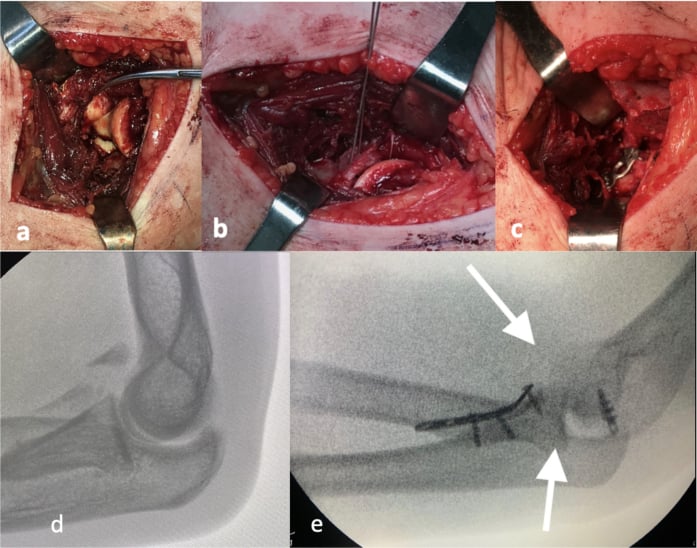
When the olecranon is broken too. An olecranon fracture removes the trochlear notch buttress and makes the elbow far less forgiving. Recognising it preoperatively changes the fixation sequence and usually mandates a posterior approach.
How far to go. Reassess after each step and stop when the elbow is stable through a functional arc, since each additional step adds stiffness.
Clinical Assessment
History. Establish the index event and what has happened since:
- The index event: a simple elbow dislocation or a varus injury
- When the instability symptoms began after the injury
- Pain or a clunk with pushing, throwing or supinated loading
- Prior treatment: duration of immobilisation, therapy, injections
Examination. Inspect for swelling, radial head prominence and the carrying angle. Palpate for lateral epicondyle tenderness and a radial head click, and record the flexion arc and any extension loss from the prior injury. Then test stability: pivot-shift, lateral pivot apprehension, chair push-up and table-top.
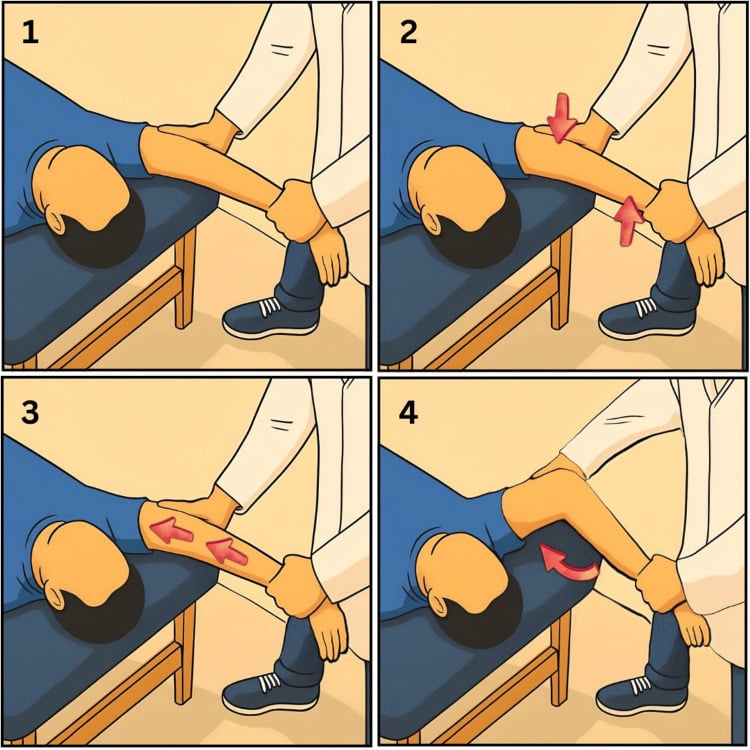
The pivot-shift test. The gold standard. With the patient supine and the arm overhead, the examiner holds the humerus firmly, fully supinates the forearm and, starting near full extension, applies a gentle valgus force and axial compression while slowly flexing the elbow. In a positive test the radius and ulna subluxate together near extension, the radial head posterolaterally, and reduce with a palpable and visible clunk at about 40 degrees of flexion.
Awake or asleep. Awake patients guard, so apprehension replaces the clunk, and the test is performed under anaesthesia if apprehension prevents relaxation. Performed correctly in a relaxed patient, its sensitivity approaches 100 percent.
The other tests. Three further tests are used in the clinic:
- Technique
- Supinated forearm, valgus stress in 20-30 degrees flexion
- Positive Finding
- Patient apprehension or reproduction of instability
- Sensitivity
- Greater than 90 percent in symptomatic PLRI
- Technique
- Push up from chair, hands on armrests, forearms supinated
- Positive Finding
- Pain or instability sensation posterolaterally
- Sensitivity
- Greater than 90 percent sensitivity
- Technique
- Patient leans on table with elbow extended, forearm supinated
- Positive Finding
- Pain or giving-way sensation
- Sensitivity
- Useful office screening test
Lateral epicondylitis produces point tenderness at the epicondyle but negative pivot-shift and no mechanical instability. Radial tunnel syndrome causes forearm pain without instability signs. PLRI is confirmed only when the pivot-shift or apprehension tests are positive. Always perform stability testing before diagnosing "tennis elbow" in a post-dislocation patient.
Investigations
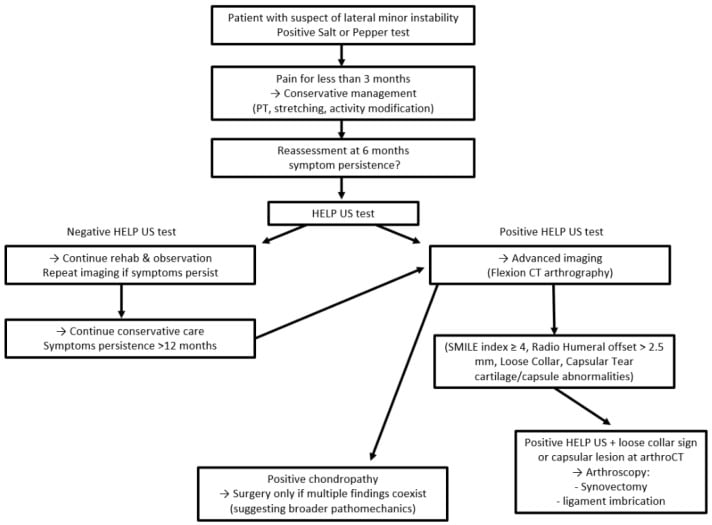
Radiographs. AP, lateral and oblique views of the elbow, looking for radial head subluxation, a coronoid or radial head fracture and heterotopic ossification. Many PLRI cases have normal radiographs, and the diagnosis is clinical.
Stress views. Fluoroscopic or radiographic stress views help when the clinical tests are equivocal, or under anaesthesia. The forearm is supinated and a valgus load applied, compared with the contralateral side; greater than 3 mm of posterior radial head translation or ulnohumeral gapping is positive.
MRI. With or without arthrography, MRI is the definitive study, used to confirm the LUCL tear, assess cartilage and plan surgery. It is most useful with the forearm in supination and the elbow in slight flexion, on T2-weighted coronal and axial sequences; the LUCL is best seen on coronal images just distal to the lateral epicondyle. The findings are LUCL discontinuity or attenuation, posterolateral capsule injury and radial head chondral damage.
A "bright" or discontinuous LUCL on T2 is diagnostic, but a normal MRI does not exclude symptomatic PLRI if clinical tests are positive.
Management Algorithm
The decision. Acute or minimally symptomatic PLRI is treated non-operatively first. The goal is to allow soft-tissue healing and to find out whether the instability resolves with protected motion.
Non-operative Protocol
Posterior splint or hinged brace at 90 degrees of flexion in neutral rotation. Avoid forced supination and varus stress; gentle flexion-extension is allowed in pronation only.
Hinged brace allowing gradual extension, the forearm kept pronated during loading. Isometric strengthening, avoiding supinated resistance. Reassess with the pivot-shift test at 6 weeks.
Progressive loading, beginning supinated activities if stable. Physiotherapy for proprioception and dynamic stabiliser strengthening. Return to sport at 3-4 months if asymptomatic and stable.
How often it works. Non-operative treatment succeeds in approximately 30-40 percent of acute post-dislocation PLRI when the injury is limited to the LUCL, with or without the posterolateral capsule, and the patient avoids supinated loading during healing. Failure is common when the injury extends further, to the radial collateral ligament and beyond, or when early aggressive supination exercises are prescribed.
Indications for reconstruction. LUCL reconstruction is offered for:
- Symptomatic PLRI persisting greater than 3-6 months
- A positive pivot-shift
- Failed non-operative care
- Activity-limiting mechanical symptoms
LUCL Reconstruction: Surgical Steps
Lateral decubitus or supine with an arm board, tourniquet applied. Mark the lateral epicondyle, radial head and supinator crest.
Palmaris longus (preferred), gracilis, or an ipsilateral triceps tendon strip. A minimum of 12-15 cm is required for isometric reconstruction.
Kocher interval between anconeus and extensor carpi ulnaris. Protect the posterior interosseous nerve; expose the lateral epicondyle and supinator crest.
Humeral isometric point 2 mm distal and slightly anterior to the lateral epicondyle prominence. At the ulna, two converging tunnels at the supinator crest create a 1 cm bone bridge; suture anchors are the alternative there.
Pass the graft through the ulnar tunnels first, then dock or anchor it at the humeral isometric point. Tension at 30-40 degrees of elbow flexion with the forearm pronated and secure with interference screws or anchors. Test stability before closure: the pivot-shift should be eliminated.
Repair the posterolateral capsule and common extensor origin. Posterior splint at 90 degrees for 2 weeks, then a hinged brace; full extension and supination at 8-12 weeks; return to sport at 6-9 months.
- Diagnosis
- Positive pivot-shift + apprehension
- Treatment
- LUCL reconstruction with graft
- Key Pearl
- Wait 3-6 months before surgery
- Diagnosis
- Chair push-up and table-top tests positive
- Treatment
- Graft reconstruction (palmaris/gracilis)
- Key Pearl
- Address any bony deficiency first
- Diagnosis
- Stress views under anaesthesia
- Treatment
- Non-operative if stable post-reduction
- Key Pearl
- Reassess stability at 2-3 weeks
Complications
Complications arise from untreated or recurrent instability and from the reconstruction itself.
Untreated instability. Left alone, an incompetent LUCL produces:
- Recurrent posterolateral rotatory subluxation or dislocation with mechanical symptoms (clicking, clunking, apprehension on push-up or pushing up from a chair)
- Progression to frank recurrent elbow dislocation
- Post-traumatic osteoarthritis from repeated radiocapitellar and ulnohumeral subluxation
- Chronic pain and loss of function
After reconstruction. Surgery adds its own risks:
- Residual or recurrent instability from non-anatomic (non-isometric) graft placement on the lateral epicondyle / capitellar centre
- Stiffness and flexion contracture, the commonest functional complication after elbow ligament surgery
- Posterior interosseous nerve (PIN) injury during the Kocher (anconeus-ECU) approach or distal ulnar tunnel drilling
- Tunnel malposition, graft elongation or failure, inter-tunnel fracture and heterotopic ossification
- Wound problems and infection, the standard surgical risks
The commonest 'complication' of PLRI is the missed diagnosis: a patient labelled with a 'simple elbow dislocation' or 'tennis elbow' who actually has LUCL insufficiency. Persistent lateral elbow pain, clicking or apprehension after an elbow dislocation should prompt a lateral pivot-shift assessment (often under anaesthesia) rather than reassurance.
The Medial Counterpart: Varus Posteromedial Rotatory Instability
PLRI is the posterolateral pattern. Its frequently missed mirror image is varus posteromedial rotatory instability (PMRI), driven by a fracture of the anteromedial facet of the coronoid, often with a lateral collateral ligament injury.
Mechanism. A varus, posteromedial rotatory force shears off the anteromedial facet. The facet is normally unsupported by the underlying metaphysis and acts as a key anterior-medial buttress, so even a small fragment leads to varus subluxation.
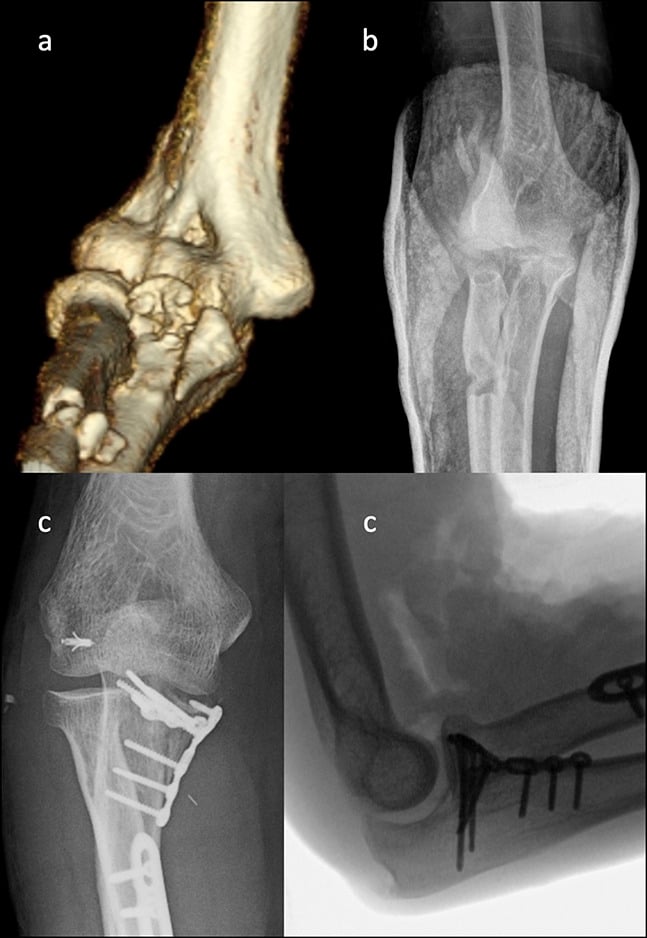
The trap. These fractures look small, often nearly invisible, on a plain AP film and the elbow can appear reduced, so they are easily dismissed. Left unfixed they cause rapid varus collapse, cartilage wear and early arthritis, which is why CT is mandatory whenever the coronoid looks abnormal.
Classification. The O'Driscoll classification of coronoid fractures distinguishes tip, anteromedial facet (subtypes 1-3) and basal fractures; the anteromedial facet type is the one that produces PMRI.
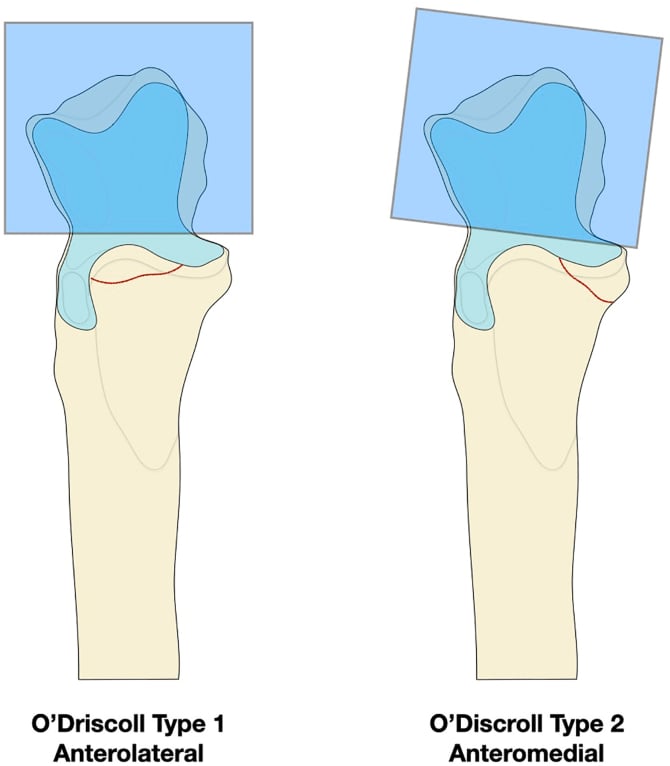
Management. A displaced anteromedial facet fracture needs buttress plate fixation through a medial (over-the-top) approach plus repair of the lateral collateral ligament. It is not treated by simple observation, nor by the radial-head-focused approach used for the terrible triad.
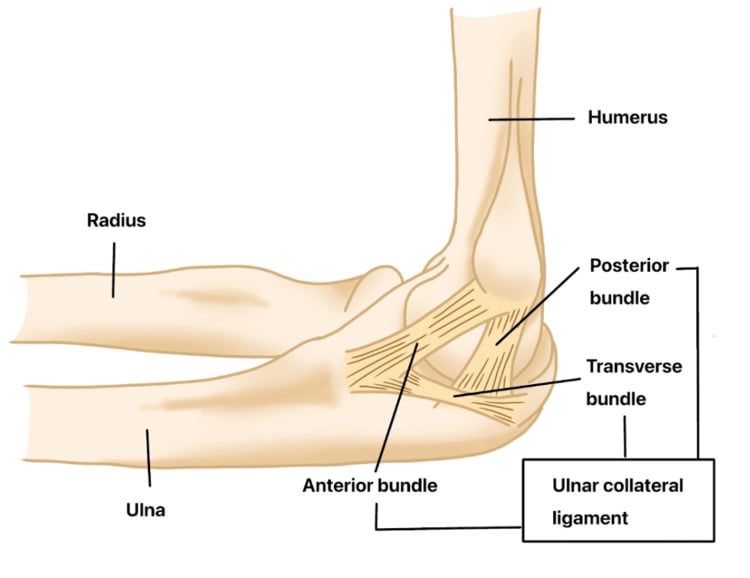
The medial neighbour. The anterior bundle of the ulnar collateral ligament is the primary restraint to valgus and inserts on the sublime tubercle. The anteromedial coronoid facet that fails in varus posteromedial injury lies immediately adjacent to that insertion, which is why the two are assessed together.
Guidelines, Registries & Global Practice
- PLRI occurs worldwide after simple elbow dislocation (incidence 5-10 percent of dislocations develop chronic instability)
- Overhead athletes and gymnasts have higher rates due to repetitive varus stress
- Iatrogenic PLRI remains a recognised complication of lateral epicondylitis release in all regions
- Missed diagnosis is the most common reason for late presentation globally
- High-resource: MRI + arthroscopic assessment, anatomic graft reconstruction with anchors
- Limited-resource: Clinical diagnosis with stress fluoroscopy, palmaris graft through bone tunnels
- Universal principle: Outcome depends on isometric tunnel placement and postoperative compliance more than implant cost
- Surgery: Concentrated in upper-limb specialist centres; generalists refer chronic cases
- Diagnosis emphasis
- Pivot-shift under anesthesia, MRI in supination
- Non-operative care
- Protected motion 6-12 weeks, reassess stability
- Surgery / reconstruction
- Anatomic LUCL reconstruction with autograft
- Diagnosis emphasis
- Clinical tests + stress views, MRI for planning
- Non-operative care
- Hinged bracing, avoid supinated loading
- Surgery / reconstruction
- Graft reconstruction when symptoms persist greater than 6 months
- Diagnosis emphasis
- Recognise Horii circle pattern on MRI
- Non-operative care
- Early protected pronated motion
- Surgery / reconstruction
- Isometric graft placement critical; document technique
- Diagnosis emphasis
- Apprehension and chair push-up as screening
- Non-operative care
- Physiotherapy-led, 3-month trial minimum
- Surgery / reconstruction
- Triceps or gracilis graft when palmaris absent
There is no dedicated elbow instability registry comparable to joint arthroplasty registries. Evidence is derived from prospective cohorts and anatomic studies rather than randomised trials. The consistent message across all guidelines is: diagnose with pivot-shift testing, allow 3-6 months for potential healing, then reconstruct isometrically with autograft when symptoms persist. Documentation of the Horii stage and tunnel positions improves audit and outcome analysis.
Record in every post-dislocation elbow:
- Pivot-shift test result (positive/negative, under anesthesia if required)
- Chair push-up and apprehension signs
- MRI findings of LUCL and cartilage status
- Time from injury and response to non-operative care A missed PLRI diagnosis leading to chronic instability and secondary arthritis is an avoidable source of morbidity worldwide. Always perform and document lateral stability testing after elbow dislocation reduction.
Controversies & Areas of Uncertainty
Most surgeons wait 3-6 months after dislocation before offering reconstruction. Earlier surgery risks operating on injuries that would have healed. Later surgery risks secondary cartilage damage. No high-quality data defines the exact threshold.
Palmaris longus, gracilis, and triceps all report good outcomes. Suture anchors versus interference screws versus bone tunnels have no comparative trials. Surgeon experience and graft availability drive choice rather than evidence.
Arthroscopy can confirm chondral damage and perform capsular plication, but ligament reconstruction remains an open procedure. Whether arthroscopic plication adds value in early-stage PLRI is debated.
Most protocols allow return at 6-9 months, but objective criteria (isokinetic strength, pivot-shift elimination, patient-reported stability) vary widely between centres. No consensus exists on the safest timeline.
MCQ Practice Points
Q: What is the primary restraint to posterolateral rotatory instability of the elbow? A: The lateral ulnar collateral ligament (LUCL). It originates from the lateral epicondyle and inserts on the supinator crest of the ulna. Sectioning studies confirm it is the essential lesion; all other lateral structures are secondary.
Q: Describe the pivot-shift test for PLRI and what constitutes a positive result. A: Patient supine, arm overhead, forearm fully supinated. Apply valgus and axial load while flexing the elbow from extension. Positive test: radial head subluxes posterolaterally as the elbow is flexed from extension, then reduces with a palpable clunk beyond about 40 degrees of flexion. The test is pathognomonic for LUCL insufficiency.
Q: What is the Horii circle and why is it clinically relevant to PLRI? A: The Horii circle describes the sequential soft-tissue disruption from lateral to medial during elbow dislocation. It has THREE stages: Stage 1 = LUCL disruption, giving posterolateral rotatory subluxation; Stage 2 = the anterior and posterior capsule as well, giving an incomplete (perched) dislocation; Stage 3 = the MCL as well, giving complete dislocation — subdivided into 3A (posterior band of the MCL torn, anterior band intact), 3B (the whole MCL) and 3C (the common flexor-pronator origin stripped too). PLRI is the residual of stage 1; recognising the stage guides reconstruction magnitude.
Q: What are the indications and graft options for LUCL reconstruction? A: Indications: symptomatic PLRI greater than 3-6 months, positive pivot-shift, failed non-operative care. Graft options: palmaris longus (preferred), gracilis, or ipsilateral triceps tendon strip. The graft is passed through isometric humeral and ulnar bone tunnels and tensioned at 30-40 degrees flexion.
Q: Which clinical test has the highest sensitivity for symptomatic PLRI in the office setting? A: The chair push-up test (greater than 90 percent sensitivity). The patient pushes up from a chair with forearms supinated; reproduction of posterolateral pain or instability is positive. The lateral pivot apprehension sign is equally useful and often easier to elicit.
Exam Viva Scenarios
Practise clinical reasoning and management decisions out loud
“A 32-year-old rugby player sustained a simple elbow dislocation 4 months ago that was reduced in the emergency department. He has since had recurrent mechanical clicking and a feeling of instability when pushing up from a chair or throwing. Examination demonstrates a positive pivot-shift test and lateral pivot apprehension sign. X-rays are normal. How would you manage this patient?”
“A 45-year-old manual labourer presents with 18-month history of posterolateral elbow pain and instability after a fall onto an outstretched hand. He has a positive pivot-shift under anesthesia and MRI shows LUCL tear, radial head chondral loss, and early capitellar wear. He cannot return to heavy work. How would you manage?”
Key Anatomy
- LUCL originates lateral epicondyle, inserts supinator crest of ulna
- Primary restraint to posterolateral rotation and varus
- Secondary restraints: radial collateral ligament, posterolateral capsule
- Radial head is important secondary stabilizer when LUCL deficient
Diagnosis
- Pivot-shift test: gold standard (reduces with a clunk beyond about 40 degrees flexion)
- Lateral pivot apprehension and chair push-up tests highly sensitive
- MRI in supination best visualises LUCL discontinuity
- Always test stability after simple elbow dislocation
Horii Circle Stages
- Stage 1: LUCL disruption - posterolateral rotatory subluxation
- Stage 2: + anterior and posterior capsule - perched dislocation
- Stage 3: + MCL - complete dislocation (3A, 3B, 3C)
- PLRI is the residual of stage 1
Treatment Algorithm
- Acute post-dislocation: protected motion 3-6 months, reassess
- Symptomatic greater than 3-6 months: LUCL reconstruction
- Graft options: palmaris longus, gracilis, triceps tendon
- Tension graft at 30-40 degrees flexion, forearm pronated
Complications
- Recurrent instability: 5-15 percent if non-isometric tunnels
- Stiffness: 10-20 percent, worse with prolonged immobilisation
- Radial nerve or PIN injury: rare but reported with Kocher approach
- Secondary OA: common if chronic subluxation untreated
Evidence Base
The pivot-shift test for posterolateral rotatory instability of the elbow
- Original description of recurrent PLRI in five patients (aged 5 to 40), a condition the authors regarded as previously undescribed and difficult to diagnose
- Defined the posterolateral rotatory-instability test (supination, valgus moment and axial compression with the elbow flexed from extension), producing a sudden visible/palpable reduction of the radiohumeral joint beyond about 40 degrees of flexion
- Attributed the instability to laxity of the ulnar part of the lateral collateral ligament with an intact annular ligament; operative repair eliminated the instability in all five
Lateral ulnar collateral ligament reconstruction for posterolateral rotatory instability
- Eleven consecutive patients with PLRI managed operatively: radial collateral-ligament complex advanced/imbricated in 3, lateral ulnar collateral ligament reconstructed with palmaris longus in 7 (2 augmented with a prosthetic ligament) and with triceps fascia in 1
- Stability achieved in 10 of 11 patients, with an excellent functional result in 7
- The single failure occurred in a palmaris-longus reconstruction augmented with a prosthetic ligament
Ligamentous repair and reconstruction for posterolateral rotatory instability of the elbow
- Intermediate results of 12 direct repairs and 33 tendon-autograft reconstructions (44 of 45 elbows followed at a mean of 6 years, range 2 to 15)
- Surgery restored stability in all but five patients (two stabilised after a second procedure); mean Mayo Elbow Performance Score 85, with 19 excellent, 13 good, 7 fair and 5 poor and 86 percent subjectively satisfied
- Better outcomes with a post-traumatic aetiology, subjective instability at presentation and augmented tendon-graft reconstruction; reconstruction outperformed repair and did not deteriorate with time
Tardy posterolateral rotatory instability of the elbow due to cubitus varus
- Twenty-four patients (25 limbs) with cubitus varus (mean 15 degrees) developed tardy PLRI roughly two to three decades after a childhood distal-humeral fracture or congenital deformity, presenting with lateral elbow pain and recurrent instability
- Medial displacement of the mechanical axis, olecranon and triceps line of pull imposes a repetitive external-rotation torque on the ulna that stretches the lateral collateral ligament complex
- Good or excellent results in 19 of 22 operated limbs (combinations of LCL reconstruction and corrective osteotomy), establishing cubitus varus as a cause rather than a purely cosmetic deformity