Mason III/IV Fractures | Terrible Triad | PIN Protection | Sizing Critical
- Mason III/IV fractures are primary indication - unreconstructable comminution
- Terrible triad requires addressing all three components (radial head, coronoid, LCL)
- PIN protection via full pronation moves nerve 4cm anterior to radial neck
- Sizing critical - radiocapitellar line on AP fluoro aligns with lateral coronoid edge
- Overlengthening is most common error (10-20%) causing capitellar erosion and stiffness
- “Kocher approach: internervous plane between anconeus (radial nerve) and ECU (PIN)
- “Full pronation protects PIN - moves from 1.5cm (supination) to 4cm (pronation) from neck
- “Radiocapitellar line: radial head should align with lateral edge of coronoid on AP fluoro
- “Terrible triad: all three components must be addressed for stability
Overview and Epidemiology
Radial head arthroplasty (RHA) replaces the comminuted radial head with a metallic prosthesis to restore lateral elbow stability, the radiocapitellar articulation and forearm load transmission. It is indicated for unreconstructable radial head fractures, particularly in the setting of elbow instability.
From excision to replacement. Simple excision was historically common, but it causes problems, and modern modular prostheses allow the anatomy to be restored precisely. The recognition that the radial head is a critical stabiliser, especially in the MCL-deficient elbow, has made replacement the standard over excision in most cases.
Indications. Replacement is indicated for:
- Mason III fractures - comminuted, more than 3 fragments, not amenable to stable ORIF
- Mason IV fractures - with elbow dislocation, the terrible triad variant
- Terrible triad - radial head, coronoid and LCL injury, all three of which must be addressed
- Essex-Lopresti injury - radial head fracture with IOM and DRUJ disruption, where replacement is mandatory
- Failed ORIF - symptomatic malunion or nonunion
Who and how often. It is a common procedure in trauma centres, at one to two a month. Patients peak at 30-50 years in trauma and are older with isolated fractures, and the trauma-related group is equally distributed between the sexes. Modular systems are increasingly used for better sizing.
Anatomy and Biomechanics
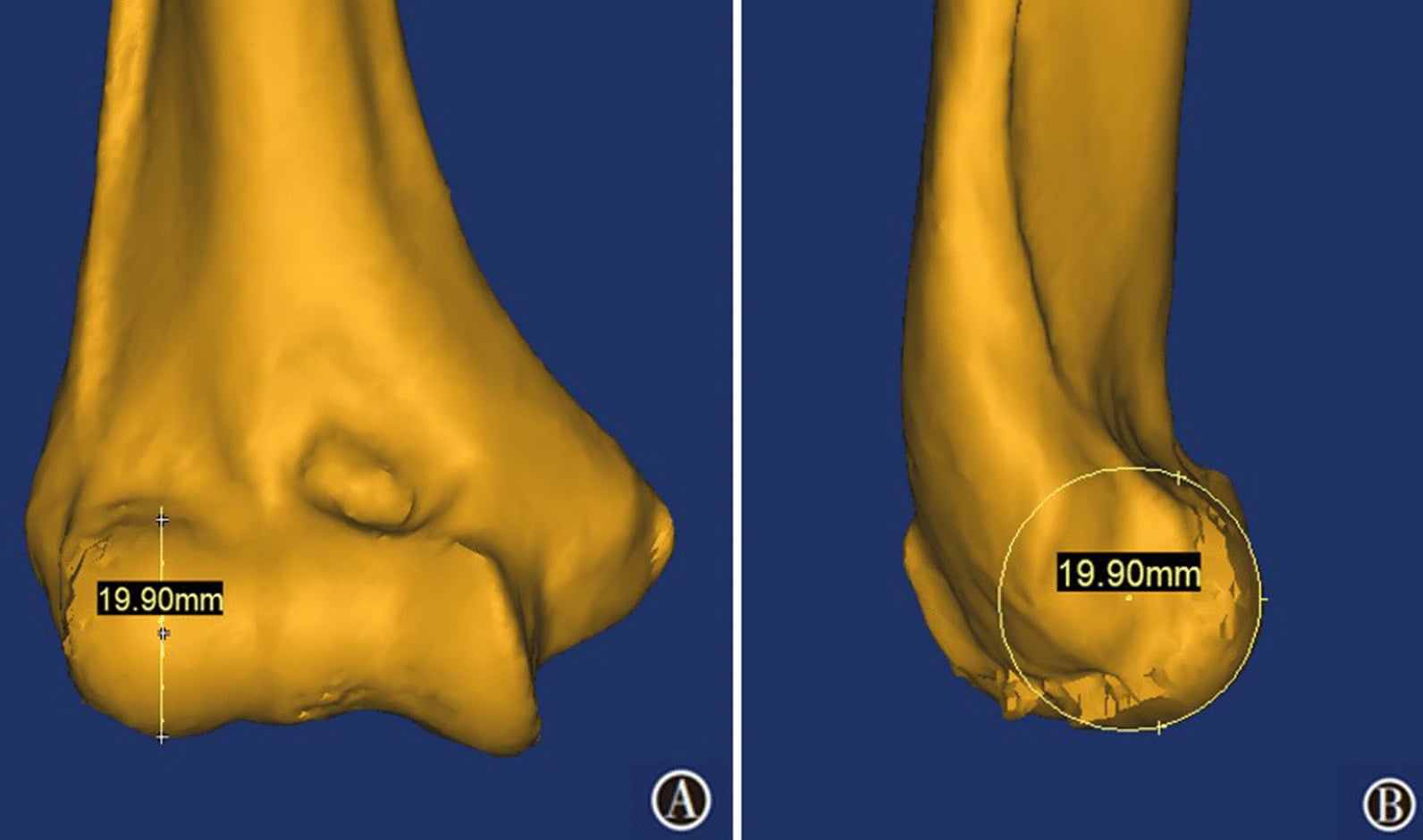
The radial head. Its concave articular surface meets the capitellum at the radiocapitellar joint, and it articulates with the radial notch of the ulna at the proximal radioulnar joint (PRUJ). The diameter is 18-26mm, typically 20-24mm, and the height from neck to articular surface 8-12mm. A 90-110° safe zone of the head does not articulate with the PRUJ, and is where hardware is placed.
The lateral ligaments. The lateral collateral ligament complex has three parts:
- Lateral ulnar collateral ligament (LUCL) - the primary restraint to posterolateral rotatory instability (PLRI). It runs from the lateral epicondyle to the crista supinatoris of the ulna and prevents posterior subluxation of the radial head
- Annular ligament - encircles the radial head and maintains the PRUJ
- Radial collateral ligament - a secondary varus stabiliser
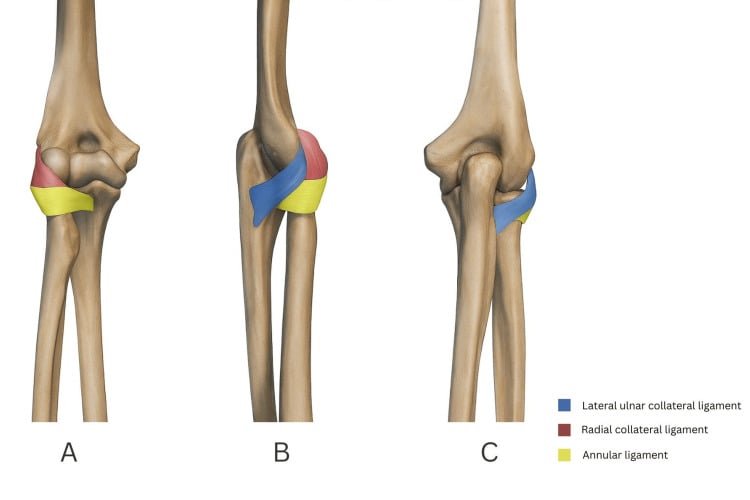
The posterior interosseous nerve. The terminal motor branch of the radial nerve passes through the supinator 4-5cm distal to the lateral epicondyle and supplies the wrist and finger extensors, so an injury shows as weakness of wrist and finger extension. Its position varies with forearm rotation, which is how it is protected at operation (see PIN Protection under Surgical Technique).
What the radial head does. It is a stabiliser as well as a joint surface:
- Secondary valgus stabiliser - critical when the MCL is torn
- Lateral buttress - prevents posterolateral instability
- Load transmission - 60% of axial load passes through the radiocapitellar joint
- Forearm stability - prevents proximal migration of the radius (Essex-Lopresti)
Excision therefore causes predictable problems in an unstable elbow, and in these settings replacement is mandatory. After arthroplasty the prosthesis restores lateral stability, maintains the radiocapitellar articulation, prevents proximal migration and allows early motion.
Classification Systems
Mason classification. Mason grades the radial head fracture, guides the treatment decision and predicts the outcome.
- Pattern
- Less than 2mm displacement, no mechanical block
- Treatment
- Conservative: sling, early ROM
- Outcome
- Excellent (90-95%)
- Pattern
- Greater than 2mm displacement, may have a mechanical block
- Treatment
- ORIF if there is a block, otherwise conservative
- Outcome
- Good (80-85%)
- Pattern
- Greater than 3 fragments, unreconstructable
- Treatment
- Replacement, or excision if stable and low demand
- Outcome
- Variable (70-85% with replacement)
- Pattern
- Radial head fracture plus dislocation, often a terrible triad
- Treatment
- Replacement and address the instability
- Outcome
- Worse (60-75% with proper management)
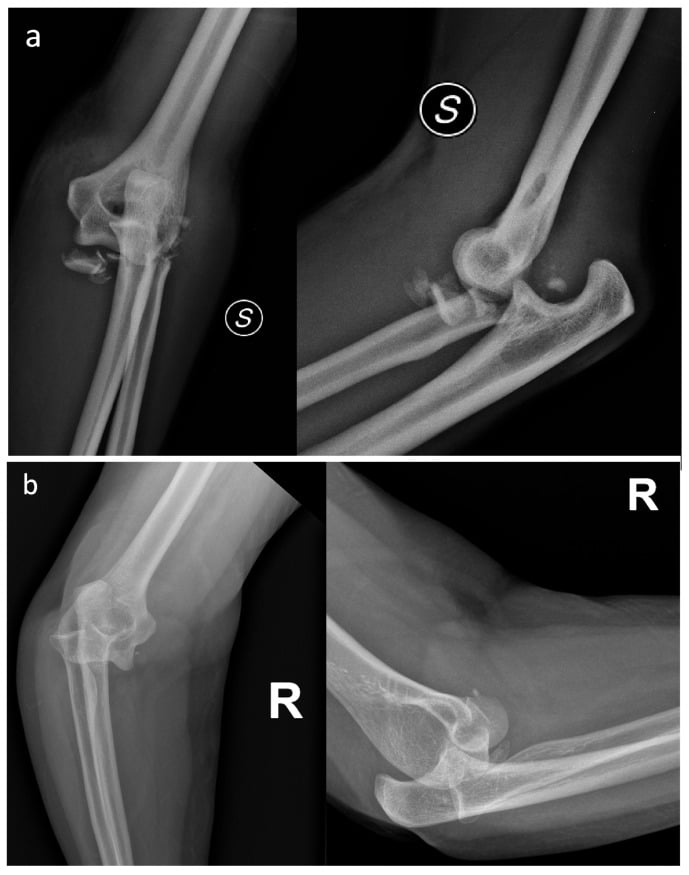
The terrible triad. A radial head fracture, a coronoid fracture and an LCL injury together are a pattern of instability, not just a radial head fracture. All three components must be addressed: failure to address any one leads to persistent instability and a poor outcome.
- Radial head - usually Mason III/IV, comminuted and unreconstructable; replaced
- Coronoid, the anterior buttress - graded by Regan-Morrey: Type I less than 50% of height (may be stable), Type II 50% of height (may need fixation), Type III greater than 50% of height (must be fixed)
- LCL/LUCL - lateral collateral ligament disruption; repaired with suture anchors
Clinical Assessment
History. The mechanism is a fall on the outstretched hand or direct trauma. The answers that matter:
- Where it hurts - the lateral elbow, and the wrist
- A mechanical block to motion
- Instability symptoms - giving way, apprehension
- Wrist symptoms, which raise an Essex-Lopresti injury
Examination. Look for swelling, ecchymosis, deformity of the elbow or wrist, and the carrying angle (cubitus valgus or varus). Tenderness localises the injury: the lateral elbow for the radial head, the medial elbow for the MCL, and the wrist over the DRUJ for an Essex-Lopresti injury. Check every radial head fracture for wrist tenderness and DRUJ instability.
Motion. Normal flexion-extension is 0-150°, with a functional arc of 30-130°, and pronation and supination are normally 80° each. A true mechanical block has to be told apart from pain, and aspiration with local anaesthetic injection does that: test the block again afterwards.
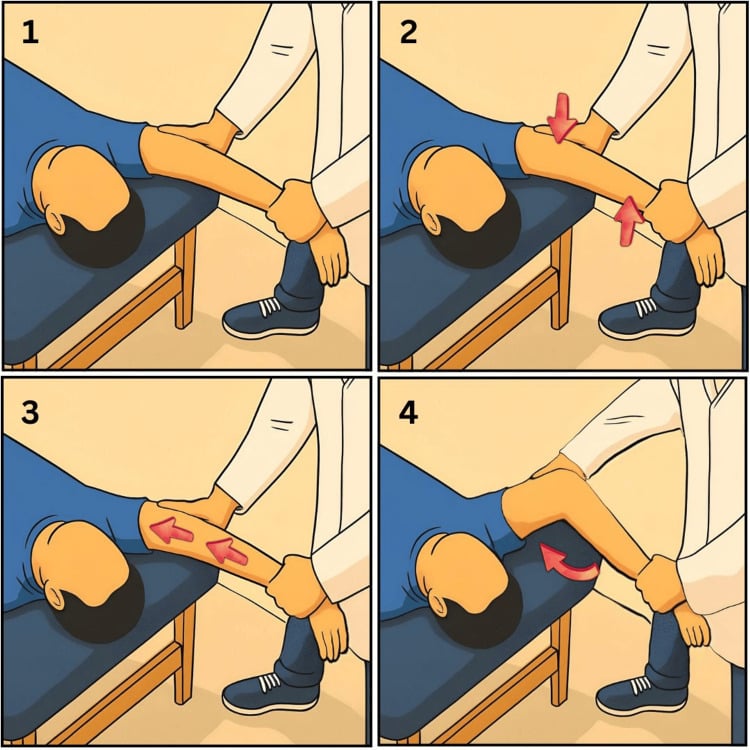
Stability and special tests. Each stabiliser is tested in turn:
- Valgus stress at 30° of flexion - MCL integrity
- Varus stress - LCL integrity
- Posterolateral rotatory instability - supination, valgus and axial load
- DRUJ instability - piano key sign and ballottement, with the DRUJ compression test for Essex-Lopresti
- Biceps squeeze test - forearm stability
Investigations
Radiographs. Plain films of the elbow, the wrist and the other side:
- AP and lateral elbow - fracture pattern, displacement, dislocation
- Radiocapitellar oblique - a better view of the radial head
- Wrist - DRUJ assessment for Essex-Lopresti
- Contralateral elbow - templating for sizing
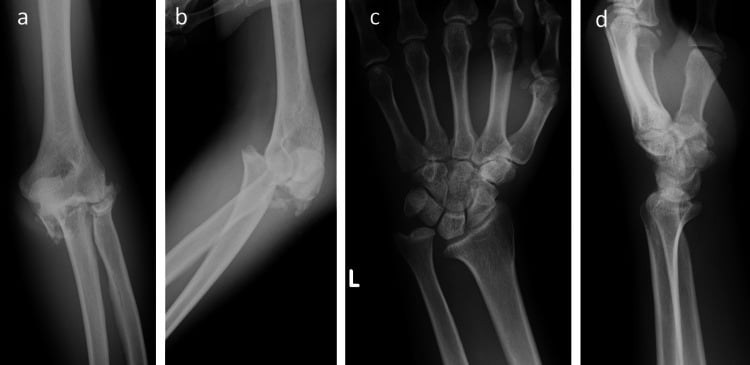
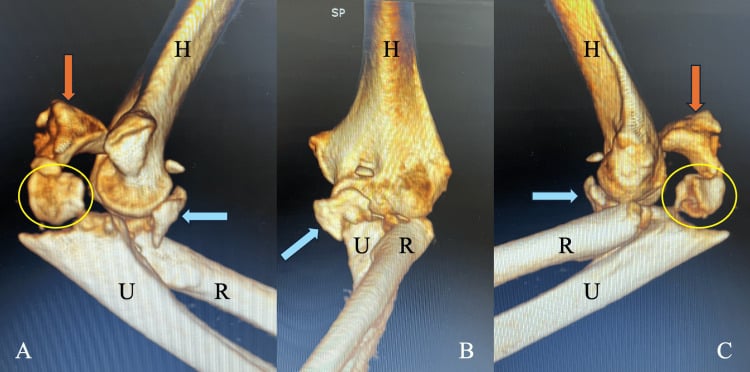
CT. Three-dimensional reconstruction is essential for complex fractures. CT gives the number and size of the fragments and so their reconstructability, the coronoid fragment as a percentage of height and its type, associated injuries of the capitellum and medial epicondyle, and any loose bodies.
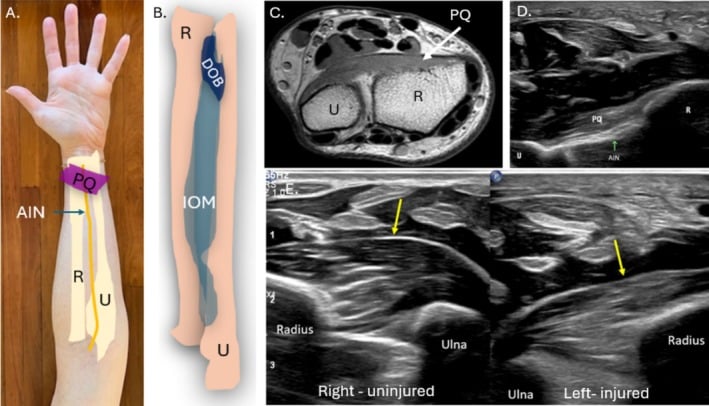
MRI. Assesses the MCL and LCL, the interosseous membrane tear of an Essex-Lopresti injury, and capitellar cartilage damage.
Fluoroscopy. Intraoperative fluoroscopy verifies sizing and assesses stability, and the radiocapitellar line is the key landmark for height (see Sizing and Insertion).
Differential Diagnosis and Controversies
Differential diagnosis - the painful, swollen lateral elbow after a fall:
- Key Clinical Clue
- Lateral tenderness, mechanical block, painful rotation
- Imaging Discriminator
- Comminution greater than 3 fragments on CT; positive fat-pad sign
- Management Pointer
- Replace if unreconstructable and/or unstable
- Key Clinical Clue
- Dislocation plus radial head plus coronoid injury
- Imaging Discriminator
- Coronoid fragment plus radial head fracture plus posterior dislocation
- Management Pointer
- Address all three components
- Key Clinical Clue
- Wrist/DRUJ pain accompanying radial head fracture
- Imaging Discriminator
- Proximal radius migration; DRUJ widening; IOM tear on MRI
- Management Pointer
- Replacement mandatory - never excise
- Key Clinical Clue
- Anterior pain, block to flexion
- Imaging Discriminator
- Lateral radiograph double-arc sign; CT confirms coronal shear
- Management Pointer
- ORIF of the capitellum, not radial head replacement
- Key Clinical Clue
- Apprehension, recurrent clicking, lateral pivot-shift
- Imaging Discriminator
- No fracture; stress views/MRI show LUCL disruption
- Management Pointer
- Ligament repair or reconstruction
- Key Clinical Clue
- Tenderness without block; full rotation after aspiration
- Imaging Discriminator
- Non-displaced or less than 2mm; effusion only
- Management Pointer
- Non-operative, early motion
Areas of genuine uncertainty (exam-relevant controversies):
- Replace vs reconstruct the borderline 3-fragment head: meta-analytic data favour replacement over ORIF for true comminution (Li 2013; Chen 2019), but a stable, anatomically reducible head in a young patient may still justify fixation to preserve native bone.
- Monopolar vs bipolar implants: bipolar designs may reduce edge-loading and were not associated with instability in the van Riet failure series, but they introduce a polyethylene-bearing wear interface; no registry-level comparison exists.
- Press-fit vs cemented vs loose ("spacer") stems: loosening is the dominant failure mode; some advocate an intentionally loose smooth stem to act as a spacer, others press-fit for stability - the evidence is institutional, not randomised.
- Excision in the modern era: still defensible for an isolated comminuted head in a low-demand, demonstrably stable elbow, but contraindicated with any instability or Essex-Lopresti.
- Routine HO prophylaxis: indomethacin/radiotherapy are reasonable in high-risk injuries but lack strong evidence for routine isolated arthroplasty; early motion is the most reproducible measure.
- Implant longevity data gap: absence of national-registry capture means true long-term survival of radial head implants remains poorly defined.
Management Algorithm
The decision. ORIF, replacement or excision. ORIF is for reconstructable fractures (fewer than 3 fragments), replacement for unreconstructable fractures, especially with instability, and excision only for an isolated fracture in a low-demand elderly patient with a stable elbow.
Working through it.
- Fracture pattern - the Mason grade sets the starting treatment (table above)
- Associated injuries - a terrible triad means addressing all three components. An Essex-Lopresti injury makes replacement mandatory; never excise, because excision causes proximal migration of the radius and destroys the DRUJ. An isolated fracture allows replacement, or excision if stable and low demand
- Stability - a stable elbow allows replacement, or excision if low demand; an unstable elbow makes replacement mandatory, never excision
- Patient factors - age, demand, compliance, bone quality and functional requirements
The goal is a stable elbow with a functional range of motion and prevention of long-term complications.
Where the fragment count bends. Fragment count is a warning rather than an absolute rule. Choose fixation only when an anatomical, stable reconstruction is achievable; otherwise arthroplasty better restores the lateral column. The comparative evidence favouring replacement over attempted fixation is confined to genuinely comminuted Mason III heads, which is a narrower claim than it is usually given.
The alternatives. Understanding them helps ensure that replacement is truly indicated.
- ORIF - preserves native anatomy, but has a higher failure rate in comminuted fractures
- Excision - simpler, with no implant, but contraindicated in the unstable elbow and in Essex-Lopresti; the modern trend is replacement over excision
- Conservative - for Mason I and stable Mason II without a block; non-operative, at a risk of stiffness and nonunion
- Associated Injuries
- Isolated fracture
- Treatment
- RHA if greater than 3 fragments
- Key Consideration
- 80-85% good outcomes
- Associated Injuries
- Terrible triad
- Treatment
- RHA + coronoid fix + LCL repair
- Key Consideration
- All three components must be addressed
- Associated Injuries
- Essex-Lopresti
- Treatment
- RHA mandatory
- Key Consideration
- Never excise - causes migration
- Associated Injuries
- Stable elbow
- Treatment
- ORIF or conservative
- Key Consideration
- RHA not indicated
Surgical Technique
Planning. Assess the fracture: Mason grade, fragment number and size, and reconstructability, with fewer than 3 fragments a reason to consider ORIF. Look for every associated injury, the terrible triad components, the IOM and DRUJ of an Essex-Lopresti injury, capitellar damage and MCL injury. Template the diameter on the AP radiograph and the height on the lateral, and compare with the contralateral side if available.
Implants and equipment. Choose modular or monopolar, from a system with multiple sizes, and have backup sizes. Have the Kocher approach instruments, trial components, fluoroscopy and, if a ligament repair is needed, suture anchors.
Positioning. Supine with the arm across the chest on a padded bolster, or lateral decubitus with the arm uppermost, the elbow flexed 90° on an arm board. An upper-arm tourniquet at 250mmHg gives a bloodless field, and fluoroscopy is positioned for AP and lateral views. Mark the lateral epicondyle, the palpable radial head and the Kocher interval between anconeus and ECU.
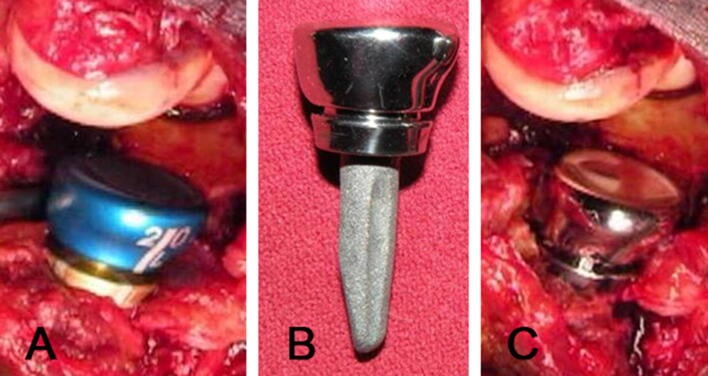
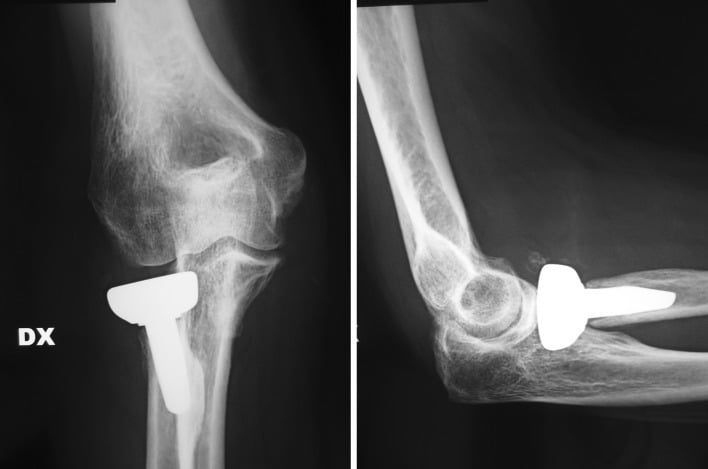
Complications
- Incidence
- 10-20%
- Risk Factors
- Inadequate sizing, poor fluoroscopic guidance
- Management
- Revision to shorter implant or radial head excision
- Incidence
- 30-50%
- Risk Factors
- HO, capsular adhesions, prolonged immobilisation
- Management
- Manipulation under anaesthesia (early) or arthroscopic arthrolysis (chronic)
- Incidence
- 20-50% without prophylaxis, 10-15% with indomethacin
- Risk Factors
- High-energy trauma, delay to surgery, head injury
- Management
- Indomethacin prophylaxis, excision if mature (12-18 months)
- Incidence
- 5-10%
- Risk Factors
- Inadequate LUCL repair, persistent LCL/coronoid insufficiency
- Management
- Revision ligament reconstruction
- Incidence
- 5-10% at 5-10 years
- Risk Factors
- High demand, overlengthening, malposition
- Management
- Revision or conversion to radial head excision
- Incidence
- 10-15%
- Risk Factors
- Overlengthening, malposition, excessive activity
- Management
- Implant removal ± interposition arthroplasty
- Incidence
- 0.5-2%
- Risk Factors
- Supination, distal dissection greater than 4-5cm, aggressive dissection
- Management
- Observation (most recover 3-6 months), exploration if no recovery
- Incidence
- 5-10% terrible triad
- Risk Factors
- Inadequate repair of LCL, coronoid, or MCL
- Management
- Revision ligament reconstruction or hinged external fixator
- Incidence
- 1-2%
- Risk Factors
- Open fractures, contamination
- Management
- Debridement, antibiotics, possible implant removal
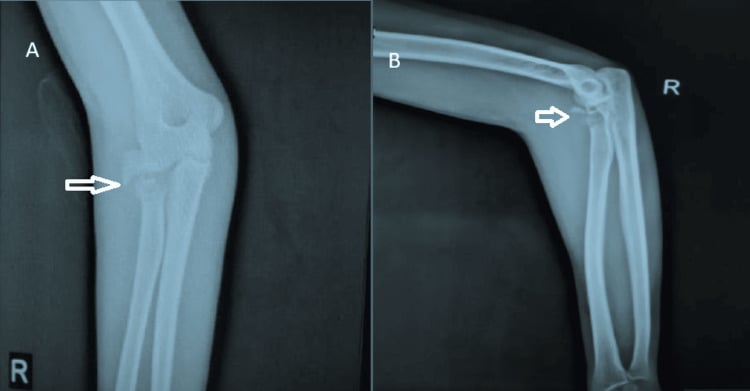
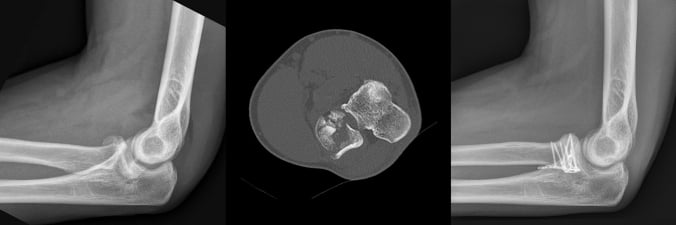
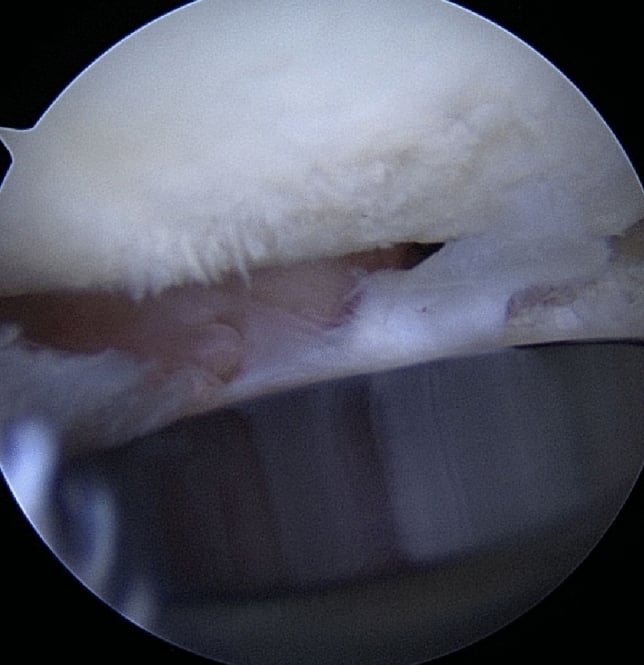
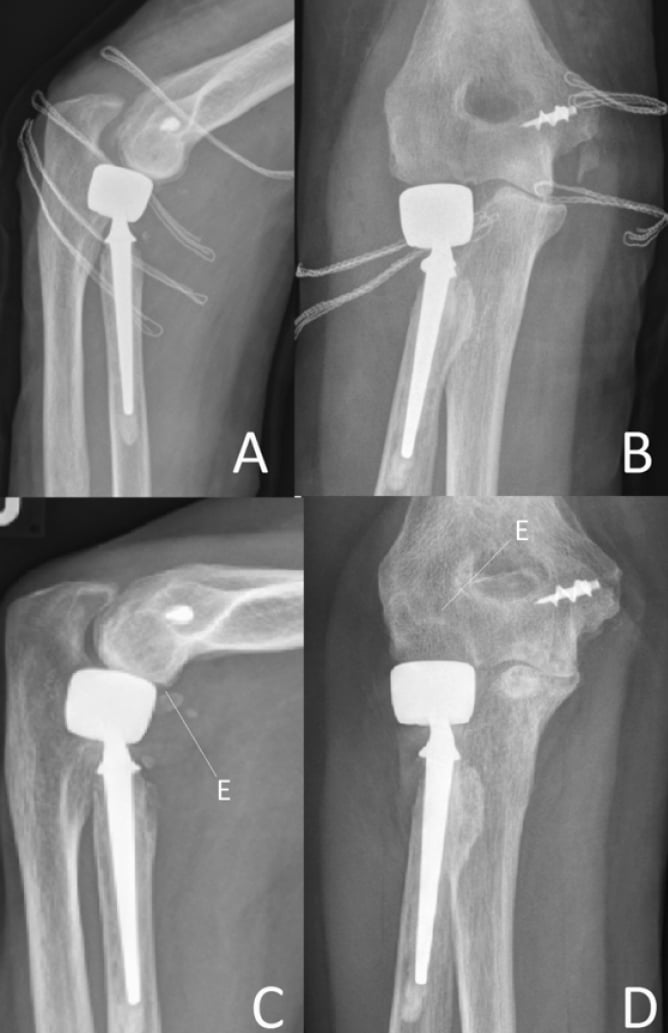
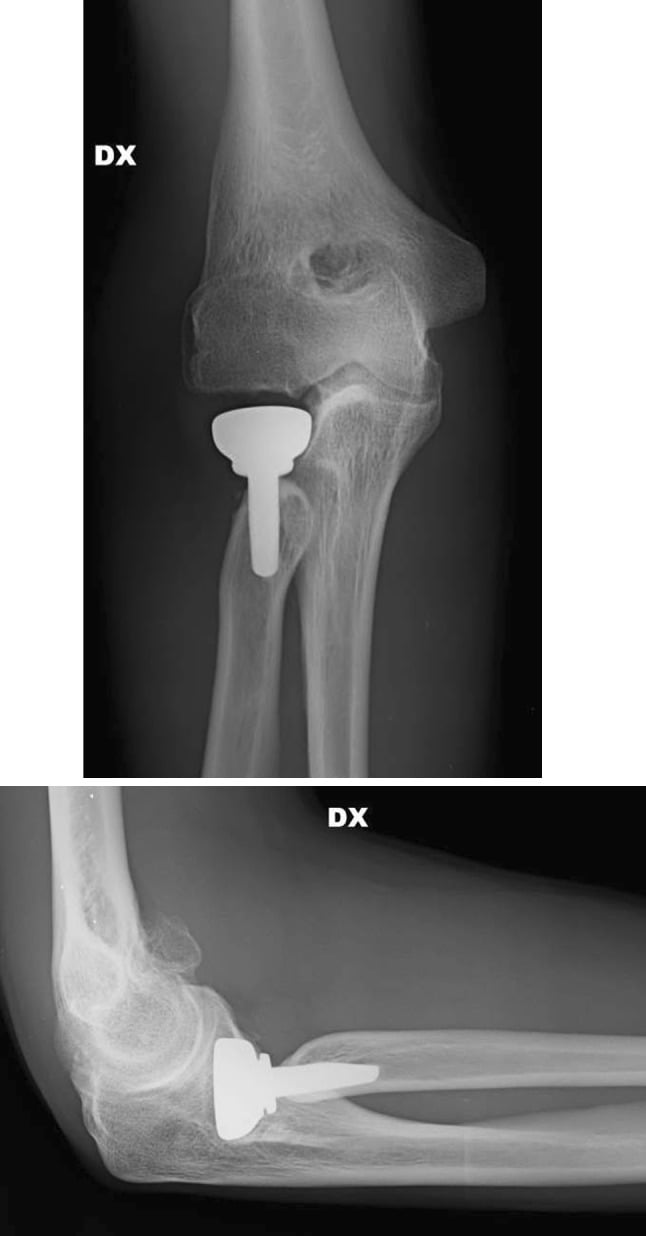
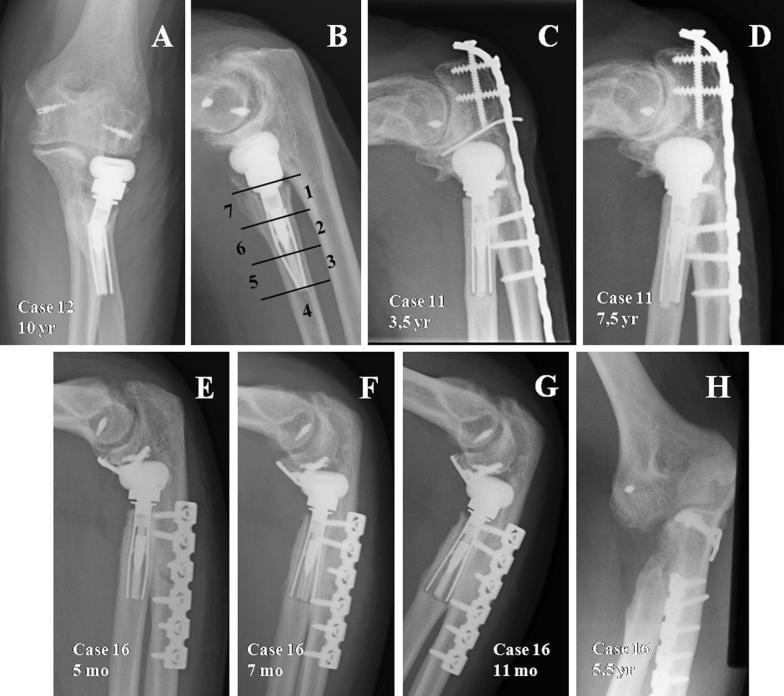
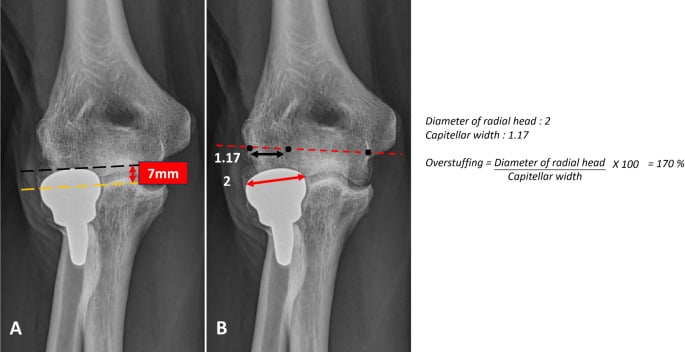
What overlengthening does. Its causes and prevention are under Sizing and Insertion. These figures show the end of the pathway, at the capitellum.
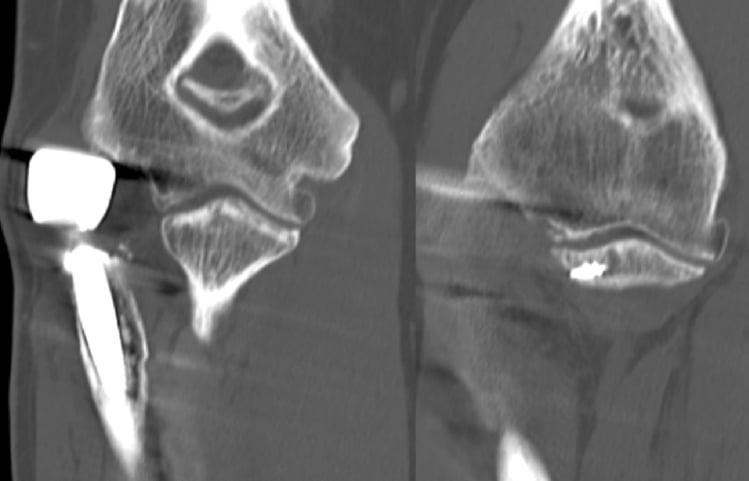
Heterotopic ossification. Prophylaxis is covered under Postoperative Care.
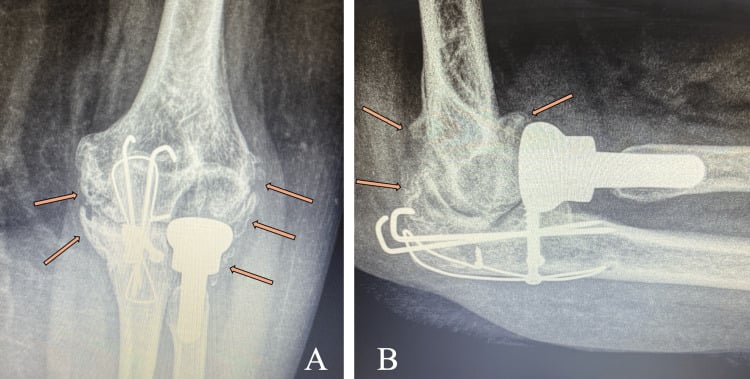
Loosening and stress shielding. Painful loosening is the dominant late failure, and when a well-sized implant is removed for pain the elbow usually does well without it.
Postoperative Care and Rehabilitation
Isolated arthroplasty. Rehabilitation is less restrictive than after a terrible triad.
- 0-2 weeks - a splint for 5-7 days, for comfort only; sutures out at 10-14 days; active-assisted motion as soon as the splint is off, and full active motion by 2-3 weeks
- 2-6 weeks - progressive range-of-motion exercises, gentle strengthening, light activities
- 6-12 weeks - full strengthening, and monitoring for complications
Terrible triad. Rehabilitation balances early motion with protection of the repairs, with a splint or brace for 2-4 weeks and early protected motion.
- 0-2 weeks - hinged elbow brace locked at 30-100° to protect the LCL repair; gentle active-assisted motion within the brace limits with a hand therapist three times daily; a sling between exercises; finger, wrist and shoulder motion immediately
- 2-4 weeks - brace limits increased progressively toward full range (0-130°); active-assisted and active motion; forearm rotation exercises begin
- 4-6 weeks - brace off if stability is adequate; full active motion in all planes; gentle strengthening
- 6-12 weeks - progressive strengthening and functional activities
- 3-6 months - unrestricted activities, including sport
The goal is 30-130° of flexion, the 100° arc that is functional for activities of daily living, with full pronation-supination. Most achieve it by 4-6 months with dedicated therapy.
Heterotopic ossification prophylaxis. Standard in terrible triad cases, and compliance is critical to its effect.
- Indomethacin 25mg three times daily for 6 weeks reduces HO from 40-50% to 10-15%. Give a PPI for GI protection, counsel on compliance despite the GI side effects, monitor for side effects, and adjust (PPI, dose reduction) if needed
- Radiation, a single dose of 7-8 Gy within 72 hours, is very effective (less than 5% HO) but logistically challenging, and is reserved for very high-risk cases
Routine prophylaxis after an isolated arthroplasty is not strongly evidence-supported, and the indomethacin regimen comes from the hip literature and has never been trialled after radial head arthroplasty (see the prophylaxis evidence card below).
Outcomes and Prognosis
Isolated arthroplasty. Good to excellent outcomes in 80-85%. A functional range of 30-130° of flexion with full rotation is reached in 80-85%, and 85-90% achieve good to excellent pain control. Light activities resume at 3-4 months and sport at 6 months.
With a terrible triad. Satisfactory outcomes fall to 70-75%, worse because of the complexity of the injury. 60-70% achieve a 100° arc and 80-90% have a stable elbow after surgery, while 30-40% develop stiffness, 10-15% HO and 5-10% PLRI.
In the long term. Implant survival is 90-95% at 5 years and 85-90% at 10 years, and the revision rate 5-10% at 5-10 years, mostly for loosening or overlengthening. Adjacent joint problems are rare, unlike after radial head excision.
What predicts the result. Proper sizing, stable fixation, early motion and dedicated therapy predict success. Overlengthening, inadequate ligament repair, delayed surgery and non-compliance predict a poor result.
The most important predictor of outcome is achieving a functional range of motion: stiffness is the enemy, and dedicated hand therapy is critical for a good outcome.
Detecting Overlengthening: the Ulnohumeral Congruity Sign
- Why the lateral landmark fails. A radial head only 2 mm proud is very hard to judge against the lateral coronoid edge or the radiocapitellar joint on fluoroscopy, which stay deceptively congruent; surgeons relying on the lateral view alone systematically over-lengthen.
- The more reliable sign: ulnohumeral incongruity. An overlengthened radial head props the lateral side of the elbow open, tilting the ulna into slight varus and WIDENING the MEDIAL ulnohumeral joint space (loss of the normal parallel, congruent ulnohumeral gap). So the best radiographic clue to over-stuffing is asymmetric widening or incongruity of the ulnohumeral joint (especially medially) on a true AP - not the radiocapitellar joint itself.
- Practical intra-operative rules.
- Compare directly with the excised native head - reassemble the removed fragments and match their combined height and diameter; this is the single most reliable reference.
- Restore, do not over-fill: when in doubt, choose the shorter or thinner trial - the failure modes of over-stuffing (capitellar erosion, stiffness, loosening) are far worse than a marginally short head.
- Check ulnohumeral congruity and full, smooth forearm rotation with the trial before committing to the definitive implant.
Q: Why is the radiocapitellar / lateral-coronoid landmark unreliable for detecting overlengthening, and what is better? A: A 2 mm-proud head keeps the radiocapitellar joint looking congruent, so surgeons relying on the lateral view systematically over-lengthen. An overstuffed head props the lateral elbow open and widens the MEDIAL ulnohumeral joint - so asymmetric ulnohumeral incongruity on a true AP is the more sensitive sign. Best of all: reassemble and measure the excised native head, and when in doubt pick the shorter trial, because over-stuffing (capitellar erosion, stiffness, loosening) is worse than a slightly short head.
Implant Design: Monopolar vs Bipolar and Stem Fixation
Monopolar against bipolar, and press-fit against cemented or a loose spacer, are the design choices central to how radial head arthroplasty fails - so they are worth understanding rather than listing.
- Head coupling - monopolar vs bipolar.
- Monopolar (fixed head): the head is rigidly fixed to the stem. Simpler and provides more inherent stability, but the head cannot self-align, so malposition or over-stuffing concentrates edge-loading on the capitellum.
- Bipolar: the head articulates on a polyethylene bearing within the stem, allowing it to self-align to the capitellum through the arc of motion. This reduces edge-loading, and in the van Riet failure series no instability was seen with any bipolar implant - but it adds a polyethylene wear interface (potential osteolysis) and is felt by some to give less inherent stability in a grossly unstable elbow.
- Stem fixation - press-fit vs cemented vs loose "spacer".
- Press-fit (most common): relies on a tight metaphyseal fit, but painful loosening is the dominant failure mode (van Riet).
- Cemented: reserved for osteoporotic or over-reamed canals; more difficult to revise.
- Intentionally loose / smooth "spacer" stem: a deliberately polished, loose stem that pistons slightly and acts as a non-fixed spacer rather than a fixed implant - the rationale being that a stem designed to move avoids the painful loosening of a press-fit stem that was meant to be rigidly fixed.
- The unifying point. Because radial head implants are not captured by national arthroplasty registries, the monopolar-vs-bipolar and press-fit-vs-loose debates rest on institutional series and remain unresolved - itself an examinable point.
Q: What are the main radial head implant design choices and their trade-offs? A: Head coupling - monopolar (fixed) heads are simpler and more inherently stable but edge-load the capitellum if malpositioned; bipolar heads self-align on a polyethylene bearing (less edge-loading, no instability in the van Riet series) at the cost of a wear interface. Stem fixation - press-fit (commonest, but painful loosening dominates failures), cemented (osteoporotic/over-reamed canals), or an intentionally loose polished "spacer" stem designed to piston rather than fix. With no registry data, these debates are unresolved.
Guidelines, Registries & Global Practice
Global epidemiology:
- Radial head fractures account for roughly one-third of all elbow fractures and around 1.5-4% of all adult fractures; peak incidence is in the third to sixth decades with a slight female predominance in older cohorts (low-energy falls) and a male predominance in younger high-energy trauma.
- Around 20-30% of radial head fractures are associated with another osseous or ligamentous injury (terrible triad, coronoid, capitellum, MCL, Essex-Lopresti) - this association, not the fracture in isolation, drives the decision to replace.
- Mason III/IV patterns make up a minority of all radial head fractures but represent the majority of arthroplasty indications.
- Position on Arthroplasty
- Replace unreconstructable comminuted heads (greater than 3 fragments) - prefer replacement over excision when the elbow or forearm is unstable
- Emphasis
- Restore the lateral column and forearm length; never excise in instability or Essex-Lopresti
- Position on Arthroplasty
- Arthroplasty for unreconstructable fractures, especially terrible triad and Essex-Lopresti; ORIF reserved for simple patterns
- Emphasis
- Modular metallic implants; avoid over-stuffing; early protected motion
- Position on Arthroplasty
- Replacement favoured for comminuted fractures with instability; isolated Mason III in low-demand stable elbows may be excised
- Emphasis
- Function-led rehabilitation; selective HO prophylaxis
- Position on Arthroplasty
- Replacement for comminution with associated instability; emphasises avoiding overlengthening and bipolar vs monopolar debate unresolved
- Emphasis
- Sizing discipline; registry-style implant surveillance
Unlike hip and knee arthroplasty, radial head implants are not comprehensively captured by the large national joint registries (NJR-UK, AJRR-US, AOANJRR-Australia, SHAR-Sweden). Evidence on implant survival therefore comes from institutional series and systematic reviews rather than registry data - explaining the persisting uncertainty over bipolar vs monopolar and press-fit vs cemented designs.
Well-resourced centres use modular metallic systems with intra-operative fluoroscopy and a full range of trial heads/necks. Where modular implants, fluoroscopy or hand-therapy are limited, radial head excision (in a demonstrably stable elbow) or ORIF remains a legitimate fallback - but excision is contraindicated whenever instability or Essex-Lopresti is present, regardless of resource setting.
- Pre-operative assessment of associated injuries (terrible triad, coronoid, Essex-Lopresti/wrist)
- PIN protection strategy (forearm pronation, dissection limited near the neck)
- Sizing technique (radiocapitellar line on AP fluoroscopy; avoid overlengthening/over-stuffing)
- Confirmation that all destabilising components were addressed
- HO-prophylaxis decision and rationale in high-risk injuries
- PIN injury where protective measures were not applied
- Overlengthening causing capitellar erosion and stiffness
- Missed terrible triad components leading to recurrent instability
- Excising the radial head in an unstable elbow or Essex-Lopresti injury
A systematic, well-documented approach minimises avoidable complications worldwide.
Related pages: Radial Head Fractures is the parent injury and the page that decides whether an arthroplasty is needed at all - the Mason grade and, more importantly, the reconstructability of the head; Terrible Triad of the Elbow is the setting in which most of these implants are used and the reason the comparative evidence carded here exists; Coronoid Fractures for the second destabiliser in that triad, whose fixation determines whether the elbow is stable once the head is replaced; Essex-Lopresti Injuries for the longitudinal instability in which excision is forbidden and the posterior interosseous nerve migrates proximally toward the capitellum; Radial Head Dislocations and Monteggia Fractures for the other proximal radioulnar disruptions that share this anatomy; and Periprosthetic Shoulder and Elbow Fracture for the late problem around a stemmed implant.
MCQ Practice Points
Q: What is the primary indication for radial head arthroplasty? A: Mason III/IV comminuted radial head fractures that are unreconstructable (greater than 3 fragments). Also indicated in terrible triad and Essex-Lopresti injuries where radial head replacement is mandatory for stability.
Q: How do you protect the posterior interosseous nerve during Kocher approach? A: Full pronation of the forearm moves PIN from 1.5cm (supination) to 4cm (pronation) anterior to radial neck. This is the most important safety measure. Also limit distal dissection to less than 4-5cm from lateral epicondyle.
Q: How do you determine proper radial head prosthesis height? A: Radiocapitellar line on AP fluoroscopy: radial head should align with lateral edge of coronoid process. Overlengthening (most common error, 10-20%) causes capitellar erosion, pain, and stiffness. Use trial components and fluoro confirmation before final implant.
Q: What are the three components of terrible triad and how are they managed? A: Radial head fracture (replacement), coronoid fracture (fix if greater than 50% height), and LCL injury (repair). All three must be addressed for stability. Failure to address any component leads to persistent instability and poor outcome.
Q: What is the most common technical error in radial head arthroplasty? A: Overlengthening occurs in 10-20% of cases. It causes increased radiocapitellar contact pressure leading to capitellar cartilage erosion, pain, stiffness, and early failure. Prevention requires meticulous sizing using radiocapitellar line on AP fluoroscopy.
Exam Viva Scenarios
Practise clinical reasoning and management decisions out loud
“A 45-year-old patient presents with terrible triad injury. Walk me through your management, including surgical approach, addressing all components, and key technical points.”
“How do you determine proper radial head prosthesis size, and what happens if you get it wrong?”
“A patient presents with radial head fracture and wrist pain. How do you assess for Essex-Lopresti injury, and why does it change management?”
Key Indications
- Mason III/IV comminuted fractures (greater than 3 fragments)
- Terrible triad: radial head + coronoid + LCL (all three must be addressed)
- Essex-Lopresti: radial head + IOM + DRUJ (replacement mandatory)
- Failed ORIF with symptomatic malunion/nonunion
Surgical Technique
- Kocher approach: internervous plane (anconeus-ECU)
- PIN protection: FULL PRONATION moves nerve 4cm anterior to neck
- Sizing: radiocapitellar line on AP fluoro - head aligns with lateral coronoid edge
- LUCL repair: suture anchors in lateral epicondyle if torn
- Coronoid fixation: suture lasso or anchors if greater than 50% height
Complications
- Overlengthening: 10-20% (most common error) - causes capitellar erosion
- Stiffness: 30-50% - managed with aggressive therapy
- HO: 10-15% with indomethacin prophylaxis
- PIN palsy: 0.5-2% - most recover 3-6 months
- PLRI: 5-10% if inadequate LUCL repair
Outcomes
- Isolated RHA: 80-85% good to excellent outcomes
- Terrible triad: 70-75% satisfactory outcomes
- Functional ROM: 30-130° flexion, full rotation in 80-85%
- Return to activities: 3-4 months light, 6 months sports
Evidence Base and Key Trials
Standard Protocol for Terrible Triad (Landmark)
- 36 consecutive elbow dislocations with radial head and coronoid fractures treated by a standard protocol
- Protocol: radial head fixation or replacement, coronoid fixation when possible, lateral ligament repair, selective MCL repair and hinged external fixation
- Mean Mayo Elbow Performance Score 88 (15 excellent, 13 good, 7 fair, 1 poor); concentric stability restored in 34 of 36 elbows
- Stable construct allowed motion at 7-10 days; 8 patients needed reoperation (synostosis, instability, hardware removal/release, infection)
Radial Head Replacement vs Repair in Terrible Triad (Meta-analysis)
- Systematic review and meta-analysis of 4 studies, 115 patients (51 repair, 64 replacement)
- Replacement associated with significantly better flexion, extension and pronation ROM than repair
- Replacement group showed better DASH and MEPS scores and fewer post-surgical complications
- Most fractures were Mason type II or III
Replacement vs ORIF for Mason III Fractures (Meta-analysis)
- Pooled one RCT and one comparative study, 67 patients with Mason type III fractures
- Complication rate 13.9% with replacement vs 58.1% with ORIF
- Satisfactory outcome 91.7% with replacement vs 51.6% with ORIF
- Replacement favoured at follow-up of 5 years or less