Robotic-Assisted & Computer-Navigated Arthroplasty
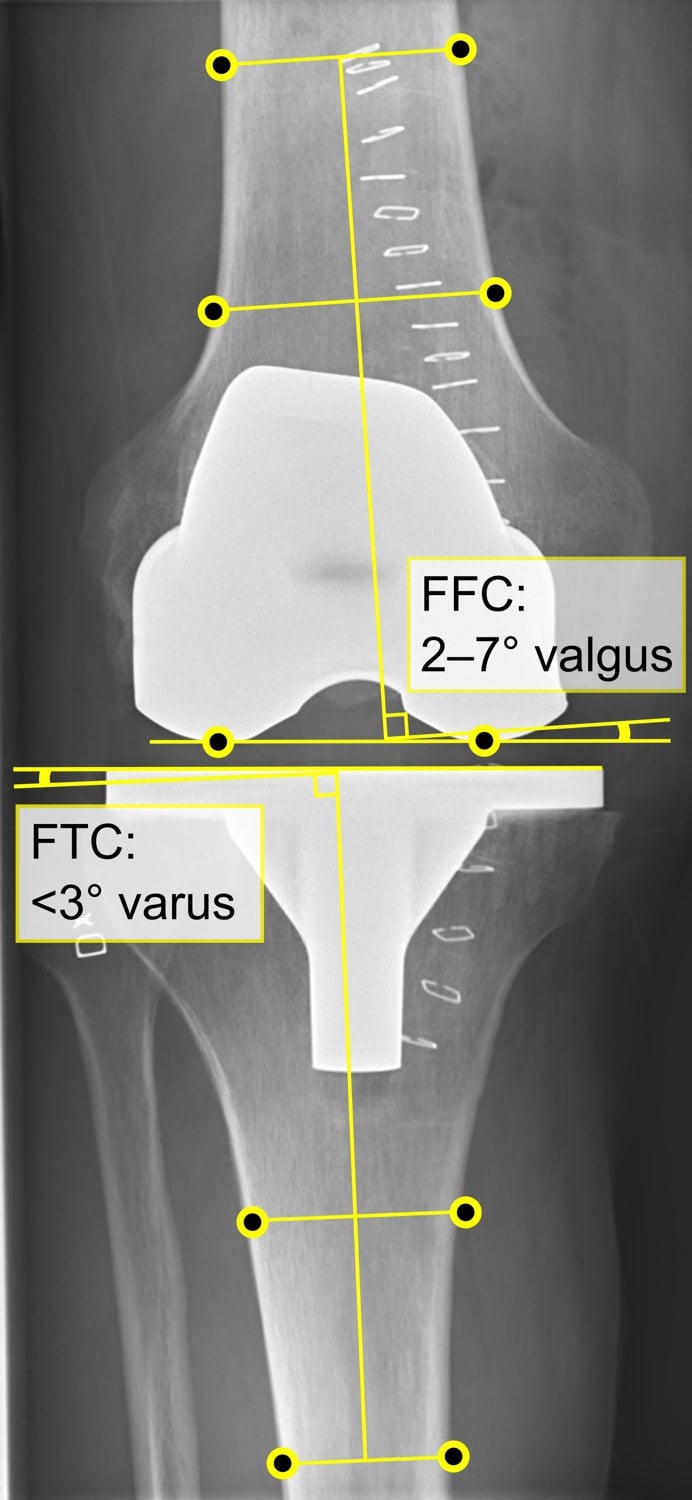
Improves precision. Across randomised trials and meta-analysis, robotic and navigated systems restore the planned mechanical/anatomical alignment more reliably and produce fewer radiographic outliers than manual instrumentation - the effect is largest in severe deformity.
Better outcomes for the patient. At long-term follow-up, function scores, complication rates and implant survivorship are equivalent to manual technique. Better radiographs have not translated into better-feeling knees or longer-lasting implants in high-level trials.
ALIGNWhy Robotics May Help
Hook:Robotics improve ALIGN-ment - the patient outcome benefit is still unproven.
Overview
Technology-assisted arthroplasty uses computer navigation or a surgical robot to plan and execute bone preparation and component positioning more precisely than manual jigs allow. The shared premise is that tighter control of alignment, component position and soft-tissue balance should improve durability and function - a premise that has been only partly borne out by clinical evidence.
The two technologies sit on a spectrum of surgeon control. Computer navigation is a measuring and feedback tool: optical or electromagnetic trackers report limb and instrument position in real time, but the surgeon still makes every cut by hand. Robotics adds a physical execution element - from a fully autonomous milling arm (active systems) to a haptically-constrained, surgeon-guided tool (semi-active systems) that simply stops the surgeon cutting outside the plan.
Robotic and navigated arthroplasty are best understood as enabling tools rather than treatments in their own right. Their value depends entirely on what target they are asked to hit - which is why they are inseparable from the modern debate over alignment philosophy (mechanical versus kinematic versus functional alignment).
- Mechanical alignment (MA) — the traditional gold standard: restore a neutral hip-knee-ankle (HKA) mechanical axis of 0° (within ±3°) with the femoral and tibial cuts perpendicular to their mechanical axes. Durable and reproducible, but it ignores the patient's native joint-line obliquity and often needs soft-tissue releases to balance.
- Kinematic alignment (KA) — restore the patient's pre-arthritic native alignment and joint-line obliquity by resurfacing the worn condyles (matching resection to cartilage/bone loss); aims to recreate native kinematics with fewer releases, but can place components in outlier positions in some knees.
- Restricted kinematic alignment (rKA) — KA kept within safe boundaries (e.g. each component and the overall HKA within about ±5° of neutral) to avoid extremes.
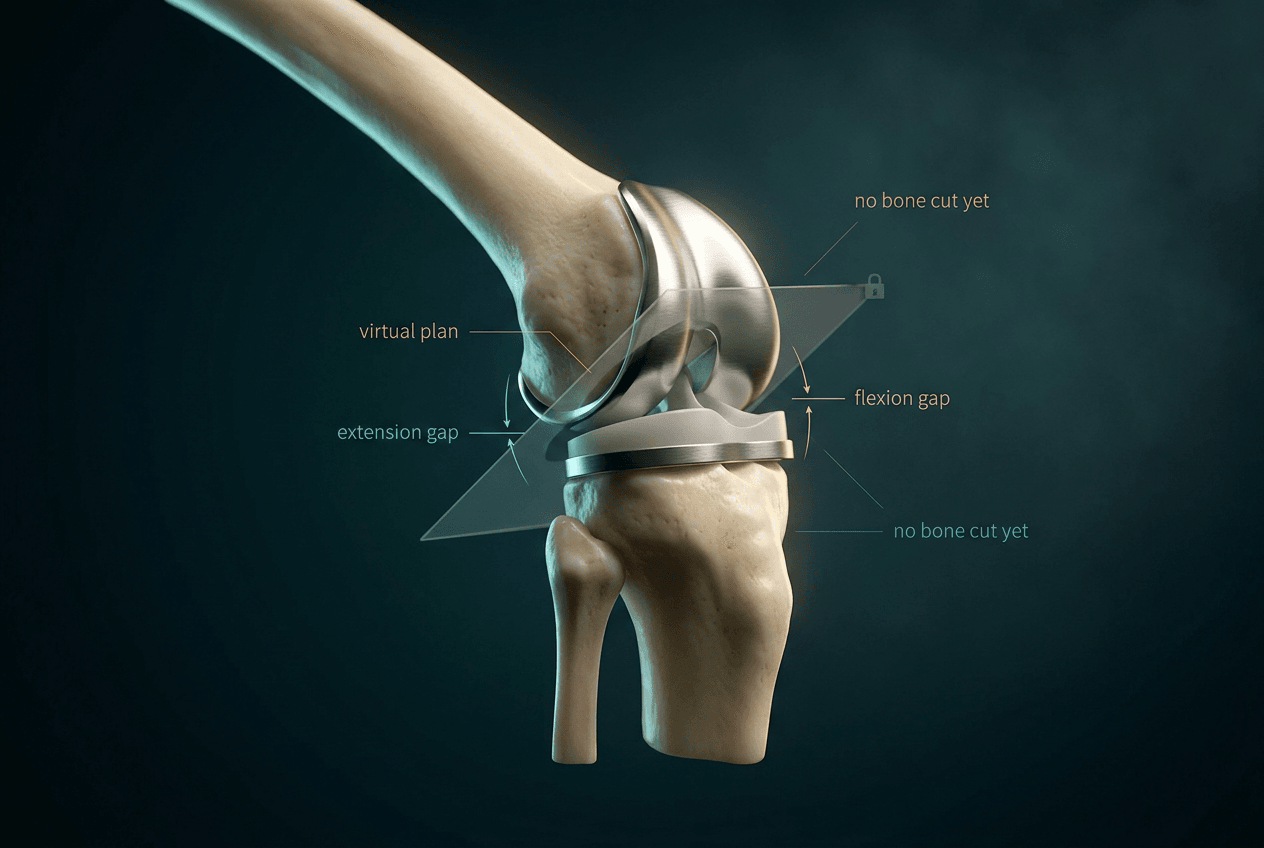
- Functional alignment (FA) — the robotics-era hybrid: virtually plan component position, then adjust it within defined limits to balance the soft-tissue gaps through range BEFORE cutting bone (the Young Insall-Award RCT showed far fewer releases, 16% vs 65%, with comparable 2-year scores).
- CPAK (Coronal Plane Alignment of the Knee) — classifies knees by arithmetic HKA (limb alignment) and joint-line obliquity into phenotypes (Types I–IX) to individualise the target; the Young RCT found the FA benefit concentrated in CPAK Type I (neutral) knees.
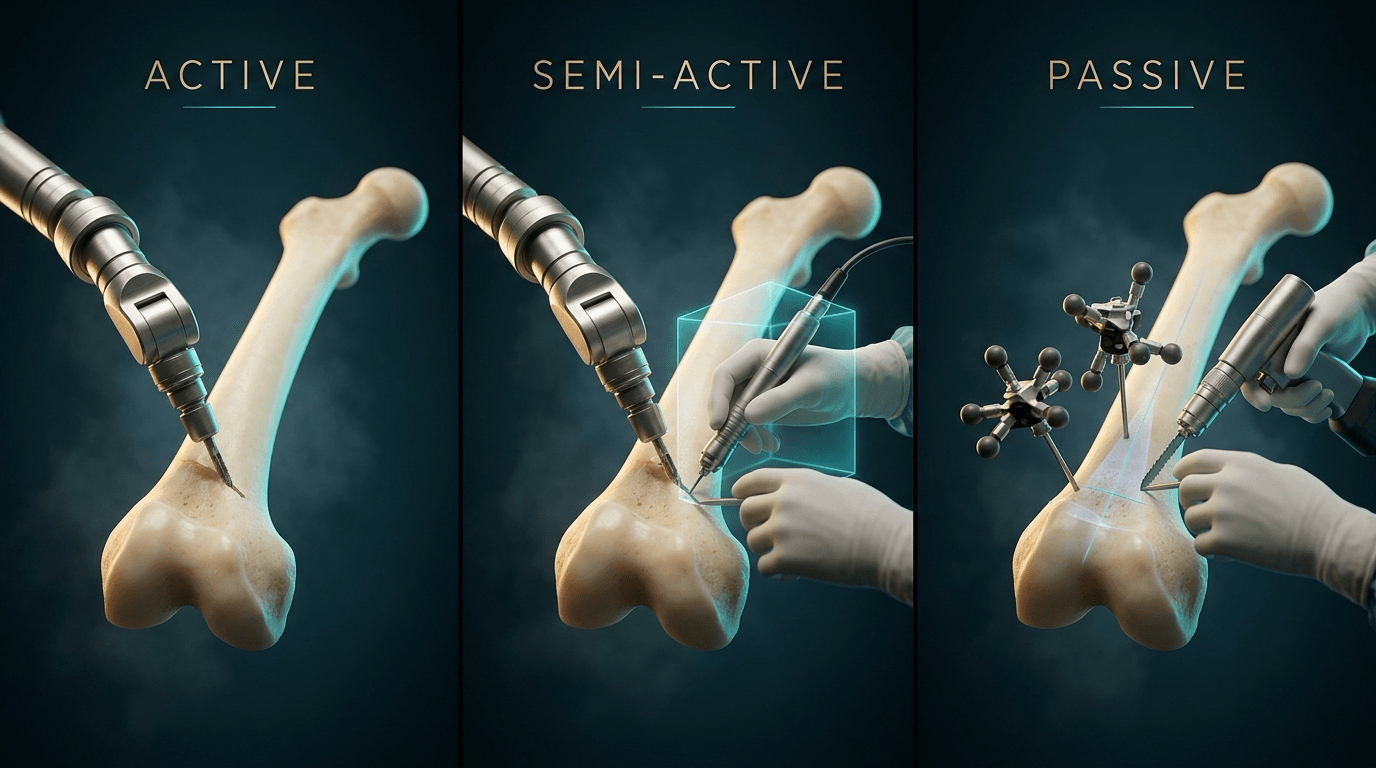
Principles: system taxonomy
Degree of Robot Autonomy
- Active (autonomous): The robot performs the bone resection itself while the surgeon supervises. The prototype was ROBODOC for femoral canal preparation in THA. Concerns over soft-tissue injury, cost and inflexibility have made active systems largely historical.
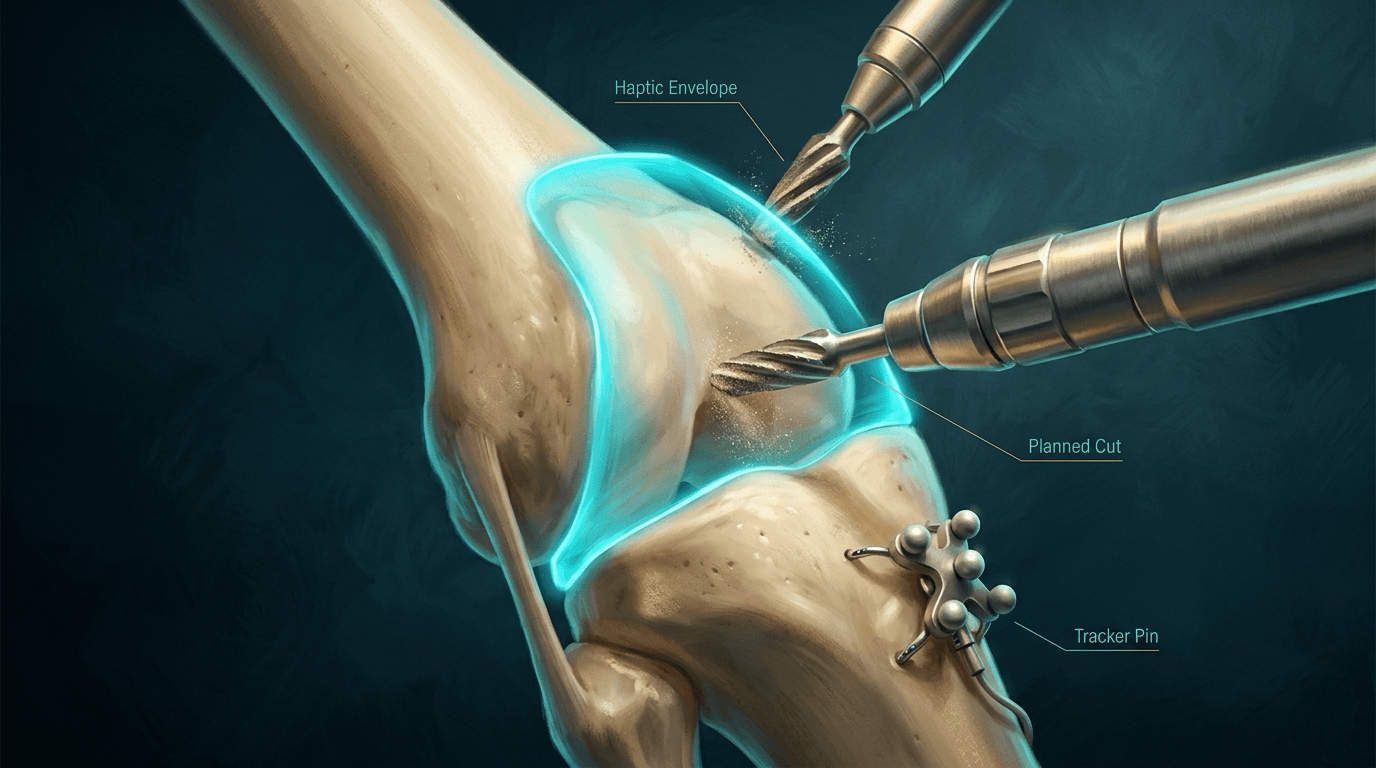
- Semi-active (haptic / surgeon-guided): The surgeon holds and moves the cutting tool, but the robot constrains it to a pre-defined three-dimensional boundary (a "haptic envelope"), preventing cuts outside the plan. This is the dominant contemporary architecture (e.g. Mako).
- Passive (navigation): The computer plans and continuously displays alignment and resection data but imposes no physical constraint; the surgeon executes all cuts conventionally.
"Walk me through a robotic knee" is a common viva — the steps that distinguish it from a manual case:
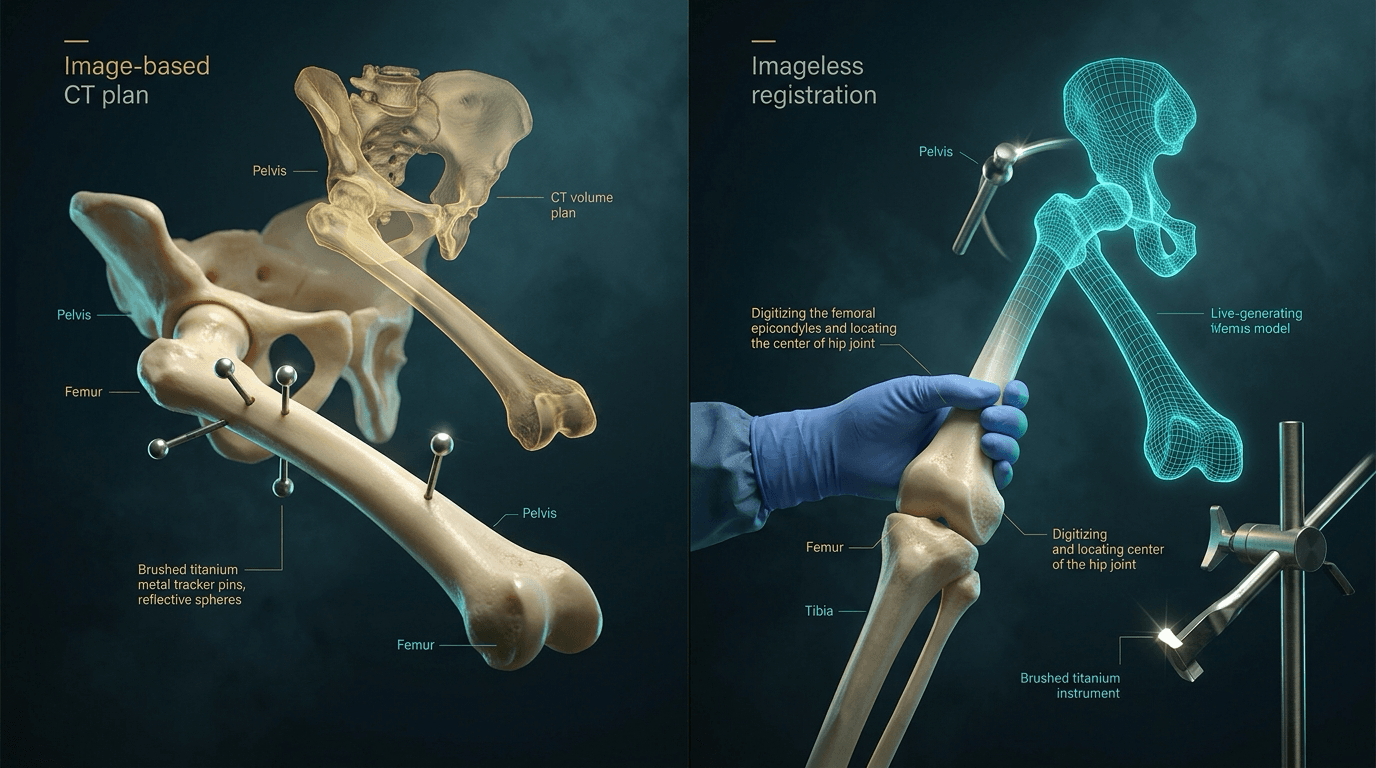
- Plan — for an image-based system, a pre-operative CT builds a patient-specific 3D model with implant size/position; an imageless system plans intra-operatively.
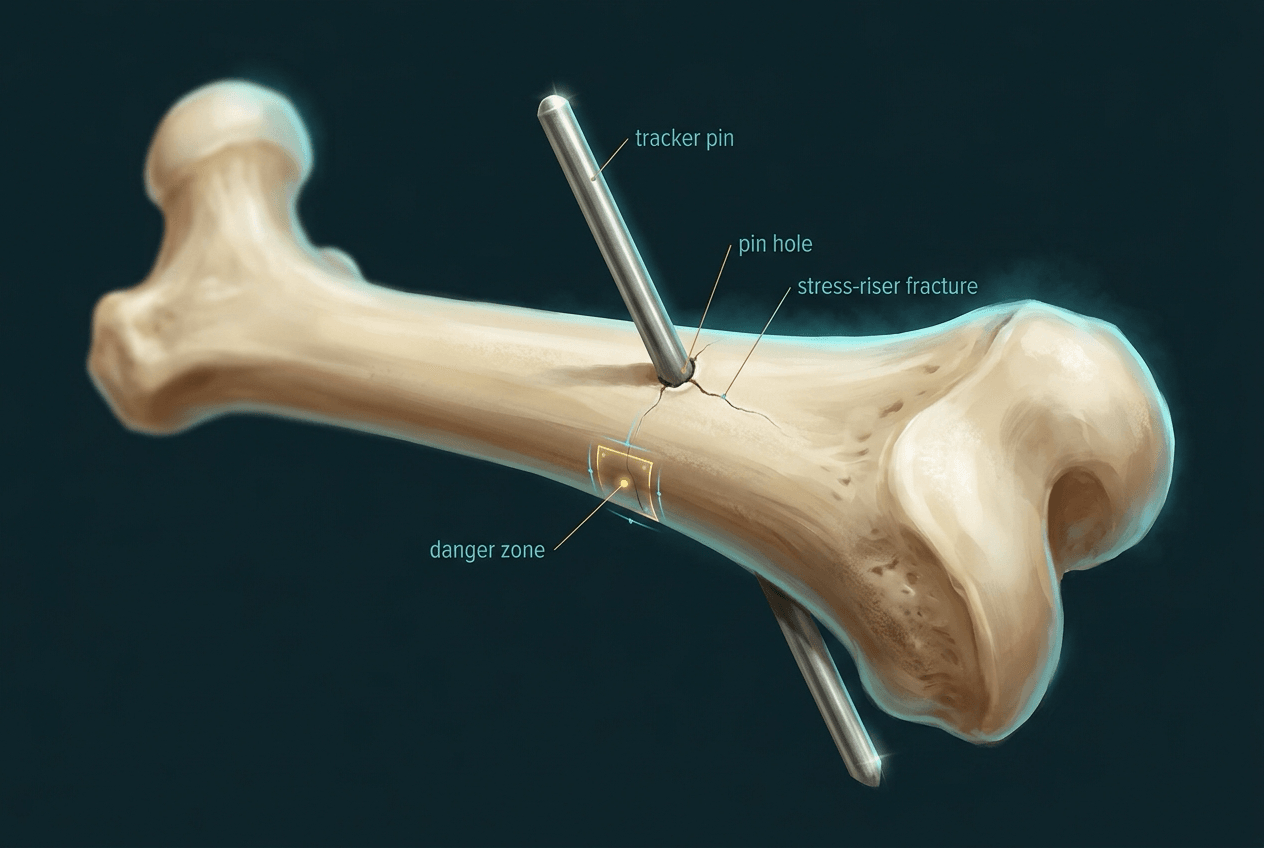
- Pin and register — insert bone-anchored tracker arrays (femur and tibia) and register the patient's anatomy to the model by capturing bony landmarks/surface points (registration accuracy is the key operator-dependent error).
- Capture alignment and gaps — record the limb/HKA alignment and assess the flexion and extension gaps and laxity through range under varus/valgus stress.
- Virtually plan and BALANCE before cutting — adjust component position, size and rotation on screen to optimise alignment and balance the gaps — the step unique to robotics: you balance the plan to the soft tissues before any bone is cut, which is exactly how functional alignment is delivered and how releases are minimised.
- Execute within the boundary — make the resections with the tool constrained to the haptic/robotic boundary (the semi-active arm stops cutting outside the plan).
- Trial and refine — reassess the gaps with trial components, fine-tune the plan if needed, then implant.
The differentiator over manual or plain navigation is quantified, dynamic gap-balancing with the ability to adjust the plan before resecting bone.
Active / Semi-active / PassiveSystem taxonomy
Hook:Classify any system by autonomy (active / semi-active / passive) and by whether it needs a pre-op image.
Clinical relevance: accuracy versus outcome
The literature is best understood as two separate questions. First: does the technology hit the target more precisely? The answer is consistently yes. Second: does hitting the target more precisely make the patient better? The answer, at high levels of evidence, is so far no.
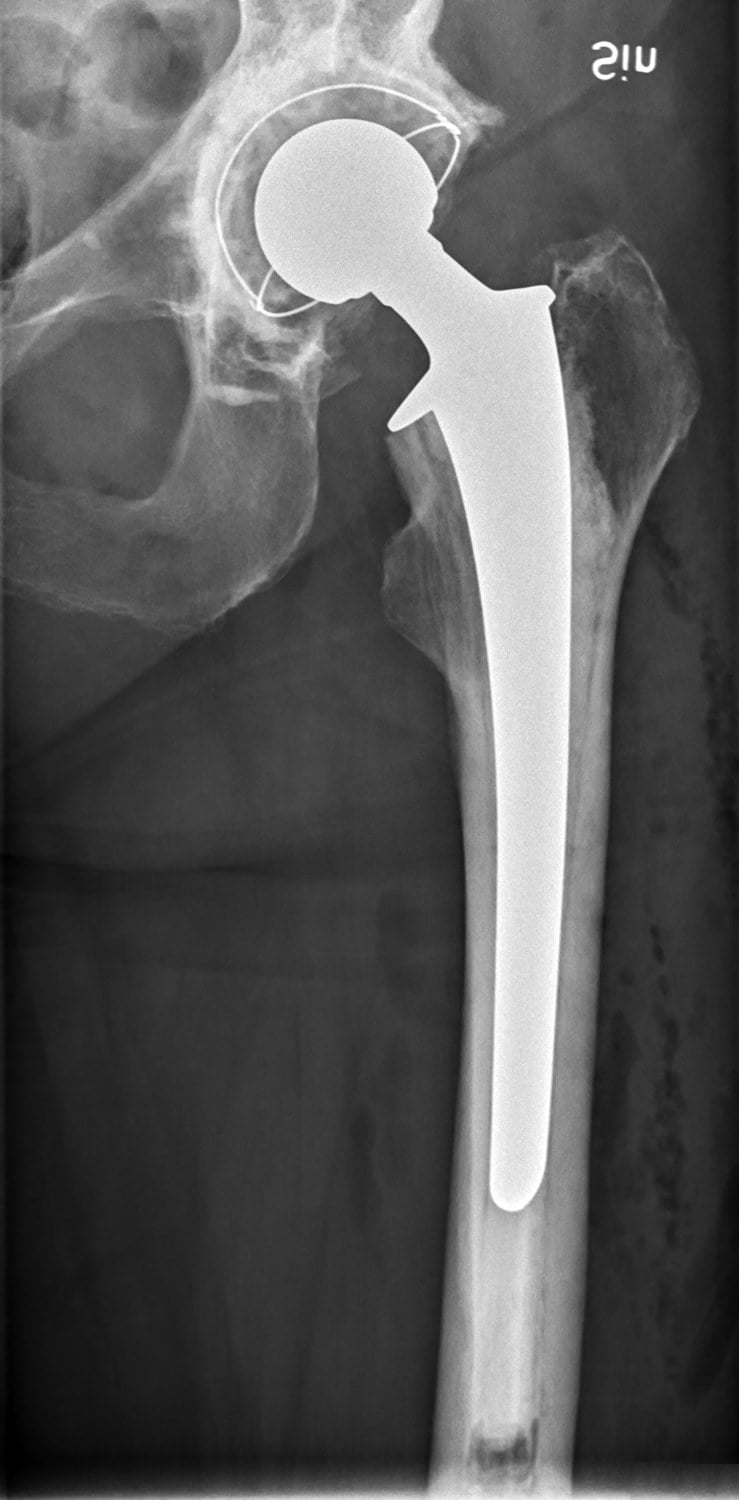
Meta-analysis of randomised trials shows robotic TKA achieves significantly better post-operative anatomical and mechanical alignment than conventional jig-based TKA, with the benefit most pronounced in knees with severe pre-operative deformity. In robotic THA, the great majority of acetabular cups are placed within the intended safe zone for inclination and anteversion.
The strongest evidence - a long-term randomised controlled trial with over a decade of follow-up - found no difference between robotic-assisted and conventional TKA in knee society scores, WOMAC, range of motion, aseptic loosening, overall survivorship, or complications. Functional benefit from navigation appears only in studies where the system also controlled soft-tissue balancing, not alignment alone.
Advantages and Limitations
Potential Advantages
- Alignment precision: Fewer mechanical-axis and component-position outliers, especially in deformed knees.
- Quantified soft-tissue balancing: Real-time gap and laxity data allow component position to be fine-tuned to the soft-tissue envelope - the likely mechanism behind any functional benefit.
- Enables modern alignment philosophies: Functional and kinematic alignment depend on the precise, reproducible bone cuts that robotics provides.
- Reduced soft-tissue releases: Planning component position to the native envelope can reduce the need for ligament releases.
- Education and reproducibility: Intra-operative data may flatten the variability between surgeons.
Cost, Adoption and the Value Question
Adoption has been rapid and commercially driven, but the value proposition remains contested. The capital cost of a robotic platform, per-case disposables, and added theatre time must be justified against outcomes that, at present, are equivalent to conventional surgery in the highest-quality trials. Proponents argue the benefit will emerge with (a) longer follow-up, (b) newer systems, and (c) the pairing of robotics with alignment philosophies that robotics uniquely enables. Sceptics note that decades of navigation data improved radiographs without improving patient-perceived outcomes, and caution against assuming robotics will be different.
A defensible exam stance: robotic and navigated arthroplasty are accurate, safe, and enabling technologies whose precision is established but whose clinical superiority is not yet proven. They are reasonable for surgeons who value reproducibility and wish to execute individualised alignment, but they are not a prerequisite for an excellent arthroplasty, and current evidence does not mandate their use.
Guidelines, Registries & Global Practice
Global Adoption and Evidence Picture
Technology-assisted arthroplasty has been adopted rapidly and worldwide, led commercially by semi-active haptic robotic platforms for knee and hip replacement. The consistent message across international randomised trials and meta-analyses is the same regardless of healthcare system: alignment accuracy improves; patient-perceived outcomes and survivorship, at current follow-up, do not differ from conventional surgery.
Side-by-Side Evidence Synthesis
- What the evidence shows
- Improved; fewer outliers, biggest effect in deformity
- Best supporting evidence
- RCT meta-analysis (Alrajeb 2024); RCT (Tian 2023)
- What the evidence shows
- Most cups within safe zone
- Best supporting evidence
- Prospective cohort (Elmallah 2015)
- What the evidence shows
- No difference vs manual
- Best supporting evidence
- Level I RCT, 13-year follow-up (Kim 2020)
- What the evidence shows
- Soft-tissue balancing, not alignment alone
- Best supporting evidence
- Meta-analysis (van der List 2016)
- What the evidence shows
- Robotics is the execution platform
- Best supporting evidence
- Insall Award RCT (Young 2025)
Registry and Practice Variation
National joint registries increasingly capture computer- and robot-assisted cases, and long-term registry survivorship data are maturing; at present they have not demonstrated a clear survivorship advantage that would compel adoption. Practice varies by resource setting: well-resourced centres may run image-based robotic programmes paired with individualised alignment, while many high-volume centres worldwide continue to achieve excellent results with manual instrumentation. The honest global summary is that robotics is an accurate and safe option, not an evidence-mandated standard of care.
Viva practice
Viva Scenarios
Practise clinical reasoning and management decisions out loud
“Your hospital is considering purchasing a surgical robot for knee arthroplasty. As the arthroplasty lead, what is your evidence-based view?”
“A patient develops a distal femoral fracture two weeks after an uncomplicated robotic TKA. What is the likely mechanism and how could it have been avoided?”
Exam cheat sheet
Evidence
Landmark Level I RCT: No Long-Term Benefit
- Prospective randomised trial of 1406 patients (robotic-assisted vs conventional TKA) with a mean 13-year follow-up
- No difference in Knee Society scores, WOMAC, UCLA activity, or range of motion between groups
- Kaplan-Meier survivorship was 98% in both groups at 15 years (endpoint aseptic loosening or revision)
- No between-group difference in complications; authors could not recommend widespread use given added time and expense
Navigation/Robotics: Alignment vs Function
- Systematic review and meta-analysis of computer navigation and robotics in uni- and total knee arthroplasty
- Navigation reliably improves mechanical-axis accuracy and component positioning
- No functional benefit when navigation controlled alignment and component position alone (p = 0.63)
- A significant functional benefit emerged only when the system additionally controlled soft-tissue balancing (mean difference 4.84, p = 0.003)