Low Back Pain Source | Provocative Tests | Injection
- 15-30% of low back pain may originate from SI joint
- Cluster of 3+ positive provocative tests supports diagnosis
- Fluoroscopic-guided injection (greater than 75% relief) confirms diagnosis
- Consider spondyloarthropathy in young patients (HLA-B27)
- SI joint fusion for refractory cases after failed conservative treatment
- “FABER, Gaenslen's, thigh thrust, sacral compression, distraction tests
- “Pain typically over PSIS, may radiate to buttock/posterior thigh
- “MRI for inflammatory causes, plain film for degenerative
- “Injection both diagnostic and therapeutic
Overview and Epidemiology
The sacroiliac (SI) joint is a diarthrodial synovial joint between the sacrum and the ilium, and a significant source of low back and buttock pain. It is estimated to cause 15-30% of non-radicular low back pain.
Why it is hard to pin down. The joint's innervation is complex and variable, which makes the diagnosis challenging, and no single clinical test is diagnostic.
Anatomy
The joint. The auricular (ear-shaped) surfaces of the sacrum and ilium interlock, and their irregular topography increases friction and stability. Motion is small: 1-4° of rotation and 1-2mm of translation. The joint has synovial and ligamentous parts:
- Anteroinferior - the synovial portion, with hyaline cartilage
- Posterosuperior - a fibrous portion with fibrocartilage, and the stronger of the two
- Transition zone - between them, the area of maximum stress concentration
The ligaments. The posterior ligamentous complex is the primary stabiliser.
- Interosseous sacroiliac ligament - the strongest, filling the posterior joint space
- Posterior sacroiliac ligaments - short and long
- Anterior sacroiliac ligament - thin, covering the front of the joint
- Sacrotuberous and sacrospinous ligaments - contribute to pelvic stability
Innervation. Posteriorly the joint is supplied by the L5 dorsal ramus and the S1-S3 lateral branches; some accounts extend the range to L4 or to S4. This posterior network carries nociception variably, with dense caudal sensitivity around S2-S3, and it is the target for radiofrequency ablation in refractory cases. Anteriorly there are variable contributions from L2-S2, which explains the diverse referral of pain to the buttock, posterior thigh and groin.
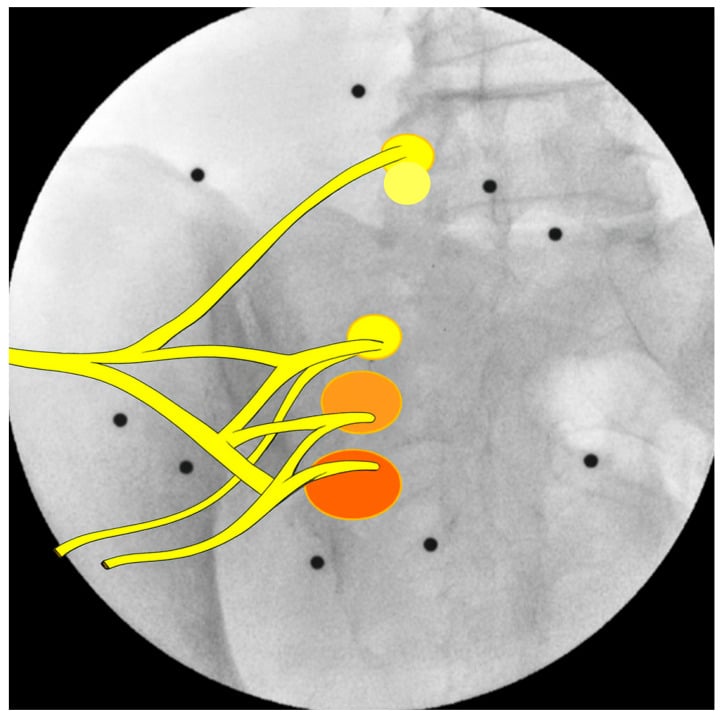
Blood supply and neighbours. The superior gluteal artery supplies the joint laterally and posteriorly and internal iliac branches supply it medially, which matters in the lateral transiliac approach. The structures around the joint:
- L5 nerve root
- Sacral nerve roots - posterior
- Internal iliac vessels - anterior and medial
Pathophysiology
Load transfer. The joint transmits axial load from the spine to the pelvis, moving through nutation (sacral flexion) and counternutation. Its stability depends on form closure, the interlocking auricular surfaces, and force closure, the compression supplied by the posterior ligamentous complex and the gluteal, latissimus and abdominal muscle slings.
Mechanical pain. Pain arises when load transfer across the joint becomes abnormal. Disruption of either form or force closure generates nociception through the richly innervated posterior capsule and ligaments, and the routes to it are:
- Ligament laxity, including the relaxin-driven laxity of pregnancy
- Trauma
- Asymmetric loading
- Adjacent-segment stress after lumbar fusion
- Degenerative cartilage loss
Inflammatory pain. In inflammatory disease, synovitis and subchondral bone-marrow oedema drive an erosive and then ankylosing process, distinct from the mechanical pathway.
Classification
By cause. The causes fall into five groups:
- Mechanical - hypermobility or hypomobility, leg length discrepancy, asymmetric loading patterns, and injury from falls or motor vehicle accidents
- Inflammatory - ankylosing spondylitis, reactive arthritis, psoriatic arthritis and inflammatory bowel disease-associated arthritis, characterised by sacroiliitis on imaging
- Degenerative - osteoarthritis of the SI joint, more common in older patients, with sclerosis and osteophyte formation
- Traumatic - instability after pelvic fracture
- Peripartum - ligament laxity from the hormonal effects of relaxin, usually self-limiting postpartum but may require treatment if it persists
By stability. A joint with an intact posterior ligamentous complex is stable. Disruption of the posterior ligaments, as in traumatic dislocation, makes it unstable, and that influences the treatment approach.
Grading sacroiliitis. The modified New York criteria grade the joint from normal to fused:
- Grade 0 - normal
- Grade 1 - suspicious changes
- Grade 2 - minimal abnormality: small erosions, sclerosis
- Grade 3 - definite abnormality: erosions, sclerosis, widening or narrowing
- Grade 4 - complete ankylosis
Clinical Presentation
History. Pain typically sits over the posterior superior iliac spine (PSIS), in Fortin's area, and may radiate to the buttock, posterior thigh or groin, rarely below the knee. It is worse with sitting, with transitional movements such as sit-to-stand, and with prolonged standing, and the patient may note stiffness.
The inflammatory pattern. Consider a spondyloarthropathy (ankylosing spondylitis, reactive arthritis) when the back pain behaves like inflammation:
- Age under 40 at onset
- Insidious onset, not acute
- Morning stiffness lasting over 30 minutes
- Pain at night, in the second half, that wakes the patient and eases on rising
- Improves with exercise and activity, not relieved by rest
Mechanical pain, in contrast, worsens with activity and positional change. The distinction guides the work-up: an inflammatory pattern calls for inflammatory markers, HLA-B27 and MRI for sacroiliitis.
Examination. Three or more positive provocation tests increase the likelihood that the SI joint is the source. Five tests make up the cluster described here; the Laslett validation behind the threshold, carded in the Evidence Base, used six.
- FABER (Patrick's) - flexion, abduction and external rotation of the hip. Pain at the SI joint suggests SI pathology, although the manoeuvre also stresses the hip
- Gaenslen's - supine, one hip flexed to the chest and the other extended off the table edge
- Thigh thrust (posterior shear) - supine, hip flexed to 90°, axial load through the femur towards the SI joint
- Sacral compression - side-lying, downward pressure on the ilium to compress the pelvis laterally
- Distraction - supine, posterior force on the ASISs to distract the anterior pelvis
Differential diagnosis. SI joint pain overlaps heavily with other axial and gluteal pain generators. Multiple sources frequently coexist, so the table is a guide to dominant features rather than a set of mutually exclusive diagnoses.
- Pain Location
- Below L5 over PSIS (Fortin area), buttock, posterior thigh, rarely below knee
- Discriminating Features
- Worse sitting and sit-to-stand transitions, 3+ provocation tests positive
- Confirmatory Test
- Image-guided intra-articular block (over 75% relief)
- Pain Location
- Paraspinal low back, buttock
- Discriminating Features
- Worse with extension and rotation, less PSIS-focal
- Confirmatory Test
- Medial branch blocks L4-L5/L5-S1
- Pain Location
- Radiating below knee in dermatomal pattern
- Discriminating Features
- Positive SLR, neurological deficit, dermatomal sensory loss
- Confirmatory Test
- MRI lumbar spine plus selective nerve root block
- Pain Location
- Groin, anterior thigh, C-sign grip
- Discriminating Features
- Positive FADIR, pain-limited hip ROM, groin pain
- Confirmatory Test
- Intra-articular hip block, hip MRI/MR arthrogram
- Pain Location
- Lateral hip, point tenderness over trochanter
- Discriminating Features
- Pain on single-leg stance and side-lying, no PSIS focus
- Confirmatory Test
- Ultrasound/MRI, peritrochanteric injection
- Pain Location
- Bilateral buttock, alternating
- Discriminating Features
- Age under 40, inflammatory back pain, morning stiffness over 30 min, HLA-B27
- Confirmatory Test
- MRI bone marrow oedema, raised CRP
- Pain Location
- Deep buttock, sciatic distribution
- Discriminating Features
- Pain on resisted external rotation, sitting intolerance
- Confirmatory Test
- Diagnostic piriformis/peri-sciatic block
Investigations
The pathway. Mechanical SI joint pain has no pathognomonic scan and needs clinical confirmation. Three steps build the diagnosis:
- Provocation cluster. Individual tests have low sensitivity and specificity; three or more positive tests raise the diagnostic probability, and a negative cluster essentially rules out the SI joint (high negative predictive value)
- MRI detects sacroiliitis when an inflammatory cause is suspected
- Image-guided injection confirms the SI joint as the pain source, the gold standard when the clinical picture is equivocal
Radiographs. An AP pelvis assesses the joint margins, sclerosis and osteophytes, and the angled Ferguson view shows the SI joints better. Films may show degenerative change or the erosions and fusion of advanced sacroiliitis.
MRI. The gold standard for detecting sacroiliitis, and essential if a spondyloarthropathy is suspected. STIR or fat-saturated T2 sequences show oedema best, and the findings evolve with the disease:
- Acute - bone-marrow oedema adjacent to the joint, hyperintense on STIR, marking active inflammation
- Chronic - erosions, sclerosis and fatty marrow replacement
- Late - ankylosis
When to scan. MRI is reserved for inflammatory, infectious, tumour or stress-injury red flags, because ordinary degenerative findings correlate poorly with symptoms.
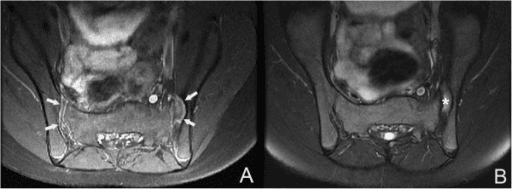
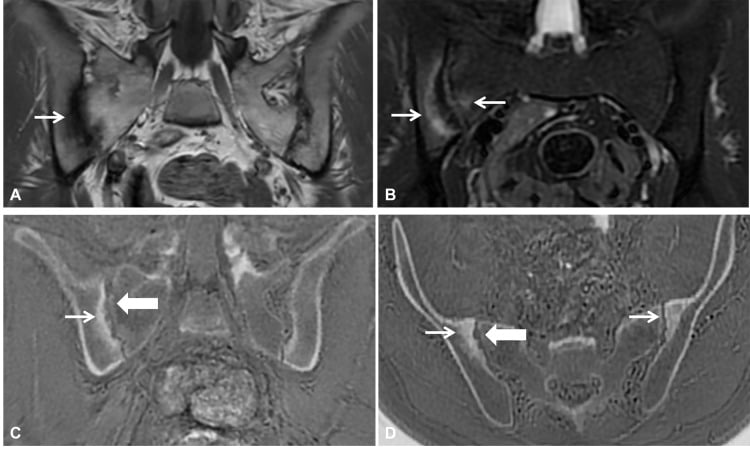
CT. Better bony detail than MRI, showing erosions, sclerosis and ankylosis, and useful for surgical planning.
Nuclear medicine. A bone scan shows increased uptake in sacroiliitis, and SPECT-CT localises it better than planar imaging. It is useful when MRI is contraindicated.
Blood tests. ESR and CRP are elevated in sacroiliitis. HLA-B27 is positive in 90% of patients with ankylosing spondylitis, and rheumatoid factor is usually negative in spondyloarthropathy.
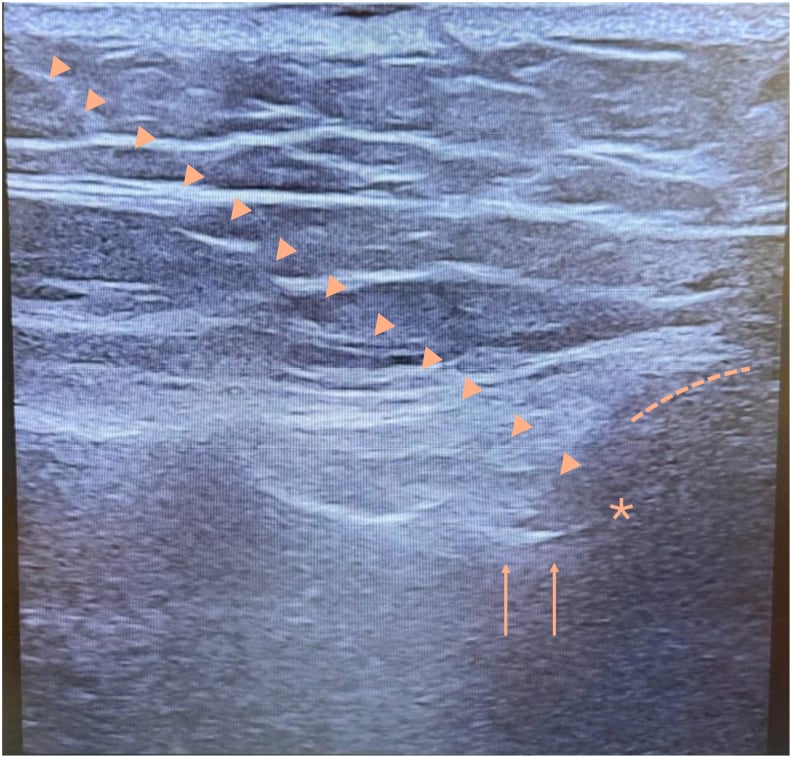
The diagnostic injection. Under fluoroscopic or CT guidance, 1.5-2mL of local anaesthetic is injected into the joint, with contrast to confirm placement. Image guidance reduces extra-articular injection. Over 75% pain relief confirms the SI joint as the pain source, and corticosteroid can be added for therapeutic effect. Given the limitations of clinical testing, this is the most reliable way to confirm an SI joint origin.
Management
Non-operative care. Treatment progresses from conservative measures to fusion for refractory cases. The conservative measures:
- Physiotherapy - core strengthening, pelvic stabilisation and stretching. Success is variable, better in mild cases
- Activity modification - avoid aggravating activities
- SI belt - external support for hypermobility
- NSAIDs - especially for inflammatory pain, with DMARDs and biologics for spondyloarthropathy
Steroid injection. Intra-articular corticosteroid gives temporary relief in 50-70% and may provide lasting relief. It can be repeated, and repeat injections may provide ongoing benefit.
Radiofrequency ablation. For refractory cases after a positive diagnostic pathway, multiple probes are positioned beside the posterior sacral foramina to lesion the S1-S3 lateral branches. Because the lateral-branch network is variable, single-point ablation fails, and lesion patterns target multiple lateral branches. It gives significant pain reduction in 60-70%, typically lasting 6-12 months, and can be repeated if symptoms recur. RFA targets the posterior neural supply and does not treat intra-articular inflammation or instability.
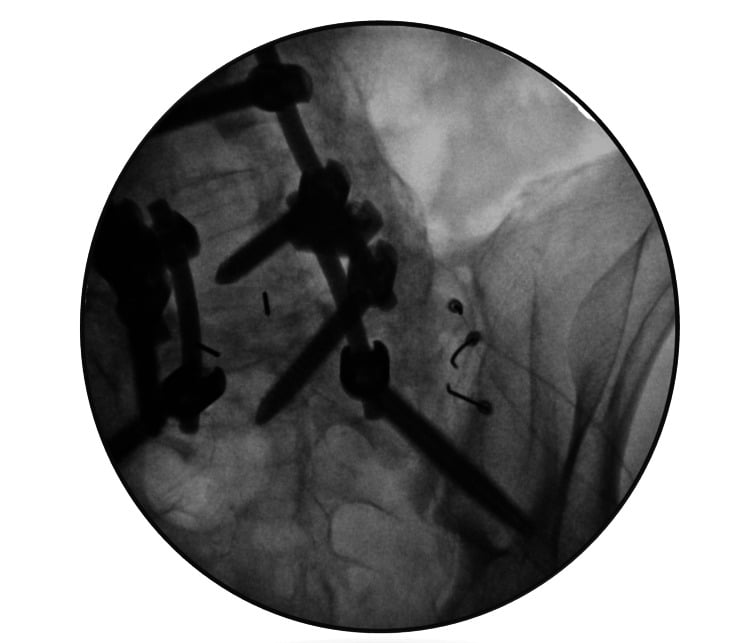
Surgery. Fusion is considered after failed conservative treatment, typically 6+ months, in a patient whose SI joint has been confirmed as the pain source by the injection response. Exclude other sources of pain, the hip and the lumbar spine, before operating.
Surgical Technique
Minimally invasive lateral transiliac fusion. The most common modern technique. Through a small lateral incision over the ilium, implants (screws across the joint, or triangular titanium implants) are passed across the joint into the sacral ala, typically three triangular implants in a triangular configuration. Fluoroscopic guidance is essential, and a preoperative CT assesses the anatomy.
- Position the patient prone or lateral; prone is preferred for bilateral access
- Set up fluoroscopy for AP and lateral views
- Make a small incision over the lateral ilium, the entry point 2cm lateral to the PSIS
- Place a guidewire across the SI joint
- Drill sequentially and place the implants
- Confirm position on multiple views
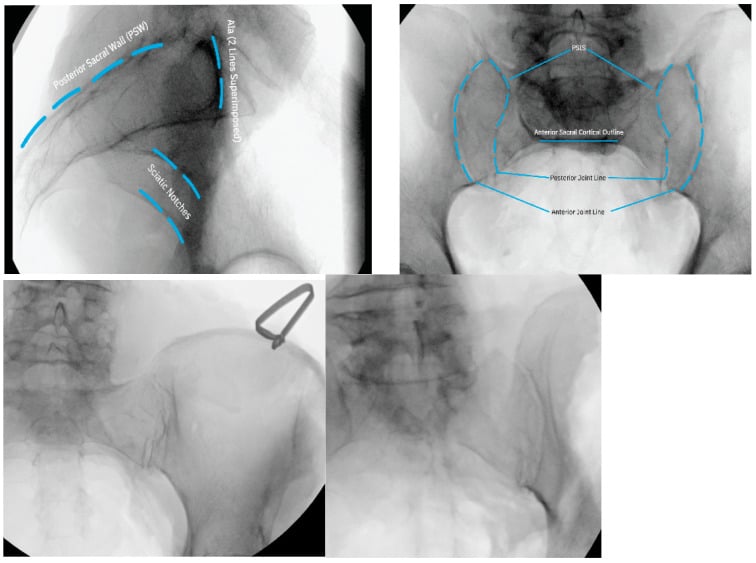
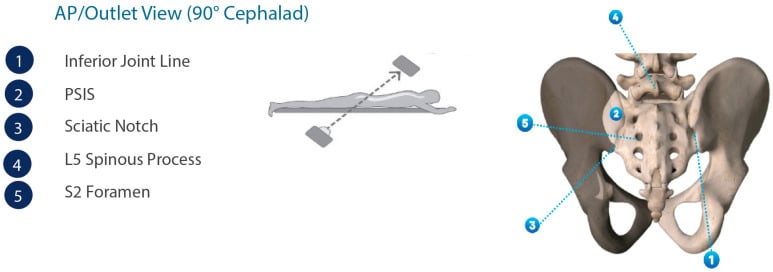
Staying out of trouble. The implant traverses the ilium, crosses the joint and seats within the sacrum, and its trajectory must reach sacral cancellous bone while staying clear of the neural foramina, the sacral canal and the anterior vessels.
- Keep the implants at least 1cm below the S1 foramen, to avoid the S1 and L5 nerve roots
- Confirm joint entry on lateral fluoroscopy, and alternate outlet, inlet and lateral views to control depth and avoid foraminal or anterior breach
- Bicortical purchase into the sacrum improves fixation
- Consider bone graft or biologics to enhance fusion
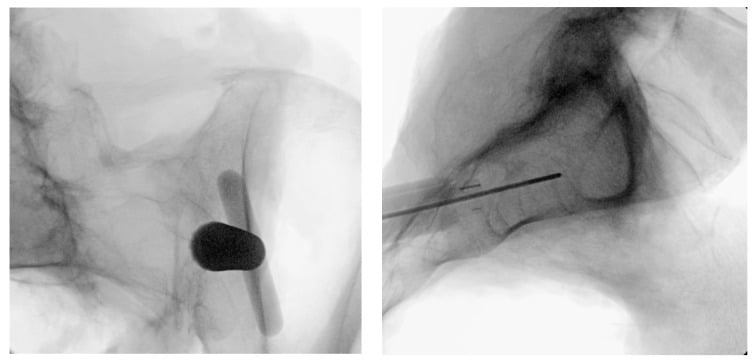
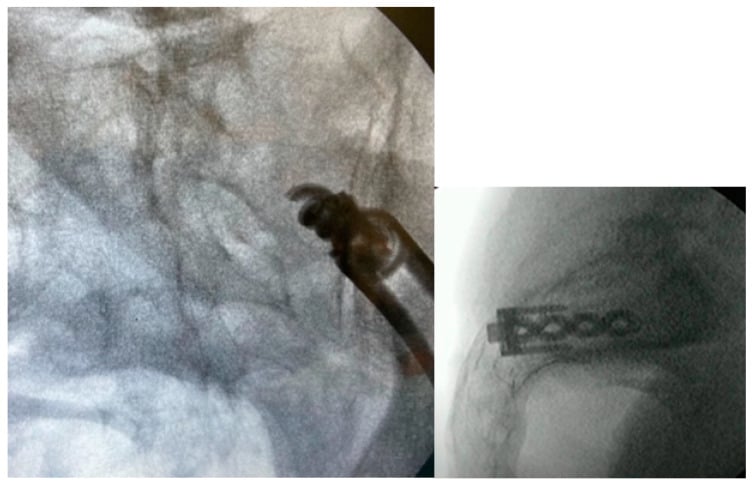
Open fusion. Indicated for traumatic instability. Through an anterior or posterior approach, the cartilage is debrided and bone grafted, and the joint is fixed with screws or a plate.
Alternatives. Other techniques are available for specific problems:
- Distraction arthroplasty
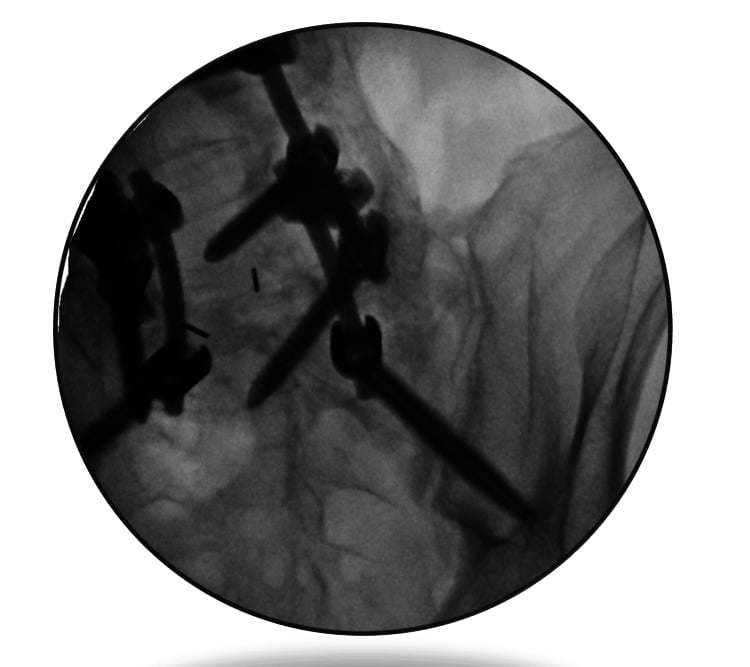
- Posterior screw-rod fixation, for traumatic instability
- Combined anterior and posterior approach, for severe instability
Complications
Nerve injury. The L5 nerve root is at risk in the lateral approach, and the S1 root if the implants sit too superiorly; sciatic nerve injury from malpositioning is rare. Postoperative radiculopathy is investigated with CT to assess implant position, and an implant impinging on a nerve should be considered for revision.
Hardware problems. Implants can be malpositioned, prominent enough to cause buttock pain, or loosen and migrate. Hardware is removed only for symptomatic prominence, once fusion is solid.
Pseudarthrosis. Failed fusion occurs in 10-15%, and solid fusion may take 12-18 months. If pain persists and a repeat SI joint injection is positive, consider revision with bone graft, biologics (BMP) or additional implants.
Adjacent segments. Fusion increases loading on the contralateral SI joint, which can become symptomatic, and stress at the lumbosacral junction may accelerate L5-S1 degeneration. They are treated conservatively unless severe, and adjacent segment degeneration may require extended fixation.
Other complications. Wound infection, haematoma and DVT/PE also occur.
Persistent pain. The most common "complication", in 15-30% of patients, and it may indicate an incorrect diagnosis or adjacent pathology. Its causes are an incorrect initial diagnosis, pseudarthrosis, adjacent segment pathology and chronic pain syndrome, and treatment depends on finding which. The work-up:
- Repeat the diagnostic injection to confirm an SI joint source
- CT to assess fusion status and implant position
- Look for alternative pain generators: facets, hip, myofascial and posterior lateral-branch pain
- Multidisciplinary pain management if no source is identified
Postoperative Care
The first weeks. Multimodal analgesia, a dry wound watched for infection, and mechanical and pharmacological DVT prophylaxis. Weight-bearing protocols vary with technique: after MIS fusion with triangular implants patients are often allowed to bear weight as tolerated, whereas open fusion may require protected weight-bearing for 6-8 weeks. Early mobilisation is generally safe with modern implants.
Activity. Twisting and bending are limited at first, and prolonged sitting is avoided because it aggravates the SI joint. Normal activities return gradually over 6-12 weeks. Physiotherapy begins after the initial healing phase, at 2-4 weeks, with core strengthening, pelvic stabilisation and gait training if needed.
- Timing
- 0-4 weeks
- Goals
- Wound healing, pain control, gentle mobility
- Timing
- 4-8 weeks
- Goals
- Progressive walking, core activation
- Timing
- 8-16 weeks
- Goals
- Core and gluteal strengthening, normal ADLs
- Timing
- 16+ weeks
- Goals
- Sport/work-specific rehabilitation
Follow-up imaging. Radiographs at 6 weeks, 3 months and 12 months, with CT at 12-18 months if fusion status is uncertain. Solid fusion is bridging bone across the joint, and it is confirmed on CT before heavy loading.
Return to work and sport. The quoted timings:
- Sedentary work - 4-6 weeks, with activity modification
- Light physical work - 8-12 weeks
- Heavy manual labour - 4-6 months, but only after fusion is confirmed, which may not be until 12-18 months
- Contact sports - generally not recommended
The long term. Watch for adjacent segment degeneration, lumbosacral junction stress and contralateral SI joint symptoms, which may develop over time.
Outcomes
Fusion. Outcomes are variable, and best in properly selected patients. With a positive diagnostic injection and failed conservative treatment, 70-85% achieve significant improvement, with maximum improvement at 6-12 months. Radiographic fusion rates are 85-95% at 12-24 months, and the revision rate is 5-10% at 5 years.
The trials. The INSITE trial showed significant improvement in pain and function with MIS fusion against conservative care, and the iMIA trial found MIS fusion superior to conservative care at 2 years. Both are carded, with their limitations, in the Evidence Base.
Who does well. The best predictor of success is over 75% relief from the diagnostic injection. The other predictors:
- Isolated SI joint pathology, with no concurrent lumbar or hip disease or other pain generator
- Appropriate and realistic expectations, and psychosocial factors
- Absence of chronic pain syndrome or opioid dependence
- Technique and implant choice
MIS or open. MIS fusion brings a shorter hospital stay, faster recovery and less blood loss, and the long-term fusion rates are similar. Open fusion may still be preferred for traumatic instability.
How fusions fail. Early failure is often an incorrect diagnosis or a technical issue; late failure is pseudarthrosis or adjacent segment degeneration. Persistent pain despite fusion may indicate central sensitisation.
Guidelines, Registries & Global Practice
Global Epidemiology
- The SI joint accounts for an estimated 15-30% of chronic non-radicular low back pain, with double-block studies giving more conservative figures (~18%).
- Higher risk in peripartum women (relaxin-mediated laxity), patients with prior lumbar fusion (adjacent-segment loading), manual workers, and after pelvic trauma.
- Inflammatory sacroiliitis (axial spondyloarthritis) is a distinct entity with population prevalence of ankylosing spondylitis around 0.1-0.5%, strongly HLA-B27 associated.
Guidelines Side by Side
- Diagnostic Stance
- Treat non-specific LBP conservatively; image-guided block to localise
- Surgical Fusion Position
- Cautious; MIS fusion via interventional/registry pathways with strict selection
- Diagnostic Stance
- Coverage criteria require positive history/exam plus 75%+ relief on dual diagnostic blocks
- Surgical Fusion Position
- MIS fusion appropriate only after documented failed conservative care and confirmatory blocks
- Diagnostic Stance
- Cluster of provocation tests plus image-guided intra-articular block
- Surgical Fusion Position
- Supports MIS triangular-implant fusion in selected, injection-confirmed patients
- Diagnostic Stance
- MRI bone-marrow oedema plus clinical criteria for axial SpA
- Surgical Fusion Position
- Not surgical; biologic DMARDs (TNF/IL-17 inhibitors) for inflammatory disease
Registry & Outcome Notes
- There is no dedicated international SI joint fusion registry comparable to arthroplasty registries; long-term data derive mainly from manufacturer-sponsored trials and device databases.
- Reported revision rates are roughly 5-10% at 2-5 years in the RCT cohorts; longer real-world durability is uncertain.
- Adverse-event surveillance (e.g. device-malfunction reporting databases) has flagged implant malposition and neural irritation as the principal device-related harms.
High- vs Limited-Resource Practice
- High-resource settings: ready access to fluoroscopy/CT for confirmatory blocks, MRI for sacroiliitis, RFA, and MIS fusion with image guidance and navigation.
- Limited-resource settings: diagnosis rests on a careful provocation-test cluster and a clinically guided or single fluoroscopic block; management is predominantly physiotherapy, NSAIDs, an SI belt and intermittent steroid injection, with fusion reserved for the few centres with implants and fluoroscopy.
- For inflammatory disease, access to biologics is the main global divide; where unavailable, NSAIDs and physiotherapy remain the backbone.
Global framing for the viva: the diagnosis is clinical plus a confirmatory image-guided block; rheumatology guidelines (ASAS/EULAR) own the inflammatory pathway (MRI oedema, HLA-B27, biologics) while spine/device guidance (NASS/ISASS) owns the mechanical pathway. Surgical evidence is Level I but unblinded and industry-sponsored, so quote the trials and their limitations together.
Related pages: Ankylosing Spondylitis and Seronegative Spondyloarthropathy are the inflammatory causes that must be excluded before this label is used - bilateral disease, inflammatory back pain and a raised CRP in a young patient point there, and the treatment is medical rather than an injection; Low Back Pain Assessment for the wider triage this sits inside and the low prior probability that makes provocative testing perform worse than the carded figures suggest; Sacral Insufficiency Fracture for the osteoporotic mimic that produces identical buttock pain and is missed on radiographs; Coccydynia and Piriformis Anatomy for the neighbouring posterior pelvic pain generators; Hip Osteoarthritis for the anterior-groin referral pattern that is regularly mistaken for it and vice versa; and Lumbosacral Plexus Anatomy for the L4-S3 innervation that determines both the referral map and the radiofrequency target.
Controversies & Areas of Uncertainty
The SI joint remains one of the most debated pain generators in spine practice. Examiners reward a candidate who can articulate where the evidence is genuinely soft.
- Does the diagnosis even exist as a discrete entity? Provocation tests have no validated reference standard beyond the response to anaesthetic block, and the block itself has imperfect reliability (single vs double/comparative blocks give very different prevalence figures). Maigne reported only 18.5% confirmed on double block, while clinical series quote 15-30%.
- Block threshold is arbitrary. The widely used "over 75% relief" cut-off is convention, not a validated criterion; placebo response and anaesthetic spread to adjacent structures (dorsal rami, L5, posterior ligaments) confound the result. Comparative or placebo-controlled blocks reduce false positives but are rarely performed.
- Surgical evidence is industry-linked. The pivotal RCTs (INSITE, iMIA) and the pooled analysis were sponsored by the device manufacturer, were unblinded, used a single implant system, and compared against conservative care that itself was not standardised. Effect sizes are large but the risk of bias is real. There is no head-to-head RCT of fusion vs sham surgery.
- Patient selection drives outcome more than technique. A secure injection-confirmed diagnosis, exclusion of concurrent hip/lumbar pathology, and avoidance of central sensitisation matter more than the specific construct. Smoking and opioid use predict worse results.
- Lateral-branch RFA is intermediate at best. Variable lateral-branch anatomy limits reliable denervation; benefit typically lasts 6-12 months and trials are small.
- Imaging does not diagnose mechanical SI pain. MRI/CT confirm inflammatory sacroiliitis but degenerative changes correlate poorly with symptoms, so the diagnosis stays clinical plus block-based.
MCQ Practice Points
Q: What is the gold standard for diagnosing SI joint as pain source? A: Fluoroscopic-guided injection of local anesthetic. Greater than 75% pain relief confirms SI joint origin.
Q: How many positive provocative tests support SI joint dysfunction? A: 3 or more positive tests (from FABER, Gaenslen's, thigh thrust, compression, distraction) increases likelihood of SI joint origin (Laslett: sensitivity 94%, specificity 78%).
Q: What is the evidence for minimally invasive SI joint fusion? A: Two Level I RCTs (INSITE, iMIA) show MIS triangular-implant fusion is superior to conservative care at 6-12 months (INSITE 6-month success 81% vs 26%). Caveats: unblinded, single device, industry-sponsored; outcome depends on an injection-confirmed diagnosis.
The Fortin Finger Test
- The test. Ask the patient to point with one finger to the site of maximal pain. It is positive when they localise the pain to a point within about 1 cm inferomedial to the PSIS and do so consistently on at least two trials.
- Why it helps. SI joint pain characteristically has this discrete, patient-pointed focus, whereas facet and discogenic pain are usually indicated with a broad palm-over-the-back gesture and radicular pain is traced down the leg. A positive Fortin finger test is a quick way to raise the pre-test probability and separate an SI-focal pattern from diffuse lumbar pain before the provocation cluster.
- Limitations. Like every SI clinical sign it is neither sensitive nor specific on its own - referred pain from the joint is still felt in the buttock and posterior thigh - so it is used as one input into the 3-of-6 provocation cluster, with the image-guided block the reference standard.
Q: What is the Fortin finger test? A: Ask the patient to point with one finger to the site of maximal pain; it is positive when they consistently localise it to a point within about 1 cm inferomedial to the PSIS on two trials. A discrete single-finger SI-focal point - versus a broad palm-over-the-back gesture for facet/discogenic pain or a leg-traced radicular pattern - raises the probability of an SI joint source, but it is only one input into the 3-of-6 provocation cluster, with the diagnostic block the reference standard.
Exam Viva Scenarios
Practise clinical reasoning and management decisions out loud
“A 45-year-old woman has low back and right buttock pain for 6 months. MRI spine is unremarkable. How do you assess for SI joint dysfunction?”
“A 52-year-old male office worker presents with 12 months of right-sided low back and buttock pain. He describes the pain as localized over the right PSIS with occasional radiation to the posterior thigh, never below the knee. The pain is worse with sitting for prolonged periods and with transitional movements from sitting to standing. He has tried physiotherapy for 6 months with minimal benefit. MRI lumbar spine shows mild L4-5 and L5-S1 facet arthropathy bilaterally, but no significant disc pathology, stenosis, or nerve root compression. On examination, FABER test is positive on the right (reproduces his typical pain), Gaenslen's test is equivocal (some discomfort but not clearly positive), thigh thrust is negative, sacral compression is positive, and distraction is negative. So you have 2 clearly positive tests, 1 equivocal, and 2 negative. Hip examination shows full range of motion with no pain. There is no neurological deficit. The patient is frustrated and asks for a definitive diagnosis and treatment plan. How do you approach this diagnostic dilemma, and what is your management strategy?”
“A 48-year-old woman underwent minimally invasive SI joint fusion 9 months ago for chronic right SI joint pain that had been refractory to 18 months of conservative treatment including physiotherapy, SI belt, and multiple corticosteroid injections. Pre-operatively, she had a cluster of 4 positive provocative tests and 85% pain relief with diagnostic SI joint injection, confirming the SI joint as the pain source. She underwent lateral transiliac approach with placement of three triangular titanium implants across the right SI joint. Initial post-operative X-rays showed good implant position. However, she now presents to your clinic complaining that her pain has never improved after surgery - she rates it as 7/10 (same as pre-operative). The pain remains localized over the right PSIS and buttock. She is frustrated, has been off work for 9 months, and is demanding answers. On examination, she has tenderness over the right SI joint, 3 positive provocative tests on the right (same as pre-op), and no neurological deficit. CT scan shows the three implants in good position crossing the SI joint with some bridging bone formation around the implants, but no complete fusion visible. There is no implant loosening, fracture, or migration. Inflammatory markers are normal (CRP less than 5, ESR 12). What is your differential diagnosis for persistent pain after SI joint fusion, how do you investigate this patient, and what are your management options?”
Key Facts
- 15-30% of low back pain
- Pain over PSIS (Fortin's area)
- Radiates to buttock, posterior thigh
- Cluster of 3+ tests positive
Provocative Tests
- FABER (Patrick's)
- Gaenslen's
- Thigh Thrust
- Compression
- Distraction
Diagnosis
- Injection is gold standard
- Greater than 75% relief confirms
- MRI for inflammatory causes
- XR for degenerative
Red Flags
- Young patient (less than 40)
- Morning stiffness greater than 30 min
- Improves with activity
- Consider spondyloarthropathy
Evidence Base
Laslett et al (provocation test validity)
- 48 patients examined with provocation tests then intra-articular anaesthetic block as reference standard
- Three or more of six positive tests: sensitivity 94%, specificity 78%
- If none of the six tests reproduce familiar pain, the SI joint can be ruled out as the source
- No single test alone is diagnostic
Maigne et al (double-block prevalence)
- 54 patients with unilateral LBP and SI-pattern pain assessed with double diagnostic blocks
- Confirmed SI joint pain prevalence of 18.5% (10/54) on confirmatory block
- No individual provocation test reached statistical significance against the block standard
- Establishes the SI joint as a real but over-diagnosed pain source