Three Phases | Intrinsic vs Extrinsic | Type III to Type I Transition | Growth Factor Regulation
- Three overlapping phases: inflammatory (0-7 days), proliferative (7 days-6 weeks), remodelling (6 weeks-12+ months)
- Intrinsic healing (tenocytes from epitenon and endotenon) gives a gliding tendon without adhesions; extrinsic healing (peritendinous fibroblasts) causes adhesions. They are overlapping, not alternatives: extrinsic healing starts first and lays the initial collagen matrix, and the clinical aim is to shift the balance toward intrinsic, not to abolish extrinsic
- Collagen type III appears first (disorganised scar), gradually replaced by type I (aligned, strong)
- Growth factors regulate healing: TGF-β (scar formation), VEGF (angiogenesis), IGF-1 and PDGF (proliferation)
- Early controlled motion is superior to immobilisation - reduces adhesions, promotes intrinsic healing, improves fibre alignment
- “Zone-specific healing in hand flexor tendons: Zone 2 worst prognosis (poor vascularity, synovial sheath)
- “Adhesion formation is the main complication - balance between healing and motion
- “Gap healing (under 3mm) better outcomes than proliferative healing (larger gaps)
- “Repair quality more important than timing (primary vs delayed) for outcomes
Overview and Healing Phases
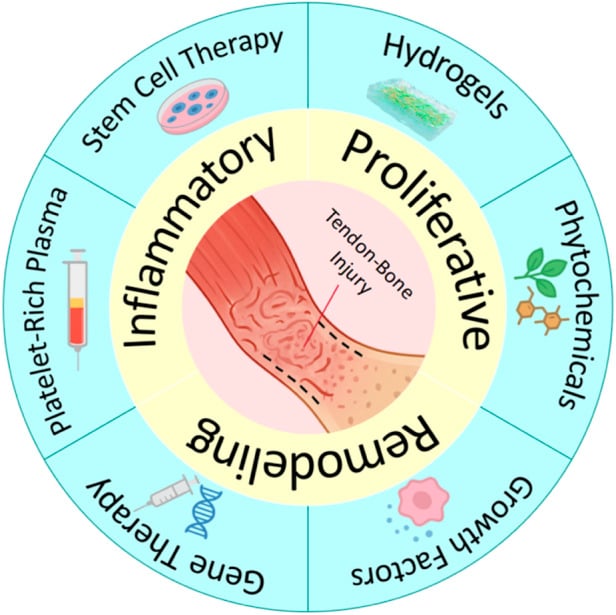
Scar, not regeneration. Tendon heals through sequential and overlapping phases of inflammation, proliferation and remodelling. Bone regenerates native tissue; tendon heals by scar, which never fully restores the structure or the biomechanical properties of healthy tendon.
How it differs from bone. Scar aside, the two tissues differ in three ways:
- Bone restores 100% of its strength; tendon plateaus at 60-80%
- Bone reconstitutes normal architecture; tendon remains disorganised
- Bone healing follows a predictable timeline; tendon healing is highly variable
A balance in both directions. Too little inflammation delays healing and leaves poor strength; too much produces excessive scarring and adhesions. Motion behaves the same way: too little allows adhesions and weak, disorganised healing, while too much causes gap formation and rupture.
Phases of Tendon Healing
The three phases overlap, and their timings vary with the tendon and the injury. Each sets what the repair can tolerate, which is why rehabilitation is timed to them.
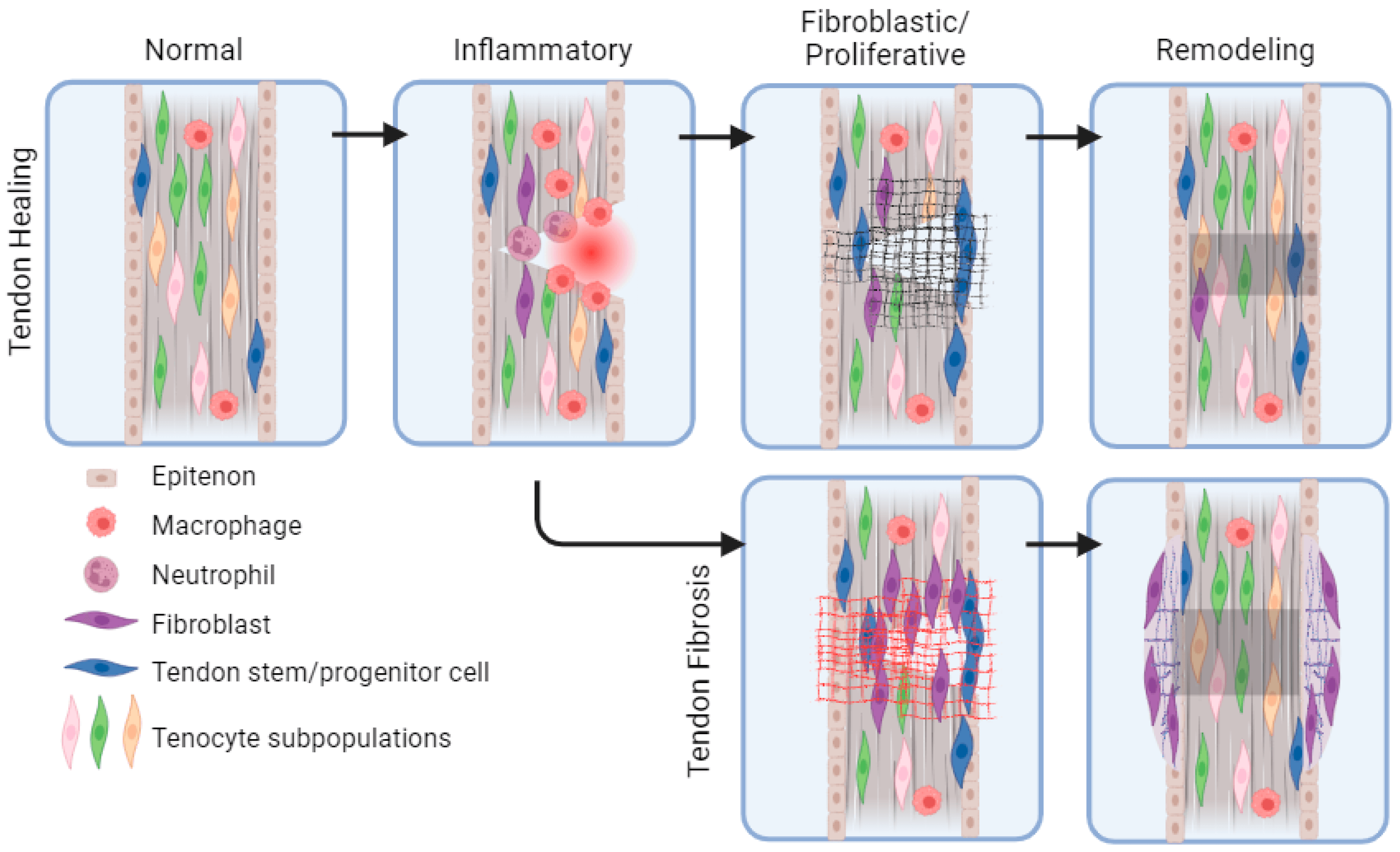
Inflammatory Phase (0-7 Days)
Inflammatory Phase Events
A haematoma forms at the injury site. Platelets aggregate and release growth factors (PDGF, TGF-β, VEGF) from their alpha granules, and a fibrin clot provides the first, weak scaffold. Vasoactive mediators cause vasodilatation and increased vascular permeability.
Neutrophils infiltrate to phagocytose debris and bacteria, peaking at 24 hours and gone by 3-5 days. Monocytes arrive and differentiate into macrophages, initially of the M1 phenotype, and the inflammatory cells release cytokines (IL-1, IL-6, TNF-α).
Macrophages shift from M1 (pro-inflammatory) to M2 (pro-healing) and orchestrate the healing response, the M2 cells releasing growth factors that promote angiogenesis and fibroblast recruitment. Neovascularisation begins as VEGF stimulates endothelial cells.
Strength. Tensile strength is 0-10% of normal. The fibrin clot gives only weak mechanical continuity, loading carries a high risk of gapping or re-rupture, and the repair needs immobilisation or protected mobilisation.
In the first week after repair the tendon relies on suture integrity. Avoid active loading. Early passive motion can begin if the repair is strong enough.
Why it matters. The inflammatory phase explains why early infection is devastating: it overwhelms the nascent healing response. It also explains why NSAIDs should be used cautiously, since they may impair healing (see Controversies and Areas of Uncertainty).
Intrinsic vs Extrinsic Healing
Two overlapping mechanisms. Healing draws on cells from within the tendon (intrinsic) and from the tissues around it (extrinsic), and the balance between the two determines the functional outcome. They are overlapping mechanisms, not alternatives: extrinsic healing starts first and lays down the initial collagen matrix. The clinical aim is to shift the balance toward intrinsic healing, not to abolish extrinsic healing.
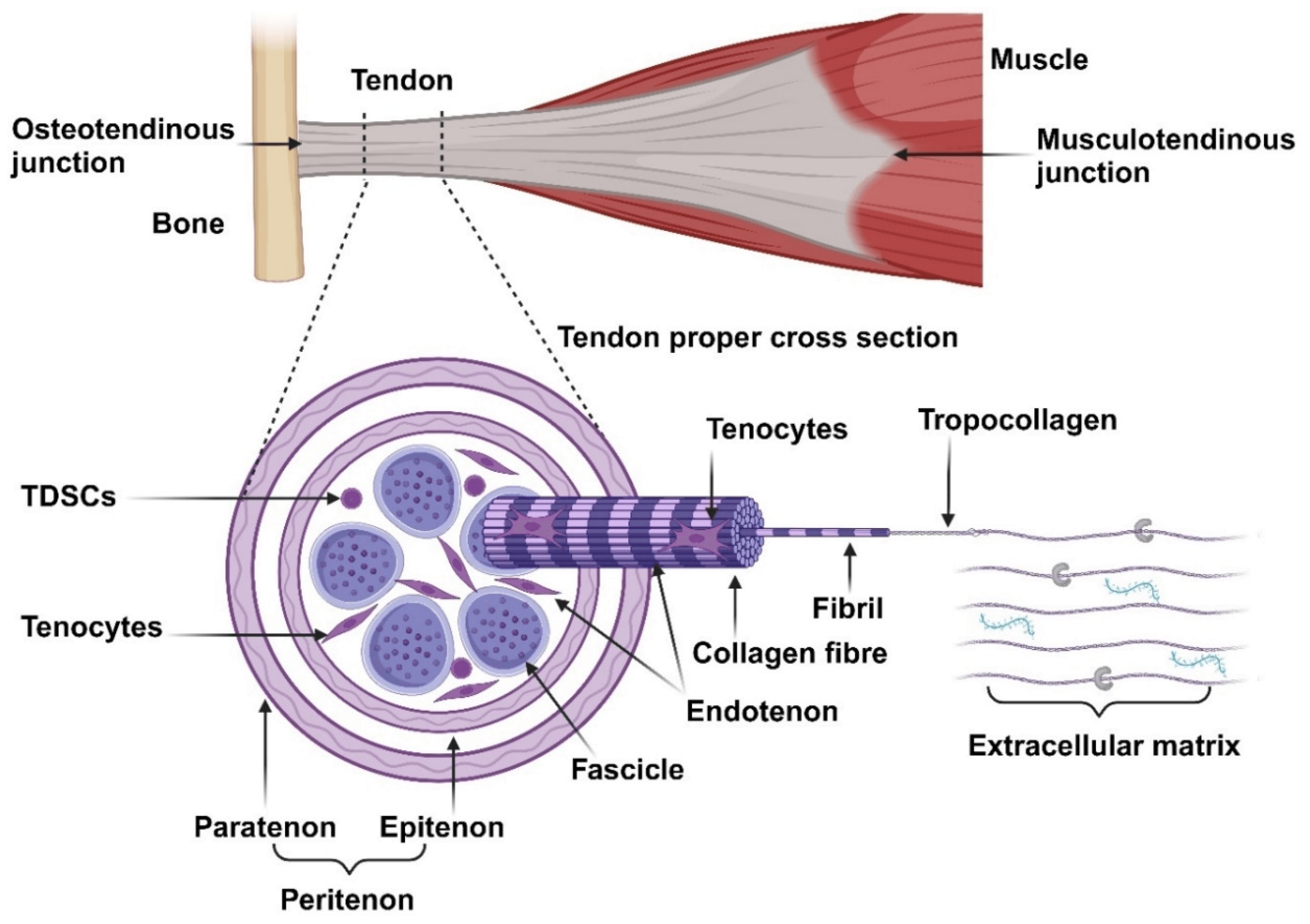
Intrinsic healing. Tenocytes within the tendon substance and cells of the epitenon surface proliferate and synthesise matrix directly at the injury site. The result is organised collagen aligned with the tendon axis, minimal adhesions and preserved gliding. The price is slower initial healing and dependence on an intact vascular supply, and the mechanism is vulnerable to complete rupture.
Extrinsic healing. The inflammatory response recruits fibroblasts from the peritendinous tissue (paratenon, synovial sheath and surrounding fascia), which invade the healing site and deposit scar matrix. It gives rapid mechanical strength and occurs even when the tendon is completely disrupted, but the collagen is disorganised and adhesions bind the tendon to the surrounding structures, costing it its glide. Adhesions are the main complication of flexor tendon repair.
- Intrinsic-Dominant Healing
- Tenocytes, epitenon cells within tendon
- Extrinsic-Dominant Healing
- Peritendinous fibroblasts, inflammatory cells
- Intrinsic-Dominant Healing
- Organised, aligned along tendon axis; Type I predominates earlier
- Extrinsic-Dominant Healing
- Disorganised, multidirectional; Type III predominates longer
- Intrinsic-Dominant Healing
- Minimal - smooth gliding surface maintained
- Extrinsic-Dominant Healing
- Severe - tendon bound to sheath or surrounding tissue
- Intrinsic-Dominant Healing
- Slower gain initially, stronger ultimately (70-80% of normal)
- Extrinsic-Dominant Healing
- Faster gain initially, weaker ultimately (50-60% of normal)
- Intrinsic-Dominant Healing
- Excellent - near normal gliding
- Extrinsic-Dominant Healing
- Poor - restricted by adhesions
- Intrinsic-Dominant Healing
- Promote with early controlled motion and strong surgical repair
- Extrinsic-Dominant Healing
- Minimise by preventing extrinsic cell invasion; immobilisation promotes it
Zone 2 (no man's land) has the worst prognosis, for four reasons:
- Poor intrinsic healing potential, because it is avascular
- The enclosed synovial sheath promotes extrinsic healing and adhesions
- The long finger flexion excursion (8-9 cm) requires extensive gliding
- A critical balance between early motion (to prevent adhesions) and protection (to prevent rupture)
A 4-strand core suture is the minimum for early active motion protocols.
Management Algorithm
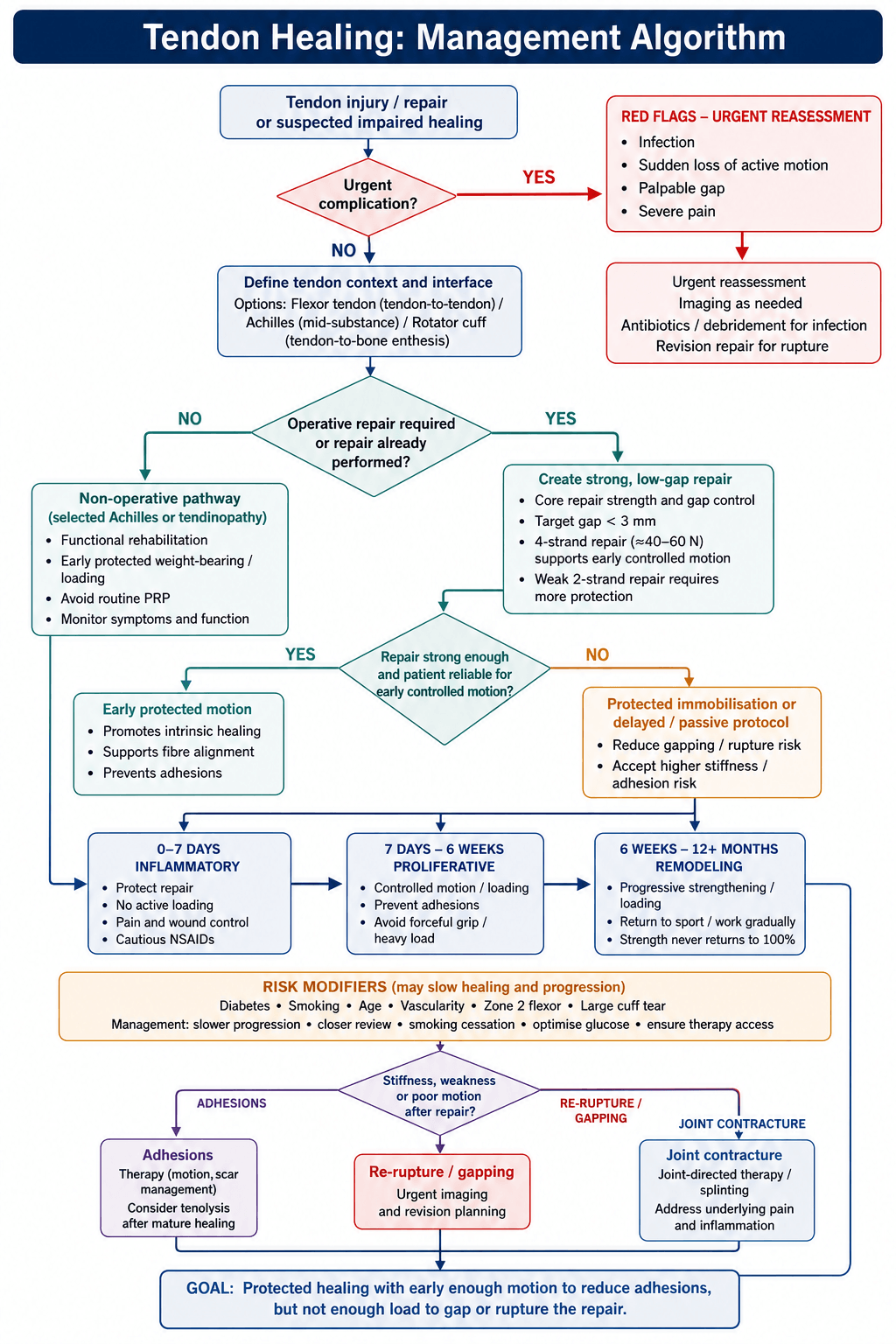
Clinical Relevance
Flexor tendon repair. The Duran, Kleinert, Indiana and Mayo protocols are all based on healing biology. Early motion in weeks 0-6 prevents adhesions during the proliferative phase, and loading stays protected until 6 weeks, when remodelling begins.
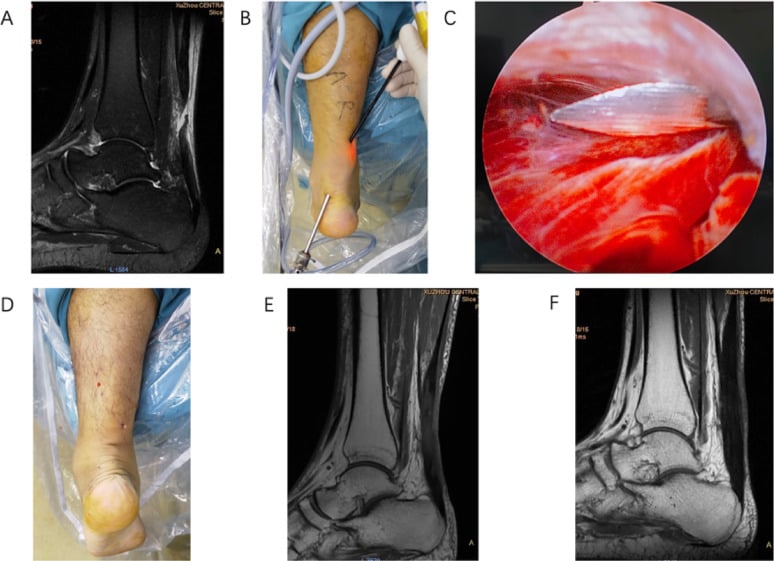
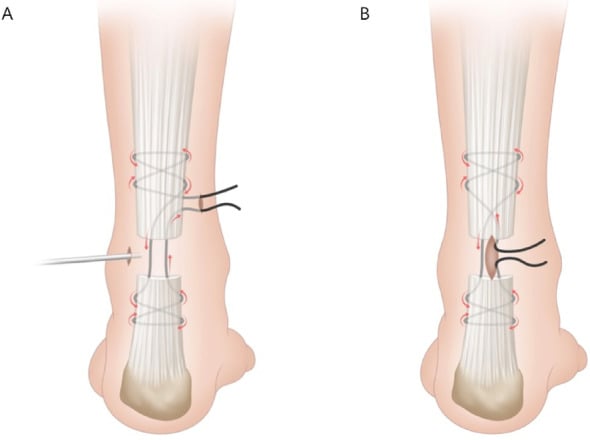
Achilles tendon repair. The rehabilitation follows the phases:
- Immobilisation in equinus for the first 2 weeks
- Controlled dorsiflexion from 2 weeks, in the proliferative phase
- Progressive loading from 6 weeks, in the remodelling phase
- Full weight-bearing by 8-12 weeks
- Return to sport at 6-9 months (60-80% strength restoration)
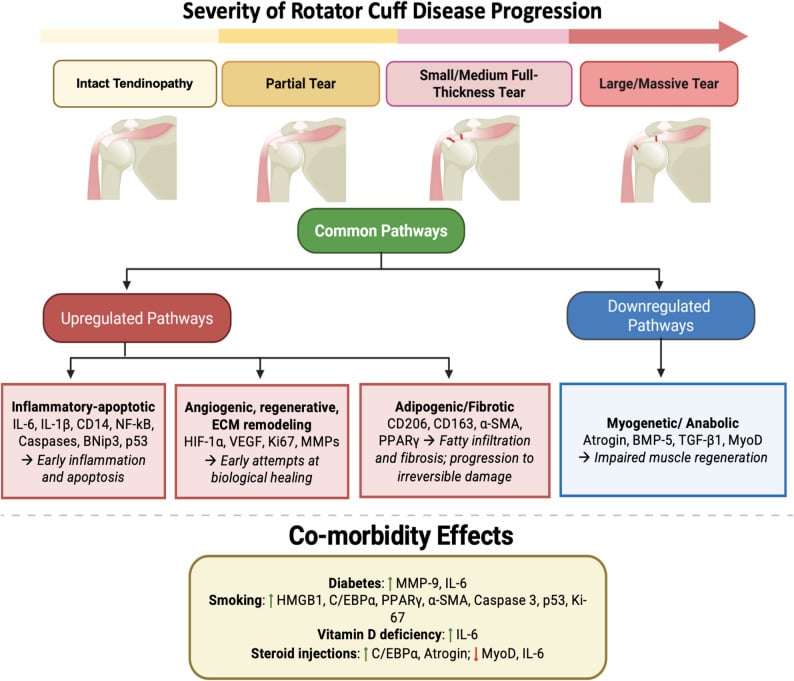
Rotator cuff repair. Strong initial fixation allows early passive motion, but active loading is avoided for the first 6 weeks, and progressive strengthening follows during remodelling from 6 weeks. Re-tear risk is highest in the first 3 months, the weak collagen III phase. Biological augmentation (PRP, patches) targets the proliferative phase.
Counselling. Healing never restores 100% of normal strength, so the re-rupture risk persists lifelong. Smoking cessation is essential and diabetes control critical (see Factors Affecting Healing), and early compliance with rehabilitation determines the final outcome.
Tendinopathy is failed healing, not tendinitis. The Cook and Purdam continuum describes three stages, potentially reversible early, with a degenerative endpoint:
- Reactive tendinopathy: a non-inflammatory proliferative cell and matrix response to acute overload. The tendon thickens to reduce stress, and the change is reversible if load is reduced.
- Tendon dysrepair: failed healing with greater matrix breakdown, more cells and early neovascularity. Some reversibility remains.
- Degenerative tendinopathy: areas of cell death and disorganised matrix with neovessels. It is largely irreversible and the substrate for spontaneous rupture.
Treatment follows the pathology. Because the problem is degeneration (tendinosis) and failed healing, not inflammation, first-line treatment is load management and progressive mechanotherapy (eccentric or heavy-slow-resistance loading) to stimulate tenocyte matrix remodelling. Anti-inflammatories and repeated corticosteroid injection give short-term analgesia but worsen tendon structure and increase rupture risk, so corticosteroid is reserved for short-term symptom control, with caution.
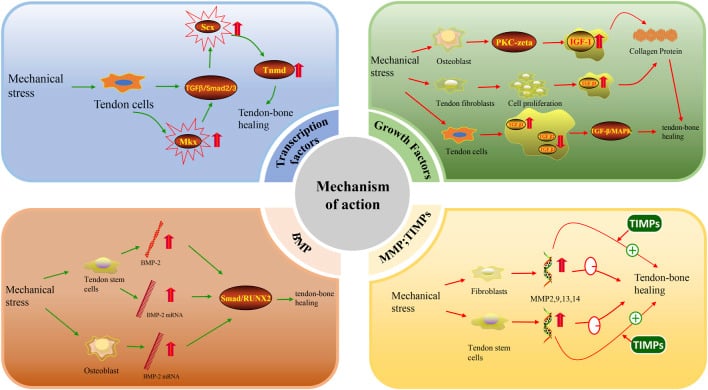
Molecular Biology and Growth Factors
Growth factors released from platelets, inflammatory cells and the healing tissue's own cells orchestrate the process. Their roles explain the therapeutic targets and the augmentation strategies under investigation.
TGF-β. Transforming growth factor-beta is the most abundant growth factor in tendon healing, the β1 isoform in particular. It stimulates fibroblast proliferation and collagen synthesis, and high levels are associated with adhesion formation. Of its three isoforms, TGF-β1 is pro-fibrotic, TGF-β2 intermediate and TGF-β3 anti-scarring, so a potential target is to reduce TGF-β1 or supplement TGF-β3 to minimise scarring.
VEGF. Vascular endothelial growth factor is the master regulator of angiogenesis. It peaks at 1-2 weeks and is essential for delivering nutrients and cells. Its role is biphasic, beneficial early in healing and detrimental late in chronic tendinopathy, and anti-VEGF therapies have been investigated for chronic tendinopathy.
IGF-1. Insulin-like growth factor-1 promotes tenocyte proliferation and type I collagen synthesis, enhances matrix protein production and is anti-apoptotic, supporting cell survival. It is a component of growth hormone-stimulated healing.
PDGF. Platelet-derived growth factor is released from platelet alpha granules. It is chemotactic for fibroblasts and inflammatory cells, stimulates cell proliferation, and is a component of PRP preparations.
bFGF. Basic fibroblast growth factor stimulates fibroblast proliferation and angiogenesis, enhances collagen synthesis, and acts in matrix synthesis and remodelling. It improves tensile strength in animal models and has been investigated as a therapeutic agent.
Factors Affecting Healing
Vascular supply. Better blood supply correlates with better healing, and compromised vascularity slows all phases. Avascular zone 2 flexor tendons heal poorly, and the Achilles watershed zone, 2-6 cm proximal to the insertion, ruptures frequently.
Zone. In the flexor tendons, zone 1 has good vascularity and favourable outcomes, and zones 3-5 have excellent vascularity and favourable outcomes. Zone 2, with poor vascularity and an enclosed sheath, has the worst (see the Zone 2 pearl above). Rehabilitation protocols must be zone-specific.
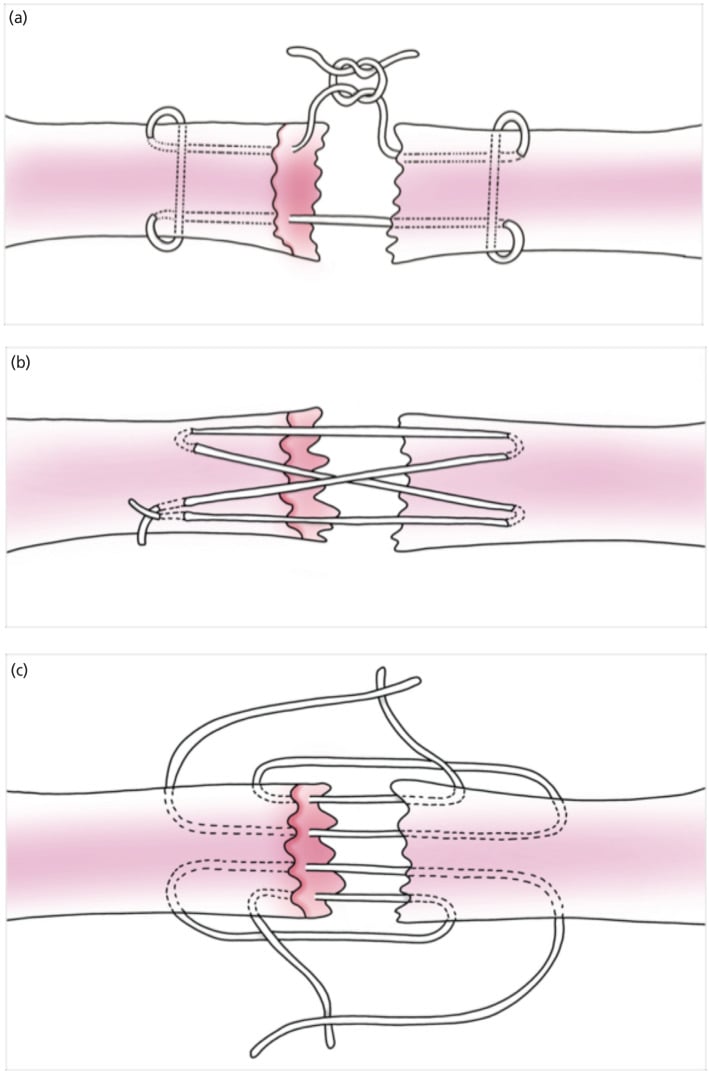
Repair quality. The size of the gap decides how the tendon heals. A gap of less than 3 mm heals as organised tendon with minimal adhesions (gap healing); a gap greater than 3 mm heals by proliferative healing, which requires extensive granulation tissue and forms adhesions. The strength of the repair decides the rehabilitation: a strong 4-strand core suture (40-60 N) allows early motion, while a weak 2-strand repair (20-30 N) requires longer immobilisation.
Age. Children and adolescents heal faster, with a better intrinsic response and lower adhesion rates. Older adults heal more slowly, with reduced cellularity and higher adhesion rates, and healing time increases by approximately 10% per decade after the age of 30.
Diabetes. Macrophage function is impaired, with a delayed M1-to-M2 transition, and tenocyte proliferation and collagen synthesis are reduced. Advanced glycation end products impair cross-linking, and re-rupture rates are higher, 2-3 times for the Achilles.
Smoking. Smoking impairs all phases of healing. Vasoconstriction reduces blood flow, carbon monoxide causes tissue hypoxia, and fibroblast proliferation and collagen synthesis are reduced. Cessation at least 4 weeks before surgery reduces complications.
Medications. NSAIDs may impair the early inflammatory phase, though the evidence is mixed (see Controversies and Areas of Uncertainty). Corticosteroids inhibit collagen synthesis and delay healing, and quinolone antibiotics are associated with tendon ruptures.
Healing Across Tendon Types (Comparison)
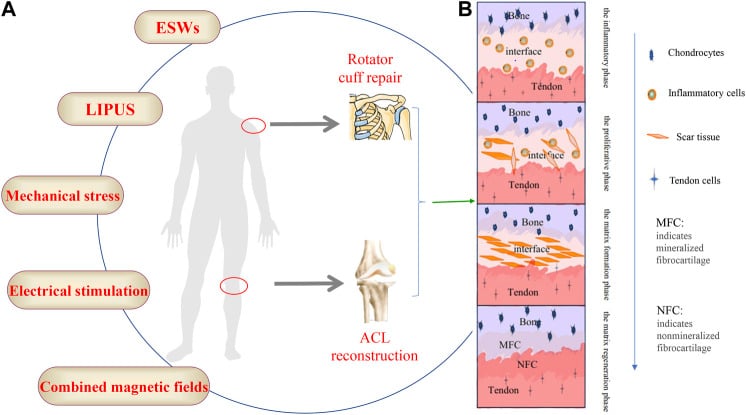
Same biology, different sites. The three-phase cascade is universal, but local anatomy, vascularity and mechanical demand make outcomes and rehabilitation differ markedly between tendons. The flexor tendon heals tendon-to-tendon within a synovial environment; the rotator cuff and the Achilles at its enthesis must regenerate a graded tendon-to-bone interface that is rarely fully restored.
- Zone 2 Flexor
- Tendon-to-tendon in synovial sheath
- Achilles (mid-substance)
- Tendon-to-tendon, paratenon-covered
- Rotator Cuff (enthesis)
- Tendon-to-bone (fibrocartilage enthesis)
- Zone 2 Flexor
- Avascular zone, diffusion-dependent
- Achilles (mid-substance)
- Watershed 2-6 cm above insertion
- Rotator Cuff (enthesis)
- Hypovascular footprint, often degenerate
- Zone 2 Flexor
- Adhesions then rupture
- Achilles (mid-substance)
- Re-rupture, elongation (heel-rise weakness)
- Rotator Cuff (enthesis)
- Re-tear at footprint (up to ~50% in large tears)
- Zone 2 Flexor
- Early motion to prevent adhesions
- Achilles (mid-substance)
- Functional loading, avoid elongation
- Rotator Cuff (enthesis)
- Protect repair, delayed loading to allow enthesis healing
- Zone 2 Flexor
- Good if intrinsic promoted
- Achilles (mid-substance)
- Good for mid-substance, scar fills gap
- Rotator Cuff (enthesis)
- Poor - fibrovascular scar, not true enthesis
The enthesis. A direct (fibrocartilaginous) enthesis is a graded transition of four zones:
- Tendon proper - dense type I collagen and tenocytes
- Uncalcified fibrocartilage - type II collagen and aggrecan; stress begins to dissipate here
- Calcified fibrocartilage - separated from the uncalcified layer by the tidemark, an abrupt basophilic line
- Bone, into which the calcified fibrocartilage blends
This soft-to-hard transition over a short distance minimises stress concentration at the interface.
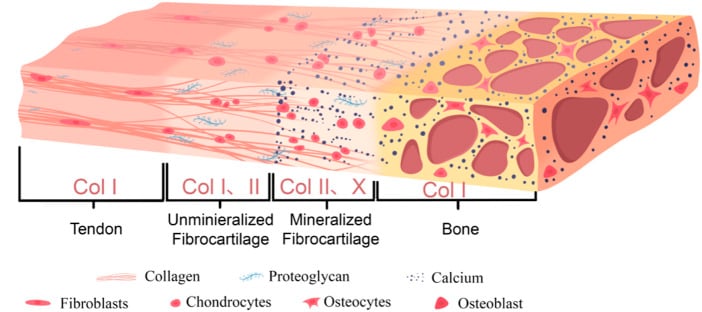
Why tendon-to-bone repair re-tears. After repair, for instance of the rotator cuff to its footprint, the body does not recreate these zones. It heals by disorganised fibrovascular scar with Sharpey-like fibres anchoring tendon to bone, which is mechanically inferior. This is the biological reason tendon-to-bone repairs, the cuff above all in large or massive tears in older patients, re-tear so commonly, and why biological augmentation and graded-interface tissue engineering are active research areas.
A stiff or weak finger or limb after tendon repair is not always failed healing. Distinguish:
- Adhesions - passive ROM greater than active ROM, gradual onset, no sudden pop
- Re-rupture - sudden loss of active motion, often a palpable gap or audible pop
- Suture failure or gapping - early loss of correction without true rupture
- Joint contracture - passive and active ROM limited equally
- Infection - pain, erythema, systemic signs out of proportion
The management differs completely: therapy and possible tenolysis for adhesions, revision for rupture, and aggressive treatment for infection.
Guidelines, Registries & Global Practice
Global Epidemiology
- Tendon and ligament injuries account for a substantial share of musculoskeletal presentations; overuse tendinopathy is estimated to underlie roughly 30% of running-related injuries, and lateral elbow tendinopathy affects up to 40% of tennis players (Sharma & Maffulli).
- Acute Achilles rupture incidence has risen in many high-income settings to the order of 20-30 per 100,000 person-years, concentrated in active middle-aged adults ("weekend warriors").
- Flexor tendon lacerations are predominantly young working-age males with sharp hand trauma; outcome is heavily zone- and rehabilitation-dependent worldwide.
Side-by-Side Guidance (Principles, Not Country Frames)
- Emphasis
- Acute Achilles rupture
- Practical Recommendation
- Either operative or non-operative acceptable; functional early rehabilitation reduces re-rupture across both
- Emphasis
- Open fractures and soft-tissue trauma
- Practical Recommendation
- Early senior decision-making, meticulous soft-tissue handling to protect the healing environment
- Emphasis
- Repair mechanics
- Practical Recommendation
- Stable repair construct that permits early protected motion - mechanical stability enables biological healing
- Emphasis
- Tendinopathy and biologics
- Practical Recommendation
- Loading-based rehabilitation first-line; biologics (PRP) not routinely endorsed given inconsistent evidence
Registry and High-Level Evidence Notes
- There is no dedicated international tendon registry equivalent to arthroplasty registries (NJR, AJRR, AOANJRR, SHAR). Best evidence comes from condition-specific RCTs (e.g. PATH-2 for PRP) and large trauma databases.
- Achilles and rotator cuff cohorts within national audit and shoulder/elbow datasets consistently report re-rupture/re-tear as the dominant healing-failure endpoint, reinforcing that biology, not technique alone, limits outcomes.
High- vs Limited-Resource Practice Variation
- High-resource settings: ready access to hand therapy, ultrasound/MRI for integrity assessment, and structured early-motion protocols - the main determinants of good flexor and cuff outcomes.
- Limited-resource settings: where supervised therapy is scarce, simpler, more protective immobilization protocols may be chosen to reduce rupture risk, accepting a higher adhesion burden. Strong, reproducible repair constructs and clear patient self-rehabilitation instructions become even more important.
- Biologics (PRP, growth factors) are not a priority where evidence is weak and cost is high; investment in rehabilitation infrastructure yields greater returns on healing outcomes.
Controversies and Areas of Uncertainty
NSAIDs after tendon repair. Experimental work consistently shows that COX inhibitors impair early proliferative healing and reduce tensile strength, yet they remain widely used for analgesia and ectopic-ossification prophylaxis. The pragmatic position is short-course, minimal-dose NSAIDs, avoided during the first 1-2 weeks after a tendon repair, accepting that high-level human tendon-outcome data are lacking.
Biological augmentation (PRP, growth factors, stem cells). Despite a strong biological rationale, the best controlled data (PATH-2, for acute Achilles rupture) show no benefit of PRP. Heterogeneous preparations (leukocyte-rich versus leukocyte-poor, activated versus not, variable platelet concentration) make pooled interpretation difficult, and there is no consensus to use these routinely.
Inflammation: friend or foe? The older view that inflammation is purely harmful has shifted. The M1-to-M2 macrophage transition is now seen as essential for orderly healing, and excessive suppression of early inflammation may impair repair. The target is modulation, not abolition.
Operative versus non-operative Achilles management. Modern functional rehabilitation with early weight-bearing has narrowed the re-rupture gap between surgical and conservative care, shifting many units toward non-operative management for selected patients, a direct clinical application of loading biology.
Type III collagen: obstacle or scaffold? Persistent type III collagen is associated with weaker tissue, yet it is also the necessary early scaffold. Strategies aimed simply at suppressing type III risk destabilising early repair; the goal is timely conversion to type I and alignment, not the elimination of type III.
Key Exam Points and MCQ Practice
Q: What are the three phases of tendon healing and their approximate durations? A: Inflammatory (0-7 days), Proliferative (7 days to 6 weeks), Remodeling (6 weeks to 12+ months). Phases overlap and exact timing varies by tendon type and injury severity.
Q: Which collagen type appears first during tendon healing and what is the final Type I:III ratio? A: Type III collagen appears first (1-2 weeks), forming disorganized scar. Gradually replaced by Type I over months. Normal ratio is 19:1 but healed tendon achieves only 2:1 to 3:1 at 12+ months.
Q: What is the difference between intrinsic and extrinsic tendon healing? A: Intrinsic: Tenocytes proliferate and synthesize organized matrix - minimal adhesions, better function. Extrinsic: Peritendinous fibroblasts invade and deposit scar - adhesions form, poorer function. Early motion promotes intrinsic over extrinsic.
Q: Which growth factor is most abundant in tendon healing and what is its dual role? A: TGF-β (particularly β1 isoform) is most abundant. Dual role: essential for collagen synthesis and healing, but excess causes scarring and adhesions. TGF-β3 has anti-scarring properties.
Q: What percentage of normal tendon strength is achieved by healed tendon at 12 months? A: 60-80% of normal tensile strength. Never reaches 100% due to persistent Type III collagen, suboptimal fiber alignment, and altered matrix composition. Explains ongoing re-rupture risk.
Q: Why do Zone 2 flexor tendon injuries have the poorest prognosis? A: Four reasons: (1) Avascular - poor intrinsic healing, (2) Enclosed flexor sheath - promotes extrinsic healing and adhesions, (3) High excursion (7-8cm gliding) - adhesions severely limit function, (4) Critical balance - need aggressive early motion (prevent adhesions) but higher re-rupture risk.
Exam Viva Scenarios
Practise clinical reasoning and management decisions out loud
“Examiner asks: Describe the biology of flexor tendon healing after surgical repair. Why do Zone 2 injuries have poor outcomes?”
“A 35-year-old laborer sustains a complete Zone 2 FDP laceration. After 4-strand core suture repair, should you immobilize or use early motion protocol? Justify your answer with the healing biology.”
“The patient asks about platelet-rich plasma injection to speed healing of his Achilles tendon repair. Discuss the growth factors involved in tendon healing and the evidence for PRP use.”
Three Phases
- Inflammatory (0-7 days): Hematoma, neutrophils then macrophages (M1 to M2), growth factors released, minimal strength (0-10%)
- Proliferative (7d-6wk): Tenocyte proliferation, Type III collagen synthesis, neovascularization peaks (3-4wk), strength to 30%
- Remodeling (6wk-12+mo): Type I replaces Type III, fiber alignment, MMP remodeling, strength to 60-80%
Intrinsic vs Extrinsic
- Intrinsic: Tenocytes synthesize organized collagen, minimal adhesions, better function (promote with early motion)
- Extrinsic: Peritendinous fibroblasts deposit scar, adhesions, poorer function (minimize by early motion)
- Early controlled motion promotes intrinsic over extrinsic healing
Collagen Transition
- Type III (thin, weak) appears first at 1-2 weeks, peaks at 2-3 weeks
- Type I (thick, strong) replaces Type III from 6 weeks onward
- Type I:III ratio: Normal 19:1, Healed 2:1 to 3:1 (never returns to normal)
- Tensile strength correlates with Type I content and fiber alignment
Key Growth Factors
- PDGF: Chemotactic, recruits cells (early phase)
- TGF-β: Collagen synthesis, cell proliferation (but excess causes scarring)
- VEGF: Angiogenesis (peaks 1-2 weeks, needed early, problematic if persistent)
- IGF-1: Tenocyte proliferation, Type I collagen synthesis
- bFGF: Cell proliferation, matrix synthesis, synergy with VEGF
Factors Affecting Healing
- Vascularity: Better blood supply equals better healing (Zone 1 better than Zone 2)
- Zone: Zone 2 flexor tendons worst (avascular, synovial sheath, high excursion)
- Motion: Early controlled motion better than immobilization (intrinsic healing, fiber alignment, prevent adhesions)
- Repair quality: Strong repair (4-strand, 40-60N) allows early motion without gapping
- Biologics: Age, diabetes, smoking impair healing; NSAIDs may impair (controversial)
Clinical Pearls
- Gap healing (under 3mm) better than proliferative healing (over 3mm, adhesions)
- 4-strand minimum for early active motion (2-strand passive only)
- Zone 2 requires aggressive early motion protocols (Kleinert, Duran, Indiana, Mayo)
- Final strength 60-80% explains ongoing re-rupture risk
- PRP evidence mixed, not routine, may consider in high-risk patients
Evidence Base
Tendon Injury and Tendinopathy: Healing and Repair (landmark review)
- Healing is a continuous process described in three overlapping phases: inflammatory, proliferative (collagen-producing), and remodeling (consolidation then maturation)
- Healing occurs via both intrinsic (epitenon and endotenon tenocyte proliferation) and extrinsic (sheath and synovial cell invasion) mechanisms
- Type III collagen predominates early and is progressively replaced by aligned Type I collagen during remodeling
- Biochemical and mechanical properties of healed tendon never fully match those of intact tendon
Early Controlled Passive Mobilization Superior to Immobilization (canine landmark)
- Canine flexor tendon repair model comparing immediate motion, delayed motion and immobilization over 12 weeks
- Immediately mobilized tendons at 3 weeks had roughly twice the ultimate load and nearly three times the linear slope (stiffness) of immobilized repairs
- At 12 weeks distal interphalangeal angular rotation was 95 plus or minus 10 per cent of intact contralateral controls with immediate motion, against only 19 plus or minus 2 per cent with immobilisation
- THE DELAYED GROUP IS THE INFORMATIVE MIDDLE CASE, and the card that omits it loses the clinical point: delayed mobilisation reached 67 plus or minus 8 per cent - most of the benefit, but not all of it. Starting late recovers a great deal; starting on time recovers nearly everything
- Early protected passive motion augments the physiologic processes governing strength and excursion (intrinsic healing, fewer adhesions)
Neutralizing Antibody to TGF-β1 Increases Postoperative Range of Motion
- Rabbit zone II flexor tendon transection-repair model, 22 animals, with intraoperative infiltration of 50 micrograms of neutralising antibody
- THE REFERENCE VALUE PUTS THE RESULT IN PROPORTION: unoperated rabbit forepaws had a combined interphalangeal flexion range of 93 plus or minus 6 degrees, and casting alone did not reduce it (93 plus or minus 4) - so the loss of motion is caused by the repair and its adhesions, not by immobilisation
- Anti-TGF-β1 increased combined IP joint flexion from 15 plus or minus 6 degrees (control, n=8) to 32 plus or minus 9 degrees (n=7, p=0.002) - a real and significant gain, but still only about a THIRD of the 93 degrees of an uninjured digit
- Adding anti-TGF-β2 nullified the benefit (18 plus or minus 4 degrees), implying isoform-specific roles
- TGF-β1 is implicated in pathological scar formation, so its modulation reduces adhesions
PATH-2: Platelet-Rich Plasma Confers No Benefit in Acute Achilles Rupture
- Multicentre, placebo (dry needle) controlled, double-blinded superiority RCT across 19 UK units; 230 adults with acute Achilles rupture managed non-operatively
- Primary outcome (limb symmetry index for heel-rise work at 24 weeks) showed no difference: adjusted mean difference -3.9% (95% CI -10.5% to 2.7%)
- No difference in patient-reported function (Achilles tendon rupture score), pain, quality of life or adverse events
- Injected PRP was confirmed by a central laboratory to be of good quality with the expected growth factor content, so the null result is not explained by a poor preparation
- THE ABSOLUTE NUMBERS DESERVE ATTENTION IN THEIR OWN RIGHT: at 24 weeks the limb symmetry index was 34.7 per cent with PRP and 38.5 per cent with placebo - BOTH groups were performing at roughly a third of the uninjured leg. Non-operatively managed Achilles rupture is a profound and persistent functional deficit at six months, whatever is injected into it
- Participants averaged 46 years, 25 per cent were female, and follow-up was excellent - 88 per cent completed the heel-rise test and 94 per cent the patient-reported outcomes
NSAIDs (Parecoxib, Indomethacin) Impair Early Tendon Healing
- 60 rats with a 3 mm Achilles defect randomised to parecoxib, indomethacin or saline for 7 days, tested at 14 days
- Both the COX-2-selective (parecoxib) and non-selective (indomethacin) NSAID significantly reduced tensile strength versus control
- Parecoxib also significantly reduced stiffness; both drugs reduced the cross-sectional diameter of the healing callus
- The negative effect was most pronounced with parecoxib, implicating COX-2-mediated prostaglandins in early proliferative healing
- THE AUTHORS FRAME IT AS PHASE-DEPENDENT, NOT SIMPLY HARMFUL: their own introduction notes that while these drugs impair healing in the early proliferative phase, they MIGHT BE BENEFICIAL IN THE REMODELLING PHASE, when persistent inflammation can itself impede healing. This study tested only the early phase
Tendon-to-Bone Healing Fails Often in Large/Massive Cuff Tears - Age and Tear Size Predict Failure
- 37 shoulders in 32 patients were repaired (mini-open, mean age 54.8 years); 27 shoulders in 23 patients returned for functional and ultrasound assessment at 3-5 years - a 73 per cent follow-up
- Recurrent defects in 14 of 27 (51.9%) despite repair, illustrating biologically poor tendon-to-bone healing
- BUT function improved substantially in the cohort as a whole - Constant 38.4 to 72.1 and UCLA 11.2 to 29.4 - so half the repairs failed structurally while the group still got better
- Only LARGE recurrent tears tracked with worse function; 12 of the 14 re-tears were smaller than the original defect
- Patients with an intact repair were on average 15 years younger than those who re-tore (49.9 versus 64.1 years, p less than 0.005), and larger preoperative tear size predicted failure to heal
Tendon Injuries: Basic Science - Why Repair Tissue Stays Weaker and Thicker
- Healing runs in three overlapping stages - inflammation, proliferation, matrix remodelling - with remodelling beginning at 6 to 8 weeks and continuing for 1 to 2 years depending on patient age and condition
- Remodelling has two sub-stages: CONSOLIDATION, in which cellularity falls and collagen type III is replaced by type I with fibres aligning along the tendon's long axis, and MATURATION from around 10 weeks, characterised by increasing collagen crosslinking
- Extrinsic and intrinsic healing are OVERLAPPING mechanisms and extrinsic starts first, with peripheral inflammatory cells synthesising the initial collagen matrix; intrinsic healing then contributes via local stem and progenitor cells
- The healed tendon does not regain the mechanical properties of uninjured tissue: reduced integration of collagen fibres plus a persistently higher type III to type I ratio (type III fibrils being of smaller diameter) leave the tissue weaker per unit area
- The tendon compensates by THICKENING AND STIFFENING - trading geometry for material quality - so its functional activity remains reduced despite the bulk