Prevention Protocol | Brooker Classification | NSAIDs vs Radiation | High-Risk Groups
- Indomethacin 75mg daily for 6 weeks is standard NSAID prophylaxis (start within 24 hours of surgery)
- Single-dose radiation (700cGy) within 24-72 hours if NSAIDs contraindicated or high-risk revision
- Major risk factors: previous HO, ankylosing spondylitis, DISH, post-traumatic arthritis, hypertrophic OA, male gender
- DO NOT excise HO before 12-18 months maturation - high recurrence if excised early
- Brooker III-IV causes functional limitation - pain, restricted ROM, difficulty with ADLs
- “NSAIDs work by inhibiting prostaglandin synthesis preventing osteoblast differentiation
- “Radiation works by inhibiting mesenchymal stem cell differentiation and osteoblast proliferation
- “Combination NSAIDs + radiation NO additional benefit over single modality alone
- “Largest RCT (HIPAID): NSAIDs cut radiographic HO (RR 0.69) but did not improve pain/function and raised bleeding - hence selective, not universal, prophylaxis
Overview and Epidemiology
Heterotopic ossification (HO) is the formation of mature lamellar bone in the soft tissues around the hip after total hip arthroplasty. It represents abnormal differentiation of pluripotent mesenchymal stem cells into osteoblasts in response to local and systemic factors.
Why it matters. Mild HO (Brooker I-II) is often asymptomatic and clinically insignificant. Severe HO (Brooker III-IV) occurs in 5-20% of patients without prophylaxis and causes substantial morbidity: restricted range of motion, especially internal rotation and flexion, pain with movement, and difficulty with sitting and personal hygiene. In extreme cases (Brooker IV) the hip ankyloses completely and needs revision surgery.
What a Brooker III-IV hip costs the patient.
- Loss of 20-50 degrees of flexion and rotation
- Pain in 30-40% of Brooker III patients
- Difficulty with sitting, shoe tying and toileting
- 1-3% require HO excision to restore function, and prophylaxis is cost-effective compared with revision surgery
Who gets it. The incidence runs from 3% to 90% depending on risk factors:
- Primary osteoarthritis: 3-7%
- Ankylosing spondylitis, with its HLA-B27 association: 50%
- Post-traumatic arthritis: 50-90%, especially after acetabular fracture, where clinically significant HO is over-represented
- Previous HO: 90% recurrence without prophylaxis
Other risk factors. Men carry 2-3 times the risk of women, consistently across cohorts, and older patients a slightly higher risk. DISH, hypertrophic osteoarthritis with large osteophytes, spinal cord injury and burns all predispose, as do revision surgery and difficult exposures that damage soft tissue extensively. The bearing surface (ceramic or polyethylene) is not an established driver of HO risk.
ASHAMEDHigh-Risk Factors for HO (ASHAMED)
Hook:Be ASHAMED if you forget prophylaxis in these patients.
Pathophysiology and Molecular Mechanisms
Three conditions. HO needs osteogenic precursor cells (mesenchymal stem cells in traumatised tissue), inducing factors (BMPs and inflammatory cytokines) and a permissive environment (adequate vascularisation and local hypoxia). All three must be present. Prophylaxis works by interrupting the cellular differentiation pathway.
The cascade. Heterotopic bone forms in a predictable sequence that begins at the moment of surgical trauma.
Phase 1, 0-48 hours: inflammation and induction. Surgical trauma releases inflammatory mediators (IL-1, IL-6, TNF-alpha), and the tissue becomes hypoxic around a local haematoma. BMPs are released from bone debris and damaged soft tissue, and mesenchymal stem cells are recruited to the site.
Phase 2, 2-7 days: differentiation. Prostaglandin E2 (PGE2) drives the stem cells to differentiate into osteoblasts. This is the critical window in which prophylaxis is effective. NSAIDs block the COX-2 enzyme and so PGE2 synthesis; radiation causes DNA damage in the rapidly dividing mesenchymal cells, inhibiting their proliferation and osteoblast function.
Phase 3, 1-6 weeks: proliferation. Osteoblasts proliferate, produce matrix and form primitive woven bone. Continuing the NSAID prevents ongoing differentiation, but prophylaxis started after the osteoblasts are established is ineffective.
Phase 4, 6-18 months: maturation. Woven bone remodels to mature lamellar bone and vascular channels develop. Bone-scan activity decreases and alkaline phosphatase, the marker of maturation, normalises.
Beyond NSAIDs and radiation. BMP inhibitors, which would block osteogenic signalling in the early post-operative period, are experimental and not yet clinically available.
Classification Systems
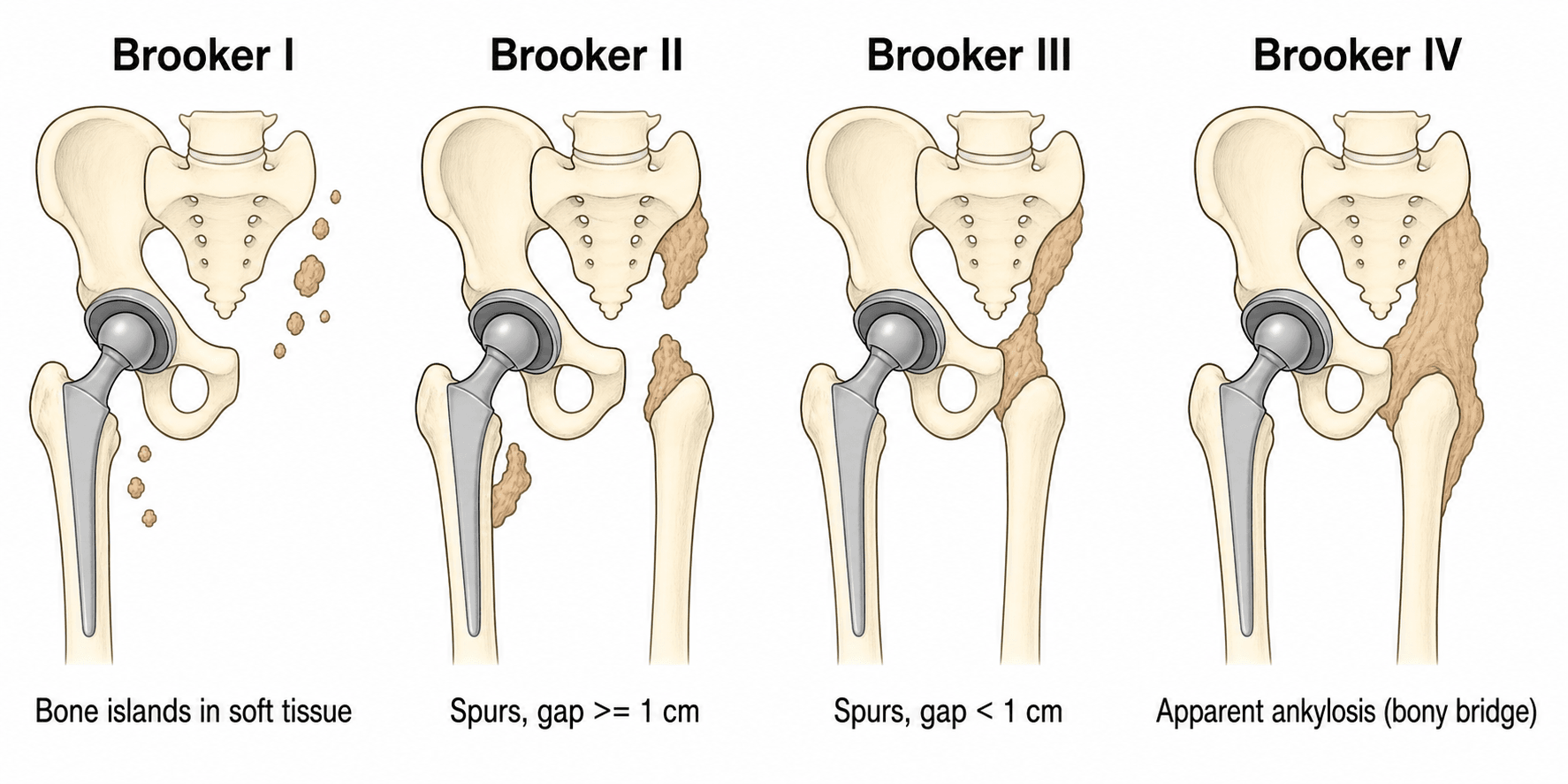
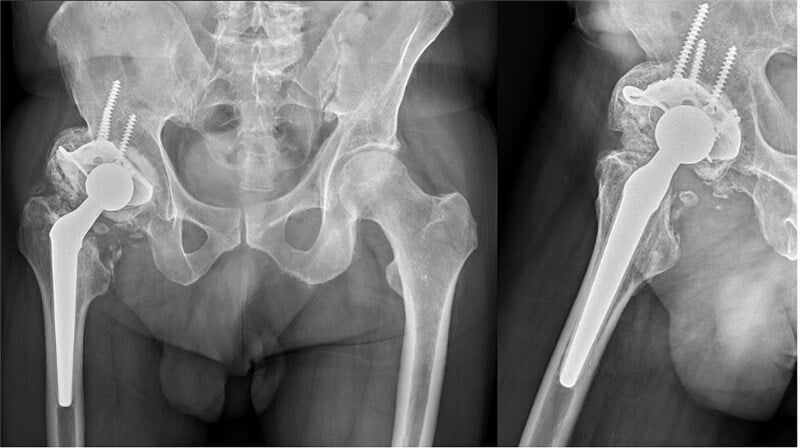
Brooker. The Brooker classification is the gold standard for grading HO after THA and the most widely used. It is read on the AP pelvis radiograph and grades how far the bone has progressed between the pelvis and the proximal femur.
- Radiographic Features
- Islands of bone within soft tissues around hip
- Functional Impact
- None - incidental finding
- Management
- No treatment required, reassurance
- Radiographic Features
- Bone spurs from pelvis or proximal femur with gap greater than 1cm between opposing surfaces
- Functional Impact
- Minimal - usually asymptomatic
- Management
- Observation, rarely symptomatic
- Radiographic Features
- Bone spurs from pelvis or proximal femur with gap less than 1cm
- Functional Impact
- Moderate - reduced ROM (20-50 degrees), may cause pain
- Management
- Consider excision if symptomatic and mature
- Radiographic Features
- Apparent radiographic ankylosis (bone bridging)
- Functional Impact
- Severe - marked ROM restriction, pain, ADL limitation
- Management
- Excision + prophylaxis if significant functional loss
The line between Brooker II and III is the 1cm gap between opposing bone surfaces: measure the smallest distance between the proximal femoral HO and the pelvic HO on the AP radiograph. Grades III-IV are clinically significant because they mechanically block hip motion; grades I-II do not contact opposing surfaces and so allow full range of motion.
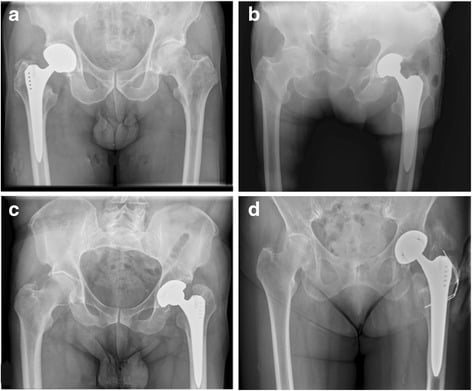
Reliability. The grade is observer-dependent, most of all at the II/III boundary where treatment thresholds are drawn, and it correlates only loosely with symptoms (see the evidence and controversies below). Della Valle and colleagues proposed a simplified three-grade system that is more reproducible for research and audit. It has not shown superior clinical utility and has not displaced Brooker grading in routine practice.
Clinical Assessment
History. Establish what the hip will not do and why it might not:
- Pain: location (anterior groin, lateral) and character (mechanical or inflammatory)
- Restricted movements: flexion, internal rotation, abduction
- Effect on daily life: sitting, shoe tying, toileting, sexual function
- When symptoms developed, early or late
- Previous HO in the contralateral hip or after previous surgery
- Risk factors: ankylosing spondylitis, DISH, post-traumatic arthritis, burns, spinal cord injury
Examination. The end-feel separates bone from soft tissue: HO gives a hard block to motion, sometimes with a firm soft-tissue mass on palpation, especially anterolaterally. Look for an antalgic or Trendelenburg gait, test function (sitting in a chair, tying shoes, crossing the legs), and compare with the other side, since asymmetry suggests HO rather than stiffness.
Measuring range. Record active and passive movement against normal values:
- Flexion: supine, hip and knee flexed, measuring the angle between thigh and trunk (normal 120 degrees)
- Internal rotation: prone or sitting, knee flexed 90 degrees, rotating the foot laterally (normal 30-40 degrees)
- External rotation: prone or sitting, knee flexed 90 degrees, rotating the foot medially (normal 40-50 degrees)
- Abduction: supine, pelvis stabilised (normal 40-50 degrees)
- Adduction: supine, crossing the leg over the midline (normal 20-30 degrees)
- Extension: prone or in the Thomas test position (normal 10-20 degrees)
A Brooker III-IV hip typically flexes to only 70-90 degrees and internally rotates 0-10 degrees, with a hard end-feel and pain on forced motion.
Not all post-THA stiffness is HO. Assess for the alternatives before attributing stiffness to HO alone. Component malposition includes excessive anteversion or retroversion and high offset; abductor deficiency can cause compensatory stiffness; infection brings stiffness with pain and systemic signs; and in instability the patient guards against provocative positions.
- Key Discriminating Features
- Hard bony end-feel, palpable firm mass, ossification on radiograph, often male/high-risk indication
- First-line Investigation
- AP pelvis radiograph (Brooker grade); CT if excision considered
- Key Discriminating Features
- Rest and night pain, warmth, effusion, raised CRP/ESR, sometimes sinus
- First-line Investigation
- CRP/ESR then image-guided aspiration for cell count and culture
- Key Discriminating Features
- Positional pain or clunk, restricted motion in specific arcs, malposition on imaging
- First-line Investigation
- Radiograph plus CT for version and offset measurement
- Key Discriminating Features
- Anterior groin pain on active hip flexion and stairs, prominent or oversized cup
- First-line Investigation
- Targeted radiograph; ultrasound-guided diagnostic injection
- Key Discriminating Features
- Lateral pain, Trendelenburg gait, weakness rather than true bony block
- First-line Investigation
- Clinical examination; MRI of abductor mechanism
- Key Discriminating Features
- Soft end-feel, global loss of motion, no ossification on imaging
- First-line Investigation
- Radiograph to exclude HO; clinical diagnosis of exclusion
Acute Early Presentation: Distinguishing Developing HO from Infection and DVT
In the first few post-operative weeks, developing HO has its own acute presentation, and it is easily mistaken for periprosthetic joint infection (PJI) or deep vein thrombosis (DVT). Those are the two diagnoses that must not be missed, so exclude both before attributing the picture to HO.
- Early developing HO
- Weeks 2-8: warm, swollen, mildly painful hip with falling range of motion, sometimes low-grade fever
- Periprosthetic infection
- Any time: rest and night pain, effusion, warmth, possible wound discharge or sinus
- DVT
- First post-op weeks: calf pain and swelling more than hip
- Early developing HO
- ESR/CRP mildly raised (often surgery-related); alkaline phosphatase rises with active bone formation
- Periprosthetic infection
- CRP and ESR persistently and markedly raised
- DVT
- Inflammatory markers usually normal; D-dimer non-specific post-op
- Early developing HO
- Three-phase bone scan turns positive before radiographic change; plain radiograph often normal early (immature osteoid not yet mineralised)
- Periprosthetic infection
- Image-guided aspiration: synovial cell count and differential plus culture
- DVT
- Doppler ultrasound of the limb
- Early developing HO
- Exclude infection and DVT first; gentle range of motion; HO is immature so do NOT excise
- Periprosthetic infection
- Treat on the PJI pathway (see THA infection topic)
- DVT
- Anticoagulate per protocol
In the first 2-8 weeks after THA, developing HO can present as a warm, stiff, mildly painful hip with a rising alkaline phosphatase but a normal radiograph. Exclude periprosthetic infection and DVT first, before attributing the picture to HO. ALP and ESR/CRP are non-specific after surgery. The hip is a candidate for gentle range of motion, never for excision, and because NSAID prophylaxis is only effective if started within 24 hours, a hip first presenting at several weeks is generally past the prophylaxis window.
Investigations
Plain radiographs. The AP pelvis is the workhorse for detecting HO, grading it and following it over time. The report should cover:
- Brooker grade (I-IV)
- Location: anterior, lateral, posterior, medial
- Proximity to the components: impinging on the acetabular rim or femoral neck
- Maturation: corticated margins suggest maturity
- Progression against previous radiographs
- The contralateral hip
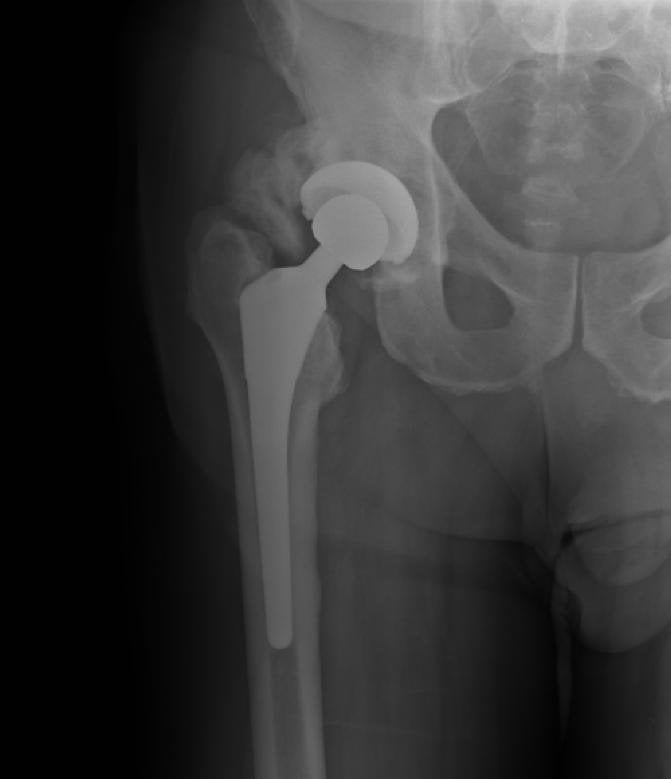
When to image. Grading has to wait for the bone to mature. The 6-week film is too early to classify, Brooker classification is made at 3-6 months, and the final grade is recorded on the 6-12 month film.
Diagnostic Imaging Protocol
Assess for early HO formation. May show subtle soft tissue ossification. Too early for Brooker classification (bone not yet mature). Compare to immediate post-operative radiograph.
Brooker classification. Bone more mature, pattern clearer. AP pelvis shows full extent of HO. Lateral hip assesses anterior vs posterior location. Document ROM at this visit.
Final radiograph and Brooker classification.
CT: 3D reconstruction shows exact HO location, relationship to prosthesis, bone maturity. Bone scan: "Cold" scan (no increased uptake) confirms maturation - safe to excise. Hot scan = immature = high recurrence if excised.
Normal ALP suggests maturation complete. Elevated ALP indicates active bone formation - delay excision. Trend ALP over 3-6 months. Return to baseline suggests maturity.
Other tests. MRI is rarely needed, only when soft-tissue pathology is suspected. Fluoroscopy gives a dynamic assessment of impingement, and serial ALP trends bone-formation activity.
Management Algorithm
Function decides. Management of established HO is guided by whether it actually limits function, not by its radiographic size. When it does, the deciding question is whether the bone is mature, because excising immature bone invites recurrence.
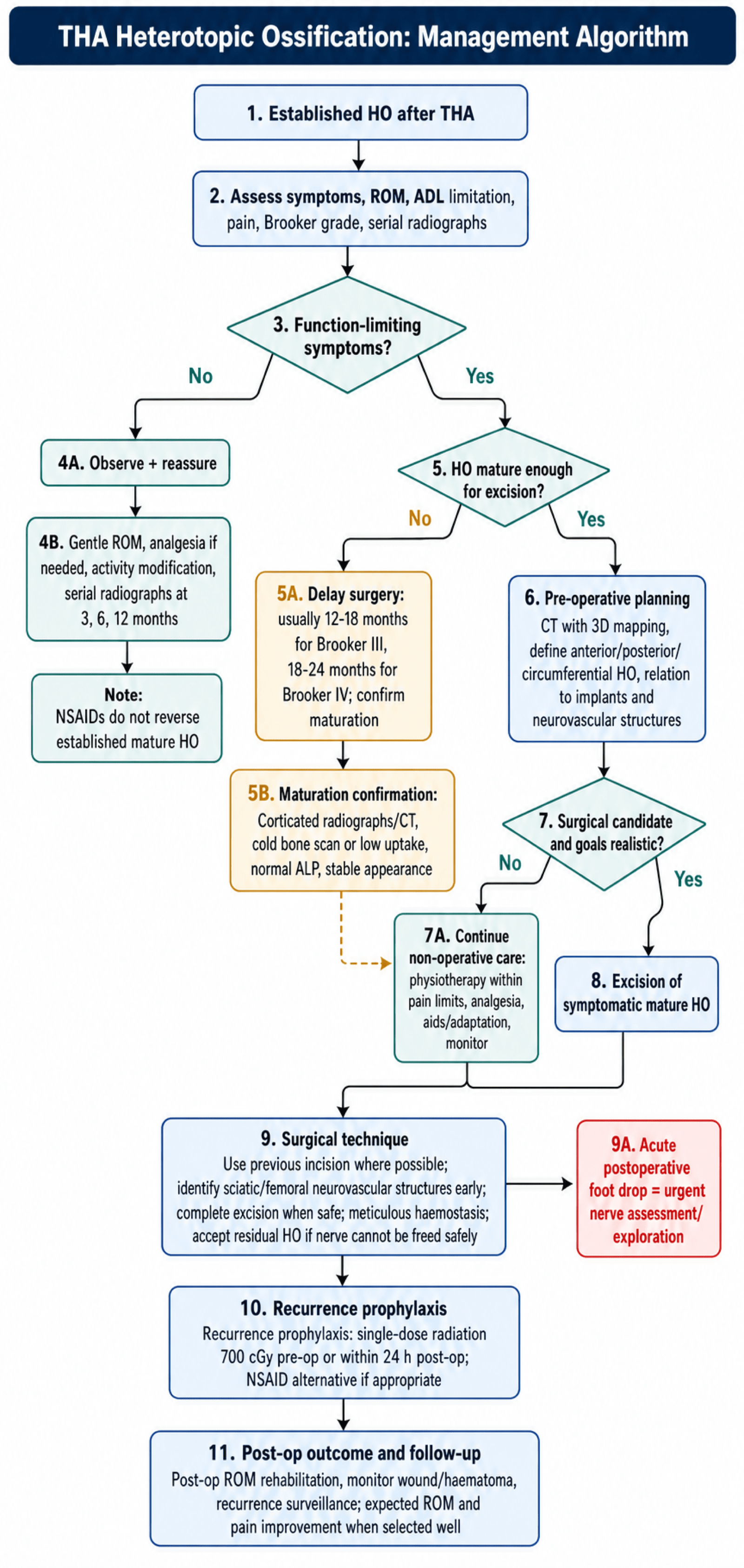
Most HO needs no treatment. Observation with reassurance is appropriate when HO is asymptomatic or minimally symptomatic:
- Brooker I-II, asymptomatic (90% of cases)
- Brooker III with minimal symptoms and range acceptable for ADLs
- Brooker IV when the patient declines surgery or comorbidities prohibit it
- Immature HO, under 12 months after surgery, while it matures
- HO stable on serial radiographs, without progression
Conservative measures. Gentle range-of-motion physiotherapy within pain limits, NSAIDs for symptom control, avoidance of extreme positions, and radiographs at 3, 6 and 12 months. Explain the natural history and the maturation timeline. This avoids unnecessary surgery in the majority, whose functional impact is minimal.
Once mature lamellar bone has formed, it does not resorb spontaneously. NSAIDs prevent new formation but do not reverse existing HO, and physiotherapy maintains range of motion without reducing bone mass. Surgical excision is the only way to remove HO.
Surgical Technique - Heterotopic Ossification Excision
Choosing the approach. It depends on where the heterotopic bone lies and on the original THA approach. Use the previous incision when possible, to avoid multiple scars, and always identify the neurovascular structures before excising HO.
- Posterior HO: posterior approach (Kocher-Langenbeck modification)
- Anterior HO: anterior or anterolateral approach
- Circumferential HO: may need an extensile approach or staged procedures
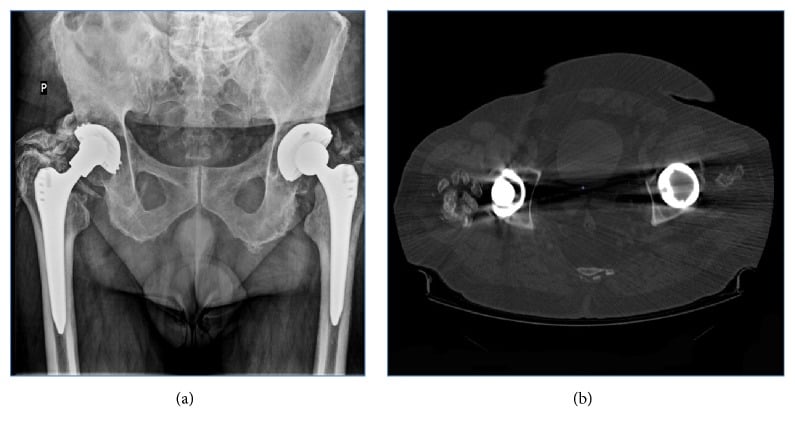
Planning CT. CT with 3D reconstruction is essential for surgical planning. It maps the HO by zone (anterior, lateral, posterior, medial), shows its relationship to the sciatic nerve and femoral vessels, which are at risk, and its proximity to the acetabular cup and femoral stem, which must not be damaged. Corticated margins on CT suggest maturity.
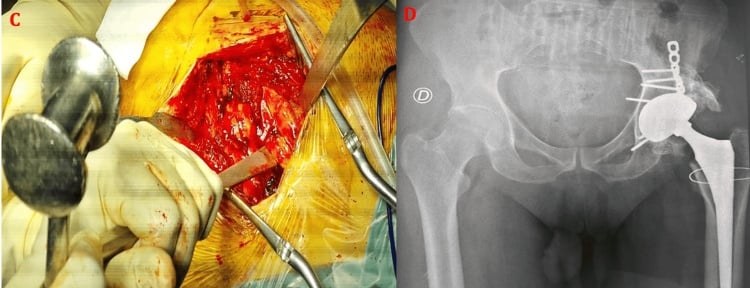
Positioning for the posterior approach, the most common, gives access to posterior and lateral HO while preserving the ability to assess range of motion during the operation.
Setup for Posterior Approach (Most Common)
Lateral decubitus position on bean bag or hip positioner. Operative hip up. Pelvis stabilised with anterior and posterior supports. Contralateral leg flexed and padded.
Dependent leg: Pillow between legs, protect peroneal nerve at fibular head. Axilla: Ensure no pressure on brachial plexus. Greater trochanter: Pad to avoid skin pressure.
Landmarks: Expose from iliac crest to mid-thigh, anterior superior iliac spine (ASIS) to posterior superior iliac spine (PSIS). Free draping: Allow hip flexion, rotation for assessment.
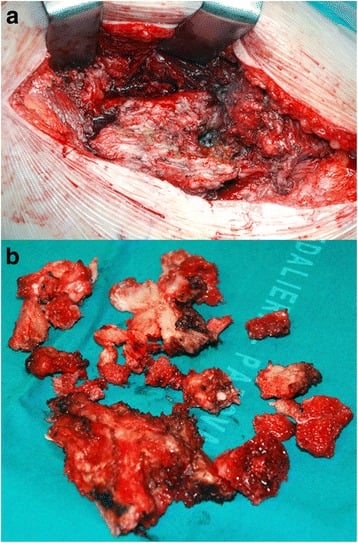
Complications
The complications to counsel for come from the prophylaxis and from excision.
- Incidence
- 5-10% dyspepsia, 1-2% ulcer
- Risk Factors
- Age over 65, previous ulcer, H. pylori, anticoagulation
- Management
- PPI co-prescription, switch to COX-2 inhibitor, or radiation
- Incidence
- 2-5% transient dysfunction
- Risk Factors
- Pre-existing CKD, dehydration, ACE inhibitors, age over 75
- Management
- Monitor creatinine, hydrate, avoid if eGFR under 30
- Incidence
- 1-2% (COX-2 inhibitors)
- Risk Factors
- Previous MI, stroke, uncontrolled hypertension
- Management
- Use lowest effective dose, shortest duration, consider radiation
- Incidence
- 20-30% with prophylaxis, 50-80% without
- Risk Factors
- Early excision (less than 12 months), incomplete excision, no prophylaxis
- Management
- Wait for maturation, complete excision, radiation prophylaxis
- Incidence
- 2-5% (sciatic nerve most common)
- Risk Factors
- Extensive posterior HO, adherent to nerve, revision surgery
- Management
- Careful dissection, nerve identification, accept residual HO if needed
- Incidence
- 1-3%
- Risk Factors
- Revision surgery, diabetes, prolonged operative time
- Management
- Standard surgical site infection management, antibiotics
Postoperative Care and Rehabilitation
NSAID Prophylaxis Timeline
Start NSAID immediately (indomethacin 25mg TDS or celecoxib 200mg BD). Administer with food to reduce GI upset. Consider PPI if high GI risk. Monitor for allergic reaction.
Continue NSAID daily. Monitor for GI symptoms (dyspepsia, nausea). Check renal function if at risk (baseline creatinine). Encourage compliance (common to discontinue early). Standard THA rehabilitation proceeds.
Continue NSAID daily. Review for side effects at follow-up visit. ROM exercises progressing. Weight-bearing as per THA protocol. Reassurance that GI symptoms usually improve.
Complete 6-week course. Stop NSAID at 6 weeks (no taper needed). Beyond 6 weeks no additional benefit. Consider repeat creatinine if renal concerns. First radiograph at 6 weeks.
What the patient needs to know. The full 6 weeks must be completed, because stopping early reduces efficacy, and the tablets are taken with food to reduce stomach upset. Severe abdominal pain, black stools or reduced urine output should be reported. Other NSAIDs are avoided, anticoagulants are discussed with the surgeon, and if the drug cannot be tolerated the patient contacts the surgeon.
Monitoring. A phone call in week 1 checks the drug is tolerated, and renal function is reviewed at week 2 in those at high risk. The week-6 clinical review stops the NSAID and takes the first radiograph; later films follow the imaging protocol under Investigations.
Outcomes and Prognosis
Prophylaxis. NSAID prophylaxis is well tolerated in 90%, and its success depends on compliance for the full 6 weeks, a start within 24 hours and an appropriate dose. Radiation depends on appropriate timing (within 72 hours), the correct dose (700cGy) and an adequate field.
Observation. Mild HO stays stable over time, with minimal symptoms and high satisfaction. Success is predicted by Brooker I-II, an asymptomatic hip, patient reassurance and maintained range of motion.
Excision. Flexion and rotation improve by an average of 30-50 degrees, 70-80% report significant pain relief, and 80% are satisfied when patients are appropriately selected. Haematoma follows in 5%; recurrence, nerve injury and infection rates are in the complications table.
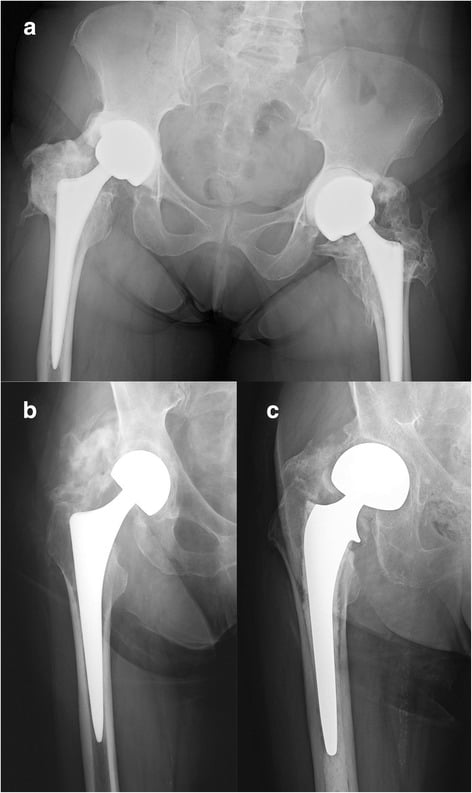
- Early excision: less than 12 months = 80% recurrence
- No prophylaxis at excision: the recurrence rate doubles
- Incomplete excision: residual HO = continued symptoms
- Unrealistic expectations: normal hip ROM cannot be restored in all cases
- Nerve injury during excision: 2-5% permanent deficit
Optimal outcomes require patient selection, timing, technique and prophylaxis.
Five years after excision.
- Range-of-motion gains are maintained in 75%, with some late loss from capsular contracture
- Pain relief is sustained in 80%, up from 70-80% at 1 year
- Recurrence stabilises at 20-30%, most of it within 2 years
- Satisfaction remains high (80%) with appropriate selection
- 5% are revised for recurrent HO, and a second excision has a higher recurrence
Registries and cohorts. Revision specifically for HO is uncommon, since most HO is asymptomatic Brooker I-II.
Prevention Strategies
Who needs prophylaxis. Not every THA does. Prophylaxis reduces radiographic HO, severe grades from roughly 7% to 2%, but the largest RCT (HIPAID, PMID 16885182) found no gain in pain or function and twice the rate of major bleeding. In the standard-risk hip the harm is real and the benefit is a radiograph, so contemporary practice targets prophylaxis to high-risk hips rather than every THA, and risk stratification guides the decision.
- Patient Characteristics
- Previous HO (Brooker III-IV), ankylosing spondylitis, DISH, post-traumatic acetabular fracture
- Prophylaxis Recommendation
- MANDATORY prophylaxis - NSAIDs OR radiation (radiation preferred if revision + excision)
- Patient Characteristics
- Male gender, hypertrophic OA, difficult revision THA, anterolateral approach
- Prophylaxis Recommendation
- STRONGLY RECOMMENDED - NSAIDs (indomethacin 75mg daily × 6 weeks)
- Patient Characteristics
- Primary THA, posterior approach, female, no previous HO
- Prophylaxis Recommendation
- NO routine prophylaxis
- Patient Characteristics
- Minimally invasive posterior approach, young female, no risk factors
- Prophylaxis Recommendation
- Consider NO prophylaxis (some centres) - debate continues
Choosing the modality. NSAIDs and radiation are equally effective in the high-risk hip, and combining them adds nothing over either alone. Selective and non-selective NSAIDs are equally effective, so gastrointestinal, renal and cardiovascular risk guides the choice of agent (Migliorini 2022, PMID 35809109), alongside contraindications and local availability. Radiation is reserved for NSAID contraindications, very high-risk hips, or revision with HO excision. Revision THA with HO excision carries the highest recurrence without prophylaxis.
The trauma exception. In patients with concurrent long-bone fractures, radiation is preferred because indomethacin increases non-union risk (Burd 2003, PMID 12892193).
NSAIDs are the first-line agent for most patients who need prophylaxis.
- Dose
- 25mg TDS (75mg total daily)
- Duration
- Start within 24h, continue 6 weeks
- Notes
- Most studied, gold standard, higher GI side effects
- Dose
- 200mg BD (400mg total daily)
- Duration
- Start within 24h, continue 6 weeks
- Notes
- Lower GI risk, cardiovascular precautions in high-risk
- Dose
- 500mg BD (1000mg total daily)
- Duration
- Start within 24h, continue 6 weeks
- Notes
- Alternative if indomethacin not tolerated
- Dose
- 50mg TDS (150mg total daily)
- Duration
- Start within 24h, continue 6 weeks
- Notes
- Widely available, intermediate GI risk
Timing and duration. Start within 24 hours of surgery; delayed prophylaxis is ineffective. Six weeks is the standard course, shorter courses being less effective and longer ones adding no benefit, although no trial has compared durations with function as the endpoint (see Controversies) and HIPAID used a 14-day course.
Efficacy. In high-risk patients NSAIDs reduce severe HO (Brooker III-IV) from 20% to 2-5%. No single agent is superior.
Bone healing. At standard doses NSAIDs do not impair the bone-implant interface. Fracture healing is a different matter: see the trauma exception above.
Consider radiation prophylaxis instead if any contraindication is present.
- Absolute: active peptic ulcer disease, recent GI bleed, severe renal impairment (eGFR less than 30), aspirin-sensitive asthma
- Relative: history of peptic ulcer (use PPI cover), hypertension (monitor), heart failure, anticoagulation (increased bleeding risk)
- Prophylaxis Strategy
- NO routine prophylaxis - risk-stratify instead
- Timing
- N/A unless a risk factor is present
- Key Pearl
- HIPAID (n=902): less ectopic bone, no WOMAC pain or function benefit, double the major bleeding - the 7% to 2% figure is radiographic, not functional
- Prophylaxis Strategy
- NSAIDs OR single-dose radiation (700cGy)
- Timing
- NSAID: start within 24h; Radiation: within 72h post-op
- Key Pearl
- Either modality equally effective in high-risk
- Prophylaxis Strategy
- Single-dose radiation (700cGy) preferred
- Timing
- Pre-op (4h before incision) OR within 24h post-op
- Key Pearl
- Recurrence 20-30% with prophylaxis, 50-80% without
- Prophylaxis Strategy
- Single-dose radiation only option
- Timing
- Within 24-72 hours post-op
- Key Pearl
- No increased wound complications
Surgical Approach and Intra-operative Measures to Reduce HO
The approach. Direct lateral and anterolateral (transgluteal) exposures are generally reported with higher HO rates than the posterior approach, but no approach, including the muscle-sparing direct anterior, confers immunity. Approach choice and meticulous intra-operative technique are modifiable contributors, worth setting out alongside drug and radiation prophylaxis.
Wash out the local trigger. Pellegrini found pre-operative irradiation as effective as post-operative, which tells us that the osteogenic precursor cells driving HO arise from local operative-field tissue rather than the bloodstream (PMID 8666605). The practical corollary in every THA is to remove the local trigger. These intra-operative measures are pragmatic and supported by observational data rather than level-1 trials.
- Effect on HO Risk
- Generally reported with higher HO rates - more abductor dissection and muscle trauma
- Practical Measure
- Apply more aggressive prophylaxis to high-risk hips done through these approaches
- Effect on HO Risk
- Generally reported with lower HO rates than transgluteal approaches
- Practical Measure
- Still prophylax the high-risk hip regardless of approach
- Effect on HO Risk
- Internervous, muscle-sparing; reported HO rates are variable and the data are mixed
- Practical Measure
- Do not assume HO immunity - apply the same risk stratification
- Effect on HO Risk
- Bone dust and marrow debris left in soft tissues can seed HO
- Practical Measure
- Copious pulsatile lavage before closure to wash out reamings and bone dust
- Effect on HO Risk
- Muscle crush or devitalisation and post-op haematoma provide an inflammatory substrate for HO
- Practical Measure
- Gentle soft-tissue handling, meticulous haemostasis, consider tranexamic acid and a drain in high-risk excisions
Guidelines, Registries & Global Practice
Global Epidemiology (Evidence-Based)
- Any HO (Brooker I-IV)
- Up to ~50% any-grade radiographic HO
- Severe HO (Brooker III-IV)
- Roughly 0 to 10% severe
- Source
- Shapira 2021 meta-analysis (PMID 33736491)
- Any HO (Brooker I-IV)
- ~28% develop any HO (Brooker 0 in ~72%)
- Severe HO (Brooker III-IV)
- Brooker III-IV ~1%
- Source
- Migliorini 2022 meta-analysis (PMID 35809109)
- Any HO (Brooker I-IV)
- Confirmed high rate (~48% in trial population)
- Severe HO (Brooker III-IV)
- Substantial without prophylaxis
- Source
- Pellegrini 1996 RCT (PMID 8666605)
- Any HO (Brooker I-IV)
- Relative risk of ectopic bone 0.69 with NSAID
- Severe HO (Brooker III-IV)
- No improvement in pain or function despite less bone
- Source
- HIPAID 2006 (PMID 16885182)
Guideline & Society Positions (Side-by-Side)
- Position on Routine NSAID Prophylaxis
- No mandate for universal prophylaxis; NSAIDs or radiation reserved for high-risk hips and post-excision
- Evidence Basis
- Pooled RCT/meta-analysis evidence (Joice 2018, PMID 29954195)
- Position on Routine NSAID Prophylaxis
- No specific NICE technology guidance mandating HO prophylaxis; practice is risk-stratified and surgeon-led
- Evidence Basis
- Absence of high-quality functional benefit data (HIPAID, PMID 16885182)
- Position on Routine NSAID Prophylaxis
- Selective prophylaxis for recognised high-risk patients rather than blanket use
- Evidence Basis
- Registry and RCT evidence; bleeding signal in HIPAID
- Position on Routine NSAID Prophylaxis
- NSAIDs or single-fraction radiotherapy accepted as equivalent options in high-risk hips
- Evidence Basis
- NSAID vs radiotherapy meta-analysis (Shapira 2021, PMID 33736491)
No major society mandates universal HO prophylaxis for all THA. The pivotal HIPAID randomised trial showed NSAIDs reduce radiographic ectopic bone (relative risk 0.69) but produced no improvement in pain or function and increased major bleeding. Modern guidance is therefore risk-stratified: prophylax the demonstrably high-risk hip (previous HO, ankylosing spondylitis, DISH, post-traumatic/acetabular arthritis, hypertrophic OA), and avoid blanket prescribing.
Practice Variation
- Agent choice: Selective (COX-2) and non-selective NSAIDs are equally effective, so prescribing is driven by GI, renal and cardiovascular risk rather than anti-HO potency (Migliorini 2022, PMID 35809109).
- NSAIDs vs radiotherapy: Both reduce HO in high-risk hips; some meta-analytic data favour NSAIDs on efficacy while radiation is favoured when NSAIDs are contraindicated or after excision (Shapira 2021, PMID 33736491).
- Trauma caveat: In patients with concurrent long-bone fractures, indomethacin increases non-union risk, so radiation is preferred in this group (Burd 2003, PMID 12892193).
- Approach effect: Direct lateral/anterolateral exposures are generally reported with higher HO rates than posterior approaches, influencing local protocols.
- Registry role: National joint registries (e.g. AOANJRR) primarily capture revision events; symptomatic HO requiring excision is an uncommon indication for revision
- Reoperation for HO is rare: Few THAs are revised specifically for HO, consistent with most HO being asymptomatic Brooker I-II
- Higher-risk cohorts: Post-traumatic and acetabular-fracture arthritis carry a disproportionate share of clinically significant HO
- Approach effect: Anterolateral/direct lateral exposures are reported with higher HO rates than posterior approaches
- Sex effect: Males consistently show higher HO rates than females across cohorts
Key documentation requirements for informed consent:
HO Risk Discussion: Document that patient was counseled about HO risk factors (if present) and prevention options. Failure to offer prophylaxis in high-risk patients (previous HO, ankylosing spondylitis, post-traumatic arthritis) is defensible only if contraindications exist and documented.
Prophylaxis Consent: Document discussion of NSAID risks (GI, renal, cardiovascular) vs radiation (no increased wound/infection risk, gonadal shielding). Patient refusal of prophylaxis should be documented.
Excision Consent: If excising HO, must document discussion of: (1) Recurrence risk 20-30%, (2) Nerve injury risk 2-5%, (3) Realistic ROM expectations, (4) Alternative of observation if minimal symptoms. Excising immature HO (less than 12 months) without documenting urgent indication is difficult to defend if recurrence occurs.
Adverse Outcomes: If severe HO develops despite prophylaxis (2-5% even with prophylaxis), documentation of appropriate prophylaxis dose, timing, and duration protects against litigation. If patient developed GI bleed on NSAIDs, documentation of pre-prescription risk assessment and PPI consideration is critical.
Common litigation scenarios: (1) No prophylaxis offered in high-risk patient who develops severe HO, (2) NSAID-related GI bleed without documented risk assessment, (3) Early HO excision (less than 12 months) leading to recurrence, (4) Nerve injury during HO excision without documented consent discussion.
Controversies & Areas of Uncertainty
Whether to give prophylaxis at all in an unselected primary THA This is the central unsettled question, and the honest answer is uncomfortable. Prophylaxis undoubtedly reduces radiographic heterotopic bone, but the largest randomised trial found no improvement in WOMAC pain or function at 6 to 12 months and roughly double the rate of major bleeding, and its authors concluded the data do not support routine prophylaxis in unselected patients. Why it stays unsettled: the trial used a 14-day ibuprofen course and radiographic and WOMAC endpoints rather than range of motion, and it was not powered for the high-risk subgroup - so it argues convincingly against universal prophylaxis without telling us how much benefit the genuinely high-risk hip gains. Practice has therefore moved to risk stratification rather than abandonment.
Does the Brooker grade measure anything the patient feels? Brooker is the universal reporting language, yet the grade correlates poorly with symptoms - many Brooker III hips are asymptomatic and occasional Brooker II hips are stiff and painful. The II/III boundary is also observer-dependent, which matters because that is precisely where most treatment thresholds are drawn. Why it stays unsettled: simplified systems emphasising the clinically meaningful distinction (bridging versus non-bridging bone) perform better on reliability but have not displaced Brooker in registries or trials, so the literature keeps measuring something that is only loosely related to the outcome that matters.
Timing of excision Traditional teaching is to wait for radiographic and biochemical maturity - classically 12 to 18 months, with a normalising alkaline phosphatase and a quiescent bone scan - before excising. Earlier excision is increasingly reported in selected patients with severe functional loss. Why it stays unsettled: the maturity rule derives from an era of higher recurrence without effective prophylaxis, and modern single-dose radiation given around the excision may have changed the calculus; but no randomised comparison of early versus delayed excision exists, and recurrence remains the dominant fear.
How long to continue NSAIDs Regimens of 6 weeks, 2 weeks and even a few days all appear in practice and in trials. Why it stays unsettled: the biological window for stem-cell differentiation is early and probably short, which argues for brief courses, but no trial has directly compared durations with function as the endpoint - so the 6-week convention persists largely by inheritance rather than by evidence.
MCQ Practice Points
Q: What is the primary mechanism by which NSAIDs prevent heterotopic ossification? A: NSAIDs inhibit cyclooxygenase (COX) enzymes, preventing prostaglandin E2 (PGE2) synthesis. PGE2 is a critical mediator of mesenchymal stem cell differentiation into osteoblasts. By blocking PGE2 production during the early post-operative period (0-6 weeks), NSAIDs prevent the cellular cascade that leads to heterotopic bone formation. This is why timing is critical - NSAIDs must be started within 24 hours to interrupt the initial stem cell differentiation phase.
Q: What is the key distinguishing feature between Brooker grade II and grade III heterotopic ossification? A: The distance between opposing bone surfaces: greater than 1cm = Brooker II; less than 1cm = Brooker III. Both grades involve bone spurs projecting from the pelvis or proximal femur, but Brooker III has spurs that are close enough (less than 1cm gap) to mechanically impinge and restrict range of motion. Brooker II maintains a gap greater than 1cm and is usually asymptomatic. This distinction is critical because Brooker III-IV are functionally significant and may require treatment, while I-II are typically observed.
Q: A patient with ankylosing spondylitis requires THA. What is the most appropriate HO prophylaxis strategy? A: Either NSAIDs (indomethacin 75mg daily × 6 weeks) OR single-dose radiation (700cGy) - both are equally effective in high-risk patients. Ankylosing spondylitis is a very high-risk condition for HO (50% severe HO without prophylaxis). The choice depends on patient factors: if NSAID contraindications (GI, renal), use radiation; if radiation unavailable or patient preference, use NSAIDs. There is NO additional benefit to combining both modalities. Key is to ensure whichever modality is chosen is given at the correct dose and timing.
Q: At what minimum time point post-THA is it safe to excise heterotopic ossification, and how do you confirm maturation? A: Minimum 12-18 months post-operatively, confirmed by cold technetium-99m bone scan and normalized alkaline phosphatase. Excising immature HO leads to 80% recurrence because active osteoblasts and mesenchymal stem cells remain viable and rapidly re-form bone. Mature HO shows corticated margins on radiograph, no increased uptake on bone scan (cold scan), and normal serum ALP. Time alone is insufficient - maturation must be confirmed biochemically and scintigraphically. For Brooker IV, wait 18-24 months to ensure complete maturation.
Q: A patient undergoes HO excision 15 months post-THA. What prophylaxis should be given, and what is the expected recurrence rate? A: Single-dose radiation 700cGy (preferred) given pre-operatively or within 24 hours post-operatively; recurrence rate 20-30% with radiation, 50-80% without. Radiation is more effective than NSAIDs at preventing recurrence after HO excision, likely because the local environment is already primed for bone formation and radiation directly targets proliferating osteoblasts. NSAIDs can be used but have higher recurrence. Complete excision of all HO is essential - incomplete excision dramatically increases recurrence. Even with optimal technique and prophylaxis, recurrence occurs in 20-30% of cases.
Q: What are the key findings from randomized trials comparing NSAIDs to radiation for HO prophylaxis? A: Equally effective (both reduce severe HO from 20% to 2-5%), no difference in wound complications or infection rates, choice based on patient factors and logistics. Multiple RCTs have shown equivalent efficacy. NSAIDs have GI and renal side effects (10-15% discontinuation rate) but are simple to prescribe. Radiation has no systemic side effects but requires radiation oncology coordination. Combination therapy (NSAIDs + radiation) provides NO additional benefit over single modality. Patient contraindications and institutional resources guide choice.
Exam Viva Scenarios
Practise clinical reasoning and management decisions out loud
“You are planning a primary total hip arthroplasty for a 62-year-old male with primary osteoarthritis. He has hypertrophic osteophytes on radiographs. What is your strategy for heterotopic ossification prophylaxis?”
“A 58-year-old male had a right total hip arthroplasty 3 years ago and developed Brooker grade III heterotopic ossification. He now requires a left total hip arthroplasty for symptomatic osteoarthritis. His right hip is pain-free but has reduced flexion to 80 degrees and internal rotation 5 degrees. How do you manage HO risk for the planned left THA?”
“A 55-year-old male is 14 months post-THA for post-traumatic arthritis following an acetabular fracture. He has Brooker grade IV heterotopic ossification with hip flexion limited to 60 degrees and internal rotation 0 degrees. He has significant difficulty sitting and toileting. AP pelvis radiograph shows extensive anterior and lateral HO bridging the femur and pelvis. How do you manage this patient?”
High-Risk Factors (ASHAMED)
- Ankylosing spondylitis (50% severe HO without prophylaxis)
- Spinal cord injury (neurologic HO risk)
- Hypertrophic osteoarthritis (large osteophytes predict HO)
- Acetabular fracture/post-traumatic OA (50-90% risk)
- Male gender (2-3× higher risk than females)
- Extensive soft tissue damage (revision THA, difficult exposures)
- DISH - diffuse idiopathic skeletal hyperostosis
Brooker Classification
- I = Islands of bone in soft tissue (asymptomatic, observe)
- II = Spurs with gap greater than 1cm (usually asymptomatic)
- III = Spurs with gap less than 1cm (may restrict ROM, consider excision)
- IV = Ankylosis (significant functional loss, excision often needed)
- Assess on AP pelvis at 6-12 months post-op
Prophylaxis Protocol
- NSAIDs: Indomethacin 75mg daily × 6 weeks (start within 24h)
- COX-2 inhibitors: Celecoxib 200mg BD × 6 weeks (lower GI risk)
- Radiation: 700cGy single dose within 24-72h post-op (or pre-op)
- Both modalities equally effective (reduce severe HO from 20% to 2-5%)
- NO benefit from combining NSAIDs + radiation
- Previous HO = 90% recurrence without prophylaxis (radiation preferred)
Excision Pearls
- Wait 12-18 months minimum (Brooker III) or 18-24 months (Brooker IV)
- Confirm maturation: cold bone scan + normal ALP + corticated margins
- Pre-op CT with 3D reconstruction for surgical planning
- Complete excision essential (incomplete = recurrence)
- Radiation prophylaxis 700cGy at excision (preferred over NSAIDs)
- Recurrence: 20-30% with prophylaxis; 50-80% without; 82% if excised before 12 months
- Nerve injury risk 2-5% (sciatic most common)
- ROM improvement: 30-50 degrees; Pain relief: 70-80%
Complications to Counsel
- NSAID GI toxicity: 5-10% dyspepsia, 1-2% ulcer (use PPI in high-risk)
- NSAID renal impairment: 2-5% (monitor creatinine, avoid if eGFR under 30)
- NSAID CV events: 1-2% with COX-2 inhibitors (caution in cardiac patients)
- HO recurrence post-excision: 20-30% with prophylaxis, 50-80% without
- Nerve injury during excision: 2-5% (sciatic - permanent deficit possible)
- Infection after excision: 1-3% (standard wound infection management)
Evidence Base and Key Trials
Brooker Classification of Ectopic Ossification After THR (Original Description)
- Original case series defining the four-grade radiographic classification still used worldwide today
- Grade I: islands of bone within soft tissues; Grade II: bone from pelvis or femur leaving over 1cm between opposing surfaces
- Grade III: bone spurs leaving less than 1cm between opposing surfaces; Grade IV: apparent bony ankylosis
- Provided a reproducible method to report incidence and severity of ectopic bone after hip replacement
Routine Ibuprofen Prophylaxis After Hip Replacement (HIPAID RCT)
- Double-blind placebo-controlled RCT of 902 primary or revision THA patients across 20 Australian and New Zealand centres
- Ibuprofen 1200mg daily for 14 days started within 24h reduced ectopic bone formation (relative risk 0.69, 95% CI 0.56 to 0.83)
- Despite less ectopic bone, there was NO improvement in the PRIMARY outcome: WOMAC hip pain differed by -0.1 (95% CI -0.4 to 0.2, p=0.6) and physical function by -0.1 (-0.4 to 0.2, p=0.5). These are tight intervals around zero, so this is a precise null rather than an underpowered one - the trial did not fail to find a benefit, it found there was none
- Ibuprofen significantly increased major bleeding complications during admission (relative risk 2.09, 95% CI 1.00 to 4.39)
- Authors concluded the data do not support routine NSAID prophylaxis for unselected THA patients
Pre-operative vs Post-operative Irradiation for HO Prevention (RCT)
- 86 hips in 85 high-risk patients, allocated - the abstract says 'prospectively randomized OR ASSIGNED' - to a single 800 cGy fraction given pre-operatively (mean 6.1 hours before) or post-operatively (mean 51.3 hours after). The groups are unequal at 49 and 37 hips, which is consistent with allocation not being purely random
- Risk factors defining the population: previous HO after hip surgery, hypertrophic or post-traumatic osteoarthrosis with extensive osteophytes, DISH, and ankylosing spondylitis. That the population was genuinely high-risk is confirmed by 48 per cent of all 86 hips developing either heterotopic or extra-field ossification
- No new HO in 37 of 49 (76 per cent) pre-operatively irradiated hips and 27 of 37 (73 per cent) post-operatively irradiated hips - equivalent efficacy
- Extra-field ossification was more common after pre-operative irradiation (12 of 49, 24 per cent, against 3 of 37, 8 per cent; p = 0.05) - but it was NOT associated with symptoms of greater trochanteric bursitis in any hip, so the difference is radiographic rather than clinical
- Findings support that osteogenic precursor cells arise from local operative-field tissue rather than from blood-borne cells - the mechanistic argument that makes pre-operative timing rational