Localise the pain, test the DRUJ, then match treatment to tear biology and ulnar load
- Ulnar-sided wrist pain is a localisation problem; not every painful ulnar wrist is a TFCC tear.
- The TFCC includes the articular disc, dorsal and palmar radioulnar ligaments, ulnocarpal ligaments, meniscus homologue and ECU subsheath.
- DRUJ stability depends mainly on the deep foveal fibres of the radioulnar ligaments.
- Palmer classification describes the lesion; treatment also depends on DRUJ stability, reparability, cartilage status and ulnar variance.
- A central stable tear, a repairable peripheral tear and an unstable foveal tear are different clinical problems.
- “Pain with a positive foveal sign suggests TFCC or ulnotriquetral pathology, but it is not a standalone diagnosis.
- “Test DRUJ translation in neutral, pronation and supination, and always compare the opposite wrist.
- “A positive MRI without matching clinical symptoms should not automatically lead to surgery.
- “Debridement alone is a poor answer for a symptomatic foveal tear with DRUJ instability.
- “If ulnar impaction is the driver, the treatment must address ulnar overload, not just the torn disc.
TFCC and Ulnar-Sided Wrist Pain
Overview and Epidemiology
The triangular fibrocartilage complex is the main soft-tissue stabiliser and load-bearing structure on the ulnar side of the wrist. It sits between the distal ulna, sigmoid notch, proximal carpus and ECU subsheath. A painful TFCC lesion may be traumatic, degenerative or part of a wider ulnar-sided wrist problem.
The incidental lesion. TFCC abnormalities may also be incidental. Signal change is common, especially with age and ulnar loading, and degenerative fraying increases with age and load. The clinical question is therefore whether this lesion is responsible for this patient's pain or instability, and what mechanical problem needs to be treated.
The decision to operate should come from symptoms, examination, DRUJ stability, imaging concordance, cartilage status and patient goals.
Anatomy and Biomechanics
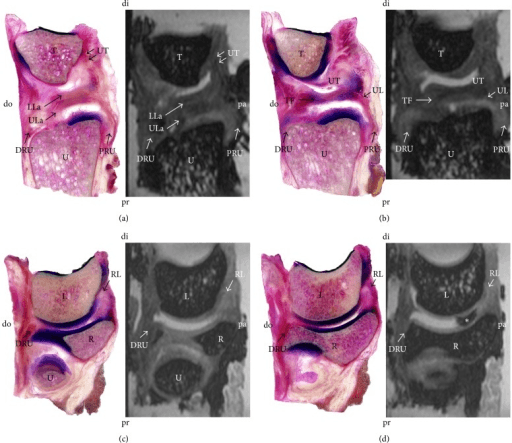
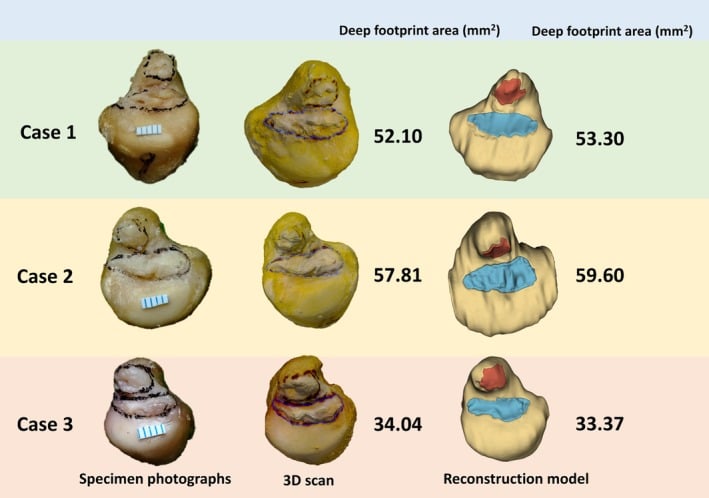
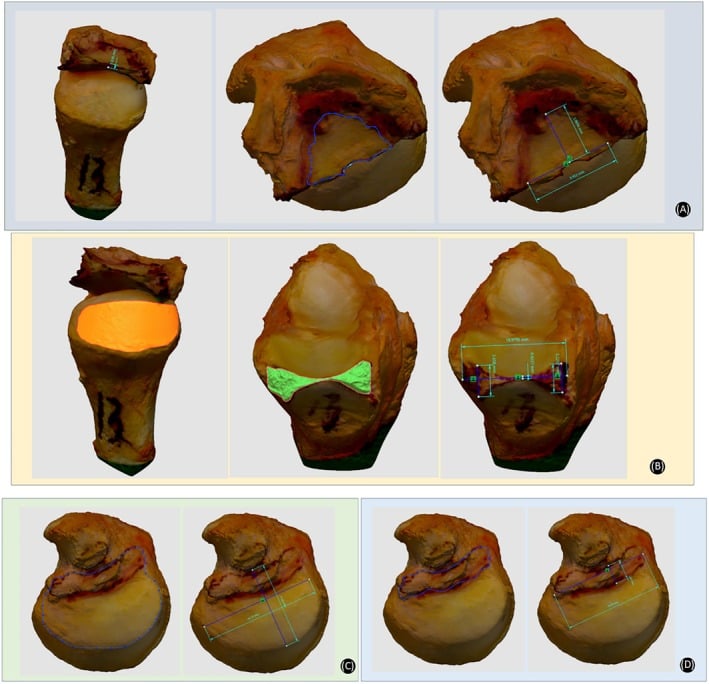
A composite stabilising system. The TFCC is not one structure. It is made up of the articular disc, the dorsal and palmar radioulnar ligaments, the ulnocarpal ligaments, the meniscus homologue and the ECU subsheath, each with its own role and clinical consequence (table below). The radioulnar ligaments are the key stabilisers of the DRUJ, and their deep fibres insert into the ulnar fovea, where they are critical for stability.
- Role
- Ulnocarpal load-bearing surface
- Clinical implication
- Poor healing potential; symptomatic stable central tears are usually debrided rather than repaired
- Role
- Primary DRUJ stabiliser
- Clinical implication
- Foveal detachment produces instability and usually needs restoration if symptomatic
- Role
- Peripheral support and soft-tissue continuity
- Clinical implication
- Repairable if tissue quality is good and cartilage is preserved
- Role
- Support lunate and triquetrum
- Clinical implication
- Distal avulsions may mimic isolated TFCC pain but behave as carpal stabiliser injuries
- Role
- Stabilises ECU tendon at the ulnar wrist
- Clinical implication
- Snapping ECU can coexist with TFCC symptoms and needs specific treatment
The vascular map. This is the single most useful piece of anatomy here, because it predicts which tears can heal. Injected cadaver studies show small vessels entering from the palmar, ulnar and dorsal capsular attachments and supplying only the peripheral 10 to 40 percent of the complex. The inner horizontal portion is avascular and, the part usually left out, no vessels cross the radial attachment either.
What it predicts. The avascular territory is therefore central and radial, not central alone. Tears in the vascular periphery can mount a reparative response and are worth repairing, whereas tears in the centre and along the radial attachment have no immediate blood supply and are not likely to heal. That is the biological reason central stable tears are debrided while peripheral and foveal tears are repaired, and why a radial-sided (Palmer 1D) repair is debated on grounds of biology, not merely of technical access.
A load regulator. The TFCC also behaves as a load regulator, and positive ulnar variance increases ulnocarpal load. Negative or neutral variance does not exclude TFCC injury, but it changes the likelihood that ulnar overload is the main driver.
Pathophysiology
TFCC pathology can be grouped into four practical mechanisms.
Acute traumatic tear. Usually follows axial load, rotation or traction. The important question is whether the tear is central and stable, peripheral and repairable, or foveal with DRUJ instability.
Degenerative ulnar overload. Ulnar impaction produces progressive wear of the TFCC, chondral change in the lunate or triquetrum and sometimes lunotriquetral ligament involvement.
Post-fracture or malunion pattern. Distal radius malunion, radial shortening, sigmoid notch incongruity or ulnar styloid base nonunion can create ulnar-sided pain and DRUJ dysfunction.
Associated soft-tissue pathology. ECU instability, FCU or pisotriquetral disease, LT injury, inflammatory synovitis and ganglion can coexist with or mimic TFCC symptoms.
A patient with a stable central perforation and a patient with a foveal detachment may both report ulnar wrist pain. The first may need debridement after failed non-operative care. The second needs restoration of the DRUJ stabiliser if instability is symptomatic and cartilage is salvageable.
Classification Systems
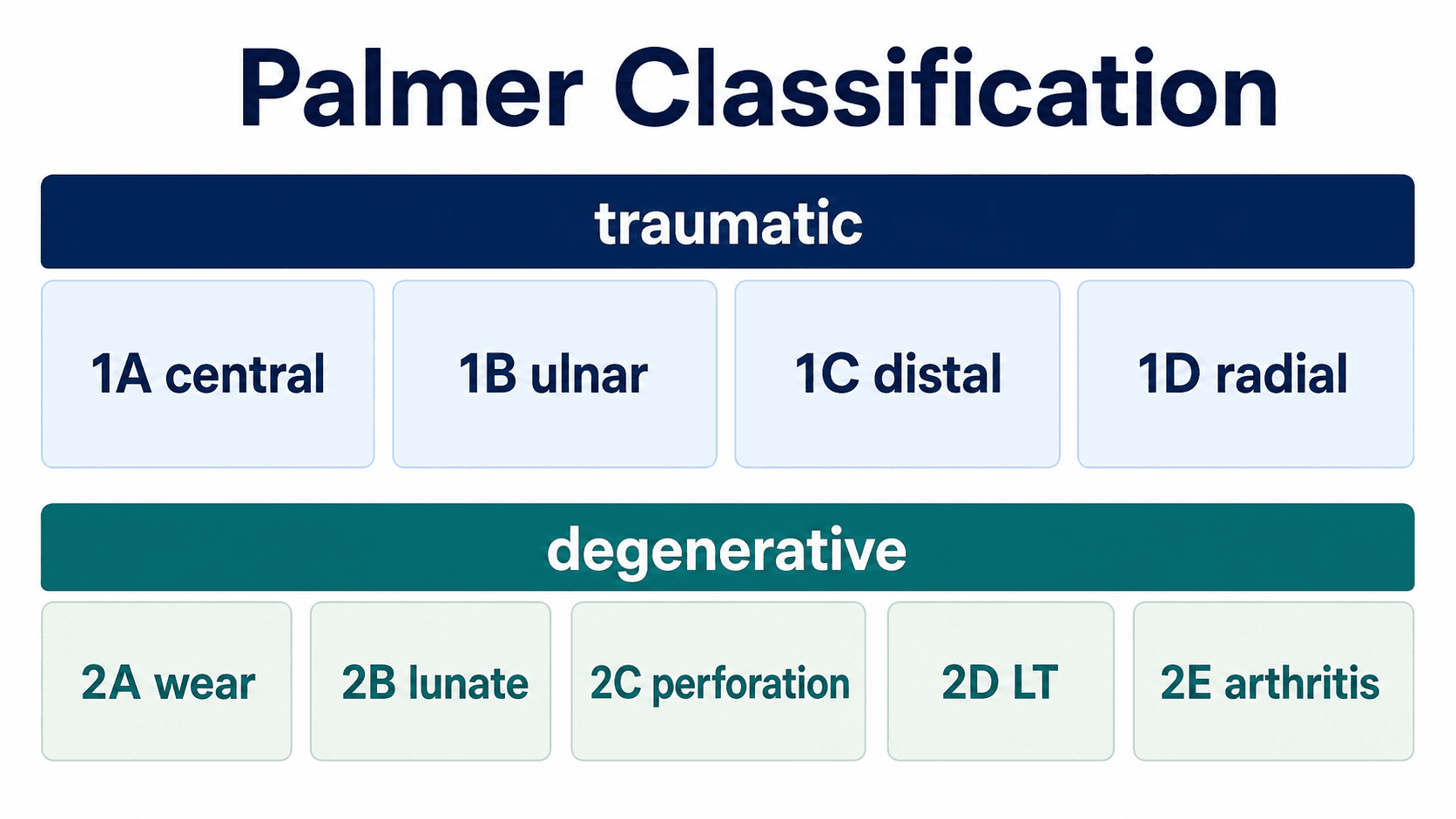
Palmer describes the lesion. It remains a useful descriptive framework, separating traumatic lesions by location from the degenerative spectrum. Treatment also depends on stability, tissue quality, cartilage and ulnar load.
- Lesion
- Central traumatic perforation
- Clinical meaning
- Stable disc tear with limited healing potential
- Typical treatment direction
- Debridement if symptomatic after non-operative care
- Lesion
- Ulnar-sided avulsion with or without styloid fracture
- Clinical meaning
- May involve peripheral or foveal attachment; assess DRUJ stability
- Typical treatment direction
- Repair or foveal refixation when symptomatic and repairable
- Lesion
- Distal ulnocarpal ligament avulsion
- Clinical meaning
- Carpal stabiliser injury rather than simple disc tear
- Typical treatment direction
- Repair or reconstruction when unstable or persistently symptomatic
- Lesion
- Radial-sided avulsion
- Clinical meaning
- Avascular territory, so healing potential is the concern
- Typical treatment direction
- Debridement for stable symptomatic tears; repair reserved for instability, accepting that the biology is unfavourable
- Lesion
- Degenerative spectrum
- Clinical meaning
- Progressive wear, chondromalacia, perforation, LT involvement and arthritis
- Typical treatment direction
- Debridement, wafer, ulnar shortening or salvage depending on stage and load
Atzei (EWAS) turns the peripheral tear into a decision. The Atzei (EWAS) classification is the modern, treatment-oriented arthroscopic scheme for the peripheral or foveal (Palmer 1B) tear. It maps directly onto repair, reconstruction or salvage, and the two things that drive it are foveal integrity and DRUJ cartilage:
- Class 1, distal tear (repairable). The distal (proximal-carpal) component is torn but the deep foveal insertion is intact and the DRUJ is stable, so a distal capsular suture repair suffices; arthroscopic capsular repair can be considered if symptoms persist.
- Class 2, complete tear (repairable). Both the distal and the deep foveal components are torn and the DRUJ is unstable. It needs foveal reinsertion, by anchor or transosseous technique.
- Class 3, proximal (foveal) tear (repairable). The deep foveal fibres are detached with an intact distal component, and again it needs foveal reattachment.
- Class 4, non-repairable tear. The TFCC tissue is irreparable, a retracted chronic lesion or poor-quality tissue, but the DRUJ cartilage is preserved. It needs ligament reconstruction with a tendon graft.
- Class 5, DRUJ arthritis. Irreparable with established DRUJ osteoarthritis. Repair and reconstruction are contraindicated, and treatment is DRUJ salvage or arthroplasty.
Clinical Assessment
Presentation. Patients usually present with ulnar wrist pain, pain with gripping or forearm rotation, clicking, weakness, or a feeling that the distal radioulnar joint is unstable.
Trauma or overload. The history must define mechanism, chronicity and load demand, and in particular separate a single traumatic event from chronic overload. A fall on an extended wrist with forearm rotation suggests traumatic TFCC injury. Repetitive axial loading, racquet sport, gymnastics, manual work, positive ulnar variance or distal radius malunion suggest ulnocarpal overload.
What else to ask. Beyond the mechanism, the history should cover:
- A twisting injury, bat sport, distal radius fracture or previous surgery
- Inflammatory arthritis
- Snapping, instability, pain with push-up from a chair, and symptoms during pronation or supination
- Hand dominance, work demands, sport, and what the patient needs the wrist to do
Examination. Examination starts with comparison. Look for swelling, ulnar head prominence, scars, distal radius malunion, ECU snapping, hypothenar wasting and range restriction. Palpate in a structured way: fovea, ECU groove, FCU and pisiform, lunotriquetral interval, ulnocarpal joint, hook of hamate and DRUJ. Then test motion, grip, DRUJ stability and tendon-specific provocative manoeuvres.
DRUJ stability. Test translation in neutral, pronation and supination, and always compare the opposite wrist. Some instability is position-dependent and only appears in pronation. Document pain, translation and endpoint.
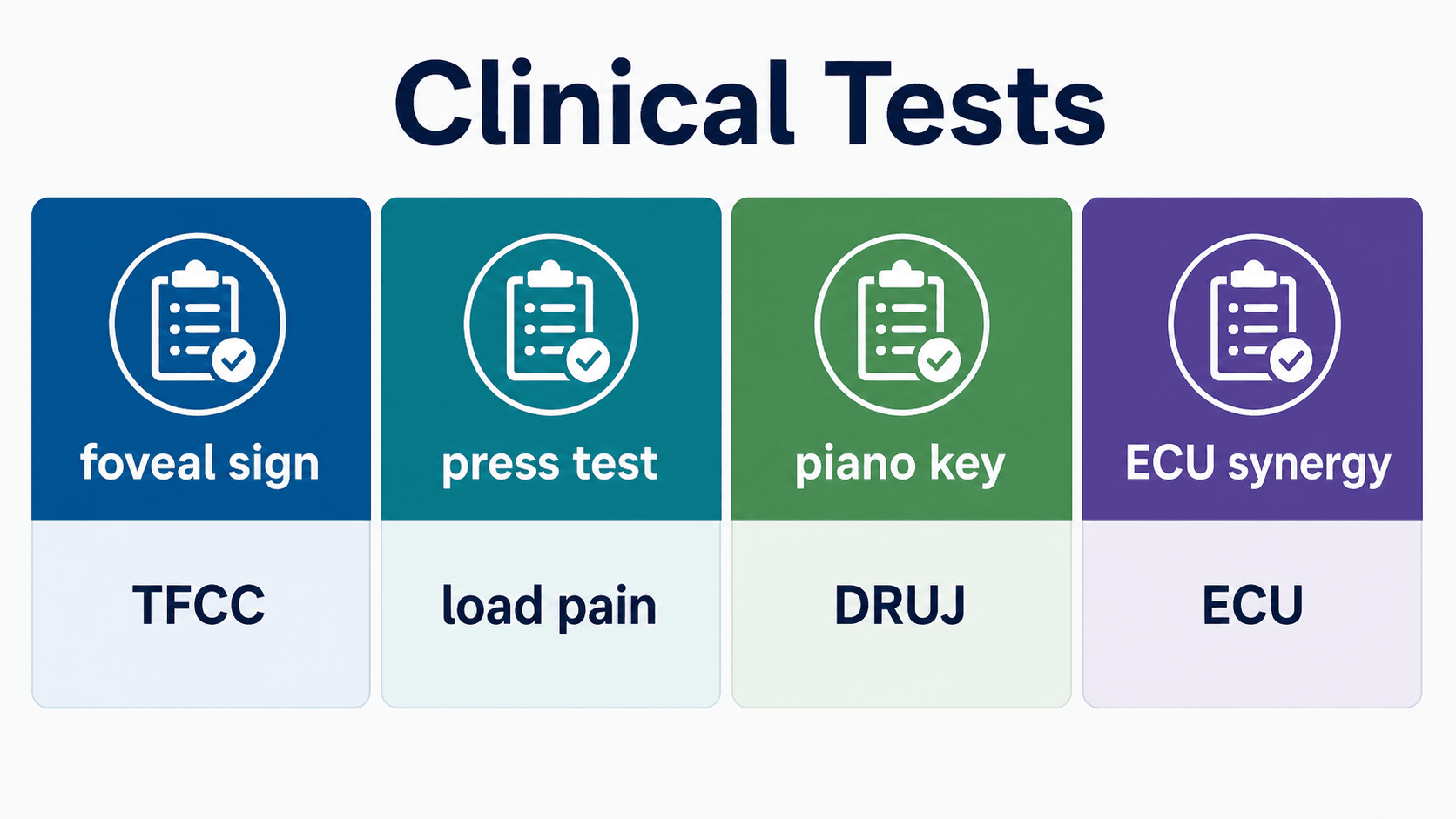
- How to do it
- Press in the soft spot between ulnar styloid, FCU, volar ulnar head and pisiform
- Positive finding
- Localised deep tenderness
- What it suggests
- TFCC peripheral/foveal or ulnotriquetral pathology
- How to do it
- Translate distal ulna dorsally and volarly relative to radius in neutral, pronation and supination
- Positive finding
- Painful excess translation or poor endpoint
- What it suggests
- DRUJ instability or foveal detachment
- How to do it
- Press prominent distal ulna volarly and observe rebound
- Positive finding
- Excess mobility or pain
- What it suggests
- DRUJ instability, but compare with the other side
- How to do it
- Axial load with ulnar deviation and forearm rotation
- Positive finding
- Ulnar-sided load pain
- What it suggests
- TFCC tear or ulnar impaction; not specific alone
- How to do it
- Patient pushes up from chair using the hand
- Positive finding
- Reproduction of ulnar wrist pain
- What it suggests
- Load-sensitive TFCC or ulnocarpal pathology
- How to do it
- Resisted thumb radial abduction or resisted wrist extension-ulnar deviation
- Positive finding
- ECU groove pain or snapping
- What it suggests
- ECU tendinopathy or subsheath pathology
- How to do it
- Stress lunate and triquetrum against each other
- Positive finding
- Painful clunk or local LT pain
- What it suggests
- Lunotriquetral ligament injury
Sorting the ulnar wrist. Ulnar-sided wrist pain is a localisation problem, and not every painful ulnar wrist is a TFCC tear. Sort it by location and mechanical behaviour before naming the diagnosis.
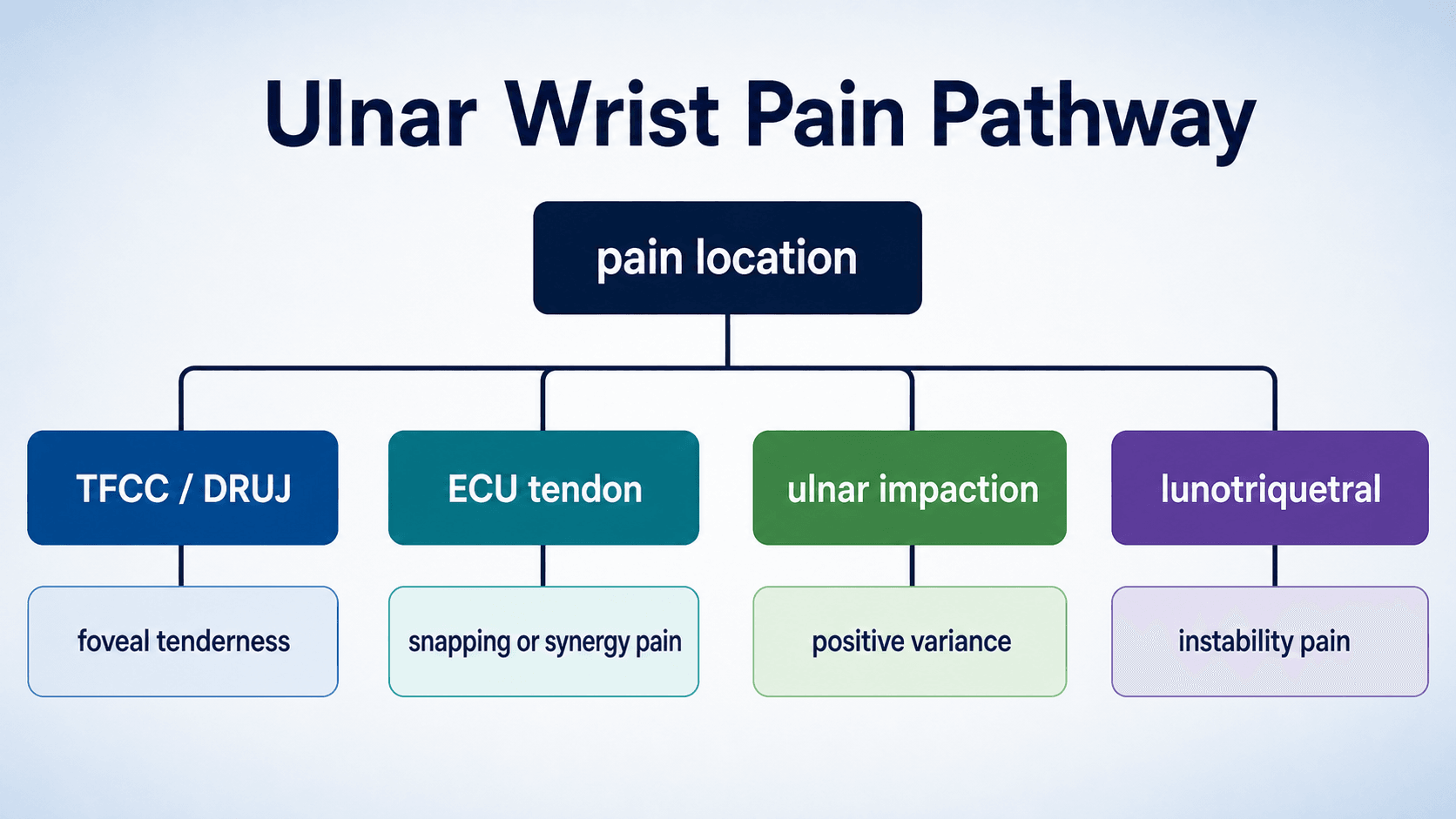
- Likely source
- TFCC peripheral or foveal tear
- Confirm with
- Foveal sign, DRUJ ballottement, MRI or arthroscopy
- Management implication
- Assess stability before deciding debridement versus repair
- Likely source
- DRUJ instability
- Confirm with
- Ballottement in neutral, pronation and supination; CT if incongruent
- Management implication
- Foveal repair, reconstruction or salvage depends on cartilage and chronicity
- Likely source
- ECU subluxation or tendinopathy
- Confirm with
- ECU synergy test, resisted extension-ulnar deviation, dynamic ultrasound
- Management implication
- Treat ECU pathology, not TFCC alone
- Likely source
- Ulnar impaction
- Confirm with
- PA neutral wrist radiograph, grip view, MRI marrow signal
- Management implication
- Consider ulnar unloading when non-operative care fails
- Likely source
- Lunotriquetral ligament injury
- Confirm with
- LT shear or ballottement test, MRI arthrogram or arthroscopy
- Management implication
- Different reconstruction pathway from TFCC
- Likely source
- Pisotriquetral or FCU pathology
- Confirm with
- Pisotriquetral grind, carpal tunnel view, local injection
- Management implication
- Avoid mislabelling as TFCC
TIDEUlnar Wrist Differential
Hook:TIDE keeps the ulnar wrist differential broad.
Do not miss infection, inflammatory arthritis, occult fracture, malignancy, acute DRUJ dislocation, acute Essex-Lopresti pattern, vascular insufficiency or ulnar nerve symptoms. Numbness, coldness, progressive swelling, fever, severe night pain or acute deformity should change the pathway.
Investigations
Radiographs first. Standard PA and lateral wrist films, obtained with reproducible positioning, are the starting point, though they can miss soft-tissue tears and occult fractures. Look for:
- Ulnar variance
- Distal radius malunion
- Ulnar styloid base nonunion
- DRUJ arthritis
- Carpal alignment
- Lunate or triquetral cystic change
- Signs of occult fracture
The grip view. A clenched-fist or pronated grip view can accentuate dynamic ulnar variance in selected cases. A grip view can expose load-dependent impaction that is absent on a resting film.
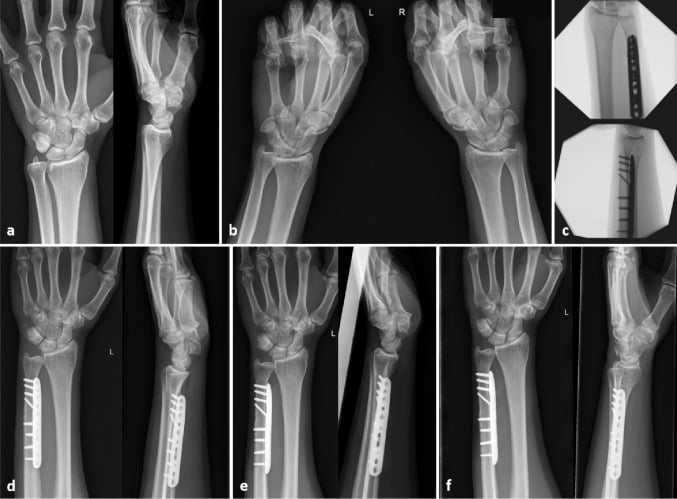
MRI is useful when the clinical picture matches TFCC or ulnar-sided soft-tissue pathology: TFCC signal, marrow oedema, the ECU, the LT ligament and occult pathology. False positives occur, resolution and reader expertise matter, and reliable TFCC interpretation requires deliberate sequence and plane selection. Ulnar variance informs loading but does not exclude degenerative TFCC disease.
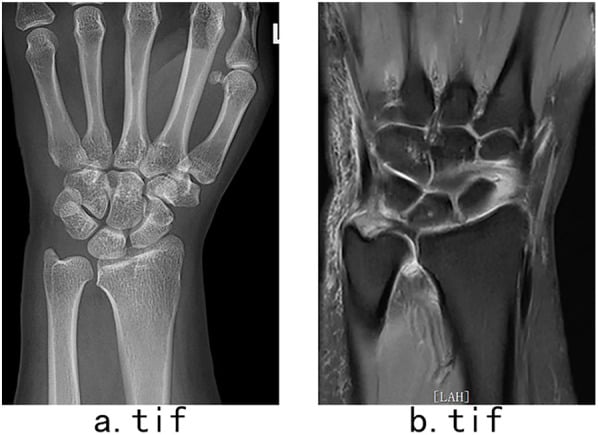
MR arthrography may improve detection of full-thickness communication and helps assess intra-articular tears. It is invasive, and it must still be interpreted with symptoms and examination.
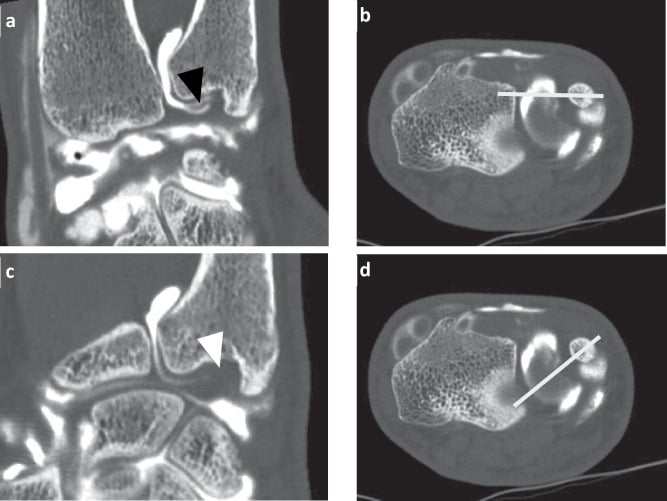
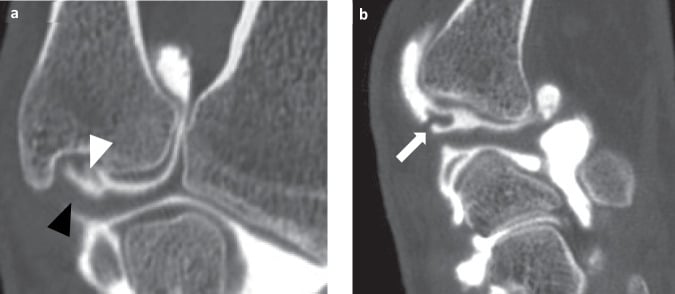
CT is valuable for DRUJ congruity, sigmoid notch deformity, malunion, ulnar styloid base nonunion and occult fracture, though it gives limited soft-tissue information. On arthro-CT, oblique radial reformats can reveal a tear missed on standard coronal review.
Dynamic ultrasound is useful for ECU subluxation and tendon pathology. It is operator dependent and not a full TFCC assessment.
Arthroscopy remains the most direct method of assessing tear location, cartilage, trampoline test, hook test, peripheral reparability and combined intra-articular pathology. It is both diagnostic and therapeutic, but it is invasive, should answer a defined clinical question, and should not be used as a substitute for a thoughtful preoperative diagnosis.
Management Decisions
The inputs. Management is based on symptoms, chronicity, DRUJ stability, tear location, tissue quality, cartilage status, ulnar variance and patient demand. Most stable, non-acute presentations deserve a period of non-operative care unless there is clear mechanical instability or a time-sensitive associated injury.
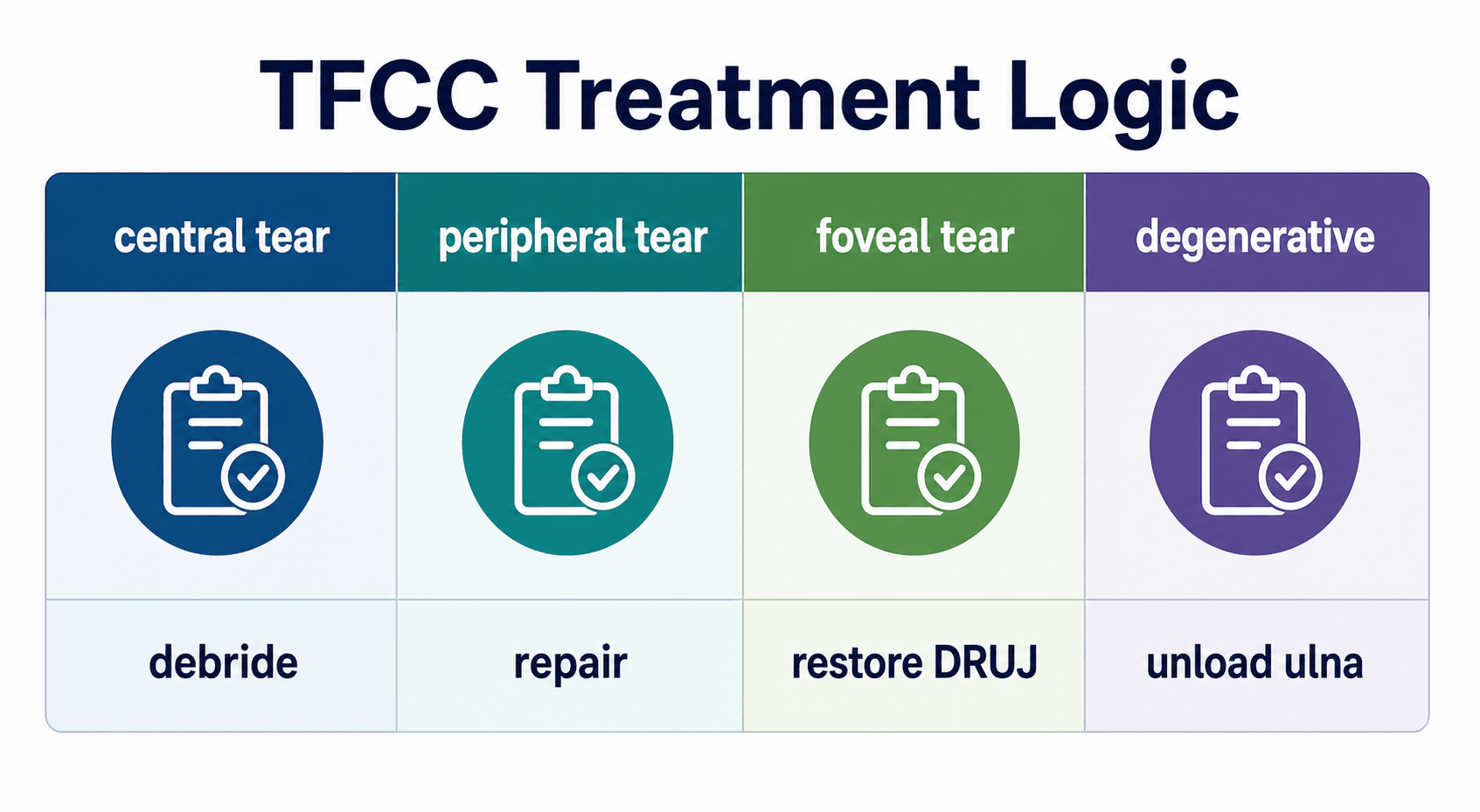
Non-operative care is appropriate for many stable TFCC and ulnar-sided wrist pain presentations. Alongside the plan below, it includes activity modification, splinting or cast immobilisation, and anti-inflammatory measures when appropriate.
- Practical detail
- Wrist or Munster-style immobilisation depending on rotation pain and DRUJ symptoms
- Reason
- Reduces painful forearm rotation and ulnocarpal load
- Practical detail
- Range, proprioception, grip progression, ECU control and gradual loading
- Reason
- Restores function without provoking recurrent synovitis
- Practical detail
- Consider diagnostic or therapeutic injection when diagnosis remains uncertain
- Reason
- Can localise pain generator and reduce inflammation
- Practical detail
- Escalate if persistent mechanical symptoms, instability or load-limiting pain remains
- Reason
- Avoids prolonged ineffective treatment for repairable instability
DRUJ salvage. For the arthritic or irreparably unstable DRUJ (Atzei Class 5) there are four salvage options to compare. The shared late problem of the resection procedures is a painful, unstable ulnar stump.
- Darrach (distal ulna resection) excises the distal ulna. It gives simple, reliable pain relief for the low-demand or elderly patient, but risks painful ulnar stump instability and radioulnar convergence or impingement under load, so avoid it in young, high-demand patients.
- Sauvé-Kapandji arthrodeses the DRUJ and creates a proximal ulnar pseudarthrosis by segmental resection just proximal to the fused joint. It preserves the ulnar head buttress to the carpus, better than Darrach for ulnocarpal support, and is favoured in the younger or higher-demand patient, but can still develop a painful or unstable proximal ulnar stump.
- Hemiresection-interposition arthroplasty (Bowers), or matched ulnar resection, resects the arthritic ulnar head but preserves the styloid and TFCC attachment and interposes soft tissue. It relies on a competent TFCC, so it is not for the grossly unstable joint.
- Constrained (linked) DRUJ arthroplasty replaces the joint with an implant. It is increasingly favoured for the young, high-demand patient with a painful arthritic or unstable DRUJ, to avoid the stump problems of resection.
Surgical Technique
Plan before theatre. The operative plan should be written before the patient enters theatre. It names the operation: diagnostic arthroscopy only, debridement, peripheral repair, foveal repair, ulnar unloading, correction of malunion, ECU stabilisation or a combined procedure.
Set-up. Position the patient supine with the arm on a hand table. Use traction for wrist arthroscopy, protect superficial sensory nerves around portals, and confirm portals with surface anatomy before incision.
- Purpose
- Provide stable access to radiocarpal and midcarpal compartments
- Pitfall
- Excess traction can distort assessment and injure soft tissues
- Purpose
- Common radiocarpal portals include 3-4, 4-5 and 6R or 6U depending target
- Pitfall
- Protect dorsal sensory branches and ECU region
- Purpose
- Assess cartilage, SL, LT, TFCC disc, peripheral rim and synovitis
- Pitfall
- Do not focus only on the MRI-reported area
- Purpose
- Trampoline assesses central tension; hook test assesses foveal attachment
- Pitfall
- A stable central tear and foveal detachment need different operations
- Purpose
- Debride, repair, refix or unload according to the mechanical diagnosis
- Pitfall
- Debridement that destabilises the rim can worsen symptoms
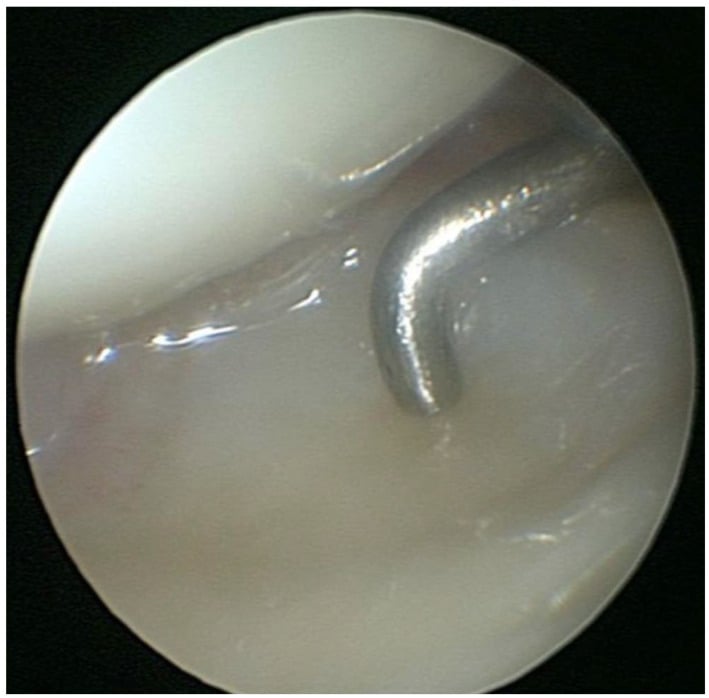
The probe tests. The trampoline test probes central TFCC tension, but laxity alone does not reliably define a foveal tear. Pair it with the hook test, DRUJ examination and inspection of the proximal attachment. A positive hook test, in which the probe lifts the TFCC from the ulnar head, indicates loss of the deep foveal attachment and changes treatment from simple debridement to restoration of the stabiliser.
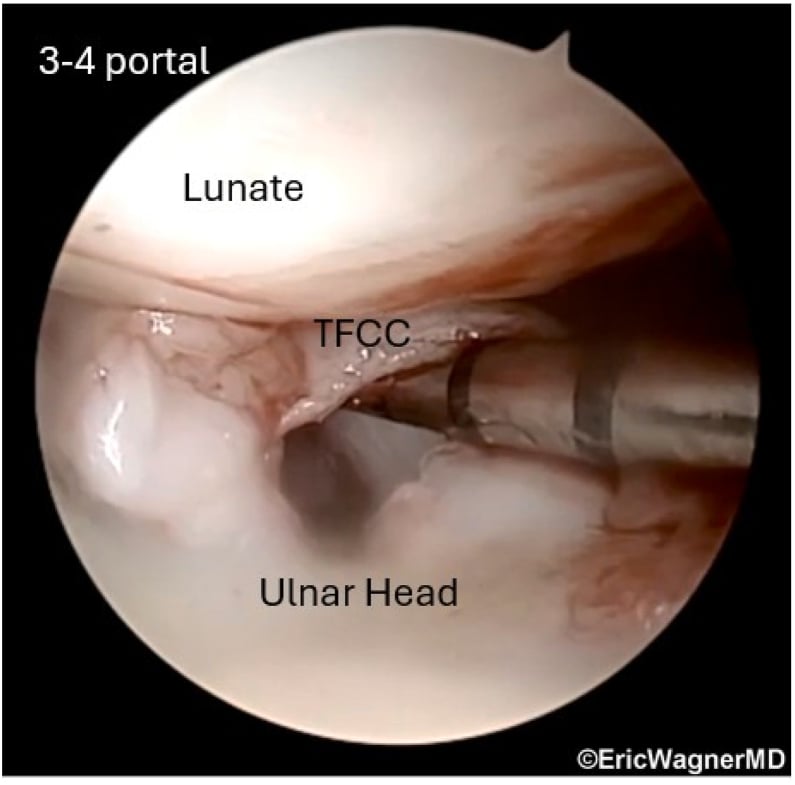
- Core steps
- Diagnostic arthroscopy, define stable rim, shave unstable central flap, preserve peripheral attachments
- Technical priorities
- Remove only unstable tissue; avoid enlarging into the vascular/stabilising rim
- Core steps
- Freshen tear edge if needed, pass sutures, capture capsule/TFCC rim, secure outside capsule or with all-inside device
- Technical priorities
- Protect dorsal sensory nerve branches; avoid overtightening
- Core steps
- Confirm instability, prepare foveal footprint, pass sutures through deep fibres, fix to fovea with transosseous tunnels or anchor
- Technical priorities
- Reduction of the deep stabiliser matters more than cosmetic disc appearance
- Core steps
- Preoperative variance plan, diaphyseal osteotomy, compression plating, confirm length and rotation
- Technical priorities
- Avoid nonunion, hardware irritation and over-shortening
- Core steps
- Arthroscopic or open distal ulnar dome resection in selected overload cases
- Technical priorities
- Preserve DRUJ cartilage and avoid excessive resection
Suture purchase. In a peripheral repair, tissue purchase must be sufficient to resist cut-through while avoiding an overly radial bite into the stabilising disc.
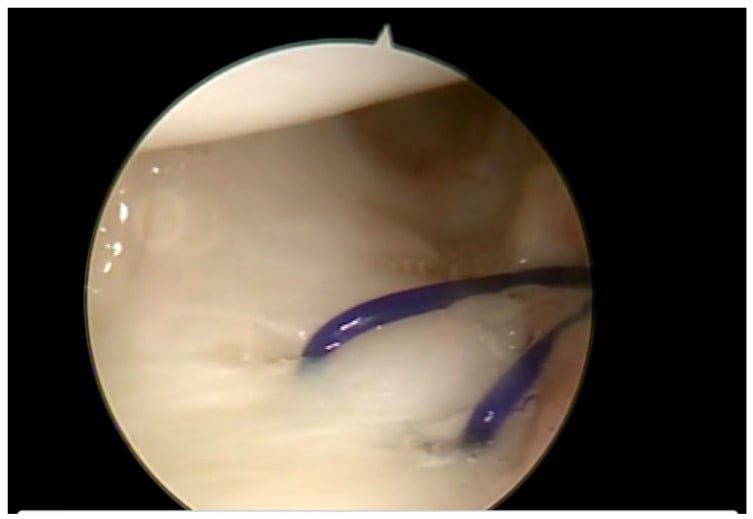
Reconstruction. For tendon-graft reconstruction of chronic irreparable DRUJ instability, a dorsal-to-volar distal radius tunnel is placed under direct and fluoroscopic control. Tunnel trajectory must preserve the joint surface and provide an anatomical graft path. When positive variance would otherwise overload the graft, ulnar shortening is combined with the reconstruction, and the correction should unload the ulnocarpal joint without over-shortening or disturbing DRUJ congruity.
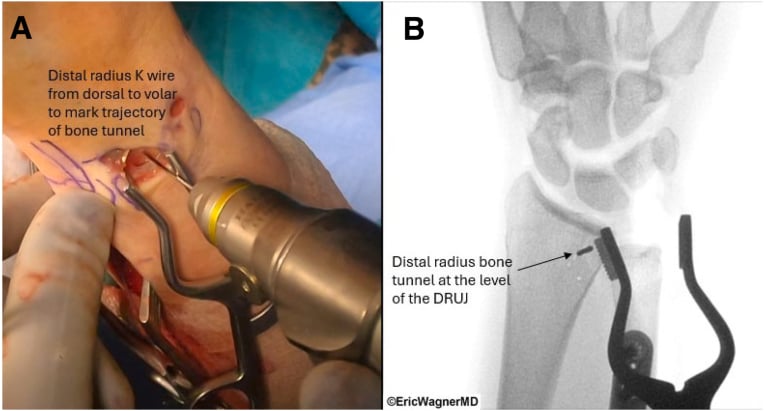
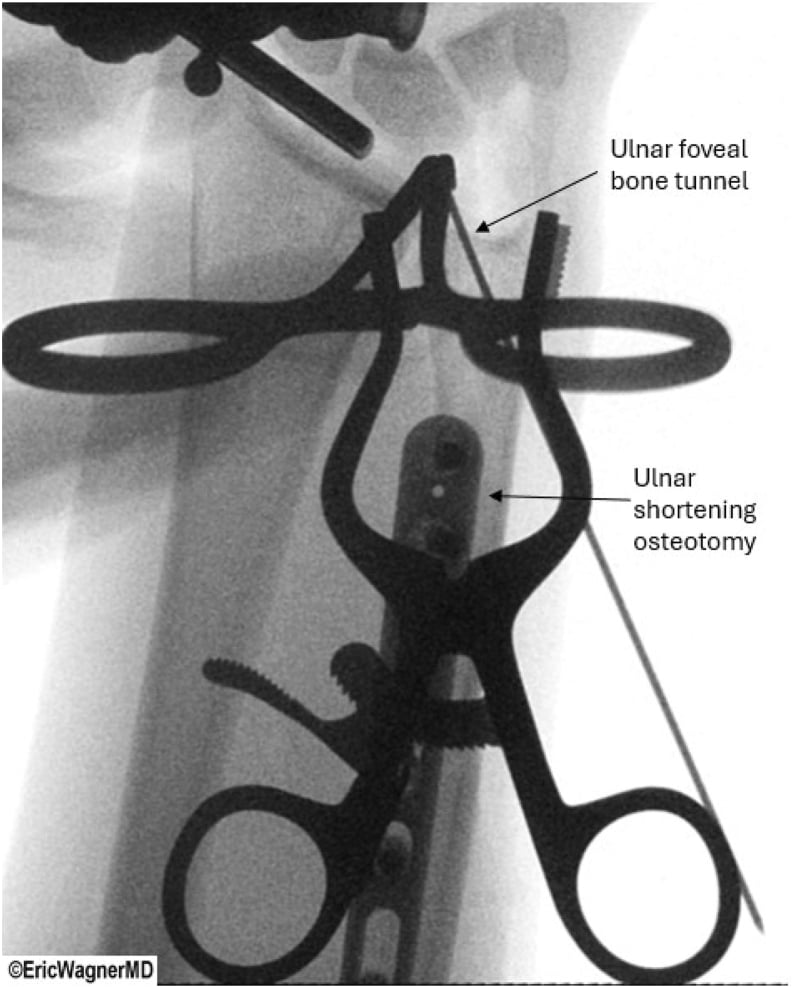
For TFCC surgery, a strong answer is not just a list of portals. State the diagnosis, why the lesion is symptomatic, whether the DRUJ is stable, what you will inspect arthroscopically, what finding will change treatment, and how you will protect the stabilising rim.
Complications
Diagnostic failure. The commonest failure pattern is treating a visible TFCC tear while missing the real pain generator: ulnar impaction, ECU instability, LT injury, distal radius malunion, DRUJ arthritis or inflammatory disease. Persistent ulnar wrist pain after surgery may also reflect neuroma, stiffness, nonunion after osteotomy or complex regional pain.
Instability after inadequate treatment. Debridement without recognising foveal detachment can leave ongoing DRUJ instability.
Surgical morbidity. Portal nerve irritation, stiffness, infection, tendon irritation, persistent synovitis and complex regional pain can occur after wrist arthroscopy.
Osteotomy problems. Ulnar shortening can cause delayed union, nonunion, plate irritation, refracture after plate removal, DRUJ symptoms or overcorrection.
- Consider
- DRUJ instability, incongruity or arthritis
- Next step
- Repeat focused examination, CT and review arthroscopy findings
- Consider
- Ulnar impaction or uncorrected positive variance
- Next step
- Reassess radiographs and MRI for overload pattern
- Consider
- ECU subsheath instability
- Next step
- Dynamic ultrasound and ECU-specific examination
- Consider
- Complex regional pain, over-immobilisation or inflammatory pathology
- Next step
- Early recognition, therapy and pain strategy
Postoperative Care
Protection follows the procedure. Debridement is usually followed by early motion once wounds settle. A peripheral or foveal repair needs protection from rotation and load while it heals, and an ulnar shortening osteotomy needs bone-healing precautions and hardware surveillance.
- Protection
- Short period of dressing or splint comfort
- Progression
- Early wrist and forearm motion, then graded strengthening
- Protection
- Immobilise wrist and limit forearm rotation initially
- Progression
- Protected motion, then progressive strengthening and load
- Protection
- Stronger rotation protection, often above-elbow or Munster-style immobilisation early
- Progression
- Delay forceful pronation-supination until healing is secure
- Protection
- Protect weight bearing until osteotomy healing is evident
- Progression
- Monitor union and plate irritation; return to heavy load only after union
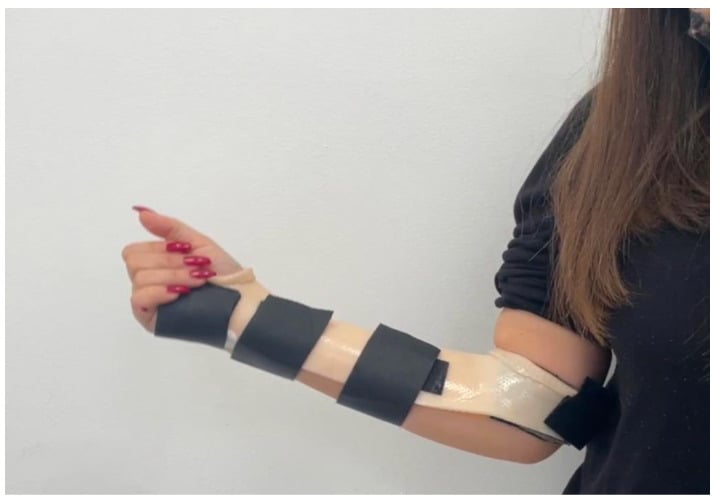
The Munster splint. It limits pronation and supination while preserving elbow flexion, which makes it useful after peripheral or foveal repair, when rotational restraint matters more than simple wrist immobilisation.
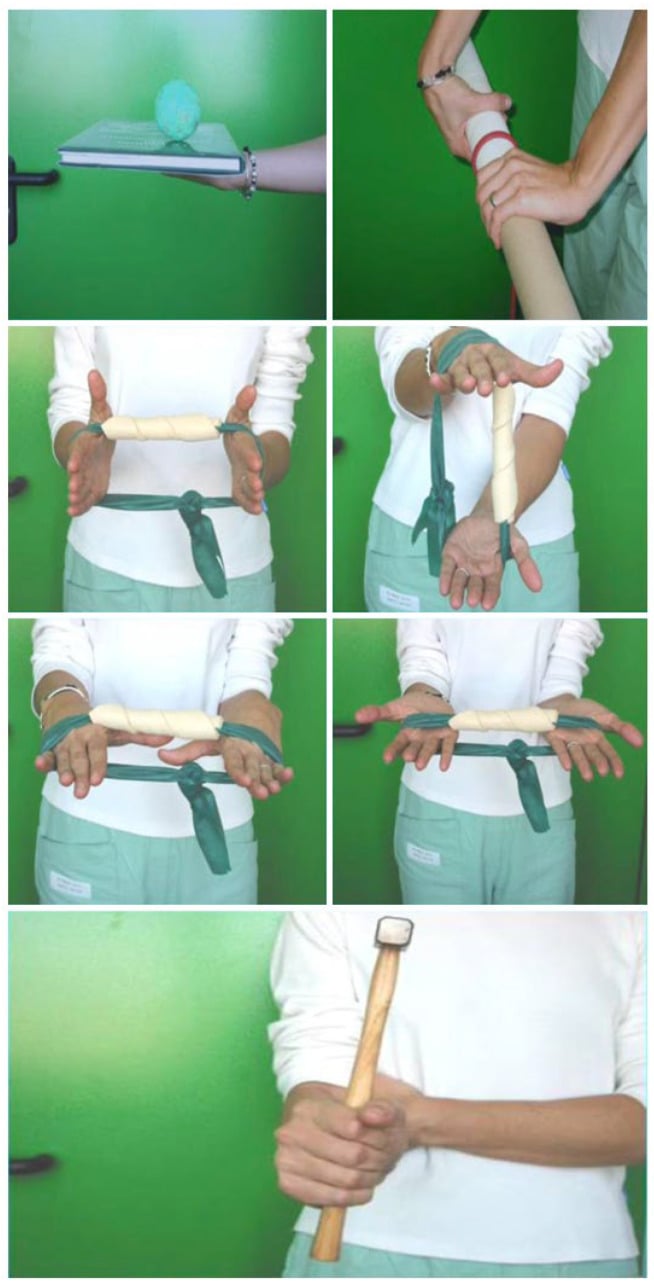
Rehabilitation. Rehabilitation progresses from protected motion and forearm control to resisted wrist, rotation and grip work. Load advances only after the repair or osteotomy has reached the required stage of healing. Patients should be warned that grip strength, rotation comfort and load tolerance recover gradually.
Outcomes and Prognosis
Match the operation to the problem. Outcomes are best when diagnosis, tear biology and mechanics match the operation. Stable central tears often improve after debridement when the symptoms are truly from the tear and there is no untreated overload. Peripheral and foveal repairs do best when tissue is repairable, cartilage is preserved, instability is corrected and rehabilitation is followed.
Degenerative overload. Here outcomes depend on correcting the load problem while avoiding overtreatment in low-demand or minimally symptomatic patients.
Poorer prognosis. Poorer prognostic factors include:
- Chronic instability
- DRUJ arthritis
- Marked cartilage loss
- Distal radius malunion that is not corrected
- Workers compensation or high-load occupational demands
- Smoking when osteotomy is performed
- Prolonged pain sensitisation
Guidelines, Registries & Global Practice
TFCC injury is one of the commonest causes of ulnar-sided wrist pain worldwide and is frequently associated with distal radius fractures: an ulnar styloid or peripheral TFCC injury accompanies a large proportion of displaced distal radius fractures, although most do not produce symptomatic DRUJ instability and do not require fixation. Because the TFCC is not an implant, there is no dedicated arthroplasty-style registry; the strongest pooled data come from systematic reviews rather than national joint registries. The principles below hold across fellowship practice worldwide.
There is no single international society guideline that mandates one TFCC pathway. The points of genuine consensus and divergence between major bodies are summarised below.
- Emphasis
- Arthroscopy-based, treatment-oriented classification (Atzei classes 1 to 5; Herzberg disc-reins-wall scheme)
- Practical recommendation
- Define the unstable structure arthroscopically, then debride, repair the wall, reinsert the fovea or reconstruct accordingly
- Emphasis
- Stability-led decision making and non-operative first for stable tears
- Practical recommendation
- Confirm DRUJ stability and symptom concordance before surgery; hand-therapy-led rehabilitation
- Emphasis
- Distal radius fracture guidance notes routine ulnar styloid fixation is not required
- Practical recommendation
- Fix the styloid or repair the foveal TFCC only when the DRUJ is unstable after radius fixation
- Emphasis
- Restore radial length and alignment to protect the DRUJ
- Practical recommendation
- Correct distal radius malunion or sigmoid notch incongruity as a driver before shortening a normal ulna
Practice varies by resources rather than by principle. In high-resource settings, MRI, MR arthrography and diagnostic wrist arthroscopy are widely available, and foveal repair, ulnar shortening osteotomy and constrained DRUJ arthroplasty are routine. In limited-resource settings, diagnosis leans more heavily on a structured examination, plain radiographs for ulnar variance and malunion, and a diagnostic or therapeutic ulnocarpal injection, with arthroscopy reserved or replaced by open techniques. Across all settings, the documentation that justifies surgery is the same: the functional limitation, failed non-operative measures, imaging concordance with the symptomatic side, and objective DRUJ instability.
References
- 1Palmer AK, Werner FW. "The triangular fibrocartilage complex of the wrist: anatomy and function". Journal of Hand Surgery. 1981PubMed
- 2Palmer AK. "Triangular fibrocartilage complex lesions: a classification". Journal of Hand Surgery. 1989PubMed
- 3Vezeridis PS, Yoshioka H, Han R, Blazar P. "Ulnar-sided wrist pain. Part I: anatomy and physical examination". Skeletal Radiology. 2010PubMed
- 4Watanabe A, Souza F, Vezeridis PS, Blazar P, Yoshioka H. "Ulnar-sided wrist pain. II. Clinical imaging and treatment". Skeletal Radiology. 2010PubMed
- 5Tay SC, Tomita K, Berger RA. "The ulnar fovea sign for defining ulnar wrist pain: an analysis of sensitivity and specificity". Journal of Hand Surgery. 2007PubMed
- 6McNamara CT, Colakoglu S, Iorio ML. "A Systematic Review and Analysis of Palmer Type I Triangular Fibrocartilage Complex Injuries: Outcomes of Treatment". Journal of Hand and Microsurgery. 2020PubMed
- 7Atzei A, Luchetti R et al.. "Arthroscopic foveal repair of the triangular fibrocartilage complex". Journal of Wrist Surgery. 2015PubMed
- 8Herzberg G, Burnier M, Ly L, Nakamura T, del Pinal F, Atzei A. "A new arthroscopic classification of triangular fibrocartilage complex disorders". Journal of Wrist Surgery. 2024PubMed
- 9Owens J, Compton J, Day M, Glass N, Lawler E. "Nonunion rates among ulnar-shortening osteotomy for ulnar impaction syndrome: a systematic review". Journal of Hand Surgery (American). 2018PubMed
- 10Rodriguez-Merchan EC, Shojaie B, Kachooei AR. "Distal radioulnar joint instability: diagnosis and treatment". Archives of Bone and Joint Surgery. 2022PubMed
Controversies and Areas of Uncertainty
Much of TFCC practice rests on case series and expert classification rather than randomised data, so several decisions remain genuinely contested.
Wafer versus ulnar shortening osteotomy. For mild positive variance with a central degenerative perforation, the arthroscopic wafer avoids hardware and nonunion but gives limited correction. Ulnar shortening corrects variance more reliably but carries roughly a 4 percent nonunion risk and frequent hardware irritation. No high-level trial settles which is superior, and selection is variance-, cartilage- and surgeon-driven.
Open versus arthroscopic repair. Systematic reviews report broadly equivalent outcomes, with scant evidence to mandate either approach. The real determinant is whether the lesion is a peripheral wall tear or a deep foveal detachment, not the access route.
Ulnar styloid fracture fixation. A styloid tip fracture rarely needs fixation. The debate is the styloid base fracture with DRUJ instability: some restore stability by fixing the base, others by repairing the foveal TFCC directly. The unifying principle is to treat the stabiliser, not the radiograph.
When MRI signal is incidental. Degenerative TFCC change and even perforation are common with age and ulnar loading and are frequently asymptomatic. There is no agreed threshold at which an imaging finding alone justifies surgery, and concordance with symptoms, examination and stability remains the arbiter.
For the irreparable, arthritic DRUJ, the balance between soft-tissue reconstruction, traditional salvage (Darrach, Sauve-Kapandji, hemiresection) and constrained DRUJ arthroplasty is shifting toward implant arthroplasty in suitable patients, but durability data are still maturing. Match the procedure to age, demand, bone stock and soft-tissue quality rather than defaulting to a single salvage.
Clinical Scenarios
Practise clinical reasoning and management decisions out loud
“A 24-year-old tennis player has six months of ulnar wrist pain after a twisting injury. MRI reports a TFCC tear. How do you assess and manage this?”
“A 55-year-old manual worker has chronic ulnar-sided wrist pain, positive ulnar variance and MRI marrow signal in the lunate with TFCC degeneration.”
“A 38-year-old has a clunking, painful DRUJ four months after a plated distal radius fracture. Radial length and alignment are restored on radiographs, but the ulnar head translates and the fovea sign is positive. How do you proceed?”
Assessment
- Localise the pain: fovea, ECU, ulnocarpal, lunotriquetral, pisotriquetral or DRUJ.
- Compare DRUJ translation with the other wrist in neutral, pronation and supination.
- Record load pain, clicking, snapping, instability and functional demand.
- Do not rely on MRI without concordant symptoms and examination.
Imaging
- PA and lateral radiographs first.
- Assess ulnar variance, malunion, styloid base, DRUJ arthritis and carpal alignment.
- MRI or MR arthrogram helps when the clinical question is soft-tissue pathology.
- CT is useful for DRUJ congruity, malunion and occult fracture.
Treatment
- Stable central tear: non-operative care, then debridement if persistent.
- Repairable peripheral tear: repair when symptoms persist.
- Foveal tear with instability: restore foveal attachment.
- Degenerative ulnar impaction: unload the ulna or correct the malunion.
Do Not Miss
- ECU instability.
- Lunotriquetral ligament injury.
- Distal radius malunion.
- DRUJ arthritis.
- Inflammatory, infectious, vascular or nerve pathology.
“The safest approach is to localise the ulnar wrist pain, define DRUJ stability, identify ulnar overload, then choose treatment according to tear biology and mechanics.”
Evidence Base
Palmer classification: the original descriptive framework
- Built from anatomic, biomechanical and 10 years of clinical experience using examination, radiographs, arthrography, arthroscopy and arthrotomy.
- Separates traumatic lesions (Class 1, classified by location: 1A central, 1B ulnar, 1C distal, 1D radial) from degenerative lesions (Class 2, graded 2A to 2E).
- Degenerative spectrum links TFCC wear with ulnar head, ulnocarpal and lunotriquetral disease.
Foundational anatomy: the TFCC as a composite load-bearer and DRUJ stabiliser
- Across 61 specimens the TFCC was a homogeneous complex of disc, dorsal and volar radioulnar ligaments, meniscus homologue, ulnar collateral ligament and ECU sheath.
- Perforations were present in 53 percent of specimens, and every perforated wrist showed lunate or distal ulna cartilage erosion.
- The TFCC both cushions the ulnar carpus and is a major DRUJ stabiliser; excision risks ulnolunate abutment and instability.
Ulnar fovea sign: a validated bedside localiser
- In 272 consecutive arthroscopy patients the fovea sign detected foveal disruption or ulnotriquetral ligament injury with 95.2 percent sensitivity and 86.5 percent specificity.
- Ulnotriquetral tears typically had a stable DRUJ; foveal disruptions typically had an unstable DRUJ.
- A simple, reproducible test that points to two distinct ulnar-sided pain sources.
Systematic approach to ulnar-sided wrist pain
- Ulnar-sided wrist pain has a broad anatomical differential with small structures and subtle imaging findings.
- TFCC, DRUJ, ECU, FCU, lunotriquetral ligament and ulnocarpal overload must be separated clinically.
- A structured physical examination should localise the structure before imaging is interpreted.