Thompson Test | Complete Rupture | Surgical Repair
- Thompson test (calf squeeze) is the gold standard clinical test - absence of plantarflexion = rupture
- 80% occur 2-6cm proximal to insertion in the watershed zone of poor blood supply
- Operative vs non-operative: surgery lowers re-rupture at the cost of other complications - but quote the modern figures (roughly 3-4% vs 7-8% with functional rehabilitation), NOT the cast-era 10-15%
- Early mobilization in functional bracing reduces complications in both operative and non-operative management
- Gap palpation and loss of contour are key clinical signs; delayed diagnosis common in 20-25% of cases
- “Describe Thompson test technique: patient prone, knee flexed 90 degrees, squeeze calf - positive if no plantarflexion
- “Re-rupture: the 10-15% figure belongs to CAST immobilisation; with modern functional rehabilitation non-operative sits nearer 7-8% against 3-4% operative - but do not swing to calling them equivalent, which the evidence does not show
- “Complications: Sural nerve injury (10-15%), DVT/PE risk, re-rupture
- “Weekend warrior injury: eccentric loading during push-off phase (tennis, basketball)
Overview and Epidemiology
Achilles tendon rupture is the most common lower extremity tendon rupture in active adults, with an incidence of 11-37 per 100,000 and rising. It causes significant functional impairment: work absence averages 3-6 months, return to sport takes 6-12 months if it happens at all, and the economic burden of prolonged absence and rehabilitation is substantial.
Who. The age distribution is bimodal, with a peak at 30-50 years from sport and a second peak over 60 years from degeneration, and men outnumber women 5:1. The classic patient is the "weekend warrior": sedentary during the week, playing high-intensity sport at the weekend. The tendon has subclinical degeneration from underuse and is not conditioned for sudden loading, so it fails during the first aggressive push-off, which is why ruptures often occur early in a game or match, before adequate warm-up.
When and how. Ruptures cluster in spring and summer, when people return to sport after winter. The injury occurs during eccentric loading of the plantarflexed ankle during push-off, in sports that demand sudden acceleration or jumping: basketball, tennis, badminton, football and running.
Anatomy and Biomechanics
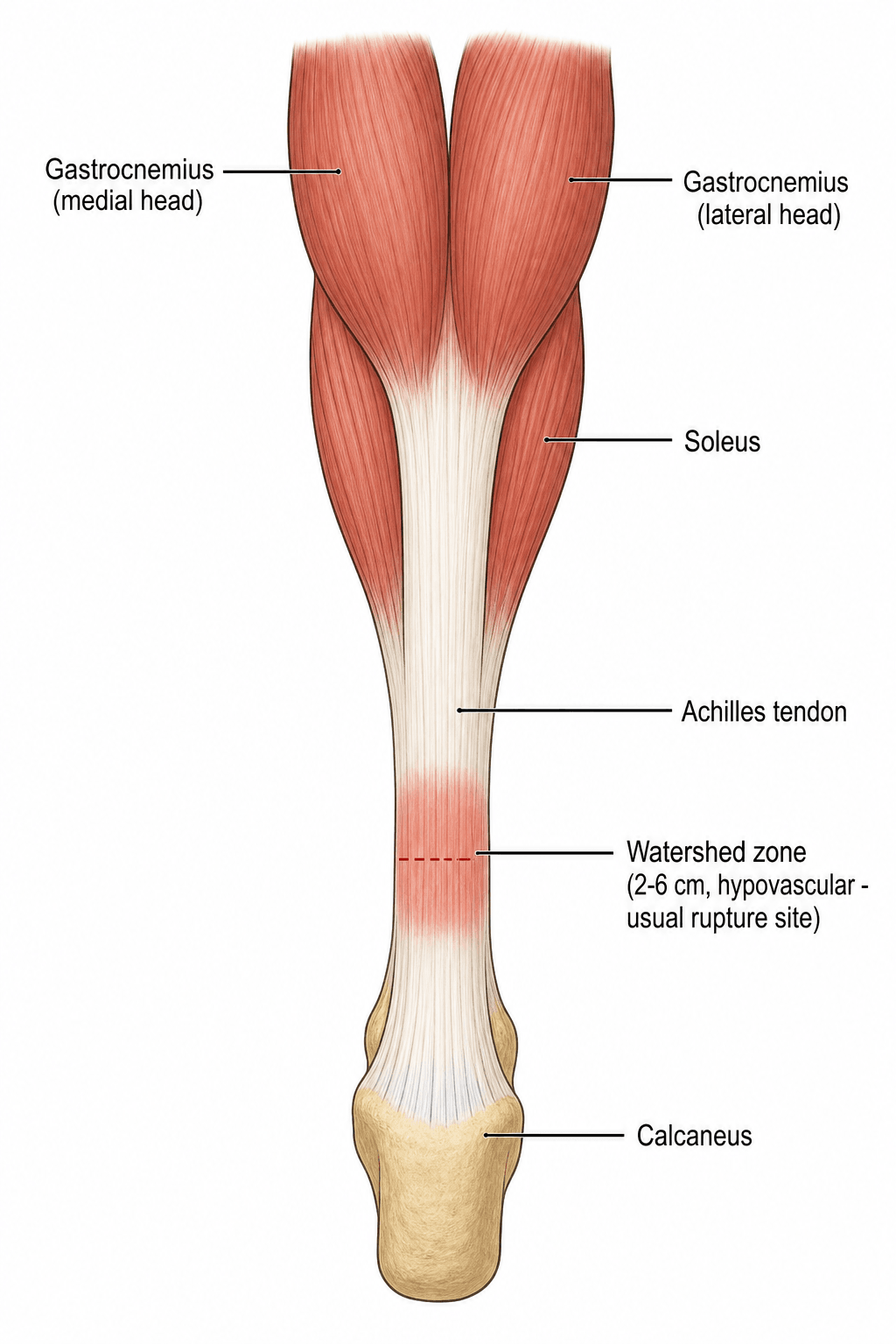
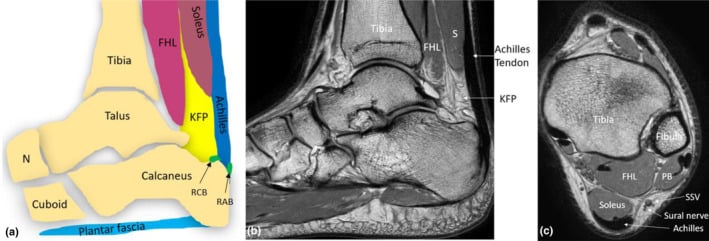
The tendon. The Achilles is the largest and strongest tendon in the body, about 15 cm long. The two heads of gastrocnemius and the deeper soleus, together the triceps surae, merge into it, and it inserts on the posterior calcaneus; the gastrocnemius-soleus complex provides plantarflexion power. Walking loads the tendon at 2-3 times body weight, running at 6-8 times and jumping at 10-12 times, so it generates forces of up to 12 times body weight.
The blood supply and the watershed zone. Blood enters from both ends: proximally from the musculotendinous junction, through the vessels of the muscle belly, and distally from the calcaneal insertion, through the periosteum of the bone. Between the two, 2-6 cm proximal to the insertion, lies a zone of relative avascularity with the poorest perfusion in the tendon. The tendon also narrows and rotates 90 degrees here, concentrating stress at the narrowing. This watershed is the weakest point, and 80% of ruptures occur in it.
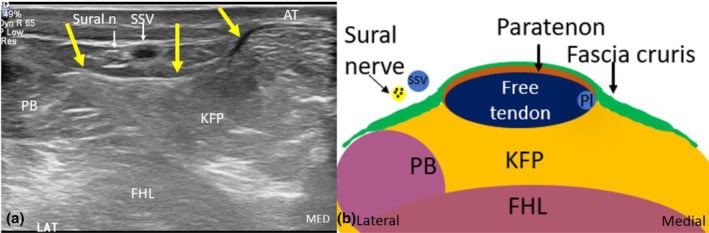
The sural nerve. It runs posterolateral to the tendon, close to the small saphenous vein and superficial to the fascia cruris. That course is what puts it at risk in surgery: a posterolateral incision injures it in 10-15% of cases and percutaneous repair in 2-20%, whereas a medial incision avoids it. The tibial nerve and vessels lie deep (anterior) to the tendon, protected by the deep fascia, and are rarely at risk unless dissection goes deep.
Plantaris and the deep flexors. Plantaris runs medial to the Achilles and may stay intact when the Achilles ruptures. It and the deep flexors (tibialis posterior, flexor hallucis longus and flexor digitorum longus) still plantarflex the ankle after a complete rupture, so the patient keeps some function and can walk, which is what confuses the clinical picture.
Pathophysiology and Injury Mechanism
The load. Rupture occurs when the tensile load exceeds the tendon's capacity, typically during eccentric contraction, when the calf muscles are contracting while the foot is dorsiflexing. The eccentric phase, deceleration while the muscle contracts, generates the highest forces. The muscle-tendon unit is loaded this way in one of the following:
- Push-off acceleration - a sudden forceful take-off (a basketball jump, a sprint start in tennis)
- Unexpected dorsiflexion - landing on a plantarflexed foot that is forcibly dorsiflexed
- Forceful dorsiflexion against resistance - stumbling with the calf muscles contracted
- Direct trauma - rare (under 5%), usually a penetrating injury
The tendon that ruptures was already degenerate. Most ruptures occur in tendons with subclinical degenerative change: grossly normal, but with mucoid degeneration, decreased cellularity and disorganised collagen fibres under the microscope. The watershed zone's poor perfusion is part of the reason. Hypoxia there contributes to degenerative change and leaves limited capacity for healing and repair, and repetitive loading adds cumulative microdamage to a region already carrying concentrated stress.
What happens at the moment of rupture. The tendon tears with an audible pop, felt by the patient as a kick in the back of the leg. The muscle belly recoils proximally with the loss of continuity and a gap opens immediately. Without treatment scar tissue fills the gap, but it lacks mechanical strength.
Risk factors.
- Fluoroquinolone antibiotics - risk increased 3-fold. They disrupt collagen synthesis and increase proteolytic activity (MMP activation and tenocyte death); risk peaks in the first 30 days of therapy and is highest with ciprofloxacin and levofloxacin.
- Corticosteroid injection - causes focal tendon necrosis and weakens the collagen structure, and the risk persists for weeks after the injection. Never inject into the tendon substance.
- Pre-existing Achilles tendinopathy, and the underuse-then-overuse pattern of the weekend warrior, with sudden eccentric loading and no warm-up
- Older age
- Obesity - increased mechanical load
- Diabetes - glycation of collagen and neuropathy
- Neuropathy from other neurological conditions
- Renal failure - uraemic tendinopathy
- Rheumatoid arthritis - inflammatory degradation
- A previous contralateral rupture
Classification Systems
Time from injury decides whether the tendon ends can still be brought together.
- Timeframe
- Under 4 weeks from injury
- Pathology
- Fresh tear, viable tissue, minimal gap
- Treatment
- Primary end-to-end repair or conservative
- Timeframe
- 4-6 weeks from injury
- Pathology
- Early scar formation, some retraction; chronic by the 4-week definition, acute by the 6-week one
- Treatment
- Plan as for chronic: measure the debrided gap; augment if over 2cm
- Timeframe
- Over 6 weeks from injury (chronic by either definition)
- Pathology
- Significant retraction, poor tissue quality
- Treatment
- Primary repair if the debrided gap is 2cm or less; otherwise augmentation (V-Y, turndown, FHL)
Why 4-6 weeks matters. Under 4 weeks the tear is fresh, the tissue viable and the gap minimal, and with the ankle in plantarflexion the ends can usually be approximated end to end. By 4-6 weeks scar tissue has formed and the ends have retracted; the rupture is classed as chronic after four or six weeks, depending on the author (Feng 2024 guideline). From here the operation is planned around the gap measured after debridement: up to 2 cm can still be repaired end to end, and a larger gap needs augmentation. This is the point at which primary repair becomes augmented reconstruction.
Clinical Assessment
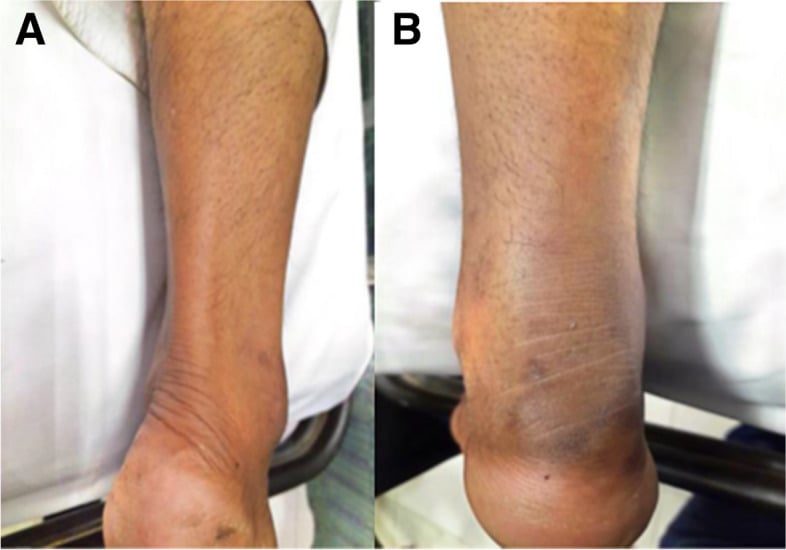
History. The patient describes a pop or snap in the posterior ankle and, pathognomonically, the feeling of having been kicked from behind, followed by immediate pain, inability to continue the activity and inability to stand on tiptoe. Many can still walk, and that is what leads to the missed diagnosis. Take the risk-factor history listed under Pathophysiology.
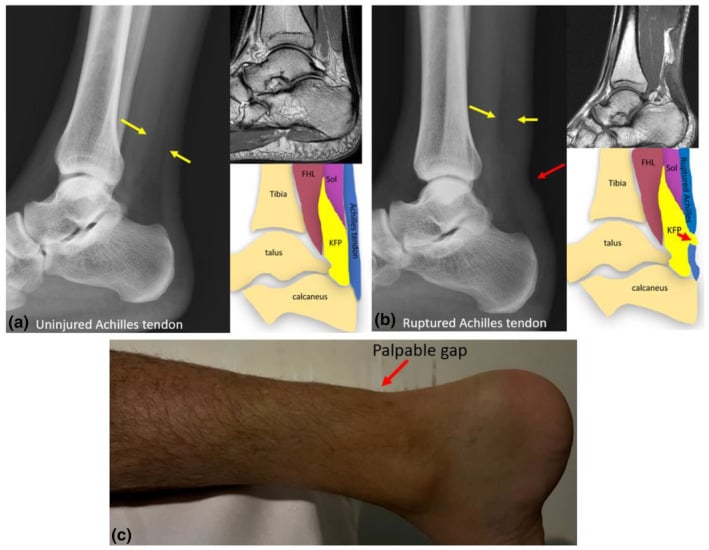
Examination. Inspect for a visible gap or divot 2-6 cm above the heel, loss of the normal tendon contour, swelling and ecchymosis, and asymmetry against the other leg. Palpate for the gap, which is pathognomonic, and for tenderness at the rupture, and measure the gap with the ankle plantarflexed. Functionally the patient cannot stand on tiptoe (the single-leg heel raise), plantarflexion is weak but not absent, and dorsiflexion is increased compared with the normal side.
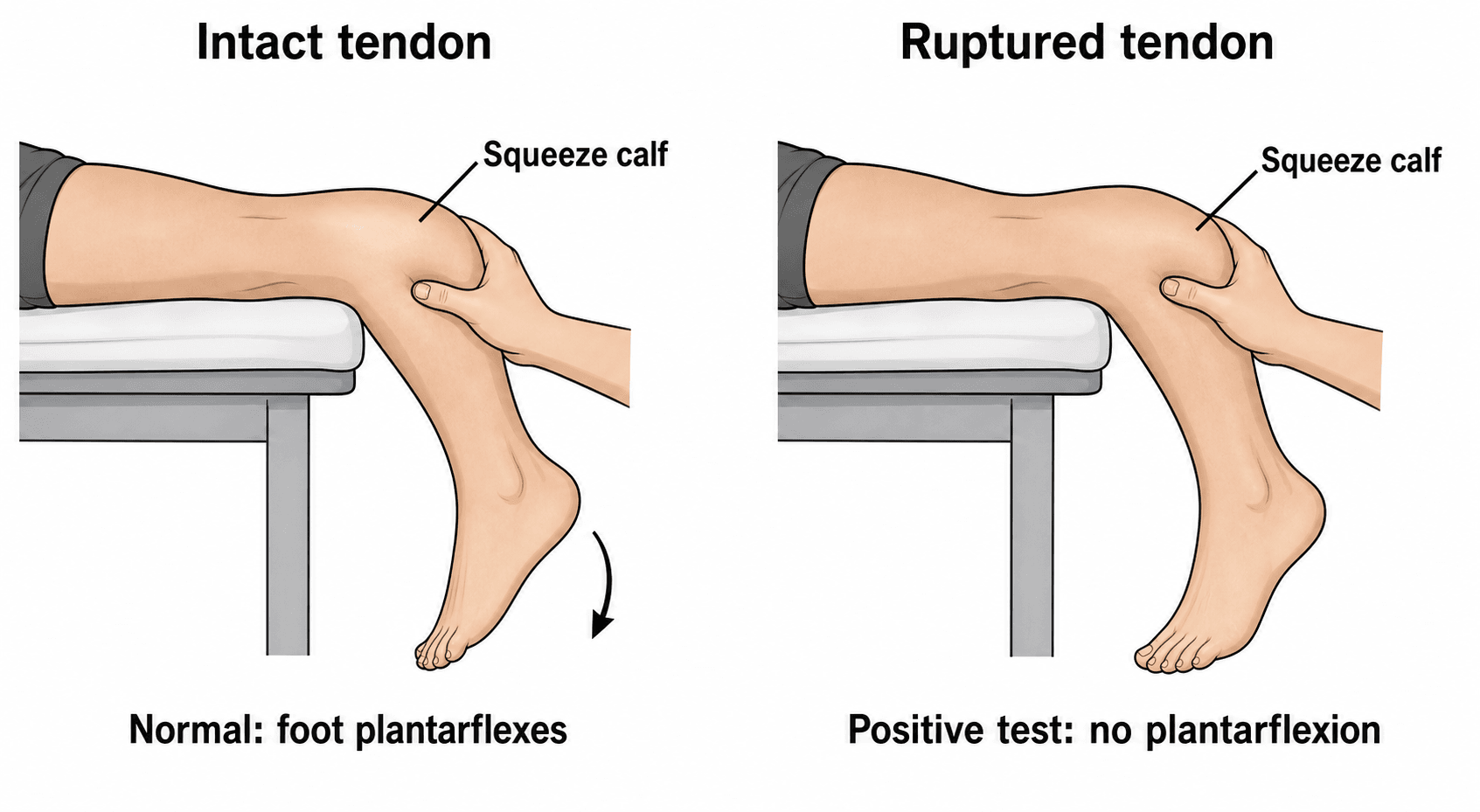
The Thompson (Simmonds) test. Position the patient prone with the knee flexed to 90 degrees and the ankle hanging off the end of the table, relaxed and not actively plantarflexing, and test both legs for comparison. Grasp the gastrocnemius belly and squeeze firmly, not a light touch, without verbal cues that might prompt voluntary movement, and watch the ankle. An intact tendon plantarflexes the foot; no plantarflexion, or plantarflexion significantly reduced compared with the normal side, is positive and means rupture. Sensitivity is 96% and specificity 93%.
It is the most reliable clinical test, and it still gives false negatives:
- Partial rupture (rare)
- An intact plantaris mistaken for the Achilles
- The patient plantarflexing voluntarily because the technique was poor
- Chronic rupture with scar bridging the gap
So always correlate it with a palpable gap and the single-leg heel raise, and image if there is any doubt.
The Matles test and the cluster. The clinical photograph above shows the loss of normal resting ankle posture, and that sign has a test of its own. With the patient prone, ask them to actively flex both knees to 90 degrees and look at the resting ankle posture: the intact side rests in slight plantarflexion, the physiological equinus of resting Achilles tension, while the ruptured foot falls into neutral or relative dorsiflexion. It complements the Thompson test, particularly when calf swelling makes the gap hard to palpate.
Two older tests are described and less commonly used. The Copeland (sphygmomanometer) test inflates a cuff around the calf to about 100 mmHg with the foot plantarflexed; dorsiflexing the foot raises the pressure to roughly 140 mmHg if the tendon is intact, and not at all with a complete rupture. The O'Brien needle test places a needle in the tendon proximal to the suspected rupture; the hub moves with passive ankle motion only if the tendon distal to the needle is in continuity. It is largely historical.
Because any single test can mislead, the diagnosis rests on a cluster. Achilles rupture is a clinical diagnosis when two or more of the following are present:
- A positive Thompson/Simmonds test
- An abnormal Matles/resting ankle posture
- A palpable gap
- Reduced plantarflexion strength, or inability to perform a single-leg heel raise
When two or more agree, imaging adds little; ultrasound or MRI is reserved for the equivocal case, a suspected partial tear, or a chronic or insertional presentation. Documenting more than one positive test also protects against the missed diagnosis.
20-25% of Achilles ruptures are initially missed. The patient can still walk on plantaris and the deep flexors, swelling may obscure the gap, the Thompson test is not performed, and the injury is labelled an ankle sprain without proper examination. Perform the Thompson test in any posterior ankle injury: delayed diagnosis leads to worse outcomes and to litigation.
Differential diagnosis. Acute posterior ankle or calf pain has a short list, and the Thompson test and the site of tenderness separate its members.
- Distinguishing Features
- Sudden pop, palpable gap, cannot single-leg heel raise
- Thompson Test
- Positive (no plantarflexion)
- Key Discriminator
- Palpable gap plus positive Thompson test
- Distinguishing Features
- Pain and swelling, often able to weight bear and heel raise
- Thompson Test
- Negative (plantarflexion preserved)
- Key Discriminator
- Continuity on ultrasound/MRI; no full gap
- Distinguishing Features
- Chronic gradual pain, morning stiffness, fusiform thickening
- Thompson Test
- Negative
- Key Discriminator
- No acute event; degenerative thickening not gap
- Distinguishing Features
- Sharp medial calf pain on push-off, bruising tracks distally
- Thompson Test
- Negative
- Key Discriminator
- Tenderness at musculotendinous junction, not tendon; intact Achilles
- Distinguishing Features
- Calf swelling/tenderness, often no clear trauma, risk factors
- Thompson Test
- Negative
- Key Discriminator
- Doppler ultrasound; consider as both differential and complication
- Distinguishing Features
- Lateral/medial ankle pain, malleolar tenderness
- Thompson Test
- Negative
- Key Discriminator
- Pain localises to ligaments, tendon intact - common misdiagnosis
Investigations
The diagnosis is clinical. History and mechanism, a palpable gap and a positive Thompson test make it. Imaging confirms the diagnosis and guides treatment planning: it identifies the exact rupture location, measures the gap, rules out a partial rupture and detects associated pathology. It is used selectively:
- Acute rupture with a clear clinical diagnosis - no imaging needed
- Unclear history or examination - ultrasound
- Chronic rupture - MRI for surgical planning
- Suspected partial rupture - MRI
- Medico-legal documentation - ultrasound or MRI
In practice many surgeons obtain ultrasound or MRI for documentation and surgical planning even when the clinical diagnosis is clear.
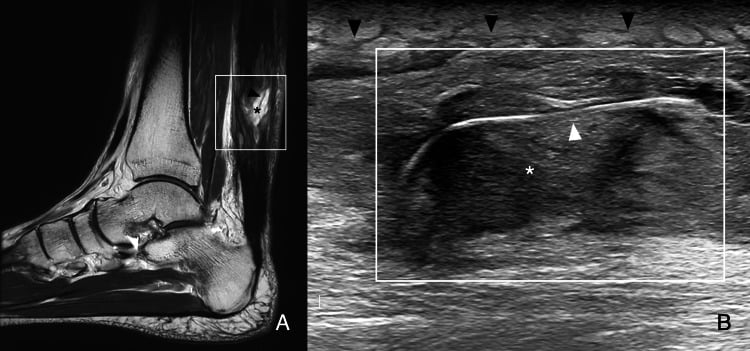
Ultrasound. Dynamic, real-time, without radiation and low in cost, and the ankle can be moved during the scan. It shows a hypoechoic gap at the rupture, tendon retraction and haematoma, and grades the gap as under 1 cm, 1-2 cm or over 2 cm. In experienced hands sensitivity is 95% and specificity 93%. Measure the gap with the ankle in maximal plantarflexion, the position that will be used for repair: a scan in neutral overestimates the gap, which is why the ankle angle is documented and why dynamic ultrasound is the tool for the measurement.
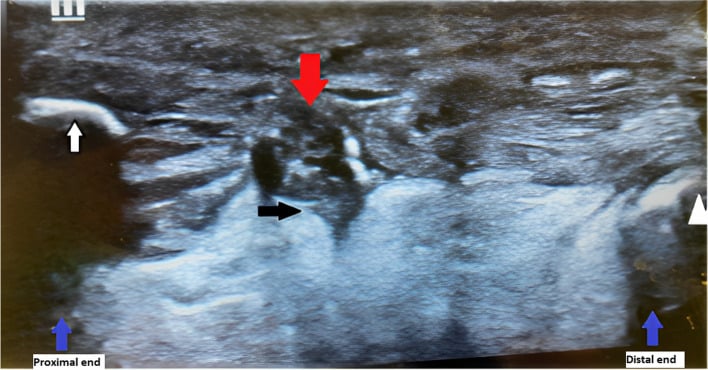
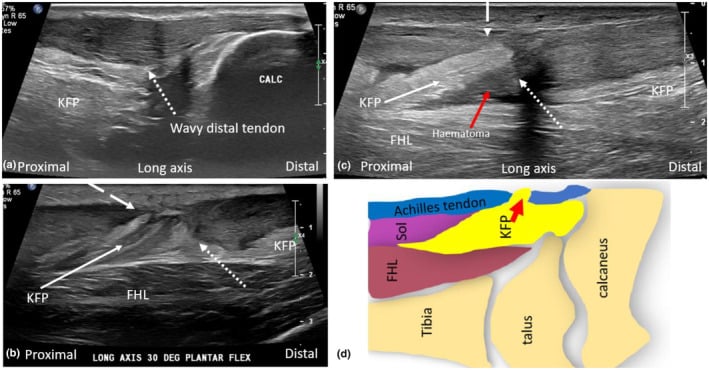
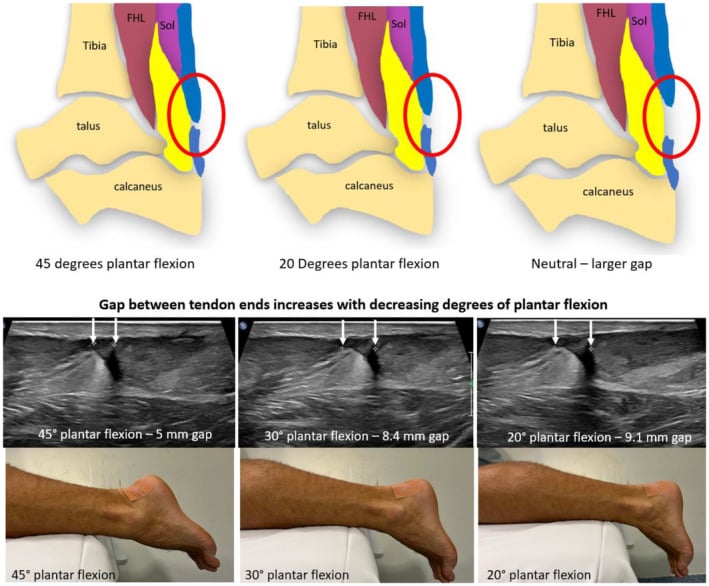
MRI. The gold standard imaging modality, but not routinely required for an acute rupture, where the clinical diagnosis is sufficient. It is the study for the chronic rupture, the suspected partial rupture and insertional pathology, and for pre-operative planning in chronic cases. It shows high T2 signal at the rupture, measures the gap exactly, assesses tendon quality and degeneration, shows associated pathology such as retrocalcaneal bursitis, and shows muscle atrophy in chronic cases.
Radiographs. They cannot show the tendon directly and have a limited role: obliteration of Kager's fat pad as an indirect sign, calcific insertional tendinopathy, an avulsion fracture fragment, and pre-operative planning.
Management Algorithm
The goal is return to pre-injury function with the lowest complication rate. The decision is individualised on patient factors, surgeon experience and the patient's preference after informed consent.
- Favors Operative
- Young (under 40), high athletic demand
- Favors Non-Operative
- Elderly (over 60), low demand, sedentary
- Favors Operative
- Cannot accept the higher non-operative re-rupture rate
- Favors Non-Operative
- Willing to accept higher re-rupture to avoid surgery
- Favors Operative
- Healthy, low surgical risk
- Favors Non-Operative
- Diabetes, PVD, smoking, high surgical risk
- Favors Operative
- Acute (under 2 weeks) or chronic (over 4-6 weeks)
- Favors Non-Operative
- Acute only (2-4 weeks window)
The comparator you quote decides which error you make. The old figures compared surgery against a plaster cast. That is where the 10-15% non-operative re-rupture rate comes from, and it is the reason a generation was taught to operate by default. Modern non-operative treatment is not a cast: it is a functional brace with early controlled weight-bearing and mobilisation, and against that comparator the re-rupture gap narrows to roughly 7-8% versus 3-4%. Quoting the cast-era number against modern practice inflates the apparent benefit of surgery.
But do not over-correct into calling them equivalent. A meta-analysis of 14 randomised trials and 1,399 patients found surgery had a significantly lower re-rupture rate (OR 0.30, 95% CI 0.18-0.54) while carrying a significantly higher rate of other complications (OR 3.28, 95% CI 1.56-6.93), with no significant difference in return to sport, ATRS, ankle motion or heel-rise (DOI, level I). A critical appraisal of the pooled evidence makes the statistical point that matters: across four meta-analyses the claim of equivalence was never actually demonstrated. The confidence intervals were simply too wide to exclude a benefit, and the smallest risk difference that could be rejected in favour of surgery was 6.4%, meaning non-operative treatment could plausibly carry up to 6.4% more re-ruptures (DOI). Absence of a significant difference is not proof of no difference.
Both errors are live, and they are made by opposite kinds of candidate. Operating on everyone on the strength of a cast-era statistic exposes patients to a threefold higher rate of wound problems and sural nerve injury for a smaller gain than advertised. Telling a 28-year-old footballer the options are equivalent overstates what the trials support. Neither is graver in the abstract; which one hurts depends on the patient in front of you, and that is precisely why this is a preference-sensitive decision rather than a protocol.
How to answer. Give the modern figures with their comparator named; say that surgery buys a real but modest reduction in re-rupture at the cost of more wound and nerve complications; note that function and return to sport are similar; and identify what shifts the balance. A young athlete or a patient who cannot tolerate re-rupture leans operative, while diabetes, vasculopathy, smoking or poor skin leans strongly non-operative. Early controlled mobilisation is not optional in either arm: it is the intervention doing most of the work.
Surgical Technique
The choice between open, mini-open and percutaneous repair turns on acuity, gap size, surgeon experience and patient factors.
- Advantages
- Direct visualization, accurate repair, safe for sural nerve
- Disadvantages
- Larger wound, infection risk 3-5%
- Best For
- Gold standard for most cases
- Advantages
- Traditional approach
- Disadvantages
- Sural nerve injury 10-15%, wound healing issues
- Best For
- Avoid - medial approach superior
- Advantages
- Small incisions, lower infection, cosmetic
- Disadvantages
- Nerve injury 2-20%, cannot see repair quality
- Best For
- Acute ruptures under 48 hours, experienced surgeon
- Advantages
- Smaller incision (3-4cm), lower infection than full open
- Disadvantages
- Limited visualization, learning curve
- Best For
- Growing popularity, good outcomes in experienced hands
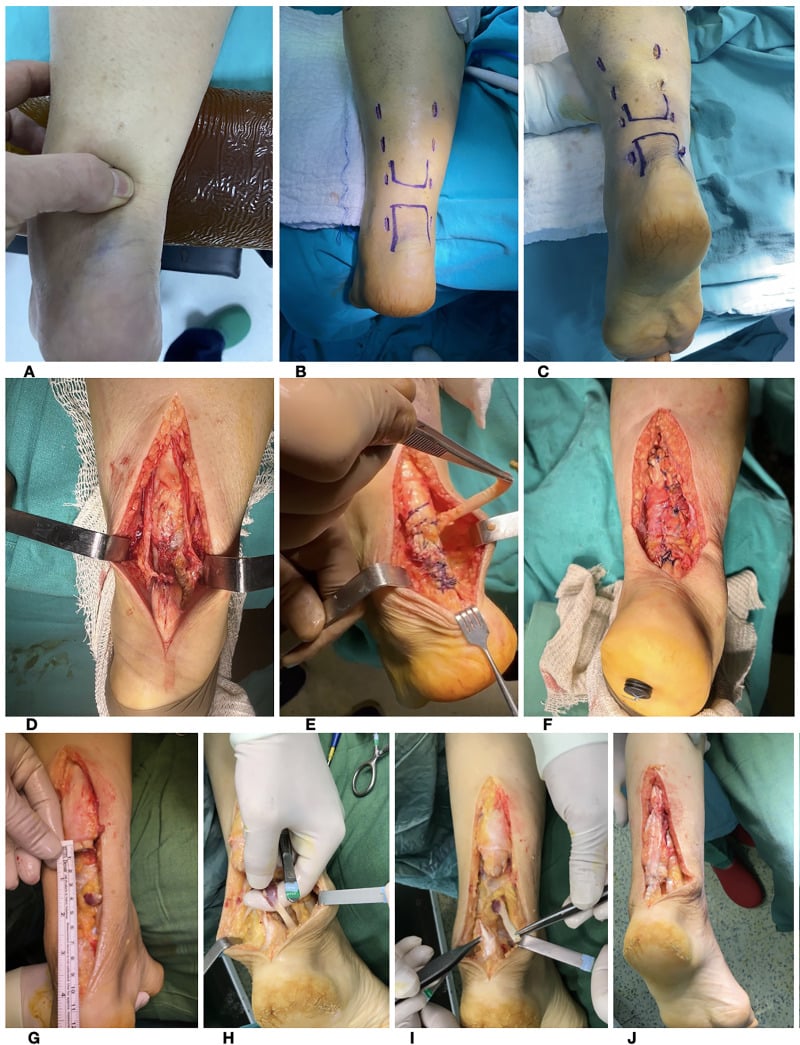
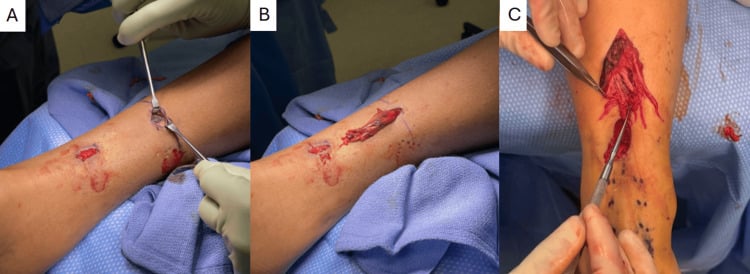
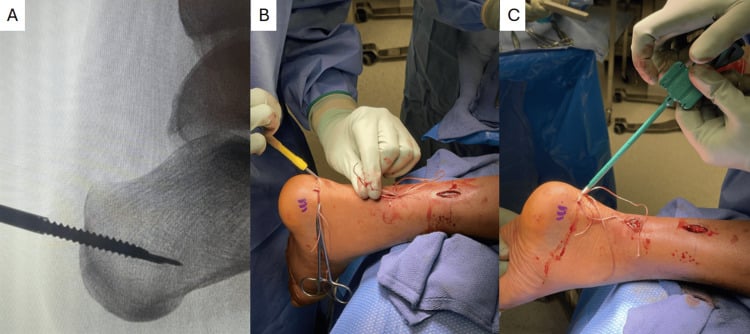
Why the medial incision. The sural nerve runs posterolateral, so a medial incision avoids it (injury under 5%), and the wound heals better because it is not on a weight-bearing surface and stays off the posterior midline, the watershed for skin healing. The exposure is slightly more challenging, but safer. Place it 1-2 cm medial to the lateral border of the tendon, avoiding the posterior midline entirely.
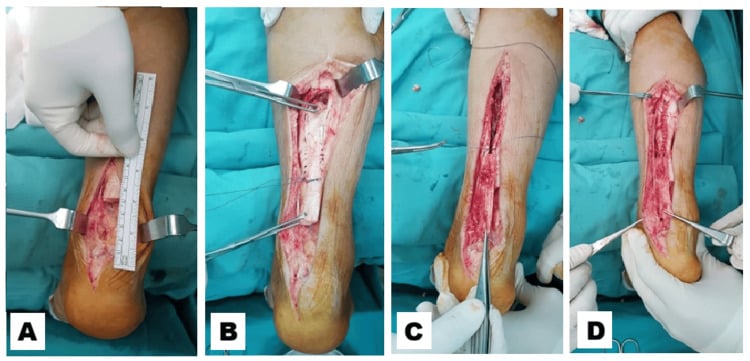
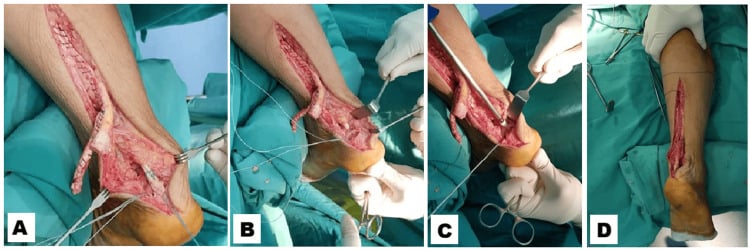
Insertional Rupture and Avulsion
A separate problem. Failure at the calcaneal attachment rather than through the tendon accounts for roughly 15% of cases. The distinction is not academic: a Krackow repair needs a distal tendon stump to hold, and in an avulsion there is none, so fixation must be to bone, with suture anchors or a bone-block technique.
A different patient. Whereas the watershed mid-substance rupture is the young or middle-aged weekend warrior, insertional and avulsion failures cluster in older, diabetic, osteoporotic patients and in those with pre-existing insertional tendinopathy or a Haglund deformity. The mechanism is a forceful eccentric load on a degenerate or osteopenic enthesis.
Two patterns, two fixation strategies.
- Tendinous "sleeve" avulsion - the tendon peels off its calcaneal footprint with little or no bone. Repair is reattachment to bone with suture anchors, often a double-row or suture-bridge construct to restore the footprint, rather than end-to-end suture.
- Bony avulsion - a fragment of the posterosuperior calcaneal tuberosity is pulled off (a calcaneal tuberosity avulsion fracture). This is reduced and fixed with screws, a tension band or suture anchors; the detailed fracture management, classification and fixation are covered in the dedicated calcaneal-tuberosity-fractures topic.
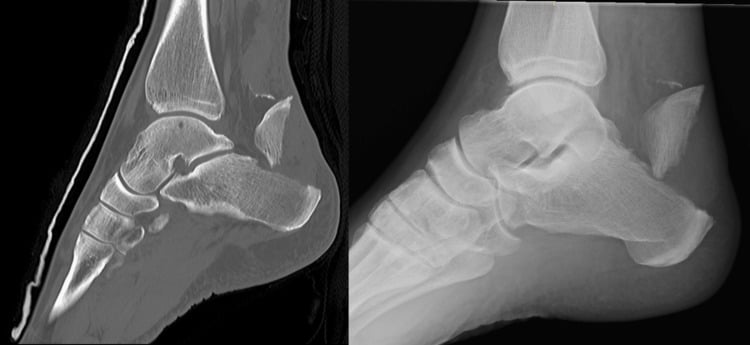
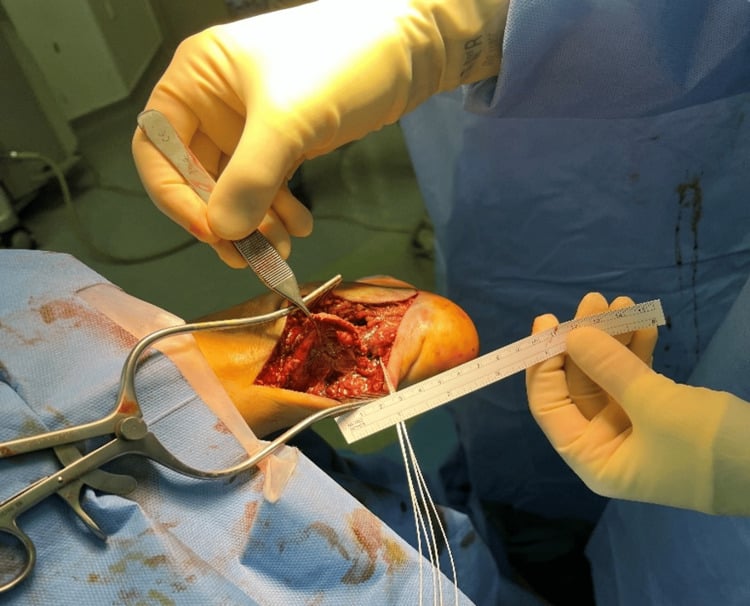
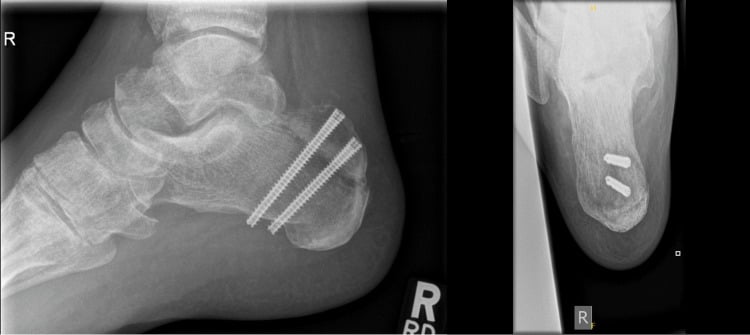
Why a displaced bony avulsion is urgent. In the typical elderly, diabetic patient the displaced posterosuperior fragment tents and devascularises the thin posterior heel skin, which can necrose within days. A displaced calcaneal tuberosity avulsion therefore warrants prompt fixation to protect the soft-tissue envelope, not elective delay, a key contrast with the more forgiving timeline of a mid-substance rupture.
Rehabilitation follows the same principle of protected plantarflexion progressing toward neutral, but a bony avulsion additionally needs fracture-healing time before the construct is loaded, and the fragile soft tissues of the diabetic demand cautious wound management.
Complications
- Incidence
- Operative 3-5%; non-operative 7-10% with functional rehabilitation, 10-15% in a cast
- Risk Factors
- Non-compliance, early weight bearing, over-lengthening
- Management
- Usually revision surgery with augmentation
- Incidence
- Operative 10-15% (posterolateral approach)
- Risk Factors
- Posterolateral incision, percutaneous repair
- Management
- Usually neuropraxia - observation. Medial approach avoids this.
- Incidence
- Operative 3-5%, Non-operative under 1%
- Risk Factors
- Diabetes, smoking, steroids, posterior incision
- Management
- Antibiotics if superficial, debridement if deep
- Incidence
- Non-operative 6-8%, Operative 2-3% (on prophylaxis)
- Risk Factors
- Immobilization, non-weight bearing, age over 40
- Management
- LMWH prophylaxis, early mobilization protocol
- Incidence
- Operative 2-5%
- Risk Factors
- Posterior incision, tension, smoking, diabetes
- Management
- Local wound care or revision closure
- Incidence
- Both 10-20%
- Risk Factors
- Prolonged immobilization, poor rehab
- Management
- Aggressive physiotherapy, rarely surgery
- Incidence
- Both 10-30% (subjective)
- Risk Factors
- Over-lengthening, muscle atrophy, inadequate rehab
- Management
- Strengthening program, usually improves to 80-90% by 1 year
Re-rupture is the devastating complication. It usually occurs at 4-8 weeks, when rehabilitation is progressing, and it usually needs revision surgery with augmentation. The risk factors are:
- Early weight bearing before healing (4-6 weeks)
- Non-compliance with the boot or the restrictions
- Over-lengthening at the index operation, which leaves a weak repair
- Inadequate initial repair (poor technique)
- Return to sport too early, before 6 months
Prevention is strict protocol adherence, weekly follow-up in the first 2 months, gradual progression and a functional brace for the return to sport.
Achilles rupture carries a 6-8% DVT rate without prophylaxis, from prolonged immobilisation and the calf injury itself. Consider LMWH (enoxaparin 40 mg daily) for all non-operative patients, who are immobilised for 4-6 weeks, and for operative patients with risk factors (age over 40, obesity, previous DVT), and continue it until the patient is fully weight bearing. Early functional mobilisation in a boot reduces the risk. This is a high-risk injury for thromboembolic complications; do not overlook prophylaxis.
Postoperative Care and Rehabilitation
The protocol balances early motion, to prevent stiffness, against protection, to prevent re-rupture.
Standard Operative Protocol
A posterior splint in slight plantarflexion (10-15 degrees), non-weight bearing on crutches, the leg elevated to reduce swelling and DVT risk, ice, and DVT prophylaxis with LMWH if there are risk factors. Keep the wound dry until the sutures come out at 10-14 days, watch for signs of infection, and see the patient at 7-10 days for a wound check.
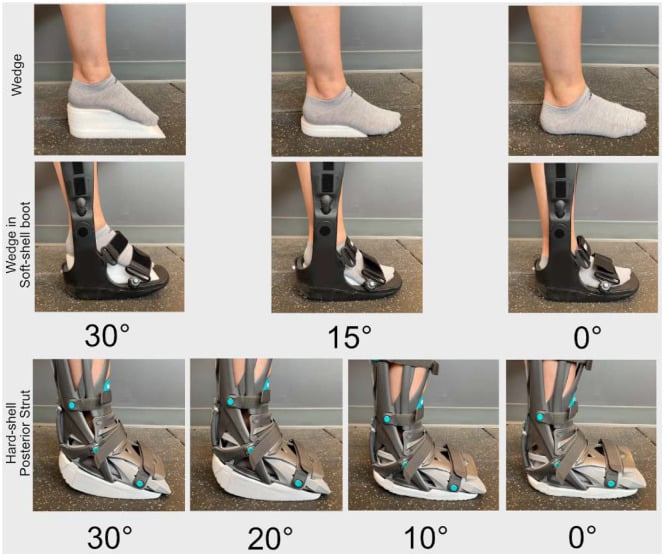
Remove the splint and apply a functional boot with heel wedges, locked in plantarflexion initially. Begin gentle range of motion in the boot, plantarflexion only, progress weight bearing from 25% to 50% to 75%, and remove one heel wedge every 1-2 weeks. Rehabilitation at this stage is gentle isometric exercise, maintaining knee and hip motion, upper body and core strengthening, and pool therapy once the wound has healed.
Full weight bearing in the boot with all heel wedges removed and the ankle at neutral. Unlock the boot for controlled dorsiflexion and begin active range of motion and light resistance work with a theraband. The goals are pain-free full weight bearing, dorsiflexion to neutral and readiness to wean from the boot.
Wean from the boot into a supportive shoe (a hiking boot or ankle brace) once passive dorsiflexion is full, walking is pain-free and the patient can perform 10 bilateral heel raises. Progressive strengthening with heel raises, bilateral first, a stationary bike or elliptical for low-impact work, and balance and proprioception training.
Light jogging at 3 months if strength is 70-80% of normal, single-leg heel raises toward a goal of 10-15 repetitions, plyometrics (jumping, hopping) and sport-specific drills. No competitive sport until 6 months at the earliest. Clearance for sport requires single-leg heel raise strength of 80-90% of the contralateral side, no pain with running or jumping, a normal gait pattern, and the agreement of surgeon and physiotherapist.
Continue the strengthening programme, return gradually to full sport, and watch for pain or weakness that would signal re-rupture. Strength gains continue up to 12-18 months.
Accelerated against traditional. The traditional protocol was 6-8 weeks of cast immobilisation; the accelerated protocol is a functional boot with range of motion from 2 weeks. The evidence shows no difference in re-rupture rates, faster return to work and sport with the accelerated protocol, and less stiffness and DVT with early motion; it requires a compliant patient and close monitoring. Most surgeons now use accelerated protocols with functional bracing and early motion.
Outcomes and Prognosis
- Re-rupture Rate
- 3-5%
- Return to Sport
- 6-9 months (average 7 months)
- Complications
- Infection 3-5%, Nerve injury 10-15%
- Patient Satisfaction
- 85-90% satisfied
- Re-rupture Rate
- 7-10% (modern protocols)
- Return to Sport
- 6-9 months (similar to operative)
- Complications
- DVT 6-8% without prophylaxis
- Patient Satisfaction
- 80-85% satisfied
- Re-rupture Rate
- 10-15% (historical)
- Return to Sport
- 9-12 months (slower)
- Complications
- Stiffness, DVT, muscle atrophy
- Patient Satisfaction
- 70-75% satisfied
What predicts the result. The single most important factor is avoiding re-rupture, which changes a good outcome into a fair or poor one with chronic deficits.
Good prognosis
- Age under 40
- Acute repair (under 2 weeks)
- Appropriate length restoration, not over-lengthened
- Early functional rehabilitation
- A compliant patient
- No re-rupture
Poor prognosis
- Age over 60
- Chronic rupture
- Over-lengthening at repair
- Prolonged immobilisation
- Re-rupture
- Smoking, diabetes
What to tell the patient. Full recovery takes 12-18 months, and strength may never return to 100% of pre-injury: subjective weakness is common (10-30%), most patients plateau at 80-90% of their pre-injury strength, and some notice weakness with fatigue. The lifetime risk of contralateral rupture is 10%, and re-rupture is a real risk, which is why the protocol is followed strictly. Most return to normal daily activities, pain usually resolves by 6-12 months, improvement continues for up to 2 years, and the risk of arthritis or chronic pain is low.
Return to sport. 80-90% return to their pre-injury sport level: 75% of professional athletes return to the same level and 85% of recreational athletes return to sport, and some change sport for fear of re-rupture.
Long-term problems in a minority. Calf atrophy and weakness (10-20%), fatigue with prolonged activity, occasional Achilles pain (5-10%), ankle stiffness especially after poor rehabilitation, and sural nerve numbness if the nerve was injured.
Guidelines, Registries & Global Practice
Global Epidemiology
- Reported Figure
- Approximately 27-31 per 100,000 per year (Denmark, 1994-2013)
- Source / Evidence
- Nationwide registry of 33,160 patients (Ganestam et al, KSSTA 2015)
- Reported Figure
- Male:female 3:1; mean age approximately 44-45 years
- Source / Evidence
- Same Danish nationwide registry
- Reported Figure
- Rising overall incidence, driven by patients over 50 years
- Source / Evidence
- Registry data; ageing, more recreational sport
- Reported Figure
- Marked decline in surgical treatment (16.9 to 6.3 per 100,000 1994-2013)
- Source / Evidence
- Shift following high-quality RCTs favouring functional non-operative care
The Danish nationwide registry of 33,160 patients documented a steady decline in surgical treatment between 1994 and 2013, accelerating after 2009. This mirrors a global shift in practice driven by landmark RCTs (Willits 2010) and meta-analyses (Soroceanu 2012) showing that non-operative care with early functional rehabilitation matches surgical re-rupture rates while avoiding wound and nerve complications.
Guideline and Society Positions
- Position on Operative vs Non-Operative
- No clear superiority of one approach; shared decision-making
- Rehabilitation / Other
- Early functional rehabilitation supported
- Evidence Basis
- Clinical practice guideline - mostly moderate/limited strength recommendations
- Position on Operative vs Non-Operative
- Non-operative functional management acceptable as default for most patients
- Rehabilitation / Other
- Standardised functional rehabilitation pathways encouraged
- Evidence Basis
- Consensus informed by UK RCTs and meta-analyses
- Position on Operative vs Non-Operative
- Operative repair reserved for selected/high-demand or open injuries
- Rehabilitation / Other
- Emphasis on accurate length restoration and early motion
- Evidence Basis
- Expert consensus plus level-I evidence
- Position on Operative vs Non-Operative
- Lower threshold for operative repair in high-demand athletes
- Rehabilitation / Other
- Accelerated, supervised, sport-specific rehabilitation
- Evidence Basis
- Lower-level cohort evidence; individualised
- No dedicated arthroplasty registry applies (AOANJRR, NJR and AJRR cover joint replacement only - Achilles rupture is not an implant procedure)
- National hospital/patient registries (e.g. Danish, Swedish, Finnish) provide the best population-level data on incidence and treatment trends
- Registry data consistently show rising incidence in older patients and a declining surgical rate as functional non-operative protocols are adopted
- High-volume / metropolitan and sports-medicine centres: higher operative rates, especially for athletes
- Regional and lower-resource settings: greater reliance on non-operative functional bracing
- Convergence point: regardless of operative or non-operative choice, early controlled mobilisation in a functional orthosis is now standard and is the single biggest driver of improved outcomes
- Thromboprophylaxis: practice varies internationally; many units use LMWH during the immobilised, non-weight-bearing phase given the documented venous thromboembolism risk
- 20-25% of Achilles ruptures initially missed
- Document Thompson test performance
- Document differential diagnosis considered
- Document patient counseling about diagnosis and treatment options
- Re-rupture rates (operative 3-5%, non-operative 7-10% with functional rehabilitation, 10-15% in a cast)
- Infection risk (3-5% operative)
- Sural nerve injury risk (10-15% posterolateral approach, under 5% medial approach)
- DVT/PE risk (2-8% depending on prophylaxis)
- Weakness and stiffness (10-30% subjective)
- Prolonged recovery (6-12 months to sport return)
- Delayed diagnosis (emergency department misses - called "ankle sprain")
- Sural nerve injury (if posterolateral approach used)
- Re-rupture (if patient non-compliant or protocol not followed)
- DVT/PE (if prophylaxis not offered to high-risk non-operative patients)
- Detailed examination findings including Thompson test result
- Clear documentation of operative vs non-operative discussion
- Informed consent form signed
- Rehabilitation protocol provided in writing
- Regular follow-up with milestone assessments documented
MCQ Practice Points
Q: Where do 80% of Achilles tendon ruptures occur and why? A: 2-6cm proximal to the calcaneal insertion in the watershed zone. This area has the poorest blood supply as it lies between the proximal blood supply from the musculotendinous junction and the distal blood supply from the calcaneal insertion. The tendon also narrows and twists in this region, creating mechanical stress concentration.
Q: Describe the Thompson test and its interpretation. A: Patient is positioned prone with knee flexed to 90 degrees. The examiner squeezes the mid-calf (gastrocnemius muscle belly) firmly. Normal response: ankle plantarflexes. Positive test (rupture): no plantarflexion occurs. The test has 96% sensitivity and 93% specificity. Must compare to contralateral side and ensure patient is relaxed (not voluntarily plantarflexing).
Q: What are the re-rupture rates for operative versus non-operative treatment? A: Operative (open repair): 3-5% re-rupture rate. Non-operative with modern functional rehabilitation: 7-10% re-rupture rate. Traditional cast immobilization has 10-15% re-rupture. While operative has lower re-rupture, it carries infection risk (3-5%) and sural nerve injury risk (10-15%). Functional outcomes at 1-2 years are similar between operative and non-operative with modern protocols.
Q: Why is medial approach preferred over posterolateral for Achilles repair? A: The sural nerve runs posterolateral to the Achilles tendon and is at high risk (10-15% injury rate) with posterolateral approach. Medial approach (1-2cm medial to lateral tendon border) avoids the sural nerve while providing adequate exposure. Medial approach also has better wound healing as it avoids the posterior midline which is under tension with dorsiflexion.
Q: What is the DVT rate in Achilles rupture and how should it be prevented? A: 6-8% DVT rate without prophylaxis due to prolonged immobilization and calf muscle injury. Prevention strategies include: LMWH (enoxaparin 40mg daily) for high-risk patients (age over 40, obesity, previous DVT, non-operative treatment), early functional mobilization in boot rather than cast immobilization, and early weight bearing as tolerated. Continue prophylaxis until fully weight bearing (typically 4-6 weeks).
Q: What is the relationship between fluoroquinolone antibiotics and Achilles rupture? A: Fluoroquinolones are associated with an increased risk of Achilles rupture (systematic review by Stephenson et al, Drug Saf 2013 - reported odds ratios ranging from 1.1 to 7.1). Highest risk is in the first month of use, with increased risk in patients over 60 years and those on concomitant corticosteroids. Regulators (FDA and others) have issued tendon-rupture warnings for this class. The proposed mechanism involves matrix metalloproteinase upregulation leading to tendon degeneration. Consider alternative antibiotics in patients with existing tendinopathy or high activity levels.
Exam Viva Scenarios
Practise clinical reasoning and management decisions out loud
“A 42-year-old male recreational basketball player presents to emergency department after sudden onset posterior ankle pain during a game 2 hours ago. He describes a 'pop' sensation and felt like someone kicked him from behind. He can walk but with a limp. On examination there is mild swelling and ecchymosis over the posterior ankle. What is your assessment and initial management?”
“You have decided to proceed with operative repair for an acute Achilles tendon rupture in a 35-year-old professional footballer. The injury occurred 5 days ago. Walk me through your surgical approach and technique for the repair.”
“A 38-year-old patient who underwent open Achilles repair 8 weeks ago presents with sudden onset posterior ankle pain and inability to walk. He admits he removed his boot 2 weeks ago against advice and returned to jogging. Thompson test is positive. What is your assessment and management?”
Key Anatomy
- Largest and strongest tendon - can generate forces up to 12 times body weight
- Watershed zone 2-6cm proximal to insertion = poorest blood supply = 80% of ruptures
- Blood supply from musculotendinous junction (proximal) and calcaneal insertion (distal)
- Sural nerve runs posterolateral - at risk with posterolateral surgical approach (10-15%)
Clinical Diagnosis
- Thompson test = gold standard (sensitivity 96%, specificity 93%)
- Palpable gap 2-6cm proximal to insertion (pathognomonic)
- Pop sensation and felt kicked from behind (classic history)
- Cannot perform single leg heel raise
- 20-25% missed initially - patient can still walk (toe flexors provide residual function)
Classification and Treatment
- Acute (under 4 weeks) = primary end-to-end repair or conservative
- Chronic (over 4-6 weeks) = primary repair if the debrided gap is 2cm or less; larger gap = augmentation (V-Y, turndown, FHL transfer)
- Gap under 2cm = primary repair; over 2cm = augmentation needed
- Operative vs non-operative: similar functional outcomes, operative lower re-rupture (3-5% vs 7-10% with functional rehabilitation; 10-15% in a cast)
Surgical Pearls
- Medial approach preferred (avoids sural nerve posterolateral)
- Krackow locking whipstitch with number 2 non-absorbable braided suture
- Test passive dorsiflexion before tying (should achieve 10-15 degrees to avoid over-tightening)
- Compare to contralateral length to avoid over-lengthening (causes permanent weakness)
- FHL transfer is preferred augmentation (in-phase, good strength, low morbidity)
Complications
- Re-rupture: operative 3-5%, non-operative 7-10% with functional rehabilitation, 10-15% in a cast (devastating if occurs)
- Sural nerve injury: 10-15% posterolateral approach, under 5% medial approach
- Infection: 3-5% operative (deep infection rare under 1%)
- DVT: 6-8% without prophylaxis (LMWH for high risk, early mobilization)
- Weakness: 10-30% subjective at 1 year (expect 80-90% strength recovery)
Key Evidence and Rehabilitation
- Early functional mobilization reduces re-rupture vs traditional cast (7% vs 15%)
- Fluoroquinolones increase rupture risk 3-fold (FDA black box warning)
- Return to sport: 6-9 months minimum (need 80% contralateral strength)
- Operative protocol: Boot at 2 weeks, full weight bearing by 6 weeks, jogging at 3 months
- Weekend warrior profile: male 30-50 years, eccentric loading during push-off (basketball, tennis)
Evidence Base
Operative vs Non-Operative Management: Quantitative Systematic Review of RCTs
- Meta-analysis of 7 level-I RCTs (677 patients)
- Re-rupture: Open repair 3.6% vs non-operative 8.8% (OR 0.425, 95% CI 0.222-0.815)
- Deep infection, sural nerve sensory disturbance and non-cosmetic scar complaints all significantly higher with surgery
- Strength measurements not standardised, so could not be pooled
Operative vs Non-Operative with Accelerated Functional Rehabilitation (Multicentre RCT)
- 144 patients randomised (72 operative, 72 non-operative); all underwent accelerated rehab with early weight-bearing and early range of motion
- Re-rupture: 2/72 operative vs 3/72 non-operative (no significant difference)
- No clinically important difference in strength, range of motion, calf circumference or Leppilahti score
- More complications in the operative group (13 vs 6), mainly soft-tissue related
Surgical vs Non-Surgical Treatment: Meta-Analysis with Functional Rehabilitation Subgroup
- Meta-analysis of 10 randomised trials
- With early range of motion, re-rupture rates equal for surgical and non-surgical care (risk difference 1.7%, p=0.45)
- Without early motion, surgery reduced re-rupture by an absolute 8.8% (p=0.001)
- Surgery increased other complications by an absolute 15.8% and allowed return to work 19 days sooner
Percutaneous (PARS) vs Open Repair: Clinical Outcomes and Complications
- Retrospective cohort of 270 operatively treated acute ruptures (101 PARS, 169 open)
- No significant difference in re-rupture, sural neuritis, wound dehiscence, infection or reoperation
- No reruptures and no DVTs in either group
- Return to baseline activity by 5 months higher with PARS (98% vs 82%, p=0.0001); overall operative complication rate 8.5%
FHL Transfer for Chronic Achilles Rupture Reconstruction
- 11 patients with chronic Achilles rupture (mean defect 7.4cm) treated by modified FHL transfer with fibrous-stump augmentation
- Significant improvement in AOFAS score at mean 79-month follow-up; no re-rupture or major wound complication
- Isokinetic plantarflexion peak-torque deficit of 28% (30 deg/s) and 36% (120 deg/s) persisted
- Loss of hallux interphalangeal motion without functional weakness
Tendon Injury and Fluoroquinolone Use: Systematic Review
- Systematic review of 16 observational studies (8 high quality; 5 specifically on Achilles rupture)
- Increased Achilles rupture risk with fluoroquinolone exposure, odds ratios ranging from 1.1 to 7.1
- Highest risk within the first month of exposure; one study showed increased risk in those over 60 years
- Concomitant corticosteroids further increase tendon-injury risk
Surgical Management of Chronic Achilles Rupture: Evidence-Based Guidelines
- GRADE-rated international consensus (9 foot surgeons, 3 continents, 21 external reviewers) synthesising the chronic Achilles rupture literature since 1980
- Provides the gap-driven reconstruction ladder this page now teaches: primary end-to-end repair up to 2 cm; V-Y advancement flap under 5 cm; fascial turndown flap over 5 cm; tendon transfer (FHL or peroneus brevis) for 3-6 cm; free tendon graft over 6 cm
- V-Y advancement is a safe, reliable option under 5 cm; turndown flaps serve the larger gap but cost gastrocnemius strength and leave calf atrophy
- Early range of motion and weight-bearing, and return to regular sports no earlier than 12 weeks and strenuous sport at 12 months