Degenerative Tendinosis | Insertional vs Mid-Portion | Eccentric Loading | FHL Transfer
- Degenerative tendinosis - NOT tendinitis (minimal inflammation)
- Watershed zone 2-6cm proximal to insertion has poorest blood supply
- Eccentric exercises are first-line (Alfredson: 3x15 reps, twice daily, 12 weeks)
- Steroids contraindicated - increased rupture risk
- FHL transfer if debriding more than 50% of tendon cross-section
- “Neovascularisation with nerve ingrowth causes pain
- “Arc sign: pain moves with ankle dorsiflexion in mid-portion disease
- “Thompson test normal (rules out complete rupture)
- “Insertional disease has worse prognosis than mid-portion
Overview and Epidemiology
Achilles tendinopathy is a degenerative overuse condition of the body's largest and strongest tendon. It is a spectrum of tendon pathology, from early reactive change to advanced degenerative disease.
Who. Running athletes carry a lifetime incidence of 6-18%, and the jumping sports (basketball, volleyball, tennis) are at higher risk. The peak is at 30-50 years, although it can occur at any age, and 30% of cases are bilateral.
Where. Mid-portion disease accounts for 55-65% of cases and insertional disease for 20-25%.
Risk factors.
- Training errors: a rapid increase in intensity or duration
- Biomechanical factors: hindfoot varus or valgus, equinus contracture
- Fluoroquinolone antibiotics: Achilles rupture risk roughly 3-4 fold, markedly higher with concomitant corticosteroids
- Systemic conditions: diabetes, obesity, hypercholesterolaemia
- Footwear changes
- Male gender, for rupture rather than tendinopathy
Terminology. "Tendinopathy" is the clinical diagnosis when symptoms and examination suggest tendon pathology. "Tendinosis" is the histological finding of degenerative change without inflammation, and "tendinitis" implies an inflammation that is rarely the primary process.
Pathophysiology and Mechanisms
The tendon. Gastrocnemius and soleus converge about 15cm above the insertion on the posterior calcaneal tuberosity to form the Achilles. It is 6-8cm wide at the musculotendinous junction and narrows to 1.5-2cm at the insertion, with a cross-sectional area of roughly 60-80 mm². Its fibres rotate 90 degrees along their length, so the lateral gastrocnemius inserts posteromedially, and the whole tendon is wrapped in a paratenon of loose connective tissue with no synovial lining.
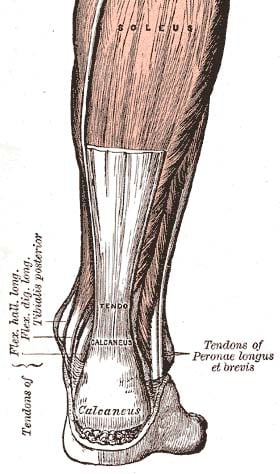
Blood supply. Proximally the tendon is fed by muscular branches from gastrocnemius and soleus, and distally by calcaneal vessels through the osseous insertion. The middle segment depends on peritendinous vessels and is relatively hypovascular. This watershed zone, 2-6cm proximal to the insertion, has the poorest blood supply, is where most mid-portion tendinopathy occurs, and is the target zone for eccentric exercise therapy; the relative hypovascularity contributes to impaired healing.
Pathology. This is tendinosis, not tendinitis. Histologically it is a failed healing response: disordered collagen with Type I replaced by Type III, mucoid, lipoid and calcific degeneration, and neovascularisation with nerve ingrowth, which is what causes the pain. Inflammatory cells are minimal, which is why NSAIDs have limited benefit.
Biomechanics. Forces through the tendon during running reach 6-8 times body weight, it elongates 6-8% during normal gait, and about 35% of the energy of running is stored in it as elastic energy. Gastrocnemius is primarily an ankle plantarflexor and is active with the knee extended; soleus plantarflexes regardless of knee position.
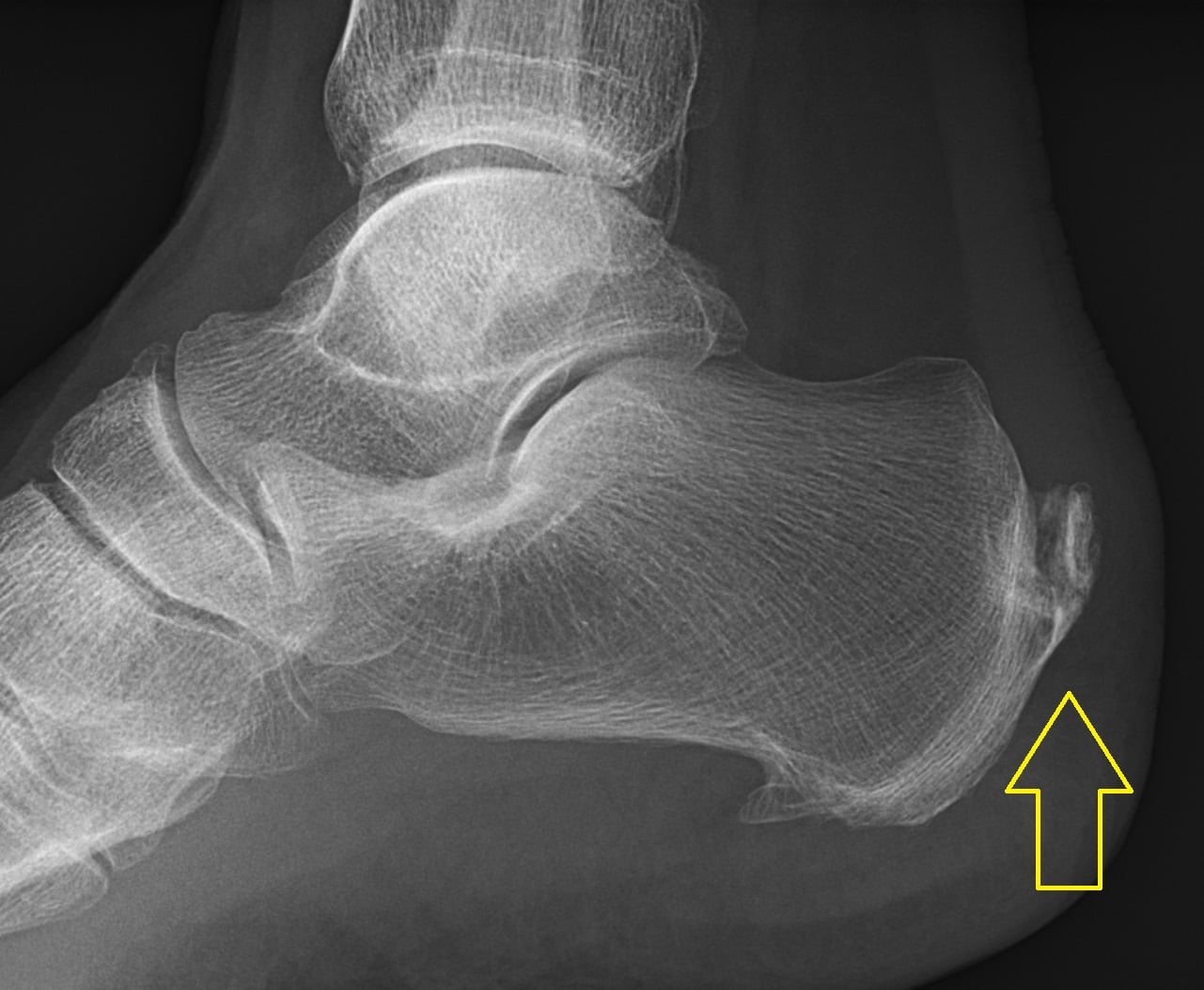
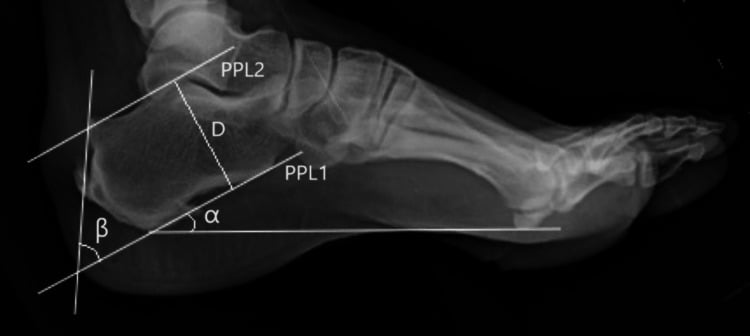
Neighbours. The retrocalcaneal bursa lies between the tendon and the calcaneus and is inflamed in insertional disease. A Haglund deformity, a posterosuperior calcaneal prominence, causes impingement. Kager's fat pad is the pre-Achilles fat triangle, obliterated in rupture. The plantaris tendon runs medial to the Achilles and may contribute to medial symptoms.
Classification Systems
Three schemes are in use: by location, which is the primary classification and the most useful clinically, by histological stage, and by MRI grade.
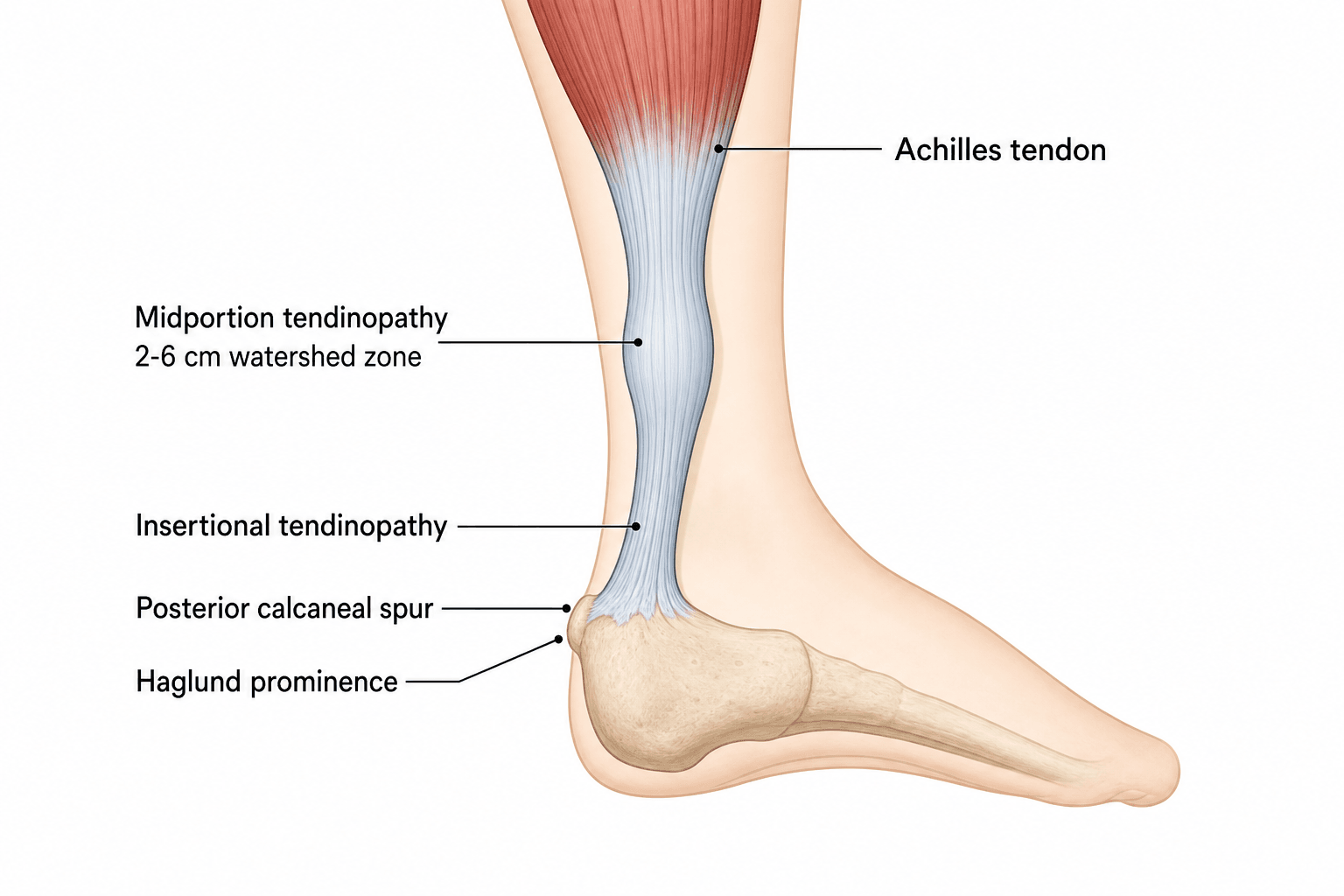
Location is the primary classification and the one that is clinically most useful.
- Location
- 2-6cm from insertion
- Key Features
- Watershed zone, fusiform thickening, positive arc sign
- Prognosis
- Better (70-90% non-op success)
- Location
- At calcaneal attachment
- Key Features
- Often with Haglund, may have calcification, fixed tenderness
- Prognosis
- Worse (50-60% non-op success)
- Location
- Paratenon surrounding tendon
- Key Features
- Crepitus, linear thickening on imaging, acute presentation
- Prognosis
- Good with activity modification
Approximately 20-25% of cases have combined insertional and non-insertional disease.
Clinical Assessment
History. The onset is usually gradual; an acute onset suggests paratendinopathy or rupture. Morning stiffness that improves with activity is characteristic, and the pain is worse with activity, especially running and jumping. Establish where the pain is (mid-portion or insertional), any recent change in training intensity, duration or footwear, what treatment has already been tried (physiotherapy, injections, medications), and the risk factors: fluoroquinolones, diabetes and systemic disease.
Examination. Palpate systematically along the tendon for tenderness, thickening and nodules, which localise the pathology. The arc sign then separates the two patterns: tenderness that moves with ankle dorsiflexion is mid-portion disease, tenderness fixed at the insertion regardless of ankle position is insertional disease, and the distinction guides treatment selection. The Thompson test must be normal in tendinopathy; it is there to rule out a complete rupture.
- Technique
- Systematic palpation along tendon
- Positive Finding
- Tenderness, thickening, nodules
- Significance
- Localises pathology
- Technique
- Palpate tender area while dorsiflexing ankle
- Positive Finding
- Tenderness moves with ankle motion
- Significance
- Mid-portion disease (positive) vs insertional (negative)
- Technique
- Squeeze calf with patient prone, knee flexed
- Positive Finding
- No plantarflexion = positive = rupture
- Significance
- Must be NORMAL in tendinopathy (rules out complete rupture)
- Technique
- Rise onto toes on affected leg
- Positive Finding
- Unable or painful
- Significance
- Functional assessment
- Technique
- Pain on palpation decreases with ankle dorsiflexion
- Positive Finding
- Pain relief with stretch
- Significance
- Suggests mid-portion tendinopathy
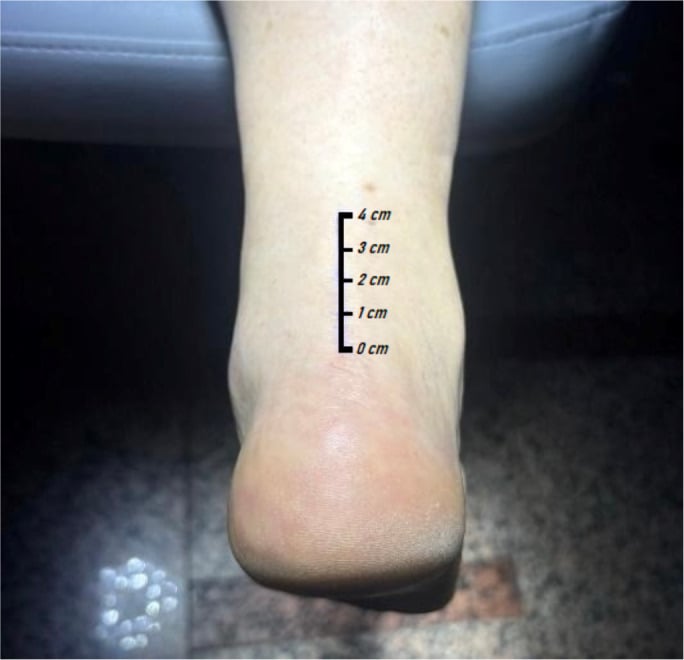
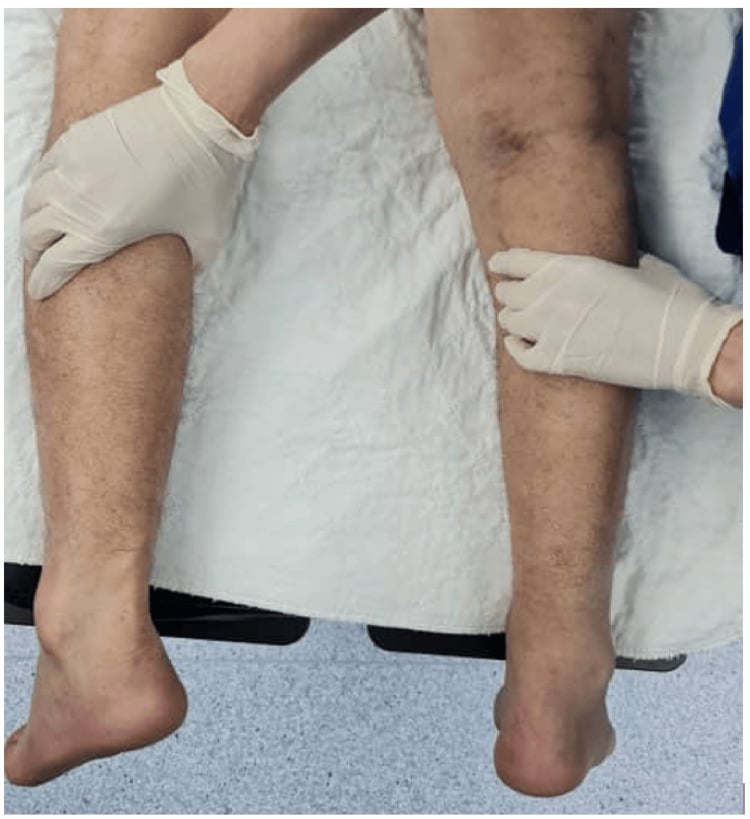
Biomechanical assessment. Look for the contributors that treatment may need to address:
- Hindfoot alignment (varus or valgus)
- Gastrocnemius tightness (Silfverskiold test)
- Foot posture (pronation or supination)
- Gait
- Footwear
Differential diagnosis. Posterior heel and ankle pain has several sources, and the table separates them by what is found and what confirms it.
- Distinguishing features
- Pain/swelling 2-6cm above insertion, positive arc sign
- Key test/investigation
- US/MRI: fusiform thickening, intact tendon
- Distinguishing features
- Fixed tenderness at insertion, posterior bump, worse on stairs
- Key test/investigation
- Lateral radiograph: Haglund, insertional calcification
- Distinguishing features
- Sudden pop, palpable gap, weak push-off
- Key test/investigation
- Positive Thompson (Simmonds) test, US gap
- Distinguishing features
- Acute-on-chronic pain, focal defect
- Key test/investigation
- MRI: high T2 signal with partial-thickness defect
- Distinguishing features
- Tenderness anterior to tendon at insertion
- Key test/investigation
- US/MRI: distended bursa, two-finger squeeze sign
- Distinguishing features
- Crepitus, pain fixed (does not move with ankle)
- Key test/investigation
- US: peritendinous thickening/fluid, tendon may be normal
- Distinguishing features
- Posterior ankle pain on forced plantarflexion (dancers)
- Key test/investigation
- Lateral radiograph in plantarflexion, MRI
- Distinguishing features
- Adolescents, heel pain at apophysis
- Key test/investigation
- Clinical; radiograph excludes other pathology
- Distinguishing features
- Medial mid-portion pain, focal medial tenderness
- Key test/investigation
- US/MRI: plantaris adjacent to medial Achilles
A bilaterally thickened or nodular Achilles, especially in an atypical patient (young, non-athletic, or responding poorly to loading), should trigger a search for a systemic cause. It is a classic examiner pivot.
Familial hypercholesterolaemia. Achilles xanthomas are lipid deposits that produce firm, often bilateral, nodular thickening of the tendon. They are a recognised clinical sign of FH and a cardiovascular red flag, so bilateral nodular Achilles thickening warrants a fasting lipid profile and cardiovascular risk assessment; the tendon can be the presenting clue to a treatable hyperlipidaemia.
Seronegative spondyloarthropathy. The Achilles enthesis is a hallmark site of enthesitis in ankylosing spondylitis, psoriatic and reactive arthritis. Suspect it when insertional pain comes with inflammatory features: other entheses, dactylitis, back stiffness, psoriasis, uveitis, a raised CRP, HLA-B27. This is an inflammatory process, not a degenerative one, and it is treated medically with NSAIDs, DMARDs or biologics, not with loading or debridement.
Gout and tophaceous deposition, and rarely sarcoid, can also infiltrate the tendon or its insertion.
These diagnoses need systemic work-up and disease-specific treatment rather than an eccentric-loading programme, and a misplaced peritendinous steroid into a xanthomatous or enthesitic tendon still carries rupture risk.
Investigations
Ultrasound is the first-line modality, MRI the gold standard for comprehensive assessment, and plain radiographs are for the bone at the insertion.
What it shows. The tendinopathic tendon is thickened, with an AP diameter greater than 6mm abnormal, and the following are the findings to look for:
- Hypoechoic areas, the degenerative regions
- Loss of the normal fibrillar pattern
- Neovascularisation on Power Doppler
- Paratenon thickening in paratendinopathy
Why it comes first. It is dynamic, allows comparison with the other side, is cost-effective, guides injections, and Power Doppler assesses neovascularisation. The findings correlate well with symptoms and can guide treatment aimed at areas of neovascularisation, although whether such treatment helps is contested (see Controversies).
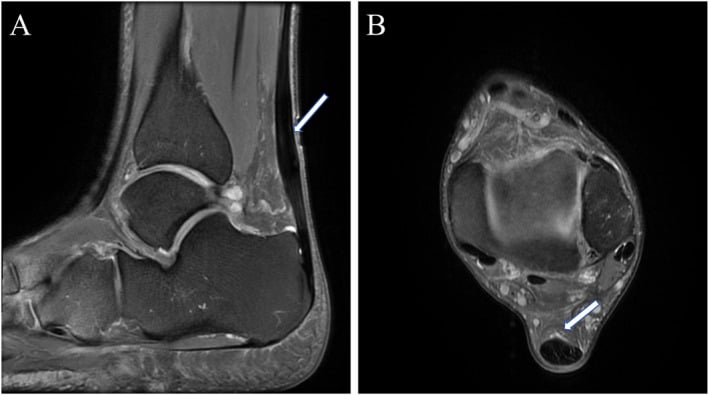
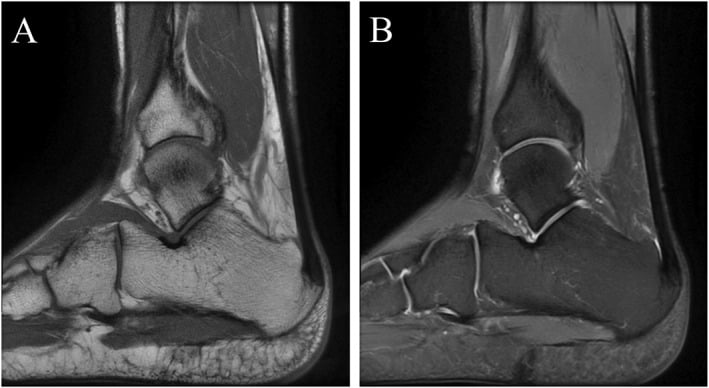
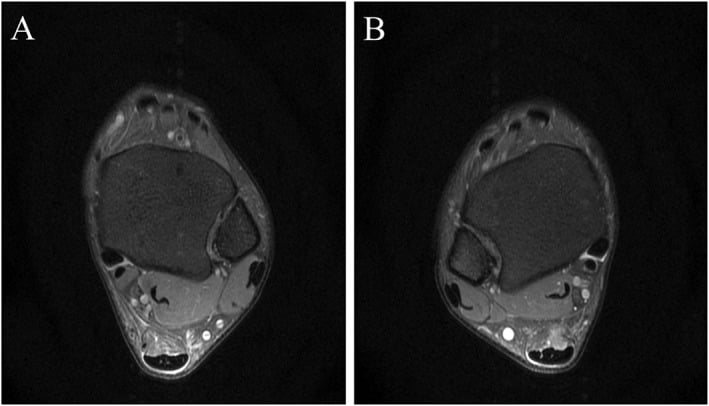
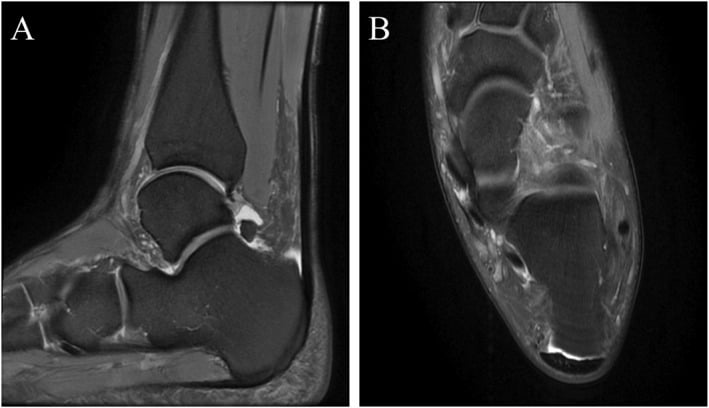
Management Algorithm
The Alfredson protocol, for mid-portion disease. Heavy-load eccentric calf training is the historical first-line treatment, and the dose is specific:
- 3 sets of 15 repetitions, the original Alfredson protocol
- Twice daily, morning and evening, 7 days a week
- 12 weeks minimum
- Straight knee (gastrocnemius) and bent knee (soleus)
- Performed off the edge of a step, so the heel drops below the level of the forefoot into dorsiflexion
- Rise on the good leg, lower on the affected leg: the eccentric phase only
- Progress through moderate discomfort (pain 4-5/10), adding load with a backpack or weights as pain decreases
That works out at 180 repetitions a day, every day, for three months, which is why adherence is the commonest reason it "fails".
Insertional disease needs a different protocol, not a watered-down version of this one. The step is the problem. Dropping the heel below the forefoot takes the ankle into dorsiflexion, and dorsiflexion beyond neutral compresses the tendon against the superior calcaneal tuberosity. At the mid-portion that compression is irrelevant; at the insertion it is the mechanism of the disease, so a full-range eccentric programme loads the tendon exactly where it is already being pinched. This is why a patient with insertional disease frequently returns worse after standard physiotherapy, as in the second viva scenario below, and it is a mechanism worth being able to explain rather than simply asserting that "eccentrics do not work at the insertion".
The floor-level (Jonsson) protocol is the insertional equivalent.
- The same dose: 3 sets of 15 repetitions, twice daily, for 12 weeks
- Performed standing on the floor, not on a step, so the heel descends only to the level of the floor and the ankle never passes beyond neutral into dorsiflexion
- Load added by backpack as symptoms allow, exactly as in the mid-portion protocol
- Roughly two-thirds of patients report satisfaction with this modification, against much lower satisfaction when full-range loading is used at the insertion
Heavy slow resistance is the alternative for mid-portion disease. Named in most guidelines as an equal alternative, but only useful if you can state the dose, because its entire practical advantage is the time commitment:
- Three sessions per week, not twice daily, for 12 weeks: about 36 sessions against roughly 168 for Alfredson
- Both concentric and eccentric phases, performed slowly, about 3 seconds up and 3 seconds down
- Progressive external loading, from around a 15-repetition maximum in the first weeks to a 6-repetition maximum by the end
- Heel raises seated (soleus) and standing, plus leg press
In a randomised trial the two produced equivalent VISA-A improvement at 12 weeks and 52 weeks, with better compliance for HSR (92% versus 78%). Choose by what the patient will actually do.
Adjuncts. These sit alongside the loading programme, and the first three follow from the same mechanical logic as the floor-level protocol:
- Heel lifts reduce strain on the tendon and, in insertional disease, hold the ankle out of dorsiflexion all day
- Open-backed footwear or a soft heel counter, to stop the shoe pressing on the insertion
- ESWT, 3 sessions of 2000 impulses; in a systematic review of insertional disease it outperformed both eccentric training and a wait-and-see policy
- GTN patches (nitroglycerin), which may improve collagen synthesis
- Activity modification, reducing provocative activities temporarily
- Orthotics if foot posture is abnormal
What not to do. Complete rest deloads the tendon and is harmful, and aggressive stretching is avoided acutely.
Never inject corticosteroids into or around the Achilles tendon: they are associated with tendon rupture. Peritendinous injections may cause skin atrophy and have limited benefit.
Surgical Technique
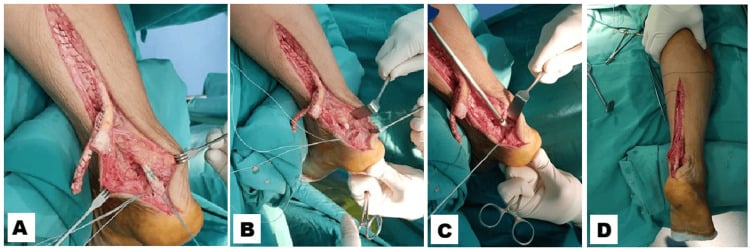
Approach. Prone, with a tourniquet at the thigh, through a medial or posterior midline incision. The medial approach is preferred because it keeps the incision away from the sural nerve, which lies laterally.
Mid-Portion Debridement Steps
Make an 8-10cm longitudinal incision centred on the pathological area. Incise the paratenon longitudinally. Identify and protect the sural nerve if using a lateral approach.
Identify the degenerative tissue, which is yellow, soft and mucoid. Excise all abnormal tissue with a knife or curette. The tendon may need to be split longitudinally to reach central disease.
Assess the remaining tendon cross-section. If more than 50% has been debrided, plan an FHL transfer for augmentation.
Close the tendon defect with a side-to-side repair if possible, using a non-absorbable suture (2-0 Ethibond or similar).
Close the paratenon if possible, then the skin in layers. Apply a well-padded splint in slight plantarflexion.
If a gastrocnemius recession is needed, perform it through the same or a separate incision at the musculotendinous junction.
A high-yield, often-missed contributor to medial mid-portion pain is the plantaris tendon, and recognising it changes the operation.
Why it causes pain. The plantaris runs along the medial border of the Achilles and is a stiffer, less compliant tendon, so during loading it can compress and shear against the medial Achilles. The result is a focal medial painful, thickened area: the patient with stubborn medial mid-portion pain that fails standard loading.
Recognition. Tenderness and thickening localised to the medial Achilles rather than the central or posterior tendon, often with the plantaris seen abutting the medial Achilles on ultrasound or MRI.
Treatment. When conservative loading fails, excision of the plantaris tendon, often combined with stripping of the ventromedial paratenon and the neovascular and neural ingrowth (a minimally invasive "scraping" or debridement), targets this pain source and has good results in the medial-pain subgroup. It is a far smaller procedure than formal tendon debridement with FHL transfer. Not all mid-portion tendinopathy is the same: a discrete medial pain pattern should prompt assessment for plantaris involvement before committing to major debridement.
Complications
Loading programmes. A transient increase in pain is expected and the programme continues through it. Calf muscle soreness occurs, and rarely a partial rupture where the tendon was already weakened. Non-operative complications are generally minor and self-limiting.
Failure. Conservative treatment fails in 10-30% of mid-portion cases and 40-50% of insertional cases, and these may require eventual surgery.
Postoperative Care
After a simple debridement (less than 50% of the tendon), rehabilitation moves through four phases; earlier rehabilitation gives better outcomes than prolonged immobilisation.
Rehabilitation Phases
Below-knee cast or boot. Non-weight bearing. Elevation and ice.
Weight bearing in boot. Begin gentle range-of-motion exercises out of the boot. Physiotherapy for ankle mobility.
Wean from boot. Progressive weight bearing. Begin eccentric exercises at 8 weeks. Stationary cycling.
Sport-specific rehabilitation. Running progression from week 16. Full activity 4-6 months.
Outcomes and Prognosis
- Success Rate
- 70-90%
- Return to Sport
- 3-6 months
- Recurrence
- 10-20%
- Success Rate
- 50-60%
- Return to Sport
- 4-8 months
- Recurrence
- 20-30%
- Success Rate
- +10-15%
- Return to Sport
- 3-6 months
- Recurrence
- Similar to eccentric alone
- Success Rate
- 75-85%
- Return to Sport
- 4-6 months
- Recurrence
- 5-10%
- Success Rate
- 80-90%
- Return to Sport
- 6-9 months
- Recurrence
- Less than 5%
Every success rate for this condition needs its population attached. The commonly quoted 70-90% for mid-portion loading comes from cohorts of all-comers followed for a year or more, and the original Alfredson series, in which 15 of 15 returned to running, was a prospective cohort of just 15 patients. The randomised figure in recalcitrant disease is more sober: at 4 months, 60% of the eccentric group and 52% of the shockwave group were recovered or much improved, against 24% for wait-and-see. Both sets of numbers are true of different patients at different time points, and quoting the higher one to a patient who has already failed six months of treatment sets an expectation the evidence does not support. What all of it agrees on is that doing nothing is clearly worse, which is the honest headline.
Prognosis. Location, duration, age, activity level, compliance, MRI grade and treatment history all shift the odds, and the table sets them out. Long-term outcomes are generally good when treatment is matched to the disease, and patients need to understand the chronic nature of the condition and the sustained rehabilitation it demands.
- Better Prognosis
- Mid-portion
- Worse Prognosis
- Insertional
- Better Prognosis
- Less than 3 months
- Worse Prognosis
- Greater than 12 months
- Better Prognosis
- Under 40 years
- Worse Prognosis
- Over 50 years
- Better Prognosis
- Recreational athlete
- Worse Prognosis
- Sedentary or elite athlete
- Better Prognosis
- Full eccentric protocol
- Worse Prognosis
- Incomplete exercise programme
- Better Prognosis
- Grade I-II
- Worse Prognosis
- Grade III (partial tear)
- Better Prognosis
- First presentation
- Worse Prognosis
- Multiple failed treatments
Guidelines, Registries & Global Practice
Global epidemiology
- Lifetime incidence in runners is estimated at 6-18%, with mid-portion disease accounting for roughly 55-65% and insertional disease 20-25% of presentations.
- Achilles tendinopathy is also common in sedentary middle-aged adults, where metabolic risk factors (obesity, type 2 diabetes, dyslipidaemia) and reduced tendon vascularity predominate over training error.
- Bilateral involvement occurs in up to 30% of cases and should prompt consideration of systemic contributors (inflammatory arthropathy, familial hypercholesterolaemia, fluoroquinolone exposure).
Side-by-side guideline and consensus positions
- Position on first-line care
- Progressive loading (eccentric or heavy slow resistance) first-line
- Notable emphasis
- Strong recommendation against routine PRP and against corticosteroid injection
- Position on first-line care
- Graded loading programme, then ESWT for recalcitrant disease
- Notable emphasis
- Surgery reserved for failure of 6 months structured non-operative care
- Position on first-line care
- Loading programme plus activity modification; ESWT as adjunct
- Notable emphasis
- Caution on injectables; FHL augmentation for extensive degeneration
- Position on first-line care
- Fluoroquinolone class warnings for tendinopathy and rupture
- Notable emphasis
- Avoid fluoroquinolones in tendinopathy where alternatives exist
There is broad international agreement that progressive mechanical loading is first-line, that corticosteroid injection is contraindicated, and that PRP is not supported by high-quality evidence. Differences are largely in the threshold and sequencing of ESWT and the timing of surgery rather than in the fundamental principles.
High- vs limited-resource practice variation
- Well-resourced settings: ready access to ultrasound (including Power Doppler for neovascularisation), MRI for surgical planning, formal physiotherapy-supervised loading, ESWT machines, and foot-and-ankle subspecialty surgery with FHL augmentation.
- Limited-resource settings: diagnosis is clinical; a home-based loading programme (which requires no equipment beyond a step) is the mainstay and is highly cost-effective. Imaging is reserved for diagnostic doubt or pre-operative planning, and ESWT/advanced reconstructive surgery may be unavailable, raising the relative importance of supervised conservative care.
Controversies and Areas of Uncertainty
Several aspects of Achilles tendinopathy management remain debated and are favourite examiner territory because they expose whether a candidate reasons from evidence or from dogma.
Eccentric versus combined or heavy slow resistance loading. The original Alfredson eccentric protocol is the historical first-line, but heavy slow resistance (Beyer 2015) gives equivalent outcomes with better compliance. The mechanism of benefit is mechanotransduction and tendon remodelling rather than simply the eccentric phase, which means the loading dose matters more than the specific contraction type.
The role of neovascularisation. Power Doppler neovascularisation correlates with pain, yet improvement does not require its abolition: some patients improve while the vessels persist. Treatments that target the vessels (sclerosis, high-volume injection, surgical stripping) have inconsistent evidence and are not routine.
Injectables: PRP, high-volume, sclerosants. PRP has now failed twice at level 1: de Vos (2010, n=54) and the far larger sham-controlled ATM trial (2021, n=240), whose confidence interval excludes any clinically important benefit rather than merely missing significance. Say "PRP does not work for mid-portion disease", not "the evidence is mixed". High-volume image-guided injection and sclerosing agents remain unproven for routine use, corticosteroid is contraindicated, and examiners expect you not to default to an injection.
The 50% debridement rule for FHL. The widely quoted "augment with FHL if more than 50% of the tendon is excised" is a pragmatic intra-operative guide, not a validated threshold. The decision should integrate residual tendon quality, patient demand and age rather than a single percentage.
Surgical timing and necessity. Most series mandate at least 3-6 months of structured loading before surgery, but the optimal duration, and whether minimally invasive or percutaneous techniques match open debridement, are unresolved. Many "failures" reflect inadequate or unsupervised loading rather than true conservative failure.
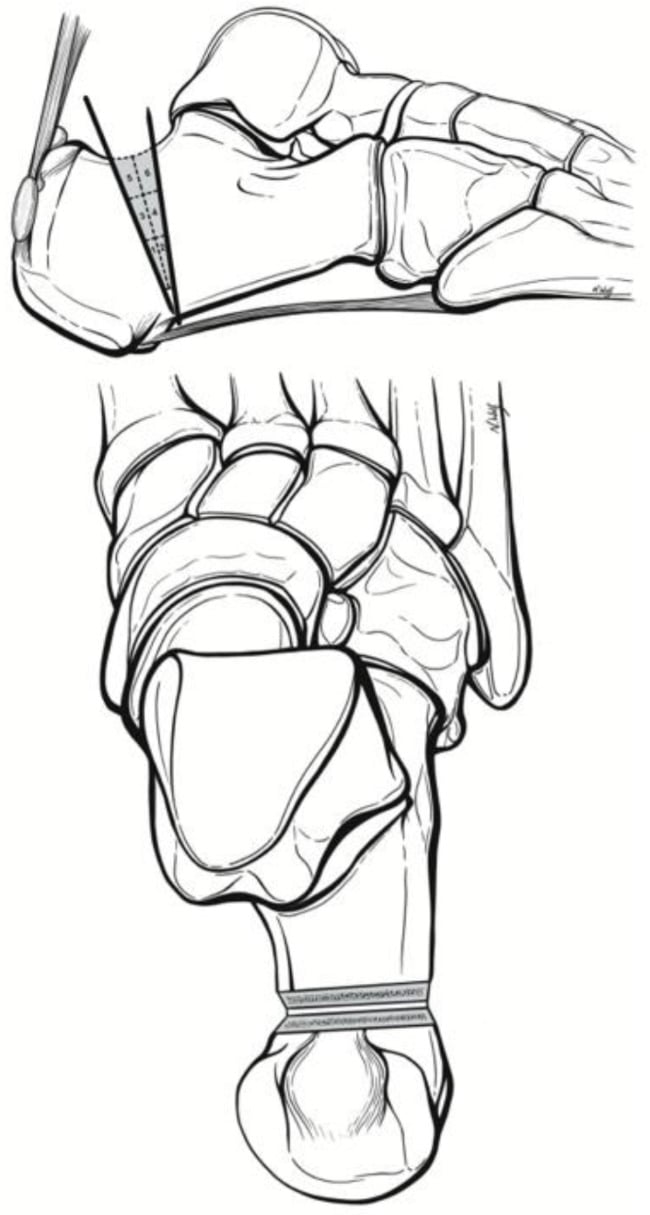
Insertional disease. Whether to retain or fully detach-and-reattach the insertion, the value of Haglund resection in isolation, and the place of central tendon-splitting versus medial approaches are all debated. Full-range eccentric loading is best avoided as it aggravates insertional impingement (Wiegerinck 2012).
MCQ Practice Points
Q: What is the location of the watershed zone in the Achilles tendon and why is it clinically significant? A: The watershed zone is located 2-6cm proximal to the insertion. It has the poorest blood supply (peritendinous vessels only) and is where most mid-portion tendinopathy occurs.
Q: A patient has posterior heel pain. Tenderness moves distally when the ankle is dorsiflexed. What does this indicate? A: This is a positive arc sign, indicating mid-portion tendinopathy. A negative arc sign (fixed tenderness) indicates insertional disease.
Q: Describe the Alfredson eccentric exercise protocol for Achilles tendinopathy. A: 3 sets of 15 reps, twice daily, for 12 weeks, performed with both straight knee (gastrocnemius) AND bent knee (soleus). Patients should work through moderate pain (4-5/10).
Q: When is FHL transfer indicated during Achilles debridement surgery? A: When more than 50% of the tendon requires debridement. FHL is in-phase (plantarflexor), has excellent tendon quality, and brings new blood supply.
Q: Why are corticosteroid injections contraindicated in Achilles tendinopathy? A: Corticosteroids increase rupture risk, with highest risk in the first 4 weeks post-injection. They provide no long-term benefit for this degenerative condition.
Exam Cheat Sheet
Key Numbers
- Watershed zone: 2-6cm from insertion
- MID-PORTION (Alfredson): 3x15 reps, twice daily, 7 days/week, 12 weeks, OFF A STEP, straight and bent knee
- INSERTIONAL (Jonsson): same 3x15 twice daily for 12 weeks but ON THE FLOOR - heel never passes neutral
- Heavy slow resistance: 3 sessions/week, 12 weeks, 3s up + 3s down, 15RM progressing to 6RM
- FHL transfer: If debriding more than 50% tendon
- Non-op success: 70-90% mid-portion, 50-60% insertional - but only 60% at 4 months in RECALCITRANT disease (RCT)
Clinical Pearls
- Tendinosis NOT tendinitis - degenerative, minimal inflammation
- Arc sign positive = mid-portion (moves with dorsiflexion)
- Arc sign negative = insertional (fixed)
- Thompson test must be NORMAL (rules out complete rupture)
Treatment Principles
- Progressive loading first-line: Alfredson eccentrics OR heavy slow resistance (equivalent at 12 and 52 weeks)
- Insertional: the STEP is the problem - dorsiflexion compresses the tendon on the calcaneus. Load on the floor instead
- ESWT: best adjunct evidence in insertional disease specifically
- PRP does NOT work - two level 1 trials, the larger (n=240, sham-controlled) excludes any clinically important benefit
- NEVER inject corticosteroids - rupture risk
- Surgery after 6 months failed conservative treatment
Surgical Points
- Medial approach protects sural nerve
- FHL transfer for greater than 50% debridement
- FHL in-phase with Achilles (plantarflexor)
- Central tendon-splitting for insertional surgery
Exam Traps
- Steroid injection recommendation
- Not knowing Alfredson protocol details
- Confusing insertional and mid-portion treatment
- Operating too early or too late
Exam Viva Scenarios
Practise clinical reasoning and management decisions out loud
“A 35-year-old recreational runner presents with 6 months of posterior heel pain, 4cm above the heel. Pain is worse in the morning and improves with warming up. He has tried rest and NSAIDs without improvement. Examination shows fusiform thickening with tenderness that moves when you dorsiflex the ankle.”
“A 45-year-old woman presents with posterior heel pain at the Achilles insertion. She has a prominent posterior heel bump. Pain is worse with stairs and inclines. Previous physiotherapy with eccentric exercises made her symptoms worse. X-ray shows a Haglund deformity and retrocalcaneal spurring.”
“A 40-year-old athlete presents after 9 months of failed conservative treatment for mid-portion Achilles tendinopathy. MRI shows extensive fusiform thickening with high T2 signal involving approximately 60% of the tendon cross-section. He wants to return to competitive sport.”
Evidence Base
Eccentric Exercise - The Alfredson Protocol (Landmark)
- 15 of 15 returned to pre-injury running at 12 weeks
- Significant reduction in activity-related pain (VAS)
- Injured-side calf strength normalised to the uninjured side
- Defined the 3x15 reps, twice-daily, 12-week eccentric protocol
Eccentric vs Heavy Slow Resistance (RCT)
- 58 patients randomised, intention-to-treat, Level I
- Equivalent VISA-A and pain improvement at 12 and 52 weeks
- Reduced tendon thickness and neovascularisation in both
- HSR superior compliance (92% vs 78%, p less than 0.005)
Eccentric Loading vs Shockwave vs Wait-and-See (RCT)
- 75 patients randomised, Level I
- Eccentric loading 60% vs ESWT 52% vs wait-and-see 24% recovered
- Eccentric and ESWT statistically equivalent
- Wait-and-see ineffective for recalcitrant disease
Platelet-Rich Plasma - No Benefit (RCT)
- 54 patients, double-blind, placebo-controlled, Level I
- VISA-A improved ~21 (PRP) vs ~20 (placebo) points
- No clinically or statistically significant PRP benefit
- High-quality evidence against routine PRP
Platelet-Rich Plasma vs Sham - The ATM Trial (Definitive RCT)
- 240 patients, 24 sites, sham-controlled, 92% completed
- VISA-A 54.4 (PRP) vs 53.4 (sham) at 6 months
- Adjusted difference -2.7, with the entire 95% CI (-8.8 to 3.3) lying well inside the 12-point MCID
- Injection-site discomfort was commoner with PRP (97 vs 73 patients)
Topical Glyceryl Trinitrate (RCT)
- 65 patients / 84 tendons, double-blind RCT, Level I
- 78% vs 49% asymptomatic for ADLs at 6 months (p=0.001)
- Reduced activity pain at 12 and 24 weeks
- Headache is the main limiting side effect
Insertional Tendinopathy - Treatment Evidence
- 14 studies, 452 procedures, systematic review
- Mean surgical satisfaction ~89% across techniques
- ESWT superior to eccentric exercise for insertional disease
- Full-range eccentrics poorly tolerated at the insertion
FHL Transfer for Chronic Tendinosis
- 26 patients / 29 tendons, mean 35-month follow-up
- AOFAS improved 41.7 to 90.1
- Good/excellent in 23 of 26 patients
- No significant hallux flexion deficit after transfer
Tendon Pathology Continuum Model
- Three-stage reactive / dysrepair / degenerative continuum
- Early reactive stage is reversible with load modification
- Degenerative regions show cell death and disorganised matrix
- Framework for stage-matched treatment selection
Fluoroquinolone-Associated Tendon Rupture
- Adjusted IRR 3.14 for Achilles rupture with current use
- Risk persists for 60 days after exposure
- Concomitant corticosteroid raises risk ~19-fold
- Greatest absolute risk in patients aged 60 years and over