Anterior (Footballer's Ankle) and Posterior (Dancer's Syndrome) | Arthroscopic Treatment
- Anterior impingement from tibial/talar spurs (osseous) or synovitis (soft tissue) limiting dorsiflexion
- Posterior impingement from os trigonum or FHL tendinitis limiting plantarflexion (dancers)
- Conservative management 53% success; osseous lesions less likely to respond than soft tissue
- Arthroscopic treatment 85-95% success with low complication rates (nerve injury 2-5%)
- Combined pathology common in posterior impingement - always assess for FHL involvement
- “Os trigonum syndrome = bone marrow oedema on MRI confirms symptomatic lesion
- “FHL tendinitis coexists in 40-60% of posterior impingement cases
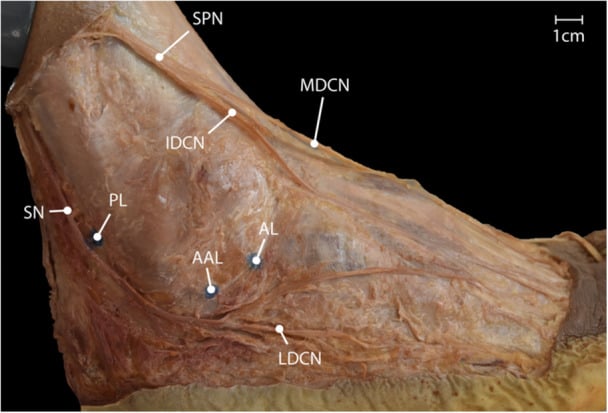
- “Anterior portals: anteromedial (saphenous nerve) and anterolateral (superficial peroneal nerve)
- “Posterior portals: posteromedial and posterolateral (sural nerve at risk)
This page compares the anterior and posterior syndromes side by side and covers what they share. Where you need the detail of one side, go to its own page:
- Anterior Ankle Impingement - Scranton-McDermott grading, why the capsular-traction theory of spur formation was abandoned, the oblique anteromedial radiograph and what it costs in specificity, and outcomes of arthroscopic debridement stratified by joint space.
- Posterior Ankle Impingement - os trigonum and Stieda process, flexor hallucis longus tenosynovitis, and two-portal hindfoot endoscopy.
The three pages were written from separate literatures and share no citations, so where a number differs between them, prefer the one attached to a named study on the deeper page.
Overview and Epidemiology
Ankle impingement syndromes are common causes of chronic ankle pain in athletes and dancers. Soft tissue or bone becomes trapped between the bones during terminal motion, causing pain and functional limitation.
Which side. Anterior impingement accounts for 60-70% of cases and posterior impingement for 30-40%.
Who. About 3-5% of competitive athletes are affected, with the highest prevalence in soccer (footballer's ankle), ballet (dancer's syndrome) and volleyball. Anterior impingement has a 2:1 male predominance, which relates to higher participation in contact sports. Posterior impingement shows an equal sex distribution, given ballet's demographics.
Anatomy Relevant to Impingement
The front of the joint. The anterior recess is the capsular space between tibia and talus that allows dorsiflexion. Spurs form on the anterior margin of the tibial plafond, and the talar neck meets the anterior tibia in dorsiflexion. The anterior capsule becomes taut in dorsiflexion and is the site of synovitis, and the deep peroneal nerve and anterior tibial vessels cross in front of the joint.
The anterior arthroscopy portals are defined by their neighbours:
- Anteromedial - medial to tibialis anterior, lateral to the saphenous nerve
- Anterolateral - lateral to EDL, medial to the superficial peroneal nerve branches
- Anterocentral - between EHL and EDL, with risk to the deep peroneal nerve
The back of the joint. The posterior recess, the capsular space behind the ankle, is its largest synovial space. The posterior talar process has medial and lateral tubercles with the FHL groove between them, so the FHL tendon travels between the tubercles and is at risk during any posterior procedure.
The posterior endoscopy portals sit either side of the Achilles:
- Posterolateral - at the lateral border of the Achilles, anterior to the sural nerve
- Posteromedial - at the medial border of the Achilles, placed to protect the tibial nerve and vessels
- The working space lies behind the ankle joint and above the calcaneal tuberosity
The variants. The os trigonum is an accessory ossicle behind the lateral talar tubercle, an unfused secondary ossification centre, present in 10-25% of the population and bilateral in 50% of those who have one. The Stieda process is an elongated lateral talar tubercle.
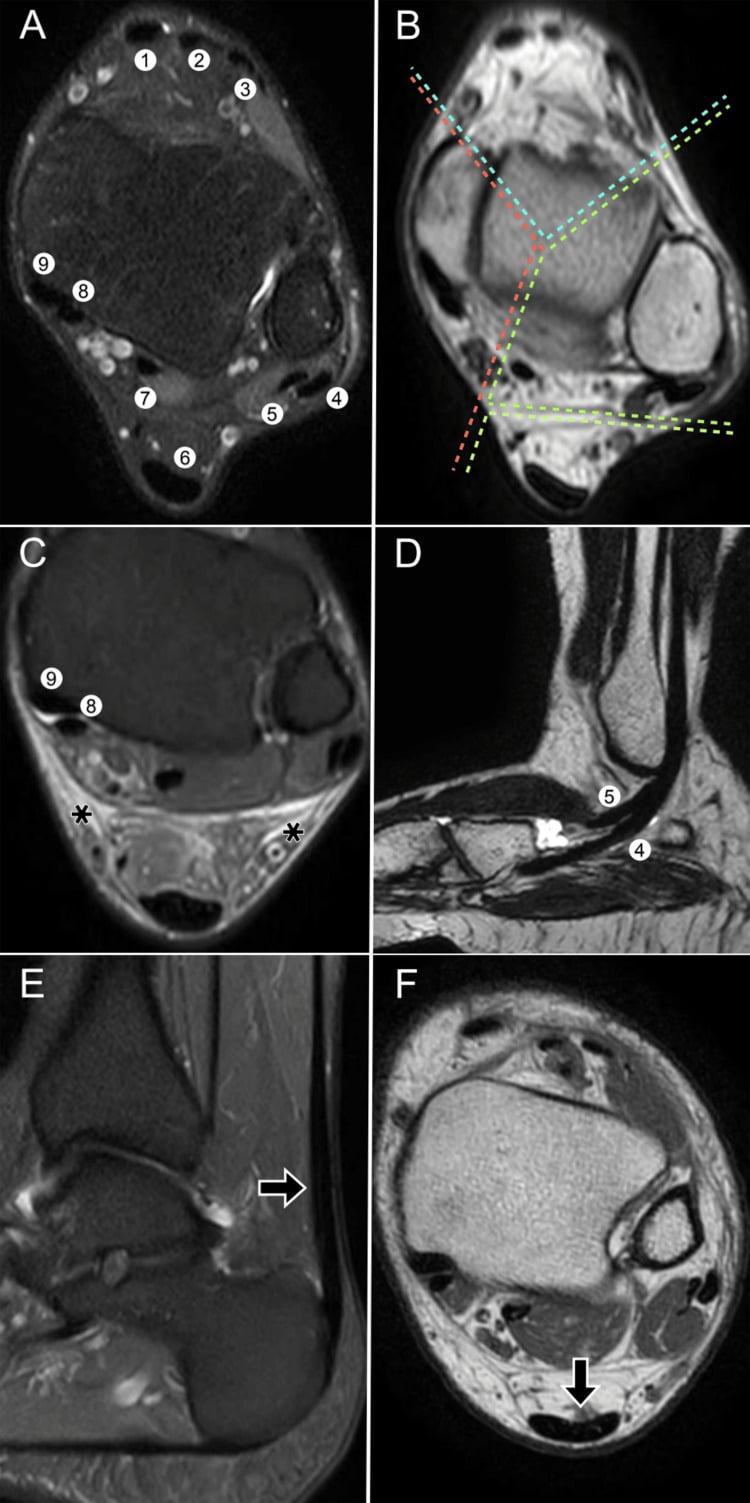
Motion. Dorsiflexion opens the anterior joint space and narrows the posterior; plantarflexion opens the posterior space and closes the anterior. Through the normal dorsiflexion range the anterior structures approximate without impinging. In plantarflexion the posterior structures may impinge between tibia and calcaneus, and the extreme plantarflexion of ballet compresses them maximally.
Pathophysiology
The cascade. Hypertrophied tissue or bone is caught at end-range motion; repetitive impingement causes synovitis and further hypertrophy, and the symptoms worsen. Osseous lesions come from chronic trauma or degeneration, soft-tissue lesions from acute injury or inflammation, and the pattern follows the demands of the sport: kicking for the front of the ankle, en pointe for the back.
Anterior impingement
Footballer's ankle (osseous). The traditional account is capsular traction: repetitive forced dorsiflexion pulls on the anterior capsule, and osteophytes form at the sites of capsular avulsion. That theory has been abandoned, and the Anterior Ankle Impingement page explains why. The spurs form on the anterior distal tibia and on the anterior talar neck, and matching tibial and talar spurs that interlock in dorsiflexion are kissing lesions. The sports are soccer (kicking), running, basketball (jumping) and gymnastics.
Soft-tissue impingement. Hypertrophied synovium or a meniscoid lesion develops in the anterolateral gutter after an ankle sprain, and post-traumatic fibrosis scars the anterior gutter after injury. The distal fascicle of the anterior inferior tibiofibular ligament, Bassett's ligament, may itself become pathological and impinge; the syndesmotic form is described below.
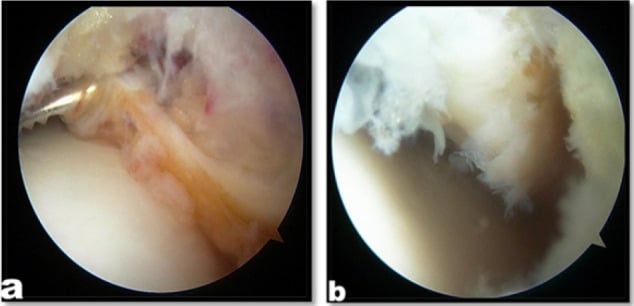
Grading. The grades combine spur size with the soft-tissue findings, symptoms and treatment.
- osseous
- Small tibial or talar spurs less than 3 mm
- softTissue
- Minimal synovitis, no meniscoid lesion
- symptoms
- End-range dorsiflexion discomfort only
- treatment
- Conservative management usually successful
- osseous
- Moderate spurs 3-5 mm, not yet kissing
- softTissue
- Moderate synovitis or small meniscoid lesion
- symptoms
- Pain with activities requiring dorsiflexion
- treatment
- May respond to conservative care or injection
- osseous
- Large spurs greater than 5 mm, kissing lesions
- softTissue
- Severe synovitis, large meniscoid lesion
- symptoms
- Rest pain, significant motion loss
- treatment
- Surgical debridement typically required
- osseous
- Extensive osteophytes with articular damage
- softTissue
- Dense fibrosis, loose bodies
- symptoms
- Daily symptoms, marked functional limitation
- treatment
- Arthroscopic debridement, may progress to arthritis
Risk factors.
- Soccer - kicking with forced dorsiflexion
- Running - repetitive dorsiflexion at push-off and landing
- High-impact sports - basketball, volleyball, gymnastics
- Previous ankle sprains - soft-tissue hypertrophy and scarring
- Chronic ankle instability - abnormal motion causing impingement
- Anatomical factors - limited native dorsiflexion, tight Achilles
Posterior impingement
The nutcracker. In plantarflexion the structures behind the ankle are compressed between the tibia, talus and calcaneus. An os trigonum becomes symptomatic (os trigonum syndrome) from repetitive compression or injury to its synchondrosis, crushed between tibia and calcaneus, and only a small fraction of the ossicles in the general population ever do. FHL tendinitis may coexist from the adjacent inflammation.
Stieda process. The elongated tubercle functions like an os trigonum, causing posterior compression. It appears as an elongated posterior process on the lateral radiograph and can fracture at its junction with the talus (Shepherd fracture).
Soft tissue. Repetitive compression produces hypertrophic synovitis of the posterior capsule, and the posterior intermalleolar ligament hypertrophies under chronic loading. A thickened posterior talofibular ligament may contribute to symptoms. The FHL develops tenosynovitis from adjacent inflammation or direct compression and can become entrapped in the posterior compartment.
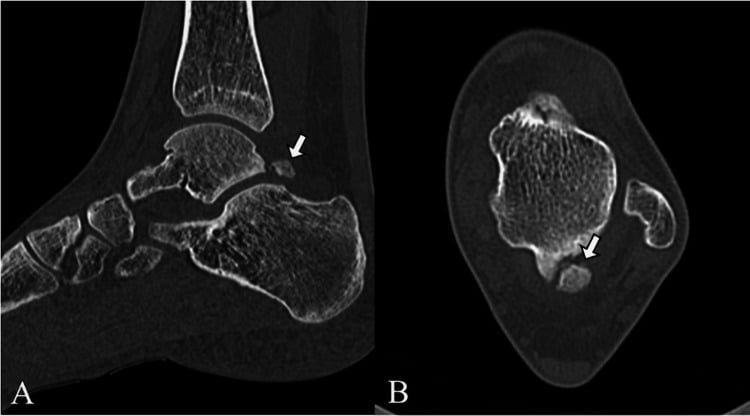
Dancer's syndrome. En pointe demands extreme plantarflexion (90+ degrees), which maximally narrows the posterior space, and professional dancers repeat relevé thousands of times a week. Concurrent FHL tendinitis is present in 40-60% of cases and requires treatment in its own right. Posterior impingement may be career-ending if conservative management fails.
High-risk activities.
- Ballet dancing, especially en pointe work
- Soccer - plantarflexion in the kicking follow-through
- Downhill running - repetitive plantarflexion
- Gymnastics - landing positions
- Figure skating - toe pointing during jumps
Clinical Presentation
The symptoms follow the end of the range that is blocked: dorsiflexion for anterior impingement, plantarflexion for posterior.
Anterior impingement
History. Pain at the anterior ankle joint line, worse with dorsiflexion and in end-range activities such as kicking, squatting and stairs. The onset is insidious, progressing over months to years, and 60-70% of soft-tissue cases give a history of ankle sprain. Performance falls in kicking, jumping and cutting, and morning stiffness is common, improving with activity initially.
Examination. Tenderness on palpation of the anterolateral or anteromedial joint line, anterior fullness from synovitis, and reduced dorsiflexion (normal 10-20 degrees). Large osteophytes may be palpable anteriorly, and the gait may show a shortened stride or altered heel strike.
- Anterior impingement test - forced passive dorsiflexion with tibial translation reproduces the anterior pain
- Molloy test - palpation of the anterolateral gutter with the ankle in dorsiflexion
- Single-leg squat - pain at the bottom of a deep squat
- Hop test - pain landing from a single-leg hop
Posterior impingement
History. Deep aching posterior ankle pain, which may radiate to the heel or plantar foot, worse with plantarflexion: en pointe for dancers, kicking in soccer, downhill running. The onset is gradual in athletes but may be acute after a forced plantarflexion injury. The patient cannot maintain extreme plantarflexion positions, and triggering or weakness of the great toe appears if the FHL is also involved.
Examination. Tenderness behind the ankle, lateral or medial to the Achilles tendon, and pain at end-range plantarflexion. An os trigonum may be felt as a prominence behind the talus.
- Posterior impingement test - forced passive plantarflexion reproduces the posterior pain
- Nutcracker test - palpate the os trigonum while passively plantarflexing the ankle
- FHL stretch test - dorsiflexion with hallux extension, positive if the FHL is involved; check also for triggering and weakness
- Resisted plantarflexion - usually pain-free, which differentiates it from Achilles pathology
Differential diagnosis
- keyFeature
- Catching/fullness in anterolateral gutter, post-sprain, normal radiographs
- distinguisher
- Positive Molloy test, MRI/US shows meniscoid lesion; pain reproduced in dorsiflexion
- keyFeature
- Dorsiflexion-limited pain in kicking/squatting athletes
- distinguisher
- Tibial/talar osteophytes on weight-bearing lateral radiograph
- keyFeature
- Deep posterior pain on plantarflexion, en pointe or kicking follow-through
- distinguisher
- Positive plantarflexion (nutcracker) test; os trigonum with marrow oedema on MRI
- keyFeature
- Recurrent giving-way, often coexists with anterolateral impingement
- distinguisher
- Positive anterior drawer / talar tilt; stress radiographs abnormal
- keyFeature
- Diffuse pain, stiffness, crepitus, older or post-traumatic patient
- distinguisher
- Global joint-space narrowing on weight-bearing views, not focal impingement
- keyFeature
- Posteromedial pain, hallux triggering, dancers
- distinguisher
- Pain on resisted/passive hallux motion; FHL fluid on MRI; often coexists with os trigonum
- keyFeature
- Deep aching, catching, post-sprain, mechanical symptoms
- distinguisher
- Subchondral defect on MRI/CT; not motion-position specific
- keyFeature
- Acute posterior pain after forced plantarflexion injury
- distinguisher
- Fracture line at lateral tubercle on CT; acute onset versus chronic os trigonum
Investigations
Radiographs first. A weight-bearing lateral radiograph is the essential first-line study for both types. It shows tibial and talar osteophytes in front and an os trigonum or Stieda process behind. AP and mortise views rule out arthritis, loose bodies and other pathology.
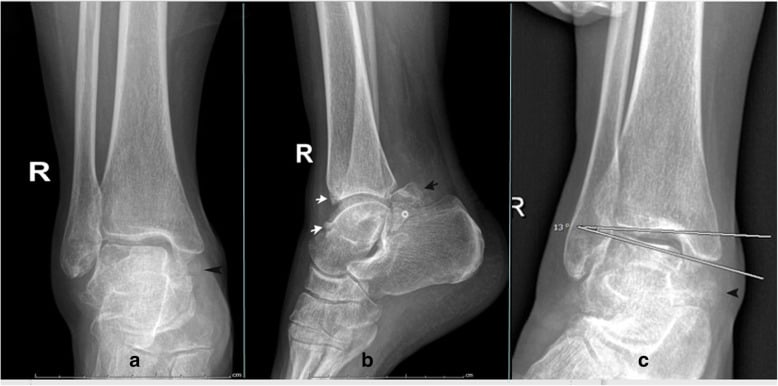
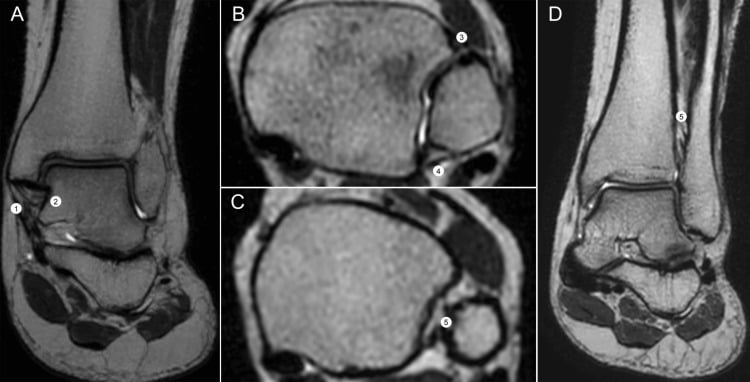
MRI. MRI separates symptomatic pathology from incidental anatomical variants, because bone marrow oedema indicates active disease. It also assesses the soft tissues (synovitis, meniscoid lesion, FHL tendinopathy) and identifies concurrent pathology before surgery. Oedema is the sign used to call an os trigonum symptomatic, but how much oedema is enough remains unsettled (see Controversies).
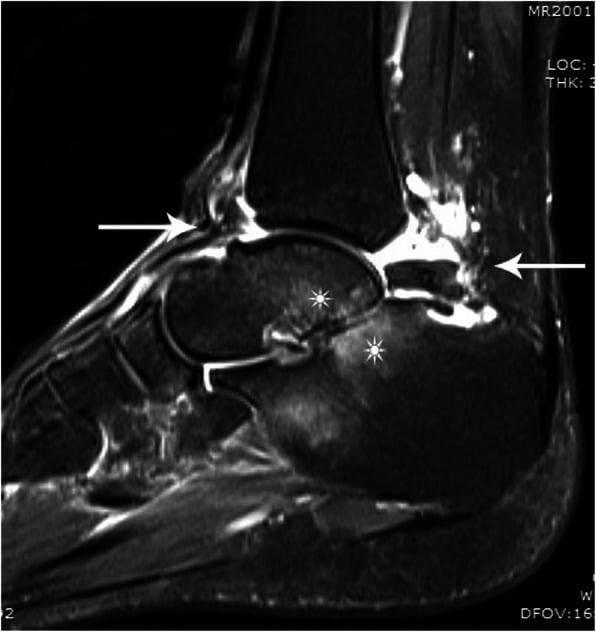
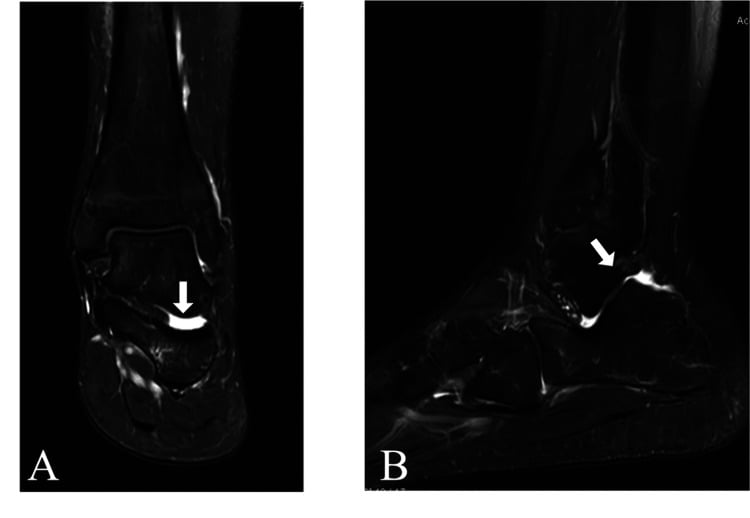
CT. CT is for bone: large osteophytes that need 3D planning for resection, complex osseous anatomy, and the integrity of the articular surface.
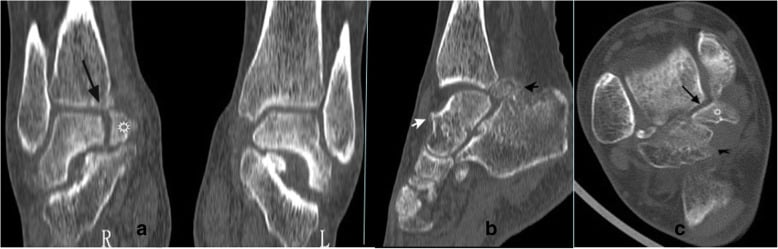
Ultrasound. Ultrasound is dynamic. With the ankle maximally plantarflexed, comparing supination with forced pronation of the subtalar joint, movement of hypoechoic oedematous tissue outside the narrowing joint reproduces the mechanical component of posterior pain. It also shows the FHL gliding, or failing to glide, beside an os trigonum.
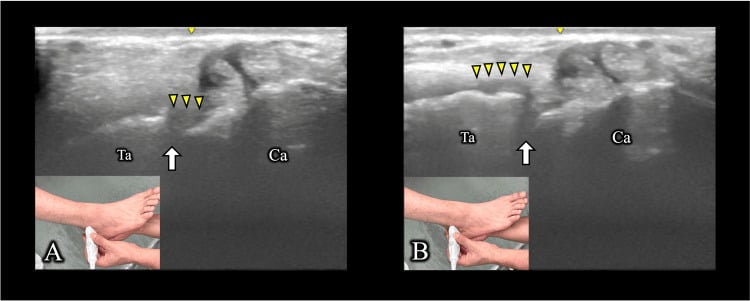
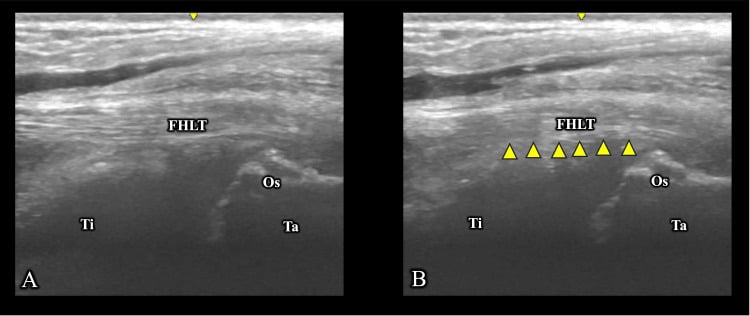
Posterior impingement, modality by modality.
- findings
- Os trigonum or Stieda process visible posterior to talus
- utility
- Initial screening, confirms osseous pathology
- limitations
- Cannot assess soft tissue or bone oedema
- findings
- Bone marrow oedema in os trigonum, joint effusion, FHL tenosynovitis
- utility
- Differentiates symptomatic from incidental os trigonum, shows soft tissue
- limitations
- Static images, cannot assess dynamic impingement
- findings
- 3D reconstruction of os trigonum size and position, synchondrosis detail
- utility
- Pre-operative planning for bone excision
- limitations
- Poor soft tissue detail, radiation exposure
- findings
- Dynamic FHL assessment, posterior soft tissue thickening
- utility
- Dynamic evaluation, can guide injection
- limitations
- Operator dependent, limited bone detail
- findings
- Increased uptake in symptomatic os trigonum
- utility
- Confirms symptomatic versus incidental finding
- limitations
- Non-specific, radiation, rarely used now with MRI available
Diagnostic injection. An ultrasound-guided injection of local anaesthetic confirms impingement as the pain generator: significant relief is a positive result. Behind the ankle the target is the region around the os trigonum or the posterior joint recess. Corticosteroid may be added for temporary relief, but keep out of the FHL tendon sheath, where steroid carries a risk of rupture.
Non-Operative Management
Initial management is conservative for both anterior and posterior impingement.
Activity modification. Relative rest reduces or eliminates the aggravating activity for 4-8 weeks, while cross-training with low-impact alternatives such as swimming and cycling maintains fitness. The sport is modified to avoid extreme dorsiflexion (anterior) or extreme plantarflexion (posterior), and technique adjustment corrects the biomechanics that produce the impingement forces. The return is gradual, through a progressive loading protocol over 8-12 weeks.
Immobilisation. A CAM boot for 2-4 weeks for severe acute symptoms, with the ankle in neutral to reduce end-range compression. Keep it to the minimum necessary, 2-4 weeks at most, to avoid stiffness, then wean to supportive athletic taping.
Drugs and ice. NSAIDs, oral (naproxen 500 mg BD) or topical, in 2-4 week courses, or anti-inflammatory gels and patches. Paracetamol controls pain without addressing inflammation, and ice for 15-20 minutes multiple times a day helps acute symptoms.
Orthoses and footwear.
- Heel lift - reduces dorsiflexion demand in anterior impingement
- Custom orthotics - biomechanical correction of pronation or supination
- Taping - limits end-range motion during sport
- Rocker-bottom sole - reduces the ankle motion required
Surgical Indications and Planning
Indications.
- Failed conservative management - a minimum of 3-6 months of appropriate non-operative treatment
- Persistent symptoms - pain limiting daily activities or sports participation
- Mechanical symptoms - locking or catching, suggesting a loose body or meniscoid lesion
- Large osteophytes - grade 3-4 osseous impingement, unlikely to respond conservatively
- Documented pathology - MRI confirmation of a structural lesion amenable to surgery
- Professional athletes - earlier surgery for the career impact, after a 6-12 week conservative trial
Before operating. Review the MRI for all the pathology, osseous, soft tissue and concurrent, and agree realistic goals for return to high-level activity. Address smoking, weight and inflammatory conditions. Plan the approach, anterior or posterior, arthroscopic or open, and check that the arthroscopy equipment and instruments are available.
Surgical Technique
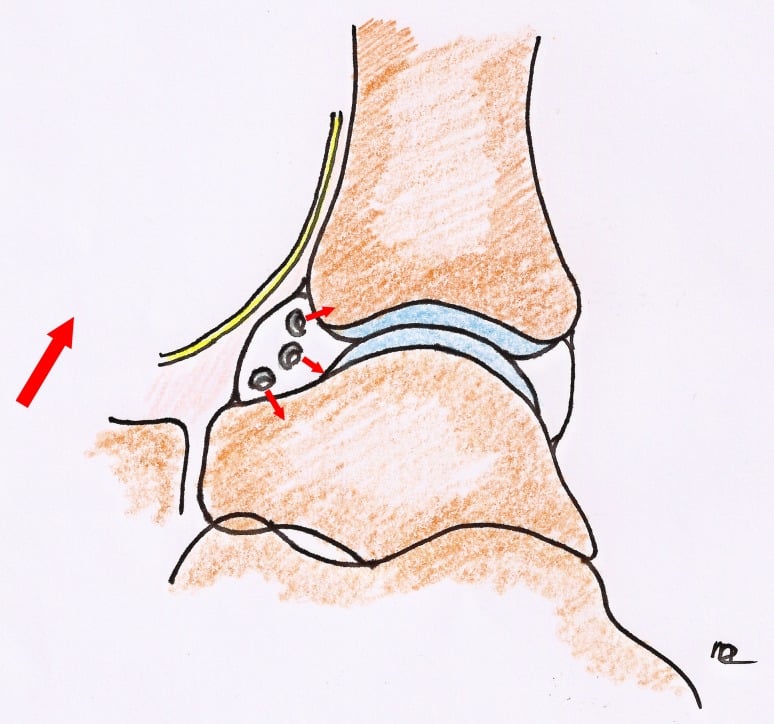
Set-up. Supine, with a bump under the ipsilateral hip and a thigh tourniquet at 250-300 mmHg. The ankle is placed in neutral, with non-invasive distraction (10 lbs) or invasive distraction with pins.
Distraction has a cost. It pulls the anterior nerves and vessels taut and closer to the instruments, increasing the risk of iatrogenic injury, so use traction only when it is required and release it during anterior work where possible. Full dorsiflexion without traction creates an anterior working space and relaxes the anterior neurovascular bundle, which stays within a protective subcutaneous layer; this is the mechanical basis for non-invasive dorsiflexion techniques, with the surgeon supporting the foot to allow controlled portal and instrument passage.
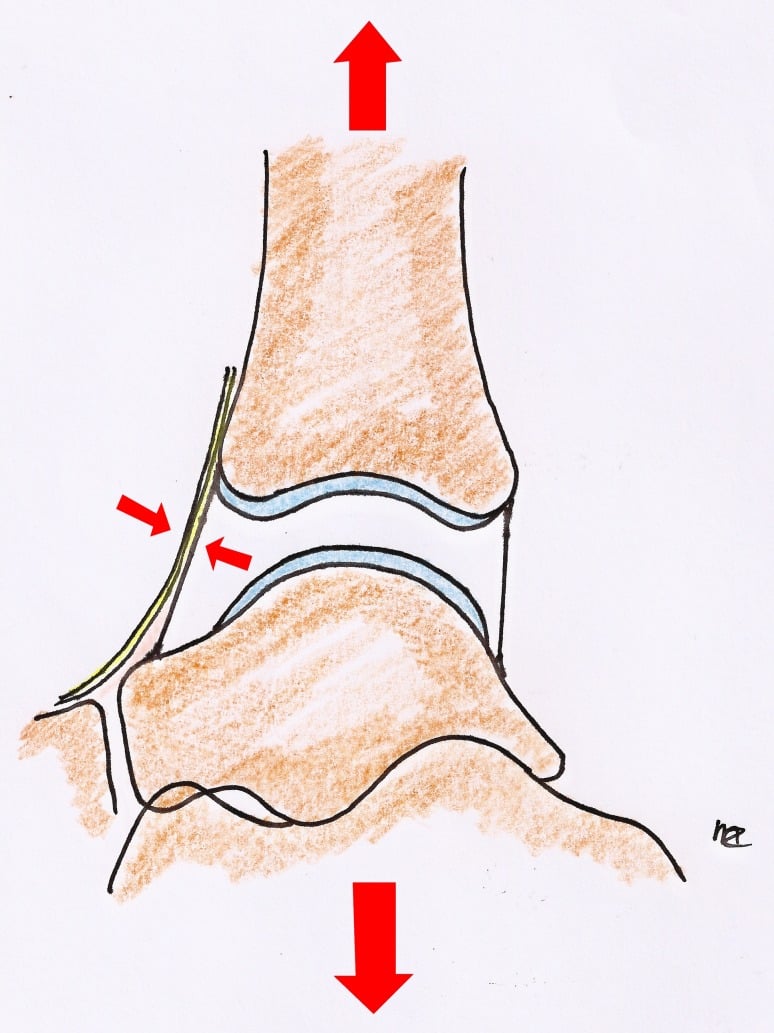
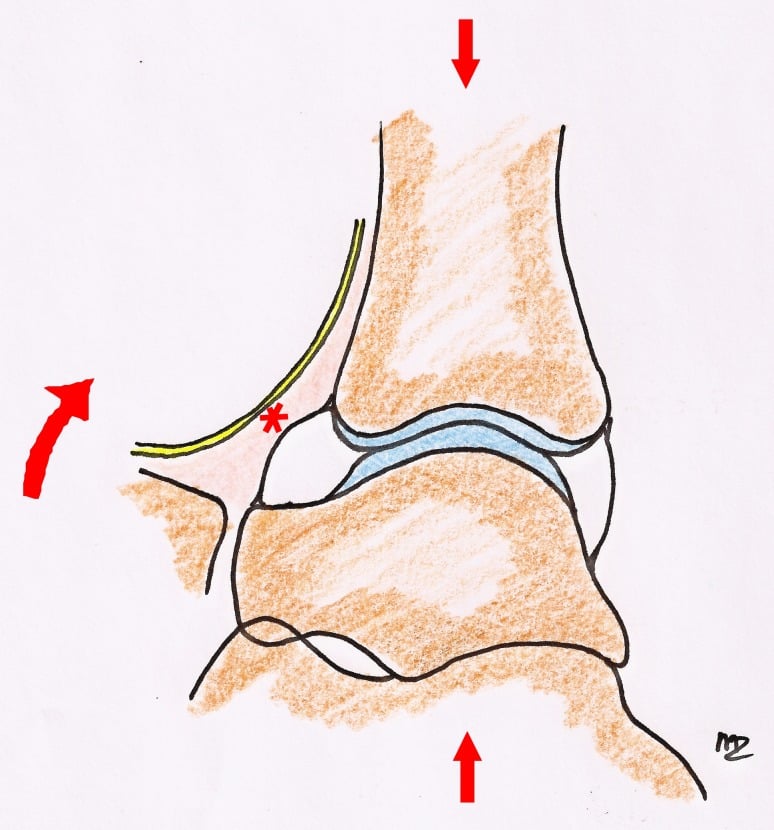
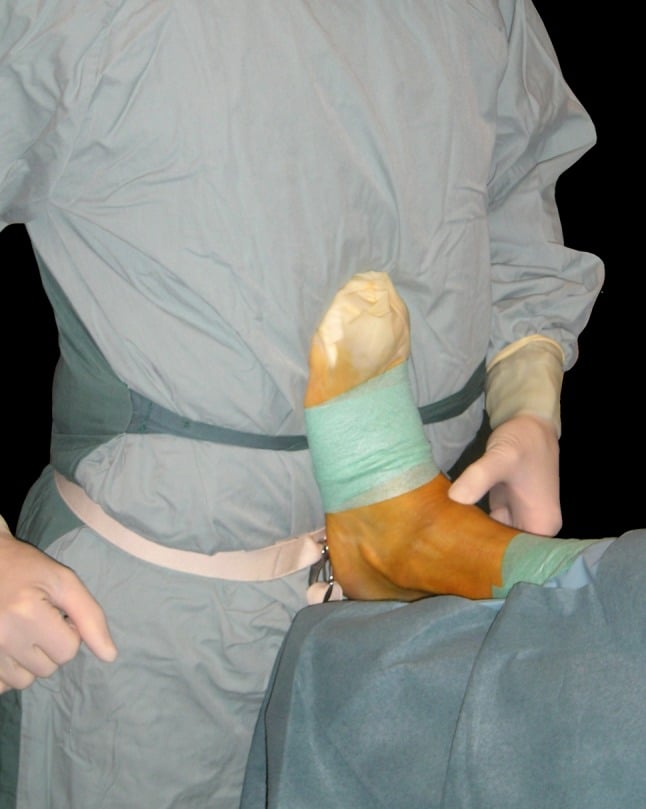
Portals. The anteromedial portal is made 1 cm medial to tibialis anterior at the joint line and the anterolateral portal just lateral to peroneus tertius at the joint line. Localise each portal with a needle and incise the skin only. The anterocentral portal is rarely needed.
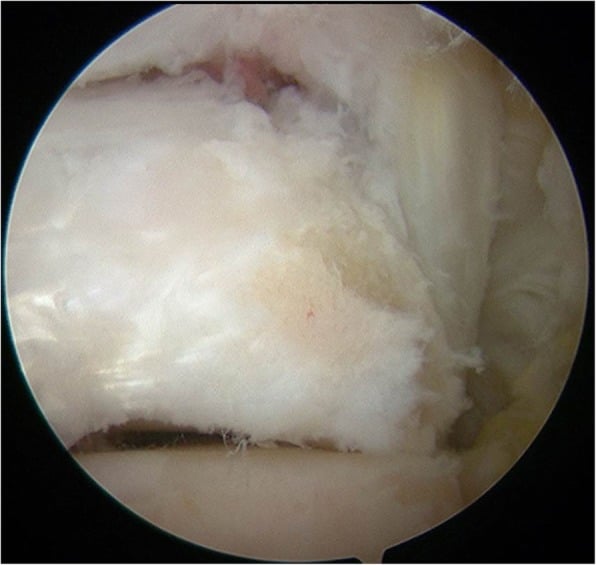
Inspection. A 30-degree arthroscope goes in through the anteromedial portal first. Inspect the whole joint (medial gutter, central dome, lateral gutter), identify the osteophytes, synovitis, meniscoid lesion and cartilage damage, and document the findings with photographs or video. Switch the arthroscope to the anterolateral portal to inspect the medial side.
Debridement, in order.
- Synovectomy - the shaver removes hypertrophic synovium and the anterolateral soft-tissue impingement (meniscoid lesion), and a thickened Bassett's ligament is excised if it contributes, leaving joint surfaces free of catching tissue. With the ankle dorsiflexed, keep the shaver opening facing the joint rather than the capsule: it removes scar and synovium while reducing the risk of drawing anterior tendons or neurovascular structures into the blade.
- Osteophyte resection - with a burr, tibial osteophytes from medial to lateral across the anterior plafond and talar osteophytes carefully from the talar neck and dome. The goal is a smooth tibiotalar articulation; excessive bone removal weakens the joint. Irrigate frequently to clear debris and improve visualisation.
- Cartilage - assess for kissing lesions or chondral damage, debride unstable flaps to stable edges, microfracture focal full-thickness defects if appropriate, and document the extent of arthritis for prognosis.
- Confirm decompression - dorsiflex the ankle under direct vision, ensure no residual bony or soft-tissue impingement, remove all loose bodies and debris, and make a final inspection of the whole joint.
Closure. Remove the instruments and release the distraction, close the portals with a single nylon suture or skin adhesive, and apply a soft compressive dressing, with a posterior splint in neutral if there has been significant bone work.
Aftercare.
- 0-2 weeks - non-weight-bearing in a boot after extensive bone work, otherwise weight-bearing as tolerated in a protective boot
- 2-6 weeks - progressive weight-bearing, gentle active range of motion
- 6-12 weeks - strengthening and proprioception training
- 3-4 months - return to sport-specific training
- 4-6 months - full unrestricted activity typically achieved
The superficial peroneal nerve branches cross the anterior ankle and are at highest risk during anterolateral portal placement. Mark the nerve branches pre-operatively with ankle dorsiflexion and eversion. The deep peroneal nerve and anterior tibial vessels are at risk with the anterocentral portal - avoid it if possible. Excessive osteophyte resection can destabilise the ankle joint.
Complications
By approach. The operation determines which structures are at risk.
- anteriorArthroscopy
- Superficial peroneal (2%), deep peroneal (less than 1%)
- posteriorEndoscopy
- Sural (2%), tibial (less than 1%)
- openSurgery
- Higher rates (5-8%), same nerves at risk
- management
- Most resolve spontaneously, neuroma excision if painful
- anteriorArthroscopy
- Anterior tibial artery (rare, less than 0.5%)
- posteriorEndoscopy
- Posterior tibial vessels (rare, less than 0.5%)
- openSurgery
- Higher risk with open dissection
- management
- Immediate vascular surgery consultation if identified
- anteriorArthroscopy
- Not applicable
- posteriorEndoscopy
- Laceration or scarring (1-2%)
- openSurgery
- Similar risk (1-2%)
- management
- Repair if identified, may need FHL release or transfer
- anteriorArthroscopy
- Residual osteophytes (3-5%)
- posteriorEndoscopy
- Incomplete os trigonum excision (2-4%)
- openSurgery
- Lower risk with direct visualisation
- management
- Revision surgery if symptomatic, confirm on imaging
Nerves. Nerve injury occurs in 1-5% of arthroscopic procedures. The superficial peroneal nerve is injured most often, at the anterolateral portal; the sural nerve is at risk with the posterolateral portal, and the tibial nerve rarely, with the posteromedial approach. Prevention is portal placement under direct vision and pre-operative marking of the superficial peroneal nerve.
Vessels and tendons. Avoid deep, aggressive resection and know the safe zones. The FHL is at highest risk during posterior procedures, where transient weakness occurs in 4-7%, and tibialis anterior is at risk from the anterior approach; protect the FHL during os trigonum excision and keep the tendons in view.
Other complications.
- Infection - up to 2% after arthroscopy and 3-5% after open surgery; superficial wound infection is treated with oral antibiotics, and the rare deep joint infection needs washout
- Wound problems - delayed healing and dehiscence, more common after open procedures
- Stiffness - more common after anterior procedures and with prolonged immobilisation; arthrofibrosis is excessive scar limiting motion
- Recurrence - persistent or recurrent symptoms in 5-15%, from incomplete resection or reformation of scar tissue, managed by revision arthroscopy or an open procedure
- Instability - from excessive lateral ligament release during anterior debridement; preserve the ATFL fibres during capsular work
- Progression to arthritis - pre-existing cartilage damage may progress despite successful debridement, with higher risk in Scranton grade 3-4 lesions
- Instrument breakage - a burr or shaver blade broken in the joint is retrieved arthroscopically at once
- CRPS - rare (less than 1%) but devastating
When surgery fails. Repeat imaging (CT or MRI) to judge the adequacy of resection, consider alternative diagnoses (arthritis, instability, tarsal coalition), assess compliance with and progress in rehabilitation, and use a diagnostic injection to confirm the pain generator. Revision is indicated for:
- Incomplete osteophyte resection confirmed on CT
- A residual os trigonum fragment on imaging
- Progressive symptoms despite appropriate rehabilitation
- New pathology, such as arthritis or a loose body
Revision may need an open approach after failed arthroscopy for better visualisation, with more aggressive debridement of the residual pathology and attention to any concurrent pathology missed the first time. Consider salvage (fusion, arthroplasty) if severe arthritis is present.
Syndesmotic (High-Ankle) Impingement
What it is. After a syndesmotic (high-ankle) sprain, a hypertrophic or scarred distal fascicle of the AITFL (Bassett's ligament), or synovial and scar tissue in the tibiofibular recess, can become entrapped against the anterolateral talar dome. The result is chronic anterolateral ankle pain in dorsiflexion and external rotation.
Distinct from instability. This is a soft-tissue impingement without frank diastasis. In syndesmotic instability the syndesmosis is widened and unstable, and that is covered in the syndesmotic instability topic.
Presentation. Deep anterolateral pain aggravated by dorsiflexion and push-off and by external-rotation stress, typically after a "high" sprain that recovered more slowly than a simple lateral sprain. The tenderness lies over the anterolateral joint line and the distal AITFL.
Confirmation. Plain radiographs and stress views are normal, with no diastasis. MRI or diagnostic arthroscopy shows the thickened distal fascicle and the recess synovitis, and a diagnostic injection into the recess that relieves the pain confirms the impingement.
Management. A structured non-operative trial as for other soft-tissue impingement: activity modification, physiotherapy and image-guided injection. If that fails, arthroscopic debridement or resection of the impinging distal AITFL fascicle and recess synovium gives good results, provided the syndesmosis is stable. If there is any true instability or diastasis, it must be stabilised rather than simply debrided.
Impingement and Coexisting Ankle Instability
Occult lateral ligament instability frequently underlies anterolateral impingement, and the Gianakos systematic review found higher rates of associated instability in women.
Why they coexist. Both follow inversion or anterolateral ankle injury. Recurrent microinstability lets the talus translate abnormally, which drives the synovial hypertrophy, meniscoid lesion and capsular scarring of anterolateral impingement. Anterolateral impingement is therefore often a marker of underlying instability rather than an isolated problem.
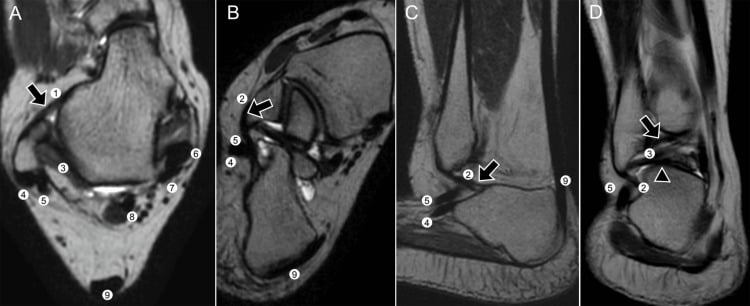
How to assess it. Look actively for instability in every anterolateral impingement: a history of recurrent sprains and giving-way, examination for anterior drawer and talar tilt, and stress radiographs or MRI of the ATFL and CFL. A clinically negative drawer does not fully exclude microinstability. Maintain a high index of suspicion in women and in athletes with recurrent sprains.
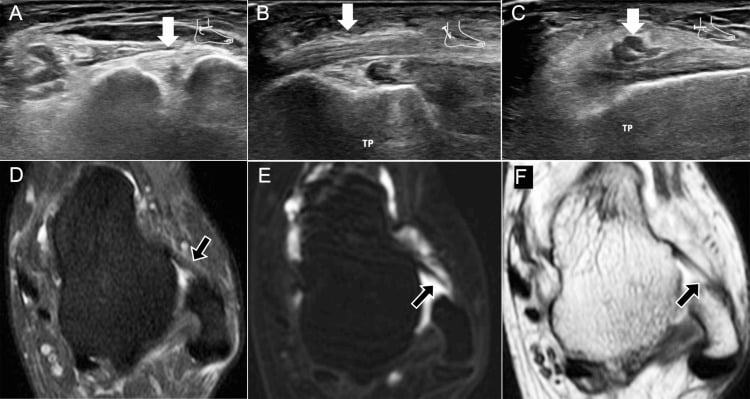
Why it matters at surgery. Failure to recognise and address coexisting instability is a leading cause of persistent symptoms after debridement. If instability is confirmed, plan to add a lateral ligament stabilisation (for example a Broström repair) at the same sitting, and assess the ATFL intra-operatively. Avoid an over-aggressive lateral capsular release, which would itself destabilise the ankle; the detailed reconstruction is covered in the lateral ankle instability topic.
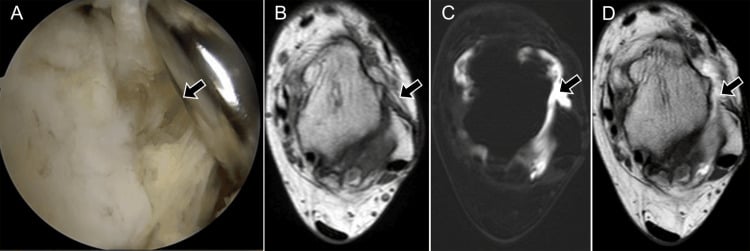
Postoperative Care and Return to Sport
The weight-bearing and splintage for each operation are given with its technique above; what follows applies to all of them.
The first two weeks. Keep the dressings dry for 48-72 hours; the portal wounds need steri-strips and minimal suturing, with a compression bandage to minimise swelling. Ankle pumps and gentle range of motion start from day 1, with ice and elevation for swelling. DVT prophylaxis is per surgeon preference, aspirin being typically adequate for low-risk patients.
Rehabilitation, 2-6 weeks. Formal physiotherapy starts from week 2, working towards full dorsiflexion and plantarflexion, with scar mobilisation at the portal sites and proprioceptive training on a wobble board. Strengthening progresses from isometric exercises in weeks 2-4 to progressive resistance (theraband) in weeks 4-6, with an eccentric calf-loading progression.
Return to activity, 6-12 weeks and beyond.
- Weeks 6-8 - jogging on flat surfaces
- Weeks 8-10 - sport-specific drills
- Weeks 10-12 - return to non-contact training
- Week 12+ - return to full competition
Dancers. After anterior surgery, relevé progresses from week 6; after os trigonum excision, en pointe work starts from weeks 8-10. Full performance comes at 3-4 months after anterior surgery and 3-5 months after posterior surgery. The table gives the timelines for the professional dancer and for other sports.
- anteriorImpingement
- 4-6 months to full performance
- posteriorImpingement
- 3-5 months to en pointe work
- prognosis
- Excellent if isolated pathology, may need technique modification
- anteriorImpingement
- 3-5 months to competitive play
- posteriorImpingement
- 2-4 months to competitive play
- prognosis
- Greater than 85% return to pre-injury level
- anteriorImpingement
- 3-4 months to racing
- posteriorImpingement
- 2-3 months to racing
- prognosis
- Greater than 90% return to full training
- anteriorImpingement
- 4-6 months to competitive play
- posteriorImpingement
- 3-4 months to competitive play
- prognosis
- Good return but may have reduced vertical jump initially
Follow-up.
- 2 weeks - wound check, suture removal if needed
- 6 weeks - clinical review of progress
- 3 months - final review for straightforward cases
- 6-12 months - for persistent symptoms or elite athletes
Outcomes. Anterior arthroscopic debridement achieves good-to-excellent outcomes in appropriately selected patients, and posterior endoscopic os trigonum excision has high success rates, best for isolated posterior pathology. Most athletes can return to their pre-injury level of sport with appropriate rehabilitation.
Favourable prognostic factors.
- Isolated anterior or posterior impingement, not combined pathology
- No significant arthritis at the time of surgery
- A young, active patient who complies with rehabilitation
- Complete resection of the pathology at surgery
- Early intervention, with symptoms for less than 2 years
Poor prognostic factors.
- Concurrent moderate-to-severe ankle arthritis
- Combined anterior and posterior pathology
- Chronic symptoms, for more than 5 years
- Previous ankle fracture or surgery
- Workers' compensation or litigation
- Smoking, diabetes, inflammatory arthropathy
Guidelines, Registries & Global Practice
Global Epidemiology
- Anterior impingement accounts for the majority of impingement-related chronic ankle pain in athletes; soccer, basketball, volleyball and gymnastics carry the highest exposure
- Posterior impingement is over-represented in ballet dancers, soccer players (kicking follow-through) and downhill runners
- Os trigonum is present in roughly 10-25% of the general population (bilateral in around half), but only a small fraction become symptomatic
- FHL tendinopathy coexists in 40-60% of posterior impingement cases, particularly in dancers, and must be screened for in every case
Society Guidance Compared
No single high-level society guideline governs ankle impingement; practice is consensus and evidence-driven. Recommendations converge internationally:
- position
- Posterior 2-portal hindfoot endoscopy (van Dijk technique) is the reference standard for os trigonum and posterior impingement
- emphasis
- Endoscopic over open where expertise exists
- position
- Arthroscopic debridement first-line for refractory anterior impingement; address concomitant instability and chondral lesions
- emphasis
- Identify and treat associated pathology
- position
- Minimum 3-6 months structured non-operative care before arthroscopy; ultrasound-guided diagnostic injection to confirm pain generator
- emphasis
- Conservative trial and diagnostic confirmation
- position
- Earlier surgery acceptable for elite athletes after a focused conservative trial; shared decision-making on timing
- emphasis
- Career and demand-adjusted timing
Registry and Evidence Notes
- Ankle impingement procedures are soft-tissue/arthroscopic and are not captured by national arthroplasty registries (NJR, AJRR, AOANJRR, SHAR) the way implant procedures are
- The strongest pooled evidence comes from systematic reviews (Zwiers 2015; Gianakos/Kennedy 2021) rather than registries, reporting around 81% good-to-excellent results with major complications near 1%
- Long-term data (Walsh 2014) show durable symptom relief despite frequent radiographic osteophyte recurrence
High- versus Limited-Resource Practice Variation
- Well-resourced settings: routine MRI to distinguish symptomatic from incidental pathology, ultrasound-guided diagnostic injection, and endoscopic/arthroscopic surgery with dedicated foot-and-ankle expertise
- Limited-resource settings: diagnosis relies on weight-bearing plain radiographs and clinical impingement tests; open excision remains a valid alternative where arthroscopy towers, fluid management or trained personnel are unavailable, accepting longer recovery and higher wound morbidity
- Universal principles: a structured conservative trial first (except high-demand athletes), confirm the pathology is symptomatic before operating, and protect the FHL and posterior neurovascular bundle whatever the approach
Controversies and Areas of Uncertainty
Open versus endoscopic posterior excision. Posterior hindfoot endoscopy is the de facto reference standard, with faster recovery and lower wound morbidity, but no adequately powered randomised trial proves its superiority over open excision. The open posteromedial approach remains defensible where endoscopic equipment or expertise is lacking.
Osteophyte recurrence and its meaning. Radiographic osteophytes recur in up to 84% after anterior debridement (Walsh 2014), yet the functional gains persist. The clinical relevance of recurrence is debated, and motion gains are typically modest.
Instability behind anterolateral impingement. How often "anterolateral impingement" is actually driven by occult lateral ligament instability is unresolved, and the cost of missing it has prompted calls for routine intra-operative ATFL assessment.
Symptomatic versus incidental os trigonum. There is no universal threshold for marrow oedema or injection response that reliably confirms a symptomatic ossicle, so patient selection remains partly clinical.
Timing of surgery in elite athletes. How short a conservative trial can safely be before operating on a professional athlete, career impact against avoidable surgery, is a matter of shared decision-making, not high-level evidence.
Corticosteroid and biologic injections. Corticosteroid gives only short-term relief and risks FHL and tendon harm. PRP and other biologics for impingement have minimal supporting data and no established role.
MCQ Practice Points
Q: What MRI finding confirms a symptomatic os trigonum versus incidental finding? A: Bone marrow edema within the os trigonum indicates active inflammation and symptomatic impingement. Os trigonum is present in 10-25% of population - most are asymptomatic. MRI showing edema within the ossicle, along with posterior ankle effusion, confirms the diagnosis.
Q: What nerve is at greatest risk during anterior ankle arthroscopy and how is it protected? A: Superficial peroneal nerve is at greatest risk (crosses anterolateral portal path in 5-28% of patients). Protect by: (1) marking nerve course before incision, (2) making incision with blade perpendicular to skin only, (3) spreading subcutaneously with hemostat.
Q: In what percentage of posterior impingement cases does FHL tendinitis coexist? A: 40-60% of posterior ankle impingement cases have concurrent FHL tendinopathy, particularly in ballet dancers. Both must be addressed surgically for optimal outcome - failure to release FHL will result in persistent symptoms despite os trigonum excision.
Q: What type of ankle impingement has the best response to conservative management? A: Anterior soft tissue impingement has 67% success with conservative treatment (vs 41% for osseous anterior and 45% for posterior). Conservative measures include activity modification, NSAIDs, physiotherapy, and corticosteroid injections for 3-6 months trial.
Q: What is the Scranton and McDermott classification for anterior tibiotalar osteophytes? A: Grade 1: Less than 3mm tibial spur. Grade 2: 3-5mm tibial spur without talar involvement. Grade 3: Greater than 5mm tibial spur with secondary talar spur. Grade 4: Pantalar arthritic changes. Grades 3-4 require surgical intervention; Grade 4 may need fusion rather than debridement.
Clinical Decision Scenarios
Practise clinical reasoning and management decisions out loud
“A 24-year-old semi-professional soccer player presents with 18 months of progressive anterior ankle pain. He describes pain when kicking the ball and during deep squatting drills. He has had 4 months of physiotherapy and two corticosteroid injections with temporary relief only. Examination reveals anterolateral joint line tenderness, reduced dorsiflexion to 5 degrees (normal 15 degrees contralateral), and pain with forced dorsiflexion. Weight-bearing lateral radiograph shows 6 mm tibial and talar osteophytes with kissing lesions. MRI confirms moderate anterior impingement with grade 2 cartilage changes but no significant arthritis.”
“A 19-year-old professional ballet dancer presents with 12 months of posterior ankle pain preventing en pointe work. She describes deep aching pain during plantarflexion that has progressively worsened. She occasionally feels triggering with great toe flexion. Examination shows posterior ankle tenderness lateral to Achilles, painful forced plantarflexion, and positive FHL stretch test with triggering. MRI demonstrates os trigonum with bone marrow edema, posterior joint effusion, and FHL tenosynovitis in zone 1. She has a major audition in 4 months and asks if surgery can get her ready in time.”
“A 28-year-old recreational netballer has had anterolateral ankle pain for 10 months following an inversion sprain. She reports catching and a feeling of fullness in the anterolateral gutter when she pushes off, but denies true giving-way. Examination shows anterolateral joint-line tenderness, a positive Molloy impingement test, a negative anterior drawer and a negative talar tilt. Weight-bearing radiographs are normal with no osteophytes. She has completed 4 months of physiotherapy including proprioceptive work.”
Must-Know Anatomy
- Anterior portals: anteromedial (medial to TA), anterolateral (lateral to EDL/PT)
- Posterior portals: posterolateral and posteromedial, 1-2 cm proximal to superior calcaneus
- Superficial peroneal nerve: crosses anterior ankle, mark before anterolateral portal
- Os trigonum: posterior to talus, present 10-25% population, bilateral 50% of cases
- FHL tendon: between talar tubercles, at risk during posterior procedures
Anterior vs Posterior Features
- ANTERIOR: dorsiflexion pain, soccer/running, tibiotalar spurs (footballer's ankle)
- POSTERIOR: plantarflexion pain, ballet/soccer, os trigonum (dancer's syndrome)
- Anterior test: forced passive dorsiflexion reproduces pain
- Posterior test: forced passive plantarflexion (nutcracker test) elicits pain
- Imaging: lateral XR shows osseous pathology, MRI shows soft tissue and edema
Conservative Management
- Activity modification 3-6 months first-line treatment
- NSAIDs and physiotherapy addressing contributing factors
- Corticosteroid injection: 40-60% temporary relief, max 2-3 injections
- Success rates: 50-60% anterior (better soft tissue), 40-50% posterior
- Predictors of failure: large osteophytes (greater than 5 mm), mechanical symptoms, professional athletes
Surgical Indications
- Failed 3-6 months appropriate conservative treatment
- Persistent symptoms limiting activities or sport participation
- Large osteophytes (greater than 5 mm) or symptomatic os trigonum on imaging
- Professional athletes after 6-12 weeks conservative trial
- Mechanical symptoms (locking, catching) suggesting structural lesion
Arthroscopic Technique Pearls
- ANTERIOR: supine, non-invasive distraction, AM/AL portals, shaver for synovium, burr for osteophytes
- POSTERIOR: prone position, posterolateral/posteromedial portals, excise os trigonum, protect FHL
- Superficial peroneal nerve: anterolateral portal risk, mark pre-op with dorsiflexion
- Tibial nerve: posteromedial portal risk, stay posterior and use blunt dissection
- Complete resection: confirm no residual impingement with ROM testing under visualization
Viva Traps
- Don't rush to surgery - 3-6 months conservative trial required unless professional athlete
- Recognize concurrent FHL pathology in posterior impingement (40-60% coexist in dancers)
- Endoscopic approach preferred when available: faster recovery, lower complications
- Realistic timeline: 3-4 months anterior, 2-3 months posterior to return to sport
- Professional ballet dancers: 4-6 months to en pointe, technique modification may be needed
Critical Numbers
- Osteophyte size: less than 3 mm (mild), 3-5 mm (moderate), greater than 5 mm (severe requiring surgery)
- Conservative success: 50-60% anterior, 40-50% posterior with appropriate treatment
- Surgical success: 85-90% anterior, 90-95% posterior with endoscopic approach
- Return to sport: 3-5 months anterior, 2-4 months posterior arthroscopy
- Complication rate: 4% anterior, 3-4% posterior endoscopy (nerve injury most common)
Evidence Base
Original 2-Portal Hindfoot Endoscopy (Landmark Technique)
- First description of the 2-portal posterior (hindfoot) endoscopic approach in the prone position
- Posterolateral and posteromedial portals give access to posterior ankle, subtalar joint and peri-articular structures
- Index case: professional ballet dancer with bilateral os trigonum and FHL tendinitis treated by ossicle excision and FHL release
- Patient resumed professional dancing within 2 months of endoscopic treatment
Arthroscopic Treatment of Anterior Ankle Impingement (Systematic Review)
- Systematic review of 20 studies on arthroscopic treatment of anterior ankle impingement
- Good-to-excellent patient satisfaction in 74% to 100% across reporting studies
- 94.3% to 97.5% of patients would undergo the same procedure again
- Overall complication rate 4.6%, major complications only 1.1%
Outcomes of Arthroscopy for Anterior Ankle Impingement (Sex Differences)
- Systematic review of 28 articles evaluating 1,506 patients
- Good-to-excellent results with an overall success rate of 81.0%
- Average complication rate 4.0%; commonest were mild nerve symptoms and superficial infection
- Female patients had higher rates of traumatic sprain, chondral injury and chronic instability than males
Arthroscopic Debridement for Anterior Impingement: 5-Year Prospective Outcomes
- Prospective series of 46 patients without osteoarthritis, mean age 29, minimum 5-year follow-up
- Foot Function Index improved from 20.5 pre-op to 2.7 at final follow-up (p less than 0.001)
- Dorsiflexion gain was small (24.7 to 27.0 degrees) and clinically modest
- 84% showed radiographic recurrence of osteophytes, yet functional gains were maintained
Endoscopic Excision of Os Trigonum in Recreational Athletes
- Retrospective series of 81 recreational athletes (mean age 27.8) with posterior impingement from os trigonum
- AOFAS hindfoot score improved from 39.4 pre-op to 97.7 at 1 year
- VAS pain fell from 7.5 to 0.6 at 1 year; only 5 patients dropped to a lower activity level
- 5 complications (4 transient); no permanent neurovascular injury
Posterior Ankle Arthroscopy for Hindfoot Impingement
- 15 patients (16 ankles) with posterior impingement, mean follow-up 32 months
- Procedures: os trigonum excision (11), posterior process decompression (5), FHL tenolysis (5)
- Mean AOFAS hindfoot score 91; mean return to sport at 5.8 months; 14 returned to pre-injury level
- Only transient scar numbness (5) and transient stiffness (1); no permanent neurovascular injury